Creative non-fiction genius and nature writer extraordinaire Annie Dillard has won a Pulitzer Prize for her essay writing. She has a unique, warm and intensely spiritual, even transcendental way of writing that elevates her above most other writers. That’s big praise I know, but this is really great writing.
She has the ability to probe into everyday and mundane occurrences like a candle flickering, or a child throwing a snowball at a car or an eagle that falls from the sky with its prey in its mouth. Dillard can craft these experiences into an emotional, and profound reading experience.
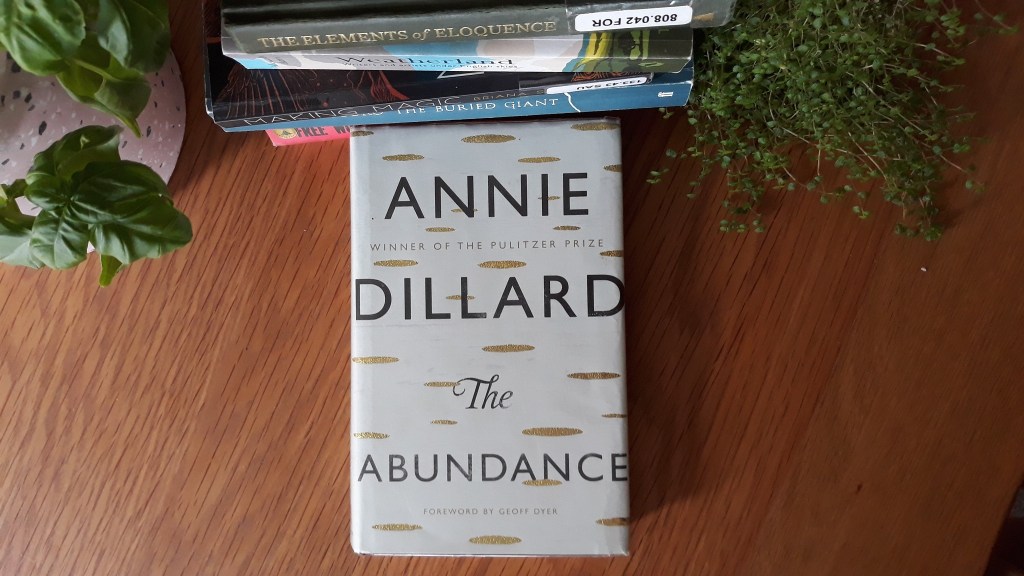
This collection, called The Abundancebrings together some of her more well known and beloved pieces along with lesser known work.
With her talented mind she manages to turn the mundane into the fascinating. This style of writing is known as serialised non-fiction. It’s vivid, fearless and invites us the readers into the microscopic world of tiny animals, all the way through the complexities of what it means to be alive and dying, to the vast unknowable cathedral rim of the night sky.
I had heard of this lady over the years but never got the chance to read her work, now I want to devour everything she is ever written. If you can’t find The Abundance, you will likely enjoy her other books. They are about life, death and everything in between and are pure poetry and splendour.
“The mind wants to live forever, or to learn a very good reason why not. The mind wants the world to return its love, or its awareness; the mind wants to know all the world, and all eternity, even God. The mind’s sidekick, however, will settle for two eggs over easy. The dear, stupid body is as easily satisfied as a spaniel. And, incredibly, the simple spaniel can lure the brawling mind to its dish. It is everlastingly funny that the proud, metaphysically ambitious, clamoring mind will hush if you give it an egg.” ― Annie Dillard, The Abundance: Narrative Essays Old and New
Here are a collection of things that uplifted me and made me feel happy this week. Feel free to share anything in the comments below that made your week in quarantine a bit easier too. Namaste
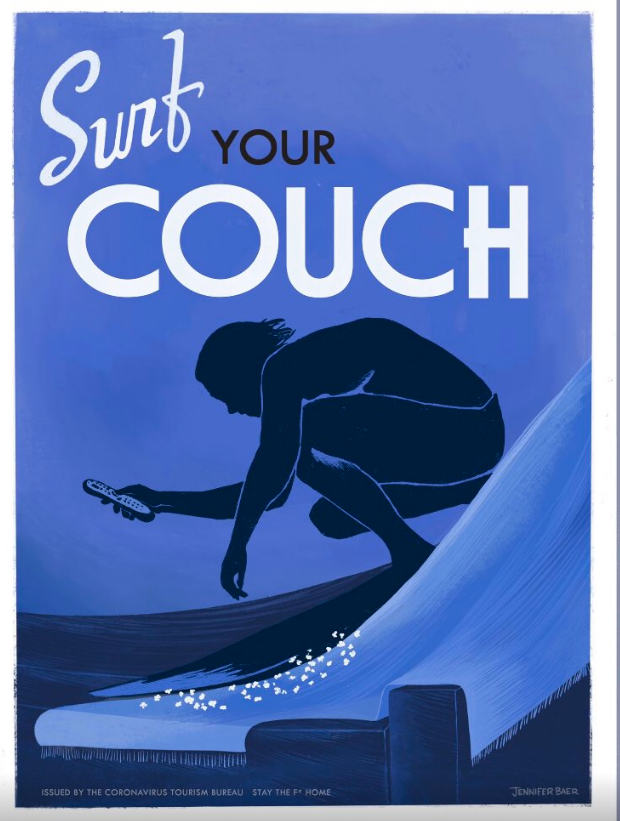
Your next travel destination is indeed just around the corner…
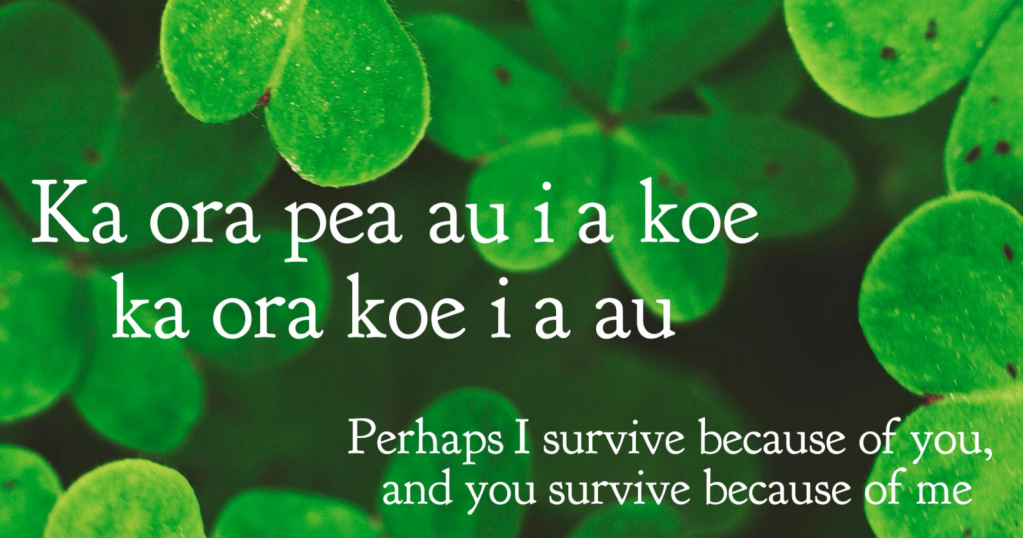
Beautiful and meaningful Maori proverbs for the current world
Beautiful and meaningful Maori proverbs for the current world
Adam Sharpe’s Twitter feed is filled with linguistic gems…
Cute animal rhymes to say farewell:
8. In a while, crocodile 7. Toodle loo, kangaroo 6. Ciao for now, jersey cow 5. Why you still here, white-tailed deer 4. Just piss off, gypsy moth 3. Go to hell, red gazelle 2. Kiss my hole, woodland vole 1. Off you fuck, crested duck
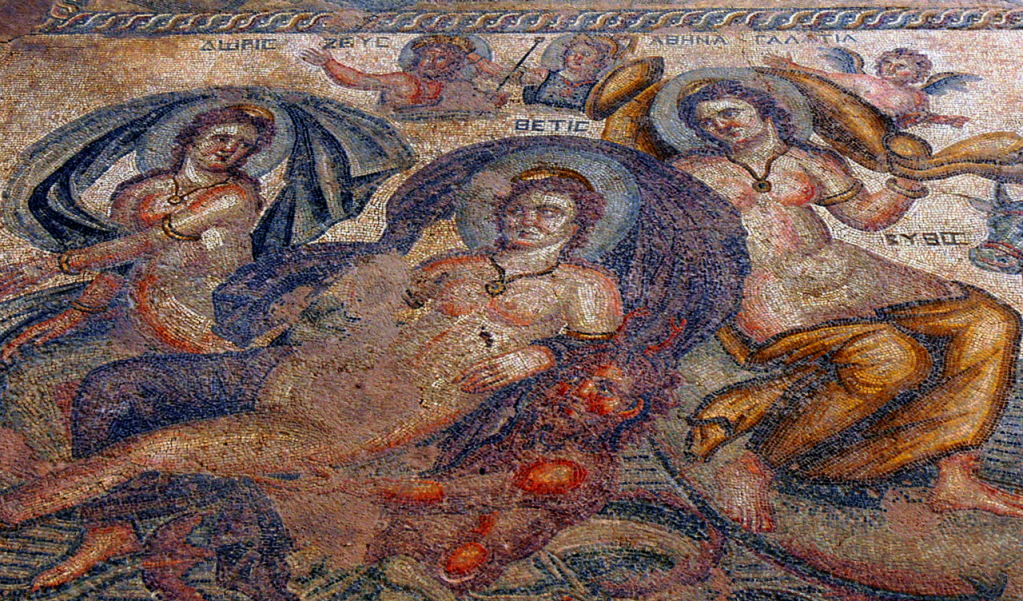
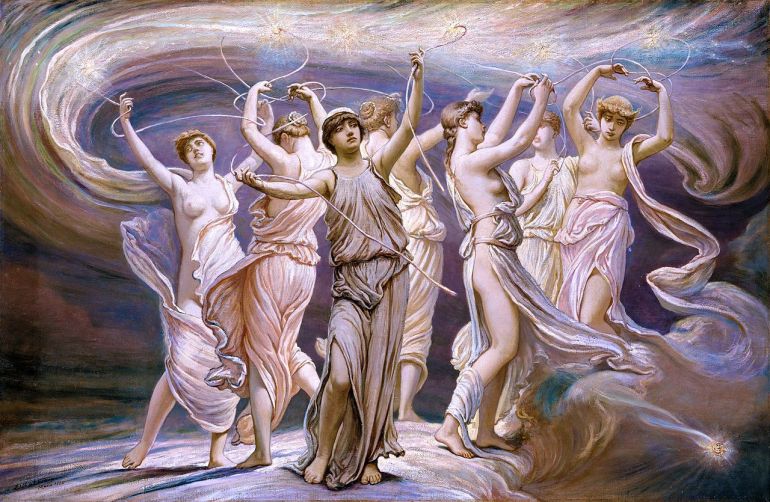
In Greek mythology, the nymphs were tiny and minor goddesses that each presided over a type of landscape feature. Normally something glimmering, glittering and bewitching in nature like waterfalls, streams, mountains, lakes or trees.
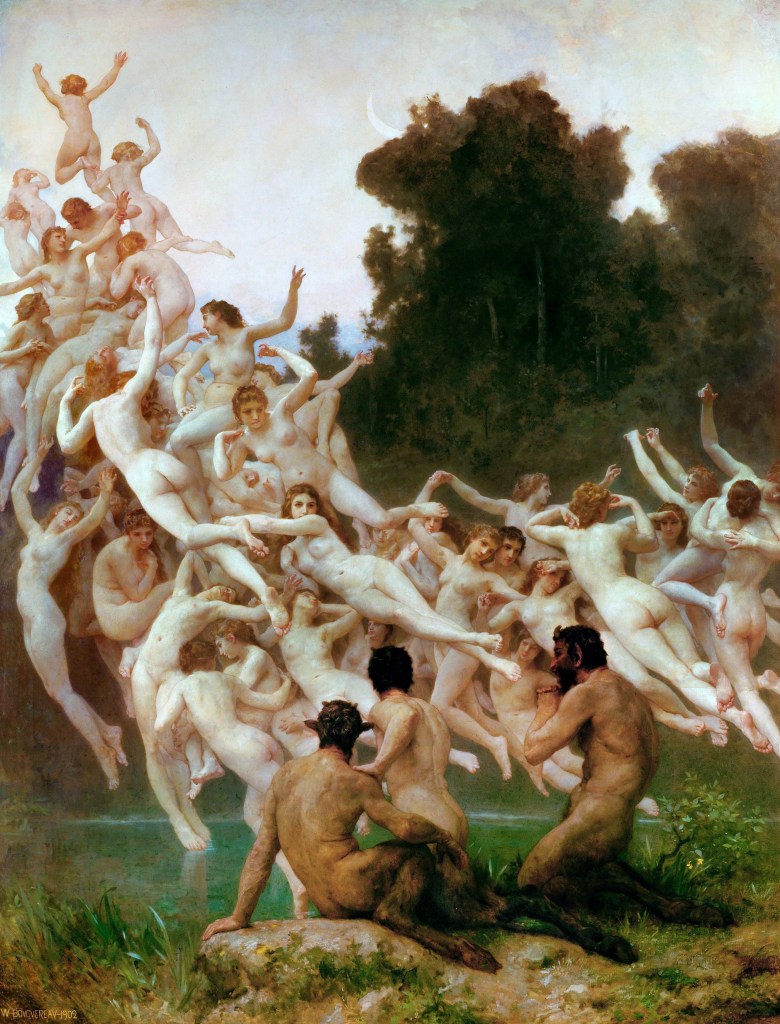
The name nymphe means bride in Greek and so the tiny and bewitching nymphs represented the brides or maidens of the natural world. During the 18th Century, the word nymph took on a medicalised tone with the invention of the word nymphomania to describe women who experience uncontrollable sexual desire. Although, truth be told, in the archaic myths of ancient Greece, it was the nymphs who had to fend off the advances of horny satyrs and Olympians.
Dryads: Found lingering amongst the trees
Dryads: Found lingering amongst the trees
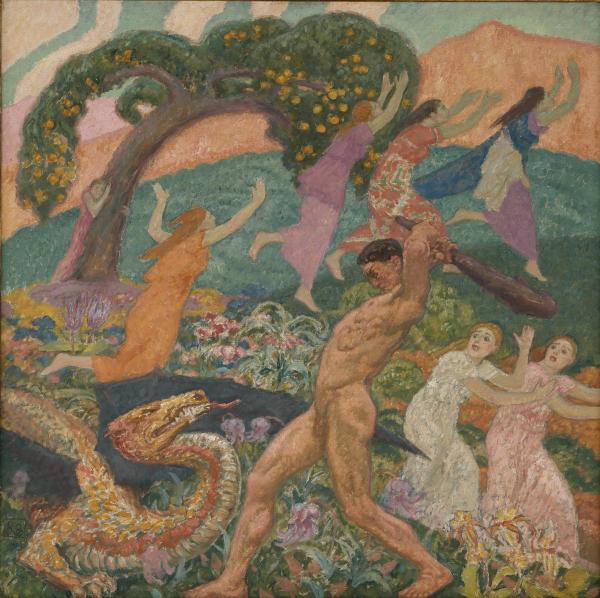
Hersperides: found during the dusk wandering through gardens and promoting the growth of apples.
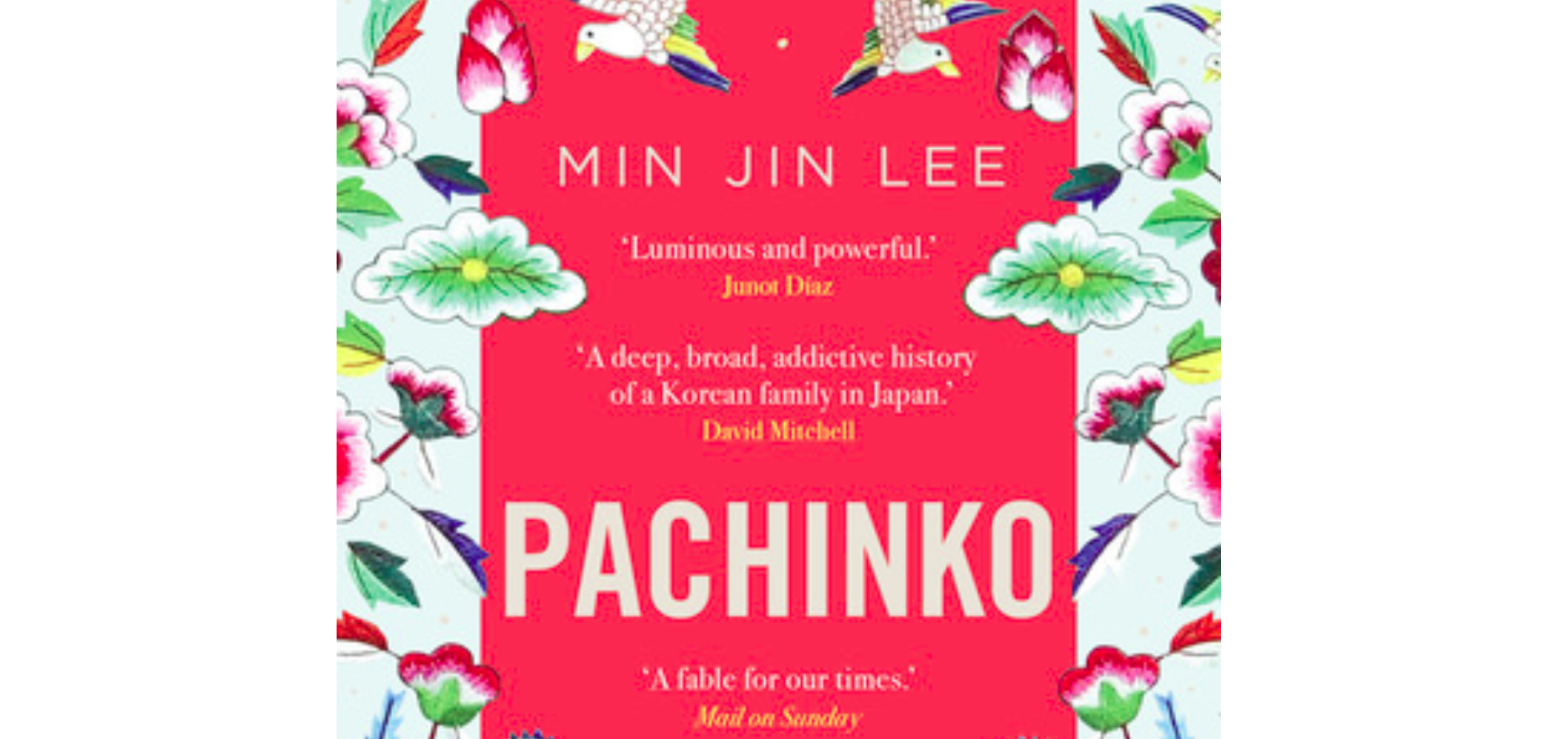
Pachinko is a family saga about Korean migrants living in Japan against the backdrop of the unheaval of the 20th Century. The novel traces struggles, triumphs and colourful personalities of several generations of one family. It rockets along at an amazing pace and doesn’t let up. This is a book to curl up with a relish over a weekend. It packs an enormous emotional punch and was incredibly satisfying. I enjoyed this book more than any other fiction I have read for many years.
Pachinko is full of melancholy, joy, emotion and humanness. The Korean characters in this novel who are living in Japan carve out a meagre existence for themselves and face extreme racism every day in Japan. This is something that many westerners wouldn’t know about Japan, is that it can be a very elitist and exclusive culture that doesn’t really open up to foreigners who live there. It’s almost like seeing the dark side of Japan I didn’t know existed.
This is the kind of book that makes you cry with joy, compassion and sadness all at once. This is a very big novel and one that deserves to be read, especially if you are a Japanophile, weeb or lover of Japanese culture. You might conclude that the Japanese don’t treat Koreans very nicely. Then again, every culture has its dark and nasty side. This novel Pachinko uncovers this for all to see, along with the shared beautiful humanity of people who undergo intergenerational struggle and trying to find their individual way in the world.
Around ten years ago, I had the best trip of my life when I went to the Isle of Skye, Scotland with the Polish bear. We cozied up in the most comfortable little croft in all of the Scottish isles. Located in Borreraig, the farthest point of the Isle of Skye and as far away as possible from the hustle and bustle of the city.
Our croft was a simple one bedroom cottage with a loft sleeping quarters and a super comfortable bed. A fold out window gave us unhindered views onto the northern skies where there was zero light pollution, just the poetry of the heavenly bodies and the Milky Way.
Inside of our cosy loft bed, it was divinely comfortable and we found it hard to get out of bed each morning. There was even a massive window for us to look at the stars and try and glimpse the Aurora Borealis, but it wasn’t the right time for the light show Copyright Content Catnip 2010
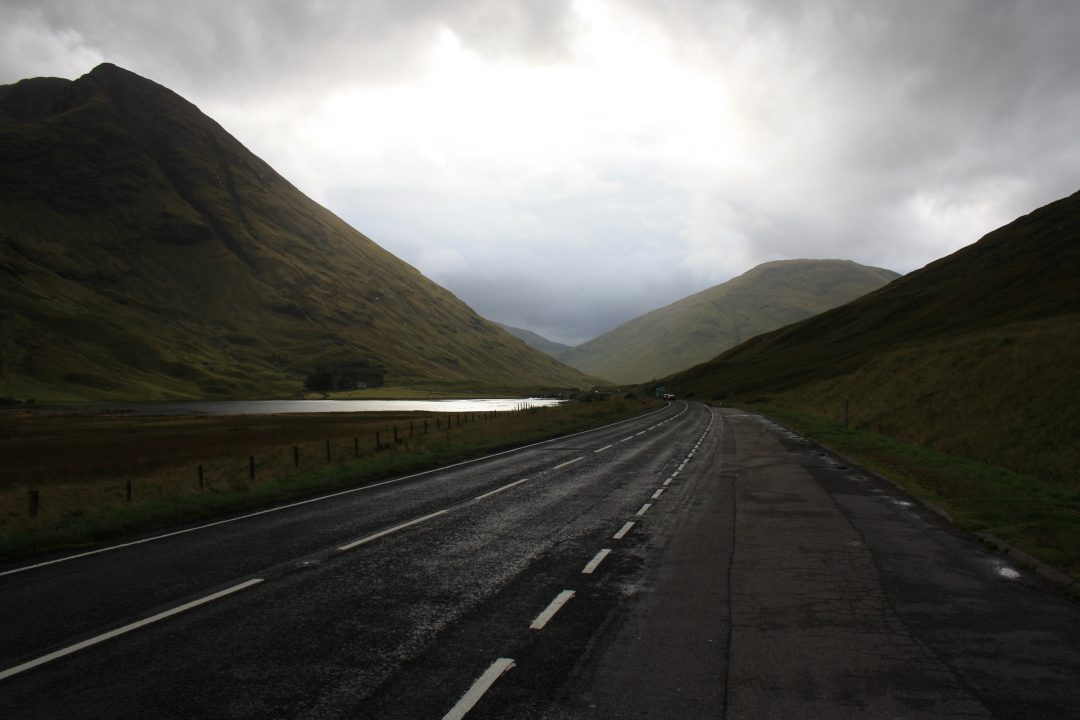
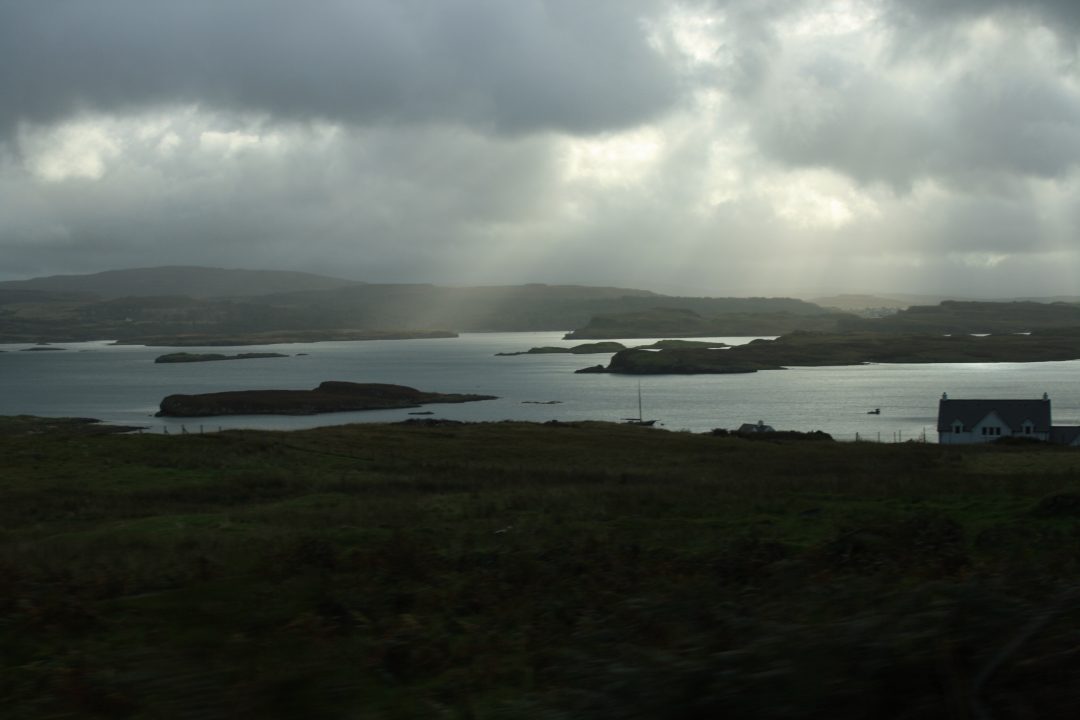
The journey there was a long, but beautiful and filled with jutting skyscraping mountains which disappeared into the mist. Long lines of shadow fell over the roads we traversed. The sheer and diaphanous clouds mixed with the water and soil and created an ever-changing interplay of blue and slate colours that dissapeared into blackness on the horizon. Dramatic, moody, forboding skies stewed together and created new patterns, with sylvan shards of light. In this place all water, sky, sun, moon and earth seemed to exist for the joy, melancholy and theatre of our eyes alone.
A highland coo hard at work doing what it does best. Copyright Content Catnip 2010
In this place and time, the Polish bear and I contemplated the future. At that time we thought we would be separated and thrown apart by circumstances, distance and the UK visa system. We wondered if we would still be able to navigate a strong and true path together. It was a dramatic, dark and scary time for us both as we contemplated an uncertain future. The moody skies on the Isle of Skye seemed to be a very alive and very vivid part of our story.
In among the deep sadness of saying goodbye, we also had a sense of embracing, inhaling in the present moment and weaving memories together. The Isle of Skye was like a salve on the wound of our separation. Through the landscape of the Hebrides we were able to embrace the uncertainty of the future.
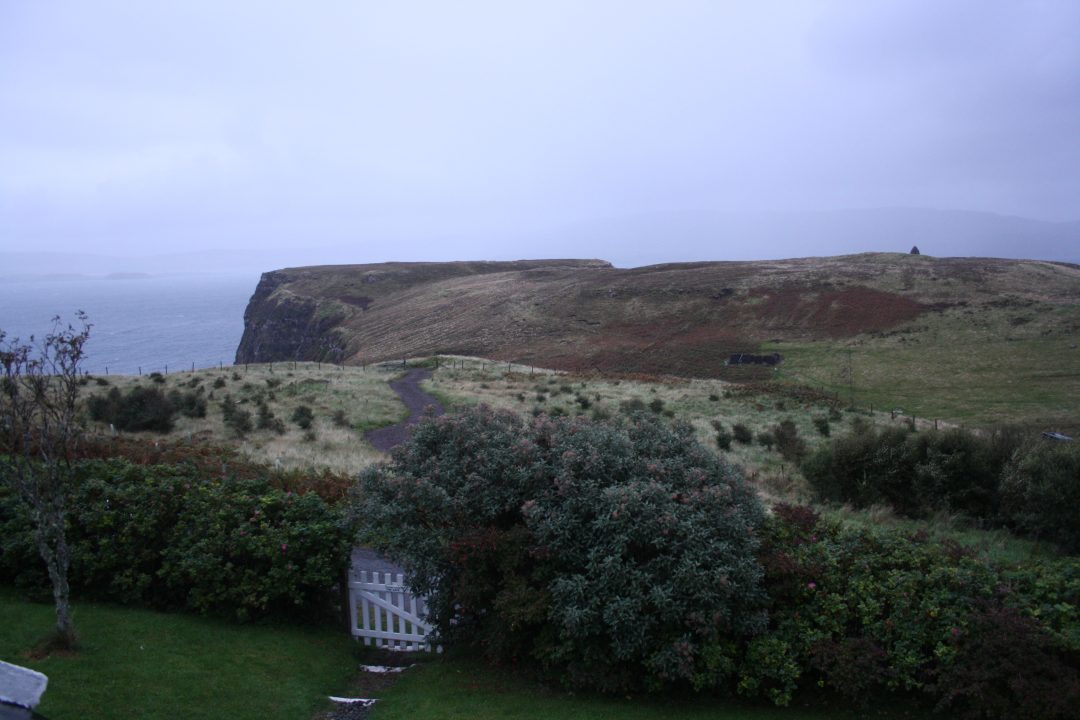
The view from out the front of our cottage, note the stone cairn on the right hand side of the hill. On investigating the cairn I found that it was left there as a tribute to a local and ancient Borreraig family who were famous bagpipers Copyright Content Catnip 2010
The wee boats out on the Portree harbour undulating on the North Sea at dusk. Copyright Content Catnip 2010
The Gloaming
The word ‘Gloaming’ is an old Scots denotes the long time between night and day. During the summer this time is extended out and in the northern highlands and islands, the sky doesn’t truly get dark, so the gloaming lasts for many hours, like a missive from the underworld. The word Gloaming comes from the Old English word “glōm,” akin to “glōwan,” an Old English verb meaning “to glow.” There is also a similar word in Dutch called “Gloeien”.
The gloaming comes, the day is spent, The Sun goes out of sight, And painted is the occident, With purple sanguine bright.
Alexander Hume, 1599
The mists and cloud come out and flirt with us and the livestock in the gloaming. Copyright Content Catnip 2010
The gloaming across cultures
I discovered that there are many other cultures which have sayings, mythical creatures and words to denote the same thing as Gloaming.
French
Entre chien et loup meaning ‘between dog and wolf”. This stresses the liminal and otherworldly quality of something, whether it be a landscape, animal or a weather system.
A view from the road where light and dark compete for attention in dramatic mode Copyright Content Catnip 2010
Welsh
Gwyll, Gwyllon or Gwyllion are twilight fairies, night wanderers and ghosts in the Welsh language. They are known as gloomy spirits that are distinct from Welsh Ellylon or elves which are more benevolent creatures. Gwyll can be encountered on a misty days, and can be troublesome as they mean that they can frighten and confuse wayfarers, even when they are familiar with a road or path.
Icelandic
In Icelandic the word húm, which sounds soft and delicate in the mouth, denotes the same thing, twilight and dusk.
Night falls on Portree. Copyright Content Catnip 2010
The sky puts on the darkening blue coat held for it by a row of ancient trees; you watch: and the lands grow distant in your sight, one journeying to heaven, one that falls;
Rainer Maria Rilke
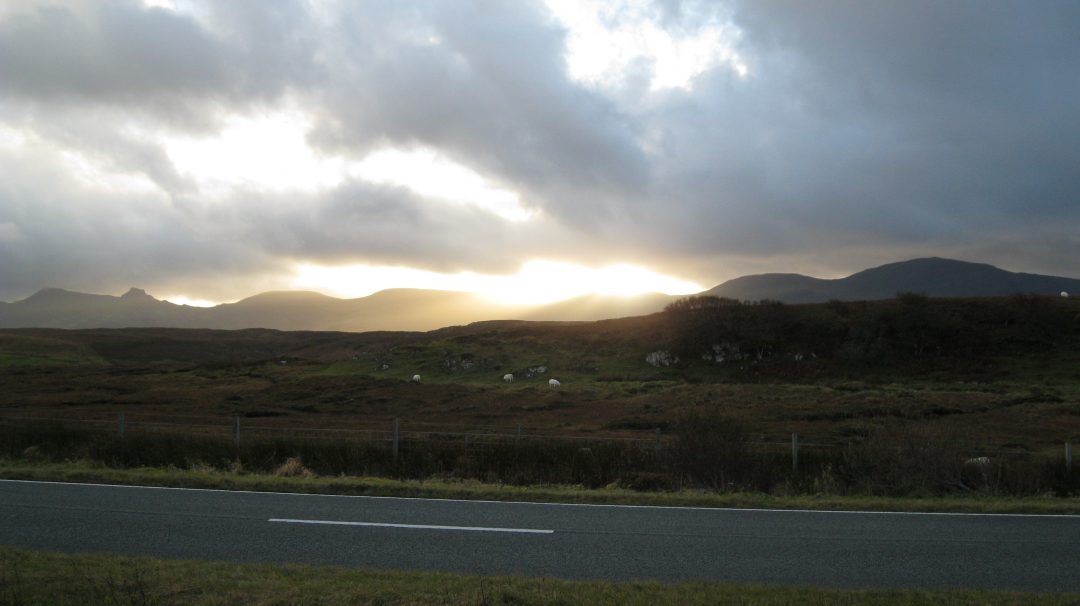
The road from our croft. The mists and cloud come out and flirt with us and the livestock in the gloaming. Copyright Content Catnip 2010
It’s in between the hours of night and day, the crepuscular hours, the vespertine hours that you can really reflect on your life and its meaning and direction.
Across the water looking forwards Dunvegan castle from Borerraig at the north western tip of the Isle of Skye. Content Catnip 2010
Postscript: As it turns out, absence makes the heart grow fonder, not farther apart. In the ensuing years there was a lot of cross-continental declarations of love, art and craft flowing between this part of the world and the antipodes and in return, which meant that the Polish Bear and I were eventually reunited. It was the best decision we ever made.
Kate Holden is the Australian author of the amazing memoir In This Skin. The Romantic is a follow-up to this memoir.
A bit about Kate Holden, she’s a woman from Melbourne who grew up in a respectable middle-class family. She then broke away from her stable family life and became a heroin addict and a prostitute, living and working on the streets of St Kilda in the 90’s.
Her first book In This Skin was the honest, frank and lovely telling of that turmultuous period of her life. Her first book was really amazing and unforgettable. It revealed what it was like to be a 20-something woman selling your body on the streets and in brothels. It gave insight into a side of men that most women never see.
Yet In this Skin was far from salacious and cheap. Instead Holden’s elegant prose elevated her dingy lifestyle above the mundane into something deeply profound. I remember that her words were transcendental and her stories of lonely male clients were told with care, fondness and excruciatingly intimate sensitivity. This book pretty amazing, one could even say it’s a timeless.
Kate Holden
In this second book, Holden has overcome her heroin problem and has left sex work behind. Now she has got a writing grant and has winged her way over to Italy.
In the Romantic, Holden floats like a frond of a dandelion from one end of Italy to the other, going by train from lover to lover, feeling in turns full of sadness at leaving them and longing to see them again. She allows herself to be coerced willingly into group sex and has dalliances with men she doesn’t even like very much. She only seems to even enjoy the sex on one occasion, the rest of the time it seems she’s just going through the motions.
There is a real sense that she’s just travelling through Italy and blowing guys off because she needs a place to stay. Which is fine, no judgement, but there’s no indepth self-analysis in that…like why would I be doing this, what do I actually get out of this? how am I feeling with this? Which would make for more interesting writing.
The irony is this novel, The Romantic is anything but romantic. Perhaps the title is ironic then, a better title would be Self-Loathing,
The main reason it’s frustrating is there is no narrative arc here of self-discovery. No, instead there seems to be a lot of mindless, jarring fucking with a lot of men who just treat her like an object, and her open willingness and acceptance of being treated this way, which can be really cringey to read.
In the end, Holden doesn’t seem to learn anything from it, or rather come to any moment of self-realisation from it. I suppose that’s just like how life can be sometimes, with tragic or confusing events layering upon each other and nothing deeper to glean from it. But still, this is not a fulfilling or satisfying to find at the end of a novel. When one gets to the end, there needs to be a change, a shift in circumstance, or a psychological resolution of some kind. On a positive note, despite all of this, it was still very readable, she is a very skilled writer.
The world has become rather scary lately. So with this in mind I have found some odd but tasty memes and strange oddities to get you through the next week…
— Ground Impressions (@GroundImpressi1) April 1, 2020
2. A serenade to Director General of Health in NZ Dr Ashley Bloomfield
Dr Ashley has become a much-loved part of New Zealander’s daily lives under lock-down. With his stoic, calm and composed manner he has been like a dad to many of us scared youngsters, and not-so-youngers who are feeling apprehensive.
The ABC’s Conversations with Richard Fidler has put out consistently excellent true stories of the years, and during the lock-down they aren’t letting up. Here is a great one about lives lived in captivity.
4. Homaroo’s fantastic festival line-up is rebooted for 2020
In this great YouTube video by Philosophical channel the Academy of Ideas, some great tips in this ten minute video about how to manage your unruly mind during times of crisis.
6. Healthy and homely one pot creamy pasta recipes
7. One Bike One World: Dean and Nala’s cycling adventures through the Middle East and Europe
Vlog stories in which Dean (Scotsman and all-round amazing person) and Nala (beautiful cat) cycle around countries, rescuing stray animals, camping out in the woods, occasionally treating themselves to comfy hotels along the way. Highly addictive, adorable and compulsive viewing. FYI: They are currently both safe and sound and self-isolating in Hungary
8. Liziqi cooks autumn chestnuts in a serene mountaintop village
The music, vibe and scenery of these videos are like a real-life Ghibli movie, it’s well produced and will put you in a sedate and relaxed mood.
9. My laid back self-isolation mix part 2
A mix that’s like a warming ginger tea, good for the digestion, good for the heart and soul.
10. Cromwell Museum’s Medieval Guide to Self-Isolation 2020
— The Cromwell Museum (@MuseumCromwell) April 3, 2020
The world is becoming increasingly scary lately. But there are some things when you see them that make your day a little better. If you know of any please let me know below…
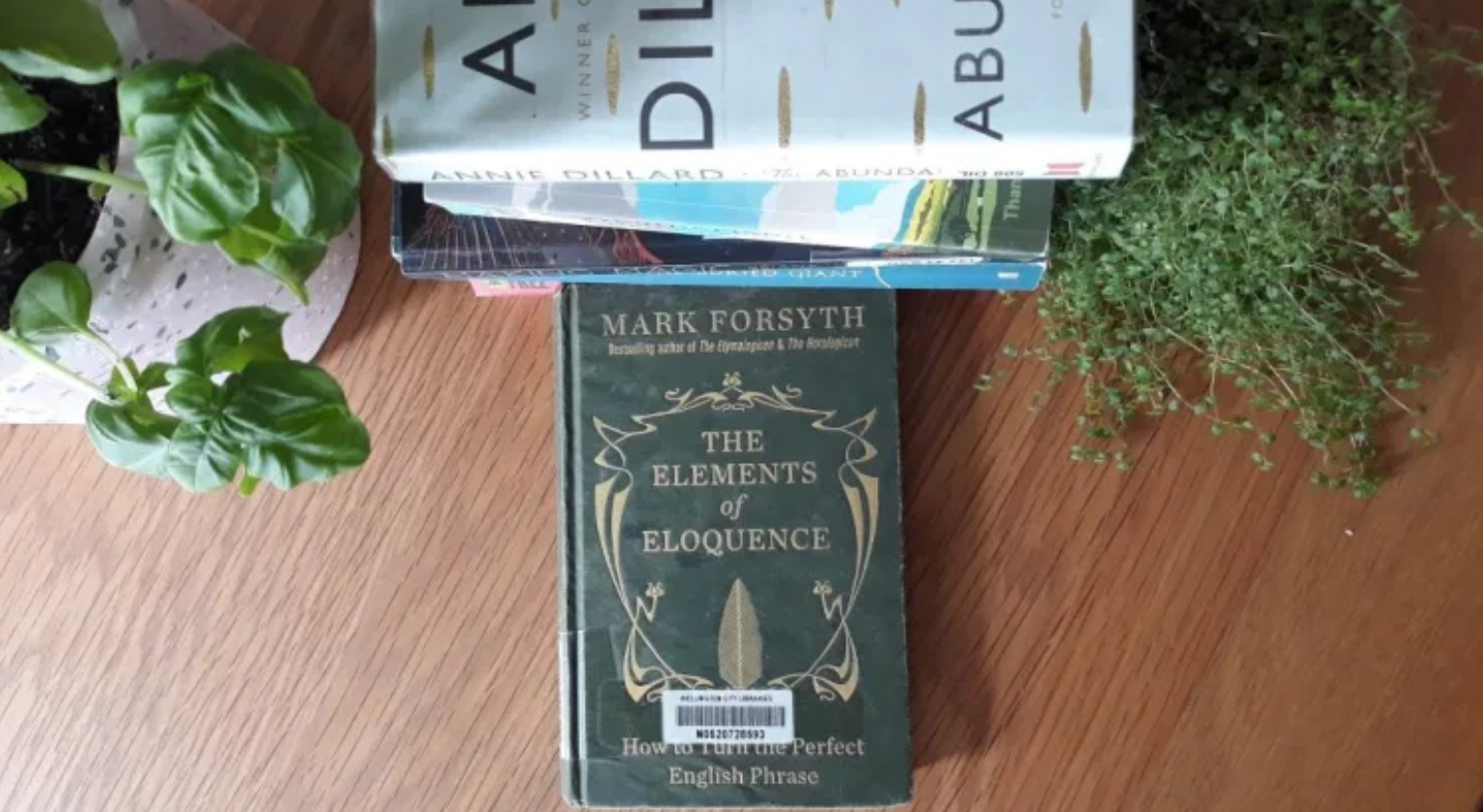
I recently I read the Elements of Eloquence by Mark Forsyth. This book is packed full of helpful tips on how to write better using timeless principles of persuasion. However, the rules of rhetoric in this book are hidden within reams of witty writing. So here are the rules, plain and simple with definitions and examples.
Rating: 🌟🌟🌟🌟🌟
All able-bodied assholes ask about –
Alliteration
Definition: All/many words in a sentence with the same letter.
Examples
The barge she basked in, like a burnished boat.
Burned by the banks, the back was beaten brass. – Shakespeare
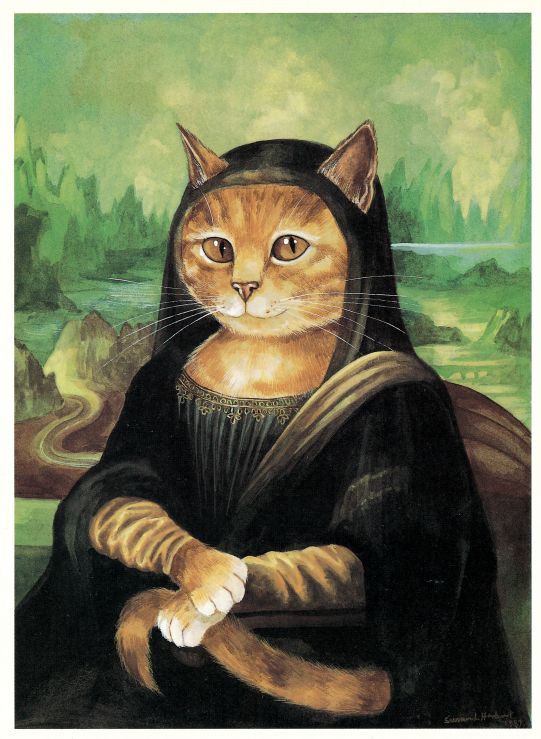
Catastrophic caricatures of cats in cloaks
Clever pun bombs – Polyptoton
Definition: The repeated use of one word, so that the word has multiple forms and meanings.
Example
Please,
Lend me your little ears to my pleas
Lend me a ray of cheer to my pleas – Bing Crosby.
Lend me your little ears to my pleas
Using opposites for dramatic effect – Antithesis
Definition: First you mention one thing, then you mention another, in a rhythm.
Examples:
To everything there is a season and a time to every purpose under the heaven.
A time to be born; and a time to die; a time to plant; and a time to pluck up that which has been planted; A time to kill, and a time to heal. – The Bible
A time to be born; and a time to die; a time to plant; and a time to pluck up that which has been planted – An example of antithesis
Waffling On – Merism
Definition: Instead of being precise in what you’re talking about, you waffle on about all of a thing’s constituent parts. (Generally, not a good thing)
Examples:
Ladies and Gentlemen, boys and girls (instead of everyone)
For better or worse, for richer or poorer, in sickness and in health (instead of at all times throughout life).
Ladies and Gentlemen, boys and girls. Behold these ferocious beasts! An example of merism
Like, you know? – The Blazon
Definition: Generally imbuing an inanimate or unusual object with the qualities of a person.
Examples:
Lips like oranges – Clare Bowditch, Australian singer-songwriter.
Thou hast doves eyes within thy locks. Thy teeth are like a flock of sheep that are even shorn – The Bible.
Thou hast doves eyes within thy locks. Thy teeth are like a flock of sheep that are even shorn.An example of the Blazon
Literary Acid Trips – Synaesthesia
Definition: Colours that are expressed as smells. Smells expressed as sounds. Sounds expressed as tastes.
Example
She smelled the way the Taj Mahal looks by moonlight – Raymond Chandler.
Synaesthesia: Colours that are expressed as smells. Smells expressed as sounds. Sounds expressed as tastes.
Enigmatic Pauses…Aposiopesis
Definition: Using punctuation in sentences signifying a trailing off of thoughts with three dots….
Example
I love the smell of napalm in the morning. The smell, the whole hill smelled like…victory. – Apocalypse Now.
Aposiopesis:I love the smell of napalm in the morning. The smell, the whole hill smelled like…victory. – Apocalypse Now.
Word Order Remix – Hyperbaton
Definition: Putting words intentionally in the wrong order. The standard order should be: opinion – size – shape –
colour – origin – material – purpose – noun. Or vowel order should be I O A. Example: Bish Bash Bosh or tit for tat.
It either works or it doesn’t make sense.
Examples
Stone walls do not a prison make, Nor iron bars a cage – Richard Lovelace.
Uneasy lies the head that wears the crown
Uneasy lies the head that wears the crown. An example of hyperbaton
Yoda-style
Definition: Using the last word of one clause, as the first word of the next clause.
Example
Tribulation worketh patience; and patience, experience; and experience, hope; and hope maketh man not ashamed. – Yoda.
Tribulation worketh patience; and patience, experience; and experience, hope; and hope maketh man not ashamed. – Yoda.
Saving the best clause for last – Periodic sentences
Definition: A long sentence or verse that has the clause or verb at the end to complete the syntax.
Example
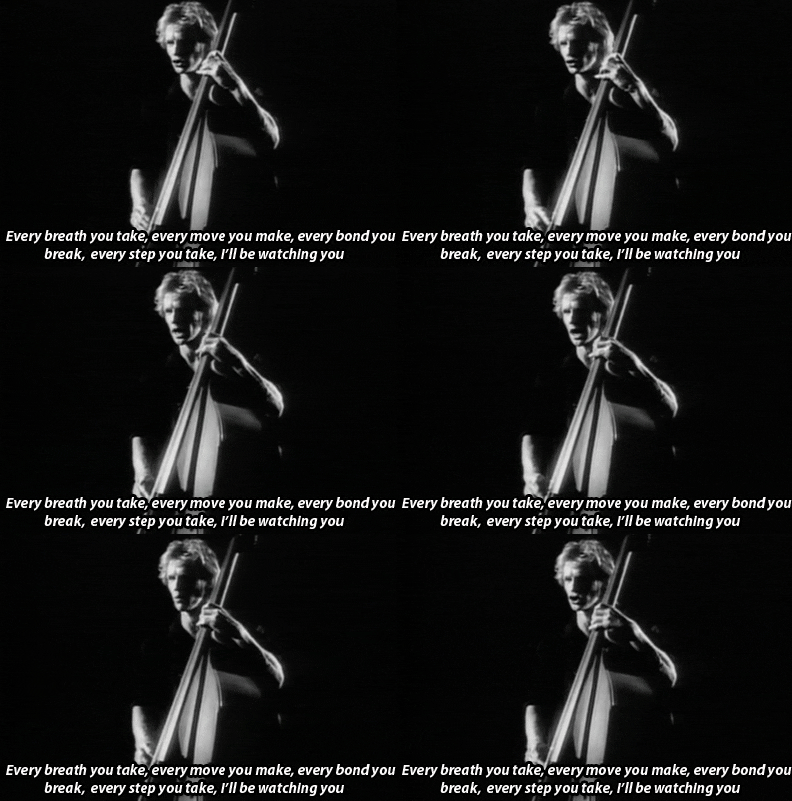
Every breath you take,
Every move you make,
Every bond you break,
Every step you take,
I’ll be watching you. – Sting.
Sting understood periodic sentences when he penned Every Breath You Take
The long and short of sentences
Hypotaxis: Ridiculously long sentences. Jane Austen loved them. (Not that great, harder to follow)
Example: Emma Woodhouse, handsome, clever, rich, with a comfortable home and a happy disposition, seemed to unite… blah blah blah. – Jane Austen, Emma.
Parataxis: Plain English. Short sentences (more effective).
Example: And Jesus took the bread. And blessed it. And brake it. And gave it to his disciples and said ‘Take this, eat it. This is my body’. – The Bible.
The novels of Jane Austen were filled with long-winded sentences or hypotaxis
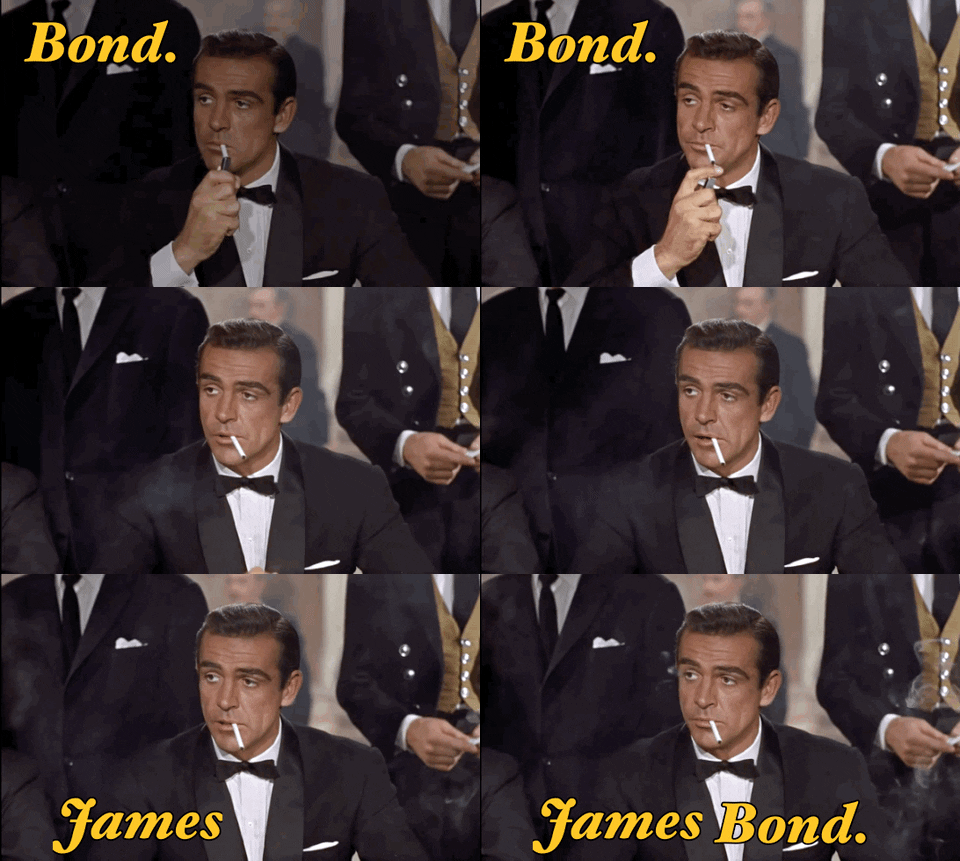
Bond…James Bond – Emphasis Repetition
Definition: A word or phrase that is repeated after a brief interruption, for dramatic effect.
Examples:
Bond…James Bond – Ian Fleming.
Fly my pretties…fly – The Wicked Witch of the West, Wizard of Oz.
Love me, love me, say that you love me – Cardigans, Love Fool.
Repetition makes words sink down deep
Rhetorical Questions?
There are a few kinds of rhetorical questions:
The Australian question?
Definition: A couple of words are switched around to turn a statement into a question.
Examples:
How hot is it? (meaning – it’s an absolute scorcher)
How fucked up is the economy? (meaning – it’s really fucked up).
How good is it? (meaning – it’s really good)
How hot is it? A form of rhetorical question meaning, it’s bloody hot in Australia.
Emo
Examples:
How could you?
What’s a girl to do?
Why go on?
Politically manipulative
Examples:
Would you trust this man with the health system?
Would you leave the economy to this Commie scum?
The difficult question immediately answered
Examples:
You ask, what is our aim? I can answer in one word. Victory. – Winston Churchill
Can I kick it? Yes you can. – A Tribe Called Quest.
Can I kick it? Yes you can. – A Tribe Called Quest.
Memorable word hiccups
Definition: Take an adjective and a noun, and change this to another adjective and another noun.
Examples:
I’m going to the noisy city > I’m going to the noise and the city.
Summertime living is easy > Summertime, and the living is easy. – Ira Gershwin
Definition: Connecting three items together in a sentence.
Examples
Vini. Vidi. Vici – I came, I saw, I conquered – Julius Caesar
Sun, Sea and Sex.
Liberte, Egalite, Fraternite.
Liberte, Egalite, Fraternite- a memorable triplet that appeared on this propaganda poster from the French Revolution (Wikipedia)
Repeated affirmations
Definition: Repeating the same word or phrase again and again for dramatic effect.
Example:
The first rule of Fight Club is: you do not talk about Fight Club. The second rule of Fight Club is: you do not talk about Fight Club – Chuck Palahniuk.
Another version of repetition but for full phrases or sentences not just words
Pun bonanza – Syllepsis
Definition: One word used in two incongruous ways in a sentence. Witty pun in a ‘look at me’ kind of way.
Example: In my apartment, I’ve barely enough room to lay my hat and a few friends – Dorothy Parker
The lamest and the best phrases on earth – Isocolon
Definition: Two clauses that are grammatically parallel and structurally the same.
Examples
Roses are red, violets are blue.
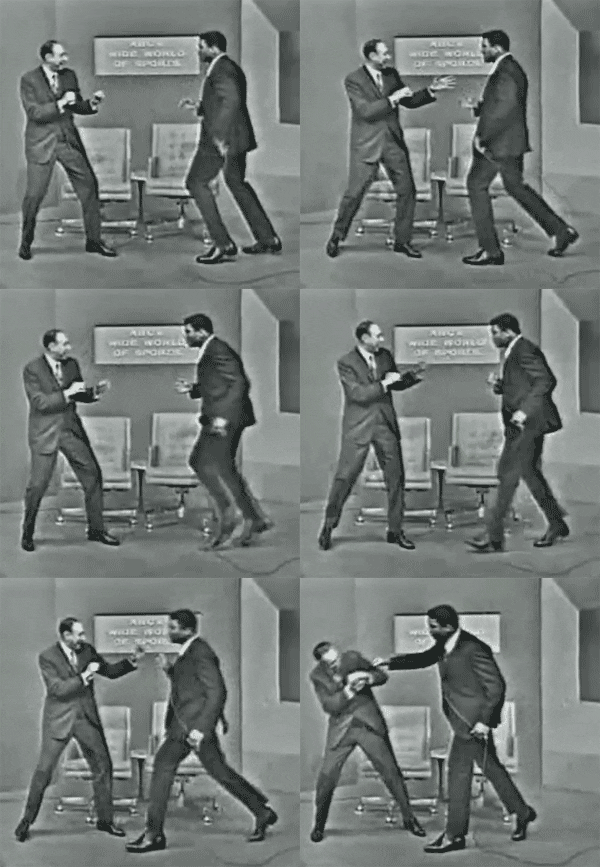
Float like a butterfly, sting like a bee. – Muhammed Ali.
Morning has broken, like the first morning / Blackbird has spoken, like the first bird – Cat Stevens.
Float like a butterfly, sting like a bee. – Muhammed Ali.An example of an isocolon
Clever slang – Enallage
Definition: A phrase that stands out because of its unusual or deliberately incorrect grammar.
Examples:
Do not go gentle into that good night. – Dylan Thomas
Love me tender – Elvis
Love me tender, love me sweet – an example of an enallageor clever slang.
Paradox
Definition: Sentences with deep philosophical import that contract each other in meaning.
Examples:
For every cop to be a criminal and all the sinners saints. – The Rolling Stones, Sympathy for the Devil.
In this world, there are two tragedies. One is not getting what one wants. The other is getting it. – Oscar Wilde.
For every cop to be a criminal and all the sinners saints. – The Rolling Stones, Sympathy for the Devil.An example of paradox
Mirrored word sentences – Chiasmus
Definition: Symmetry. Similar to a palindrome, but for the orders of words in sentences.
Examples:
Tea for two and two for tea. Me for you and you for me.
The cat sat on the mat, and on the mat sat the cat.
Tea for two and two for tea. Me for you and you for me. – An example of chiasmus
Definition: When a sentence is so startlingly wrong, it’s right
Examples
It became curiouser and curiouser – Alice in Wonderland.
She lives on Love Street – The Doors
It became curiouser and curiouser – Alice in Wonderland. An example of catachresis or when a sentence is so wrong that is becomes right.
Australian small talk – Litotes
Definition: Affirming something in a phrase to deny its opposite. Closely related to the double negative. This is common in Australia and Britain.
Can’t complain
Not bad
You’re not wrong
Can’t complain – the Aussie double negative
A non-physical connection – Metonymy
Definition: Giving a personal quality to a large organisation or group of people.
Examples:
The Ministry of Health was caught red-faced last night
All eyes are on the government tonight
The Army stepped in
The Army stepped in – an example of metonymy
ID-ing the body – Synecdoche
Definition: When a person becomes one of their body parts.
Example:
What immortal hand or eye, could frame thy fearful symmetry. – William Blake.
What immortal hand or eye, could frame thy fearful symmetry. – Synecdoche breaks down people into their various body parts
Snappy swaps – Transferred Epithet
Definition: An adjective is applied to the wrong noun in a sentence to make it memorable.
Examples
The nervous man smoked a cigarette > The man smoked a nervous cigarette.
The ploughman homeward plods his weary way.
A (hot) man smokes a nervous cigarette – a transferred epithet applies the adjective to the wrong noun for full impact.
Used by boring writers – Pleonasm
Definition: The use of unneeded and superfluous words in sentences. Very irritating to read.
Example
I will lift mine eyes unto the hills, from whencecometh my help.
I will lift mine eyes unto the hills, from whencecometh my help. – Or how to craft a boring and long-winded sentence.
Circular phrases – Epanalepsis
Definition: A statement that implies both continuity and circularity.
Examples:
The king is dead. Long live the king.
Yesterday, all my troubles seemed so far away. Now it looks as though they’re here to stay. Oh I believe in yesterday. – The Beatles.
The king is dead. Long live the king – A great example of a circular phrase.
Shit happens – Personification
Definition: Giving animation to an inanimate thing or group noun.
Examples
Work called, they want you to come in.
Money talks, bullshit walks.
Shit happens.
Money talks, bullshit walks – an example of personification
Hyperbole
We all know an exaggerator when we see one.
Needs no example.
Never ever ever – Adynaton
Definition: A poetic way of saying no, either in long or short form.
Examples
Pigs might fly
Hell will freeze over
Pour away the ocean and sweep away the wood. For nothing now can ever come to any good. – WH Auden.
When hell freezes over – an imaginative way of saying never, ever, ever, ever
Dramatic wafts of brilliance – Prolepsis
Changing around pronouns in phrases for dramatic effect.
Example
They are not long, the days of wine and roses;
Out of a misty dream
Our path emerges for a while, then closes
Within a dream. – WH Auden
Out of a misty dream – Playing with pronouns or prolepsis.
A list of great things – Congeries
Definition: Listing out elements in a long sentence.
Example
The cloud capped towers, the gorgeous palaces, the solemn temples, the great globe itself. – Shakespeare.
The cloud capped towers, the gorgeous palaces, the solemn temples, the great globe itself. – Shakespeare. – An example of an epic list that illustrates an even more remarkable whole.
Verb Removal – Scesis Onomaton
Definition: Sentences that have no verbs.
Examples
Space: the final frontier. – Star Trek
Michaelmas term lately over, and the Lord Chancellor sitting in the Lincoln’s Inn Hall. – Dickens.
Space: the final frontier. – Star Trek – An example of verb removal
Anaphora
Definition: Starting each sentence with the same words
Example:
We shall fight on the beaches,
We shall fight on the landing grounds,
We shall fight in the fields and in the streets,
We shall fight in the hills;
We shall never surrender – Winston Churchill
Winston Churchill’s ‘We shall fight on the beaches’ speech is an example of anaphora
I hope you enjoyed this epic journey into the classic rules of crafting memorable sentences. If you have made it this far, leave me a comment on what you think…
Mark Forsyth is the witty and effervescent writer of several books on the history of language, etymology and linguistics. The Elements of Eloquence explains the timeless art of crafting memorable one liners. In other words, the rules of classical rhetoric.
This is a great guide for writers who want
to master the subtle art of persuasive writing, by leveraging techniques known
to masters of English that range from Bob Dylan to Shakespeare. A lot of the
rules will be familiar in terms of use cases and memorable examples.
The one thing I found a bit confusing was
the strange, Greece and Latinate names for each of the rules of rhetoric. Each
are a mouthful to pronounce and recall, and therefore are instantly forgettable
(polyptoton, aposiopesis, diacope, hendiadys, epizeuxis). Even if the techniques
and rules are rather important as methods of competent and memorable writing,
if the names of the rules are redundant and meaningless, it makes it a
challenge to actually make use of this book.
So much of the book is dedicated to
swirling, purple and ornate descriptions of each rule, that the practical part
of the rule. I.e. a clear definition and several great examples, seem to get
lost amongst the rambling chatter.
I should emphasise though that this is an
entertaining and funny book. Although sometimes it feels as though it’s trying
way too hard to be funny, at the expense of giving the reader workable,
practical and clear instructions for writing better. Perhaps this is me being
pedantic here, a cheat sheet in the references would have done it.
Therefore, if you are a copywriter,
journalist or editor and you need inspiration for creating a snappy speech,
poem or headline, you will need to wade through a lot of funny but superfluous
fluff to get to the meaty parts.
The rules of rhetoric are so amazing and valuable, I took it upon myself to cut the fluff out of this book and also rename the rules to make them meaningful and memorable. Perhaps the internet’s writers and bloggers will thank me because the nuts and bolts of this book are immensely useful. The 2nd part of this post will be a digest of the rules in ways you can use them. Stay tuned for part 2
We do a lot of looking; we look through lenses, telescopes and TVs. Our looking is perfected every day – but we see less and less. Never has it been more urgent to speak of seeing…we are onlookers, spectators. ‘Subjects’ we are, that look at ‘objects’. Quickly, we stick labels on all that is, labels that stick once – and for all. By these labels, we recognise everything but no longer see anything. ~ Frederick Franck, The Zen of Seeing
B
Copyright Content Catnip 2010
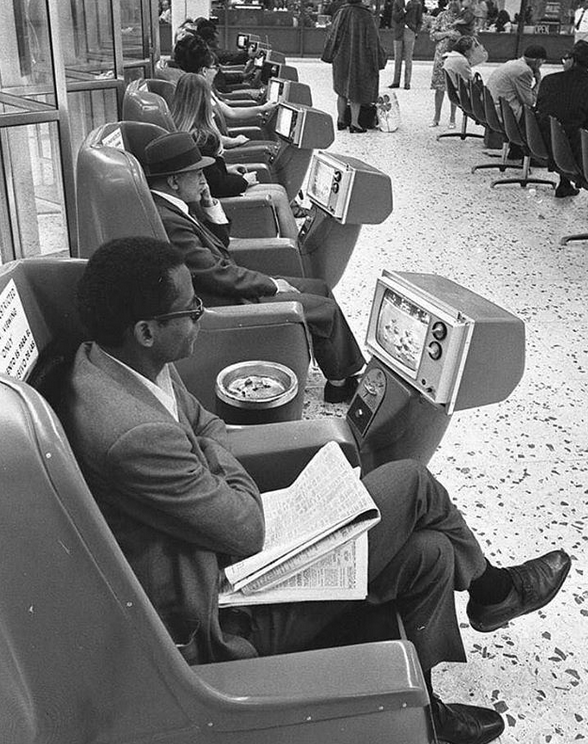
Every picture tells a story: waiting on a bus in the olden days










.jpg)
























:format(jpeg):mode_rgb():quality(90)/discogs-images/R-4393327-1422705250-9035.jpeg.jpg)













 Content Catnip
You must be logged in to post a comment.