
10 Uplifting Things I Found on the Internet This Week #8

Here are some randomisities both old and new that I found this week and wanted to share with you. Take 1 or two with a cup of tea and a few buttered scones and have a good lie down if you want to have a break from the world for a while.

1. In the Mood for Love OST by Shigeru Umebayashi

A beautiful, romantic and reflective piece of music to enjoy as you read the rest of these finds for the week…

2. bell hooks – The love ethic

On my friend Neriman’s amazing blog, Reading Under the Olive Tree, she showcases an inspiring quotes of African American philosopher/thinker Gloria Jean Watkins AKA bell hooks.

Cultures of domination rely on the cultivation of fear as a way to ensure obedience. In our society we make much of love and say little about fear. Yet we are all terribly afraid most of the time. As a culture we are obsessed with the notion of safety. Yet we do not question why we live in states of extreme anxiety and dread. Fear is the primary force up- holding structures of domination. It promotes the desire for separation, the desire not to be known. When we are taught that safety lies always with sameness, then difference, of any kind, will appear as a threat. 

When we choose to love we choose to move against fear-against alienation and separation. The choice to love is a choice to connect-to find ourselves in the other.

Those of us who have already chosen to embrace a love ethic, allowing it to govern and inform how we think and act, 

know that when we let our light shine, we draw to us and are drawn to other bearers of light. 

We are not alone.

3. These lovely paintings by Shinya Okayma

4. Two hours of fluttering butterflies and swaying exotic flowers in Melbourne Zoo’s hot house

5. A tiny cabinet of curiosities including secret poisons, concealed inside of a book made in 1682…

6. The Storm Arrives

Great Cycle Routes of Auckland
Copyright Content Catnip 2014

This beautiful poem is prescient and relevant to our turmultuous world, it really captured the moment. Found on the always inspiring blog Wild Crafted Life by Diane Hacker-Reed.

It’s been brewing for a while now, this storm.
We can see it, even when we don’t look.
We feel the electricity on our skin

The first few drops, then the lightning,
now the thunder.

It travels, unstoppable, until the rain falls
hard and fast
to disturb the dust
to expose the crust
to erode the system.

Rain pounds, lightning strikes, thunder promises.
The storm arrives.

7. KUKUWA® African Dance Routine

KUKUWA® is an African dance workout that made me smile for a whole 18 minutes. Just being in the presence of these energetic and positive and beautiful women made feel motivated. The workout is intense, fun and enjoyable. A great channel to follow and it makes for an enjoyable departure from doing yoga or other workouts if you do workouts at home.

8. A cat relaxes inside of a piano while its owner plays a song from the Ghibli film ‘Howl’s Moving Castle’

9. These haunting and fantastical paintings by Australian artist Shaun Tan

10. Toilets with threatening auras…

If you have ever traveled or visited some off the beaten path cafeteria at a petrol station, you will understand the perils of toilets with bad or threatening auras. They are a multisensory and existential threat. If only I thought of taking photos of the many threatening toilets I have seen. The worst one was in Morocco in the depths of the Fez medina. Here are some very dodgy toilets to enjoy vicariously. This is a great Twitter channel to follow as well…

Bonus: My Heart Still Bleeds Red by Neha/Forgotten Meadows

My heart still bleeds the color red
like your ancestors and mine
it still bleeds red…
under the color of my skin
of your skin…
BROWN
BLACK
WHITE
OLIVE
HARD TO DEFINE SKIN TONES
But it still bleeds RED
RED
The color that unifies
humanity
which bleeds
with decades of injustice
Prejudice and Silence
For you see the colors don’t speak
but our actions do
and my heart still bleeds the color red
like your ancestors and mine
and it’s time we listen
we unite against injustice
we unite in peace
and rise with love
for LOVE bleeds RED
when left unheard.

Have you read, seen or heard anything that lifted your spirits this week? I know that since I have been doing this series, it has actually helped to heal me and make me realise that the world is a big, chaotic, messy and beautiful place, instead of merely a scary place, which is always good to remember, seeing as most social media and the news is all about reassuring us that the world is totally shit. But rather than think of it in these terms, it is nice to rewrite the narrative for it myself and share it with you. Namaste.
Ancient word of the day: Augury

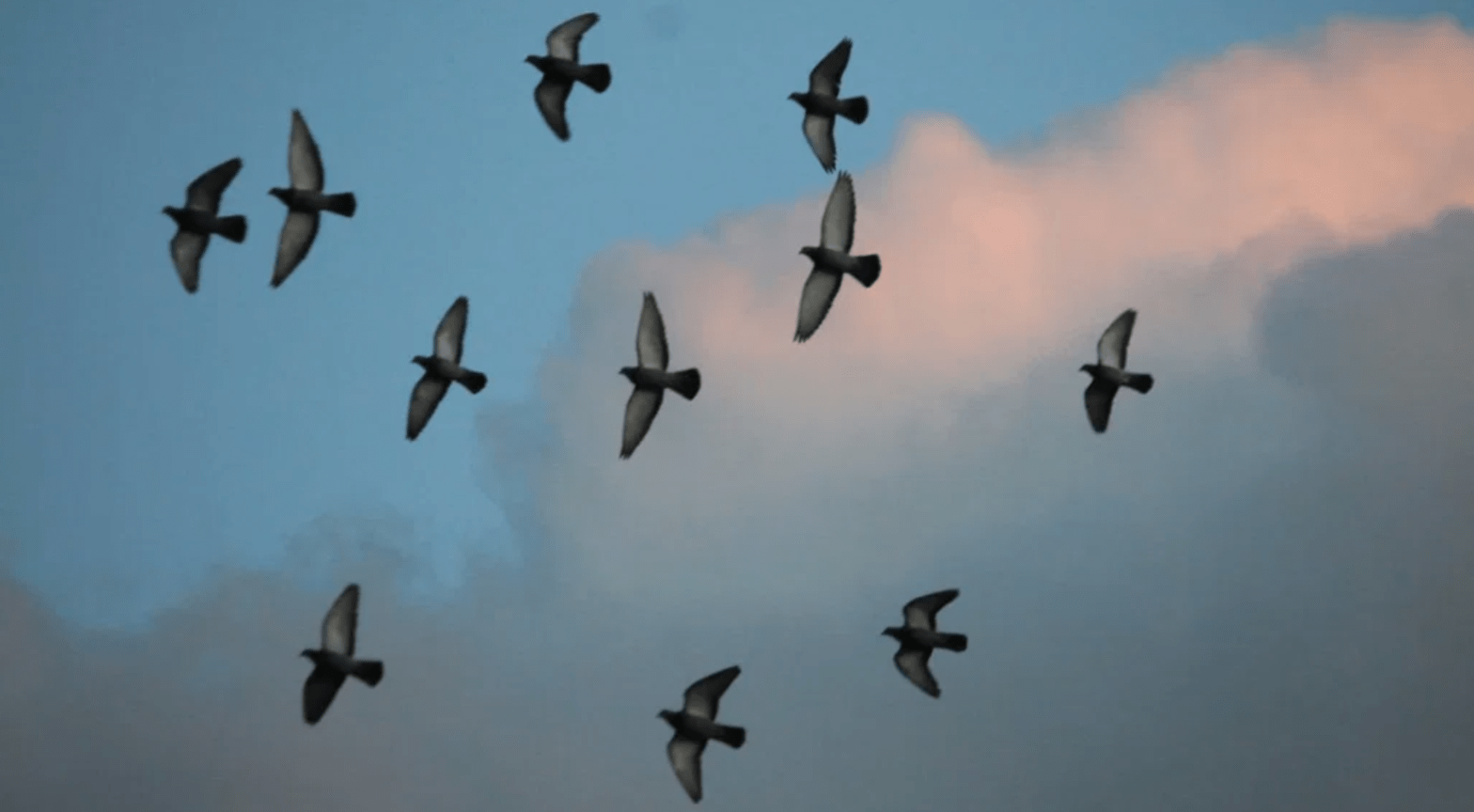
The ancient word of the day is “augury” — meaning the practice of predicting the future based on the observation of natural signs and unusual phenomena such as the migratory patterns of birds. Augury comes from the Latin word “augurium”. A term used to describe divination based on the flight & migration of birds.

Ex Avibus

According to the Romans, every sound and motion the bird made had a different meaning according to different circumstances, times of the year and other factors. The Romans divided birds into two classes:

Ancient word of the day: Augury
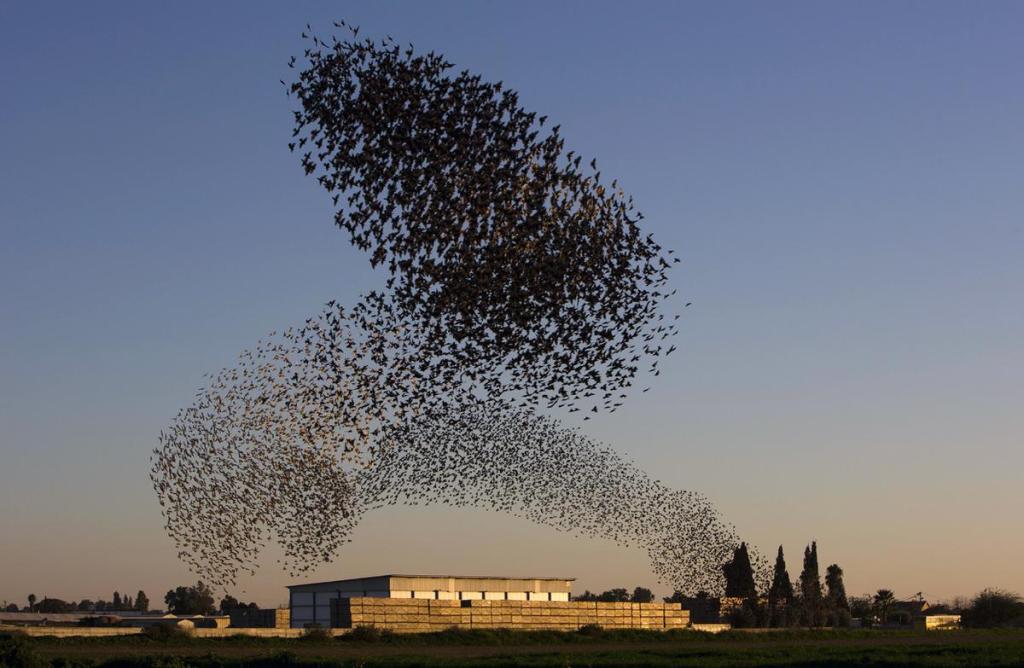
A murmuration of starlings

Oscines

Oscines which gave their auspices or auguries through song. Of this class were ravens (corvus) and crows (cornix), owls (noctua) and hens (gallina).

Alites

Alites were the second group of birds which gave their auguries by flight. Of this class were eagles (aquila) also known reverently as the bird of Jupiter by the Romans (Jovis als) and also the vulture (vultur).

Rider with birds and a winged figure, perhaps Nike (Victory). Lakonian black-figured kylix, ca. 550–530 BC. Source: Wikipedia

Ex quadrupedibus

Auguries could also be found through the behaviour of four-footed animals. Although the Romans didn’t seem to formalise these kinds of augury. Instead Ex quadrupedibus were looked upon as a form of private divination. When a fox, wolf, horse, dog or any other four-footed beast ran across your path in an unusual place, this was considered an augury. Read more

Owl Warsaw Zoo Copyright Content Catnip 2019

The Auguries of Innocence – William Blake

To see a World in a Grain of Sand
And a Heaven in a Wild Flower
Hold Infinity in the palm of your hand
And Eternity in an hour
A Robin Red breast in a Cage
Puts all Heaven in a Rage
A Dove house filld with Doves & Pigeons
Shudders Hell thr’ all its regions
A dog starvd at his Masters Gate
Predicts the ruin of the State
A Horse misusd upon the Road
Calls to Heaven for Human blood
Each outcry of the hunted Hare
A fibre from the Brain does tear
A Skylark wounded in the wing
A Cherubim does cease to sing

Travel: Exploring Ancient Kidwelly Castle in Wales
Birds circle over the chapel ominously in Kidwelly Castle, Wales Copyright Content Catnip 2010

Cromniomancy – Fortelling the future by the direction of growth of sprouts in the garden.

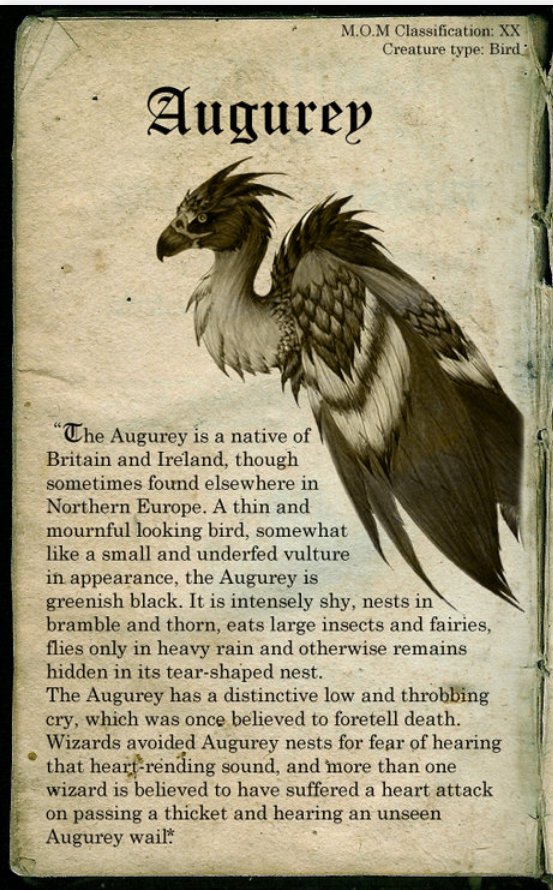
A fantastic beast called an Augurey by JK Rowling

Ancient word of the day: Augury

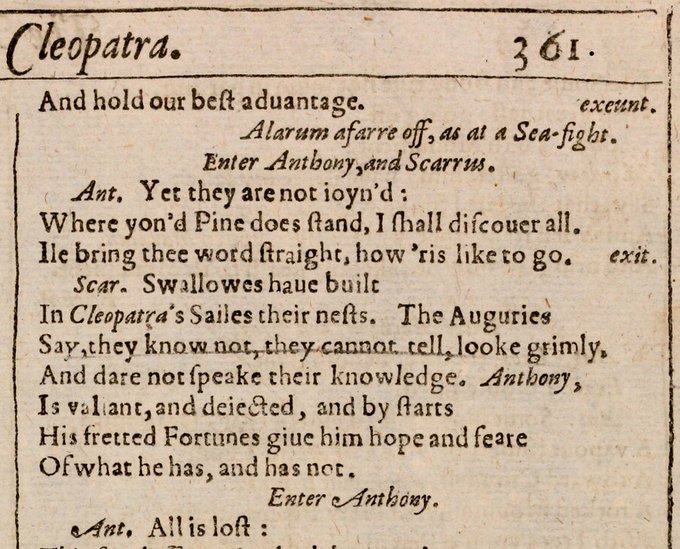
“Swallows have built
In Cleopatra’s sails their nests. The auguries
Say, they know not, they cannot tell, look grimly,
And dare not speak their knowledge.”
Shakespeare, Antony & Cleopatra (c.1607)

Ancient word of the day: Augury

Augurio

A Spanish greeting said at birthdays, Christmas and New years celebrations. Although an augurio is also a bad sign or omen fortelling of bad weather or prediction of bad luck.

Ancient word of the day: Augury

“We defy augury. There is a special providence in the fall of a sparrow. If it be now, ‘‘tis not to come. If it be not to come, then it is now. If it be not now, yet it will come. The readiness is all.” Hamlet, Prince of Denmark

The Knife – A Colouring of Pigeons

One of the weirdest and dopest songs you will ever hear and it has an ancient mystical and ceremonial vibe which I think fits in well with the idea of augury.

The symbolism of The Lady and the Unicorn tapestry cycle

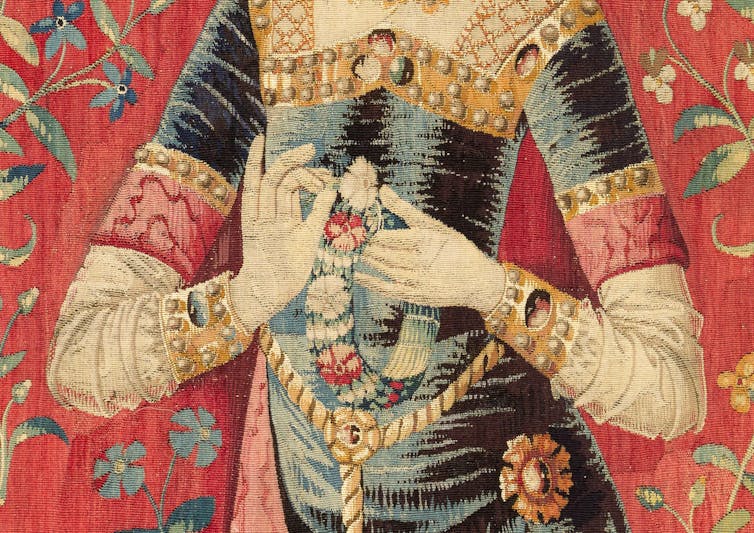
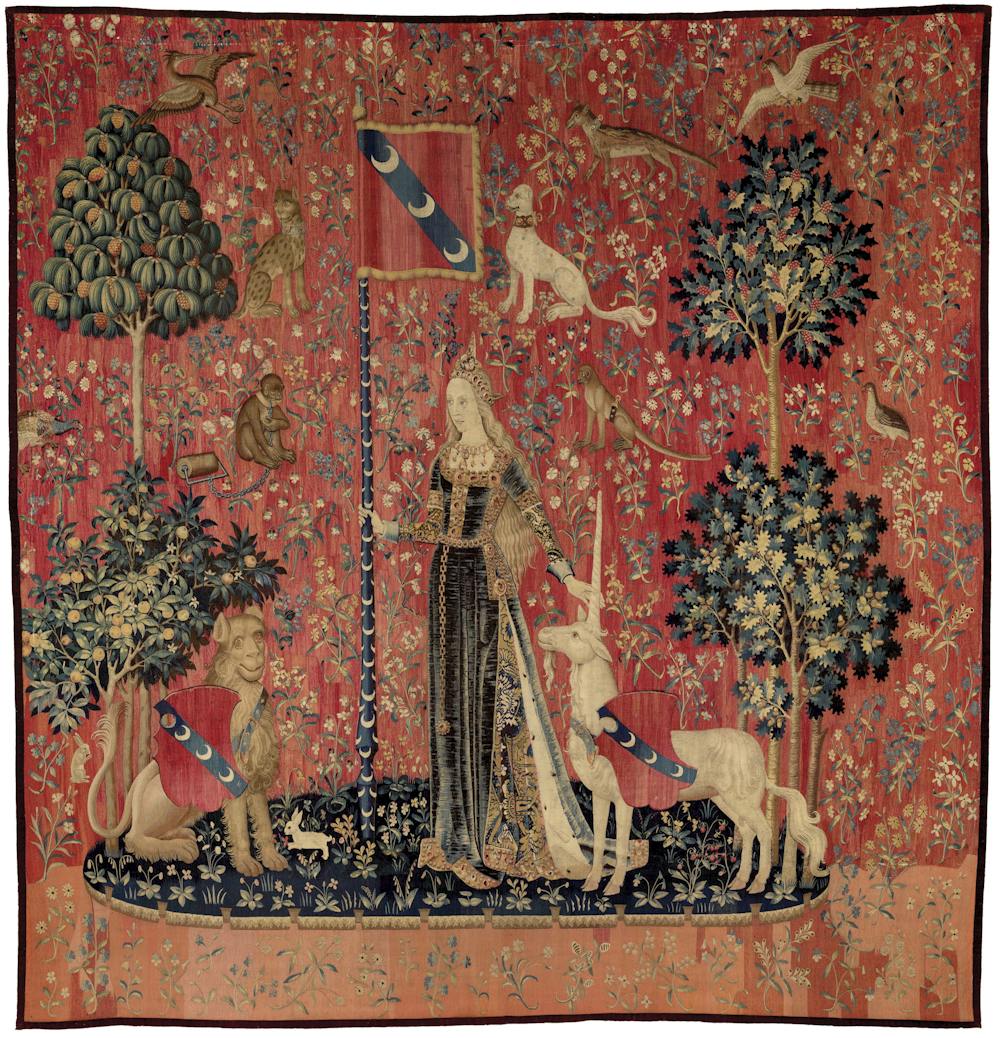
Detail of ‘Smell’ c1500, from The lady and the unicorn series. wool and silk, 368 x 322 cm. Musée de Cluny – Musée national du Moyen Âge, Paris Photo © RMN-GP / M Urtado
Mark De Vitis, University of Sydney

The arrival of The Lady and the Unicorn tapestry cycle at the Art Gallery of New South Wales from February 10 presents a rare opportunity to see a work of art revered by specialists and enthusiasts alike. It has been called everything from the “Mona Lisa of the Middle Ages”, to “a national treasure of France”. Comprising six individual pieces and made around the year 1500, tapestries of such quality are rare, and few examples survive.

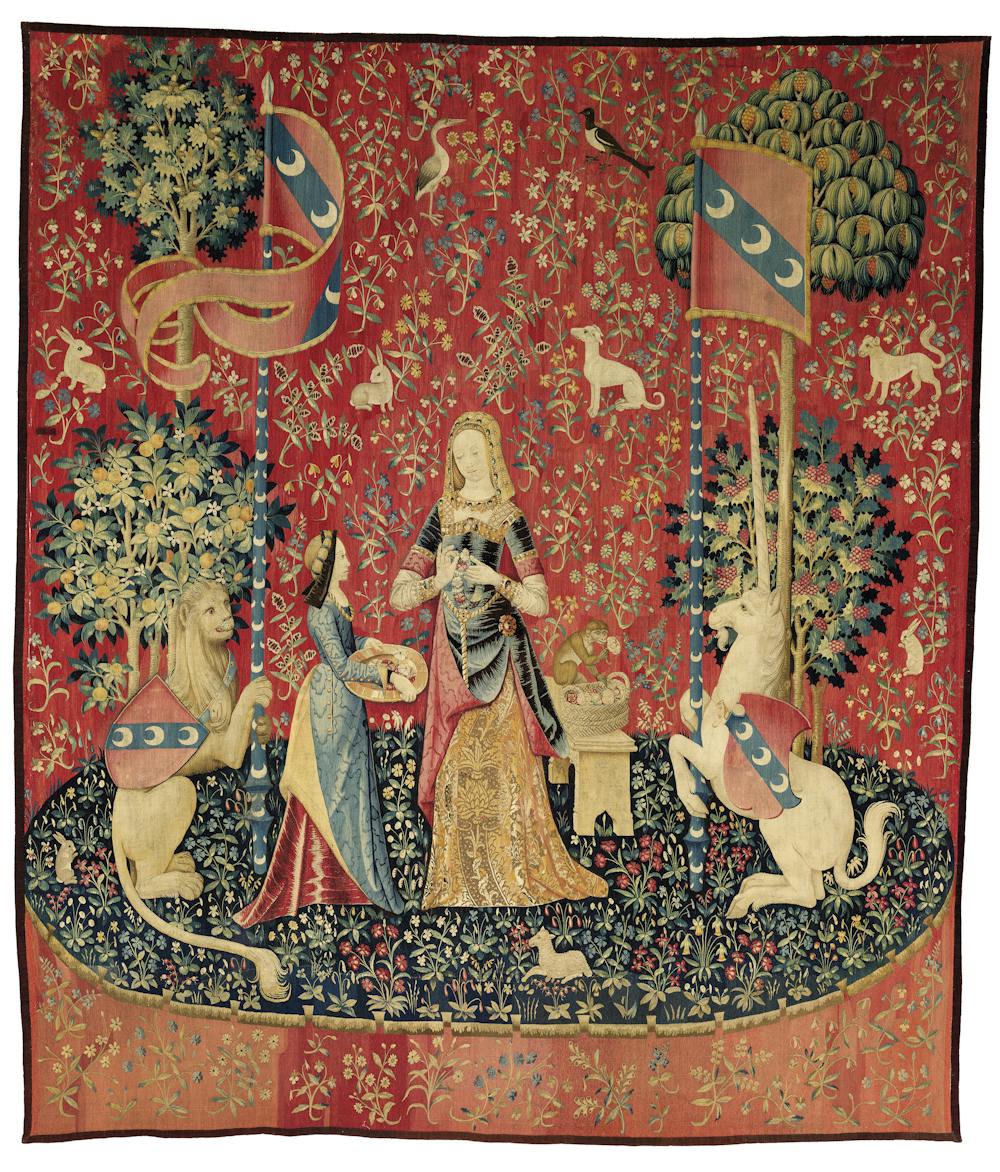
‘Smell’ c1500, from The lady and the unicorn series. wool and silk, 368 x 322 cm Musée de Cluny – Musée national du Moyen Âge, Paris Photo © RMN-GP / M Urtado

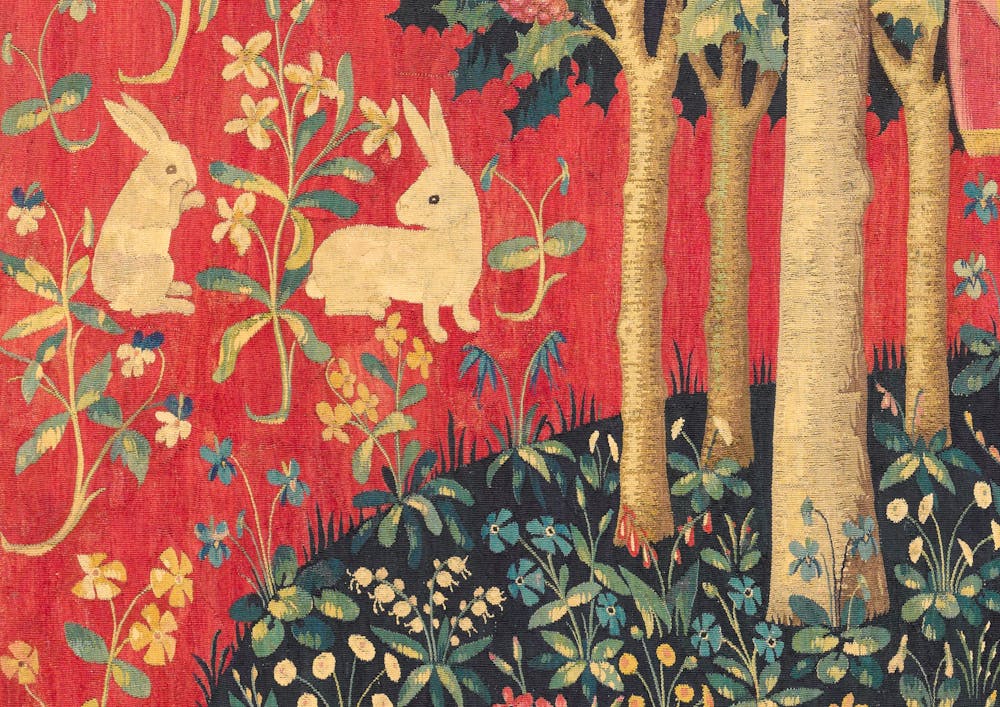
Materially, they are breathtaking. Their elaborate millefleur (“thousand flowers”) backgrounds form hypnotic patterns. The sumptuous stuff from which they are woven – wool and silk, dyed with rich, natural dyes – insulate the beholder (literally part of their original function.) They muffle sound, creating an atmosphere of quiet mediation. The air is stilled, and light is enriched by their surfaces, generating a transcendental aura that draws the beholder into their complex internal universe.

The cycle first came to public attention in the middle of the 19th century, discovered languishing in the decaying château de Boussac, located in central France. Gnawed at by rats and threatened by the dank conditions, they were rescued by the musée de Cluny in 1882, bought for the princely sum of 25,500 francs.

‘Touch’ c1500, from The lady and the unicorn series. wool and silk, 373 x 358 cm Musée de Cluny – Musée national du Moyen Âge, Paris Photo © RMN-GP / M Urtado

The amount paid by the Cluny museum would have represented just a fraction of the original cost of their production, however. Tapestries of such quality would have commanded more than the annual income of all but the richest members of the nobility. More than a battleship. Far more than Michelangelo was paid to paint the Sistine ceiling.

Unsurprisingly then, the patron of the cycle came from a noble family with close ties to the French monarchy – the Le Viste. This is made clear from the heraldic symbols shown in the tapestries themselves. They were most likely designed by the “Master of Anne of Brittany” (so called because he designed a book of hours for the French queen, Anne of Brittany), a preeminent artist of the day.
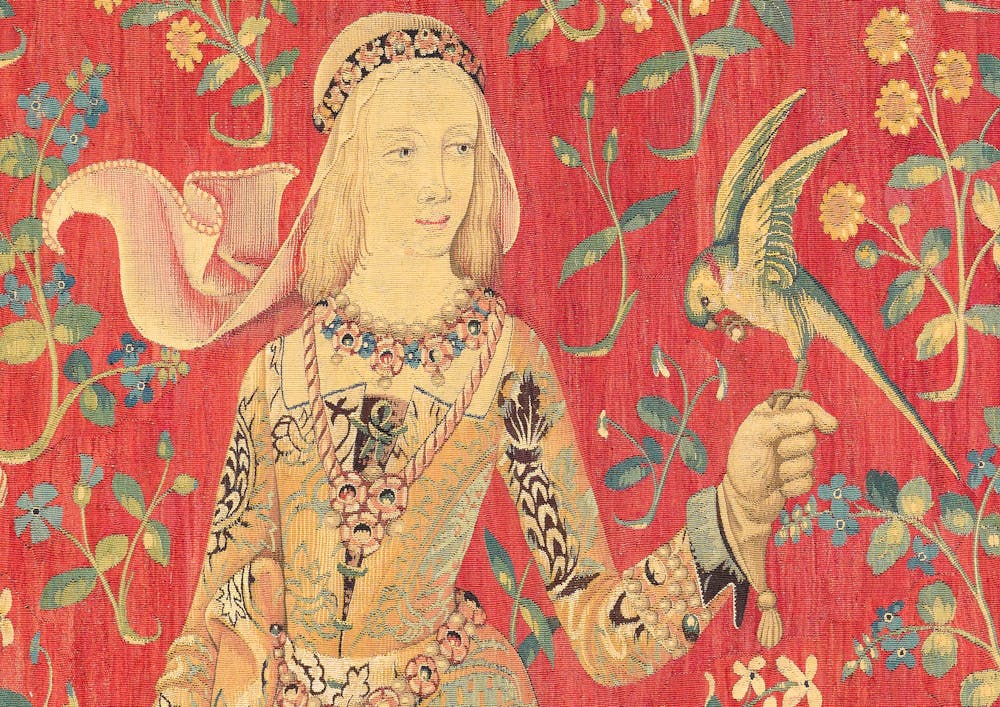
Detail of ‘Taste’ c1500, from The lady and the unicorn series. wool and silk, 377 x 466 cm Musée de Cluny – Musée national du Moyen Âge, Paris Photo © RMN-GP / M Urtado

Though we might fixate on the artist who designed the composition, tapestries were made collaboratively, and the Lady and the Unicorn cycle was probably woven in the Southern Netherlands, not France, for the standard of weaving was higher there.

Given the effort and investment required to produce them, it is little surprise that the subject of the tapestries is complex – something worthy of more than a mere glance. The meaning of the cycle has been much debated. Experts now (generally) agree that they present a meditation on earthly pleasures and courtly culture, offered through an allegory of the senses.

Detail of ‘Taste’ c1500, from The lady and the unicorn series. wool and silk, 377 x 466 cm Musée de Cluny – Musée national du Moyen Âge, Paris Photo © RMN-GP / M Urtado

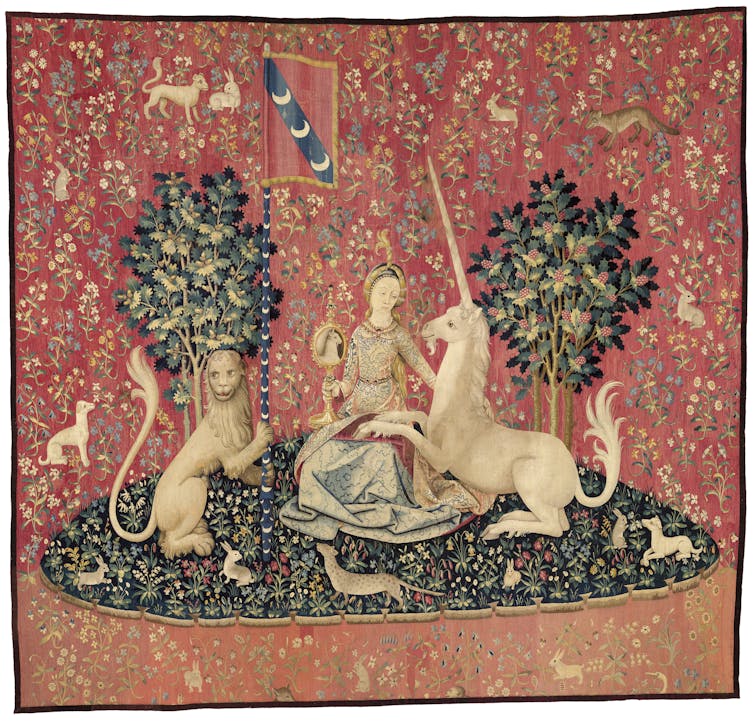
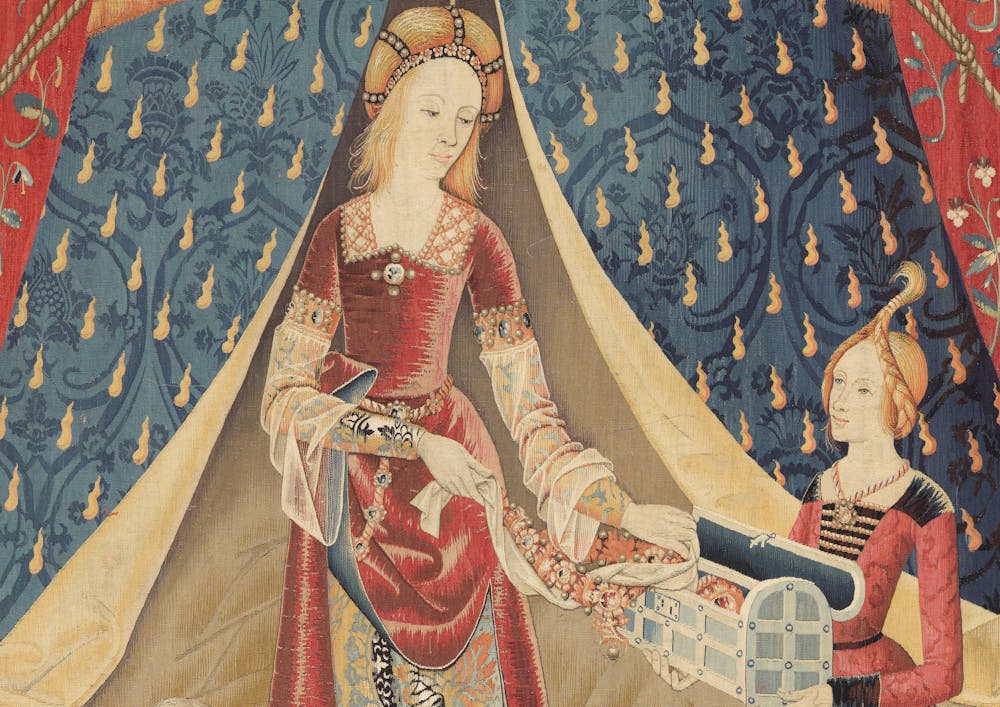
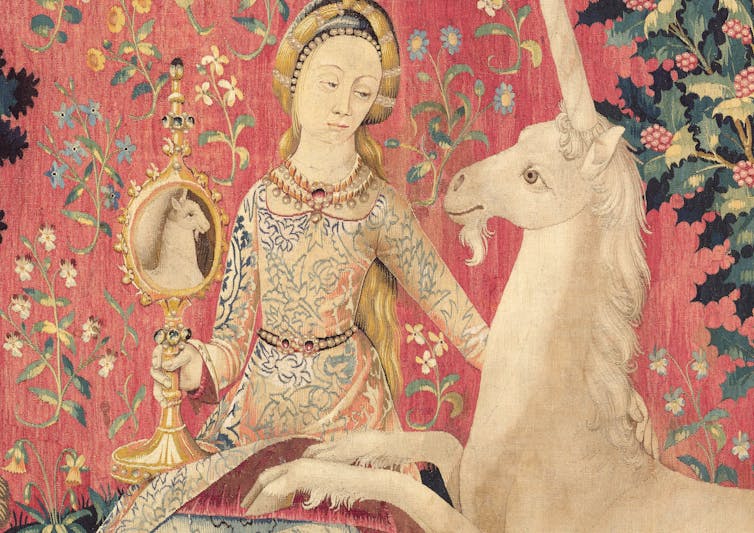
Five of the tapestries each depict one of the senses (Touch, Taste, Smell, Hearing and Sight.) Each shows a woman (the “Lady” of the title) performing some action intended to exemplify the sense in question. In “Smell” the Lady is presented with a dish of carnations. In ‘Hearing’ she plays at an organ. In “Sight”, she holds a mirror, which reflects the image of a unicorn that rests in her lap.

‘Sight’ c1500, from The lady and the unicorn series. wool and silk, 312 x 330 cm Musée de Cluny – Musée national du Moyen Âge, Paris Photo © RMN-GP / M Urtado

Each of these gestures is presented with much charm and grace, conveyed through gently curving lines that show no sharp transitions. Yet, all is not as peaceful as it may seem. For there is a sixth tapestry. Though it is clear that all six are meant to form a unit, as each displays the same basic format and figures, the sixth work breaks the pattern of the other five.

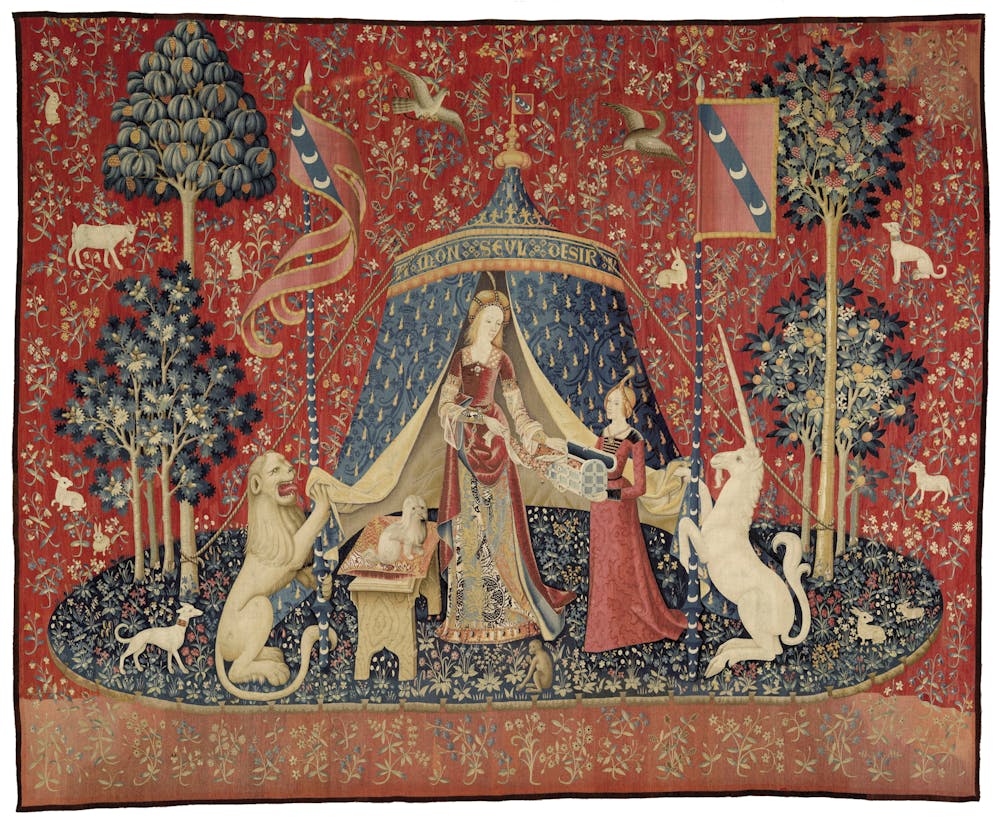
Here, the Lady is depicted returning jewels (worn in the other tapestries) to a casket. She stands before a tent emblazoned with the words Mon Seul Désir (“my only desire”.) Her action does not connect with sensory or empirical experience, as with the other five, but is instead driven by some alternate force – cognition, moral reasoning, or emotion.

‘Mon Seul Desir’ c1500, from The lady and the unicorn series. wool and silk, 377 x 473 cm. Musée de Cluny – Musée national du Moyen Âge, Paris Photo © RMN-GP / M Urtado

A sixth sense

A sixth sense is represented in this sixth tapestry, which presents a further way of knowing the world. This sense seems to have not one, but multiple dimensions. Intellectually, it may be thought of as common sense, or “internal” sense. Morally, it may be understood to encapsulate neo-platonic philosophy’s emphasis on the soul as the source of beauty (read the “good”.) In terms of courtly rhetoric, the sixth sense may be thought of as the heart, the source of courtly love and the home of complex or competing forces – free will, carnal passion, desire.

It is this sixth sense that leads the Lady to return her jewels to her casket. The gesture may be read as a sign of her virtue, an expression of the dominance of her reason over the physical sensations she experiences in the other tapestries, or, of the will as the centre of being. In this interpretation, the phrase Mon Seul Désir could be read not as “my sole desire” but “by my own free will”.

Detail of ‘Mon Seul Desir’ c1500, from The lady and the unicorn series. wool and silk, 377 x 473 cm Musée de Cluny – Musée national du Moyen Âge, Paris Photo © RMN-GP / M Urtado

This multi-layered approach to interpreting the tapestries is echoed in other, localised features. For instance, the unicorn, which is represented in all six tapestries, embodies various, overlapping meanings. Unicorns were common heraldic animals, and frequently appear in courtly literature. Since the second century they were understood to represent chastity or purity. Certainly, this meaning connects with the reading of the Mon Seul Désir tapestry offered above.

The unicorn also acts as a canting emblem – that is, a pun on the name of the patron. Le Viste may be pronounced more like “Le Vite” in French, meaning fast. Fast, like a unicorn.

Detail of ‘Sight’ c1500, from The lady and the unicorn series. wool and silk, 312 x 330 cm Musée de Cluny – Musée national du Moyen Âge, Paris Photo © RMN-GP / M Urtado

The inclusion of the unicorn also contributes to the sense that the tapestries intentionally encourage a viewer to evaluate types of knowledge or understanding. Representations of unicorns (both past and present, it could be argued) raise questions regarding how we come to know, and how empirical knowledge exists alongside tradition, culture, imagination, and creative expression.

More than a series of objects with remarkable aesthetic, historical and economic significance, the Lady and The Unicorn tapestries offer an opportunity to confront how different forms of understanding and experience overlap to form beliefs, shape perspectives, and precipitate action.

The Lady and the Unicorn tapestries will be at the Art Gallery of NSW from February 10 to 24 June. The gallery is mounting a series of programs around the tapestries.

Mark De Vitis, Lecturer in Art History , University of Sydney

This article is republished from The Conversation under a Creative Commons license. Read the original article.

Happy yule

Today is the longest night and the shortest day in one of the most southerly capital cities in the world. There rain and hail is incessant and the amber glow of my salt lamp guides my thoughts towards reflecting on life, love, and the progress of time.

Yule is a time to give thanks and to take stock of your life. In amongst the chaos of the world, I am grateful to be alive right now, in a warm house with a working body and a working mind. Just giving thanks for the simple things and trying to live fully in the moment is a powerful way to celebrate yule. Remember that you are loved.

Six Exciting Frontier Novels Set at the Extreme Edges of Civilisation

Sometimes you want to be right there at the edge of an icy cliff staring death right in the face. But not really, just in your imagination. Here are some poetic, beautifully written and profound adventure and survival stories that will take you to dangerous places, without having to leave your sofa.

To the Bright Edge of the World by Eowyn Ivey

 To the Bright Edge of the World is set in Alaska in 1885, a time of frontier exploration, prospecting and hardy homesteaders wanting to carve out an existence on the edge of the known world. Throughout the book is the theme of transformative liminality and exploring the gap between waking and sleep, tame and wild, imagined and real. The book chugs along at an enjoyable pace and the writing is crisp, engaging and beautifully evocative of time and place. Read more

The Book of Strange New Things by Michel Faber

Peter and Beatrice Leigh are devoutly evangelical Christians living in an imagined near future. There’s a colony of humans living on a faraway planet called Oasis. Peter is handpicked to convert the alien population of Oasis. The book strangely enough doesn’t read like science fiction, even though it’s set on another planet. It’s a novel that’s relevant to the human condition as War and Peace or Anna Karenina. The Book of Strange New Things is endlessly compelling and you won’t be able to put it down. Read more

The Ice Master by Jennifer Niven

This is the ultimate Arctic voyage novel, based on real events. The 1913 Canadian voyage on the Karluk was the worst planned arctic mission in history. Niven deftly and expertly crafts the narrative including how the crew manage to survive in the harsh polar winter, with plenty of evocative descriptions of the quality of the wind and the cracking forboding nature of the ice breaking around them, as the Karluk is stranded and floating on a wayward ice floe. In her hands, this historical account reads like a first-rate novel and thunders along at a cracking pace. I won’t give away any of the story here. This is really worth getting and reading if you want to envelope yourself in pure escapism of a tension-filled thriller in an inhospitable land, all from the warmth and comfort of your own sofa.  Read more

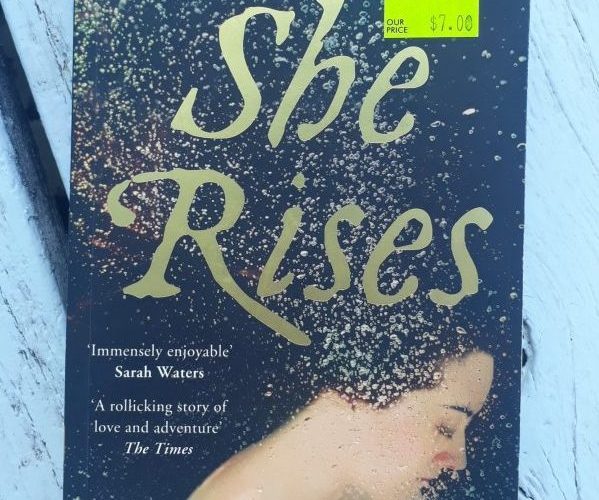
She Rises by Kate Worsley

She Rises is an erotic, sea-faring adventure by debut novelist Kate Worsley. A word to the wise, the book is very raunchy and contains a lot of sex and violence. If that is not a deterrent to you (and is in fact an attraction) then dive right in, you will love it! Although this book contains a lot of the typical ‘yo-ho-ho and a bottle of rum’ kinds of narrative tropes you would find in a sea-faring historical novel. This novel is anything but typical. The language is inventive, exhilarating and vivid. Read more

The Story of a Shipwrecked Sailor by Gabriel Garcia Marquez

Garcia packs a punch with  this short and dramatic novel about sailor Luis Alejandro Velasco who is the lone survivor of a shipwreck and is cast adrift in the vastness of the ocean.

This short novella is incredibly engaging and visceral in its grisly realism of what it would be like to suffer starvation and extreme thirst at sea. Also he weaves a powerful tale of the extreme loneliness and strange delusions that visit someone who is completely deprived of all sensory input.

I’ve never really gotten into survival stories before but this one is really amazing! I would highly recommend it. Read more

The Story of a Shipwrecked Sailor by Gabriel Garcia Marquez

Island of Wings by Karin Altenberg

Island of Wings is a dazzling and evocative fictional story (that is loosely based on the life of) a Church of Scotland missionary Neil MacKenzie and his wife Lizzie who move to the remote island of Hirta in St Kilda. Set in the early 19th Century, it’s a riveting tale about how remote communities band together in the face of adversity and extreme environments. The two sassenachs (foreigners) on the island are trapped in their own isolation and have to navigate through the trials of their early marriage in an isolating, wild, superstitious and unpredictable landscape. Characters in this novel are expertly crafted and draw you in like a long lamplight in the gloaming. Despite the miseries and the hardships of the St Kildans, Neil and Lizzie, there is a warmth, beauty and magic to this novel. Read more

Book Review: Island of Wings by Karin Altenberg

Do you like adventure novels or stories of survival? Do you have any others you would like to share with me? Please let me know below. If you manage to find these books…I hope you enjoy them!

10 Uplifting things I found on the internet this week #7

1. Moons of Nirn: A 90 minute atmospheric ambient mix

An epic and transporting mix of emotional ambient music, along with stunning footage of the Aurora Borealis. This makes for an awe-inspiring background soundtrack to the rest of my top ten.

2. Wycrow: Finding Stillness

Inspiring fellow blogger Wycrow talks about how to find stillness while remaining true to himself…

“Deep within the still centre of my being, may I find peace”. – From the Druid’s prayer for peace.

Frank MacEowen (2002) uses the Irish Celtic word sitchain to describe a sense of peace that can be entered into to become an sith, in alignment with “the shimmering peace of a place”. MacEowen writes: “There are many ways of becoming an sith, of becoming the peace: Engaging in deep meditative states within the natural world. Hillwalking and going on pilgrimage. Making ablutions in a stream or spring…All these are ways of entering sitchain“. Read more

3. Eichhörnchen mit Babies (squirrel with babies)

An enchanting introduction to a tiny furry woodland creature and her baby.

4. Cheeky reptiles eating a plate full of salad in Japan

5. A lantern-like jellyfish that lives 4 km down in the Mariana Trench

6. Kim Grant (lovely and inspiring vlogger) stays in a cute lighthouse on the Isle of Skye

You too can stay in the Eilean Sionnach Lighthouse Cottage on Skye, with AirBnB 😉

7. Peace with Anxiety: Why Suffering is Necessary

Inspiring fellow WordPress Blogger Peace With Anxiety talks about suffering and why it’s necessary….

It’s not a secret that no one likes to suffer. Suffering has been a constant in human life experience. This is because suffering is essential for human expansion and evolution of consciousness. Without suffering, the world has nothing to change. 

This is not to say that suffering is necessary to feel loved. This only means suffering is necessary for expansion of human awareness. So as long as we are incarnated on earth, we are supposed to encounter suffering inorder to transcend it and thus integrate it. Read more

8. How we integrate information, in amusing and accurate visual models

Pictures speak louder than words to explain how people process information…

9. Finding resilience together: A calming yoga class with Esther Ekhart

10. Lovely Poppyshell recites Maya Angelou’s ‘Still I Rise’

A soothing and inspiring presence on Twtter, Poppyshell always creates inspiring content for anyone who is wanting to reflect on or heal from trauma or adversity.

Bonus: The Academy of Ideas: The Problem of Anger

This one seems prescient and relevant this week as the world reacts and goes crazy. How do we constructively deal with injustice and create change in a lasting way, without descending into chaos?

Have you found anything inspiring on the internet this week that you would like to share?

Organic skincare review: Kereru

*This is not a paid promotion – I’m just a fan of this brand.

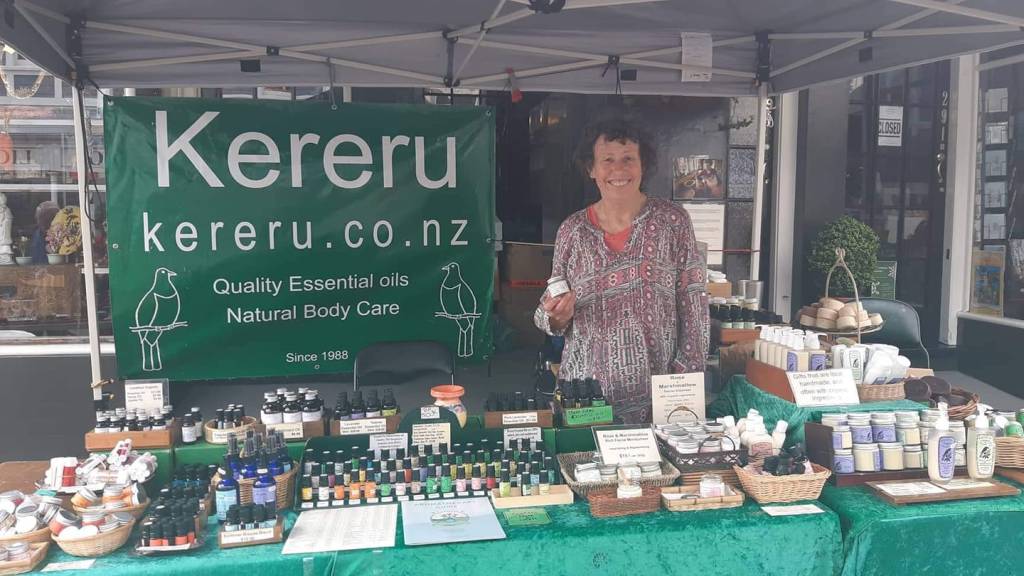
I found this non-descript, non-advertised, old-fashioned brand of organic skincare at an annual street festival in Wellington called Newtown Festival, where the friendly owner/creator was selling her wares.

Organic skincare review: Kereru
Kereru’s market stall

I tried Kereru’s skincare without expecting much and was completely blown away by the quality of them.

A bit of disclaimer before we get going on this gushing review – Kereru (inexplicably) don’t deliver products overseas. So if you are outside of New Zealand, best to not continue reading as you won’t be able to buy it anyway.

Basically Kereru create highly potent, highly aromatic skincare that is made from all organic botanicals such as marshmallow, lavender, calendula and rosehip. The botanicals are grown on their own property, a sprawling and beautiful farm estate in the Pohangina Valley, Palmerston North. They moved to the valley back in 1981 and have quietly building a strong local following ever since then.

Organic skincare review: Kereru
Aromatic and very soothing facial oil from Kereru

I find it absolutely miraculous that such a humble, down-to-earth and 100% real brand can exist for so long with pretty much ZERO advertising or fancy branding. That they have been successful and grown their business and have a proper production facility and farm is a testament to the quality of their products alone…this in spite of their no frills brand, absolutely zero marketing and a very badly made website, where it’s impossible to order things too!

Organic skincare review: Kereru
Incredible chocolate soap made from organic cacao, smelling good enough to eat
Organic skincare review: Kereru
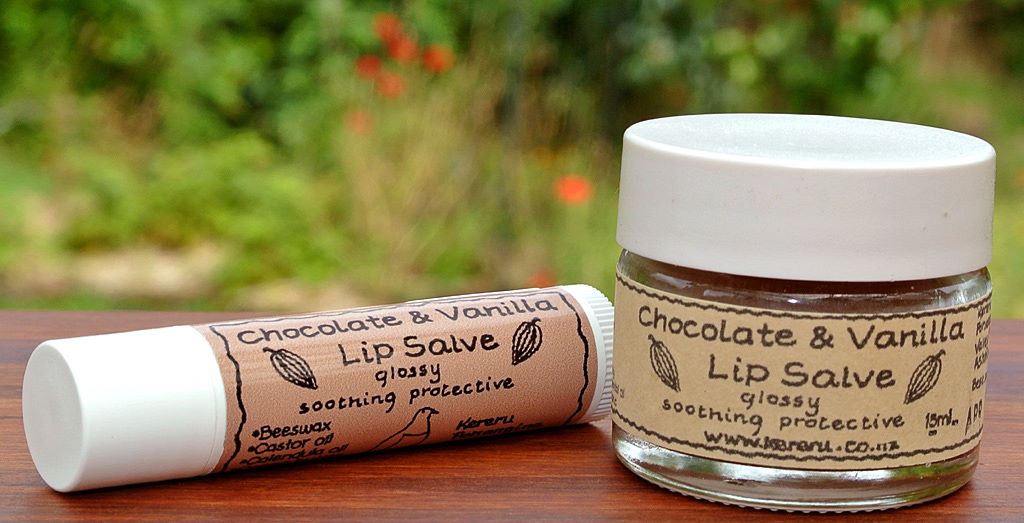
A chocolate and vanilla lip balm – also good enough to eat.

They have hand-drawn labels and a very DIY aesthetic. Given how effective their products are, and how AMAZING they feel on the skin – this old-fashioned and DIY brand has become a beloved friend to me, making me feel great and pampered, and kept me sane – even while the COVID-19 chaos was going on outside in the world.

“We have always endeavoured to produce effective products with simple but quality Natural Ingredients; and to sell them at a price the ordinary person could afford. The product mix has altered and grown, but this fundamental philosophy has not changed. Our products do not use mineral oils, synthetic perfumes, preservatives, or any of the many dubious additives found in most commercial products. Lately we are pleased to be able to source more essential oils and other ingredients that are certified organic.” From the Kereru website.

They even use their own organic calendula flowers grown on their farm.

I can’t speak highly enough of this brand and its products. I recommend these ones:

  • Rose & Marshmallow Rich Facial Moisturiser
  • Rose & Marshmallow Moisturising Facial Cleanser
  • Scented Rosehip Facial Oil
  • Lavender Cream Calendula & Manuka Honey – this is their signature product and it has a soothing and relaxing lavender smell and sumptuous and rich skin feel.
Organic skincare review: Kereru

10 Uplifting things I found on the internet this week #6

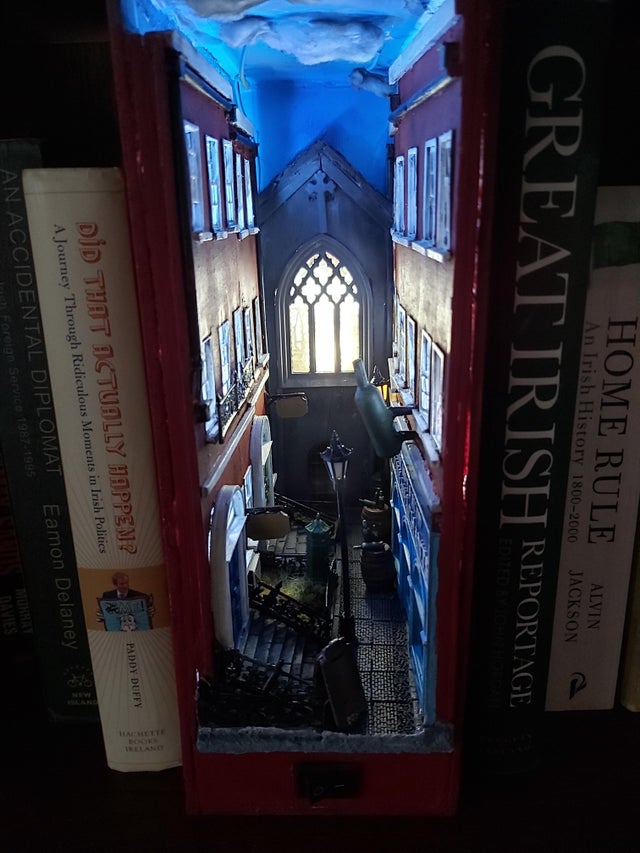
1. A book diorama of Georgian Dublin

2. Bunraku’s atmospheric and chilled mix of ambient tracks inspired by different parts of Tokyo

3. The world’s smallest and deadliest cat

4. Tree trunk landscape art by Alison Moritsugu

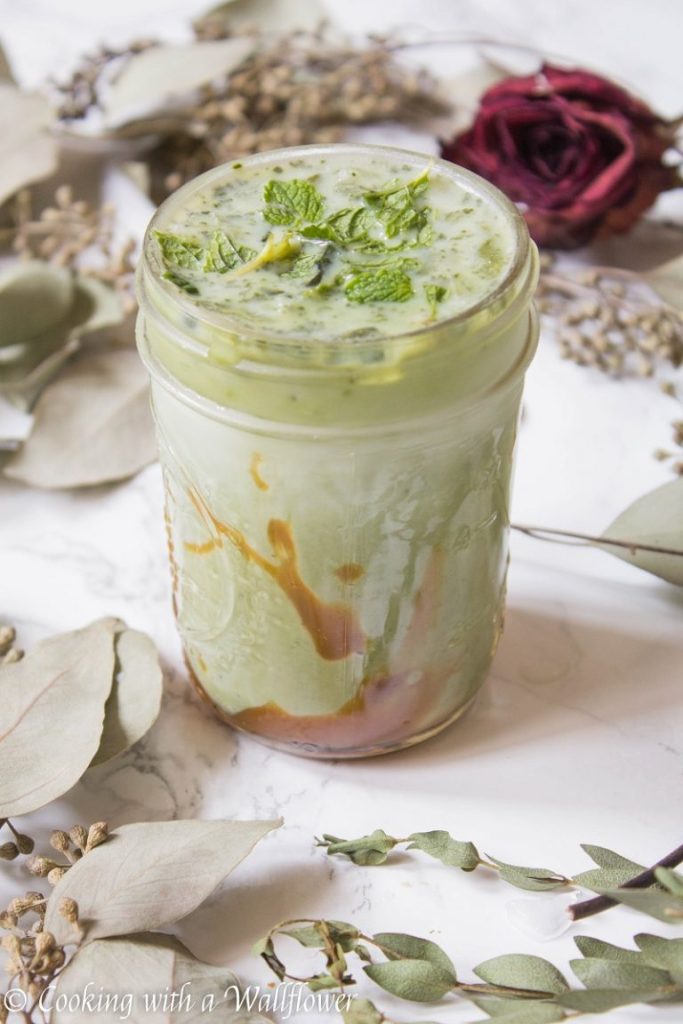
5. A recipe for salted caramel matcha latte by Cooking with a Wallflower

6. These stunning wooden carvings from the Tang dynasty

7. Ableton: Easily learn how to make synth sound effects

8. The man in the moon is looking at you…

9. The story of Māori creation

In this video we see the Sky Father – Ranginui and  the Earth Mother Papatūānuku and how they separated, before joining Maui and his brothers on a fishing trip which culminates in the catch of the North Island of New Zealand. Aoraki and his brothers also go on a sea voyage, and this results in the formation of the South Island.

10. Wintergatan: A marble powered wooden music machine that makes great sounding electronic music, and its mad genius creator…

Found on Reddit

Bonus: An abstract carpet by New Zealand artist Genevieve Griffiths

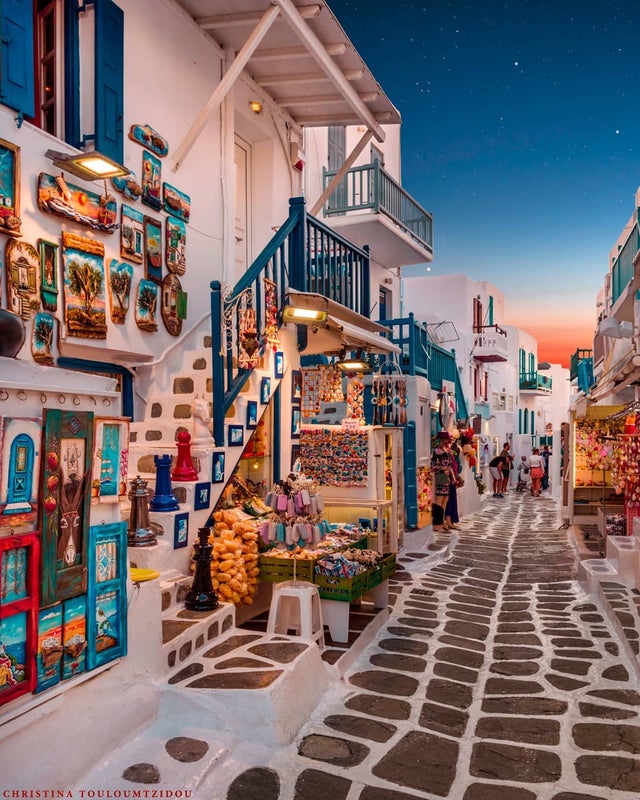
Bonus: A market in Santorini, Greece at Dusk

Via Reddit

The world according to Anton Chekhov

Anton Chekhov defied description with his writing. With his limber and sharp mind he was able to craft and bring alive 18th Century Russia in such a delicate, poignant and deeply emotional way that it will leave you breathless and gasping. To read his short stories is to be plunged into a completely different realm. Although written over a century ago, the characters and their emotions and struggles resonate as clearly as a church bell.


“Only one who loves can remember so well.”

― Anton Chekhov, Selected Stories of Anton Chekhov


“Being in love shows a person how he ought to be.”

― Anton Chekhov, Select Tales of Anton Chekov


 “They say philosophers and wise men are indifferent. Wrong. Indifference is a paralysis of the soul, a premature death.”

― Anton Chekhov, Selected Stories of Anton Chekhov


“The role of the artist is to ask questions, not answer them.”
― Anton Chekhov


Six principles that make for a good story:

1. Absence of lengthy verbiage of a political-social-economic nature; 2. total objectivity; 3. truthful descriptions of persons and objects; 4. extreme brevity; 5. audacity and originality: flee the stereotype; 6. compassion.

― Anton Chekhov

Opening Pandora’s Box: Phrases Borrowed from the Classics and the Stories Behind Them by Ferdie Addis

This is a light-hearted and easy journey through the history of language. Particularly well-known phrases and words that originate from ancient Greece and Rome. I have to admit that reading the Iliad, Aesop’s Fables and other long epics from this time has been something I have continually wanted to do, but put off because of a lack of time and patience.
So to find this book as a guide to common phrases from antiquity, helps me to shed some light on these classical stories, from the point of view of common turns of phrase. Others will surely disagree with me and tell me that I should read the longer, original stories. However Opening Pandora’s Box is a cheat’s guide to the English language and to how remnants of ancient Rome and Greece aren’t only in the Mediterranean but infiltrate every aspect of our daily lives.

For example the word cereal derives from the name of one of the quieter Roman deities, Ceres. The Romans decided she was the same goddess as the most important deities in ancient Greece – Demeter, and so they honoured her with a festival in April called Cerialia. While other gods demanded the slaughter of many animals, Ceres was far more chilled out and was kept happy with only the gift of a dry millet cake.

The origins of many other common expressions are explained, such as:

Sour grapes

The goose that laid the golden egg

The lion’s share

The tortoise and the hare

A wolf in sheep’s clothing

The boy who cried wolf

Struck by cupid’s arrow

If you are in love with language, storytelling, folklore or classical history then you will love this book. It’s short at only 162 pages. However Opening Pandora’s Box punches well above its weight in terms of quality with many amusing and shocking stories from classical history to enjoy.