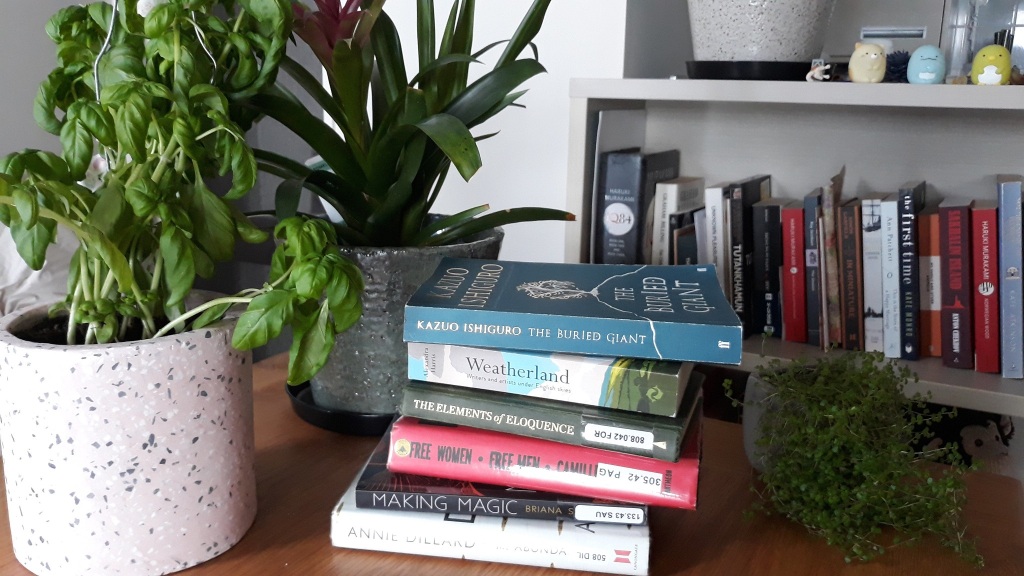
Book Review: Making Magic by Briana Saussy

Briana Saussy writer and founder of the Sacred Arts Academy in San Antonio, Texas has written an intimate, enjoyable and joyful guide to the art of creating spiritual rituals and ceremonies in your home. Making Magic is organised by technique and material. It makes the everyday rituals in our lives sacred and adds pleasure and meaning to them. Saussy is a skilled and poetic writer. Her evocative and stirring prose ushers you into the netherworld between the physical and spiritual realms.

Everything from time, the body, gardening, bathing, cooking, lighting candles and simply taking time to breathe and appreciate your home and your life is made sacred with the help of this book.

Instead of presenting abstracted occult or pagan concepts – this book helps you to meditate on and appreciate the moments that are sacred in your life and encourages you to use ritual to mark the important, everyday occurrences in your life. It’s a highly practical guide to pagan and witchcraft rituals. Saussy’s advice is pragmatic and only requires everyday items you can find around your home for performing the rituals. I really enjoyed this book. If you’re looking for a practical guide to infusing more magic into your busy life, this is the book – I would definitely recommend it. 4.5*/5

Book Review: The Buried Giant by Kazuo Ishiguro

No news of the affairs of men

In the age of omnipresent news and digital devices dominating our every waking moment, this poem by 18th century Japanese hermit poet Ryokan seems very relevant. No news of the affairs of men. How lovely to be without the news of the world. Whatever the news of the day, Ryokan sure as hell didn’t give two shits about it. He lived as a hermit and begged for foods in towns, he played with the village children to the scorn of the elders. He didn’t try to do anything noteable to make him revered. However the wisdom of his poetry made him well-known to Zen Buddhists forever after. Here’s the poem below…

My hut lies in the middle of a dense forest;
Every year the green ivy grows longer.
No news of the affairs of men,
Only the occasional song of a woodcutter.

The sun shines and I mend my cloth;
When the moon comes out I read poems.
I have nothing to report my friends.
If you want to find the meaning, stop chasing after
so many things.

Historic Jukebox: Henry David Thoreau & Fleet Foxes http://wp.me/p41CQf-9V

Ryokan

One Robe, One Bowl. The Zen Poetry of Ryokan

Ancient Word of the Day: Borbhan

The word Borbhan comes from Gaelic. It’s the gentle murmuring or purling sound made by a stream; also the sound of small stones falling.

Every Picture Tells a Story: Among the Irish Faeries and Norse Gods
Hiking in Ireland. Copyright Content Catnip 2008

Ancient example

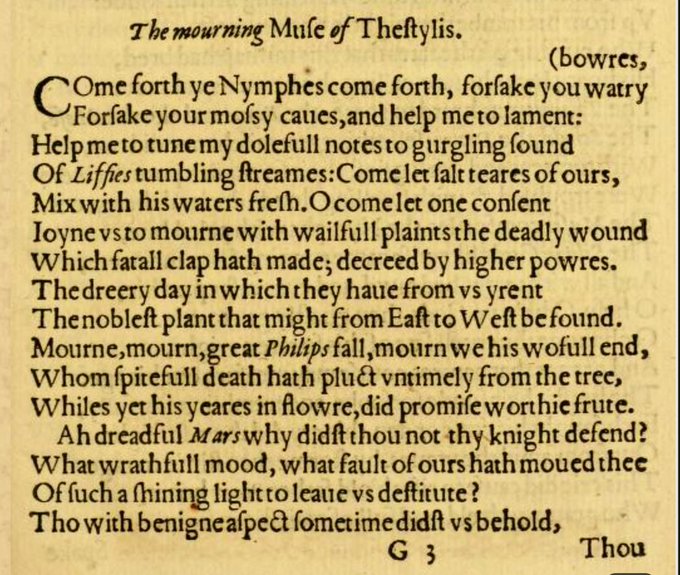
”Help me to tune my doleful notes to gurgling sound Of Liffey’s tumbling streams: come, let salt tears of ours, Mix with his waters fresh.” – Edmund Spenser, 1595

Ancient Word of the Day: Borbhan
Source: Archive.org
An excellent MTB adventure in Huka Falls, Taupo
A mystical stream filled with bright green microbial mats in Rotorua, New Zealand Copyright Content Catnip 2017

Kletteren

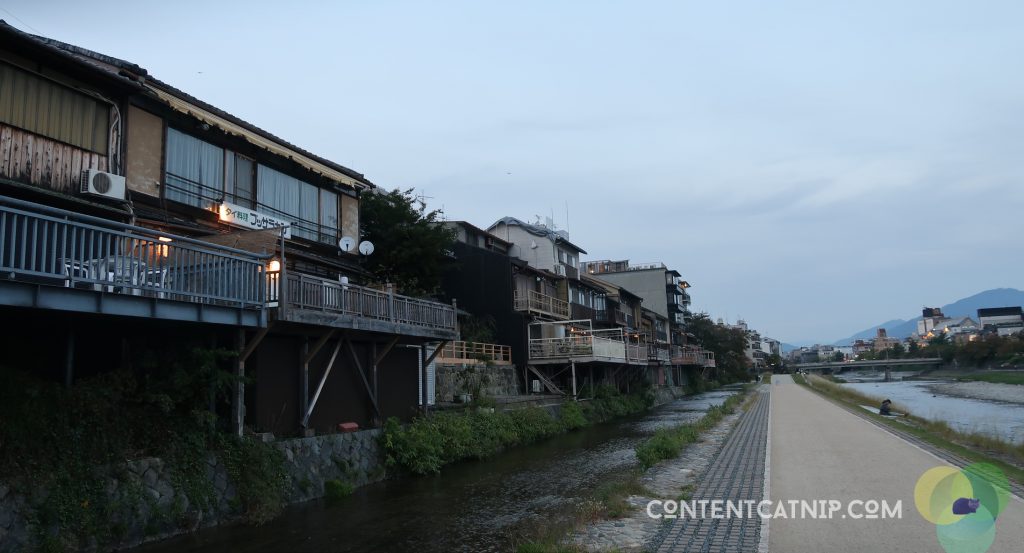
Travel: Cycling adventures along the Kamo river, Kyot
A river and a stream in Kyoto. Copyright 2018 Content Catnip

Kletteren is a Dutch word that’s similar in meaning. It’s perfectly onomatopoeic because it means the sound of both water and stones tinkering and clattering together at a fast pace.

Ancient word of the day: Arachnid

According to ancient Greek myth, the first spider to ever live was a once human girl named Arachne.

She lived in the ancient city of Lydia in Turkey and was famous for her ability to weave beautiful clothing.

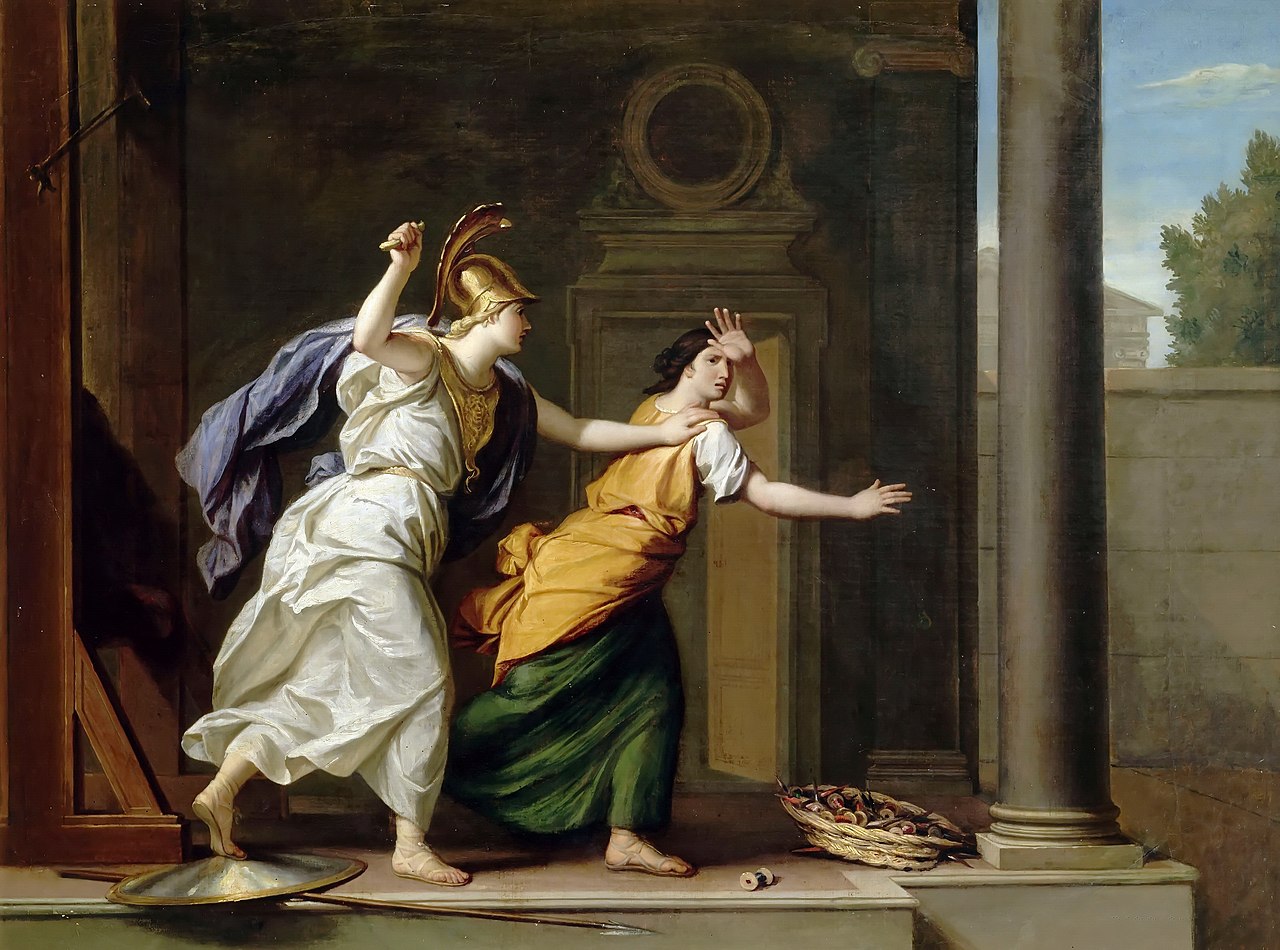
Arachne gained fame for her weaving and became boastful of her ability, telling people that her weaving was far more beautiful than anything made by the goddess Athena.

Athena, as the patron goddess of crafts became highly insulted by this claim.  She challenged Arachne to a weaving contest.

Ancient Greek loom weights. Exhibited in the Room 12 (“private life”) of the Kerameikos Archaeological Museum (Athens). Picture by Giovanni Dall’Orto, November 12 2009. Source: Wikimedia.

Arachne wasted no time and produced a mocking work of that depicted the gods behaving badly. It was an impeccable piece of weaving that won the contest. Arachne had beaten Athena at her own game.

Athena’s response was swift and severe – she turned Arachne into a spider, and doomed her forever to weave webs for the rest of time.

Minerva and ArachneRené-Antoine Houasse, 1706 Source: Wikipedia.
Terracotta lekythos (oil flask), attributed to Amasis Painter (ca. 550-530 BCE). Source: Met Museum

The odds in favour of you being born were slim

“Imagine a speck of dust next to a planet a billion times the size of the earth. The speck of dust represents the odds in favor of your being born; the huge planet would be the odds against it. So stop sweating the small stuff. Don’t be like the ingrate who got a castle as a present and worried about the mildew in the bathroom. Stop looking the gift horse in the mouth—remember that you are a Black Swan.”
Nassim Nicholas Taleb, The Black Swan: The Impact of the Highly Improbable

The odds in favour of you being born were slim | Nassim Nicholas Taleb, The Black Swan

Book Review: The Mind in the Cave by David Lewis Williams

I grabbed a copy of this book fully expecting to love it. The Mind in the Cave is packed with information about ancient history, anthropology, archaeology and the Lascaux and Chauvet cave complexes – some of my favourite subjects. Although I have to say that this book was written in a style that was confusing to read, difficult to wade through and some of the information didn’t make sense, even to this non-expert on the topic.

Book Review: The Mind in the Cave by David Lewis Williams

The good parts – the book is beautiful to look at with some interesting case studies and illustrations. However the way that information is organised is chaotic and difficult to follow.

Lewis-Williams only very tenuously answers the questions of where creativity and consciousness originate from and the genesis of creativity in ancient cave art. Instead, his arguments delve into the grey and murky areas of dreaming and ancient shamanism as sources for ancient creativity – in other words social origins, rather than exploring brain development, genetic inheritance, Darwinism and biology as a basis for the origins of creativity. There’s no real solid conclusions or arguments to surmise from this book, because of the rambling, long-winded quality to the writing. If you look only at its description, this book seems really exciting, however it failed to deliver. The chaotic and confusing writing style and lack of solid arguments or conclusions made it an incredibly frustrating reading experience for me. I would not recommend it. 2.5/5.   

Laid back self-isolation mix #1

Hi my friends. I am going to start doing semi-regular playlists of music that are laid back, joyful, soul warming. Music that will help you to get through hard times in self-isolation, particularly if you are separated from those you love, or if you are feeling lonely.

These mixes will be eclectic styles – house, ambient, world, 70’s soul, jazz, big beat, hip-hop a bit of Polish funk thrown in. Anything that makes you feel good. Best heard with good quality headphones. 4

Also just putting it out there, if anyone wants to have a chat, shoot me a private message and we can do a whatsapp chat or exchange some emails. It’s physical isolation not social isolation after all, so let’s stick together.

PLAYLIST #1

Ptaki – Krystyna
Tilt – Mówię Ci, Że (Roberto Bedross Edit)
Electric Guest – American Daydream
Time Warp – Smoke Miash
Dj Shadow & Cut Chemist – Funky
Cymande – Dove
Byron Metcalf – Heart Warriors
Snoh Aelegra – Nothing burns like the cold
Ptaki Jak Ptaki
The Kills – Echo Home
The Brian Jonestown Massacre- Anemone Jennifer Lara – I am in love
Still Corners – Strange Pleasures
Curtis Mayfield – Diamond in the Back
The Babe Rainbow – Planet Junior
FFRANCES – would you like me to continue?
Sleepy Sun – Fever
Peter Bjorn and John – Young Folks
Diiv – Druun
Junip – Don’t Let it Pass
Bent – Magic Love
Bent – Always (Ashley Beedle’s Mahavishnu Remix)
Snorri Hallgrimsson – Chasing the Present
Aldous Harding – The Barrel
Bad Bad Good – Time Moves Slow
Donovan – Sunshine Superman

Olivia Laing, The Lonely City: Adventures in the Art of Being Alone

Infinite attention, infinite regard and the minor deities of the internet

“That’s the dream of replication: infinite attention, infinite regard. The machinery of the internet has made it a democratic possibility, as television never could, since the audience in their living rooms necessarily far outnumbered the people who could be squeezed into the box. Not so with the internet, where anyone with access to a computer can participate, can become a minor deity.”

― Olivia Laing, The Lonely City: Adventures in the Art of Being Alone

The minor deities of the internet | Olivia Laing, The Lonely City: Adventures in the Art of Being Alone
The minor deities of the internet
The minor deities of the internet | Olivia Laing, The Lonely City: Adventures in the Art of Being Alone

The Black Swan Model: the domesticated chicken and what it never expected

Writer Nassim Nicholas Taleb calls the phenomenon of people being unable to predict the future based on the past the Black Swan principle. This name is inspired by the the 17th Century early explorers. People in Europe had always assumed that all swans were white. Imagine their surprise when they found that black swans that existed in other parts of the world. What had hitherto been considered unthinkable suddenly became a reality.

Taleb’s Black Swan principle is not really a model. It is a straight out rejection of the cause and effect principle that governs most interactions. It reminds us that people tend to stick closely to the institutions and so-called pillars of society, when in fact it is possible that these institutions are not infallible, permanent and always there for us.

The Black Swan Model: the domesticated chicken and what it never expected

In his 1912 book, The Problems of Philosophy philosopher Bertrand Russell used the analogy of a chicken to explain this idea. A chicken being fed by hand every day assumes that it will always be fed every day. It believes that humans are kind. Nothing in the chicken’s life points to the fact that one day it will be killed for its meat.

“The inability to predict outliers implies the inability to predict the course of history”― Nassim Nicholas Taleb, The Black Swan: The Impact of the Highly Improbable

In the same way, we as a human species are currently living through a Black Swan event. Nothing in our lives up until now pointed to the reality we are currently in. Other than the warnings of experts, the (then) far-fetched ideas of disaster preppers and the silly disaster films we have all seen could have prepared us for this.

The benefit of hindsight in the Black Swan Model

Another Black Swan event was 9/11. Nobody could have predicted that terrorists would fly planes into the Twin Towers. However in hindsight, it seemed that a whole confluence of events pointed strongly towards the attack.   

In coming weeks, based on this model, I think people will be putting together theories and evidence about why this Covid19 was bound to happen eventually.

Key take away

The Black Swan Model: the domesticated chicken and what it never expected

If the Black Swan Model is anything to go by. In the 21st Century, we need to continue to expect the unexpected. We need to use wisdom and understand that we cannot see too far into the future. Two other highly probable Black Swan events spring to mind – The meteoric rise of A.I and the destruction of our natural environment throughout the world.  

Adapted and extrapolated from (the incredible): The Decision Book: Fifty Models of Strategic Thinking by Mikael Krogerus & Roman Tschappeler  along with the also incredible book: The Black Swan by Nassim Nicholas Taleb  

Book Review: The Buried Giant by Kazuo Ishiguro

This is the first fantasy novel of acclaimed Japanese writer Kazuo Ishiguro. Previously, I have read The Remains of the Day, an incredible book that was turned into a successful film of the same name. Although creating a fantasy novel is a huge departure from his usual setting.

In many ways, this book contains the same themes as the Remains of the Day. The Buried Giant is still a story of love, memory, tragedy and time, just in a different wrapper of genre and plot devices.  

The Buried Giant (excellent dramatic title – that would have sold books purely on the name alone) is the story of an elderly couple Axl and Beatrice, who wander through the British landscape in order to find the village where their son lives.

The book is set in the period just after Roman settlement of Britain, where fantastical creatures roam, including dragons and troublesome pixies. There are also elements of the Arthurian legend of Sir Gawain remixed into the plot. As well as mysterious boat men offering to transport them into the afterlife.

Axl and Beatrice encounter these phenomena in a self-conscious way, as though the entire book was written with awkwardness in mind. The entire plot of the book feels incredibly self-conscious and none of the characters have any inner world, discernible personalities or even reasons for existing in the world of the novel.

The main thrust of the novel is Axl and Beatrice are wandering around in a sleepy, somnambulant way, with a high degree of amnesia and confusion. This gives the book a slow, ponderous and dreamlike quality that can really test the patience. There is a sense of something just about to happen, but nothing ever does. A lot of pointless conversations happen which don’t add volition to the plot.

However, in one of the most spectacular fails of a narrative resolution – we never really find out what exactly Axl and Beatrice are running away from or denying in their lives. The meaning of the story is never fully revealed, this makes it incredibly frustrating to read. I admit that I only made it two thirds of the way through and then I looked at Good Reads to see what everyone else was saying about it and about the conclusion as well. I really wanted to like this book but in the end I just couldn’t. 1*/5

Book Review: The Buried Giant by Kazuo Ishiguro