A palm tree stands in the middle of Rusafa, Born in the west, far from the land of palms. I said to it: How like me you are, far away and in exile, In long separation from family and friends. You have sprung from soil in which you are a stranger; And I, like you, am far from home. May dawn’s clouds water you, streaming from the heavens in grateful downpour.
Emir al-Rahman I Exiled ruler of Syria and founder of a Muslim dynasty in Cordoba, southern Spain. C. 780 A.D
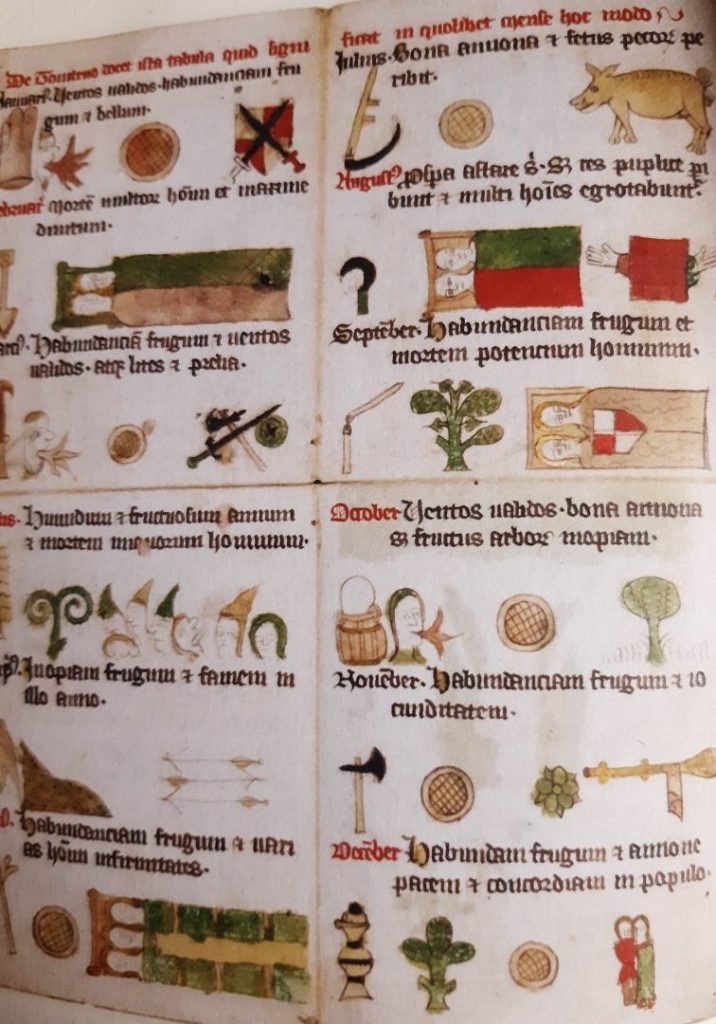
In times of yore ( yore occurring around 1389) the appearance of thunder was a mixed bag. Thunder during January augured bumper crops, along with war when it crackled over the sky. However, thunder in December heralded abundant fruit trees, provisions and harmony among people.
Harry the Hayward’s Thunder Prognostication Chart (1389)
Harry the Hayward’s Thunder Prognostication Chart (1389)
Framing delinquent youth as hopeless cases
is a common narrative ploy by a ruthless and shallow media. There’s the
assumption that youths are going to gather together in gangs, commit crimes and
cause havoc.
Director Catherine Scott has thrown a fresh bucket of water on an old stereotype. Just as she did in her other amazingly insightful documentary Scarlet Road from 2011. This told the story of Rachel Wooten, an Australian sex worker who helps men with disabilities to experience pleasure, desire and physical affection for the first time. It was a story full of hope, heart, inspiration and joy.
Scarlet Road – Trailer
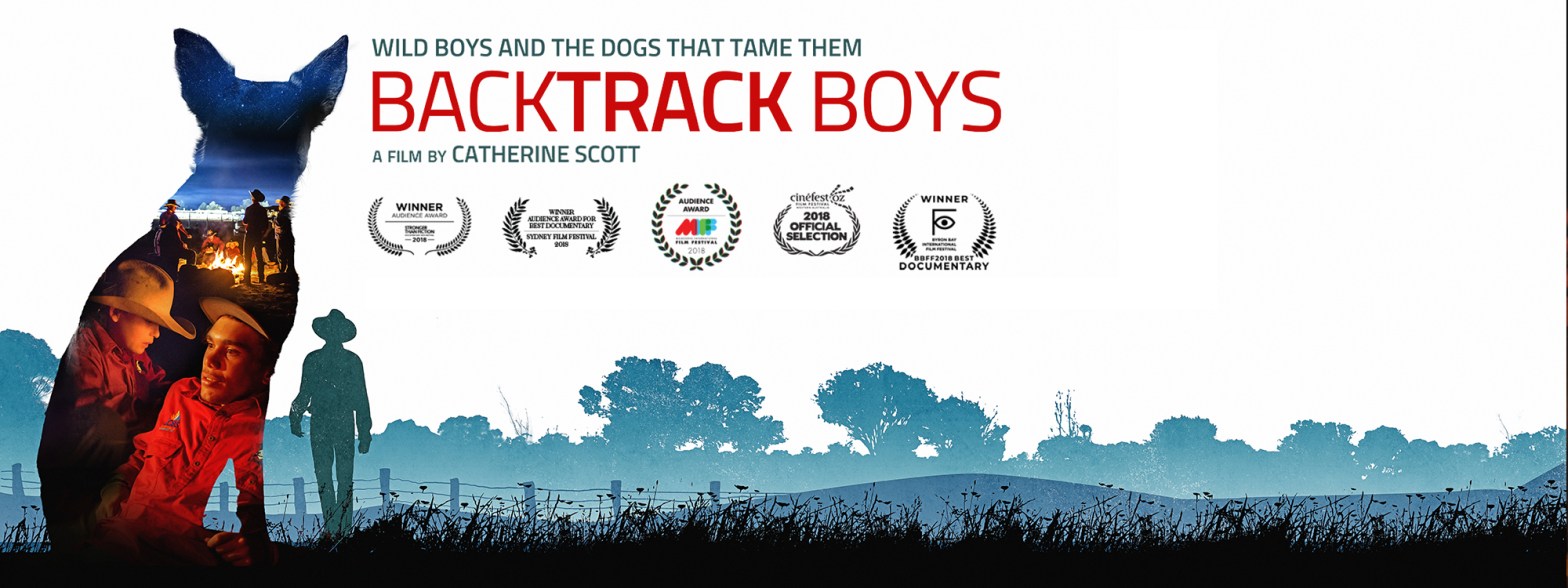
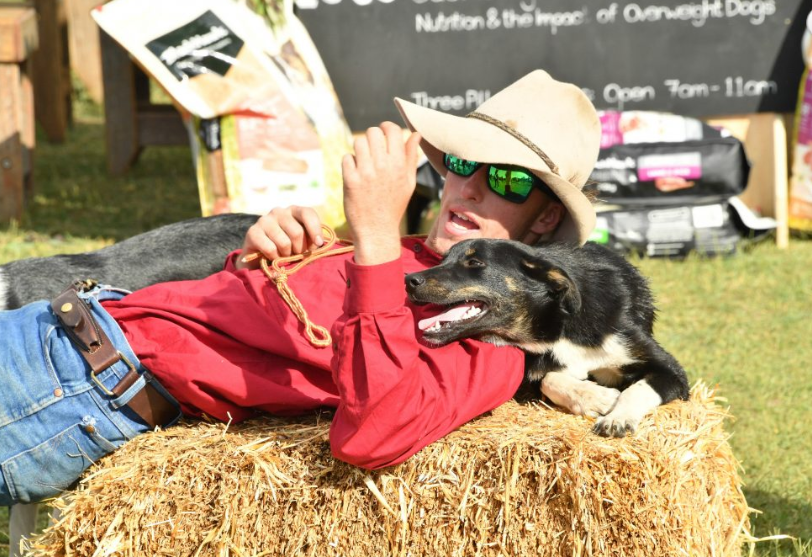
This time around, Scott casts her compassionate and talented eye on another Australian story. The documentary follows Backtrack, a youth program based in Armidale in New South Wales. The program pairs youths who have been in trouble with the law with a four legged friend for a dog-jumping competition called Paws Up. The dogs teach the boys a lot about discipline, team-work, unconditional love.
Trailer- Backtrack Boys
Yet this is a story that doesn’t attempt to tell the stories of young people. It’s instead a platform to enable them to speak about their experiences and to be themselves. The personalities of the kids come through loud and clear, and the viewer finds themselves drawn in and feeling affection for these strong characters. Three boys are featured Zac, Rusty and Tyson and we watch as their various court cases and troubling family situations play out in real time.
The Paws Up program
The real unsung heroes who remain silent
throughout the film are the working dogs that are calming, steading and
grounding influences on the boys. We witness this several times throughout the
documentary when Backtrack Director and all-round inspiration Bernie Shakeshaft
speaks softly and gently to the dogs and to the boys, telling them that
sometimes in life, in order to get what you want – you need to be soft and
gentle, not aggressive.
The gentle humanness of this documentary and sheer emotionality of it is a real rollercoaster. As this is real life, it’s not all sunshine and roses at the end, but we are left with a real sense of hope about the Backtrack program that this is a far more loving way of helping troubled kids, compared to locking them up. Definitely see this if you have the opportunity, it is wonderful. Up there with one of the best documentaries I have ever seen. Bring the tissues.
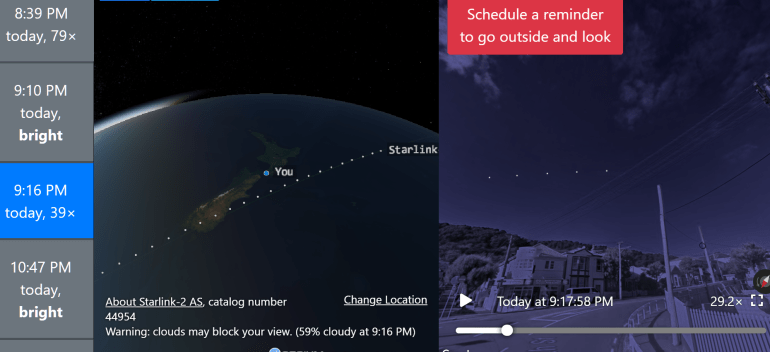
It turns out that Wellington CBD and Mount Victoria close to where I live is prime viewing for the Tesla Starlink Satellites as they cruise through the sky after dark.
Starlink taken from the top of Mt Victoria
Blink and you’ll miss it though. It’s all over in about 2 minutes. They rocket past in a straight line and look alien-like and unmistakably different from the rest of the night sky as they rocket past.
Track Starlink and other satellites from your place
The exact time and location of Starlink cross-referenced with Google Maps API
What is Starlink?
Low cost ($30 USD per month) global broadband that is a available everywhere, planet-wide and not relating to a particular ISP in a particular country. The internet will be triangulated through the satellites located all over the earth at comparitively low orbit (in comparison to existing GPS satellites). Internet speed will be similar to what you get on cable or ADSL with speeds of around 1GB per second. So it’s not as good as fibre, but it’s good enough to stream video at low quality, answer emails, etc. It will deliver internet for the first time to the most remote places on earth, including over all of the oceans.
Distance from earth: A low earth orbit of 335.9 to 1,325km above the surface of the Earth. The current batch of Starlink Satellites visible from Wellington are 550km above the earth.
Cost: Approximately $10bn USD for the whole project.
Number: 11,927 satellites (300 deployed so far)
Weight: Each satellite weighs approximately 266kg.
Able to autonomously avoid collision by using data from the US Department of Defence.
Concerns: Only 2,000 satellites are currently in orbit and only 9,000 have ever been launched into the sky. Therefore, having almost 12,000 satellites up there at once does bother people. Astronomers and night photographers are bemoaning the likelihood of space junk obscuring the stars and night sky.
Revenue: Global internet subscriptions to Starlink are estimated to earn $3 trillion, which is going to be used to fund the Mars colonisation mission.
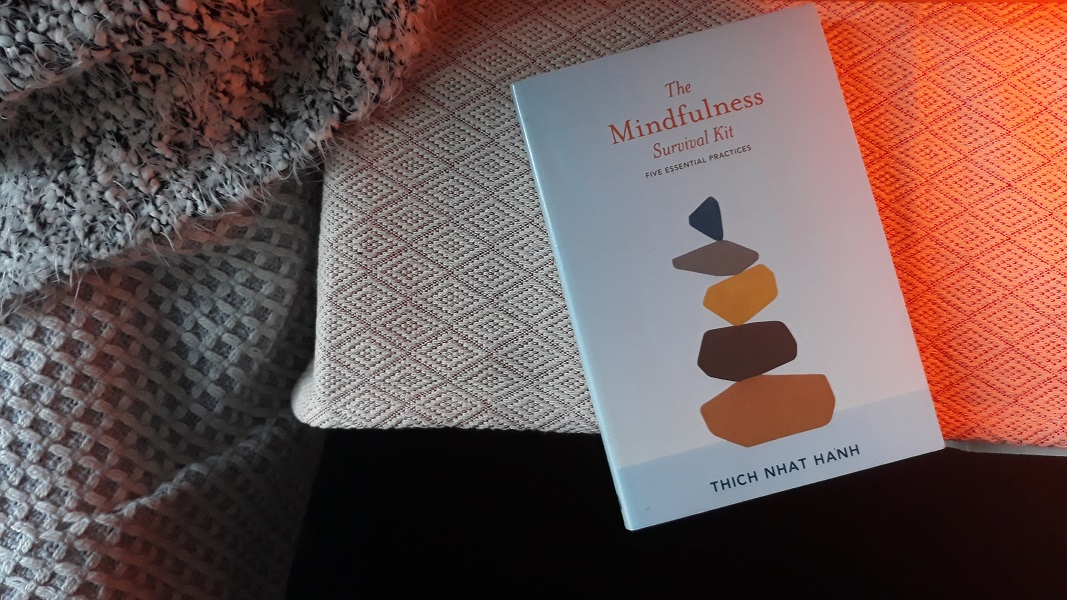
This is a handy guide for mindfulness for busy people living at full throttle in the world. It’s a gentle calling to slow down and to heed the five mindfulness training precepts which are: not to kill, steal, commit adultery, lie, or take intoxicants. These are the basic ethics and morality in Buddhism.
Zen master and peace activist Thich Nhat Hanh outlines how we can use these principles to help ourselves in our everyday busy lives. This is a great bedside reference book to look at after you have had a really hard day, to bring things back into focus. There is a lot of insight here into how these precepts can change you inside but also could change the broader world in general.
This is a great secular, moral guideline on how we can all cultivate a more compassionate, kind and healthy way of relating to ourselves and to the world. I found this book to be really beautiful and it’s a short length and easy to get through. 4/5*
“I confess I do not believe in time. I like to
fold my magic carpet, after use, in such a way as to superimpose one part of
the pattern upon another. Let visitors trip.
And the
highest enjoyment of timelessness―in a landscape selected at random―is when I
stand among rare butterflies and their food plants. This is ecstasy, and behind
the ecstasy is something else, which is hard to explain.
It is like
a momentary vacuum into which rushes all that I love. A sense of oneness with
sun and stone. A thrill of gratitude to whom it may concern―to the contrapuntal
genius of human fate or to tender ghosts humoring a lucky mortal.” Vladimir
Nabokov
Some books help you as a teenager to move beyond the claustrophobic and limited world you were born into. We can’t help where we were born or who our family is. However, when we are young, if we read the right books, we may just be able to transcend challenging beginnings and see the world as bigger and more amazing than the world presented every day. Here are some of the books that helped to do this as a teenager, helped me to move beyond the tumultuous family life and the poor area where I lived and into the world where bigger things were possible for me.
I read this book very young – I would say too young. I think I was about 12. It’s the true story of Elie Wiesel, a young teenager when he was put into Auschwitz concentration camp. In the book Night, he recalls in full graphic horror what he saw and experienced there, surrounded by death and evil. I still recall how intense it was for me, I was so deeply upset and depressed by reading this book. I actually became very anxious, depressed and sad about the entire world after reading Night. It affected me probably for the worse. I was knocked out of this childish fantasy world that I was in until then. Indeed, reading Night was for me, a loss of childhood innocence about the world. I guess every child needs to go through that at some time, but it was brutal and hard for me to realise the darkest chapter of human history in this way. Strangely, I remember feeling really guilty about it, as though – why should I feel so sad about the world when nothing that tragic had ever happened to me. You know…when you’re young you have no idea how to control your emotions or understand yourself. It can be hell being young.
“Never shall I forget those moments that murdered my God and my soul and turned my dreams to ashes.” ― Elie Wiesel, Night
Reading this book was like taking a sedative or going into a strange meditative trance, where everything was beautiful and seen through a golden gilded frame. Proust was the master of long sentences. Yet his sentences never bore, but instead send you swirling upwards into ecstatic bliss. It was a strange feeling reading this at the age of 18, it was like literary heroin or meth for me. This book made me simultaenously want to be a writer and realise that I would never be able to achieve something so sublimely beautiful as this. The way that sentences are structured are like you are swimming through the most gorgeous dream – this is difficult to explain. However I am glad that some others who have read this, feel the same way, and it’s known as a classic.
“Always try to keep a patch of sky above your life.” ― Marcel Proust, Swann’s Way
I remember reading this book at about age 15 and being introduced to this overly purple and ornate prose, as well as the wind-swept Yorkshire moors, and Healthcliff, and feeling myself swoon inside. Even though Heathcliff was a straight-up nasty bastard to everyone, even Cathy, whom he was supposedly in love with. I found him and his brooding, moody, dark and mysterious ways completely compelling and erotic. Needless to say, over the ensuing years I ended up going out with a series of hapless, pathetic, Heathcliff-esque self-styled goth guys with very little going for them aside from great trenchcoats and good looks. Anyway, the impact of Wuthering Heights was for me, a romanticised vision of what a loving relationship looked like, replete with cracking thunder over windswept mountains and people riding bareback in the rain with long flowing dark locks. Yes – rather embarrassing on reflection, but absolutely amazing to teenage me.
“He’s more myself than I am. Whatever our souls are made of, his and mine are the same.” ― Emily Brontë, Wuthering Heights
Dickinson’s poems had the effect of making you feel like you are sitting in a meadow with sunshine pouring on your back and butterflies dancing around you. It puts you in a state of sublime bliss and ease with the world. As someone who had a rather tumultuous home life, with a lot of violence and chaos – Emily Dickinson’s poetry was an escape, a pressure value I could release and be let into a different realm of love, hope and imagination. At the age of 15, I felt that if someone like her could write poetry like that, I was not alone in the world and there were others out there who were like me – I just had to find them.
“The sun just touched the morning; The morning, happy thing, Supposed that he had come to dwell, And life would be all spring.”
As a young person I grew up estranged from my own culture and heritage, living across the ditch in Australia. So reading about Maori culture, mysticism and the wild coastal landscapes in New Zealand, from the point of view of the mixed heritage characters in this book (Pakeha and Maori) and their struggles with isolation and loneliness as outcasts in a remote town made a profound impression on me.
This Booker prize winning novel was written in an exquisitely poetic and literary way, it made me fascinated and obsessed with New Zealand – but the hidden inner emotional landscapes of New Zealand from a Maori perspective. Then I happened to move there as an adult, I think this book played a part in that.
“You want to know about anybody? See what books they read, and how they’ve been read…” ― Keri Hulme, The Bone People
The Hobbit – Tolkein
The whole idea of a complete, stand-alone fantasy world filled with different languages, customs, countries was completely mind-blowing to me as a teenager. I devoured The Hobbit with relish. It definitely felt more accessible to 13 year old me, compared to the Lord of the Rings, which I attempted at age 15 but I couldn’t get through it. LOTR seemed dense, and didn’t seem to offer any solid and satisfying conclusions.
In contrast though, the Hobbit was short, sweet and seemed to have a lot more magic and delightful moments in it, I just loved it and become hooked on Tolkien before the films were made.
This book was filled with profound and ancient Buddhist wisdom. I had always been fascinated by death and reincarnation as a child. Strangely, I had a fixation on the idea that our dog was actually our great grandmother who had died when my sister was born, and was reincarnated because our dog had a very old and wise looking face. A lot of the word play in this book went completely over my head and I couldn’t really get a lot of it, but I was left with a reverent awe for Buddhism, Tibet and the Dalai Lama. I do remember finding the Buddhist ideas of impermanence very comforting at the time.
I was deeply unhappy with my life as a teenager and this idea that things could get better, and that change was the only constant in life along with the parallel teaching that you need to embrace the present moment and really live really helped me to cope and to find happiness. Not happiness in the material world, but rather in simple things like appreciating your pets, eating good food and sunshine.
“If you want to know your past life, look into your present condition; if you want to know your future life, look at your present actions.” ― Sogyal Rinpoche, The Tibetan Book of Living and Dying
A stunning and seductive diary unlike any other. This revelatory series of diaries showed me how to grasp the world with a whole heart and embrace all of the senses and possibilities of life. This was a book to read as a teenager if you wanted to grow up to become a bohemian artist or writer. It romanticised this life of decadent squalor and passionate relationships in pre WW2 Paris.
Throughout all of her diaries I used to underline and re-read over and over again half hidden thoughts that were always on the edge of my mind but never articulated properly.
All of her prose was life-changing for me, it was like diving into a cool, clean lagoon after a lifetime of living in a desert. I soared like a dove after reading it all..
“What we call our destiny is truly our character and that character can be altered. The knowledge that we are responsible for our actions and attitudes does not need to be discouraging, because it also means that we are free to change this destiny. One is not in bondage to the past, which has shaped our feelings, to race, inheritance, background. All this can be altered if we have the courage to examine how it formed us. We can alter the chemistry provided we have the courage to dissect the elements.” ― Anais Nin, The Diary of Anaïs Nin, Vol. 1: 1931-1934
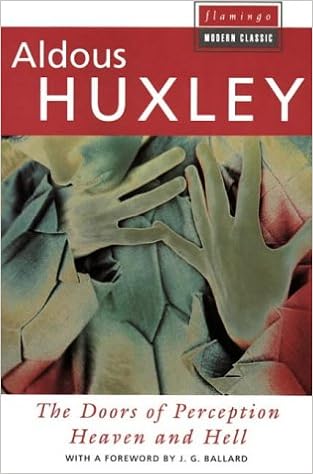
I found my way to this book via my teenage love of Jim Morrison and The Doors. Jim of course took the name for his band from this book by Aldous Huxley. I used to love Jim’s spoken word, which I had on a cassette tape and would go to sleep listening to. There was something absolutely primal, pagan and sexual about the music of The Doors and Jim. I absolutely loved the way that Jim validated chaotic teenage bacchanalia through his songs. There was a lot of dense academic writing here that was completely over my head at the time. The key takeaway I got from this book though were that reality as we know it doesn’t really exist. Instead, various impossibly beautiful realms and exquisite dimensions exist out there, and the key to uncovering this was hallucinogenic drugs.
‘There are things known and there are things unknown and in between are the doors’; The Doors of Perception.
What were the books that formed you as a person when you were young? Feel free to use this book tag and create your own post and tag me! Also, would love to hear your thoughts on these books of mine…
So today’s Valentine’s Day and I have compiled a playlist of ‘Kissing in the Dark’ songs. Or in other words, songs with a sexy, dark edge for them for people who enjoy reflecting on their romantic encounters with music, but without the corney ‘Take my breathe away’ by Berlin type cringe that goes along with that. Who knows though, perhaps some of you may cringe at my selections, who knows? Shout out to my friend Williamwho inspired this post and has an amazing blog about indie music, Australian music and old music which always gives inspiration and invites you to discover bands you may otherwise never have heard of!
There’s a bit of house, disco, chill-out, jazz, rock, funk…all of it is pretty amazing in my opinion, but feel free to let me know what you think. Full playlist here
Cigarettes After Sex- Nothing’s Gonna Hurt You Baby
The author of the award-winning historical mystery novel The Suspicions of Mr Whicher, Kate Summerscale is back with another novel,this time based on a real life infamous divorce court case of 1858. The first registered divorce in English history. Back in the era when divorce was well and truly a dirty word.
The chief exhibit in the divorce case is a
scandalous diary written by Isabella Robinson. A middle-class bored and wealthy
wife of industrialist Henry Robinson. He is depicted in the story, and
presumably his wife’s diary, as a brute and a philanderer with two illegitimate
children.
In the hands of Summerscale, the diary of
Isabella Robinson is breathed into life. About how she feels completely unloved
and with no physical affection or kindness from her husband, her heart searches
for the thrill and chase other men, some of them married. It was her mistake to
write all of these feelings and yearnings down, which later became her ruin.
The object of her affection was married
doctor Edward Lane. A pioneer hydrotherapist who developed a hydrotherapy
establishment in Surrey, which was frequented by Charles Darwin and his wife,
amongst other leading lights of the time.
The diary is careful in its description of
the lusty, bodice ripping parts, Isabella was far too proper for that kind of
salacious language to be committed to paper.
At this time, the legendary novel about
adultery Madame Bovary came out in France and was banned in England. It was
deemed to be too racy and liable to give people ideas.
Henry Robinson was actually the first
person to sue for divorce under a new act of 1857. He would be struck dumb to
know that there would be hundreds of thousands of divorces every year in the UK
150 years later.
As a study about how shit women had it
during those times, this is an interesting book. It’s an example of a woman marked
and scorned by daring to be human, and daring to have erotic fantasies in an
age that didn’t permit women to be true to themselves, or sexual.
Although it was compelling reading about
Isobella’s fantasies, longings and eventual consummation of her clandestine love
with married Henry, the actual divorce court hearing part of this book dragged
on and on with excruciating detail. And like nails over a chalkboard, it
irritated me to no end. This part of the novel was far too drawn out and
boring. As a result I give this book 3/5*
Jeremy David Engels is the Sherwin Early Career Professor in the Rock Ethics Institute and Associate Professor of Communication Arts and Sciences at Penn State University.
I read The
Art of Gratitude fully expecting it to be a light-hearted read. I was ready
to read about how documenting my life in a gratitude journal will awaken me to
all the myriad ways that my life was great, filling me with joy – It wasn’t to
be.
This book totally blew my mind and exploded
everything I thought I knew about the nebulous concept of gratitude!
The Art of Gratitude is intellectually
rigorous, challenging and fascinating. Instead of a new agey spiritual and
vague approach to ‘being grateful’, this book traces the history and origins of
gratitude in all of its shady forms.
This trendy, vacuous concept of gratitude in its pseudo-spiritual form, disguises a far more intense, nefarious meaning that was originally conceived of by the ancient Greeks and Romans and early Christians. With Aristotle’s idea of Charis, Cicero and Seneca’s gratia and later, the early Christian philosophy St Thomas Aquinas’ concept of gratitudo.
In this book, Engels explores how these
ideas formed the very basis of modern democracy and so too the foundations of
all power structures. In other words, gratitude is a very serious power play
employed since time immemorial.
Back in ancient times, Aristotle believed that the burden of a debt was with the benefactor. That gifts created subordination by the giver to the gift receiver. And that power always centred on the giver, with the receiver unable to ever fully repay a debt. Indebtedness would continue on forever in other words.
Cicero and Seneca recognised the mollifying and quietening power of gratitude on the general public. Just like bread and circuses for distraction and mindless entertainment, employing rhetoric of gratia or gratitude had a calming and chilling effect on the masses. Gratitude for the basics for survival, instilled in the Roman poor, a feeling of indebtedness to the Roman elite, which quelled discontent, resentment and rebellion.
Later, St Thomas Aquinas, a Christian mystic, saw Christianity as an ethic for overcoming poverty (a great thing). He believed that people should be helped to overcome their material debts on earth, but that the biggest debt one could owe was to God for being alive.
These same ancient philosophical ideas have
echoed throughout the ages with the language and rhetoric employed by
politicians, banks, lenders and other elites (and all other sooth-sayers and
scammers). The chief purpose of gratitude is to chill-down people’s ire and rebellion
against the status quo and to stop people making noisy demands on their rulers.
This remarkable book by Engels traces how this
seemingly innocuous idea of gratitude could be co-opted by neoliberal political
powers in order to turn all everyday encounters and relationships into
transactional exchanges, where people owe each other, where nothing is sacred
and where everything has a monetary value and is a part of a treadmill of competitive
capitalism.
The antidote and solution according to Engels comes from the Eastern yogic philosophy. No, not the silly kind practiced by Gwyneth Paltrow.
Santosha: an ancient Yogic concept of thankfulness
Santosha invites us to reject the language of debt.
“Yogic gratitude [sentosha] is not a feeling of indebtedness to another person, to a divinity or to a state. Instead yogic gratitude is a feeling of thankfulness for the support we receive in order to live. There is a world of difference between indebtedness and thankfulness, to be thankful is to realise we are not alone and that in fact we can only exist as individuals within a common world.”
Sentosha draws our attention to the support
on which our lives depend. It is also a provocation
Sentosha is learning to feel gratitude for
what matters and learning to relinquish that which does not matter.
Sentosha means recognising that we don’t have all we need to thrive and grow, and being prepared to fight for those basic needs.
Indebtedness is a rhetoric of hierarchy and power. Thankfulness [Sentosha] is a democratic rhetoric that even things out.
I found this book really intense and yet
absolutely interesting, uplifting and intellectually invigorating. I am really
surprised this is not a best-seller although it neatly shrugs off various
conventional genres. This is no self-help or spiritual book, it sits alone as a
genre all of its own.
If you like spiritual or philosophical books with a lot of intellectual heft to them, but that are still very accessible if you are not an academic, then you will really enjoy this book. 5*/5











 Content Catnip
You must be logged in to post a comment.