Readers of this blog will know that I do love Polish culture and Polish films. Here’s another great Polish film that has come out recently and is currently nominated for an Oscar for best international feature film.
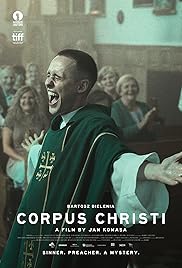
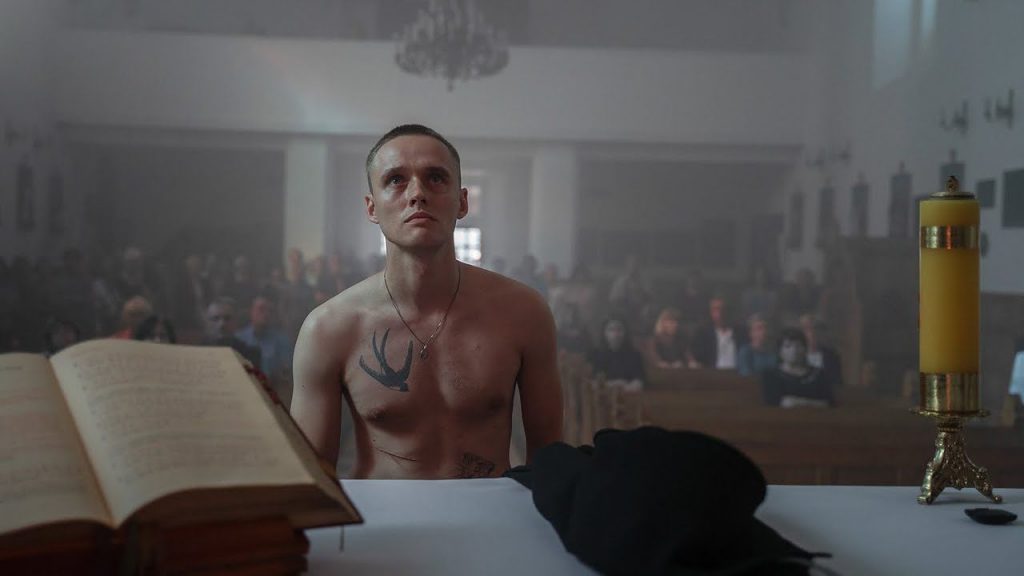
Corpus Christi, or Boże Ciało as it’s known in Polish, is a black comedy and drama about 20 year old Daniel (Bartosz Bielenia) who comes out of juvenile detention and is estranged from everyone he knows. He has zero job prospects, home or money and so wanders into a rural village in Poland, only to be mistaken for a replacement priest.
It sounds like the plot
to a silly comedy doesn’t it? In less skilled hands it could have ended up
being a parody of sorts. However, director Jan Komasa has cultivated an
unsettling, compelling, powerful, emotional, raw and occasionally funny film.
The electric blue eyes of lead actor Bartosz Bielena seem to bring the entire world to a stand-still and his presence and power on screen, as well as his vulnerability is incredible.
This is a very Polish film in that it focuses on the more melancholy aspects of life and yet also contains dark humorous undercurrents. Polish films never seem to shy away from emotional gravity and the painful aspects of existence – this is no exception. Although this film is far from depressing, there’s a lot of life in it – a sort of youthful fire – it’s very erotically charged, alive, angry and visceral in many ways.
The story of Daniel and his redemption contains mountains of tenderness, matched equally with violence and anger. The playful and yet also serious way that the film examines the role of a priest in a rural devout community is also very well done, very real. Yet this film is as far away from being clichéd as it’s possible to go.
I really recommend you
see this if you get the chance. I hope
this film gets the Oscar!
Men of broader intellect know that there is no sharp distinction betwixt the real and the unreal… — H.P. Lovecraft, The Tomb (1917)
During the Belle Époque, or the Beautiful Age, men and women of science and rationality sought comfort from new spheres of influence in technology, art and spirituality. Suddenly no ideas were out of bounds and everything was up for grabs. Trains ferried people and cargo underground. The miraculous discovery of germs that defied death meant that people were radically rethinking the origins of everything. The world was getting smaller every day and the discoveries were getting bigger every week.
The last gasp of Victorian spirituality infused cutting-edge science with old-school mysticism. Theosophy was all the rage; Many weird and and wonderful ideas being developed at the turn of the century around death, ghosts, the fourth dimension filled the Victorians with a palpable sense of possibility.
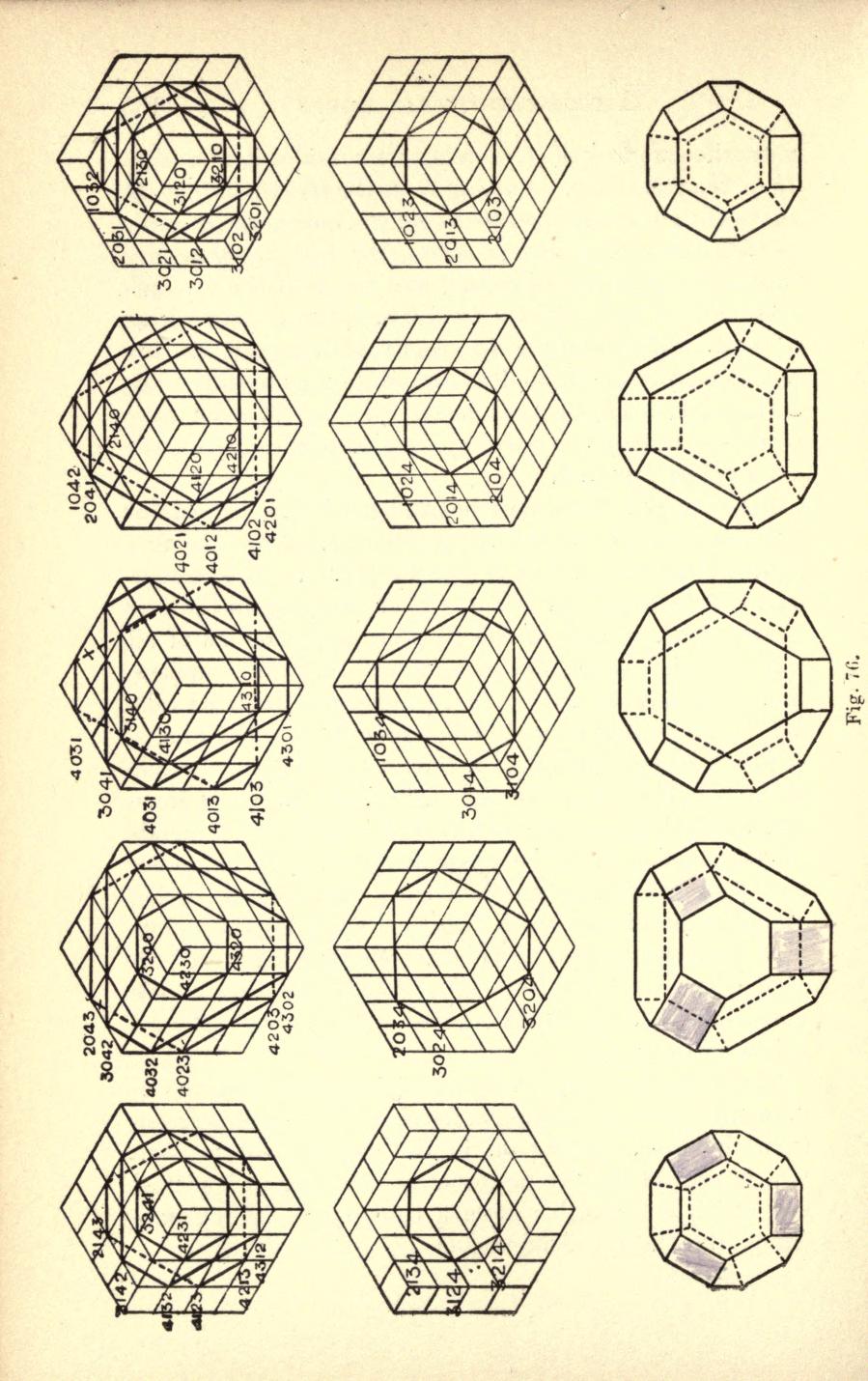
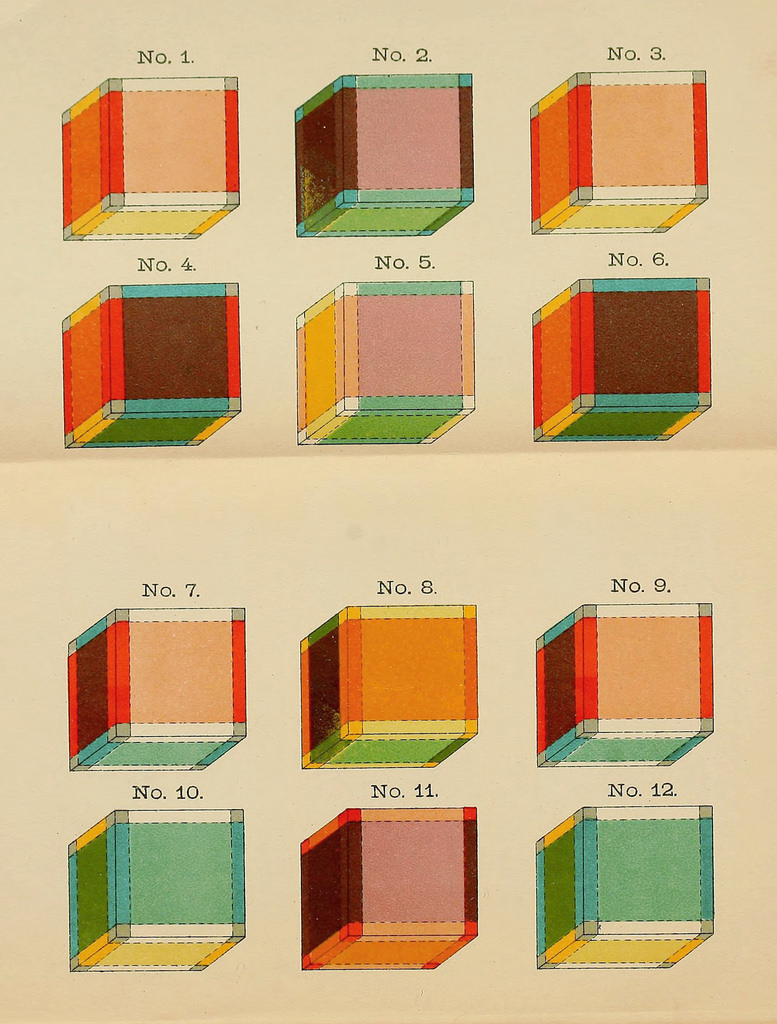
In 1904 one such radical rethink of mathematics was published, C. H. Hinton’s The Fourth Dimension, In it he argued that we should acknowledge an additional spatial dimension. A new form of geometry that links us all together in a mystical way in a sort of higher dimension linked to non-Euclidean mathematics.
Hinton’s solution was a series of coloured cubes that, when mentally assembled in sequence, could be used to visualise a hypercube in the fourth dimension of hyperspace. He provides illustrations and gives instructions on how to make these cubes and uses the word “tesseract” to describe the four-dimensional object.
Hinton goes on to say that once a person visualises these tesseracts in the cubes then they have unlocked their full potential – the potential of the fourth dimension.
He saw the fourth dimension as both physically and psychically real, and that it could explain such phenomena as ghosts, ESP, and synchronicities.
The mystical implications of this were clear. That the soul was a “four-dimensional organism, which expresses its higher physical being in the symmetry of the body, and gives the aims and motives of human existence”.
People went bonkers for this idea at the time. Correspondence to Hinton from his many acolytes indicate that these people achieved profound success with connecting to the fourth dimension, Yet they found the experience profoundly disturbing or dangerously addictive. It was rumoured that some particularly ardent believers in the power of the cubes went mad.
I have taken an adapted text here from the always wonderful Public Domain Review
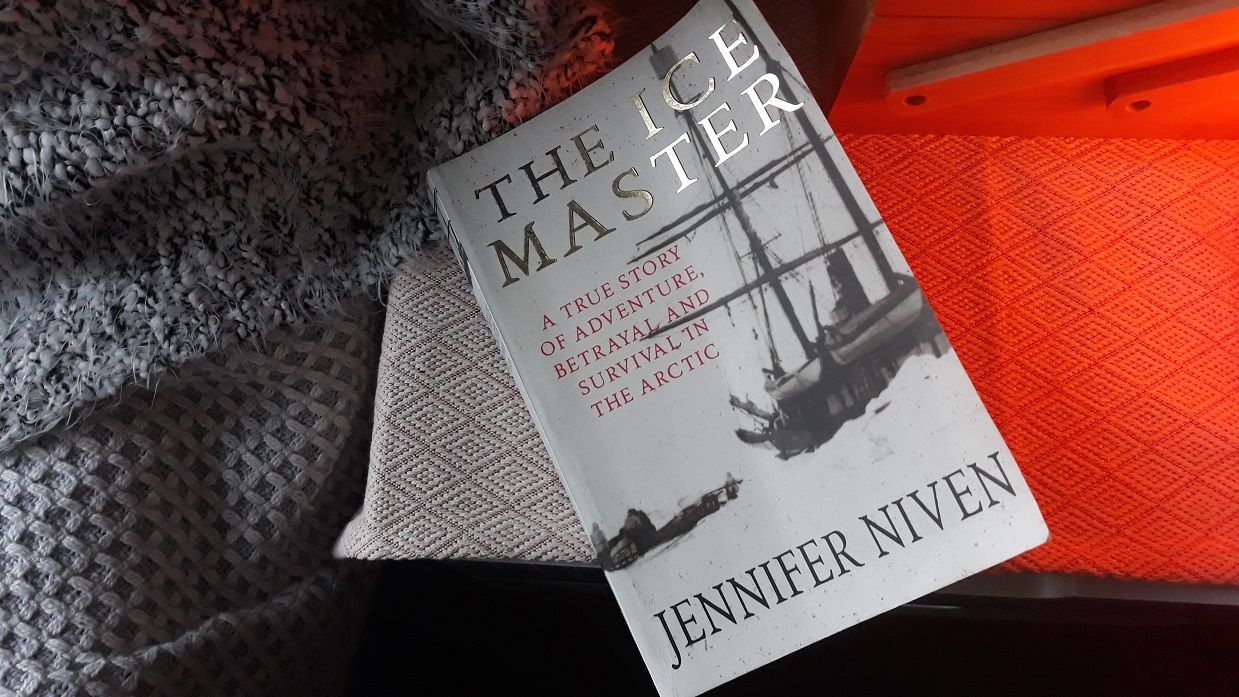
This is the ultimate Arctic voyage novel, based on real events. The 1913 Canadian voyage on the Karluk was the worst planned arctic mission in history. The captain declared the boat unsuitable on seeing it and the crew consisted of a rag-tag bunch of wannabes with no experience in Arctic weather. The scientists on the voyage had never stepped out of a classroom.
The scientific party on the doomed Karluk
This is Jennifer Niven’s first book and in
terms of language, pacing, historical research and creating larger-than-life
characters on board the ship, she has done an incredible job.
In her hands, this historical account reads
like a first-rate novel and thunders along at a cracking pace. It’s really one
of the better books I have read in a long time. I have never read anything in
this genre before – i.e. Arctic voyages, but after reading this, I could see
how these kinds of books could become addictive.
Niven deftly and expertly crafts the narrative
including how the crew manage to survive in the harsh polar winter, with plenty
of evocative descriptions of the quality of the wind and the cracking forboding
nature of the ice breaking around them, as the Karluk is stranded and floating
on a wayward ice floe.
I won’t give away any of the story here.
This is really worth getting and reading if you want to envelope yourself in
pure escapism of a tension-filled thriller in an inhospitable land, all from
the warmth and comfort of your own sofa.
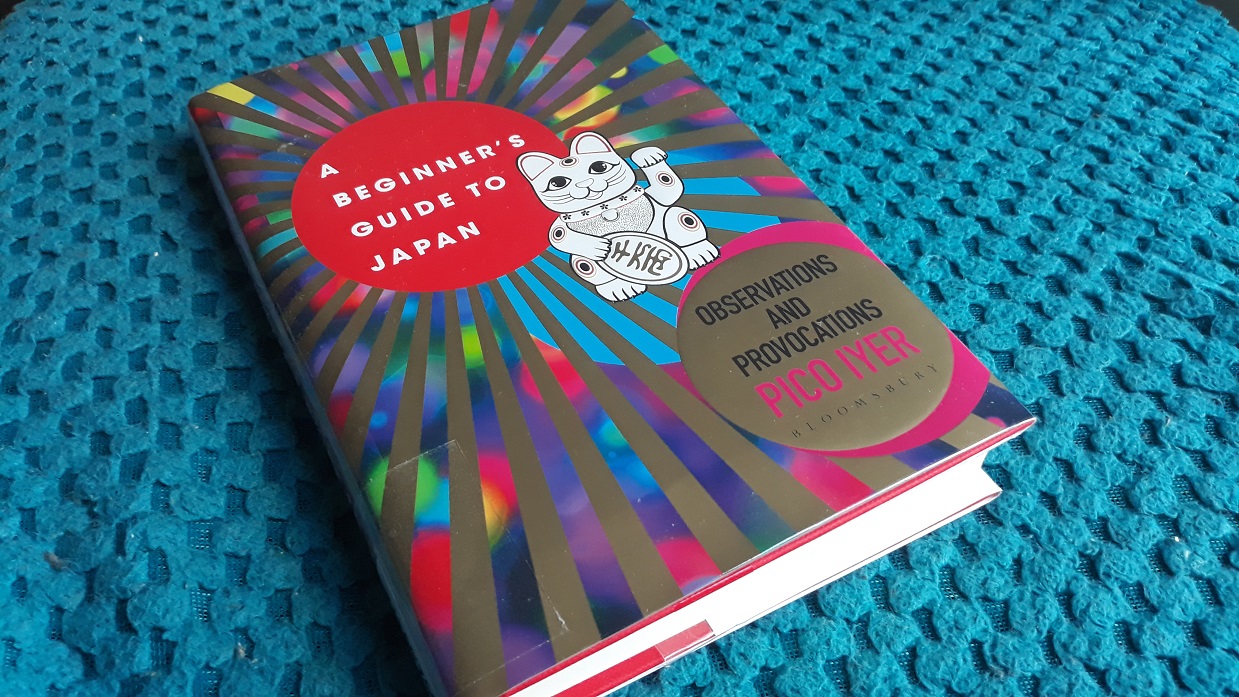
Time magazine journalist and author Pico Iyer has lived in Nara (land of the rabid deer) in Japan for the past 30 years. In this book, Iyer follows his instincts to uncover the depths of the Japanese psyche, Japanese soul and character. This is fascinating to me because I am (in case you didn’t know) a little in love with Japan. I don’t know what that makes me? a Nihonophile, perhaps a Japanophile?
Anyway this colourful and vibrant book more
than satiated my need for a Japanese culture fix.
Iyer ambles through the maddening
contradictions, weird quirks and beautiful elements of Japanese culture in
short and pithy paragraphs.
Each chapter moves through themes such as travel, dress, animism, language, role-playing, customer service, love hotels, the culture of obedience. He marvels at all of the vending machines and how inanimate objects are imbued with spiritand life in Japan and how everything – even a local fire brigade will have its own unique mascot.
And about the company called Family Romance
which employs 1,400 actors to become family members for hire, for clients going
through hard times.
Iyer also sees the troubling side of this
kind of supremely cooperative society. It can become exclusive, insular and out
of touch with the global community, especially in how it treats women,
foreigners and minorities.
Iyer sees a strange similarity in the writing of Oscar Wilde with the Japanese psyche. There are plenty of surprising observations here. It’s guaranteed to make perfect sense if you have been to Japan before, but absolutely zero sense if you haven’t been there yet. I loved this book 5/5*
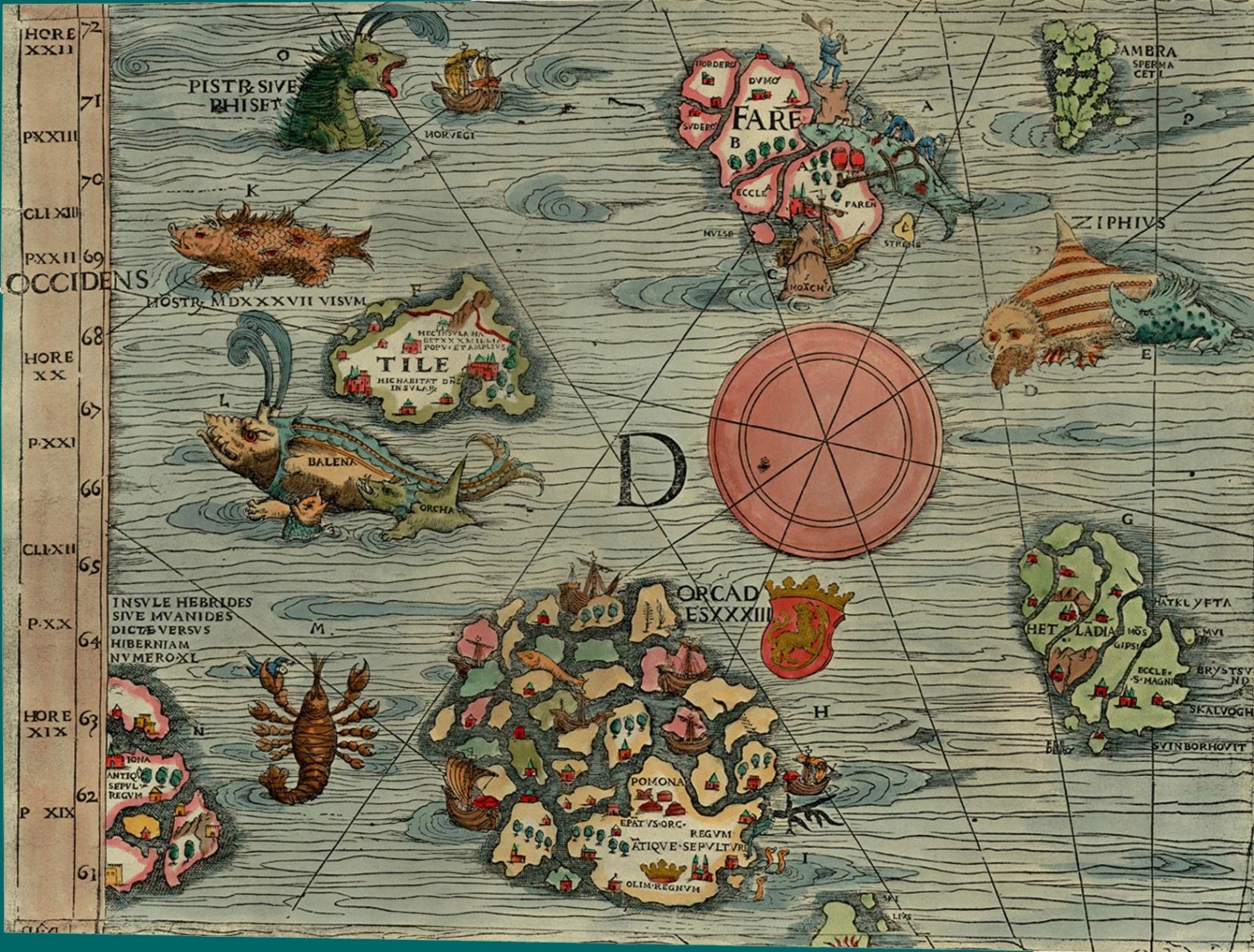
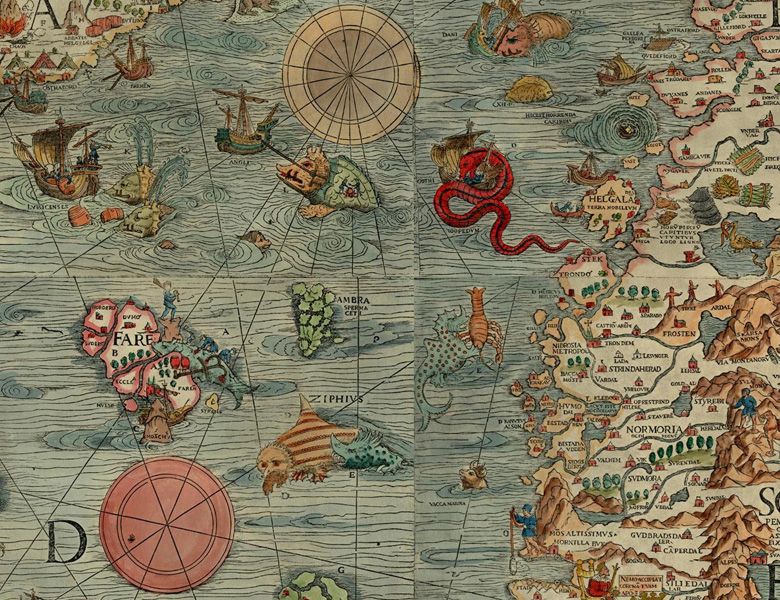
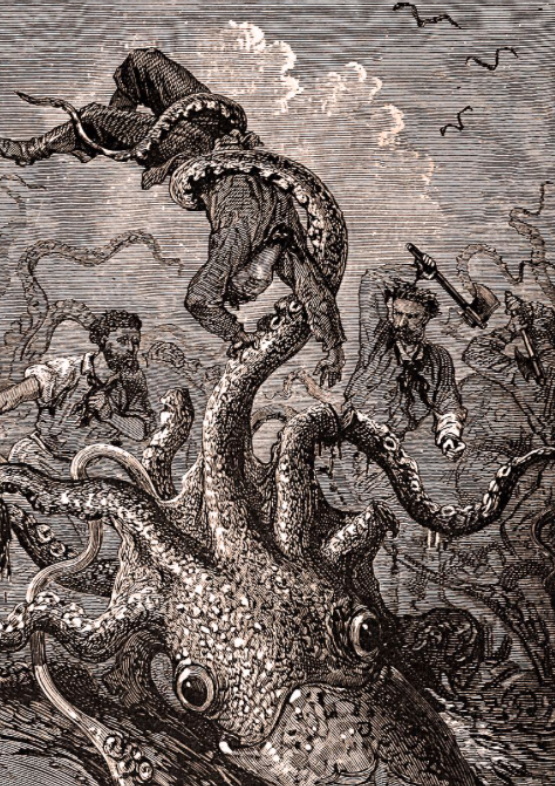
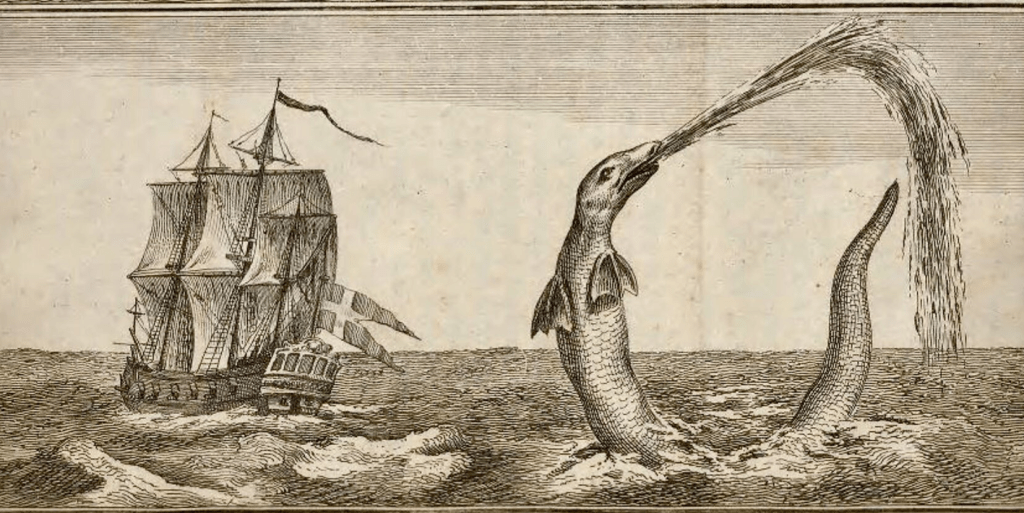
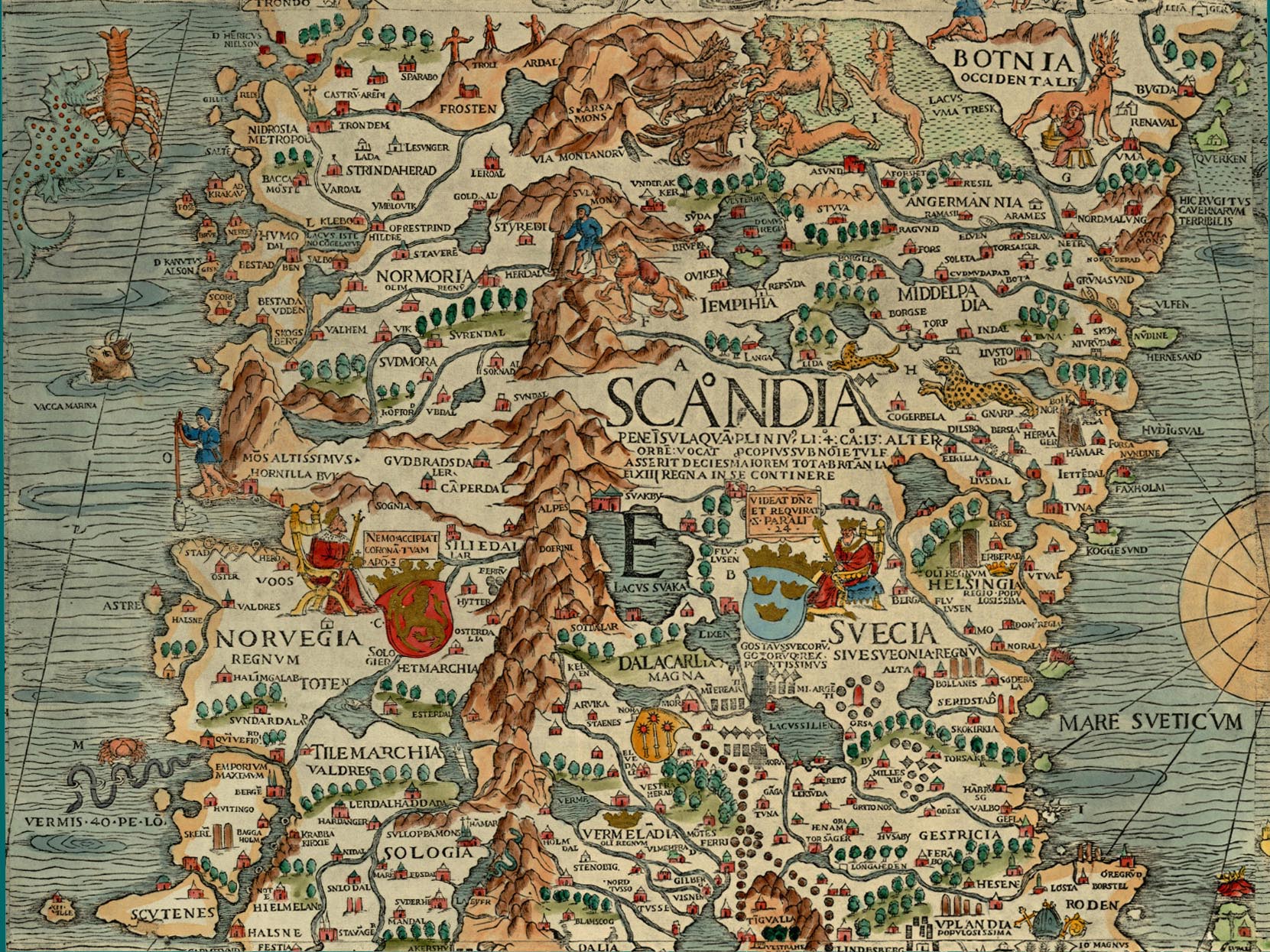
A Kraken is a mythical behemoth. A man-eating
and fearsome gigantic cephalopod that drove fear into the hearts of sea-going
Scandanavians. The word kraken comes from the Swedish word “krake”, which means
twisted.
Seen traditionally as a beast to be feared and
respected, it also embodied a sense of deep oceanic magic and mystery.
“In the ocean many things are hidden. Amongst the many great
things which are in the ocean .. is the Kraken. This creature is the largest
and most surprising of the animal creation.” OED’s first record of ‘Kraken’ in
English (1755)
Below the thunders of the upper deep, Far, far beneath in the abysmal sea, His ancient, dreamless, uninvaded sleep The Kraken sleepeth: faintest sunlights flee About his shadowy sides; above him swell Huge sponges of millennial growth and height; And far away into the sickly light, From many a wondrous grot and secret cell Unnumbered and enormous polypi
Winnow with giant arms the slumbering green. There hath he lain for ages, and will lie Battening upon huge sea worms in his sleep, Until the latter fire shall heat the deep; Then once by man and angels to be seen, In roaring he shall rise and on the surface die.
Here be the Viking Hoard: The Mystery of the Lewis Chessmen http://wp.me/p41CQf-ItW Walrus hunting in the Middle Ages
In ancient Japanese tradition, when a treasured household item reaches the end of usefulness, it is given the proper funerary send off that it deserves.
This unusual ritual harks back to two ancient philosophies. The Shinto Animist philosophy that all things alive or otherwise have a soul. And the Nichiren Buddhist philosophy that when a person attains enlightenment then all of the objects in their possession do as well.
Each year on February 8th, seamstresses in Japan lay to rest their overworked implements in a proper burial. The needles and pins are placed into a block of tofu and the priest recites a sutra. Once this ceremony is completed the needles are buried either on land or at sea. A final show of thanks for their years of service.
Shinto Priest and Priestess
Do you have any everyday objects that have become infused with a sense of sacredness, that you are grateful for?
Here are some films that have held my imagination captive for a long time after seeing them this summer. Along with a few other films that I regret seeing and wish I could have the time back. * Contains no spoilers
By the way, when I say summer, I mean the southern hemisphere summer, which may not apply to many of you, as you’re probably reading this from your cosy winter bear dens somewhere in the north.
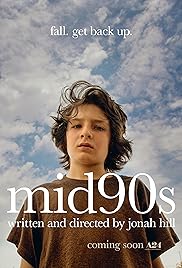
Directed by Jonah Hill, this is an ode to being young and free in the 90’s. Replete with skateboarders, scruffy hair and ‘parental advisory’ stickers. For people who grew up in the 90’s, this is the ultimate nostalgic rewind. It takes all of the painful, intense and exhilarating parts of being a teenager, finding your identity and your gang of friends and renders a realistic, intensely enjoyable drama out of it. Be prepared for a lot of swearing, a lot of skateboarding, 90’s hip-hop and a trip down memory lane.
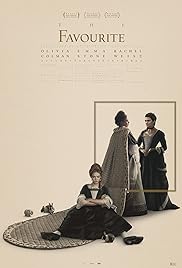
An extravagant and somewhat terrifying story of the life of Queen Anne and her court of jostling, power-hungry temptresses. Brimming with sparkling wordplay, crackling and hilarious characters who swan about coquettish costumes, and mollycoddle and infantalise the queen. We are left in no doubt about who holds the power in this grubby game of wills. A film of towering might with not a man to be seen or heard anywhere. There’s a dark underbelly of pathos and danger underneath of it all. Insanely good.
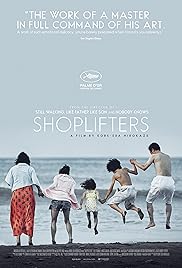
A warm-hearted and melancholic story of a family of misfits trying to survive in Japan that won the Cannes Palm d’Or. This is a nuanced, complex and emotional film with some plot twists that happen effortlessly along with some heart-wrenching revelations at the end. This is the story of how poverty can isolate families and render them invisible in the rampantly competitive system of Japan in the 21st century.
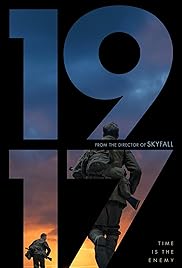
Another highly watchable WWI movie. After the amazing Dunkirk, comes 1917. It’s the high-stakes journey of two young men who have to deliver a letter over enemy lines in northern France to a neighbouring company, or else risk the loss of thousands of lives. With its long-take and close-up shots of its two main characters Blake (Dean-Charles Chapman) and Schofield (George MacKay), it shares similar style to a video game. Yet surprisingly, this is actually a good thing, it’s nail-biting all the way through.
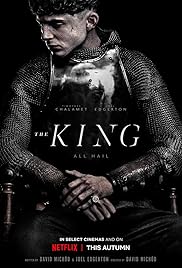
A thoroughly modern and brooding take on the life of Henry V with more hairpin plot twists than you can imagine. Timothée Chalamet has enough stage presence to power a small country. He plays a young king, Henry V, who comes of age under the weight of a heavy crown and many murderous threats of war and subterfuge that he must untangle. Co-writers of this modern take on Shakespeare have smoothed out the language for modern ears. It’s absolutely amazing.
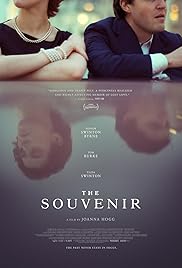
The story of a young woman, Julie (Honor Swinton-Byrne) who is led astray by a manipulative, drug-addicted guy, and of how affluence and influence can’t really protect the young, naive and vulnerable from the cruelties of inexperience. Director Joanna Hogg tapped into her own youth in Thatcherite Britain for the story. This is a well-rendered depiction of how relationships can go pear-shaped, although it’s a tiny bit slow at times, the way the film is shot is beautiful, the performances are tight and it’s a story that I’m sure many women can relate to.
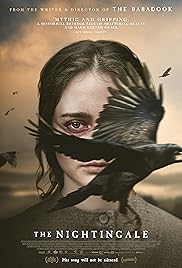
An intensely violent and yet realistic depiction of what it would have been like to be a young Irish woman in colonial Tasmania in 1825. 21 year old Claire (Aislibng Fanciosi) endures unspeakable things including being raped and the murder of her child. She goes on a journey of revenge. The violence in this one is tough-going, although there is storytelling here from the point of view of an indigenous main character, and the film was overseen by an indigenous elder. For this reason, it’s worth watching but prepare to block your ears and close your eyes in parts. It is a superb film and worth watching to better understand Australia and its bloody history.
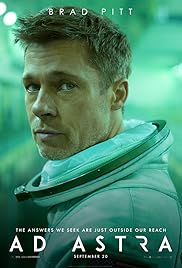
What should have been a great science fiction movie simply wasn’t. Casting Brad Pitt as the lead didn’t save this movie from mediocrity. Pitt’s character Roy heads on an interplanetary mission to reconnect with his father (Tommy Lee Jones) who has gone rogue on another planet. The illogical physics-defying space antics which fling Roy around the place, along with a series of unrelated and seemingly random characters and events all conspire to make this film seem silly and there is a rather unsatisfying ending.
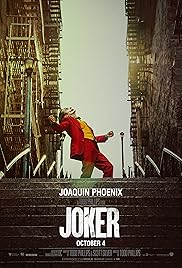
For all of
the hype and all of the gushing about this movie. I honestly thought this was an
incoherent pile of shit and practically unwatchable because it completely
lacked any kind of clear narrative. Other than: ‘A lonely and sad guy gets
treated cruelly by various random people, until he loses the plot, puts on some
make up and goes dancing around the streets.’ This was a waste of two hours of
my life that I really wish I could have back. Then again, and I may get completely
castigated for this – all of these so-called comic-book adaptations are about
people with magical powers (infantile) battling each other’s superpowers (clichéd)
and their own inner demons (clichéd). With their ridiculous special effects and
explosions, these Marvel films are nothing more than poorly drawn caricatures
of the complex human experience.
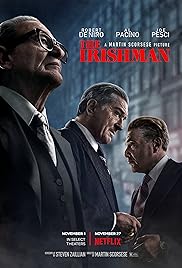
The
equation seemed likely to work. Martin Scorsece at the helm, along with a cast
of amazing actors including De Niro, Pesci, Pacino and Keitel. Although, what
we are given is a sprawling 3 hour long regurgitation of narrative tropes from
other great Scorcese films like Goodfellas, Casino, Mean Streets, etc. The dialogue is long-winded, pointless and banal.
The acting is a bit wooden and De Niro doesn’t look believable as the titular Irishman,
but weirdly like an albino Italian.
Have you seen any of these movies and if so, what did you think? I’m sorry if I offended you with my blunt assessment of some of these favourites from the past year, do you agree or perhaps disagree? Feel free to let me know your thoughts below
Forget all about the Freudian id, superego
and ego vying for your present attention. And forget about Jungian archetypes
and stuff randomly bubbling up to the surface of your consciousness. According
to Behavioural Psychologist Nick Chater – this doesn’t exist.
Instead, what we all have is a flat mind.
Or a mind that’s incredibly adept at improvisation and filling in the gaps to
build up constantly evolving reconstructions, based on sensations.
Look under the hood into our minds and
there’s nothing underneath of this – only perceptions and sensations that are
comprehended through our rapid-fire neurons that consecutively, one after the other,
build a constantly evolving story of who we are, from moment to moment.
This book could have therefore been called
The Mind is Shallow or the Mind is Empty – but that would have probably made it
seem too confronting for people.
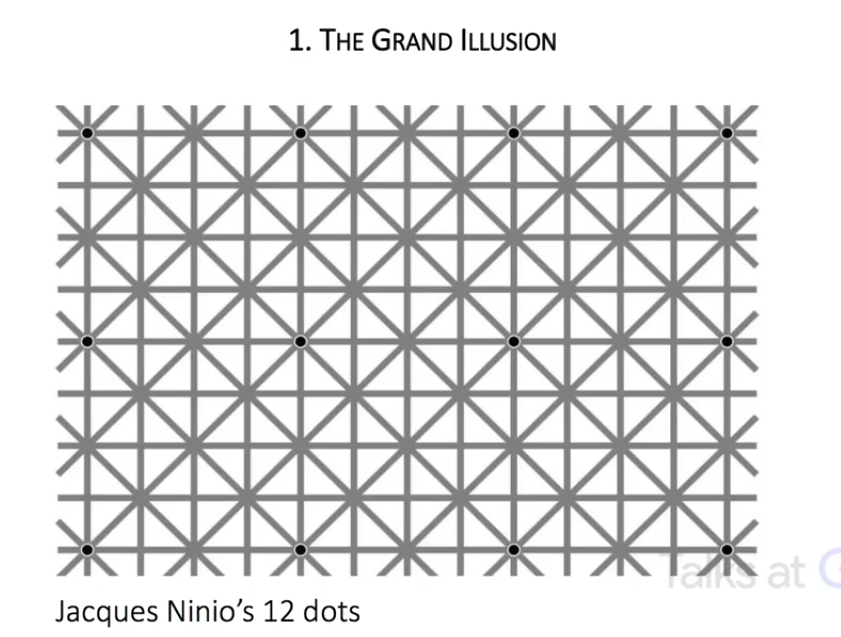
Chater looks into a variety of different scientific studies to draw these conclusions. Including well-known mind tricks including the 12 dots optical illusion.
Feelings and emotions are not reliable
either according to Chater. Our physiological state influences how we feel more
than we know.
Also memory is highly fallible too and
liable to being easily tricked into believing in things that we never imagined
we would be convinced about.
In one study cited by Chater, people were
told to vote according to their political beliefs. A few days later, they were
read back the results – except they were the opposite of what they had claimed
that they valued most. The majority of participants didn’t even realise that
they had been fooled. Chater’s
contention is that we are more flexible in our core belief systems and values
than we suppose.
The notion that we ‘work away on complex problems
while our brains take a break or have a nap’ is challenged by Chater.
Instead Chater says, the brain iterates
through a whole range of solutions one at a time, until it comes to an answer.
Chater tends towards an idea of our minds
being constantly ‘in the moment’ with nothing existing below the surface except
for the raw processing machinery of our neurological ‘back-end’. As such, it’s
easy to draw parallels to Buddhism, mindfulness, Zen and present moment
awareness.
Although the spiritual aspect of this, the idea of mystical non-duality and oneness with the universe that is a part of Buddhism is beyond the scope of this book. That’s a shame, because the whole mystical and spiritual part of consciousness is the most interesting part, I would say.
Also the theories about how the mind is
flat, shallow and locked in a constant vice of present moment awareness are
well backed-up with scientific evidence. It’s just too ‘one-dimensional’ to
really fully believe.
What about personality…that persists over
time doesn’t it? What about heritable traits of mental illness or some people’s
genetic predisposition to be a psychopath, and others to be kind? What about a
million other things like how a song or a smell can transport you to a
different moment in time? A lot of things aren’t neatly able to be explained by
Chater’s theory.
The writing though is potent, interesting and compelling in terms of how Chater pulls you along for the ride. I only having a passing interest in psychology and I have only a basic undergraduate understanding of it, yet I was still managed to read it to the end, which was a sign for me that it was a decent book. 4.5/5 for mind-expanding reading fodder for the (non-flat) mind.
Although similar to the gloaming, grimmelings is a slightly different natural phenomenon at both ends of the rotating sun’s traverse across the sky.
Grimmelings – The first or last gleams of the day (Scots, esp. Orkney).
From the Norwegian “grimla”, to glimmer before the eyes, to twinkle or blink. Also “grimlins”.
Or “the harlot’s hour”: “Just in the close and shutting up of day, When the last gleams were hurrying swift away; The harlots hour their subtle trains to lay” Robert Gould’s 1689 Paraphrase of Proverbs 7 (KJV has “in the twilight, in the evening, in the black and dark night”)
From Latinhībernālis(“wintry”), from hiems(“winter”), hibernal is term for something that refers to winter. On this, the long, long night of Winter Solistice of the southern hemisphere, the dawns and the gloamings grow ever deeper and more thickly velveteen black. Although this point in time marks the darkest, longest night and from this kernel grows the essence of rebirth, renewal and outward growth.
The Wild Hunt
One ancient European pagan myth has a ghostly gathering of faeries, elves or lost souls in wild pursuit of prey during this magical and potent time, led by Odin. Famously depicted in the painting Asgårdsreien (1872) by Peter Nicolai Arbo


















 Content Catnip
You must be logged in to post a comment.