Japanese author Yukiko Motoya’s collection of short stories
have a definitive style and are matched with substance.
It’s obvious that she gets a bit of inspiration from Murakami’s magic realism style, although seen through Yukiko’s lens, the world is from a woman’s perspective. Her stories seem to feature unremarkable everyday on the surface. And yet, there are unexpected and genius surreal undercurrents along with odd yet insightful symbolism.
It’s about women who are losing their spark and trying to
regain and reclaim a former sense of self. It’s about keeping one’s own
identity, when it’s so easy to lose it in a marriage.
Motoya won a swathe of literary awards for Picnic in the Storm. There are some amazingly creative stories here that are unusual and reminiscent of Murakami. But there are also some other stories that are slow and ponderous and focus far too much on the mundane elements of domestic life, rather than adding forward volition to the plot. It’s overall a bit of a mixed bag this collection, but with some really unique and unusual moments. If you like to read fiction about women from a woman’s perspective and also like the surreal symbolism of Murakami then I think you would like this. 4/5 stars
Japan has a long history of jisei, or death poems. Jisei is the “farewell poem to life.” These poems were written by literate people, often monks, royalty or courtiers just before their death.
A Jisei from Prince Otsu in 686 BC is one of the earliest recorded death poems.
Not all death poems are written in the well-known haiku format/style. Jisei was also written in kanshi, waka, and haiku styles. Here are some that really speak to me and sound gorgeous.
My whole life long I’ve sharpened my sword And now, face to face with death I unsheathe it, and lo- The blade is broken- Alas! – Dairin Soto, who died in 1568 aged 89.
Frost on a summer day: all I leave behind is water that has washed my brush. –Shutei
Plays of light and mist in the gloaming on the Isle of Skye Copyright Content Catnip 2010
Bitter winds of winter but later, river willow, open up your buds. –Senryu (1790)
Not even for a moment do things stand still-witness color in the trees. –Seiju
Although some jisei poems seem to be dark and foreboding, others are hopeful and have a sense of peace to them. Acceptance is a key tenet of Zen Buddhism. The acceptance of life as it is and the inevitability of death.
Farewell- I pass as all things do dew on the grass. –Banzan
Jisei is a way for us, the reader to connect with the poet’s mind as he or she approaches the very end. All life, beauty/ugliness, past/present and life/death reaches a point of non-duality, a oneness.
I saw this tag at the wonderful book blog by Diana Ideas on Papyrus. I simply had to do this book tagging exercise, even though this apparently happened AGES ago. Still, it’s a very cool and fun idea. So here are some books that have imprinted themselves onto my soul. Please share the love and do your own post yourselves. I would LOVE to see your book choices…
I. Which book, most recently, did you not finish?
Killing Commendatore by Haruki Murakami.A huge behemoth of a book that tackles all of Murakami’s usual suspects – the unconscious, desire, family, art, creativity and the cosmic and mystical netherworld between sleep and awake. Great in theory, just a bit too long and ponderous for me to complete.
II. Which book is your guilty pleasure?
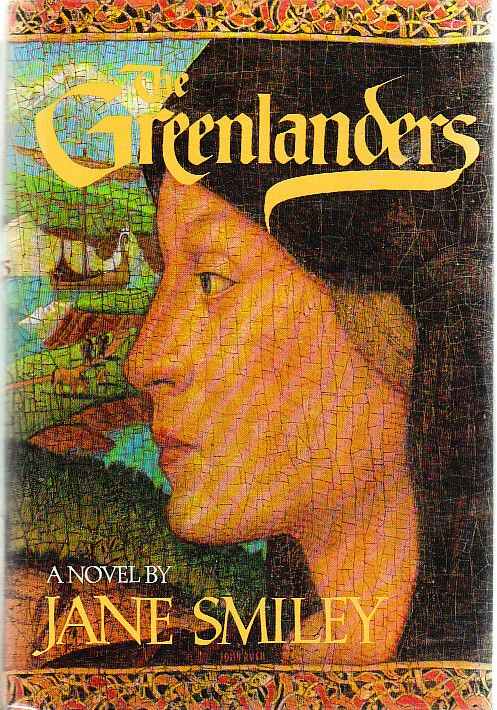
The Greenlanders by Jane Smiley.A long, drawn-out saga of a novel about a tribe of intrepid souls in ancient Viking-era Greenland who struggled to survive from year to year and squabbled among themselves about marriages, food, petty crimes. It was a bit of a silly and corney novel, but there was something about it that kept me hooked almost like a siren song, it was mesmerising.
III. Which book do you love to hate?
Hilary Mantel – Wolf Hall. I found this book completely unreadable. This in spite of its many glittering awards and the buzz about this book all over the place. I just found her style of writing impenetrable and dense and the way she told a story far too ornate and purple to enjoy.
IV. Which book would you throw into the sea?
It’s a two-way tie.
The Pearl by John Steinbeck. Boring prose that lacks absolutely any form of imagination or narrative punch. A pure snore of a short novel that won…I think? A Nobel Prize for Literature. It was completely ridiculous.
The Light Between the Oceans. by ML Steadman. If I had a fireplace I would have burned it. Such was the disgust with which I read this book. It was pure saccharine, pure cliche, pure predictable dross about an abandoned baby and a lonely young couple living in a lighthouse who find the child. It won a lot of praise and was made into a very average movie.
V. Which book have you read the most?
I don’t tend to read books twice unless they are reference books or spiritual/philosophical books that I can dip into more than once.
This book is like a pocket cathedral that contains evocative photography from throughout the world along with quotes about the nature of the soul/life from luminaries throughout history- with a focus on Native American, Inuit and Japanese wisdom.
In my darkest times (thinking that I may die from cancer) this book kept the light of hope inside of me burning bright.
In my happiest times (after climbing to the peak of a mountain as dusk was falling) I have had this book with me and read it too. It’s really that good.
VI. Which book could you not live without?
Marcel Proust – A Remembrance of Things Past These books are dense with meaning and put any other kind of writing to shame. The way Proust writes with page-long sentences makes it impossible to speed read.
Likewise the meaning ambles along towards you slowly. It’s a contemplative experience like a meditation. Strangely enough I open up and read a page of his volumes to simply to calm myself down and centre myself if I’ve had a hard day. It’s the literary equivalent of doing yoga or meditation. No other novelist would be able to come close to this. Just give yourself over to it and imagine with crisp vividness living in Paris in the early 20th century. Even from his own bed the infirm Proust created the entire world.
VII. Which book would you hate to receive as a gift?
Anything by Steig Larsson or Tim Winton. Both authors specialise in what I like to call ‘Greasy smooth literature’ in other words, the books glides you along without any need to think or get taken out of the Matrix at all.
It’s the literary equivalent of watching Home & Away or Neighbours.
VIII. Which book made you angriest?
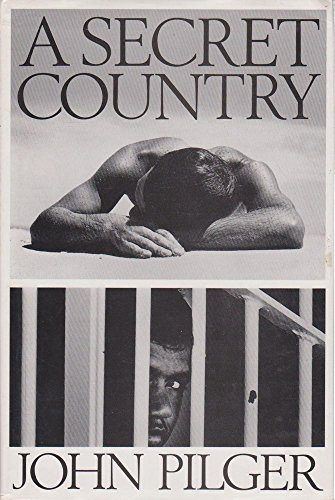
A Secret Country by John Pilger The other secret side of Australia – the grimy uncomfortable side that is conveniently swept under the rug in every single modern narrative of the country. The stories of Indigenous Australians and their history of brutality, incarceration, extreme violence an genocide at the hands of white Australia and only a generation ago. Yeah it made me angry. Angry enough that even though I’m born in Australia, I don’t really want to live there again.
IX. Which book made you cry the most?
Pachinko by Min Jin Lee A family saga about Korean migrants living in Japan against the backdrop of the 20th Century, the novel traces struggles, triumphs and colourful personalities of a family. It rockets along at an amazing pace and I enjoyed this book more than any other I have read in many years.
The sad part is the racism these people face against them in Japan – it’s heart-breaking. It’s the kind of book that makes you cry with love, joy and sadness all at once. This is a very big novel and one that deserves to be read, especially by any Japanophiles out there. You might conclude that the Japanese don’t treat Koreans very nicely at all.
X. Which book cover do you hate the most?
Hate is a strong word. I don’t have any book covers I really hate. But some I do remember from childhood were particularly bad. The Choose your Own Adventure book covers were quite stinky.
What do you think? Over to you! Please tag me in your choices…
I nominate you for The Content Catnip award for most Interesting Blog on WordPress. To accept the award, post your responses to the below questions to your blog and link back to my blog on the post.
What kinds of topics are you really passionate about and why?
If you could choose to have 5 people (famous/not famous, dead or alive) at your house for a dinner party, who would you choose?
Name one person who changed the course of your life for the better and how they helped you…
Name 5 books, or films or pieces of music that you love…
Name one place in the world you want to go…
If you could go back in time and visit one era or civilization during history, where would you go and why?
PASS IT ON…Now copy this into a post and nominate 10-20 other bloggers you know for this award. You can – if you want, change the award name to your own blog’s name and also include me so I can comment on your post.
Hope you have a great weekend 🙂
My answers
What made you start blogging?
It started as an indulgent project and continues to be one. It’s based on the stuff I am interested in with no regard to anyone else’s feelings or thoughts. Fortunately, lots of other people seemed to be interested in the same things as I was, so I have slowly built up a community of like-minded souls.
Why do you enjoy blogging?
I enjoy it because it puts me in touch with other like-minded people, I also learn more about enriching topics that mean a lot to me.
Explain your blog in one paragraph…
A quirky internet wunderkammer full to the brim with quirky and unusual stories from history, art, music, books, travel science and so on. Sometimes I inject a bit of personal venting about topics that give me the shits…purely for my own sanity but I try to keep that to a minimum as I know it can be draining for others to read.
What kinds of topics are you really passionate about and why?
Where do I begin…indigenous rights, nature, custodianship of the land, paganism, travel, Zen Buddhism, yoga, archaeology, paleontology, Jungian psychology and archetypal symbolism, folk stories, personal development, science, health, improving the world in a small way through my skills, marketing for NFPs and charities, fiction, non-fiction. I could go on but it may bore you.
If you could choose to have 5-10 people (famous/not famous, dead or alive) at your house for a dinner party, who would you choose?
The Dalai Lama, Jacinda Ardern, Nick Cave, Malcolm Gladwell, Diana Princess of Wales, Jordan Peterson, Robert Greene, Carl Jung, Haruki Murakami, Greta Thunberg,
Name one person who changed the course of your life for the better and how they helped you…
My step grandfather now sadly shuffled off this mortal coil, who was the only one in my family who told me as a child that I was smart and that if I used my brain, I could accomplish anything I wanted in life, and actively encouraged me to pursue learning.
Name 5 books, or films or pieces of music that you love…
The Piano – Original Motion Picture Soundtrack, Massive Attack – Blue Lines, Aphex Twin – Selected Ambient Works,
Name one place in the world you want to go…
Greenland
If you could go back in time and visit one era or civilization during history, where would you go and why?
Ancient Egypt – but not as a slave, as a wealthy member of the elite.
Look forward to hearing your answers, Content Catnip
Although I am an
experienced writer, sometimes I get it wrong, either through laziness, tiredness
or ignorance. The first two are under my control which is why I tend to circle
back the day after I write, to re-edit professional work before I send it out.
I’m the first to admit that
I make mistakes. It’s very important for a writer or editor to admit that. You
see, nobody is too big for their boots. And nobody can ever know enough about
the English language. It’s a terrible, unwieldy beast. Trying to control it is
like trying to control a pond full of koi using only a teaspoon.
Word to the Wise by Mark
Broatch is a highly enjoyable, amusing and scannable reference book that
highlights all of the relevant troublesome words in bold so that you can
quickly find tricky word combinations that have tripped you up in the past.
Callus/callous
Anodyne/ anodise
Abstruse/obtuse
…and so on.
I’m only up to C in the
book so far, and I’ve already learned so much. This reference guide to tricky
words that sound alike and mean similar or completely different things.
I winced the other day when I saw a tear off leaflet on a noticeboard in the pub from someone selling their writing services. “I am an experienced copyrighter”, she says. Well no love, sorry, but you bloody well aren’t LOL! I think I should anonymously post them a copy of this book.
The ancient word of the day is Dægeseage. This is an old English word for daisy. The origin of Dægeseage is literally daisy or day’s eye. Which makes sense when you think about the quaint little flower and its tendency to follow the arc of the sun through the sky from dawn to dusk, soaking in as much light and goodness as possible.
The idea is that the daisy or day’s eye works hard all day and then closes and rests overnight, echoing the work of agrarian folk of yesteryear.
In case you have been living under a rock, Robohands is a UK jazz musician whose real name is Andy Baxter. His debut album Green which came out in mid-2018 is superb.
With almost zero effort to promote the album, Robohands has grown in underground popularity getting over a million views on his album and songs on YouTube and gaining gig requests left right and centre from all over the world.
Robohands fluctuates effortlessly between ambient, jazz and hip-hop. And Green is the ultimate smooth and easy-breezy jazz album that packs a soulful punch.
Album Review: Robohands ‘Green’
Green has a deep and bassy undertone that reminds me a bit of British big-beat and jungle musicians from the 90’s like Goldie and Grooverider. There are some real smooth and creamy cuts on this album that will make you want to swoon with their cosy vibe. It’s a four seasons album, reflective and serene and suitable for staring at landscapes or a blazing fireplace.
Here’s my favourite track from that album, Lament. It encapsulates so much of my mental landscape and brings me so much joy each time I listen to it.
This will become a classic of the current jazz genre in future years. It’s only matter of time.
Robohands is a great example of a musician who is just making his art and doing it superbly on a shoe-string budget. And now he is emerging and achieving success due to his raw talent. Andy plays drums, guitar, bass, piano and synths on the album. He is a true multi-instrumentalist. He reminds me a bit of Bonobo, another genre-bending hard to define musician.
“I was working several terrible part-time jobs and this project pretty much started as escapism from that in my spare time. Initially, I wanted to make some ambient backing tracks to play drums to, but then I started to really enjoy the process of writing the melodies and arranging the parts. I released an EP and carried on writing, ending up with an album’s worth of material. There was just about enough funds to go in the studio for two days to get it recorded, a lot of the drums and bass parts were written there on the spot and somehow in the end it all came together as a finished piece.” – Andy Baxter, Native FM interview.
listen to the album
Coming up, Andy will play in Brighton’s well-known Pattern’s Jazz Club at the behest of UK national treasure, Mr Bongo.
With all of the hypnotic jazz instrumentation, snappy drums and slow swinging chords, Green is a feel-good album that’s never corny or unsubtle. It’s also the kind of album that will age very well. Have a listen and this album, it could well be your emotional soundtrack for 2019.
Helen Keller was not just some blind lass from the last century. She was a fierce socialist, pacifist, author and sufragette who believed in birth control, workers rights and women’s rights. The first blind person to complete a Bachelor’s Degree, she was a bold trailblazer with a sweet nature.
“I seldom think about my limitations, and they never make me sad. Perhaps there is just a touch of yearning at times; but it is vague, like a breeze among flowers.” – Helen Keller
Keller won hearts all over the place, befriending luminaries of the time such as Alexander Graham Bell, Mark Twain and actor Charlie Chaplin.
Born with all of her five senses intact in 1880 in Alabama, she suffered a “brain fever” aged 18 months old which was later thought to be scarlet fever or meningitis. This robbed her of her sight and hearing.
With Anne Sullivan
Keller was naturally bright, her talents were recognised by teacher Anne Sullivan, who remained Helen’s close friend, teacher and confidant until Anne’s death fifty years later.
With Alexander Graham Bell
When Keller was a child her parents contacted inventor Alexander Graham Bell for his help. Bell then put the family in touch with the Perkins Institute where Keller met her life-long friend and teacher Anne Sullivan. Keller said of Bell that as soon as she met him she “loved him instantly.”
Although Bell is best known for his monumental inventions: telephone, metal detector, phonograph, hydrofoil and more. He would later in his life declare that he was most proud of his accomplishments with the deaf. He was a big supporter and benefactor of the Perkins Institute and his research into telephony was sparked by a curiosity about the mechanics of speech and hearing. His work with the deaf was“more pleasing than even recognition of my work with the telephone.”
Helen Keller and Alexander Graeme Bell
With Charlie Chaplin
“The best and most beautiful things in the world cannot be seen or even touched. They must be felt with the heart.” – Helen Keller
With Mark Twain
Keller found a strong and close friendship in Mark Twain, the famous writer’s correspondence with her demonstrates this. From one writer to another there’s a measure of reverence, respect and adoration there.
Helen Keller and Mark Twain
Riverdale – on – the Hudson St. Patrick’s Day, 1903.Dear Helen: I must steal half a moment from my work to say how glad I am to have your book and how highly I value it, both for its own sake and as a remembrance of an affectionate friendship which has subsisted between us for nine years without a break and without a single act of violence that I can call to mind. I suppose there is nothing like it in heaven; and not likely to be, until we get there and show off. I often think of it with longing, and how they’ll say, “there they come–sit down in front.” I am practicing with a tin halo. You do the same. I was at Henry Roger’s last night, and of course we talked of you. He is not at all well–you will not like to hear that; but like you and me, he is just as lovely as ever.
I am charmed with your book–enchanted. You are a wonderful creature, the most wonderful in the world–you and your other half together–Miss Sullivan, I mean, for it took the pair of you to make complete and perfect whole. How she stands out in her letters! her brilliancy, penetration, originality, wisdom, character, and the fine literary competencies of her pen–they are all there.
Oh, dear me, how unspeakably funny and owlishly idiotic and grotesque was that “plagiarism” farce! As if there was much of anything in any human utterance, oral or written, except plagiarism! The kernel, the soul–let us go farther and say the substance, the bulk, the actual and valuable material of all human utterances in plagiarism. For substantially all ideas are second hand, consciously or unconsciously drawn from a million outside sources and daily use by the garnerer with a pride and satisfaction born of the superstition that he originated them; whereas there is not a rag of originality about them any where except the little discoloration they get from his mental and moral calibre and his temperament, which is revealed in characteristics of phrasing.
When a great orator makes a great speech you are listening to ten thousand men–but we call it his speech, and really some exceedingly small portion of it is his. But not enough to signify. It is merely a Waterloo. It is Wellington’s battle, in some degree, and we call it his but there were others that contributed. It takes a thousand men to invent a telegraph or a steam engine, or a phonograph, or a telephone, or any other important thing–and the last man gets the credit and we forget the others. He added his little mite–that ninety-nine parts of all things that proceed from the intellect are plagiarisms, pure and simple; and the lesson ought to make us modest. But nothing can do that.
Then why don’t we unwittingly reproduce the phrasing of a story, as well as the story itself? It can hardly happen–to the extent of fifty words–except in the case of a child; its memory tablet is not lumbered with impressions, and the natural language can have graving room there and preserve the language a year or two, but a grown person’s memory tablet is a palimpsest, with hardly a bare space upon which to engrave a phrase. It must be a very rare thing that a whole page gets so sharply printed on a man’s mind, by a single reading, that it will stay long enough to turn up some time or other to be mistaken by him for his own.
No doubt we are constantly littering our literature with disconnected sentences borrowed from books at some unremembered time and how imagined to be our own, but that is about the most we can do. In 1866 I read Dr. Holmes’s poems, in the Sandwich Islands. A year and a half later I stole his dedication, without knowing it, and used it to dedicate my “Innocents Abroad” with. Ten years afterward I was talking with Dr. Holmes about it. He was not an ignorant ass–no, not he; he was not a collection of decayed human turnips, like your “Plagiarism Court,” and so when I said, “I know now where I stole it, but who did you steal it from,” he said, “I don’t remember; I only know I stole it from somebody, because I have never originated anything altogether myself, nor met anyone who had!”
To think of those solemn donkeys breaking a little child’s heart with their ignorant rubbish about plagiarism! I couldn’t sleep for blaspheming about it last night. Why, their whole histories, their whole lives, all their learning, all their thoughts, all their opinions were one solid rock of plagiarism, and they didn’t know it and never suspected it. A gang of dull and hoary pirates piously setting themselves the task of disciplining and purifying a kitten that they think they’ve caught filching a chop! Oh, dam–
But you finish it, dear, I am running short of vocabulary today.
Every lovingly your friend (sic)
Mark
Glimmering Quotes from Helen Keller
College isn’t the place to go for ideas.
Knowledge is love and light and vision.
No pessimist ever discovered the secrets of the stars, or sailed to an uncharted land, or opened a new heaven to the human spirit.
Alone we can do so little; together we can do so much.
I do not want the peace which passeth understanding, I want the understanding which bringeth peace.
The word bóithrín comes from small (ín) Cow (bó) path. This is a path can either be man-made or created by cow meandering. Bóthar for road and botharín for small road – in the diminutive form. This became boreen or bohereen in Hiberno-English.
A highland coo. Copyright Content Catnip 2010
Twitchel
The word Twitchel originates from Nottingham, England. It means a narrow lane that’s usually unpaved and lined with hedgerows or drystone walls.
Here is the word Twitchell in 1435, in a record of common land owned and rented in the area “All the breadth of the common twitchel that lies on the north side of the Flesh-house, 3 shillings”
They're the things that you see When you wake up and scream The cold things that follow you Down the boreen They live in the small ring of trees on the hill Up at the top of the field

























 Content Catnip
You must be logged in to post a comment.