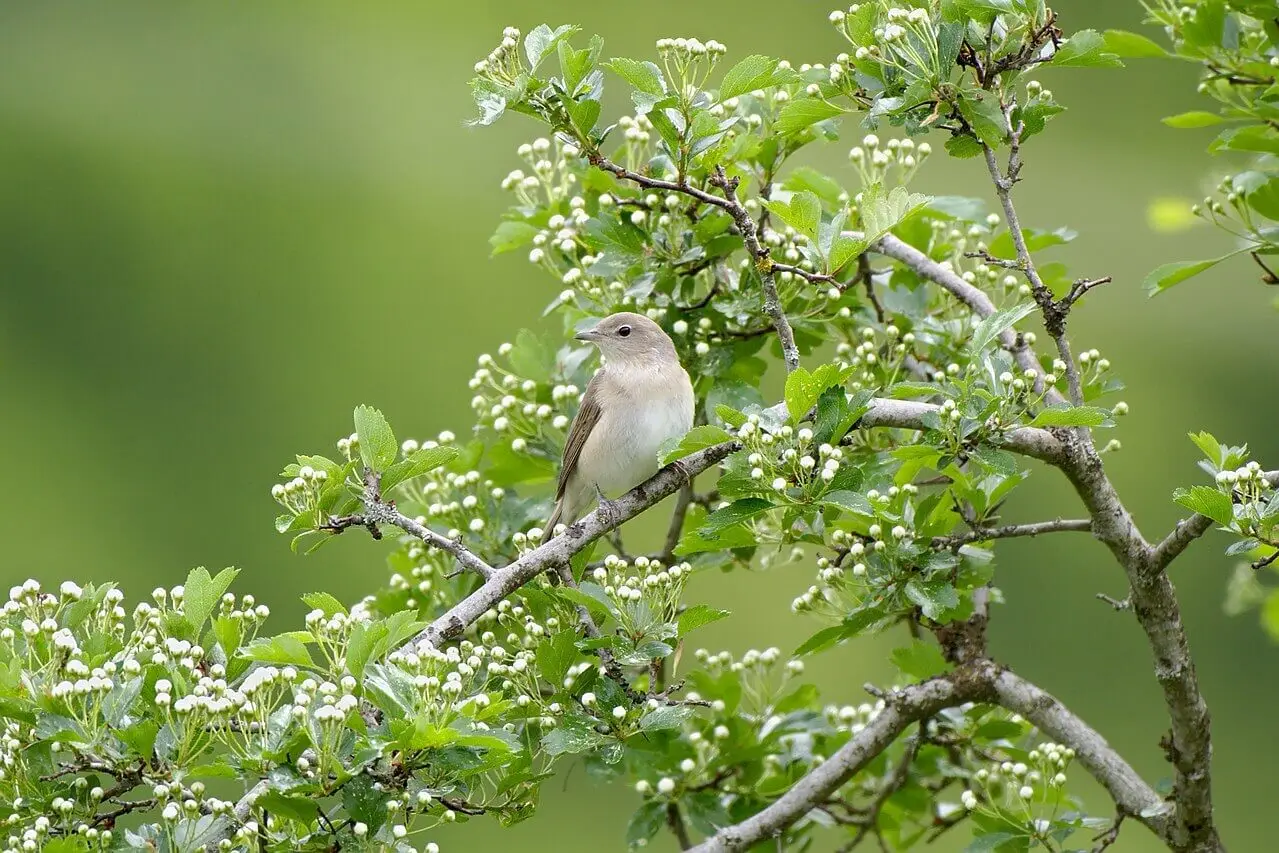
“Many bird species are not melodic combatants but lone dreamers enveloping themselves in a veil of song,” writes Andreas Weber. “Individuals of species like the garden warbler chatter in a special species-specific low-voice melody only when they are alone and undisturbed. They are talking to themselves, delicate and melodious and totally free of utility.”
Third Ear: Reflections on the Art and Science of Listening by Elizabeth Rosner
Extracted from: Third Ear: Reflections on the Art and Science of Listening by Elizabeth Rosner
A world of exquisite beauty and expansive awareness awaits if only we open up our ears and listen with our ‘Third Ear’ for greater connection, understanding and love of all beings. Elizabeth Rosner is a wonderfully vivid and artful weaver of liminal worlds of quietude and sound.
Rating: 🌟🌟🌟🌟🌟
Genre: Spirituality, self-love, self-awareness, psychology, history
“Gide said something that I have always agreed with, even though it might be misunderstood: “Art lives from constraint and dies from freedom.” That is true, but we must not draw the conclusion that art should be controlled. Art only lives through the constraints it places upon itself: it dies from any others. On the other hand, if art does not control itself, it descends into madness and is enslaved by its own illusions. The most liberated form of art, and the most rebellious, will thus be the most enduring; it will glorify the greatest effort. If a society and its artists do not accept this long, liberating task, if they yield to the comforts of entertainment or conformity, to the diversions of art for art’s sake or the moralizing of realistic art, its artists will remain entrenched in nihilism and sterility. Saying this means that a rebirth in art today depends on our courage and our desire to see clearly.”
An electrifying and timeless book of ideas about how artists can resist and overcome the forces of fascism written by one of the greats of the 20th Century, Albert Camus who created a massive body of work while actively resisting Nazism during WWII.
Rating: 🌟🌟🌟🌟🌟
Genre: Essays, Non-Fiction, Politics, Art
Publisher: Vintage
Review in one word: Electrifying
“Create Dangerously” is a short book of essays written in the 1950s by Albert Camus. Despite its age, its snappy insights feel immediately applicable to the current state of our world in 2025 and beyond. Camus touches on weighty topics like the role and responsibility of the artist, resisting fascism through artistic expression and rebellion, human freedom, love, beauty and despair and much more.
“When an argument starts your goal should be to arrive at a mutual understanding it helps to become aware of the inner tension that is impacting your reasoning notice your level of attachment explain yourself clearly listen with patience find the balance between honoring your truth and reflecting on your partner’s perspective and remember that success is both of you feeling heard”
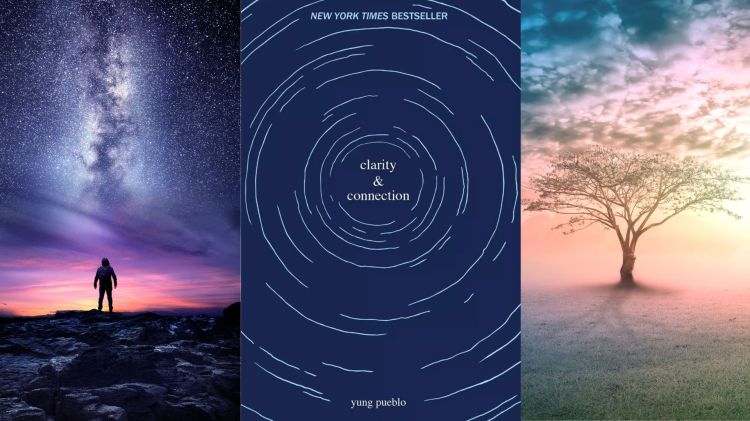
It is difficult to describe how joyful, vivid and clear about everything in life that this book makes me feel. It’s the kind of book you can read over and over without tiring of its insights. Clarity and Connection is a revitalising treasure of wisdom that brings together timeless insights into the meaning of love, compassion (for self and other) as well as how to heal and recover from trauma and a difficult period of one’s life.
How to retrain your #brain after #trauma, the coolest surnames in the world, #vegan french toast #recipe, legendary erotica writer Anaïs Nin’s amazing #midcentury home, pimped up cars and loads more #InterestingThings #ContentCatnip #interiors
Everyone has likely experienced some trauma throughout their lives, it can be tough-going. Here are some amazing tips to help you to overcome it. From Reddit Cool Guides.
This looks amazing, the technical bit of creating the egg replacement and making it perform in the same fluffy way as egg looks a bit tricky…but willing to give it a go!
One of my favourite non-fiction writers and her sensual sanctuary in Los Angeles. I love the rich burgundy hues, velvet textures and the exquisite corner library. What a beautiful example of mid-century modern! Via Isabel Baldwin
Something about this juxtaposition of the glowing anime rabbits and old style Chinese/Japanese mythological goddess is eerie and weird and yet it works very well!
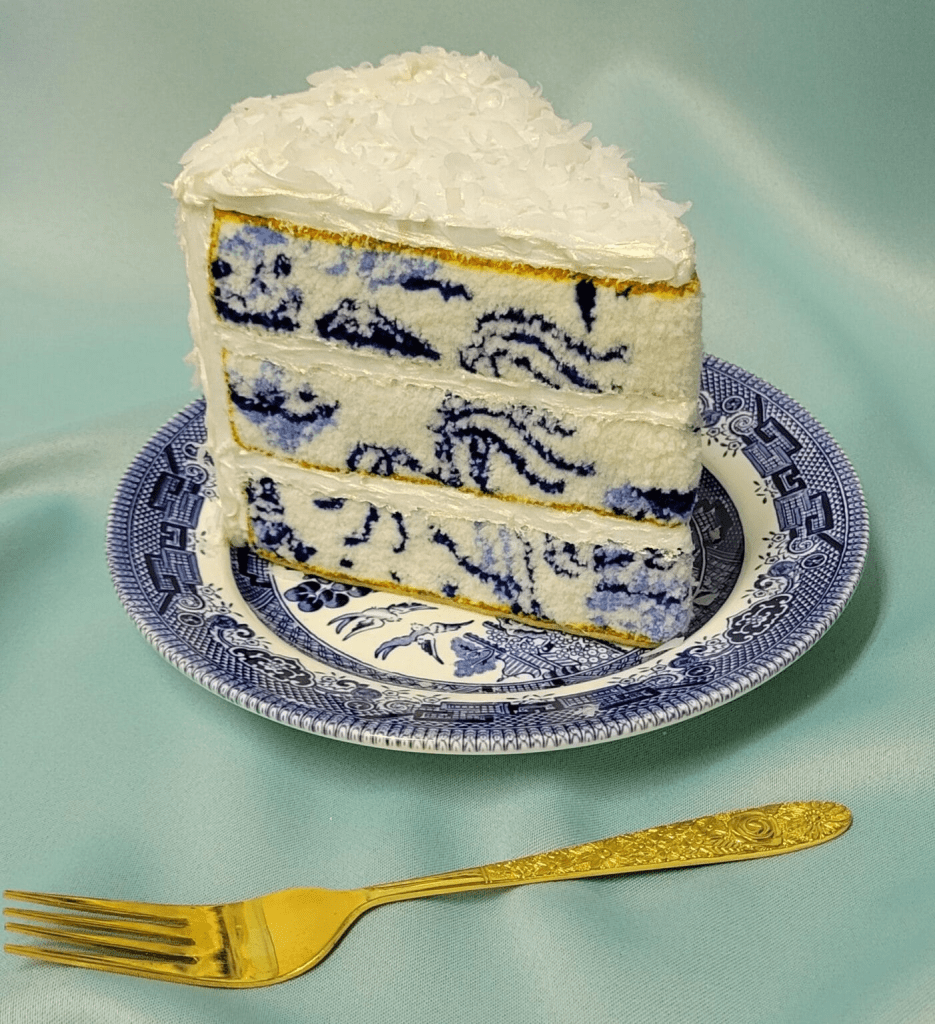
Insanely skilled artist Heather Rios conjures joy from clay and thread, crafting hyperreal slices of cake that blur the line between dessert and dream. Her sculpted sweets—swirled with embroidery and adorned with blossoms, berries, and porcelain motifs—are impossible confections too intricate for the kitchen. Mounted on vintage plates or nestled into shallow paintings, these playful trompe l’oeils invite indulgence with none of the guilt. A delicious collision of kitsch, craft, and nostalgia, her work is a sugary wink to childhood birthdays and whimsical afternoons. Via ThisisCollossal
A Fijian crested iguana (Brachylophus vitiensis) resting on a coconut palm on the island of Fiji in the South Pacific. The four species of iguanas that inhabit Fiji and Tonga today are descended from ancestors that colonized the island within the past 34 million years, probably by rafting 5,000 miles across the Pacific Ocean from western North America. Nicholas Hess
Iguanas have often been spotted rafting around the Caribbean on vegetation and, ages ago, evidently caught a 600-mile ride from Central America to colonize the Galapagos Islands. But for long distance travel, the Fiji iguanas can’t be touched.
A new analysis conducted by biologists at the University of California, Berkeley, and the University of San Francisco (USF) suggests that sometime after about 34 million years ago, Fiji iguanas landed on the isolated group of South Pacific islands after voyaging 5,000 miles from the western coast of North America — the longest known transoceanic dispersal of any terrestrial vertebrate.
Overwater dispersal is the main way newly formed islands get populated by plants and animals, including humans, often leading to the evolution of new species and entirely new ecosystems. Understanding how these colonizations happen has fascinated scientists since the time of Charles Darwin, the originator of the theory of evolution by natural selection.
The new analysis, to be published next week in the journal Proceedings of the National Academy of Sciences, suggests that the arrival of the ancestors of the Fiji iguanas coincided with the formation of these volcanic islands. The estimated time of the arrival, 34 million years ago or more recently, is based on the timing of the genetic divergence of the Fiji iguanas, Brachylophus, from their closest relatives, the North American desert iguanas, Dipsosaurus.
Previously, biologists had proposed that Fiji iguanas may have descended from an older lineage that was more widespread around the Pacific but has since died out, leaving Brachylophus as the sole iguanids in the western Pacific Ocean. Another option was that the iguanas hitchhiked from tropical parts of South America and then through Antarctica or even Australia, though there is no genetic or fossil evidence to support this.
The new analysis puts those theories to rest.
“We found that the Fiji iguanas are most closely related to the North American desert iguanas, something that hadn’t been figured out before, and that the lineage of Fiji iguanas split from their sister lineage relatively recently, much closer to 30 million years ago, either post-dating or at about the same time that there was volcanic activity that could have produced land,” said lead author Simon Scarpetta, a herpetologist and paleontologist who is a former postdoctoral fellow at UC Berkeley and is now an assistant professor at USF in the Department of Environmental Science.
“That they reached Fiji directly from North America seems crazy,” said co-author Jimmy McGuire, UC Berkeley professor of integrative biology and herpetology curator at the Museum of Vertebrate Zoology. “But alternative models involving colonization from adjacent land areas don’t really work for the time frame, since we know that they arrived in Fiji within the last 34 million years or so. This suggests that as soon as land appeared where Fiji now resides, these iguanas may have colonized it. Regardless of the actual timing of dispersal, the event itself was spectacular.”
While sailors today can take advantage of favorable winds to reach Fiji from California in about a month, an iguana — or more likely a group of iguanas — would probably have taken much longer to ride flotsam through the doldrums and across the equator to Fiji and Tonga, where this group of iguanas is found. Luckily, iguanas are large and herbivorous and used to long periods without food and water. And if the flotsam consisted of uprooted trees, the raft itself would have provided food.
“You could imagine some kind of cyclone knocking over trees where there were a bunch of iguanas and maybe their eggs, and then they caught the ocean currents and rafted over,” Scarpetta said.
The Fiji iguanas are an outlier
All told, there are over 2,100 species in the suborder Iguania, a large group that also includes animals such as chameleons, anoles, bearded dragons and horned lizards. What most people think of as iguanas are the Western Hemisphere family of lizards, Iguanidae, that include and mostly look like the widespread green iguana of Central and South America that Carl Linnaeus described as Iguana iguana in 1758. There are 45 species of Iguanidae living in the Caribbean and the tropical, subtropical and desert areas of North, Central and South America. These include the well-known marine iguanas of the Galapagos Islands, but also the chuckwallas of the American Southwest.
The Fiji iguanas are an outlier, sitting all alone in the middle of the Pacific. The four species on Fiji and Tonga are listed as endangered, primarily because of habitat loss, predation by invasive rats and exploitation by smugglers feeding the exotic pet trade.
Biologists had speculated, based on a few fossils found in east Asia, that an ancestral population of iguanids, now extinct, lived around the Pacific Rim and somehow made their way to the middle of the Pacific, island-hopping along the way. They may have journeyed by land and sea from America via the Bering Land Bridge and on through Indonesia and Australia or down along the Pacific coast of the Americas and through Antarctica. Or they could have rafted from South America with the Humboldt Current, gyring into the South Pacific.
Previous genetic analyses of a few genes for iguanid lizards were inconclusive about the relationship of the Fiji iguanas to all the rest. Scarpetta, while a postdoctoral fellow with McGuire a few years ago, embarked on a comprehensive survey of all genera in the Iguania to clarify the family tree of the group.
“Different relationships have been inferred in these various analyses, none with particularly strong support,” McGuire said. “So there was still this uncertainty about where Brachylophus really fits within the iguanid phylogeny. Simon’s data really nailed this thing.”
Scarpetta collected genome-wide sequence DNA from more than 4,000 genes and from tissues of more than 200 iguanian specimens housed in museum collections around the world. As he began comparing these data, one result stood out clearly: The Fiji iguanas are most closely related to the iguanas in the genus Dipsosaurus. The most widespread of these is the North American desert iguana, Dipsosaurus dorsalis, which is adapted to the searing heat of the deserts of the American Southwest and northern Mexico. The other species in the genus is native to Santa Catalina Island in the Sea of Cortez.
“Iguanas and desert iguanas, in particular, are resistant to starvation and dehydration, so my thought process is, if there had to be any group of vertebrate or any group of lizard that really could make an 8,000 kilometer journey across the Pacific on a mass of vegetation, a desert iguana-like ancestor would be the one,” Scarpetta said.
The analysis determined that the two lineages, Brachylophus and Dipsosaurus, diverged about 34 million years ago, which doesn’t fit with earlier theories of the origin of the Fiji iguanas.
“When you don’t really know where Brachylophus fits at the base of the tree, then where they came from can also be almost anywhere,” McGuire said. “So it was much easier to imagine that Brachylophus originated from South America, since we already have marine and land iguanas in the Galapagos that almost certainly dispersed to the islands from the mainland.”
With the new analysis, a South American origin can be ruled out. And because the Fiji Islands emerged from the sea also about 34 million years ago, the iguanas may have serendipitously intersected the islands not long after. Other islands aside from Fiji and Tonga could also have harbored iguanas, Scarpetta noted, but it is the nature of volcanic islands to disappear as readily as they appear. Evidence of other Pacific Island iguanas, if they existed, has probably been lost.
Scarpetta, who has been enamored with salamanders, snakes and lizards since before high school, continues to analyze genome-wide data for Iguanian lizards to learn more about their evolutionary relationships and to infer their movements and interactions through time and space.
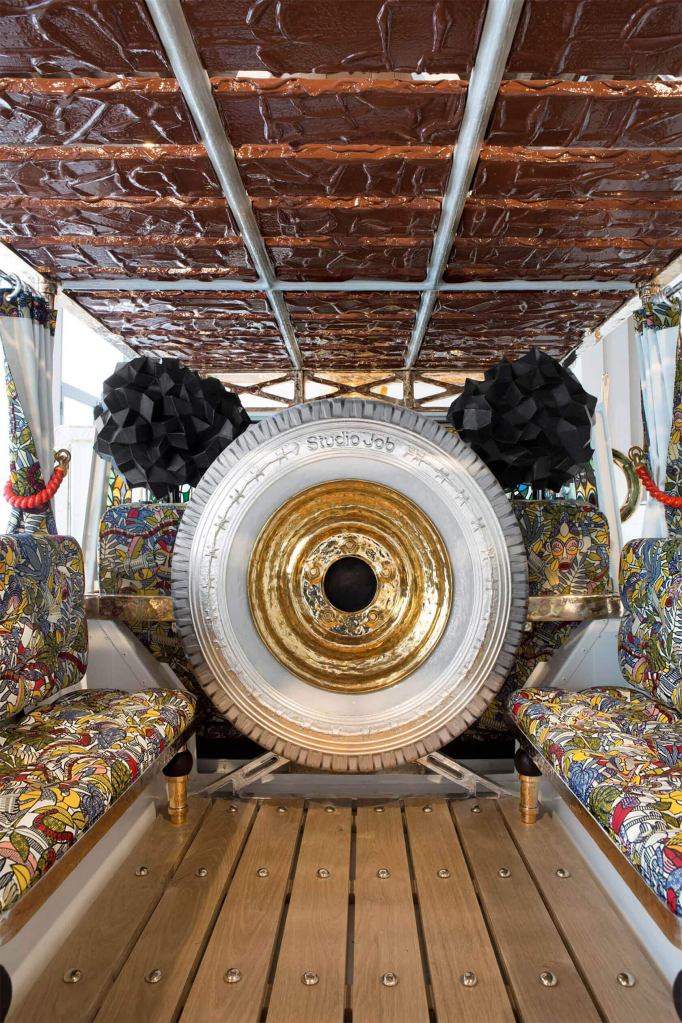
Studio Job is an avant-garde studio in the Netherlands and Milan. They are known for their provocative and whimsical creations. In 2013, they transformed a 4WD into an extraordinary art installation. Dubbed “Automobile,” this piece showcases Studio Job’s eclectic quirky styling, using materials like aluminium, bronze, brass, oak, ceramic, Swarovski crystals, hand-blown glass, leather, rubber, stained glass, and gold. Described as “a masterpiece,” the installation encapsulates the studio’s diverse oeuvre. Explore more of Studio Job’s work on the Inspiration Grid website.
Did you enjoy this collection? let me know what you think of it below. Thank you for reading my dear friends!
Practical, helpful tools to cope with life’s curly, confusing and confounding predicaments and relational conundrums.
Rating: 🌟🌟🌟🌟🌟
Genre: Non-Fiction, Self-Help, Psychology, Life Advice
Publisher: Michael Joseph/Penguin Life
Review in one word: Practical
Open When… is a practical lifeline in book form. Written by renowned clinical psychologist and online mental health educator Dr. Julie Smith, the book is structured in a much different way from other self-help books. Instead of asking the reader to immerse themselves into conventional chapters, Dr Smith acknowledges you the reader. Even the name ‘Open When’ signals the open-hearted intention of life advice for moments and times in life when you need them. The book’s structure in a letter-like form feels intimate, closer and warmer than most others of this genre for this reason.
The chapters are designed to be stand-alone and read in whatever order the reader feels is necessary and related to a particular emotional challenge – grief and loss, heartbreak, rejection, professional burn-out, failure, uncontrolled anger. Each letter is grounded in evidence-based therapy but wrapped in personable warmth and clarity.
Smith’s tone is reassuring and real, never condescending. She acknowledges how messy and complex emotions can be while giving readers tools to navigate them with more ease. What makes this book so special is its accessibility— there is a lack of overly fussy and academic psychological jargon, there is a lack of clinical distance as well as seen in one of the most famous books on trauma – The Body Keeps the Score, which I thought was not really that great in terms of being helpful. In contrast, Open When is book for all people to use practically, rather than a book designed for therapists.
This is a book that meets you where you are and doesn’t harp on about the importance of ‘positive thinking’ or any other trendy psychobabble. Open With is a wonderful silent friend in book form and will nudge you gently towards facing challenges in your life with greater clarity and self-love. I cannot recommend this book more!
“When elephants respond to news from their miles-distant family members, details they’ve taken in through acoustic sensitivities in their feet. When the searching roots of trees grow toward the energetic flow of water, sometimes tangling themselves in underground pipes—isn’t that too a kind of listening? What about when hummingbirds return to the specific vibration of nectar-drenched flowers? When whales share songs across oceans and recognize the pauses made by one another’s breathing? Hushed or amplified, implausible yet audible, everything is humming—from quantum to cosmic, from the inner life of electrons to the membranes of outer space. The entire universe is sonic.”
Third Ear: Reflections on the Art and Science of Listening by Elizabeth Rosner
Extracted from: Third Ear: Reflections on the Art and Science of Listening by Elizabeth Rosner
A world of exquisite beauty and expansive awareness awaits if only we open up our ears and listen with our ‘Third Ear’ for greater connection, understanding and love of all beings. Elizabeth Rosner is a wonderfully vivid and artful weaver of liminal worlds of quietude and sound.
Rating: 🌟🌟🌟🌟🌟
Genre: Spirituality, self-love, self-awareness, psychology, history
#Vegan almond butter date latte #recipe, things you can control, gigantic ancient #sloths, a quote from #Thoreau, walking with #dinosaurs #art by Kristen Eisenbraun and much more #ContentCatnip #InterestingThings
A common pitfall we all fall into sometimes is to believe we can control the things that are outside of our control. And likewise we can sometimes believe that we have no control of things that we can actually control. This infographic crystallises how you can tell the difference and it’s incredibly powerful and timeless. Via Reddit
This looks super cosy and not really that hard to make…can’t wait! via Rainbow Plant Life
Sweet and Spicy Almond Butter Date Latte by Rainbow Plant Life
Ingredients
▢1 1/2 cups (360 mL) unsweetened oat milk*
▢2 tablespoons creamy almond butter
▢2 soft large(ish) Medjool dates, pitted and torn in half
▢1/2 teaspoon ground cinnamon, extra for dusting the top
▢A pinch of cayenne pepper
▢1 large strip of orange peel
▢1 teaspoon vanilla extract
▢1/4 – 1/2 cup (60 – 120 mL) strongly brewed hot coffee**
Instructions
Add the oat milk, almond butter, dates, cinnamon, cayenne, orange peel, and vanilla to a small or medium saucepan. Bring to a rapid simmer and maintain it for 10 minutes, whisking occasionally.
Remove the milk from the heat and transfer it to a high-powered blender. Remove the center cap of the blender and cover with a dish towel to allow steam to escape. Blend on high until the mixture is very smooth and creamy, and all of the dates and orange peel are pulverized. Taste and adjust flavors as necessary.
Divide the hot coffee into two coffee mugs and then pour the almond butter date milk into each mug. Sprinkle with cinnamon and enjoy!
Via Compassion’s Compass on Mastodon Rejecting consumerism is a radical every day act that we can actively participate in (insofar that it is possible because we live in a consumerist world).
Are you a good parent? You may not have offspring of your own, however, each of you has a child within. They may have experienced or been exposed to things no child ever should and may carry the pain of those moments. It is important to remember this and treat them accordingly. When your child becomes upset and wants to be heard, do you douse the adult body with chemicals or food to quiet them? Do you ignore their cries for understanding and love to fit in? Do you pretend they do not exist and tell yourself to get over it?
Treat your inner child the same way you would treat any other child in your life. Their growth and well-being depend on how well you choose to relate to them. Pay attention to them, shower them with the Unconditional Love they may not have received and listen to understand what they are saying. They worked very hard to make sure you survived (and thrived) through your darkest days. Let them come out and play in the sunshine. Just like every other part of you, they are worthy and deserving of being honored! ~ Creator (Jennifer Farley).
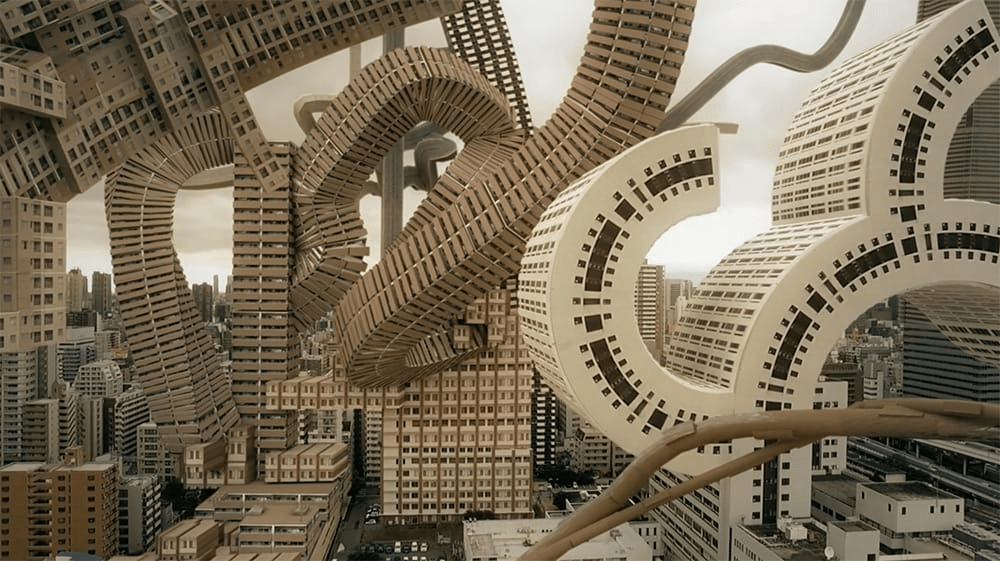
In Spatial Bodies, the Osaka skyline becomes a surreal jungle of living architecture—buildings ripple, twist, and float like sentient vines. Created by AUJIK, a self-described “nature/tech cult,” this hypnotic short reimagines the city as a self-replicating organism in a constant dance between order and chaos. Think brutalist bonsai meets cyberpunk daydream. With an ambient score by Daisuke Tanabe, this meditative animation invites you to witness a world where concrete breathes and skyscrapers grow like trees. Via This is Collossal
I have always been obsessed with dinosaurs and this obsession with ancient lifeforms didn’t disappear when I became an adult. Instead I often fantasise about what might have been if I could become a palaeontologist. Anyway, for all of those people who love these mighty ancient beasts here is a terrific review of the newly minted BBC show ‘Walking With Dinosaurs’, reviewed by palaeontologist James Ronan. Really looking forward to seeing this one!
“Over 66 million years ago. Our world was ruled by dinosaurs. The largest animals that have ever walked the Earth. Today, dinosaur experts across the globe are uncovering the bones they left behind. Allowing us to imagine how these extraordinary creatures lived. So that we can tell their stories and they can walk again.”Bertie Carvel
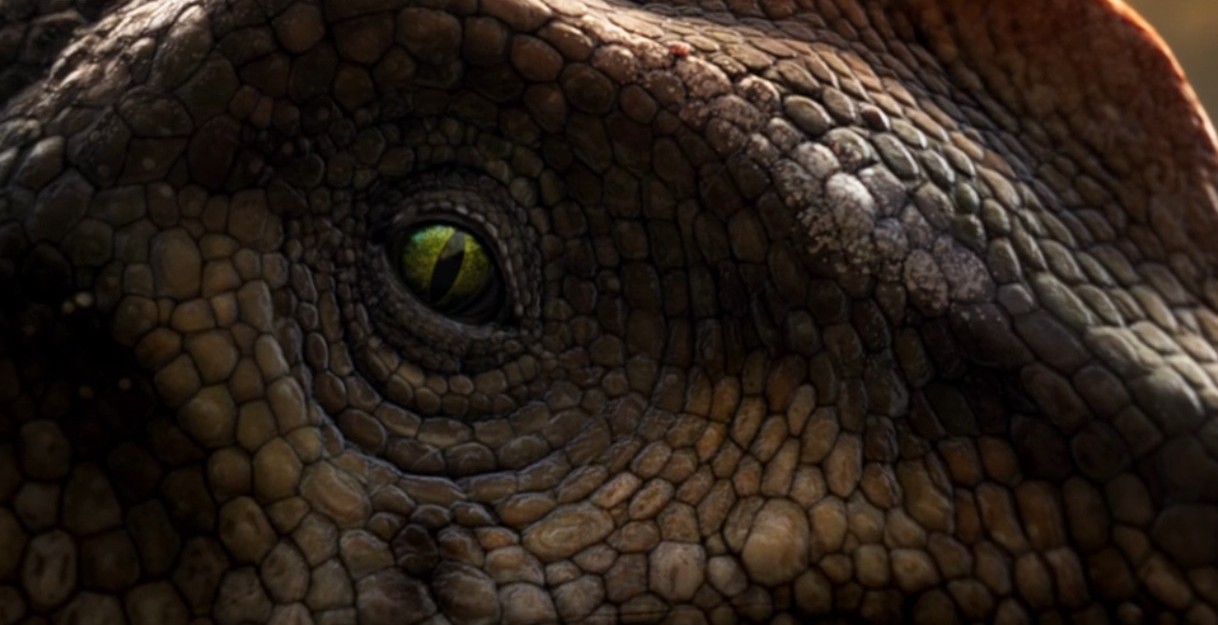
The long-awaited Walking with Dinosaurs 2025 marks a revival, not a direct sequel of the iconic franchise. Available now on BBC iPlayer, the series integrates cutting-edge palaeontological research with immersive storytelling, reconstructing life during the Mesozoic Era. Having watched every episode, I have plenty of thoughts on how it achieves its goal of engaging audiences with the latest science.
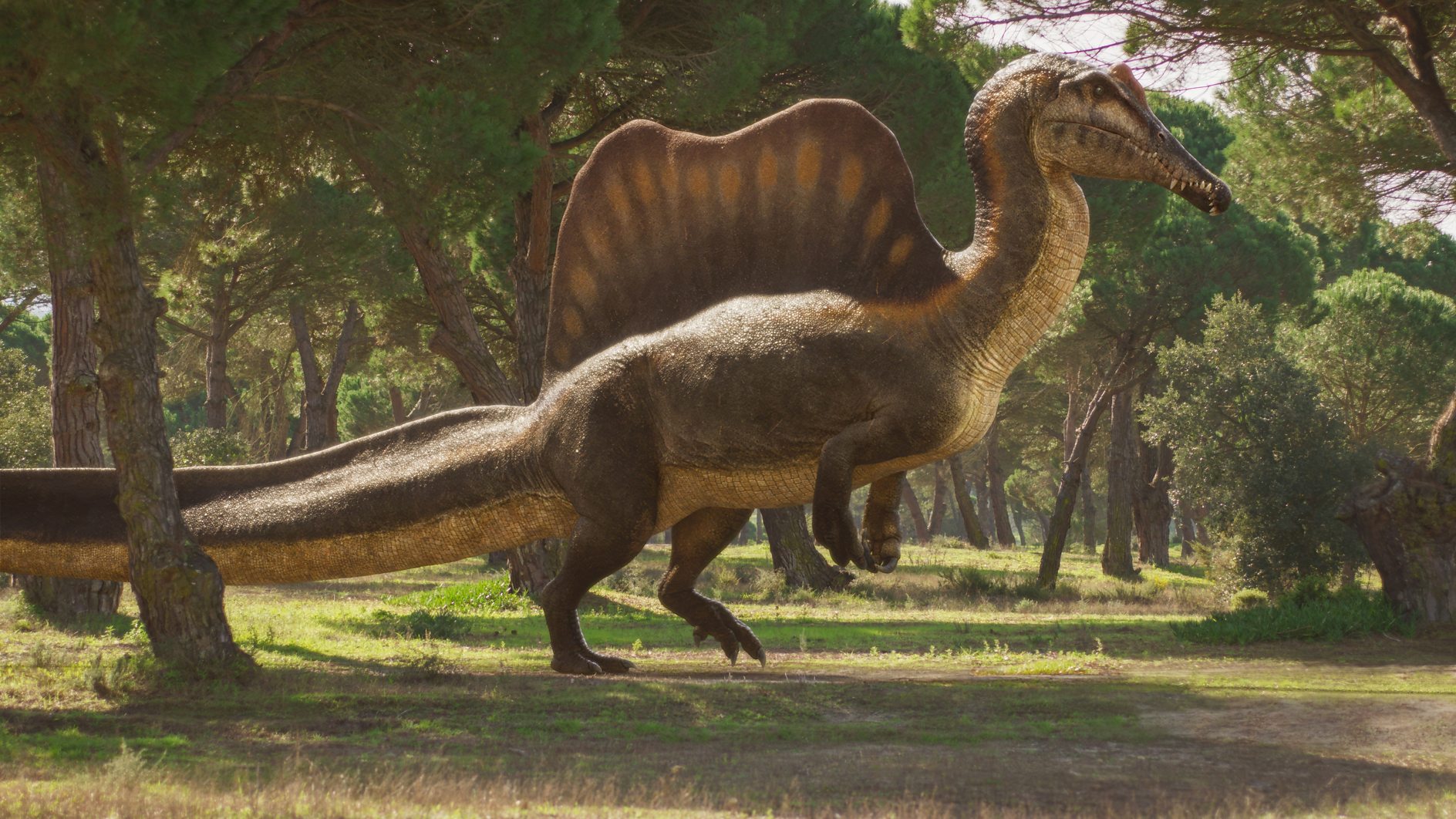
The king of the river stirs: Spinosaurus awakens! Walking with Dinosaurs 2025. Image credit: BBC, 2025.
This revival is not just about bringing dinosaurs back to the screen, it has a clear educational mission.
The Show’s Mission: Science Communication
The show’s mission is clear: science communication. It seeks to inspire those unfamiliar with non-avian dinosaurs while offering fresh insights to more knowledgeable audiences. Accurate science communication is essential, and as someone dedicated to increasing global engagement with palaeontology, I appreciate how the series showcases the latest scientific understanding of dinosaurs.
More than a predator! Spinosaurus takes parenting seriously in Walking with Dinosaurs 2025. Image credit: BBC Media Centre, 2025.
While the science communication in Walking with Dinosaurs 2025 is effective, some information may feel overly simplified for experienced palaeontologists or keen learners already set on pursuing a science career.
Fieldwork: A Window into Palaeontology
The excavation process unearthing fossils embedded in strata millions of years old is central to understanding dinosaur behaviour, long gone environments, and dinosaur final moments. Fossilised coprolites tell us about diet, while Albertosaurus bite marks on other Albertosaurus skulls hint at intraspecies dynamics. The series features fieldwork across all episodes, intertwining fossil discoveries with narratives about individual dinosaurs’ lives.
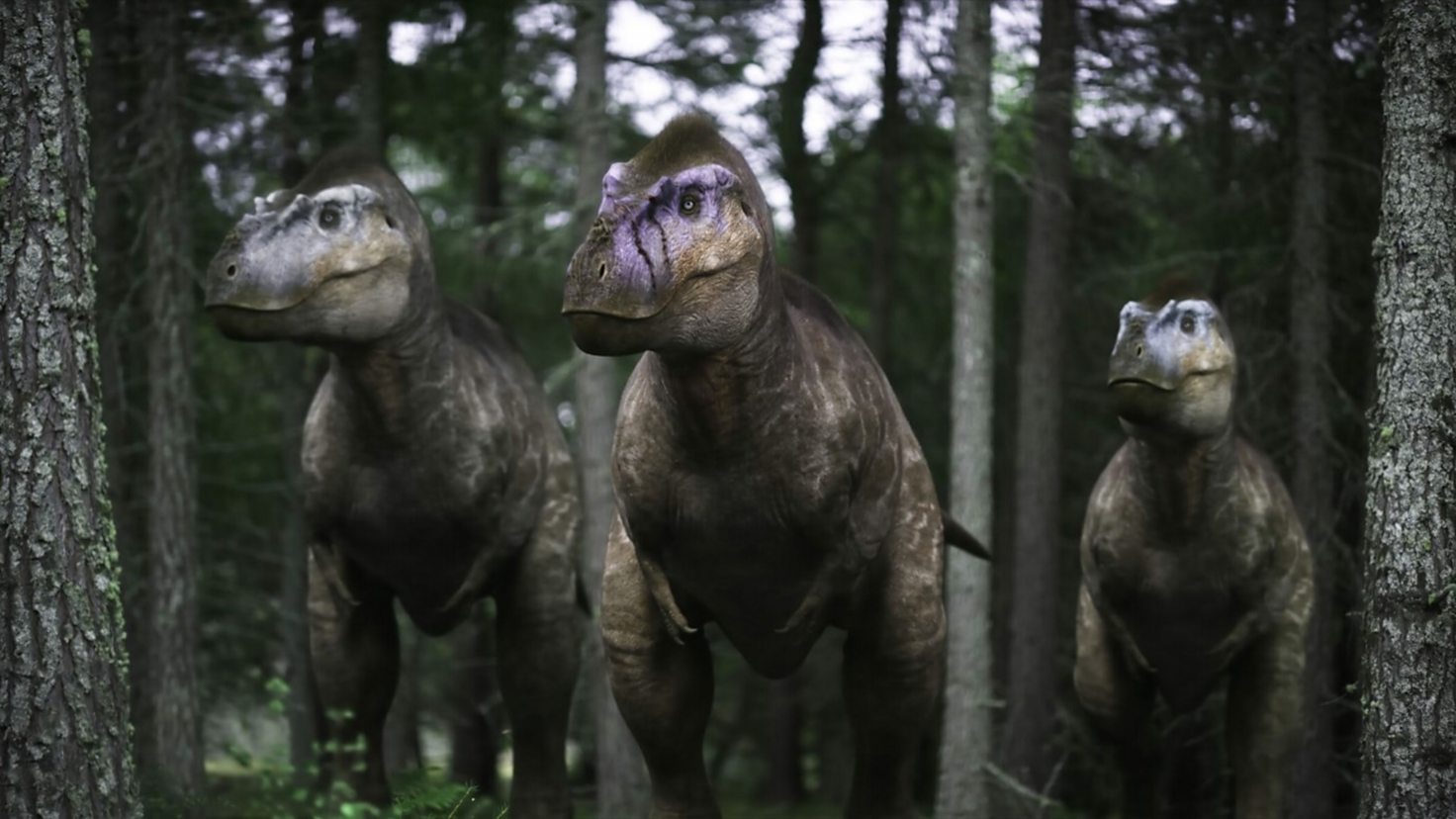
A group of Albertosaurus size up their next meal in Walking with Dinosaurs 2025. Image credit: BBC Media Centre, 2025.
Despite online criticism that these segments might bore younger viewers (something I ardently disagree with), Walking with Dinosaurs maintains a strong focus on how fossil evidence informs our understanding of prehistoric creatures. The show’s intent is clear: it is about reconstructing lost worlds through scientific findings while engaging a new generation, one that was not born when the original 1999 series aired.
Fossil hunting and fieldwork are the heart of palaeontology. Without excavation, most of these dinosaurs, pterosaurs, and other ancient organisms would remain forever buried.
Digging deep: unearthing prehistoric giants in the Kem Kem beds! Image credit: BBC, 2025.
The series showcases experts in the field relaying accurate scientific information through observation. Scientific research is on full display here with not just measurements of fossils being taken but the use of drones tracking fossil locations.
The show also showcases the impacts of the environment, weather and natural disasters, displaying the complex relationship dinosaurs had with the environment they inhabited.
The cinematography in Walking with Dinosaurs is striking, with sweeping camera shots that showcase Earth’s diverse landscapes, from the rugged Badlands of Montana to lush foliage highlighting the Late Cretaceous. These dynamic visuals not only enhance the documentary’s immersive quality but also reinforce the connection between prehistoric creatures and their environments.
Lusotitan a towering titan of the dinosaur world in Walking with Dinosaurs 2025. Image credit: BBC Media Centre, 2025.
While the fieldwork segments provide valuable insight, the series balances scientific accuracy with cinematic techniques to make palaeontology more accessible and visually compelling. The series also takes creative liberties to make palaeontology more accessible. Via James Ronan Palaeontologist
“It has always seemed to me, ever since early childhood, amid all the commonplaces of life, I was very near to a kingdom of ideal beauty.”
~ Lucy Maud Montgomery, A Night in June in the Garden
Terry Rosoman ran almost 120km across south Wales to make a giant penis and testicles. Samppa Tölli skated an illustration of a great white shark onto frozen Lake Hiidenvesi in Finland Samppa Tölli skated out an illustration of an eagle within just two hours onto Lake Hiidenvesi in Finland
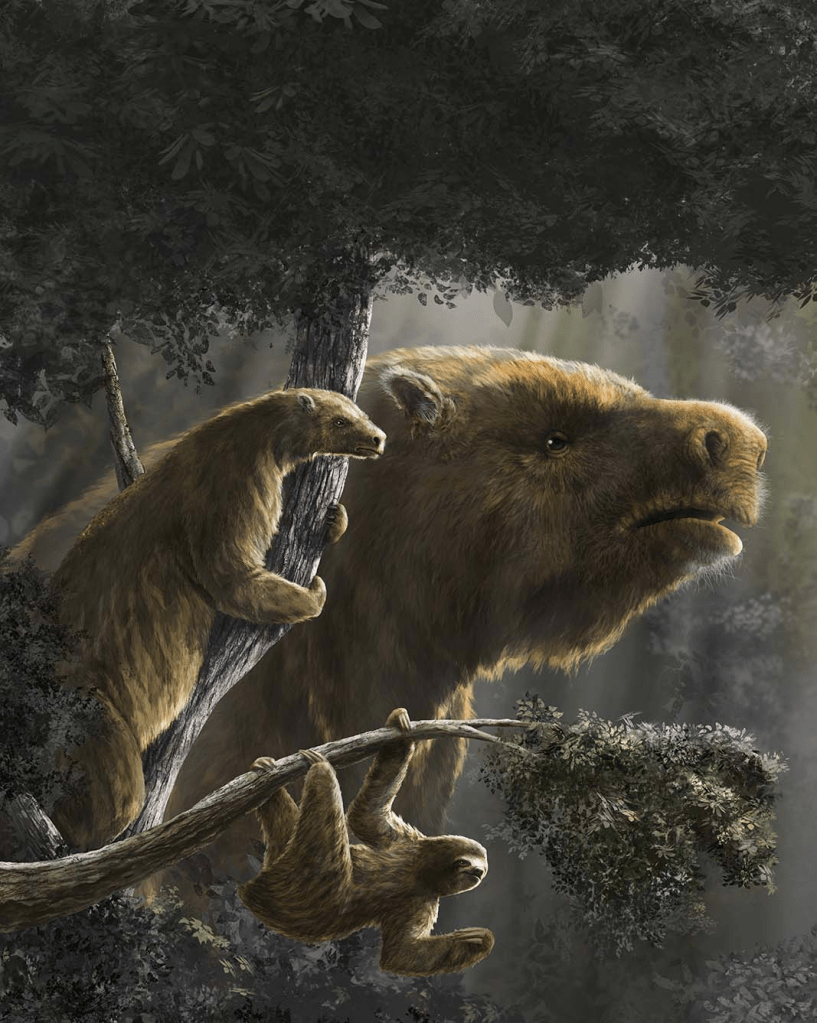
Ancient sloths lived in trees, on mountains, in deserts, boreal forests and open savannahs. These differences in habitat are primarily what drove the wide difference in size between sloth species. This artist’s impression shows the comparison of size between a giant ground sloth and the extant sloth species. Illustration by Diego Barletta
Most of us are familiar with sloths, the bear-like animals that hang from trees, live life in the slow lane, take a month to digest a meal and poop just once a week. Their closest living relatives are anteaters and armadillos, and if that seems like an odd pairing, there’s a reason why. Today, there are only two sloth species, but historically, there were dozens of them, including one with a bottle-nosed snout that ate ants and another that likely resembled the ancestors of modern armadillos.
Most of these extinct sloths also didn’t live in trees, because they were too big. The largest sloths, in the genus Megatherium, were about the size of Asian bull elephants and weighed roughly 8,000 pounds.
“They looked like grizzly bears but five times larger,” said Rachel Narducci, collection manager of vertebrate paleontology at the Florida Museum of Natural History.
Narducci is co-author of a new study published in the journal Science in which scientists analyzed ancient DNA and compared more than 400 fossils from 17 natural history museums to figure out how and why extinct sloths got so big.
Ground sloths varied widely in size, from the truly massive Megatherium — which could rip foliage off the tops of trees with its prehensile tongue and acted as a sort of ecological stand in for giraffes — to the modestly chunky Shasta ground sloth that terrorized cacti in the desert southwest of North America.
The same cannot be said for sloths that developed an affinity for tree climbing. Those that lived entirely in the canopy were and are uniformly small, with an average weight of 14 pounds, while those that spent part of their time on the ground averaged about 174 pounds.
You don’t have to be a scientist to puzzle out why trees enforce a strict weight limit. It’s the same reason why modern tree sloths have a strange elastic quality to them: Branches break when put under too much strain, and sloths are not generally known for their ability to swiftly avert sudden disaster. Tree sloths have reportedly survived falls of up to 100 feet. However, given that falls from even moderate heights can cause severe damage and some trees in the Amazon Rainforest top out at just under 300 feet, it makes evolutionary sense to be as small as possible when going out on a limb.
What’s less clear is why some ground sloths grew to such excessive sizes while others seemed content with being merely large. There may have been several reasons, which is why it’s been so hard for scientists to answer the question with confidence.
Larger sizes might have been advantageous for finding food or avoiding predators, for example. Ground sloths had a special fondness for caves, and their size undoubtedly played a role in their ability to find and make shelters. The moderately sized Shasta ground sloth favorited small, natural caves bored by wind and water into the cliffsides of the Grand Canyon, like the alveoli of a gigantic, geologic lung. These also doubled as convenient latrines; in 1936, paleontologists discovered a mound of fossilized sloth poop, bat guano and packrat middens more than 20 feet thick in Rampart Cave, near Lake Mead.
Larger sloths weren’t restricted to pre-existing caves. Using claws that are among the largest of any known mammal, living or extinct, they could carve their own from bare earth and rock. Many of the caves they left behind are still around with claw-mark décor along the interior walls, evidence of their ancient nesting excavations.
Other factors that may have contributed to their size discrepancy include climate, the degree of relatedness among sloth species and metabolic rates. The ability to accurately discriminate between these several possibilities required a substantial amount and various types of data.
The authors combined information about the shape of fossils with DNA from living and extinct species to create a sloth tree of life that traced the sloth lineage all the way back to their origin more than 35 million years ago. With this scaffold in place, they added results gleaned from decades of research about where sloths lived, what they ate and whether they were climbers or walkers. Because the authors were specifically interested in the evolution of size, they collected data for the final analytical ingredient by measuring hundreds of museum fossils, which they used to estimate sloth weight.
This is where the Florida Museum played a special role. “We have the largest collection of North American and Caribbean-island sloths in the world,” Narducci said. She carefully took several measurements of 117 limb bones and shared the numbers with her colleagues.
The authors mixed all this information together, computationally stirred it and got back a fully baked answer.
The result: Size differences among sloths has been primarily influenced by the types of habitats they lived in and, by extension, climate change.
“Including all of these factors and running them through evolutionary models with multiple different scenarios was a major undertaking that had not been done before,” Narducci said.
The sloth dynasty coincided with significant, life-altering changes in Earth’s climate. The oldest thing that scientists can reasonably consider to be a sloth is called Pseudoglyptodon, which lived 37 million years ago in Argentina. Analyses from the study indicate the earliest sloths would have likely been small ground dwellers, about the size of a great Dane. At various points throughout their evolutionary history, sloths adopted a semi-arboreal lifestyle. Not all of them stayed in the trees, however. The largest sloths, including Megatherium and Mylodon,likely evolved from a tree-adapted sloth that ultimately decided to stay firmly planted on the ground.
Against this background of indecisive climbers and walkers, the size of sloths hardly changed at all for about 20 million years, irrespective of their preferred method of locomotion. Then something earth-shattering occurred.
A giant wound opened up between modern-day Washington state and Idaho down through parts of Oregon and Nevada, and magma boiled out of it. This left a nearly 600,000 cubic mile scab over the Pacific Northwest. It’s still visible in some places along the Columbia River, where millions of years of running water have cut through and polished a colonnade of basalt. These rock pillars have a distinct hexagonal shape caused by the way in which the magma hardened and cracked as it cooled. The volcanic event that made them was a slow burn that lasted roughly 750,000 years and aligned with a period of global warming called the Mid-Miocene Climatic Optimum. The greenhouse gasses emitted by the volcanic eruption are currently considered the likeliest cause of the warming.
Sloths responded by getting smaller. This may be because warmer temperatures brought increased precipitation, which allowed forests to expand, thereby creating more habitat for smaller sloths. Size reduction is also a common way for animals to deal with heat stress and has been documented in the fossil record on several different occasions.
The world remained warm for about a million years after the volcano fell silent. Then, the planet resumed a longstanding pattern of cooling that has continued in fits and starts to the present. Sloths reversed course too. The more temperatures fell, the bulkier they became.
Arboreal and semi-arboreal sloths had the obvious limitation of having to live near trees, but ground sloths lived just about anywhere their feet would take them. They climbed the Andes Mountains, fanned out through open savannahs, migrated into the deserts and deciduous forests of North America and made a home for themselves in the boreal forests of Canada and Alaska. There were even sloths adapted to marine environments. Thalassocnus lived in the arid strip of land between the Andes and the Pacific. They survived in this harsh region by foraging for food in the ocean.
“They developed adaptations similar to those of manatees,” Narducci said. “They had dense ribs to help with buoyancy and longer snouts for eating seagrass.”
These varied environments presented unique challenges that ground sloths met, in part, by beefing up. “This would’ve allowed them to conserve energy and water and travel more efficiently across habitats with limited resources,” Narducci said. “And if you’re in an open grassland, you need protection, and being bigger provides some of that. Some ground sloths also had little pebble-like osteoderms embedded in their skin,” Narducci said, referencing the bony plating that sloths had in common with their armadillo relatives, a trait that was also recently discovered in spiny mice.
Equally as important, larger bodies helped sloths contend with cooling climates. They reached their greatest stature during the Pleistocene ice ages, shortly before they disappeared.
“About 15,000 years ago is when you really start to see the drop-off,” Narducci said.
There’s still debate about what happened to sloths, but given that humans arrived in North America at about the same time sloths went extinct in droves, it’s not hard to speculate. Paradoxically, the large size that kept them safe from most predators and insulated from the cold became a liability. Neither fast nor well-defended, ground and semi-arboreal sloths were easy pickings for early humans.
Arboreal sloths watched the carnage unfold below them from the safety of the treetops, but even there, they didn’t escape without losses. Long after their ground-dwelling relatives had gone extinct everywhere else, two species of tree sloth in the Caribbean held out until 4,500 years ago. Humans arrived in the Caribbean about the same time that Egyptians were building the pyramids. Caribbean tree sloths went extinct not long after.
Kristen Eisenbraun, an oil painter from North Carolina, intertwines art and nature in her work, exploring the human spirit through portraiture and surreal landscapes. After diverse experiences as a ranch hand and car mechanic, she pursued art full-time, studying at the New York Academy of Art and Grand Central Atelier. Her work, exhibited across the US and Europe, captures nature’s moods with nuanced light and color. Kristen’s subjects, ranging from the young to the elderly, exude unconventional beauty. She is currently creating artwork on discarded musical instruments, repurposing them into unique, inspiring canvases. Via Beautiful Bizarre Magazine
Did you enjoy this collection? let me know what you think of it below. Thank you for reading my dear friends!
An umwelt (plural: umwelten; from the German Umwelt meaning “environment” or “surroundings”) is the specific way organisms of a particular species experience the world, which is dependant on what their sensory organs and perceptual systems can detect and interpret.
“In his book An Immense World, Ed Yong emphatically encourages such curiosity regarding a wide spectrum of species and their perceptions of the world: “Nothing can sense everything, and nothing needs to. That is why Umwelten exist at all. It is also why the act of contemplating the Umwelt of another creature is so deeply human and so utterly profound. Our senses filter in what we need. We must choose to learn about the rest.”
I think of my own years of living with Lulu, a spaniel mix, who convinced me that she possessed a substantial vocabulary both in the form of speaking and also in responding to my speech.
Within our shared Umwelt, we had very specific expressions for joyful greetings and sharp warnings, for announcements of love and fear. During our decade together, Lulu and I were continuously listening to each other, learning from each other. The house is now terribly quiet without her.”
Third Ear: Reflections on the Art and Science of Listening by Elizabeth Rosner
Extracted from: Third Ear: Reflections on the Art and Science of Listening by Elizabeth Rosner
A world of exquisite beauty and expansive awareness awaits if only we open up our ears and listen with our ‘Third Ear’ for greater connection, understanding and love of all beings. Elizabeth Rosner is a wonderfully vivid and artful weaver of liminal worlds of quietude and sound.
Rating: 🌟🌟🌟🌟🌟
Genre: Spirituality, self-love, self-awareness, psychology, history
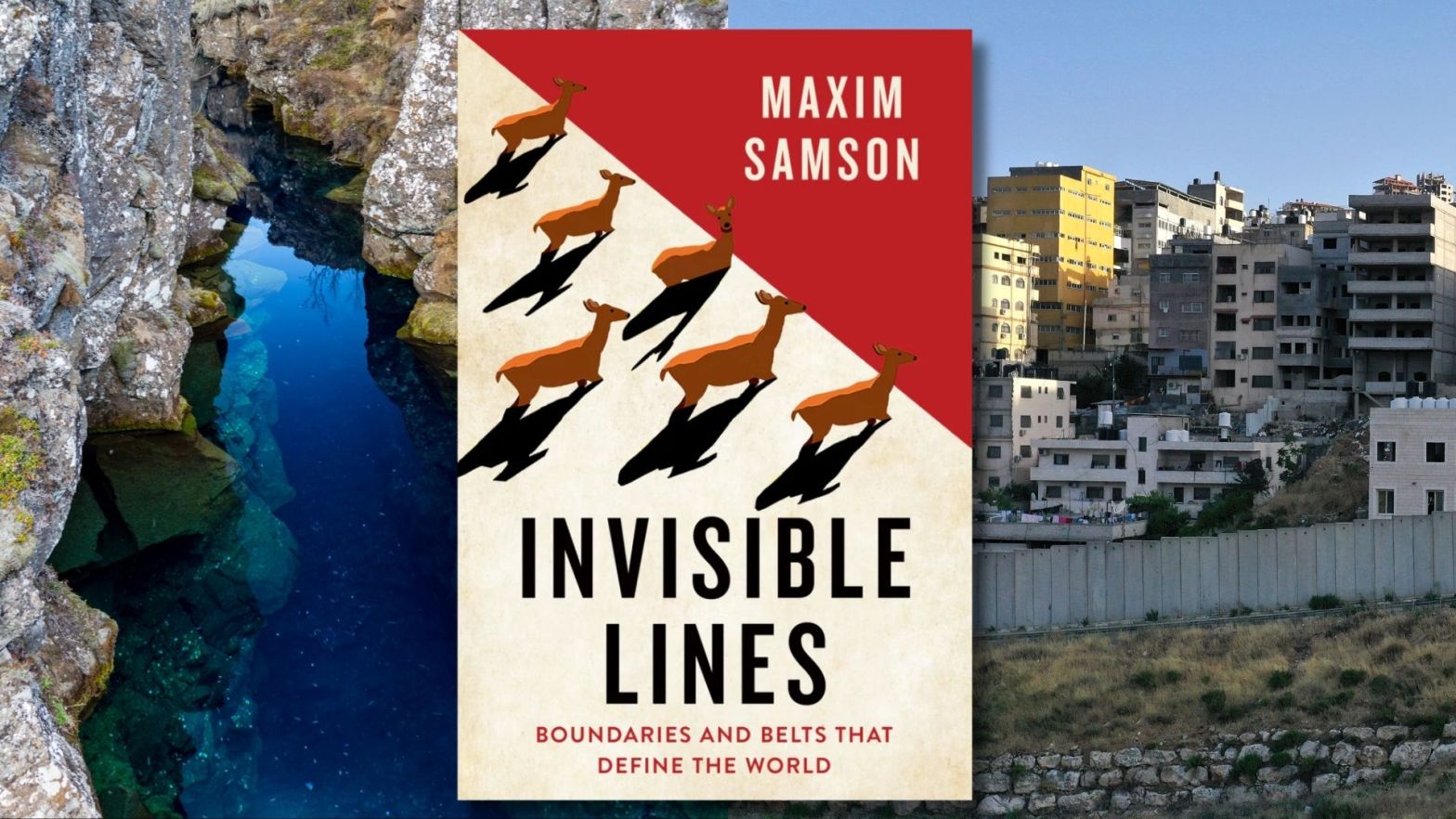
A thoughtful and timely meditation on the borders we inherit and the invisible lines we draw around ourselves—and what happens when we dare to cross them.
Rating: 🌟🌟🌟🌟
Genre: Non-Fiction, History, Geography, Politics
Publisher: Footnote Press
Review in one word: Compelling
In Invisible Lines, geographer Maxim Samson draws readers into the unseen architecture of our world— curious and yet invisible borders, boundaries, and barriers that we humans take for granted. Yet these places shape our identities, countries, politics, languages, customs and histories. This is an absolutely fascinating deep dive into how lines—both literal and metaphorical—divide, define and disorient us.
The book travels across territories and concepts with poetic agility. It explores borderlands where languages blur, the liminal spaces between genders, the historical scars of redlining, and the strange comfort of maps. But more than a study of divisions, it’s a celebration of liminality—the spaces in-between, the ambiguity of human experience. With quiet brilliance, Samson reminds us that many of the borders we accept as natural are anything but.
His writing is precise yet lyrical, offering insights into how geography intersects with power, memory, belonging, and identity. There’s something almost spiritual in the way Samson approaches boundaries—not just as geopolitical tools, but as artefacts of the human condition.
For fans of Robert Macfarlane or Rebecca Solnit, this is a thoughtful and timely meditation on the borders we inherit and the invisible lines we draw around ourselves—and what happens when we dare to cross them.
“Real maturity is observing your own inner turbulence and pausing before you project how you feel onto what is happening around you”
“When you dislike what someone has done and are quietly rolling in animosity toward them, you are not only weighing yourself down; you are strengthening future reactions of anger. progress is realizing that fixating on what happened cannot change the past, but a calm mind can certainly help your future.”
It is difficult to describe how joyful, vivid and clear about everything in life that this book makes me feel. It’s the kind of book you can read over and over without tiring of its insights. Clarity and Connection is a revitalising treasure of wisdom that brings together timeless insights into the meaning of love, compassion (for self and other) as well as how to heal and recover from trauma and a difficult period of one’s life.












































 Content Catnip

You must be logged in to post a comment.