“Real maturity is observing your own inner turbulence and pausing before you project how you feel onto what is happening around you”
“When you dislike what someone has done and are quietly rolling in animosity toward them, you are not only weighing yourself down; you are strengthening future reactions of anger. progress is realizing that fixating on what happened cannot change the past, but a calm mind can certainly help your future.”
It is difficult to describe how joyful, vivid and clear about everything in life that this book makes me feel. It’s the kind of book you can read over and over without tiring of its insights. Clarity and Connection is a revitalising treasure of wisdom that brings together timeless insights into the meaning of love, compassion (for self and other) as well as how to heal and recover from trauma and a difficult period of one’s life.
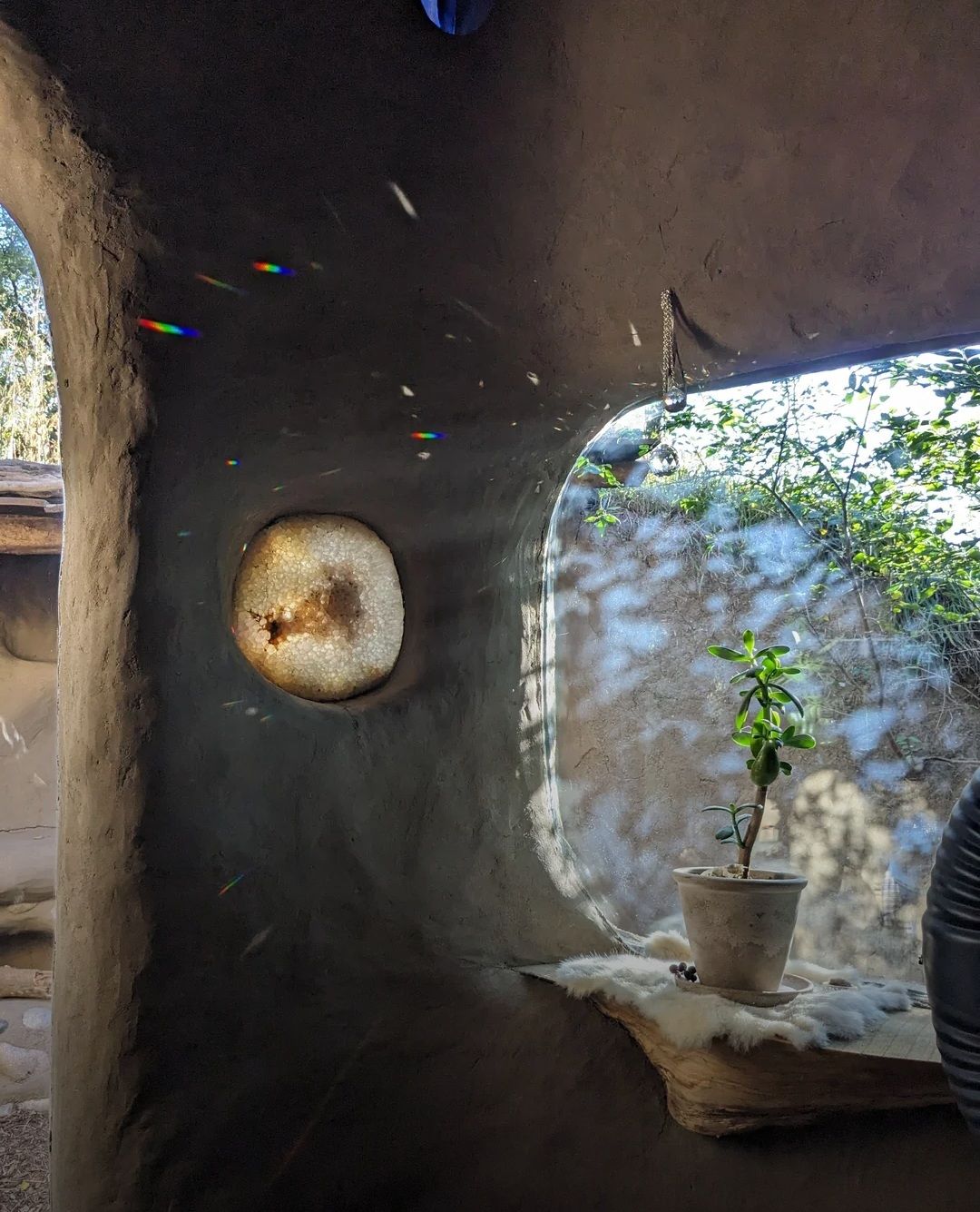
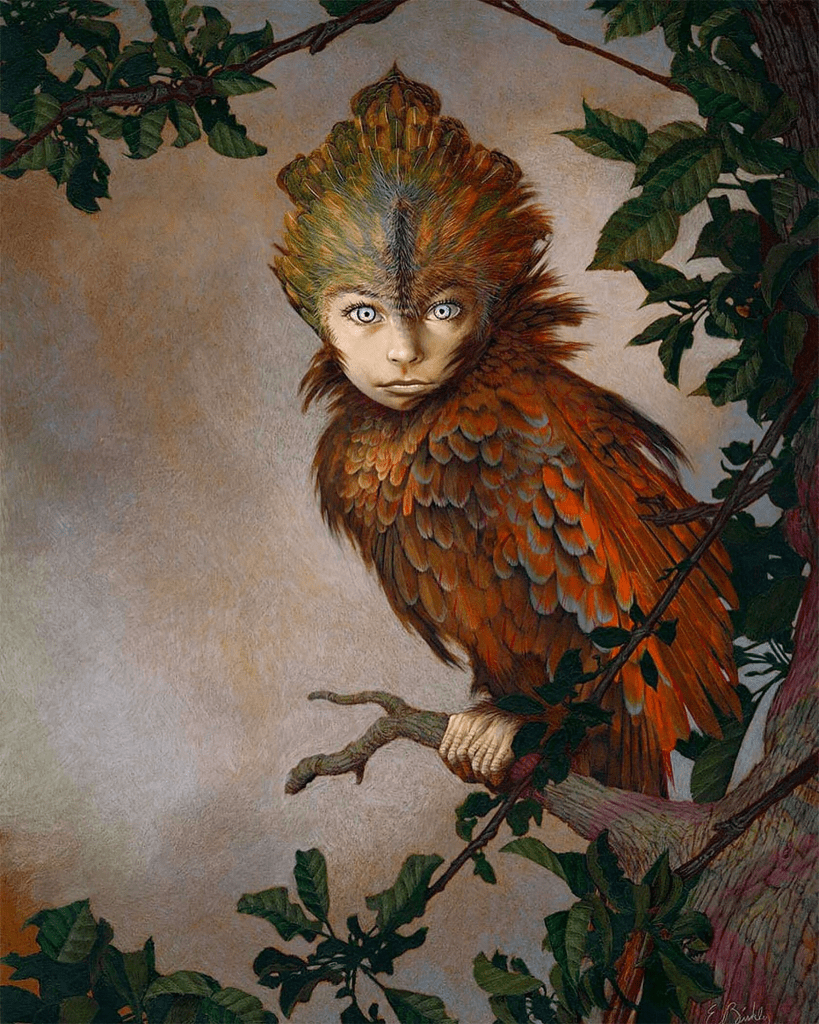
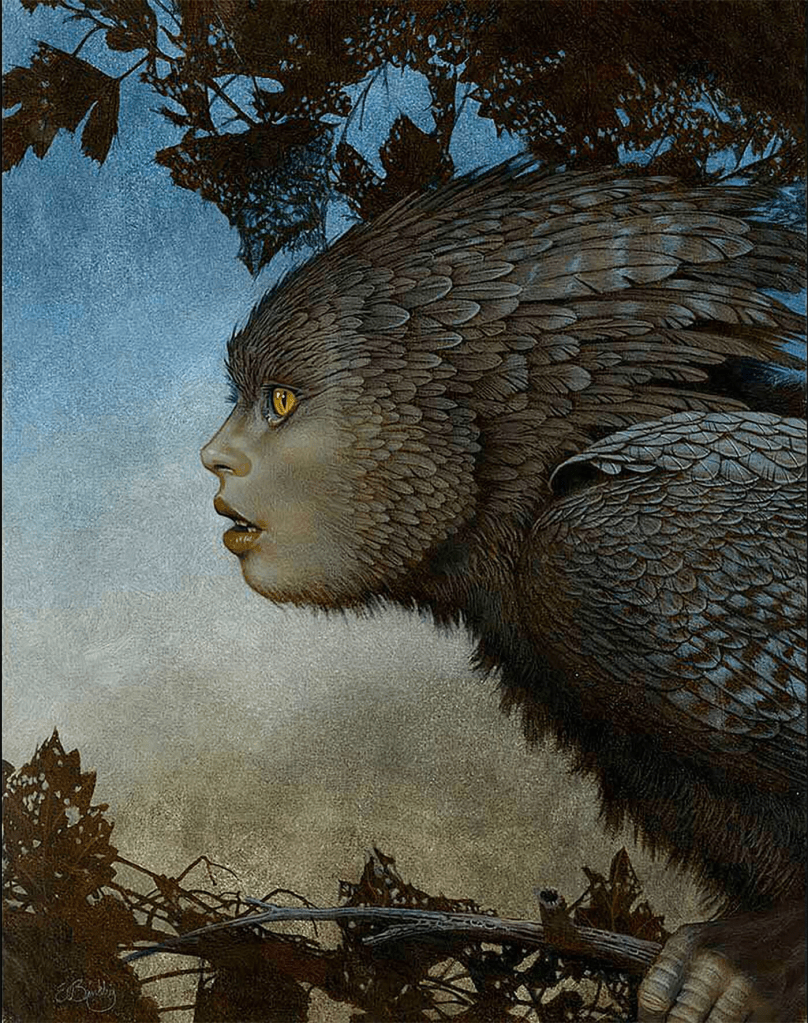
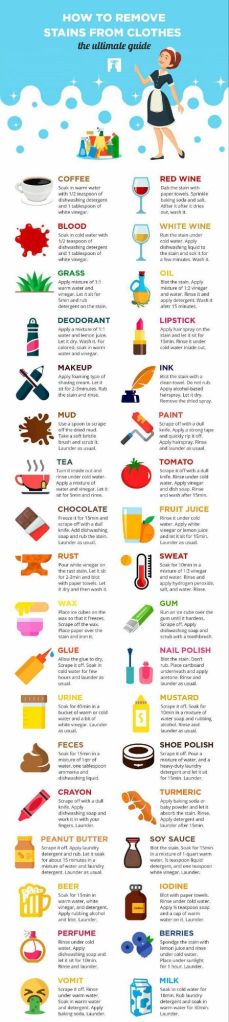
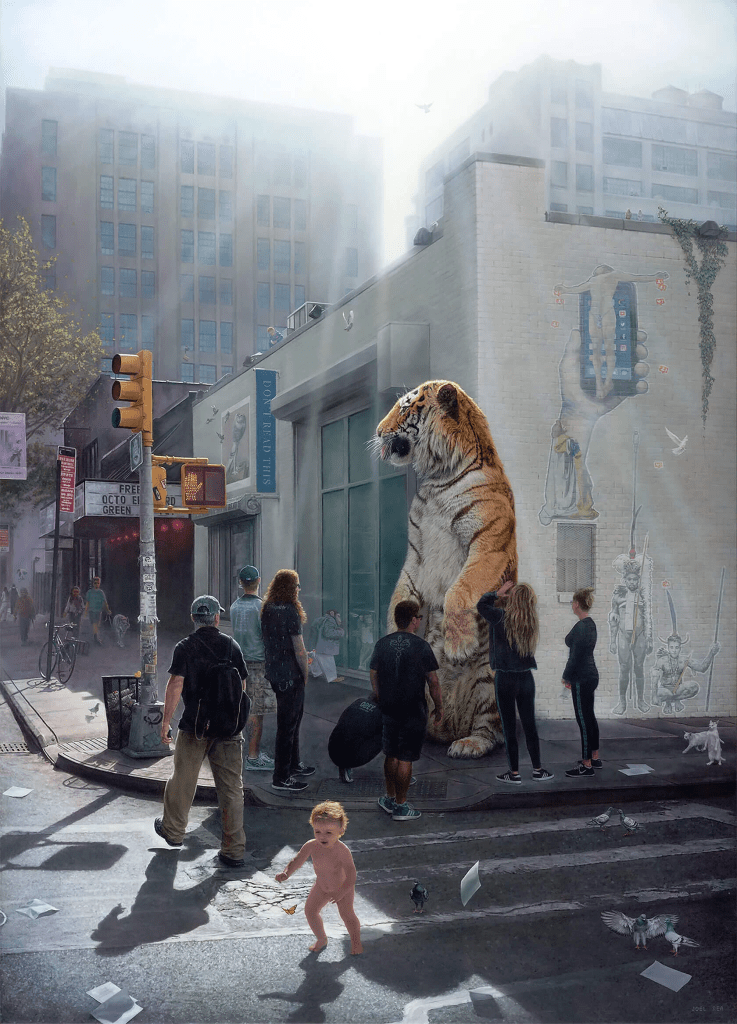
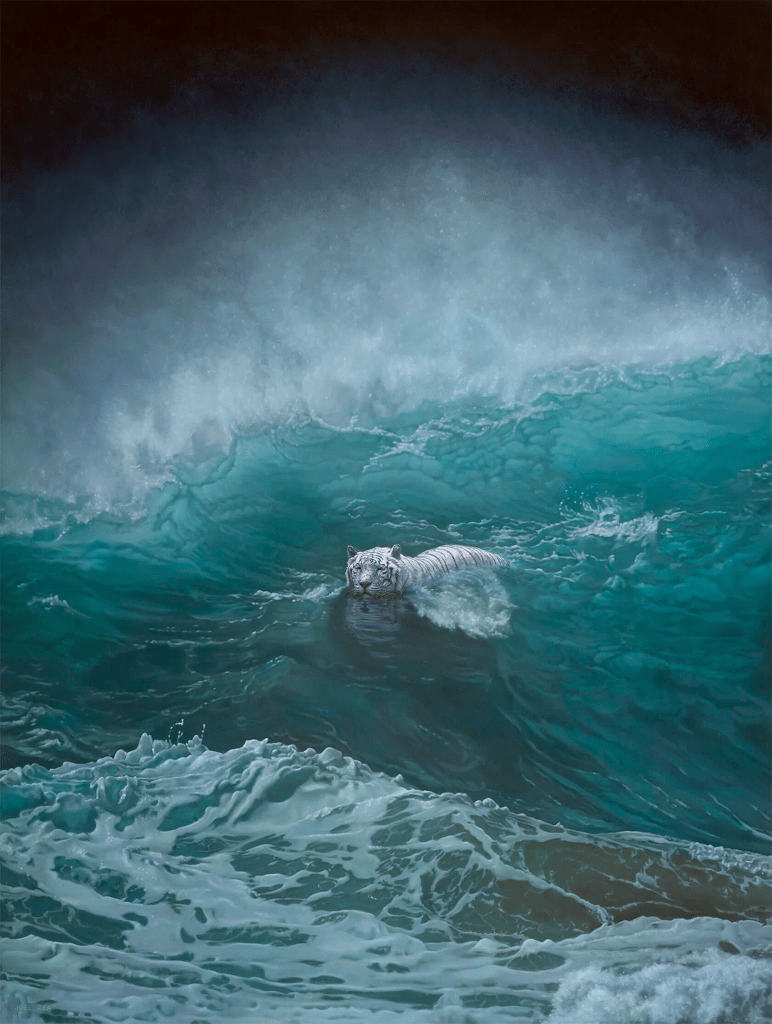
Eye-popping art by Joel Rea and Ed Binkly, ultra satisfying #vegan white bean #soup, a summary 50 #interiordesign styles, a cottage made of mud, how to get various stains out of different materials. #InterestingThings #ContentCatnip
I can’t really express how truly impressive this band is. 15 years of constant world tours and 27 completely unique albums later…here is their latest music video gem from their newest album. I would say they are Melbourne’s most criminally underrated export. Found via Third Eye a cool new blog about psychedelic rock and leftfield music, do yourself a big favour and go check Cole’s blog out.
Fresh curry leaves are well worth the hunt, because they offer both citrus and smoky notes. Buy them in Indian supermarkets and online; store any unused leaves in a tightly sealed container for another time.
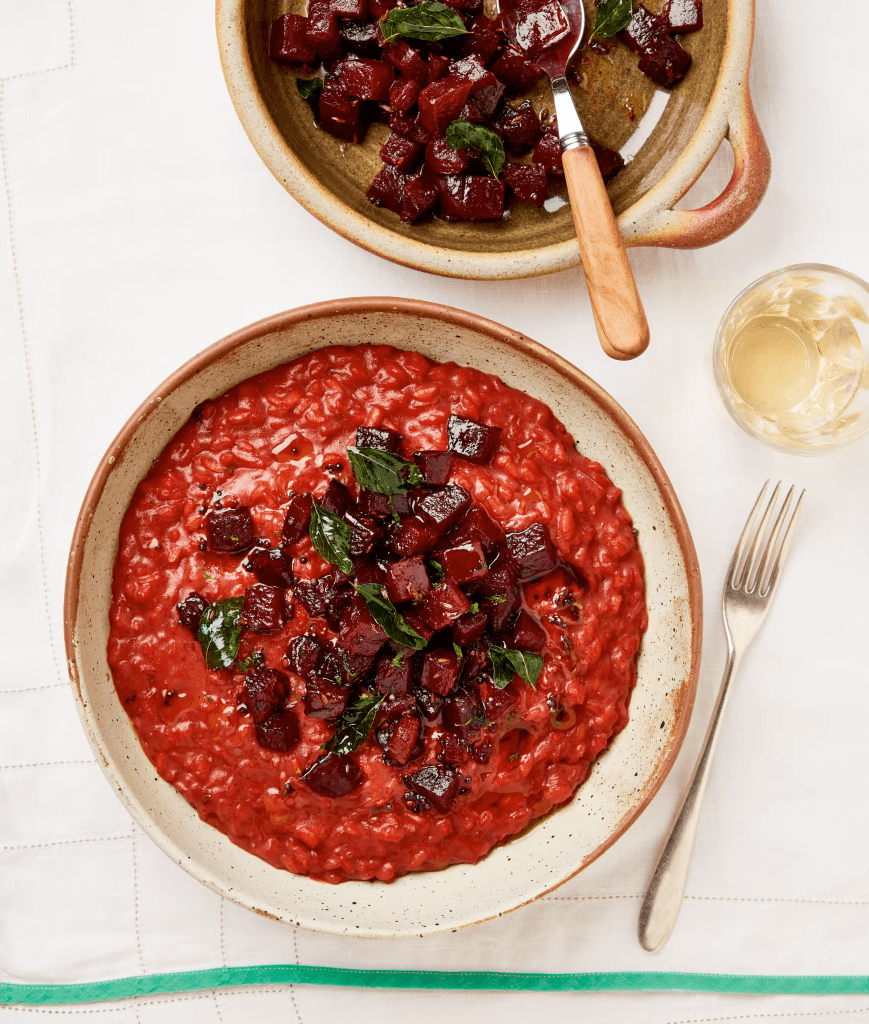
Prep 15 min Cook 1 hr 40 min Serves 4
For the risotto 400ml tin coconut milk (minimum 60% coconut) 3 whole beetroot (about 700g) 500ml hot vegetable stock – I like Potts’ 75g unsalted vegan butter 3 medium shallots (175g), peeled and finely diced 4 garlic cloves, peeled and minced 1½cm x 1½cm piece fresh ginger, peeled and finely grated Fine sea salt 350g arborio rice 5 tbsp marsala, or a similar fortified wine such as madeira, port or sweet sherry
For the topping 1 tsp black mustard seeds 1 tsp cumin seeds 10-12 fresh curry leaves 1 green finger chilli, finely chopped Grated zest of 1 lime, plus 2 tbsp lime juice
Pop the tin of coconut milk in the fridge, so the cream at the top hardens. Scrub the beetroot, put them in a large pan, add cold water to cover, then pop on a lid and bring to a boil. Boil for up to an hour, until tender, then drain, wash and slip off the skins.
Roughly chop 300g of the cooked beetroot (keep the rest for later), then put this in a blender with 500ml hot water and blitz smooth. Transfer the beetroot stock to a large pan and add the hot vegetable stock.
Melt 50g of the butter in a casserole dish on a medium heat and, when it’s melted and hot, add the shallots, garlic, ginger and a teaspoon of salt, and cook, stirring frequently, for eight to 10 minutes, until the mix starts to turn golden.
Try this recipe and many more on the new Feast app: scan or click here for your free trial.
Add the rice, stir-fry for a couple of minutes, then pour in the marsala and let it sizzle away. Add the still-warm beetroot stock a ladleful at a time, letting the liquid reduce to almost nothing before adding the next ladle. Repeat until you’ve used up all the stock and the rice is 95% cooked. Open the chilled tin of coconut milk, spoon out the solid cream from the top and stir this into the rice (save the coconut liquid for a smoothie). Take the pan off the heat and cover to keep warm.
Meanwhile, dice the remaining beetroot into 1cm cubes. In a frying pan, melt the remaining 25g butter on a medium heat, then add the mustard and cumin seeds, the curry leaves and the chopped chilli, and leave to splutter for 30 seconds. Add the diced beetroot and three-quarters of a teaspoon of salt, stir-fry for six to eight minutes, then take off the heat and stir in the lime juice and zest.
Check the risotto for seasoning, and stir in a little more water to loosen, if need be. Distribute between shallow bowls and serve with a quarter of the spiced lime beetroot spooned over each portion.
Don’t run she will chase you…just back away slowly. I have since read that jaguars rarely if ever attack people. But I dare you to see her coming out of the shadows and not shit your pants!
This is such an accurate and yet deeply cringey roasting of what it means to be fly-in-fly-out FIFO Berlin Veteran from another place. To work part time and barely survive on a meagre amount of Euros and live in a squalid apartment and wear tatty clothes. I once did this and it’s reassuring that Berlin is still the same. The voiceover narrative is pure gold and hillarious.
“Berlin Veterans go to church on a Sunday. Except their church is Berghain, their priest is being pissed on in a cage and their sermon doesn’t end until Monday.”
Ever wondered why animals come in such stunning colours and patterns? It’s more than just beauty; it’s survival. From the vibrant wings of butterflies to the camouflaged stripes of tigers, each colour and pattern has a purpose. Animals use pigments, which absorb certain wavelengths of light, and structural colours, created by tiny, colourless structures, to dazzle us with their displays. Some animals, like flamingos, get their colours from their diet, while others, like chameleons, can change their hues at will. Bioluminescent creatures, such as fireflies, produce their own light through chemical reactions. These colourful adaptations help animals blend in, startle predators, or attract mates, playing a crucial role in their survival and evolution. Dive into the world of animal colouration and discover the fascinating science behind nature’s palette. via Cosmos
Madagascar bullseye moth (Antherina suraka). Credit: Jasius / Getty Images
Scanning electron micrograph of butterfly wing scales. Credit: Gribkov (CC BY 4.0)
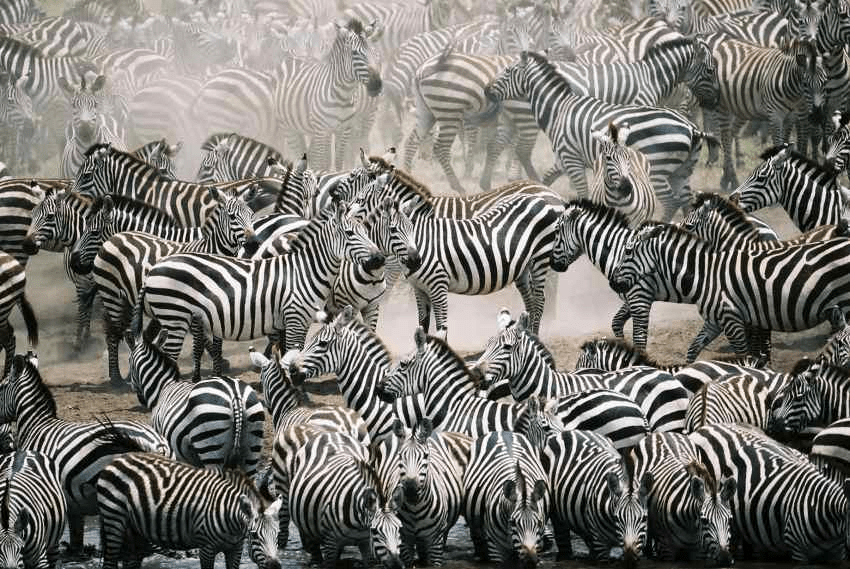
‘Motion Dazzle’ is the phenomenon when a large herd of prey animals use moving colours as a way of causing predator confusion. A herd of zebras. Credit: serengeti130 / Getty Images
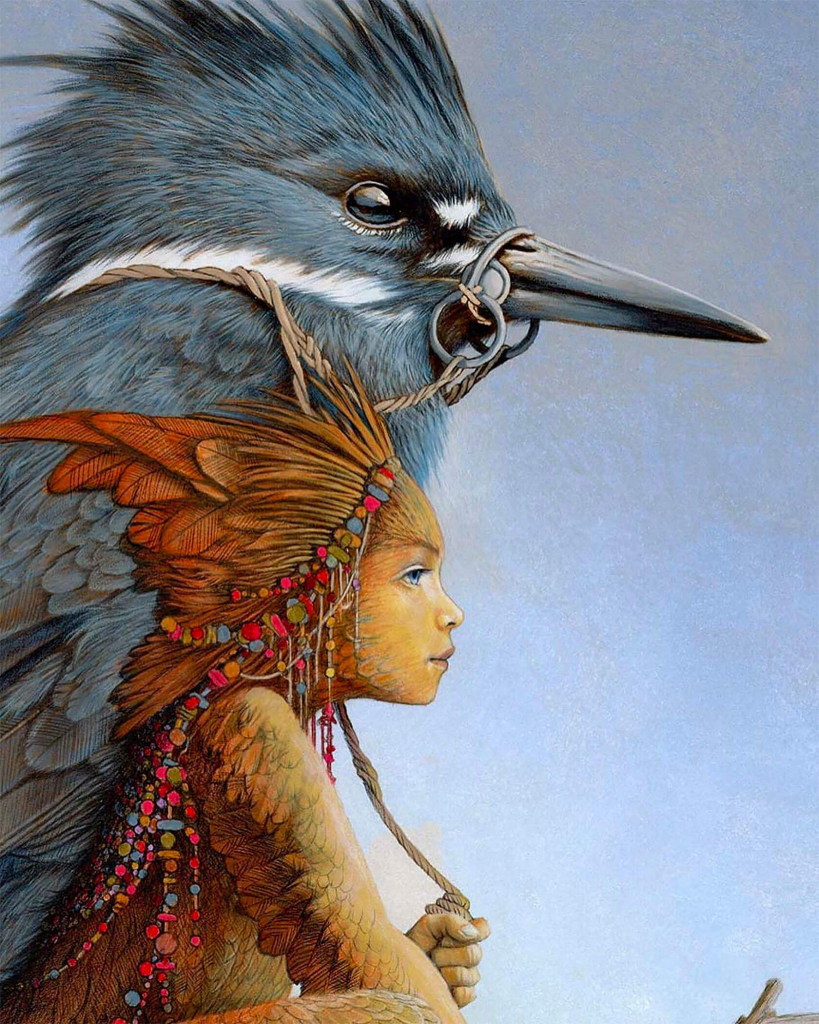
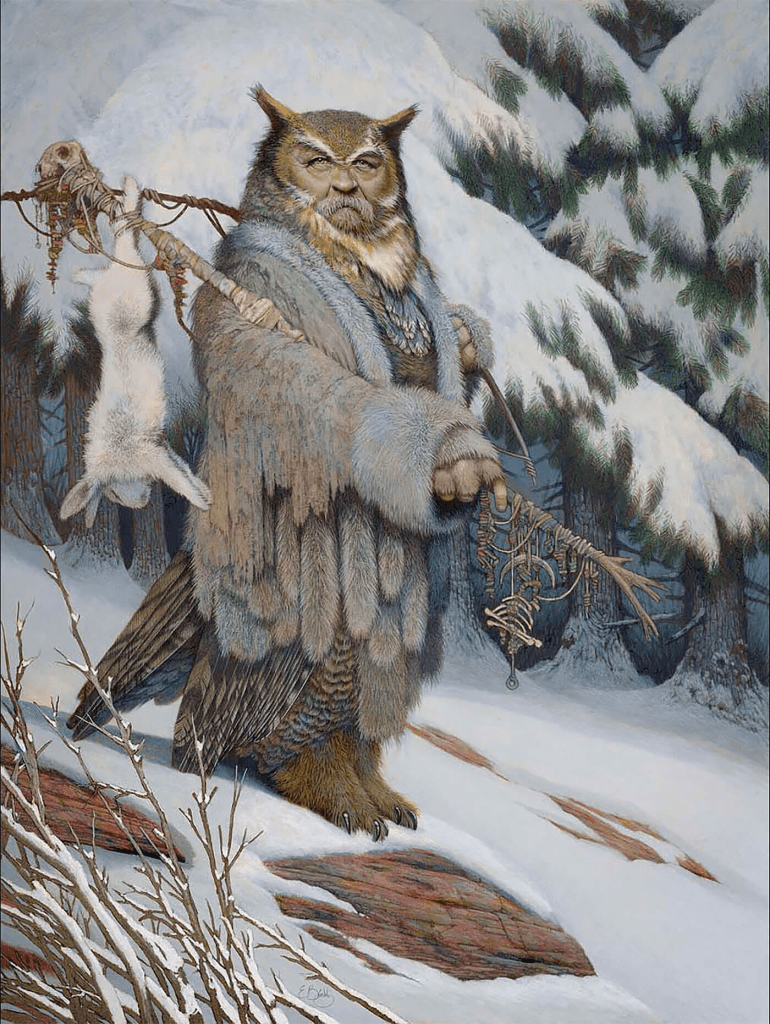
For over thirty years, American artist Ed Binkley has enchanted audiences with his fantasy artwork. His finely detailed creations, often featuring whimsical and ghoulish creatures with exaggerated features, have graced numerous publications. Over the decades, Binkley has collaborated with prestigious names such as Lucasfilm, ImagineFX, Wizards of the Coast, and Artifacts Puzzles. His recent art book, part of the “Incognito” series, highlights his exceptional colored pencil drawings. With a strong social media presence, Binkley has amassed over 71K followers on Instagram and 68K likes on Facebook, where he frequently shares his latest work and artistic updates. Learn more on Inspiration Grid.
When a challenging situation presents itself, take a very large step back and see it for what it really is. There are many people in your world who have absolutely no concept of peace. They will resort to anger, rage, resentment, sadness or anxiety to move through their lives. Keep in mind that it has nothing to do with you! They are engaging in and looping programs, regardless of how destructive, that make them feel safe and secure. It is not your responsibility to make it better for them…they must discover it on their own. Just continue sending Unconditional Love and know they will be taken care of. ~ Creator
Joel Rea is an acclaimed Australian surrealist artist who masterfully blends reality and fantasy in his vibrant, intricate paintings. His work delivers profound messages and complex narratives that provoke thought and stir emotions. A recurring motif in Rea’s art is the fusion of nature (and powerful animals like tigers) and civilisation, juxtaposing the wild with the constructed to explore the interplay between human endeavours and the natural world. Via Inspiration Grid.
Mesmerising Surrealist Art by Joel ReaMesmerising Surrealist Art by Joel Rea tiger, street
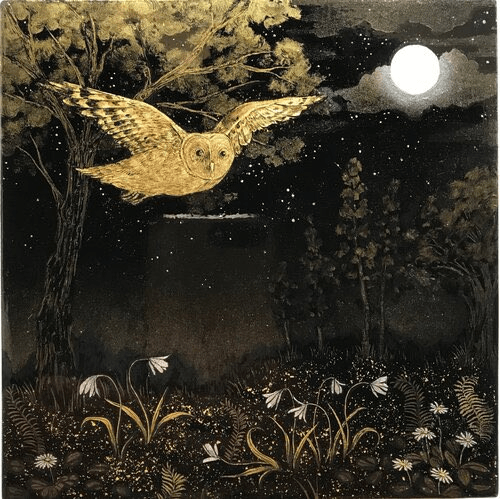
‘You don’t need anything but hope. The kind of hope that flies on silent wings under a shining owl moon.’ —Jane Yolen
Did you enjoy this collection? let me know what you think of it below. Thank you for reading my dear friends!
“Vibrant relationships feel like a sanctuary where you are safe to bring your vulnerability and you are given ample love and care a home that equally supports rest and growth free from judgment as you both seek to evolve a union void of control but filled with mutual understanding”
It is difficult to describe how joyful, vivid and clear about everything in life that this book makes me feel. It’s the kind of book you can read over and over without tiring of its insights. Clarity and Connection is a revitalising treasure of wisdom that brings together timeless insights into the meaning of love, compassion (for self and other) as well as how to heal and recover from trauma and a difficult period of one’s life.
Pellucid: An adjective meaning “transparent, translucent, admitting the passage of light.” Originating from the 1610s, from Latin pellucidus “transparent,” from pellucere “shine through,” from per- “through”. From the Proto-Indo-European root of *per- (1) “forward,” hence “through”) + lucere “to shine” (from suffixed form of PIE root *leuk- “light, brightness”). Related: Pellucidly; pellucidity.
“The country is generally more hi-fi than the city; night more than day; ancient times more than modern. In the hi-fi soundscape, sounds overlap less frequently; there is perspective—foreground and background.” Whereas, in the lo-fi soundscapes, “individual acoustic signals are obscured in an over-dense population of sounds. The pellucid sound—a footstep in the snow, a church bell across the valley or an animal scurrying in the brush—is masked by broad-band noise.
Third Ear: Reflections on the Art and Science of Listening by Elizabeth Rosner
Extracted from: Third Ear: Reflections on the Art and Science of Listening by Elizabeth Rosner
A world of exquisite beauty and expansive awareness awaits if only we open up our ears and listen with our ‘Third Ear’ for greater connection, understanding and love of all beings. Elizabeth Rosner is a wonderfully vivid and artful weaver of liminal worlds of quietude and sound.
Rating: 🌟🌟🌟🌟🌟
Genre: Spirituality, self-love, self-awareness, psychology, history
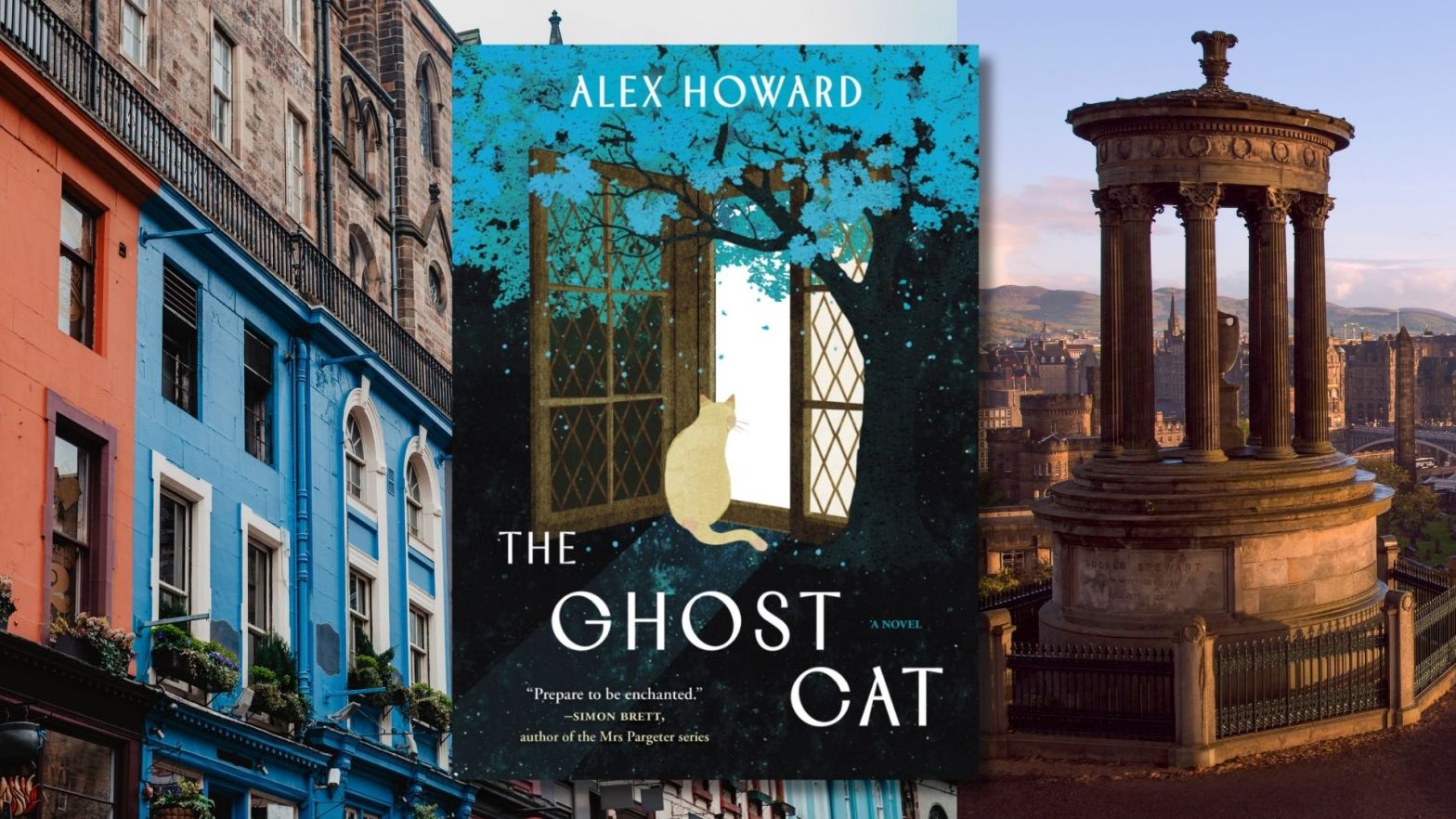
The Ghost Cat, a curious little novel about a spectral cat haunting an Edinburgh townhouse over several generations — is sometimes enchanting, sometimes discombobulating and overall quite uneven
Rating: 🌟
Genre: Fiction, Fantasy, Animals, History.
Review in one word: Confusing
The premise of this book sounded enchanting. A cosy historical fantasy novel set in Edinburgh from the perspective of a cat! I mean this sounded like a book made especially for me. To say I was excited was an understatement!
The novel begins in the early morning in 1902. At a handsome home in Edinburgh’s New Town on the street of Marchmont Crescent, Grimalkin is snuggling next to his beloved human companion, housekeeper Eilidh. It will be his last day as a living cat. Sooner after he is plunged into a feline netherworld where he meets Cait-sìth who grants him eight additional lives. “For three he plays, for three he strays, and for the last three he stays.”
The novel follows Grimalkin as he witnesses the world’s changes for the next 120 years. This book starts off with an enormous amount of promise and the first few chapters are really engaging.
I don’t know what I was expecting but the tone of the novel seemed a bit silly. The narrative felt cheapened by fast-paced vignettes of the lives of people living in the home. Instead it’s a mash-up of key events and figures from throughout the past 100 years who all seem to converge on the one house over that period of time. So it’s a whistlestop tour of the The Blitz, the moon landing, the coronation of Queen Elizabeth, the 2008 financial crisis and so on. After a while in the same mode it all felt a bit repetitive and stale.
The individual vignettes don’t linger long enough for the reader to meaningfully connect with the characters who live in the house or to care what happens to them. At the end of each vignette set in a particular period, the author felt it necessary to explain the characters and the historical context of the vignette. This unconventional move of explaining a vignette after it’s told seemed like lazy writing and also seemed condescending, as though the audience needed to be given historical context in order to understand. There is also a confusing addition of which monarch was reigning after each vignette—to anchor the reader in time. These flourishes, rather than enriching the narrative, came across as being self-conscious and condescending.
On a positive note the main character of Grimalkin the cat is engaging and amusing in a snooty, feline way. The stories themselves were sweet and amusing but also at times discombobulating and lacking in meaning and depth.
The Cat-Sith, a kind of Grim Reaper figure who grants Grimalkin eight additional lives is a towering figure in the book who commands a lot of attention in the beginning, it would have been good to hear more from him.
As cat lover and devotee of all things feline I just couldn’t like Grimalkin much as a character. Each time he enters into a new era he finds so much to moan and complain about. There’s a sense that he’s a Luddite and technophobic Boomer (in cat form) who rails against any new changes in the world and spends a lot of time grumbling about new things and longing for the good old days. Some will find this charming and this belligerence rather cat-like, I just found it annoying.
I’m not sure if I would recommend this book, it’s a strange and surreal read with not much satisfying depth to it.
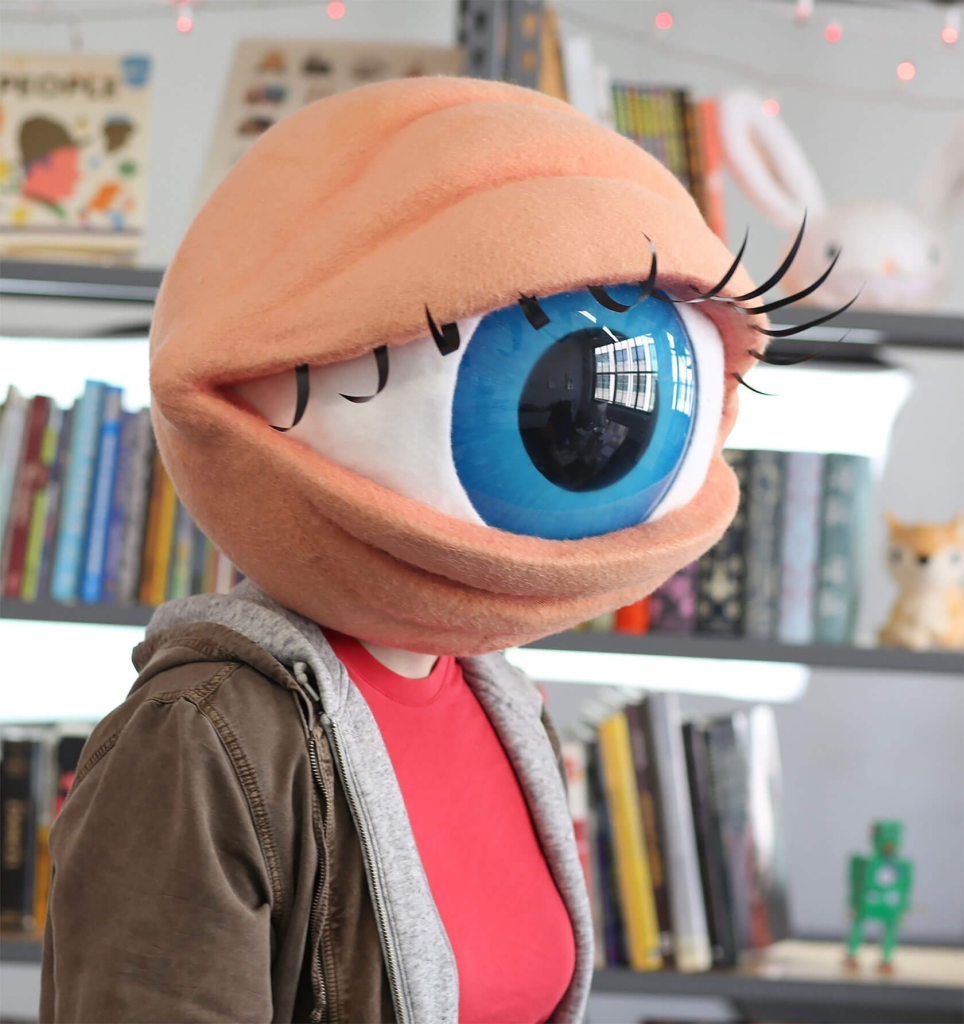
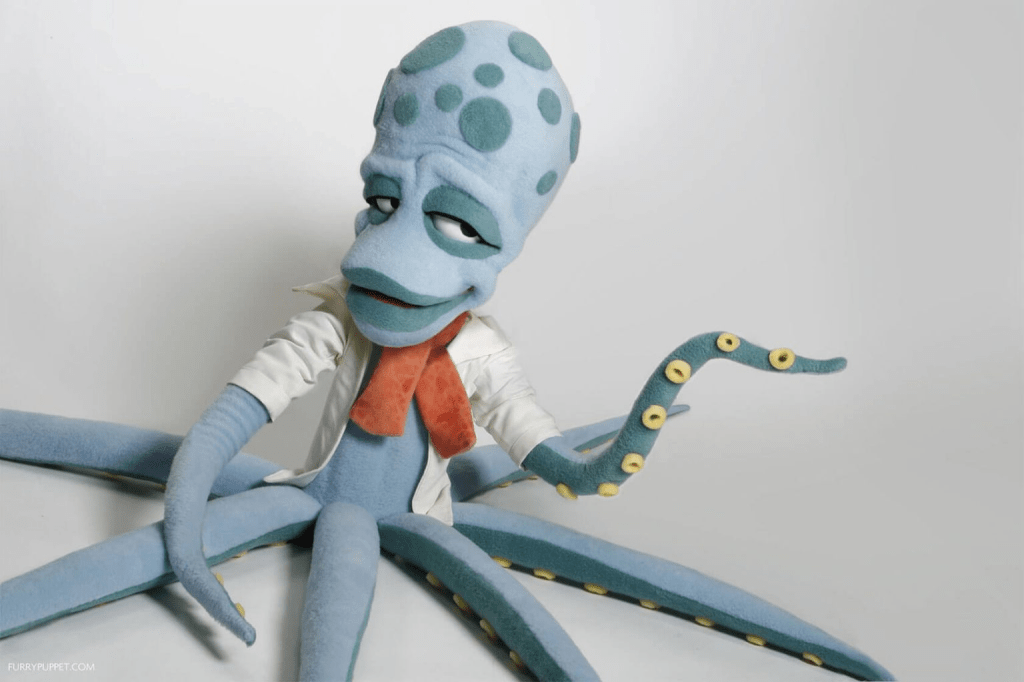
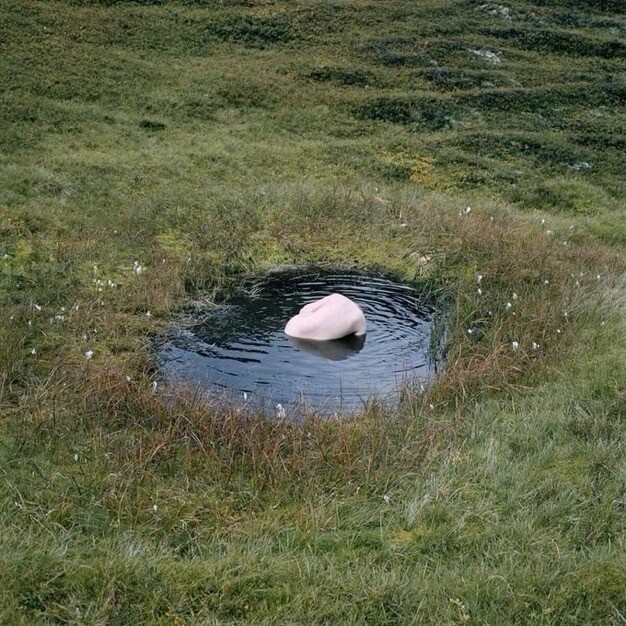
Macabre and unsettling furry #puppets, the #psychology of #colour in popular #films, British seaside simulator app, neon #art by AK Berlin that are a blast from the 80’s, eerie and strange portals and much more. #InterestingThings #ContentCatnip
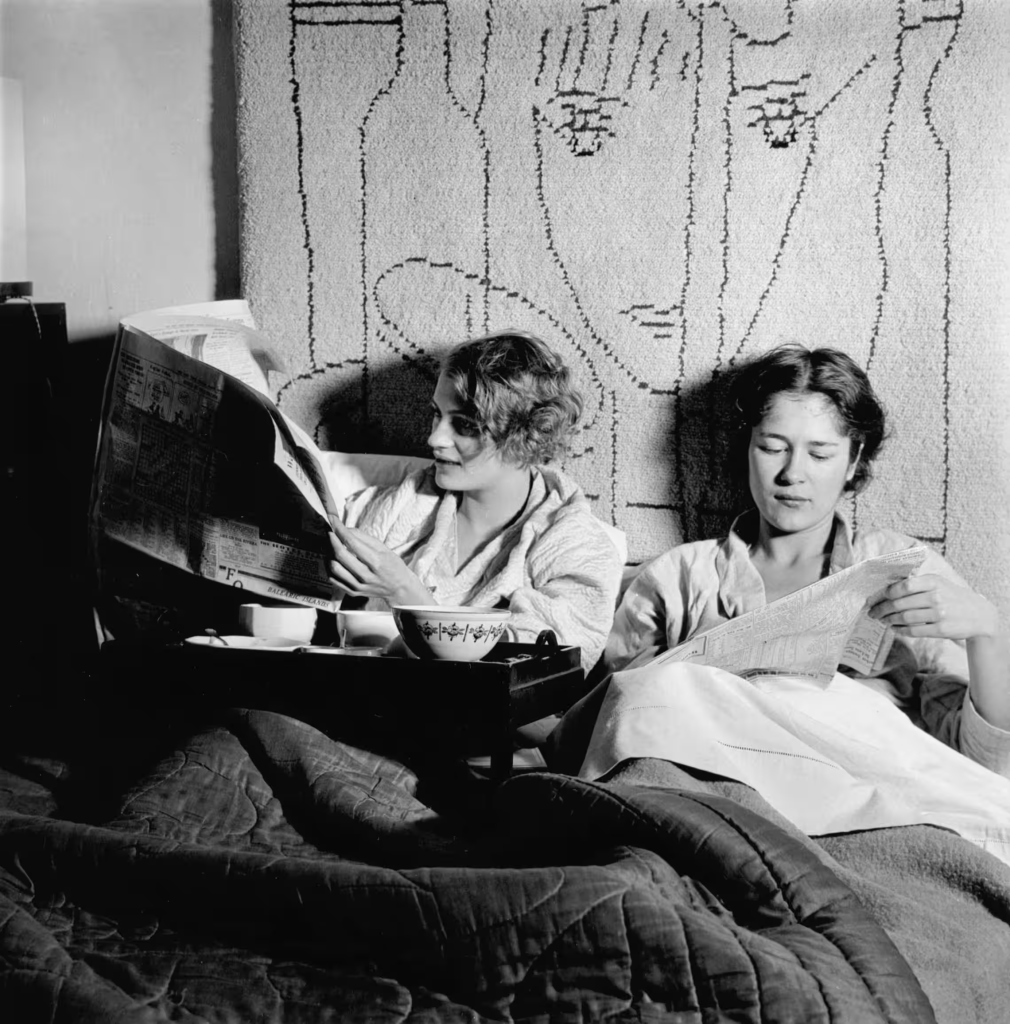
There’s a black and white image of the photographer and war correspondent Lee Miller and her friend Tanja Ramm. The two are having breakfast in bed at Miller’s studio in Paris, casually reading newspapers. Their faces are framed by untamed hair and they’re dressed in cotton shirts, with coffee cups in front of them. The image, captured in 1931, is quiet and intimate. They share a blanket, their arms touch. There’s no rush, no urgency. It’s a scene about love but, above all, it’s about friendship.
Black and white image of the photographer and war correspondent Lee Miller and her friend Tanja Ramm in Millers Paris apartment, 1930.
When was the last time I lay in bed with a friend like that? For most of us, it was probably during school or university, when staying over or crashing at someone’s house was a regular occurrence – sometimes a necessity, but mostly just part of our routines. It kept us close. Staying in a friend’s room or apartment felt like being on an island – safe, cosy and fun. It was about whispering, giggling and sharing secrets. And sometimes it was about nothing at all except being together.
As an adult whose usual habitat is a large European city, when I meet friends now, it starts with a text that goes something like: “Hey, how are you? Would love to see you. Maybe we can grab dinner or drinks?”
Then the struggle begins to find a date. It’s a messy process, especially in Berlin. Days pass. Sometimes, weeks. Finally, if we are lucky, the day arrives and we meet – at a restaurant or a bar, somewhere public, where we’re expected to behave, sit properly and engage in “polite” chat. We update each other on our projects, gossip a little, sigh, complain about circumstances at home or work and then we part ways.
Sometimes, a few hours later, or the next morning, I’ll send or receive a message: “I’d missed you. It was so good to see you. We should do this more often.” An honest message, but an empty one at the same time. Because we won’t do it more often. We’ll continue rushing through our daily lives and responsibilities, fitting each other in where we can.
How close can you really be to someone you only see for a couple of hours every now and then? What can you actually share? In these meetups, we present condensed versions of ourselves. So much of who we really are stays in the dark. We talk. And talking is the only way to feel connected and to bond.
It was simpler as kids and teenagers. After school, back in Leipzig, I’d ask a friend, “Do you want to come over to play?” or I’d just knock on their door. At university in Berlin, we’d spend all day together on campus or meet after class at one of our homes. Getting together was easy. And it wasn’t just about talking. It wasn’t sitting across from each other, throwing words back and forth. We’d sit on sofas or the bed or on the floor, watch TV, play games, draw, flip through magazines, do sports, or listen to the latest music. We’d try things for the first time – a cigarette, a drug. We’d dream. We’d sometimes be silent together. It was sweet.
Do we even know how tojust be? To sit beside someone in silence, without needing to entertain or update or explain ourselves? I miss that. Friendship doesn’t always need a plot.
In her diaries, Brigitte Reimann (1933-1973), one of the icons of East German literature, vividly describes idyllic scenes of friends simply hanging out together. When she was living in Neubrandenburg in her late 30s, one friend – the writer Christa Wolf – would visit spontaneously to check in and just be with her. There was also Juergen Schulz, a young journalist at the local radio station who was 10 years her junior. The two of them would stay up all night listening to jazz records and dancing. I don’t think it’s a coincidence that the typical toast back then was “auf die Freundschaft” (“to friendship”).
But times have changed. As mature, 21st-century adults, nearly everything has to be scheduled in advance. We meet when we’re well composed. If we’re not feeling up to it, we cancel. No one knocks on anyone’s door spontaneously any more. That would be crazy. Insane, even. We no longer play or fool around. We don’t hang out for hours without a plan.
Maybe that’s also why some friendships just fade away, and others turn weird. One of the quietest heartbreaks of adulthood is realising that a friend has become indifferent, or no longer wants the best for you. The hardest part is knowing when it’s time to let go – especially when you’ve shared years.
No one knocks on anyone’s door spontaneously. That would be crazy.
But friendship can’t be based only on memories. It’s also about energy. And in trying to hold on to old friendships, we often forget how fragile new connections can be. They happen, but it’s rare. It’s not often that you meet someone new and think, yes, I want to see you again. I want to spend a whole day doing nothing with you. Mostly, it’s coffee once or twice, maybe an invitation to a birthday gathering if we manage to overcome the polite distance. People’s diaries are already full – with families, work and the handful of old friends they barely manage to keep. There’s just not much room left, not emotionally, not practically. So we stick to the friends we already have, even when the contours of those friendships keep changing.
I wonder why I’m thinking about all this now. Perhaps it’s because I don’t have children or any family structures forcing me into a regulated daily life. I could hang out. I could see friends more often. When the American writer and film-maker Nora Ephron compiled her list of things she would and wouldn’t miss at the end of her life, she named her friends twice in the list of things she would.
Ephron was also the person who said: “It’s hard when you don’t like someone a friend marries. First of all, it means you pretty much have to confine your friendship to lunch, and I hate lunch.”
I hate lunch too. There’s a clear beginning and a clear end. It’s a set scenario and my least favourite meeting opportunity of all because there is no room for surprises: you eat, then go back to work. I believe this downgrading to lunch happens not only when a friend marries someone you don’t like, but also when a friend has children. Let’s be honest: you lose that friend and mourn them. We’re supposed to be adults and handle what life throws at us with generosity, empathy and understanding. But it’s hard.
And even if you like the person your friend marries, you still have to do lunch because otherwise, you’ll never see them again alone. Suddenly, it’s always “dates as couples”, where you have to behave even more properly. And there’s also this: if you’re a woman and your friend is a man, it’s very likely that his girlfriend or wife won’t love you two spending time alone.
I’ve always found it difficult to imagine long-term, deep friendships between men and women. There is almost always a moment – spoken or unspoken – when one of you wonders: what if? That doesn’t mean anything will happen. But the question will hang in the air. And that changes the dynamic, no matter how much we pretend it doesn’t.
Is that already toxic? We’re so good now at identifying red flags, drawing boundaries, spotting “bad, dangerous vibes”. But are we also too quick to call someone toxic just because they’re going through something we can’t quite deal with?
I’ve seen friendships fall apart as a result of this and I know it’s difficult, but there is beauty in loyalty, when someone still shows up – not for a perfect version of you, but for you just as you are. That’s gold. Too often, we confuse support with advice, or think texting back is enough. Real solidarity is quieter. It lives in presence, not performance.
OK, I do remember the last time I lounged in bed with a friend – it was two weeks ago. Maybe that was why I started to think about adult friendships again.
My close friend of 15 years and I were invited to a literary awards ceremony in Cologne. She lives in Berlin and Rome, which means we don’t see each other a lot. The organisers of the awards had booked hotel rooms for us – mine on the fourth floor, hers on the first. At the end of the night, we said goodbye in the lift, then paused for a second. “Shall I come and sleep in your room?” I asked. “Yes please,” she replied immediately.
I went to my room, put on my pyjamas and waddled through the corridors to her room. We brushed our teeth, made funny faces in the mirror and chatted in bed until our eyes closed. The next morning, we woke up smiling. We had both slept blissfully. I felt safe with her. The room was our island. We stayed in bed talking under the thick, white sheets until I almost missed my train to Berlin.
In the afternoon, I received a text from her: “It was so cosy in bed this morning. This is how life should be.” Yes. Exactly that. Not lunch.
Carolin Würfel is a writer, screenwriter and journalist who lives in Berlin and Istanbul. She is the author of Three Women Dreamed of Socialism and a regular contributor to Die Zeit via The Guardian
In a world where digital media often dominates the narrative, Furry Puppet Studio is making sure puppetry remains relevant as a charming and effective form of storytelling. If you’d like to continue exploring their quirky and adorable creations, take a look at their website.
Absolutely fascinating! I’ve written extensively on the theory of colour, it’s one of my favourite topics in the world, here’s an amazing infographic about it from Studio Binder.
“Eighties Excess” by Berlin-based artist Akber Ahmed (AKBERLIN) is a detailed, nostalgic artwork capturing 1980s flamboyance with vibrant colors and over 350 hidden references. Beyond its lively surface, it subtly highlights the decade’s economic disparities and social issues. Explore the full piece on his website.
Nostalgic Flashback to the 80’s in these neon artworks by AKBERLINNostalgic Flashback to the 80’s in these neon artworks by AKBERLIN
For the moussaka 3 medium aubergines (1kg) Extra-virgin olive oil 1½ tsp fine sea salt 2 brown onions, peeled and finely diced 4 garlic cloves, peeled and crushed 2 tsp ground cumin 1½ tsp ground cinnamon ¾ tsp ground allspice 800g tinned chopped tomatoes (ie, 2 tins) 400g tinned chickpeas, drained 40g flat-leaf parsley, leaves and tender stalks finely chopped Sumac, to finish Greek-style flatbreads, to serve
For the sauce 150g tahini 5 garlic cloves, peeled and chopped 2 tbsp fresh lemon juice (from about ½ lemon) 3 tbsp extra-virgin olive oil ½ tsp fine sea salt
Heat the oven to 240C (220C fan)/475F/gas 9. Quarter each aubergine lengthways, then cut each quarter into wedges about 4cm at their widest part. Pop these in a large bowl, add four tablespoons of oil and a teaspoon of salt, and toss to coat. Arrange the aubergine wedges in a single layer on a large oven tray, then bake for 18-20 minutes, until cooked through. Remove and put to one side.
Put four tablespoons of oil in a wide frying pan for which you have a lid and set it over a medium heat. When hot, add the onions and garlic, and cook, stirring regularly, for 15 minutes. Stir in the cumin, cinnamon and allspice, then add the tomatoes, chickpeas, the cooked aubergines and half a teaspoon of salt, cover the pan and leave to cook on a low heat for 30 minutes, stirring occasionally and adding water, if need be (I added 100ml). At the end of the cooking time, fold in the parsley.
Meanwhile, make the garlic sauce. Put the tahini, garlic, lemon juice, olive oil, salt and 115ml water in a blender and whizz until smooth and creamy.
Decant the aubergine and chickpea mixture on to a platter, then top with some of the garlic sauce, drizzle with more olive oil and sprinkle with sumac. Serve with the rest of the garlic sauce and warm Greek flatbreads on the side.
Hanabira is mastercraftsman of miniature worlds. Here he recreates a picture perfect tiny chocolate shop by upcycling an actual chocolate box. I’ve been following Hanabira for years on YT and this episode is great.
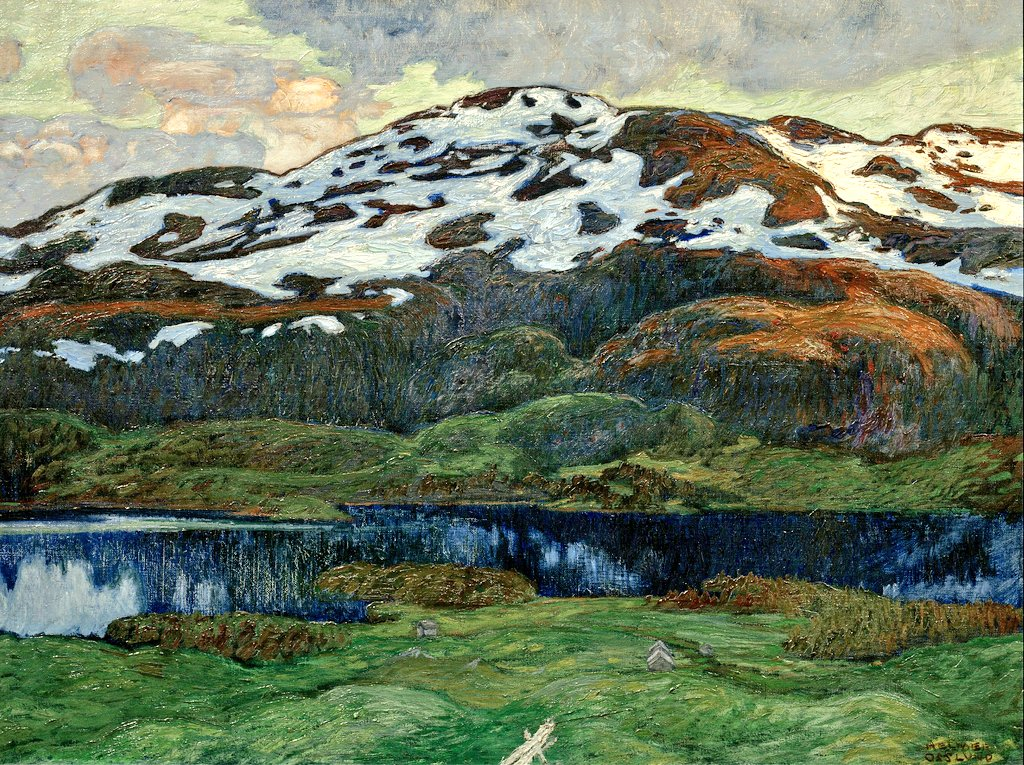
“Here then may be lived a life of the senses so pure, so untouched by any mode of apprehension but their own, that the body may be said to think.”
~ Nan Shepherd, ‘The Living Mountain’ A Summer Evening by Kallsjön
Morris Hirshfield (1872–1946) was a Polish-American self-taught artist known for his folk art style and vivid, whimsical paintings. Originally a tailor and shoe manufacturer, Hirshfield began painting later in life. His work is characterized by bold colors, meticulous patterns, and a dreamlike quality. Despite facing criticism from some art critics, his unique style garnered appreciation, leading to exhibitions at the Museum of Modern Art (MoMA) in New York.
“Zebra Family” (1943) shown below is one of Morris Hirshfield’s notable works, depicting a fantastical scene of zebras in an intricately patterned landscape. The painting is celebrated for its vibrant colors and the imaginative, almost surreal, depiction of the animals. Hirshfield’s use of patterns and symmetry reflects his background in textile design, creating a whimsical yet structured composition that exemplifies his distinctive folk art style.
Zebra Family (1943) Morris Hirshfield
Did you enjoy this collection? let me know what you think of it below. Thank you for reading my dear friends!
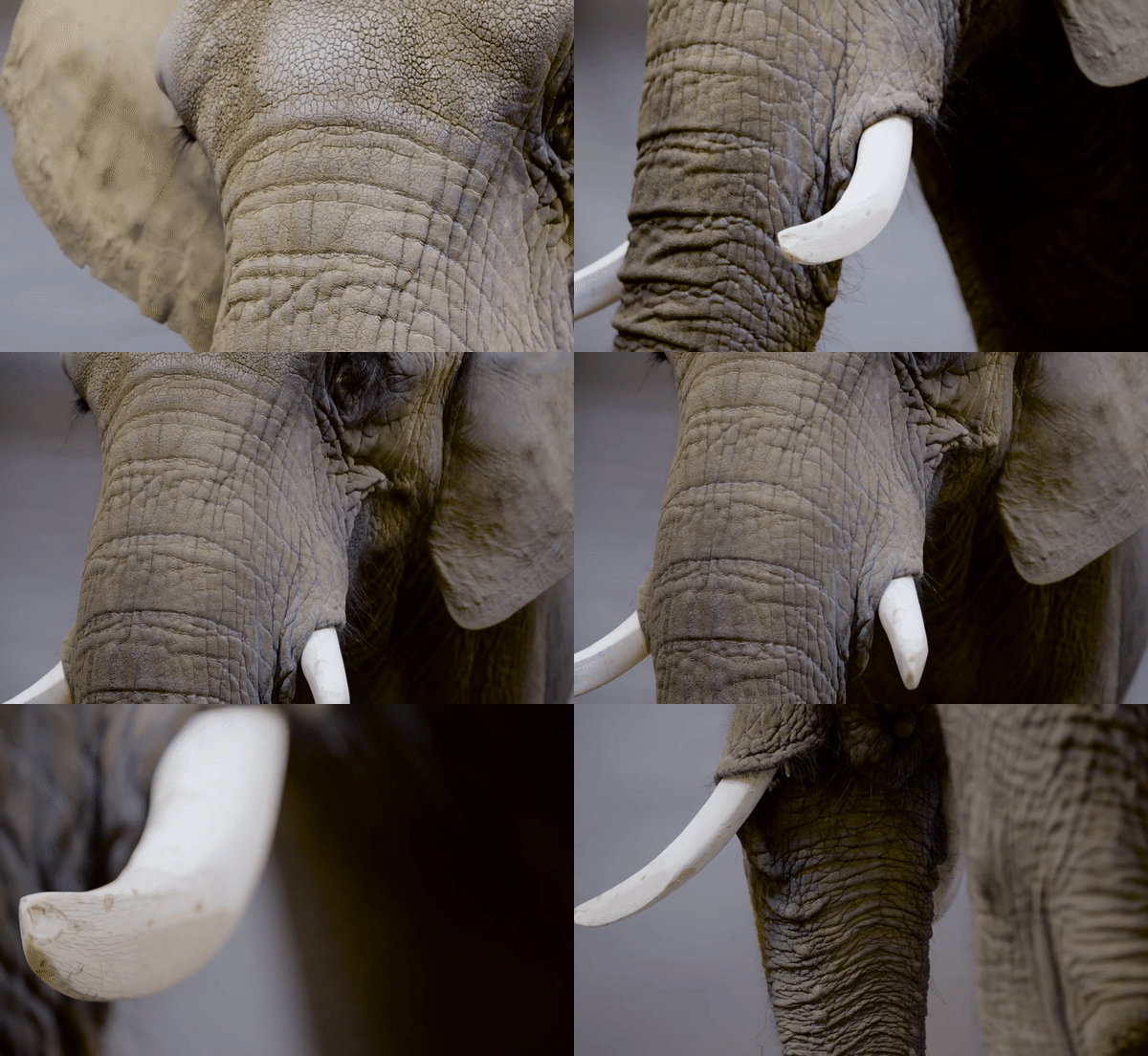
“Elephants, growing in utero for nearly two years, are listening and learning too. With the soles of their feet pressed against the throbbing pulse of the womb’s lining, they are becoming familiar with the rumblings of their mother and their matriarchal relatives. Pitched at infrasonic levels inaccessible to our ears, these deep vibrations will be the same sounds that greet the newborn elephants upon their release from a watery interior world. Prodded upright by the gentle nudging of mother’s trunk, audibly instructed not only to stand but also to start walking (Let’s go, Follow me, Stay close, I’m here), they begin their new life on land.”
Third Ear: Reflections on the Art and Science of Listening by Elizabeth Rosner
Extracted from: Third Ear: Reflections on the Art and Science of Listening by Elizabeth Rosner
A world of exquisite beauty and expansive awareness awaits if only we open up our ears and listen with our ‘Third Ear’ for greater connection, understanding and love of all beings. Elizabeth Rosner is a wonderfully vivid and artful weaver of liminal worlds of quietude and sound.
Rating: 🌟🌟🌟🌟🌟
Genre: Spirituality, self-love, self-awareness, psychology, history
Iconic #photos, ancient Egyptian bread recipe, popular #culture and #childhood for different generations, stained glass #owls, surfing the great wave off #Kanagawa, #cats by #LeonorFini and loads more #ContentCatnip #InterestingThings
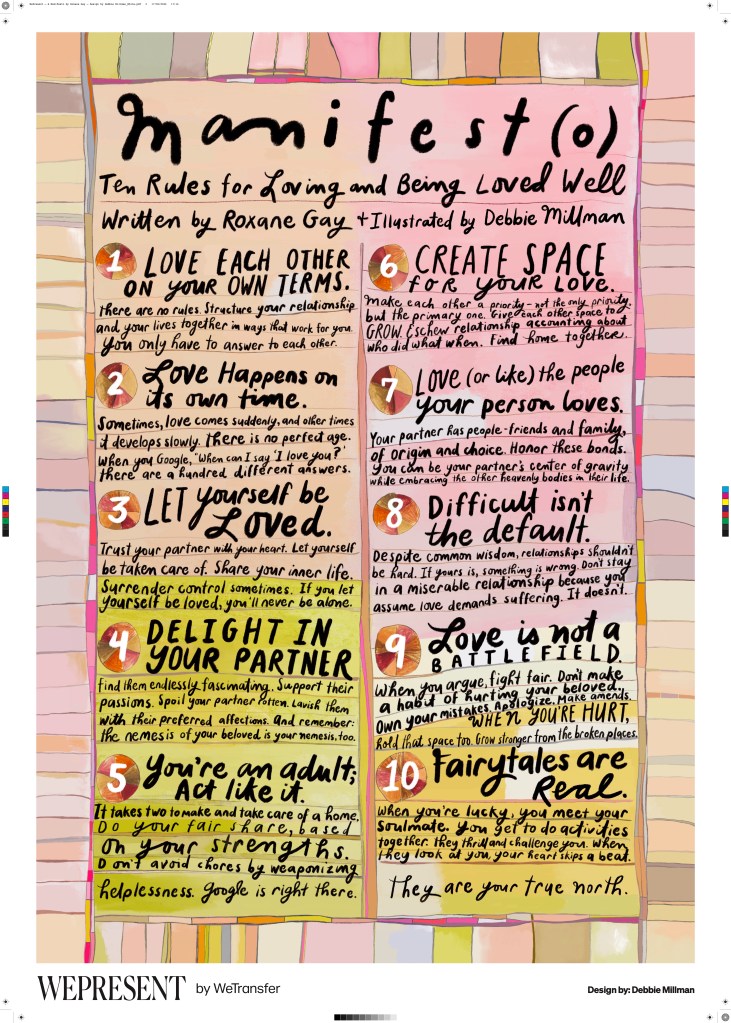
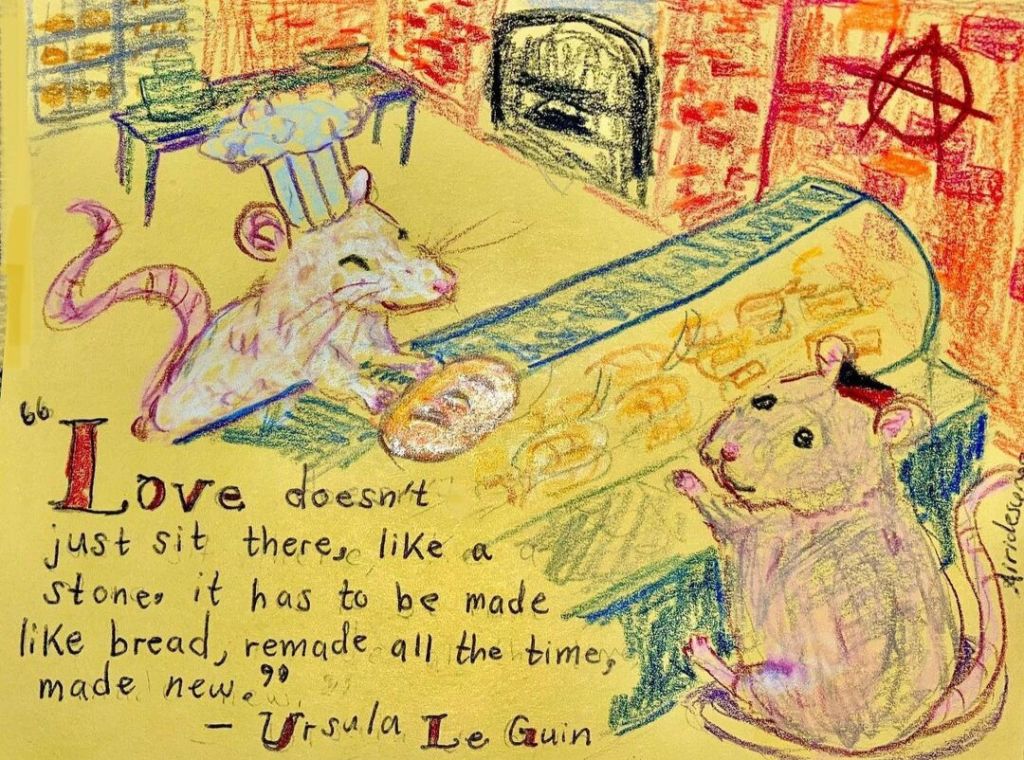
In a heartfelt collaboration, writer Roxane Gay and artist Debbie Millman offer “A Manifesto by Roxane Gay: 10 Rules for Loving and Being Loved Well”. Gay and Milman are not only creative collaborators they are also intimate partners. Their manifesto, part of WePresent’s series inviting creatives to share their principles, emphasises that while love has no strict rules, there are ways to love deeply and authentically. Millman’s hand-drawn poster beautifully complements Gay’s insights, providing a visual reflection on the nuances of love.
Roxane Gay is renowned for her incisive explorations of feminism, race, and sexuality, with works like “Hunger,” “Difficult Women,” and the bestseller “Bad Feminist.” Debbie Millman has significantly influenced the design world, working with major brands. Millman has curated design exhibitions, authored books, delivered talks, and hosts the long-running podcast “Design Matters.” .Her illustration practice includes contributions to esteemed publications like The New York Times, New York Magazine, and Fast Company. Download the poster
Ten Rules for Loving and Being Loved by Roxane Gay and Debbie Millman
‘Simon Being Taken out to Sea for the First Time since His Father Drowned’, Skinningrove, North Yorkshire in 1983 by Chris Killip. This image really hit home for me, the vulnerability and sadness of this child is on display here and is undeniable. He longs to mourn in private but is instead forced to go out onto the boat weekly to overcome any lingering fears he has of the ocean, following his father’s drowning.
Simon being taken out to sea for the first time since his father drowned
Fatima Hassouna, who had been documenting war in Gaza for 18 months and was subject of new documentary was killed last week along with 10 members of her family
As a young photojournalist living in Gaza, Fatima Hassouna knew that death was always at her doorstep. As she spent the past 18 months of war documenting airstrikes, the demolition of her home, the endless displacement and the killing of 11 family members, all she demanded was that she not be allowed to go quietly.
“If I die, I want a loud death,” Hassouna wrote on social media. “I don’t want to be just breaking news, or a number in a group, I want a death that the world will hear, an impact that will remain through time, and a timeless image that cannot be buried by time or place.”
On Wednesday, just days before her wedding, 25-year-old Hassouna was killed in an Israeli airstrike that hit her home in northern Gaza. Ten members of her family, including her pregnant sister, were also killed.
The Israeli military said it had been a targeted strike on a Hamas member involved in attacks on Israeli soldiers and civilians.
Twenty-four hours before she was killed, it was announced that a documentary focusing on Hassouna’s life in Gaza since the Israeli offensive began would be debuted at a French independent film festival that runs parallel to Cannes.
Made by the Iranian director Sepideh Farsi, the film, Put Your Soul on Your Hand and Walk, tells the story of Gaza’s ordeal and the daily life of Palestinians through filmed video conversations between Hassouna and Farsi. As Farsi described it, Hassouna became “my eyes in Gaza … fiery and full of life. I filmed her laughs, her tears, her hopes and her depression”.
“She was such a light, so talented. When you see the film you’ll understand,” Farsi told Deadline. “I had talked to her a few hours before to tell her that the film was in Cannes and to invite her.”
She said she had lived in fear for Hassouna’s life but added: “I told myself I had no right to fear for her, if she herself was not afraid. I clung to her strength, to her unwavering faith.”
Farsi, who lives in exile in France, said she feared that Hassouna had been targeted for her much-followed work as a photojournalist and recently publicised participation in the documentary. Gaza has been the deadliest conflict for journalists in recent history, with more than 170 killed since 2023, though some estimates put it as high as 206.
Since Israel began its bombardment of Gaza, after the attack on southern Israel on 7 October 2023, more than 51,000 people have been killed, more than half of them women and children, according to the Gaza health ministry. Since the ceasefire with Hamas collapsed in March, Israel has resumed its deadly airstrikes with vigour, and at least 30 people were killed in strikes on Friday.
Fellow journalists in Gaza reacted with grief and anger at the news that an Israeli airstrike had taken Hassouna from them, just as she had feared it would. “She documented massacres through her lens, amid bombardment and gunfire, capturing the people’s pain and screams in her photographs,” said Anas al-Shareef, an Al Jazeera reporter based in Gaza.
Miqdad Jameel, another Gaza-based journalist, called on people to “see her photos, read her words – witness Gaza’s life, the struggle of its children in war, through her images and her lens”.
Her death prompted a statement from the Cannes Acid film festival, where Farsi’s documentary will be screened in May. “We had watched and programmed a film in which this young woman’s life force seemed like a miracle,” they said. “Her smile was as magical as her tenacity. Bearing witness, photographing Gaza, distributing food despite the bombs, mourning and hunger. We heard her story, rejoiced at each of her appearances to see her alive, we feared for her.”
Haidar al-Ghazali, a Palestinian poet in Gaza, said in a post on Instagram that before she was killed, Hassouna had asked him to write a poem for her when she died.
Speaking of her arrival into a kinder afterlife, it read: “Today’s sun won’t bring harm. The plants in the pots will arrange themselves for a gentle visitor. It will be bright enough to help mothers to dry their laundry quickly, and cool enough for the children to play all day. Today’s sun will not be harsh on anyone.”
I treasure these regular missives from the universe, very calming and wise.
The Universe speaks to you every day through your conscience. What you believe, how you function in your world, how you live your life all moves through that filter. Over the course of your Earth-plane existence, you are offered opportunities to change and become a better version of yourself. Whether you choose to take those opportunities is based on your free will…the one thing that can never be taken from you. Your world is changing much more quickly than anticipated and this is your chance to begin shining brighter than ever. Disregard what others think, do what you feel is right and keep working toward the ultimate goal of peace. It is time to stand in your power and say, “I can be, I will, I am”, remembering you are building a better tomorrow. ~ Creator
A 3D visualisation of all the space junk and satellites out there in the stratosphere
When you randomly text someone in your phone and get told to back off
I don’t know why but I found this meme absolutely hilarious…not sure why but yeah.
FYI the image is actually from the Melbourne thrash metal band King Gizard and the Lizard Wizard and the album itself PetroDragonic Apocalypse is pretty awesome too!
“Stories are the most important thing in the world. Without stories, we wouldn’t be human beings at all.” ~ Philip Pullman
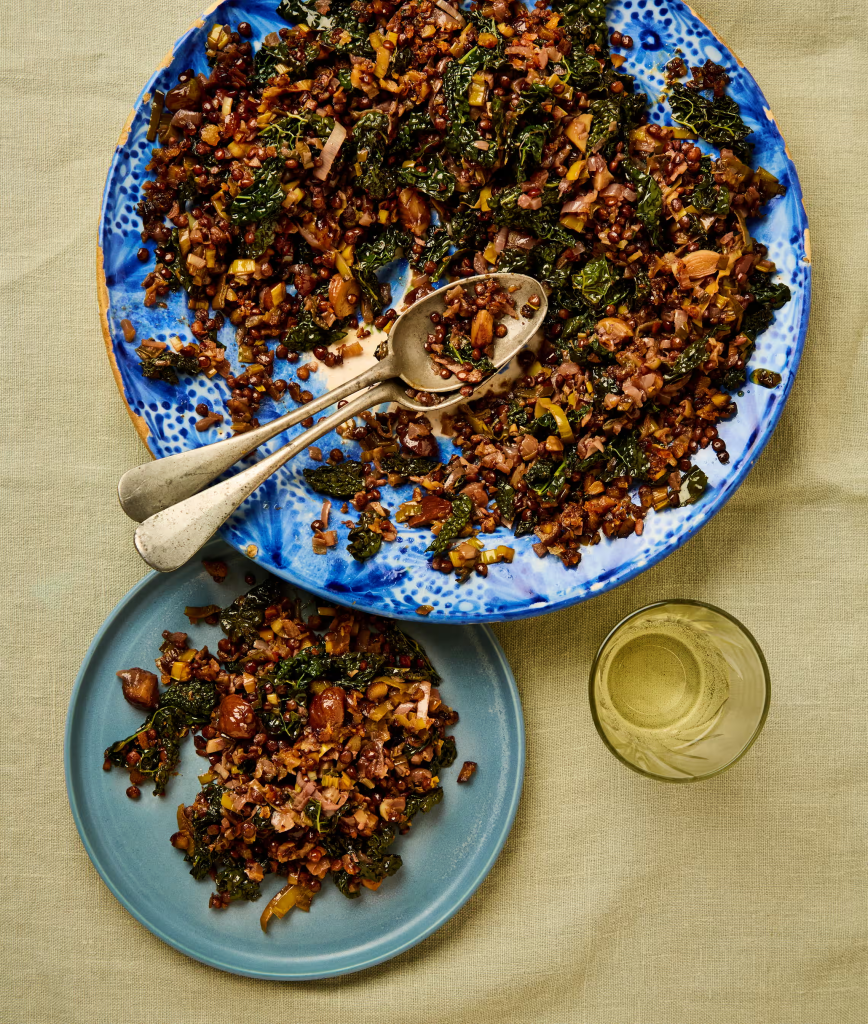
Lentils with chestnuts, red wine and cavolo nero
Lentils with chestnuts, red wine and cavolo nero
These lentils are quite rich, so I like to eat them by themselves, but you might like some good bread, toasted and drizzled with olive oil, alongside. If you’re using dried lentils, rinse them first under cold water, then put in a pan and cover with 300ml cold water. Bring to a boil, simmer for 20 minutes, or until tender, then drain and rinse under cold water.
Prep 10 min Cook 40 min Serves 4
250g ready-cooked chestnuts 7½ tbsp extra-virgin olive oil 1 large onion, peeled and finely diced 2 leeks (220g), greens and whites finely sliced and washed well 2 celery stalks (100g), trimmed and finely diced 2 garlic cloves, peeled and minced 300ml red wine Fine sea salt and black pepper 250g cooked puy lentils (or 100g dried lentils – see recipe introduction) 200g cavolo nero, leaves stripped and cut into 2cm strips
First, prepare the chestnuts. Cut half of them into small chunks and finely chop the other half into breadcrumb-sized pieces. Put both in separate small bowls and set to one side.
Heat six tablespoons of the oil in a wide saute pan for which you have a lid, then add the onion, leeks and celery, and cook, stirring regularly, for 10 minutes. Add the minced garlic, cook for two minutes until the raw smell disappears, then pour in the wine and a teaspoon and a half of salt, and leave to cook for five minutes, until the liquid evaporates.
Stir in the cooked lentils, cavolo nero and chunky-cut chestnuts, pop on the lid, and cook for 12 or so minutes, until the cabbage is tender.
In a separate frying pan, heat the remaining tablespoon and a half of oil over the highest heat, then tip in the chestnut crumbs and fry hard, stirring regularly, for two to three minutes. Stir in a couple of big pinches each of salt and ground black pepper.
Transfer the lentil mix to a platter, scatter the chestnut crumbs all over the top and serve.
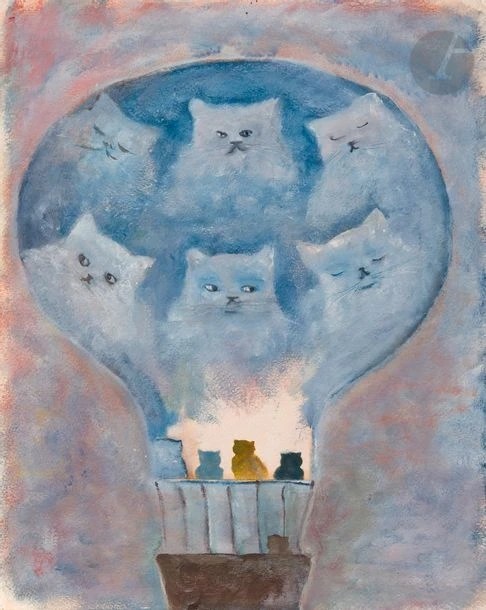
Leonor Fini was a rebellious surrealist and outsider artist who paved her own path and set her own rules. She is probably my all time favourite artist…just look at these cats hehe.
Leonor Fini: Hot Air Balloon with Cats
Did you enjoy this collection? let me know what you think of it below. Thank you for reading my dear friends!
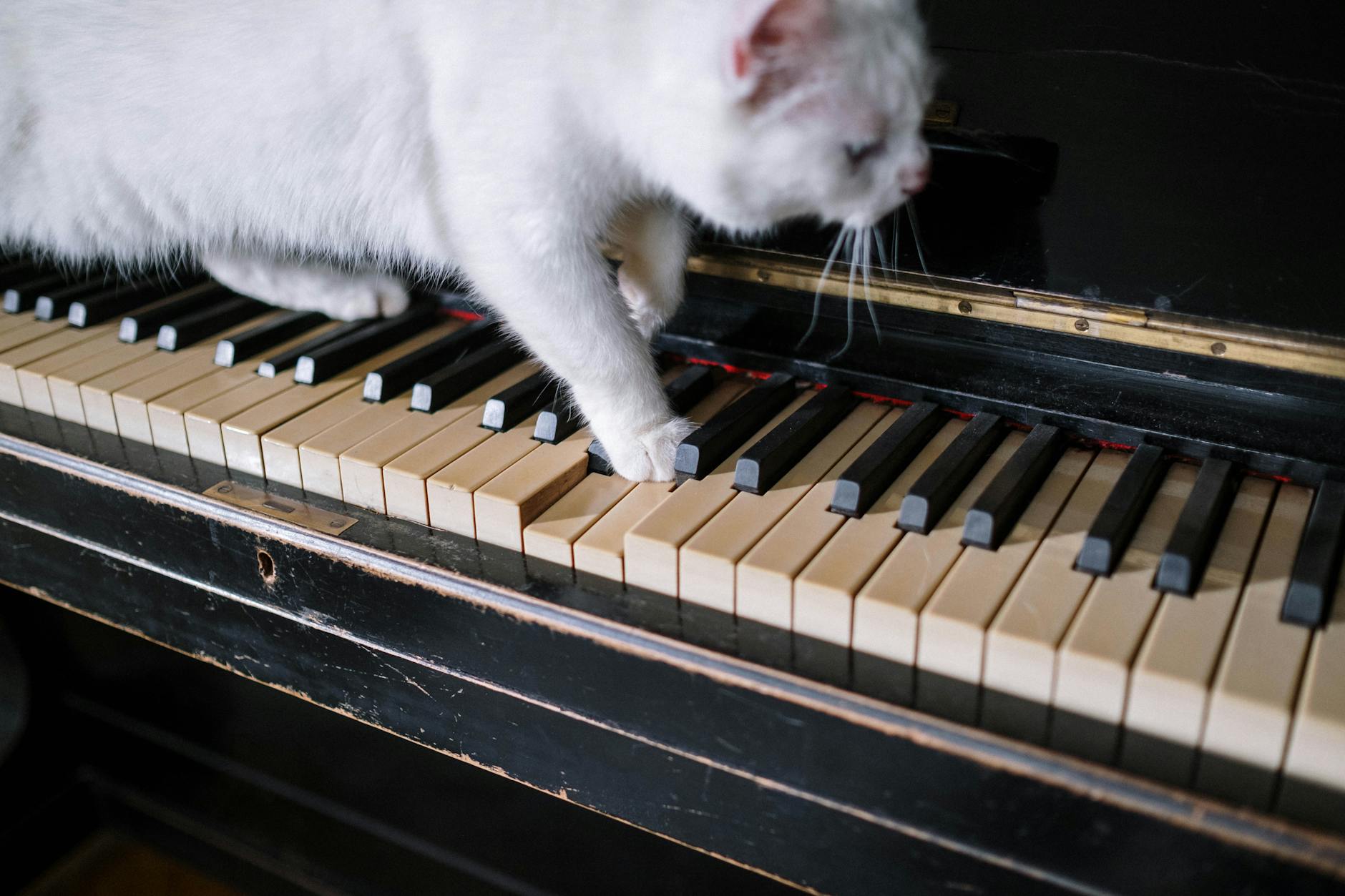
Originating from Italian and Proto-Indo-European and first recorded in 1724, Pianissimo means to play music ‘very softly’. It’s a superlative of piano, which is ultimately is from Latin planus “flat, smooth, even,” later “soft” (from PIE root *pele- (2) “flat; to spread”).
“The analyst, like his patient,” wrote Reik, “knows things without knowing that he knows them. The voice that speaks in him, speaks low, but he who listens with a third ear hears also what is expressed almost noiselessly, what is said pianissimo. There are instances in which things a person has said in psychoanalysis are consciously not even heard by the analyst, but nonetheless understood and interpreted. There are others about which one can say: in one ear, out the other, and in the third.
Third Ear: Reflections on the Art and Science of Listening by Elizabeth Rosner
Extracted from: Third Ear: Reflections on the Art and Science of Listening by Elizabeth Rosner
A world of exquisite beauty and expansive awareness awaits if only we open up our ears and listen with our ‘Third Ear’ for greater connection, understanding and love of all beings. Elizabeth Rosner is a wonderfully vivid and artful weaver of liminal worlds of quietude and sound.
Rating: 🌟🌟🌟🌟🌟
Genre: Spirituality, self-love, self-awareness, psychology, history
In The Way of the Hermit, Ken Smith offers a profoundly human portrait of solitude—not the performative kind, but the hard-earned, bone-deep kind that comes from living off-grid in the Scottish Highlands for over 40 years.
In The Way of the Hermit, Ken Smith offers a profoundly human portrait of solitude—not the Instagrammable kind, but the hard-earned, bone-deep kind that comes from living off-grid in the Scottish Highlands for over 40 years. He is the kind of person who lives on his own terms and who still enjoys interacting with people and visiting pubs or having friends over – just on his terms. What began as a reaction to grief and loss became, slowly and quietly, a way of being. Smith’s life in a handmade log cabin on the edge of Loch Treig is full of silence, self-sufficiency, and a deep, almost sacred respect for the land.
Smith writes with gentle humour and a clarity born of long reflection. He’s not trying to convert anyone to hermit life—he’s simply bearing witness to its simplicity and its challenges: repairing roofs in freezing wind, hauling supplies through snow, and listening to owls call across black water. But within these humble moments is something vast. His story is about more than escape; it’s a philosophy of the world that is wise and grounded. Along the way he recalls meeting large people-eating animals, poltergeists, the wildest storms imaginable, kindly and cruel people and more – much more.
“Protest at the direction of society is probably the biggest influence on the decision to go hermit full-time. A feeling that stretches from a general malaise, right through to a downright disgust, at wider mankind’s environmental destruction, our predilection for warfare, our generally regressive political directions and increasing disregard for others”
Excerpt From The Way of the Hermit by Ken Smith
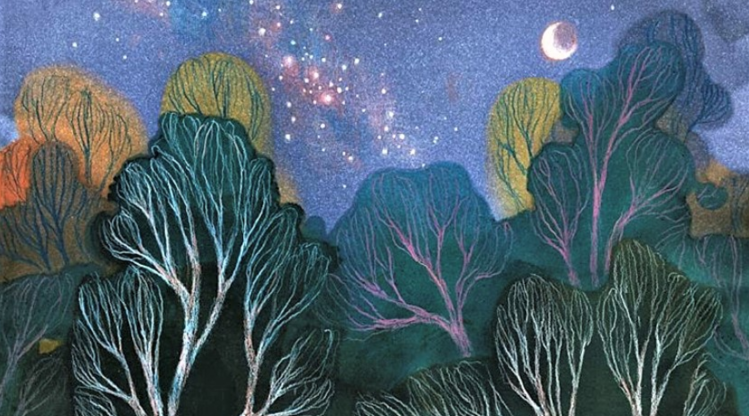
Starlit Woods by Ulla Thynell
“I think about every piece of firewood as being its own unique part of a living, breathing tree, and give it proper thanks when I burn it for my well-being. I like rowan and larch. They have a good density to them and a beautiful color to their insides—deep rusty reds, tangerine oranges, or salmon pinks—and sometimes this sweet, resinous smell too. It is a smell that heightens in its intensity just after an early summer’s rain.”
Excerpt From The Way of the Hermit by Ken Smith
As I have loved being in the Scottish Highlands and long to go back there, this book felt like enjoying a warm cup of cocoa while a storm rages outside. It’s a hugely comforting book, a balm against the noisy demands of modern life. This is a profound book about how solitude, when chosen and not forced, can be an act of love and joy —for oneself, for the earth, and for life itself. If you are in any way partial to being alone, to nature and understanding the deeper meaning of it all I think you will love this book!


























































 Content Catnip
You must be logged in to post a comment.