“Clearly I did not inherit whatever gene it is that makes it so that when you linger in a place you start to put down roots. I’ve tried, a number of times, but my roots have always been shallow; the littlest breeze could always blow me right over. I don’t know how to germinate, I’m simply not in possession of that vegetable capacity. I can’t extract nutrition from the ground, I am the anti-Antaeus. My energy derives from movement—from the shuddering of buses, the rumble of planes, trains’ and ferries’ rocking.” ― Olga Tokarczuk, Flights
A darkly funny, quirky and insightful book that combines compelling short stories of wanderers and voyagers, with personal anecdotes and philosophical forays. Read my review
‘Standing Firm’ in the sense of this book means to counter the incessant drive towards more, more, more of everything. It’s a call to action to resist and stand firm against ‘improvement culture’, not just self-improvement and personal development, but also the constant acceleration and growth in our economic systems, and the overuse and destruction of our natural environment.
The idea of endless growth and improvement infuses every aspect of our lives and culture. This book points out the ways in which this insidious and ubiquitous philosophy of rampant individualism, consumerism and growth is damaging to us as individuals, our relationships with others in our lives and to the world at large.
Stand Firm is a companion book to a book that Brinkmann wrote later on called ‘The Joy of Missing Out’, which I have also reviewed on this blog.
Stand Firm, like Brinkmann’s other book The Joy of Missing Out, is a slender book that has a deceptively shallow sounding premise and simple title. This conceals the depths of this book which deep dives into a rabbit hole of philosophy, psychology, economics and more.
This is a clear, cleverly written and succinct book that tackles many of the big topics of our troubled times and reflects these issues back to us using a new lens – a perspective that shares a lot coincidental philosophical ideas with the ancient Roman Stoics: Marcus Aurelius, Seneca, Cicero and Epictetus. Here are some similarities:
This book is an antidote to all of the positive visualisation recommended in self-development books and courses. Brinkmann (along with the ancient Stoics long before) recommends negative visualisation – in other words, imagining what would happen if you lost everything you have. Therefore gaining a deep appreciation of what you do have.
Instead of thinking in terms of all of the great things in your life and constant opportunities, the Stoics and Brinkmann recommend acknowledging and accepting the limitations placed on you.
Rather than giving free rein to your feelings at all times, the Stoics and Brinkmann recommend that you learn self-discipline and sometimes suppress your feelings.
Instead of avoiding thinking about death, you should contemplate your own mortality in order to nurture gratitude for the life you are living.
This is an amazing book and I recommend it whole-heartedly to you. 5*/5.
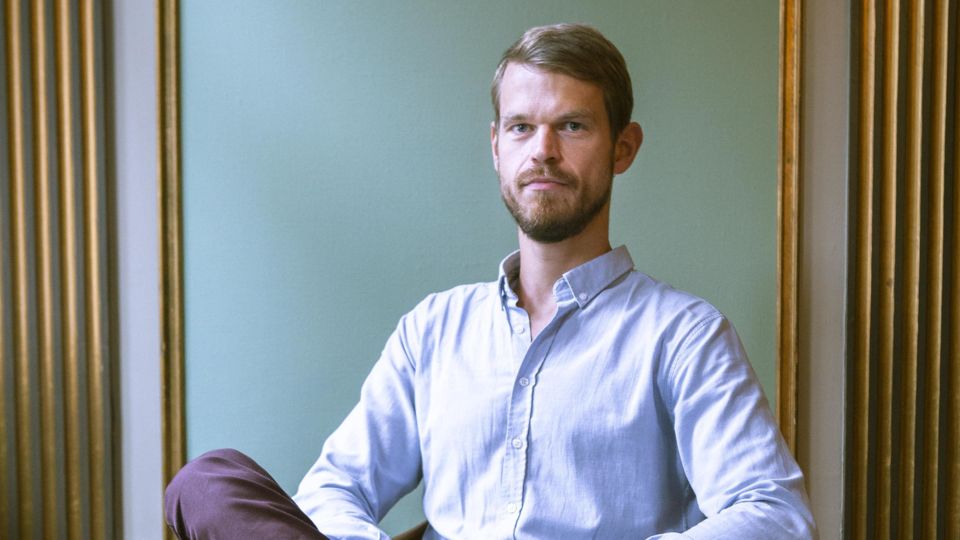
Svend Brinkmann is a Danish Professor of Psychology in the Department of Communication and Psychology at Aalborg University, Denmark. He serves as a co-director of the Centre for Qualitative Studies. He is the author of ‘The Joy of Missing Out’ and ‘Stand Firm.’
Genre: Non-Fiction, Psychology, Consumerism, Marketing, Digital Media, Digital Technology, Big Data.
Rating: 🌟🌟
Everybody Lies: What the Internet Can Tell Us About Who We Really Are by Seth Stephens Dawidowitz sets out to reveal the hidden selves that we reveal freely to the Gods of Search Engines, but rarely to other people in our real lives.
Perhaps in rare cases, our secret selves will be revealed to Jungian depth psychologists, hypnotists, or get mumbled under the influence of drugs or alcohol, however they are most definitely not to our spouses, bosses or friends.
And so this is a book about our sexual peccadilloes and idiosyncrasies, our latent racism, bigotries and the fears that wake us up at 2 am, writ large on the Google’s search engine.
This does not involve any invasion of privacy, rather Davidowitz explores big data sets and extrapolates from them how we like everything imaginable and also what we find repulsive in the world.
The key takeaway for me was that as an internet-going species, we are: Angels on the street and demons between the sheets. However, not just ordinary demons, but demons that enjoy an inordinate amount of underage sex, girl-on-girl action, incestuous porn between mother and son or father and daughter, beastiality and rape fantasies. Yes – the internet is in fact a pretty smutty, grotty place, although I suppose that isn’t surprising really.
The fascinating part of this book was that theories that have long dominated thinking are able to be put through a lens of big data and then put to bed once and for all. For example Freud’s theory of dream interpretation, particularly the idea that seeing phallic symbols in dreams (for a man) indicates that he may be in the closet.
Overall what makes us dream of foods? The main predictor is how often we consume them. The substance that is most dreamed about is water. The top 20 foods we consume include: chicken, bread, sandwiches and rice – all noteably un-Freudian. Bananas are the second most common fruit to appear in dreams. But they are also the second most commonly consumed fruit. Likewise, cucumbers are the 7th most common vegetable to appear in dreams. They are also the 7th most consumed vegetable. Hotdogs, another phallic symbol, are much rarer to find in dreams, but they are also consumed a lot more seldom in our waking lives.
Everybody Lies
Davidowitz’s style of writing I found interesting at first but he went on and on about baseball scores and his brother and I found this personal context was a bit unnecessary to the storytelling and self-indulgent. The focus on baseball scores deviated for a few pages into sport’s jargon, which was just about as intelligible to me as reading Mandarin Chinese.
The baseball metaphor was used to illustrate a point about how people think, however this was a very specific and American example that not many people outside of the US would even understand. I had to skip this part.
This made me lose interest in the book and I picked it up again periodically for several months, then I pushed myself to the conclusion, which I found to be a bit of a muddled, rambling and self-indulgent effort.
Overall I wasn’t really impressed with this book or how it was written. It didn’t really deliver on its promise to reveal how the internet shows us who we really are. I would not recommend it.
Have you read this book? Did you like or dislike it and why? Let me know your thoughts on it below.
“Then you realize: night gives the world back its natural, original appearance, without suger-coating it; day is a flight of fancy, light a slight exception, an oversight, a disruption of the order. The world in fact is dark, almost black. Motionless and cold.” ― Olga Tokarczuk, Flights
A darkly funny, quirky and insightful book that combines compelling short stories of wanderers and voyagers, with personal anecdotes and philosophical forays. Read my review
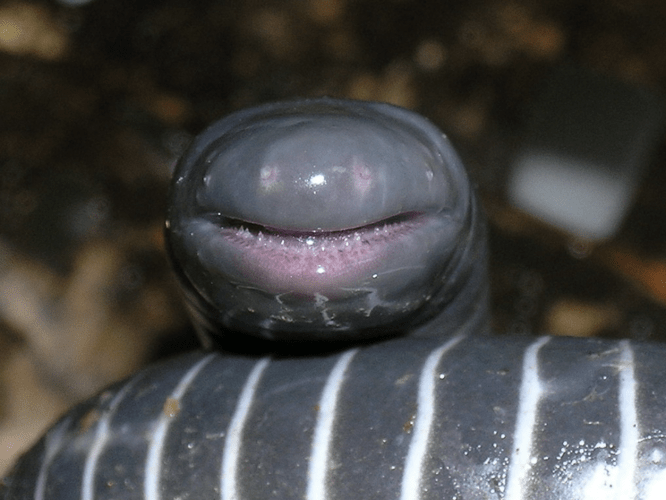
Eyeless tiny monsters of the deep with mucinous smiles greet you on this fine February morning and some robots from the future beckon you good morrow with tidings from outer space. Also a friend has made you some Turkish coffee cooked on hot sand for you to enjoy. A cat is growing before your very eyes. Welcome to planet Content Catnip, enjoy your trip…
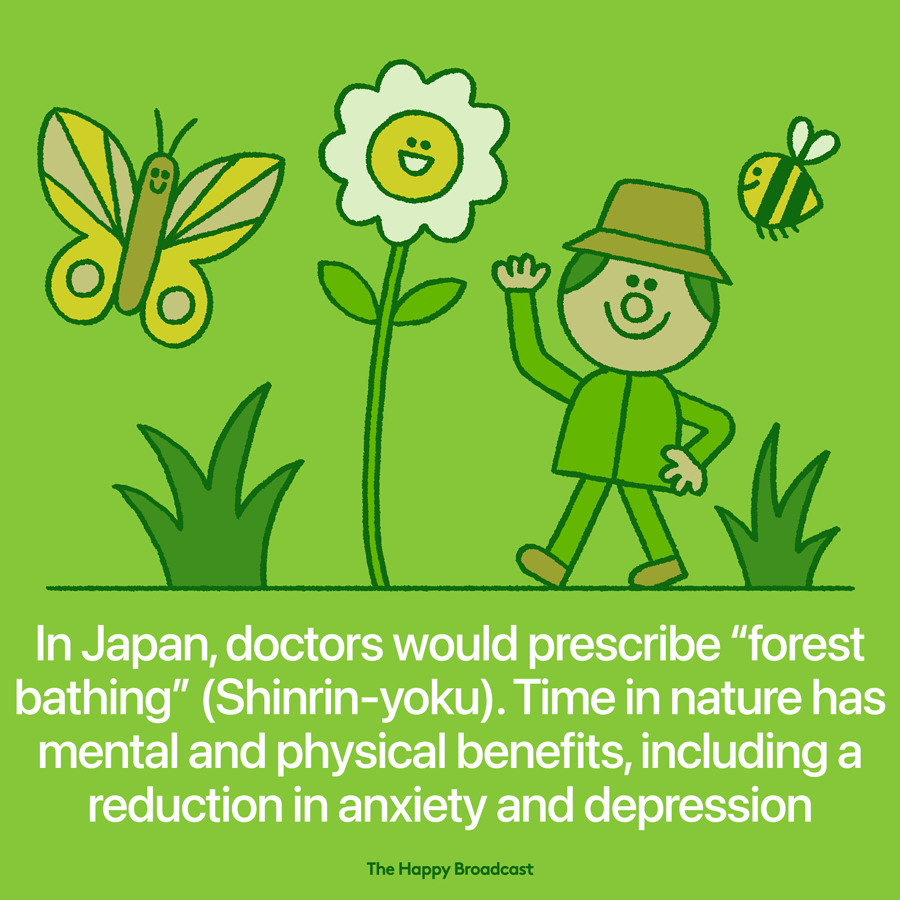
Shinrin-Yoku or the Japanese art of Forest Bathing has multiple mental and physical health benefits
Overwhelming scientific research backs up the power of forest bathing to help with numerous mental and physical health benefits.
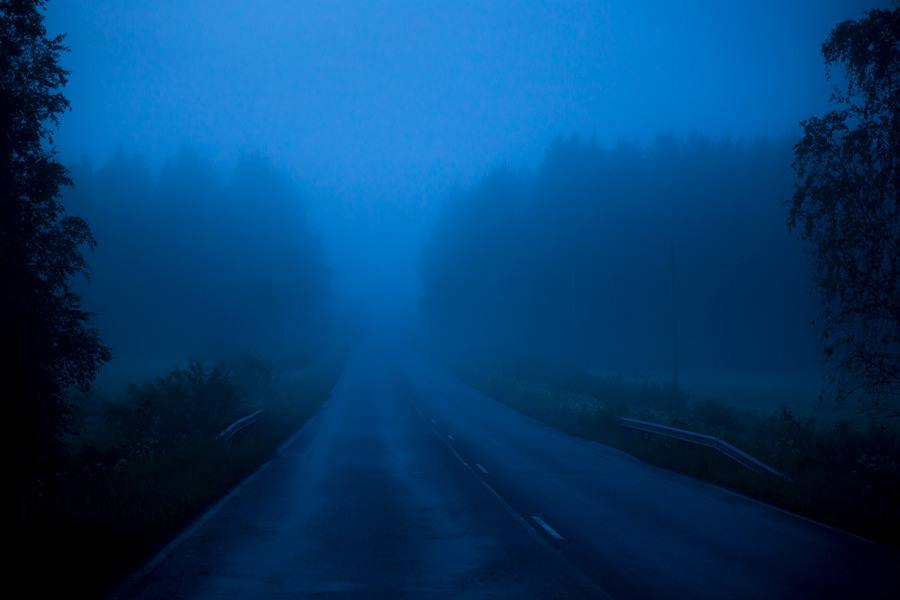
A springtime forest alongside the canal. Copyright Content Catnip 2010Dim Forest. Pexels Mist over the forest. Pexels
An environmentalist’s lesson for an improvisational life
“The more closely you observe patterns of waves as they break on the shore, the more likely you are to find patterns within those patterns, eventually being able to anticipate what may come next.”
Caecilians means ‘blind ones’ in Latin. They are a a group of limbless, vermiform or serpentine amphibians that lurk in the shadows of streams and the forest floor. They are least known order of amphibians and lurk in the tropics of South and Central America, Africa, and southern Asia. They eat earthworms but they live in your dreams. Via Brook Fitzwater
Caecilians are animals that look like something out of AliensCaecilians are animals that look like something out of AliensCaecilians are animals that look like something out of Aliens
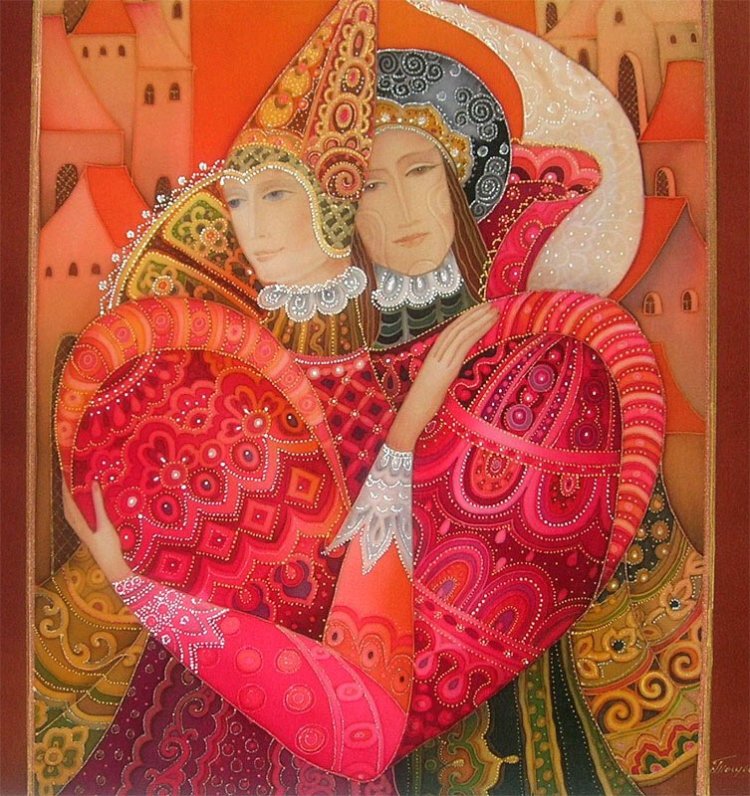
“People wearing their national dresses symbolise unity. A research conducted on this subject showed that youngsters wearing traditional clothes, irrespective of western pressure, had fewer behavioural and emotional problems. The reason being that they are in touch with their ancestral culture, religion and traditions and thus not confused about their identity or who they are.” Makes sense to me; feeling like you belong and have a community is very important. Nowadays, I think many of us feel a part of many different groups, because we live in a globalised world, and clothing can be changed, thus changing your identity. Maybe that makes our traditional and national dresses even more special? ❤
Do you work with a psychopath or are you (god forbid) attached intimately to one? I am personally thankful that I have managed to eradicate all psychopaths out of my life. However, I can sense psychopaths coming towards me a mile off and I am still fascinated by them. So…in case you are also wondering, here is why some people become psychopaths.
I am a bit of a medievalist and a enthusiast of all things medieval, although I look back from the privileged distance of several hundred years and oceans of modern conveniences. Here’s a magazine for medieval mums and modern mums to enjoy…
So what did you think about this circus of malcontents and misfits? I hope you enjoyed it please let me know your thoughts below. I hope you have a great week folks.
Genre: Non-Fiction, Psychology, Spirituality, Anthropology, Culture, Politics, History
Rating: 🌟🌟🌟🌟🌟
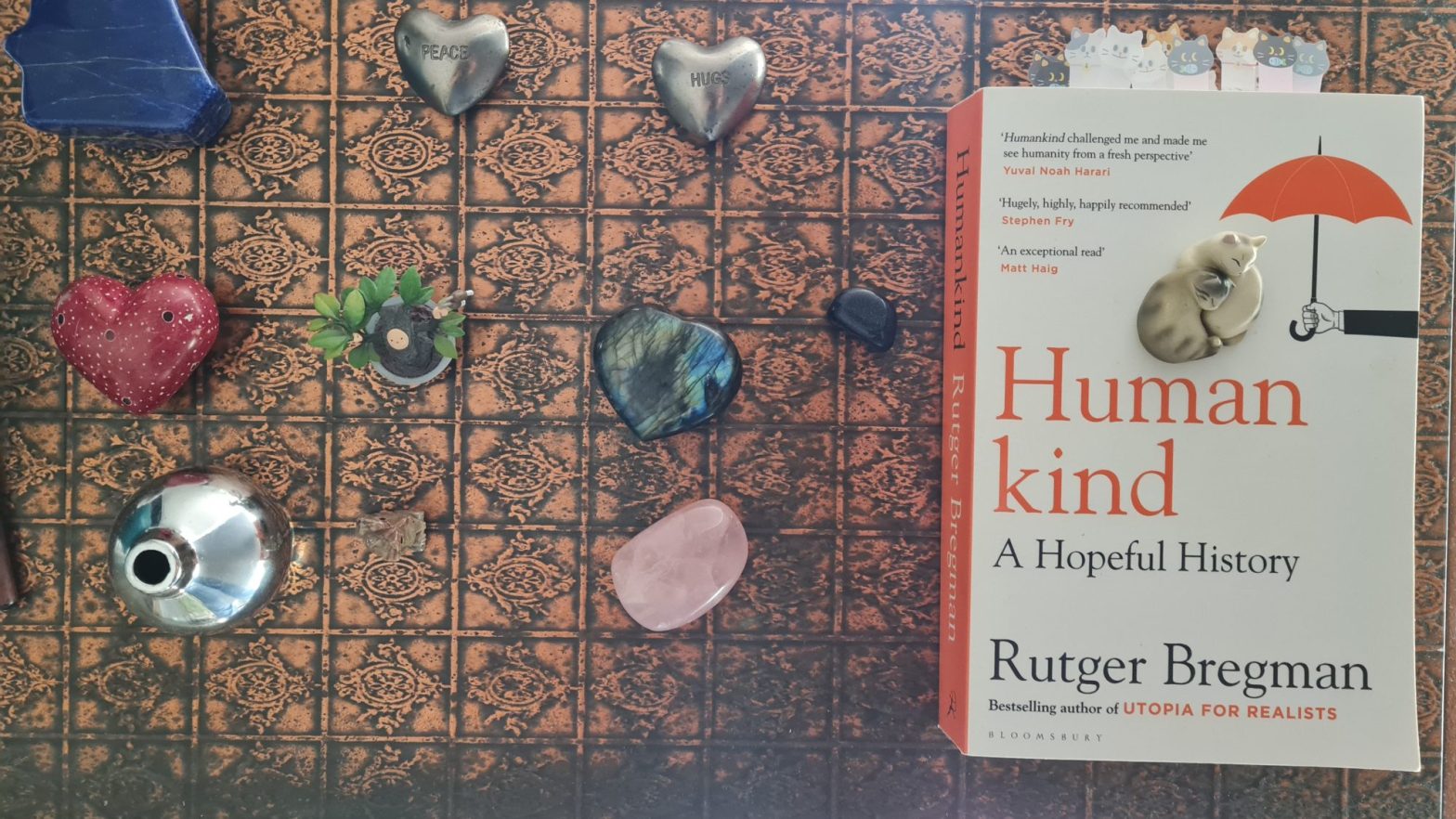
I was initially skeptical about this book. A hopeful history of humanity? During the time of COVID, climate change and mass animal extinction? However, there was a kernel of hope within me that really wanted for this concept to be true. This book delivers exactly what it says it does on the cover, it painstakingly uncovers the potential that humans have for creating love and beauty, instead of war and destruction.
Yet this is not an overly schmaltzy narrative with false optimism. Bregman writes in a breezy, easy to read and entertaining way and dissects some heavy topics such as psychological torture experiments and high profile murder cases, to reach new conclusions about the humans who were culpable in these scenarios.
Hobbes (bleak humanity) versus Rousseau (hopeful humanity
Bregman breaks down history of human civilisation into two different kinds of philosophy one from Thomas Hobbes (bleak and dark) and the other from Jean-Jacques Rousseau (much more optimistic).
Thomas Hobbes
“Back in the old days, we were free. we could do whatever we pleased and the consequences were horrific. Human life in that state of nature was in Hobbes’ words ‘solitary, poor, nasty, brutal and short’. The reason he theorised was simple. Human beings are driven by fear. Fear of the other. Fear of war. We long for safety and have a restless desire to seek after power, that only ceases in death. Yet not to worry, anarchy can be tamed and order restored. We all just have to agree to relinquish our liberty.”
Humankind: A Hopeful History by Rutger Bregman
Jean Jacques Rousseau
“The first man, who, after enclosing a piece of land, took it into his head to say ‘This is mine’ and found people simple enough to believe him, was the true founder of civil society. How many crimes. How many wars, how many murders, how many misfortunes and horrors would that man have saved the human species, who pulling up the stakes or filling up the ditches should have cried to his fellows. Be sure not to listen to this imposter. You are lost, if you forget that the fruits of the earth belong equally to us all, and the earth itself to nobody”
Humankind: A Hopeful History by Rutger Bregman
Many ‘realistic’ writers of Rousseau’s time considered him to be a naive romantic. He rejected the idea of the march of civilisation being a good thing. He believed that once humans went from being hunter gatherers to being settled in place and farming, that this is when things really began to fall apart. According to research cited by Bregman, becoming pastoralists meant the end of protofeminism, the beginnings of the patriarchy and the beginnings of infectious diseases spread by farmed animals along with STDs.
Humankind: A Hopeful History by Rutger Bregman
Stanley Milgram’s experiments
These experiments in the 70’s got people to inflict pain on others based on the strong insistence of researchers. Later they were told that their involvement in the experiment would help science and they felt great relief about that. The findings of a repeated version of this experiment showed:
If you push people hard enough, if you poke, prod, bait and manipulate, many of us are indeed capable of doing evil. The road to hell is paved with good intentions. But evil doesn’t live just below the surface. It takes immense effort to draw it out. And most importantly, evil has to be disguised as doing good.
Humankind: A Hopeful History by Rutger Bregman
”Love recognizes no barriers. It jumps hurdles, leaps fences, penetrates walls to arrive at its destination full of hope.” Maya Angelou
This book is absolutely fascinating and has immense depth while still being very enjoyable and entertaining to read. I heartily recommend this book to you if you feel anxious about the uncertainty of our world, or if you simply are feeling doubtful about the capacity of humanity to overcome the evil of our world. Or even if you are completely cynical in that regard. This is a refreshing look at how humans behave in situations of evil and chaos, and the good news is…we aren’t as bad as we think we are!
Survival of the shameless
For millennia, shaming was a sure way to tame our leaders. It can still work today. Shame is more effective than regulations or censure. People who feel shame regulate themselves. In the telltale way that that they flush when they realise they are the subject of gossip.
A society without shame would be hell.
Unfortunately there are people who are incapable of feeling shame. Whether because they are drugged on power or are a minority born with sociopathological traits. Such individuals would not last long in nomadic tribes. They’d be cast out of the group and left to die alone. But in our modern sprawling organisations, sociopaths actually seem to be one step ahead on the career ladder. 4-8% of CEOs have sociopathy, compared to 1% in general population.
Shamelessness can advantageous
Politicians not hindered by shame can do outrageous things. Could you tell a lie and then tell another without missing a beat? Most people would be consumed by shame. But the shameless couldn’t care less. In this type of world, it’s not the friendliest or most empathic leaders who rise to the top, but their opposites. In this world, it’s the survival of the shameless.
Negative spirals
What if negative ideas around human nature are actually a form of pluralistic ignorance? Could our fear that most people are out to maximise their own gain be born of the assumption that that’s what other’s think? And then we adopt a more cynical view, when, deep down most of us are yearning for a life of more kindness and solidarity? Like hatred, trust can also be contagious. Trust often begins when someone dares to go against the flow. Someone who is initially seen as unrealistic and naive.
The commons
On a day-to-day basis we share more with each other than we keep to ourselves. This communal basis is a vital mainstay of capitalism. Consider how many companies are utterly dependent on the generosity of their customers. Facebook would be worth much less without the pictures and videos that millions of users share for free. Why don’t we make much more of this? Perhaps the things we share don’t seem that remarkable.
Nobody has to print flyers explaining that it’s nice for people to take a stroll in the park or to breathe in clean air. Nor do we think of that clean air or clean water as belonging to someone. It’s only when someone decides to rent out the air or water, appropriate the beach that we think – didn’t this belong to all of us?
They can include just about anything. From a community garden to a website, from a language to a lake. So long as it’s shared and democratically managed by a community of people. Some commons are a part of nature’s bounty, such as drinking water. Others are human inventions like Palm Oil Detectives or Wikipedia.
For millennia, the commons have constituted almost everything on earth. In 1990, economist Elinor Ostom wrote the watershed book ‘Governing the Commons’ and went on to win a Nobel Prize in Economics. She formulated design principles for a successful commons.
2. Match rules governing use of common goods to local needs and conditions.
3. Ensure that those affected by the rules can participate in modifying the rules.
4. Make sure the rule-making rights of community members are respected by outside authorities.
5. Develop a system, carried out by community members, for monitoring members’ behavior.
6. Use graduated sanctions for rule violators.
7. Provide accessible, low-cost means for dispute resolution.
8. Build responsibility for governing the common resource in nested tiers from the lowest level up to the entire interconnected system. —
Ten rules to live by according to Rutger Bregman
1. When in doubt, assume the best
When in doubt about another person’s intentions, what should you do? It’s most realistic to assume the best, to give them the benefit of the doubt. But what if someone scams you? Psychologist Maria Konnikova says it’s better to account for the fact that you will occasionally be cheated. That’s a small price to pay for a luxury of trusting people.
2. Think in win-win scenarios
The wonderful fact is, we live in a world where doing good also feels good. We like food because without food we’d starve. We like sex because without sex we’d go extinct. We like helping because without each other we’d wither away. Sadly. untold companies, schools and other institutions are still organised around a myth, that it’s in our nature to be in competition with each other. In truth, this works precisely the other way around. The best deals are those where everybody wins.
3. Ask more questions
Start by asking questions and letting citizens have their say in a participatory democracy. To let workers dictate the terms of their own employment and KPIs. To let children dictate their own learning pathways. Its flip of the usual maxim: ‘Do not do unto others and they do unto you – as their tastes may be different.
4. Temper your empathy, train your compassion
Empathy is exhausting and saps all of your energy. Unlike empathy, compassion does not sap our energy because it’s more controlled, remote and constructive. It’s not about sharing another person’s distress, but it does help you to recognise it and then act.
5. Try to understand the other, even if you don’t get where they are coming from
Seeing where somewhere else is coming from doesn’t mean you need to see eye to eye. You can understand the mindset of a fascist or terrorist. Understanding the other on a rational level is a muscle you can train. Where we need this capacity the most is to suppress our desire to be nice. Sometimes when we see someone being treated unfairly we keep silent in order to avoid being disagreeable. People with the nerve to get up on their soap box on social occasions. Who raise unpleasant subjects that make you uneasy. Cherish these people because they are the key to progress.
6. Love your own as others love their own
Humans are limited creatures. We care more about those who are like us, who share the same language or appearance or background. Why do we care more about people who seem like us? Evil does its work from a distance. Distance lets us rage at stranger on the internet. Distance helps soldiers bypass their aversion to violence. Distance has enabled the most horrifying crimes in history, from slavery to the holocaust.
But choose the path of compassion and you realise how little separates you from that stranger. Compassion takes you beyond yourself until those near and dear are more or less significant than the rest of the world.
7. Avoid the news
One of the biggest sources of distance is the news. It offers a skewed view of the world. The news and also social media zooms in on all of the bad apples and has a negativity bias. Because bad behaviour grabs our attention, it’s what generates the most clicks and where we click the advertising dollars follow. This has turned social media into systems that amplify our worst qualities. Read in depth news and steer clear of TV news, switch off the screen and go and meet someone in person.
8 . Don’t punch Nazis
Instead of catering to or amplifying hatred, meet it with kindness and compassion.
9. Come out of the closet, don’t be ashamed to do good
If you assume most people are selfish, then any good deed is suspect. However if you conceal your good works by playing it down then you reinforce people’s cynical ideas about human nature and you can’t serve as an example for others. This doesn’t mean flaunting your good deeds. Kindness is catching. And it’s so contagious that it even infects people who see it from afar.
You are the light of the world. A city set on the hill cannot be hidden. Nor do people light a lamp and put it under a basket, but on a stand and it gives light to all of the house. In the same way, let your light shine before others, so that they may see your good works.
Jesus Christ
10. Be realistic
Let’s change the meaning of the word ‘realism’. Isn’t it telling that in modern usage the realist has become synonymous with the cynic. In truth, it’s the cynic who’s out of touch. So be realistic. Be courageous. Do good in broad daylight and don’t be ashamed of your generosity. You may be dismissed as gullible and naive at first. But remember, what’s naive today may be commonsense tomorrow. It’s time for a new realism. It’s time for a new view of humankind.
“Out of the millions of people we live among, most of whom we habitually ignore and are ignored by in turn, there are always a few that hold hostage our capacity for happiness, whom we could recognize by their smell alone and whom we would rather die than be without.” ― Alain de Botton, A Week at the Airport: A Heathrow Diary
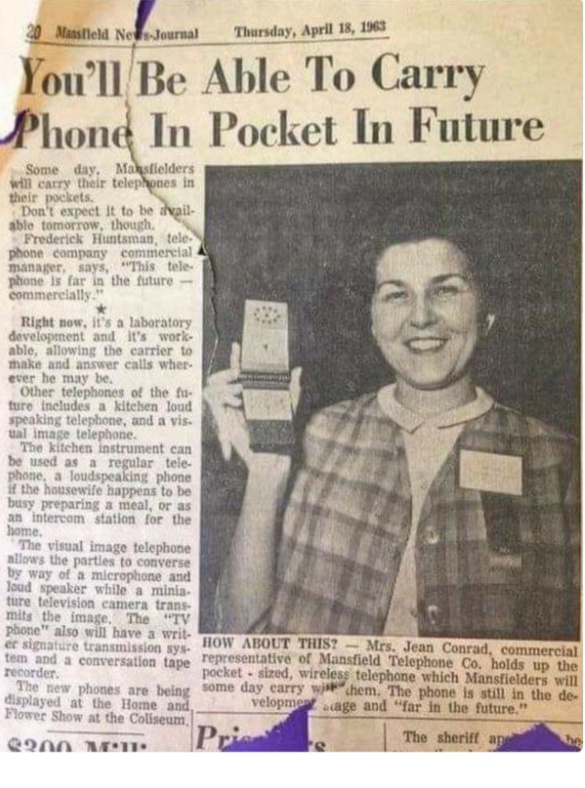
This week we approach another ‘I love lamp‘ addict (it seems they are everywhere), we discover some uplifting environmental news, rebellious jewellery, a humungous ancient crocodillian and more. Stay safe, stay sane and keep smiling muchachos…
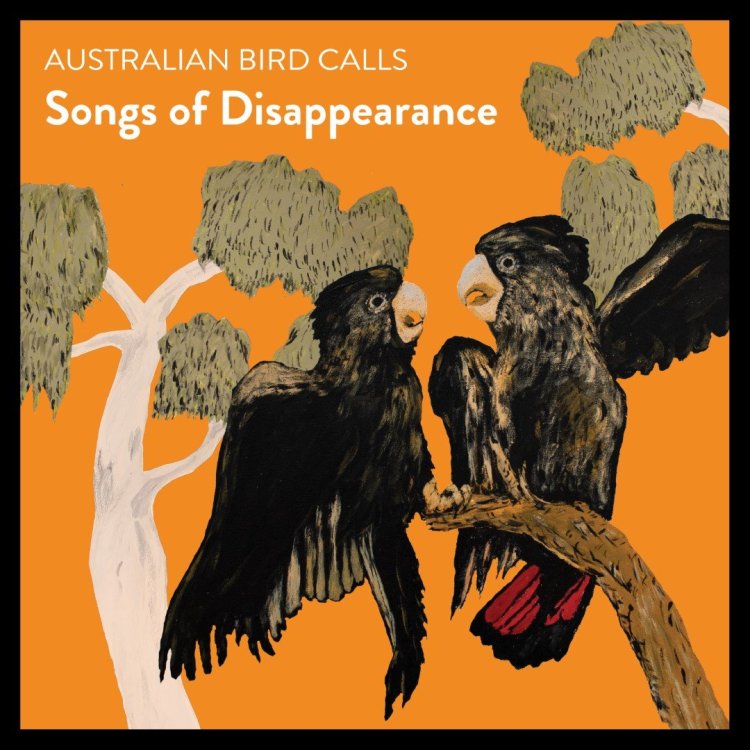
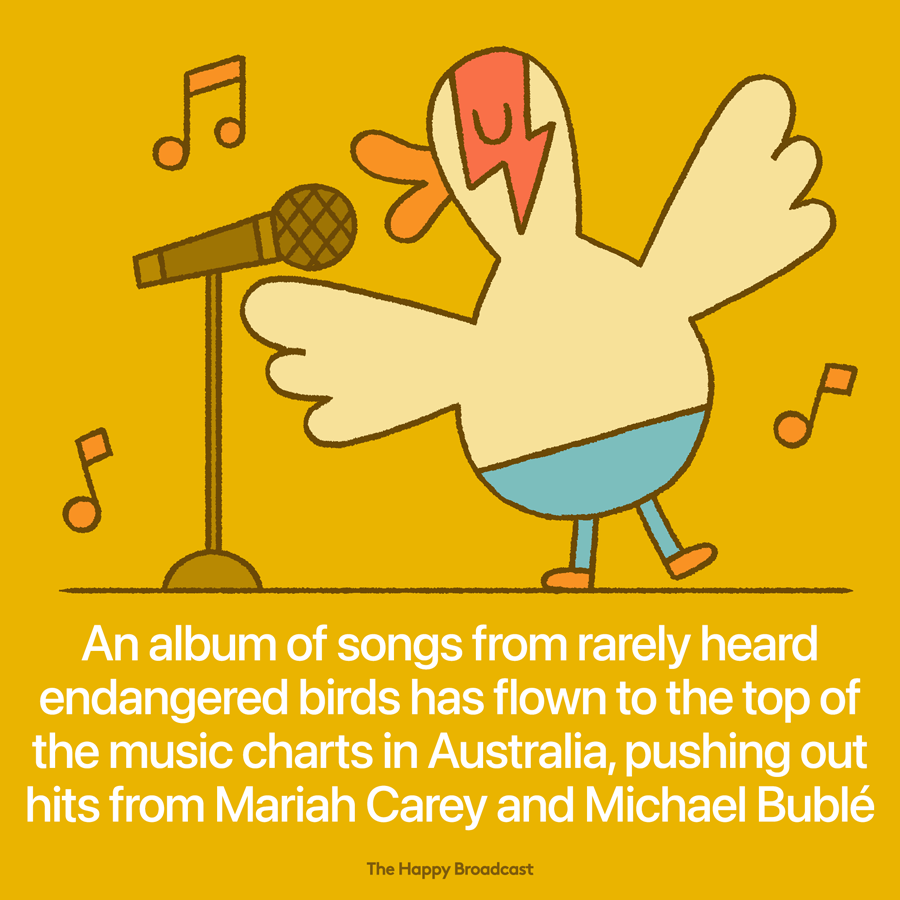
“Songs of Disappearance”, a chorus of iconic cockatoos, the buzzing of bowerbirds, a bizarre symphony of seabirds, and the haunting call of one of the last remaining night parrots, debuted in Australia in December.
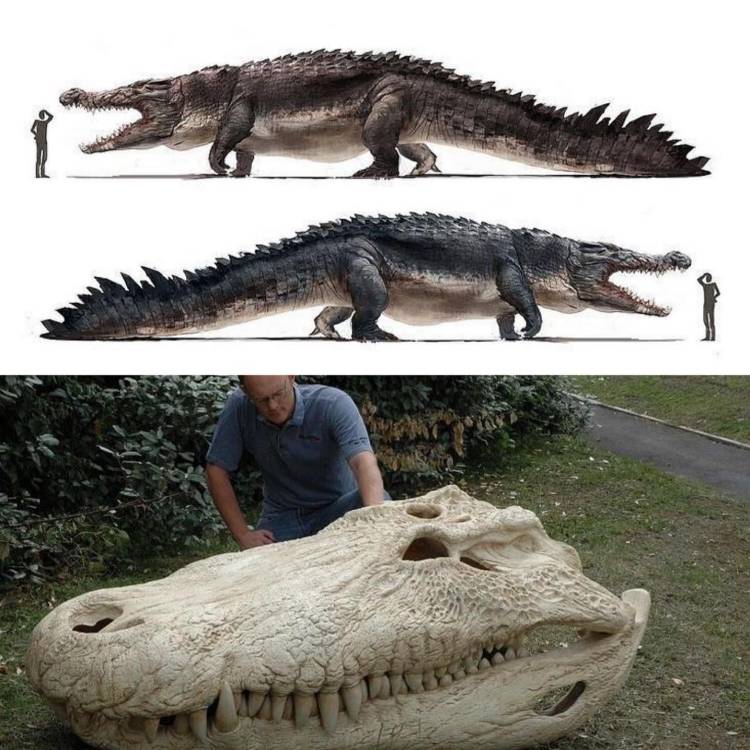
Purussaurus is one of the largest known of the giant crocodilians, perhaps even surpassing Sarcosuchus in size. It reigned supreme in central South America in the Miocene period, 8 million years ago. Via Reddit
A gigantic Crocodilian of days of yore, circa 8 million years ago could eat a grown human in one gulp
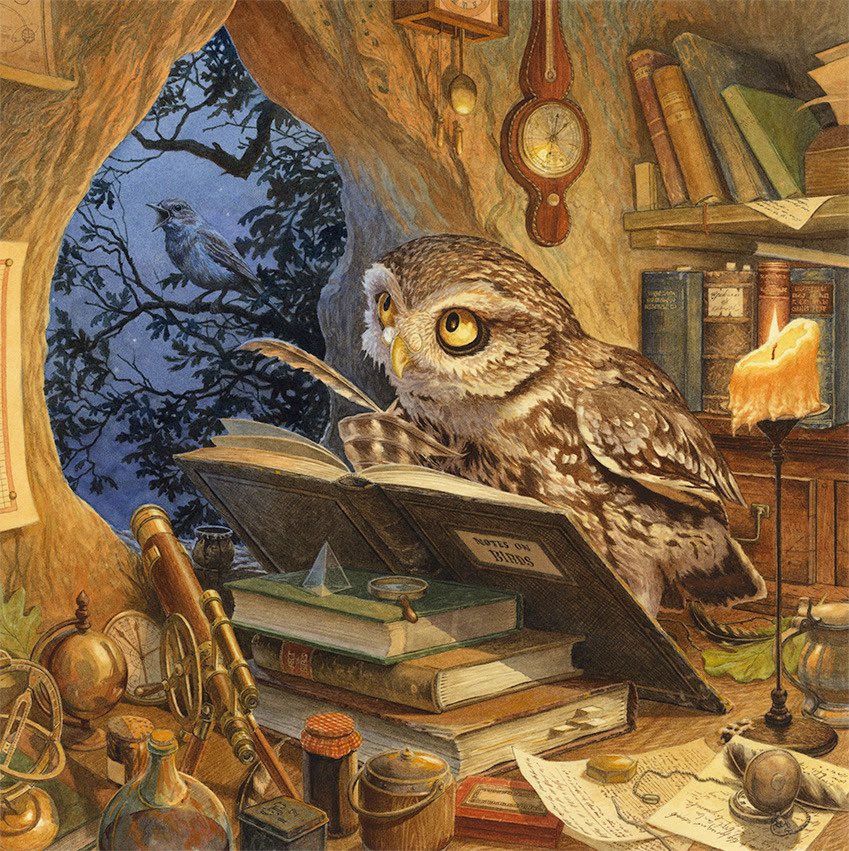
Graduating in 2008 with an illustration degree from Bath Spa University, Chris Dunn is a freelance illustrator producing portraits, conceptual illustrations and whimsical animal portraits for children’s books, calendars and more including illustrations for classics like Wind in the Willows. He won the Bath Art Prize in 2011 and continues to produce mind-blowing art like this beautiful owl.
A studious and curious owl studies ornithology by artist Chris Dunn
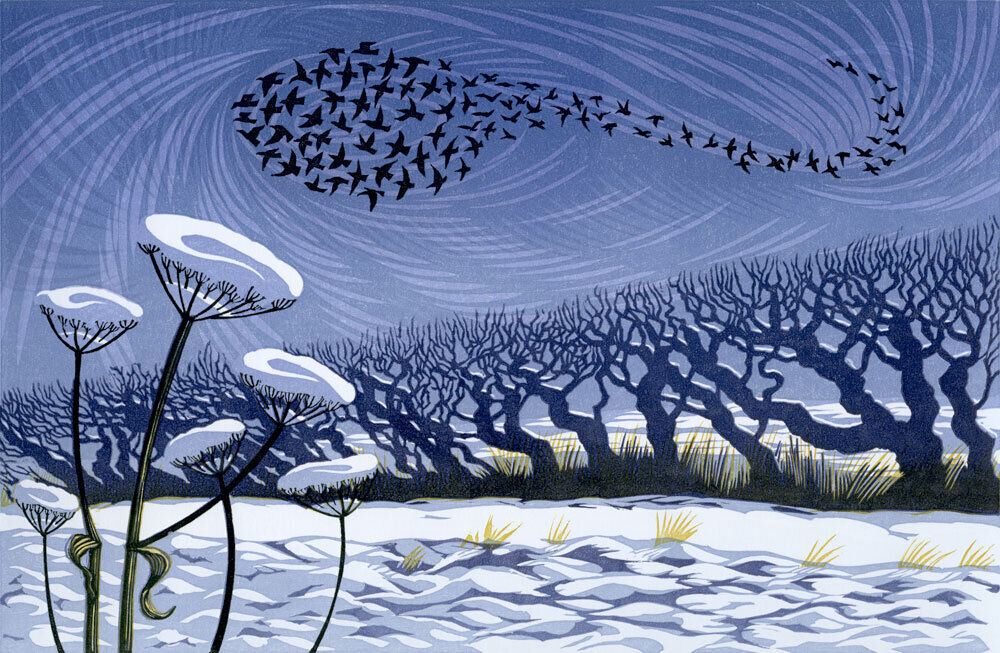
Niki Bowers studied at Great Yarmouth College of Art, followed by a BA(Hons) degree at Canterbury College of Art. As a graphic designer, she worked for design consultancies across the UK before returning to Norfolk to pursue a freelance career and later turning to printmaking.
Her limited edition linocut prints reflect the landscape and wildlife of rural Norfolk, with distinctive trees, hedgerows, wide skies and often feature swirling flocks of wild birds.
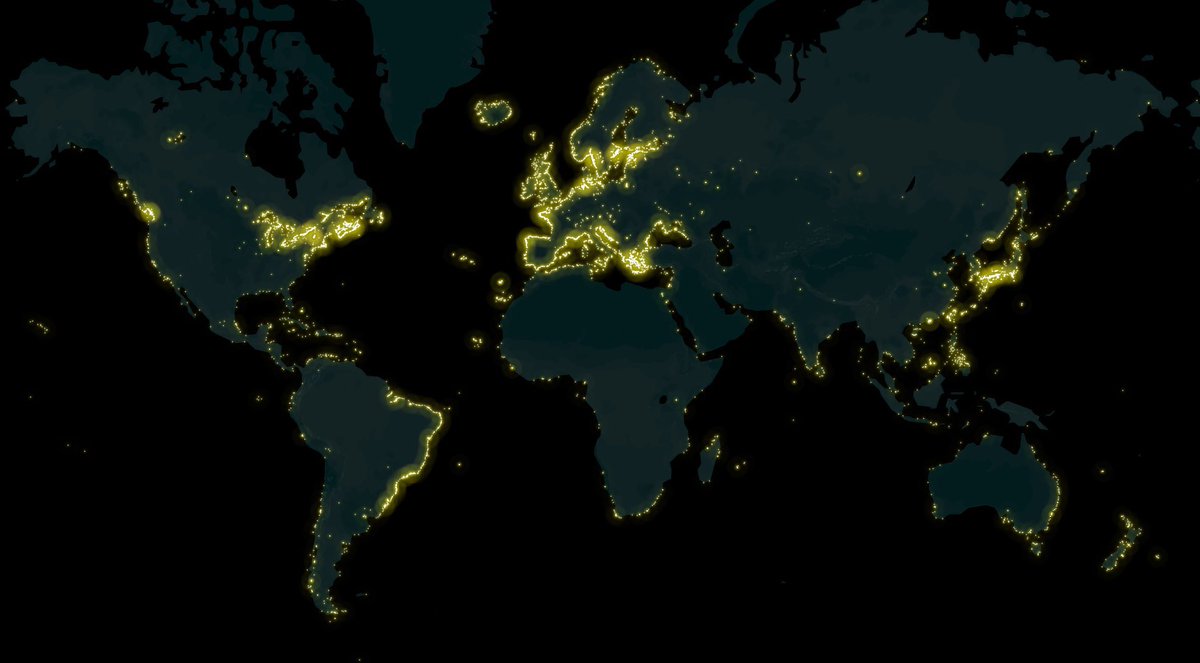
The map is even better than it might seem at first glance: the colors are the real colors, the patterns are the real patterns, and the size of the dots is the distance at which each light is visible.
Thank you for joining me on this sleepy soujourn into the remnants of daydreams and I hope you enjoyed the weekly trip. Please let me know what you thought of it below…
If you’re like me, you are an endlessly curious person who enjoys reading and learning about many things, and you like and enjoy a great many different things…if so, then here is a classic book for you!
‘You May Also Like’ endeavours to answer some fascinating questions about why we like particular things over others. You probably have never considered these questions:
Are liking and disliking something merely opposites on the same spectrum or are they different things?
How do we come to like things that we once disliked?
How much can liking be quantified?
Why do the tastes of the layperson and the expert so often diverge?
Can the pleasure of liking something that you think you are supposed to like be a sufficient substitute for liking something because you authentically like it?
Do we know what we like or like what we know?
How open are we to changing our tastes?
Vanderbilt deep-dives into the murky and unclear ways that people are motivated to like things and where this aesthetic and sensory preference comes from.
This is a bubbly, effervescent, fun, yet erudite and informative book that I managed to breeze through in one evening. It was so incredible that I bookmarked almost every second or third page. It’s just one of those books. Each page gives you an AHA moment of recognition (as Oprah would say). It turns out that our unique pastimes, preferences and peccadilloes are not as specific to you as an individual as you may have thought!
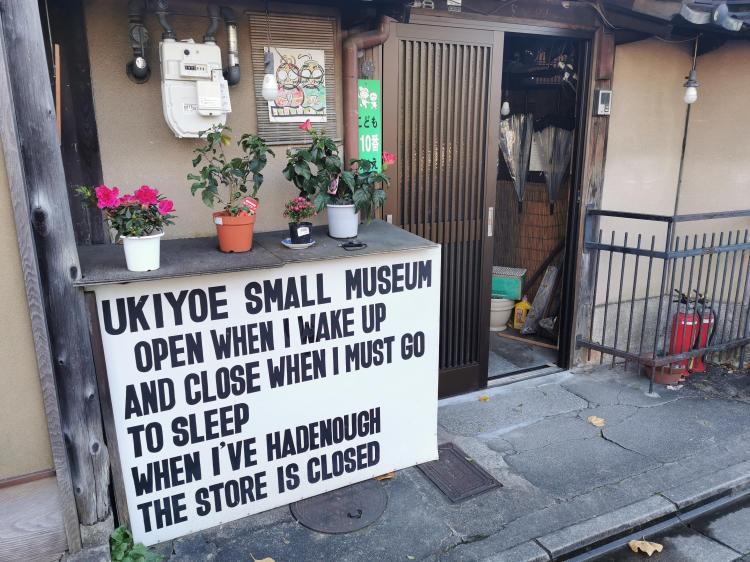
Ukiyoe Small Museum of print art in Kyoto Japan
In his book Strangers to Ourselves, author Timothy Wilson argues that we are often unaware of why we respond to things the way we do, much of this behaviour occurs in what he calls the ‘adaptive unconscious’.
We are in effect strangers to our tastes. It is time we got acquainted.
You May Also Like
Liking something is about anticipation and memory
Even as you are looking forward to something, you are looking backward at the memory of the last time you enjoyed it. As Pascal once lamented, The present is never our end. The past and the future seem to dominate our thoughts. Perhaps it is the simple fact that the past and the future last longer than the present. We try and ‘live for the moment’, but how long is that moment before it’s already a memory. That so many people photograph their memorable meals speaks not only to how fleeting the experience may be, but to how photographing it helps to actually make it memorable
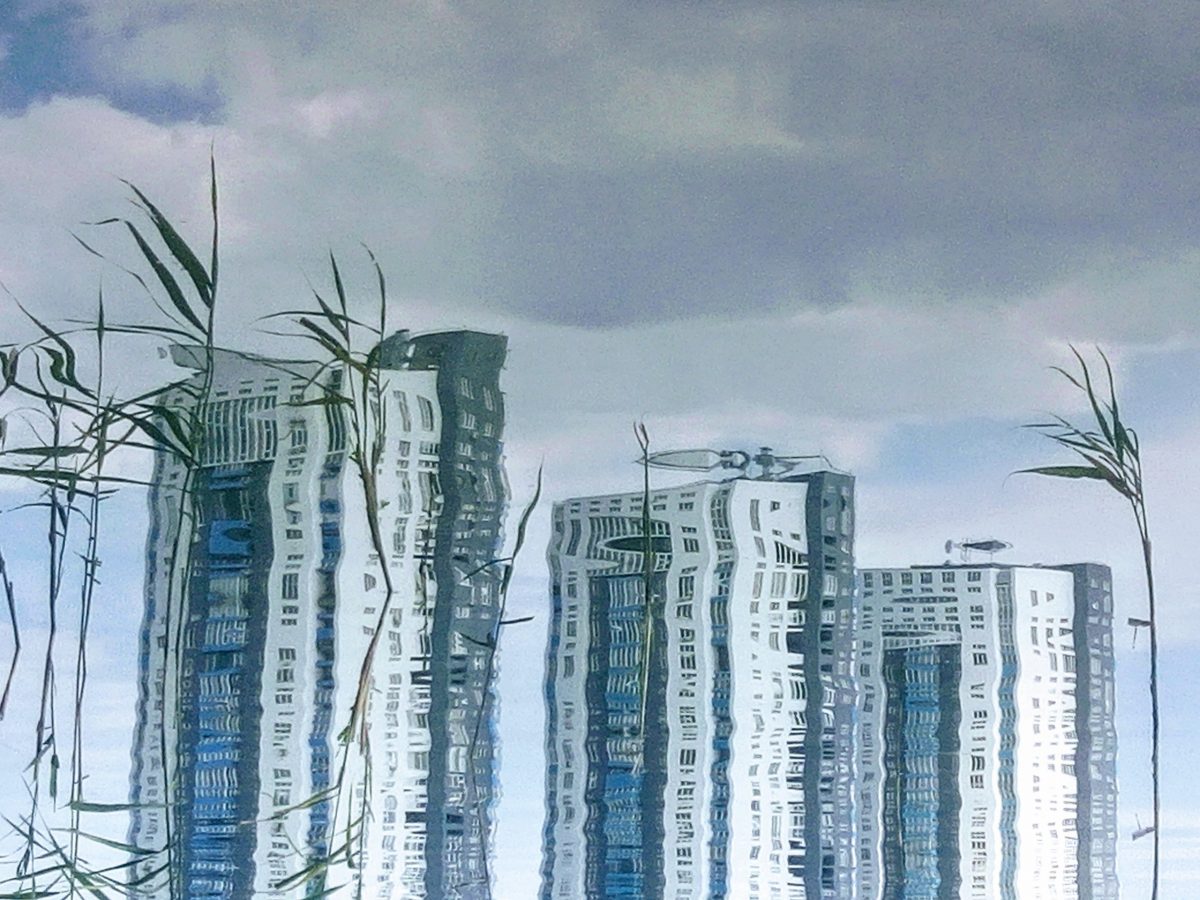
Mirrored sky landscapes by Japanese photographer Shota
Context is important when ‘liking’ food
People eating in an ethnic restaurant with appropriate decor rate the food higher. Add some red checkered table-clothes and Sergio Leone poster and they will eat more pasta. Context is not just about place, but time. Your love of breakfast cereals probably does not, in normal circumstances extend to dinner.
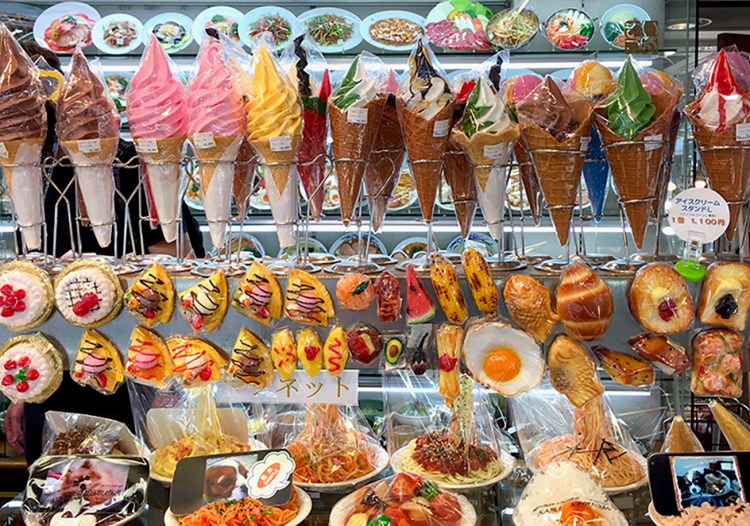
Kappabashi fake food – Jonelle Patrick
Exposure: Liking is Learning
This truism runs from entire cultures down to the individual. The exposure effect begins even before you were born. If you liked rock music or carrot juice as an infant, chances are your mother drank of lot of carrot juice or listened to a lot of Metallica before you were born.
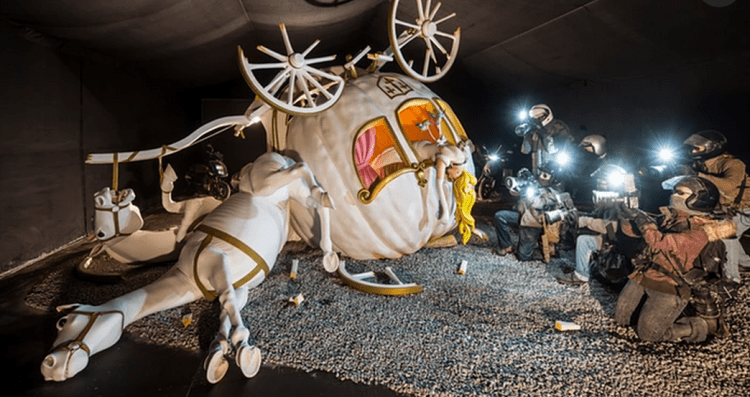
Banksy: ‘The grumpier you are, the more assholes you meet’
The brain likes to resolve things into a recognisable pattern. If you like contemporary art, you will more likely direct your attention towards things that seem like contemporary art.
Simply seeing other people eating something or doing something seems to promote us liking it.
Yelp and Google reviews have effectively destroyed (or democratised) authoritative arbiters of taste
Vanderbilt explains the complex conundrums of relying on Yelp, TripAdvisor and Google reviews. Although this has meant a flourishing of egalitarian aggregated views on particular restaurants, shops or even whole cities. The need for critical authority and experts has diminished at the same time. It is also possible to ‘buy’ likes, positive reviews and so on to establish quality of service or products where none actually exists.
Kamo river in Kyoto
The paradox of literary prizes
When a literary prize is won, a book’s rating on GoodReads plummets. Once a book is adorned with a sticker denoting that a prize is won, expectations from readers are raised. This goes from being a book you might like to being a book you should like. Not surprisingly this often ends in dashed expectations.
You Might Also Like
We can be strangers to our own taste
Have you ever bought something home from a trip – a bottle of Italian wine, a piece of Balinese art – that seemed fantastic when you first encountered it but no longer seems to excite you? Perhaps what you really liked was being in Bali or Italy.
I hope you enjoyed this review. Are you going to give this book a read? I thoroughly recommend it! If you do, let me know what you think of it below. Happy reading.
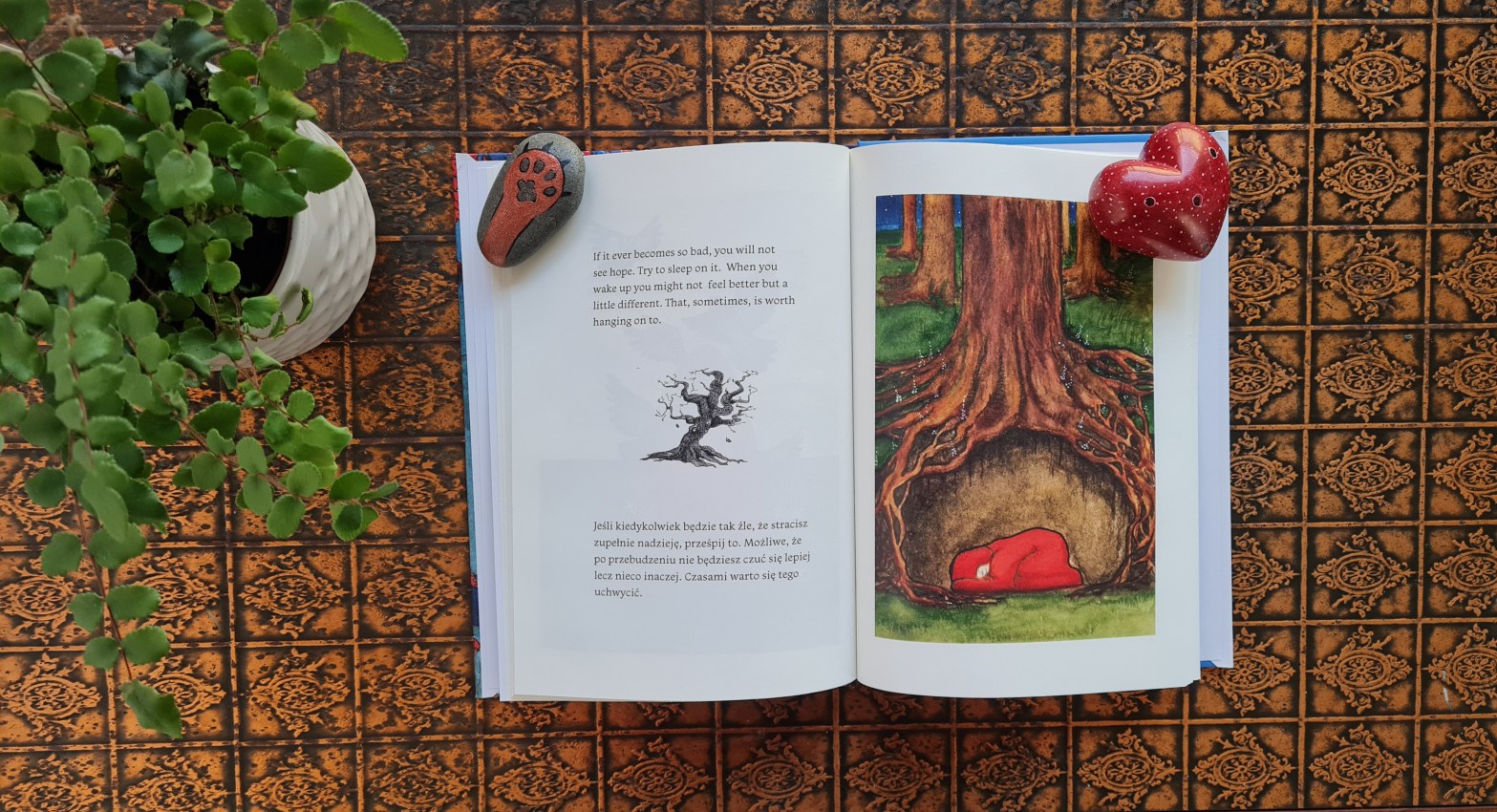
If it ever becomes so bad, you will not see hope. Try to sleep on it. When you wake up, you might not feel better, but a little different. That sometimes, is worth hanging on to.@googiemccabe #bookquote #DwieSiostry
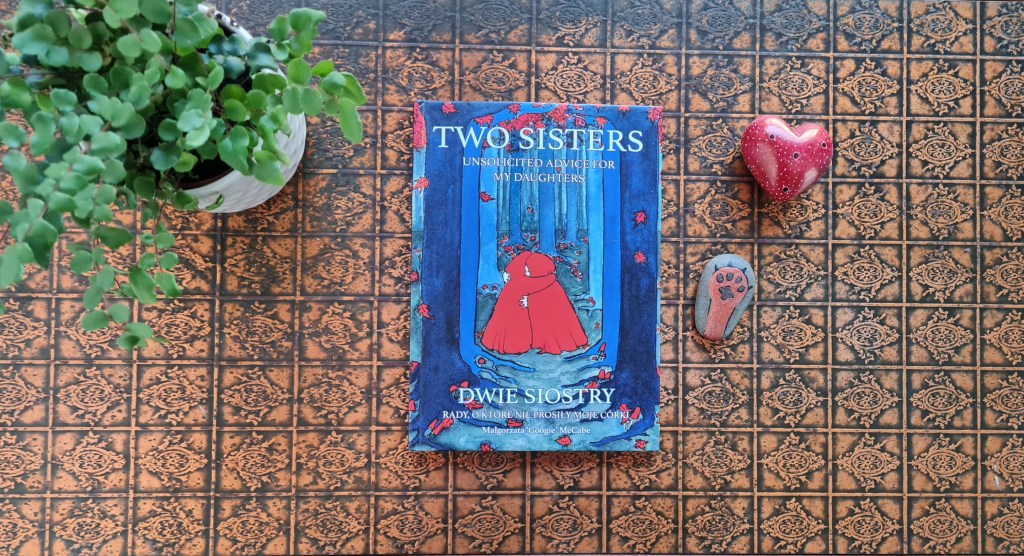
A beautiful compendium of universal wisdom that’s simple, wise, soulful and timeless. I fell in love with this book as soon as I saw it. The illustrations and words are by my wise and kind friend Googie McCabe who wrote this book for her two beloved daughters, as a way of healing and dealing with her depression, and also as a manifestation of her artistry, imagination and love for her two girls. It features advice on life, death, love of self, love of others, finding your calling, and how to deal with life’s dark times.


































 Content Catnip
You must be logged in to post a comment.