10 Interesting Things I Found on the Internet #170


Irish rappers Kneecap and their ten rules to live by

If you are interested in music, it’s likely that you will have read something, or heard someone banging on about how amazing Kneecap are. They are Mo Chara, Móglaí Bap and DJ Próvaí: a dynamic, charismatic group of rappers from Belfast, whose punchy, sometimes satirical, output moves in and out of the Irish language to communicate themes of social unrest and a crucial, often unheard Irish point of view.
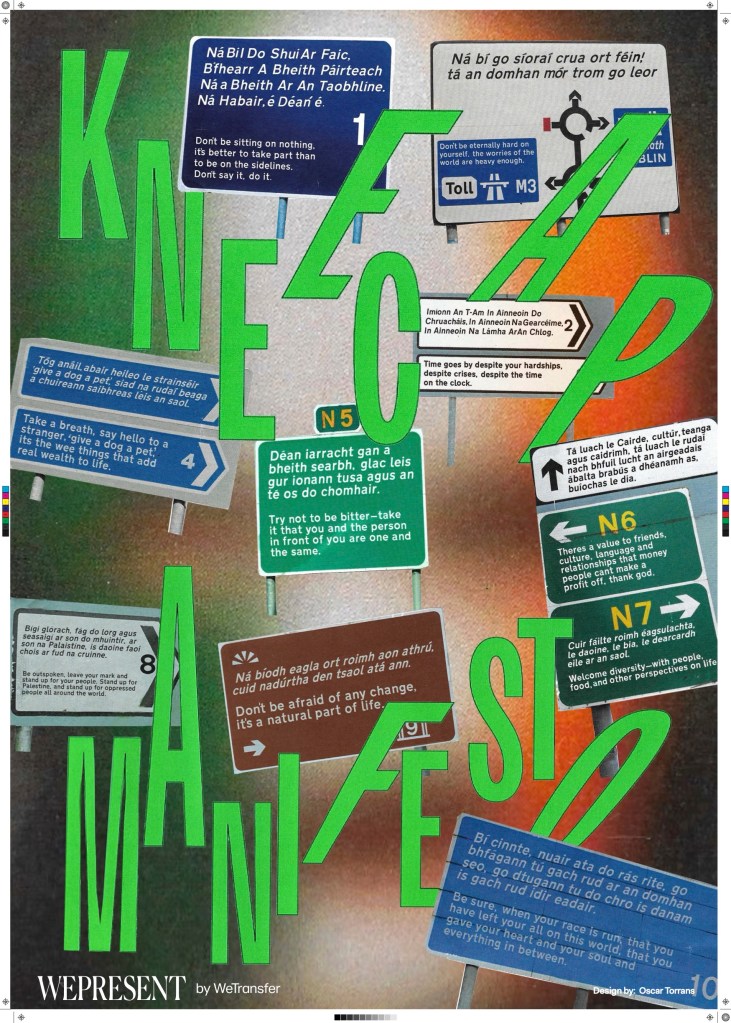
Via We Transfer


Ignorance is not bliss


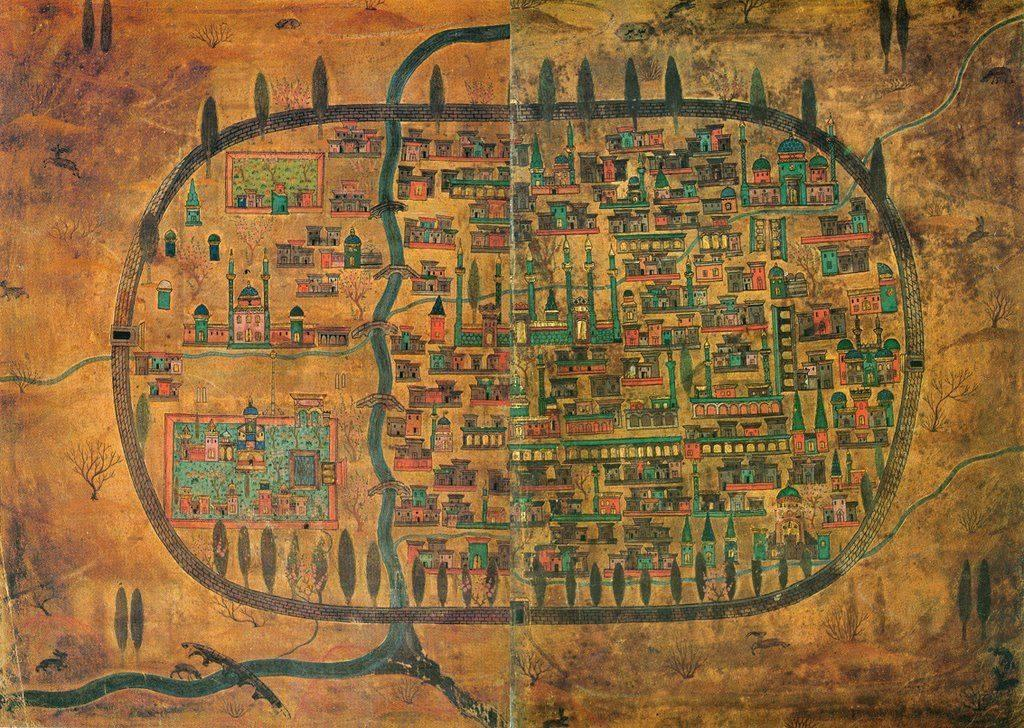
The Iranian city of Tabriz

The Iranian city of Tabriz, as depicted by the 16th-century Ottoman polymath Matrakçı Nasuh, More here: https://publicdomainreview.org/collection/the-maps-of-matrakci-nasuh-ottoman-polymath via Public Domain Review

What you can learn from animals


What Designers Can Learn from Magic Realism

Magic realism may be what we need to break free from design’s overly rational futures.

Dunne & Raby, “A Stone Raft,” 2023. Computer-generated image: Carolyn Kirschner.

By: Anthony Dunne & Fiona Raby via MIT Press Reader

As Mark Twain remarked in “Following the Equator,” “Truth is stranger than fiction, but it is because Fiction is obliged to stick to possibilities; Truth isn’t.”

When an idea or scenario is presented as a future, there is a natural impulse for people to think about how to get from here to there, triggering all sorts of pragmatic and limited conversations. It is evaluated against plausibility. Or it is taken literally as a wish, desire, prediction, or prescription to be imposed by one group of people on another.
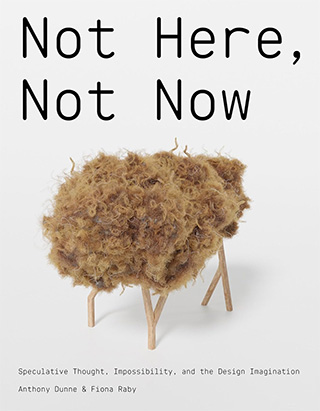
This article is excerpted from Anthony Dunne and Fiona Raby’s book “Not Here, Not Now.”

At a time when “futures” have become the dominant mode of framing the “not here, not now,” at least in design, magic realism might allow us to move beyond the limitations that condemn designers, including us, to forever reimagining variations on a broken reality. It can reveal pathways that lead beyond the projection of objective realities grounded in science and technology to a far larger, richer landscape influenced by literature, philosophy, and art. Unconstrained by “technological reason,” it offers something a little more poetic, which if you are trying to prompt new thinking rather than provide options, seems like a good direction to explore.

It also gently signals that a project is not “real,” avoiding the kind of confusion that arises when the unreal is presented as real. With magic realism, the unreal is only ever presented as unreal, whereas fake reality is unreality pretending to be real. In design especially, viewers often take the potential of something to be real for actual reality. Some designers declare this, while others hide it.

With magic realism, there is no need to leave this world or travel to the edges of the universe in search of novel ideas. In this form of world-building, small but significant adjustments are made to the world we already live in. Often unexplained and free from scientific justification, they celebrate and highlight boundaries between the real and the unreal. Things happen that could never happen in our reality, but nonetheless people carry on, only mildly disturbed. In José Saramago’s “The Stone Raft” (1986), the Iberian Peninsula breaks away from the continent of Europe and begins to slowly drift across the Atlantic Ocean, becoming the setting for a political fable.

With magic realism, there is no need to leave this world or travel to the edges of the universe in search of novel ideas.

As designers, could we embrace and make use of strategies like this? Such magical realist worlds might be impossible, but they are not pointless. They can serve as a stage or setting for helpfully decontextualized alternative realities.

In Saramago’s “Stone Raft,” life carries on. The characters’ reactions to the event are pragmatic; everything else in the world in which the apparently impossible thing has happened appears normal or as we would expect. The result feels absurd. Magic realism usually makes no attempt to explain or justify the anomaly behind the magical event. Its justification lies in the conceptual possibilities it allows for in the narrative, pleasure it provides, and feeling of strangeness that comes from a familiar world being tweaked. Bringing magic realism to design has always felt a bit uncomfortable, almost too easy, but we’re not so sure anymore.

This tension between rational and ungrounded speculation in relation to literature is something science fiction theorist Darko Suvin has grappled with in several of his writings. For Suvin, science fiction is “a literary genre whose necessary and sufficient conditions are the presence and interaction of estrangement and cognition, and whose main formal device is an imaginative framework alternative to the author’s empirical environment.” He suggests there is a spectrum with naturalistic worlds at one end — that is, worlds that resemble those of the author and reader — and at the other, invented worlds — what he terms “novum”— that generate defamiliarization, or what he calls “cognitive estrangement.” This is what separates critical science fiction from fantasy, which may be inventive and pleasing, but lacks a critical dimension:

The folktale also doubts the laws of the author’s empirical world, but it escapes out of its horizons and into a closed collateral world indifferent to cognitive possibilities. It does not use imagination as a means of understanding the tendencies latent in reality, but as an end sufficient unto itself and cut off from the real contingencies … It simply posits another world beside yours where some carpets do, magically, fly, and some paupers do, magically, become princes, and into which you cross purely by an act of faith and fancy. Anything is possible in a folktale, because a folktale is manifestly impossible.

Although later, in the 2000s, reflecting on how times had changed since the 1970s, he begins to question this: “Let me therefore revoke, probably to general regret, my blanket rejection of fantastic fiction. The divide between cognitive (pleasantly useful) and non-cognitive (useless) does not run between SF and fantastic fiction but inside each — though in rather different ways and in different proportions, for there are more obstacles to liberating cognition in the latter.”

“The Stone Raft” can be viewed as a stage or setting rather than a scenario. It provides a framework that estranges on a larger scale. Is it finally time to look to magic realism as a way of moving beyond the coziness of futures thinking in design, produced by following extrapolative threads tied to existing reality? This is something that has long been explored by artists and designers interested in Afrofuturism and its many variations, but for those of us trapped within a tradition of scientifically grounded speculation like science fiction, this leap is more difficult to make.

Magic realism could offer pathways forward that leave behind the problem of reproducing existing mindsets through material and visual reification. Allowing us instead to constructively undermine them, creating room for new possibilities and imaginaries to emerge. Once we leave behind the overly rational that defines much of Western speculative fiction in design, many other forms of speculation begin to emerge. Moving from questions of “How do we get from here to there?” or “Is it plausible?” to ones of “Is it interesting, and what new thoughts does it make possible?”

Maybe as designers, we could embrace a remark Borges made during a lecture on poetry he gave at Harvard in the 1960s. He claimed that no argument ever convinces, as we immediately respond with a counterargument that challenges, unpicks, and tests it. Whereas something hinted at, such as through metaphor, engages us differently and enters the imagination more easily. Not to convince as such, but to exist within the mind.


Anthony Dunne and Fiona Raby teach at The New School/Parsons in New York. They are the authors of “Speculative Everything” and “Not Here, Not Now,” from which this article is excerpted.


Night fall in Omiya, Japan

A very immersive walk through parks, temples and the city centre in Omiya Japan.


Palm Trax – Sumo Acid Crew


I Built a Medieval House Using Primitive Techniques


Altarpiece No. 1, Group X by Hilma af Klint (1915)

Hilma af Klint’s Altarpiece No. 1, Group X (1915) is a visual manifestation of her personal spiritual evolution and the quest for enlightenment. It is one of the final three pieces in her monumental series, “The Paintings for the Temple,” and encapsulates complex spiritual ideas drawn from her deep engagement with Theosophy and esoteric traditions. Via Women’s Art on BlueSky

The Altarpieces form the final group and the culmination of “The Paintings for the Temple,” a major life’s work that Hilma af Klint undertook following what she described as a commission from a spirit guide named Amaliel. This extensive collection of 193 paintings was intended to be housed in a spiral-shaped temple where visitors would ascend, culminating in a final room containing the three Altarpieces. Af Klint considered these three powerful paintings to be the essence of the entire series. The use of oil paint and metal leaf, a material common in traditional religious art, underscores the spiritual significance and luminous quality she intended for these works.


Sweet potato steaks by Nagi

Ingredients

  • ▢1 gigantic sweet potato – to cut 2 x “steaks” 1.8 cm thick, 17 cm long, 7 cm wide (0.7 x 6.5 x 2.75″) – Note 1
  • ▢2 – 3 tsp olive oil

Spice mix:

  • ▢1 1/2 tsp smoked paprika (sub ordinary)
  • ▢1/2 tsp onion powder (or more garlic powder)
  • ▢1/2 tsp garlic powder (or more onion powder)
  • ▢1/4 tsp cumin powder
  • ▢1/2 tsp cooking/kosher salt
  • ▢1/4 tsp black pepper

Whipped tahini yogurt sauce:

  • ▢1 cup plain yogurt (250g)
  • ▢2 1/2 tbsp tahini (Note 2)
  • ▢1 1/2 tbsp lemon juice
  • ▢1 garlic clove , finely grated
  • ▢1/2 tsp cooking/kosher salt

Topping:

  • ▢2 tbsp extra virgin olive oil
  • ▢3 garlic cloves , finely minced
  • ▢1 1/2 tbsp eschallot (US: shallot), finely chopped (Note 3)
  • ▢1 tbsp red cayenne pepper , deseeded, finely chopped (not spicy, Note 4)
  • ▢1 tbsp green cayenne pepper , deseeded, finely chopped (not spicy, Note 4)
  • ▢1 tbsp white sesame seeds

Serving:

  • ▢2 tbsp pine nuts , toasted
  • ▢2 tbsp coriander/cilantro leaves , finely chopped
  • ▢Pinch of sumac , optional (or paprika)
  • ▢Pita or lebanese bread , toasted (Note 5)

Instructions

  • Preheat oven to 200°C/400°F (180°C fan-forced). Line a tray with parchment/baking paper.
  • Bake sweet potato – Rub sweet potato steaks with oil, then sprinkle each side evenly with spice mix (don’t rub, it smears). Bake 45 – 50 minutes until potato is soft. Don’t flip.
  • Tahini yogurt sauce – Whisk ingredients in a medium heat-proof bowl until mostly combined. Microwave for 20 seconds on high. Whisk again – it will be like softly whipped cream! Use warm or at room temp.
  • Toast pine nuts in a small pan (no oil) preheated over medium heat. Once lightly golden, remove into a bowl.
  • Topping – In the same pan, heat oil (still on medium). Add all Topping ingredients and cook, stirring, until the garlic is golden. Transfer into a bowl immediately.
  • Assemble – Smear most of the yogurt sauce on plate (save some for drizzling). Put sweet potato on top. Sprinkle with Topping, drizzle with yogurt sauce, then sprinkle with pine nuts, coriander and sumac. EAT with crunchy toasted flatbread!

Third Echo – 13th Session


Did you enjoy this collection? let me know what you think of it below. Thank you for reading my dear friends!

This is only one of many worlds

This is only one of many worlds.

Worlds are beings, each with their own themes, rules, and ways of doing.

Humans in this world fall too easily to war,

are quick to take offense, and claim ownership.

“What drama,” said crow, dodging traffic as he wrestled a piece of road kill.”

Excerpt from Conflict Resolution for Holy Beings by Joy Harjo

Crows in Seaford
Crows in Seaford

Comforting Thought: Hope is Awakened by Millions of Individuals

“Some will say that such hope is carried by a nation, others by a person. But I believe quite the reverse: hope is awakened, given life, sustained, by the millions of individuals whose deeds and actions, every day, break down borders and refute the worst moments in history, to allow the truth—which is always in danger—to shine brightly, even if only fleetingly, the truth, which every individual builds for us all, created out of suffering and joy.”

‘Create Dangerously: The Power and Responsibility of the Artist’ by Albert Camus.
Book Review: Create Dangerously: The Power and Responsibility of the Artist by Albert Camus

An electrifying and timeless book of ideas about how artists can resist and overcome the forces of fascism written by one of the greats of the 20th Century, Albert Camus who created a massive body of work while actively resisting Nazism during WWII.

Rating: 🌟🌟🌟🌟🌟

Genre: Essays, Non-Fiction, Politics, Art

Publisher: Vintage

Review in one word: Electrifying

“Create Dangerously” is a short book of essays written in the 1950s by Albert Camus. Despite its age, its snappy insights feel immediately applicable to the current state of our world in 2025 and beyond. Camus touches on weighty topics like the role and responsibility of the artist, resisting fascism through artistic expression and rebellion, human freedom, love, beauty and despair and much more.

Comforting Thought: Artists Pay Homage to the Finest Examples of Humankind

“Artists are the perpetual defenders of living creatures, precisely because those creatures are alive. They truly advocate to love whoever is close by right now, and not those far in the future, which is what debases contemporary humanism, turning it into a catechism of the courthouse. Quite the reverse: a great work of art ends up baffling all the judges. At the same time, through such great works, artists give homage to the finest example of humankind and bow down to the worst criminals. As Oscar Wilde wrote from prison: “There is not a single man among these unfortunate people locked up with me in this miserable place who does not have a symbolic relationship with the secret of life. Yes, and that secret of life coincides with the secret of art.”

‘Create Dangerously: The Power and Responsibility of the Artist’ by Albert Camus.
Book Review: Create Dangerously: The Power and Responsibility of the Artist by Albert Camus

An electrifying and timeless book of ideas about how artists can resist and overcome the forces of fascism written by one of the greats of the 20th Century, Albert Camus who created a massive body of work while actively resisting Nazism during WWII.

Rating: 🌟🌟🌟🌟🌟

Genre: Essays, Non-Fiction, Politics, Art

Publisher: Vintage

Review in one word: Electrifying

“Create Dangerously” is a short book of essays written in the 1950s by Albert Camus. Despite its age, its snappy insights feel immediately applicable to the current state of our world in 2025 and beyond. Camus touches on weighty topics like the role and responsibility of the artist, resisting fascism through artistic expression and rebellion, human freedom, love, beauty and despair and much more.

10 Interesting Things I Found on the Internet #169


Slow living in the countryside


Is New Zealand about to collapse?

It’s no secret that the Polish Bear and I and many, many 100,000’s of others living in Aotearoa migrated and left. Why you ask? It’s for a lot of reasons, the high crime and lack of police, the low salaries and lack of employment opportunities, the eye-wateringly high cost of renting or buying a home, the local council corruption with taxes and so forth, the drug problems and the gang problems, the general grim and poor feeling of Wellington CBD was the main reason. When you leave from a place you don’t know if others feel the same, well this video validates what we were thinking back then and it looks like things have gotten worse since then. This is the unvarnished reality and not how New Zealand is depicted to foreigners in tourism videos.


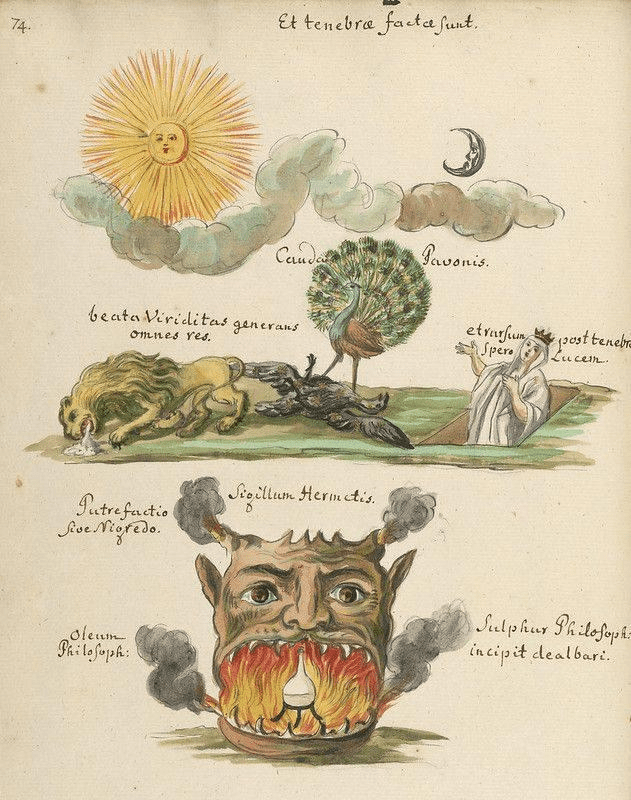
The Thesaurus of Alchemy circa 1725

Page from Thesaurus of Alchemy, ca. 1725 via Public Domain Review

The Thesaurus of Alchemy circa 1725 medieval art

Mountain meditation

What a treasure this channel is. There’s an overabundance of guided meditations on YT but only a small portion and worthy of your time, and are good quality – this is one of them!


Flow Alone Won’t Make You a Writer

Writing starts with flow, but it’s sustained by discipline, revision, and grit.

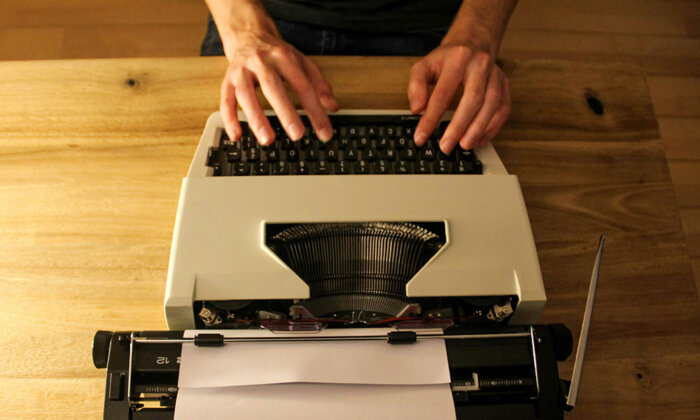
Credit: Denise Jans, via Unsplash

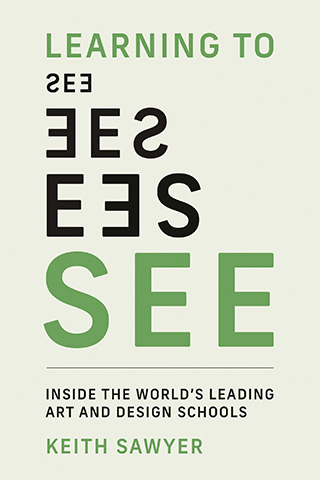
By: Keith Sawyer via MIT Press Reader

     My favorite quotation about writing comes from Thomas Mann:

A writer is someone for whom writing is more difficult than it is for other people.

That’s counterintuitive. If you’re a professional writer, then writing should be easier for you, right? But creativity research shows that successful creativity is effortful. Flow is enjoyable but it’s not enough.

You probably write more than you realize. A Microsoft study found that the average worker receives 117 emails a day and 153 chats a day. If you add up all of your typing at the end of the day, you’d be surprised at how many words you’re writing on a regular basis. This writing is goal-driven. You ask someone for information; you apply for a job; you update your LinkedIn profile; you collaborate on a project team. It’s part of your job.

But I want to talk about writing without a purpose, writing that you don’t do for your paycheck. This includes poetry, short stories, or fan fiction. Maybe you keep a daily journal. This writing doesn’t have a goal; you do it for its own sake. Psychologists call this intrinsic motivation, and it often leads to what my doctoral advisor Mike Csikszentmihalyi called the flow state.

In flow, you realize your fullest creative potential. You lose track of time. You’re not distracted by little things around you. Flow is like a drug. Once you’ve experienced it, you want it again. This is why people write without a clear purpose: to experience flow. It’s a stark contrast to writing for a job, where the motivation comes from external rewards — what psychologists call extrinsic motivation.

The flow state is a challenge to behaviorism, because you keep doing a task without any visible reward.

Intrinsic motivation poses a challenge to behaviorist theory. Csikszentmihalyi and other flow theorists were humanists, not behaviorists. In behaviorist theory, human action is an iterative cycle with three steps: take an action, receive either positive or negative feedback to that action, and modify your behavior to increase the likelihood of future rewards. It’s a theory built on extrinsic motivation. The flow state is a challenge to behaviorism, because you keep doing a task without any visible reward. The task is so satisfying that you might do it even when it might not be to your material advantage. This is why people choose to be starving artists rather than relatively successful middle managers. It’s why I left my high-paying job in New York international banking to become a poor doctoral student. I’ve never regretted it, and I’m often in flow when I write.

But in fact, flow often leads to success (however you define it). Paradoxically, when you stop responding to external rewards, you sometimes become more successful. Research shows that acting from intrinsic motivation often leads to greater success, especially if creativity is your goal. The most famous creatives describe being in the flow state as they work. Rigorous scientific studies show that new breakthrough ideas tend to emerge from a flow state. That’s especially true with problemfinding creativity, when you discover a new problem to solve, or you approach an existing problem in a surprising new way.

I’m a creativity researcher and a flow theorist. So you might be surprised to hear me say that flow isn’t enough.

People love the concept of flow because everyone wants to be told, “do what you love and the money will follow.” Mike’s 1990 book sold over a million copies. Flow is a variant of “trust yourself” and “defy the crowd” and “pursue your own dream.” And, yes, it’s true that the flow state often leads to greater success. But flow isn’t enough. The most successful creative people combine flow with hard work.

I’ve published 20 books, each the result of intense dedication and hard work. But I also experienced a lot of flow. I often lost track of time and became completely absorbed, sometimes to my wife’s dismay. But for me, periods of flow are interspersed with equally long periods of revising, editing, and fact-checking. Everybody loves the flow stage of writing but most people don’t like the hard work stage. That’s Thomas Mann’s point: To be a successful writer, you have to work hard. Creativity research has shown that the most successful creatives love the tiny tasks that others find tedious.

I was inspired to write this essay after reading Klara Feenstra’s recent New York Times article, “Writing a Novel.” Feenstra starts her essay by describing the flow state as a form of escapism:

When I first started writing my silly little novel, it was a desperate attempt to escape the demands of “real life.” I wrote and wrote, falling into a delirious state, the I.V. drip of my imagination funneling uninhibited into what I was sure was the next “Middlemarch.”

This is why many people start to write. But she soon realized that flow wasn’t enough:

I had an impulse to set the book in Zalipie, Poland, but I knew nothing about Zalipe. I wanted my protagonist to have a lucrative career and had heard “underwriting” was a solid profession. But what was an underwriter and how do you become one? While we’re at it, what’s the plot of this novel? Suddenly there were all these tasks to be completed, so many that I had to start a spreadsheet to keep track.

A spreadsheet? That doesn’t sound like flow at all. Is updating a spreadsheet “writing”? Or does this hard work prevent her from writing? Feenstra realized that, in fact, this is writing. It’s why Thomas Mann said that writing is harder for writers. I love what Feenstra says next:

I didn’t so much “flex my creative muscles” as slog through an unpaid internship to myself.

Writing a novel isn’t quick. It’s not easy. Feenstra took years to generate the first draft, and then she realized she was only on the first step of a tall ladder:

Several manic years passed like this: I wrote, rewrote, researched, revised, took workshops, added characters, deleted them. And finally, one day, I had a book.

But soon she realized that she still didn’t have a finished novel. That is, it had not reached its full potential; it was not fully realized. It wasn’t ready to be released into the world. There was still plenty of work ahead — surprises, emergence, more spreadsheets. Creativity research shows that this is always the case. A truly successful creative process is wandering, exploratory, and iterative. I call it the zig zag path. The best creative works emerge from the process; they don’t jump out of your subconscious onto the page. Yes, you need to put stuff on the page to get the process started. But, after that, creativity becomes a dialogue between you and the evolving work.

A truly successful creative process is wandering, exploratory, and iterative.

When Feenstra was finally done, she realized:

The novel I ended up with is nothing like the one I started.

But this hard work wasn’t all toil and misery. Feenstra gets in the flow state even while she’s doing the revising, editing, and all of the other “not inspirational / not subconscious” stuff. This happens to me, too. It’s not the same kind of flow as when the words just come out of the I.V. to your soul, but I find it intrinsically motivating. Feenstra discovered that

Being in the flow state of writing had always given me a druglike joy, but reworking a novel over and over, feeling sweaty and frustrated and stuck and then getting unstuck — this kind of grown-up work was thrilling. So I’ve come to honor the procedural graft of it all.

Flow isn’t enough. Creativity can be a form of meditation, and that’s wonderful and affirming. Flow is a great reason to write. But what separates the successful writers is that they know how to enlist flow in a longer, wandering process of creating. As Feenstra writes, “Writing my book delivered me the unglamorous yet oddly comforting realization that work is work; that there is no magic trick out of reality.”


Documenting America’s migrant workers

America’s meat packing industry, much of it focused in the country’s Midwest, employs an unusually large proportion of immigrants, refugees, and non-citizens. It’s an industry known for grueling hours and difficult conditions, and one that was hit particularly hard by the COVID-19 pandemic. The Economic Policy Institute in 2020 claimed that meat and poultry workers were, when it came to COVID-19, the most impacted and least protected group of workers in the United States. 

An immigrant to the US himself, photographer and filmmaker Ismail Ferdous started his current project – “The People Who Feed the United States” – in 2020, creating portraits of immigrants employed in the Midwest’s meat industry, making visible a largely unseen and often exploited population that powers America’s food industry.

These pictures are of people who work in the meat processing industry. Finding the protagonists wasn’t easy—these people often work 12 to 14-hour shifts, sometimes seven days a week, and can start very early. I ended up using sources like nonprofits, labor unions, and activists to get in touch with them.

Image Ismael Ferdus

The consumption in the United States is limitless. American supermarkets offer unbelievable options and variety, but all of that comes at the cost of overproduction. How do you keep the prices low? Well, you can’t know the answer until you see behind the scenes of these industries. Specifically, who’s doing the work… A lot of it’s done by immigrants and refugees who fled war or conflicts in their own countries. Many speak no English, so their only option is the manual labor of meat processing. In one factory there might be 60 different languages spoken. Using people who are here ‘pursuing an American Dream’ is a big advantage for the corporations, and for some of these people that dream turns into a nightmare. Via Ismael Ferdus and We Transfer


The Lizard’s Dream: A Funky Meditation by Nebula Breeze


‘How have you been?’ by Polly Nor


Immunity Boosting Green Goddess Soup by Nagi

Ingredients

  • ▢2 tbsp olive oil
  • ▢1 onion , diced (Note 1)
  • ▢1 leek (white part only) or another onion , diced (Note 1)
  • ▢1 medium fennel , chopped (Note 2)
  • ▢2 celery stems , roughly chopped
  • ▢5 garlic cloves , roughly minced
  • ▢3/4 tsp all spice powder (sub mixed spice)
  • ▢3/4 tsp cumin powder (sub coriander)
  • ▢1 medium potato (any type), peeled, 1.5 cm cubes
  • ▢1 head broccoli , florets (peel and chop stalk too)
  • ▢2 1/2 tsp cooking / kosher salt
  • ▢3/4 tsp black pepper
  • ▢1.75 litres / quarts water (Note 3)
  • ▢1 cup frozen peas (Note 4)
  • ▢5 cups (tightly packed) kale leaves , roughly chopped (1 small bunch, Note 5)
  • ▢5 cups (tightly packed) baby spinach (Note 6)
  • ▢3/4 cup thickened cream (Note 7)

Garnishes

  • ▢2 tbsp sunflower seeds, toasted (or croutons or other toasted nuts, Note 8)
  • ▢Cream and/or olive oil for drizzling

Instructions

  • Sauté aromatics: Heat oil in a very large pot (6L/qt) over medium high heat. Cook onion, leek, celery, garlic and fennel for 5 minutes until softened.
  • Cook spices: Add all spice and cumin, and cook for 1 minute.
  • Add water, potatoes, broccoli, salt and pepper. Stir, bring to simmer, and simmer for 7 minutes (no lid) until the broccoli is tender.
  • Add peas: Add peas, simmer for 1 minute.
  • Blitz in kale: Remove pot off the stove. Add kale, push it under the liquid, then blitz with a stick blender until mostly smooth. Add spinach, push under the liquid then blitz again until smooth as possible (approx 3 to 5 mins). This will result in a smooth soup but with little green bits in it – I like this for a little texture.
  • Serve: Stir in cream. Ladle into bowls, drizzle with extra cream and/or olive oil and finish with a sprinkle of sunflower seeds. Eat and feel great!

Recipe Notes:

1. Onion / leeks – Use either one of each, as shown in the base recipe and recipe video, or use either 2 leeks or 2 onions. Leek has a slightly sweeter, more rounded flavour which I like to use when they’re on special!

2. Fennel adds a great flavour base to this soup so really try not to skip it. For those who are not a fan of the aniseed flavour of fennel, don’t worry, you can’t taste it!

3. Just water is required for this soup. We don’t need chicken or other stock for a flavour backing, like I use for most soup recipes. We’re essentially making a homemade vegetable stock here!

4. Peas can be substituted with more broccoli, fennel or potato.

5. Kale – Nutrition booster! In case you’re concerned about a strong kale flavour, don’t worry! With everything else going on in the soup, the kale flavour is not really there. Substitute with more baby spinach or English spinach. Or 300 – 400g frozen kale or spinach (thawed, excess water lightly squeezed out).

To remove kale leaves, enclose your hand around the base of the stem then run your enclosed fist up the stem to strip the leaves off. To measure, push the kale leaves really tightly into the measuring cup. Jam pack it in!

6. Baby spinach – Substitute with English spinach, or more kale. To measure, jam pack it really tightly into a measuring cup!

7. Cream alternative – To make this vegan, use a vegan cream (available at some grocery stores these days), coconut cream or coconut milk (it will add a touch of coconut flavour which I think would be nice).

8. Sunflower seeds – To toast, preheat a small pan (no oil) over medium high heat then toast the sunflower seeds, stirring or shaking the pan every now and then, until light golden. Do the same with other nuts/seeds of choice (pine nuts, pepitas, almond flakes would be nice). For croutons, use the directions in the Celeriac soup recipe.

9. Nutrition per serving, about 2 1/2 cups per serving (generous meal!).


A mass wedding amongst the rubble of Gaza shows the immense resilience and beauty of this people who will never be crushed and never be defeated by evil Israel


Ceramic review masterclass: Judy McKenzie

Just witnessing this level of skill is mindblowing and the end result is breathtaking!


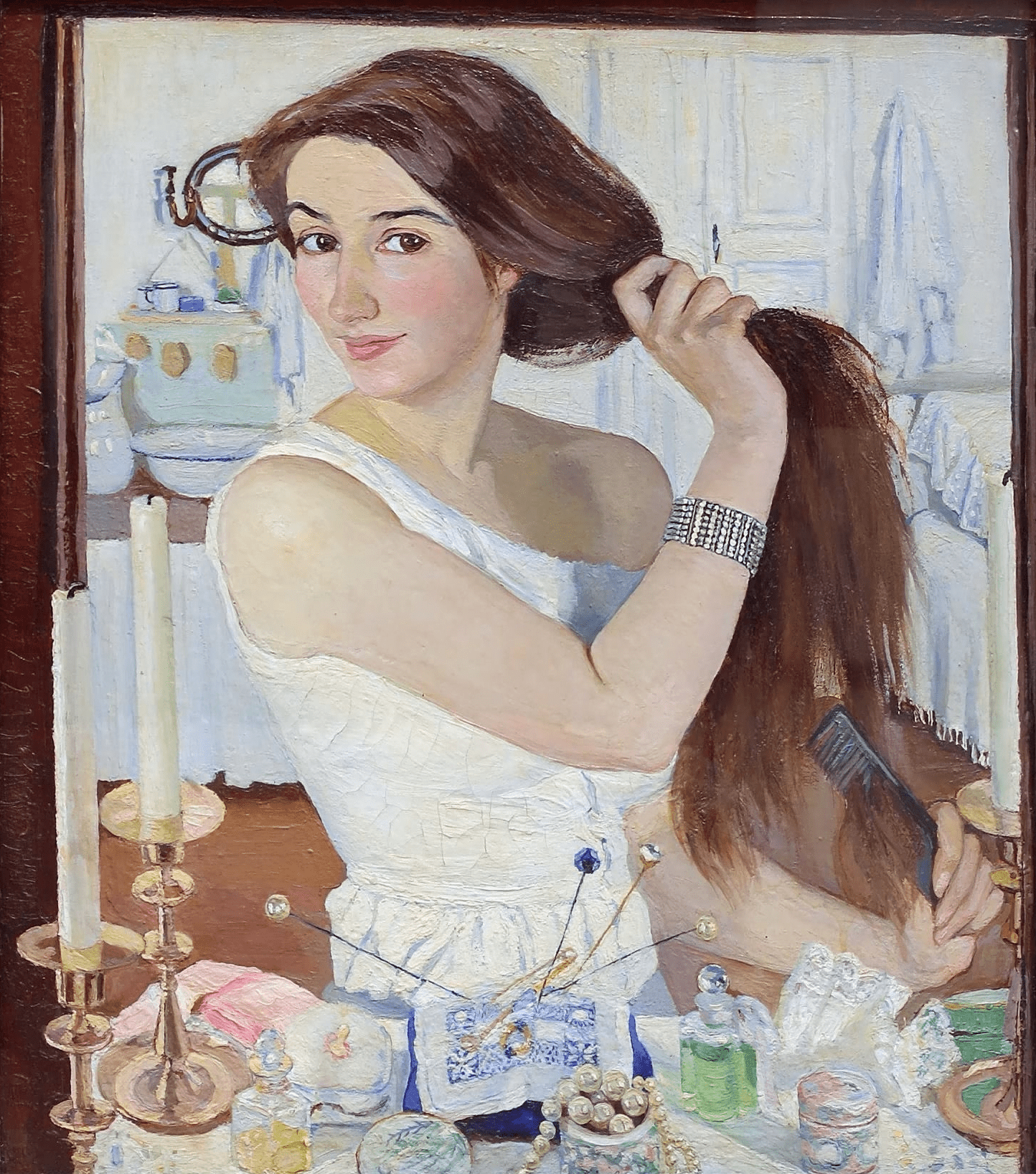
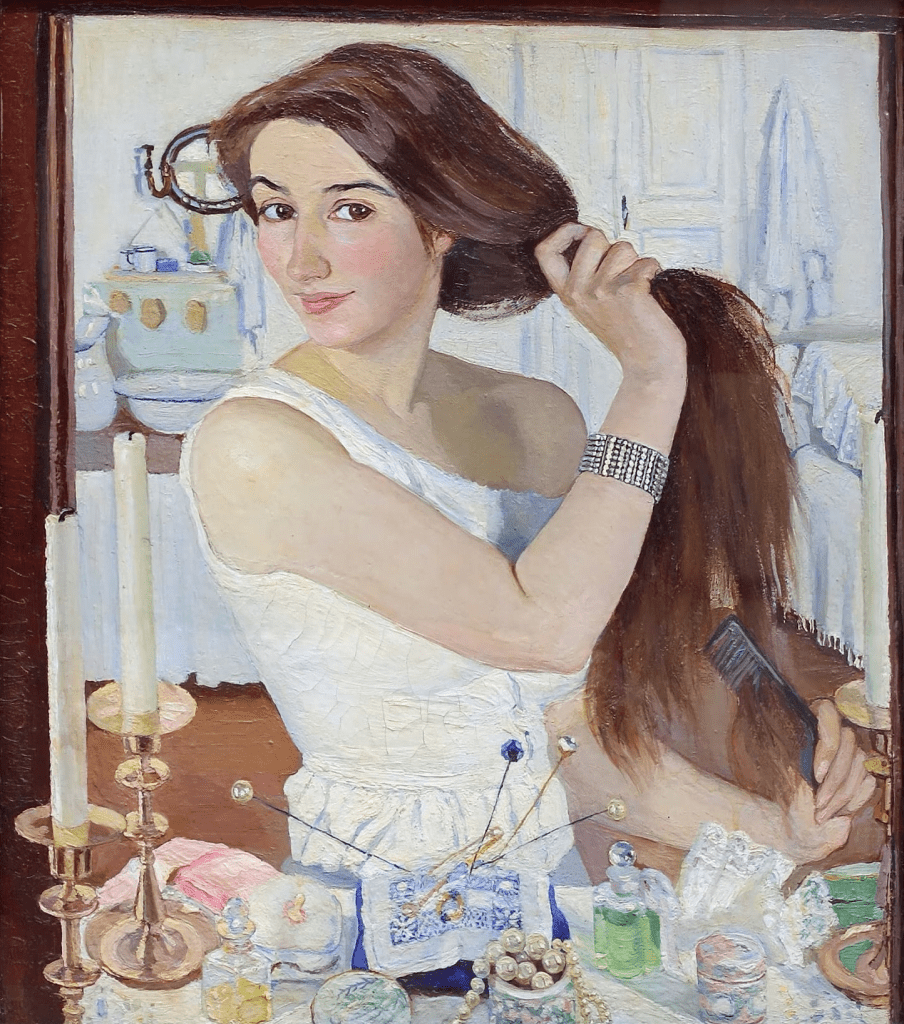
At the Dressing-Table Self-Portrait by Zinaida Serebriakova (1909)  

Zinaida Serebriakova’s 1909 self-portrait, At the Dressing-Table, captures a candid and intimate moment in front of the mirror. The work has a lot of spontaneity and is as timeless as a modern selfie pic.​ The work was first exhibited in 1910 at a show organised by the Union of Russian Artists, where it was met with immediate acclaim.


Did you enjoy this collection? let me know what you think of it below. Thank you for reading my dear friends!

Comforting Thought: Important Mantra

“when in doubt, remember you have:
the power to say no
the authenticity to be you
the patience to keep learning
the fortitude to continue trying
the courage to embrace change
the fearlessness to give selflessly
the wisdom to cultivate inner peace
the bravery to fulfill your aspirations
the openness that grows friendships
the awareness to follow your intuition
the intelligence to not repeat the past”

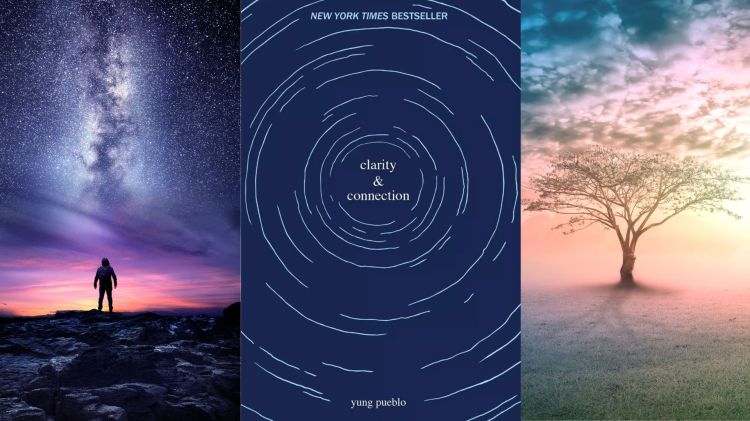
Clarity & Connection by Yung Pueblo


From the wonderful ‘Clarity and Connection’ by Yung Pueblo

Book Review Clarity and Connection by Yung Pueblo

Read the full review on Content Catnip:

A slim and unassuming book of electrifying wisdom including how to come closer to your true self, closer to your loved ones and communities.

Rating: 🌟🌟🌟🌟🌟

Genre: Non-Fiction, Spirituality, Self-Help, Psychology, Trauma, Relationships.

Publisher: Andrew McMeel Publishing

Review in one word: Connection

It is difficult to describe how joyful, vivid and clear about everything in life that this book makes me feel. It’s the kind of book you can read over and over without tiring of its insights. Clarity and Connection is a revitalising treasure of wisdom that brings together timeless insights into the meaning of love, compassion (for self and other) as well as how to heal and recover from trauma and a difficult period of one’s life.

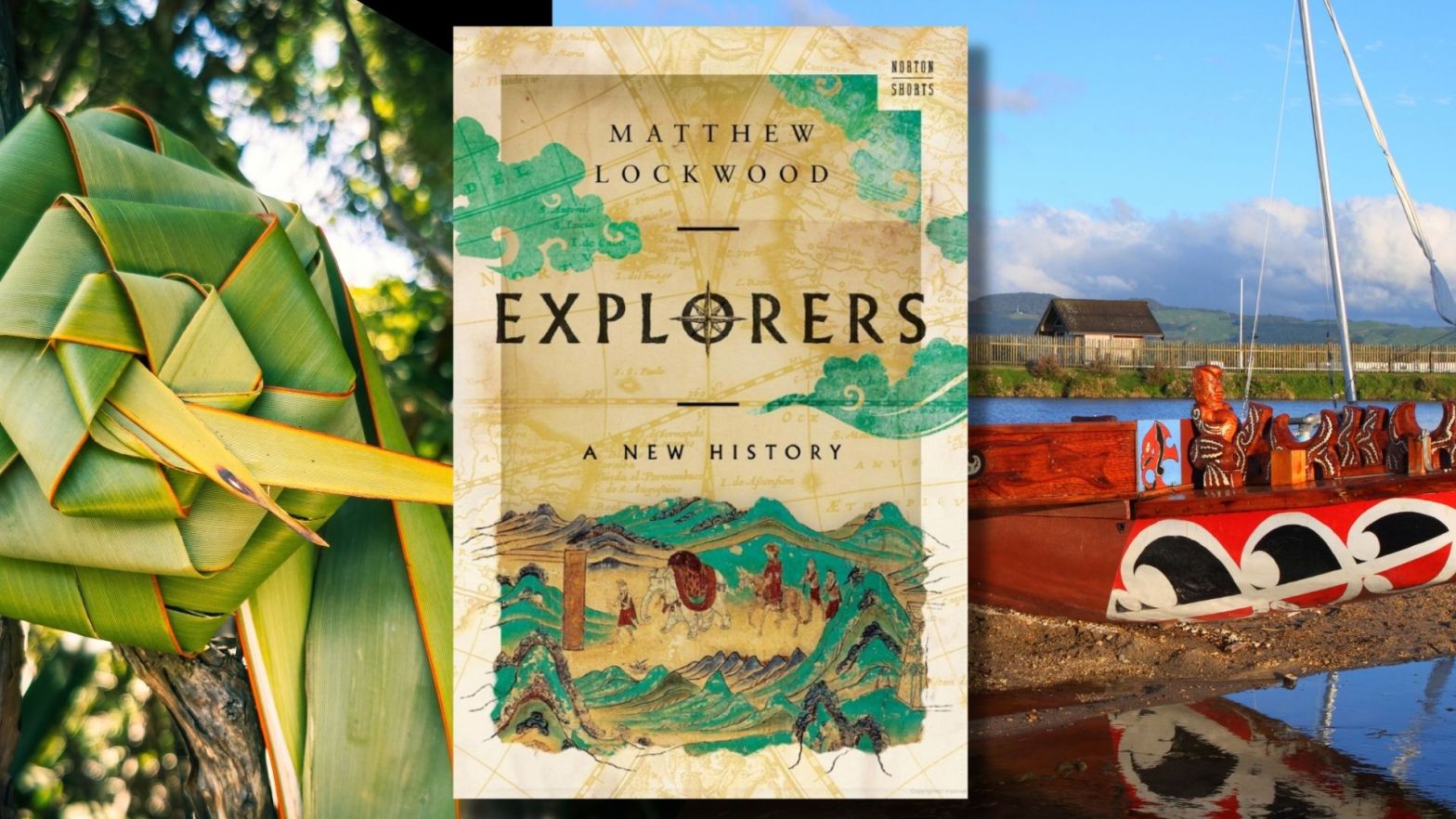
Book Review: Explorers: A New History (A Norton Short) by Matthew Lockwood

In Explorers, Lockwood doesn’t simply deconstruct myths—he rebuilds the story of exploration as a deeply human, often painful, and undeniably fascinating process. The result is an eye-opening meditation on empire, cultural exchange, ambition, and the moral price of curiosity.

Rating: 🌟🌟🌟🌟

Genre: Non-Fiction, History, Adventure, Indigenous Rights, Indigenous History.

Publisher: W. W. Norton & Company

Review in one word: Fascinating

Thankfully, this is not a conventional and one-sided tale of flags, maps and glorious conquest at the hands of colonial conquerers. Or else I would never have read it! Matthew Lockwood’s Explorers strips away the veneer of romantic adventurism and lays bare the true, often messy and brutal, nature of global exploration. With compelling storytelling and scholarly precision, he reframes the so-called “Age of Discovery” through the voices of those forgotten or overlooked—enslaved people, Indigenous communities, women, and the landscape itself. Rather than casting explorers as lone heroic figures, he shows them as complex agents entangled in commerce, violence, and survival.

Lockwood doesn’t simply deconstruct myths—he rebuilds the story of exploration as a deeply human, often painful, and undeniably fascinating process. The result is an eye-opening meditation on empire, cultural exchange, ambition, and the moral price of curiosity. The writing is swift, smart, and clear-eyed, making this a brisk but profound read.

Explorers is the perfect antidote to nationalist nostalgia. It invites us to sit with the uncomfortable truths of how the modern world was stitched together—often with blood. This is essential reading. It asks: who writes history, and what voices have been silenced in the telling?

10 Interesting Things I Found on the Internet #168


Two hours of cute nudibranches and chill out tunes


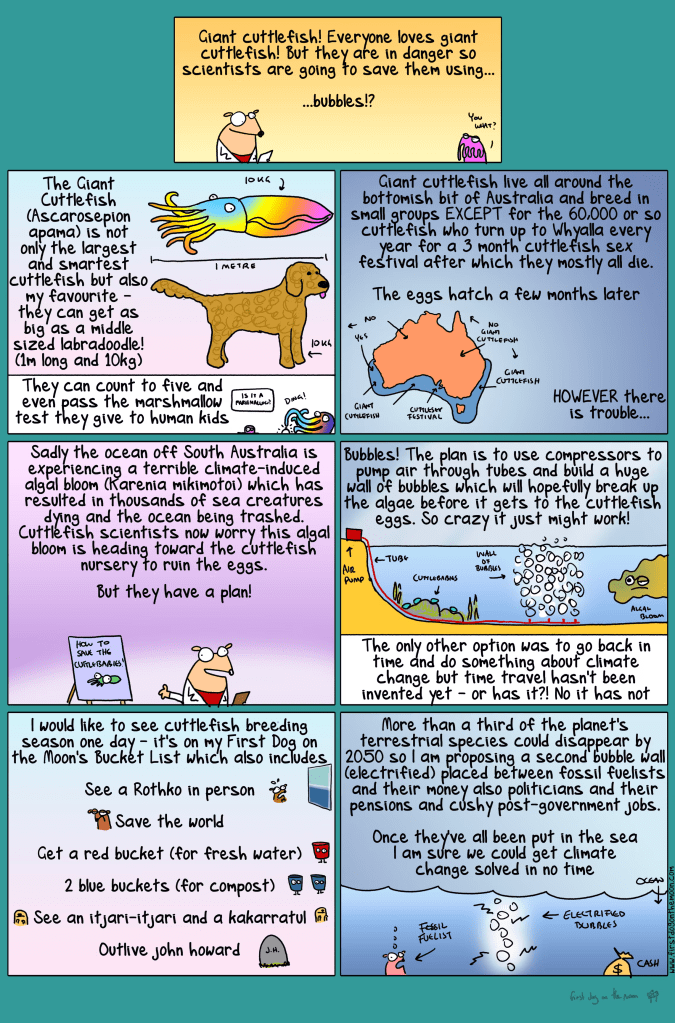
Giant cuttlefish! They are in danger and scientists are going to save them with … bubbles!

Via First Dog on the Moon


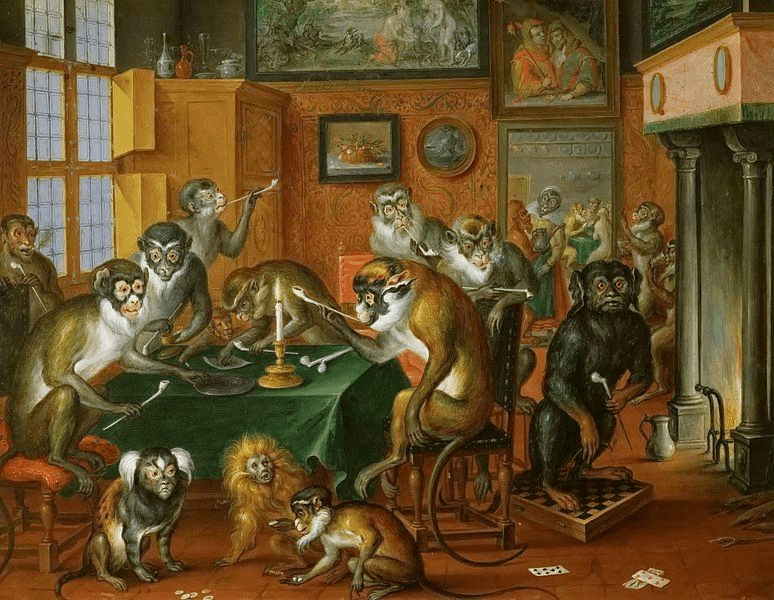
Tobacco Club by Abraham Teniers (mid-17th century)

Singerie — from the French for “Monkey Trick” — is a genre of art in which monkeys are depicted mimicking human behaviour. Via Public Domain Review

Tobacco Club by Abraham Teniers (mid-17th century) medieval old art monkeys

SPF 50+ claims verus reality in sunscreens

16 out of 20 sunscreens fail to meet their lofty claims of being 50+ SPF. Sunscreens are an essential if you live in Australia or New Zealand as the UV here is diabolical and skin cancer is very common, even for people with olive skin. See full infographic. The study was conducted by the Therapeutic Goods Ad


The Metaphysical Foundations of Buddhism

Owen Flanagan explores how Buddhism reconciles meaning and science — without a creator, a soul, or supernatural scaffolding.

Photo credit: Yibo Wang, via Unsplash

By: Owen Flanagan via MIT Press Reader

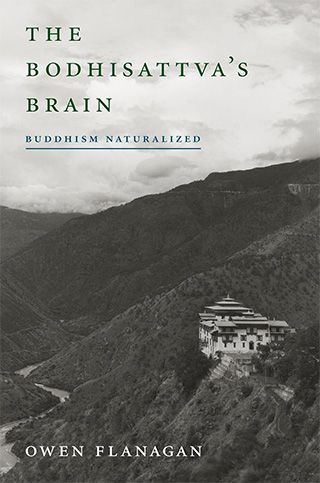
In “The Bodhisattva’s Brain: Buddhism Naturalized,” philosopher Owen Flanagan explores whether a major spiritual tradition can be reconciled with a thoroughly scientific worldview. Rejecting supernaturalism, Flanagan presents a version of Buddhism that remains both ethically serious and existentially rich, while remaining fully compatible with contemporary science and philosophy. In the excerpt that follows, he examines how Buddhism diverges sharply from theistic traditions by denying the existence of a creator God and a permanent self. Drawing on metaphysical concepts like dependent origination and anatman (no-self), he argues that these doctrines not only make internal sense within Buddhist thought but also resonate with modern scientific understandings of consciousness and the cosmos.


Buddhism originated in 500 BCE when Siddhartha Gautama, or simply Buddha, gave his inaugural address at Deer Park, near the outskirts of Benares, India (now called Varanasi). Depending on how one understands the orthodox Vedic or Indic spiritual tradition of that time, Buddhism was either a complete break with that tradition or a development of it.1 Buddhism rejects the caste system on ethical grounds. More interesting to those who think of religion as requiring belief in divinity, Buddhism rejects both the idea of a creator God and an immutable, indestructible soul (atman), on logical and empirical grounds.

The Bodhisattva's Brain: Buddhism Naturalized
This article is excerpted from Owen Flanagan’s book “The Bodhisattva’s Brain: Buddhism Naturalized.”

That said, traditional Buddhism is chock full of ghosts, spirits, devils, deities, heaven and hell realms, and rebirths according to karmic laws that govern the universe. Even if contemporary secular Westerners see Buddhism as compatible with Enlightenment philosophy, many Asian Buddhists, especially the Tibetan variety, do not.

Buddhism rejects the reigning Vedic conception of Brahman as the prime mover,2 and it also rejects the idea that each individual houses an unchanging self or soul. Beyond this, many familiar Indian ideas are retained and developed in Buddhism — although, in certain quarters, and only recently, with hesitancy. This legacy includes the deep importance of the appearance-reality distinction, the idea of reward for virtuous action (karma), the idea that suffering (dukkha) defines the human predicament (samsara) and that liberation is possible (nirvana) through enlightenment (panna; Sanskrit: prajnabodhi) and virtue (silakaruna), as well as the ideas of reincarnation or rebirth.

Let me stick with the two metaphysical beliefs that Buddhism rejects: a creator God and a permanent self or soul. First, Buddhism sees right through the familiar problems with cosmological and design arguments for the existence of God. Such arguments beg the question of the origin of the creator or designer. To say that the prime mover always was or is self-creating and self-sustaining is to accept the infinite regress of causes (this one a causa sui) that such arguments are designed to make evaporate, which they reject as a possibility. If God always is and shall be, then God itself is infinitely regressive.

When the Dalai Lama listens to the story of the Big Bang occurring 14 billion years ago, he says fine “but not, of course, the first Big Bang.” This response is hardly a rejection of our theory of the Big Bang. The Dalai Lama sees the Big Bang theory as itself inadequate because it is not deeply causal enough. Some scientists themselves are now wondering if a better story doesn’t involve less of a singular, original bang than an origin for this universe that involves an open wormhole from another parallel universe, with these other universes or their ancestors — possibly comrades in a vast, even infinite, multiverse — being beginningless.

Buddhism sees right through the familiar problems with cosmological and design arguments for the existence of God.

Cosmologists will sometimes say one can’t ask what there was before the singularity banged or how the singularity got there. What they mean is that “time,” as physics understands it, begins (or becomes a useful concept) with the Big Bang. But this hardly makes the sense behind the question go away. Thus other cosmologists will admit the legitimacy of the question and say they have no clue as to how to answer it. Buddhism is comfortable with an infinite regress of natural causes. Indeed, the idea fits well with the metaphysical idea of dependent origination, according to which everything that happens depends on other things happening.3

The rejection of the Vedic (Indic) doctrine of atman, the idea that humans are possessors of an immutable, indestructible self or soul, comes from two lines of thought. First, there is the idea of dependent origination that I have just mentioned. Everything is in flux and all change is explained by prior change. The principle is universal and thus applies to mind. Next bring in experience or phenomenology: One will see that what one calls “the self” is like many other natural things, partaking of certain relations of continuity and connectedness. My conscious being is much more streamlike than it is like Mount Everest (which is also part of the flux, just less visibly so). Conventional speech allows us to reidentify each person by her name as if she is exactly the same over time.

But in fact identity is not an all-or-nothing thing. Personhood is one kind of unfolding. The Himalayas are a very slow unfolding (one answer to how long it takes to reach final enlightenment is as long as it would take for a mountain range 84,000 times larger that the Himalayas to erode if touched once a day with a soft cloth!); humans are a faster unfolding than the ordinary Himalayas; drosophila unfold much more quickly. Each kind of thing in the cosmos is an unfolding in the cosmos, the eternal Mother of all unfoldings, and has a temporal span during which it can be said to be what it is — a mountain range, a person, a fruit fly — and after which it ceases to have enough integrity to be said to be the same thing, itself. At such a transition point, we say the thing, event, or process is gone, over, dead, that it has passed, passed on, or passed away.

This is the doctrine of anatman, no-self. Nothing is permanent, even things that seem so, aren’t. If properly understood the view is not nihilistic. One of my students once asked in a very disturbed manner, “If I am not myself who the fuck am I?” I am happy to report that further therapy about the meaning of the doctrine of anatman calmed him. Indeed, in the West a very similar view is widely held from Locke to the present. And it fits nicely with contemporary mind science. Furthermore, the doctrine of anatman suits Buddhist ideas that persons can in fact transform themselves, become enlightened, and so on. If one’s nature is, as it were, immutably fixed, it is hard to see how self-transformation is possible.


Twisting Tradition: Medieval Cats, Dead Dad Pots and the Ceramics of Vicky Lindo & Bill Brookes


Zeta Reticula – EP 2

A real electropunk banger that still hits just as hard now as it did back in the early 00’s, from Dave Clarke’s World Service, a classic of Techno and Electro.


The RAIN resilience method by Tara Brach phD

“In her book Radical Compassion, mindfulness educator Tara Brach, PhD, describes a practice called RAIN, which can help you manage difficult emotions and avoid being hijacked by them.”

.“R: Recognize what is happening. Bring to mind a difficulty you’re experiencing. Looking inward, ask yourself: What’s my inner experience? What’s here right now? What’s calling for my attention? Let yourself recognize whatever is present, whether it’s fear, anger, sadness, or any other feeling.

A: Allow the experience. Next, see if you can allow the feelings to be present just as they are. This can feel difficult, and you may worry that you’ll be overwhelmed by the feelings. Your mind may begin judging, fixing, problem-solving. Your task, though, is to simply let what’s here be here. Remind yourself that you are safe, and that you can handle whatever arises. Remind yourself that all feelings pass.

I: Investigate with interest and care. Now explore what’s going on in your body as you consider this difficulty. With a sense of curiosity, check in with yourself, as kindly and gently as you can. Scan yourself slowly from head to toe, and note if there are areas of tightness or tension, warmth or ease. See if you can greet whatever you find with compassion.

N: Nurture with self-compassion. Finally, bring nurturance to your entire experience. Imagine a loving presence who’s telling you, “It’s okay. You’ll be all right. I’m here for you.” This may be yourself, a beloved person, or a spiritual entity. It could be a scene from nature or simply a sense of light and ease. Take a few slow deep breaths, taking in this sense of comfort and care.

Having done this exercise, notice any shifts in your physical state. Notice whether you feel calmer. Let yourself sit still for another minute or two and rest, taking in this state rather than quickly jumping back into your day. You may feel like you’ve had a very gentle rain wash over you.”


‘The epitome of amazingness’: how electroclash brought glamour, filth and fun back to 00’s music

Via the Guardian

Witty, foul-mouthed, camp and punky, it was the 00s answer to slick superclubs and the rock patriarchy. As its rough, raw sound returns, the scene’s eyeliner-ed heroes, from Peaches to Jonny Slut, relive its excesses.

Adult. – Hand To Phone (Cordless Mix)

Jonny Melton knew that his club night Nag Nag Nag had reached some kind of tipping point when he peered out of the DJ booth and spotted Cilla Black on the dancefloor. “I think that’s the only time I got really excited,” he laughs. “I was playing the Tobi Neumann remix of Khia’s My Neck, My Back, too – ‘my neck, my back, lick my pussy and my crack’ – and there was Cilla, grooving on down. You know, it’s not Bobby Gillespie or Gwen Stefani, it’s fucking Cilla Black. I’ve got no idea how she ended up there, but I’ve heard since that she was apparently a bit of a party animal.”

Dave Clarke – World Service Side 2, Electro (1999)

It seems fair to say that a visit from Our Cilla was not what Melton expected when he started Nag Nag Nag in London in 2002. A former member of 80s goth band Specimen who DJed under the name Jonny Slut, he’d been inspired by a fresh wave of electronic music synchronously appearing in different locations around the world. Germany had feminist collective Chicks on Speed and DJ Hell with his groundbreaking label International DeeJay Gigolos. France produced Miss Kittin and The Hacker, Vitalic and Electrosexual. Britain spawned icy electro-pop quartet Ladytron and noisy, sex-obsessed trio Add N To (X). Canada spawned Tiga and Merrill Nisker, who abandoned the alt-rock sound of her debut album Fancypants Hoodlum and, with the aid of a Roland MC-505 “groovebox”, reinvented herself as Peaches. New York had performance art inspired duo Fischerspooner and a collection of artists centred around DJ and producer Larry Tee, who gave the sound a name: electroclash.

The lyrics tended to be witty, occasionally foul-mouthed and very camp. The sound had house music, techno, 80s synth-pop and electro in its DNA, but boasted a rough-hewn, punky edge, the latter partly down to attitude and partly down to the era’s technological advances. “It isn’t like today, where you can take an idea to a playable version in five hours on a laptop,” says Larry Tee, “but you could record something releasable in your bedroom, you could get a Juno 106 [synthesizer] and alter the sounds and fry and burn them. I’m convinced the best electroclash tracks happened because people made mistakes, the levels were too loud or there was something wrong.”

Sweat and sparkle … Casey Spooner of Fischerspooner.
Sweat and sparkle … Casey Spooner of Fischerspooner. Photograph: John Sciulli/Getty Images

It was audibly a reaction to something. In Britain, it felt a world apart from the increasingly slick dance scene of superclubs and superstar DJs. In New York, Larry Tee suggests it was a shift away from “trance and tribal house”. For Peaches, who had recorded her 2000 album The Teaches of Peaches in her bedroom, “lying in bed, smoking weed, masturbating and making beats”, it was music made by “marginalised, queer people … who were fed up with a system that was telling us ‘rock music has to be by four beautiful boys down the line from the Rolling Stones, electronic music has to be completely serious like you’re doing brain surgery while turning buttons’. Where was the punk? And for me, I can’t think of another time in music history where women were so at the forefront – Chicks on Speed, Miss Kittin, Tracy + the Plastics. It’s always like, ‘This dude did this’, you know?”

Whatever it was an answer to – superclubs or rock’s traditional patriarchy – electroclash seemed to find an audience quickly. It wasn’t the only music Melton and his fellow DJs played at Nag Nag Nag – as underlined by a new 5CD box set, When the 2000s Clashed, they were equally wont to drop old punk singles, early industrial music or the Neptunes’ exploratory R&B – but electroclash was the club’s sonic backbone, and the night was an immediate success. Boosted by approving reviews first in the gay press, then the style magazines, its initial clientele – “a few old goths and some art students in their mum’s old curtains,” according to Melton – were soon joined by a succession of celebrities: Kate Moss, Alexander McQueen, Pet Shop Boys, Boy George, Björk. Perhaps inevitably, it attracted comparisons to celebrated New Romantic hangout the Blitz. “But there was no door policy, no guest list,” demurs Melton. “I didn’t want any of that exclusivity shit. It wasn’t posey at all, there was more a feeling of abandon. It was very hedonistic.”

“It was the epitome of amazingness, this incredible melting pot of every kind of character,” says Concetta Kirschner, better known as rapper Princess Superstar, who turned up at Nag Nag Nag while promoting her 2002 UK hit Bad Babysitter. The club had an immediate impact on her sound. “It gave me a shot of freedom. I felt like there were a lot of tightly defined rules in hip-hop. But after Nag Nag Nag, I felt I could experiment, be whatever I wanted, rap over dance music or crazy new rhythms.”

Great one-liners … Peaches.
Great one-liners … Peaches. Photograph: Jo Hale/Getty Images

The newly electroclash-adjacent Princess Superstar had a Top 3 hit with Perfect (Exceeder), a collaboration with Dutch producer Mason, but it was the exception that proved the rule. For all the excitement and press coverage it generated, electroclash noticeably failed to produce a major crossover star, although it wasn’t for want of trying in some quarters. The Ministry of Sound’s record label famously spent vast sums signing New York duo Fischerspooner, but their debut album #1 failed to catch light. “Electroclash didn’t work in hygienic conditions,” offers Mark Wood, a DJ and Nag regular behind the new box set. “It worked in clubs that were dark, hot, grubby, full of smoke, all sorts of things going on.”

Peaches, meanwhile, went out on tour as a support to hard rock artists, including Marilyn Manson and Queens of the Stone Age: their audiences, she says, were “horrified”. “I think a lot of [electroclash artists] were offered these more traditional tours and thought ‘I can’t handle it’. On the Marilyn Manson tour I was spat on every night, but I rapidly developed some prank skills and some great one-liners.”

But in Britain at least, electroclash entered the mainstream regardless, audibly impacting on the way existing pop stars sounded. Sugababes rebooted their career with Freak Like Me, a Richard X-produced reimagining of the old Adina Howard hit backed by the music from Tubeway Army’s Are Friends Electric? Another Richard X mashup, Being Nobody, which melded Rufus and Chaka Khan’s Ain’t Nobody with the Human League’s Being Boiled, was a Top 3 hit for Popstars runners-up Liberty X. You could hear echoes of electroclash in Goldfrapp’s platinum-selling 2003 album Black Cherry, Rachel Stevens’ 2004 hit Some Girls and Madonna’s 2005 album Confessions on a Dance Floor. Even Fischerspooner ended up on Top of the Pops, in the company of Kylie Minogue, performing their remix of Come Into My World.

It was girls, gays and theys – and the music industry didn’t invest in those categories

In America, however, the movement provoked a backlash. “It was unfairly beaten up after three or four years,” says Larry Tee. “Electroclash was girls, gays and theys, the music industry didn’t really invest in those three categories, and I think they were as anxious to kill it as they were disco. I think the reason they wanted to burn electroclash so fast is that it didn’t really include that soccer bro culture, which EDM did.”

Nag Nag Nag eventually closed its doors in 2008 – the club that hosted it, Ghetto, was demolished to make way for the Crossrail development. It seemed symbolic of the end of something bigger than electroclash. “It was Soho’s last stand as a grubby nightclub place – that’s all literally gone, everything moved east,” says Wood. “It was around the same time that smartphones arrived, which changed everything too. All that happened around the same time electroclash was being put to bed. Nothing lasts for ever if it’s worth having in pop music.”

But recently, Jonny Melton noticed something odd. He was being sent new dance tracks that self-described as electroclash, while club nights, including London’s Shackled By Lust and Bloghouse, also use the term to describe what’s on offer. “That would never have happened before,” he laughs. “At the time electroclash was like goth – no one who was in a goth a band would ever admit to being a goth band.”

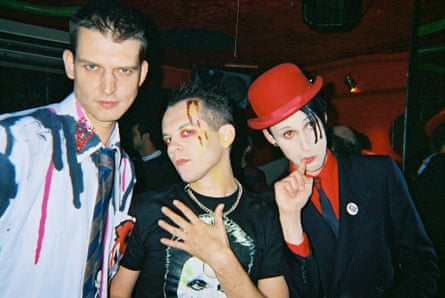
‘At the time electroclash was like goth’ … Jonny Slut, centre, at Nag Nag Nag.
‘At the time electroclash was like goth’ … Jonny Slut, centre, at Nag Nag Nag. Photograph: © Dale Cornish

Meanwhile, in 2023, Peaches embarked on a tour performing her debut album: it was both rapturously received and attracted an audience noticeably big on twentysomethings too young to remember its release. Princess Superstar, whose “career sort of died” in the 2010s, has watched with baffled delight as her electroclash-era hits unexpectedly enjoyed a new lease of life. First, Perfect (Exceeder) belatedly went gold in the US after it was used on the soundtrack of the 2023 movie Saltburn. Then, last year, her 2008 collaboration with Larry Tee, Licky, unexpectedly went viral on TikTok. “I think they thought it was by Britney Spears,” she says. “So I put a video up like, ‘Hey dudes’ and it all went crazy.”

She’s currently making new music, some of it in collaboration with Frost Children, a US duo among a wave of younger artists who bear the influence of electroclash: you can hear its strains in Snow Strippers, Confidence Man and the Dare. Larry Tee, who’s currently planning an electroclash documentary, suggests there’s an influence in the music of both Lady Gaga and Charli xcx’s Brat.

The music on When the 2000s Clashed still sounds remarkably fresh. Perhaps that fact that most of it remained underground, never dominating the singles chart or the radio playlists helped; so too does the fact that it’s informed by a lot of ideas that were subsequently mainstreamed: it was gender fluid before anyone talked about gender fluidity, sex-positive before anyone used that term either. “I think the younger generation get it,” nods Larry Tee, “because it was like the resistance: we’ve had enough of homophobia, enough of misogyny. For a moment, the door was open.”

 When the 2000s Clashed: Machine Music for a New Millennium is out on 17 October on Demon/Edsel


Crispy Korean Pancakes by Nagi

Looks easy enough…might give them a go


Masterpiece of Craftsmanship: Traditional Cloisonné Enamel Kettle | Intangible Cultural Heritage


Did you enjoy this collection? let me know what you think of it below. Thank you for reading my dear friends!

A panther is a poem with fire green eyes

A panther poised in the cypress tree about to jump is a panther poised in a cypress tree about to jump.

The panther is a poem of fire green eyes and a heart charged by four winds of four directions.

The panther hears everything in the dark:

the unspoken tears of a few hundred human years,

storms that will break what has broken his world,

a bluebird swaying on a branch a few miles away.

He hears the death song of his approaching prey:

I will always love you, sunrise.

I belong to the black cat with fire green eyes.

There, in the cypress tree near the morning star.

A panther is a poem with the fire green eyes

From ‘Conflict Resolution for Holy Beings’ by Native American Poet Laureate Joy Harjo

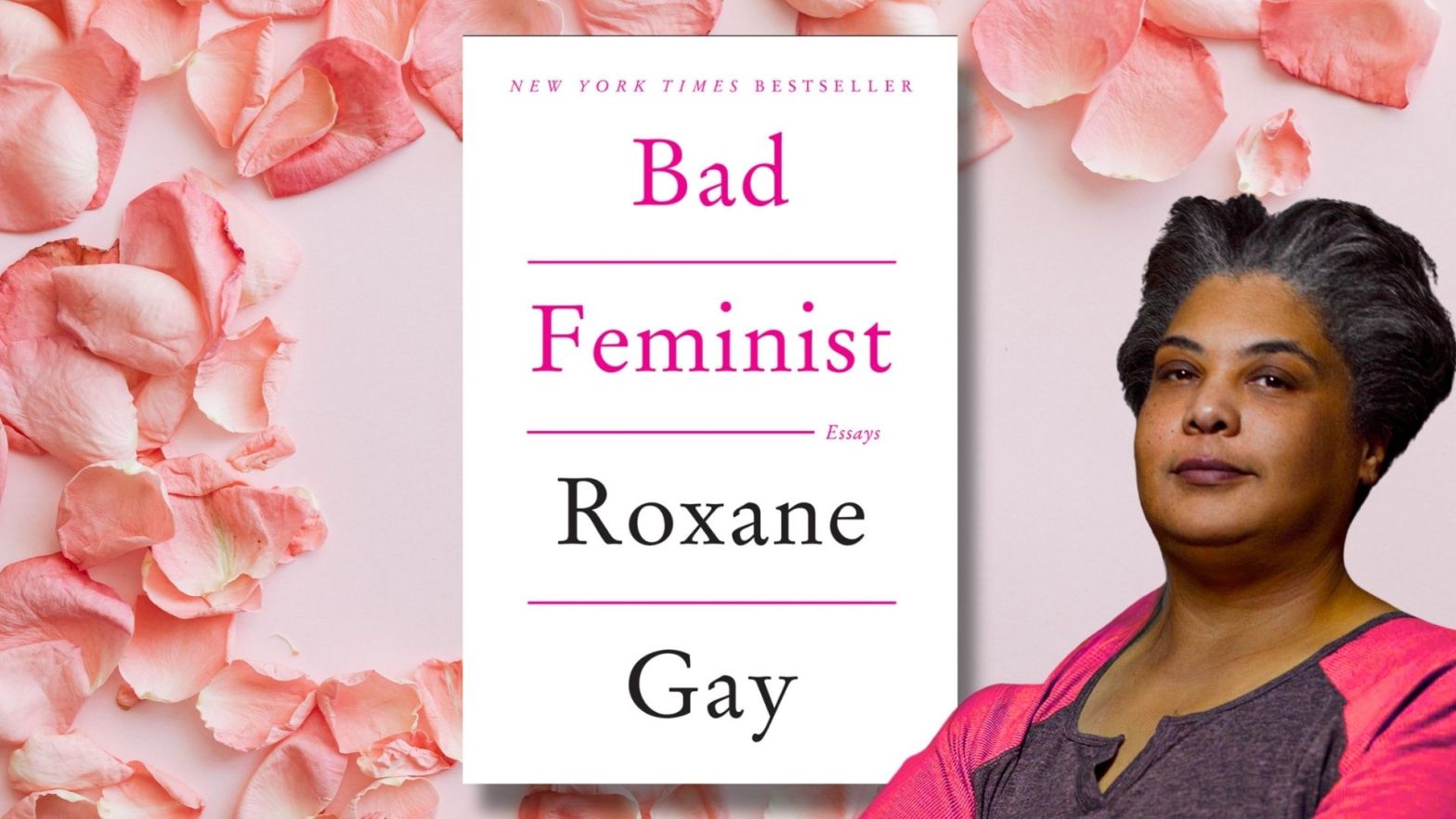
Book Review: Bad Feminist by Roxane Gay

In this fierce, funny, and fearless essay collection, Roxane Gay cuts through labels to redefine feminism in a much gentler and funny way.

Rating: 🌟🌟🌟🌟🌟

Genre: Non-Fiction

Publisher: Harper Perennial

Review in one word: Playful

Bad Feminist is about being ok with embodying a messy ball of contradictions, enjoying the companionship of men, romantic or not, and yet railing against the mistreatment of women at the same time. 

In this incredible selection of essays, Gay confesses to being an unashamed lover of the colour pink, weddings and sappy YA   relics like the book series Sweet Valley High.

Gay’s essays are playful, thought-provoking, witty, funny and she has the insane ability to dance between being playful one second and then gravely serious in the next. I enjoyed Gay’s revelation that she refused to be labeled as a feminist when she was younger because she enjoyed giving blow jobs and finds men fascinating.

“I understand why women still fall over themselves to disavow feminism, to distance themselves. I disavowed feminism because when I was called a feminist, the label felt like an insult. In fact, it was generally intended as such. When I was called a feminist, during those days, my first thought was, But I willingly give blow jobs. I had it in my head that I could not both be a feminist and be sexually open. I had lots of strange things in my head during my teens and twenties.”

This was a question that always confused me about feminism and put me off. How can a woman be all about enjoying the company of men and still call themselves a feminist? There was a lot of ideas in this book that liberated me from the straight-jacket narrative of traditional man-hating concepts of what feminism is.

In sparkling and refreshing prose, Gay writes about how she loves dresses and weddings and yet sings along to rappers who disparage women ruthlessly in their lyrics. She cringes at rape jokes yet adores problematic reality TV shows.

“Two wrongs do not make a right. Feminism’s failings do not mean we should eschew feminism entirely. People do terrible things all the time, but we don’t regularly disown our humanity. We disavow the terrible things. We should disavow the failures of feminism without disavowing its many successes and how far we have come. We don’t all have to believe in the same feminism. Feminism can be pluralistic so long as we respect the different feminisms we carry with us, so long as we give enough of a damn to try to minimize the fractures among us.”

Gay doesn’t pretend to have all the answers, and that’s why she’s so relatable. This is a book for anyone who’s ever felt like they’re failing at being a woman for whatever myriad of reasons that society tells you that you don’t fit the cookie cutter mould – that’s probably most of us.

Gay is very loveable and gives us all permission to be flawed, messy and well-meaning people full of contradictions. This is a book to inspire you make you realise that yes- you can both like men and advocate for women’s rights.

“Despite what people think based on my opinion writing, I very much like men. They’re interesting to me, and I mostly wish they would be better about how they treat women so I wouldn’t have to call them out so often. And still, I put up with nonsense from unsuitable men even though I know better and can do better. I love diamonds and the excess of weddings. I consider certain domestic tasks as gendered, mostly all in my favor as I don’t care for chores—lawn care, bug killing, and trash removal, for example, are men’s work.
Sometimes, a lot of the time honestly, I totally fake “it” because it’s easier. I am a fan of orgasms, but they take time, and in many instances I don’t want to spend that time. All too often I don’t really like the guy enough to explain the calculus of my desire. Then I feel guilty because the sisterhood would not approve. I’m not even sure what the sisterhood is, but the idea of a sisterhood menaces me, quietly, reminding me of how bad a feminist I am. Good feminists don’t fear the sisterhood because they know they are comporting themselves in sisterhood approved ways.

Her essays dance between razor-edged critiques of race, gender, and media, and deeply personal meditations on trauma, body image, and what it means to feel out of place. Each piece is a masterclass in the art of the conversational essay: accessible, biting, and thoughtful. The insights from each essay stay with you and haunt your thoughts for days afterwards. There is a lot in this collection, about women and their relationship to food and much more, too much to cover here.