Plants, wind, sun and rain have a vibe and everything natural has a vibe too. An indescribable aura that penetrates outwards and influences our mood, energy levels, ability to think and move through the world.
That’s possibly the most obvious thing anyone could say.
I know I’m not treading new ground here. Another way of saying this is everything has awareness and consciousness and an understanding of their place in the living world.
In my backyard I have a gigantic elephant ear fern that has quietly and without fuss grown as tall as a human man and given out immovable and dense trunk rooted deeply into the soil. No wind or storm could uproot her.
Some of her leaves are broken, some are silvery and glimmering like they’re covered in the tears of gods, these each skyward in supplication and joy as the spring sun beams down like a caressing gift. Her ‘elephant ears’ quivver with delight and yet she’s still humble.
From this being, I learned that I can’t pretend to be something I’m not and to be accepting of my current state and that the strongest growth always happens gradually, in humble increments adding up to a magnificent achievement. Sure there will always be something or someone bigger but beauty…abundant beauty is still found in the ordinary.
I met a nervous ladybug on walk yesterday , she hesitated on a log and close to my seemingly gigantic swollen flesh of my index finger and tried to scramble away in confusion. She didn’t know if I meant her harm, but I meant her only a long life and health and she eventually touched my finger and then walked away into the bush.
If you stop, put down your headphones and listen to the thrum of bees, the roar of the ocean or the melody of birds and you listen with your sixth sense you will hear the wisdom of the more-than-human.
A joyful, cheeky and big-hearted book set in the year 825 AD that is immediately relevant to now. Highly recommend this unconventional novel about the lives of Vikings and Irish settlers on a remote Scottish island.
Rating: 🌟🌟🌟🌟🌟
Genre: Historical Fiction, Literary Fiction, Scottish Literature
Publisher: Europa Editiions
Review in one word: Exuberant
It might sound weird to pitch the Book of I as being exuberant when its set in the Middle Ages about a Viking ship invading a island, but hear me out. This debut novel by acclaimed Scottish playwright David Greig is anything but gloomy and sad.
The novel starts off with a wave of graphic violence as one would expect for a Viking invasion of a sleepy monastery on the remote Scottish isle of Iona in the year 825 AD.
Following this massacre, the novel’s three main characters are brought bound together by circumstance and the raw necessity of survival on the island.
The narrative centers on this unlikely trio: Brother Martin, a young and timid monk who is the sole survivor from the local monastery after hiding during the massacre; Una, a resilient beekeeper and mead-maker who finds a grim sort of freedom after her abusive husband is killed in the raid; and Grimur, an aging Norse raider left for dead and buried by his own companions .
These three characters navigate the slow movement of the days in the murmuring of cows and sheep, rustling winds and buzzing of bees. A glorious quiet peacefulness descends into which the main part of the novel is set. The result is a honey-sweet and enjoyable banquet of life filled with small joys.
This is a book about intimacy, lust, connection, slowly burgeoning relationships, spiritual beliefs of both the pagan and Christian kind and what happens when people opt for peace, quiet and laughter instead of war. It’s a strange and amusing book filled with exuberant moments of pure joy.
The dialogue is sharp, witty, and exquisitely rendered, breathing life into the distant past and making the characters’ ninth-century struggles feel very contemporary.
Although this is a short novel I found myself savouring every page and (unlike most of the time with other books) I really wished that this novel was much longer…it was that good!
Camille Rosenfeld and James Hayes have scored a dream gig: six months as caretakers of Ireland’s uninhabited Great Blasket Island. With no electricity or Wi-Fi, the rugged island off County Kerry promises a simpler life surrounded by seals, dolphins, wildflowers and ancient Gaelic ruins. Chosen from thousands of applicants, the young couple will oversee a small café and five holiday cottages, soaking in windswept solitude and starry skies. For Rosenfeld, it’s the joy of disconnection; for artist Hayes, a wellspring of creative inspiration. As they say—it’s less a job, more a once-in-a-lifetime experience. Read more
From religious iconography to modern mysticism, the human aura has been a subject of fascination across centuries and cultures. Via MIT Press Reader
By: Jeremy Stolow
Although few of us have ever seen an aura with our own eyes, we all seem to know more or less what it is supposed to look like: a faintly luminescent cloud or haze, a ring of flames, a solar disk, a crown of lightning. These are some of the many ways that artists, healers, clairvoyants, and occult seers at different times and places have visualized physical bodies or body parts as encased within some sort of radiant energy or force.
While not always traveling under the same name, the aura figure has in fact enjoyed a remarkable historical and cross-cultural reach. It has long been available as an artistic device used to mark the presence of deities, saints, emperors, and other specially endowed persons. It has taken shape in anatomical illustrations and diagrams representing the vital forces that are said to constitute our “subtle” physiology. And it has materialized in patterns of light registered on photographs, which are understood to reveal the contours of mysterious energy fields lying hidden in the very fabric of the universe. Folded into its diverse artistic, religious, scientific, therapeutic, and commercial enterprises, the aura figure seems as old as it is ubiquitous. One of its best-known commentators, Walter Benjamin, went so far as to suggest that auras “appear in all things.”
Folded into its diverse artistic, religious, scientific, therapeutic, and commercial enterprises, the aura figure seems as old as it is ubiquitous.
Of course, Benjamin was speaking allegorically, not offering a literal description of the aura. Yet as it happens, our very ability to draw a line between literal and allegorical talk about auras rests on a decisive turn that only occurred in the more recent history of the aura’s long career.
During the late 19th and early 20th centuries, an unprecedented effort was undertaken to investigate the credibility and plausibility of the aura, alongside other phenomena that confounded available naturalist explanations. The outcome of such efforts, roughly stated, was the consolidation of a monopoly opinion among scientific authorities that auras do not really exist in the natural world. Henceforth, their existence could only take the form of cultural constructions, figments of the imagination, pseudoscientific distortions, or technologically induced special effects.
And yet, despite the considerable force of this consensus, efforts to picture auras have only grown, not abated. As I document in some detail in “Picturing Aura,” successive generations of actors have in fact been busy at work adopting and adapting evolving instruments, techniques, platforms, institutions, and markets in their ongoing efforts to capture the aura, penetrate its mysteries, and extend its visible presence.
“General Perspective View of the Human Aura.” Auguste Jean Baptiste Marques (1896). Courtesy of Kurt Leland.
Some readers will rightly want to know, first of all: What exactly is an aura? Let me begin with an illustration. The image above was originally published as the frontispiece to “The Human Aura: A Study,” a late 19th-century treatise penned by Auguste Jean Baptiste Marques, a medical doctor, diplomat, and erstwhile General Secretary of the Aloha (Hawaii) Branch of the Theosophical Society. Here we see the silhouette of an upper torso and head of what is presumably an “ordinary” human body. Around it is placed a series of colored, cloudlike arches, each of which appears to be wider and more translucent than the previous one. According to the text along the bottom of the panel, these arched layers cincturing the silhouetted body figure are assigned names derived from various Buddhist and Hindu Tantric idioms, such as the “kamic sheath,” while the outermost layer, encompassing all the others, is named the “auric egg.”
The author warns the reader that the width of these layers is not proportionally precise; their relative scale has been adjusted in order to fit onto the page. When taken diagrammatically, however, this illustration establishes the contours of a life-form that does not exactly begin or end where we might normally suppose — at the surface of the skin — but rather somehow extends beyond it. This gradually dissipating, ever-more translucent terrain “beyond” the physical body demarcates the realm of the aura.
Theosophists like Marques played a key role in the consolidation of a particular way of conceiving of the aura as a “subtle, invisible essence or fluid that emanates from human and animal bodies and even things,” which has dominated our understanding of this phenomenon down to the present day. Nevertheless, neither the word aura nor this double figure of a body and its radiant extension are Theosophical inventions. Both can be discovered, time and again, within what turn out to be very long lines of transmission through which devotees, healers, clairvoyants, synesthetes, and other gifted seers across history have reported their perceptions of auras and have attempted to describe what they saw.
Long before Theosophists or any other modern writers turned to the topic, these testimonials were recorded, reproduced, pictorialized, and interpreted within long-standing traditions of art, science, medicine, and cosmology that lent stability to the aura figure in its many local settings as well as in its far-reaching traffic. It is therefore not coincidental that the image presents us not only with an illustration of “the aura” but also a series of descriptive terms, emphasizing the impossibility of separating perceptual experiences from the discursive as well as figural frameworks in which they are entangled. Visualizing an aura implies that one is first able to recognize its shape and apply its name.
But why aura, of all names? Some clues are offered by the history of the word itself, which derives from the ancient Greek αὔρα, the term for a gentle breeze, an aroma, a breath, or an exhalation or emanation of some sort. According to Greek mythology, Aura was a fleet-winged nymph, one of the daughters of Boreas, the god of the north wind. Swift yet gentle in her movements, Aura personified the very notion of a subtle apparition. It is not surprising, therefore, that her name could eventually be applied to such things as the aroma of a perfume, the arrival of a humor descending on a living body, or the mysterious circles of light surrounding angels, gods, emperors, and other extraordinary beings.
One prominent use of the word can be found in Western medical discourse, beginning with the second-century CE Greek physician Galen’s description of the onset of epileptic fits that sweep over the body, a reference that is preserved in the contemporary medical term, aura epileptica. In all these cases, the tropes of gentle breezes, aromas, and hazy yet luminous emanations invoke things that somehow stand between the grossly physical and the incorporeally spiritual: a rarefied dimension of reality or a tertium quid that defies the strict Platonic-Cartesian distinctions of body and mind, matter and force, or substance and idea.
The second-century CE Greek physician Galen used “aura” to describe the onset of epileptic fits — a meaning still preserved in aura epileptica today.
When applied to the living body, as Marques does in his own illustration, the word aura seems to designate a nearly imperceptible boundary that extends beyond while also hovering around the physical body. In “The Book of Skin,” Steven Connor offers a more recent definition of the aura as an ethereal exoskeleton: a second skin that, like a shadow, is “conceived not as a separate entity that is capable of existence apart from the body.” At once liminal and permeable, forever forming and re-forming itself, this gentle breeze entangles bodily interiors and exteriors within a unity that cannot be dissected or divided any more than one can cut air with a knife.
The rarefied qualities conjured by the word aura have often invited comparison with other figures and terms that likewise seem to break down the barriers of inner and outer, or of material and immaterial. Sometimes invoked through metaphors of vapor or wind, at other times couched in the language of glowing lights, clouds, diaphanous tissues, or refined particulates (such as stardust), this subtle presence has been assigned many names, among them: pranamayakośa, sūkṣma śarīra, qi, ochêma-pneuma, archeus, lumière astrale, perianto, force vitale, psychotronic vibrations, and bioplasma. In their aggregate, they throw into relief a long-standing preoccupation shared among diverse metaphysical traditions, sciences, and knowledge systems, from Neoplatonism to Tantric Buddhism, from Romantic Naturphilosophie to traditional Chinese medicine.
No less influential a figure than Aristotle attempted to address the problem of body/soul (or body/mind) dualism by proposing the existence of a mediator, the phantasmic pneuma: a thin casing surrounding the soul, composed of the same refined substance as the stars, which the philosopher understood to enable that soul to come into contact with the sensory, material world. Working in this Aristotelian framework, medieval Christian theologians such as Thomas Aquinas expounded at length on all manner of things that seemed possible only by virtue of a subtle intermediation between the physical and the spiritual: from the vitalizing warmth of human breath to expressions of friendship and mutual affection, to the agitation of the emotions provoked by the sight of stunning beauty.
For their part, the Renaissance Hermetic “natural magicians” — Marsilio Ficino, Paracelsus, Giordano Bruno, among others — turned to Neoplatonist philosophy for a language that could account for some such pneumatic, subtly mediating figure, which in their understanding linked physical bodies to a vast cosmic network of invisible forces of attraction and repulsion emanating from the planets and the stars. Comparable accounts of an intermediary range of gradations between matter and spirit, body and soul, or between the terrestrial and the celestial, can also be found in numerous non-Western textual, ritual, and medical traditions, including, for instance, the Hindu doctrine of the “third body” (the sūkṣma śarīra), first mentioned in the Upanishads and later taken up as a key theme in Sāṃkhya and Vedānta philosophy and in the practices of yoga and Tantra.
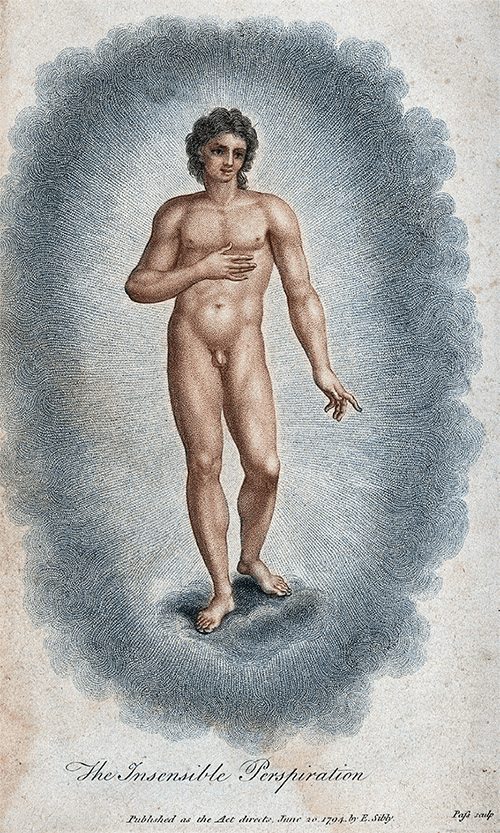
“A young man holding his hand to his heart, emanating insensible perspiration.” Color stipple engraving by J. Pass, after Ebenezer Sibly (1794). Source: Wellcome Collection.Cover of Science and Invention Magazine, reporting Walter J. Kilner’s invention (May 1921). Over the course of the 1920s and 30s, Kilner’s lenses were invoked as a prospective instrument of aura visualization.
While each of these accounts of auras and aura-like phenomena can be located in its distinct historical and cultural context, it is hard to resist the temptation to collate them into a more general picture. In recent years, a number of scholars have adopted a cross-cultural comparative framework with the precise intention of establishing continuities among practices, concepts, and objects — including the aura — under the rubrics of “subtle matter” and “the subtle body.” Within this framework, the word subtle designates a family of (at least partially) overlapping orientations and perceptions, experiences, techniques, vocabularies, imaginal resources, and knowledge claims elaborated in diverse historical and cultural contexts. However, this search for a general category, even when adopted strictly as a methodological heuristic, partakes in a much longer and more vexed history.
For more than a century, perceived commonalities among diverse Western and Eastern metaphysical traditions have nourished a vibrant tradition of scholarship on comparative religion, just as they have inspired popular writers to fill the “esoterica” section of retail bookstores and, in more recent times, New Age websites, with all manner of wisdom on the cosmic harmonies that are said to bridge the world’s religions, spiritual practices, and enlightened sciences. The classificatory schemes that many present-day scholars, as well as popular writers, rely upon in their general descriptions of such things as “the subtle body” or “the aura” are in fact patterned directly on the prior work of occultist and esoteric writers — Theosophists foremost among them — from over a century ago.
While as a word, a visual figure, and an idea, the aura seems to have enjoyed a remarkably long history, something distinctive was taking shape in the late 19th and early 20th centuries. One measure of the scale of this shift can be gleaned from the sudden increase in the use of the word in published works in English, French, German, Spanish, and Russian around that time.
According to Google’s Ngram Viewer (a digital tool that charts the frequency of vocabulary appearing in sources printed since 1500), the word aura experienced a dramatic spike between roughly 1890 and 1920 within all these languages. In some cases, such as German and Russian, the word seems to have been almost nonexistent in publications until around 1850, after which its steady growth crests in a veritable explosion of occurrences from the 1890s onward. Here then, roughly speaking, we can mark the birthplace of the modern word aura. One of the most distinctive features of this new usage is a dramatically expanded semantic range: a democratization, so to speak, of a phenomenon formerly reserved for extraordinary bodies and bodily states. In its modern usage, the word aura has been extended across all of creation; to recall once again Marques’s definition cited above, it now references a “subtle, invisible essence or fluid that emanates from human and animal bodies and even things.”
The previous fin de siècle constituted such a decisive moment for this reformulation of the word aura in large part because Theosophists and their fellow travelers were able to take advantage of an unprecedented restructuring of science, technology, religion, and culture during this period. Among them, Theosophist and scholar of esoteric traditions George Robert Stow Mead saw modern science as a tool for uncovering hidden truths about the subtle body. His meditations on the “hitherto undreamed-of possibilities locked up within the bosom of nature” highlight what is in fact a commonplace understanding of the late 19th and early 20th centuries as a moment of dizzyingly rapid and profoundly unsettling scientific and technological change, in which established assumptions about matter, energy, and life were openly challenged, to the great interest of journalists, artists, and many other observers.
As registered in diverse arenas of laboratory experiments, popular science magazines and public demonstrations, stage magic and early cinema, trick photography, Spiritualist séances, and new avant-garde art movements, among many other places, the new sciences generated distinctly new ways of making invisible things present and addressing mysterious, hidden dimensions of the cosmos. In this context, esoteric writers such as Marques and Mead were uniquely positioned to redefine the aura and related phenomena as an object of ancient wisdom and also, at the very same time, as a frontier science research topic.
Over the course of the 20th century and up to the present day, these conjunctions of science and occultism provided the framework within which the modern figure of the aura has been defined, visualized, and worked upon. Conceptually, discursively, and even performatively, the purveyors, practitioners, clients, and engaged audiences of the present-day New Age spiritual marketplace rest on the shoulders of their Theosophical forebears such as Marques and Mead. This is not to deny that the instruments, techniques, experts, and visual materials gathered under the rubric of “picturing aura” have sometimes moved onto terrains far removed from the New Age milieu, strictly speaking.
Nevertheless, no account of the practice can be written without taking into account how this earlier history of entanglement of science and occultism shaped the widely distributed sensibilities, modes of reasoning, and techniques of body care for which the visualization of the aura became so indispensable. From the late 19th century to the present day, this confluence of esoteric vocabularies and concepts, new means of technical picture-making, and protocols of scientific observation set the stage upon which the modern history of picturing aura has unfolded.
Jeremy Stolow is Professor of Communication Studies at Concordia University, Montréal, Canada. Among his publications are the books “Orthodox by Design” (University of California Press) and “Deus in Machina” (Fordham University Press). This article is adapted from his book “Picturing Aura: A Visual Biography.”
This combo just works – cool obscure and funky beats to put you into a good mood along with making a delicious vegetarian Japanese curry. Instant sub and looking forward to enjoying way more of these…
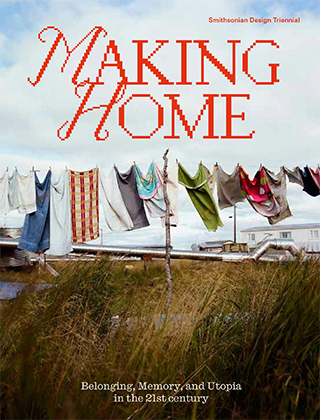
For too long, I yearned to feel less like a stranger in a strange land and more like someone who is, finally, home. Via MIT Press Reader
Venice Beach, Los Angeles. Photo: Viviana Rishe, via Unsplash
When I earned a faculty position at Purdue University in West Lafayette, Indiana, I was thrilled. For the previous four years, I had lived in a very small town in eastern Illinois and for the five years before that I had lived in a very small town in Michigan’s Upper Peninsula. My entire adult life, my geographic circumstances had been dictated by professional urgencies.
In each place, I had an apartment that was mostly fine. I had small circles of wonderful friends. But I had never felt at home — the remoteness, the isolation, and being one of very few people of color made that all but impossible. Lafayette was going to be different, I told myself. With a population of more than 100,000, the town felt positively cosmopolitan. There would be, I hoped, a lot more to do, places to go, the ability to live more than an imitation of life.
This essay is excerpted from the volume “Making Home,” a copublication with Cooper Hewitt, Smithsonian Design Museum.
Even with all that Lafayette promised, I was determined not to live there but in Indianapolis. It’s not that Indianapolis is paradise, but it is a lovely city. It has a reasonably diverse population. I found a gorgeous, brand-new apartment across from a fancy mall near the interstate. Getting to work would be easy, a straight shot down I-65, less than an hour commute. I was going to have access to shopping and interesting restaurants and interesting people. I would buy my first real adult furniture from a store other than IKEA. Maybe I’d fire up the dating apps and have some measure of a social life. If I was lucky, I would find community. Things were looking up.
I am originally from Omaha, Nebraska, so I am no stranger to living in small towns. But as I’ve gotten older, my tolerance for isolation has diminished. I have spent too many years living in the middle of nowhere. Anything is tolerable for a finite amount of time, but after spending most of my adulthood living and working in the middle of nowhere, I had reached my limit. I didn’t want to have to drive hours to the nearest airport. I didn’t want to have to drive hours or, worse, fly to a city where I can get my hair done. I no longer wanted to feel like an object of curiosity simply by virtue of my race. I was done with quietly seething while tolerating bewildering acts of racism. I was tired of feeling out of place. For too long, I had yearned for something different. I had yearned to feel less like a stranger in a strange land and more like someone who is, finally, home.
It was Central Indiana, a place where people flew the Confederate flag without irony even though Indiana was never a part of the Confederacy.
In the months before my first semester at Purdue started, as I got to know my new colleagues, mostly via email, they were deeply concerned about my living arrangements. The commute would be difficult, they said. And sometimes the Indiana winters were harsh. As a lifelong Midwesterner, I was not worried. An hour’s drive in the middle of nowhere is nothing at all, and after five years in the Upper Peninsula, where it snows more than 300 inches a year, I was confident I could handle any occasional snowfall that blanketed Central Indiana. In truth, I was salivating over the prospect of living in a place with more than 15,000 residents. Eventually, though, I buckled under the pressure, because I am nothing if not a people pleaser — always to my own detriment.
I ended up withdrawing from the lease on my beautiful new dream apartment and losing my deposit. Instead, I rented an apartment in Lafayette in a weird, creepy building with hallways that looked like they once hosted a series of horrifying unsolved murders. The apartments, though, were newly renovated, and it was a small town, so I had a three-bedroom, two-bath apartment with beautiful hardwood floors. My rent was a modest $1,400, and I consoled myself with the knowledge that a livable city was a mere hour away.
Living in Lafayette would be fine. It would be fine. Instead of driving an hour each way to work, I would have a breezy 10-minute commute across the river to West Lafayette. I would, as in the years prior, have large swaths of time to write. I would get to know my colleagues and maybe make some new friends. I would find my people and be more accessible to my students. I would be fine. It would be fine. It only took a few weeks to realize I had made a horrible mistake.
Lafayette was by no means the smallest town I’d ever lived in. It even had some of the creature comforts that make life a little easier without the liabilities of a big city — a multiplex, a Target, a few decent restaurants, a Starbucks with a drive-thru. But it was also Central Indiana, a place where people flew the Confederate flag without irony even though Indiana was never a part of the Confederacy. Because Indiana is an open-carry state, it was not out of the ordinary to see a man walking around in board shorts and a tank top, a gun holstered at his waist.
And then there were the men driving around in oversized pick-up trucks with “Don’t Tread on Me” flags and Ku Klux Klan imagery. Lafayette was inhospitable and lonely. When I left my apartment, I never felt safe. As a somewhat single Black lesbian, I found few local dating prospects. After a very brief foray on e-Harmony, I gave up on the idea that I might meet Ms. Right or even Ms. Right Now. My colleagues were nice enough, but I didn’t feel like I had or was part of a community. It was overwhelming, at almost 40, to feel like I had no future beyond work. I wondered, not for the first time, if I would ever find home, or if I would ever feel home.
One afternoon I watched a large pickup truck with a massive Confederate flag drive back and forth in front of my apartment building. I lay down in bed and stared at the ceiling and thought, I do not have to live like this. I do not want to live like this. I was grateful for my job. I love teaching and working with students, but I was weary of the unbearable compromise professors, particularly in the humanities, must often make — professional security and satisfaction at the expense of personal joy. A good job was enough until it wasn’t. Choosing to forgo living in Indianapolis was, ultimately, a valuable lesson in learning to trust my instincts and learning to allow myself the pleasure of doing what I want, even if it displeases others.
I am not an impulsive person. In general, I accept the way things are and have an annoying but useful ability to surrender to circumstances that feel unchangeable. There was a small glimmer of potential, though. My best friend lived in Los Angeles. One day, I was browsing flights and discovered that there were a few direct flights there every day from Indianapolis. The prices were fairly reasonable, so I bought a ticket, booked a hotel for a week, and flew west. I had no real plan, which was kind of thrilling. And then I did the same thing the next month, and the one after that. Before long, I was spending at least a week a month in LA.
Each time I stepped off the airplane into the grimy chaos of LAX, I felt more human. These sojourns were my first opportunity to spend a significant amount of time in a sprawling megalopolis. At first, I felt like a country mouse. Everything astonished me — the unfathomable and omnipresent traffic; the vibrant street art in bold, beautiful colors; the Mexican food and generally excellent restaurant scene; the museums; the weird little theater companies putting on weird little shows; the farmers markets with produce that didn’t seem real it was so beautiful. There was so much to do all the time. The weather was exceptional all the time. And, of course, there was the ocean — crystalline blue, stretching as far as the eye could see. That’s how I knew I had found a place where I belonged. I am not a beach person, but still I could appreciate the wonder of all that sand and water.
It was a relief to spend so much time in a very liberal place. More people shared my politics than not. There was a sense that the greater good matters. While there was a significant unhoused population, the city (mostly) didn’t try to hide it, and a lot of good people worked tirelessly to help the most vulnerable people in their communities. We are forced to confront inequality every time we leave the house and, frankly, that’s the way it should be until we figure out how to ensure that everyone has a safe, clean home they can afford, no matter what their financial situation is.
I now realize how much I sacrificed for so long, how I whittled myself into someone who could survive anywhere, making myself believe survival was enough.
It was truly life changing having the ability to be intentional about where I spent the majority of my time. After about a year of hotel stays, I rented an apartment downtown and bought a car. I found the local writing community, made new friends, and had a fun but fairly disastrous relationship with a very lovely woman. Three years later, I bought my first house, something I never imagined I would be able to do, especially in an expensive city like Los Angeles, where people with trust funds or mysterious sources of wealth regularly made all-cash offers over the asking price. I was terrified about making such an adult decision. At the time, I didn’t have a partner or kids or even a pet, all the things we tend to associate with home. It was just me, and as I signed 30 years of my life away, I tried to believe just me was enough.
The new house was perfect. I had space for all my books. I could paint the walls whatever color I wanted. I could hang things and not worry about losing a security deposit. In the backyard, there was a wizened old Japanese maple tree with a canopy of fecund branches covering the yard that I would, eventually, drape in sparkly Christmas lights simply because it made me happy.
Every day I see Black people just living their lives. I see all kinds of people, really. I feel more comfortable in my skin, and it’s beautiful to be in a place where difference is both unremarkable and celebrated. I now realize how much I sacrificed for so long, how I whittled myself into someone who could survive anywhere, making myself believe survival was enough. I know I will never again compromise on having a real home.
After I closed on the house and got the keys, I stood in the empty kitchen and looked around at all the bare walls. It was quiet and echoing because there was nothing in it to absorb the sound. I was going to have to fill all that space, which was somewhat daunting, but I also knew, down to the marrow in my bones, that even if I never brought a single thing into my new house, I was already home.
Roxane Gay is a writer, editor, and professor who splits her time between New York and Los Angeles. She is the author of several books including “Bad Feminist” and “Hunger.” This article is excerpted from the volume “Making Home: Belonging, Memory, and Utopia in the 21st Century,” edited by Alexandra Cunningham Cameron, Christina L. De León, and Michelle Joan Wilkinson.
So, my darling child, you say you have a boring life. You get up and move through your day, do what you need to do, go home and go to sleep only to get up and do it all over again. You may have a partner, or not. You may have family that loves you, or not. You have friends that appreciate you for who you are, or not. It all seems quite boring, conventional and repetitive. But wait…
The very act of your waking is a miracle! The ability to move, even the least little bit, is a work of art! Your thinking, reasoning brain is a joy! The fact that you are alive and learning is amazing! Please remember these things when you are feeling low and in desperate need of reassurance. Your purpose is one of incredible power and immense importance. You are needed!
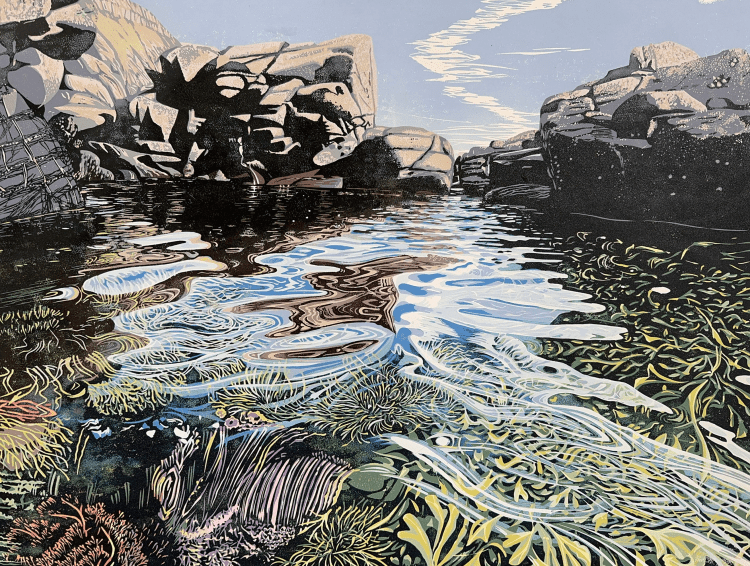
Hazel McNab is a Cornish printmaker who captures the wild soul of the outdoors through reduction linocut prints. With a deep love for light, shadow and natural forms, she layers colour and pattern into richly detailed scenes—each print a fleeting moment carved into permanence. Living in Cornwall, her work draws from coastal rhythms and ever-shifting landscapes. Using a single lino block, each cut becomes irreversible, making every edition truly limited. You can find her work at the Riverbank Gallery in Newlyn, at Trelissick House, or by appointment at her home studio. Via Hazel McNab
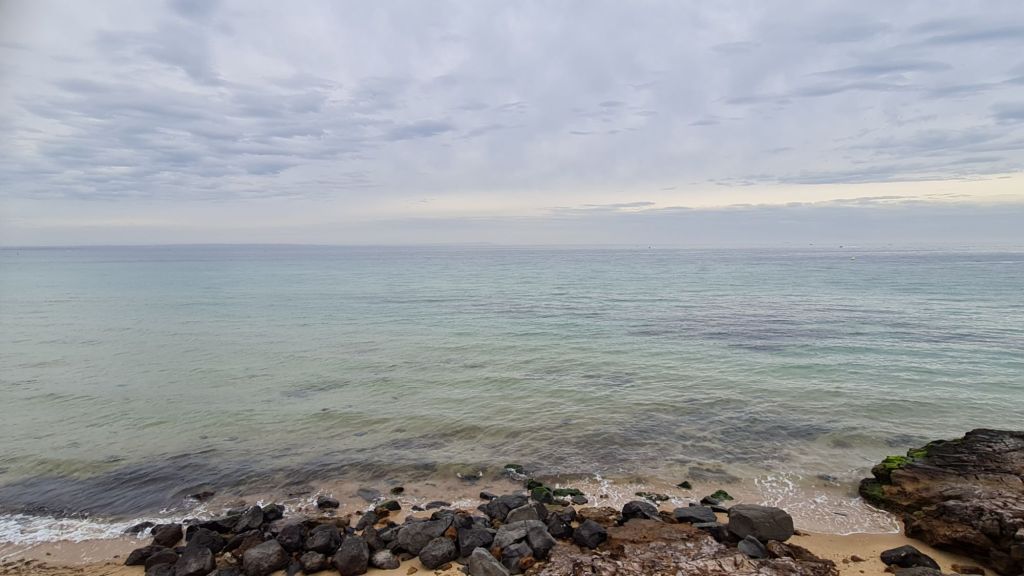
Rinsey Rockpool by Hazel McNab
Did you enjoy this collection? let me know what you think of it below. Thank you for reading my dear friends!
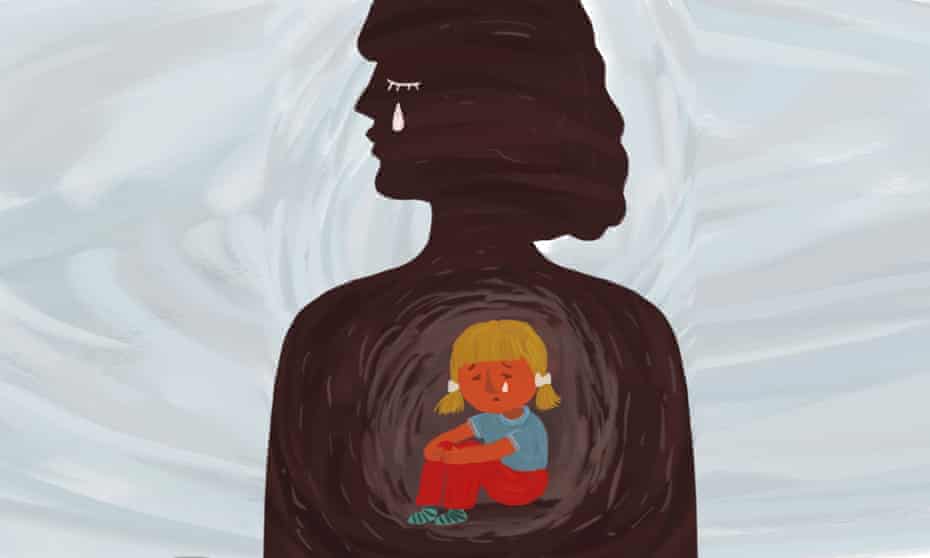
hurts travel through time from one person to another this unwanted heaviness moves from the past into the present and then into the future one of the most heroic things anyone can do is break the line of hurt when people heal themselves, they stop the hurt from multiplying and their relationships become healthier when people heal themselves, they also heal the future”
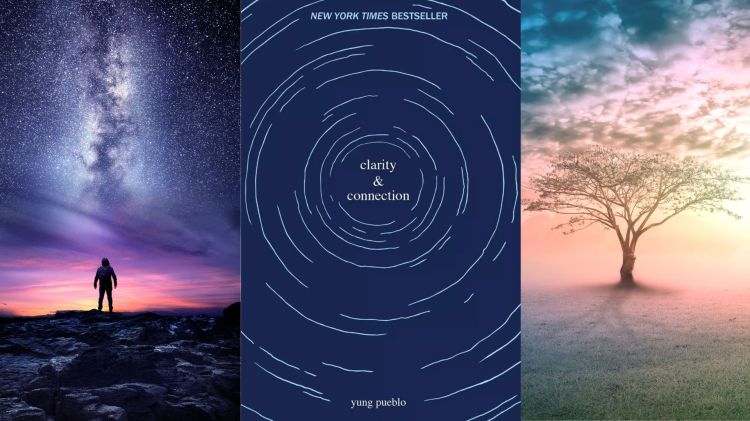
It is difficult to describe how joyful, vivid and clear about everything in life that this book makes me feel. It’s the kind of book you can read over and over without tiring of its insights. Clarity and Connection is a revitalising treasure of wisdom that brings together timeless insights into the meaning of love, compassion (for self and other) as well as how to heal and recover from trauma and a difficult period of one’s life.
Harjo’s poetry is deeply rooted in her ancestral roots and the intergenerational trauma of colonisation. Her collection is a profound meditation on the lives, struggles, and resilience of all indigenous peoples.
Rating: 🌟🌟🌟🌟🌟
Genre: Poetry, Non-fiction, Native American Literature
Publisher: W. W. Norton & Company
Review in one word: Transcendental
Joy Harjo is an internationally renowned poet, writer, and musician of the Muscogee (Creek) Nation. She served three terms as the 23rd United States Poet Laureate. Conflict Resolution for Holy Beings is a powerful and essential collection of poems and prose from Harjo.
The book is not a linear narrative but a lyrical journey that weaves together personal memory, ancestral stories, and sharp political commentary to paint a vivid picture of Indigenous existence in the modern world.
The trajectory of the collection follows the profound cycles of life, loss, and survival. Harjo begins by emphasising the importance of passing down traditions from one generation to the next, a sacred act of cultural preservation.
Poems and short vignettes traverse time and geography, drawing on imagery and stories from ancestral knowing in North America, from Alaska to Hawaii to her own Cherokee lands.
The centrepiece poem, from which the collection takes its title, serves as a powerful axis for the book’s themes. In it, Harjo contrasts the worldviews of Native peoples and white Americans, particularly in their approaches to conflict, land, and spirituality.
Harjo critiques a colonising mindset that would build a casino on sacred land, contrasting it with the Indigenous preference for resolving conflict and expressing identity through art, music, poetry, and oral tradition.
There’s a lot of thematic focus on the Blues as a musical style and lifestyle and her prose is incantatory, blending the rhythms of traditional song and oral storytelling.
I loved this collection of elegiac and hopeful poems there is so much affinity I feel for her and her experiences seeing as I am indigenous as well. This is a moving and essential collection of poetry. Harjo is a genius for the ages!
I had to Google this because I wasn’t aware of anyone else who has this experience or who understands. I could only really find one Reddit thread about this and one article.
Imagine having parents who are still alive but who are so indifferent to you that it’s as though they are dead. I wonder if anyone else understands that feeling? It has been like that for my whole life, but I daren’t never say it out loud, for fear of censure, embarrassing them if they ever found out, but more that I feel ashamed of them and trying to explain this to other people.
I’d never experienced what it is like to be in a real family until I met the Polish Bear and met his family. They are there for each other and will drop everything to help each other with whatever they need. It’s real care when the chips are down and if you need help, you know that you can rely on them.
In my own family this simply does not exist. It’s as though my parents (and to some extent my brother and sister) are about extracting value from other people, economic, emotional and practical value, but not about reciprocity, genuine mutual care and concern.
I now recognise that as a form of ‘me-first’ narcissism, but when I was a child and a teen I just assumed that was normal and that everyone’s family was like that. It wasn’t until I got into my teens and started reading widely a whole lot of books that I realised how wrong this way of being was and I became my own person.
I wouldn’t say they don’t care, they do but in a superficial way and mostly just about appearances and how they appear to people outside of the family.
In other words, so long as they can make big statements to friends about how their kids are going – ‘oh [ #1] doing well and is earning XYZ amount and living in [insert impressive suburb], ‘Oh [ #2] is doing well only has benders every couple of weeks now.’
That’s the shaky ground on which they say to people – my family is going well.
Some examples of their indifference:
Being in the company of very questionable people in my late teens and asking for their help to get home (borrowing someone else’s mobile phone to do so because I’d lost mine) and being told they they couldn’t help me and couldn’t come and get me.
Similarly as a young person, going missing for a few days and having a friend notify the police about that and being worried about me because my own parents didn’t think to do it themselves.
Finding it amusing and cool that I developed a fondness for drugs as a teen and just allowing me to get deeper and deeper into that without telling me to stop or getting me help. Instead it was my friends who told me it’s bad and to stop immediately and and showed me where to get help.
Allowing siblings of mine to be abused, physically, emotionally and sexually and not doing anything about it, just turning a blind eye to it occurring and pretending it was not occurring.
My brother (in more recent years) nearly dying several times from the drink and they really waited until he was about to die before stepping in and telling him to get his shit together and helping him to go to rehab.
Most recently: being told that despite having a massive mansion of a house and a lot of liquid assets that they would be selling off all of these assets and using them for retirement and that they would not be passing on any inheritance to any of us. This means that it’s highly likely that none of their three children would be able to afford to buy a home, as they have.
I think a fair amount of my life I’ve made concessions and allowances for this from my parents but I think I’ll just stop with that now.
I will stop seeing them and stop making an effort with them. This goes against my own ethos though because I am a giving person, I will give everything of my time, energy, love and even money to ensure that the ones I love are safe, comfortable and happy. But I realise that it’s basically my partner and my friends who I am talking about with that, because I know they would do the same for me.
By being selfish back with my parents it essentially validates their own selfish way of being, but I am not sure I have much choice but to protect myself from the deep dysfunction.
There’s a giant well of sadness and anger inside of me all of this but writing this here makes me feel so much lighter and surer that this is the right decision.
I will say that I have a wonderful person in my life who is really kind to me and who shows me genuine care – we show each other deep love and care, we have a lot of laughs, adventures and good times.
And he is very close with his family even though they are on the other side of the world. At the beginning, this was like a beautiful novelty to see how his family are, but now I consider this to be the norm and my own family to be the abnormal ones. I am so very lucky to understand love and care and I consider this to be the best thing to ever happen to me in my life.
Anyway I write this not to get sympathy or people to feel sorry for me or whatever but just simply to get it out. Life feels awfully confusing to me a lot of the time and I have a lot of difficulty trusting people who I don’t know and I think this is mostly because of my early life. I write this simply for my future self to say – cut yourself some slack, give yourself a break and just be kind to yourself. You’ve been through an early life that was just really shit and so shaking off that shit has been a long and arduous process, if it comes back sometimes just go easy on yourself girl. That’s it! That’s the post. Thanks for listening.
Preheat oven to 240°C / 450°F (220°C fan). Line tray with parchment/baking paper.
Cut eggplant into 2cm / 4/5″ slices, then cut into 2cm / 4/5″ batons.
Place in large bowl, toss with oil, salt and pepper.
Spread on tray, roast 20 minutes. Turn, roast for a further 10 minutes – edges should be caramelised, soft inside, but they’re not shrivelled up and dismal. Use per recipe.
Curry:
Heat oil in a large pot over medium heat. Add mustard seeds, let them sizzle for 15 seconds.
Add curry leaves, stir, leave to sizzle for 15 seconds – seeds might pop, Indian cooking is very dramatic!
Add onions, cook 5 minutes until golden brown.
Add tomato, cook for 1 minute, stirring.
Add garlic and ginger, cook 2 minutes.
Add Curry Spices and salt, and cook for another 3 minutes – it will be a thick paste and might stick to the bottom of the pot, don’t let it burn (if it starts to, remove from stove and quickly add splash of water to loosen).
Stir in water, and then add the eggplant.
Gently stir, partially cover, reduce heat to low and simmer 30 minutes. Stir carefully once or twice (so the eggplants don’t break up completely), add more water if it dries out.
Stir in coconut milk, taste then add more salt if needed.
Your result should be a very thick, juicy, strongly flavoured curry with eggplant partially intact but half collapsed.
Serve with basmati rice and a dollop of yogurt and fresh coriander leaves, if you want.
Recipe Notes:
1. Eggplant – smaller the better eg. 2 x 300g eggplants, they hold together better. Asian eggplants ok too.
Alternative to roasting – pan fry in a little oil over medium high heat, rotating to brown all sides. Don’t worry if it’s a little raw inside once the outside is golden, it will finish cooking in the sauce.
2. Black mustard seeds – key ingredient for authentic flavour. Look like poppyseeds, wasabi bite, Indian aroma! ~ $1.50 in small packs at Indian grocery stores (my local is Indian Emporium in Dee Why, Sydney). Also sold in the Indian food section at some Woolworths (Australia) $1.70, otherwise try online.
Substitutes (starting with best):
Brown mustard seeds
Yellow mustard seeds
1/2 tsp mustard powder*
1/2 tsp Garam Masala* (different flavour, but is intended to make up for absence)
* Add with rest of spices
3. Fresh curry leaves – another key ingredient for authentic flavour! Sub 10 dried curry leaves. Fairly accessible nowadays for Sydney-siders, sold at Harris Farms, most Coles and Woolworths.
Substitute:
dried curry leaves (not quite the same, but it’s the best sub);
1 tsp Garam Masala powder (add it with rest of spices).
4. Tomato – anything is fine here, pulp or passata (base recipe), or canned crushed tomato (crush it more by hand to make it more fine) or even a dollop of tomato paste.
5. Coconut milk – no point using low fat because this is added to add a hint of richness. You can’t taste coconut. Can sub a splash of cream.
Leftover coconut milk: Freeze the rest in ice cube trays and use in recipes that call for a splash of coconut. Otherwise, do a recipe search for “coconut milk” and select “Using this ingredient” and it will bring up a list of recipes that have coconut milk in the ingredients. Most recipes won’t suffer if you are short just 3 tbsp. Partial can uses: Gado Gado peanut sauce, scaled down batch of Thai Satay Peanut sauce (it makes a LOT!).
6. Storage – leftovers keep for 5 days int he fridge. Should freeze fine (haven’t tried), just stir carefully when reheating so eggplant doesn’t turn into complete mush.
7.Sources – As mentioned, a yearning to recreate New Shakthi Sri Lankan Restaurant’s eggplant curry sparked the initial inspiration! We studied brinjal(a term for eggplant in India) recipes by South Indian and Sri Lankan food bloggers and YouTubers, including the totally awesome Village Food Factory Youtube channel to create our version.
8. Nutrition per serving, curry only (no rice).
The “I’m just following orders” brigade have returned
The simple act of looking at a piece of visual art can boost your wellbeing, a new research study has found, and this benefit can be gained in a hospital setting as well as an art gallery. Via Science Daily.
Artworks which were included in the review include famous pieces such as The Scream by Edvard Munch, The Starry Night by Vincent Van Gogh, and other pieces of modern and contemporary art.
The authors of the review have called on healthcare providers and policy makers to integrate art into mental health strategies as a low-cost and easily-accessible resource.
Previous research has suggested that viewing art might influence mood or stress, but the research was limited and inconsistent, they say. This study examined decades of scattered research, providing for the first time a clear and comprehensive overview of when, where and why art viewing is used to promote wellbeing.
The review of 38 previously published studies covering a total of 6,805 participants was conducted by team of psychologists from University of Vienna, Trinity College Dublin, and Humboldt University of Berlin. It has been published this week in The Journal of Positive Psychology.
The study found that viewing art can improve eudemonic wellbeing, this is wellbeing associated with meaning in life and personal growth.
These benefits were observed in a variety of locations — in museums and galleries as well as clinics and hospital settings and also through the medium of virtual reality. A wide range of art types including figurative, abstract, modern and contemporary paintings, photography, sculpture and installations were found to boost wellbeing.
“People often think of art as a luxury, but our research suggest that viewing art — whether as a hobby or as a targeted health intervention — can meaningfully support wellbeing,” said MacKenzie Trupp, lead author and researcher at the University of Vienna and Radboud UMC, Donders Institute.
“By reframing art as a low-cost, accessible wellbeing resource, this research opens up exciting possibilities for integrating art into everyday environments and public health strategies.”
Claire Howlin, Assistant Professor, School of Psychology, Trinity, added: “While the mental health benefits of creating art have been widely explored, the impact of viewing art has been under-researched and undervalued. Yet visual art is present and accessible in everyday spaces — museums, galleries, hospitals, and at home. Understanding its effects can unlock new avenues for promoting wellbeing through everyday encounters with art.
“Since 2019 the WHO has recommended that creative approaches are used alongside routine clinical care. Art can satisfy people’s need to search for meaning in life, build self-esteem, and develop positive identities which are important factors for coping with the chaos of life. Departments of health and arts councils across Europe are looking for high quality evidence to identify which types of arts can be used for each type of medical outcome. This review will help to plan larger scale studies in the future.”
The study also found a lack of methodological inconsistency across previous studies, prompting the creation of a new set of guidelines — Receptive Art Activity Research Reporting Guidelines (RAARR) — to standardise future research.
This research was funded by the European Union Horizon 2020 ART*IS project.
In the remote Chug Valley of Arunachal Pradesh, India, Damu’s Heritage Dine is at the heart of a quiet food revival. Run by local Monpa women, the diner serves traditional dishes like millet momos and buckwheat thukpa, recipes once central to the region’s diet. Using ingredients grown locally or gathered from nearby forests, the women are not only preserving ancestral culinary knowledge but also promoting sustainable farming and forest conservation. The Monpa community has long relied on hardy crops like millet, maize, and barley, alongside wild forest produce. However, with the introduction of subsidized government rations and increased migration to cities, traditional diets and farming practices have declined. Damu’s Heritage Dine is working to reverse that shift, encouraging farmers to grow native grains again and reconnecting the community with its roots through food that nourishes both people and the land.
Monopoly wasn’t invented by the Parker Brothers, nor the man they gave it credit for. In 1904, Monopoly was originally called The Landlord’s Game, and was invented by a radical woman. Elizabeth Magie’s original game had not one, but two sets of rules to choose from.
One was called “Prosperity”, where every player won money anytime another gained a property. And the game was won by everyone playing only when the person with the least doubled their resources. A game of collaboration and social good.
The second set of rules was called “Monopoly”, where players succeeded by taking properties and rent from those with less luck rolling the dice. The winner was the person who used their power to eliminate everyone else.
Magie’s mission was to teach us how different we feel when playing Prosperity vs Monopoly, hoping that it would one day change national policies. When the Parker Bros adopted the game, they erased the “Prosperity” rules and celebrated “Monopoly”.
And so capitalist greed reigned upon the earth and all of the workers earned fuck all while begging from scraps falling from the table – also called trickle-down economics. Via Mastodon and Public Domain Review.
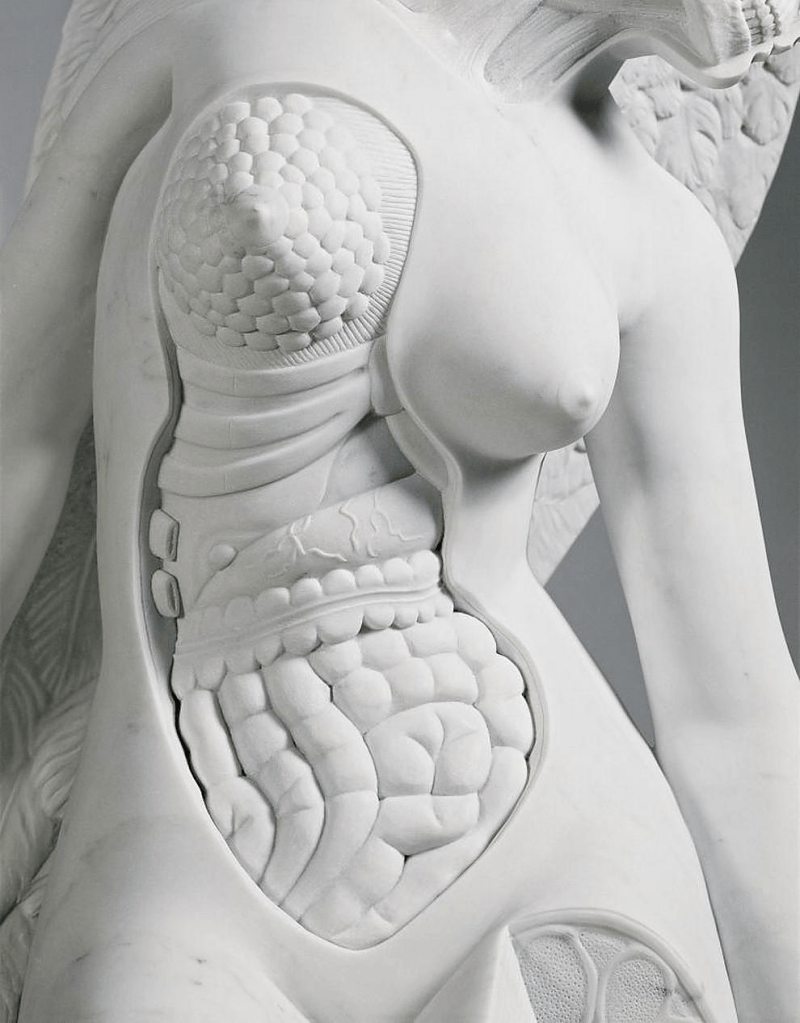
Damien Hirst’s The Anatomy of an Angel (2008) is a haunting collision of classical beauty and cold anatomy. Carved from pristine Carrara marble and inspired by Alfred Boucher’s L’Hirondelle, the sculpture presents an ethereal angel—part divine muse, part medical model. With elegant limbs and serene grace, her exposed cross-sections reveal muscle, organs and bone, challenging our idealisations of purity and perfection. A stark reminder of mortality beneath the sacred, this is Hirst at his provocative best: poetic, clinical and unforgettable. Via Design Is This
Did you enjoy this collection? let me know what you think of it below. Thank you for reading my dear friends!
The Isle of Dogs is a strange slippery novel that plunges deep into the sexual underbelly of #Britain. The Isle of Dogs explores sexual encounters between anonymous people in the shadows and margins of a surveillance-heavy society. #Sex #Sexuality #Novel #Book #BookReview #Review #DanielDavies #IsleofDogs
Rating: 🌟🌟🌟🌟🌟
Genre: Fiction, Adventure, Black Comedy, Thriller, Action.
Publisher: Fitzcarraldo Editions
Review in one word: Sexy
The Isle of Dogs is a strange slippery novel that plunges deep into the sexual underbelly of Britain. The book explores sexual encounters between anonymous people in the shadows and margins of a surveillance-heavy UK at the turn of the millennium. Told from the perspective of a man called Jeremy, an editor at a London men’s magazine, who becomes disillusioned with his superficial overblown lifestyle.
He seeks authenticity and so one day ups sticks and moves back to his parents home in a boring and seemingly lifeless town in the Midlands. There he takes a modest civil service job. To satisfy his sexual desires Jeremy immerses himself in the world of “dogging”—engaging in anonymous public sexual encounters in secluded car parks, coordinated through online forums. He adopts the alias “The Shep,” and becomes deeply involved in this subculture, finding a sense of purpose and community among fellow participants – themselves restless misfits who are bored with their lives.
There is a lot going on in this novel aside from the gratuitous, thrilling and gritty sex scenes. There’s a very human yearning for connection, both a romantic and friendship connection, the boredom and monotony of modern life and this unique and creative way to overcome that boredom.
There is an atmosphere and a vibe to this book – a sense of lean and lonely abandonment and longing, like listening to a bleak dubstep track. This is a vibe that England (in real life) has. There are a lot of backwater towns and places long forgotten and left behind in England compared to London. There is a real and compelling sense of electrifying anticipation, lustful longing and the real possibility of violence running through this book, making it a real adrenalin rush to read.
Shadowy, unusual subcultures have always fascinated me and this book didn’t disappoint it’s an intriguing, vividly rendered and well constructed novel.
David Szalay’s sixth novel, Flesh, is a provocative, vulnerable and deeply moving portrait of one man’s life shaped by circumstance, sexual entrapment and unresolved childhood trauma.
Rating: 🌟🌟🌟🌟🌟
Genre: Literary fiction
Publisher: Scribner
Review in one word: Vulnerable
*Contains no spoilers.
David Szalay’s sixth novel, Flesh, is a provocative, vulnerable and deeply moving portrait of one man’s life shaped by circumstance, sexual entrapment and unresolved childhood trauma.
This is the first time I have read Szalay’s work and I immediately fell into it like a soft warm duvet. Not that it’s an easy read, not by any means but there’s a sense of voyeurism and being a fly on the wall. I love the idea of using fiction to immerse myself and switching genders and experiencing what it must be like to live like a boy or a man.
Szalay explores life through the eyes of a young male Hungarian protagonist, István and the plot weaves through an unconventional path of his life from youth to middle age in Hungary and London with all of the unexpected, painful and humiliating incidents that happen to István in between.
This is a deeply moving and vulnerable book about men, their emotions, sexual needs and masculinity, but from the perspective of being an outsider immigrant during the boom years when the UK was still a part of the European Union.
Flesh explores the powerful interplay of trauma, class, family, love, intimacy and sex in a haunting, harrowing and tragic way. However this isn’t a novel to make you cry, instead it just might open your eyes up to a different way of seeing the world that is profound and filled with new meaning A complete masterpiece! I rate this book five stars.
About the Author
David Szalay is the author of several novels, including All That Man Is, which was shortlisted for the Man Booker Prize. He was born in Canada, grew up in London, and has lived in Hungary and Brussels.




























 Content Catnip
You must be logged in to post a comment.