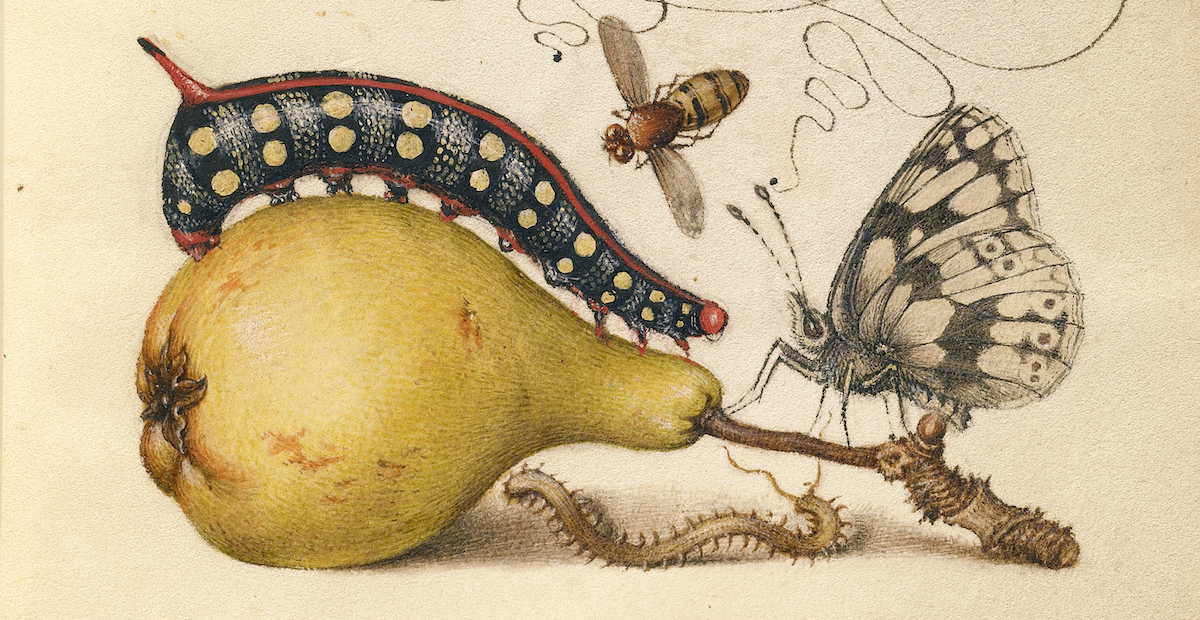
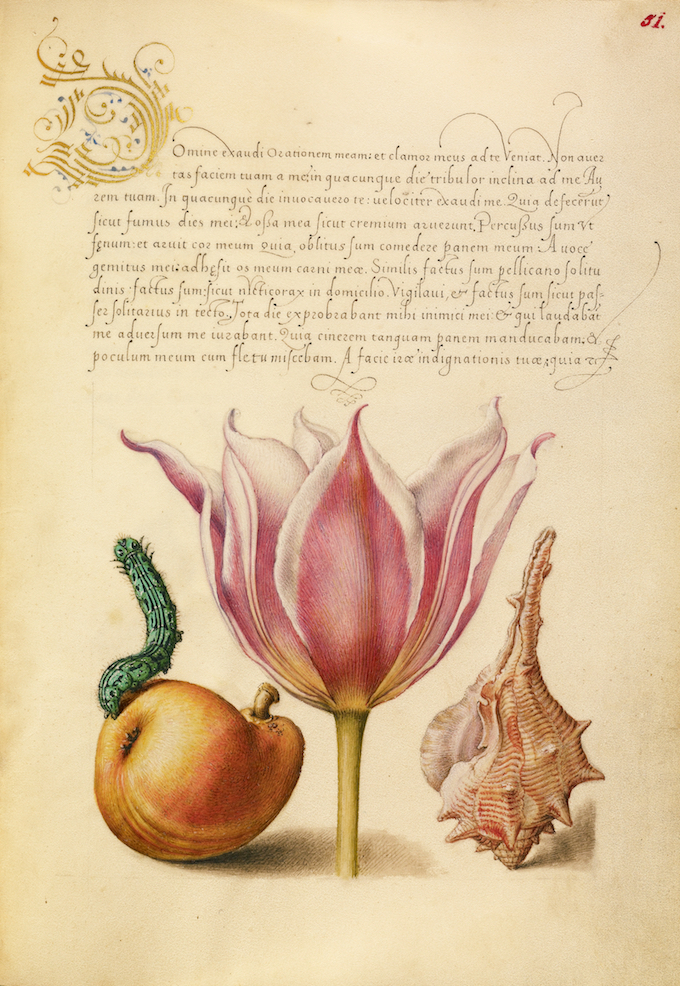
Have a look at the exquisite pages in Mira calligraphiae monumenta or the Model Book of Calligraphy, which was crafted by Croatian-born mastercraftsman Georg Bocskay, and Flemish artist Joris Hoefnagel.
This is a real work of art and shows beautiful attention to detail with the gold leaf writing and sublime illustrations of flowers, insects and fruit. It was unusual for its time because calligraphy scribes and artists rarely collaborated together, but we’re really glad they did here! Thanks to the wonderful Public Domain Review.
Clarissa Pinkola Estes is a Jungian analyst and a Doctor of Ethno-clinical psychology. Her book Women Who Run with the Wolves is a dense and fascinating foray into the myths and wonders of oral storytelling throughout history.
It’s a book that makes you more playful, affectionate, joyful and more authentically joyful in every way.
Pinkola-Estes analyses traditional meta-stories and Jungian archetypes and shows through stories how these narratives can be used as signposts to guide our lives.
Anyway, here’s the quote
“To be strong does not mean to sprout muscles and flex. It means meeting one’s own luminosity without fleeing, actively living with the wild nature in one’s own way. It means to be able to learn, to be able to stand what we know. It means to stand and live.” Clarissa Pinkola Estes
A relief of Epona, flanked by two pairs of horses, from Roman Macedonia. A relief of the Gaulish/Celtic horse goddess Epona from Salonica, Greek Macedonia, 4th century CE. According to the museum’s label, Roman emperor Galerius may have been responsible for introducing the worship of Epona at Salonica.
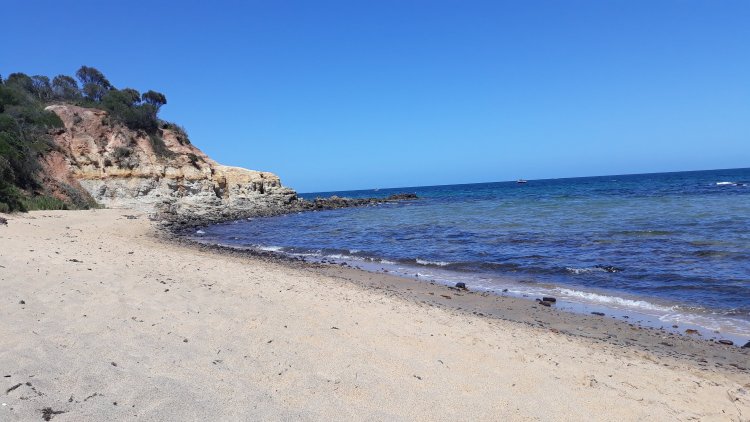
It’s summer right now in Melbourne and everyone is recovering from Christmas overindulgence by rolling and tumbling to the beach to drink beer in the sun. I’ve got a wine spritzer in hand and I’m feeling really guilty about doing absolutely nothing. Today in 37 degrees and there is absolutely nothing you can do in that kind of heat, only languish and marinate without moving.
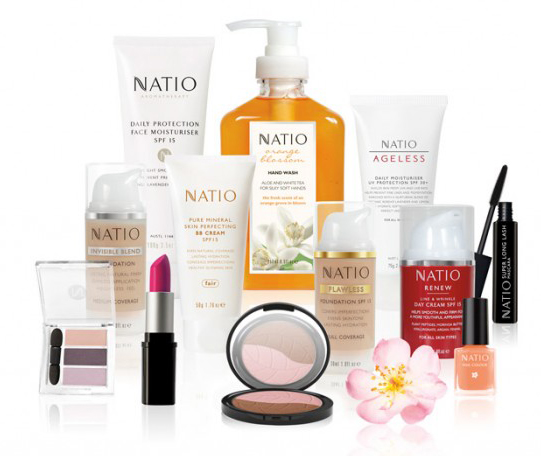
Natio is an Australian brand of cosmetics that is available in department stores and chemists in Australia and New Zealand. Underpinning their brand is a philosophy about creating make up and skincare that’s kind to the environment and uses only plant-derived, vegan ingredients. Also most importantly for me, is that they do not test on animals.
In New Zealand there is an extensive variety of makeup and skincare brands, but very few are dedicated to not testing their product on animals. This is most definitely not a thing here yet, as though the country is still stuck in the 90’s. This is an absolute deal-breaker for me. Natio, Lush, The Body Shop, Nivea, Antipodes, Trilogy and a handful of others don’t do it and they are the only brands I will buy.
I have been using this BB cream for the past 3 years and without fail it makes my skin look remarkable. I have pretty good skin anyway but it does smooth out and correct minor redness. It leaves a dewy and fresh feel to the face. I prefer to use this in place of a foundation. At around $17.95 at the Life Chemist in Auckland this is a steal compared to other BB creams out there.
Although I had previously been using MAC eyebrow pencil, I soon refrained from that after I discovered that they actually test on animals! I was searching for a good quality alternative that was cruelty free. The Natio mechanical eyebrow duo was the one. It has staying power and it remained on my face, not streaming down it when I was stuck walking in a thunderstorm one day. The colour looks natural on me and not too caked on. The only reason that I can’t give it a five star rating is that I compare this eyebrow pencil to Benefit and MAC and found it wanting in a minor way. 4.5*/5
This creamy lip crayon works as both a great lip liner and overall lipstick. It’s moisturising and creamy and it also blends very well with other colours. The feeling of the product on the lips is really lovely. The only downside is that it comes off relatively quickly when you have your cup of tea or whatever. For that reason I would rate it 4*/5
Unassuming by name but lovely by nature, this lip colour is a stock standard kind of lipstick that does what it says on the tin. It doesn’t last very long on the lips. However Natio does moisturising and soothing lipsticks and crayons really well. This is some compensation for the fact that they don’t last all that long. The colours are vivid and dewy and look amazing, but you will need to reapply. All round though, this is a great budget option for the budget conscious and cruelty-free conscious consumer. I got the bright red flame shade and it really was bright and looked great on me, although somewhat intense, good shade for power dressing. 3.5*/5
Mineral eyeshadow palette – petals
This is the perfect travel sized palette of colours. It comes in three varieties nude (neutrals), petal (pinks and purples), and mocha (browns). As brown eyeshadow always makes me look sick, I always opt for the pink and purple colours. This mineral eyeshadow can be compared to MAC’s famous range. I found that the Natio colours are lovely, intense and shimmering in the same way as MAC’s eyeshadow, although for a quarter of the price. I found that the mineral eyeshadow from Natio stayed on and lasted through a thunderstorm outside – the ultimate and only test. The mineral powder feels soothing, soft to touch and it’s easy and simple to blend together the different colours on your eyelids. The palette itself is made of a solid plastic that feels high quality, not cheap when you hold it. I rate their mineral eyeshadow a solid 5*/5 and I would definitely recommend it.
Define eye pencil – black
I prefer old-fashioned kohl pencil rather than the mechanical pencils which don’t seem to leave a bold and intense enough line. This kohl pencil from Natio is really great. I compare this to Benefit, Lush and Mac’s range of eye pencils and found that this one beat them all. In terms of staying power, colour intensity and how it feels on the skin, it feels like a high-end eyeliner but for a budget price of less than $20.00 NZD. I would recommend this one for budget conscious and cruelty-free conscious consumers. 5*/5
*I did not receive any financial compensation for this review and I did not receive free products at all. If you would like me to review your products fairly and honestly, you can email me about it at contentcatnip [at] gmail [dot] com
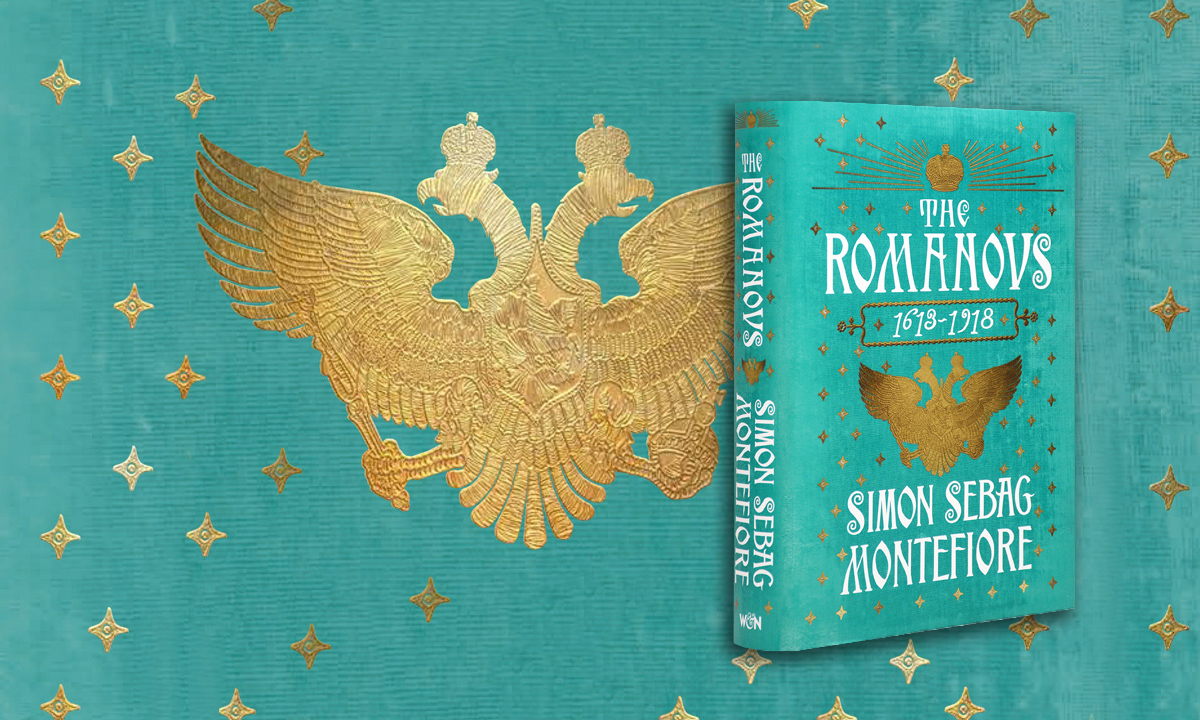
“It was hard to be a tsar. Russia is not an easy country to rule. Twenty sovereigns of the Romanov dynasty reigned for 304 years, from 1613 until tsardom’s destruction. by the revolution in 1917″ The Romanovs were actually the most spectacularly successful empire builders since the Mongols” ,
So begins an epic 300 year biographical history of the Romanov family, the most successful dynasty of royalty in modern times which culminated in their bloody deaths during the Russian Revolution. Before this, they ruled a sixth of the world’s surface for three centuries and then lost it all in the most bloody and spectacular fashion.
Montefiore’s way of weaving the narrative and a cast of thousands into this novel paints the picture of Russian royalty along with a cast of literally thousands of courtesans, revolutionaries, poets, men of the cloth, adventurers. All of these people end up being fully blood-thirsty, murderous, decadent and ridiculously evil towards each other.
This epic tale can get very confusing at times. Therefore there’s a cast list at the start of each chapter to explain the various people and their roles in the bigger picture.
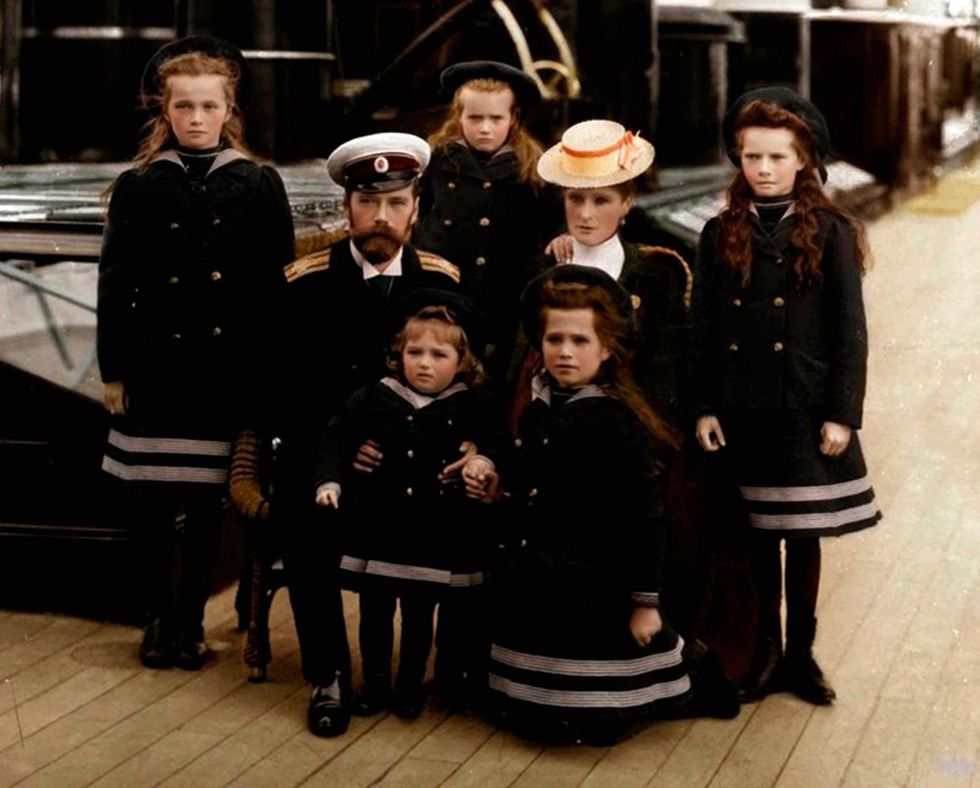
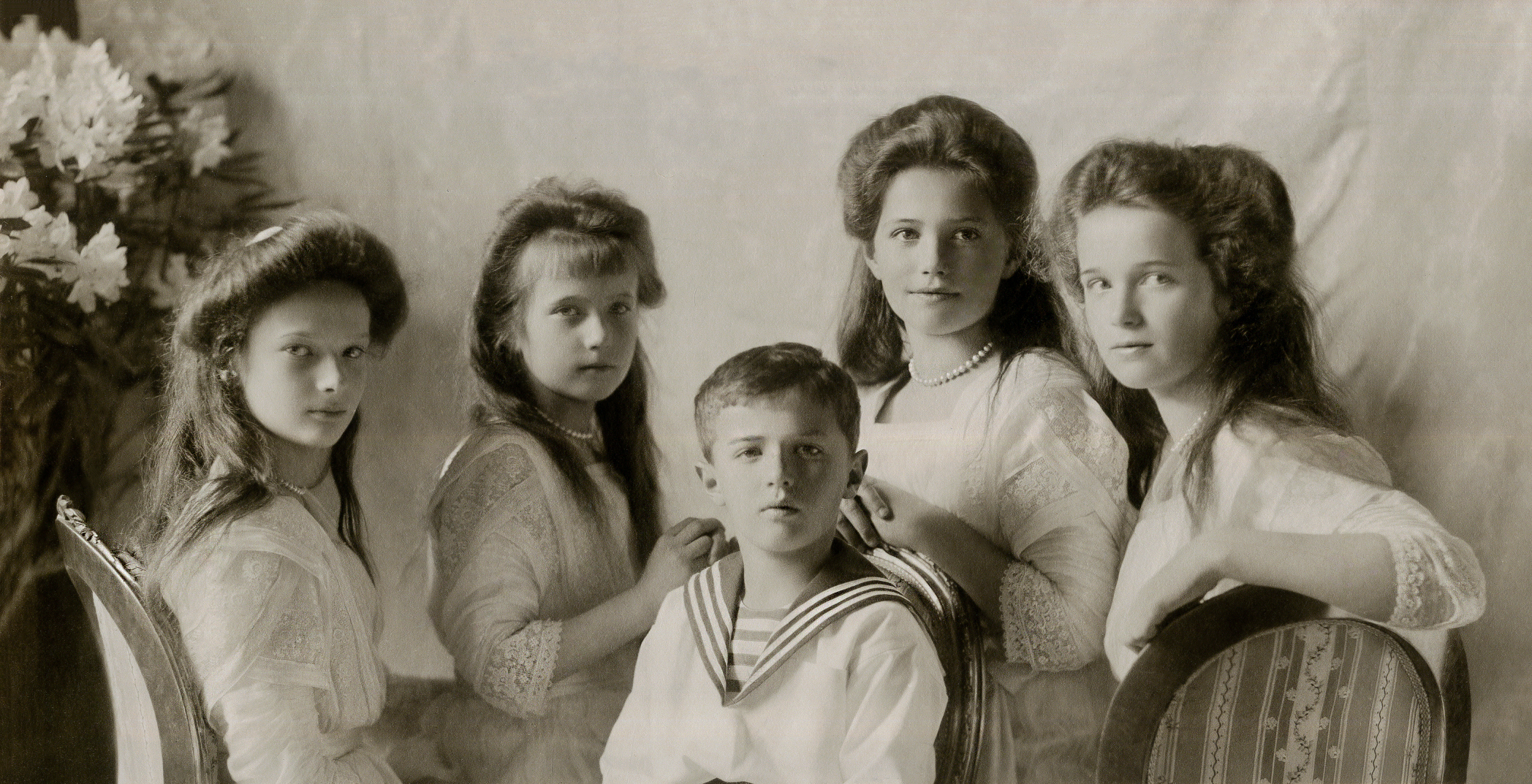
Tsar Nicholas II of Russia with Tsarina Alexandra and their children Grand Duchesses Olga, Tatiana, Maria, and Anastasia, and Tsarevich Alexei.
I found this book to be so unbelievably detailed, well researched and it rockets on at an exhilaratingly fast pace through decades, countless senseless slaughters, genocides and rapes. It’s truly remarkable how wild and murderous Russia was for many centuries.
My main reason for picking up this book was that I love Tolstoy and Chekhov’s epic sweeping novels. I was half expecting this weighty tome of a history book to be at least to some degree peppered with some romance, love stories and something subtle and sensitive in the same way as these novels.
Although the reality of life in Russia (at least how Russia is depicted by Montefiore) is completely different from the Russia in fiction.
To be completely honest, I didn’t like it for this reason. I had heard from various people that Russia was a wild, unpredictable and obscenely violent place and this history book definitely bears that theory out.
The children of Tsar Nicholas II of Russia and Tsarina Alexand, the Grand Duchesses Olga, Tatiana, Maria, and Anastasia, and Tsarevich Alexei died in the most obscenely violent way imaginable.
Russia’s aristocracy of tsars, tsarinas and the whole cast of characters in the imperial court were driven forward by a desire for absolute power and ambition of autocratic, ruthless rulers.
I found the endless depictions of senseless violence hard to deal with and reconcile with my gentle and sensitive view of Russia which I had gained from reading Tolstoy and Chekhov.
If this book was turned into a TV series it would be not even be rated R. The Romanovs would be too full on even for that, and would be banned and reside somewhere in the dark web!
Give me a lot of sex, romance and intrigue that’s great. But endless detailed descriptions of how Tsars ordered the violent killing of children and rape of women, and how this is not fiction but fact and it becomes shocking, revolting and just plain distasteful.
Perhaps I am a prude in the way of not liking violence. Although this book has compounded an idea in my mind that Russia and its history is just insane and it was built on the rule of insane people who are far from rational. It’s therefore easy to see why Russia has the issues it has in modern times when it was built on such blatantly evil precepts.
Little known fact: Prince Phillip is the great grandson of Tsar Nicholas I, meaning that all the living British royals including all future kings are queens are effectively Romanovs.
The scholarship and research that went into this book is mind-blowing. However, I hated the graphic violence in this book and how it never abated even for a moment, for this reason I give it 1*/5
After much pussy-footing around and oscillating around the place like a pinball, trying just about every aspect of marketing and comms in the commercial world I realised finally what I knew all along….that I need to just simply do what I lose myself in deeply and conclusively. By that I mean I can simply dissapear and become the creative work itself, melded and blended together in a strange miasma of pixels, 11110000111’s and brain power.
I lose myself in writing, deeply and unequivocally .And I lose myself in editing film….deeply and unequivocally. Sometimes for half a day, 10 hours or so…without eating, moving, going to the toilet or drinking any water. It’s insane.
I am now considering doing a Masters of a PhD in creative writing..or something involving both film and writing because it only seems sensible and sane. Do you have anything you do that feels like an addiction but that is actually incredibly creative or productive. I’m glad for it, I feel blessed for having that, even if I don’t eventually create something of immense cultural value or anything. Hey – set the bar low and then always be amazed by anything tiny I reckon.
This book calls upon the eternal feminine qualities in each of us and asks us to acknowledge and celebrate them in a way that’s also honouring nature, the seasons and the deep muddy pathways we take through life. It’s wise and wonderful. Here is one powerful quote about love. I think its equally as pertinent to men as it is to women.
“Love in its fullest form is a series of deaths and rebirths. We let go of phase, one aspect of love, and enter another. Passion dies and is brought back. Pain is chased away and surfaces another time. To love means to embrace and at the same time withstand many ending, and many many beginnings – all in the same relationship.” Clarissa Pinkola Estes
Yet another great cruelty-free product, this one is far superior to its non-cruelty free competitors. I have tried many hair oils and frizz calming serums in the past but none actually do what they claim and stop my head from looking like a poodle that just walked out of a hurricane.
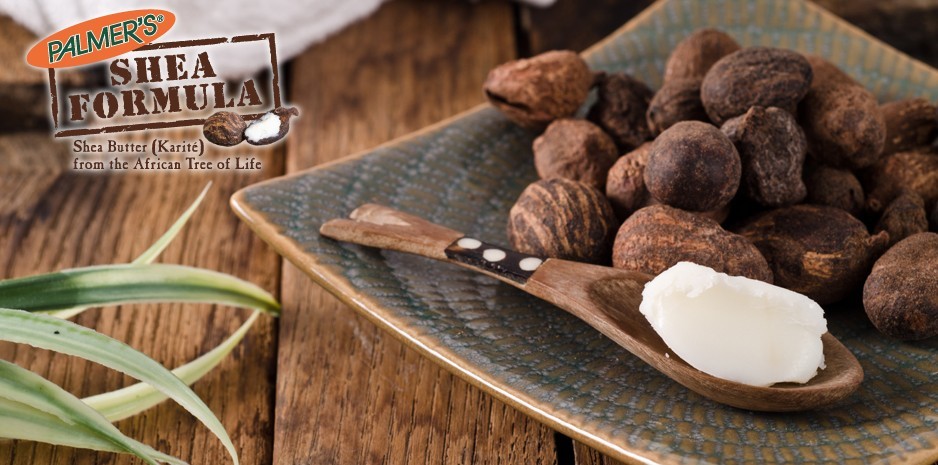
If you have frizzy, afro style hair like I do then you need some hardcore curl treatments. This formulation from Palmer’s contains raw shea butter, coconut oil and avocado oil. It contains no phenylthalenes, sulfates or parabens, along with no dyes. It is as natural and vegan as haircare can get. The raw ingredients in this mix really does fix even the most stubbornly frizzy-prone hair. It works well on dry hair as much as on towel-dried post-shower hair. I use it as a preventative measure before braving the Auckland humidity.
This product is difficult to find in New Zealand and is only available in the Chemist Warehouse in Auckland. So if you can’t actually get to these stores in person (they don’t have an online shop) you won’t be able to find it. 😦 That’s little old New Zealand for you.
*I did not receive any financial compensation for this review and I did not receive free products at all. If you would like me to review your products fairly and honestly, you can email me about it at contentcatnip [at] gmail [dot] com
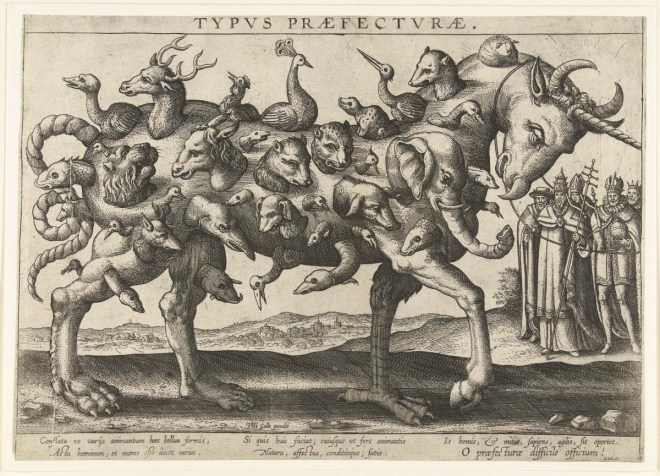
This very weighty and important subject is as relevant right now as it was in the 16th Century.
That was when a Dutch engraving by artist Pieter van der Borcht the Elder managed to capture the complexity and challenging nature of geopolitics and ruling in a country with many different ideologies and in the midst of a culture war.
The different ideologies and philosophies are show by the heads of different animals appearing like a scary hydra with many heads jostling for attention. This painting seems to be loud and reflects the confusing nature of having many voices all jockeying for power. The potency of the imagery is still as powerful today as it was back then.
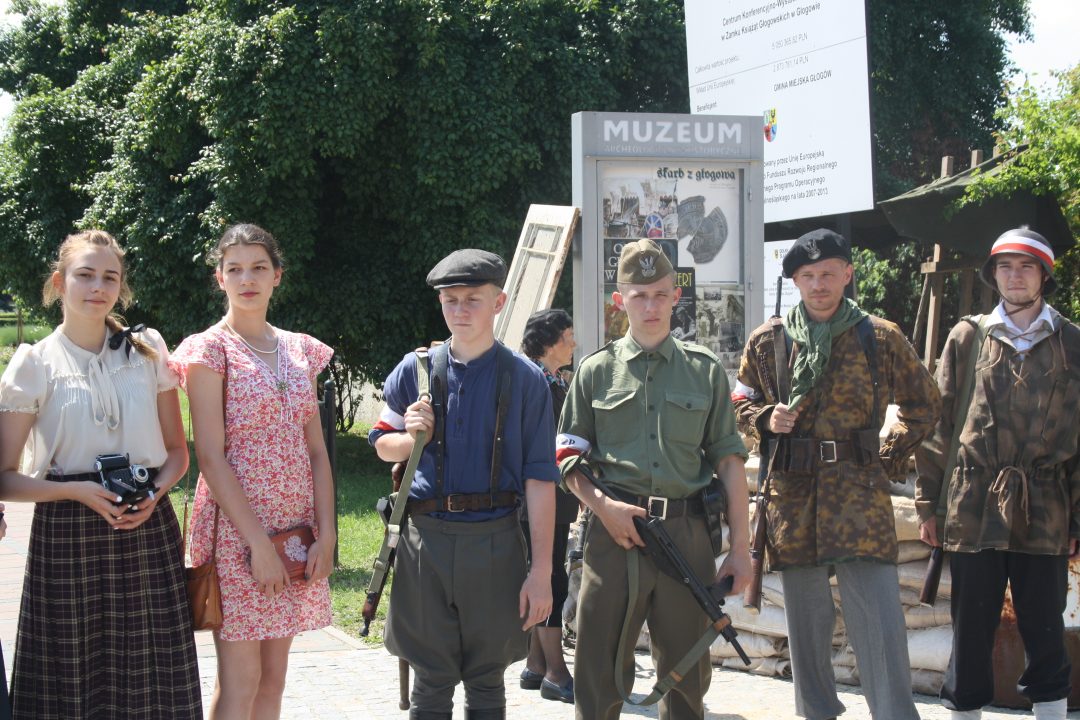
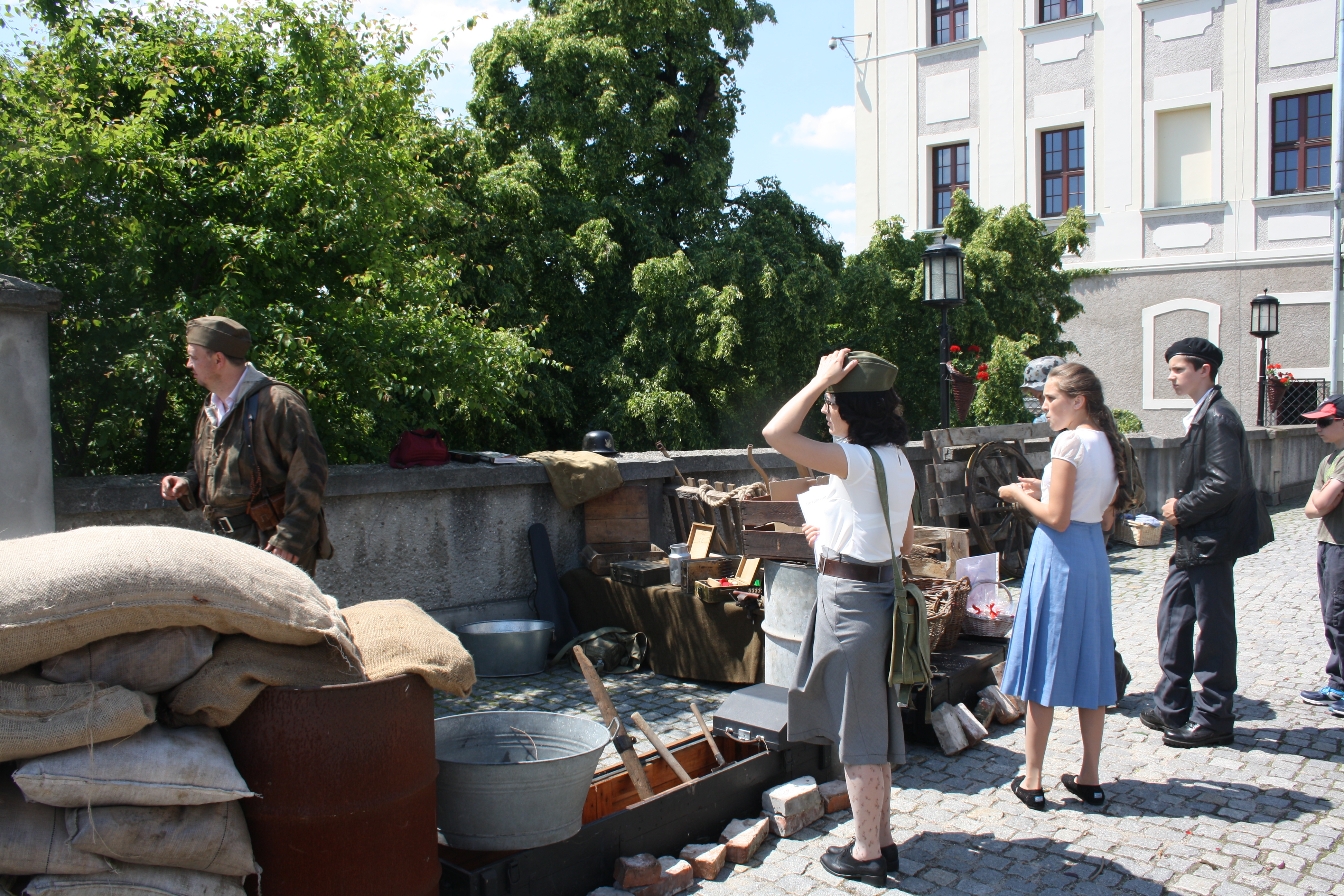
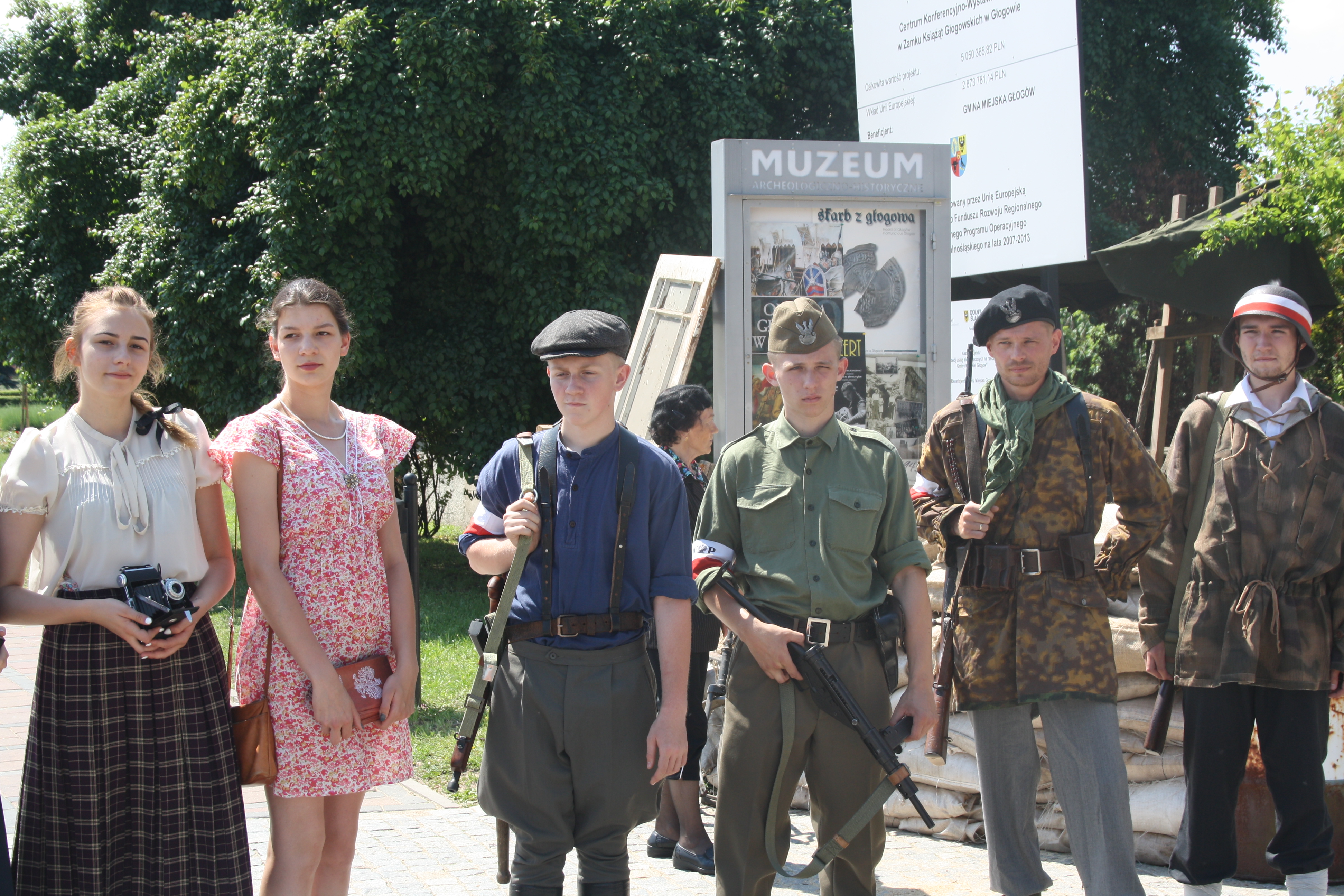
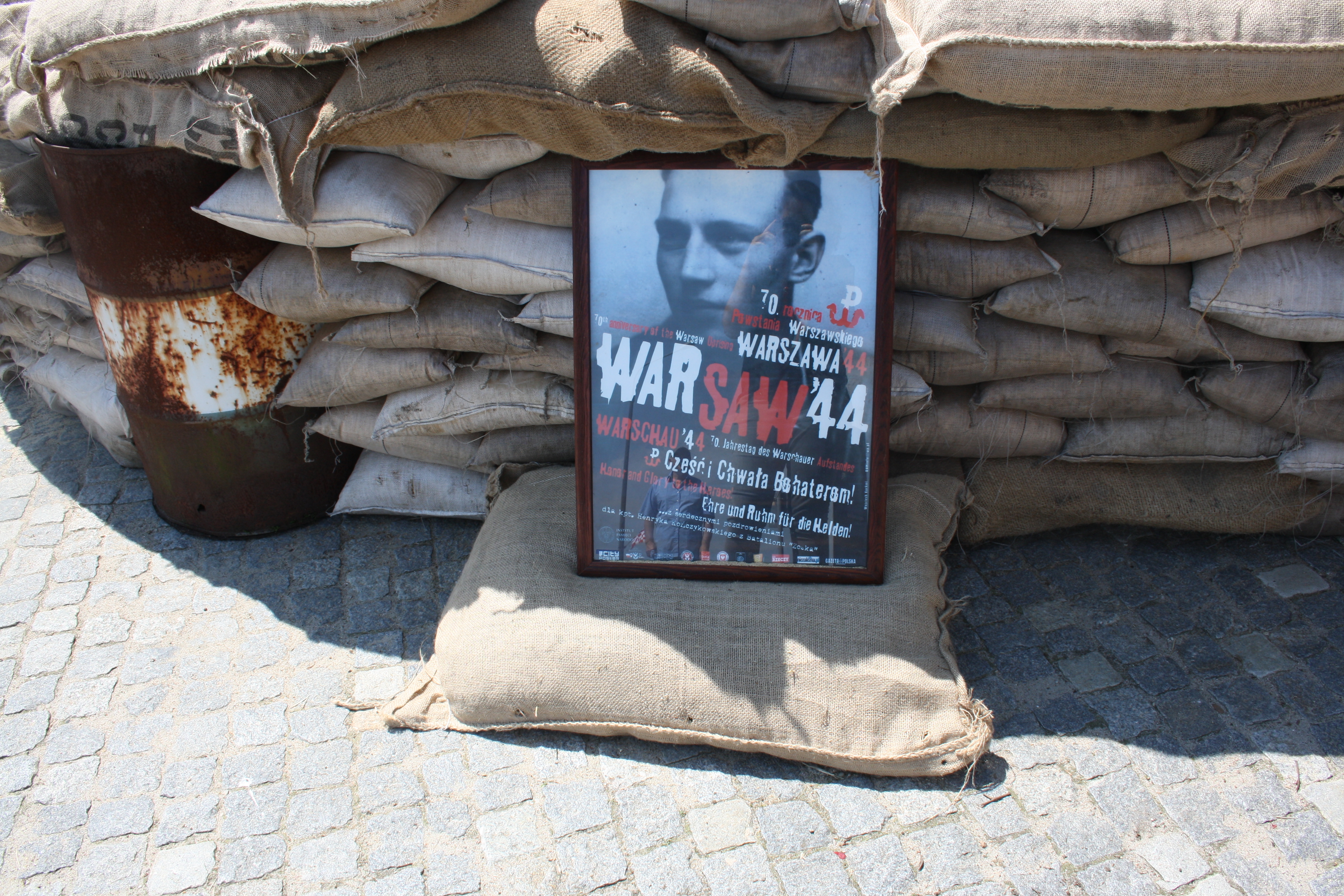
One day while walking along the lovely Odra river in Głogow on a hot and sunny day, I came upon the Museum of Archaeology and History in Głogow. Teenagers were reenacting some kind of WWII scene. This was done in conjunction with a yearly festival they have in the town called Dni Głogowa or Days of Głogow.
Dni Głogowa
I didn’t want to interrupt and so I watched them. They were all very serious about it and it struck me how very intense people are about the second world war, even now, generations later. Afterwards I found out from my boyfriend that Głogowa (also known in German as Glogau) was made into a Nazi stronghold during WWII. Then towards the end of the war in 1945 the Soviet Red Army destroyed all of the buildings.
After the war, the sizeable German population of the city was expelled and forced to leave. In May 1945, Polish settlers came to the city however most of it was in ruins, including the castle which has now been rebuilt according to its ancient plans (and is now the Museum). The rebuild of the town has been ongoing since then. The town started to redevelop once a copper foundry was built there in 1967.
Dni Głogowa
The teens here are possibly representing some of the WWII Polish resistance movement who were very active in Głogow at the time, destroying key factories, thwarting the efforts of the Nazi occupation.






 Content Catnip
You must be logged in to post a comment.