Book Review: Jonathan Strange and Mr Norrell by Susanna Clarke

A snail-paced story of everyday magic in Victorian England with footnotes aplenty.

*Contains no spoilers

Rating: 🌟🌟

Bloomsbury Publishing 2017

Reading this book was like wading through knee deep mud. I got to page 300 out of 1000 or so and I had to stop. This is a bestselling fantasy novel and a global sensation with a passionate cult following of readers. I was absolutely certain that I would love this and almost danced out of the bookshop with this brick-like book in my hot little hands.

Apparently Jonathan Strange and Mr Norrel is the Marmite of fantasy novels. You will either want to marry this book and read it several times or else absolutely hate it.

I wanted so badly to love it. Set in Victorian England in a place where magic was a mundane element in people’s lives. This had all of the ingredients for success: snappy dialogue, gorgeous crumbling medieval towns, vivid descriptions of people and places. I enjoyed all of that.

Yet there were many baffling elements to this book. There are footnotes, like in a research paper or a textbook which do absolutely nothing to accelerate or enrich the storytelling, but instead served to bog you down with unnecessary detail and frustrating minutia that has little relevance to what is happening at particular points in the book where they appear.

I was waiting for something to click, for all of the cogs to be greased into motion, both within the plot of the book and also within my increasingly befuddled brain. I would be waiting forever, as this book has a lot of pompous, purple sounding prose in it and a lot of boring characters pontificating about various things, but very little forward-motion to the story.

Jonathan Strange and Mr Norrel has a glacial pace and a subtle ‘almost not there’ sense of humour to it. Don’t believe the hype my friends. Give it a go for a few 100 pages and if you don’t like it – stop. All 1000 pages of it make good tinder for a winter bonfire and that’s about it.

Apparently the BBC series based on the book is more pacey and enjoyable.

Artists & Writers in their Own Words: Monica Olivia

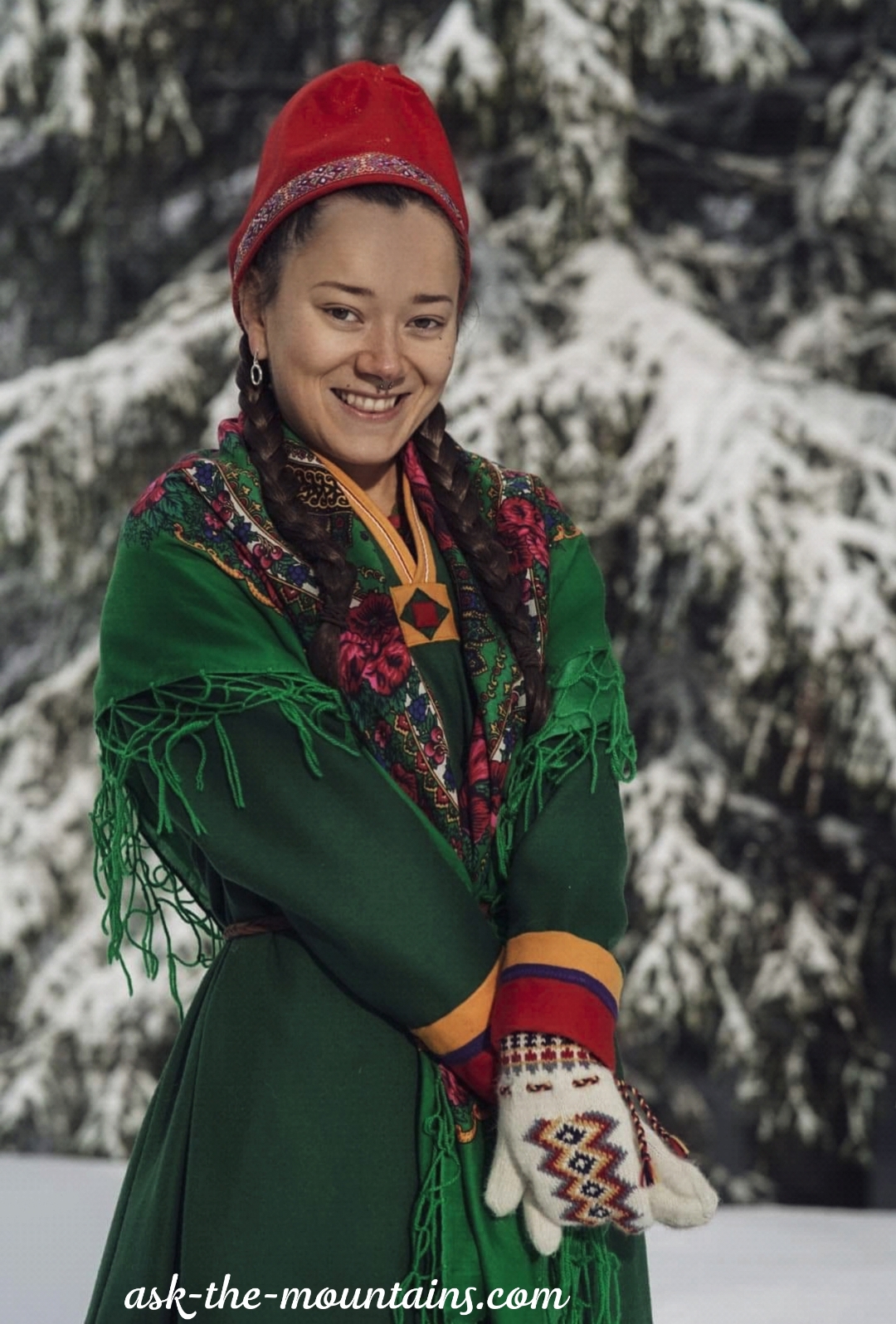
Introducing my poetic, spiritual, wise and beautiful friend from Norwegian Lapland Monica Olivia. She is a self-taught Sámi artist who makes art of mind-blowing beauty using a palette of vivid hues found in the most northerly regions of the earth. Monica also has a spiritually nourishing and beautiful blog ‘Ask the Mountains‘ where she writes about Sámi culture, motherhood, spirituality, art and nature. In this interview, Monica talks about the beauty of being Sámi and living at the intersection of two cultures, her connection to nature, Buddhism and why living in Norwegian Lapland is a place of endless inspiration for her.

What I love about being Sámi is that I automatically feel at home and connected to the land and nature. We are not separate

As Sámis, our ancestry goes back to Siberia and the Ural mountains. Even though I have never been there myself, I feel a connection to it and even the other indigenous tribes there. That, to me, is a very strong love – to the land and to community.

“The same stillness that exists in nature, exists in me. I hope to transmit this feeling of belonging to my son as well.”

~ Monica Olivia

Most of my paintings are Arctic landscapes and mountains. I hope to capture and transmit the ever-changing mood where I live in Norwegian Lapland

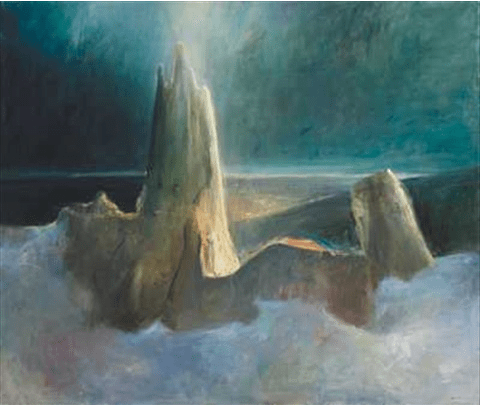
"Arctic midnight" 40 x 50 cm by Monica Olivia
“Arctic midnight” 40 x 50 cm by Monica Olivia

I love colours and creating something out of thin air. Painting is amazing like that

There are no rules, you can use whatever techniques you want and over time eventually you will naturally create your own unique style. 
I haven’t actually painted that long, only on and off for about 6 years with no formal art education. Without a doubt I want to make it many, many more years and I hope one day I can go to art school. In the meanwhile, I will continue to paint whenever I feel inspired to do so.

“January”, 45 x 55 cm by Monica Olivia


I realised at some point that art is something that goes beyond duality and spoken language

I wanted to be part of that. To express myself, perhaps specifically because I don’t feel I am that good with words and talking due to stammering.

If I was to speak to my younger self, I would tell her: ‘trust your inner voice, and stay weird’

Sounds cheesy, but that’s truly what she needs to hear.


I enjoy being able to use the surroundings, landscape, colours and light to create something new but familiar

It’s also really fun sharing what I make and getting feedback that people can feel my art pieces inside of themselves. That my art speaks to them without a single word. Another thing I love is using other artists’ work as inspiration.

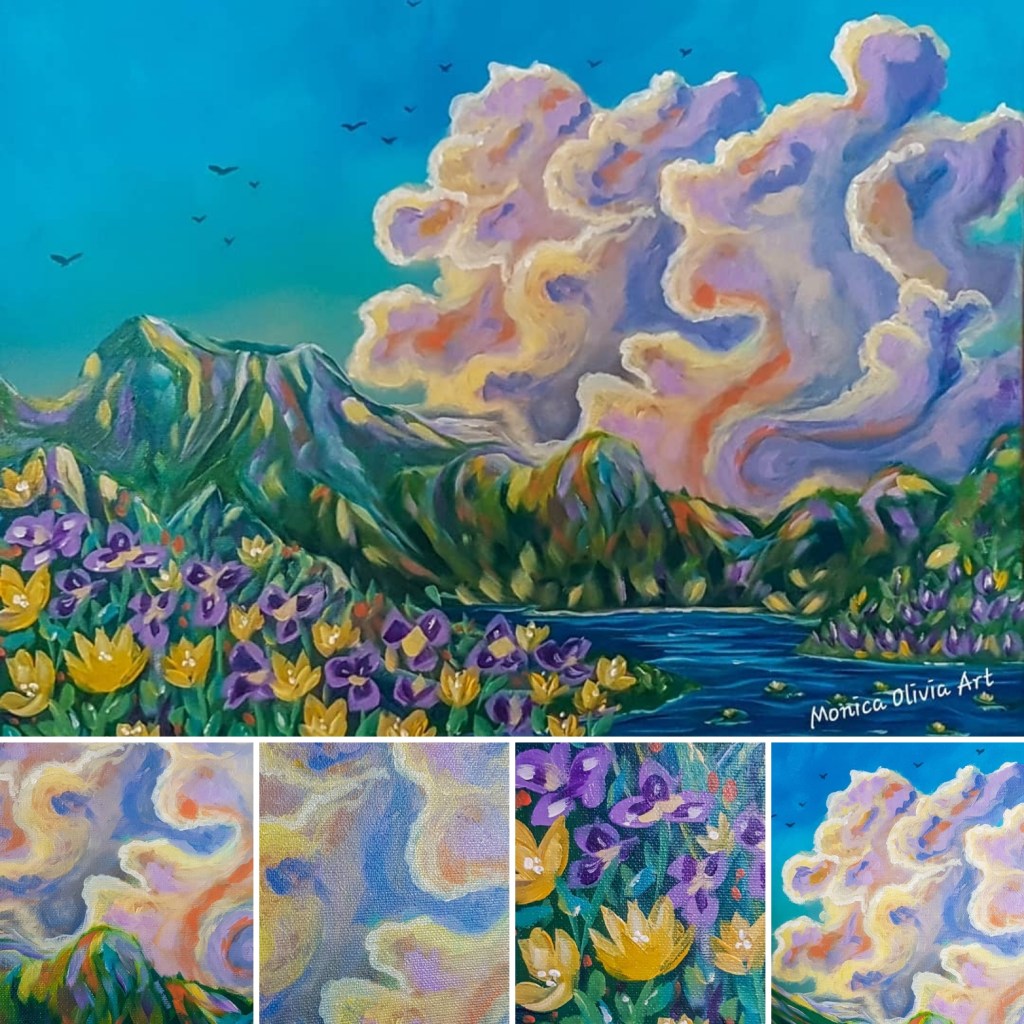
"Valley flowers" 50 cm by Monica Olivia
“Valley flowers” 50 cm by Monica Olivia


It is only in my 20’s that I have truly embraced my ethnicity as Sámi. I think this is the case for many young Sámis

I have always looked “not Norwegian/Scandinavian”. I have been asked so many times where I am “really from”. Sámis are very scattered today and most (!) Sámis don’t speak or write any of the nine remaining Sámi languages. The culture is lost many places and Sámis have adopted new nationalities and culture (Norwegian, Swedish, Russian, Finnish etc.)

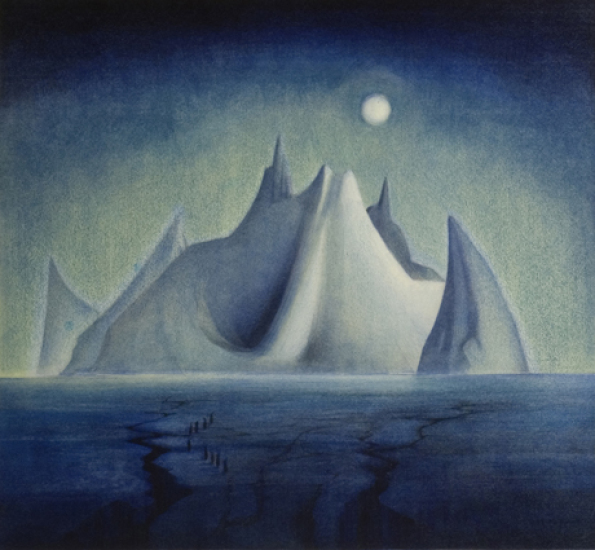
"Moonlit landscape" 32 x 24 cm
“Moonlit landscape” 32 x 24 cm by Monica Olivia

Luckily, any one person can be two or more things at the same time

So I definitely see myself as Sámi AND Norwegian. Sápmi and Norway overlap each other. 

Being Sámi has very much connected and rooted me in nature. This has made painting landscapes and animals more effortless, I believe.
~ Monica Olivia


Without a doubt Nicholas Roerich really inspires me

He was a master of painting landscapes and mountains, mainly from his travels to Asia. His work has a lot of spiritual symbolism as well. He had incredible skills when it came to colour combinations and composition. Read more about him on this blog post of mine from 2018.


Since then, I have discovered another painter who really sparked inspiration in me, Norwegian painter Vebjørn Sand

His level of dedication and perfection is truly inspiring, it’s easy to see in his works. I saw some of his original paintings at a gallery in Oslo two years back.


The Buddhist path isn’t just about feeling good and calm all the time

The Buddhist path is about unraveling and revealing our true selves, our Buddha nature, to understand ourselves and how the mind works.

I think it’s great when spiritual teachers talk openly about these matters. Many meditators get into spiritual practice because they want answers to their discontentment with life, to get happy. And often with practice we will hit spots in our minds that makes waves into daily life, for example if you have anxiety, it can momentarily get amplified when it is uncovered with practice. So it’s good to know that the goal is not to bypass all our problems, but to face them and to “cut through” them so that our natural state gets revealed. Over and over until all karmas are erased

Monica olivia, ask the Mountains


“I find it amazing how there are a little over 300 words for snow conditions in the Northern Sámi language

“It just shows how much the natural surroundings matter; the language is built around the ever-changing conditions, especially in relation to herding.

~ Monica Olivia

The same stillness that exists in nature, exists in you

"Dvale" (Hibernation) 32 x 24 cm by Monica Olivia
“Dvale” (Hibernation) 32 x 24 cm by Monica Olivia

A meditation…

Allow yourself to be yourself. Close your eyes and feel the stable mountain-like presence of your own being. Indestructable, isn’t it? Your own light, your own intuition. Keep returning to yourself. To home, to where you are safe and where you belong. The same stillness that exists in nature, exists in you. There is no seperation, and it cannot be taken away or destroyed. Allow yourself to come home, over and over, until there is no doubt. xx Monica

Monica olivia, ask the mountains

Here is more information about the Dharma path that I practice, it’s called Pemako Buddhism.


Right now I am making a short movie called “Arktos”

It is about 6 minutes long. It is part of an online festival called Klimakunstfestivalen (The Climate Art Festival). All of us involved with it have little to no experience with movie making, so it will be fun to see the result 😄 I will post it on my blog, otherwise you can follow Klimakunstfestivalen on Facebook.

A still from my new short film Arktos

You can get in touch with me and buy my art via Facebook and you can also follow me on WordPress at Ask the Mountains, thank you and I look forward to connecting with you

Comforting Thought: Doubt is a virtue, certainty is blinkered tunnel vision

If I know, then I don’t need to listen

“In our risky society, you have to be sure about things to be heard. You need to issue out confident proclamations: ‘Research shows that serotonin deficiency in the brain is the cause of depression’; ‘We now finally have a diagnostic system that deals with mental illness.

Tracey Emin. About Neon Art and Loneliness http://wp.me/p41CQf-aU
Tracey Emin. About Neon Art and Loneliness

“Doubt is needed as an antidote to this. In essence, certainty is dogmatic, whereas doubt has an important ethical value. Certainty’s ‘I know’ can easily lead to blindness. Doubt on the other hand, leads to openness, to other ways of acting and new understandings of the world.

Ancient Word of the Day: Stravaig

“However if I am in doubt, then other people’s perspectives are endowed with greater meaning. The problem with this is that, in an accelerating culture, this approach is slow and harks back to history, which isn’t deemed to be as relevant to right now. From primary school to university, we learn to ‘know’, but we also need to learn to doubt.” ~ Svend Brinkmann.

From: Standing Firm: Resisting The Self Improvement Craze by Svend Brinkmann

Svend Brinkmann

Svend Brinkmann is a Danish Professor of Psychology in the Department of Communication and Psychology at Aalborg University, Denmark. He serves as a co-director of the Centre for Qualitative Studies. He is the author of ‘The Joy of Missing Out’ and ‘Stand Firm.’

The wisdom of children

Children often use rich metaphor to describe their inner states. Far from being meaningless ramblings, often their insights into how the mind works are profound, philosophical and meaningful. In this TED talk Alise Shafer Ivey shows how children’s open minds reveal a Jungian and symbolic way of understanding consciousness, creative ideas, ancestral knowledge and how bad ideas infect the brain and more.

Ancient word of the day: Venation

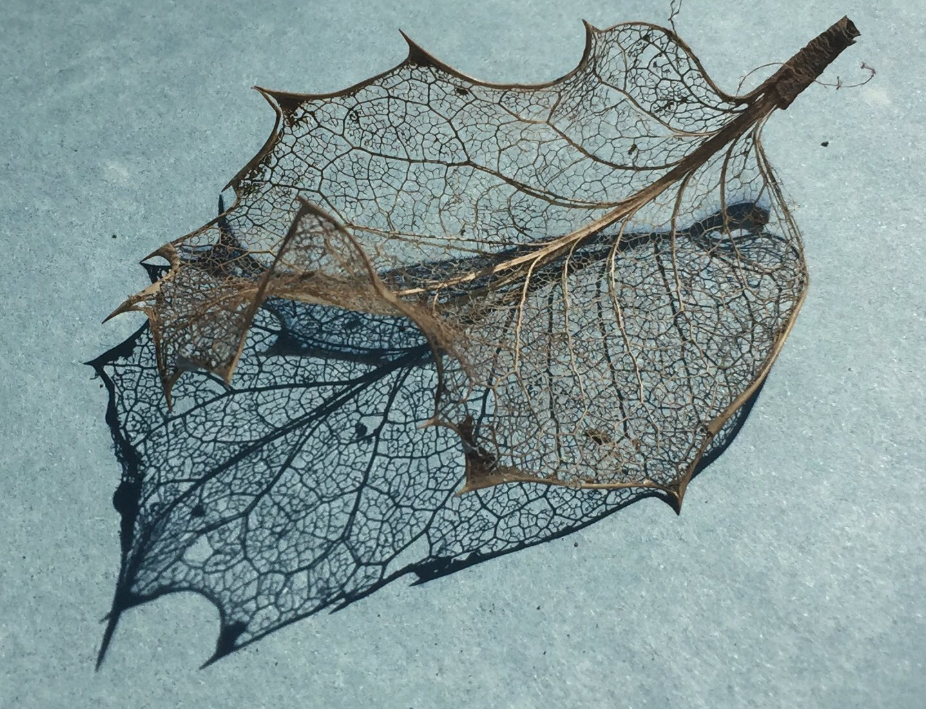
The ancient word of the Day is venation. This is a delicate and diaphanous pattern of veins appearing on the blade of a leaf.

As Autumn turns the leaves to burnished and bright colours, these delicate patterns have a final fiery display before they decay and fall to the forest floor. The wind crumbles away the leaf litter leaving behind the frail leaf filigree, a ghost echo of summer’s full flush.

Venation may be reticulate, palmate, arcuate in form depending on the structure of the plant and how it grows.

Ancient word of the day: Venation

Learning the Trees by Howard Nemerov

Before you can learn the trees, you have to learn

The language of the trees. That’s done indoors,

Out of a book, which now you think of it

Is one of the transformations of a tree.

The words themselves are a delight to learn,

You might be in a foreign land of terms

Like samara, capsule, drupe, legume and pome,

Where bark is papery, plated, warty or smooth.

But best of all are the words that shape the leaves—

Ancient word of the day: Venation

Orbicular, cordate, cleft and reniform—

And their venation—palmate and parallel—

And tips—acute, truncate, auriculate.

Sufficiently provided, you may now

Go forth to the forests and the shady streets

To see how the chaos of experience

Answers to catalogue and category.

Confusedly. The leaves of a single tree

May differ among themselves more than they do

From other species, so you have to find,

All blandly says the book, “an average leaf.”

Example, the catalpa in the book

Sprays out its leaves in whorls of three

Around the stem; the one in front of you

But rarely does, or somewhat, or almost;

Maybe it’s not catalpa? Dreadful doubt.

Ancient word of the day: Venation

It may be weeks before you see an elm

Fanlike in form, a spruce that pyramids,

A sweetgum spiring up in steeple shape.

Still, pedetemtim as Lucretius says,

Little by little, you do start to learn;

And learn as well, maybe, what language does

And how it does it, cutting across the world

Not always at the joints, competing with

Experience while cooperating with

Experience, and keeping an obstinate

Intransigence, uncanny, of its own.

Ancient word of the day: Venation

Think finally about the secret will

Pretending obedience to Nature, but

Invidiously distinguishing everywhere,

Dividing up the world to conquer it,

And think also how funny knowledge is:

You may succeed in learning many trees

And calling off their names as you go by,

But their comprehensive silence stays the same.

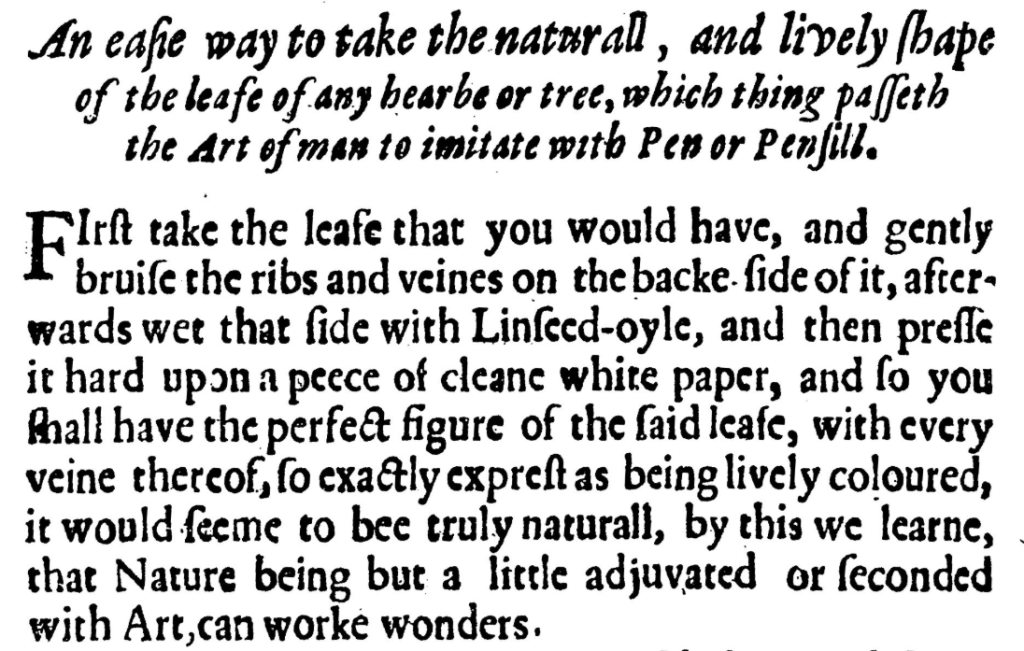
John Bate: The Mysteryes of Nature and Art

Ancient word of the day: Venation

Bi-Focal by William Stafford

As fire burns the leaf

and out of the green appears   

the vein in the center line

and the legend veins under there,

So, the world happens twice—

once what we see it as;

second it legends itself

deep, the way it is.

10 Interesting Things I Found on the Internet #45

Haere mai and welcome to another edition of the internet-famous 10 Interesting Things edition 45. This week we roll out the red carpet for some mystical delights and delightful folks for your viewing and listening pleasure.


Phillip Peris – “Lightning & Thunder” Didjeridu Dreamtime

Hypnotic, earthy and mystical music that’s great for focus and concentration…


The strangeness of the discovery of the platypus in 1798

From the always fascinating blog about animals, Nature Nook.

Aboriginal legend says that the platypus is a hybrid between a duck and a water rat.

Even though the scientific establishment conceded that the platypus was a real animal, it took another 30 years before they accepted it was a mammal. True, it had fur – a unique and defining mammalian characteristic – but, unlike most mammals, the platypus had a single, all-purpose rear vent, a cloaca, like that of a bird or reptile, through which it does all its defecating, urinating, mating and birthing. To further complicate matters, no one could find those all-important mammary glands – and in any case, some scientists thought that an animal with a large, flat bill couldn’t possibly suckle.

In time, some of the mysteries of the platypus were solved. When specimens of baby platypuses reached Europe, scientists realised that they would have no difficulty in suckling because they hadn’t yet developed the bill that would otherwise have made it very awkward [1]. But it hardly mattered anyway because it was also discovered that female platypuses do not possess nipples; they simply ooze thick milk from modified pores in their skin, which the young suck from tufts of hair on their mother’s underbelly.

NATURE NOOK

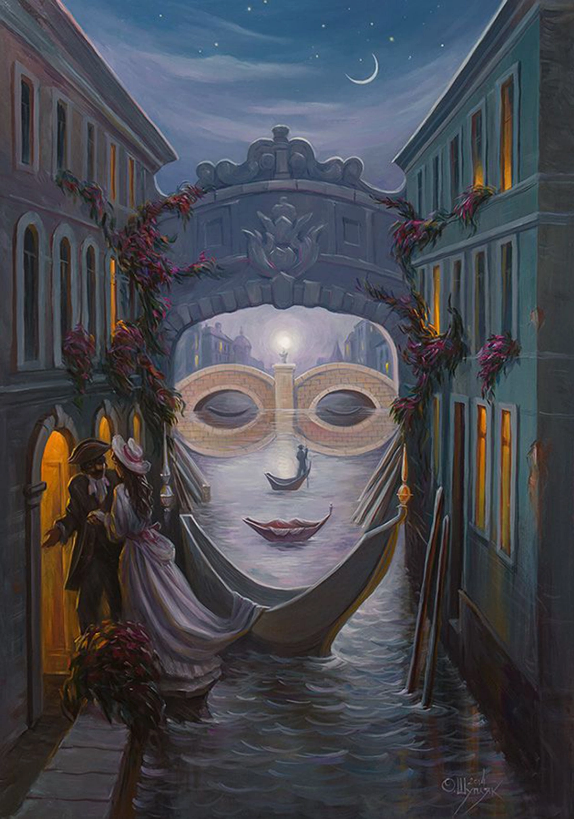
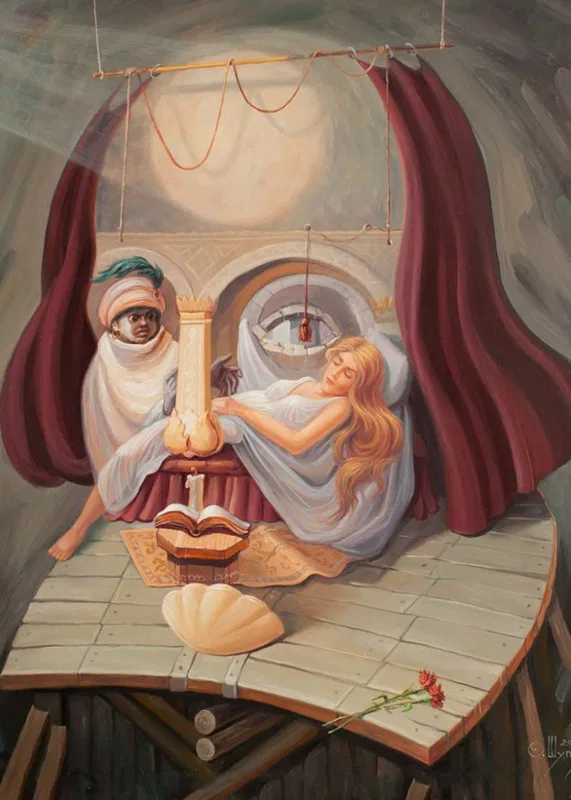
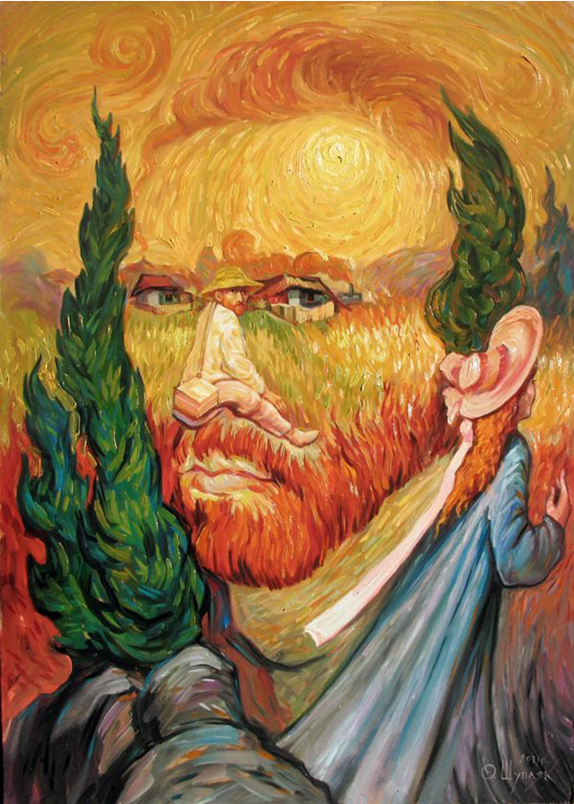
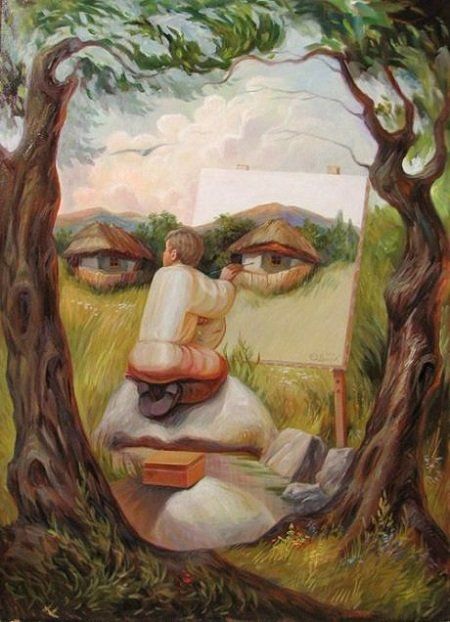
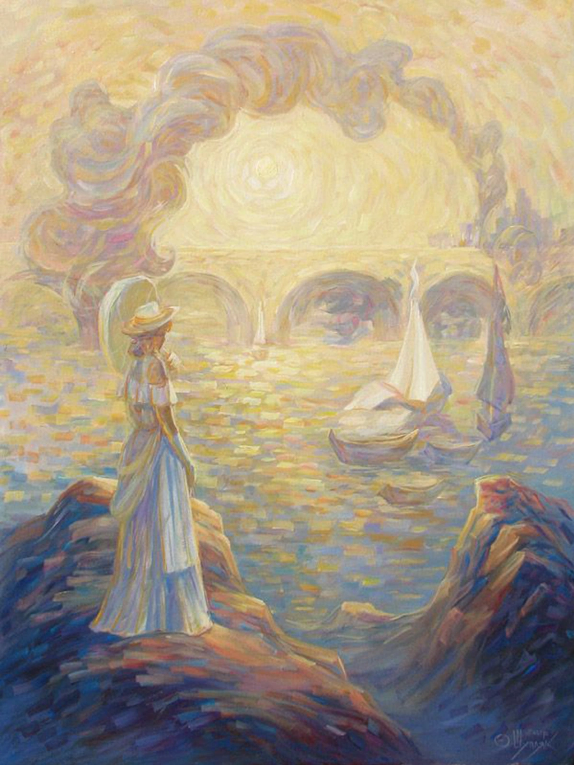
Oleg Shupliak’s swirling surrealism and optical illusion art

Oleg Shupliak is an immensely talented Ukrainian artist born in 1967 in Ternopil. In 1991 he graduated from the Architecture Department of the Lviv Polytechnic National University. He’s known for his artistic works including optical illusions and is best known for his imaginative portrait heads named ‘Hidden Images’, where he profiles icons from different periods of history. Via Saatchi Art


Cruisy, chilled out vibes at the edge of the pool

An enjoyable mash-up of 90’s R&B, elevator muzak and spacey electro sounds. Here is a chirpy 27 minutes to spend splashing around in this fluorescent coloured pool, I hope you enjoy it as much as I did!


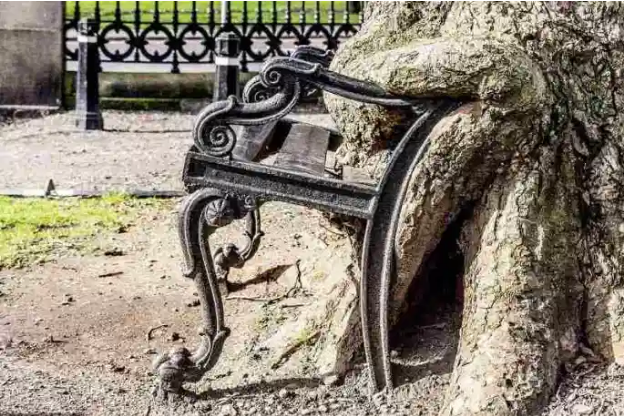
The Hungry Hungry Trees of Ireland

In Ireland, the Ents – I mean trees, are so ravenous that they consume park benches and wrought-iron furniture! Courtesy of the quirky and enjoyable blog E Morfes.


Latin insults and swear words

If someone really pisses you off, here’s some ways to creatively respond…

Latin insults and swear words
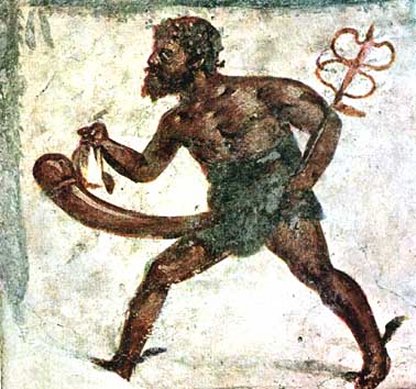
Latin Boner Al Fresco
  • Faex – shit
  • Irrumator – Bastard
  • ede faecam- Eat shit
  • Mentula – Penis
  • Meretrix – Prostitute
  • Bovis Stercus – Bullshit
  • Futue te ipsum – Go fuck yourself
  • Es scortum obscenus vilis – You are a vile, perverted whore
  • Es mundus excrementi – You are a pile of shit
  • Moecha Putida – Dirty slut
  • Podex perfectus es – You’re a complete arsehole
  • Potes meos suaviari clunes – Kiss my arse
  • Futue te ipsum! – Go fuck yourself!
  • Perite – Fuck off!
  • Fututus et mori in igni – fuck off and die in a fire

Via Reddit


Catepillars wearing high vis tracksuits and other slimy cute things


Share your favourite music memory: Man V Music

Man V Music has a wonderful blog about different kinds of music and also the philosophy and thoughts about music. As a fan of weird and wonderful music, I love to contribute my thoughts there. Here he gets his friends to share their favourite music memory. I encourage you to follow him and contribute your own memories to the thread! Here’s mine…

One of my earliest memories, I think I was about 3 or 4 was riding with my dad in his truck and both of us singing ‘We built this city on Rock and Roll’ by Starship; He worked on cranes on big buildings and I literally thought at the time that he built the city and that cities could be built on rock and roll. It’s still a great song and it still gives me a happy, energised feeling to hear it now. I think I still love 80’s electro now because of this song and others.


When you’ve got a PhD in Astrophysics but you’re working in a McDonald’s Drive Thru…

Sometimes you need to dress as a pink bean to do an epic drums solo


Softness is not weakness

“Softness is not weakness. It takes courage to stay delicate in a world this cruel.” Beau Taplin

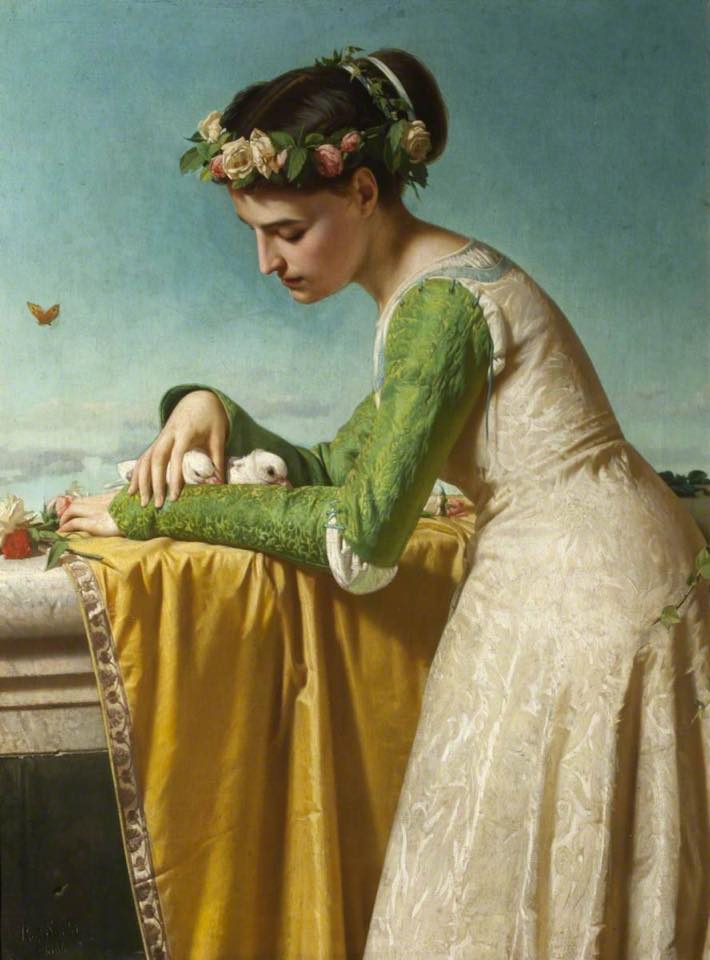
Raffaello Sorbi – An Italian Girl with Doves. Via Twitter


Dean and Nala stay in St Florian’s Monastery in Austria

Expect a lot of human/cat snuggles and cosyness.


I hope you enjoyed this week’s tidbits let me know what you think below…


Content Catnip cat and breakfast gif

Did you enjoy this post? Consider buying Content Catnip a coffee on Ko-Fi

Ancient Australian megafauna: Procoptodon goliah

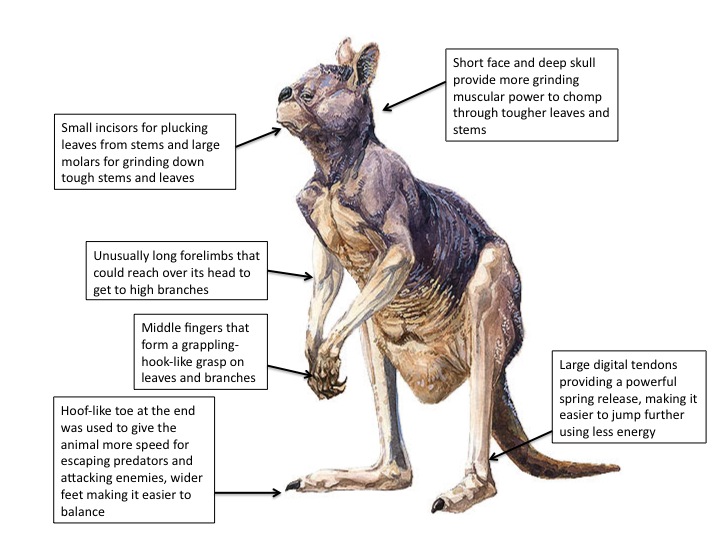
I don’t know about you, but large Australian mammals and marsupials have got a special place in my heart. However of all of the large beasties to have lurched around in Australia I am most besotted with animals that have long ago passed into the dusts of yesteryear such as the behemoth 200 kilo Procoptodon Goliah commonly known as the Giant Short-faced Kangaroo. This animal like a modern Kangaroo could prop itself up on its tail and reach a terrifying three metres tall when perched in that position.

Ancient Australian megafauna: Procoptodon goliah

It lived in the Pleistocene era and had a squashed snout and a short and deep skull with powerful jaws and short stubbly teeth gave away to scientists that the animal had a penchant for ruffage and leaves.

Like modern marsupials the Procoptodon Goliah gave birth to hairless young in a pouch and then nurtured them until grown. It was found everywhere in mainland Australia from the Murray-Darling basin in the south to the Eyre peninsula in the east and was adaptable to many different environments. Although it’s closest extant relative is still under debate and is thought to be closely related to the Banded Hare Wallaby rather than extant Kangaroo species.

Standing at an imposing 2 metres in height (3 metres when standing on its hauches)  Procoptodon Goliah would have been quite a beast to behold somewhere in the outback.

For 30,000 years the Procoptodon Goliah population would have co-existed with Aboriginal tribes throughout Australia. In New South Wales, many people still recount stories of a large, long-armed, aggressive kangaroo that would attack people. Its extinction may have been due to climate shifts during the Pleistocene or due to hunting practices. Although it would have been a formidable and terrifying foe to tribespeople living in Australia. If you’re interested in extinct megafauna, you should also check out my post about the Haast’s Eagle, a terrorising relic of Aotearoa and this post about the extinct Tasmanian Tiger by Robert Horvat.

Comforting Thought: The pursuit of our ‘true feelings’ infantilises us

Or to put it more bluntly and less delicately – Fuck your feelings! At least that’s the general idea that I extracted from this quote by Danish philosopher and psychologist Svend Brinkmann.

“There is nothing about feelings in themselves that means we must trust them – let alone express them. In an ever-changing cultural situation, our emotions probably change faster than ever.

“As a rule, our feelings don’t constitute a foundation on which to stand firm. Rather, they change in response to prevailing circumstances and trends. It’s an illusion to believe that delving deep into your inner feelings is a path to authenticity. There’s nothing desirable about exploding in anger at a fellow motorist driving too slow in the fast lane, even if it’s authentic, even if you really are angry about it.

Every Picture Tells A Story: Child Sees Television for the First Time

“In essence the worship of authenticity in the pursuit of true feelings infantilises us. The toddler who is swaddled in his feelings – who smiles when happy and cries when frustrated – is therefore implicitly presented as the ideal. Such children may be sweet and delightful, but this cult of the authentic and the childlike is highly problematic in adulthood. As an adult you should instead admire those who are capable of controlling – even suppressing negative emotions.” ~ Svend Brinkmann

From: Standing Firm: Resisting The Self Improvement Craze by Svend Brinkmann

Svend Brinkmann

Svend Brinkmann is a Danish Professor of Psychology in the Department of Communication and Psychology at Aalborg University, Denmark. He serves as a co-director of the Centre for Qualitative Studies. He is the author of ‘The Joy of Missing Out’ and ‘Stand Firm.’

10 Interesting Things I Found on the Internet #44

Roll-up, roll-up to the bizarre three-ringed circus of 10 Interesting Things, where acrobats breathe fire and things go bump in the night. I hope you enjoy this carnival of weekly delights….


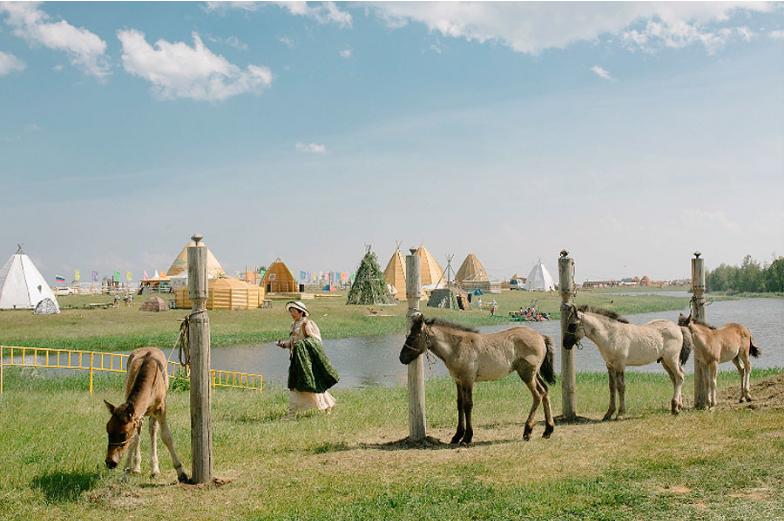
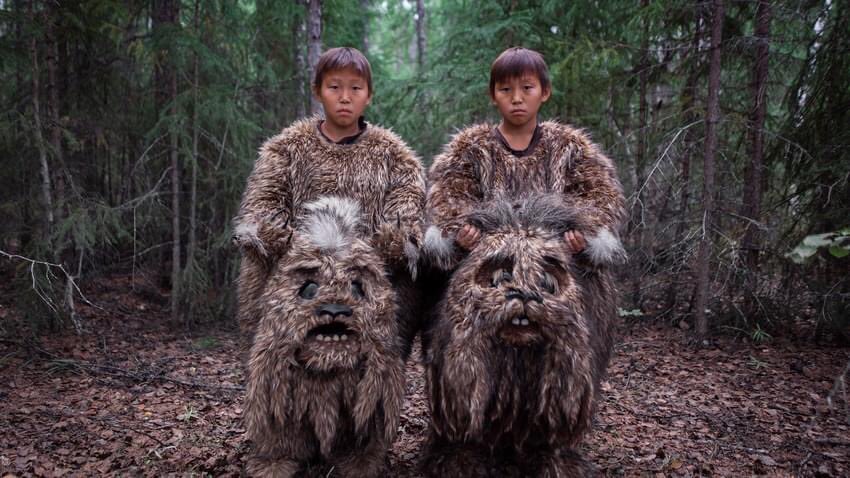
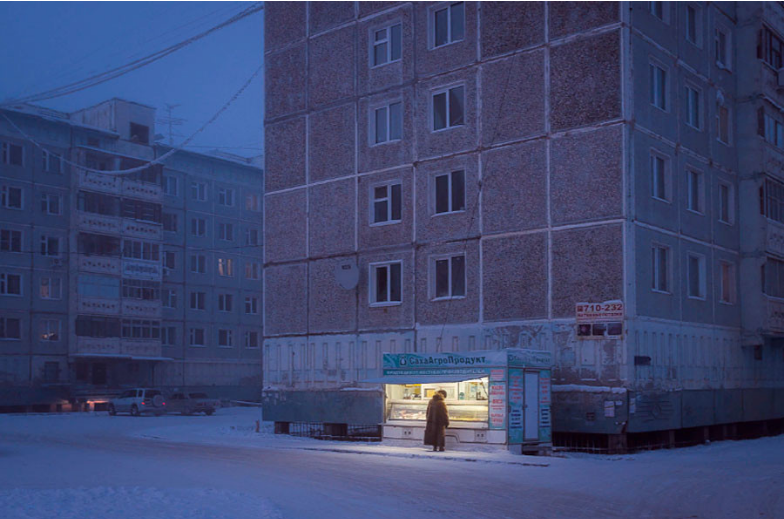
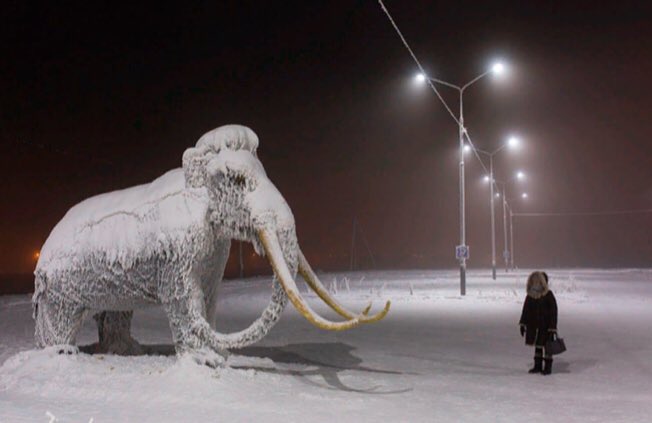
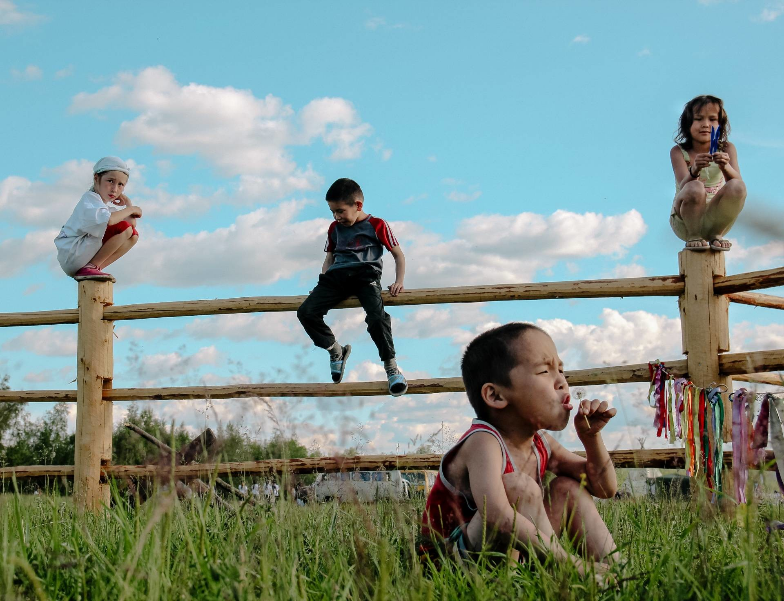
Fairytale images from Yakutia, Siberia by Alexeï Vassiliev

I love the ‘Where the Wild Things Are’ vibes of these places and the combination of myth, fantasy and the harsh extremes of the Siberian landscape. Via Nina Byzantina on Twitter


Cosy firetower on a stormy night aural ambience

This is a great background soundtrack to soothe you this weekend.


Brittany’s Beastly Folk Remedies

Stopping a cow from farting was a tricky business in medieval Brittany…

Brittany’s Beastly Folk Remedies

A most curious ritual was recommended in the fight against excessive flatulence where it was necessary to walk around the animal three times while holding a blessed candle with which one made the sign of the cross; reciting during each circuit the following charm: “Leave the head where you are tied and go to the land of Arabia where there is neither bread nor wine.” It was necessary to perform this ritual twice so as to have circled the beast six times.

Via Bonjour from Brittany

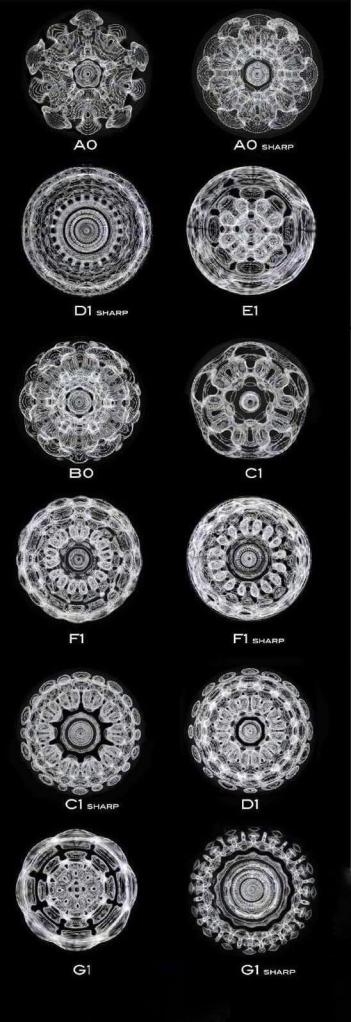
How different piano notes reverberate through a bowl of water

Did you know that different sounds reverberate differently through water, causing fractals of exquisite shapes? I had no idea!

via Reddit


A Countdown of Famous Biscuit Bands

Adam Sharpe is a very talented guy to come up with this verbose and witty comedy gold all of the time! He’s a one-man-literary-meme-making-machine! If you aren’t following him yet, you should see what he’s up to on Twitter.

10. Fleetwood Macaroons

9. Florentine and the Machine

8. Bourbon Jovi

Lionel Rich Tea : memes

7. Hob Nob Dylan

6. PJ & Dunkem

5. Gari(baldi) Barlow

4. Jaffas on Airplane

3. Penguin Stefani

2. Oreo Speedwagon

1. Lionel Rich Tea

By the genius and inimitable Adam Sharpe


The Epic of Gilgamesh sung in ancient Sumerian

One of the oldest songs in the world, sung as it would have been thousands of years ago…


A Child Born Out of the Fog · Anaïs Nin

I love the cadence of her voice and the soft unrecognisable accent she has, which is a total mash-up. She has a gentle and magnetic way about her when she tells stories.


Lush – Out of Control

Lush are a really amazing band from the 90’s that aren’t talked about often, but they are criminally underrated. I love the sweeping, epic guitars and swirling floaty vocals here in a song of theirs from 2016. The video clip with the murmurations of starlings at sunset, it’s very dreamy!


Cognitive biases are the irrational mind traps that we all sometimes fall into

Here’s a really amazing poster about these biases that can easily and unconsciously creep into your life and how to recognise them and also counteract their effects. (Click on image to go to full sized poster).

Via Reddit

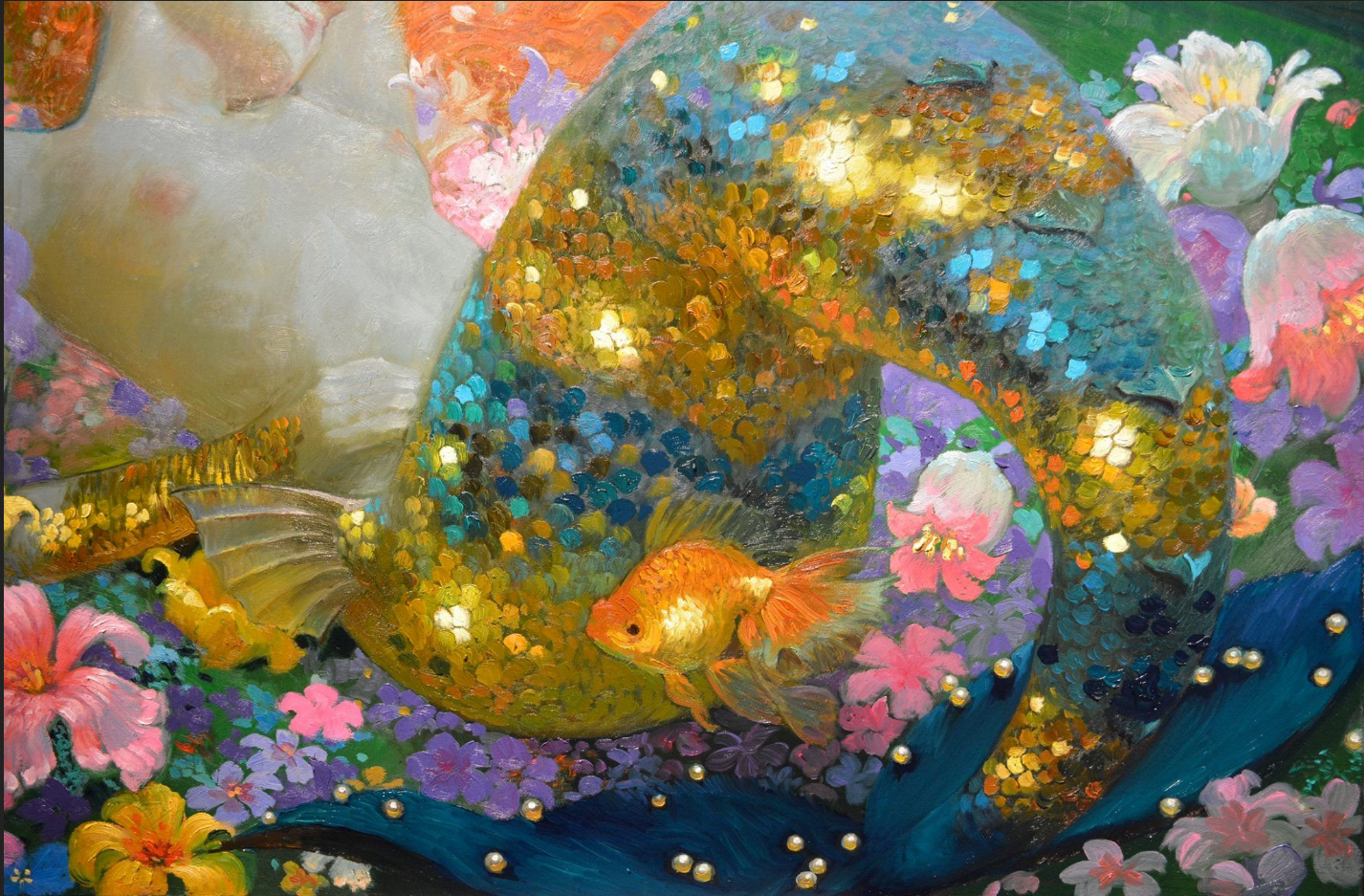
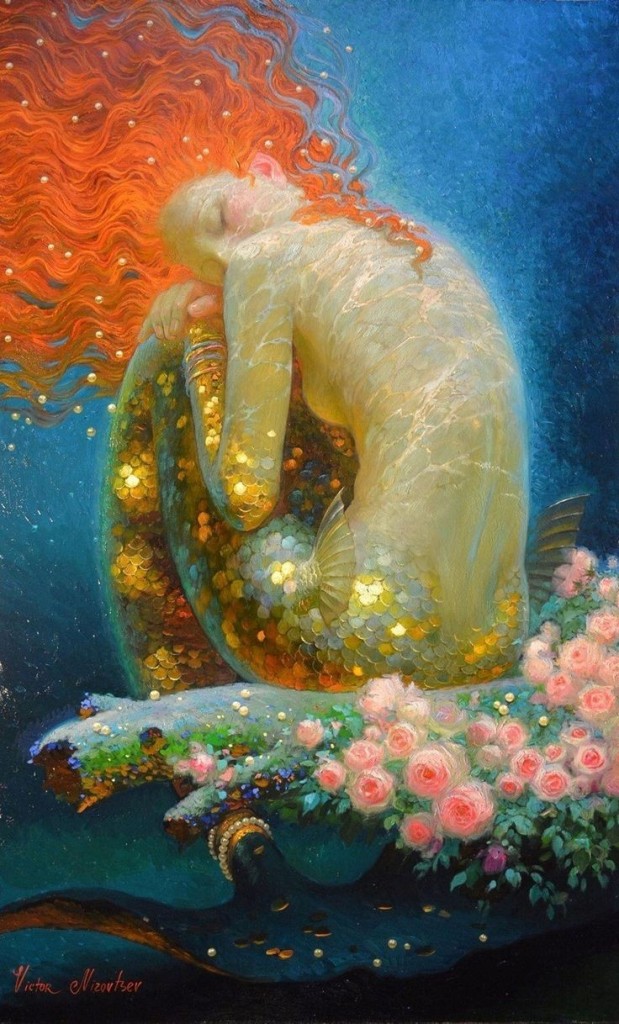
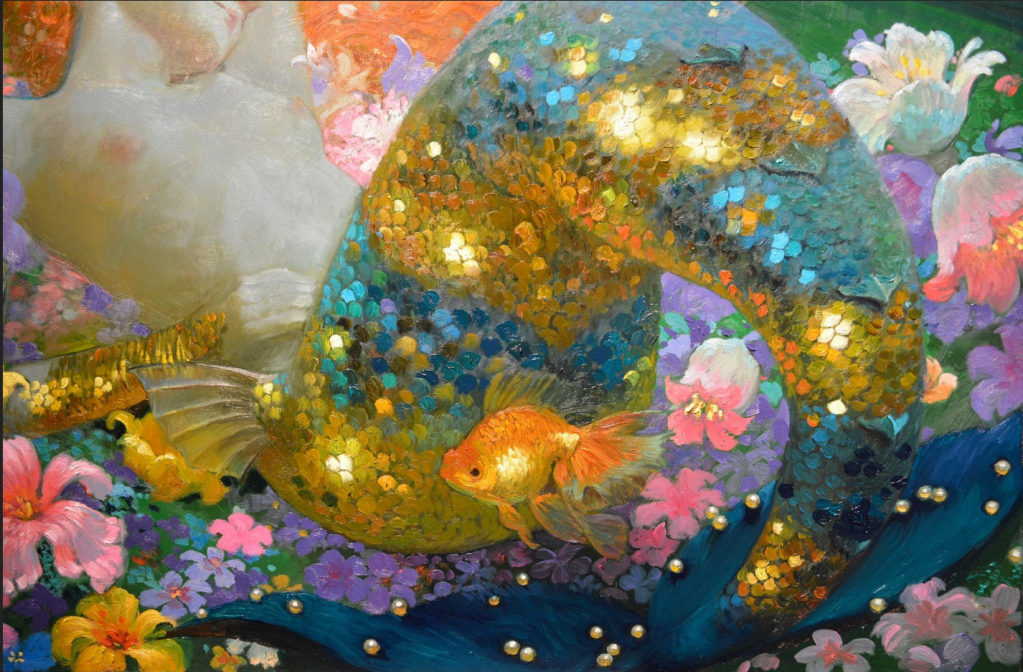
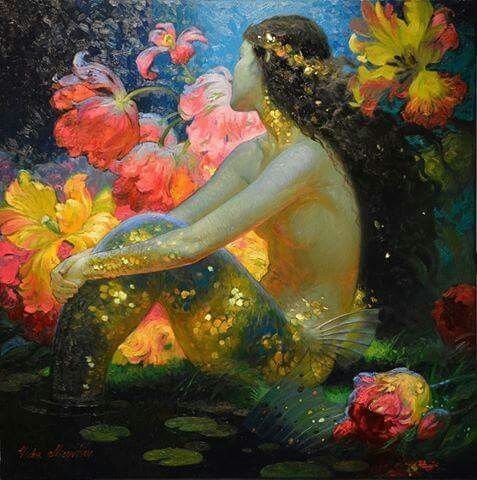
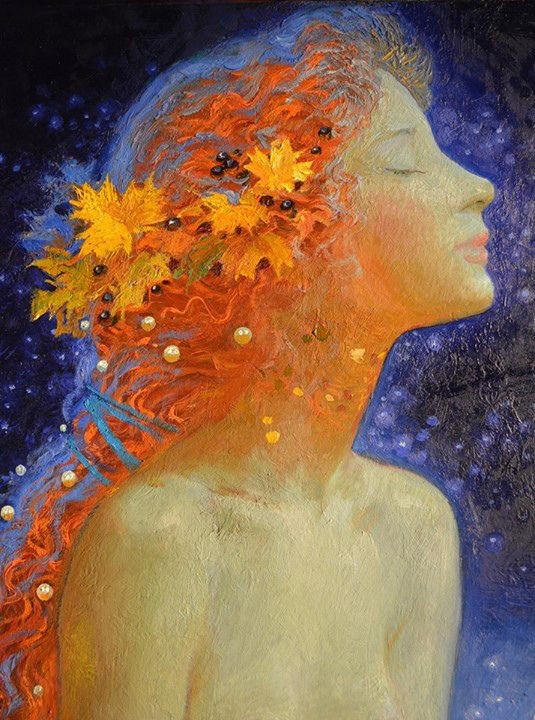
Victor Nizovtsev’s sublime fantasy art

Victor Nizovtsev was born in Siberia near lake Baikal in 1965 and studied at various art schools in Russia culminating in studying at the prestigious Vera Muhina University of Industrial Arts in St Petersburg. In 1997 he moved to the US and now lives in Maryland with his wife and children where he continues to paint and sell his art, with numerous solo and group exhibitions. Via Mariana Gomez on Twitter

Info via the Art Live and Beauty blog


Pygmy Marmosets eating grapes

I love how their little faces show so many micro-expressions in a few seconds! Curiosity, joyful abandon at eating the grapes. They are the smallest monkey species and only weigh as much as a stick of butter and yet they pack loads of personality into this wee package! Via Interesting as Fuck on Reddit.


I hope you enjoyed this week’s finds, please let me know what you think below…

Content Catnip cat and breakfast gif

Did you enjoy this post? Consider buying Content Catnip a coffee on Ko-Fi

Ancient word of the day: Cirrocumulus

Origin: 1650s. Cumulus ” a heap, pile, mass, surplus ” in Latin

*keue “to swell” in Latin.

Cirrocumulus are flocks of fleecy clouds that whisk past us on a glorious spring day. Often their appearance in the evening foretells of a stormy morning the following day. At least thats old shepherd’s wisdom.

German

Schäfchenwolken: Little sheep clouds.

Ancient word of the day: Schäfchenwolken

Cirrocumulus are also known as hair curl heaps. These smaller and fluffier clouds we get during fairweather are literally humble heaps.

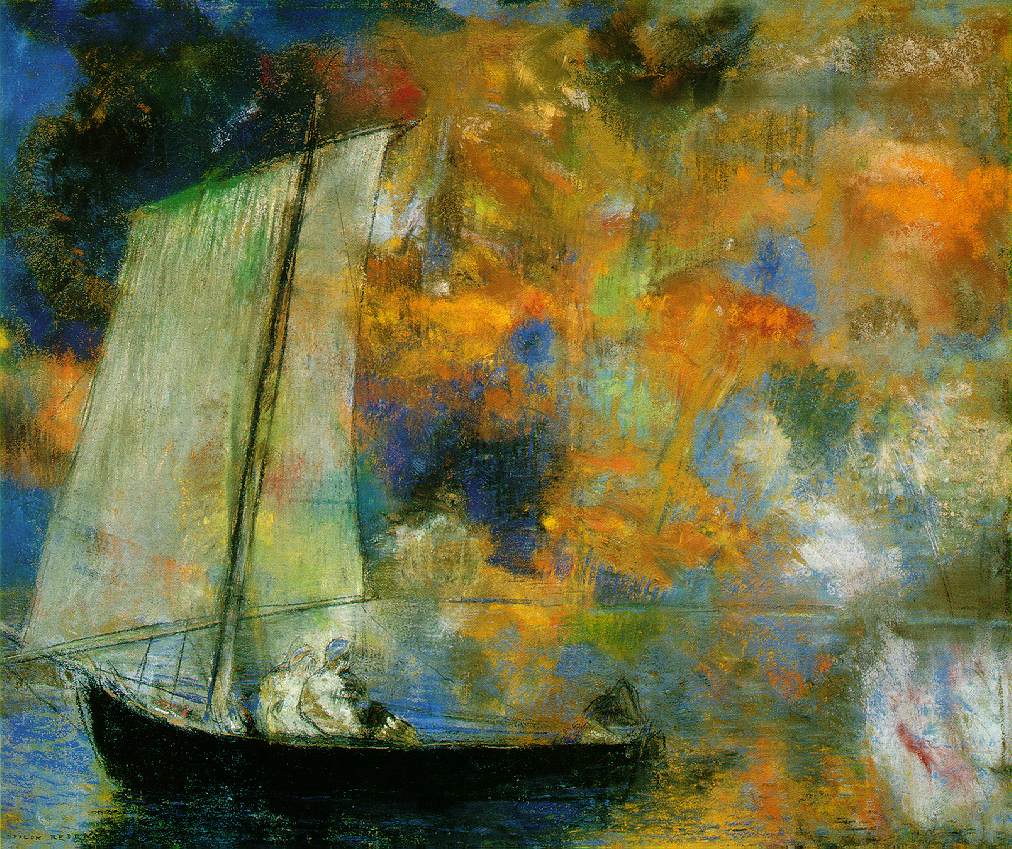
Flower Clouds by Odilon Redon

Mackarel Sky

English slang word for a sky smattered with cirrocumulus or Schäfchenwolken clouds. Popular because of a similarity to the lined skin of a mackarel. Collins Dictionary

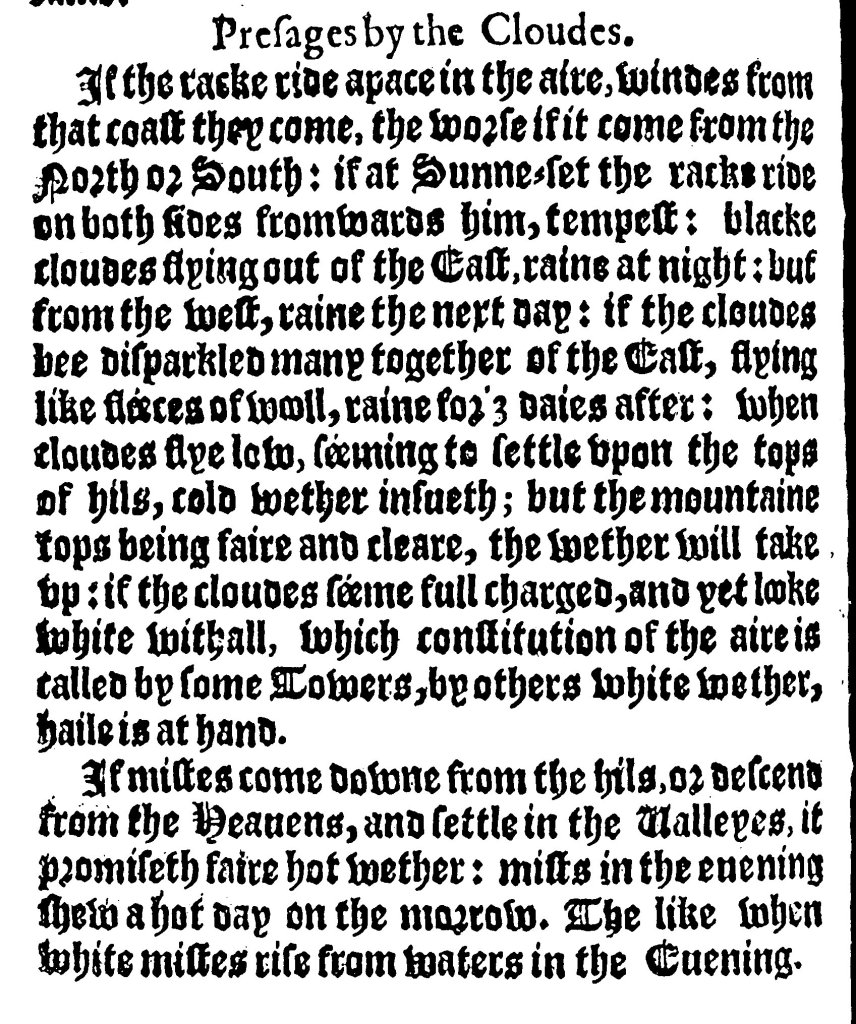
“.. if the clouds be disparkled many together, of the east, flying like fleeces of wool: rain for three days after.”

Presages by the clouds in Arthur Hopton’s A Concordancy of Yeares (1612)
“.. if the clouds be disparkled many together, of the east, flying like fleeces of wool: rain for three days after.” Presages by the clouds in Arthur Hopton’s A Concordancy of Yeares (1612)
Ancient word of the day: Schäfchenwolken

Italian

Cielo a pecorelle, pioggia a catinelle
Little sheeps shaped sky, rain will fall in basins

Spanish

Ovejitas al atardecer, lluvias al amanecer
Little sheep at sunset, rains at dawn

French

Nuages en forme de fleurs de coton
Clouds shaped like cotton flowers

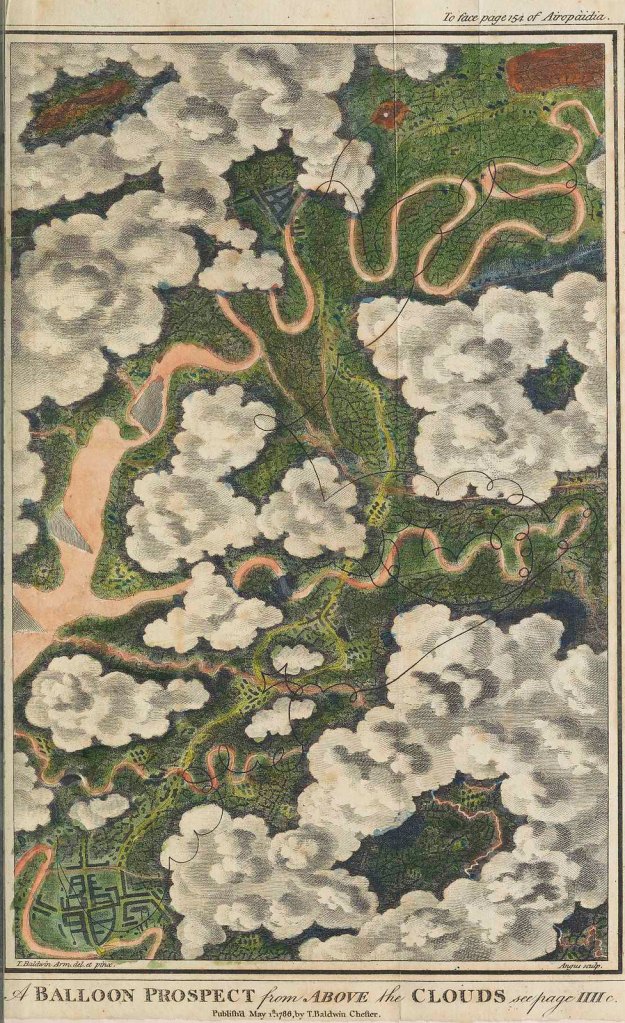
“Balloon-Prospect”, featured in Thomas Baldwin’s Airopaidia (1786) — Public Domain Review
11 Archaic Words That Deserve A Full Revival
Lighthouse in the clouds

Anonymous

Clouds that wander through the sky,
Sometimes low and sometimes high;
In the darkness of the night,
In the sunshine warm and bright.
Ah! I wonder much if you
Have any useful work to do.

Hawkins - Sea Clouds
Hawkins – Sea Clouds

John Brainard

Ye clouds, who are the ornament of heaven,
Who give to it its gayest shadowings,
And its most awful glories; ye who roll
In the dark tempest, or at dewy evening
Hang low in tenderest beauty; ye who, ever
Changing your Protean aspects, now are gather’d,
Like fleecy piles, when the mid sun is brightest,
Even in the height of heaven, and there repose

Ancient word of the day: Schäfchenwolken

John B Tabb

Do you remember, little cloud,
This morning when you lay—
A mist along the river—what
The waters had to say?

Have you ever visited the Cloud Appreciation Society?

Well if you haven’t yet, then you should. They are true to their namesake and appreciate clouds on a global scale. Have a look at their gallery for inspiration on the sheer diversity and beauty of these divine, shapeshifting celestial wonders.
In case you’re wondering, it costs around $30 a month to become a member of the Cloud Appreciation Society. As a lover of clouds myself, I am somewhat coming around to the idea.