
10 Interesting Things I Found on the Internet #47

I hope you are sitting somewhere cosy and that you’re ready to have your senses delighted by this week’s interesting finds from the pelagic zone of the internet, where whale sharks and dugongs float by in Poseidon’s dreams…


How to make flying dragons (1634)

The flying dragon is somewhat troublesome to compose, it must be made of either dry or light wood or crooked lane places, or of thin whalebones covered in Muscovie glass and painted over. In the body thereof, there must be a void to pass the rope through, unto the bottom of this cane must be bound one or two large rockets.

The Mysteries of Nature and Art (1634) — an illustrated manual for building devices relating to water works, fireworks, drawing, painting + miscellaneous experiments “confusedly intermixed”:
Public Domain Review

Via Public Domain Review on Twitter.


Jameela Jamil’s ‘I Weigh’ podcast

I love Jameela Jamil’s podcast called I Weigh, it’s raw, real and authentic and she swears a lot, but in an endearing and hilarious way. Each week she interviews a dynamic, funny and world-shaping people (both celebrities and lesser known people). She does this in a charismatic, raw and real way. Her thoughts on the world and how to deal with all of the weirdness and chaos going on this year really resonates deeply with me. In this episode she interviews an icon, Jane Fonda!


Chiemi Manabe ‎– 不思議・少女 (1982) FULL ALBUM

Take a delightful Japanese electro journey into the heart of Atari and Nintendo land. For some reason, this reminds me of the soundtrack to the film The Neverending Story, it has a similar energy…


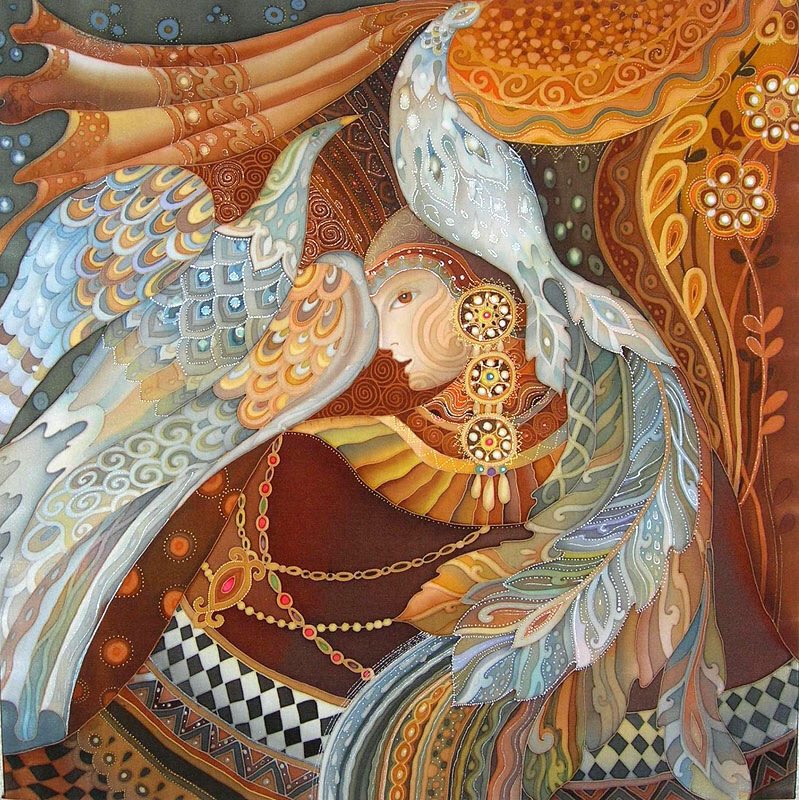
Dreamy and romantic Batik designs by Lyubov Tosheva
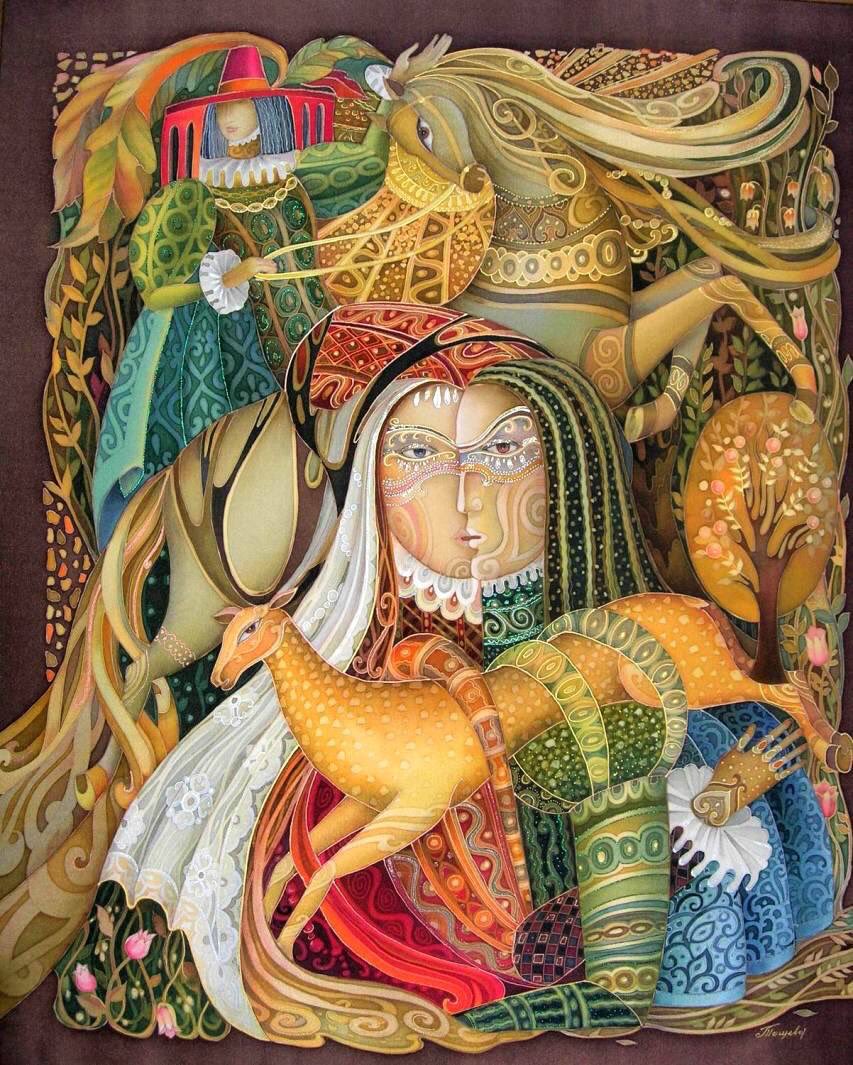
Via Twitter and Useum


Medieval Irish words and medicine

In this fascinating series, the development of medieval medicine in Ireland and Scandinavia is explored in relation to etymology and the development of medical words from Latin to Irish and Scandinavian languages. A fusion of a few of my favourite topics – medieval history, medicine, paganism and languages.


Rambunction, aural delight and elephant-to-human connection

Youtube’s algorithm delivered magic to me again with this beautiful video taken at Dubbo Zoo with acclaimed Indigenous artist Allan McKenzie, a Gamilaroi/ Wiradjuri man whose didgeridoo symphony for the elephants caused rambunction, delight and trumpeting joy.


Gloriously rainbow bright Soviet posters from the 1980 Moscow and Talinn Olympics

I love the dayglo 70’s aesthetic here, it’s so happy, cheerful and psychadelic. Via Soviet Child on Twitter



Gavinco – Acting Parallels [Full Album]

A cruisy, uplifting, dreamy jazzy hip-hop ambient sound. I love this!


A couple have recreated a Brazilian rainforest in 18 years and the animals now love it…

18 years ago, a very generous and kind couple decided to rewild their deserted and destroyed 600 hectares in Aimorés, Brazil. They then planted more than 2 million tree saplings. As a result, the the site now has 293 plant species, 172 bird species and 33 animal species, some of which were on the verge of extinction. Via Reddit
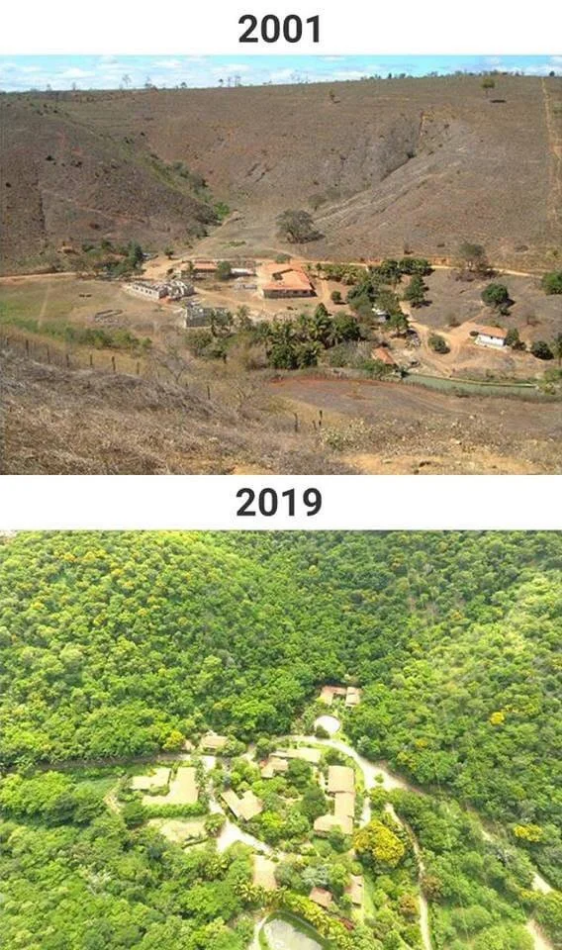
Couple creates a forest in 18 years

Creamy, dreamy vegan ramen by Will Yeung


I hope that you found these picks splendid and enjoyable, let me know what you thought below…


Content Catnip cat and breakfast gif

Did you enjoy this post? Consider buying Content Catnip a coffee on Ko-Fi
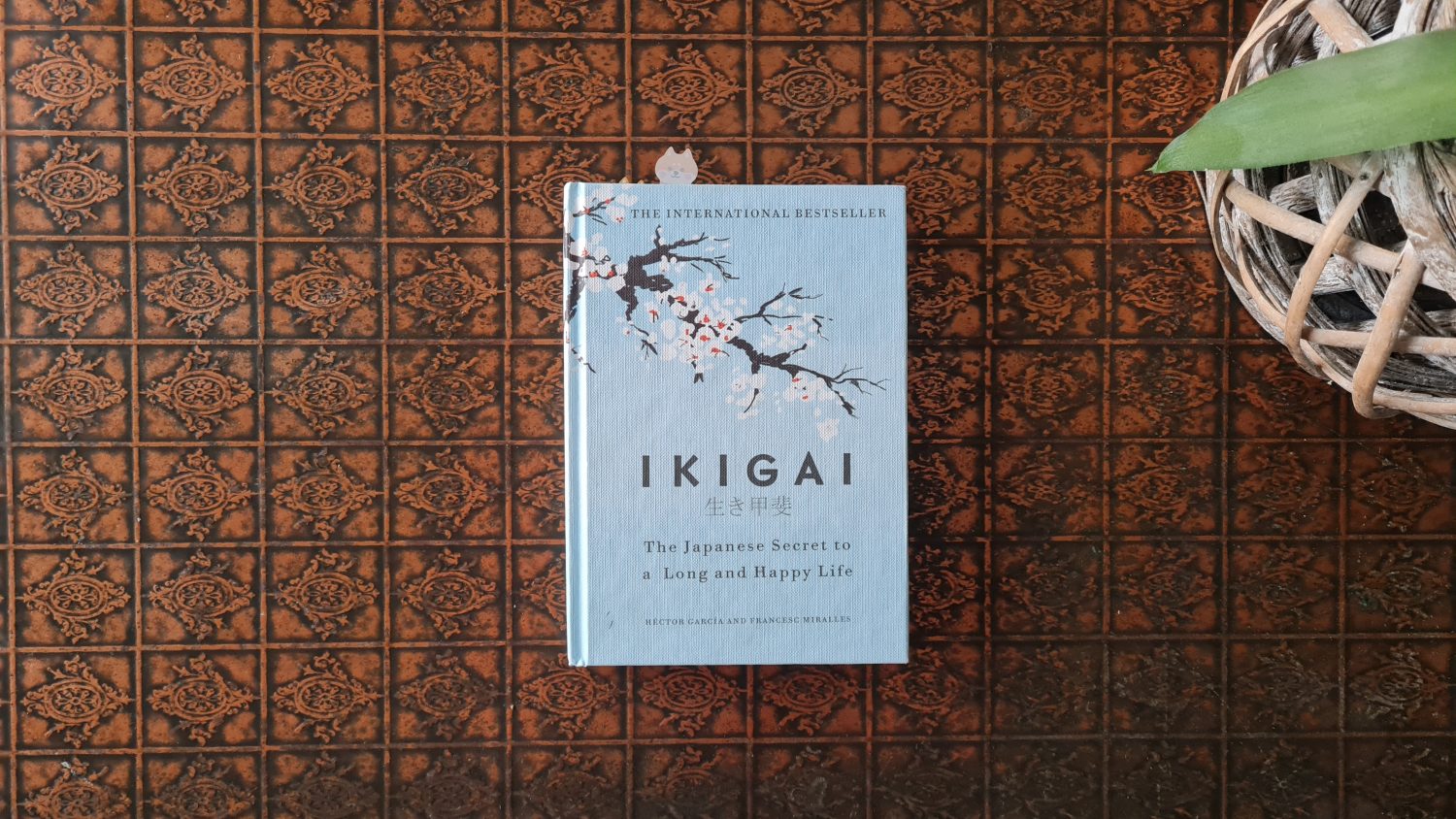
Book Review: Ikigai The Japanese Secret to a Long and Happy Life

Book Review: Ikigai The Japanese Secret to a Long and Happy Life by Hector Garcia and Francesc Miralles

Rating: 🌟🌟🌟🌟

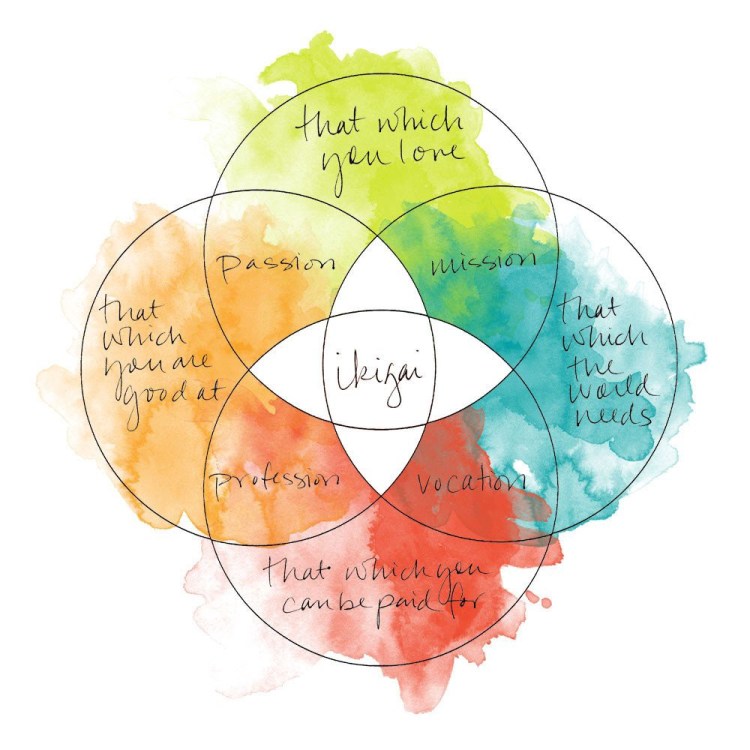
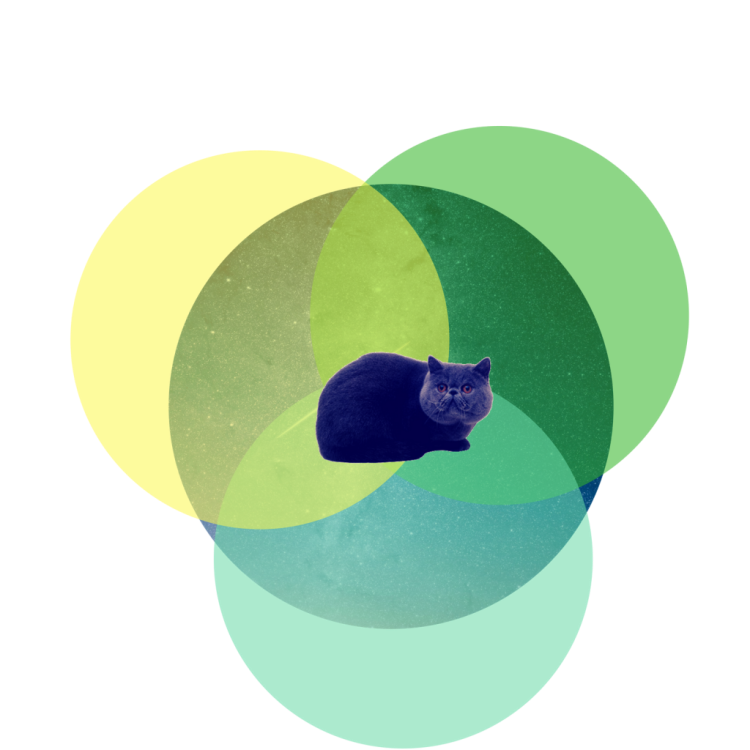
Ikigai (生き甲斐 Reason for being, Japanese n. Having a clear purpose in one’s life that makes it worthwhile, give one a sense of satisfaction and give meaning to one’s life.

Read more on Wikipedia

In other words Ikigai is the dynamic and passion-driven intersection of doing the things you love, the thing you are good at, the thing that the world needs and the thing which you are being paid for.

Book Review: Ikigai The Japanese Secret to a Long and Happy Life

This book struck a chord with me immediately. It’s all about finding that thing that is going to the passion that you will enjoy for the rest of your life. It’s a book of finding deep joy and connection in your work. Reading this, I had a light bulb moment where I realised I had to make a website about endangered species and start an online movement for boycotting brands that were destroying rainforests. Anyway it all just came together for me after reading this book and for this I am profoundly, deeply thankful for the insights it contains.

This is a great reference book to dip into over time. Although it is structured in a way that you could also read the book from cover to cover in one sitting.

There are many key takeaways to this book. I have summarised these for you below.

The seven conditions for achieving Ikigai flow

  1. Knowing what to do.
  2. Knowing how to do it.
  3. Knowing how well you are doing.
  4. Knowing where to go (where navigation is involved).
  5. Perceiving significant challenges.
  6. Perceiving significant skills.
  7. Being free from distractions.

Getting into the flow: strategies

  • Choose a challenging task (but not too difficult!
  • Have clear and concrete objectives and focus on the process.
  • Concentrate on a single task by being in a distraction-free environment and having control over what you are doing at every moment.


Happiness can be found in the process and a craft of doing, rather than the end result.

The grand essentials for happiness in life:

  • Something to do.
  • Something to love.
  • Something to hope for.

The recipe for a long life according to Japan’s centenarians

  • Stay active; don’t retire.
  • Take it slow.
  • Go out onto the street, smile and say hi to people.
  • Talk to people you love.
  • Don’t fill your stomach, stop eating when you are almost full.
  • Surround yourself with good friends.
  • Get in shape for your next birthday.
  • Smile.
  • Reconnect with nature.
  • Give thanks.
  • Live in the moment.

Ichi-go ichi-e: Be aware of impermanence

The impermance of things doesn’t have to make us sad, it can help us to live in the present moment and love those who surround us. Ichi-go ichi-e – this moment exists only now and won’t come again. We should enjoy the moment and not lose ourselves in worries about the past or the future.

Wabi-Sabi

A Japanese aesthetic that is sometimes described as one of appreciating beauty that is “imperfect, impermanent, and incomplete” in nature.

Antifragility

The idea that what doesn’t kill you makes you stronger. The pearl inside of the oyster principle, that through hardship all things, including people are made stronger and more beautiful.

Happiness is always determined by your heart


Life is not a problem to be solved. Just remember to have something that keeps you busy doing what you love while being surrounded by the people who love you.

One thing I will criticise about this book, its authors spent a disproportionate amount of time talking about centenarians and people aged over 100 who live in Japan. This for me is pretty off-topic. Yes, they have lived a long time and know how to live a good life. However, being happy and living a long time seem tangential to the main topic which is about finding what you’re good at and finding your ikigai. This part of the book seemed a bit irrelevant and boring and could be skipped. Still, as a short and snappy guide to these timeless Japanese concepts, this is a great little book and would also make a good gift.

A History of the Beautiful Highland Cow

Highland Cows or as they are commonly known in Scotland Highland Coos are an ancient breed known to have grazed the rugged Scottish landscape since the sixth century.

Their genetic origins are still up for debate. They may be native to Scotland or introduced by the Vikings to Great Britain.

One scientific train of thought considers the Highland Cow to be the result of the blending of two ancient Asiatic breeds, the ‘Bos Longifrons’ and the ‘Bos Primigenius’.

The Longifrons gifted them their long horns, whereas the Primigenius giving them their hairy looks. Both breeds migrated from the Far East and Mongolia to the region of the Black Sea.

Around 6000 years ago, this breed slowly migrated west and north across the Baltic shores. Once in the Scottish Highlands though there can be no doubt about the breed’s significance as a beast of burden, bringing about changes to civilization across the ages.

In the highlands, crofters (farmers) who lived on the land used the Highland Cow as a source of meat and milk. Their hair was also used for spinning yarn. The calves were bought and sold at the annual trysts or cattle sales.

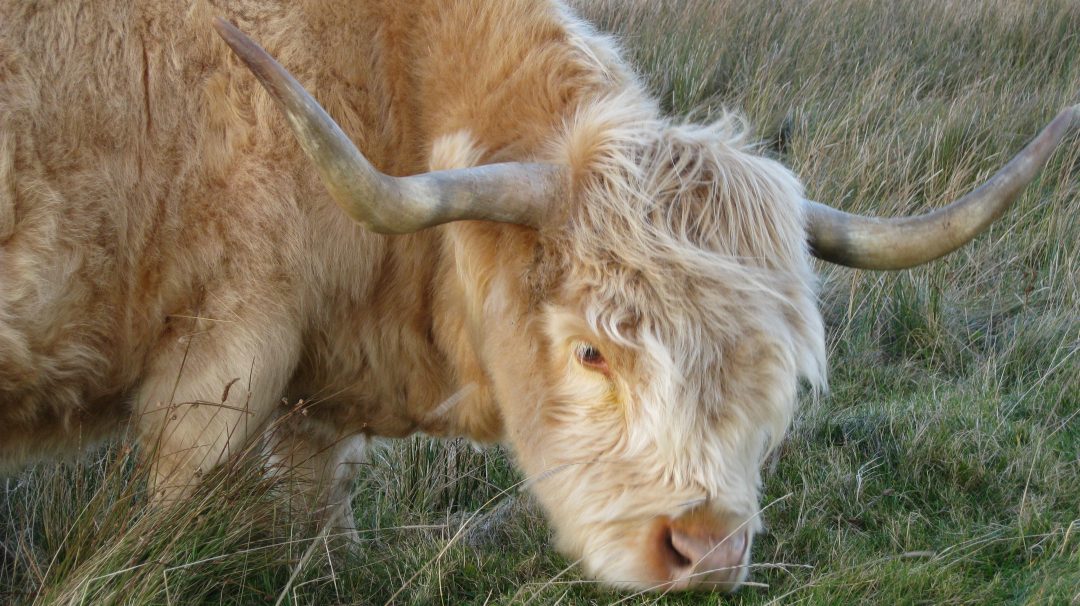
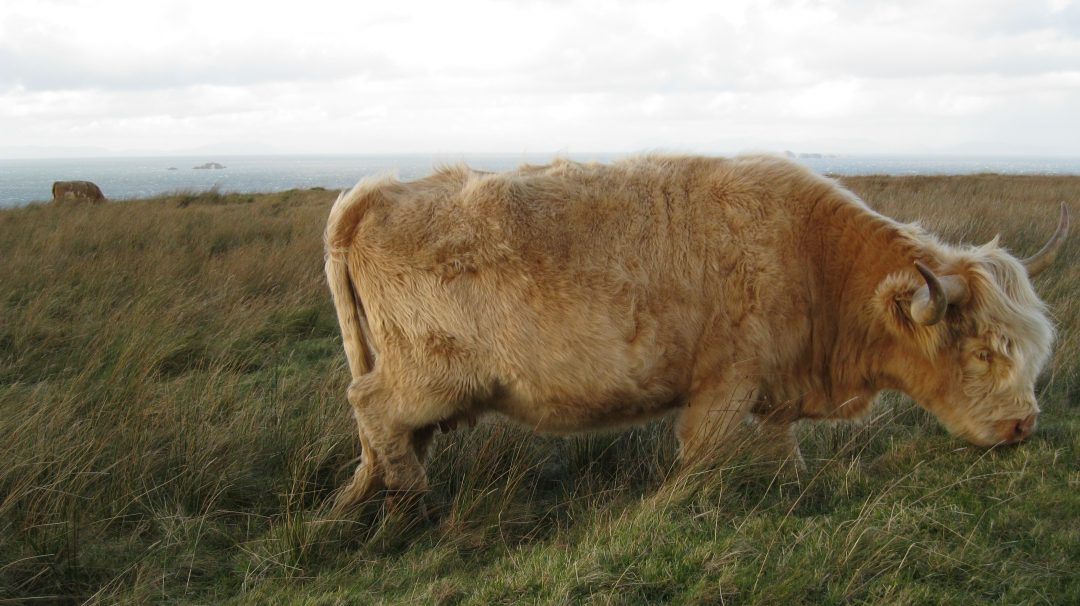
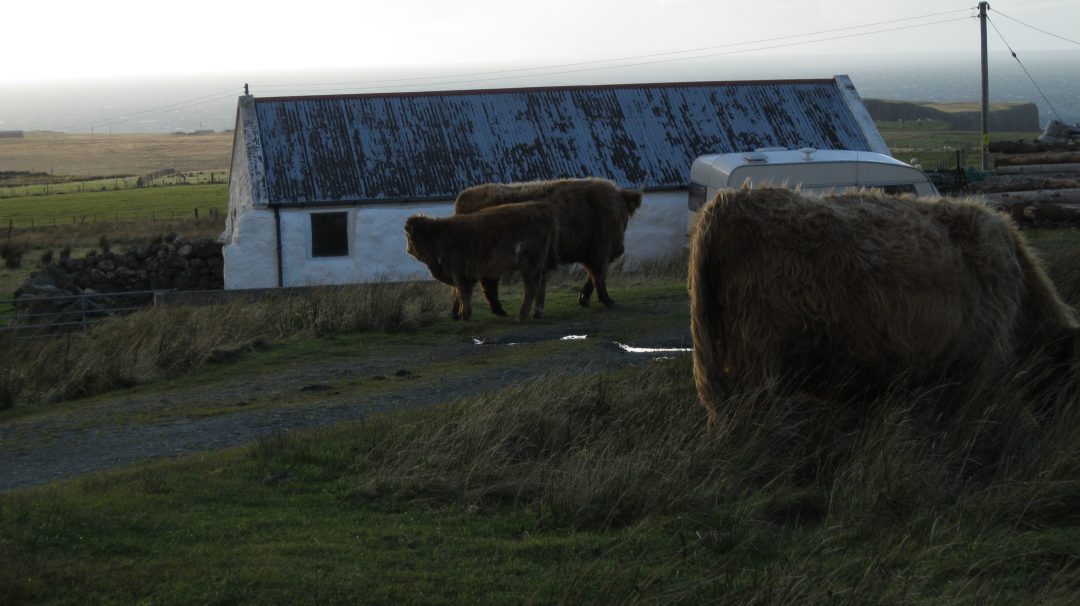
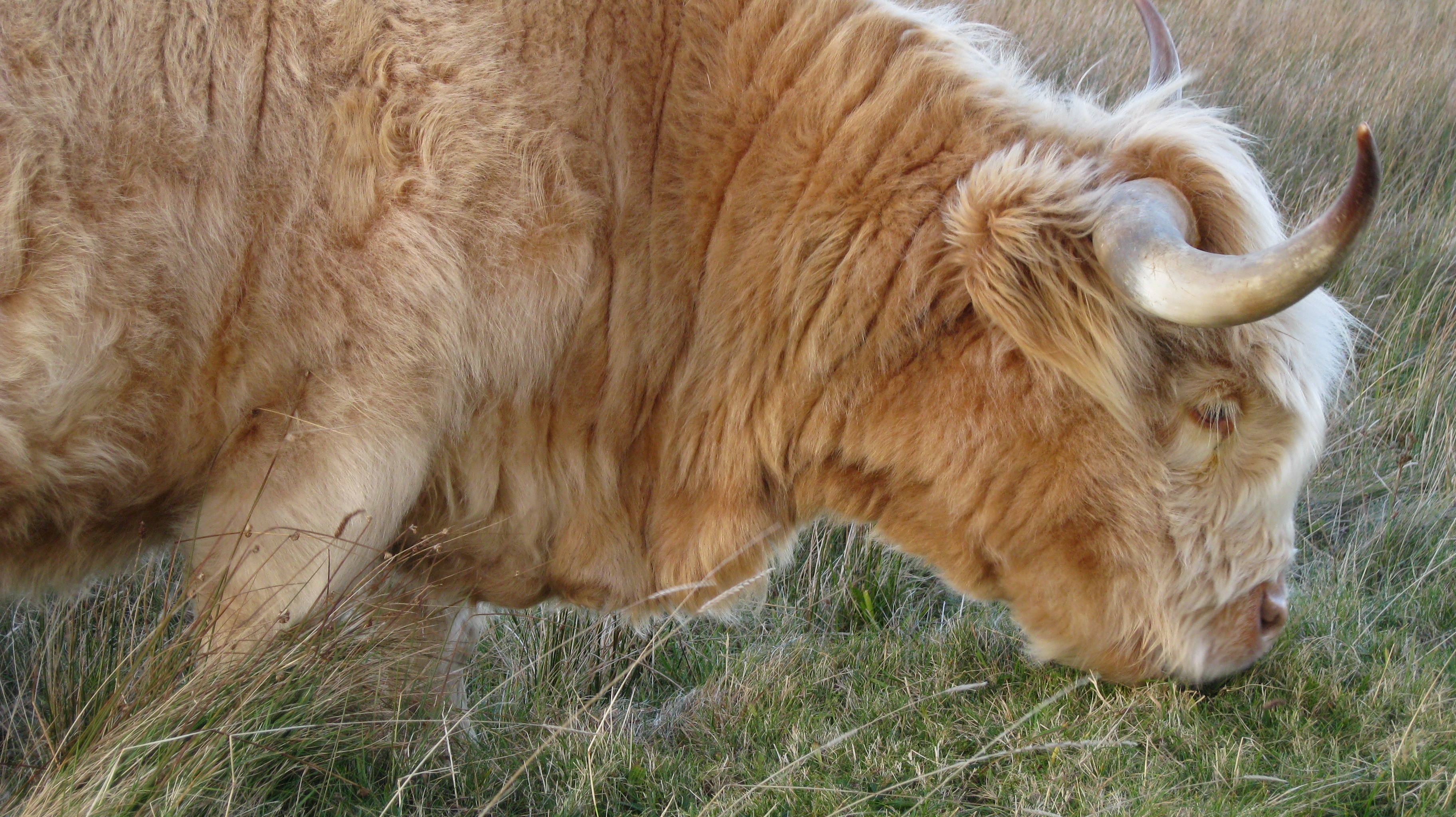
A placid and beautiful Highland Cow, found roaming on the Isle of Skye. Copyright Content Catnip 2010.

One popular marketplace or Tryst for the sale of the cows was in Stirling. Cattle from the islands were herded and swum across and then herded down to Stirling from whence they were driven south to England for resale.

In the olden days of droving the cows down to Stirling there was also black Highland cows also known as Kyloes. They were small and hardy but not as strong as the feiry haired variety, and so this darker haired strain of Highland Cows gradually died out as a result of selective breeding.

A placid and beautiful Highland Cow, found roaming on the Isle of Skye. Copyright Content Catnip 2010.

When I went to the Isle of Skye I was struck by the placid, kindly and passive nature of the Highland Cow, despite its immense size and strength, it was approachable and chilled out.

Ever since I saw them grazing on the sides of the road in ditches and in the fields, just hanging out I have always been besotted with them. They are like gigantic bovine teddy-bears.

It’s actually possible to see them in other parts of the world, the highland cow breeding societies present in Canada, USA, Sweden, Denmark, Germany, Australia and New Zealand. Seeing them really made me not want to eat them anymore, no matter how tasty the burger looked. What do you think, do you find them cute?

A placid and beautiful Highland Cow, found roaming on the Isle of Skye. Copyright Content Catnip 2010.

Book Review: Widow Basquiat: A Memoir by Jennifer Clement

A mesmerising portrayal of New York City’s art scene in the early 80s and one its luminaries: Jean-Michel Basquiat seen through the eyes of his partner Suzanne Mallouk.

🌟🌟🌟🌟🌟

Canongate Books 2014

If you are expecting a stock-standard art biography you are in for surprise. This is a strikingly different biography that is written in short, lyrical and poetic chapters about the life of an iconic American artist, whose life was cut short by drugs, Jean-Michel Basquiat.

This biography is stirring and evocative of a time and a place. New York City in the early 80’s was the era of early hip hop, amazing Post-Punk and New Wave music, and an electrifying avante-garde art scene, in the form of Andy Warhol and others such as Basquiat.

To be a fly on the wall during this time would have been very interesting. Widow Basquiat is refreshing, instead of seeing Basquiat as an enigmatic and cult-figure of underground art, we also witness him as a frail and vulnerable human being with a lot of faults.

He treated his lover and muse Suzanne Mallouk terribly and gave her an STI, which left her infertile and he cheated on her all of the time. Yet we also glimpse the immense tenderness, passion and love they had for each other too.

Book Review: Widow Basquiat: A Memoir by Jennifer Clement
Suzanne Mallouk

He was fond of extravagance, excess and eccentric whims and would buy Suzanne expensive cakes and flowers. He would paint in expensive Armani suits and then throw them away and ride everywhere in a limousine. All of the quirks and chameleon-like aspects of Basquiat’s personality show through in this narrative, along with the chaotic, exhilarating art circles that they both moved in.

Book Review: Widow Basquiat: A Memoir by Jennifer Clement
Jean-Michel Basquiat

The narrative switches between the words of seamless biographer Jennifer Clement and the words of his long-suffering lover and muse Suzanne Mallouk. This story is both Suzanne’s: a poor, violent and love-starved upbringing and also Jean-Michel’s, with its similarly violent and chaotic early years. You can see that they were drawn to each other by this trauma, like two damaged war orphans.

Basquiat was yet another iconic artist who died at the age of 27 – just like Jim Morrison, Kurt Cobain and Amy Winehouse. This book shed some light on him as both artist and man, in all shades of light, dark and grey. This is a poignant and moving story, yet it moves as fast as a whip from the past to present, making this a very exciting to read, highly recommend this.


Ancient word of the day: Nekyia

Today’s ancient word of the day comes from Ancient Greek – nekyia or νέκυια. Nekyia has dual meaning and can be about ones inner journey into the unconscious in order to heal oneself from wounds of the past. The second meaning is the practice of questioning the dead in order to gain knowledge of the future. The νέκυια is associated especially with journeys to the underworld and descents into darkness as, counter-intuitively, a means of vision & prospect.

Nekyia in the Odyssey by Homer

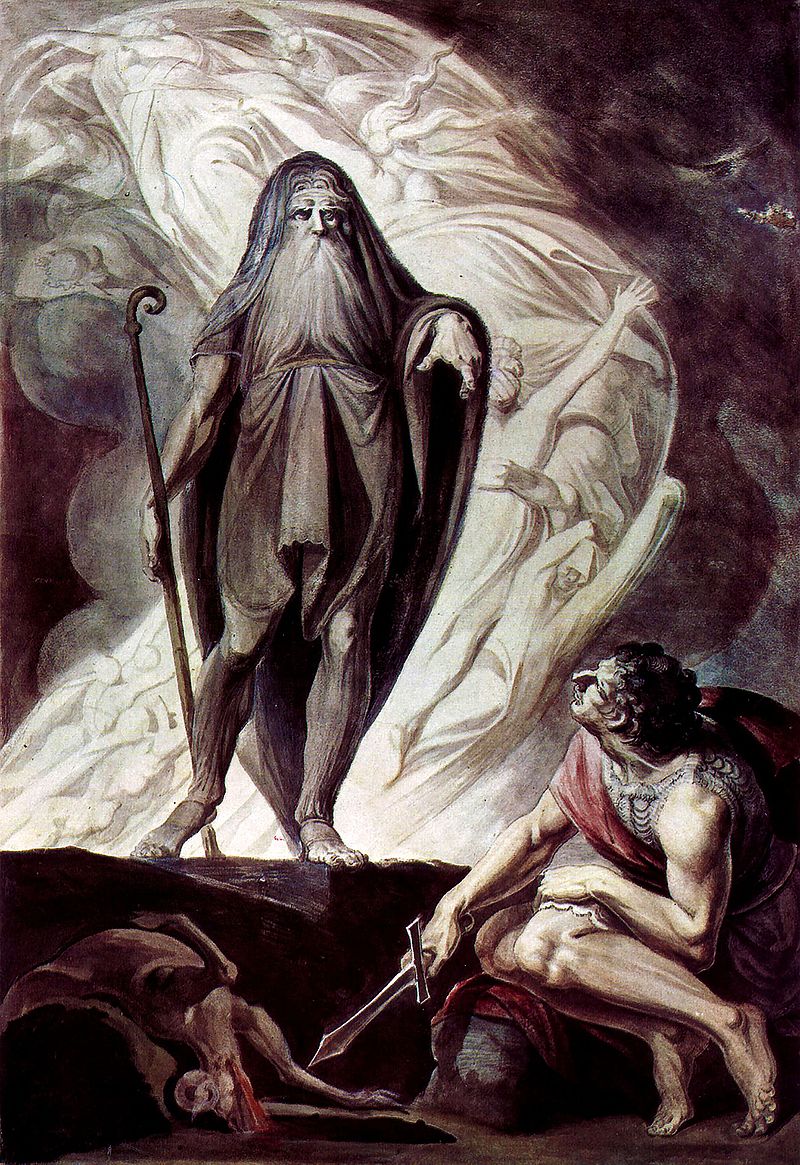
In the Odyssey, The Nekyia is an evocation of the dead. It’s a sea voyage that Ulysses makes to the edge of the world and the land of the Cimmerians. This is a mythical and highly mysterious distant land of the north that’s always enveloped in the fog. He goes there to meet the seer Tiresias and to meet the souls of the dead.

The Shade of Tiresias Appearing to Odysseus during the Sacrifice (c. 1780-85), painting by Johann Heinrich Füssli, showing a scene from Book Ten of the Odyssey

Nekyia and Carl Jung

The concept of Nekyia was used by Psychoanalyst Carl Jung in his landmark psychological theory:

“The Nekyia is no aimless or destructive fall into the abyss, but a meaningful katabasis … its object the restoration of the whole man. Carl Jung

Picasso’s Blue Period paintings and Nekyia

Carl Jung saw Picasso’s Blue Period paintings as being intricately bound up with the idea of Nekyia.

Picasso’s blue period

A series of images…begins as a rule with the symbol of the Nekyia – the journey to Hades, the descent into the unconscious, and the leave-taking from the upper world. What happens afterwards, though it may still be expressed in the forms and figures of the day-world, gives intimations of a hidden meaning and is therefore symbolic in character. Thus Picasso starts with the still objective pictures of the Blue Period – the blue of night, of moonlight and water, the Tuat-blue of the Egyptian underworld. He dies, and his soul rides on horseback into the beyond. The day-life clings to him, and a woman with a child steps up to him warningly. As the day is woman to him, so is the night; psychologically speaking, they are the light and the dark soul (anima). The dark one sits waiting, expecting him in the blue twilight, and stirring up morbid presentiments. With the change of colour, we enter the underworld. Carl Jung 1932

Picasso’s blue period

Orpheus and the underworld…as it is above, so it is below

Mention the name Orpheus to almost anyone, and they will immediately say: “In the Underworld”—a phrase that is shorthand for a whole life of singing, and mystery, and love, and loss. It also suggests the dark. And it is right that it should, for Orpheus’s name, most scholars think, means darkness, the state of being orphaned or exiled, separation from light. Orpheus’s journey to the Underworld has been taken as a metaphor for many things, but at its most fundamental it is the journey of the seed in the earth: from light into dark, and up to light again.

Joseph Campbell

The unconscious sends all sorts of vapors, odd beings, terrors, and deluding images up into the mind-whether in dreams, broad daylight, or insanity; for the human kingdom, beneath the floor of the comparatively neat dwelling that we call our consciousness, goes down into unsuspected Aladdin caves Joseph Campbell, The Hero With A Thousand Faces

Comforting Thought: Forgiveness is a gift you give yourself

To forgive is to assume a larger identity than the person who was first hurt, to mature and bring to fruition an identity that can put its arm not only around the afflicted one within, but also around the memories we carry of the searing emotional blow.

We imagine ourselves in the light of our maturity. We reimagine the past in the light of our new identity. We allow ourselves to be gifted by a story that first hurt us and left us bereft.

David Whyte

From: Consolations: The Solace, Nourishment and Underlying Meaning of Everyday Words by David Whyte

Genre: Non-fiction, Spirituality, Philosophy

Rating: 3.5 stars

*Contains no spoilers

In this slim and elegant volume of philosophy and inspiration, writer David Whyte tackles the big topics and words that rarely get any airtime in our society, the kinds of things that haunt people but that are difficult to resolve and so are pushed under the rug. Read full review

Book Review: Consolations:The Solace, Nourishment & Underlying Meaning of Everyday Words by David Whyte

Ancient Word of the Day: Weltschmerz

Weltschmerz: n: (literally) World Pain (from German). The feeling of sadness at the suffering that surrounds you in the world. The pain of being an empath and sensitive to all despair and distress in the world. An ill-defined weariness at the burdens carried universally by all of humankind.

The Sensual World of The Unseen By Photographer Duane Michaels

“Sickness brought me this

Thought, in that scale of his:

Why should I be dismayed

Though flame had burned the whole World, as it were a coal,

Now I have seen it weighed Against a soul?”

W. B. Yeats, ‘A Friend’s Illness’ (1916)
About Neon Art and Loneliness http://wp.me/p41CQf-aU
The Sensual World of The Unseen By Photographer Duane Michaels

Weltschmerz comes into English usage via ‘The Life of Byron’ by Karl Elze (1872).

“It was Byron who introduced world-sorrow (Weltschmerz) into modern English literature, though in English it may be remarked that we have no expression for such a thing. On the other hand, in the literature of Germany, world-sorrow plays a far more important part. This world sorrow rests primarily in the ever-present grief of the human race at the transitoriness of all things earthly, the gloomy destiny and uncertain lot of man,” ~ Karl Elze.

‘The Life of Byron’ by Karl Elze (1872).
The odds in favour of you being born were slim
Poetry and music from the film ‘Wings of Desire’ (Der Himmel uber Berlin)

When the child was a child,
It threw a stick like a lance against a tree,
And it quivers there still today.

Read more

The high-spirited thoroughbred

The great affair, the love affair with life, is to live as variously as possible, to groom one’s curiosity like a high-spirited thoroughbred, climb aboard, and gallop over the thick, sunstruck hills every day.

Diane Ackerman

10 Interesting Things I Found on the Internet #46

Bonjour et bienvenue. This weeks wild and wooly wonders blew off the neighbours washing line into my backyard and now I’m just sifting through them!


The first lines of famous books infographic

This infographic definitely makes me want to check out some of these books I haven’t gotten around to reading yet. What about you? Via Reddit

The first lines of famous books infographic

Osi And The Jupiter — Uthuling Hyl

A dark and mystical journey into an ancient land. Great for reflections, pensive moods and focused concentration.

In the first day of summer, I’ll be waiting for you, Ionomycin, Digital, 2021

In the first day of summer, I’ll be waiting for you, Ionomycin, Digital, 2021

Via Reddit


Are you okay? Or are you just surviving? by Cheche Winnie

Today, I would like us to take a step back and evaluate our mental health. So much has been happening around us so fast. In that, we have been masking our pain, losses, failures, among others.

As a firstborn, I was made to understand that am the one to take care of everyone else. But they forgot to tell me how to do the same for myself.

It’s okay to be vulnerable from time to time, to accept what happens, and work on how to get up. But it’s easy said than done.

Your brain will trick you into undertaking so many tasks and responsibilities. Your zeal will produce results that will make you forget the misfortunes for a minute. You will be happy seeing others get helped, your project performing and more partnerships coming to life.

Then one day, out of blue. That pain that you ignored will manifest unawares, sending you into a mini hell. Allowing you to feel the pain wholly and mercilessly. Tears wash your face, heartbreaks into pieces, and your world feels crushed.

What would have prevented this?

It’s not good to hold back, not good for your mental health. Grieve if you need to, scream, shout, bite that clothe, squeeze that stress ball, or do whatever works for you. The goal is to let it out.

~ By the always insightful and inspiring blogger Cheche Winnie.


A yummy Palestinian vegan breakfast

I haven’t tackled this yet, but it appears to be a delectable masterpiece of flavour! I have just moved into a new place and need to buy a whole lot of cooking implements first, then I will give it a go and report back. If you do make it, please let me know what you think…


An 1800 year old family portrait

A mother and her two children beautifully rendered on a gilded glass medallion in Alexandria, Roman Egypt. Via Reddit


A massive mellow mix by the late Andrew Weatherall

Andrew Weatherall was a very influential producer of electronic and ambient sounds of the 90’s. I didn’t even know about him or his music but this was in my AI recommendation from Youtube and it has opened up an entire world of amazing music now.


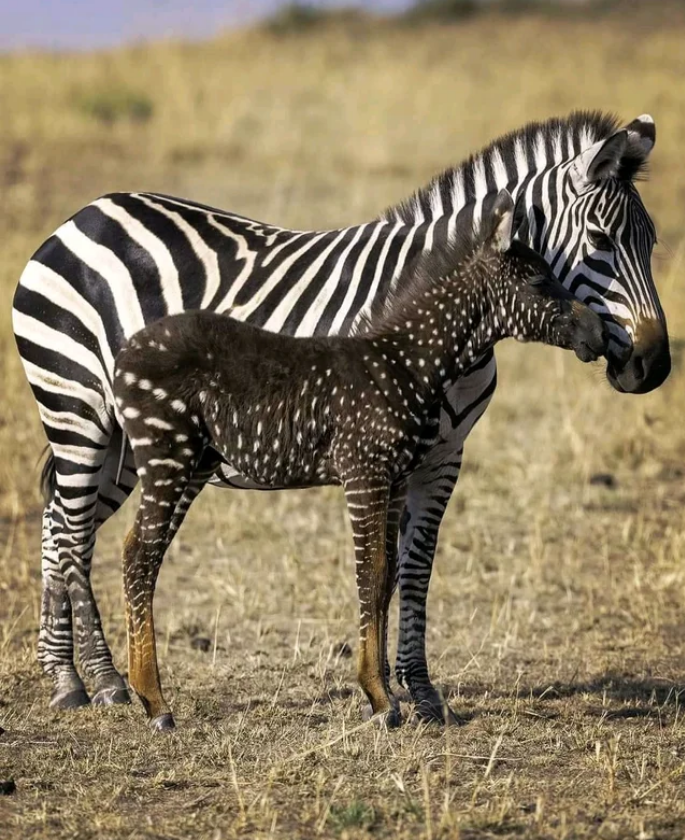
A super rare polka-dotted Zebra

Another lesson from nature: appreciate and celebrate your differences, the things that set you apart from others, because they make you special and unique! Via Reddit

A super rare polka-dotted Zebra

Lovely Scotsman Dean and his beautiful wee cat Nala cycle along the Danube river

Now that the weather in the northern hemisphere is blooming wonderful, Dean and Nala are back in action and having adventures in Europe. Since Dean released his book about his adventures with his cat, more and more people in public seem to recognise them! I love how affectionate they are to each other, this is the sweetest channel if you don’t know about it.


There are fungus among us!

Just look at this beautiful fungus in a riot of colours, isn’t it magnificent! Via Twitter

There are fungus among us!

Doug Lansky: Crap Souvenirs as featured on the Be Kitschig blog

The Be Kitschig blog is always enjoyable, entertaining and fun and I loved this post about an iconic book about kitsch, Doug Lansky’s Crap Souvenirs. I’m sure you’ve seen these kinds of treasures in your local op-shop or charity shop. I am a sucker for kitsch myself. Here’s some highlights from the book. If you haven’t subscribed to Be Kitschig yet, what are you waiting for?!


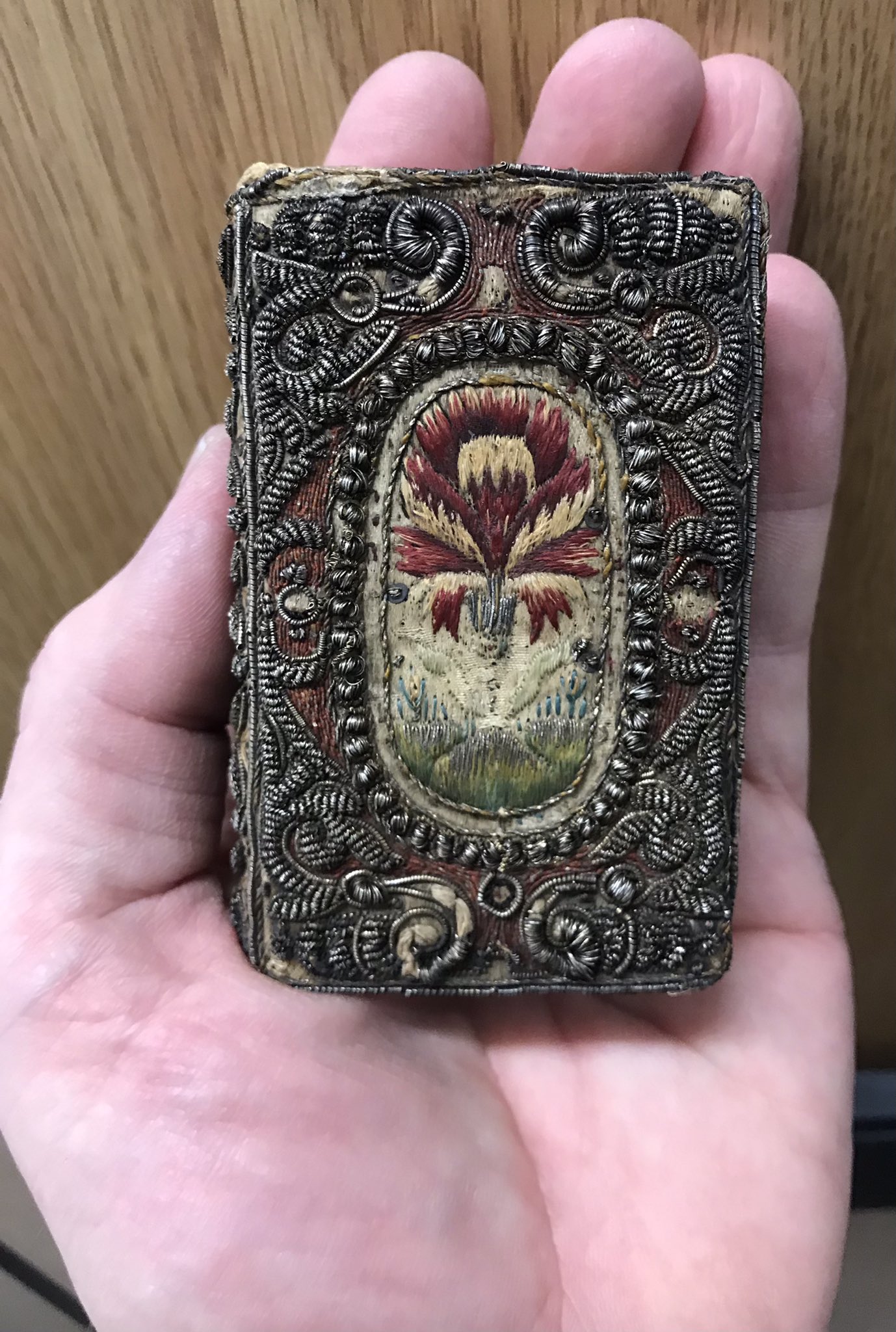
A mysterious and mystical tiny book treasure

This tiny book is adorned with silver wire embroidery and binding. Dating from the 17th Century, it is a very rare 1639 printing of The Whole Book of Psalms, ex-libris James Stevens-Cox. Via Twitter.


“I got pregnant during a computer sex chat!”

“Internet surfer Clarence Kudrow was so good as a cybersex partner he may have actually gotten a woman pregnant online!”. Via Pulp Librarian on Twitter

"I got pregnant from being in an online chat room!"
“I got pregnant from being in an online chat room!”

Let me know what you think of these premium juicy cuts below…


Content Catnip cat and breakfast gif

Did you enjoy this post? Consider buying Content Catnip a coffee on Ko-Fi
Comforting Thought: Some teachers walk on two legs, others on four or more.

“I am still learning how to be a good creature. Though I try earnestly, I often fail. But I am having a great life trying – a life exploring this sweet green world – and returning to a world where I am blessed with a multispecies family offering me comfort and joy.

Debunking Myths And Fascinating Facts About Animal Eyesight
Baby, You Were Born To Run: Horses From Cave Art to Melbourne Cup


“I wish I could go back in time and tell my young, anxious self that my dreams weren’t in vain and my sorrows weren’t permanent. I can’t do that, but I can do something better.

“I can tell you that teachers are all around to help you, with four legs, or two or eight or even none.

“Some have internal skeletons, and some have no skeleton. All you have to do is recognise them as teachers and be ready to hear their truths.” ~ Sy Montgomery.

From: How to be A Good Creature: A Memoir in Thirteen Animals by Sy Montgomery

How to be A Good Creature: A Memoir in Thirteen Animals by Sy Montgomery

Sy Montgomery is a naturalist, author and scriptwriter who writes for children as well as adults. She is author of more than 20 books including The Soul of an Octopus: A Surprising Exploration into the Wonder of Consciousness, and How to be A Good Creature: A Memoir in Thirteen Animals.