Let me start off by saying – this is not a sponsored post. This is me wanting to gush about Lush and their superb Charity Pot body lotion.
As promised I am going to write about ethical, cruelty free products. This one really takes the cake. Compared to other vibrantly coloured and perfumed products in their range, the charity pot is an unassuming addition, it’s a lightly scented body lotion. However that is anything but a no-frills and cheap product in the affect it gives to your skin.
Lush launched the Charity Pot body lotion in 2007 and since the launch have donated more than $5,800,000 to over 600 grassroots charities in 35 countries.
The idea behind it is that Lush donates 100% of all proceeds from the sale of the Charity Pot (minus taxes) to a series of deserving environmental, animal welfare and human rights causes across the world.
Aside from the obviously ethical and karmically kind reasons for buying a Charity Pot from Lush, I must admit that my reasons for getting it weren’t so selfless after all. The moisturiser itself is a cut above the rest.
The Improved Formula
In the past year or so, they released a new version of the Charity Pot with a delicate ylang ylang and rosewood oil scent along with a thick and moisturising cocoa butter base.
This makes the moisturiser incredibly decadent to use. Although it says to use it only on the body, I have been using mine for my face along with my body and it feels wonderful. Throughout the day my skin feels great too.
In a competitive world of profit-making in the skin care industry, the Lush Charity Pot stands out as a success for many reasons. It’s a completely different model for corporate branding, but it works because consumers see that are totally putting their money where their mouth is.
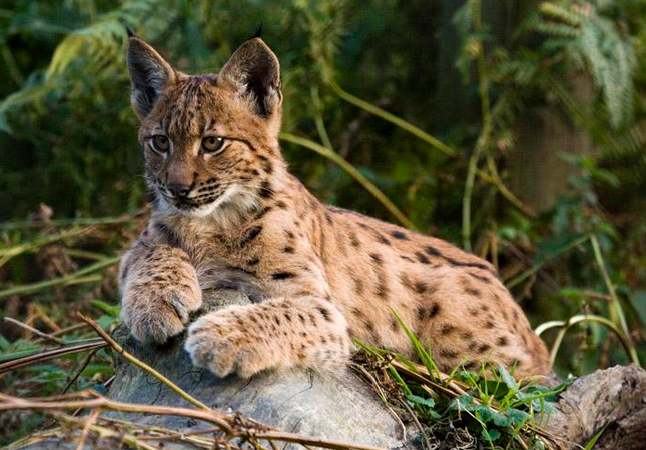
The Eurasian Lynx was once a part of primeval forests in Britain, but has since been hunted out of existence there. Nowadays with the deeper understanding of ecological balance, the importance of primary predators has been reasserted. In Britain, there’s an exciting new movement in 2015 to bring back the Eurasian Lynx to the forests, as they help to keep mammalian herbivore numbers in check. Read on to find out more about this legendary secret keeper of the forest.
They are incredibly regal looking
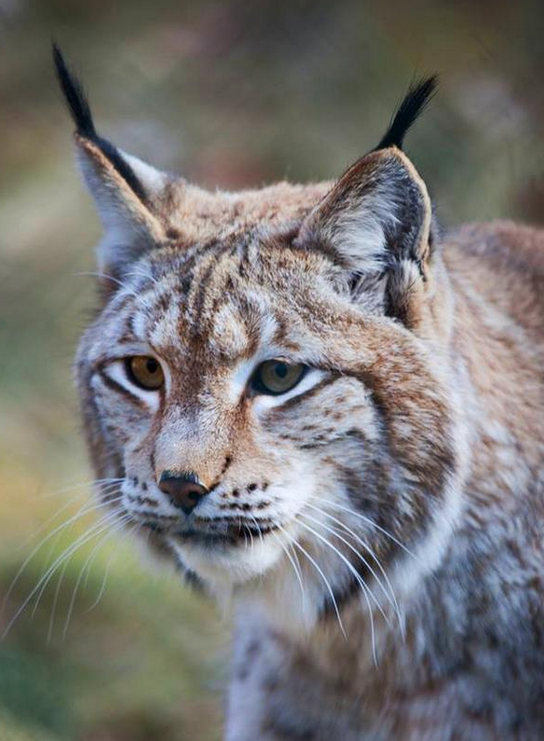
Their large ears are adorned with conspicuous black tufts, and the long cheek hair hangs down to form a facial ruff, almost like a beard or mane in winter. The coat is long and extremely dense, especially over the winter, and is more variable in colouration than in any other cat. Their shorter, summer coat tends to be more reddish or brownish in colour, the winter coat may be silver-grey, yellowish-grey, grizzled greyish-brown, ashy blue, or dark grey.
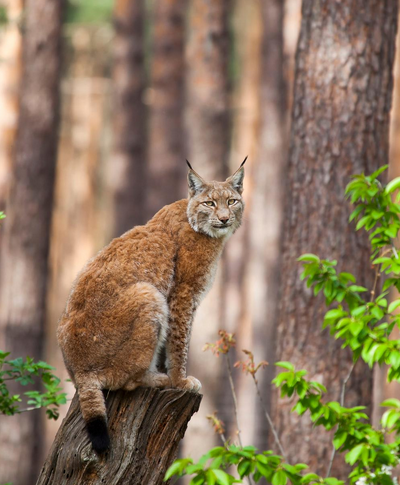
They have enormous paws and claws which enable them to climb trees and scale high rocks. A double layer of fur makes them agile and efficient hunters all year round.
The last time a lynx was seen in Britain’s forests was in 700 A.D.
Although they are an ancient species, human farming and also ongoing fur trapping over the centuries have decimated their numbers. Currently their range extends from the steppes in Russia to China and parts of Western Europe, but excludes the British Isles, Lynx populations were last seen there circa 700 A.D.
Now an ambitious reintroduction scheme aims to bring back the lynx!
The plan is currently with the Natural England and Scottish Natural Heritage (SNH) – the government bodies that regulate species reintroduction. The plan awaits public survey information for approval. If approved, four to six individuals wearing electronic tracking collars would be released on privately owned estates in Norfolk, Cumbria and Aberdeenshire. Click on the image to complete the public survey and tell them why they should bring the lynx back.
“The lynx is a magical animal,” says Paul O’Donoghue, a science adviser to the Lynx Trust, ”It is one of the most beautiful cats on the planet and its absence makes Britain a poorer place.”
Reintroduction schemes in Europe have worked to bring their numbers back from the brink of extinction
Their population dropped to all time lows in the 1950’s and 1960’s when the population was reduced to about 700 individuals. However since then, a few European countries have initiated reintroduction schemes to safely and closely manage their reintroduction into the forests there. As they control deer, hare and rabbit populations in these regions, there are benefits to their reintroduction.
Their presence keep wild herbivore mammal populations in check
They hunt around around dawn and dusk, but may occasionally actively hunt during any hour of the day. Their diet consists of exclusively meat, mostly mammalian herbivores such as roe and red deer wild pigs, beavers, hares, rabbits, small rodents. On very rare occasions when they are desperate they will attempt take livestock when food is scarce, however they it is incredibly rare to see them outside of the forest.
They are the third largest predator in Europe
Following the brown bear and the wolf.
Lynx are naturally solitary creatures
Just like solitary cats, Lynx roam around the forest by themselves. They have a social organisation where males stake their claim to large ranges of territory and females have a territory that overlaps somewhat. Males in general will avoid each other and maintain their dominance through scent marking trees and other landmarks. They will keep to the forest and are incredibly elusive and hard to capture on film.
They are about the size of a medium or large dog
Eurasian lynx tend to be between 80 to 130 cm length and up to 70cm at the shoulder, with males weighing 18 to 40kg and females 10 to 20kg. They do not pose a threat to humans.
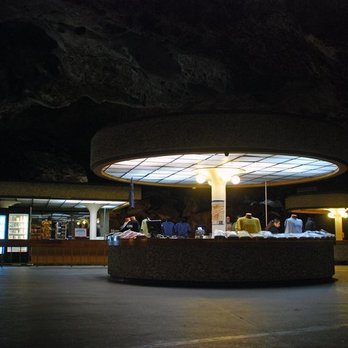
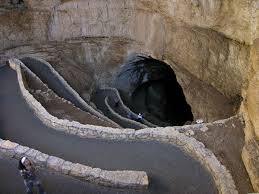
One of the more quirky destinations in New Mexico is Carlsbad Caverns. Located 228 metres below the surface is a diner/lunchroom that is frozen in the middle of the 20th century. The eatery sells cold cuts and food stuffs that don’t require cooking (as they don’t have cooking facilities), along with souvenirs.
This slideshow requires JavaScript.
Over the ensuing decades, many millions of people have visited and stopped at the Underground Lunchroom for refreshments or to post off a postcard, postmarked ‘750 feet below ground’.
This slideshow requires JavaScript.
Although the park’s management maintain the park in a sustainable way, they are planning to preserve the authenticity of this surreal time capsule for posterity.
Carlsbad Caverns have been an important location for human settlement for thousands of years. In 2003, a national park employee found a stone implement near to the entrance of the cavern that goes back to the Ice Age Indian hunter gatherer culture. Then in 2004, archaeologists found fragments of two spear points of the Midland-style Paleo Indian style, dating from approximately 10,000 years ago.
Bees see the world in an entirely different way. Their unique perceptual abilities can help us to perceive the world is a much richer way.
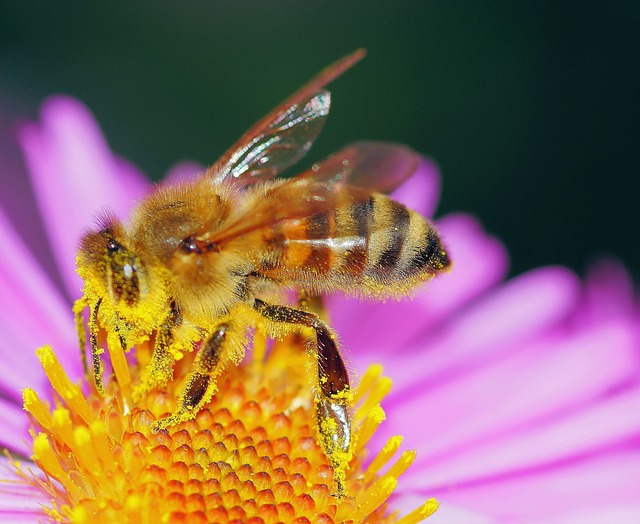
Bees are benevolent little workers who pollinate and beautify the blooms of the world. An integral part of the landscape, they burrow their furry yellow and black backs into the luscious centre of flowers, gather nectar and then cross-pollinate other flowers. It’s estimated that insects, particularly bees, are responsible for the growth of a third of humans’ food sources. So how do these busy workers see the world? Scientists say that adaptations to how a species sees their environment, will allow the species to thrive more than others. So their evolutionary adaptations of bees’ vision is very interesting.
This research painstakingly documents the migratory movements of bees as they pollinate flowers. Then takes measurements to show the colour of plants on spectrum of what’s visible to both humans and bees. Scientists managed to do this by inserting micro-electrodes onto the bees and also using less invasive behavioural studies.
The World According to Bees
Professor Lars Chittka of QMU when he spoke with the BBC, emphasised that the world as we know it, is only one perception. ”This research highlights that the world we see is not the physical or the ‘real’ world – different animals have very different senses, depending on the environment the animals operate in”.
Bees see landing strips on the top of flowers, that appear invisible to the human eye but vibrant, attractive and colourful to the bees. These landing strips signal where they can get the best nectar. The landing strip takes the form of dots or concentric circles of colour that radiate out from the centre of the flower. This shiny, iridescent pattern says to the bee, come and put your tongue in there and take away some pollen.
From electric ink to aromapoetry – the physical book is about to undergo a renaissance by being paired with some nifty new inventions.
While paper epitomises the slow lane of publishing, it is anything but a static medium. Traditional analogue technologies such as ink and paper are now being developed in ways that can and in all likelihood will revolutionise the material, printed book.
Sketching Circuits
Conductive inks such as those produced by the British firm Bare Conductive mean that pen and ink can be used to make circuits – and a piece of paper could feasibly become a circuit board, much like that in a computer but infinitely more flexible and versatile.
This particular company makes a touch board which allows users to create a keyboard using pen, paper and conductive ink. And Tom Metcalfe and Michael Shorter at the University of Dundee have used similar materials to create a pair of paper headphones.
Artists in particular are using conductive inks to create artworks which offer new forms of interactivity. In his Lagoglyphic Sound System, the Brazilian-American artist Eduardo Kac showed how conductive ink could be used for silk-screen printing. As the viewer touches different parts of Kac’s print, different musical sounds are heard.
On a larger scale, Fabio Lattanzi Antinori’s Contours, made in collaboration with Bare Conductive and Alicja Pytlewska, used conductive ink to create interactive tapestries with capacitive sensors which are a metaphor for the idea of breathing life into a textile skin. As visitors touch the tapestries, they modulate a data-driven ambient soundscape reminiscent of a medical research environment.
In another collaboration with Bare Conductive shown at the V&A last month, Data Flags, Fabio uses the interactive possibilities of conductive ink to allow visitors to explore the contemporary tragedy of the collapse of the Lehmann Brothers bank.
The Interactive Book
Discussion of the “death of the book” has been going on for many years. We have got used to the idea that the physical artefact of the book may be replaced by e-readers or other forms of access to information. The speed and nature of these changes and the extent to which will the book will survive have been extensively and hotly debated.
But given these advances in technology, this debate may well prove to have been misconceived in ways we didn’t expect. If paper and ink are being transformed so that they become interactive digital media, surely the same can happen with the physical book. It doesn’t take too much of a stretch to imagine a book printed with conductive ink which you touch to see and hear illustrations or supporting material. An interactive pop poster where you can hear the sound of the band by pressing a thumbnail image has already been produced.
Conductive ink is not the only new material which is prompting artists, designers, poets and authors to re-imagine new possibilities for the printed page. Indie publishing platform Blurb and visual arts studio Jotta have collaborated to create Unbinding the Book. Nine artists and designers were commissioned to challenge preconceptions of who can be an author and what a book can be, using sound, light, touch and voice.
And the range of technologies that are contributing to rethinking the book as a sensual material artefact is growing. Eduardo Kac has recently experimented with aromapoetry, a form of poem – and book – to be read with the nose.
It seems likely that instead of the death of the book we are actually looking at its rebirth. In the classical period, the scroll was replaced by the codex for certain types of text. The wider emergence of the codex in the 4th century reshaped mankind’s understanding of how information is interrelated. In the 12th century, elaborate wooden receipts called tally sticks enabled accounts to be more easily kept, and deeds began to be kept in triplicate to prevent forgery.
Today, we are simply seeing another such reshaping of the way we sort information. New materials such as conductive ink are simply part of this constant process of refining ways in which we engage with text.
What do you think, will this make reading physical books more interesting?
A different version of this article was written by Andrew Prescott for The Conversation. This Creative Commons article has been edited by me for this blog.
In the 1970’s NASA and Stanford University held three space colony studies. Attendants of the course produced artistic renderings that showed what could theoretically be possible in a future inter-planetary world. This doughnut-shaped world was a pristine, insular and remarkably beautiful space sanctuary called the Stanford Torus. Click on the images below to magnify and view slideshow…
A torus or doughnut-shaped ring, that is 1.8 km in diameter
This proposed design was put forward to theoretically house 10,000 to 140,000 people.
Sunlight would be provided to the interior of the torus by a system of mirrors.
Part of the ring would be dedicated to agriculture and part to housing.
Total mass: 10 million tons (including radiation shield (95%), habitat, and atmosphere)
Habitation tube diameter: 130 m (430 ft)
Spokes: 6 spokes of 15 m (49 ft) diameter
Rotation: 1 revolution per minute
Radiation shield: 1.7 meters (5.6 feet) thick raw lunar soil
Elysium
In the excellent film Elysium starring Jodie Foster and Matt Damon, an elite group of French speaking people live on a doughnut-shaped space station, whereas the poor, tired and powerless masses live on a post-apocalyptic earth. Aside from being a socialist analogy and a rollicking good film, the fictive space utopia looked exactly like the NASA photographs, which was far from a coincidence.
Neill Blomkamp, Director of the film was inspired by these 1970’s drawings when he conceived of the film’s aesthetics.
“Back in the ’70s, people were actually discussing the idea of leaving Earth and building space stations for us to potentially live on one day,” the movie’s director Neill Blomkamp said in the film’s production notes. “One of the top answers to that challenge was the Stanford Torus. I like the idea of taking this well-known concept and caking it with wealth, diamonds and Bel Air-style mansions — the idea, the image of putting these exorbitant, ridiculous mansions on a doughnut-shaped space station is hilarious to me, and it becomes something I want to make a movie about.”
Is the Stanford Torus possible?
According to science website i09, the space disc portrayed in the film Elysium would lack the shield necessary (at least according to current thinking) to block debris and radiation.
Everybody living on Elysium would suffer from the effects of radiation poisoning constantly.
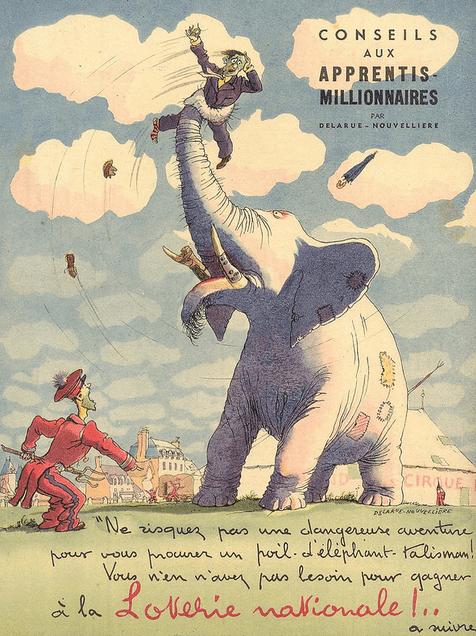
Elephants are one of the largest land mammals on earth and also one of the longest lived, with a lifespan averaging 60 years or longer. In the Buddhist tradition, a white elephant is considered to be the incarnation of Buddha. Thus the rare appearance of a white elephant is still heralded as a manifestation of the gods. The Hindu god Ganesh, the remover of obstacles, has the head of an elephant.
Here are some exceptionally beautiful mid century renderings of this mystical, intelligent and emotional animal for you to enjoy!
This slideshow requires JavaScript.
And now for possibly the most trippy Disney sequence of all time…
I remember as a child watching this and being transfixed and scared at the same time. My brother and I watched this about ten times and fast-forwarded the VHS to this part and watched over and over again. The sequence timelessly shows how alcohol and drugs can make you transcend reality and escape into a magical world. This part of Dumbo made us both insatiably curious about alcohol afterwards, believing that we would see pink elephants if we ever got drunk.
Is it just me or did a lot of Disney’s films contain weird subliminal messages?
Albert Robida was born in 1848 and died in 1926. A French illustrator, etcher, lithographer, caricaturist, and novelist, he came up with some creepily accurate predictions about World War II and also how our world would look like in the 21st Century.
He wrote a futuristic trilogy in the same vein as Jules Verne
Of course, Robida isn’t as well known as Verne. Robida’s novels weren’t nearly as famous. However his incisive imaginings of the future were more accurate than Verne’s ever were.
Le Vingtième Siècle (1883)
La Guerre au vingtième siècle (1887)
Le Vingtième siècle. La vie électrique (1890)
Robida was prone to whimsy…
Robida thought that by the year 2000 we would all be using flying cars (that look vaguely amphibian) to go on outings to the opera. He even drew this for all posterity. Click on the image to view the larger version.
Robida proposed in the 1880’s in his trilogy of books, that in the 21st Century, people would use a device called a telephonoscope. This was a mechanised contraption that included a gramophone and videophone which displayed sound and vision 24 hours a day, 7 days a week and included live, serialised opera performances and live battlefield reports. Bravo Robida, Bravo!
Here is an illustration of the telephonoscope, done in 1878 by a chap called George Du Maurier.
Great Guess #2: World War II
This was a serialised novel for children in 1908, penned by another bloke Pierre Giffard and featuring 520 illustrations by Robida. The novel somewhat creepily describes an attack from the air on London by the Germans, along with a war between Japan and the United States. A few decades before it even happened, mind you!!
The Siege of London
Great Guesses #3 to 8: The State of the Modern World
He must have been a time lord, because in his trilogy of novels, Robida imagines a world of social and cultural changes with astonishing accuracy. His themes in the novels are as follows:
The social advancement and empowerment of women
Mass tourism
Mass pollution of the world
Robotic missiles
Poison gas
Here’s a closer look at that brilliant amphibious flying car painting…
Mesdames et Messieurs in their motorcars
A hip and trendy airborne restaurant in Paris circa 2000
Cops on flying motorbikes looking sort of like Roman Centurions
Swimming or flying?
Fish like motorcars
Sometimes truth is far stranger than fiction eh? Was Robida the Nostradamus of the 20th/21st Century?
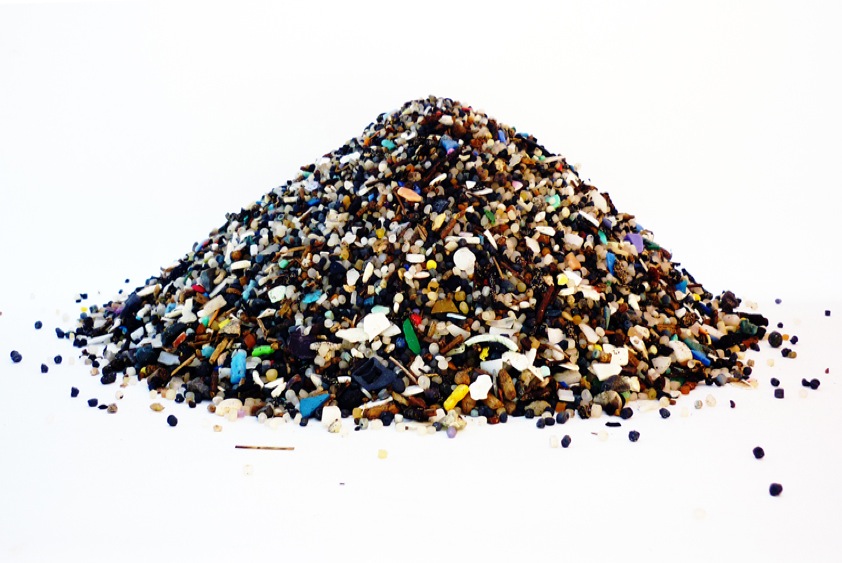
The Sea Chair is an ingenious and clever response to a growing encumberance that’s carried by our oceans – floating rubbish.
Studio Swine and Kieren Jones have merged traditional fishing practices, industry and synthetic materials to fabricate a chair made from discarded plastic on-board of an old fishing vessel and using a custom-made seapress. The Sea Chair is a commentary on oceanic pollution and the struggling fishery industry.
The first Sea Chair was launched at Milan Design Week 2012. The chair was created with with plastic collected from Porthowan Beach in the UK.
Since then, multiple Sea Chairs have been produced and exhibited at The Dublin Science Gallery, Material Matters by Droog Design, The Eyebeam Gallery New York and many other exhibitions across the globe. The project also won the RCA Sustain Award in 2011.
Robert Burns is a cult figure amongst Scottish people for his celebrated poetry and folk songs from the 18th Century. He used to write in the Scots language and also English with Scots dialect. Auld Lang Syne by Robert Burns has travelled far beyond Scotland, to become a universal song for New Year’s Eve.
Every 25th of January in honour of Burns’ birthday, Scotland celebrates its favourite son with a night of festivities including traditional Scottish food, dancing, drinks, and rousing verse from the great man, like the famous poem ‘Tam O’Shanter’. There are loads of venues across Scotland putting on a lavish celebration on Burns Night, here are some of the best ones. We hope that you’re encouraged to dust off that kilt. Alternately, if you’re not Scottish then get along to this unique cultural event that happens in other big English cities.
A Formal Burns Night: What to Expect
If you go to a formal Burns Night celebration, then you can expect some fun and interesting traditional elements. Delicious food and drink kick the festivities into full swing. The crowning glory is the haggis. This is piped into a sack and the Master of Ceremonies gives a stirring recital of ‘To a Haggis’ by Burns. He finishes off with a dramatic gesture by raising the platter above his head and shouting ”Gie her a Haggis!” A Ceilidh band (pronounced kay-lee) or pipers are normally present to get everybody in a patriotic mood. Expect to complete the evening by holding hands with those at your table and singing the famous song about parting ‘Auld Lang Syne’.
Haggis
What People Eat On Burns Night
If you go to a Ceilidh on Burns Night then expect a variation on the following three course feast. Although depending on the venue, there may be some unconventional surprises in the mix.
In the past I’ve gone out and enjoyed a traditional feast in Edinburgh. Although many places all over the world with a sizeable Scottish population will do a feast on Burns Night. Typically the feast starts with a Cock a Leekie soup. Followed by a terrine of roast chicken and leeks with a prune and Armagnac puree and pickled onions. The Haggis course featured a smoked flat iron steak with haggis, neeps and tatties in a delectable whisky sauce. This is followed by the Cranachan course, a crowdie and whisky soaked raisin cheesecake, organic oat crumble and rhubarb whisky sauce. Along with this expect a few drams of whisky.
Cock a leekie soupCranachan
What does Haggis taste like?
Absolutely amazing actually. I had it before I begun my pescatarian odyssey. Nowadays it comes in a sausage casing, so not inside of a sheep’s bladder like in days of yore. It is tasty though.
A HaggisHaggis – obviously after being butchered and cooked
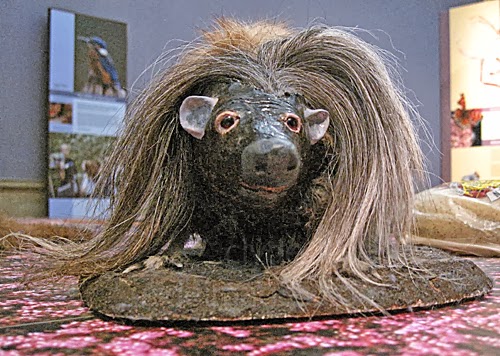
Just to clarify, a Haggis is an elusive creature that lives in the highlands. It tastes really good. Any questions?
Whether you are a Scot or you simply wish you were in Scotland, the 25th of January is a good day to celebrate all things Scottish on Burns Night.




















 Content Catnip
You must be logged in to post a comment.