If you could wake up tomorrow having gained any one quality or ability, what would it be?
This is based to this list of questions famously proven by social psychologists to foster friendship and connection among those who answer it. Please reply along with your own answer in the comments below or repost this to your blog with your own answer.
I would be a mastercraftswoman in an artform and be able to create music, paintings, pottery or writing of such sublime beauty that it would give me deep satisfaction and happiness.
I wouldn’t do it for the purpose of selling it and making money, but just for the purpose of creating beauty and giving joy to myself and other people who experience it.
The intensity of the violin and fast-paced Celtic style music has always appealed to me. So I would likely want to have a supreme talent for the violin. I have always admired people who make beautiful clay sculptures as well, so perhaps this art form.
And another thing…I always have wanted to create a fantasy world as well with strong characters and a compelling plot, this always seemed beyong my capabilities so that would be another skill I would love to conjure into reality.
I also greatly admire people who can build things with their own hands and skills. A skill like this is timeless, it would be hugely impressive achievement to build your own house I think.
What about you….if you could wake with any ability in the world tomorrow what would you do or have?
At many times in my life I’ve felt like I was alone and this made me feel extremely sad and lost. However in contrast, the really best times of my life have been where I’ve bridged that gap and managed to develop a genuine and real connection with someone and formed a meaningful friendship or relationship. Here are 36 questions that help to create closeness.
These questions below are rather famous were designed by social psychologists and husband and wife at UC Berkeley Elaine and Arthur Aron in the 90’s. The questions have an almost mythical quality and have gained an almost cult-status in how they work to bring people together. Lots of headlines followed about the ‘Love Questions’, but they needn’t just be used for fostering romantic love, they are also simply about connecting with people and forming friendships as well.
As an emotional, highly sensitive and feely INFJ, I have always been fascinated with the machinations of how people become closer and how to develop and cultivate these kinds of real connections. These questions should intensify and codify the feelings one has when sitting on an airplane or in close quarters with a stranger and finding yourself drawn into their world. Via the amazing website ‘Greater Good in Action’ by UC Berkeley.
In honour of this I am going to attempt to answer some of these questions (the less intimate and private ones) on this blog and invite other people to reply to me in the comments or in their own blog posts, with their own shared answers to the same question. I hope you will join in, it should be fun. Here are the instructions for the conversation style of using the questions with someone in person.
Time Required
45 minutes each time you do this practice.
How to Do It
Identify someone with whom you’d like to become closer. It could be someone you know well or someone you’re just getting to know. Although this exercise has a reputation for making people fall in love, it is actually useful for anyone you want to feel close to, including family members, friends, and acquaintances. Before trying it, make sure both you and your partner are comfortable with sharing personal thoughts and feelings with each other.
Find a time when you and your partner have at least 45 minutes free and are able to meet in person.
For 15 minutes, take turns asking one another the questions in Set I below. Each person should answer each question, but in an alternating order, so that a different person goes first each time.
After 15 minutes, move on to Set II, even if you haven’t yet finished the Set I questions. Then spend 15 minutes on Set II, following the same system.
After 15 minutes on Set II, spend 15 minutes on Set III. (Note: Each set of questions is designed to be more probing than the previous one. The 15-minute periods ensure that you spend an equivalent amount of time at each level of self-disclosure).
Set I
1. Given the choice of anyone in the world, whom would you want as a dinner guest?
2. Would you like to be famous? In what way?
3. Before making a telephone call, do you ever rehearse what you are going to say? Why?
4. What would constitute a “perfect” day for you?
5. When did you last sing to yourself? To someone else?
6. If you were able to live to the age of 90 and retain either the mind or body of a 30-year-old for the last 60 years of your life, which would you want?
7. Do you have a secret hunch about how you will die?
8. Name three things you and your partner appear to have in common.
9. For what in your life do you feel most grateful?
10. If you could change anything about the way you were raised, what would it be?
11. Take four minutes and tell your partner your life story in as much detail as possible.
12. If you could wake up tomorrow having gained any one quality or ability, what would it be?
Set II
13. If a crystal ball could tell you the truth about yourself, your life, the future, or anything else, what would you want to know?
14. Is there something that you’ve dreamed of doing for a long time? Why haven’t you done it?
15. What is the greatest accomplishment of your life?
16. What do you value most in a friendship?
17. What is your most treasured memory?
18. What is your most terrible memory?
19. If you knew that in one year you would die suddenly, would you change anything about the way you are now living? Why?
20. What does friendship mean to you?
21. What roles do love and affection play in your life?
22. Alternate sharing something you consider a positive characteristic of your partner. Share a total of five items.
23. How close and warm is your family? Do you feel your childhood was happier than most other people’s?
24. How do you feel about your relationship with your mother?
Set III
25. Make three true “we” statements each. For instance, “We are both in this room feeling…”
26. Complete this sentence: “I wish I had someone with whom I could share…”
27. If you were going to become a close friend with your partner, please share what would be important for them to know.
28. Tell your partner what you like about them; be very honest this time, saying things that you might not say to someone you’ve just met.
29. Share with your partner an embarrassing moment in your life.
30. When did you last cry in front of another person? By yourself?
31. Tell your partner something that you like about them [already].
32. What, if anything, is too serious to be joked about?
33. If you were to die this evening with no opportunity to communicate with anyone, what would you most regret not having told someone? Why haven’t you told them yet?
34. Your house, containing everything you own, catches fire. After saving your loved ones and pets, you have time to safely make a final dash to save any one item. What would it be? Why?
35. Of all the people in your family, whose death would you find most disturbing? Why?
36. Share a personal problem and ask your partner’s advice on how they might handle it. Also, ask your partner to reflect back to you how you seem to be feeling about the problem you have chosen.
You can try this practice with different people you want to develop a deeper connection with—but if your answers start to feel routine, consider making up your own list of questions that become increasingly more personal. Two couples can also try this practice together, which has been shown to increase closeness between the couples in addition to enhancing closeness and passionate love within each couple.
When despair for the world grows in me and I wake in the night at the least sound in fear of what my life and my children’s lives may be, I go and lie down where the wood drake rests in his beauty on the water, and the great heron feeds. I come into the peace of wild things who do not tax their lives with forethought of grief. I come into the presence of still water. And I feel above me the day-blind stars waiting with their light. For a time I rest in the grace of the world, and am free.
Born and brought up in Sweden, Karin Altenberg moved to Britain to study in 1996. She holds a PhD in Archaeology and is currently senior advisor to the Swedish National Heritage Board and a Fellow of the Linnean Society of London.
Island of Wings is her first novel. It’s the dazzling and evocative fictional story (that is loosely based on fact) of a Church of Scotland missionary Neil MacKenzie and his wife Lizzie. Set in the early 19th Century, it’s a riveting tale about how remote communities band together in the face of adversity and extreme environments.
The book opens as Neil and Lizzie set forth on the island of Hirta. Which is part of a tiny, turbulent array of islands in the Outer Hebrides with soaring cliffs and where the rugged inhabitants of the island – the St Kildans live. They are Gaelic speaking and the descendents of Norsemen who have been holding fast to the old ways since arriving in the islands in the Iron Age, some 4,000 to 5,000 years earlier.
We roam all over St Kilda through the eyes of both Neil and Lizzie. Although the two are married, their perspectives on island life couldn’t be more different. The two sassenachs (foreigners) on the island are trapped in their own isolation and have to navigate through the trials of their early marriage in an isolating, wild, superstitious and unpredictable landscape.
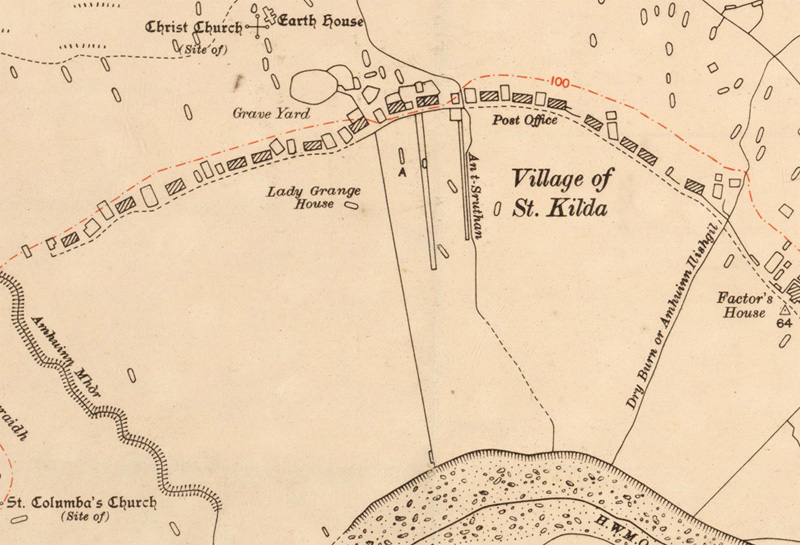
An ordnance survey of the island of Hirta in St Kilda Courtesy of the National Records of Scotland
St Kilda in real life
Until a severe famine in 1930 forced them onto the mainland of Scotland, the St Kildans lived undisturbed on the island of Hirta, the only inhabited island in St Kilda. There they subsisted in prehistoric sunken dwellings and used the droppings and carcasses of their animals as insulation in the flooring and walls of their huts. People in the village came to a common consensus about issues to resolve disputes among themselves with no law and order required. They lived off the bounty of the sky-skimming mountainous islands, picking off birds and using them for their fat, feathers and flesh for everything from clothes, to food, to heating to housing insulation.
Back to the novel
In this untamed place, the pious and somewhat irritating character of Neil comes into supreme missionary zeal. Neil longs to bring these ‘primitive savages’ of St Kilda back towards modernity through a Christian god. He appoints himself as their shepherd. Although for Neil, the people of St Kilda are poverty-stricken, lowly and savage souls who are beyond redemption. And for his wife Lizzie, she sees their pained and resilient humanity and their immense intelligence and agility in taming their natural wilderness.
This is a book about the raw majesty of St Kilda as a place, and about the spirit, community bonds and resilience of its people. But it’s also a tragic tale about the devastation of colonialism and 19th century morality.
If anything, Island of Wings stokes the embers of imagination about St Kilda, as a mythical and lonely place, making the dreamy appeal of this place even more poignantly realised.
In saying that though. I have since done my research. The character of Neil MacKenzie is actually based on a real missionary and his legacy (at least according to the National Records of Scotland) is largely positive.
Between 1830 and 1844, the missionary and teacher on St Kilda was Neil Mackenzie. Under his care, the islanders became ardent church-goers, attending church daily (except for Monday and Saturday) and twice on Sunday. Attendance at every service was compulsory for everyone over the age of 2 years (unless sick). He also made strenuous efforts to help his people to improve their living conditions, introducing the idea of legs to raise tables from the floor and walls to keep livestock away from crops. The minister remained apart from the people and, as he was the only English speaker, they depended on him to enable them to communicate with the outside world.
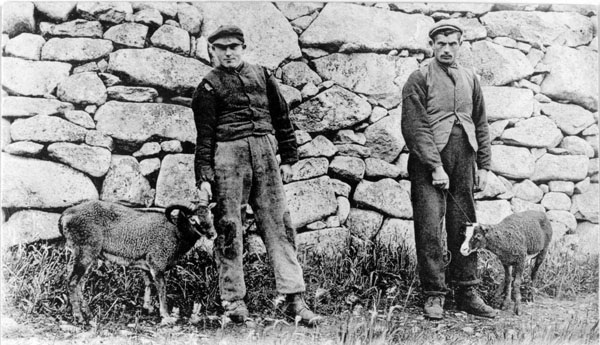
Sheep farmhers on the isle of Boreray in St Kilda. Courtesy of the National Records of Scotland
The beauty of this book by Karin Altenberg is that it’s a glimpse into the more nuanced and emotional landscape of Lizzie and Neil Mackenzie and how they managed to navigate through a tough, grimy and hopeless existence at the edge of the world. It brings alive these two people in ways never possible through historical records alone.
Characters in this novel are expertly crafted and draw you in like a long lamplight in the gloaming. Despite the miseries and the hardships of the St Kildans, Neil and Lizzie, there is a warmth, beauty and magic to this novel. Through the novel, the strong and vivid descriptions of the landscape and dynamic and turbulent beauty of this wild place will stay with you forever. If anything, Island of Wings stokes the embers of imagination about St Kilda, as a mythical and lonely place, making the dreamy appeal of this place even more poignantly realised.
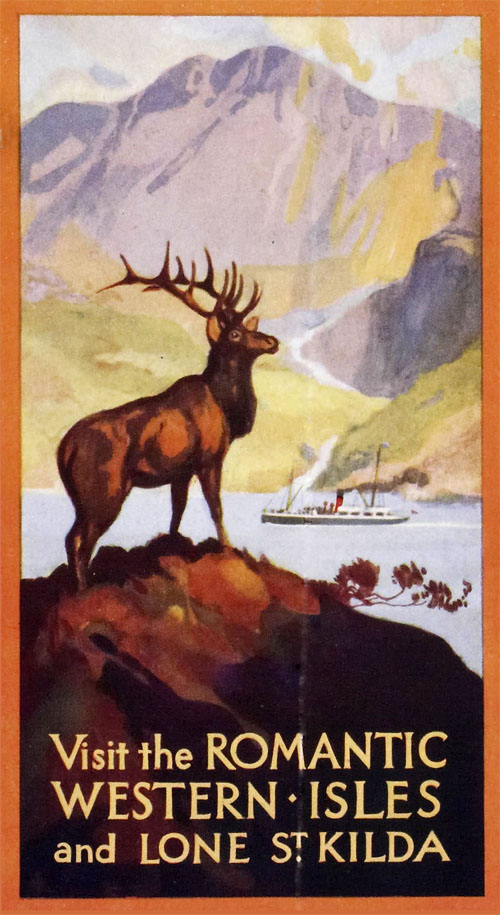
A poster from the 1920s which advertised steamer boats going to St Kilda. This was a tourist destination before the island was deserted in 1930 following a terrible crop and destitute conditions by the inhabitants. Eventually they were forced to leave to the main land, never to return. The last remaining St Kildan native Rachel Johnson died in 2016 aged 93 Courtesy of National Records of Scotland
What’s a job you would like to do for just one day?
It sounds odd, but being a funeral director would teach me a lot about what matters to people. Sometimes I understand people and their lives but sometimes what compels them remains a complete mystery to me. Seeing them in this moment would reveal a lot.
About the fleeting nature of life and death, of what matters in the end to people, about what they recall of the dead person once they are gone. How and what they remember. Hopefully it would make me treasure my own life more and treat each day that I have on this earth as special, the people in my small circle whom I call ‘my people’ as the real treasure of life.
Seeing the dead and the living who miss them throws into stark focus what matters and what doesn’t. It’s about that person’s character not about how much money they made, their brand of car or handbag…none of that shit matters really once you are gone and it matters only in the most shallow way when you’re here as well. If you are a person of character you can be homeless or a millionaire but there’s real value in having a good heart and the ability to shine that into the world. Religion has nothing to do with being good.
It would be incredibly draining emotionally to be a funeral director. But for one day, I think I could handle it. What about you, what would you do for one day?
Bliss out with an uplifting short animation about a contented introvert, lessons in creativity by Prince, a lentil curry recipe, hopeful news for Scottish trees and much more. It’s edition #125 #Interesting Things #ContentCatnip. Tell your pals…
I love Scotland, but it would be even more epic and immense if there was more trees and more native animals in the Highlands. This project makes my heart sing!
Friend and fellow blogger on WordPress Lamp Magician confirms my long-held hunch that introversion and intelligence go hand in hand, using various research findings.
More intelligent people like to spend more time alone
“The findings here show – and not surprisingly – that people with greater intelligence and the ability to use it. They are less likely to spend so much time socializing because they focus on other long-term goals.”
In other words, the most intelligent person might prefer to spend their time evolving their science or knowledge or even taking part in organizations with goals rather than feeling that she/he is wasting their time with socialization. , which not only does not offer them anything since it does not evolve this way but on the contrary, it hinders them as they abuse their “useful” time, which could be much more creative.
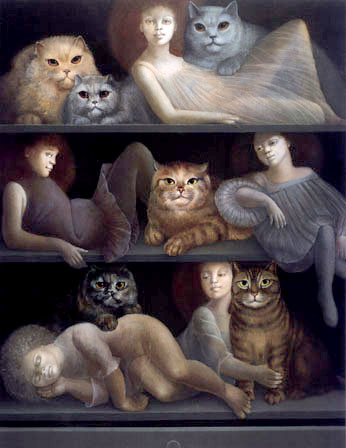
Leonor Fini was an enigmatic and often misunderstood outsider artist of the Surrealist movement. She conjured captivating worlds with her brush, challenging societal norms while unveiling the mysteries of the human psyche.
She was born in Buenos Aires and later her career flourished in Paris. Fini’s subversive art often featured themes of female sexuality, goddess worship, the occult. She had the mystical power to beckon the view into uncanny dreamlike realms where the extraordinary blends seamlessly with the everyday. Like her work Sunday Afternoon, which invites the viewer to see women as mysterious powerholders, Fini encourages us into the depths of our own imagination.
Dimanche après-midi (Sunday Afternoon) by Leonor Fini (1980)
Dimanche après-midi showcases a series of portraits featuring Leonor Fini entwined with her cats, all positioned on shelves, giving the impression of dolls or ornaments. Through this composition, the artwork implies that the enigmatic aspects of femininity are at times misconstrued as objectification. Beyond this interpretation, the piece also conveys the delight of a ‘Sunday Afternoon’ and underscores Fini’s deep affection and devotion to her feline companions. Her treatment of her cats as if they were human, and her strong identification with them, blurred the lines between herself and a feline persona to some extent.
“Happier Alone” is a comforting and uplifting stop-motion short film by the hugely talented Lili Giacobino. The short film portrays the preferred lifestyle of an introverted man who has completely accepted his own true nature. “Self- acceptance whatever society dictates” is the message here, which is reflected in the apparent inner peace of the man and the peaceful surroundings of his natural environment.
When you hold somebody, you gotta hold them like it’s the last minute of your life.
“How immensely important to us are those things in our life that are stable and unchanging. So much of our world is in motion. How welcome are the bits that stand still.”
~ C.R. Milne
Incredible documentaries about female artists
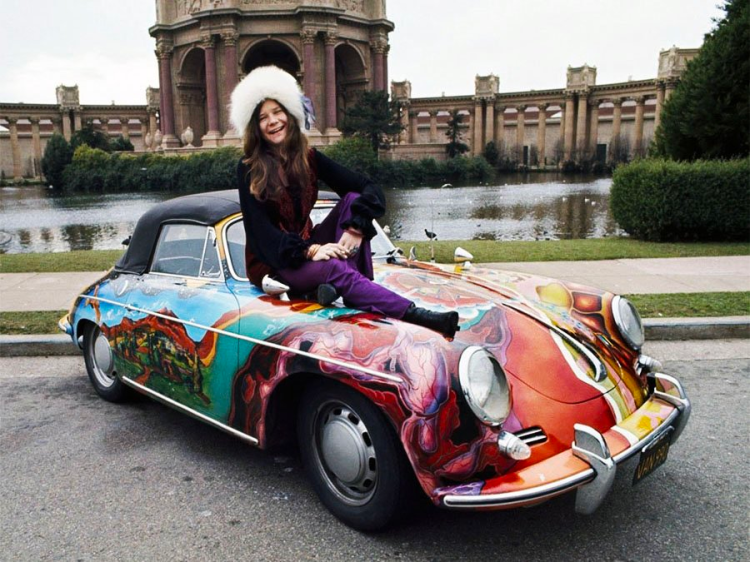
Recently I watched two really great documentaries about the lives of two iconic female artists from two different eras. Goddess of the Flower Power era Janis Joplin; along with Goddess of 80’s power pop Whitney Houston. Both were immensely talented and charismatic and both were chewed up and spat out by a toxic celebrity culture, which both reveres and hates women. Worth watching!
Did you enjoy this collection? let me know what you think of it below. Thank you for reading my dear friends!
List the people you admire and look to for advice…
My best friend
She is the most patient, loving, kind and gentle person I’ve ever known. We met when we were young about 17, at a rave and back then we were both completely different people, like two butterflies in full flight with multicolored wings, embodying our most vibrant physical forms.
When we met I had a great feeling inside. It always happens with people I know are going to be significant in my life. A light clicks on in my heart and my third eye, as though this person is a beacon and I am a beacon and our lights have crossed over like two lighthouse beams on a dark stormy night. She is very smart and has a PhD in maths. She took a different path to me and had two kids, and has become the most devoted and attentive mum you could possibly imagine. I greatly admire her for this and always seek her advice, as she has a high degree of emotional intelligence.
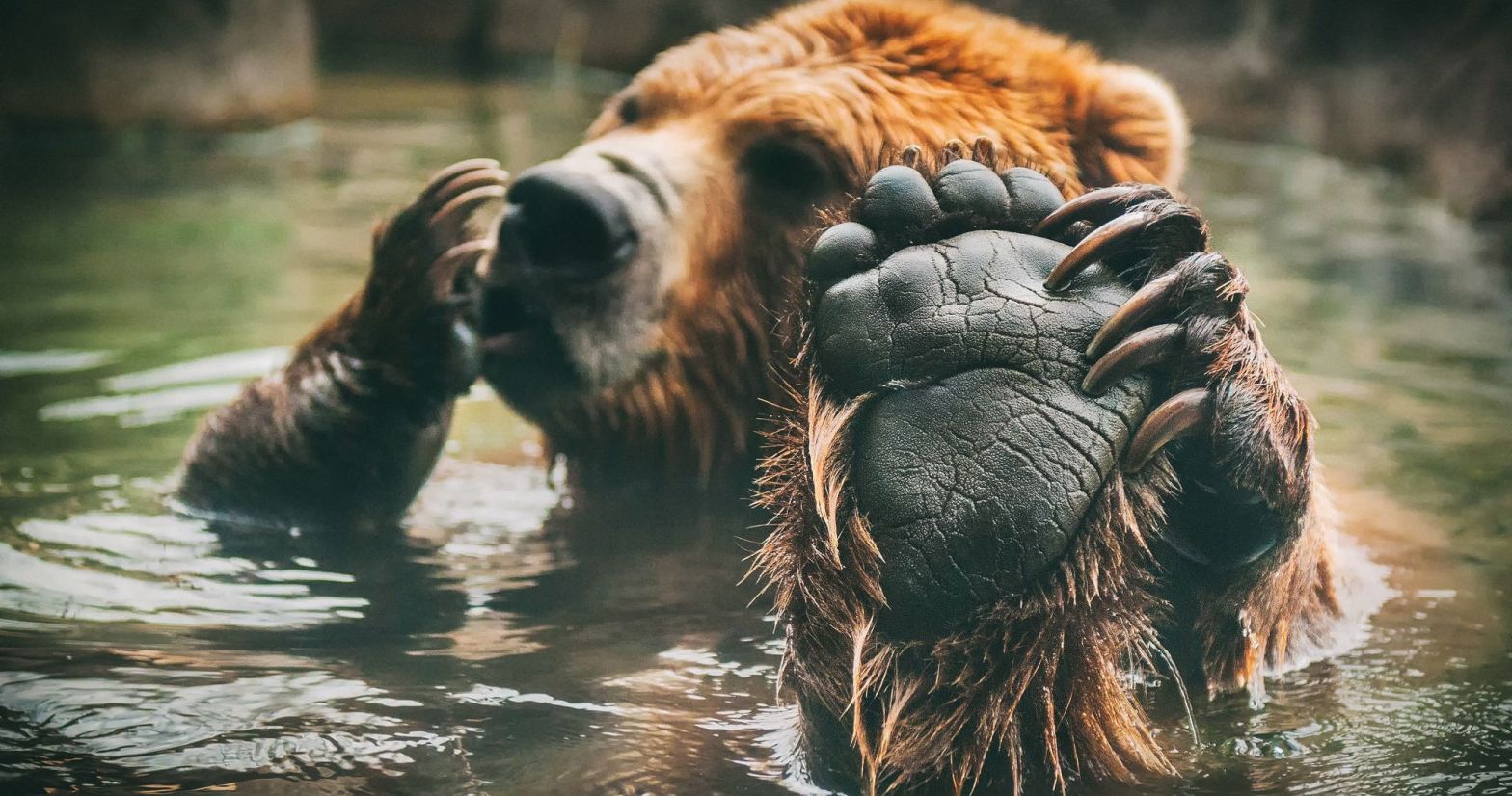
My Polish bear 🐻
He would hate me calling this and cringe so hard he would need to wear a hoodie over his eyes permanently to mask the level of cringe I have created just now, but nevertheless I can’t call him by his real name here because he is an intensely private person. I’ve written at length about our first fortuitous meeting here. So important this person is to me and integral to my life I can’t really accurately quantify it.
Everything I’ve learned about how to be a responsible human being and an adult I’ve learned from him. In return I think I’ve loosened up his serious self and made him live in the moment more, made him long for adventure and new experiences, as I do. We couldn’t be more different in our ways of seeing the world, I am definitely a glass half full and an optimist, he is a glass half empty and a natural pessimist. There is often a lot of tension because of our differences, but somehow it all comes out in the wash because we really do love each other. I am grateful every single day and every time I get to hug him that I have him in my life. Sure…he shits me to tears and we do insult each other in a joking way but it’s all in jest. I have grown as a person so much because of him and definitely become less of a chaotic and unpredictably spirited wild horse, more like a working Clydesdale with sturdy hooves and a sensible temperament now. I guess he broke me in and domesticated me…this is a good thing.
My late grandfather
My late grandfather was from Yorkshire and spent his childhood working in the mines. He had a deep understanding of poverty and deprivation and spent his later life protecting those he loved from having the same fate by making wise financial decisions and helping my parents. He was really the only adult who saw me, really saw me and knew the potential I had and nurtured that self-belief in me. The rest of the world including my parents either ignored me completely or made fun of what I had to say. His strong and solid never wavering belief in me and in my intelligence was what helped me to lift myself out of the difficult and childhood and teenage years I found myself in. His lifetime love of learning became my own. His endless curiosity about the world became my own. His tenacious and courageous way of seizing every opportunity that came his way became my own. His keeping of an extensive personal library became my own thing I would do. Even though he’s no longer physically here I can still hear his laugh and his voice and feel his quiet loving observation of everything I am doing now as an adult. When things get difficult I seek his counsel by closing my eyes and when I need strength I ask him for it.
Sorrow for the Whales by Artem Rhads ChebohaA studious squirrel in her tree nook home by Deborah HockingA mob of red deer stags in Richmond Park by photographer Emma Hughes on MastodonI always imagined I would have a life very different from the one that was imagined for me, but I understood from a very early time that I would have to revolt in order to make that life. Now I am convinced that in any creativity there exists this element of revolt. – Leonor Fini
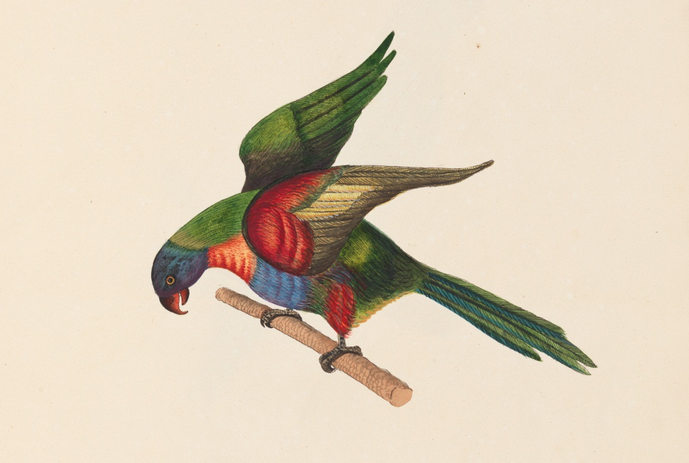
In Australia there are more than 250 Indigenous languages including around 800 dialects. Languages are living things that connect people to Country, culture and ancestors. Many words for Australian native animals come from these languages.
‘Keriba gesep agiakar dikwarda keriba mir. Ableglam keriba Mir pako Tonar nole atakemurkak.’ — The land actually gave birth to our language. Language and culture are inseparable.
Bua Benjamin Mabo, Meriam linguist
MELANIE HAVA / BROLGAS
Language is identity
‘Language is part of our songlines, stories, spirituality, law, culture, identity and connection. Language transfers important knowledge passed down from our Ancestors and Elders that guides us.’
Emu – Portuguese/South American in origin, named for the rheas in South America, big flightless birds like those endemic to Australia.
Goanna – comes from the word ‘iguana’.
‘Echidna’ and ‘platypus’ – these started off as scientific names and quickly made their way into the Australian vernacular.
There is now a push towards giving Australian native animals the names originally given to them by Australia’s First Nation’s peoples instead of foreign Latin names with no cultural meaning attached to place.
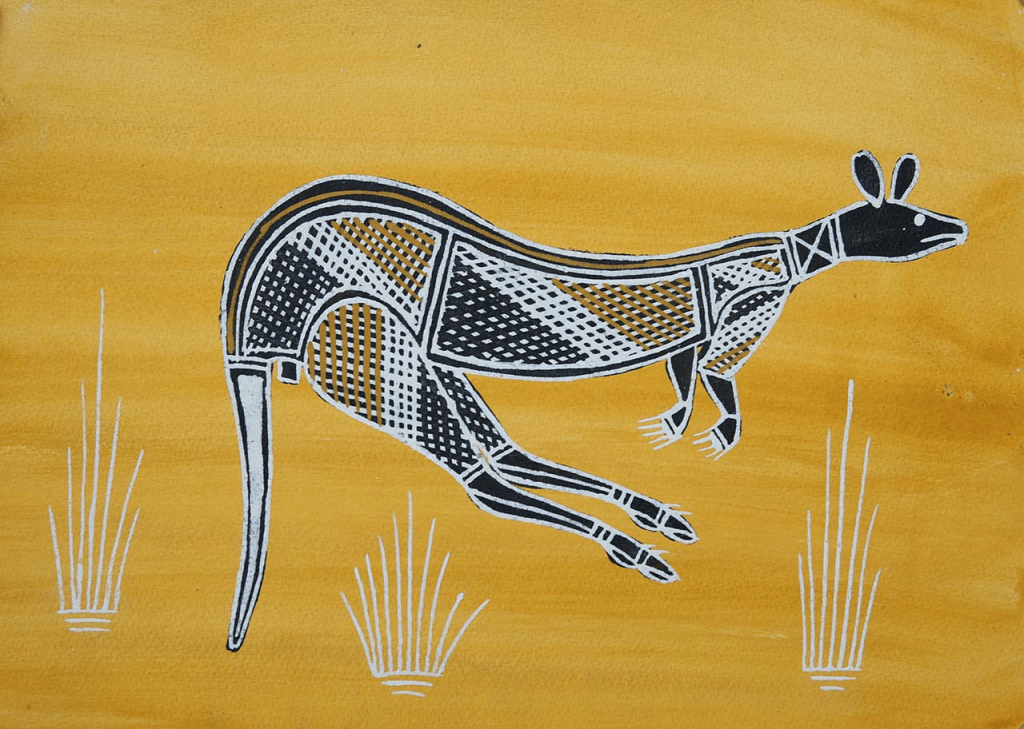
Aboriginal mythology incorporates Ancestor spirits that are related to important animals into Dreamtime law, and animals like kangaroos, emus, koalas and wombats features prominently in the culture of Indigenous groups across Australia. Their images are seen in paintings from the furtherest south to the most northern regions of the continent.
Many Aboriginal names have a pleasing phonetic sound on the tongue and mouth when spoken. Like the ‘Woylie’, or in English the ‘brush-tailed bettong’; or ‘kakarratul and itjaritjari’ in place of ‘northern and southern marsupial mole’.
Rock carving of a koala at Blackfellows Head, Westleigh in northern Sydney. A rock carving of a noose which was used by Aboriginals to get koalas out of the trees is located nearby. Photographer: Ralph Hawkins, circa 1970.
There is also a growing trend for using scientific names that draw upon Aboriginal words. One striking example is the red and yellow mountain frog or the Philoria kundagungan. In the Kabi language of southern Queensland, ‘kunda’ means mountain and ‘gungan’ means frog.
By using these phonetically beautiful and interesting words, it’s just another way that everyone can honour and respect the traditional custodians of the land – by using the original names of the animals living there. Below are some of the original names so that you know.
Every year at around this time, Matariki rises in the mid-winter sky. This is the Māori name for the cluster of stars also known as the Pleiades. In Aotearoa Matariki rises in late May or early June. This traditionally heralds winter solistice in New Zealand or the Māori new year.
Matariki translates to the ‘eyes of god’ (mata ariki) or ‘little eyes’ (mata riki). According to myth, when Ranginui, the sky father, and Papatūānuku, the earth mother, were separated by their children, the god of the winds, Tāwhirimātea, became so angry that he tore out his eyes and threw them into the heavens.
Matariki: A time for remembering the cycles of life and death
Traditionally, Matariki was time to honour and remember those who had died in the last year. But it was also a happy event. It”s a time for the harvest of crops and seafood and the hunting of birds. With plenty of food in the storehouses, Matariki was a time for singing, dancing and feasting for Māori.
In old times, Matariki was greeted with expressions of grief for those who had died since its last appearance. Some said the stars housed the souls of those departed.
Rangihuna Pire, in his 70s, remembered how as a child he was taken by his grandparents to watch for Matariki in mid-winter at Kaūpokonui, South Taranaki:
The old people might wait up several nights before the stars rose. They would make a small hāngī. When they saw the stars, they would weep and tell Matariki the names of those who had gone since the stars set. Then the oven would be uncovered so the scent of the food would rise and strengthen the stars, for they were weak and cold.
It was also a time to be thankful for the crops and to say a brief karakia for the forthcoming season.
Matariki atua ka eke mai i te rangi e roa, E whāngainga iho ki te mata o te tau e roa e.
Divine Matariki come forth from the far-off heaven, Bestow the first fruits of the year upon us.
Winter stars in Aotearoa
The following Maori names are used to identify stars and other celestial objects on modern astronomical charts:
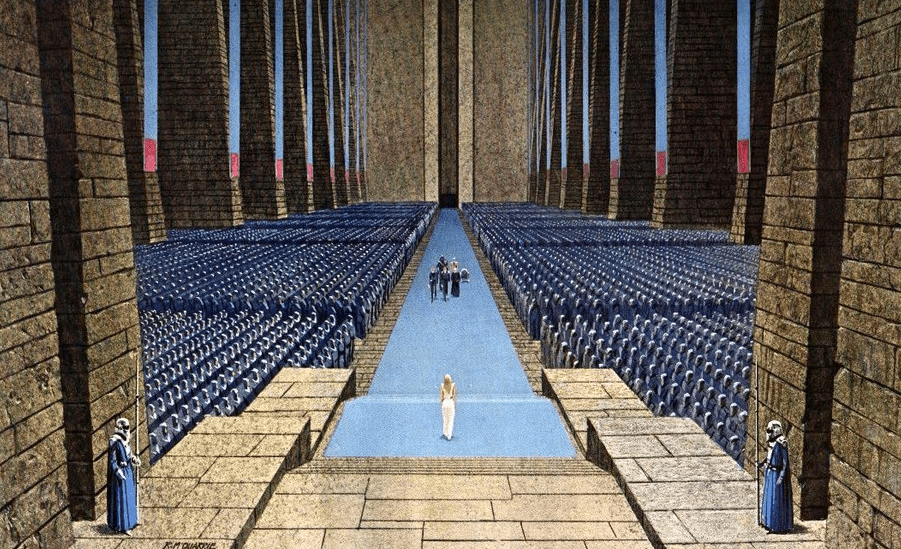
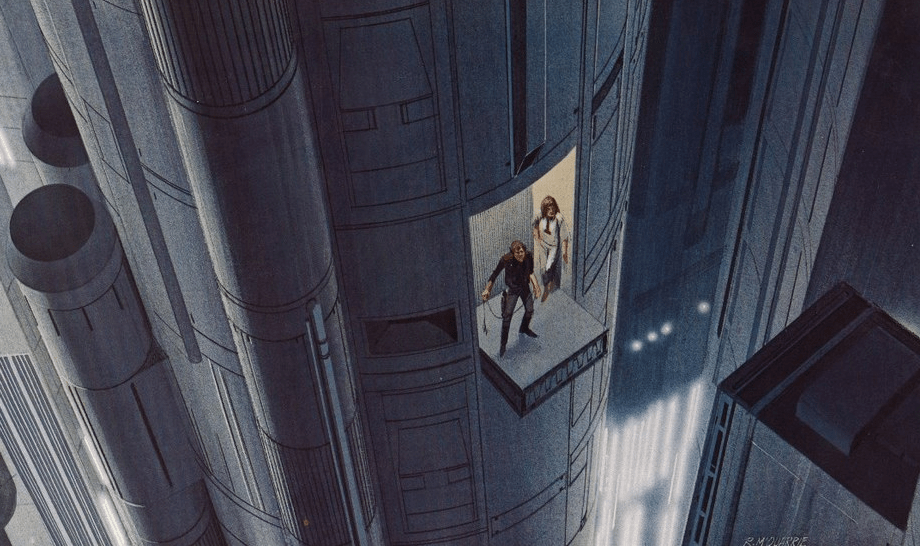
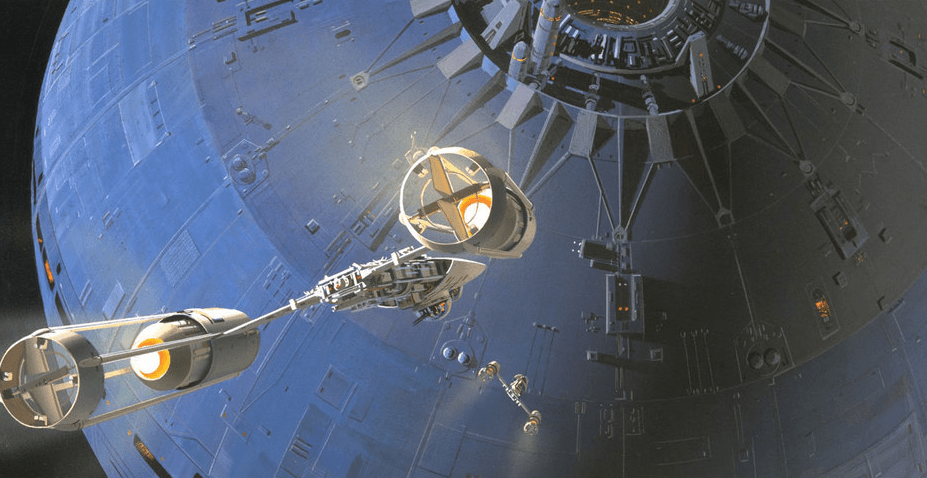
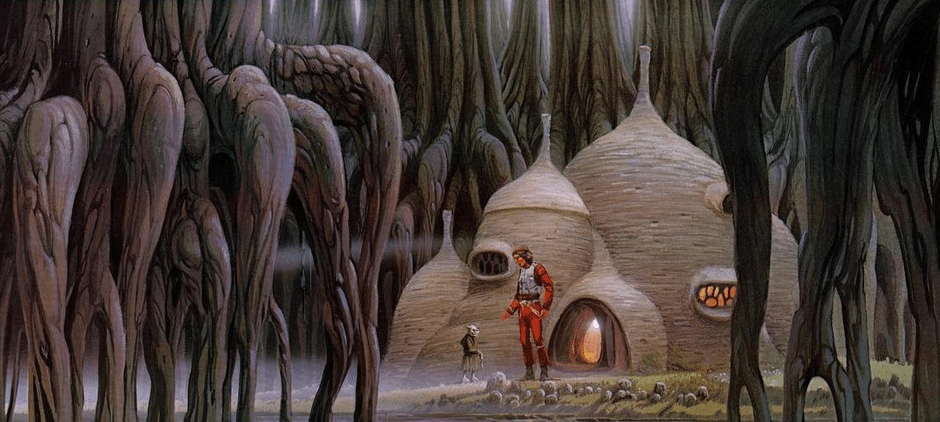
Ralph McQuarrie (1929-2012) was an American conceptual designer and illustrator. He had a keen sense of aesthetics and imagination that set him apart from other illustrators. So he was a natural choice for George Lucas, who looked to him for inspiration for the Star Wars trilogy.
McQuarrie was responsible for designing many of the film’s characters, including Darth Vader, Chewbacca, R2-D2 and C-3PO. He was also responsible for the conceptual design of the film sets and props.
” I just did my best to depict how I thought the film should look, I really liked the idea. I didn’t think the film would get made. My impression was it was too expensive. I thought there wouldn’t be enough of an audience. It’s too complicated. But George knew a lot of things that I didn’t know.”
It was McQuarrie who came up with the idea for Darth Vader to wear a breathing apparatus to survive the vacuum of space. George Lucas then added the samurai helmet and Darth Vader was born.
McQuarrie is an example of what a mind set free by creativity can achieve. The book Star Wars: The Art of Ralph McQuarrie is available through Dream and Visions Press.






















 Content Catnip
You must be logged in to post a comment.