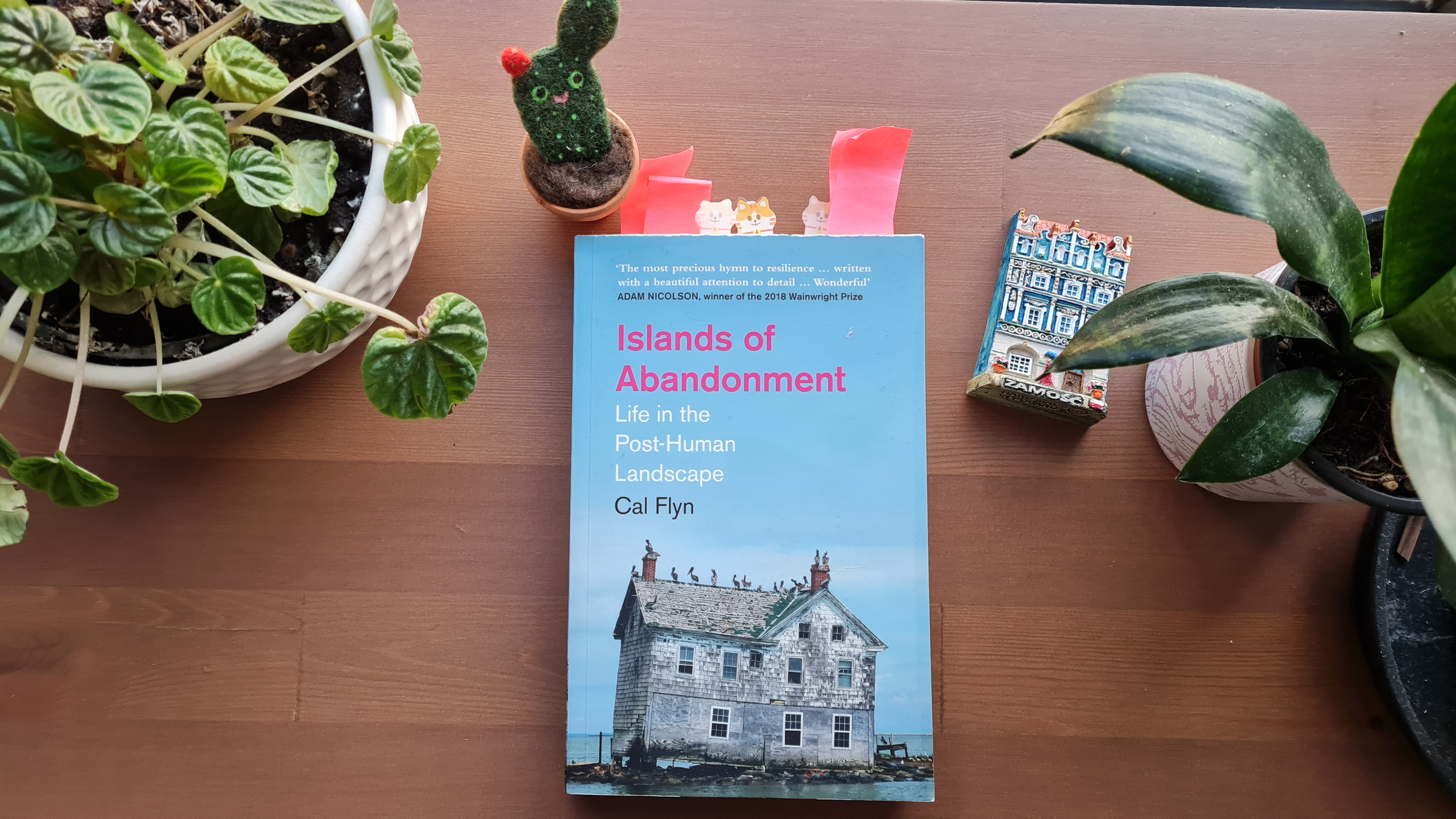
“Aldo Leopold said that our ability to perceive the quality of nature begins ‘as in art, with the pretty’ After that it expands through successive stages of the beautiful to values as yet uncaptured by language. What he was getting at is this: knowledge deepens appreciation. Seeing cranes feeding in a wetland he saw not only ‘clangorous descending spirals’ but the history of cranes and all of their evolutionary predecessors who had spiralled down upon the wetland over aeons.”
Cal Flynn, Islands of Abandonment.
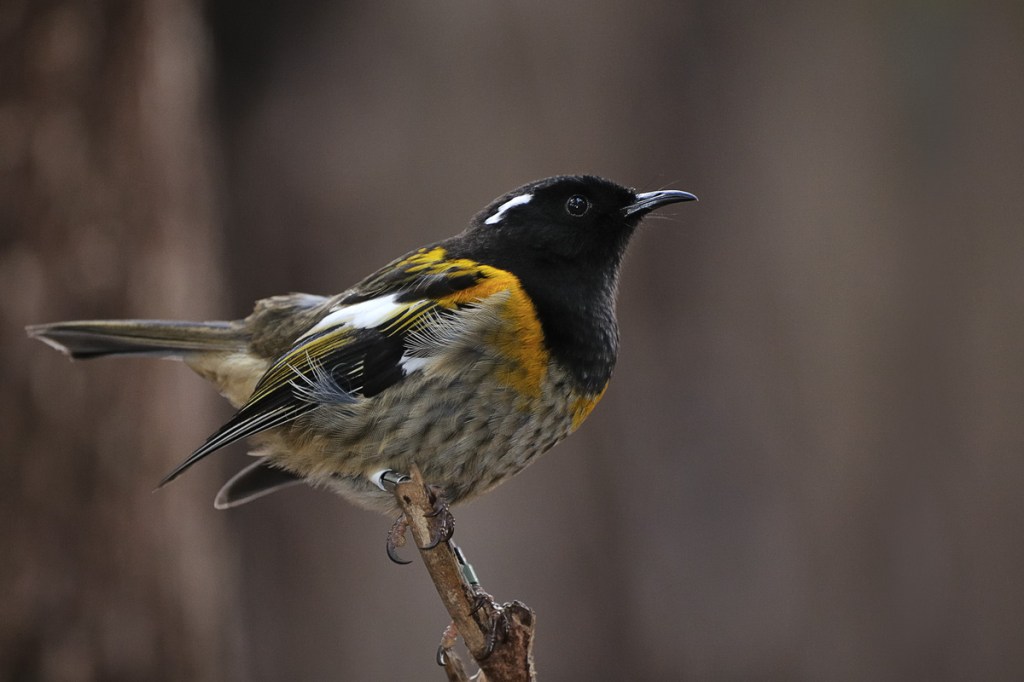
stitchbirds – Birds, Mana and Maori Culture Central Park, Wellington, copyright Content Catnip 2021morepork – Birds, Mana and Maori Culture
This too is a form of beauty – a conceptual one. As a mathematician might appreciate an elegant equation or an artist might consider an empty room lit only by a flickering light to be beautiful. As with other forms of aestheticism it can be taught. To come to an abandoned mine, a spoil heap or a quarry or a carpark and see it for the natural wonderland it has become is, I admit it, a difficult ask. But in these environmentally straitened days, it is a taste worth cultivating. ~
“What happens when humans foresake and ruin landscapes? They are never truly abandoned. Instead they are engulfed by the non-human world and they become teeming with many other foresaken wild lifeforms. The weeds, plants, insects, birds and large mammals move in and populate these places. Pushed to the brink of extinction elsewhere by the ever-expanding need for human progress – these ugly, abandoned fringes of our world are the places where these animals can finally breathe a sigh of relief.” ~ Cal Flynn
Islands of Abandonment is a book-length poem and an ode to the places humans have used, abused and then rejected due to pollution, war, or physical danger.
“The desert could not be claimed or owned–it was a piece of cloth carried by winds, never held down by stones, and given a hundred shifting names… Its caravans, those strange rambling feasts and cultures, left nothing behind, not an ember. All of us, even those with European homes and children in the distance, wished to remove the clothing of our countries. It was a place of faith. We disappeared into landscape.” ― Michael Ondaatje, The English Patient
Prepare yourself for celestial wars between the gods, secret signals by airport ground staff, a catalogue of pompadour hair styles, a quirky Japanese museum and much more, it’s edition #96 of Interesting Things!
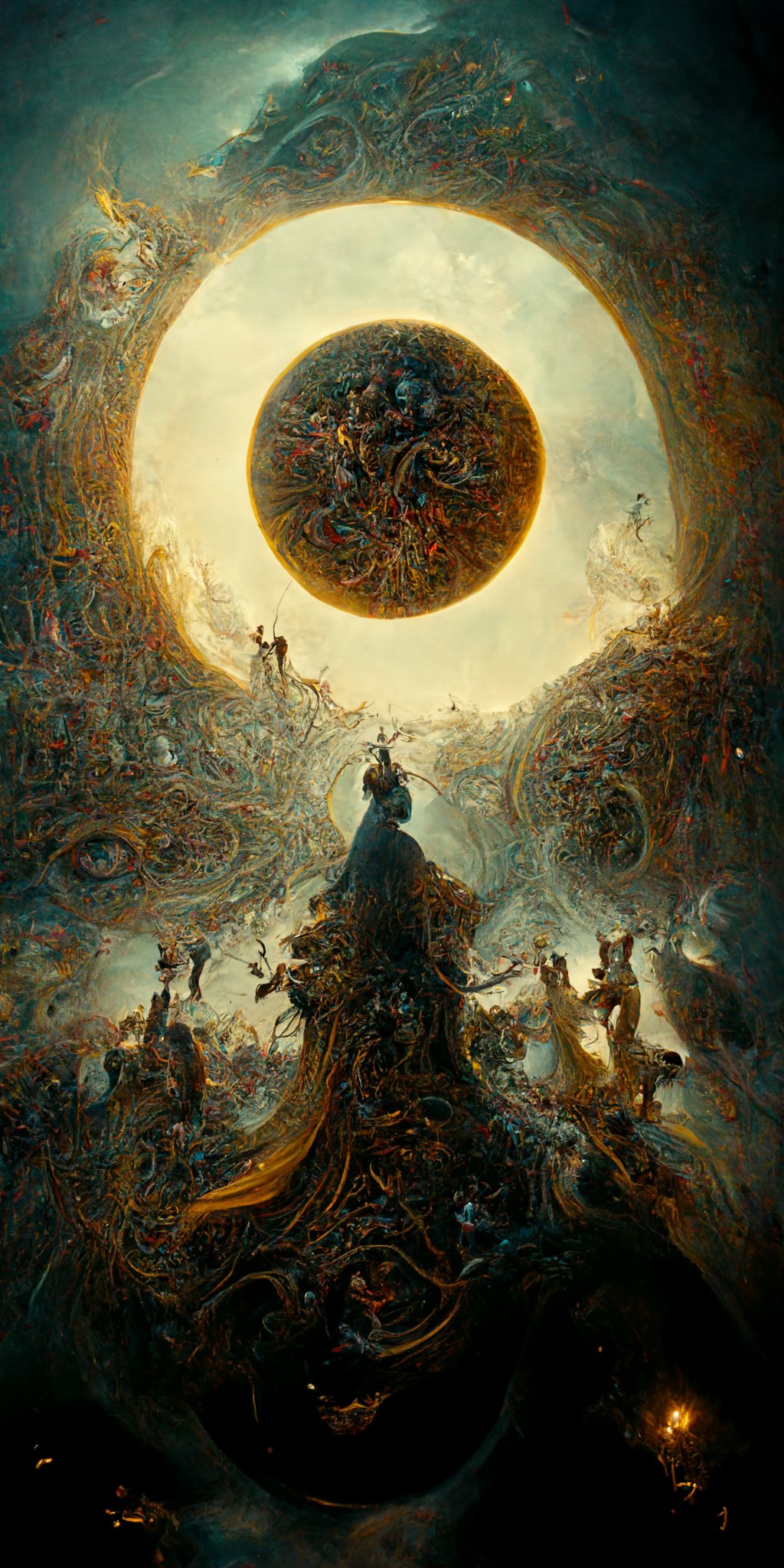
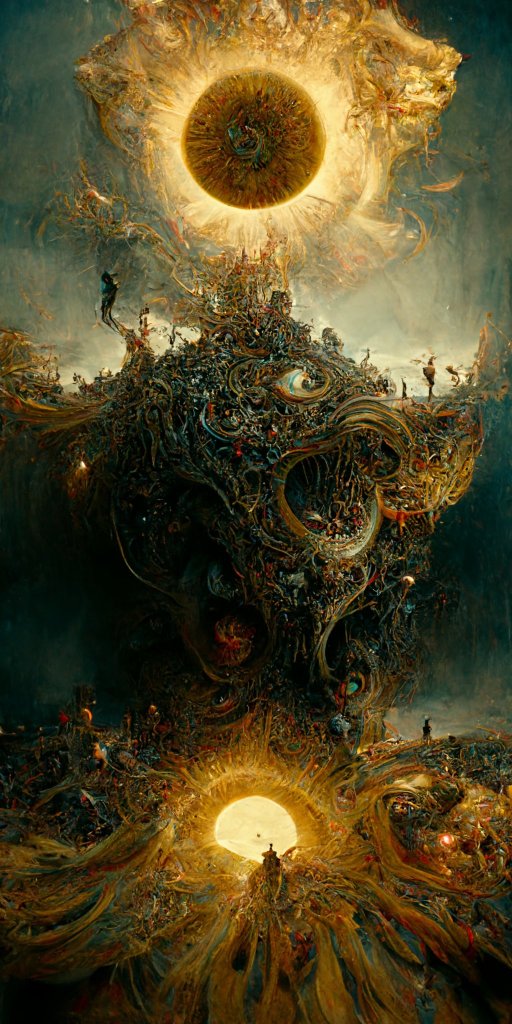
These epic paintings made me suck in a sharp breath, they are pretty incredible! Sorry that I don’t have the full resolution images here, only what was uploaded to Twitter.
The Birth of the New World by Andrei RiabovitchevThe Birth of the New World by Andrei RiabovitchevThe Birth of the New World by Andrei RiabovitchevThe Birth of the New World by Andrei Riabovitchev
If you have curly, wavy or thick hair this is a guide to how to transform yourself into an Edwardian lady. Quite timeless these styles I must say. Via Cool Guides on Reddit.
I love Partiboi69s unique mix of comedy, memes and really great techno. You won’t find great music in this song though, it’s just him playing a love song on the recorder, in the atmospheric surrounds of Elwood Beach in Melbourne. This song is charming and unique in its own way. What a national treasure he is! There is a climatic moment when he does a full reveal… I won’t give anything away, you will need to see for yourself.
I had to listen to this song simply for the outfit she’s wearing in the thumbnail, which is some kind of psychedelic space suit that looks a little…meaty and yet intergalactic. On listening to this song, it doesn’t disappoint…it’s funky soulful and has truckloads of DGAF sass.
A night walk to Kadokawa Museum
Kadokawa Museum is a strange and quirky museum featuring mind-blowing architecture, art and anime exhibitions. Here Rambalac who specialises in wordless, explorations of places (both well-known and obscure like this) takes you on a journey to this surreal place. Now I really want and need to go back to Japan!
Steve Irwin meets an orangutan mother and baby
I love the reverent, respectful way he approaches her and the mother’s visible gaining of trust with Steve, it’s really beautiful.
This is fascinating! There are many words here that we use every day that originate from Hindi and Urdu and from the British colonial rule and dominance of India during the 18th and 19th centuries. Who knew that words like ‘thug’, ‘cot’ or ‘juggernaut’ come from India? I didn’t until now.
Blighty“Britain” (as a term of endearment among British troops stationed in Colonial India): from Hindi-Urdu vilāyatī (विलायती, ولايتى) “foreign”, ultimately from Arabo-Persian ولايتي “provincial, regional”.
Bungalow from बंगला bangla and Urdu بنگلہ bangla, literally, “(house) in the Bengal style”.[1]
Cummerbund ultimately from Persian via Hindi-Urdu कमरबन्द/کمربند, kamarband, – from kamar ‘waist, loins’ and –bandi ‘band’.[4][5]
Cushyfrom Hindi-Urdu ख़ुशी/خوشی, k͟hushī, ‘pleasure’, from Persian خوش ḵuš.[6][7] Some sources prefer an origin from “cushion”[8]
D
Dacoit from Daku, meaning a member of a class of criminals who engage in organized robbery and murder. Hence also dacoity (banditry)Dekko(UK slang for ‘a look’) from دیکھو देखो Dekho, the imperative ‘look’, (دیکھو देखो) meaning look at or study something.
DungareeHeavy denim fabric, also referring to trousers made thereof, from Hindi डूंगरी (ḍūṅgrī, “coarse calico”), first worn by labourers in the Dongri area of Mumbai (Bombay).
Garam masalafrom Hindi गरम मसाला and Urdu گرم مصالحہ garam masālā, literally “hot ( = spicy) mixture”,[10] from Persian گرم garm ‘warm, hot’ and Arabic مصالح maṣāliḥ ‘benefits, requirements, ingredients’.
Gavial from Hindustani ghaṛiyāl,گھڑیال / घड़ियाल, ultimately derived from the Sanskrit word घण्टिक.
Guru from Hindi guru “teacher, priest,” from Sanskrit गुरु guru “one to be honored, teacher,” literally “heavy, weighty.”[11]
Gymkhana A term which originally referred to a place where sporting events take place and referred to any of various meets at which contests were held to test the skill of the competitors. In English-speaking countries, a gymkhana refers to a multi-game equestrian event performed to display the training and talents of horses and their rider [-khānā from Pers. khānāh خانه “house, dwelling”]
Jodhpurs Full-length trousers, worn for horseback riding, that are close-fitting below the knee, flared and roomy at the thigh, and have reinforced patches on the inside of the leg. Named after Jodhpur, where similar garments are worn by Indian men as part of everyday dress.
Juggernaut from Jagannath (Sanskrit: जगन्नाथ jagannātha, Odia: ଜଗନ୍ନାଥ jagannātha), a form of Vishnu particularly worshipped at the Jagannath Temple, Puri, Odisha where during Rath Yatra festival thousands of devotees pull three temple carts some 14m (45 feet) tall, weighing hundreds of tons through the streets. These carts seat three statues of the deities, meant to be two brothers and their sister for a ‘stroll’ outside after the ritual worship session. They are fed by thousands and thousands of worshipers with holy food, as if the icons were living. Early European visitors witnessed these festivals and returned with—possibly apocryphal—reports of religious fanatics committing suicide by throwing themselves under the wheels of the carts. So the word became a metaphor for something immense and unstoppable because of institutional or physical inertia; or impending catastrophe that is foreseeable yet virtually unavoidable because of such inertia.
Jungle from the Sanskrit word जङ्गल jaṅgala, and later jangal in Hindi as जंगल and Urdu as جنگل. Jaṅgala means “uncultivated land” which refers to the wilderness or forest.
K
Khaki from ख़ाकी khākī “of dust colour, dusty, grey”, cf. Hindi ख़ाकी – Urdu خاکی [ultimately from Persian].
Karma from Sanskrit, the result of a person’s actions as well as the actions themselves. It is a term about the cycle of cause and effect.
Kedgeree from Hindi खिचड़ी, Kedgeree is thought to have originated with the Indian rice-and-bean or rice-and-lentil dish khichri, traced back to 1340 or earlier.
Mantra from Hindi and Sanskrit: a word or phrase used in meditation.
Masala from Urdu, to refer to Indian flavoured spices
N
Nirvana (in Jainism, Hinduism, Sikhism, and Buddhism) a transcendent state in which there is neither suffering, desire, nor sense of self, and the subject is released from the effects of karma and the cycle of death and rebirth. It represents the final goal of Jainism, Hinduism, Sikhism, and Buddhism.
P
Pashmina from Hindi पश्मीना, Urdu پشمينه, ultimately from Persian پشمينه.
Punch from Hindi and Urdu panch پانچ, meaning “five”. The drink was originally made with five ingredients: alcohol, sugar, lemon, water, and tea or spices.[14][15] The original drink was named paantsch.
Pundit from पण्डित Pandit, meaning a learned scholar or Priest.
Purdah from Hindi-Urdu पर्दा, پردہ Pardah (ultimately from Persian) meaning ‘the pre-election period’.[16][17][18][19][20]
Pyjamas from Hindi and Urdu, پاجامہ / पैजामा (paijaamaa), meaning “leg garment”, coined from Persian پاى “foot, leg” and جامه “garment” .[21]
R
Raita from Hindi and Urdu रायता رائتہ rayta.[22] yogurt based dish, some add sliced/chopped/diced, cucumbers, onions, tomatoes, pineapples, pomegranate or other salads to complement rice or roti meals.
Roti from Hindi and Urdu रॊटी روٹی roti “bread”; akin to Prakrit रॊट्ट rotta “rice flour”, Sanskrit रोटिका rotika “kind of bread”.[23]
S
Sepoy Sepoy is derived from the Persian word sepāhī (سپاہی) meaning “infantry soldier” and was designated as a rank in the Mughal Army. The title and rank were implemented by the East India Company and later the British Raj. The term continues to be used for noncommissioned ranks in the Indian and Pakistani and Nepalese militaries.
Shampoo Derived from Hindustani chāmpo (चाँपो [tʃãːpoː]) (verb imperative, meaning “rub!”), dating to 1762.[24]
T
Teapoy from charpoy चारपाई,چارپائی Teen payi (तीन पाय) in Hindi-Urdu, meaning “three legged” or “coffee table”.[25]
Faith in the possibility of change, the prospect of a better future. For green shoots in the rubble, fresh water in the desert. And our faith is often tested.
Everywhere I have looked, everywhere I have been – places bent and broken, despoiled and desolate, polluted and poisoned, I have found new life springing from the wreckage of the old, life all the stranger and more valuable for its resilience. This is a corrupted world – yes- one long fallen from a state of grace – but it is a world too that knows how to live. It has a great capacity for repair, for recovery, for forgiveness – of a sort – if we can only learn to let it do so. Lands cleared for cultivation centuries before revert to forest in a matter of years. Environments stripped of their inhabitants can repopulate of their own accord. Even contaminated sites of the very worst kind can, when given the chance become ecosystems of singular importance.
The islands of abandonment in this book serve to remind us that not only big structured conservation projects that offer us hope for a return to the wild. The scrappy abandoned carpark at the end of your road. Consider it and every one like it a tiny islet in an archipelago stretching over the whole world. Stepping stones for species as they recognise what land was lost.
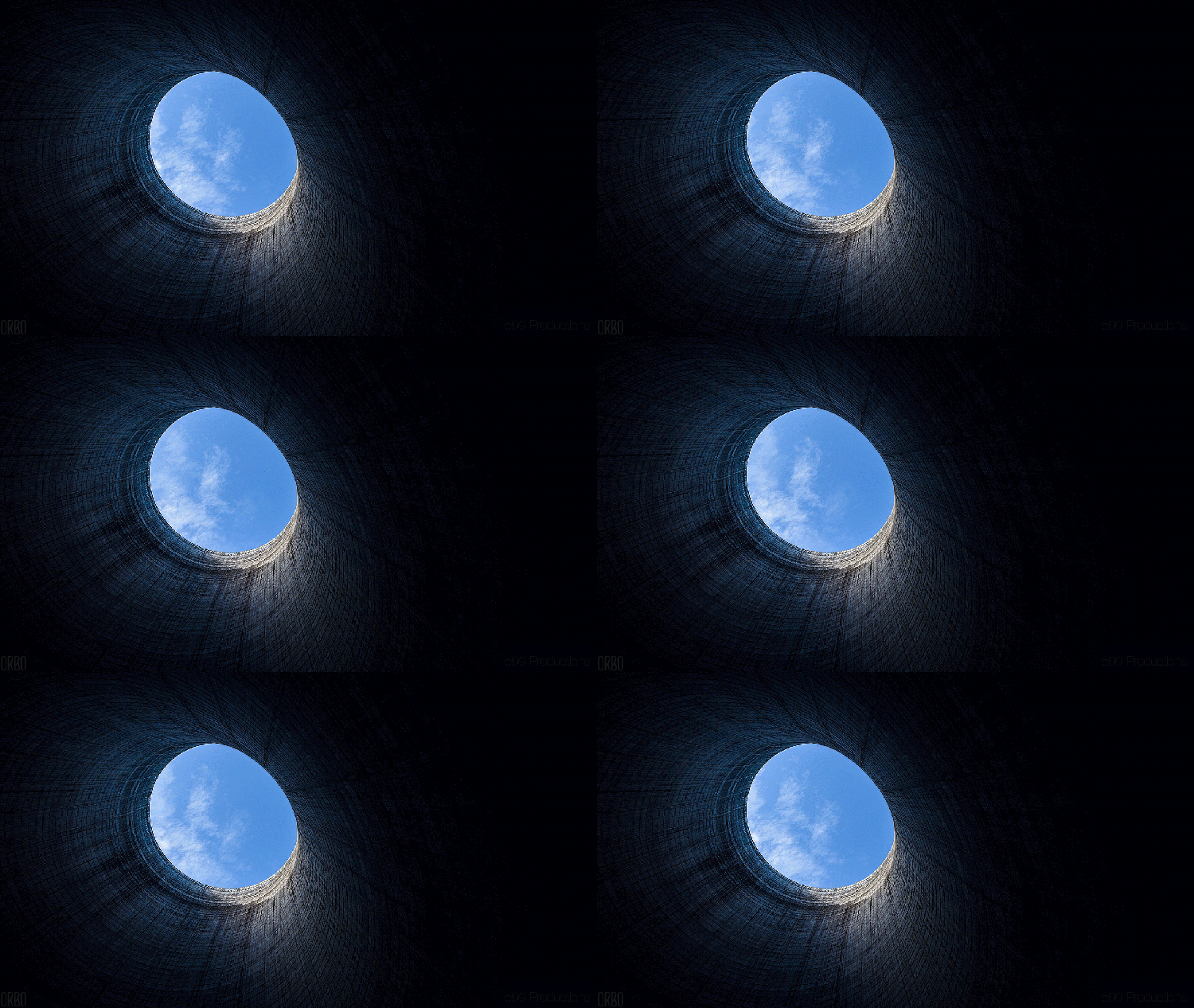
Rise of the Planet of the Apes by Orbojunglist
Places like Bikini Atoll, Chernobyl and the Lothian bings show us that the absence of man is often all the stimulus required to start the resurrection. Time is, after all, a great healer.
The question is: how long does it need? and then: how long have we got?
It may not be long. This is the time for the confessional, of the admission of sins. This is the time to pray if you know how: to God or to Gaia.
“What happens when humans foresake and ruin landscapes? They are never truly abandoned. Instead they are engulfed by the non-human world and they become teeming with many other foresaken wild lifeforms. The weeds, plants, insects, birds and large mammals move in and populate these places. Pushed to the brink of extinction elsewhere by the ever-expanding need for human progress – these ugly, abandoned fringes of our world are the places where these animals can finally breathe a sigh of relief.” ~ Cal Flynn
Islands of Abandonment is a book-length poem and an ode to the places humans have used, abused and then rejected due to pollution, war, or physical danger.
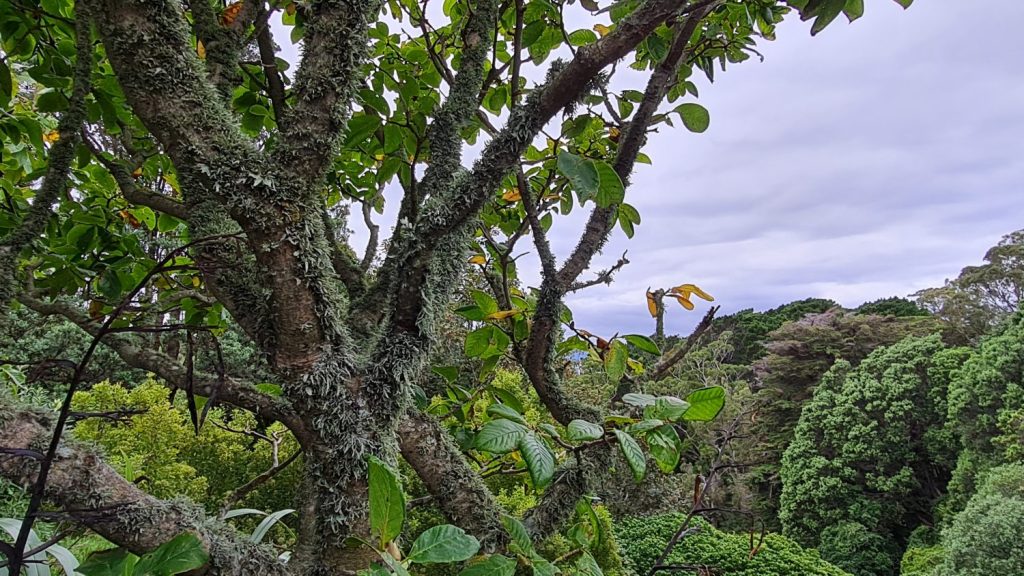
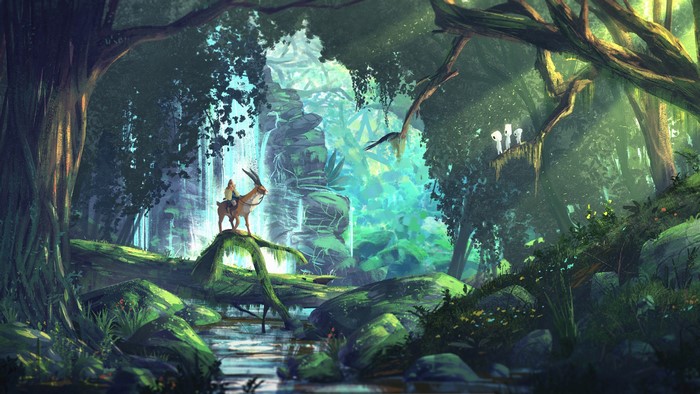
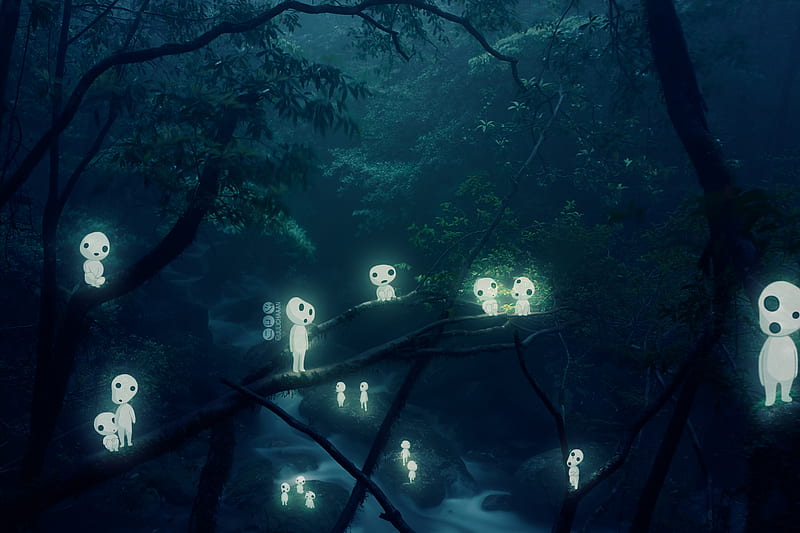
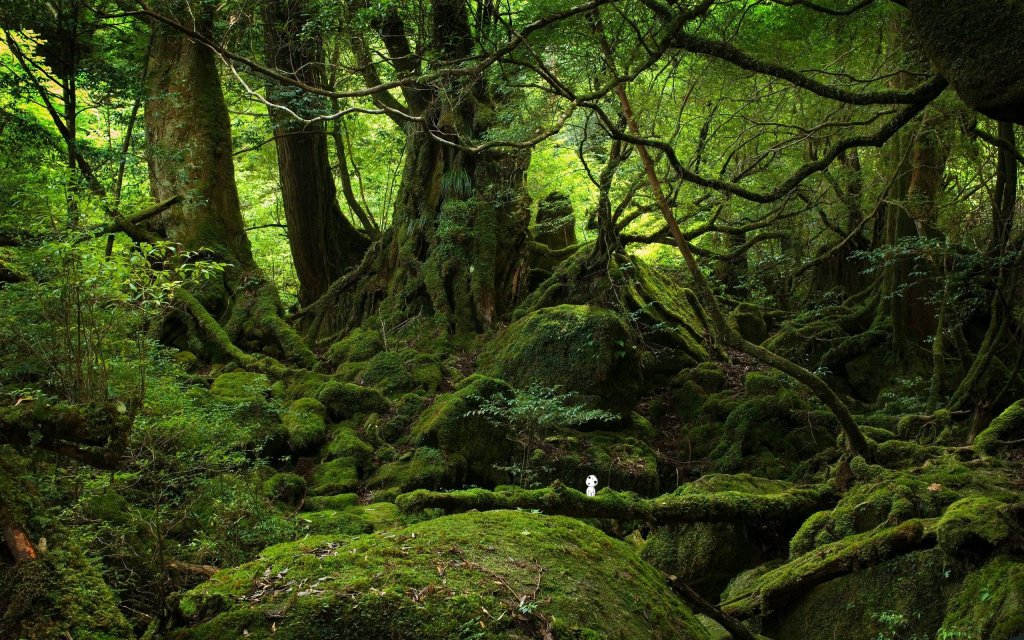
Many Japanese folk stories are about kodama, a kind of nature deity that lives in a tree, a bit like a Greek Dryad.Some people believed that kodama travel throughout the forest, moving from tree to tree. Others believe that they inhabit a particular tree.
#Japanese #folklore stories are about #kodama, #nature deities that live in #trees, a Greek #Dryad. Kodama travel through the #forest. Some believe that they inhabit a particular tree. Find out more #AncientWordOfTheDay #ContentCatnip
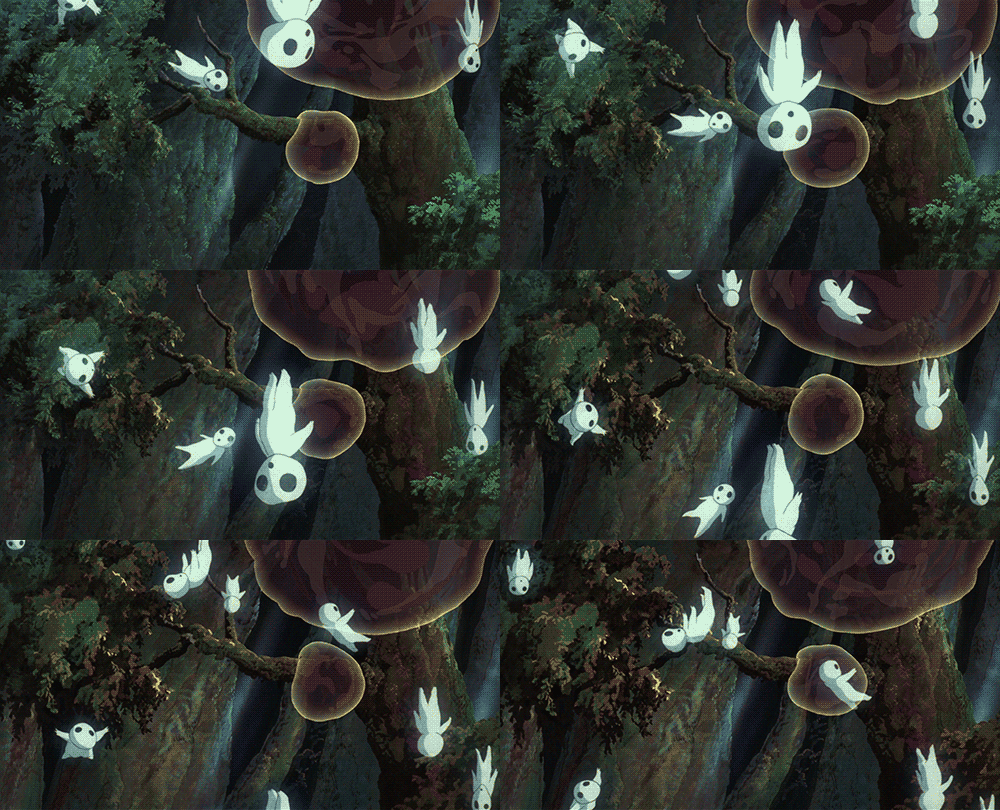
Knowledge of the trees that have kodama living in them have passed down through the generations and those trees are protected. If you cut down a tree that has kodama living in it, you will be cursed. The most famous kodama are the little white creatures with large heads and round black eyes and mouths in the anime film Princess Mononoke, which tells the epic struggle of humankind against nature.
Hayao Miyazaki’s kodama forest spirits from the anime Princess Mononoke.
As the forest is dying the kodama fall from trees and dissolve. And when, in the end the forest is restored, a single kodama floats out of the undergrowth rattling its head.
Extracted from Shinrin-Yoku: The Art and Science of Forest Bathing by Dr Qing Li
According to Carl Jung, each life is an individuation process, one of discovering the particular question you were put on earth to answer.
This question may have been left unanswered by an ancestor, although you must proceed with it in the manner of your own generation. But the question is not easy, or it would not take a lifetime. What matters is that working through it deeply satisfies the soul.
The individuation process requires enormous sensitivity and intuition in order to know when you are working on the right question in the right way.
As an HSP you are built for this as a racing yacht is designed to catch the wind.
Elaine Aron, ‘The Highly Sensitive Person’.
Ancient word of the day: Tsundoku Ancient word of the day: Schäfchenwolken
For some of you, reading this book may be like holding a mirror up to yourself and really seeing yourself for the first time. This was most definitely the case for me.
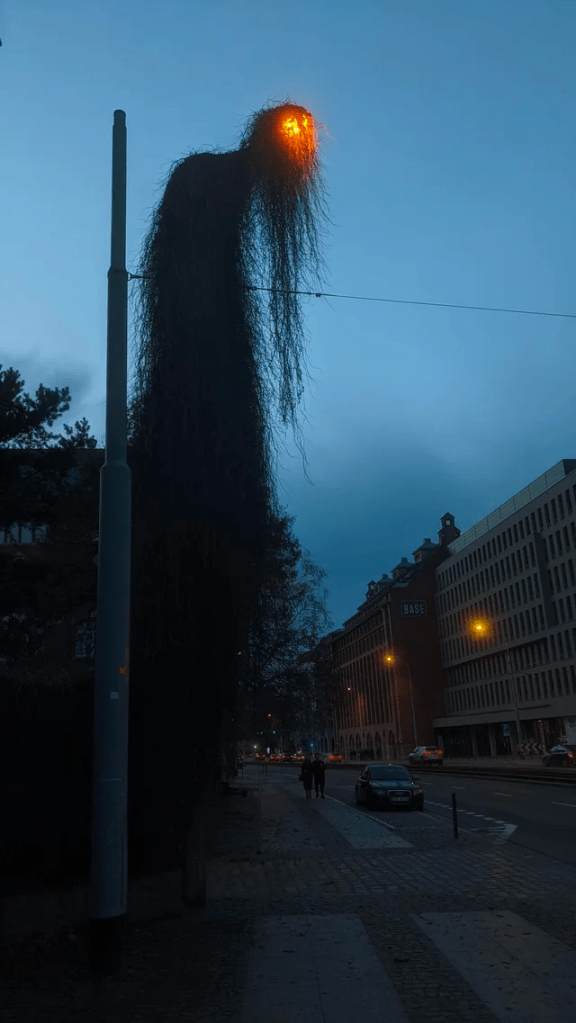
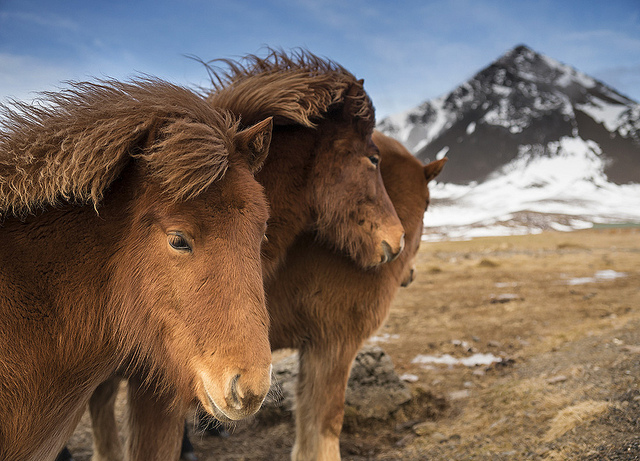
This week, Baba Yaga greets you in the Polish twilight, you will get insights into pet body language, see a Mardi Gras ready caterpillar, lunar snails, a levitating coffee, some ancient Greek badasses and more in edition #95, stay cool but if you are in a wintery place now – stay warm.
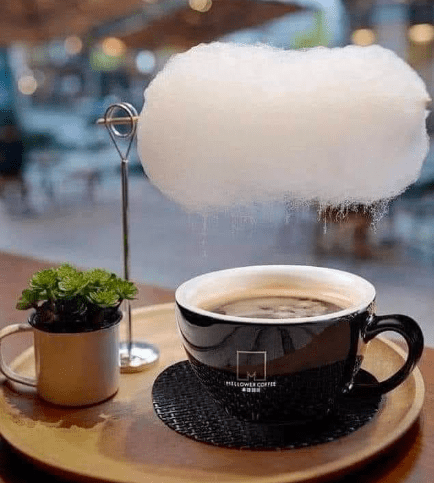
Carly Simon’s iconic lyrics turned into a real phenomenon. Hot black coffee is served with cotton candy suspended over the top. The hot steam of the coffee causes the candy and a magical “rain” effect occurs. Found at the Mellower Coffee in SingaporeVia Reddit
A whole mythological ecosystem of memes has sprung up around this guy. He does back to back sets with other DJs in the style of acid techno, hard house, booty/ghetto house etc. It’s just amazing. His whole channel on YT could be considered a gigantic meme or comedy channel, if it wasn’t for the fact that his mixes are really amazing, he has the skills. Here PartiBoi69 does a B2B with techno producer Hector Oaks, check out the intro part of this set with the funny dance off…the music is pretty fire as well. I love how he doesn’t take himself too seriously and is all about bringing the fun and silliness back to electronic music!
My god! Just look at it! It’s a moth from the Saturniidae family of Lepidoptera, which has around 2,300 described species and in their ranks are the largest moths in the world including Emperor Moths, Royal Moths and Giant Silk Moths. Via Reddit
A lot of people love Saturniidae including Vincent Van Gogh…
Giant Peacock Moth On Arum by Vincent van Gogh, 1889. A painting with Saturnia pyri, a saturniid moth, as motif.
Never Too Small: Amsterdam apartment
I love the twisting climbing plants surrounding the lights and the use of mirrors to bounce the light around. Although I wouldn’t want to dry my clothes so close to the bed, that would make it very humid.
Clown to Clown Communication
I don’t know why or what’s wrong with me but I just love this meme. You will know these kinds of people in your working life or maybe if you are really lucky – in your own family. Clown to clown communication is full of unexpected moments of insight and wisdom.
Rain in the Steel City: Dub Techno mix
This mix is both peaceful and energising, I just love it! Great to have as background music when you’re working.
Badass: People in Ancient Greece used to literally wipe their asses with their enemies’ names
Badass: People in Ancient Greece used to literally wipe their asses with their enemies’ names
Ancient Greeks exiled their enemies using small shards, or ostraka, inscribed with their opponents’ names; if they later used these ostraka to wipe themselves, “literally putting faecal matter on the name of individuals,” it was a curse.
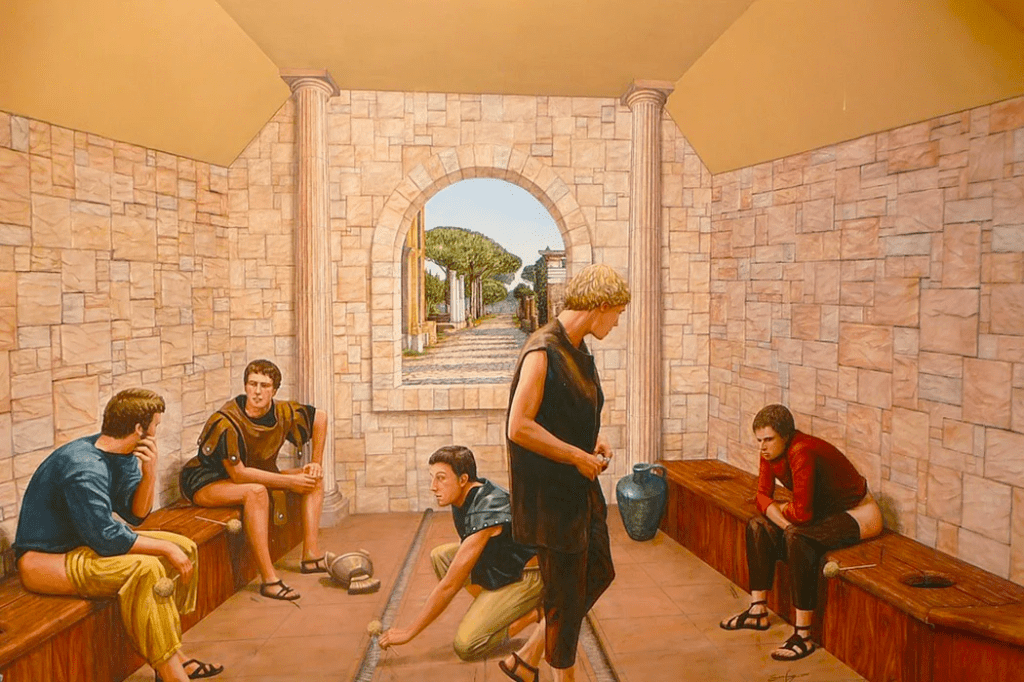
Ancient Romans were hardly sanitary either, here is the detail in case you are curious…I know you are…
The Romans had two primary ways to clean themselves post-bathroom break. Option one? A tool called a tersorium, which was “used to clean the buttocks after defecation.” Imagine a loofah, but made of fresh sea sponge, attached to a wooden rod—similar to back-washers sold in drugstores today. After using the stick to aim and the sponge to wipe, the person would dunk the sponge in a bucket full of water or vinegar to clean it off for the next user. While water wouldn’t do much in terms of sterilization by modern standards, vinegar would prove much more—if not totally—effective.
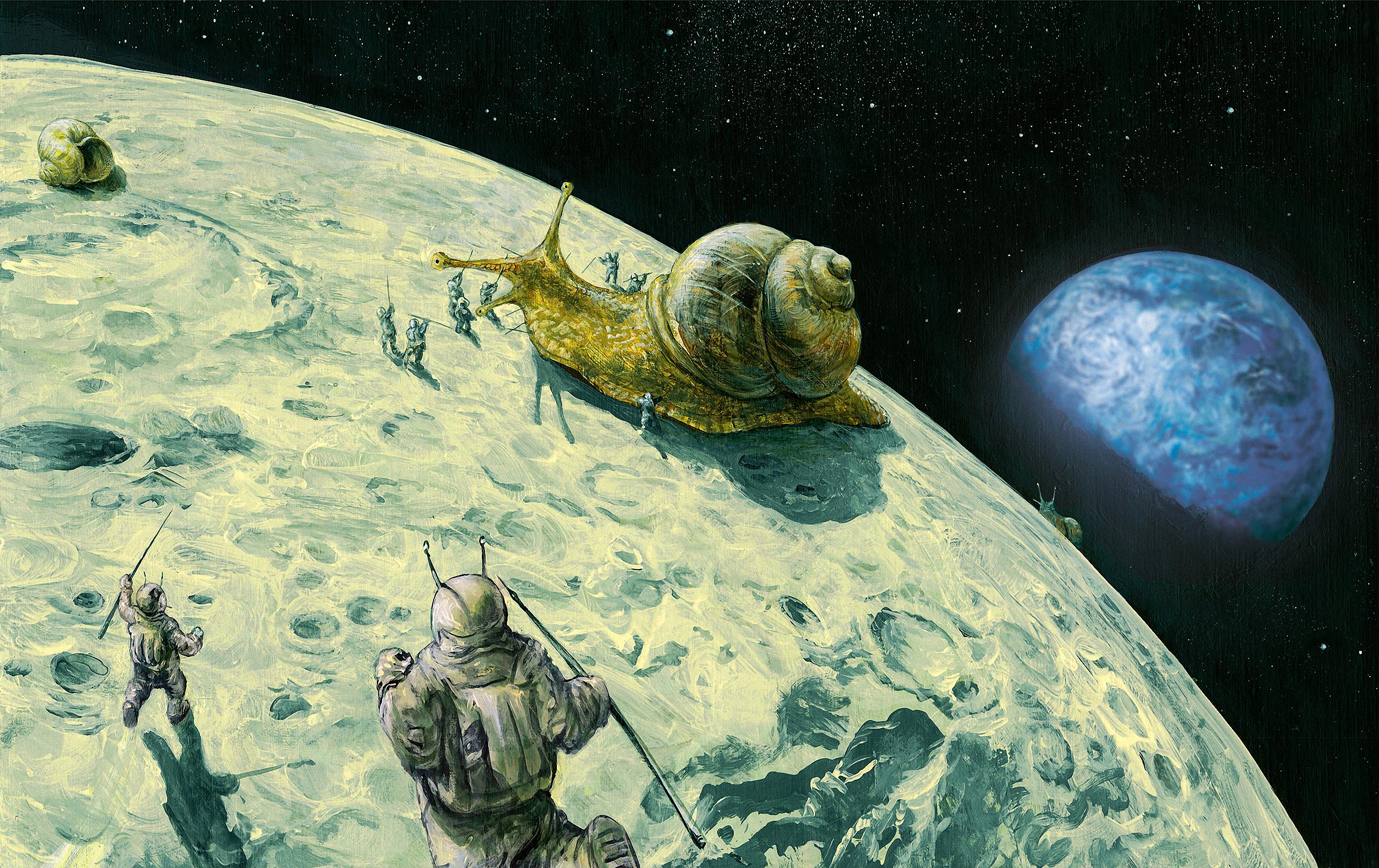
I can’t find much online about this painting or even the name but it captured my imagination. What is happening with these snails, one in the background has been removed from its shell and it appears the marauding humans are intent on harming the big boy. Aside from the fact I am concerned for the safety of this fantasy snail in a piece of fantasy art – Rudi Hurtzlmeier is a well-known artist and cartoonist from Germany who makes whimsical and satirical art often featuring animals in sweet and amusing scenarios.
Rudi Hurtzlmeier’s snail on the moon
Did you enjoy this collection? Consider making a one-off donation to say thanks, this helps to pay for the website costs. Thank you for reading
Paradoxically, letting go sometimes means allowing ourselves to receive love and care from others. Our can-do culture has made many of us believe that we should always be self-sufficient. Somewhere along the way we also get the message that asking for help is a sign of weakness. We often forget that we’re interdependent creatures whose very existence is depends on the kindness of others.
Sharon Salzberg
”Love recognizes no barriers. It jumps hurdles, leaps fences, penetrates walls to arrive at its destination full of hope.” Maya AngelouPainting by Toshiyuki Enoki ”My great hope is to laugh as much as I cry; to get my work done and try to love somebody and have the courage to accept their love in return” Maya Angelou
Written in short chapters that culminate in in-depth guided meditations, this is a book that spans vast tracts of interdisciplinary knowledge from the areas of Buddhism, Christianity, Psychology, Sociology and brings together these fields in a compelling, thought-provoking and deeply nourishing way. This is a book for the soul and spirit yes – but tempered with scientific knowledge and grounded practical advice for how to improve one’s ability to give and receive love in its variety of different forms.
Book Review: Real Love – The Art of Mindful Connection by Sharon Salzberg
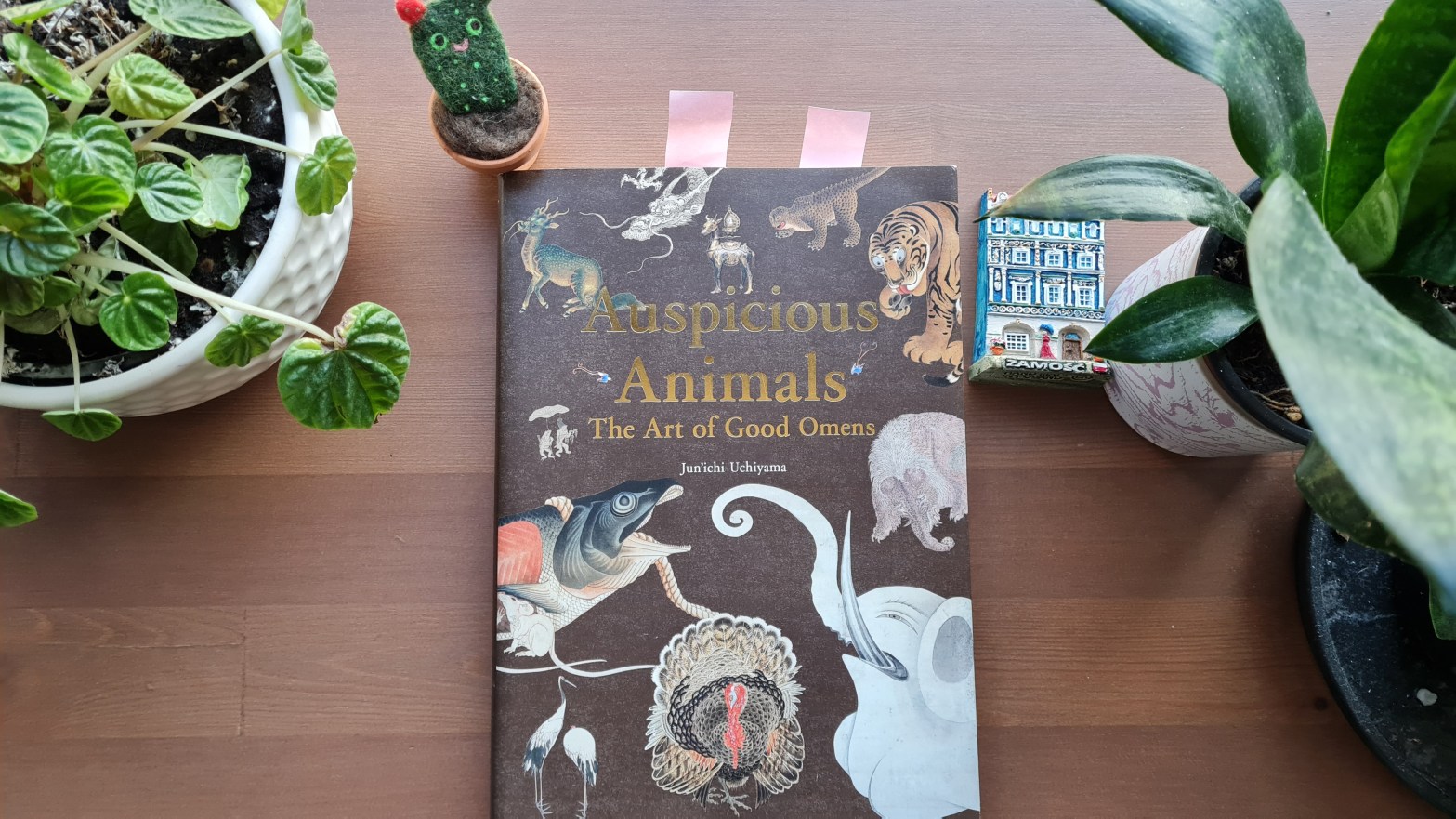
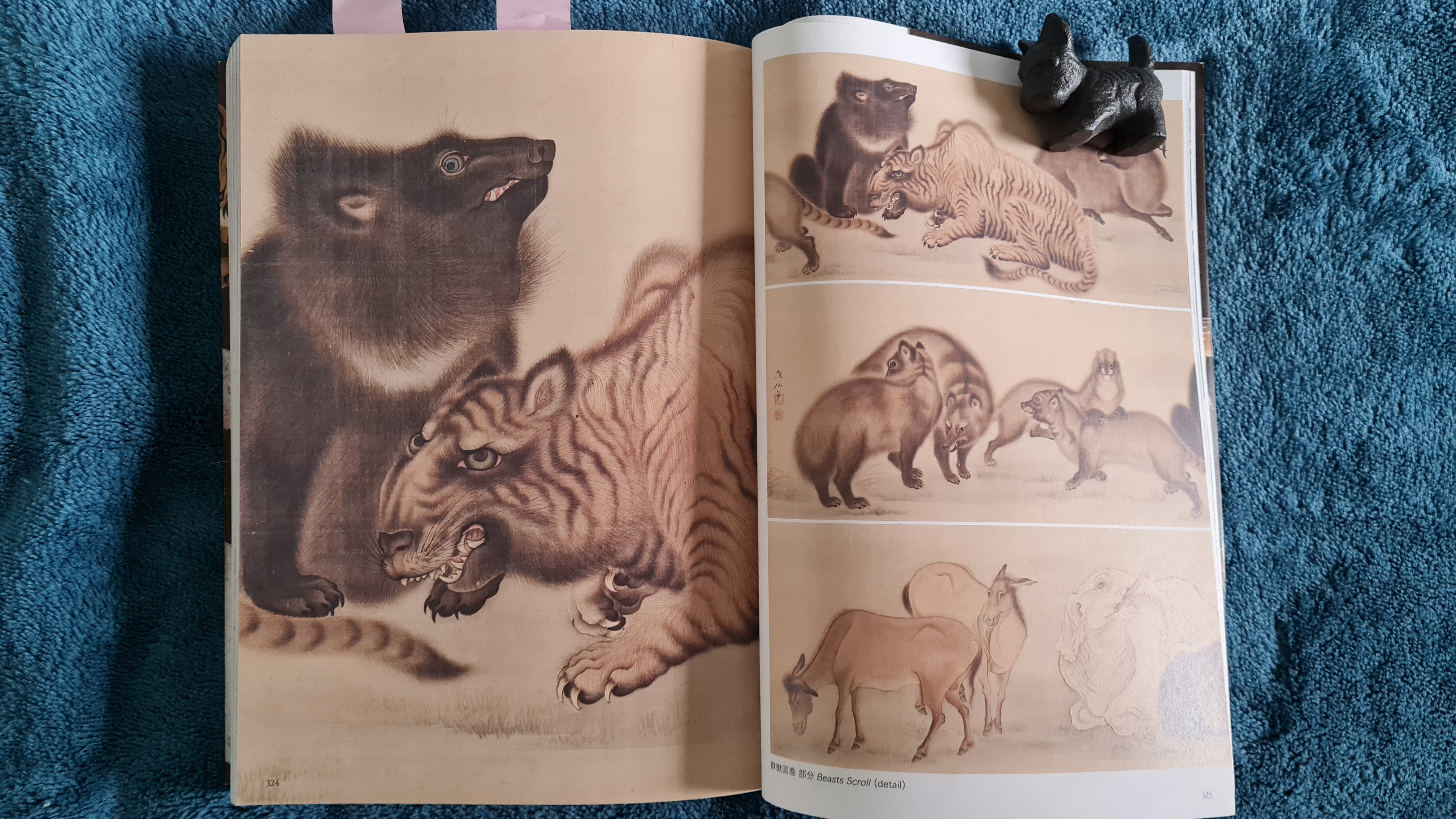
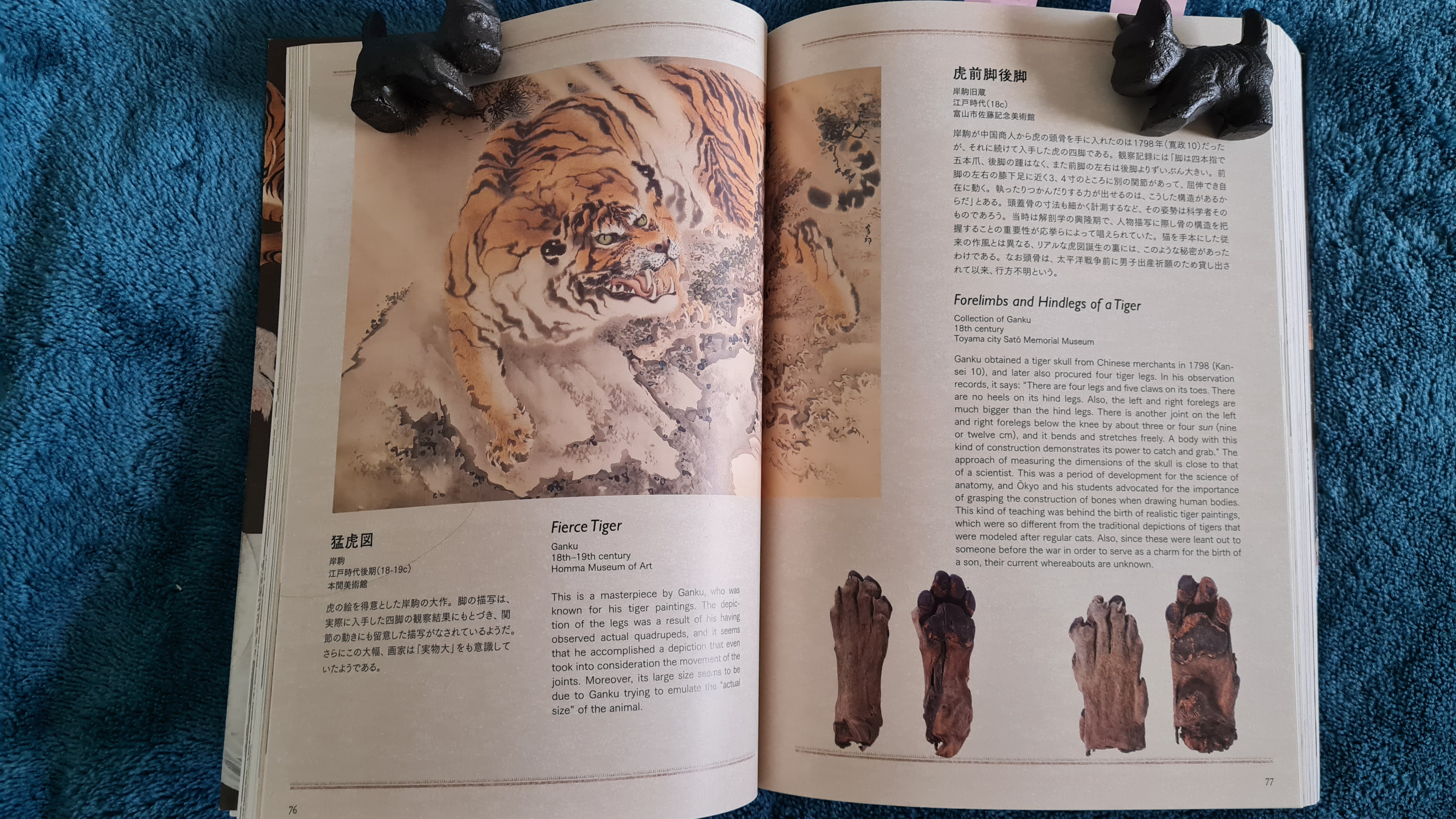
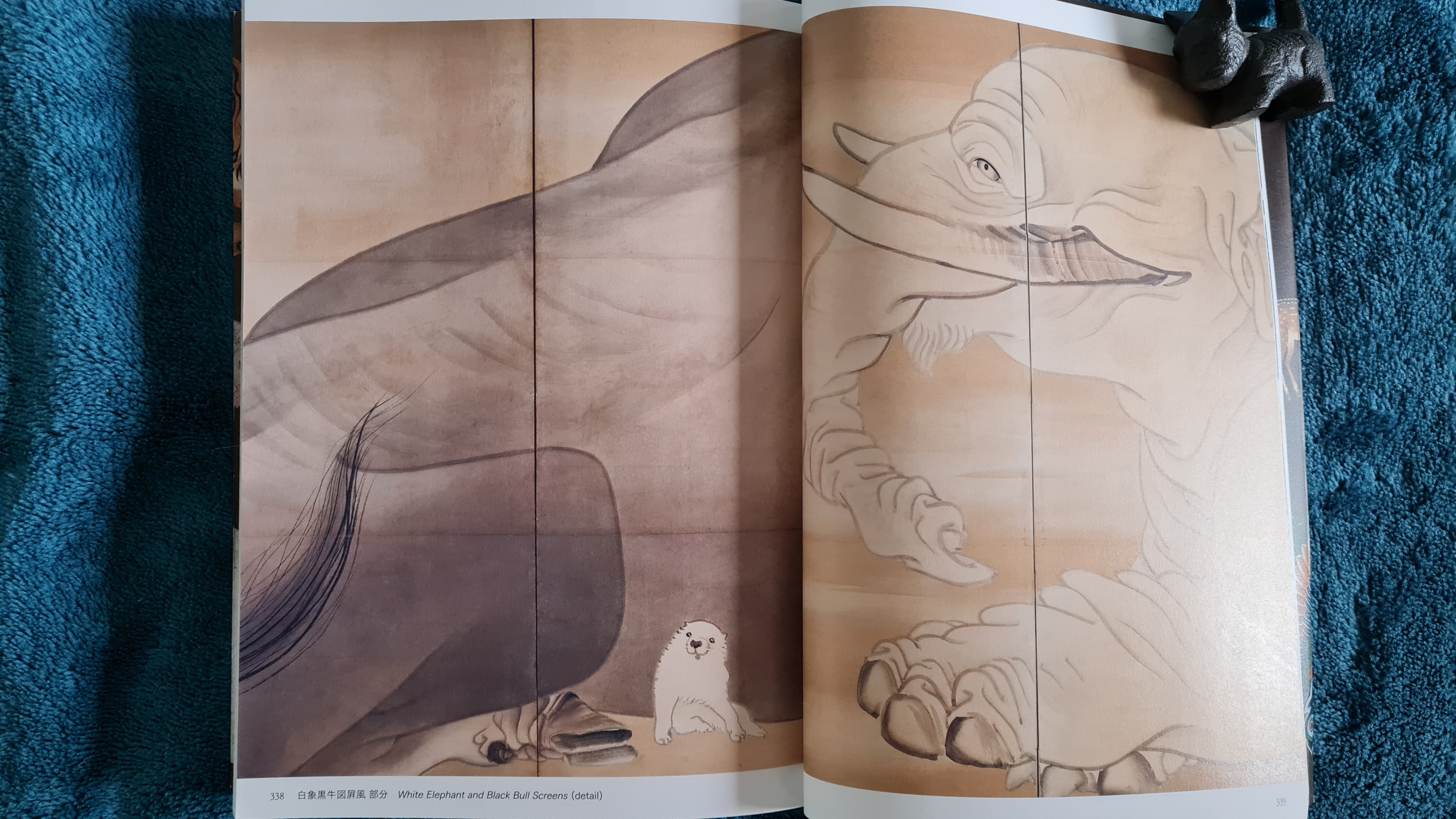
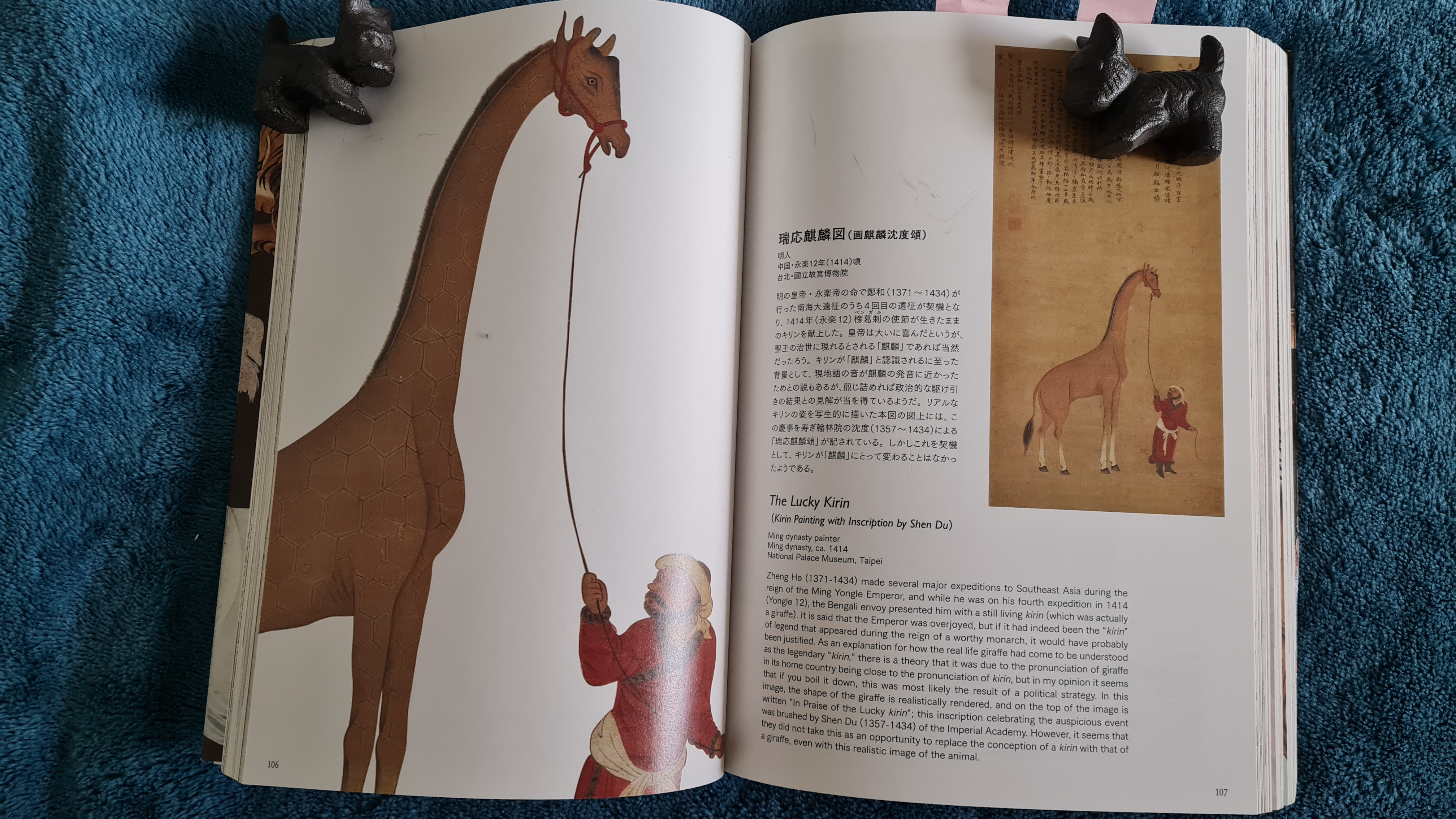
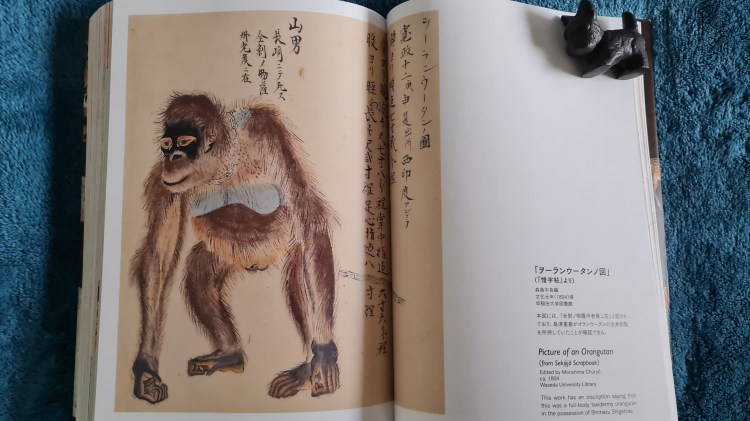
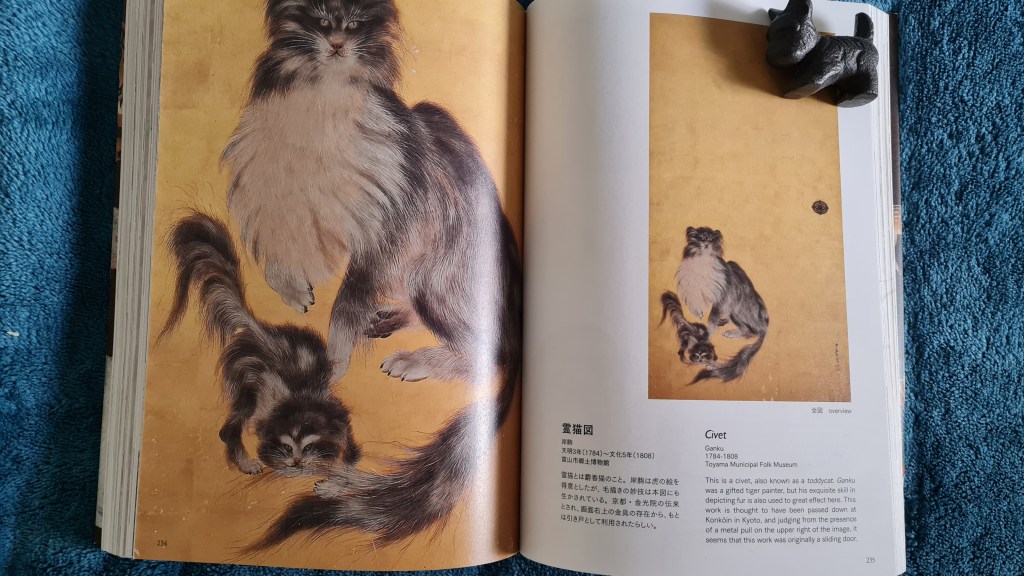
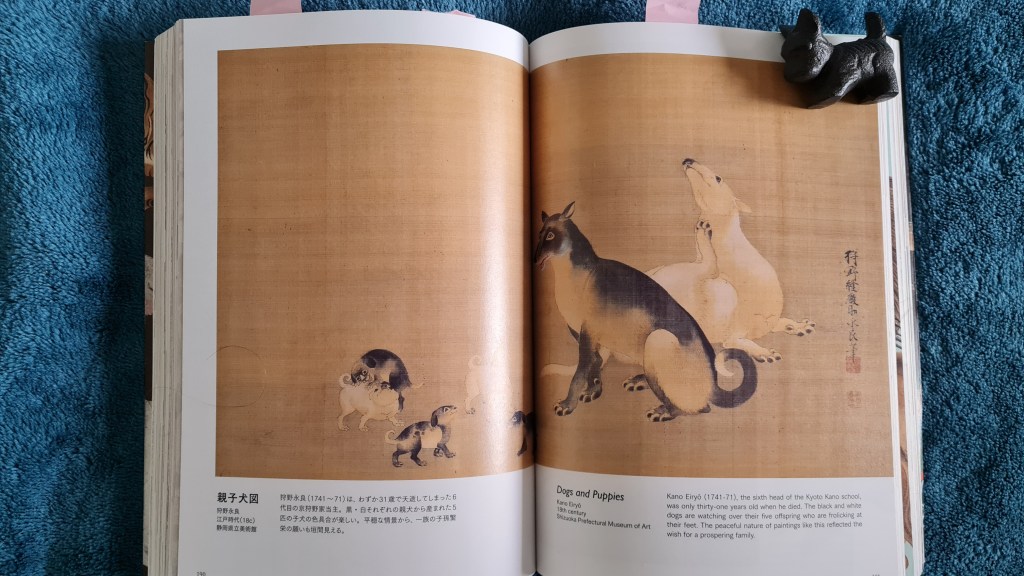
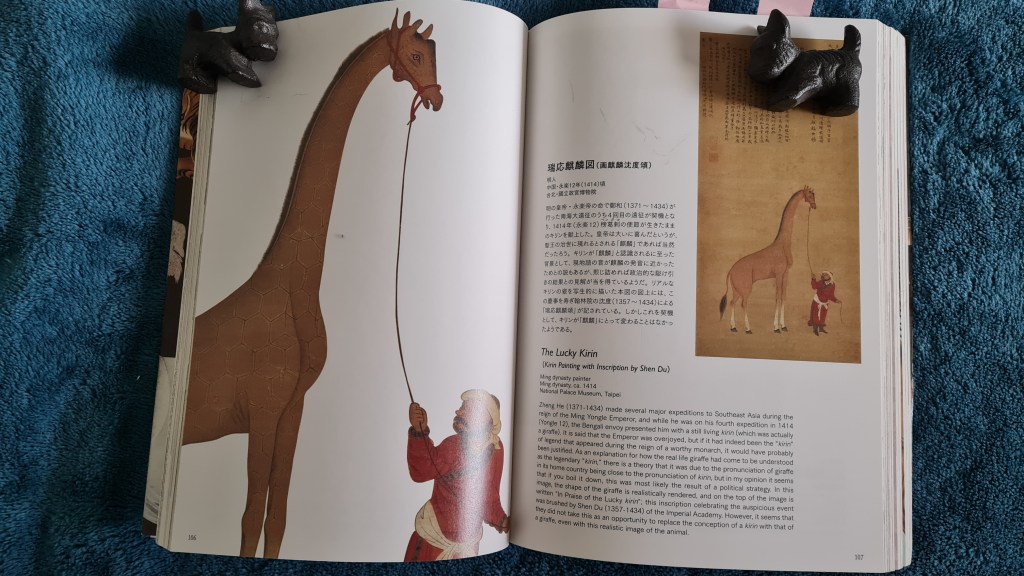
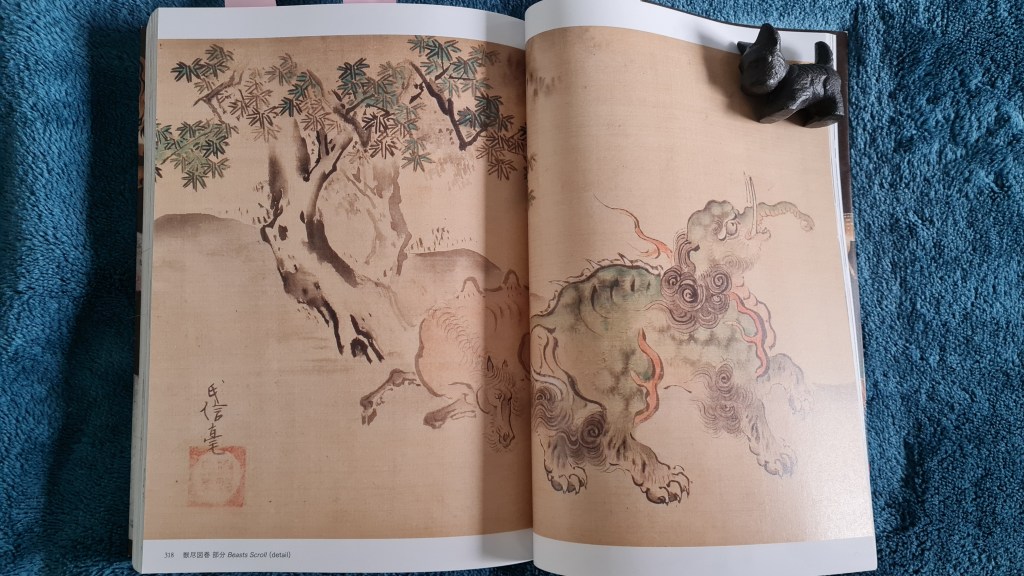
I found this beautiful book in an art gallery and decided that, despite the hefty price-tag, I simply had to own it! This elegant coffee table book charts the artistic symbolism of animals in northern Asia with a particular focus on Japan and China. Each page is translated and in both Japanese and English.
If you have ever looked at a Japanese silk screen print or sculpture and wondered what the cranes, monkeys or bears mean…this book is for you!
It is a deep dive into the rich historical, aesthetic and symbolic history of Japanese/ Chinese animal art and includes the “Big Four” of oriental mythology:
Flying Dragon
Chinese Phoenix
Quilin/Kirin (a hooved ungulate and a chimeric creature)
Spirit turtle
One thing I did notice which put me off quite a bit, was that the stories of art from the past are inspired by animals like rhinos, giraffes or elephants who went on long perilous journeys over the sea to be given as gifts for emperors or other wealthy people.
These journeys obviously entailed the animals’ immense suffering and death along the way or soon after their arrival. Regardless of the fact that this happened a long time ago and went on throughout history and still does to this day, as an animal activist I found this emotionally confronting. I found myself getting angry, even despite how futile and silly it is to be angry at a moment in history.
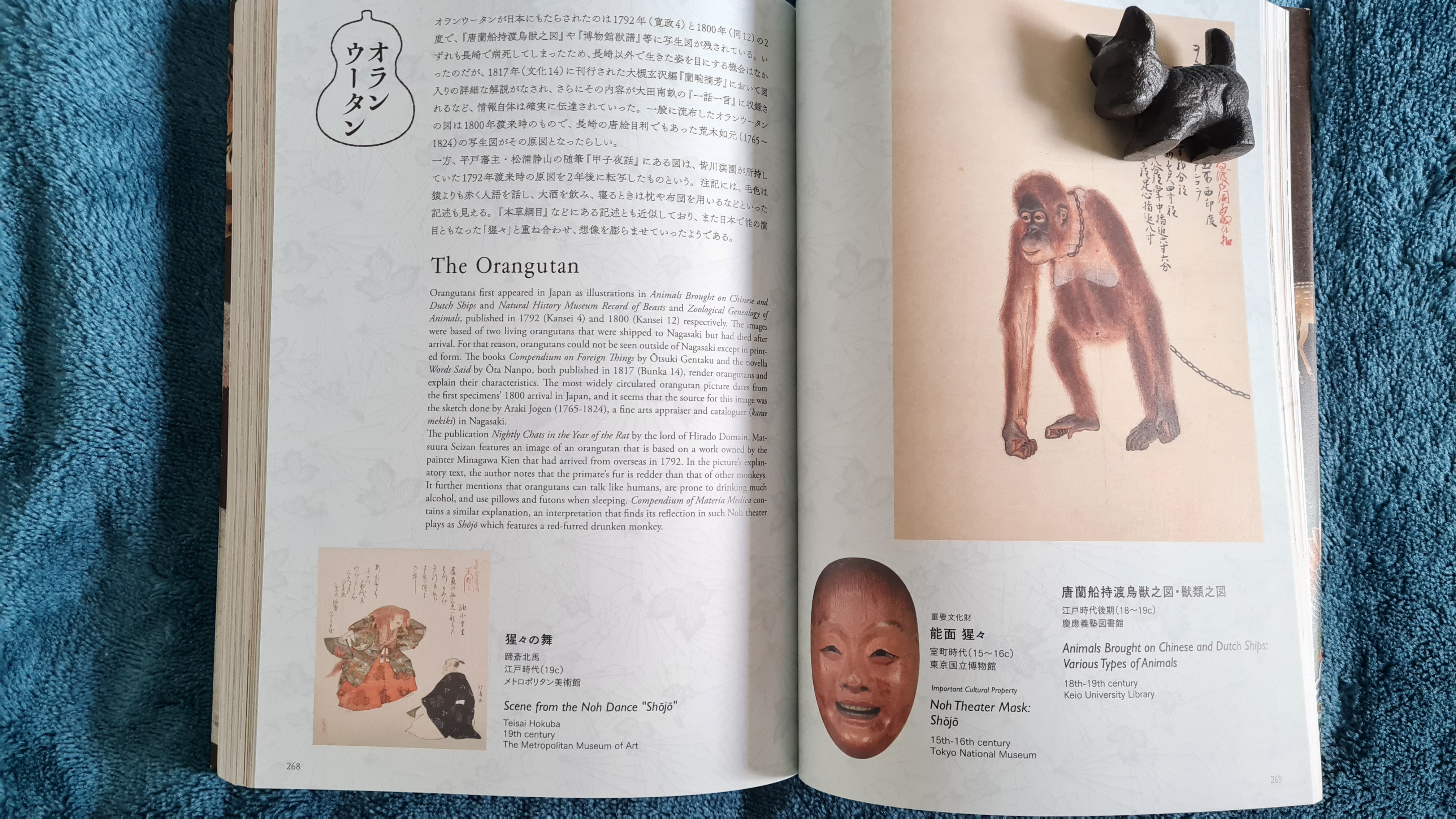
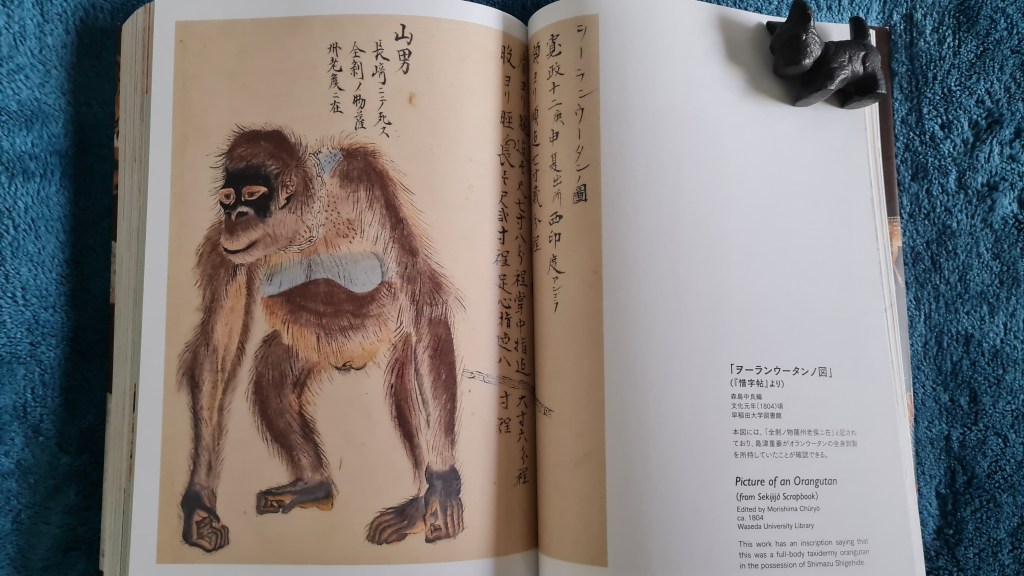
Orangutan
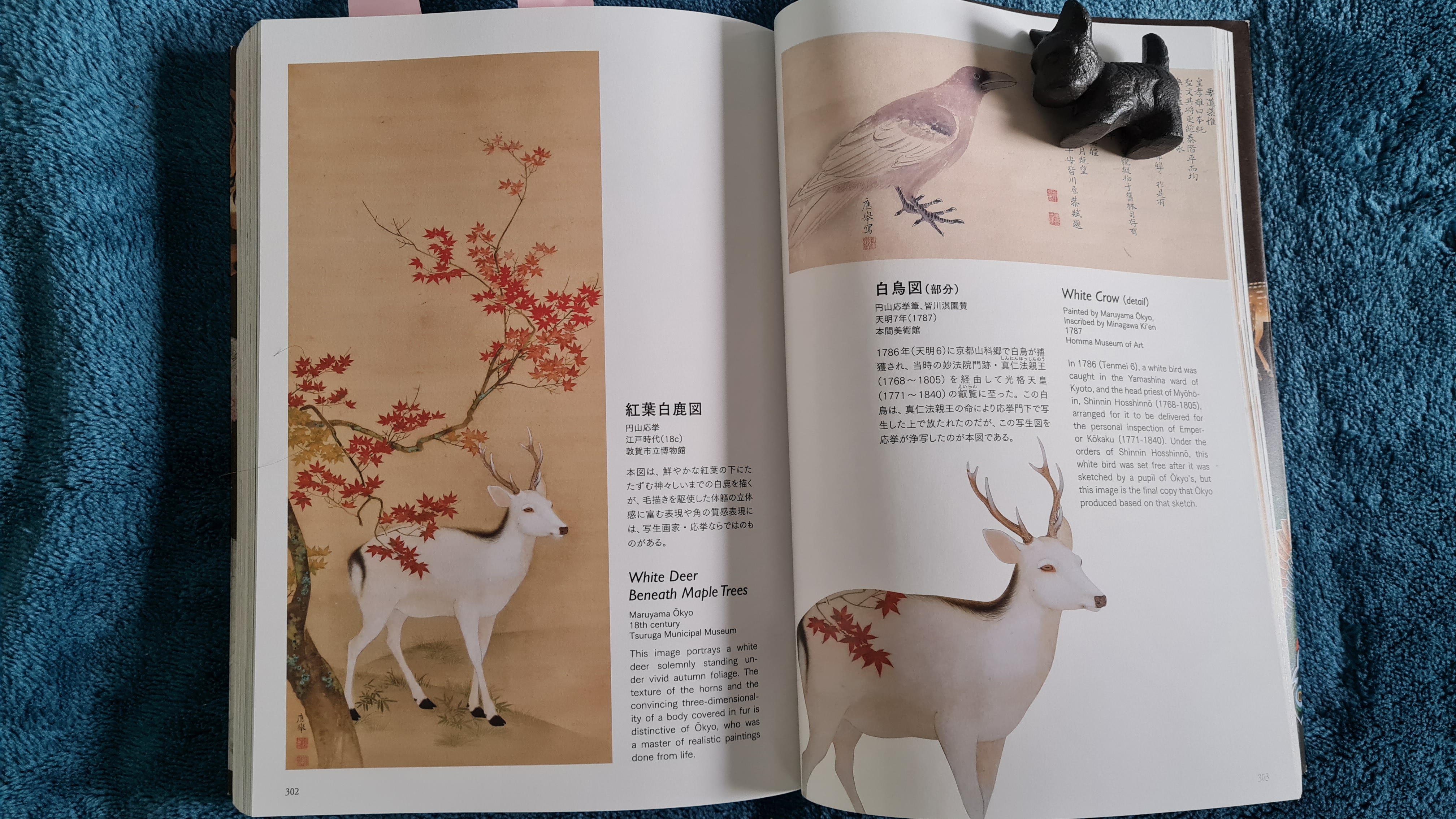
This is one of those coffee table books with a lot of beautiful paintings and sculptures that you would otherwise not see. However, the subject matter of animals and the way their bodies were used historically for silly reasons (eg. rhino horn for example used to cure illnesses; or laying on tapir skins to ward off evil spirits) incensed me.
The spectacular art in the book is really thrilling and exciting. However the book is let down by a lack of detail about these real life animals and mythical creatures that western readers may otherwise not read.
The descriptions of mythological and biological creatures were very vague, other than to say that they were either lucky or unlucky and a few vague flourishes of detail that tease about a much bigger and longer story.
I would have liked more depth to the written accompaniment to the beautiful art, for this reason it’s only two stars. I think you would be able to find a much more comprehensive and deeper analysis of Japanese and Chinese animal myths and legends and their cultural importance in another book – although no doubt you wouldn’t find the same spectacular art in any other book.
Civets Dogs Giraffe OrangutanDragon
Flying Dragon
This is a dragon with wings and it’s also known as Yinglong. This creature is portrayed as having wings, the body of a fish and the head of a dragon. Often portrayed alongside waves, it is thought that is carries the connotation of fire prevention. There is also a story of a legendary gateway to success (Toryumon) where the carp that swims through the dragon’s gate (ryumon) waterfall becomes a dragon.
The Dragon
The dragon is the lord of the scaled beasts. They are known as spirits who control the rain and can shape-shift to their heart’s content. They ascend to the heavens during the vernal equinox and descend into a deep pool on the autumnal equinox. The dragon is said to have nine similarities or physical aspects that resemble nine different types of animals. These are:
A head like a camel
Horns like a deer
Eyes like a demon (or rabbit depending on the source)
Ears like a cow
Neck like a snake
Belly like a clam-monster
Scales like a carp
Claws like a hawk
Paws like a tiger
The original form of the dragon was as a divine beast (Kui) that saved people from their own desires. In China, dragons were deified as a sacred beast that brings good fortune, the dragon was considered emblematic of royal authority. This was especially so for dragons that represented the emperor, these would have five claws. Other uses for this sacred symbol were strictly limited.
The dragon has 81 scales and they numerically correspond to the Double Ninth Festival.
What is the Double Ninth Festival?
Also called the Chung Yeung Festival and Chongyang Festival, the Double Ninth Festival is an ancient memorial festival that falls on the ninth day of the ninth month of the lunar calendar. In 2020, the Double Ninth Festival falls on the 25th October in the Greogorian calendar. This is an auspicious day, when people climb mountains and admire chrysanthemums and eat cakes made from chrysanthemums.
Phoenix
This is an auspicious bird from ancient Chinese thought that is seen as being the ‘most excellent’ of all 360 types of winged creatures. The male is called the feng and the female is called the huang.
The red bird, born in the south (Zhū Què), whose Japanese name is Suzaku is a bird guardian of the South and one of the Four Symbols of Chinese constellations.
The top half of the body is that of a large wild goose, the bottom half is that of a kirin. The lower jaw is that of a swallow, the beak is of a chicken. The wings consist of 5 colours and are between 121-151cm in height. They fly across the seven seas and will appear if virtue prevails across the realm.
Qilin/Kirin
The Qilin (in Chinese) or Kirin (in Japanese) is a hooved chimerical creature that is said to herald the imminent arrival or passing of a sage or illustrious ruler, their appearance signalling a period of peace on earth. In Vietnamese mythology they are known as kỳ lân.
It is said that they are fussy eaters and won’t eat living bugs – possibly why they are known as the ‘virtuous bird’. Phoenixes supposedly prefer to nest in Chinese parasol trees (paulownia trees), will only eat bamboo fruit and only drink pure spring water (sounds like a true Prima donna).
The Bai Ze
There is a marsh beast in JiangXu Province, a name of them is Bai Ze and they have a great command of language – they appear when there is a just ruler and their benevolence brings light to the world. They live deep in the mountains and have six horns and nine eyes on different parts of their body. It is believed that they have the power to prevent diseases and misfortune. Travellers during the Edo period would hold an image of Bai Ze in their pockets believing that this would ward off misfortune.
Bai Ze and Exotic Trees, Cedar Doors, Kano School, 1636.
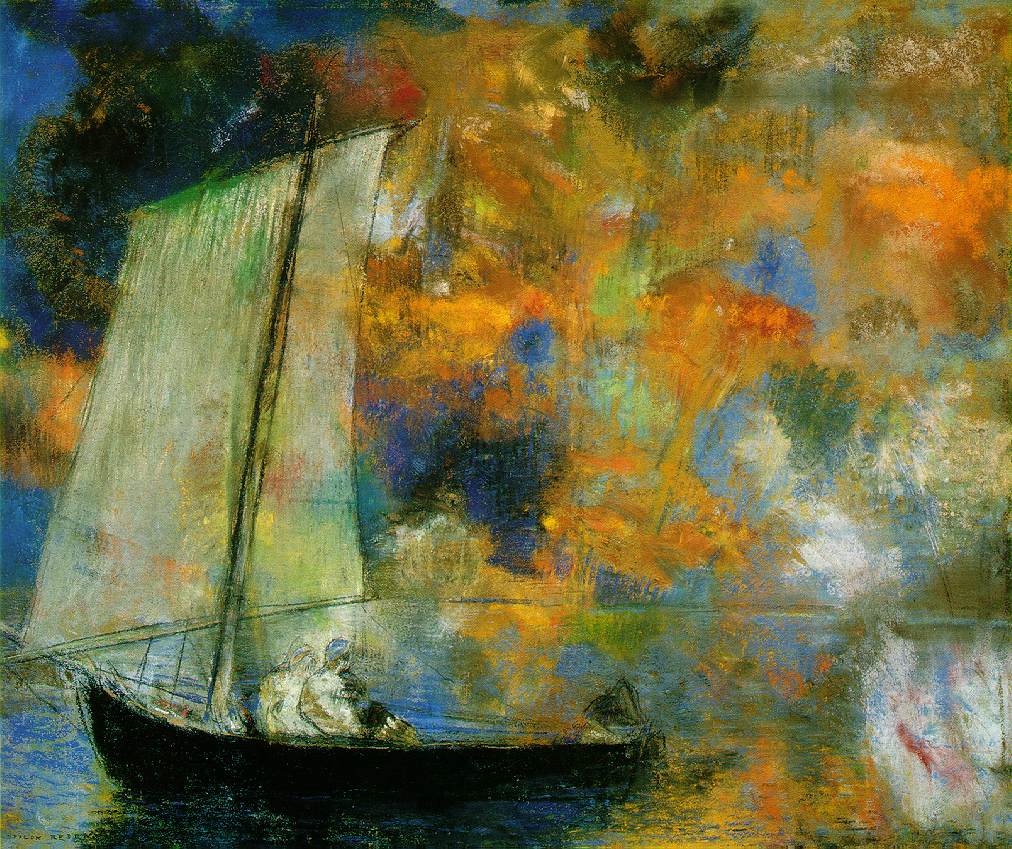
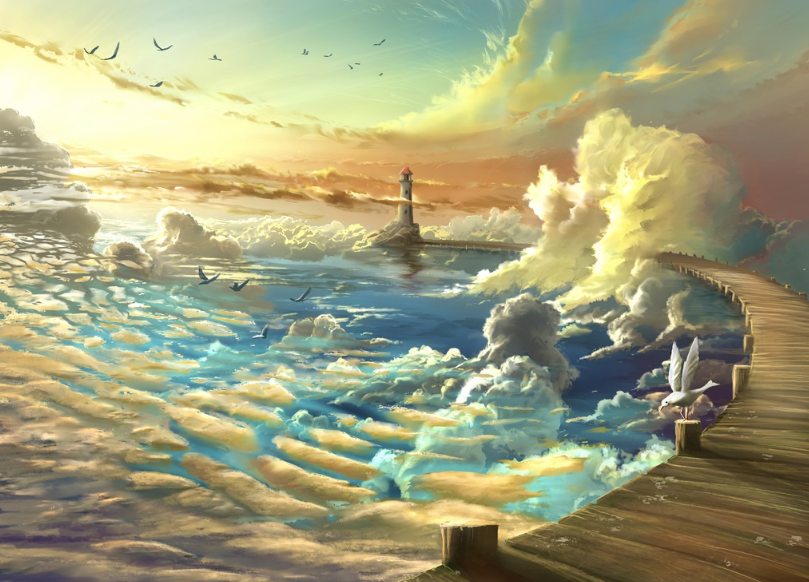
“Regard yourself as a cloud in the flesh; because, you see, clouds never make mistakes. Then through this capacity you will develop a kind of confidence … you will be able to trust your own intuition.”
Alan Watts
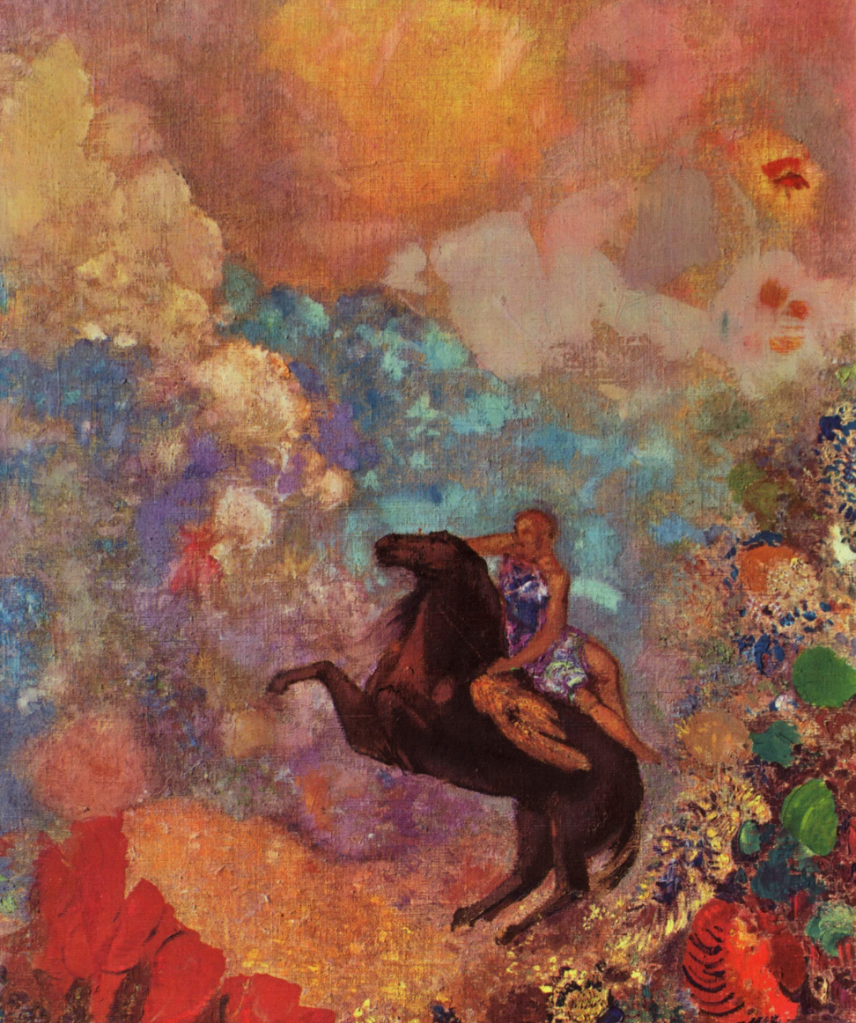
Terry-Watkinson-islands-in-the-cloudsHawkins – Sea Clouds Flower Clouds by Odilon Redon Lenticular Cloud, Lake Ohau, Otago, New ZealandLighthouse in the clouds






























 Content Catnip
You must be logged in to post a comment.