Book Review Beep by Bill Roorbach


Poignant, hilarious, psychedelic and deeply rooted in other-than-human intelligence. Read it and laugh, then cry for all we stand to lose if bright, intelligent non-human animals no longer live alongside us.

Rating: 🌟🌟🌟🌟🌟

Genre: Fiction, Comedy, Animal Advocacy, Climate Activism

Publisher: 

Review in one word: Psychedelic

I’ve never read a book that so riveted me right from the very first sentence. The structure, language and storytelling of this book are completely unorthodox.

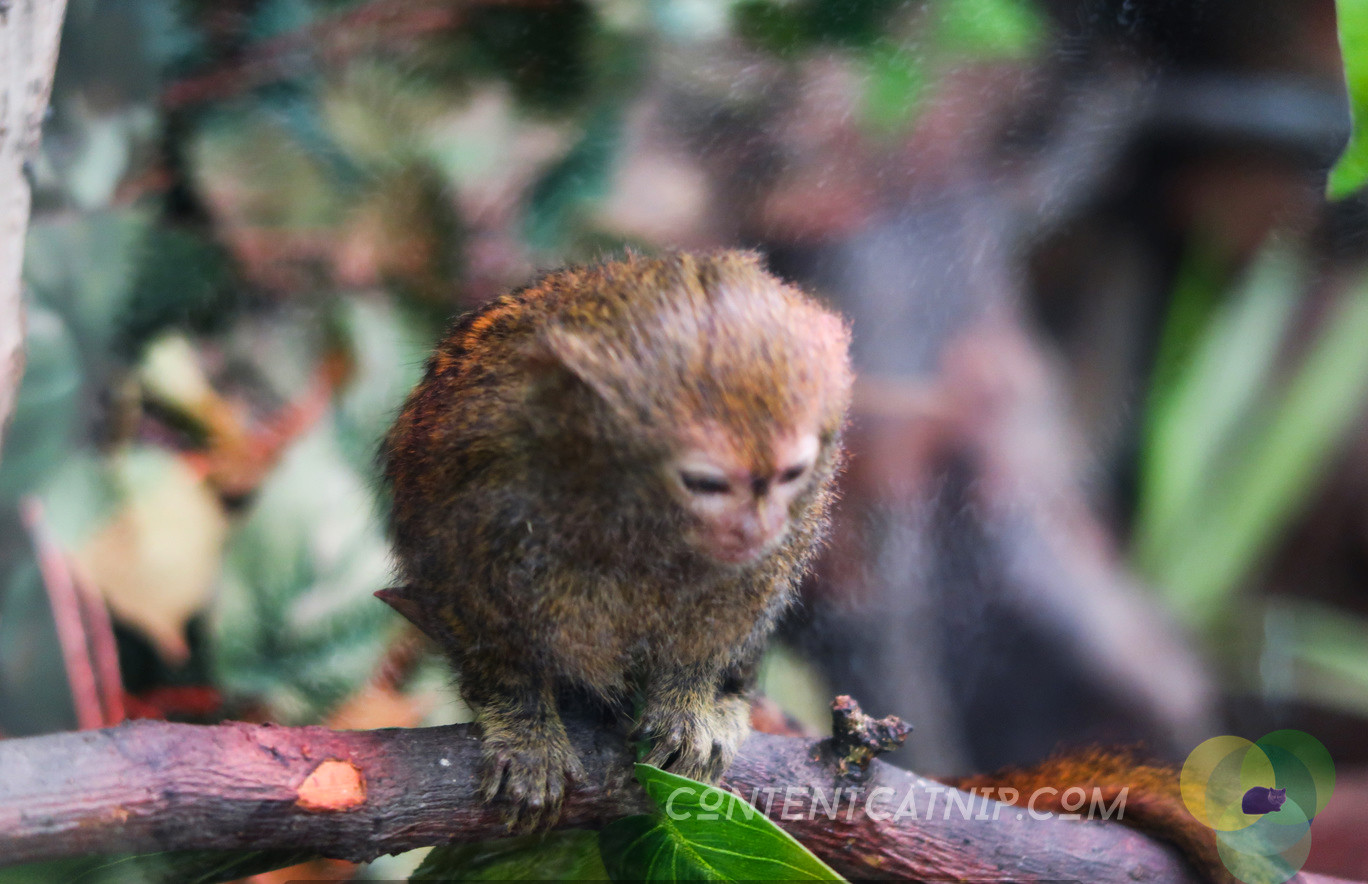
Beep is told from the perspective of a small squirrel monkey living in Costa Rica’s dense jungle. The tale charts the high-octane adventures of the eponymous Beep as he travels around the world and witnesses first hand the human-caused chaos of capitalist growth, large cities and tropical deforestation of his home in Central America.

One day Beep dares to cross out of the jungle into a tourist accomodation to beg for food. There he befriends a young teenager named Inga on holiday with her family. The two become besotted with each other and Inga smuggles him in her hand luggage back home to NYC.

Photo by Miguel Cuenca on Pexels.com

The style of Bill Roorbach’s writing, right from the beginning is shot-gun fast, like a staccato chirrup of a troop of monkeys attempting to talk to you in hyperactive sentences. This is a deeply compelling and convincing voice. It’s the first time in a long time I’ve read a book in the “voice” of an animal that I completely bought into, embraced and absolutely loved.

You-men = human

Moodle = to connect with another being but in a telepathic way without words.

Roller = car

Wub = love

There is also a really trippy telepathic vibe as narrator-monkey Beep senses and “moodles” with awareness, all other plant and animal beings around him. It’s quite wild and psychedelic!

“And there arose a vibration, a thought moving through not only the trees but all things green, and all things. The forest always knows you’re coming, and that’s how the rocks know, and so the lichens, the mosses. First, I was led to understand something: many of the trees were still asleep from the cold season. The acidic ones were wide awake, though, and needled me: “You’re a squirrel monkey. We’ve known your kind. Tiny and trusting.” They knew, too, that I was on a quest. “You’ve taken the detour that is yet your path” was the message, typical tree stuff.”

Beep by Bill Roorbach
Photo by Sem Steenbergen on Pexels.com

One particular scene in the book is incredibly haunting. It’s when Beep is taken to Bronx Zoo in New York City by his “You-men” friend Inga to visit the captive animals there. The thoughts of this wild monkey about the stir-crazy prisoners of the zoo are raw and incredibly sad:

“The Bronzoo, as far as I could make out, was a prizzon for animals across the genera, including (more or less) the you-mens who worked there. The horrible smells were produced by prizzoners so sick they’d gone mad. But Inga was charmed, calmed by a striped horse called a zzebra who’d rubbed all the hair off his rump circling his overly small enclosure (in the wild, there’d be miles!).”

I was distracted by a crazy-huge white animal emerging from some neighboring rock, shifting from paw to paw, groaning and muttering: “I am Polar Bear, once great, once fearsome. I am Polar Bear, miles did I roam. I am Polar Bear, once great, once fearsome.” And repeat, gone mad.”

Flee monkey, flee, the Japanese [macaques] called. I swung myself over a railing and then onto the rooof over the crazy polar bear. “Flee!” even he cried. “For as I was once free you must remain.”

And so, via a series of branches, all while avoiding death-tendrils, I made it to the top of the bird enclosure. “I’ll be back,” I shouted down from there. “We will free you one and all.” And the zzoo burst into squawks and roars and chittering.”

Beep by Bill Roorbach

For reference here are some images I took of some incredibly miserable looking animals in Warsaw Zoo years ago. It would be the very last time I would ever visit a Zoo – these are places of deep sadness and mourning for living beings who long to be wild.
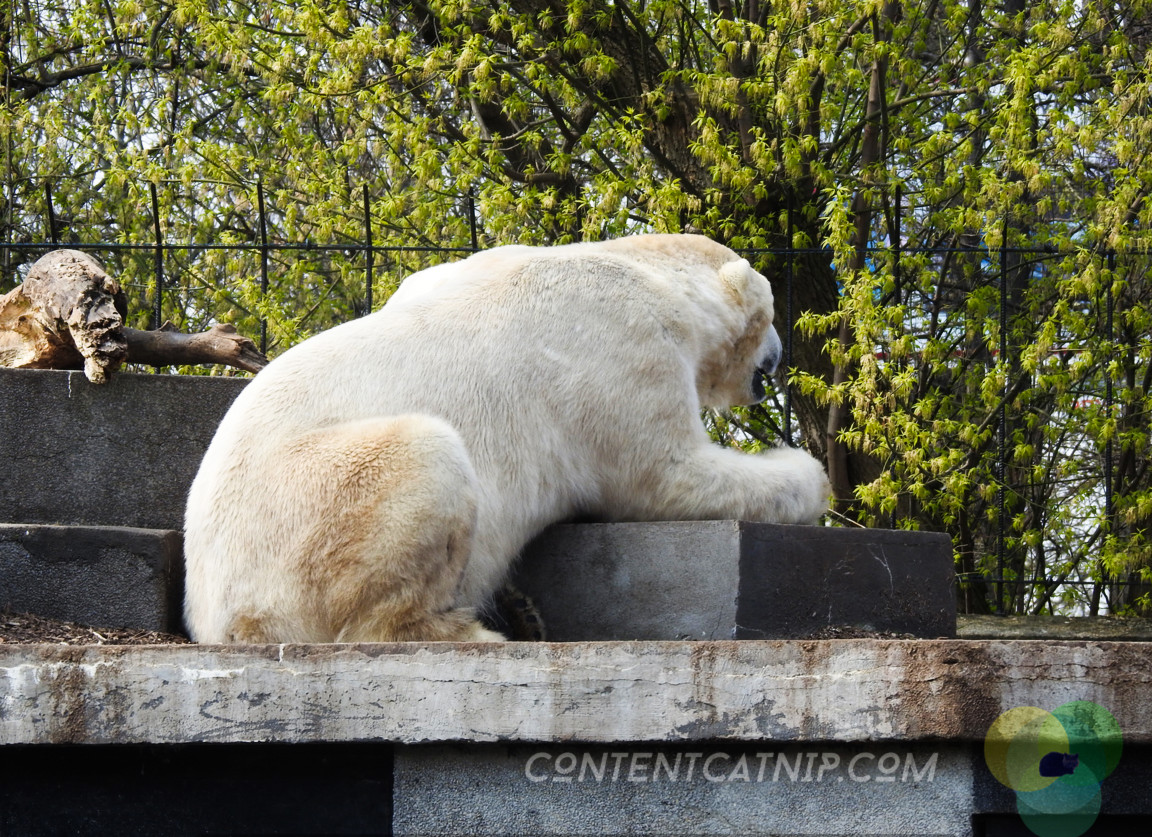
Along the way we are able to see a tantalising, curious and surreal view into how a small monkey might perceive and understand a human family. This description of Beep curiously analysing his adopted “you-men” family is endearing and vividly rendered. In some alternate universe it rings authentic and true.

“Momma, and Dabby, and of course the foolish baby. But there was Inga, too, in various sizes. How slowly the you-mees grew! I felt tenderness toward her and toward her tiny troupe. I studied the representations, the forced you-men grins, the awkward postures. How hard it must be to live in the middle of the crossing [Manhattan] and pretend such happiness lest their gods find them ungrateful!”

Beep by Bill Roorbach

I won’t reveal what else happens in this book, as I don’t want to ruin the narrative arc for you, which is extremely satisfying and enjoyable. However, I will say that for a book that appears on the surface to be a bit babyish, childlike, innocent and silly there is a lot going on under the hood in terms of its philosophical, ethical and political messaging. But it’s extremely subtle and easily overlooked if you are merely after a good-time read.

Roorbach manages to elegantly and humorously make you the human reader eject yourself out of your human skull for a while and suddenly inhabit the brain of an intuitive, empathic simian who “moodles” and understands other beings (human and non-human) using his preternatural emotional intuition. This is the natural realm of all non-human animals who sense and understand each other deeply and understand danger, love and other emotions in ways beyond human words.

“I missed Inga. Inga could feel me, I sensed, even at distance, and I felt her, felt her growing closer, curious. Inga had tried, and cared, and considered, and learned. What would become of my Inga? Was a worry.”

Beep by Bill Roorbach

This is a work of speculative fiction with a huge poetic licence, but its based on solid science about animal communication, behaviour and intelligence. It’s a critique of capitalist excess and rampant destruction of nature. It’s nature talking back to us but in a moving, funny and gentle way, so as not to scare the reader who is wilfully ignorant of the destruction of the planet.

There is a unique genius to this book that can’t really be adequately described unless you read it. I hope you will. Any animal lover will be amazed by this book.

To close it out, here’s a conversation between Beep and his monkey companion. Their language is peppered with insight into the ridiculousness of the human species and our need to dominate everything.

“We laughed because we were not you-mens erecting whole citty blocks of brights to the proposition. And we’d heard they’d found ways to blockade the whole point of mating, which was making wee-bees, their one gesture toward self-control, and yet so many of them! We laughed because we found each other funny. We laughed because we found each other very serious. We slept, chastely knotted together in my fayb-fayborite sort of tree, a wrestling-fig, with its broad branches and excellent sight lines, multiple trunks.”

Beep by Bill Roorbach
The things that annoy me

Name your top three pet peeves

This is pretty much an endless list not just three and for ten years I’ve been on WordPress I’ve almost never moaned on here so maybe it’s about time? As if anyone gives a sh** anyway, but here goes:

People who walk two or three astride on the pavement incredibly slowly not allowing others to pass (exceptions made for the elderly or disabled) why do you do this?

People who don’t smile back if you smile at them or are friendly to them in public. This used to really upset me but as I’ve gotten older I take things less personally and instead I feel sad for people like this, it means they have a really shitty life or are having a shitty day.

People who loudly have phone conversations on public transport. Do you honestly believe anyone on the train cares about your cringy property portfolio or your child’s boring antics or what you had to eat earlier? 😜

People who listen to their music on loud speaker through their phone instead of using headphones on public transport – a douchbag move.

People who are physically abusive to their pet in public. This is less of a pet peeve and more something that will hardcore trigger me into action. I say something like “what the f*** is wrong with you? You should give away your pet because you don’t deserve them!”. The Polish Bear has to physically stop me from intervening in these cases and he cringes so hard he shrivels up into a raisin. 😄 🤣

Anyway that’s the moan over with  😆

My favourite people 💗

Who are your current most favorite people?

My favourite people don’t change they continue to amaze and astonish.

Polish Bear: the kindest, smartest, funniest and most witty person I’ve met who continues to amaze me each day with how fun and cool he is. He has taught me a lot and continues to teach me everyday.

My nephew: A gentle, deep-thinking, sensitive and kind 11 year old with an old soul who understands more about the world than many people 5 x his age. He’s also one of the most chill kids I’ve ever met  who is happy just to hang out and be near you, doing whatever.

My neice: A little five year old dynamo who has the chaotic creative energy of a tiny artist 🎨 combined with a whirlwind. A funny, energetic little spark exuding love and joy. Strong-willed and determined and whip smart, it is impossible to pull the wool over her eyes with anything, she is too clever for that.

My best friend: A gentle, kind, considerate and incredibly smart woman who is the best mum I’ve ever met and who does more for her kids than anyone I’ve ever met.

10 Interesting Things I Found on the Internet #140

This week on #InterestingThings: Psychedelic cocktails in Ancient #Egypt, #jazz euphoria, ancient #Italian stairs, how to match #colours in your outfits, why #Vikings never left #Scotland, mesmerising #seashell art and much more #ContentCatnip


Black Classical Music by Yussef Dayes

Destined to become a classic of the soulful jazz genre is this pure beast of an album. I love how this first track also called ‘Black Classical Music’ starts off gentle and soft then really booms and starts in such a dramatic way. By supremely talented young Jazz musician Yussef Dayes. One of my fav albums in a long time.


Weather and rain worn ancient Italian stairs

These rain-hewn stairs have been gradually degraded by centuries of weather. They date from the 11th Century CE and lead to Sperlinga Castle in Sicily, Italy. Found via Archeohistories on Mastodon.

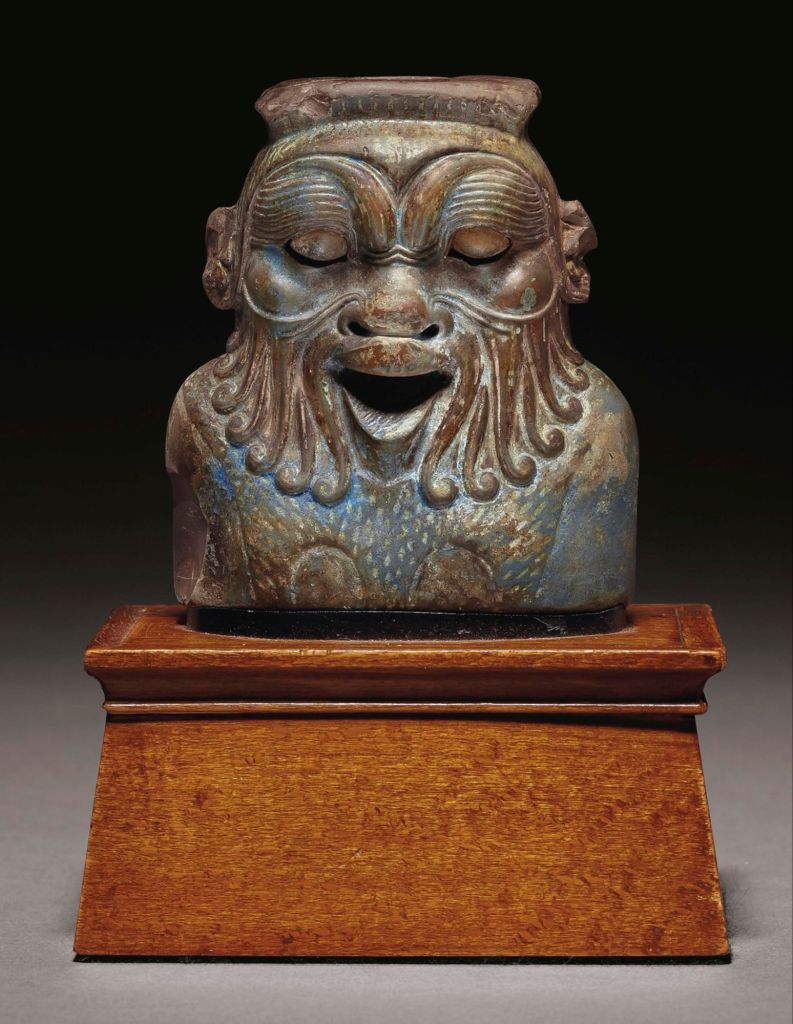
Ancient Egyptian worshippers of the Goddess Bes drank psychedelic cocktails that looked like blood

Researchers examineed a vase with Bes on it. Via Science Daily

‘The vase had a cocktail of psychedelic drugs, bodily fluids and alcohol — a combination that Tanasi believes was used in a magical ritual reenacting an Egyptian myth, likely for fertility. The concoction was flavored with honey, sesame seeds, pine nuts, licorice and grapes, which were commonly used to make the beverage look like blood.’

A Bes Vase

“This research teaches us about magic rituals in the Greco-Roman period in Egypt,” Van Oppen said. “Egyptologists believe that people visited the so-called Bes Chambers at Saqqara when they wished to confirm a successful pregnancy because pregnancies in the ancient world were fraught with dangers. So, this combination of ingredients may have been used in a dream-vision inducing magic ritual within the context of this dangerous period of childbirth.”

“Religion is one of the most fascinating and puzzling aspects of ancient civilizations,” Tanasi said. “With this study, we’ve found scientific proof that the Egyptian myths have some kind of truth and it helps us shed light on the poorly understood rituals that were likely carried out in the Bes Chambers in Saqqara, near the Great Pyramids at Giza

A mysterious Bes vase

How to colour match an outfit


How DNA reveals that Vikings never left Scotland


Against Normalcy: Why being ‘normal’ can be dangerous

I was considered normal for a large part of my life. I fitted in. I mimicked the behaviors of the people in my group. I had plenty of friends to mimic, and invitations to go out never stopped. All seemed good.

But gradually, due to the books I’ve read and the nasty phenomenon we humans possess called thinking, I drifted to a hypothetical lonely island others found terrifying to visit.

Subconsciously, we all try to appear as normal mammals when among others. We strive to be polite, cheerful, respectful, and prone to agree to the status quo to avoid causing havoc.

And while these traits can be labeled as nice to have. There are plenty of bad characteristics attached to the concept of being considered a normal person these days.

Via the thought-provoking writer Ivaylo Durmonski

Smoky creamy pasta with burnt aubergine and tahini


In case you’re wondering…this is the true size of Australia

No wonder it takes forever in a car to get from Melbourne to Brisbane, or Sydney to Perth! Via Reddit


J Mascis – Old Friends

I came for the monsters morphing in a trippy way and stayed for the 90’s Eddy Vedder acoustic sound.


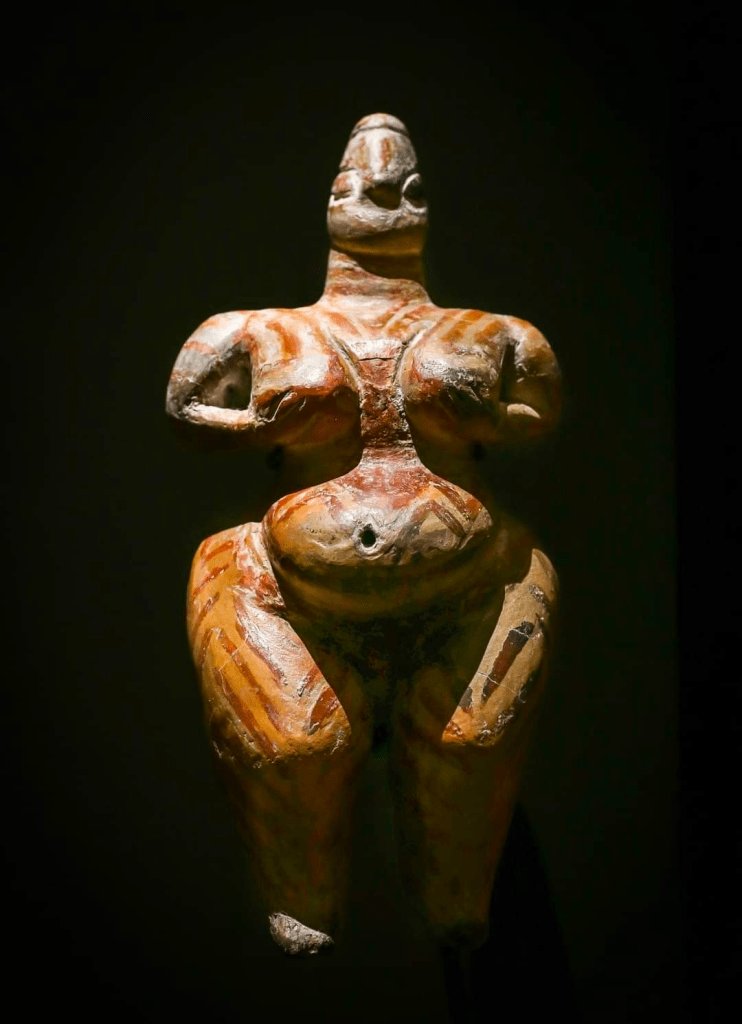
A mysterious mother goddess idol found in Türkiye

Nude female figure (5600-5300 BC), possibly an idol (mother goddess), molded in clay, pigmented, measuring 21.8cm in height, found in Hacılar Höyük, a primitive settlement located in Burdur, southwestern Türkiye. This miniature beauty now resides in the Neues Museum – Berlin, Germany. Found via Archeohistories on Mastodon.

A mysterious mother goddess idol found in Türkiye

Better body image (AKA body appreciation) means better sex and healthier people across populations

Body appreciation is also associated with more positive mental health. A 2022 review of 240 papers found that higher levels of body appreciation were associated with greater self-compassion and life satisfaction, as well as fewer symptoms of anxiety and depression.

Greater body appreciation is also associated with healthier lifestyle choices. Another 2022 review of nine studies with mostly western participants found that body appreciation was associated with less health-compromising behaviour, including risky sexual activity and alcohol abuse.

Other research has found that greater body appreciation provides a strong foundation for developing more liberal, sex-positive attitudes, as well as more positive sexual experiences including sexual satisfaction. Additionally, greater body appreciation is associated with more positive attitudes toward breastfeeding and stronger motivation to engage in physical activity.

Via The Conversation


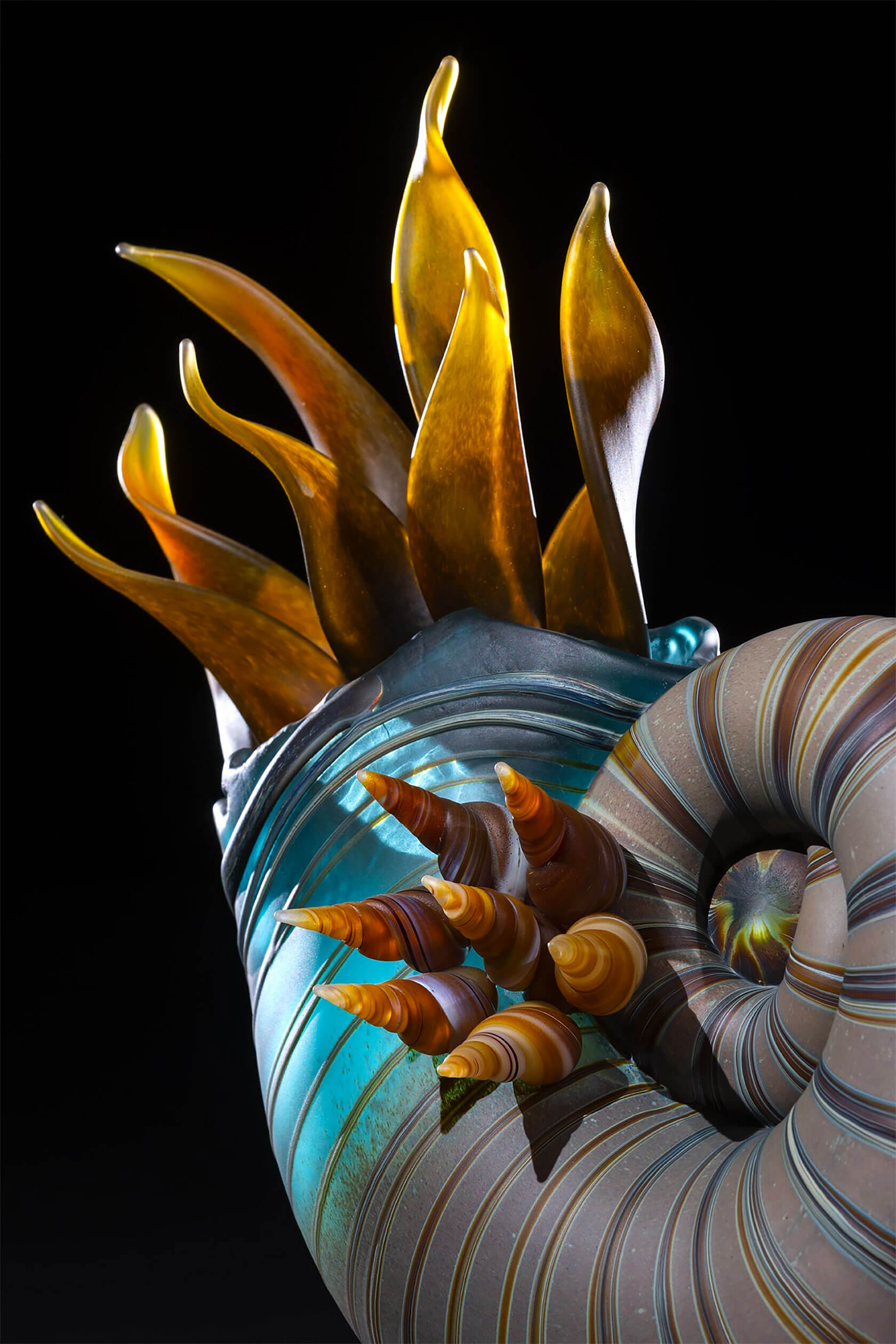
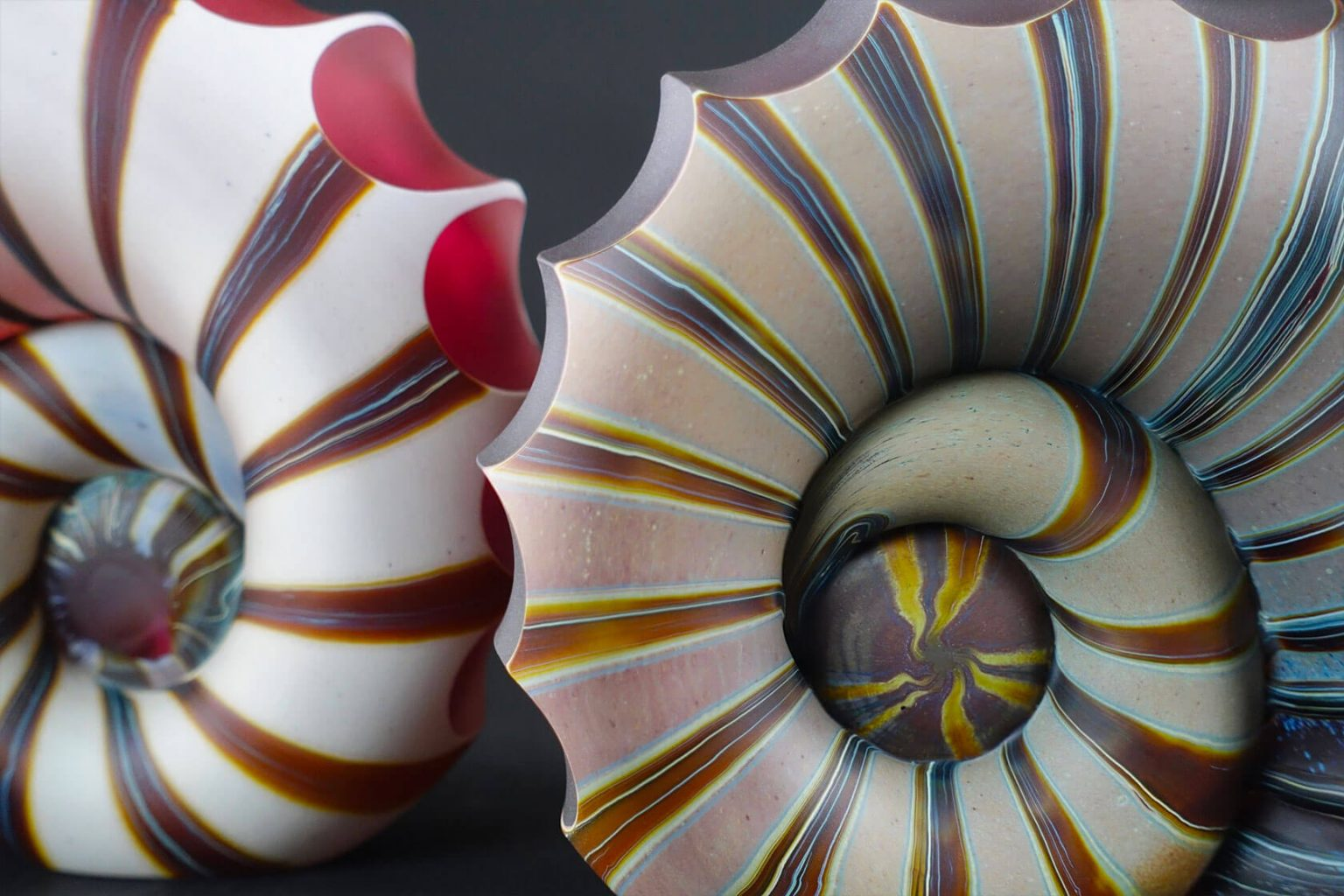
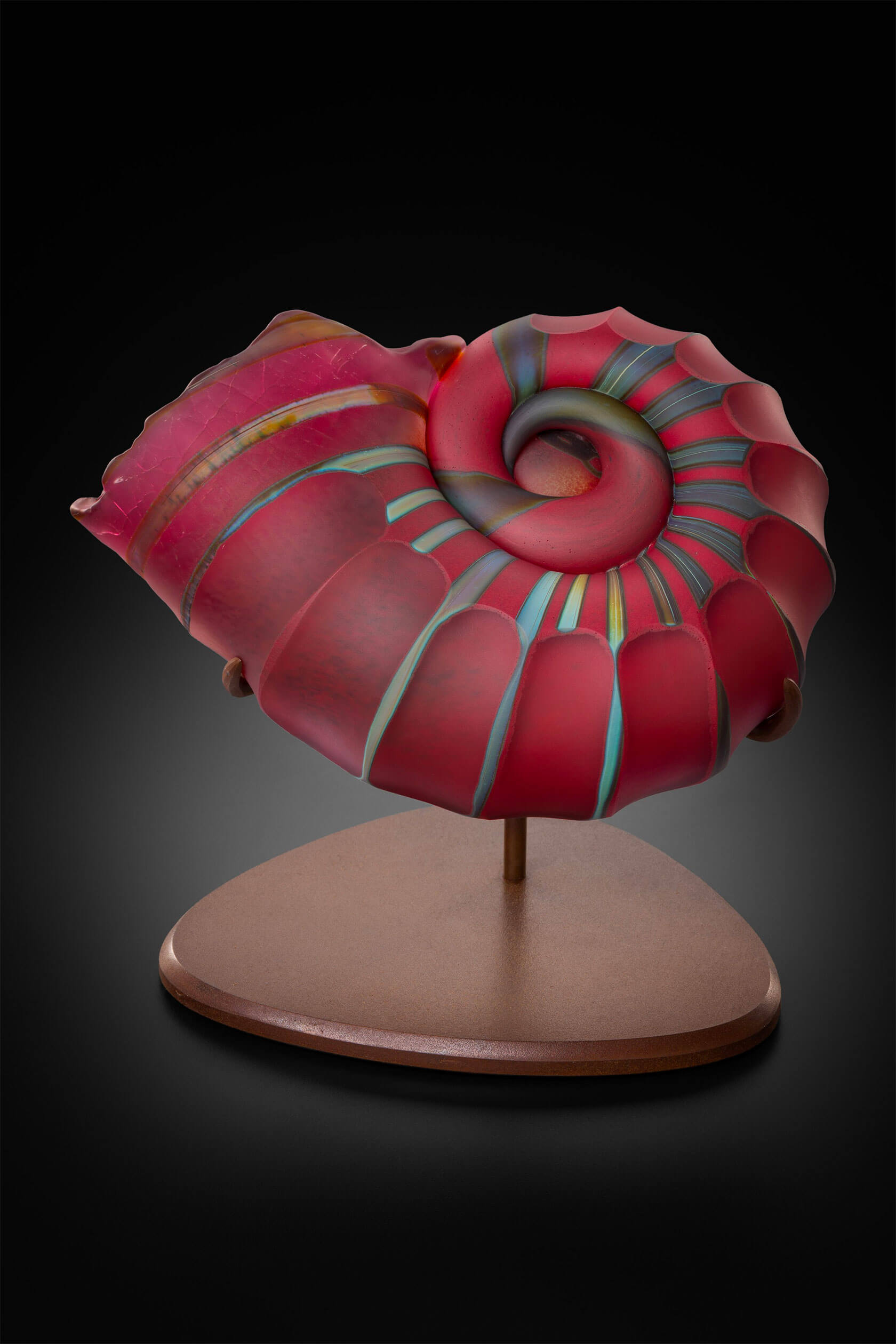
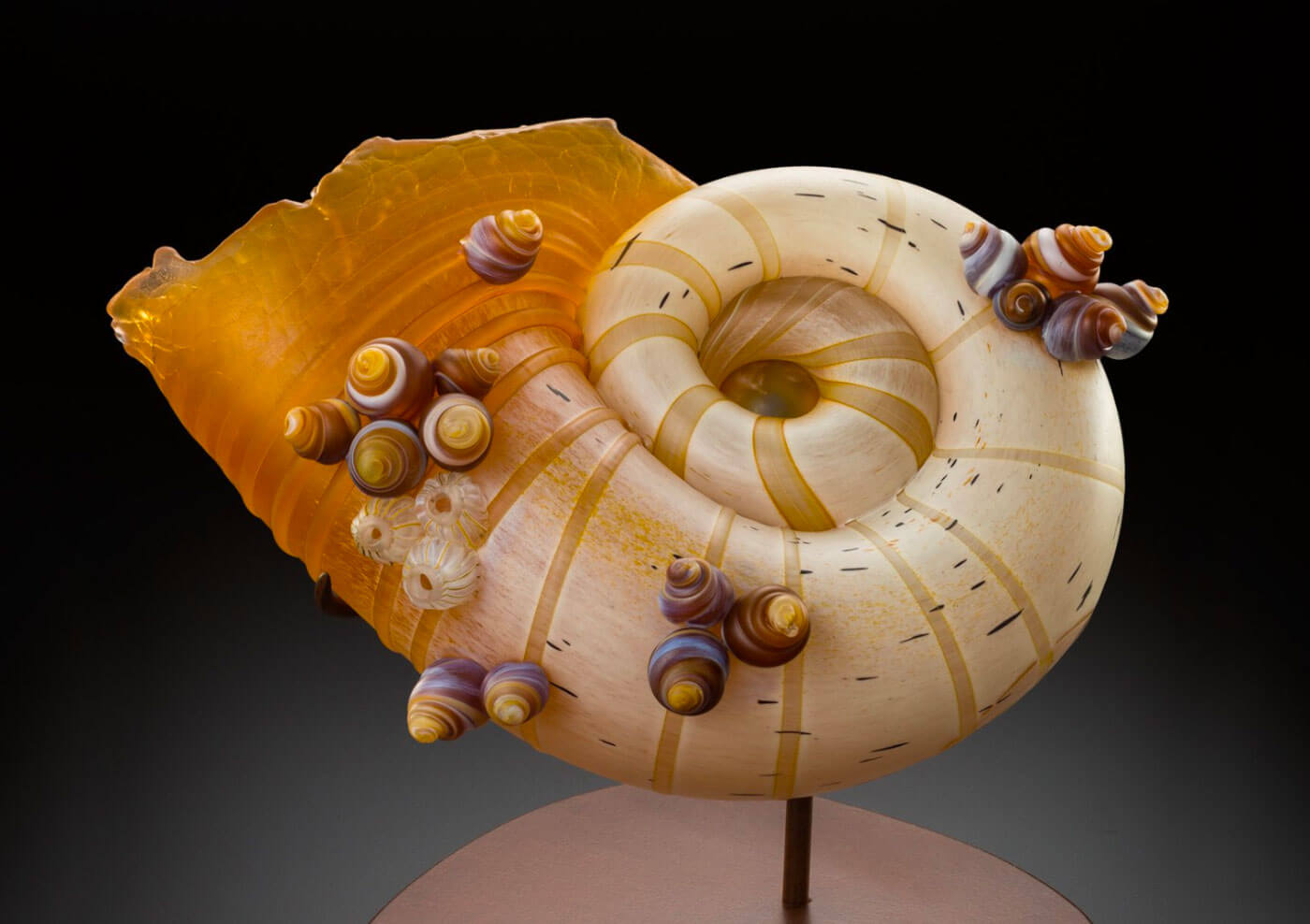
Kelly O’Dell’s mesmerising and intricate glass shell sculptures

Kelly O’Dell is a globally celebrated glass artist who has been exhibited in galleries and museums across the globe. Her artistic journey is deeply rooted in her fascination with the natural world, with a keen focus on extinction, conservation and the human impact on the environment. Through her work, she seeks to explore and highlight the delicate balance of life on Earth.

In this Sand & Sea collection she shows the vivid beauty and colours you can find in clams, mussels, barnacles, ammonites and lobsters. Every sculpture is skillfully brought to life through a captivating blend of opaque and translucent glass elements.

The attention to detail on these is exquisite. Via Inspiration Grid on Mastodon.


Masana Temples by Kikagaku Moyo

A compelling band from Tokyo that I am so excited to discover, with a swirling and euphoric psychedelic rock sound and breathy vocals. So much colour in the music you’ll have synaesthesia! Their album covers are also quite epic too!


A delightful and cosy squirrel hotel

If you ever wondered where squirrels go on holidays…this is the place! Via Street Art Utopia on Mastodon.


The most popular swear words by US state


Did you enjoy this collection? let me know what you think of it below. Thank you for reading my dear friends!

Comforting Thought: There are people waiting to meet you

“there are people waiting to meet you.
people waiting to love you.
there are places that stand still
until you’ve stepped foot in them.
something really beautiful
could happen for you in the morning.
there is so much waiting for your arrival.
arrive there.”
good grief, brianna pastor


Read the full review of this book, which I gave five stars. Buy on Amazon and in good book stores

A deeply moving book of prose and poetry that captures the bittersweet and dark nature of grief and letting go. This is a timeless companion for people of all ages, stages and phases of life. If you are going through something, letting go of something or someone then this book will see you and take the measure of your sadness, anger and fear – letting light into your life for clarity and connection with self and the world.

Rating: 🌟🌟🌟🌟🌟

Genre: Poetry, psychology, non-fiction, spirituality

Publisher: Self-published

Review in one word: Salutary

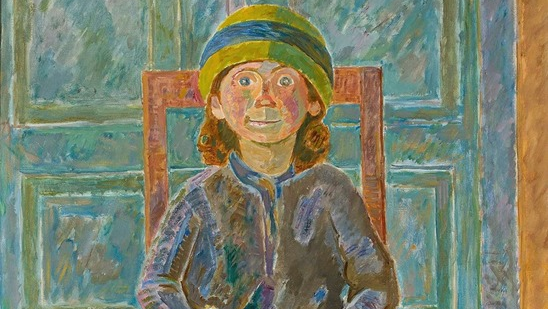
Staszka (1935) Zygmunt Waliszewski (Polish, 1897-1936)

Book Review: Third Ear: Reflections on the Art and Science of Listening by Elizabeth Rosner

A world of exquisite beauty and expansive awareness awaits if only we open up our ears and listen with our ‘Third Ear’ for greater connection, understanding and love of all beings. Elizabeth Rosner is a vivid and artful weaver of liminal worlds of quietude and sound.

Rating: 🌟🌟🌟🌟🌟

Genre: Spirituality, self-love, self-awareness, psychology, history

Publisher: Counterpoint Press

Review in one word: Pianissimo

Welcome into a liminal state of wonder and fascination courtesy of our aural sense of conscious awareness and deep listening. This is a love ballad about how deep listening and sensing the world opens up a lotus flower of infinite understanding with other living creatures: plant and animal non-human beings.

I had never heard of Elizabeth Rosner before this but I am delighted to “meet” her through this wonderful, far-reaching book that takes in philosophy, natural history, eastern spirituality, animal behaviour and animal intelligence and much more

Rosner really stretches ideas of what connection, togetherness and other-than-human intelligence means. She does this in a poetic, lyrical and expansive way that instils a sense of awe in the natural world. This is one to dive deeply into and come up for air feeling completely invigorated, like free-diving into a coral reef.

She is a vivid and artful weaver of liminal worlds of quietude and sound. I am mesmerised by her words and will try and find her other books. Rosner’s other works include: Survivor Café: The Legacy of Trauma and the Labyrinth of Memory and the novel Electric City, named a best book by NPR.

The Third Ear

“Consider the phrase “pregnant pause.” Third-ear listening can be a fertile place, whether we are communicating wordlessly with our eyes or absorbing whispers from across a room or a continent. Perhaps the cultivated and often sacred silences that float inside a therapist’s office are not so different from those expectant spaces within our own bodies—filled with potential and possibility.
“Your two ears can take in only so much,” writes James E. Miller in The Art of Listening in a Healing Way. “They can be attuned only to certain wavelengths. After that, your third ear may be the one that hears best.

Third Ear: Reflections on the Art and Science of Listening by Elizabeth Rosner

The entire universe is sonic

“When elephants respond to news from their miles-distant family members, details they’ve taken in through acoustic sensitivities in their feet. When the searching roots of trees grow toward the energetic flow of water, sometimes tangling themselves in underground pipes—isn’t that too a kind of listening? What about when hummingbirds return to the specific vibration of nectar-drenched flowers? When whales share songs across oceans and recognize the pauses made by one another’s breathing? Hushed or amplified, implausible yet audible, everything is humming—from quantum to cosmic, from the inner life of electrons to the membranes of outer space. The entire universe is sonic.”

Third Ear: Reflections on the Art and Science of Listening by Elizabeth Rosner

John Cage and Deep Listening

“John Cage’s premiere of his composition 4’33” (four minutes, thirty-three seconds) occurred on August 29, 1952, in Woodstock, New York. An article about Cage’s premiere describes it this way:

“Unlike compositions designed to make the outside world fall away, here was a music that, when it engaged you, made the present world open up like a lotus blossoming in stop-motion photography.”

“Terry Tempest Williams writes about that 1952 concert too: “In times of war, survival depends on listening to that suffering. Cage understood how the unexpected action of deep listening can create a space of transformation capable of shattering complacency and despair.”11 Cage himself once said, “There is no such thing as an empty space or an empty time. There is always something to see, something to hear. In fact, try as we may to make a silence, we cannot.”

Third Ear: Reflections on the Art and Science of Listening by Elizabeth Rosner

“ As David George Haskell reminds us, in his book Sounds Wild and Broken: “At any place on Earth, thousands of parallel sensory worlds coexist, the diverse productions of evolution’s creative hand. We cannot hear with the ears of others, but we can listen and wonder. And beyond that state of wonder, many argue, lies a state far more collectively hopeful—not only for humans but for all beings”

Third Ear: Reflections on the Art and Science of Listening by Elizabeth Rosner


Comforting Thought: Life as a Roman Candle

“God speaks to each of us as he makes us,
then walks with us silently out of the night.

These are the words we dimly hear:

You, sent out beyond your recall,
go to the limits of your longing.
Embody me.

Flare up like a flame
and make big shadows I can move in.

Let everything happen to you: beauty and terror.
Just keep going. No feeling is final.
Don’t let yourself lose me.

Nearby is the country they call life.
You will know it by its seriousness.

Hawaii's Volcanic spectacle and Pele the Fire Goddess

Give me your hand.”
― Rainer Maria RilkeRilke’s Book of Hours

Eminjilli Dreaming

Comforting Thought: Interior Life is Real Life

Though we do not wholly believe it yet, the interior life is a real life, and the intangible dreams of people have a tangible effect on the world.

—James Baldwin

10 #InterestingThings I Found on the Internet 139

The #history of #UBI, how to get a job in #HumanRights marine #iguanas, what makes for a #happy life, how to let #animals into your heart, beautiful #art and much more, its edition 139 of #InterestingThings baby! 


A really funky progressive breaks mix


Human Rights Watch: How to get a job in human rights

Great advice for anyone currently working in human rights or environmental advocacy or looking to get into this field from HRW’s  newsletter:

How to Get a Job in Human Rights

Lire la version en français / Hier auf Deutsch lesen

It’s a question that comes up often from Daily Brief followers and others: how do you get a job working in human rights? 

It usually comes from someone who’s younger, maybe a bit idealistic, and eager to do something useful with their life. 

There are, of course, many others who get involved in human rights not because they want to but really because they have to – as a survivor, for example, connected to a cause through tragic personal experience. 

But the following seven points are for the former: for those attracted to the job as a profession and who have a choice of doing something else. Beware: this may not be the advice you expect.

1) Accept you will never earn as much as you could doing something else. If you’re younger and just starting out, this may not seem very important, but you should still give some thought to how this type of work will impact your earnings negatively over the course of your lifetime. If you’re mid-career and thinking about shifting to human rights work “to give something back,” then calculate very carefully how much you’re giving back – you may be unpleasantly surprised. 

2) Understand it’s not romantic. It’s many things, but it’s also a job. Yes, the issues are important, and the work can give you a sense of purpose, but that has plusses and minuses. If you go into it with self-sacrificing zeal, if you make it your whole life, you will burn out

3) Understand it’s not glamorous. You may get to meet some truly incredible people. You will very likely be inspired by them. But fanboyism weakens over time, and you may occasionally even realize why people say, “Never meet your heroes.” 

4) Realize people who work in human rights are just like everyone else – not always easy to get along with. We all share a spirit and strive together for our larger goals, but we still have disagreements. There are egos, jealousies, and frustrations. Office politics don’t magically disappear just because you’re all working for a good cause. 

5) Realize it’s emotionally draining. You never get used to the daily whiplash of feelings – one moment contemplating the depths of human depravity and the next moment marveling at human resilience in the face of it. You will need to develop strategies to protect yourself, like not looking at the worst photos if you can avoid it.

6) Know you will lose often and never be satisfied.  You will learn about many more horrors than you will ever be able to even try to help end. Human rights work can achieve significant wins, but honestly, losing is more common. You and your colleagues are always in an underdog’s position, fighting against governments, large corporations, and other powers that have far more resources, money, and people than human rights organizations do. 

7) Realize that where you can do the most good may not be where you first think it is. Many folks want to work on the frontline, gathering evidence in challenging situations. Some may even have the language skills and cool-headed temperament for it. 

But that doesn’t mean you’ll get that job. You still may not be the right person for getting survivors to feel comfortable relating their stories, nor the right messenger for convincing authorities to change their policies. 

You may find you can contribute more to the cause by sitting at your laptop reviewing expense forms or coordinating a Zoom meeting about advocacy strategies. For every one person out in the field listening to victims of human rights abuses, there are 20 people doing something else somewhere else to support the work. The cause needs all sorts of people doing all sorts of jobs.

You may even find you can serve the cause best by doing something else entirely, making some money, and donating some of it to human rights causes. It’s as frontline as anything else: very little would happen in human rights work without such generous folks.


The Deep and Enduring History of Universal Basic Income

While the concept stretches back centuries, it has garnered significant attention in recent decades. Via MIT Press Reader


Pyramid structures of the world

Pyramid structures of the world

What makes for a happy life?

Olivia Laing, The Lonely City: Adventures in the Art of Being Alone

Have goals but prepare to let them go

Goals can be helpful. They give direction in our day-to-day lives. But it’s easy to get wrapped up in attaining an outcome, believing our happiness depends on it.

Rather than being in what psychologists call flow – an immersive, in-the-moment state of being – we might doggedly push on towards a goal. Even though achieving our goals won’t always bring us happiness.

Bridge covered in flags with hills in the background.
Iron Chain Bridge of Tamchog Lhakhang Monastery, Paro River, Bhutan. Shutterstock/Sabine Hortebusch

Don’t be misled by stories

There are many stories about what a happy life entails, but they’re not always backed up by reliable evidence. An example would be the “when I achieve this, I will be happy” story described above. Another popular story is that money buys happiness. I spent much of my research career examining this (and travelling humbly for 18 months).

What is clear is that having more money (beyond the point of meeting basic needs) is inconsequential when compared with having good quality relationships, looking after our mental and physical health, and living meaningfully in line with our beliefs and values. Yet, sadly, these things often get sacrificed in pursuit of more.

These stories persist because they support an economic system that is designed to increase GDP rather than improve the wellbeing of people and the planet.

Allow others to give

Warm and loving relationships are essential for living a happy life. Yet that doesn’t mean these are easy to come by.

As an academic, I saw how important relationships were for happiness in the data. But like many, I had a difficult time realising them in my own life. We’re not taught that way and often think people will only love us when we meet certain criteria, rather than unconditionally for who we are.

What shocked me most on my cycle journey was people’s kindness and generosity. People would invite me into their lives, offering me food or a place to stay, even when they owned little. When I set off, I was either suspicious of this generosity or racing too quickly onwards to consider stopping. But with time, I learned to let people in, and this led to deeper connections and more happiness.

You can get through a crisis

I wouldn’t have been able to reach Bhutan on a bicycle without facing a crisis or two. We will all face a crisis at some point. We might lick our wounds and get back in the saddle, but to find our way through a crisis psychologically, we need support from others. We also need to give ourselves time to make sense of what has happened and to ensure we move forward purposefully. These are all essential for resilience, and what helped me on my journey.

You can’t beat the million-star hotel

Nothing beats lying under the stars after a full day’s cycle through the mountains. Humans are of nature, yet we spend so much of our time indoors in built-up, often contrived, social spaces that do not meet fundamental needs. Nature is essential for our wellbeing – not just to feel calm and peaceful in the moment, but to sustain human life for generations to come.

A starry night of mystery and wonder. Alex Ruiz's Visual Alchemy
A starry night of mystery and wonder. Alex Ruiz’s Visual Alchemy

Via The Conversation


The animals we eat could be our friends if we let them into our hearts


Beautiful and ancient marine iguanas

These ancient looking reptiles look fierce but they are actually herbivores and will only bite people when they feel threatened. Marine Iguanas (Amblyrhynchus cristatus) are the only marine lizard species in the world and live in the Galapagos Islands. They can dive up to 30m and remain submerged for more than 30 minutes. Via Wonder of Science on Mastodon

Video credit: Kenzo Kiren


Ultimately – you are unlimited

From the amazing and inspirational blog of Susana Cabaço

Keep using your human experience to intentionally open your mind to greater understanding and your heart to greater compassion. Let them expand naturally, as they are meant to, beyond the limitations acquired one way or another along your life journey. Allow yourself to see and feel beyond what you were taught to. There is so much more to it, for ultimately, you and the Whole you are part of are unlimited.


Mesmerising mellow-yellow giant Gingko Biloba

A 1400-Year-Old Ginkgo Biloba Tree in China’s Zhongnan Mountains mesmerises and shimmers with its yearly golden autumn display, drawing crowds from far and wide. Nestled behind a Buddhist temple near Gu Guanyin. This ancient tree, once thought extinct, has been leaving a breathtaking golden carpet each November since its discovery by a German naturalist in the 1600s. Via Archaeohistories on Mastodon.


Rise above the difficult times

From the nourishing and insightful blog of Thomas Slatin

So, as I navigate through these challenging times, I hold onto the knowledge that every obstacle we encounter is an opportunity for growth. Though the path ahead is uncertain, I am confident in my ability to weather the storms and emerge stronger on the other side. After all, it is not the hardships we face that define us, but rather how we choose to rise above them, with unwavering courage and resilience.


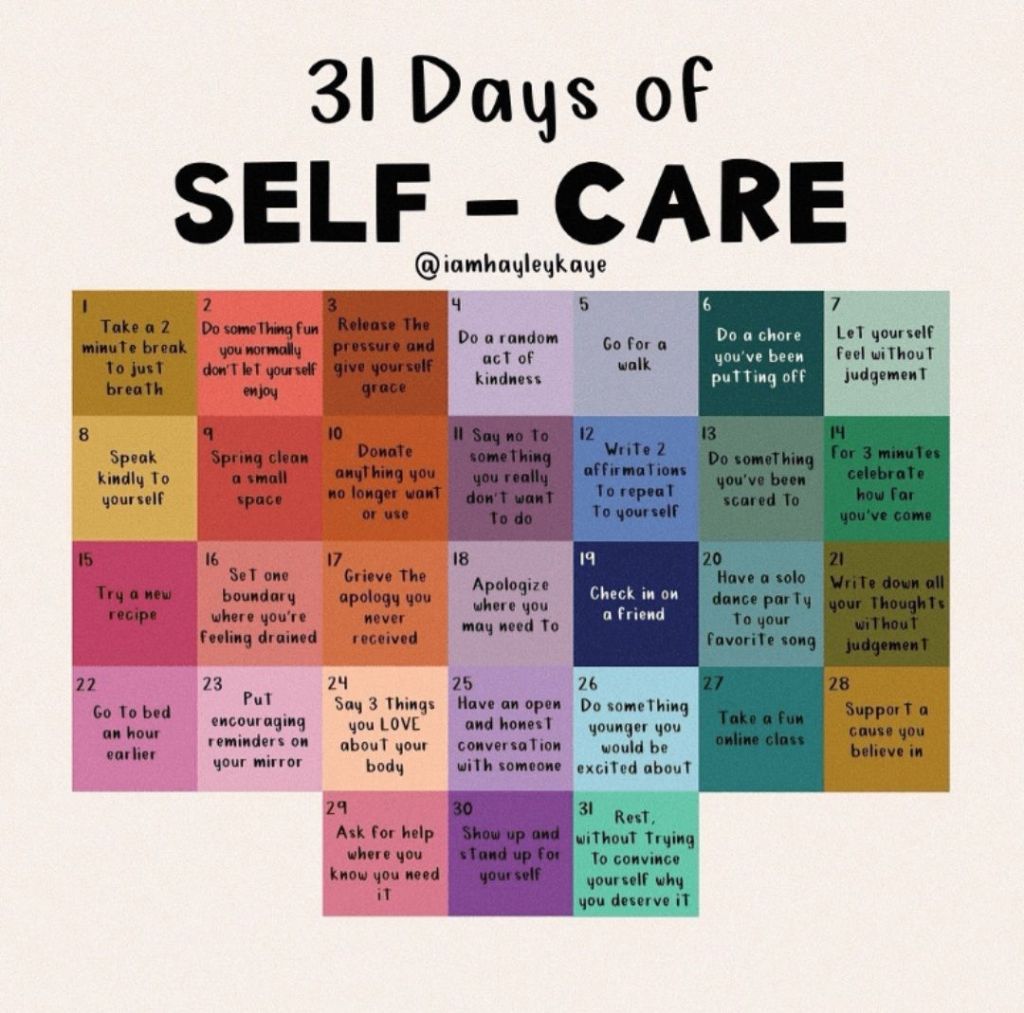
31 days of self-care

The musical influences of Björk and who she has influenced

Via Music Data Blog


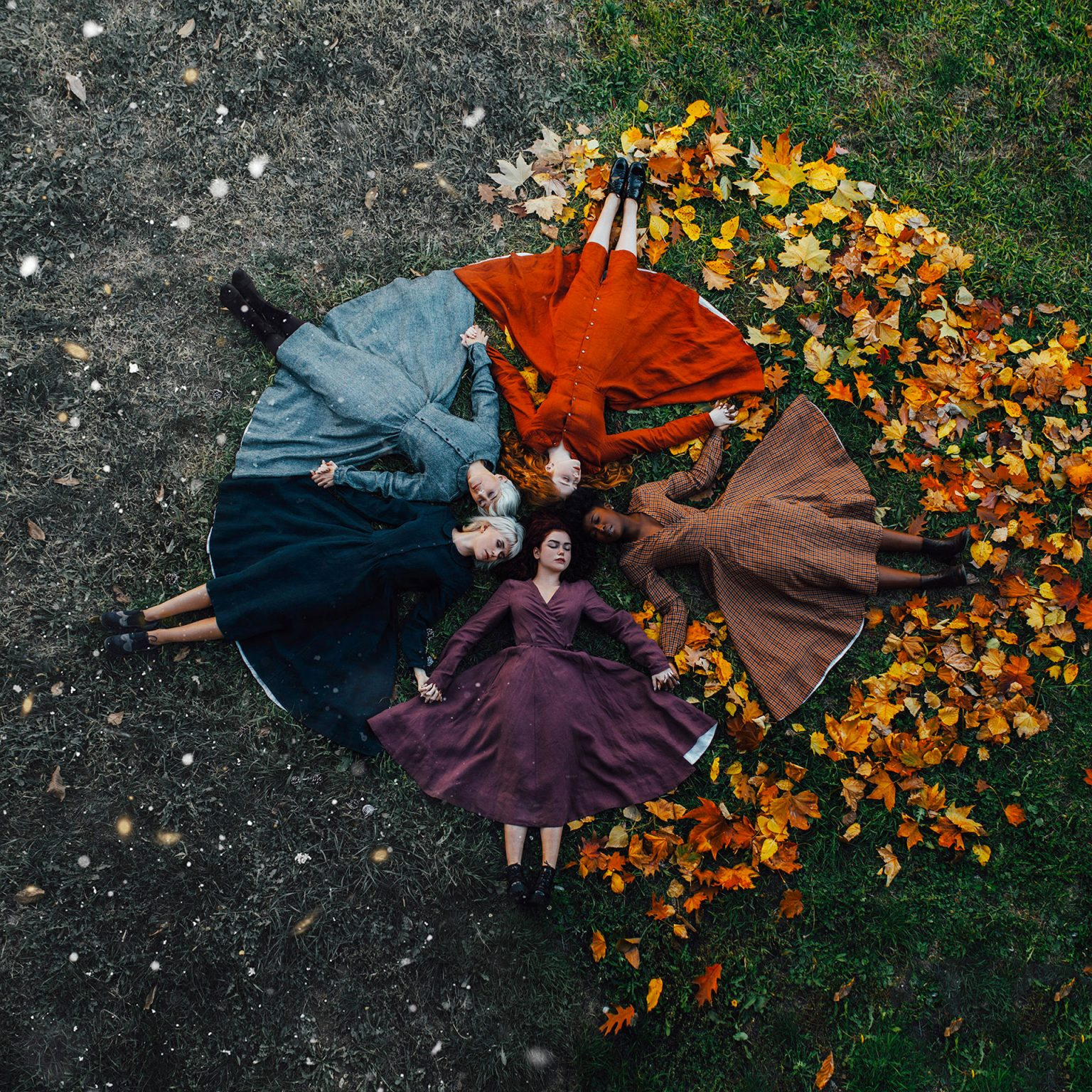
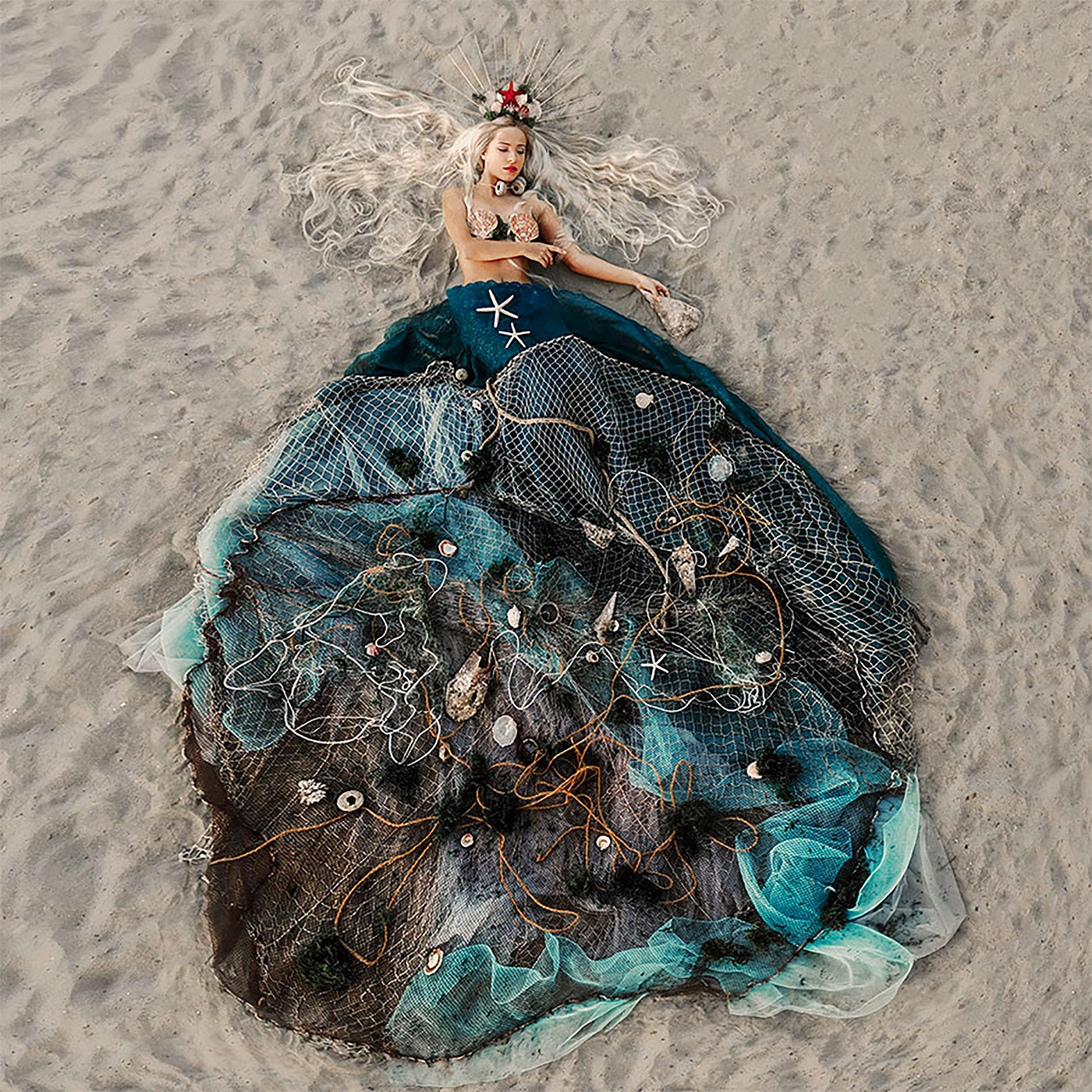
Dreamy art photography of women as goddesses by Serbian artist Jovana Rikalo

Serbian photographer and visual artist Jovana Rikalo creates dreamlike images inspired by pastel tones, fairytales and the surreal world. Found via Inspiration Grid on Mastodon.


Henryk Waniek’s surreal shimmering dreamworld

This painting is by Henryk Waniek, a Polish surrealist painter known for his dreamlike landscapes and intricate details. His works often blend elements of nature with geometric forms, creating a sense of otherworldliness. This particular piece showcases his signature style, with a rainbow arch and transparent columns set against a backdrop that transitions from day to night, illustrating his unique ability to merge the fantastical with the familiar. Via Deep Thot

Henryk Waniek's surreal shimmering dreamworld
Henryk Waniek’s surreal shimmering dreamworld

Did you enjoy this collection? let me know what you think of it below. Thank you for reading my dear friends!

Comforting Thought: Remember, don’t be frightened

“So don’t be frightened, dear friend, if a sadness confronts you larger than any you have ever known, casting its shadow over all you do. You must think that something is happening within you, and remember that life has not forgotten you; it holds you in its hand and will not let you fall. Why would you want to exclude from your life any uneasiness, any pain, any depression, since you don’t know what work they are accomplishing within you?”

Rainer Maria Rilke, Letters to a Young Poet
Olivia Laing, The Lonely City: Adventures in the Art of Being Alone