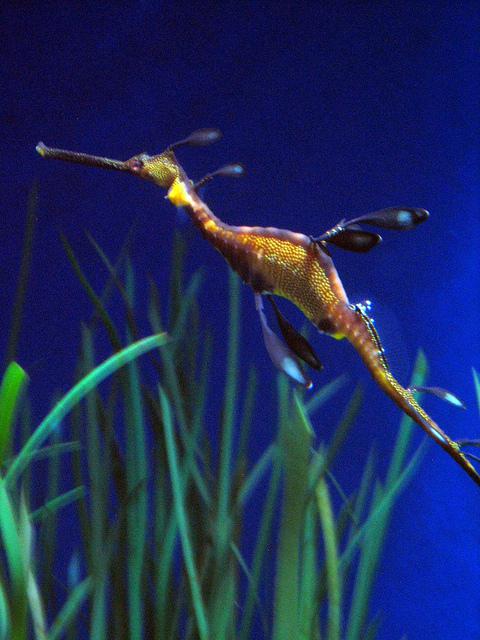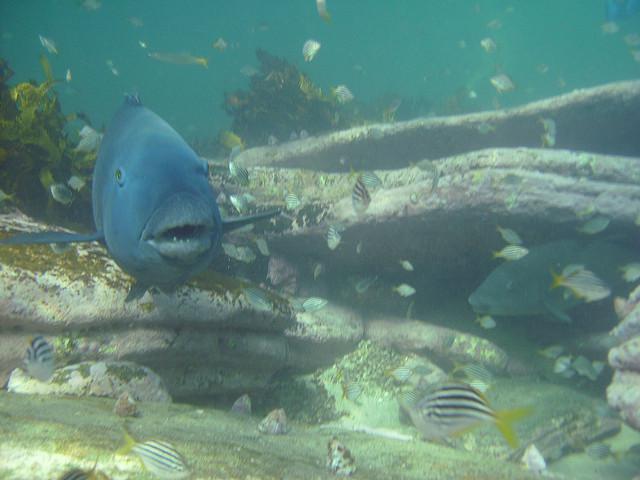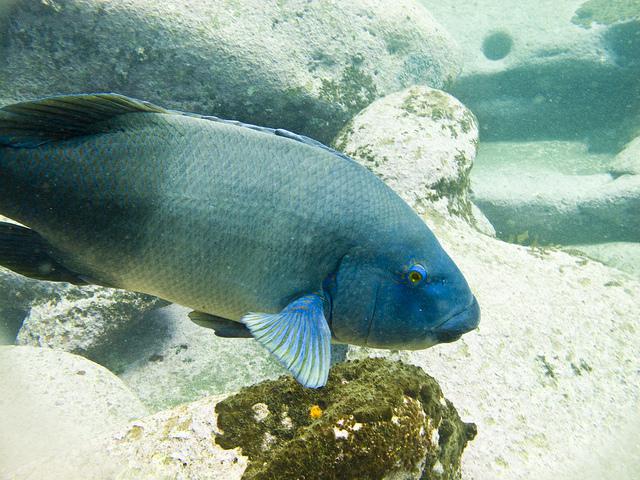
Impossibly Beautiful Marine Life in Sydney Harbour – Part 4

So far I have lovingly described a lot of Sydney natives who live under the sea. In our final of the series I look at the Gloomy Octopus and Eastern Blue Devil Fish, two of the most reclusive, mysterious and strangely beautiful residents of Sydney Harbour. I hope that you’ve enjoyed this series on Impossibly Beautiful Marine Life in Sydney Harbour. And that this series has inspired you to get out on the water. Please give me a shout to let me know what you think!

Gloomy Octopus

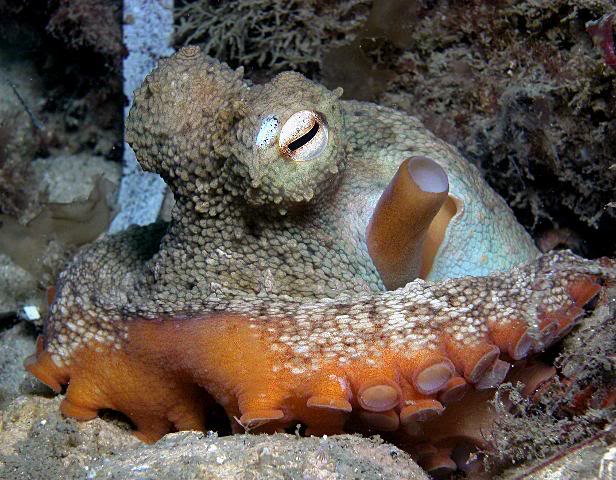
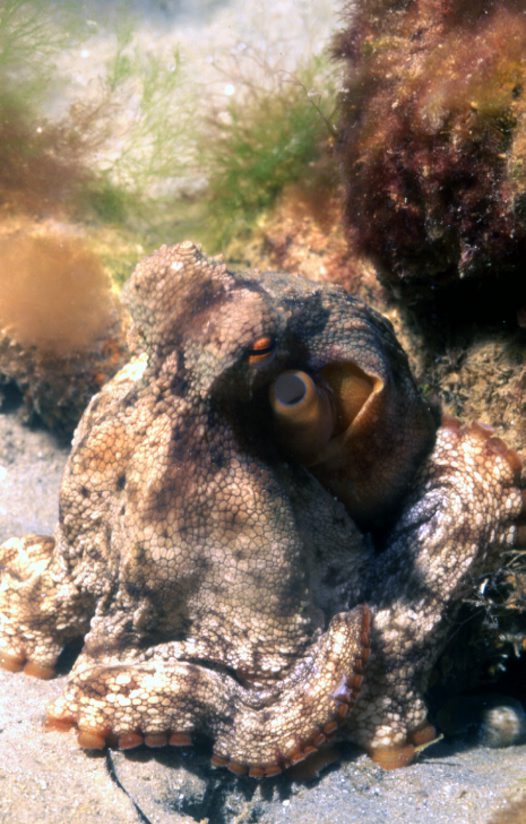
This is the largest octopus commonly seen in Sydney and grows to about 80 cm. Unlike cuttlefishes and squids, octopuses have no shell at all. They are known for their voluptuous and globular shape and tendency to glide in undulating motions through the water – their movements can appear quite hypnotic to human eyes.

This is the largest octopus commonly seen in Sydney and grows to about 80 cm. Unlike cuttlefishes and squids, octopuses have no shell at all. Their fleshy mantle can be used for jet propulsion by sucking in water and squirting it out through their siphon above. This is a really spectacular site to behold. Most of the time though, they use their eight suckered arms to creep over rock surfaces in search of food.

The common Sydney octopus has a rust red coloured underside that tapers to the tip. It’s a stunning sight to see them creeping up the rock ledge on a dive. They are relatively territorial so divers should be careful if they enter their lair. While they won’t attack you, they will get annoyed as they tend to want to keep the crabs, snails, bivalves and molluscs for themselves and won’t want to share with any visitors.

The octopus will sit inside of its lair made of rocks and rubble, laying in wait for prey to appear. At night they hunt using sharp beaks to feed on small molluscs and bivalves. They can change their colour to camouflage themselves in the surrounding seaweed. Common Sydney Octopuses are a protected species in Sydney Harbour and so under no circumstances are they to be taken from Australian waters or ocean platforms.
Impossibly Beautiful Marine Life in Sydney Harbour – Part 4
Gloomy octopus looking glum and melancholy

Image Source

Impossibly Beautiful Marine Life in Sydney Harbour – Part 4
Gloomy octopus looking glum and melancholy

Image Source

Impossibly Beautiful Marine Life in Sydney Harbour – Part 4
Gloomy octopus looking glum and melancholy

Image Source


Eastern Blue Devil Fish

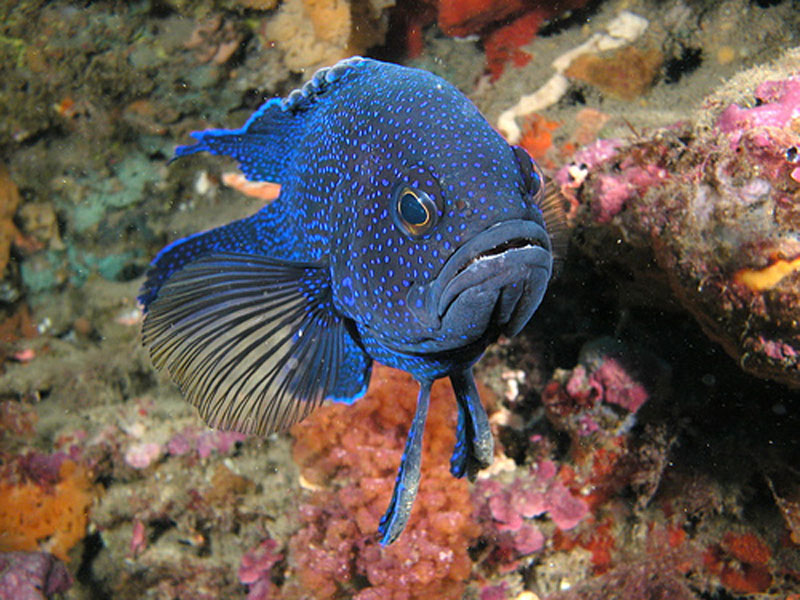
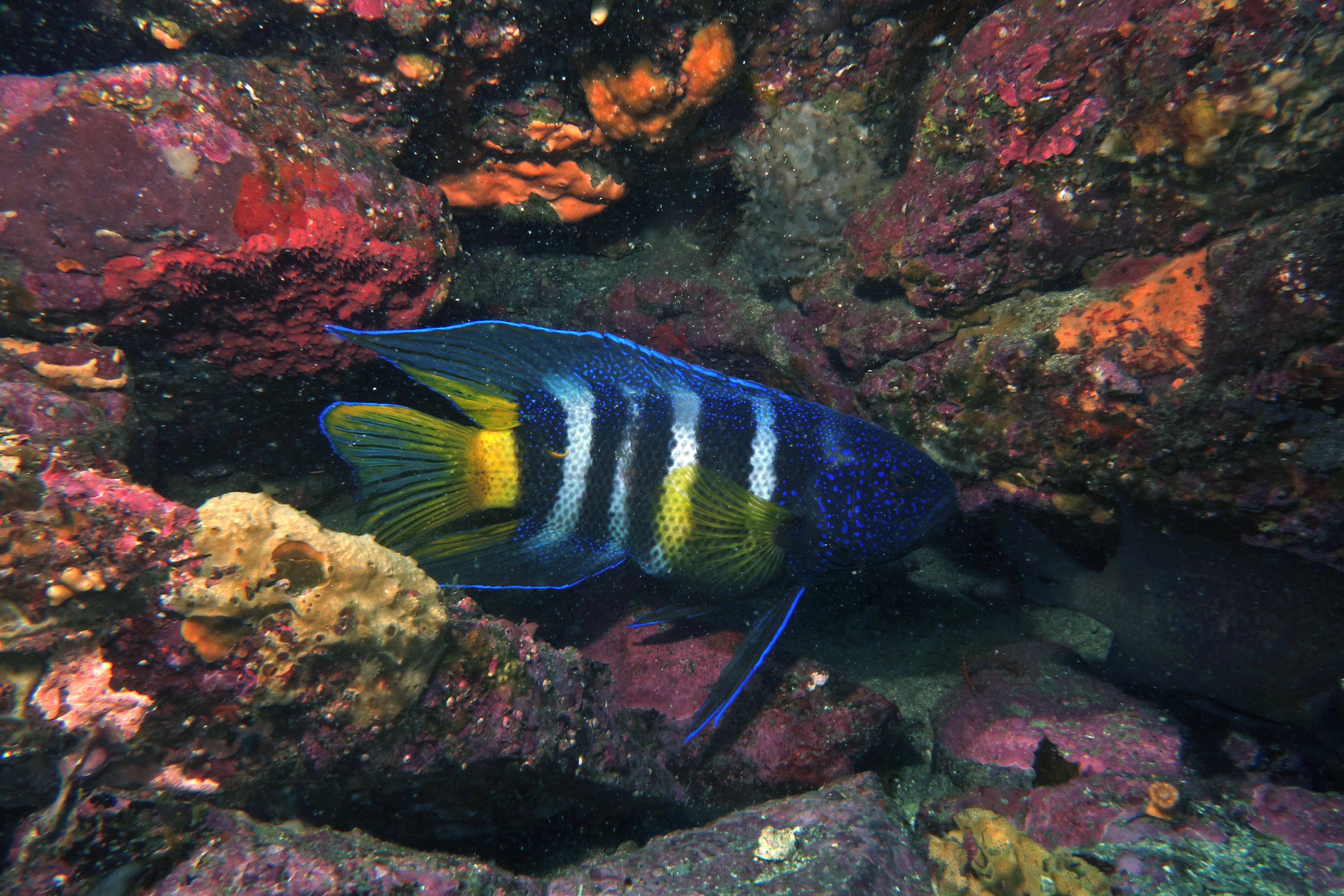
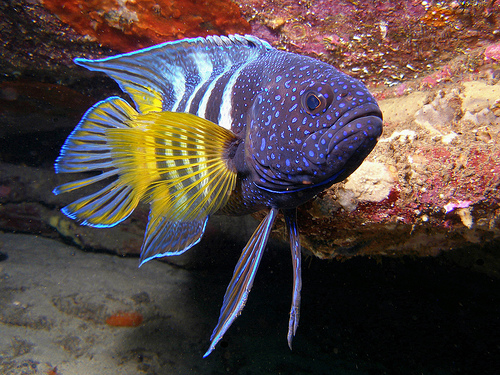
The Eastern Blue Devil Fish Paraplesiops bleekeri is also known as the Bleakers Blue Devil Fish. They are a captivating and startling blue colour. Elusive by nature, they live alone in caves and crevices during the day time, and are generally only spotted by night in the reefs of Sydney Harbour. They will stay out of your way on a dive and move back into a cave or crevice until well hidden.

Found in offshore waters, estuaries and inshore reefs in NSW, southern Queensland and Montague Island, they are lone wolfs so to speak and rarely will you find them in groups. Due to their reclusive nocturnal nature, not much is known about their diet. Eastern Blue Devil Fish are a protected fish in NSW. Hence there are heavy penalties for taking, selling or possessing them. This is because of their relative rarity and low level of abundance. They are also under threat by the illegal fishing and aquarium trade.

A male Eastern Blue Devil Fish will hang out in a cave environment to defend a territory against other males, for greater safety and to attract a mate into his abode. The mating season is in spring and once the male copulates with the female, fertilised eggs are attached to the roof of the cave until they hatch. Then free swimming larvae about 4mm long hatch and settle into the reef areas until they are about 10mm in length, from there they grow and grow until adult size.

The Eastern blue devil fish is most easily recognised by its banded pattern of blue and white strips on the body, blue spotted head, blue dorsal and anal fins and yellow caudal (tail) fin and base and pectoral fins. The pelvic fins and posterior dorsal and anal fins are elongated. When the Eastern Blue Devil Fish spreads these fins they overlap, making the fish appear larger.

Why You Should Be Careful

Don’t take any fish that you’re not sure about from Sydney Harbour. When divers or fisherman illegally take protected species, it can mean a fine of up to $55,000 for a corporation or $11,000 for individuals and 3 months in prison.
Impossibly Beautiful Marine Life in Sydney Harbour – Part 4

Image Source

Impossibly Beautiful Marine Life in Sydney Harbour – Part 4

Image Source

Impossibly Beautiful Marine Life in Sydney Harbour – Part 4

Image Source

This article was originally written by Athena Dennis for Choice Charters Sydney.

Find out more…

Abyss Sydney Marine Life

Fishes of Sydney Harbour

Unseen Nature Art from Australia’s First Fleet

What Montaigne Can Teach Us About Deep Sea Aliens

Five Creepy Islands in Sydney Harbour

Bill Bailey Demands Release Of Land Snails in Polynesia

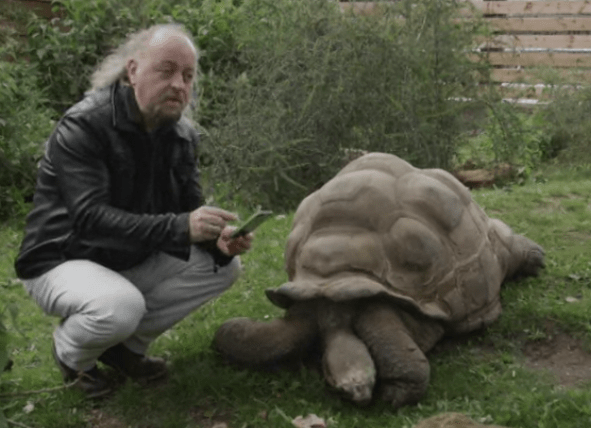
In a fascinating Guardian interactive entitled Seven Digital Sins, Comedian Bill Bailey muses on how the abundance of campaigns on social media causes us all to go into meltdown. As a consequence, we never become deeply involved in social causes and ideas that we are passionate about, beyond the paltry click-click of our keyboards.

His video about this phenomenon is so funny. Click on the picture to be taken to the video.

Release the Snails!

Image Source

‘The internet is this dark and unpredictable and dangerous thing. And we just flit around it. It’s like plucking gummy bears off the back of a panther.

‘Can you come to Polynesia to release some land snails? I mean that was my favourite. I nearly did it. I probably would have done, had I not been so busy.

‘If you get a bit too handy with the clicking and liking, you take your eye off the ball, you’ve adopted a honey badger. What can you do, you can’t unadopt it!’ Bill Bailey

bill bailey 2

Bailey is so right about the state of the digital world. It’s hard to apportion a generous amount of time to the causes you feel are important, when there is so much other hullabaloo and rumpus going on all over the place, all of it demanding your immediate and unadulterated attention.

Have you ever intended to donate to something, only for your mobile to make a sound, your microwaved soup to finish or an important email to arrive. And your motivation and resolve to make a difference is ruined. Come on! I know it’s not just me!

Impossibly Beautiful Marine Life in Sydney Harbour – Part 3

As promised, here are more amazing creatures both big and small who call Sydney Harbour home. Although if you are planning on a snorkelling or diving expedition, be aware that most of these creatures will be elusive, shy and unwilling to interact with you.

Seahorse

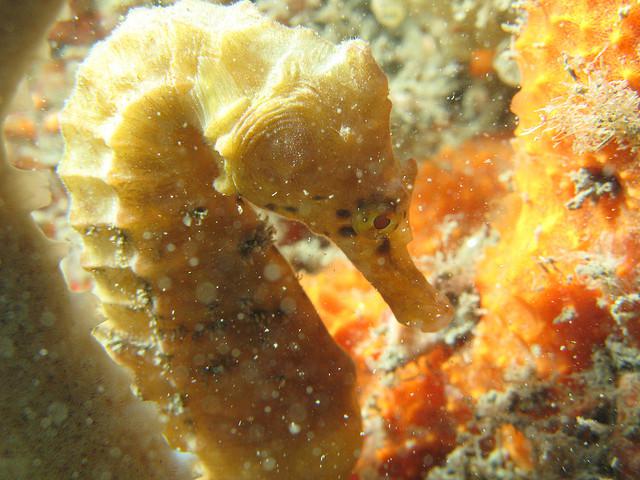
Seahorses are gorgeous, mystical and delicate creatures. They have captivated the imagination of children and adults for time immemorial. They seem to be so shy when they are viewed up close seem to scurry away as though coy and shy. They are a delight to behold when snorkelling or diving. Sydney Harbour is full of them!

As one of the most famous animals in the sea, they are instantly recognisable. They have a body protected by bony plates that are arranged in rings along with a long tubular snout that gives them an equine appearance, hence the name. They are slow moving and graceful and don’t have large fins. Seahorses tend to float around rather than swim and have a long tail akin to a possum’s tail. They use this to wrap themselves around seaweed and coral in order to cling to it and be camouflaged.

Impossibly Beautiful Sea Life of Sydney Harbour – Part 1

As they don’t swim fast, their main defence mechanism is hiding and blending into their surrounds. Just like Weedy Seadragons they consume food through their long snouts and eat mostly small crustaceans like shrimps and crabs.

They are flirtacious and surprisingly sexual creatures. They produce large broods of eggs in the season, usually beginning in early spring. Many species of seahorses form pairs for the season and the males follow the females around and stay close to them. Sounds just like a typical night out in Sydney CBD really.

The female deposits eggs into the male’s pouch using her ovipositor. After this, the male looks after the eggs for 3-4 weeks before giving birth to the young. It’s a fascinating reversal of roles when compared to many other creatures. The male gives birth to a whole lot of baby seahorses who float away and start their own little lives. It’s quite a magnificent thing to behold. The father then shows his empty pouch to the females and one of them will deposit another batch of eggs in there shortly afterwards.

Seahorses like Weedy Seadragons have protected status in Australia. Their habitat is under threat by the actions of humans. Sometimes they are taken for the illegal aquarium trade and used illegally in Asian medicines. Dragon Search are an Australian foundation that make sure no Australian species of seahorses are being sold illegally in Asian medicine or the aquarium trade.

 Impossibly Beautiful Marine Life in Sydney Harbour – Part 3
Seahorse found near Bare Island, Sydney

Australian Fur Seal

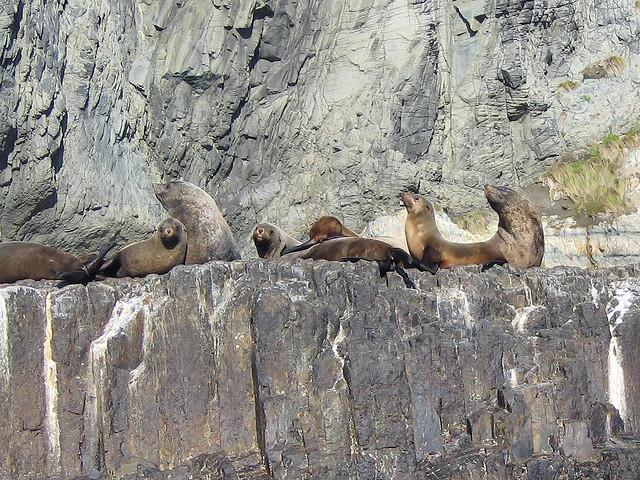
The Australian Fur Seal Arctocephalus pusillus doriferus is the largest of all the fur seals, weighing around 200 – 300kg. They have a strong and robust body covered in thick brown hair all over except their flippers. They have a broad head and long backwards sweeping whiskers, they are all round impressive to behold, some would even say incredibly handsome.

They have a set of sharp carnivorous teeth that are akin to canine teeth. As with other members of the family Family Otariidae (sea lions and seals) they have the ability to move around on land/ However their movements are cumbersome on their front flippers. They save all of their ballet-like grace for under the water, where their twirls and girations are legendary.

They tend to be distributed in the islands of Bass Strait, Tasmania, southern Victoria and remote parts of the NSW coast. Their numbers are secure yet they are commercially hunted in South Africa. Despite their protected status in Australia their numbers are half that of historic pre-sealing times. This could be due to increased competition with commercial fishing operations.

Australian Fur Seals feed on bony fish along with squid and octopus. They are daring hunters and sadly will get entangled in fishing nets if it means a chance at getting at the fish.

Each year they come ashore and establish breeding colonies. There is always an aggressive alpha male who defends his territory and rights to the females, against the encroachment of other males who come ashore to fight him. The females spend most of the time at sea when pregnant, only coming ashore to give birth to a single pup before taking off to feed again. As a result there is a high infant mortality rate during this time. The mum may give birth to several pups in a season and they can stay weaning with mum for more than six months.

 Impossibly Beautiful Marine Life in Sydney Harbour – Part 3
Australian fur seals

Got a favourite sea creature from Sydney Harbour that I’ve missed? Let me know and I’ll talk about it next time!

Stay tuned for part four coming up next week.

Find out more…

Abyss Sydney Marine Life

Fishes of Sydney Harbour

Unseen Nature Art from Australia’s First Fleet

What Montaigne Can Teach Us About Deep Sea Aliens

Five Creepy Islands in Sydney Harbour
The Purgatory of Good and Bad Choices: Vintage Criminal Portraits

These photos of Australian female criminals come from a series taken between 1910 and 1930 by the NSW police. For the benefit of the modern-day reader, a surprising amount of detail remains of the subjects’ stories. Unlike a typical mug shot, these women were allowed or perhaps even encouraged, to compose themselves or position themselves in any way that they wanted.

In these photos, they seem to still be vexed and haunted by their personal dramas and histories. These visibly hang over them like a dense blanket of sadness, anger or melancholy.

The Purgatory of Good and Bad Choices: Vintage Criminal Portraits

Nellie Cameron was one of Sydney’s best-known, and most desired, prostitutes. Lillian Armfield, Australia’s first policewoman, said Cameron had an ‘assured poise that set her apart from all the other women of the Australian underworld’. Aged 21. (1930)

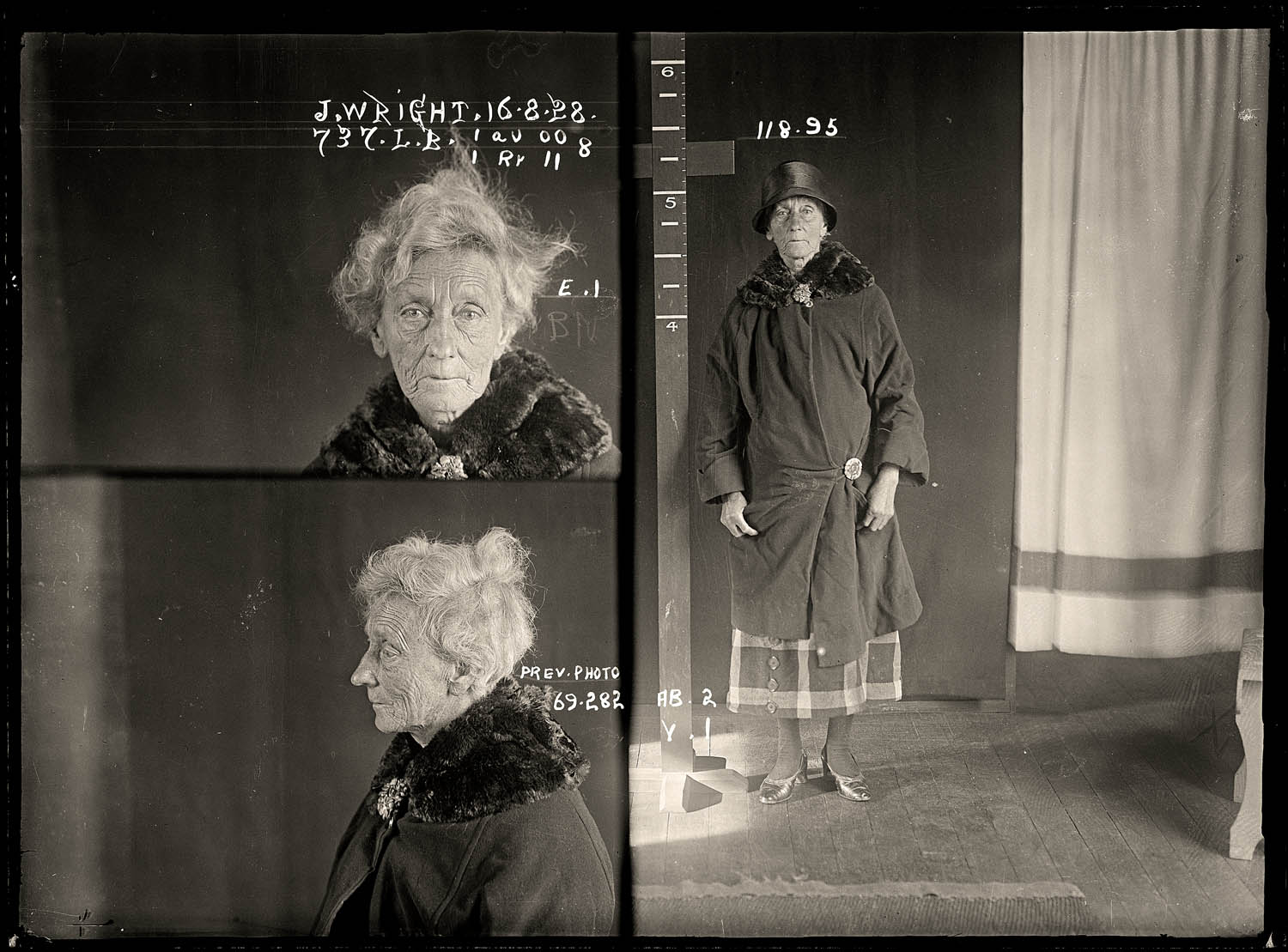
The Purgatory of Good and Bad Choices: Vintage Criminal PortraitsConvicted of using an instrument to procure a miscarriage. Janet Wright was a former nurse who performed illegal abortions from her house in Kippax Street, Surry Hills. One of her teenage patients almost died after a procedure and Wright was prosecuted and sentenced to 12 months hard labour. Aged 68. (1922)

The Purgatory of Good and Bad Choices: Vintage Criminal PortraitsConvicted of stealing. Muriel Goldsmith looks like a country schoolteacher but was actually a prolific thief with a string of aliases. She was found guilty of stealing money and jewellery from the Criterion Hotel in Wagga Wagga, New South Wales. Aged 25. (1910)

The Purgatory of Good and Bad Choices: Vintage Criminal PortraitsConvicted of conspiracy to procure an abortion. Lillian Boland worked as a secretary for an illegal abortionist who operated out of a dentist’s surgery on Oxford Street, Paddington. Boland protested her innocence and ignorance of the ‘doctor’s’ work; however, the court decided she must have had detailed knowledge of the business and handed her a suspended sentence of 12 months hard labour. (1922)

The Purgatory of Good and Bad Choices: Vintage Criminal Portraits

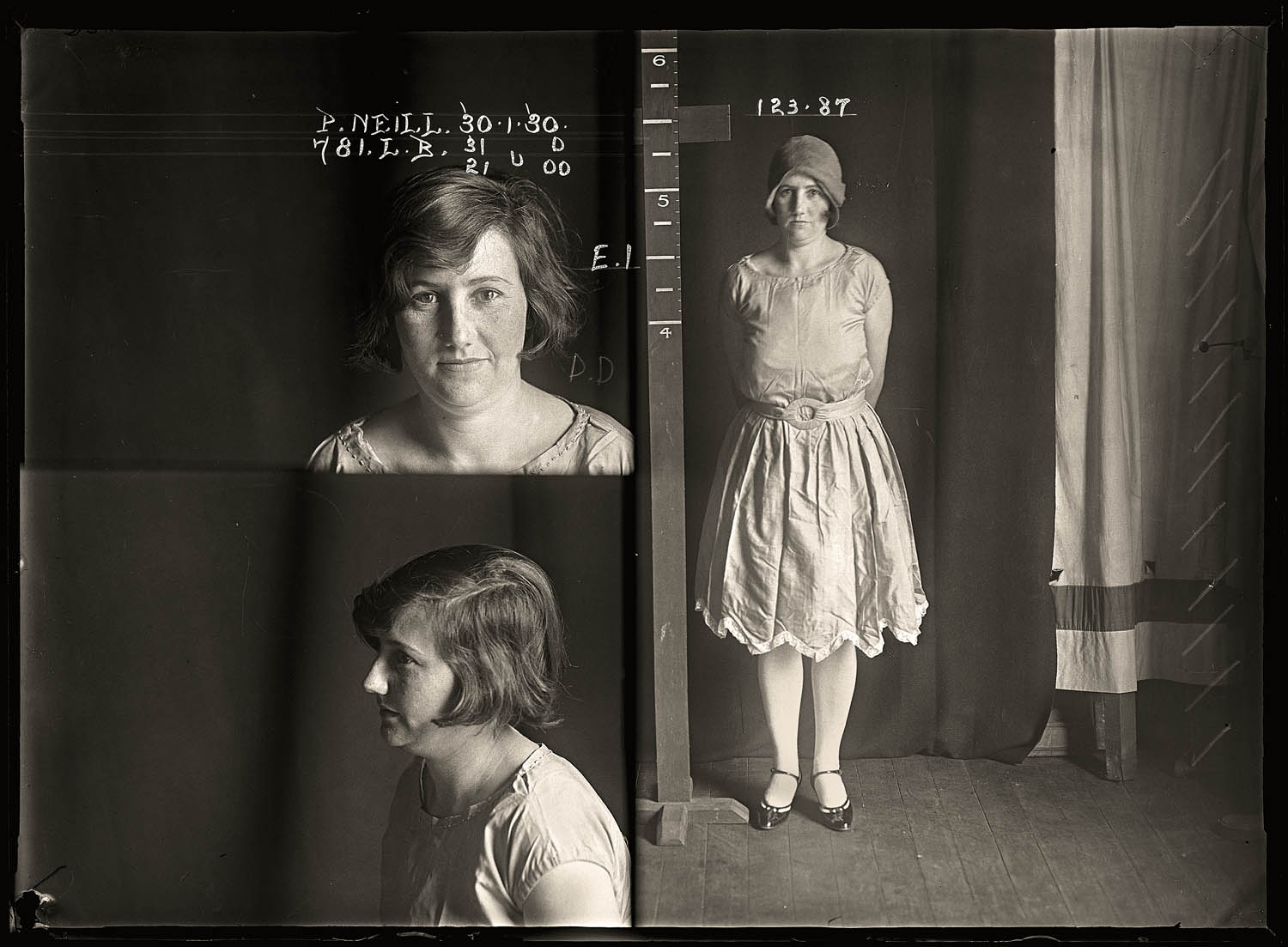
Charged with theft and possession of cocaine. Barmaid Patsy Neill was involved in various criminal activities including theft and selling cocaine. In 1932 she had a disagreement over money with the infamous sly grogger Kate Leigh, which led to Neill being threatened with a gun. Neill was described in the press as ‘looking like a mannequin on parade’. Aged 26. (1930)

There was a potent alchemy of forces that led these women to this infamous point in their lives. Yet this will always remain a mystery. Was it mental illness, learned habits, a series of bad choices? Were these women simply in the wrong place at the wrong time? The interplay of innocence and culpability is really what captures the imagination.

During their own era, they would have been seen as an abomination. Now we view these women in a more sympathetic and curious light.  Their haircuts, stances, clothing and facial expressions are all that we have to guess at their true selves. It reminds me of the book Alias Grace by Margaret Atwood.

The Purgatory of Good and Bad Choices: Vintage Criminal Portraits

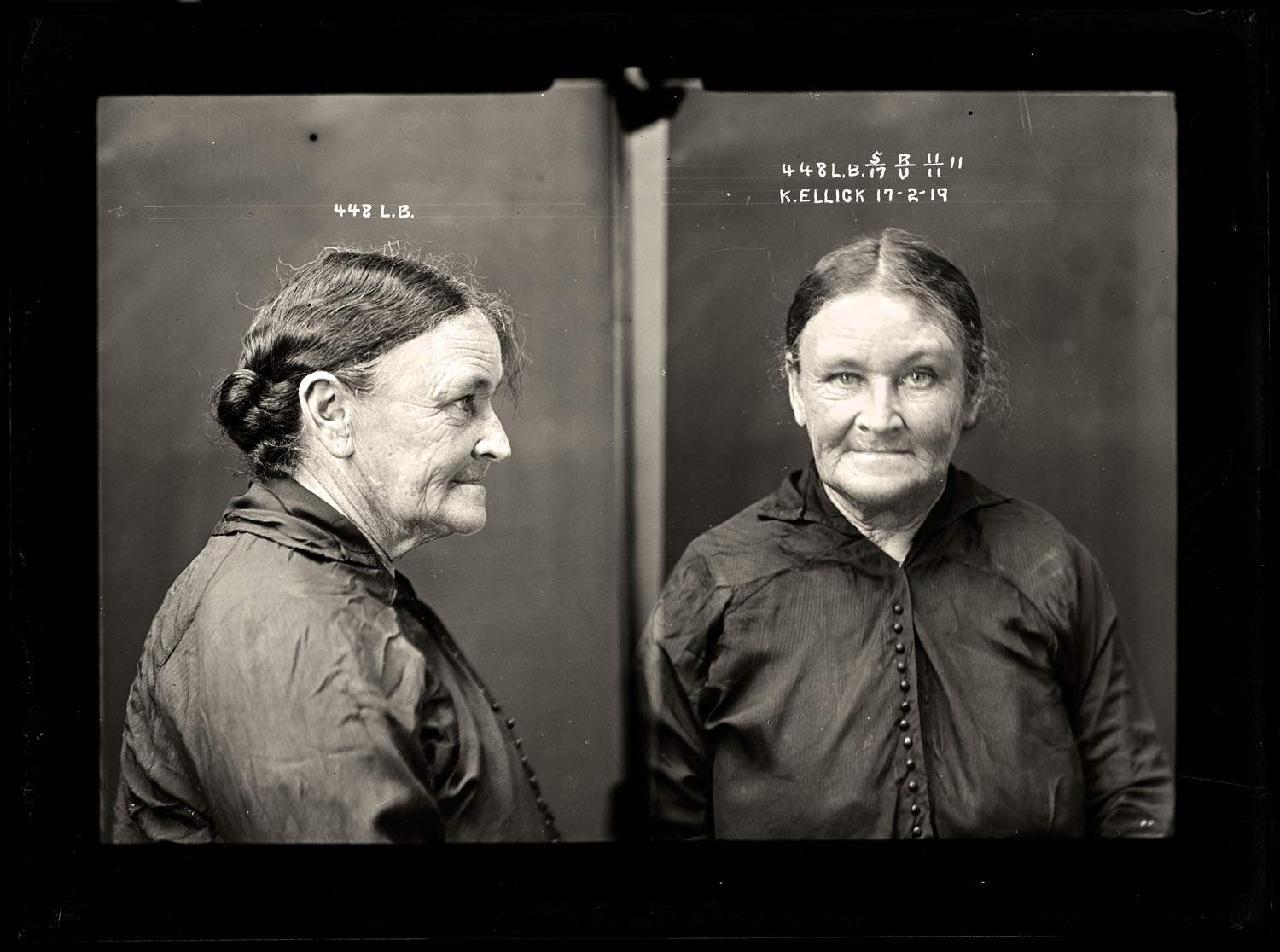
Kate Ellick had no family to support her and no fixed address. In the early 20th century employment options were limited for women of her age and there was no aged pension. Ellick was homeless when arrested in Newcastle and was sentenced under the Vagrancy Act to three months in prison. DOB: 1860. (1919)

The Purgatory of Good and Bad Choices: Vintage Criminal Portraits

Matilda ‘Tilly’ Devine used a razor to slash a man’s face in a barber’s shop and was sentenced to two years gaol. She was Sydney’s best-known brothel madam and her public quarrels with sly-grog queen Kate Leigh provided the media with an abundance of material. Aged 25. (1925)

The Purgatory of Good and Bad Choices: Vintage Criminal PortraitsConvicted of bigamy and theft. By the age of 24 Alice Cooke had amassed an impressive number of aliases and at least two husbands. Described by police as ‘rather good looking’, Cooke was a habitual thief and a convicted bigamist. Aged 24. (1922)

The Purgatory of Good and Bad Choices: Vintage Criminal Portraits

Crime: murder. Eugenia Falleni spent most of her life dressing as a man and most people who met her believed her to be a male called Harry Crawford. In 1913 Falleni married a widow, Annie Birkett, whom she later murdered. The case whipped the public into a frenzy as they clamoured for details of the ‘man-woman’ murderer. (1920)

The Purgatory of Good and Bad Choices: Vintage Criminal Portraits

Kathleen Ward had convictions for drunkenness, indecent language and theft. She obviously enjoyed thumbing her nose at the authorities, as can be seen in this image where she appears to have deliberately fluttered her eyes in order to ruin the long-exposure photograph. Aged 21. (1925)

Some of these women seem to be victims of the age they were born in. Teleport them to today and they would probably do better.What do you think?


Welcome to Melbourne’s Rapidly Vanishing World

In just about any city, formerly unfashionable places undergo rapid revamps. Suddenly overnight, these shabby, overlooked places become cool. It’s a fickle and inevitable transformation. A sublimination and muting of tastes into the oblivion of current fashion. This is the case in Melbourne’s western suburbs: Altona, Seddon, Footscray, Yarraville, Sunshine and Newport.

Every city with a patchwork of every-changing suburbs needs a man like Warren Kirk. He is a photographic historian who has clocked up more than 20,000 amazing photos, taken over the past 30 years all over Australia. In the Westography series, he pays homage to Melbourne’s endearingly kitsch western suburbs. These places are known for their industrial, sun-bleached and eccentric beauty.

This slideshow requires JavaScript.

Kirk’s suburbs are where time stands still. They are a decadent jumble sale of urban artefacts, kitsch Australiana and docile pets. A world where people drank stubbies not latte macchiatos. Ate snags on white bread not canapés.If future ethnographers were to go in search of the quintessential Australia of the mid-20th Century, they will find it here, artfully preserved in the most unassuming and vivid of time capsules.

This slideshow requires JavaScript.

”Even as a kid I loved the nostalgia of the old cricket and football photos from the 1920’s. I was sports mad; art was never on the agenda. I didn’t consider myself an artist.  I collected monographs of photographers, but I never considered I could do that.” Warren Kirk. Seeker of the Lost Arts

This slideshow requires JavaScript.

Historically unfashionable, the western suburbs have developed time-warp vectors and Warren clearly relishes these not because they were but because they areAmy Marjoram

Do you feel that a suburb you love (or love to hate) is endangered? Tell me about it below.

All photos reproduced with the permission of Warren Kirk.

The robot with the face only a roboticist could love

Telenoid is a genderless, limbless android that was birthed into the world by Japanese roboticist Hiroshi Ishiguro a couple of years ago. He (or she) looks uncannily like a talking, moving Caspar the friendly ghost, but with a far more unnervingly human face. His truncated limbs wiggle and gesture as he sits on his custom-made stand or else is rocked in your arms. There’s something here that’s reminiscent of the birth defect Phocomelia, which was caused by pregnant women taking thalidomide.

Telenoid has soft and pleasantly textured skin and a child-like body. He was originally created as a Skype tool, to give an extra tactile, huggable dimension to a VoIP call. This means family and friends separated by vast distances can interact with each other by using him as a tactile robotic proxy for virtual hugs.

This slideshow requires JavaScript.

Right now Telenoid (the huggy nightmarish Caspar the friendly ghost) is appearing at a new exhibition at the Tokyo Science Museum, along with a child-like robot called Kodomoroid who announces world news, and Otonaroid, an adult female robot that functions as a museum guide.

The jury is out about whether or not it would be terrifying to hug, handle and converse with this thing. I wonder if it will haunt my dreams tonight?

Avante garde and magical artist Bjork anticipated this happening in 1998, in this video clip for All is Full of Love, the singing robotic version of Bjork is remarkably similar to Telenoid.

Read more about sex robots and how they alter the way we relate to man and machine here.

Would you hug or touch it?


Impossibly Beautiful Sea Life of Sydney Harbour – Part 1

In case you’ve been living under a rock in the harbour, you will know that Sydney offers some amazing snorkelling and scuba diving opportunities. It’s a really clean body of water. The proof is in the snorkelling too. A recent study revealed that Sydney harbour has more marine species than any other harbour in the world. With approximately 600 marine species found here in March 2013; compared to 530 marine species living in the Mediterranean at the same time. If you would like some inspiration to don a wetsuit and flippers, here are some of the most vividly beautiful Sydney residents, who have without a doubt, the best post code in Sydney.

Weedy Seadragons

These ethereal and floaty creatures look like bright purple, blue and yellow pieces of seaweed. Growing up to about 45 cm in length, they have a delicate leaf arrangement and seem to float and careen through the water. In this way weedy seadragons have fantastic camouflage and can be overlooked by divers, until you develop an eagle eye and can see them.

They have a weird mating ritual. Although nothing that you wouldn’t expect to find on any Saturday night at a pub in The Rocks! The female pushes the eggs onto the males tail and once there, they get fertilised. On average 120 to 300 eggs are carried. After about 2 months the eggs hatch and the babies are quite large, around 2-3 cm in length. They grow quickly to become around 7 cm after 14 weeks.

Mainly weedy seadragons eat sea lice and small crustaceans that they suck in through their elegant long snouts. Weedy seadragons are protected under fisheries legislation and it’s illegal to export them, eat them or sell them.

These little wee cuties should always be left alone in the harbour. They are endangered by fishing and the illegal aquarium trade. Be satisfied with taking underwater pictures and don’t harass them.

Impossibly Beautiful Sea Life of Sydney Harbour – Part 1

Image Source

Impossibly Beautiful Sea Life of Sydney Harbour – Part 1_2

Image Source

Impossibly Beautiful Sea Life of Sydney Harbour – Part 1

Image Source

Impossibly Beautiful Sea Life of Sydney Harbour – Part 1

Image Source


Blue Groper

This is the largest and most spectacular fish found in Sydney harbour. Any local who has done snorkelling in the area would think fondly and warmly of this sapphire blue beauty. Although named a groper, this blue behemoth belongs to the Wrasses family, and can grow up to 1m in length.

You will find it moseying through reefs, up to 40m in depth. The blue groper is found all around the east coast, from Wilson’s Promontory in Victoria to Hervey Bay in Queensland. If you make a racket and bang some rocks together in the reef, he will let curiosity get the better of him and come closer to you.

Sometimes a female changes into a male during its lifetime. The whole sex change thing is attributed to the size and age of a blue groper, this triggers the change. Also it’s thought to be a balancing element in the population. When there are too many females, some of them change into males to bolster species growth.

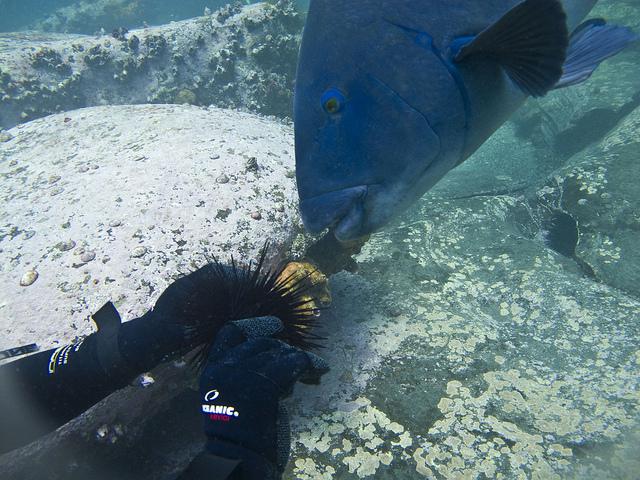
Blue gropers love to eat sea urchins and small crustaceans. Although please don’t kill sea urchins in order to feed the blue gropers, as they have their own place in the ecosystem as well. Blue gropers also like boiled eggs and beach worms, so try giving them these instead.

They can grow to an enormous size, up to a metre long and can live up to 35 years old. Although they were fair game in the past, and are reputedly very tasty, blue groper have been protected since 1969. It’s now illegal to fish them and fines apply.

Impossibly Beautiful Sea Life of Sydney Harbour – Part 1
Diver feeding a blue groper a sea urchin, off Bare Island, Sydney

Image Source

Impossibly Beautiful Sea Life of Sydney Harbour – Part 1

Image Source

Impossibly Beautiful Sea Life of Sydney Harbour – Part 1_3

Image Source

Impossibly Beautiful Sea Life of Sydney Harbour – Part 1
Coral off Bare Island in Sydney

Image Source

Impossibly Beautiful Sea Life of Sydney Harbour – Part 1

Purple Chickenpox Coral, Bare Island Sydney

Image Source

Stay tuned for Part 2 of Impossibly Beautiful Sea Life of Sydney Harbour.

This article was originally written by Athena Dennis for Choice Charters Sydney.

Find out more…

Abyss Sydney Marine Life

Fishes of Sydney Harbour

Unseen Nature Art from Australia’s First Fleet

What Montaigne Can Teach Us About Deep Sea Aliens

Five Creepy Islands in Sydney Harbour

Leviathan or Lilliputian?

Great photography plays around with our perceptions of big and small. Here are two examples where it’s difficult to tell at first whether or not we’re looking at leviathan or lilliputian objects.

Sam O’Hare’s New York City

This is actually real and big rendering of NYC teeming with life. The illusion of smallness comes from the type of photography treatment. It’s called tilt-shift photography and makes real life look like highly detailed miniatures through the use of blurring techniques and time lapse.

Below, creator Sam O’Hare describes how he managed to achieve the affects in a fascinating tutorial.


Judy Robinson-Cox’s Lilliputian Landscapes

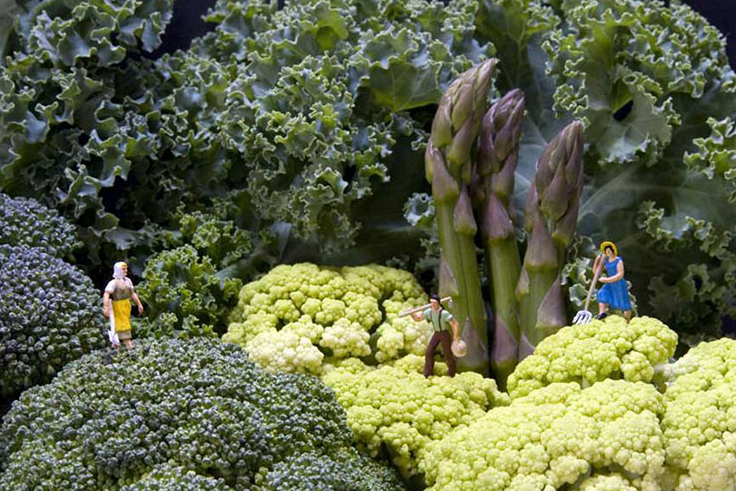
Now this is something fun and quirky. Fine art photographer Judy Robinson-Cox creates playful tabletop dioramas with plastic human figurines in funny and quirky situations. As a landscape she uses objects from her pantry. Butter beans become pebbles on the beach and broccoli becomes lush woodland.

The images invite the viewer to contemplate the beauty in small objects. Along with the creation of real or imagined world from man-made objects. These images were created without any digital manipulation.

Leviathan or Lilliputian?

Leviathan or Lilliputian?

Leviathan or Lilliputian?

Leviathan or Lilliputian?


Leviathan or Lilliputian?

This is so cool. You can order her work here either framed or unframed.

The moral of the story is…eat your vegetables so that you can have loads of energy to skate over the top of onions and go cross-country skiing over cauliflowers 🙂
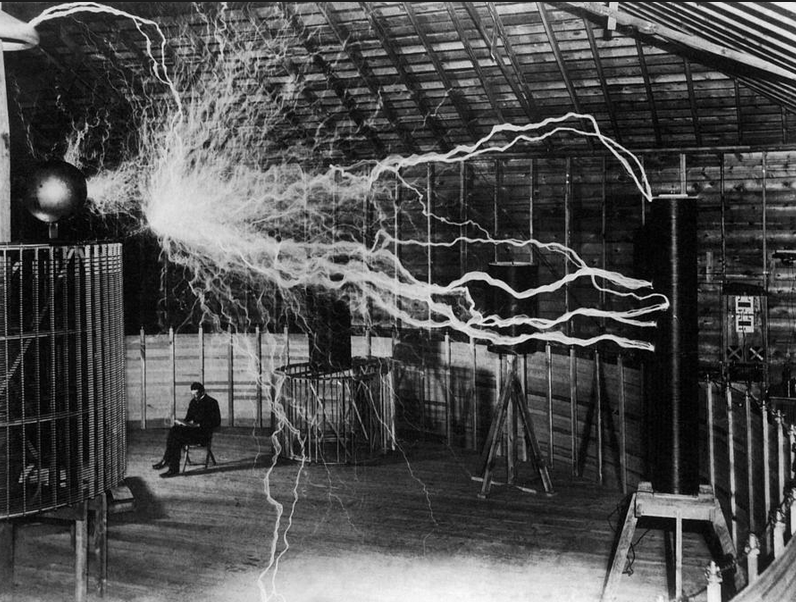
The Electrifying Visionary Power of Nikola Tesla

During an exciting period of invention at the end of the 19th century, Nikola Tesla stumbled upon cosmic radio signals for the first time. He thought they were signs of intelligent life from Venus or Mars. He later said of the experience, “The feeling is constantly growing on me that I had been the first to hear the greeting of one planet to another.”

“Brethren! We have a message from another world, unknown and remote. It reads: one… two… three…” – Nikola Tesla, 1900.

David Bowie plays Nikola Tesla in the movie The Prestige.

Nine Inventions by Tesla That Changed the World

Alternating Current

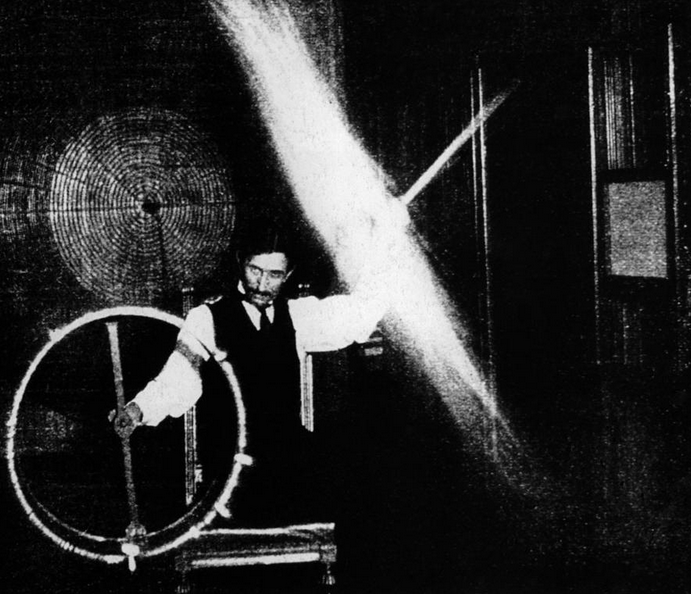
Lets get right into the meat of a feud that was driven by money and prestige. At its centre at the end of the 19th century was Thomas Edison backed by GE and Tesla backed by Westinghouse. Edison’s DC current emphasised the dangers of electricity. His vision gave rise to the electric chair. Whereas Tesla’s vision for electricity used Alternating Current or AC. Tesla demonstrated the safety of AC by shooting current through his own body to produce light. After a decade of feuds, stealing of ideas and underhand patent suppression, in 1893 Thomas Edison won the battle. However despite this, Tesla won the war. It is his system that provides power to America in the modern era.

The Electrifying Visionary Power of Nikola Tesla

Light

Although he can’t be credited with creating the light globe, he did invent how light is harnessed and distributed. At the World’s Fair in 1893 in Chicago, Tesla took glass tubes and bent them into scientists names, creating the first neon signs.

The Electrifying Visionary Power of Nikola Tesla

X-rays

Tesla believed that all we needed to understand existed all around us. He researched electromagnetic and ionising radiation in the late 19th century. We owe our modern day X-rays and other medical diagnostics tools to his research.

The Electrifying Visionary Power of Nikola Tesla
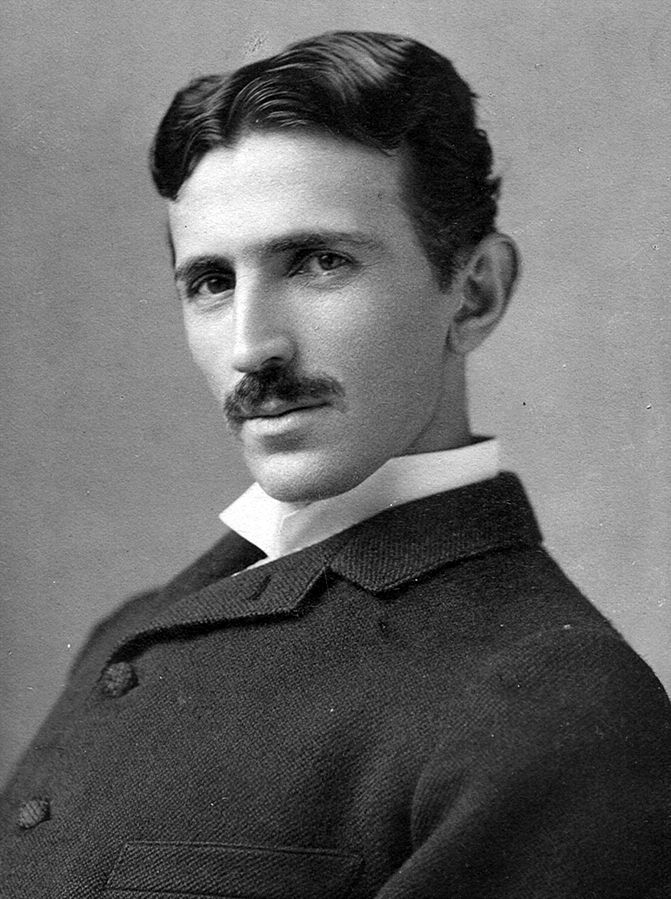
Victorian hottie: Nikola Tesla

Radio

In another David and Goliath battle, Guglielmo Marconi was originally credited with the invention of the radio. However the Supreme Court overturned this patent in 1943, when it was proved that it was Nikola Tesla who invented the radio. Tesla applied for two patents in 1893 (US 645576, and US 649621). However at that time the patent office awarded them to Marconi instead, influenced by the heavy-weight financial backing of Thomas Edison and others. This meant that the US government avoided paying royalties to Tesla.

Remote Control

Remote control was a natural follow on from radio. Patent No. 613809 was the first remote controlled model boat, demonstrated in 1898. This technology has since been used for many nefarious applications. In WWII the Germans used it for radio controlled tanks.

The Electrifying Visionary Power of Nikola Tesla

Electric Motor

Tesla invented an electric motor with rotating magnetic fields. This has given rise to loads of appliances that we take for granted like industrial fans, household appliances, water pumps, machine tools, power tools, disk drives, electric watches and compressors.

Robotics

Tesla the amazing, crazy animal that he was, saw himself more akin to a robot rather than a traditional human being with consciousness. His scientific mind led him to the idea of all living beings are merely driven by external impulses.

“I have by every thought and act of mine demonstrated daily, to my absolute satisfaction, that I am an automaton, endowed with power of movement. Which merely responds to external stimuli.”

As a visionary, he saw a brave new world populated with intelligent cars, robotic human companions, sensors and autonomous systems. Akin to the world we live in today!

The Electrifying Visionary Power of Nikola Tesla

Laser

As the inventor of the laser, Tesla set off a shit storm of applications, both good and evil. These lasers are used for everything from laser defence systems and death rays, to microscopic surgery and digital media.

The Electrifying Visionary Power of Nikola Tesla

Wireless Communication

Tesla backed by big wigs J.P Morgan built a tower to harness natural frequencies in the universe that are able to transmit data. The discovery that the world was full of free energy that could be harnessed to form a world wide web was revolutionary. This was the dawn of a new age and the very essence of the digital technology we see today.

Tesla never really got to have his time to shine, at least not in his lifetime. He died in 1943 alone in the Hotel New Yorker. It’s only now Nikola Tesla is beginning to come out of the shadow of Thomas Edison and shine as the real hero of the age.