Here are two handsome maps of Melbourne’s public transport from the previous century. In equal parts loved and loathed by locals, public transport in Melbourne is slow, expensive and unreliable and yet anyone who has ever lived in Melbourne (and who has moved away for long enough to not deal with it on a daily basis) has nostalgic train or tram stories of meeting interesting people, encountering dodgy activities and flirtations with love and danger. One advantage of long and slow train travel is that boredom, melancholy and wandering thoughts very occasionally are turned into real creative insight.
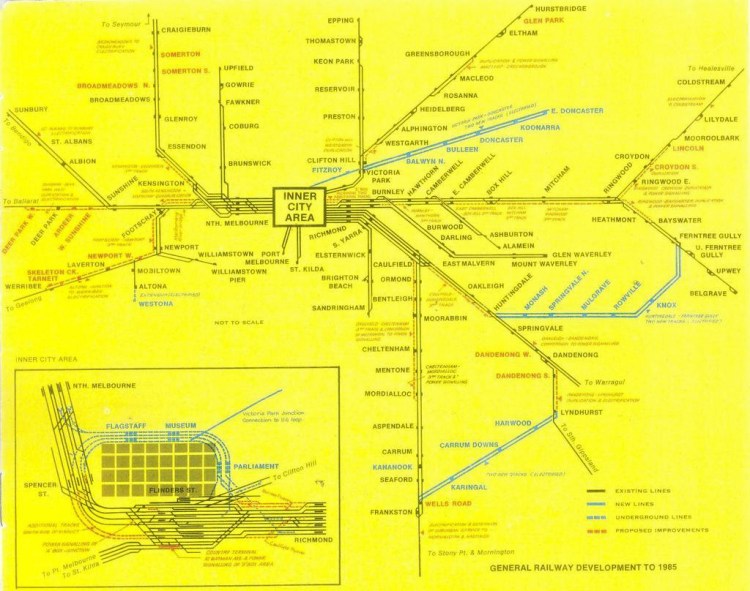
Historical Map: General Railway Development to 1985, Melbourne, Australia (1969)
Here’s a very fluorescent and optimistic planning map of Melbourne’s public transport in 1969 which was part of the 1969 Melbourne Transportation Plan.
It outlines optimistic pipe dreams of the time and includes the pragmatic plan to build rail links that would connect together the Dandenong, Frankston and Belgrave lines, which never happened. This has become somewhat of a pet peeve and collective moan of anyone living out in the Eastern Suburbs. Why don’t train lines running almost parallel to each other at times have connecting stations?
Also out west on the Werribee line there’s a dotted line symbolising the proposed installation of another line, this never actually happened and so there’s one railway track going through Altona station, which can get very awkward during peak hour. Also there’s a station out west called “Mobiltown”, no doubt that monstrous industrial monolith near Altona station was something to be proud of in 1969. The City Loop which was planned back in 1969 finally materialised as a reality in the 80’s.
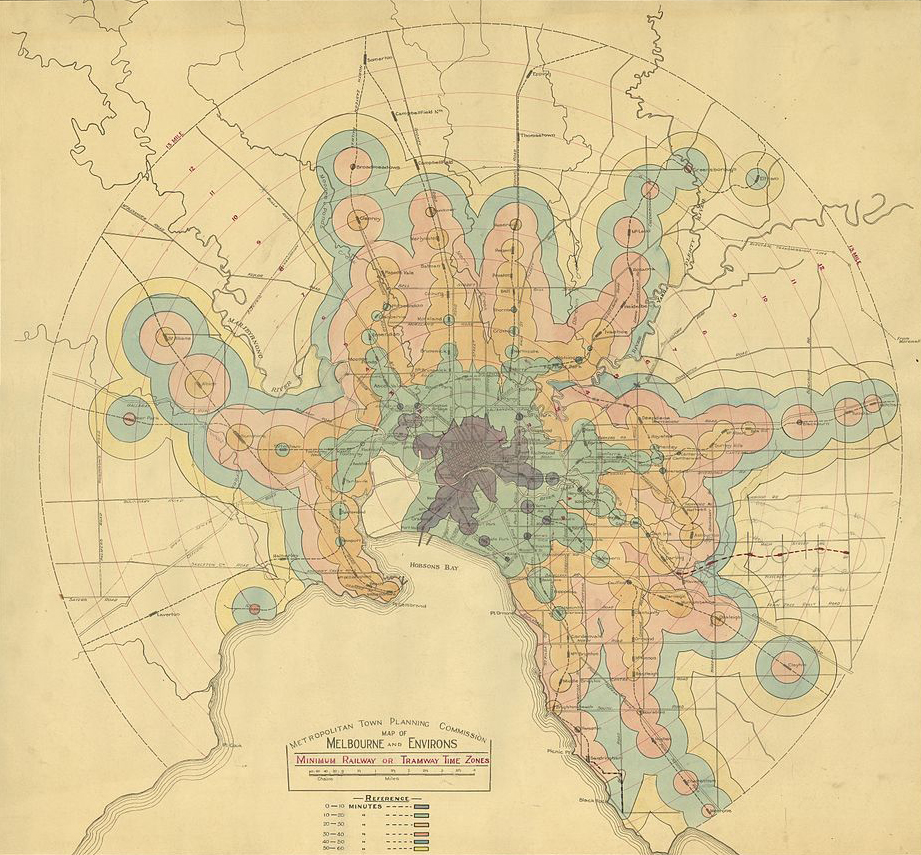
Historical Map: Train and Tram Travel Times in Melbourne, Australia, c. 1920
This handsome isochrone map produced by Melbourne’s Metropolitan Town Planning Commission shes the minimum travel time into the city via suburban railways and tram lines.
This documentary from the late 80’s/early 90’s Australia offers fascinating insights into what the pre-internet world thought the new century i.e. right now would be like.
As a child I remember watching this TV show and pondering about what 202o would be like. It felt like a pipedream to me, as inconceivable as driving a moon rocket to work (like in the Jetsons).
I imagined getting automatically showered and dressed by a robot (like in the Jetsons) and that’s about as far as abstract thought went for me at the age of 9.
On discovering this documentary online now, the language used seems racist by today’s standards which is a shame, but also not surprising.
But aside from that, the presenters seem be freakily accurate on some of their predictions.
They imagine that life in Australia the year 2020 will be peppered with economic problems stemming from the growth in population and immigration (whether these are perceived or actual problems remains to be seen).
Also there’s a distinct and overt message to “beware of the yellow peril”or in other words the wave of Asian migrants that came to Australia in the 70’s and 80’s. These concerns about Asian immigration have largely been surplanted by fear-mongered about Muslim migrants.
Interestingly, the documentary compares Melbourne’s (then) derelict docklands to a tech-business-lifestyle hub in Europe and outlines plans to turn this into a tech and business hub by 2020.
The site was a derelict maritime dockyard and then it became the site of some ripping good raves in the 90’s and 00’s. True to predictions, city planners did indeed convert the site from a maritime dockyard into its current status as business and residential hub (although a rather soulless and sterile part of the city, sadly).
The journalist makes a comment along the lines of ‘in 2020, migrants to Australia will be attracted by the lifestyle and environmental benefits of living here rather than simply economic factors. And foreigners will see Australia as a favourable place for migration”
The predictions about the unstable and precarious environmental situation in 2020 have all become more apparent. Which goes to show that environmental lobbyists have been saying the same thing for many decades about taking action to protect the environment, but it has historically fallen on deaf ears.
The ads are probably the most interesting aspect of this documentary. One that’s particularly intriguing is for American Express. It’s unsettling to see how the aesthetics, glamour and allure of yesteryear all conspired to woo people in a variety of different ways.
This was the age when television was truly king in terms of messaging, communication and advertising and that the two-way dialogue of the internet with a true plurality of voices was only still a dream. My how everything and yet paradoxically nothing has changed.
I would love to know your thoughts after watching this…
I think many people will be familiar with McCabe from his other incredibly popular and critically acclaimed work of literally fiction, the Butcher Boy which was published back in 1992 and subsequently turned into a film. This was the story of a confused and wayward young boy who unwittingly stumbles into a destiny of violence and danger. Its narrative was powerful, believable and readily portrayed a fragile young life on the verge of collapse. The violence was the type you can feel in your bones and it was really a terrifying and nail-biting ride.
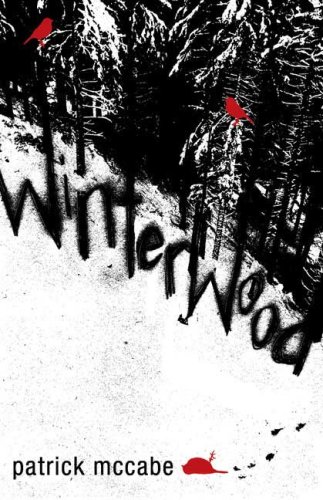
With that in mind I picked up McCabe’s most recent book and expected thrilling things. Winterwood had the same sense of menace and to begin with was very compelling. It is written with the same attention to characterisation as the Butcher Boy as well.
Winterwood is the story of a man called Redmond Hatch, who recalls his former life with his lovely ex-wife Catherine and beautiful daughter Imogen. Redmond revisits a place that haunts him from his childhood, the spooky Winterwood, where he meets Auld Pappie Ned a gypsy-like, shadowy figure who weaves twisted tales in Redmond’s mind about his life.
The book is essentially the exposure and unravelling of Redmond’s deeply disturbed mind. Although because we are seeing the world through Redmond’s eyes and he is blinded by his own delusions, the plot does end up getting tiresome. It’s fragmented, fractious and all of the stories and insights are torn to ribbons. Exactly what is going on and what is real or imaginary is never quite confirmed. That is quite frustrating.
The ramblings of a crazy person are compelling at first but when you realise that nothing actually gets clarified, it’s as though you’re being dragged through a hall of mirrors with nothing ever really resolved. There’s no enjoyment in that.
The genius of McCabe can never be doubted though, because he is still a masterful writer- there are however too many unresolved threads in this book for it to be enjoyable.
Nowadays, it’s possible to become not just a participant in scientific studies, but one of the researchers. The internet and crowd-sharing knowledge has made this possible.
We are now swimming in data, so rather than wade through everything themselves, scientists are asking the ”hive mind” of the internet to help them to resolve challenges, and gain insights from enormous tracts of data. Here are some of the current, real studies that are looking for science enthusiasts to become involved in crunching the data and exploring fascinating, rarely- seen worlds of science.
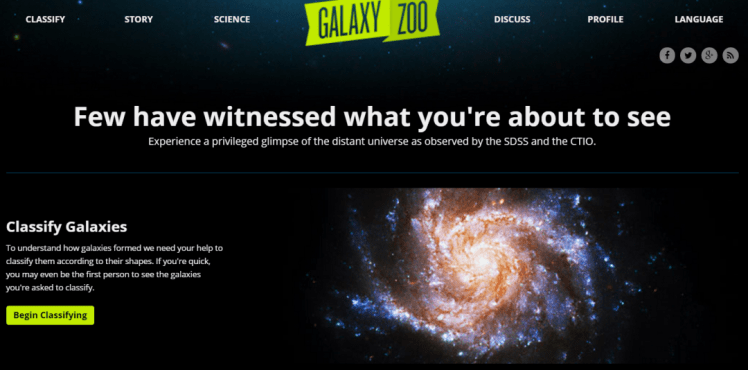
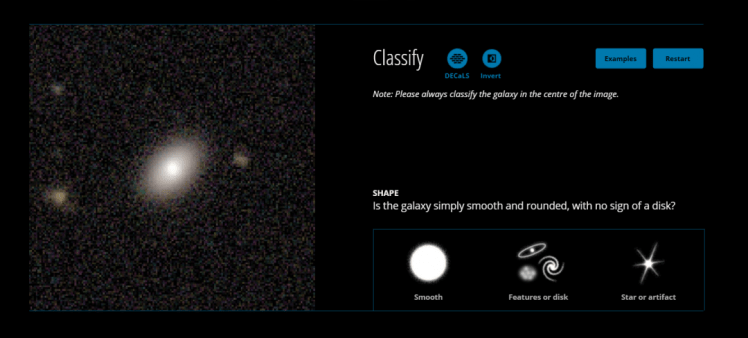
Galaxy Zoo asked volunteers to classify galaxies into ellipticals, mergers and spirals and — if the galaxy was spiral — to record the direction of the arms. A second phase of the project asked volunteers to look closely at the 200,000 of the brightest of the Sloan galaxies. Within14 months the site was up we received a little more than 60 million classifications.
With this metadata in hand, Galaxy Zoo has led to unprecendented numbers of publications on cosmology, astronomy and astrophysics. Explore and classify galaxies
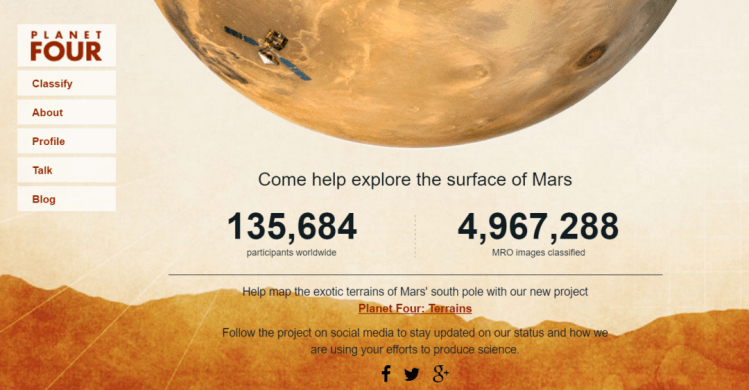
Planet Four: Classify and explore the surface of Mars
Be the first to see and measure close-up features on the surface of Mars. Unlike anything else you will see on Earth. Search and classify ‘fans’ and ‘blotches’ such as those below, on the Martian surface. Scientists believe that these features indicate wind direction and speed. By tracking ‘fans’ and ‘blotches’ over the course of several Martian years to see how they form, evolve, disappear and reform, we can help planetary scientists better understand Mars’ climate. Scientists hope to find out if these features form in the same spot each year and also learn how they change. Explore and classify the surface of Mars
HiRISE image is ~1 km across. Spiders and fans are visible.
In 2014, actress actress Tilda Swinton was awarded with the Rothko Chapel Visionary Award at the The Rothko Chapel, which is home to fourteen of Mark Rothko’s paintings.
This luminous chapel is a spiritual and human rights center whose mission is “to inspire people to action through art and contemplation, to nurture reverence for the highest aspirations of humanity, and to provide a forum for global concerns.”
Tilda Swinton’s speech after accepting the award is full of wisdom and grace. She’s an iconoclast, a mystery woman from another planet.
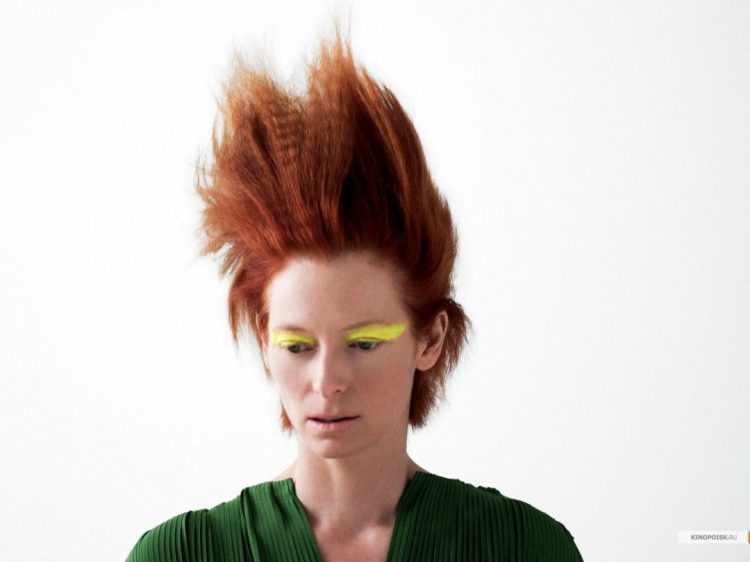
Luminary artist and actress Tilda Swinton
“I had a dream last night that my brother told my father why I am here tonight and my father misheard the name of your most generous prize and declared those who honour me highly perceptive to be recognising me with a Contrary Award. I am sincerely humbled by any honour you do me.”
The Rothko Chapel
***
“Discovering the landscape of a world inhabited by artists has been one of the miracles of my life.
I was brought up in a world where art was something owned and insured – usually inherited: but seldom if ever made by anyone I knew.
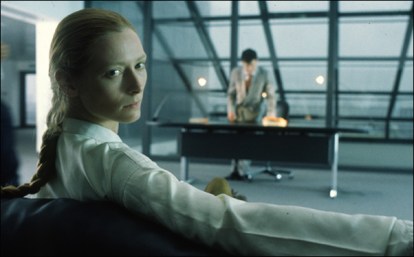
In the film The Only Lovers Left Alive
I had an early inkling that there was fun to be had over the hill, like the feeling when faced with a sunset that someone’s throwing a mega awesome party just beyond the nearest cloud, and I set off to join the caravan. Let’s just say I was in search of company, headed towards the glow, and I found it.
I believe that all great art holds the power to dissolve things: time, distance, difference, injustice, alienation, despair. I believe that all great art holds the power to mend things: join, comfort, inspire hope in fellowship, reconcile us to our selves.
Art is good for my soul precisely because it reminds me that we have souls in the first place.
We stand before a work of art and our spirit is lifted by it: amazing that someone is like us! We stand before a work of art and our spirit resists: amazing that someone is different!
It occurs to me on a regular basis that the cinema carries the potential to be perhaps the most humane of all gestures in art: the invitation to place ourselves, under the intimate cover of darkness, into another person’s shoes, behind another set of eyes, into another’s consciousness. The ultimate compassion machine, the empathy engine.
Here is the darkness.
Here comes the light.
When my children were ten, they came back from school elated one day to tell us they had started the supremely grown-up business of learning science.
When we asked them about their first lesson, they proudly announced they were addressing the study of light.
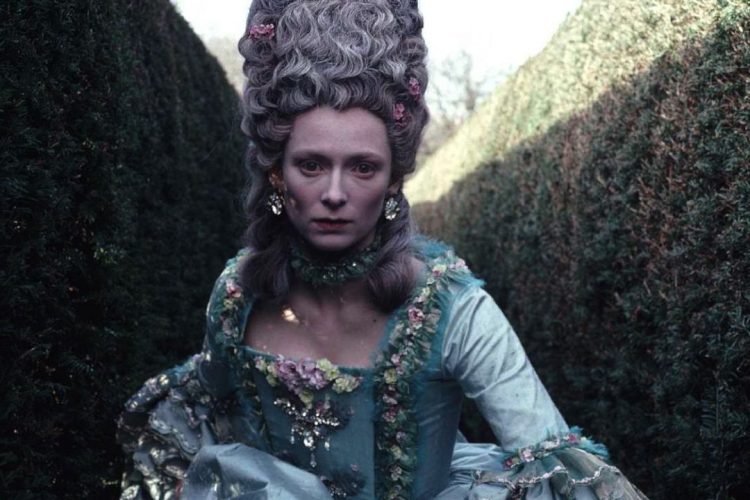
A still from the film Orlando
When we pressed them to describe how their teacher had approached the topic, with the bemusement of those genuinely unaware that there could ever be any other way, they told us that she had closed all the shutters and that they had sat in the dark for an hour.
Where I live in the far north of Scotland, the question of light is an axis central to every season, to every day. In the topmost branches of June, the skies turn navy blue just before midnight and hover there until about 3:00 when the sun comes blooming up again.
In the film Orlando
At the turn of the year, on the other hand, a long lunch folds itself into the evening before you know it, and then into night-night blackness until way after the school bell in the morning.
A fisherman I know from a nearby village told me one day that he and his brothers had long ago pulled up a massive turtle, far from its tropical home, onto the deck of their boat in the North Sea off the east coast of Scotland. He described how it lay there, unfathomably exotic and helpless amongst the mackerel, and that he would never forget their discussion about its fate.
On the Isle of Skye
‘What is it? No idea. Let’s kill it.’ Which they did. He said he had never regretted anything so much in his life, that he knew something failed in them at that moment.
We know what threatens our humanity the most; we shouldn’t need reminding.
The capacity to project our own shadow onto others, to edit our understanding of our own frailty, to hold it at bay, to play tag with our vulnerabilities. You’re It, don’t touch me. Our attachment to an idea of malevolent foreignness, of malign darkness: this is our Kryptonite… we know this well.
Over the weeks that my mother was dying, the year before last, I went out into the nights and trained my eyes to see in the dark.
It provided a particular kind of comfort undiscovered anywhere else at that time. By then I had sat in the Chapel and the serene witness of Rothko’s velvet abyss accompanied me on those nightwalks. The truth is, it’s never been very far away, ever since.
The last feature film my friend Derek Jarman made before died of AIDS in 1994 was Blue. For many, his masterpiece – an Yves Klein- blue screen and a soundtrack.. a work made just as his sight was leaving him as he became blind.
Tilda Swinton by Derek Jarman
Maybe most of all great art encourages us, as does this film, as does Rothko, not to stop at opening our eyes, but to go on to close them, as well. To go to what we know deepest, earliest and most clearly: that we humans are, in essence, humane, fair, kind. Gracious. Light-filled. Wise. And that our darkness is just what it is: an intrinsic and balancing ballast to all that loveliness.
…Perhaps the most radical suggestion we can make about ourselves is not that we are not different. Or even that we are. But that we are both.
I remember a very specific moment in my children’s development, around the age of seven, when the power of reason became the happening thing, as in, ‘ No I can’t climb up a tree with you now because this dinner needs cooking…etc?’’
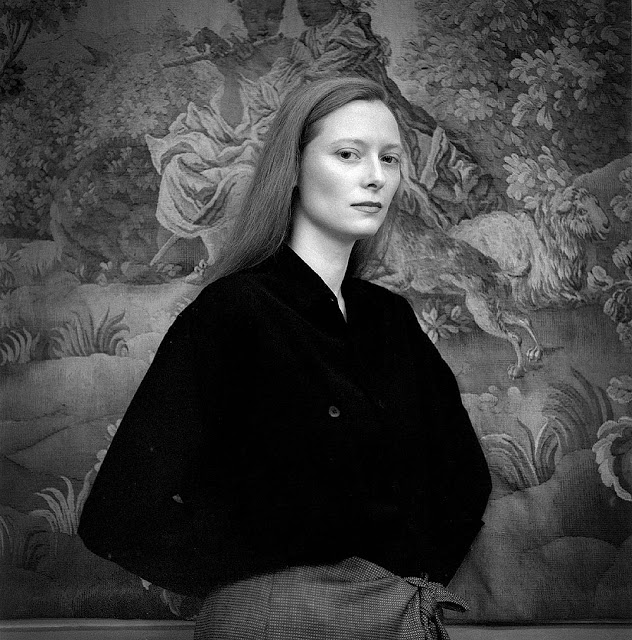
Tilda Swinton, 1992
Along with this magical property came the anthem that still rules in our household to this day, the mantra of it can be both.
‘Would I like the chocolate eclair or the fairy cake? Do I want to play with my Lego all night or, as it happens, go to sleep because I’m super tired?… Do I like my twin brother /sister or – could it be – that I really really hate him/her?”
…Light and Dark both at once.
Welcome to the age of reason, welcome to life.
With David Bowie
…Wherever you are alone with yourself most will show in that magic mirror. And bear your heart witness, and keep you company whenever you need to draw on it.
We come. We take it home with us. We never really leave.
The Rothko Chapel is a sacred space because of precisely this capacity it has to re-bind, to re-balance, to re-store, to re-inspire the spirit in its simple and essential gesture of darkness held in light. Of art held in spirit. Of spirit held in life and the living of life. It is a truly humane space for humans to find themselves in.
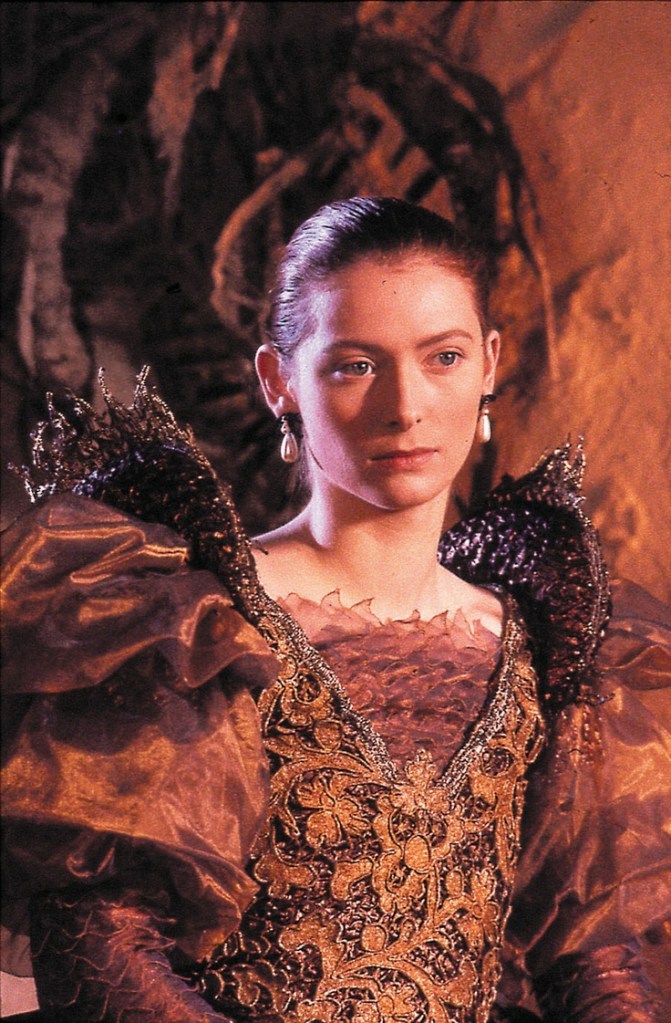
In her debut film, Derek Jarman’s Caravaggio
Glamour is a word derived from the Scots, meaning ‘dangerous magic.’
The Rothko Chapel is glamorous beyond any glamour known to any Highland witch. It is a light that never goes out.
I thank you from the bottom of my heart for the kindness of your invitation.


 With that in mind I picked up McCabe’s most recent book and expected thrilling things. Winterwood had the same sense of menace and to begin with was very compelling. It is written with the same attention to characterisation as the Butcher Boy as well.








 Content Catnip
You must be logged in to post a comment.