For the relatively short time of 33 months in the late 1970’s, Studio 54 was the decadent soft centre of 70s hedonism in NYC.
Naysayers called it a sleazy and dangerous place. But for famous people and completely unknown but beautiful young things, it was a place where people could get up to whatever they wanted, with relative anonymity and freedom. Endless mountains of coke also helped to keep the party going.
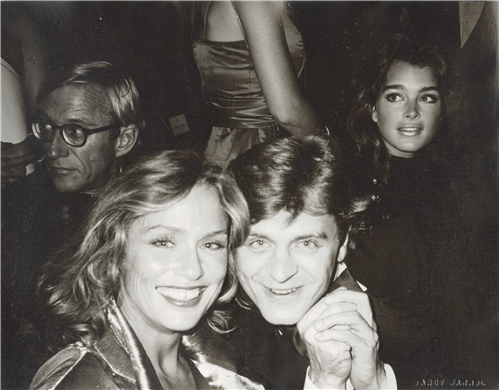
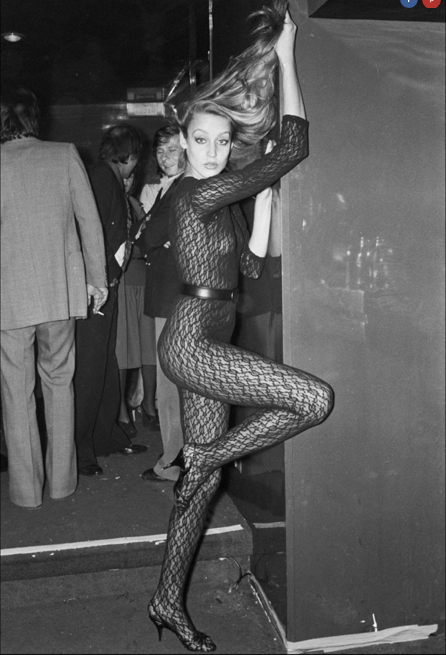
Lauren Hutton, Mikhail Baryshnikov, and Brooke Shields by Andy Warhol at Studio 54, New York City, September 21, 1982.Jerry Hall struts her stuff at Studio 54
The mediocre world of tax eventually caught up with Studio 54’s owners, bringing this perilous house of cards down, but it wasn’t to last forever – until then it was glorious, decadent and notorious.
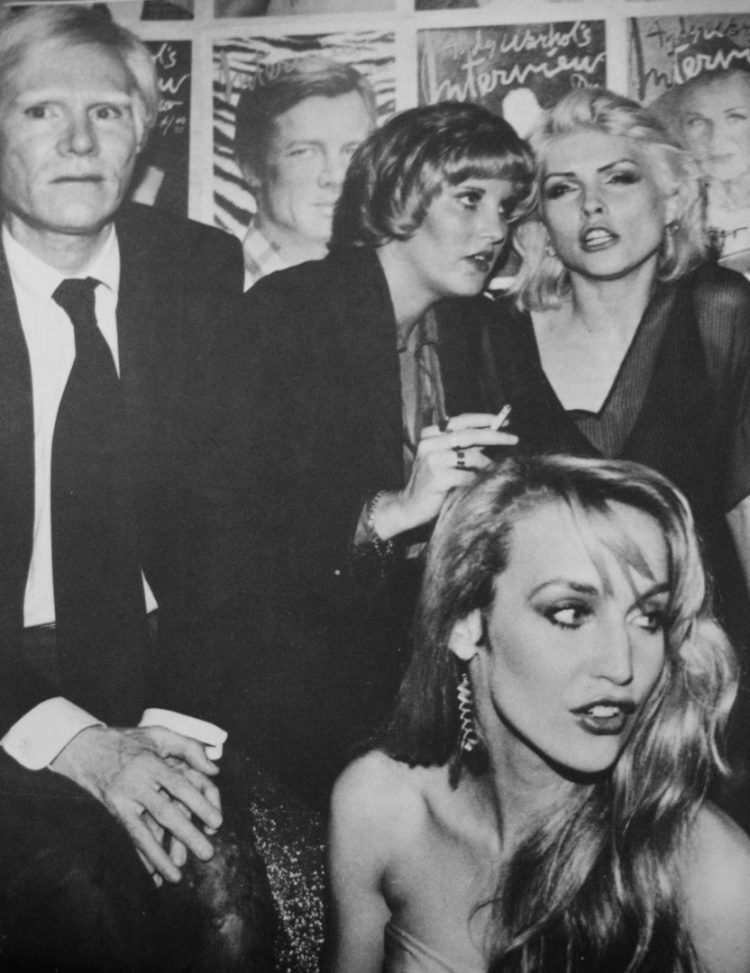
Andy Warhol, Debbie Harry and Jerry Hall at Studio 54
“I have Social Disease. I have to go out every night. I love going out every night. It’s so exciting” – Andy Warhol, Studio 54 patron.
“I will go to the opening of anything, including a toilet seat. Every time I go to Studio 54 I’m afraid I wont get in—maybe there will be somebody new at the door who won’t recognize me.” – Andy Warhol
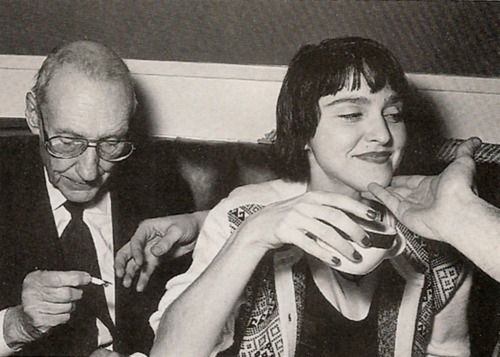
Madonna and William S Burroughs at Studio 54
“It felt like you were going to a new place every night. You were, because they changed it all the time for the parties. The Dolly Parton party…It was like a little farm with bales of hay and live farm animals—pigs and goats and sheep. And the Halloween party: as you came up the ramp in the foyer, you looked through little windows into little booths with midgets doing things. The one that sticks out in my head had a midget family eating a formal dinner. It was like a nonstop party. There didn’t seem to be any guilt in those days. Decadence was a positive thing. Cocaine was a positive thing. It had no side effects. Or so we thought.” Kevin Haley former model, now a Hollywood decorator.
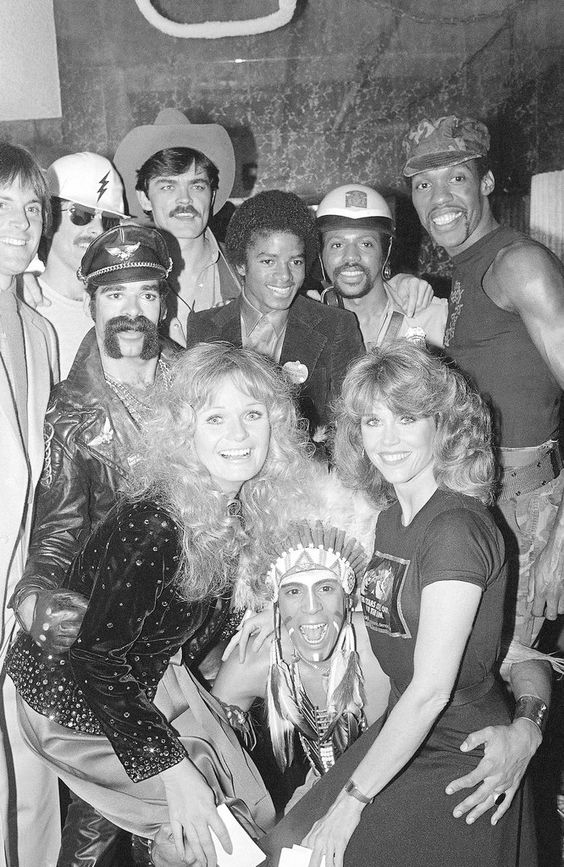
The Village People, Jane Fonda and Michael Jackson at Studio 54
“I had more fun at Studio 54 than in any other nightclub in the world. I would have dinner with my children, put on my cowboy boots, take my Mercedes, park in the garage next door, go in for a couple of hours, find someone, and leave” – Designer Diane Von Furstenberg.
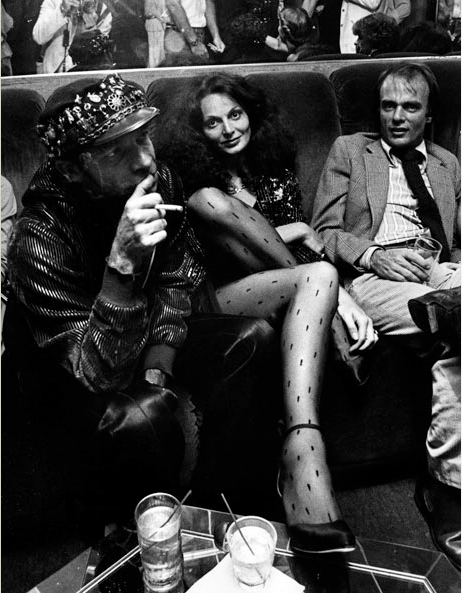
Diana Von Furstenberg and photographer Ara Gallant in Studio 54
Bianca Jagger’s 1978 birthday bash was a “baby party,” with ice-cream-cone vases, bowls of Cracker Jacks, and busboys in diapers.
Possibly one of the most brave and bold things that you could do after the sudden and tragic loss of a son is to create a new album. That’s what Nick Cave has done this past week.
I saw Nick Cave in Melbourne a few years ago and it was truly the most remarkable concert I’ve been to in my whole life. As a live performer he’s completely all-consuming, and hypnotic. People sway and quiver with emotion as though listening to a spiritualist preacher. But Cave is no false prophet, he’s the real deal, a rock n’roll mystery wrapped in an enigma that refuses to be pigeon-holed.
He was touring for his album ‘Push the Sky Away’
That live performance was full of the fire of a thousand suns and seemed to push aside all objective reality in favour of an emotional landscape and deep, dark subconscious energy that is raw, compelling, disturbing and beautiful.
When Cave’s son died by accidentally falling from a cliff in Brighton, it was even more poignant for the people who know and love his music. It feels as though I know him intimately through his music. An artist and a great person didn’t deserve such a tragedy. But there it is, sometimes terrible things happen to great people and that’s when art always helps you to cope with loss and tragedy.
Art is like a frayed old rope ladder descended into a well and into the darkness. Art of all kinds whether it’s music, writing, art has the transformative power to heal and to make sense of the unimaginable.
So the chameleon artist of Nick Cave has risen again like Lazarus for this epic, powerful album, probably his darkest one yet. If mourning has a sound, then this is what it would sound like.
One More Time with Feeling is a film which tells the story of his son’s death and the making of the new album Skeleton Tree. This is the story the way that Cave intended.
I love how he always manages to hold and control the narrative of his own art with such ferocity. Even as he tells intense stories about life, the man himself remains completely mysterious.
Put yourself in a Nick Cave mood right now, whether you’re with others or alone, the music is the other living breathing person in the room. You know what I mean?
Quaint, hopeful and at times creepily accurate. This story with Walter Kronkite is just fascinating, as a historical artifact, and also to see just how many of these ideas actually came to fruition and how far beyond these simple ways of living we have come.
“The domestication of the computer is upon us”. And what a computer it was! This machine could recalculate a recipe for housewives who want to add more guests for dinner.
“With equipment like this, we may not have to go to work…the work may come to us!” Indeed it does.
Some ideas are so quaint that they’re sweet, like the inflatable portable chair that people will take with them wherever they go.
One idea hasn’t yet been realised. Plastic moulded plates that are instantly created on the spot in the kitchen. Once used the plates are remelted into plastic, with the food scraps destroyed in the process. Then once they’re required again – simply order the number of plates required for instant new crockery and utensils. The idea never saw the light of day, presumably because it was too energy inefficient.
Although the concept of melting down reusable tools has taken a brand new turn now with 3D printing. Perhaps this weird idea may still become a reality?
“We spend all day in a labyrinth, well…we’re going to spend all night in one too. It’s just about making that as tolerable as possible.”
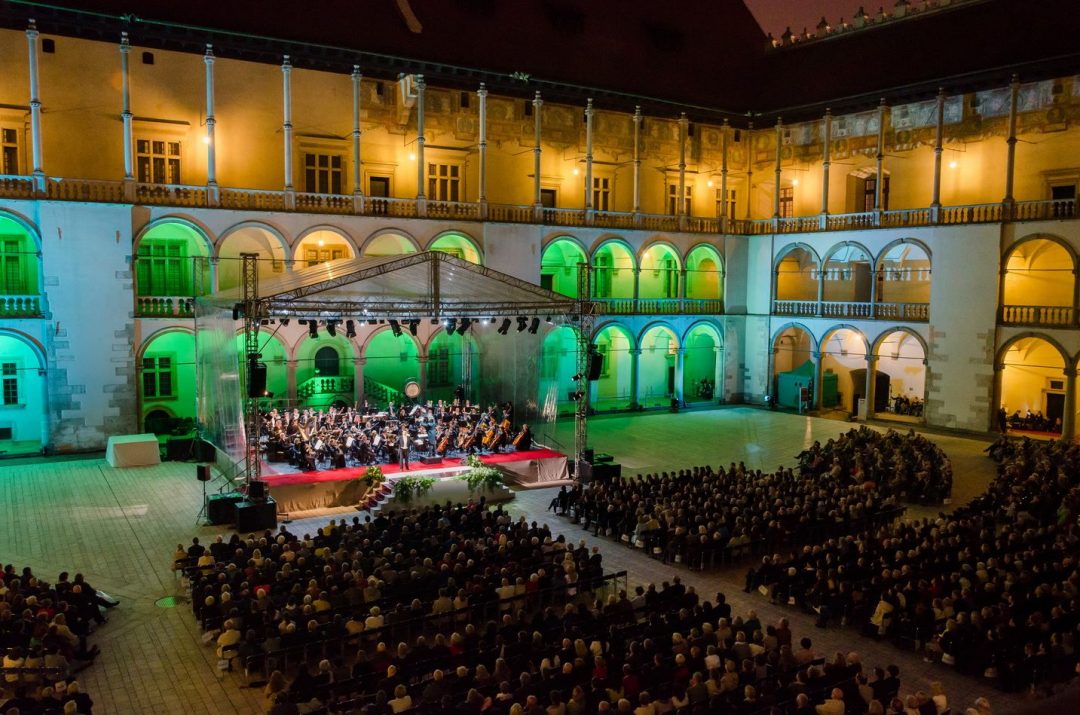
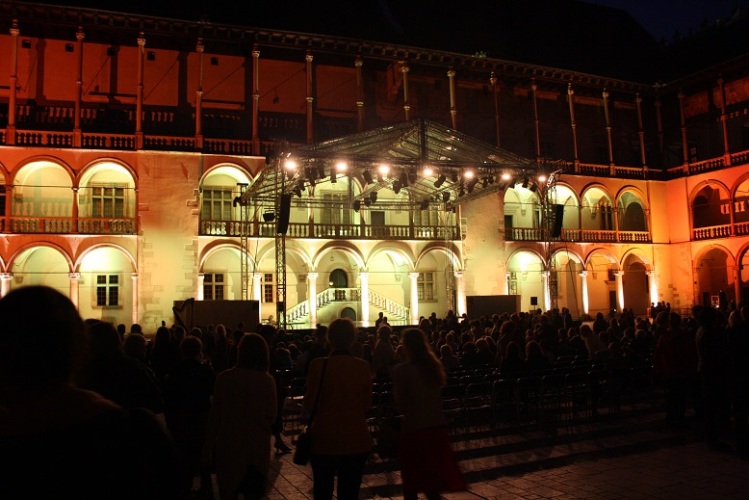
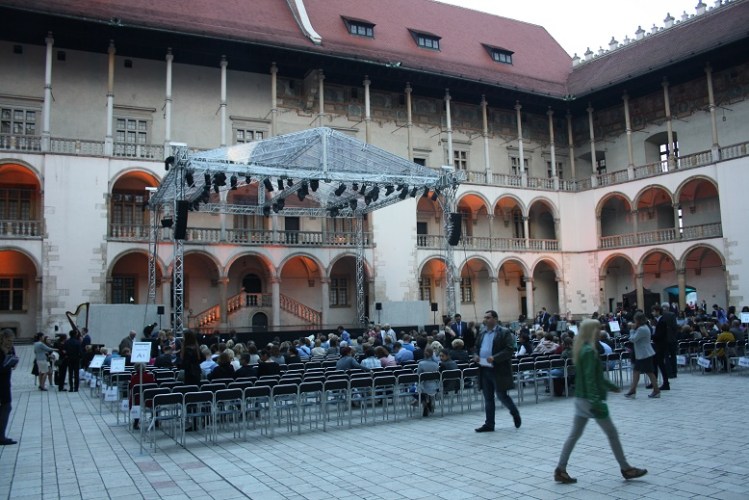
In the walls of Wawel castle on the night of midsummer, an atmosphere of enchantment abounded. The mauve and violet light of the sky melted into the golden lamps that fell onto the cobble-stone pathways, this skimmed and bounced across gabled iron rooftops of the castle.
An orchestral performance on a different night (we weren’t allowed to film the ballet performance itself)
The light from the opera ballet performance stage shone in a dramatic cascade of red and green. Women in high-heels stalked past draped in pashminas, they caressed their perfectly twisted french braids before taking their seats, led by men in suits who gentle caressed the curve of the womens’ backs as they sat down, suddenly there was an audible intake of breath as the performance began.
Letni Festiwal Opery Krakowskiej / https://www.facebook.com/opera.krakowska/
The strawberry moon of midsummer hung low like heavy honeycomb in the sky, as the world turned from golden jute to amber and to indigo and eventually to an enlivened silver grey.
Inside of the walls of Wawel Castle, we watch the gigantic strawberry moon rise on Midsummer’s Eve 2016 and see the opera ballet performance in the castleThe strawberry moon of midsummer
Taken during the Vietnam War on June 18, 1965 173rd Airborne Brigade Battalion member Larry Wayne Chaffin smiles for the camera. The message on the helmet speaks volumes about his attitude to being drafted into the war. Larry Wayne Chaffin from St. Louis was 19 when the photowas taken and he served for one year. He had problems with adjusting the civilian life once he returned. He died in 1985 at the age of 39 from complications that arose from diabetes, an ailment he may have contracted from exposure to Agent Orange while serving in Vietnam.
If you haven’t already followed Imaginary Cities on Twitter @Oniropolisthen you should right away! This is a curated treasure trove of architectural meanderings and inspiring cityscapes which have never existed other than in creative people’s minds.
Imaginary Cities are where the imagined possibilities of tech, science fiction, futurism and 80’s pop culture are smashed into each other, creating a robust vision about the audio visual and extrasensory possibilities of cities. Here’s some primers for what you can expect.
A 3D Animator from Berlin who creates 3D illustration, graphic design. This video was made using Cinema 4d and After Effects and coupled with some kickass synth by retrowave producer Dynatron.
Affiliate World Conference 2016 Primer by Florian Renner
In this video, Florian produced an animation for the Affiliate World Conference Europe 2016. This exciting style of animation is unlike anything I’ve ever seen before.
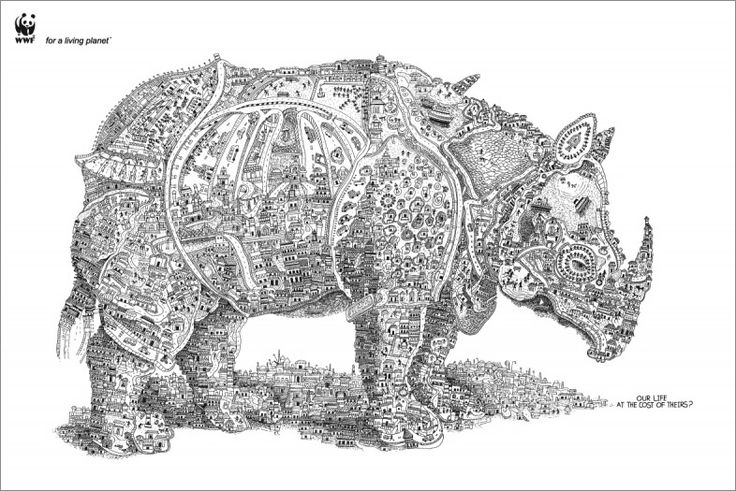
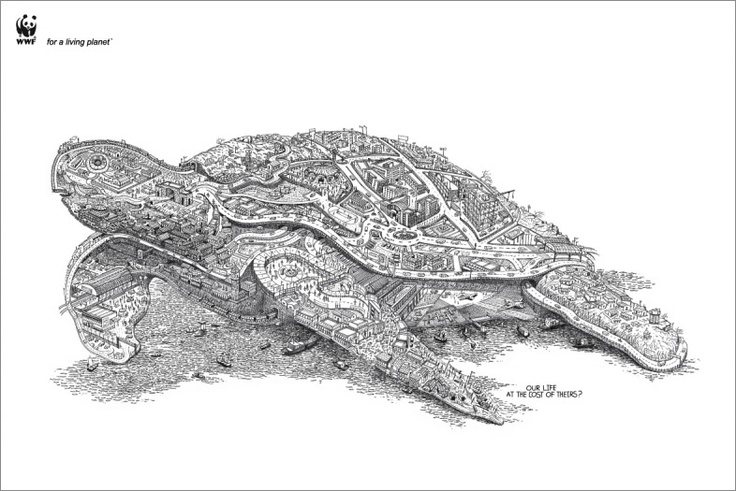
This ad drew inspiration from the famous Dürer etching of a Rhino created in approximately 1505. Ogilvy & Mather in Mumbai have reimagined the famous horned beast as a rapidly rising city. In a way powerfully capturing the meteoric rise of Mumbai as one of the world’s most over-populated and congested cities. Ogilvy & Mather have very cleverly married an enduring symbol of people’s fascination with nature: Dürer’s Rhino, with environmental issues. The two are now inextricably linked. Hopefully this ad made an impact when it first came out in 2009. Thanks again to Imaginary Cities for drawing this to my attention.
WWF Advertisement by Ogilvy & Mather takes inspiration from Dürer’s rhino
The story of Albrecht Dürer’s Rhino, which was painted during medieval times is one that’s incredibly sad because, well…much like right now, people really didn’t care about animals.
Albrecht Dürer was a German woodcut print maker of the German Renaissance period. He gained fame by mass producing his prints and making them cheap and affordable to average person, at a time when mass production was rarely done. His most memorable contribution to history was the Rhino woodcut print, which sold an unprecedented 4,000-5,000 copies.
World Wide Fund for Nature advert (after Dürer) by Ogilvy & Mather agency, Mumbai pic.twitter.com/DM9DTYXh5l
Remarkably Dürer never actually saw a live rhino. His woodcut was based on a letter and a brief sketch. That’s why details in the painting look slightly off-kilter. The existence of the rhino in Europe was at that time a mythical and largely fanciful idea.
The first rhino to Europe travelled over the ocean by ship in the early 1500’s, a gift from an Indian Sultan to King Manual of Portugal. One could only imagine the horrible journey it endured to get there. Once on European soil, thousands of people camped all night to see the ship dock. They marveled to see this amazing animal, that miraculously arrived from Africa alive.
After this, King Manual shipped the poor beast off again by sea as a gift to the Ottoman royal family in (what is now) Turkey. The boat sank on the way in a storm and the rhino tragically found a grave at the bottom of the ocean.
The second ad for WWF by Ogilvy & Mather
Perhaps what we can take from that story and the WWF Advertisement is how human beings have continued to abuse and molest animals, bend and break nature to their own selfish ends for such a long time.
Any imaginary city of the future should be one that envisages a kinder and gentler way of living with nature – before it’s too late.
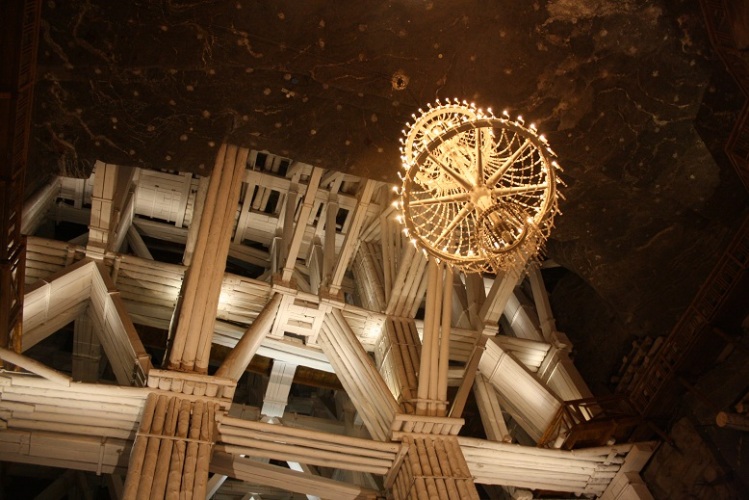
Inside of the Wieliczka Salt Mine, a thousand steps seem to guard you from the surface of the world. A thousand false ceilings seem to call out and confuse your senses. So far away are you from the grounding blue of the sky and the sensation of dirt under your feet. Inside of this mine thousands of people toiled away to procure the medieval world’s main supply of salt.
An endless roof of salt and wood in wieliczka salt mine, outside of Krakow
Trading since the 13th century, the mine provided the landed aristocracy of the time with an expensive commodity to trade with. Salt was what made Poland rich during the medieval times. Not only that, but work down here was completely voluntary and (according to the guide), and a decent wage for the age and for the toil could be expected.
Some men lived their entire lives underground and a death in there was not uncommon. Some indeed dedicated their lives to salt, becoming immortalised by their own artistry. In the form of voluntarily carving a spectacular underground cathedral, a dedication to Christ but also a homage to their fellow workers who often lived and died in there, in the dark, dank and dangerous conditions.
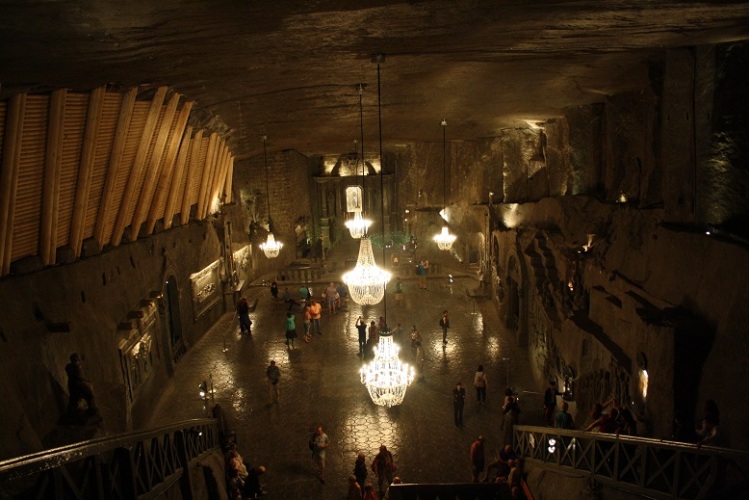
Exquisite chandeliers rendered completely from salt hang from above a dining room that’s fit for royalty and underneath of the feet, geometrically placed and decorated tiles of sheer salt are polished to a marble sheen.










.jpg)



 Content Catnip
You must be logged in to post a comment.