Book Review: The Dawn of Everything: A New History of Humanity by David Graeber and David Wengrow

Rating: 🌟🌟🌟🌟🌟

Genre: Non-Fiction, History, Anthropology, Politics

Publisher: 

Review in one word: Immense

The Dawn of Everything: A New History of Humanity” by David Graeber and David Wengrow offers an awe-inspiring, surprising and dizzyingly beautiful rethink of human history. It is an ode to ancient human experimentation, creativity, fun and how before there were rules and hierarchy – people just had a hell of a great time!

Graeber and Wengrow challenge and overturn the major biases that we all take as a given about history. Biases you probably weren’t even aware were biases!

Such as the idea that there was at some point in history an “agricultural explosion”, which altered and improved human civilisation, meaning we all turned from being hunter gatherers to being farmers.

History, they contend, was far from linear and was more circuitous, random and all over the place than previously imagined.

This expansive, multidisciplinary book presents a series of key themes that are relevant for understanding the political turmoil that western countries now find themselves in. The authors argue that (among other things) this is the result of an erosion to the collectivism and fabric of community dependencies in favour of a focus on neoliberalism, trickle-down economics and rampant individualism (read: selfishness).

The book traverses many periods of human history, Graeber and Wengrow playfully build a compelling and interwoven narrative about indigenous and black histories that have been thus far completely ignored and rendered totally invisible from the knowledge-base of the Western canon.

Reading this as an indigenous Māori woman, the very idea that my own and other indigenous cultures are worthy of being known by everyone was pleasing to hear.

It is rare that you could call a book about human history and anthropology playful and joyful – but this is a deeply joyful and at times cheeky book! Joyful because it is free of the strictures and cultural biases and limitations of other books about ancient people.

Cheeky because it pokes fun at the stuffy, joyless and bleak narrative arc of human history put forth by the philosopher Thomas Hobbes that human life is like a war and is “solitary, poor, nasty, brutish, and short”.

The Dawn of Everything is more than a nod towards indigenous knowledge systems, it is a deep bow.

The authors call out the snobbish and xenophobic nature of the “Western Knowledge Canon”. And likewise, they call out Europe’s complete shunning and belittling of millennia of indigenous and non-European thought, philosophy and knowledge systems. It’s a mistake they think is deplorable and we are all the poorer for not knowing about it.

The insights from this book are applicable to contemporary movements like the #Boycott4Wildlife, indigenous rights movements and the broader climate movement.

Here’s an overview of the key themes from the book including some punchy and powerful quotes.

Key Themes

Challenging Traditional Narratives:

Graeber and Wengrow dismantle traditional narratives of linear human progress, arguing that our hunter-gatherer ancestors weren’t simply savage precursors to civilisation, but complex societies with diverse political and social structures.

“There is no single ‘original form’ of human society and no inevitable march towards inequality and hierarchy.”

pp 81
Awhina finds her orb. Maori folklore

Debunking the idea that inequality is inevitable

They reject the idea that inequality and hierarchy are inherent to human nature. Instead they propose that these concepts emerged through specific historical processes, not as a predetermined outcome.

They argue that complex, large-scale societies did not necessarily evolve towards hierarchical structures and point to plenty of examples to illustrate this point. They present evidence of societies that maintained egalitarian social relations despite their complexity, which is a significant point for understanding indigenous societies that resisted hierarchical structures.

“The assumption that inequality is natural, or even inevitable, is one of the biggest myths of our time.”

pp. 484

History is ablaze with experimentation and exhilarating creativity

The book emphasizes the inherent human capacity for self-creation and experimentation, highlighting examples of societies with fluid social structures, non-coercive leadership, and diverse modes of governance.

Quote: “Human societies have always been, and continue to be, laboratories of social possibility.” – Page 524

The Maori legend of Pania: Kaitiaki and taniwha of the reef retold in street art
Aaron Glasson: Pania of the Reef is a historical Maori story of love and respect for the ocean that has become one of Napier’s most well known symbols and is retold throughout New Zealand. Pania was a sea-maiden who married a local man, their shape-shifting son Moremore can be seen today in the form of sea animals that serve as an omen, and Pania’s body now makes up Napier’s most famous reef. Aaron worked closely with local Maori and the family of Pania to create his mural that depicts the story of her life, painting her decedents in the role Pania and creating a contemporary interpretation this meaningful history.

Civilisation isn’t just about progress – it’s about autonomy and equality

Graeber and Wengrow rethink the notion of civilisation. They challenge the simplistic view of civilisation is simply about making things “harder, better, faster, stronger” and the march of progress. They argue it has involved human trade-offs and sacrifices in terms of autonomy and equality.

“The very idea of ‘civilization’ as a singular, linear trajectory may in fact be one of the most pernicious myths of our time.”

pp. 575

Hope for the future and reimagining possibilities for our world

By demonstrating the diversity of human social arrangements throughout history, the book offers a hopeful message about the possibility of creating more just and equitable societies in the future.

The Dawn of Everything invites the reader to reconsider the possibilities for organising societies differently, based on the historical evidence of varied social structures. This encourages a radical rethinking of contemporary social, economic, and political systems from an indigenous perspective.

“Perhaps it is time to stop thinking of ‘civilisation’ as a fixed state and start thinking of it as a process, one that involves a constant negotiation between different forms of freedom and constraint, inequality and egalitarianism.”

pp.576

“If we can start to imagine other possibilities, then who knows what we might achieve?”

pp.580

These are just a few of the powerful themes explored in The Dawn of Everything. Each theme is supported by a wealth of historical evidence and anthropological research, making the book a thought-provoking and challenging read for anyone interested in understanding human history and our potential for the future.

The book’s emphasis on the autonomy of communities and the viability of non-hierarchical social structures aligns with the goals of the #Boycott4Wildlife and other indigenous rights and animal rights movements. These movements often advocate for empowering local and indigenous communities as stewards of the natural world. They use decentralised and anarchist modes for challenging top-down power structures.

animal rights human rights

The insights from this book are critical for anyone who is a part of a social or environmental movement. Graeber was himself an anarchist and one of the core underlying themes of the book is Anarchism, with its emphasis on autonomy, voluntary association, and mutual aid, without hierarchical structures.

I only became aware of the amazing David Graeber and this book only after learning that he had died. He was not only one-of-a-kind intellectual but a legendary activist and is credited among many other things with launching the Occupy Wall Street movement. It was enormously heartbreaking to me to learn that he will never write anything again but if this is his lasting legacy, what a legacy is it! Here’s a fitting tribute to the man and the legend.

Have you read this book or are you planning on reading it? If so, let me know below!
Comforting Thought The challenge of a life’s time and a lifetime

It may be when we no longer know what to do,

We have come to our real work,

and that when we no longer know which way to go,

We have begun our real journey.

Wendell Berry (b. 1934) is a poet, farmer, writer and activist.

Every Picture Tells a Story: Lake Menteith in the fading light of a winters night
Frozen Lake Menteith in Scotland during mid-winter. Copyright Content Catnip 2011
Hawkins - Sea Clouds
Hawkins – Sea Clouds

10 Interesting Things I Found on the Internet #119

Join me this week for a hypnotic aural journey into Polish Drum & Bass, debunk some boomer memes, uncover the rudest sounding town names in America, dozens of abandoned mini castles in Turkey and much much more!


A Steampunk Plantyflutesizer by Bichopalo

The Plantyflutesizer by Bichopalo is a charmingly inventive musical instrument that blurs the line between horticulture and melody. Part art piece, part botanical orchestra, the contraption harnesses the electrical conductivity of plant leaves to activate array of flutes and percussive elements, all powered by a network of pumps. The result is a whimsical and surprising interaction that turns a gentle leaf touch into a symphony.


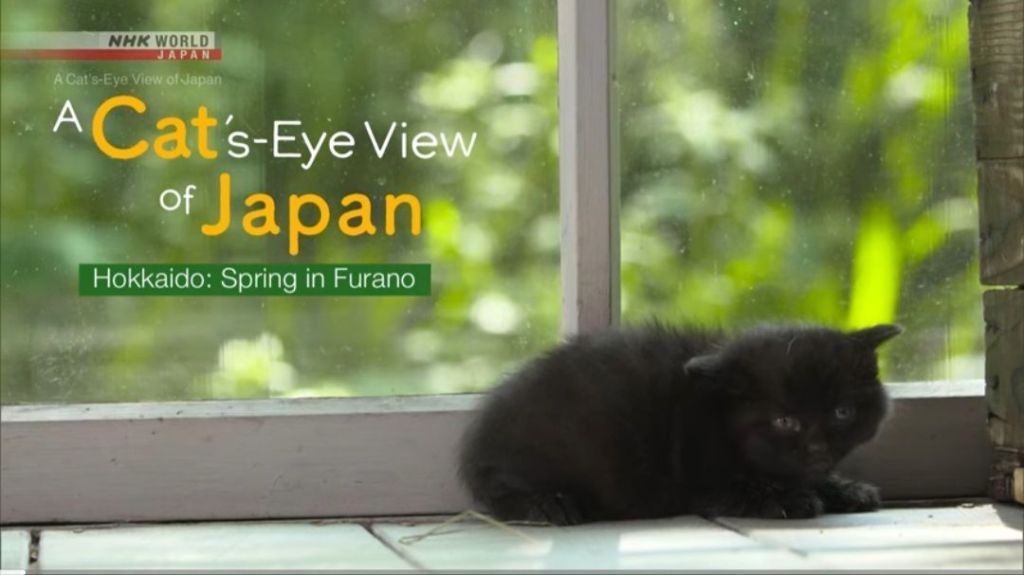
A Cat’s Eye View of Japan: Hokkaido

Watch here


Amerigo Gazaway – Strange Moods

Another funky, 70s sounding soul track from master producer Amerigo Gazaway


Polish band Cheap Tobacco blow up on YouTube

PB and I saw Cheap Tobacco late one night in a basement jazz venue in Kraków. Their female vocalist Nathalia Kwiatkowa reminded me of Karen O from the Yeah Yeah Yeahs. I think she sang Janis Joplin that night and she did an amazing job. She totally blew my mind with her live performance – it was raw, bluesy and totally electrifying. Anyway that was about 10 years ago and they had almost no following then. I happened to see on YT this video of their had over 200K views…YAY for them!


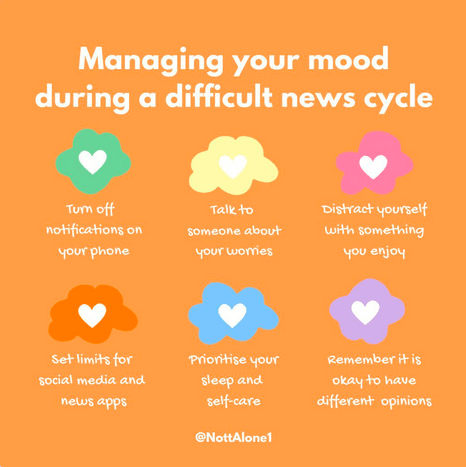
Managing your moods during a difficult news cycle

Instead of doomscrolling…do this. Via Badger0us on Mastodon


An Evening on the North Shore by Clarence Gagnon


“An Evening on the North Shore” by Canadian artist Clarence Gagnon is a visual ode to tranquility, encapsulating the tranquil charm of rural Quebec. The painting invites us to pause and savour the quietude and beauty of our natural surroundings. Via Francisco Ribeiro on Twitter

An Evening on the North Shore by Clarence Gagnon


Debunking Boomer Memes!

Amazing historian J Draper does some digging into media archives to debunk some common and slightly racist generalisations of the Boomer generation


Porn-ready names of American towns

Rude sounding place names in North America
Porn-ready names of American towns

Found via Reddit


Why you should wear folk headscarves

A delightful new Youtube find for me is Pretty Shepherd who is all about celebrating Slavic and Hungarian folkloric traditions through her sartorial choices and particularly how she does her hair with colourful headscarves. I enjoy seeing these kinds of traditional ways becoming more popular through these channels.


A visualisation of Pi making pretty fractals

This is rather beautiful and hypnotic. Any given oscillation and point on this fractal paused could be a beautiful design pattern for artwork I think. Found via Reddit


Polish Ambient Drum & Bass

Anything with a smiling whale on the cover gets my seal of approval. The mix is incredibly relaxing!


The strange abandoned mini castles of Burj Al Babas in Turkey

Nestled in the blue-rimmed mountains of Turkey’s Mudurnu valley, the Burj Al Babas could easily be mistaken for a fantastical film set. There are rows of totally identical, battered and half finished mini-castles. The ambitious development project was poised to fuse modern luxury with the charm of historical architecture, designed for aspiring magnates. These 732 chalets stand sentry as an eerie tableau of halted construction and unfulfilled dreams. Now a fascinating and offbeat tourist attraction.


Linocut Print Making

A guide from a mastercraftswoman at the V&A museum


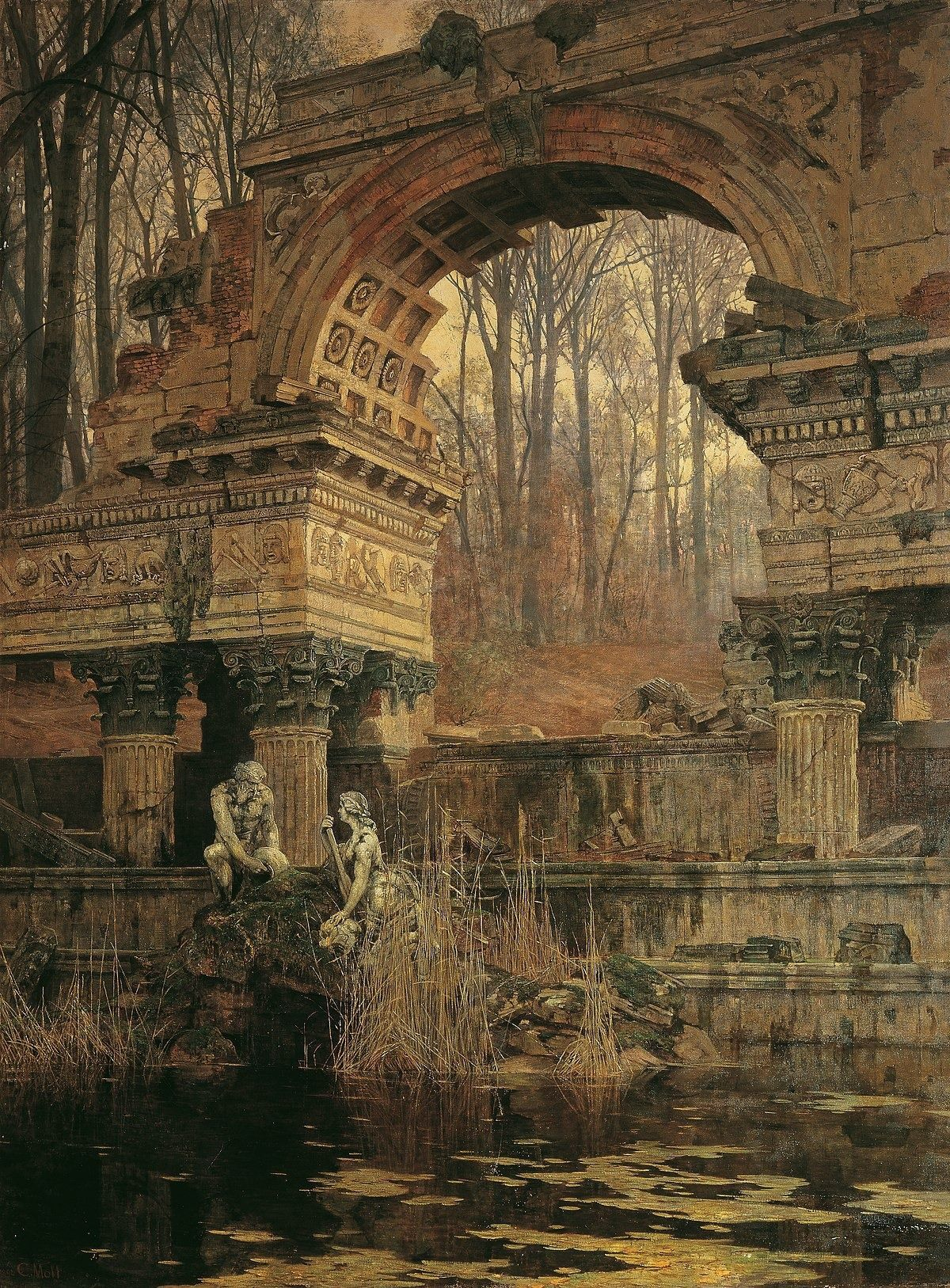
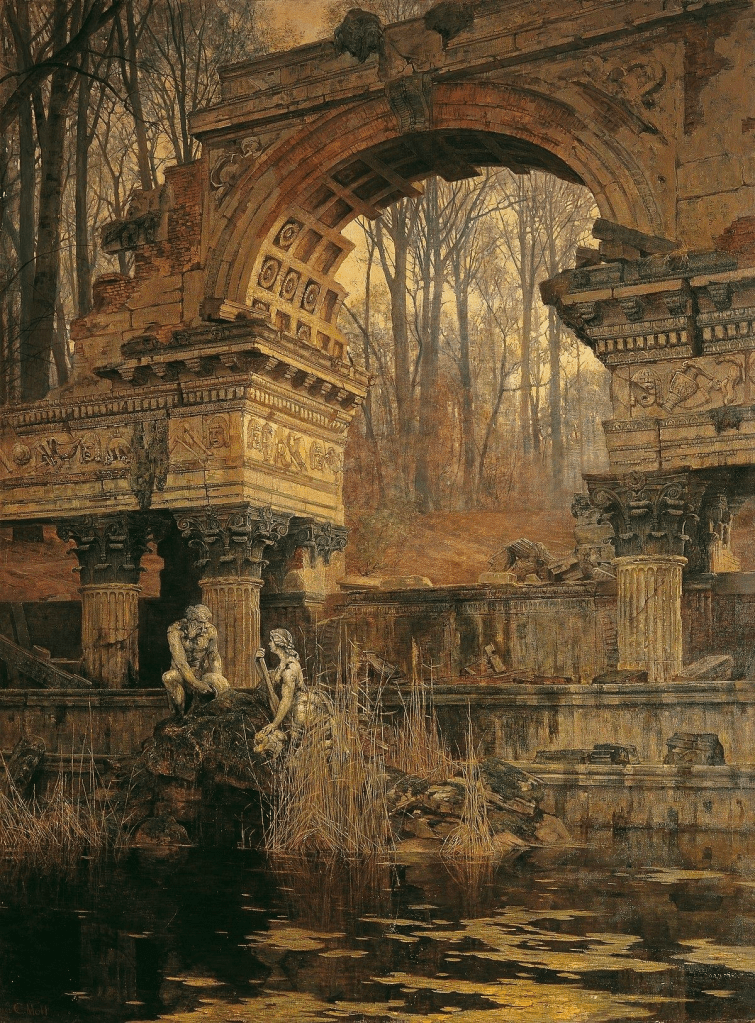
The Roman Ruins in Schönbrunn by Carl Moll (1891)

The Roman Ruins in Schönbrunn by Carl Moll (1891)

A physical exam of George an adopted kitten mascot from Battleship North Carolina, 1944

 “I pulled George out of the bay at Noumea. The Ship’s photographer made up a liberty card for him. George lived with me in the Lighting Shop for over a year and went over the hill when we reached Seattle.”

Ed Cope, Battleship North Carolina

Found via Reddit and learn about other seafaring cats here and here.

A physical examination of George an adopted kitten mascot from Battleship North Carolina, 1944
A physical exam of George an adopted kitten mascot from Battleship North Carolina, 1944
A physical examination of George an adopted kitten mascot from Battleship North Carolina, 1944

Did you enjoy this collection? let me know what you think of it below. Thank you for reading my dear friends!

The most important invention of my lifetime? Chat GPT

The most important invention in your lifetime is…

It’s a double-edged sword you know, AI. It has the potential to elevate people out of poverty, cure diseases, etc. However the flip side is it could also be ungovernable, unregulated and out-of-control, meaning it could do anything, anything at all. We just don’t know yet what will happen.

Yes, like the proverbial genie emerging from the bottle it could be a benevolent or malevolent monster…or perhaps both at the same time.

On a personal level, I churn out a lot of work for my professional role, helping others with advice, and having to know how to do a lot of things very quickly.

Who the hell has time to learn everything from scratch nowadays? The sheer amount of information we swim in is absolutely overwhelming. I admit that most of the time I’m just trying my best, with the cognitive abilities that I have, using a fragile, finite, blob of neurons and synapses rattling around in a bone skull.

Who doesn’t need a guide (detached, omnipotent and creepy I admit) to concisely summarise the latest thinking on extremely complicated issues: climate change, chronic diseases, geopolitical situations in the Middle East and so on…it’s immeasurably helpful.

Chat GPT was a game-changer for me. Ask it anything, personal or professional it will resolve issues for you and make your life easier.

As a glass half full kind of person, I refuse to ascribe to the bleak cyberpunk vision and instead prefer the solar punk version…but nobody knows!

What do you think of it?

Book Review: Convenience Store Woman by Sayaka Murata

In this funny, odd-ball and deeply emotional novel by Japanese debut novelist Sayaka Murata, we follow the book’s heroine Keiko, who is in her late 30’s and is working as a sales assistant in a convenience store, while living an unmarried and childless existence (considered to be a lowly state of affairs in Japan).

Keiko has been bullied and friendless for most of her life, because of her tendencies towards some odd behaviours. However, it is Keiko’s resilience, inner strength and tendencies towards kind behaviours really make you grow to love her as a character and want what’s best for her.

At age 18, her strong penchant for routine, maintaining detail and order made her the perfect loyal candidate for a job at Smile Mart, a convenience store in Tokyo. Without giving too much away, things begin to change and unspool, as Keiko is faced with some dramatic options in life.  

Coming to Japan as a mere clueless Gaijin and going into convenience stores there, I was always struck by how clean and well-stocked these places are. Convenience Store woman is an opportunity to see behind the Cheerful and unassuming staff in these places and to get a window in the struggles they face on a daily basis.

Stumbling upon this book, I feel like I have unravelled a secret world. What is behind the smiles? Of course hardship, of course sadness and loneliness. This book shows us all of the humanity behind these people who are often treated as invisible or unimportant in Japan.

Book Review: Convenience Store Woman by Sayaka Murata

Convenience Store Woman was the first novel by Sayaka Murata, one that was semi-autobiographical and inspired by her own experience working for several years in a convenience store.

The novel has a strong emotive pulling power and an idiosyncratic lyricism and odd and quirky humour. I read it in one sitting it was just superb in every way. I recommend you read this one and give it five stars.

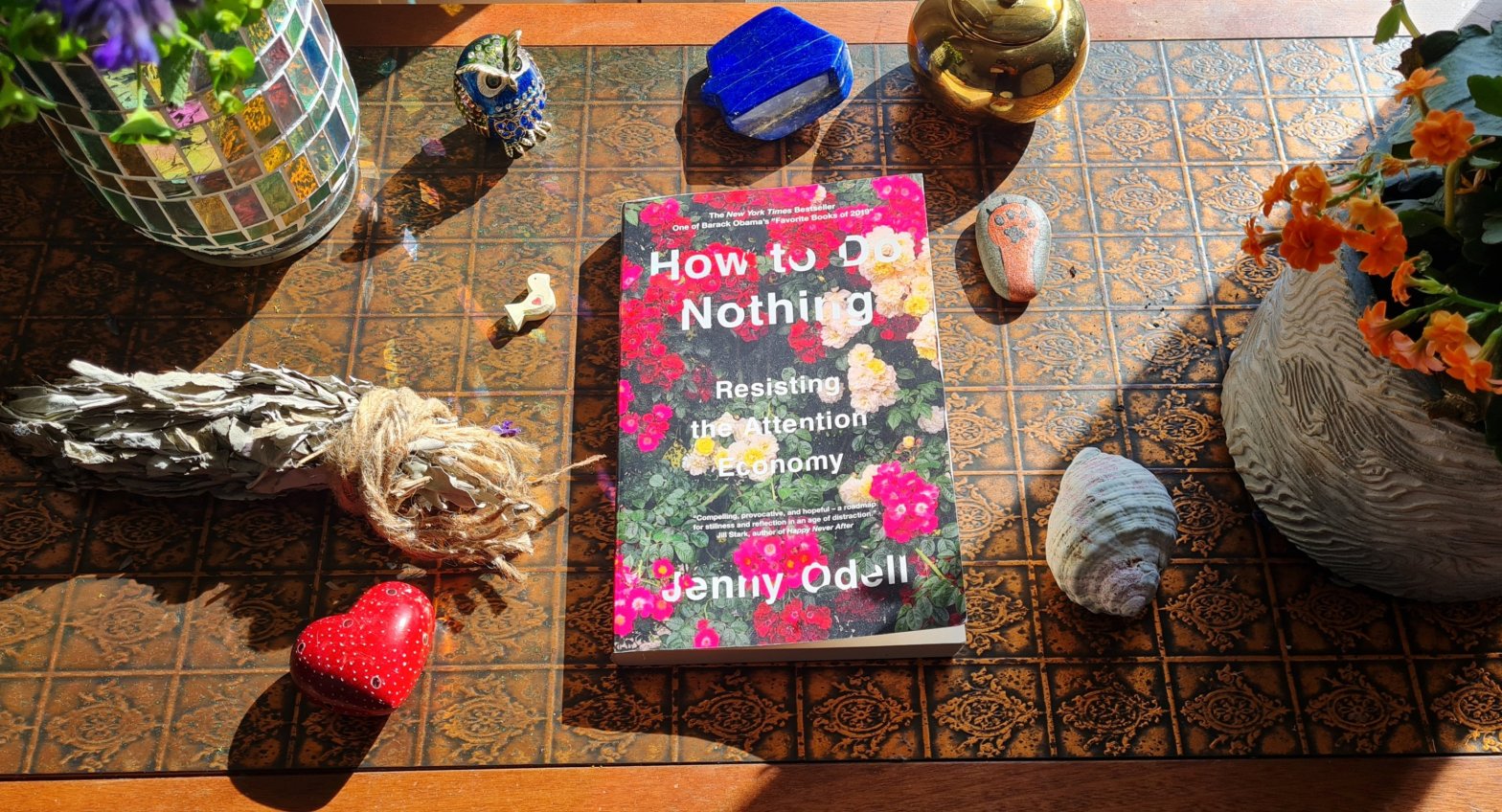
Book Review: How to Do Nothing by Jenny Odell

I didn’t expect much from this book and was delightfully surprised by its immense depth and foresight. ‘How to Do Nothing’ is a profound and glittering jewel about the big topics of politics, internet culture, consumerism, capitalism and consciousness. It takes well-worn assumptions about how you spend your time and the tyrannical monopoly of banal “stuff” on your attention – and then rearranges your brain forever!

Rating: 🌟🌟🌟🌟🌟

Genre: Non-Fiction, Philosophy, Art, Internet Culture, Politics.

Publisher: Black Inc Books

Review in one word: Prescient

There is so much to this book that every second page I underlined with a pencil and wrote notes in the margins about it ( This is a bad habit I know, however I love looking back on my own notes and underlines I’ve made in years gone by in profound parts of books).

When considering this book in the shop, I read in the blurb that it’s one of Barack Obama’s favourite books and this clinched it for me that there was pure gold within its pages.

The title is somewhat misleading in a good way. ‘How to Do Nothing’ is a broad and expansive non-fiction journey spanning Odell’s personal memories, and her reflections on philosophy, technology, art, culture, human consciousness, other-than-human worlds of animals and plants and attention itself.

The book shares a lot of conceptual overlap with two other thought-provoking books about the cult of productivity which I have previously reviewed, Svend Brinkmann’s ‘The Joy of Missing Out’ and Standing Firm: Resisting the Self-Improvement Craze’.

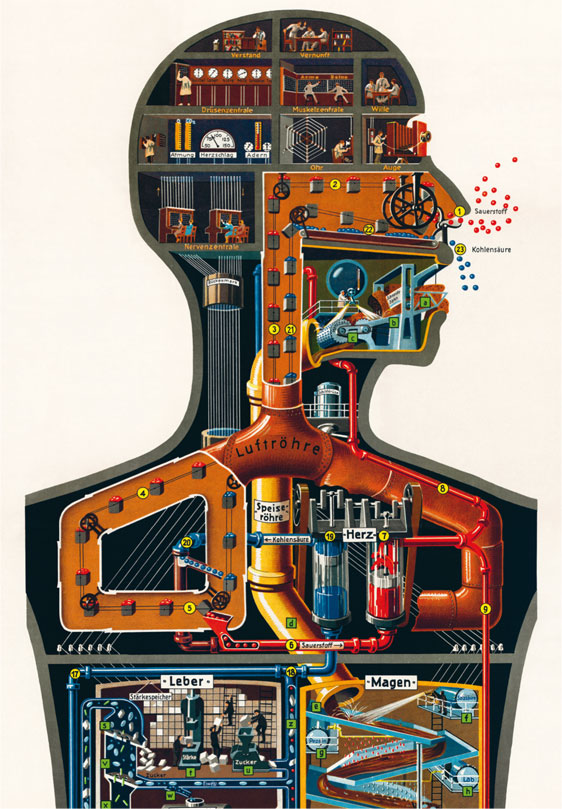
An individual body can be healed, and it can become healthy. But it can’t necessarily become optimised, it’s not a machine after all. I think the same holds true for the social body [of humanity].

The idea of human body as a machine to be optimised has its origins in the industrial age. A famous painting Der Menschen als Industriepalast by Fritz Kahn comes to mind.

Fritz Khan's painting Der Menschen als Industriepalast in dreamy animation
Fritz Khan’s painting Der Menschen als Industriepalast in dreamy animation

There are so many different ideas in this book that it is difficult to narrow them down here to just a few. Here is what I gleaned from this book and my many underlined pages.

Bioregionalism

The idea that we inhabit places that are alive with consciousness, plants and animals each embodying the place alongside of us, populating places with intelligences if we only pay attention to their existence, really listen, and understand their diverse voices. If we fail to pay attention and to bear witness to our interdependence with all other beings, we pose a mortal danger to ourselves and to them.

Artists & Writers in Their Own Words: Evaldas Azbukauskas AKA Giriu Dvasios bear in forest

Cultural desertification: We have much to learn from ecology

A community in the thrall of the attention economy feels like an industrial farm, where our jobs are to grow straight and tall, side by side, producing faithfully without ever touching. Here, there is no time to reach out and form horizontal networks of attention and support- nor to notice that all of the other non-productive lifeforms have fled. Meanwhile countless examples from history and ecological sciences teach us that a diverse community with a complex web of interdependencies is not only richer but more resistant to take over.

Online censorship = a barrage of banal content that distracts people

Everybody says that there is no censorship on the internet, but that is not true. Online censorship is applies through an excess of banal content that distracts people from serious or collective issues.

Resistance protest activism

Activism and collective action requires space and time for dialogue to happen

Incubation time is needed for when individuals want to communicate with others or to maintain coherent trains of thought. There are concrete requirements to dialogue, without space and time, these dialogues will not only die, they will never be born in the first place.

The act of withholding attention is a rebellious act of resistance

It is also an act of self-love to withhold attention and focus upon something steadying and grounding from nature.

The act of refusing to comply to the 9-5 rat-race is a radical act of protest

Against mindless bullshit jobs and groupthink, against endless growth capitalism. When people passively and non-violently resist this conformity (as evinced with Extinction Rebellion and others) this peaceful resistance is seen as a threat to the system, because it trivialises and ridicules those who follow that system.

resist protest

The tyranny of the attention economy

Our attention is our last vestige of personal freedom. Yet we give our sacred attention away so willingly and carelessly to advertising, junk media, misanthropic hateful voices and misinformation online.

The above insights from the book are only the very tip of the iceberg. There is an enormous and deep berg beneath where Odell has buried rich treasures for you to discover. This is a five star masterpiece of non-fiction about the state of the world and the state of your mind as it interfaces with technology, highly recommended!

What would you do if you won the lottery?

What would you do if you won the lottery?

I would invest a third of the money, use a third to buy myself a home (I have never owned one, as where I live, houses are outrageously expensive) and use the other third to set up an animal advocacy charity or an animal sanctuary for abused or abandoned animals. What about you? What would you use it for?

In this fantasy home I would have a floor to ceiling library, soft warm lighting, a roaring fire, a dog and a cat and my best friends by my side and an extensive collection of vinyl from where I could play music.

In the kitchen would be a lot of hanging herbs, copper pots, a beautiful vintage bottles.

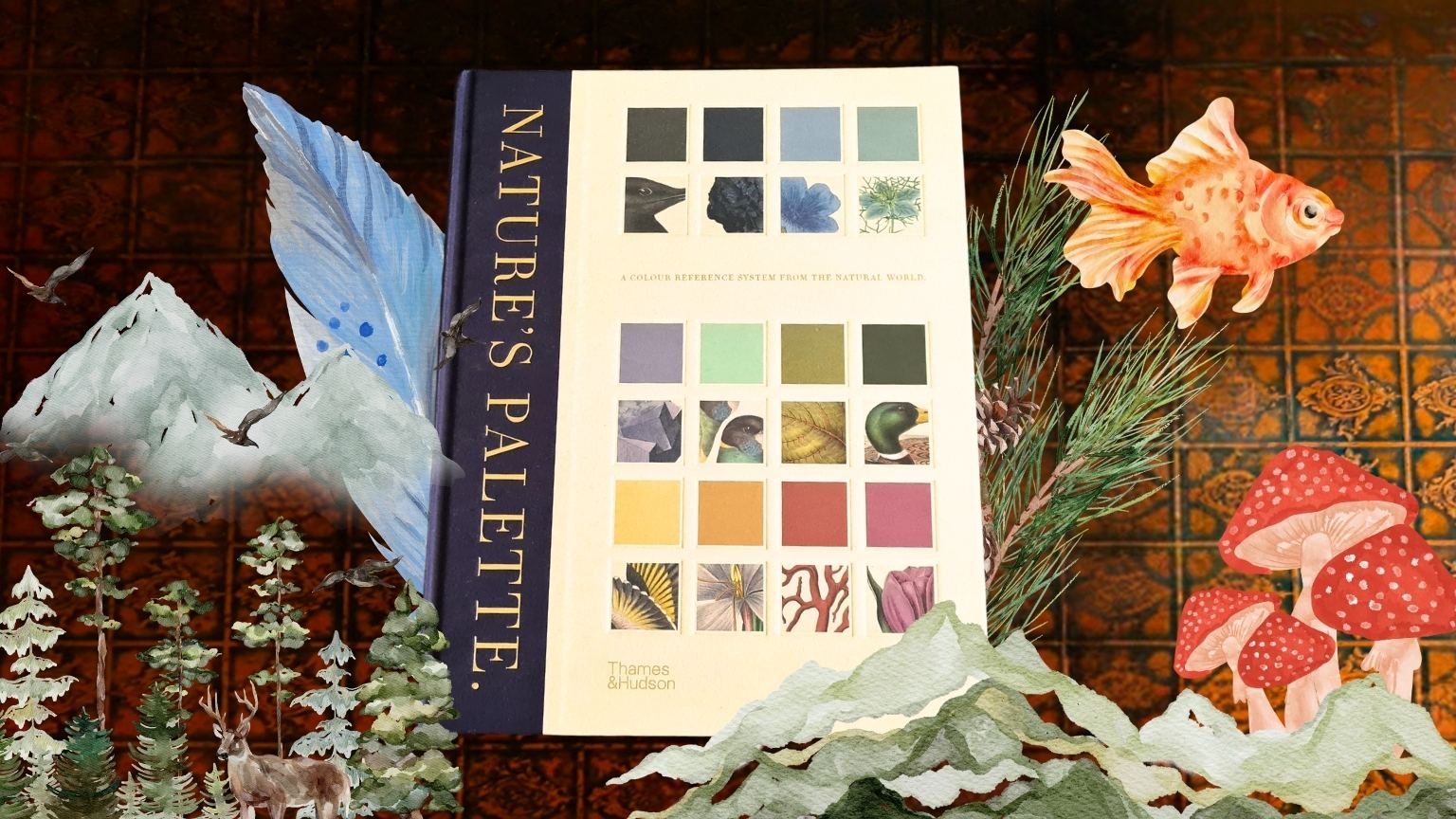
Book Review: Nature’s Palette by Thames & Hudson

Do you love nature? do you love colour? If you love these two things then this book is a must-have for your collection. A traditional reference guide originally published in 1814, a beautifully bound and vividly illustrated new version is now available.

Nature’s Palette features all of the hues and colours you can possibly imagine in our green and blue verdant planet. Along with exquisite nature drawings and paintings. Opening this book is like being transported to a more earthy and grounded era, when nature in all of her splendour was all people knew about sourcing colour. This book is perfect for a gift for the artist you know. Or if you’re an artist, designer, nature-lover or aesthete, I think you will love it.

Rating: 🌟🌟🌟🌟

Genre: Non-Fiction, Art, Natural History, Design.

Publisher: Thames & Hudson

Review in one word: Escapism

Although originally intended as a reference guide for naturalists, mineralogists, zoologists and botanists – this book is a superb treasure trove of art and anyone with an artistic soul will find it a pure joy to behold.

The first edition of this book Werner’s Nomenclature of Colours was published long before the era of film and even photography – in 1814. This colour reference guide was an ambitious attempt at establishing a universal reference system for colour based on natural species and objects – animal, mineral and vegetable.

The new edition, now named as Nature’s Palette contains enhanced illustrations of animals, minerals and vegetables – there are now 100 illustrations, along with text relating to the uses and development of colour standards and colour mixing.

Along with the beautiful illustrations, the naming of colours is equally as satisfying to see with elegant and evocative names for the colours like: Berlin Blue, China Blue, Sapphire Blue – notice the trend here? yes blue is my favourite colour.

I bought this book very cheaply while it was on sale. However, now to my dismay I can see that it’s nearly triple the price of what I paid due to inflation. This really does annoy me A LOT on behalf of those of you who want to grab your own copy.

My recommendation is to keep your eyes peeled for a sale on at your local bookstore or online retailer.

Would I recommend this book to you? If you’re a designer, artist, aesthete, naturalist or nature lover then I definitely recommend this book – just peering into these pages and leafing through this book is a joyful, escapist and therapeutic experience.

Do you have this book or do you plan on getting it? let me know below!

Book Review: 2024 Lunar and Seasonal Diary by Stacey Demarco

Rating: 🌟🌟🌟🌟

Genre: Non-Fiction, Occult, Archaeology, Witchcraft

Publisher: Rockpool Publishing Australia

Review in one word: Spell-binding

A practical and full colour diary with regular weekly prompts for star-gazing and constellations, as well as fortuitous times of the pagan year. Designed for pagans dwelling in the southern hemisphere, with calendar timings and celebrations that we make, which are the direct opposite to the traditional Celtic/European traditions.

The pages of this diary are full of lush and exotic illustrations and pages are spiral bound making it perfect for the insertion of post-it notes and other miscellaneous reminders. Stacey Demarco’s 2024 Lunar Seasonal Diary is a must-have for anyone interested in moon magic and practical spirituality.

What sets this diary apart is its inclusion of gods and goddesses for each month, adding a mythological dimension to one’s existence. There are seasonal invocations and tailored advice for specific moon phases including equinoxes and solstices. This diary is a beautifully crafted and insightful companion. Highly recommended as a diary for work or home, or as an enchanting gift for a friend or loved one.

The only way that this diary could get five stars would be if there was more mystical storytelling within its pages. Although that would make it less of a diary and more of a novel, so I also understand why this was the case. Overall a triumph of a diary and I will be getting in all future years.

Book Review: 2024 Lunar and Seasonal Diary by Stacey Demarco
Cover image for this book review created with Dall-E

Ancient word of the day: Athene Noctua or Athena’s Owl

The Greek goddess Athena had as her sacred animal familiar the owl, also known as the Athene Noctua in Latin. The Romans, fond as they were of stealing from the Greek pantheon, renamed Athena to Minerva. Athena and her owl are considered to be symbols of wisdom, in both cultures.

Ancient word of the day: Athene Noctua or Athena's Owl
Silver tetradrachm coin at the Museum of Fine Arts of Lyon depicting the owl of Athena (circa 480–420 BC). The inscription “ΑΘΕ” is an abbreviation of ΑΘΗΝΑΙΩΝ, which may be translated as “of the Athenians

Athene Noctua

Athena’s owl or Athene Noctua is most famously depicted on ancient Athenian coins dating from the fifth century BCE. To the Romans an owl feather placed near you when you were sleeping would prompt the slumberer to reveal their secrets while in the throes of REM.

In Rome, the owl came to be synonymous with death if it was seen hooting in the moonlight on a rooftop or public building. The deaths of several Roman emperors, including the assassination of Julius Caesar, were signaled by an owl landing on the roof and hooting.

It wasn’t only the Ancient Greeks who loved Athene Noctua, in many other cultures, the owl has mythological and pagan symbolism as the seer into two worlds of night and day, and the ever-lasting symbol of democracy, wisdom and many other meanings.

Κομίζει γλαύκα εις Αθήνας She is the owl of Athens

Afghani: Chim bakhshgar چیم بخشگر

In Afghanistan, owls are known as چیم بخشگر chim bakhshgar ( aka the eye divider/distributor). The large eyes of owls make reference to wisdom in Afghani traditions and that wisdom resides in people’s eyes.

Welsh: Gwdihŵ

Surely the most sing-song and poetic words to refer to Athene Noctua is as a gwdihŵ. From Welsh the word is pronounced “good-eee-hoo”, accentuating the melodic nocturnal murmurs of owls.

Athena Expelling the Vices from the Garden of Virtue 1502 by Andrea Mantegna

Bengali: Goddess Lakshmi and her owl

In Hinduism, the goddess of wealth named Lakshmi travels with a white barn owl, which is said to represent wealth, prosperity, wisdom, good luck and fortune. In Bengali households, one never drives away an owl, especially the White Barn Owl, as it symbolizes good fortune and wealth. The White Barn Owl is also considered as a Brahmin (an upper caste amongst the Hindus) and is worshiped as the Vahan or the vehicle of Goddess Lakshmi.

Ancient word of the day: Athene Noctua or Athena's Owl
Lakshmi and her owl

Spanish: Cada mochuelo a su olivo

A mochuelo in Spanish means a little owl. And a popular Spanish idiom is cada mochuelo a su olivo, which translates to “For each little owl, his own olive tree”. A Spanish version of – to each, his own.

Ancient word of the day: Athene Noctua or Athena's Owl
Minerva Victorious over Ignorance, circa 1591 by Bartholomeus Spranger

Hegel

Philosopher Hegel noted in the 19th Century that Athene Noctua spreads its wings only with the falling of the dusk. The meaning of this phrase means that the world only tends to understand a historical condition, just as it passes away. We can only come to see the weight of reality in hindsight.

The owl of Minerva takes its flight only when the shades of night are gathering.”
— G.W.F. Hegel, Philosophy of Right (1820), “Preface”; translated by S W Dyde, 1896