10 Interesting Things I Found on the Internet #118

Time for edition #118 of Interesting Things. Full of juicy goodies like a dial-a-poem phone booth, friendly Irish werewolves, crystal daggers, innovative house design, #techno #culture #music #art #vegan recipes and more #ContentCatnip

The colourful house of Seattle

Lovingly created by a mother and daughter over several years. There’s a real sense of joy and creativity here. I hope one day I can do this in my own house.


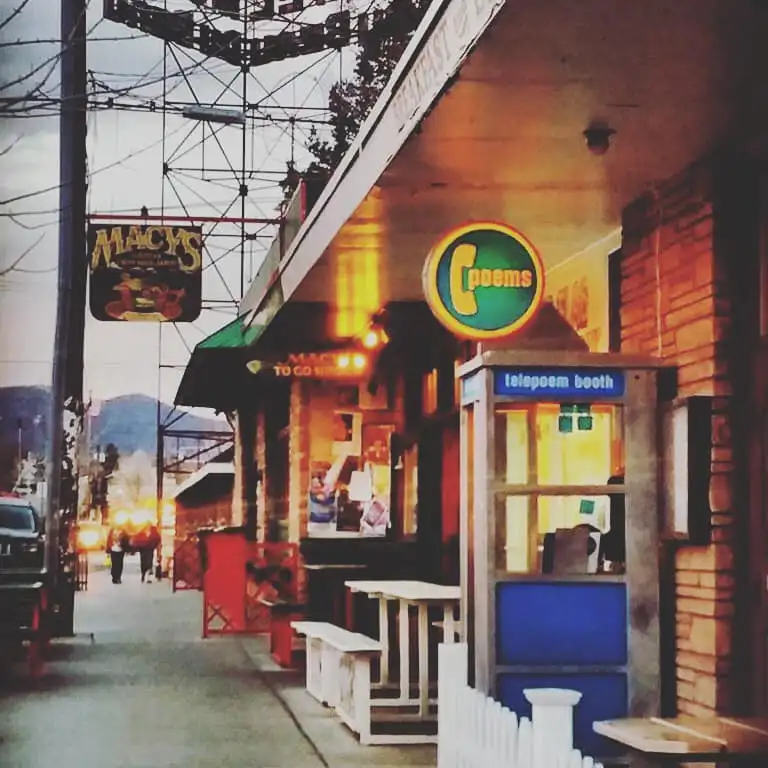
Dial a Poem in the Telepoem Booth

Always interesting and quirky blogger Brian D Butler discovers the elegant and obscure art of telepoem booths.

I recall similar projects, but none as widespread as the Telepoem Booth. This  brilliant interactive project is built around installations made from vintage phone booths. Users simply dial a number and listen to poetry. Even if you are not able to make a “local call” from one of the Telepoem Booths, you can use these directories to access over a thousand poems written and recited by regional, national, and international poets.

Brian D Butler

Creating a tiny enchanted world in a 100 yen case – Hanabira

Magical and hynotic are two words that spring to mind with this slow-burning channel.


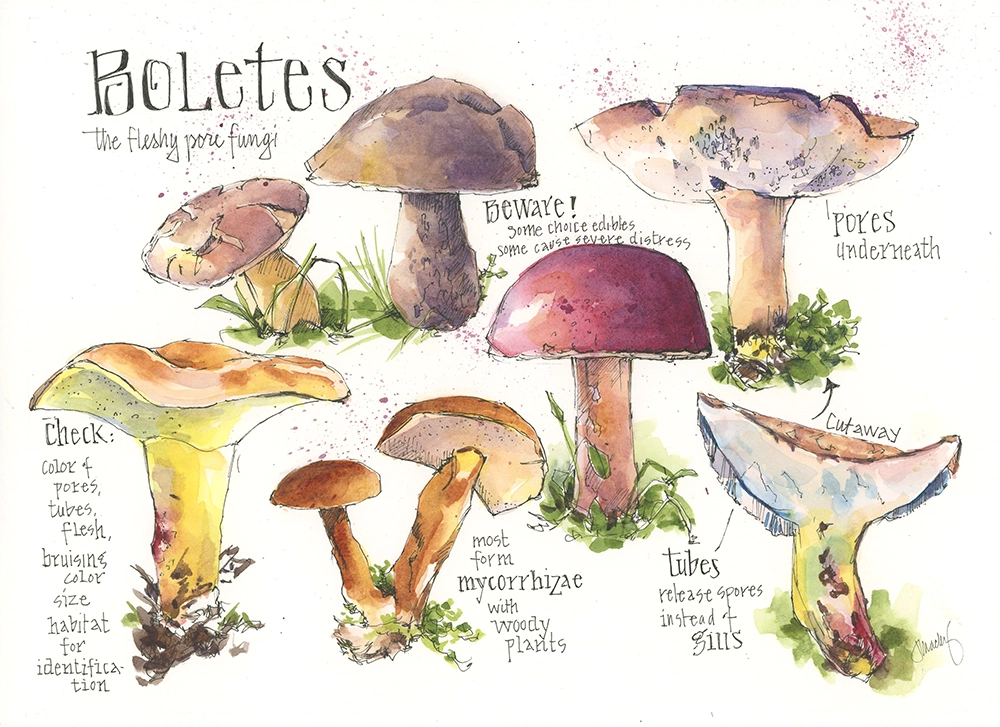
Beautiful mushrooms by Jean Mackay

I painted this as a demo for a recent class on mushrooms, a subject deserving of enthusiasm. I’ve since headed to Maine, where I stepped out of the car and found black trumpets and violet cortinarius mushrooms pushing up through rain-soaked woods. I haven’t had time to paint them, but I have a whole week ahead to explore with sketchbook in hand. Expect more exuberance in the paintings to come.
Beautiful mushrooms by Jean Mackay

A delicious and simple, vegan peanut butter udon noodle recipe from Will Yeung Man

Have been following Will for years and tried many of his recipes, he never fails to deliver taste explosions.


Floppotron: Sweet Dreams cover

Old and crappy computer hardware has a second life as a glitchy, kitschy orchestra of pop music


Ancient Egyptian followers of the goddess Bes drank vampire cocktails

An ancient Egyptian cult dedicated to a deity known as Bes, minor deity of fertility, childbirth and having a good time imbibed a strange elixir to worship at this ancient cult: mead, honey, human blood, and hallucinogenic plants.

Listen to podcast about it

Ancient Egyptian followers of the goddess Bes drank vampire cocktails

Amazing architect Emma Wheeler turns a nondescript old building into a magnificent home

I love the way she has made this design come alive, it looks warm, modern, inviting and completely unique. I would live there!


The surprising legacy of Faoladh – Irish Werewolves

Irish werewolves were different from the Teutonic or European werewolf in that they had a much more lilting and melodic accent and so weren’t really a “monster” at all. No but really…

Unlike their continental cousins, they were shapeshifting guardians and protectors of bairns, wounded men and lost wanderers. According to some ancient sources, the Irish werewolves were even recruited by kings in time of war. Known in their native land as the faoladh or conriocht, their predatory behaviour is typical of the common wolf, not beneath the occasional nocturnal raid. Image | http://nashoba-hostina.deviantart.com

Story via Papa Woof und Krampus und Bleaken on Twitter

The surprising legacy of Faoladh - Irish Werewolves
The surprising legacy of Faoladh – Irish Werewolves

A mesmerising documentary about Japanese Aesthetics [4K UHD] – In Praise of Shadows

Click image to watch on Youtube…

A mesmerising documentary about Japanese Aesthetics [4K UHD] - In Praise of Shadows
A mesmerising documentary about Japanese Aesthetics [4K UHD] – In Praise of Shadows


The Fairy Procession

Just imagine this cavalcade traipsing through the willowy wintery forest lit by moonlight and imagination.

Fairy procession (from ‘Thorn Rose’, Brothers Grimm) Illustrated by Errol Le Cain, 1977.

Fairy procession (from 'Thorn Rose', Brothers Grimm) Illustrated by Errol Le Cain, 1977.
Fairy procession (from ‘Thorn Rose’, Brothers Grimm) Illustrated by Errol Le Cain, 1977.

A bee can never be bought or sold, only gifted

From the endlessly fascinating and beautiful blog about all things Brittany – Bonjour from Brittany

While the bee was regarded as a familiar creature and one of the forms sometimes chosen by witches and other shape-shifters, it was also viewed as highly auspicious. It was therefore frowned upon to attempt to buy or sell bees as if they were a mere commodity; they were only to be gifted or traded as part of a barter agreement. To give a hive to someone was a gesture of much significance as you were not only providing them with honey but also, and above all, good fortune. Bees were even said to repay the generosity of their master if he shared his honey with many people.


Simon Sinek: An optimist’s approach to work. and life


An exquisite ancient dagger made from rock crystal

In 2017, a team of archaeologists excavating the megalithic tomb (3000 BC) of Montelirio tholos (Spain) uncovered an extraordinary dagger formed from rock crystal.

Via Mastodon

An exquisite ancient dagger made from rock crystal


Laurent Garnier – Breathless (1993)

An old school techno track that never sounds dated or tired.


Incan water jugs evoke the haunting sounds of rainforest animals


Did you enjoy this collection? let me know what you think of it below. Thank you for reading my dear friends!
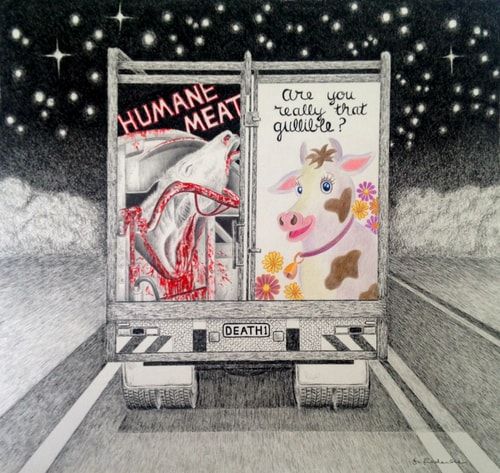
If you could uninvent something- what would it be? Humans eating animals

Could look clearly into the eyes of an animal and tell them that your food preference matters more than their suffering, pain and death?

If you could un-invent something, what would it be?

This is a highly controversial post and it taps into many people’s ideas of what is morally right and morally permissable.

Art by Jo Frederiks

The reasonings behind why people eat animals are many, but all are weakly clung to. People tend to brandish well-crafted delusions that:

Animals are lesser beings than us.

Animals are less intelligent and value their lives less than we do.

Animals are simply unfeeling non-sentient “resources” or utilitarian objects to be dispensed with as humans see fit.

Other delusions and cognitive dissonance comes in the form of:

“Oh but we’ve always done it this way…”

“It’s our tradition you know…”

“It’s our right to choose.”

“We need to eat meat for health reasons”

“In many parts of the world, people don’t have a choice, they don’t have that luxury. They have to eat meat.”

Art by Jo Frederiks

Fruit, vegetables and grains have been available to eat just as long as meat has been around.

We have the ability to choose and we have the ability to be kind to animals – then we should.

The hard-to-face reality of eating animals

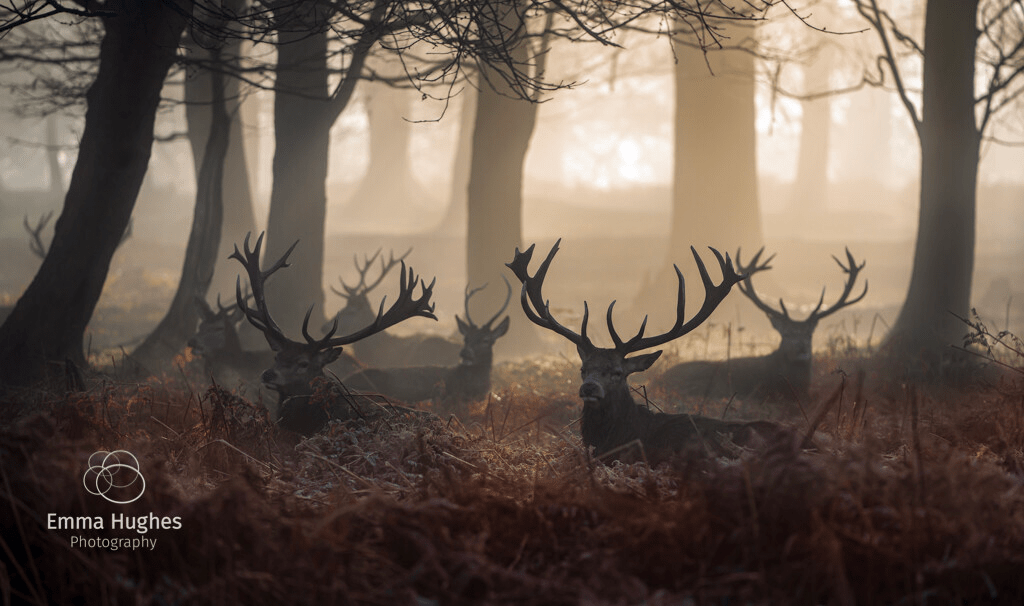
They have rich and complex emotional lives -all of them – including deer, pigs, sheep and cows and fish, ducks, turkeys and chickens.

Photo credit: Emma Hughes Photography

All of them feel pain and they suffer enormously before dying for people’s god-given and culturally approved “right to eat” Some die in this way for absolutely no reason, destined to be past their “used by” date and sent straight to the trash.

Who are they? Just because they can’t speak a language you or I understand doesn’t mean they have no inner lives, memories and that they do not have love in their hearts.

Art by Jo Frederiks

Love for the soft sensations and simple pleasures of being alive. They enjoy soft cool water like we do, they enjoy the enveloping rays of the sun as we do. They feel love for each other in their intimate communities. This love and community is only ever seen obliquely and in part by you and I.

Some even foolishly and blindly love those who will eventually kill them.

All of them value their own lives and the lives of their children. All of them want to live.

We haven’t evolved as a species until we can stop being monstrous to other species and treating them like disposable inanimate resources.

Are there points here you agree with? Look forward to hearing your thoughts. This is possibly the most political post I’ve ever done.

Exploring the Spiritual Wisdom of Japanese Wildlife: A Journey Through Shinto and Zen Buddhism


The fauna of Japan, rich in diversity, is intricately woven into the tapestry of Shinto and Zen Buddhist traditions. Each animal is not just a part of the ecosystem but a bearer of profound spiritual messages and teachings. This article delves deeply into the shamanic symbolism of eight Japanese animals, revealing their roles in folklore, Shinto, and Zen Buddhist philosophies.


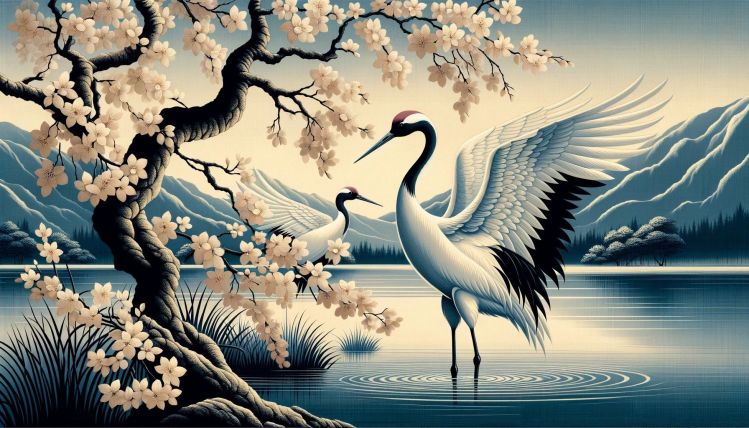
The Crane – Symbol of Happiness and Eternal Youth


In Japanese culture, cranes are celebrated as auspicious creatures symbolising happiness, longevity, and eternal youth. Often depicted in traditional paintings, they’re believed to carry souls to paradise. The crane’s graceful dance is a visual meditation in Zen Buddhism, embodying elegance and tranquility.

The Crane – Symbol of Happiness and Eternal Youth

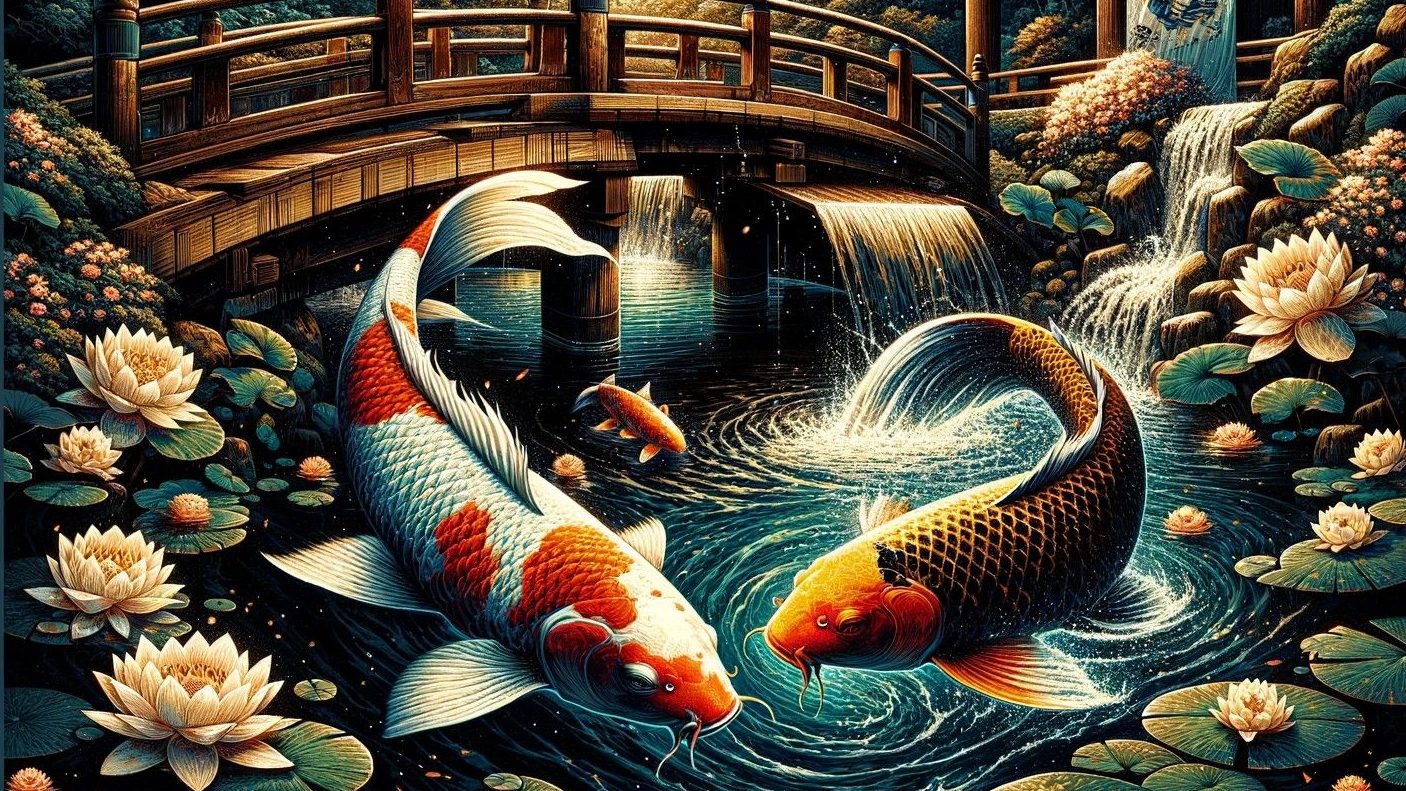
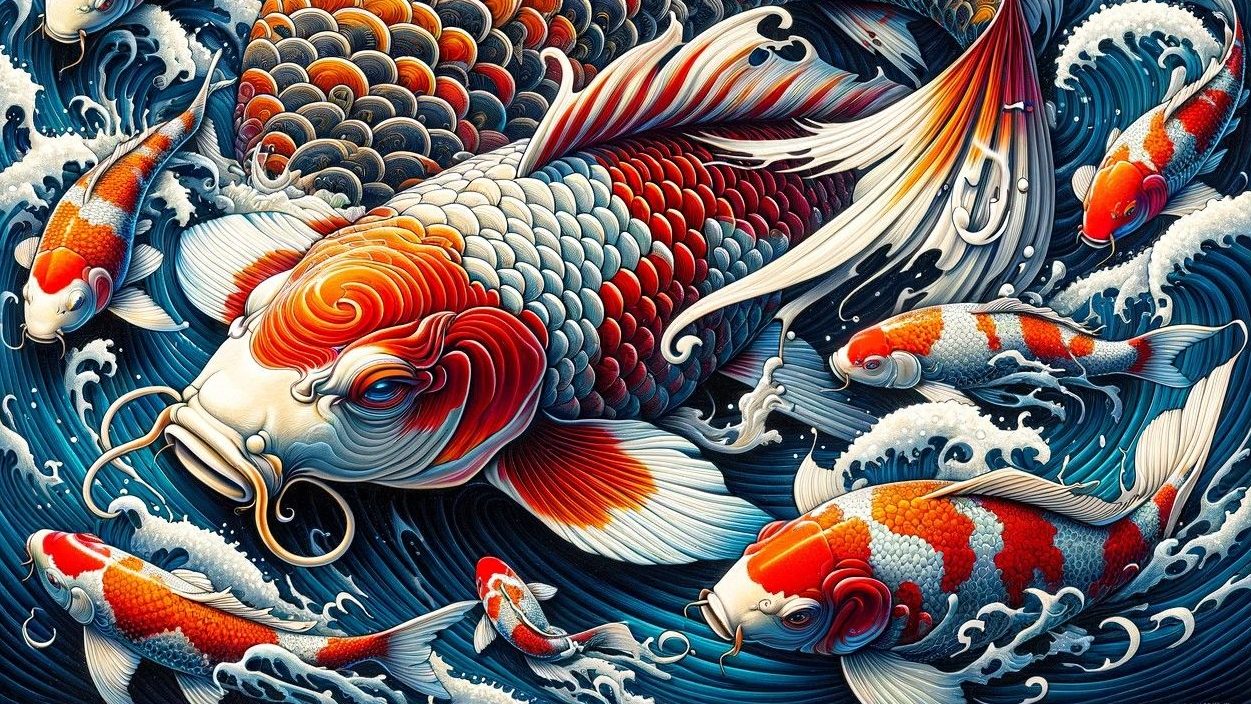
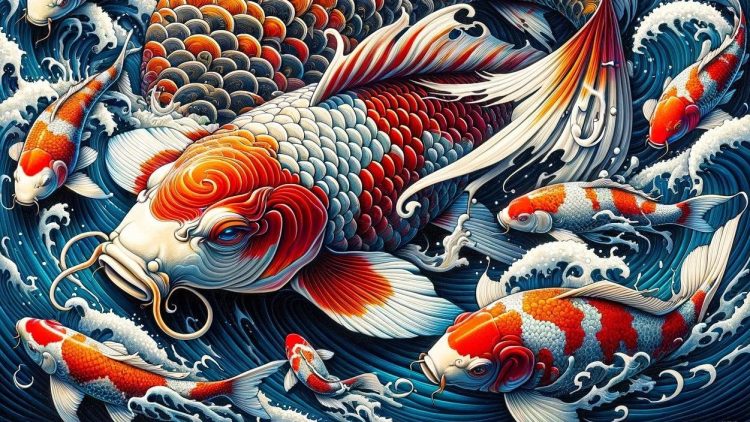
The Koi Carp – Emblem of Courage and Ambition


Koi carp, with their striking colours, represent courage and ambition. A popular legend speaks of their determination to swim upstream, a metaphor for overcoming adversity, aligning with Zen teachings on perseverance. The koi’s journey is a reminder of life’s constant flow and the need for resilience.

The Koi Carp – Emblem of Courage and Ambition

The Fox (Kitsune) – Trickster and Protector


In Shintoism, the fox is revered as both a trickster and a protector, often associated with the rice deity Inari. Kitsune are believed to possess intelligence and magical abilities, symbolising the balance of worldly desires and spiritual wisdom. They embody adaptability, a core principle in Zen practices.

The Fox (Kitsune) – Trickster and Protector

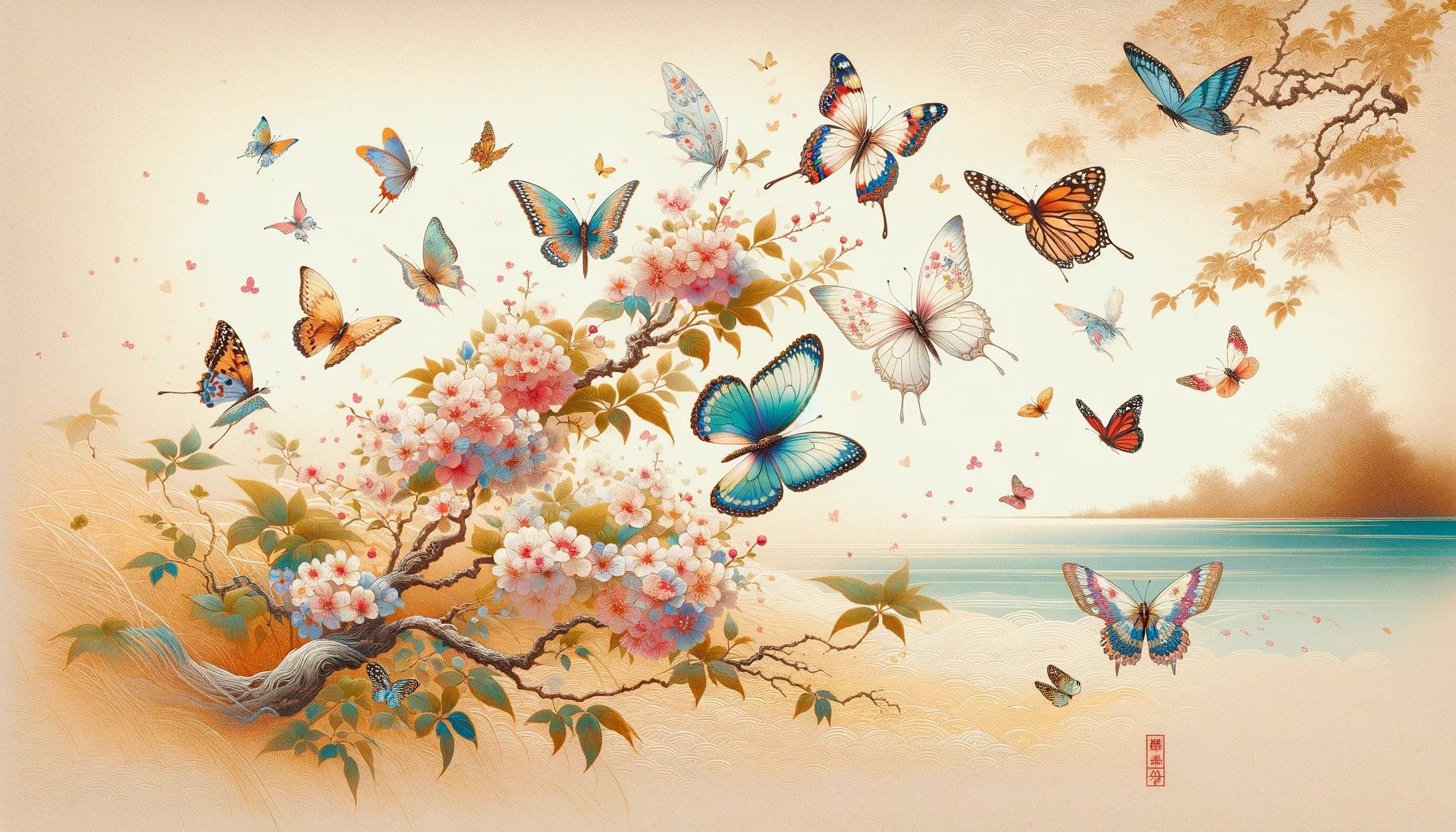
The Butterfly – Delicate Transience of Life


Butterflies in Japan signify the delicate transience of life. Their transformation from caterpillar to butterfly mirrors the Zen concept of rebirth and the transient nature of existence. They are also seen as guides for souls journeying to the afterlife.

The Butterfly – Delicate Transience of Life

The Japanese Serow – A Solitary Sage

The Japanese serow, a creature of solitude, mirrors the hermit-like pursuit of enlightenment in Zen Buddhism. Their preference for remote, mountainous areas symbolises the spiritual journey of ascending beyond worldly concerns, seeking inner peace and wisdom.

The Japanese Serow – A Solitary Sage

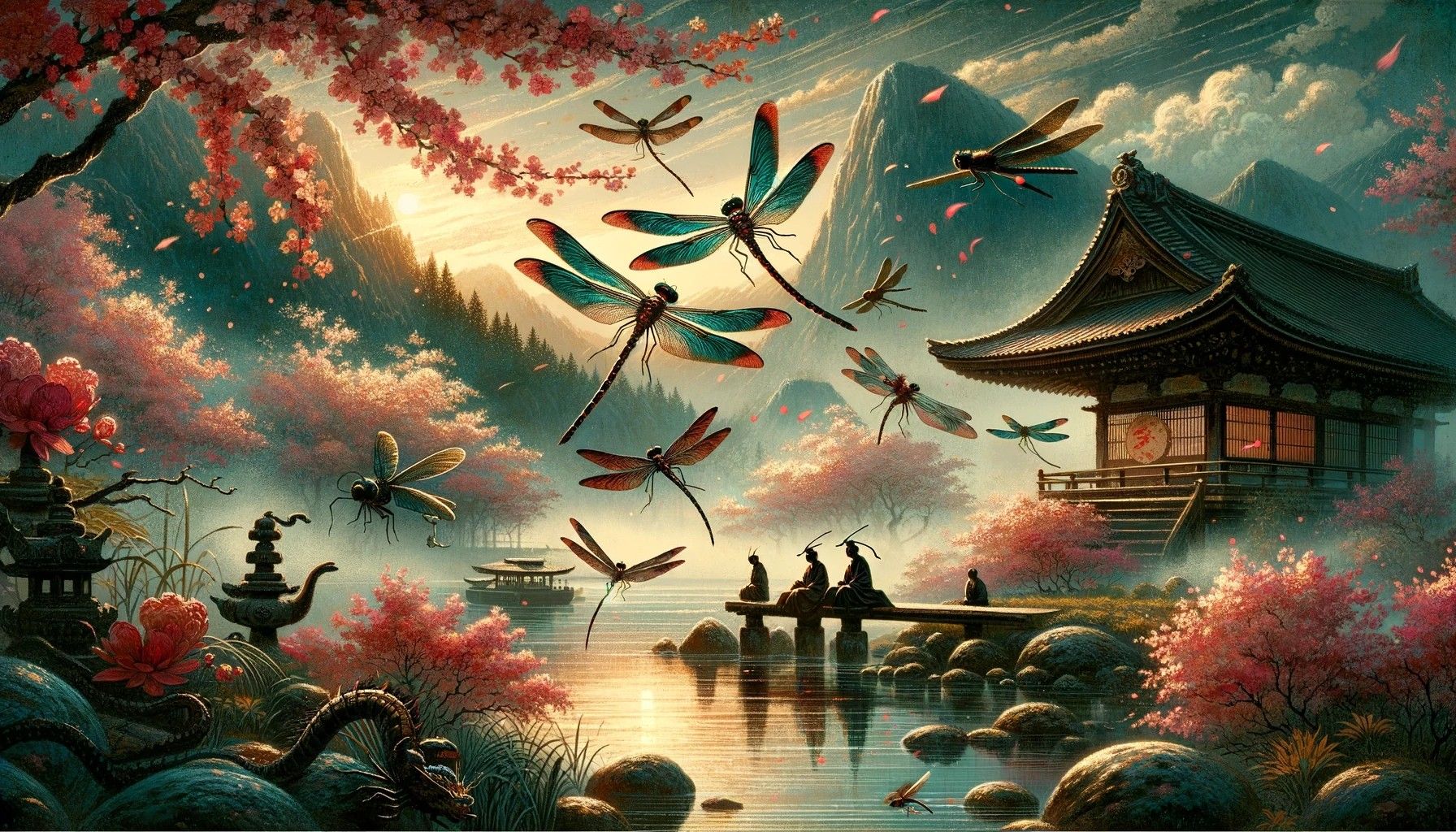
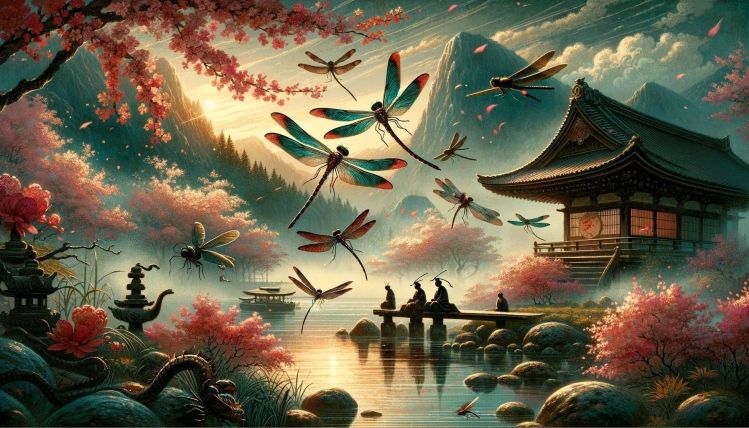
The Dragonfly – The Warrior’s Emblem

The dragonfly, or ‘tombo’, holds significant importance in samurai culture. It is seen as a symbol of agility, victory, and the warrior spirit. In Zen, the dragonfly’s ability to move in any direction mirrors the concept of mind flexibility and adaptability.

The Dragonfly – The Warrior’s Emblem

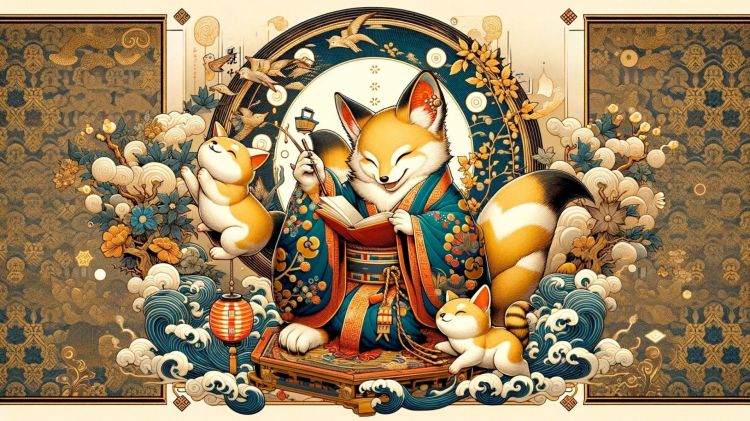
The Tanuki – The Shapeshifter and Bringer of Good Fortune


Tanuki, depicted in folklore as jovial tricksters, are also considered symbols of good fortune and prosperity. Their shapeshifting abilities represent transformation, echoing the Zen belief in the impermanence and fluidity of life.

The Tanuki – The Shapeshifter and Bringer of Good Fortune

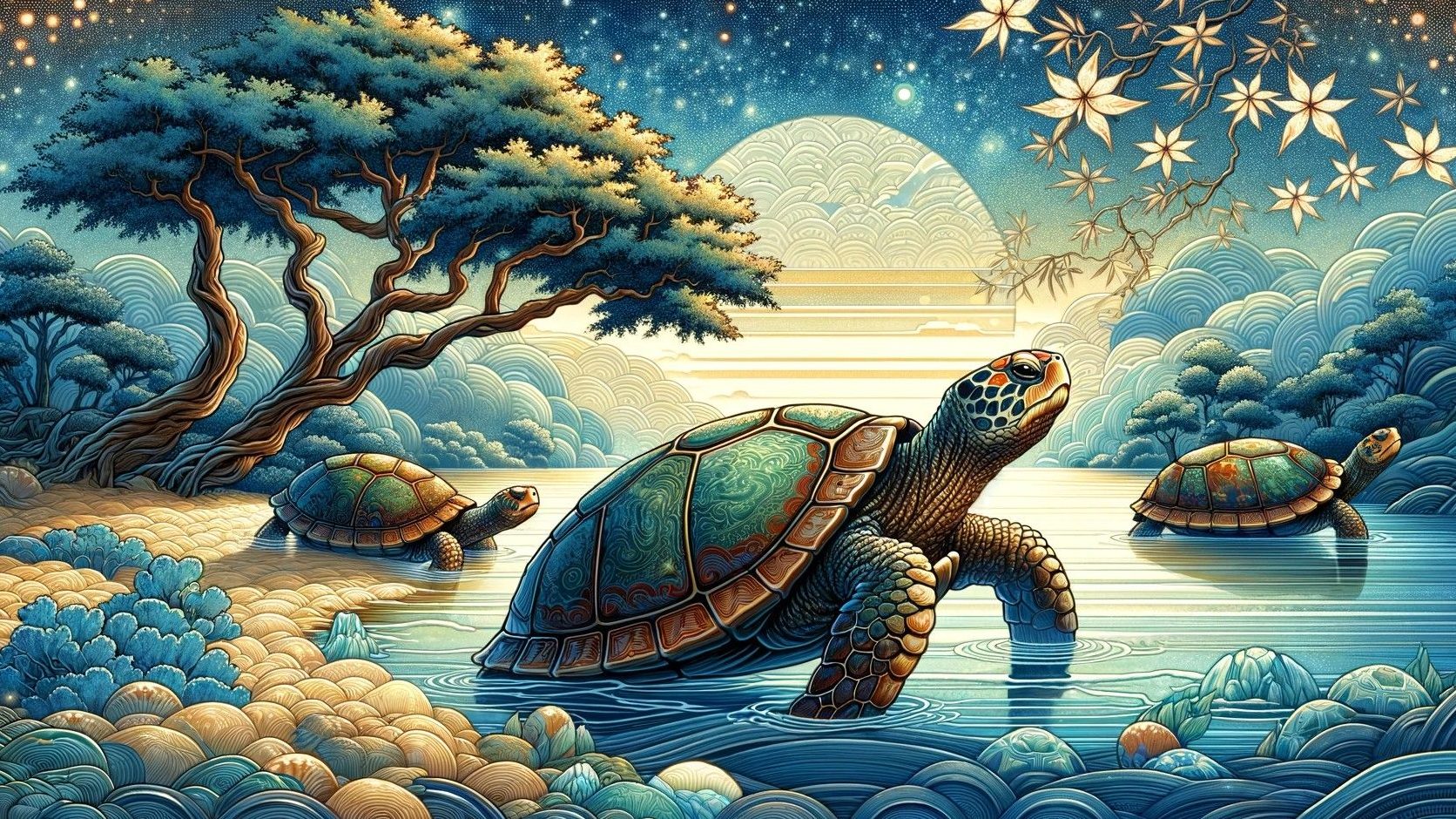
The Turtle – Ancient Wisdom and the Cosmic Order


Turtles in Japanese lore are symbols of wisdom, longevity, and cosmic order. They are believed to support the world, embodying endurance and stability, resonating with Zen teachings that emphasize harmony with the natural world.

The Turtle – Ancient Wisdom and the Cosmic Order

Further Reading


1. “Animals in Japanese Folklore” by National Gallery of Art
2. “Shinto: The Kami Way” by Sokyo Ono and William P. Woodard.
3. “Zen and Japanese Culture” by D.T. Suzuki.
4. “Folk Legends from Tono: Japan’s Spirits, Deities, and Phantastic Creatures” translated by Yanagita Kunio.
5. “The Fox and the Jewel: Shared and Private Meanings in Contemporary Japanese Inari Worship” by Karen A. Smyers.
6. “The Significance of Dragonfly Symbolism” by Tychr

These resources offer a blend of anthropological insights, historical perspectives, and philosophical discussions, providing a comprehensive understanding of the deep-rooted connection between Japanese wildlife and the spiritual traditions of Shinto and Zen Buddhism.


What is your favourite animal? Crows and ravens

What is your favorite animal?

Their iridescent black and purple feathers are like midnight sky cloaks given by impatient gods.

Their glances from electrifying ice blue eyes that cut like a knife through my soul.

I pay tribute in the form of grapes and old bread and they grace me with their presence and it’s a private honour, a moment we share together.

I cannot escape their gaze once they have me in their sights. Feeling them observe me is a privilege that takes me outside of myself and my meagre, petty, human concerns. There is a crow or perhaps a whole family who want to know me.

Throughout history, people were afraid of ravens and crows and thought them to be harbingers of death. Seeing them could be a portent of something bad happening. This never made sense to me.

For me, they represent plucky resourcefulness, wiley cleverness, the ability to see through the darkness of individual and collective difficulties towards the light of knowledge. They are playful and cheeky, intelligent and brimming with personality and individual quirks.

For me, seeing their big black forms soaring in the sky is a sign of a more interesting and magical world, only barely known to us humans.

Their ability to overcome difficulties and weather storms with grace and perseverance is inspiring.

Manu Tukutuku

The closest native bird to a crow in terms of cultural significance in Māori tradition might be the ‘manu tukutuku’ or the kite. Kites were seen as messengers to the heavens and were used in ceremonies to send messages to the gods.

Crows in the Nordic pagan tradition

In Nordic tradition, crows, particularly ravens, hold significant magical and symbolic meanings. They are often associated with Odin, the chief god in Norse mythology, who is known for wisdom, war, and death. Odin had two ravens, Huginn and Muninn, which means “thought” and “memory” respectively. These ravens would fly across the world every day and bring back information to Odin, symbolizing his connection to knowledge and his far-reaching divine power.

Ravens in Nordic tradition also symbolize prophecy, fate, and the connection between the physical and spiritual worlds. They are viewed as guides or messengers from the gods, providing insight and foretelling future events. This connection with the mystical and unseen aspects of life made them revered and sometimes feared creatures in the Norse culture.

Ancient Word of the Day: Adsum

From Latin: “Adsum” – be here now

The life, in a form, that we all live.

Adsum abandons hopelessness and blind hope and even rational hope.

Hope is that virtue by which we take responsibility for the future and a quality that gives our actions special urgency.

Adsum means to ‘act in hope’

The singular virtue of acting in hope has nothing to do with the likelihood of a specific outcome, it has simply to do, in this moment with participation in the renewal of the earth, however that will manifest. Mature hope involves a willingness to allow that brokeness and beauty sometimes intertwine.

~ Lyanda Lynn Haupt, Rooted: Life at the Crossroads of Science Nature and Spirit.
Travel: Walks along the Water of Leith, Edinburgh
Travel: Walks along the Water of Leith, Edinburgh Copyright Content Catnip 2017

It is important to say what hope is not. It is not the belief that everything was, or is, or will be fine. We live in an extraordinary time, full of vital, transformative movements that could not be foreseen. It is also a nightmarish time. Full engagement requires the ability to perceive both.

Rebecca Solnit, hope in the dark.

For the coming year of 2024 I vow to act in hope for a better future. To find hope through action and to cultivate hope and peace through my actions for animals and for other people.

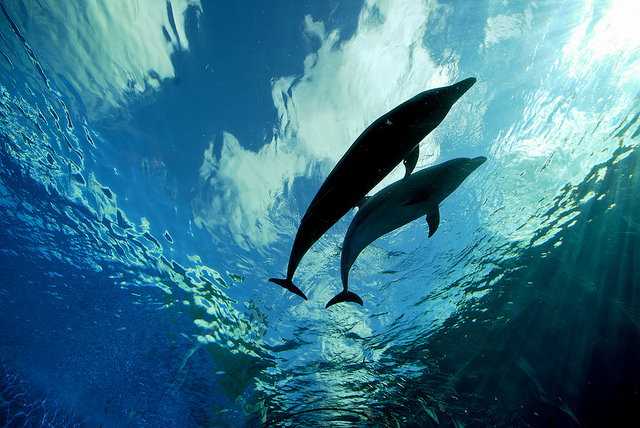
Dolphins as Taniwha in New Zealand

Dolphins are mystical beings full of intelligence, compassion and consciousness. For different Māori iwi, dolphins hold sacred significance and they are known as  taniwha. They are considered tapu (sacred) and possessing a powerful mauri (lifeforce).

What are Taniwha?

Taniwha (pron. tan-ee-far) are mysterious creatures that dwell in the sea, rivers, lakes or in caves. They have a reptilian, fish-like or amphibious appearance and can shape-shift at will to confuse humans. They could be likened to a dragon from Celtic myth, a selkie in Scottish myth. Although unlike dragons they rarely have a generic appearance and can take on the form of a shark, lizard, whale or dolphin or even an inanimate object like a log in a river. Some taniwha are fierce and full of cruelty while others are peaceful, gentle and helpful. In order to appease a local taniwha and to stop it from running amok, i.e. kidnapping women and children or killing people, tribes would offer karakia (incantations) or koha (gifts). In many cases, taniwha were benevolent creatures, full of kindness and affection. These types would guide and reorient lost people who strayed far from their tribe or who found themselves on a dangerous stretch of water. Some would warn of an impending invasion by a neighbouring tribe, giving time for the men to get ready for battle.

https://contentcatnip.com/wp-content/uploads/2021/03/2fad2-4881676285_f98cea8b76_z.jpg

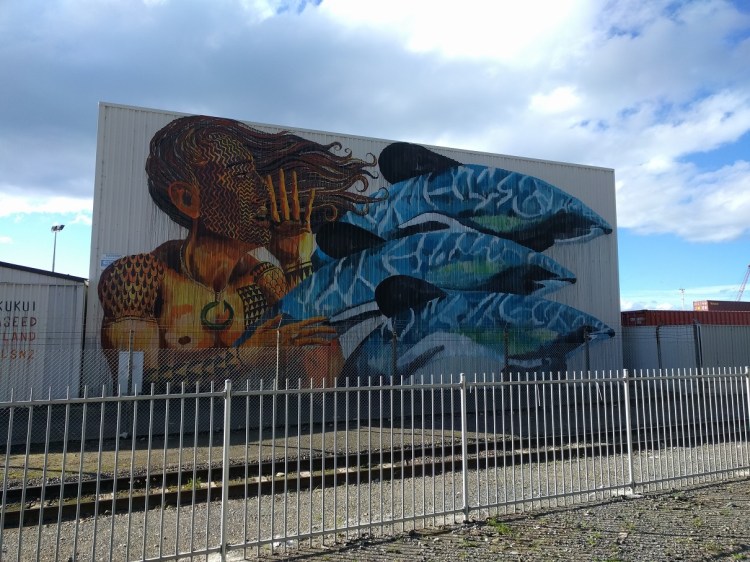
The endangered Maui’s dolphin

Kai’ili Kaulukukui: “This mural addresses the importance of Maui’s Dolphins, which are critically endangered and the tiny remainder is dwindling rapidly. They are the smallest species of dolphin on the planet, and have unusual breeding practices that lead to a low reproduction rate. We need to speak up for them now before they quietly disappear. I tried to present them as large as possible to represent the immediate importance of this issue.”

Seawalls: Artists for Oceans in Quirky Napier, New Zealand
Kai’ili Kaulukukui: “This mural addresses the importance of Maui’s Dolphins, which are critically endangered and the tiny remainder is dwindling rapidly. They are the smallest species of dolphin on the planet, and have unusual breeding practices that lead to a low reproduction rate. We need to speak up for them now before they quietly disappear. I tried to present them as large as possible to represent the immediate importance of this issue.”

The Taniwha named Tuhirangi of the Marlborough Sounds

According to an ancient story, the legendary taniwha Tuhirangi guided Polynesian scout/explorer Kupe from the ancient Polynesian homeland of Hawaiki to New Zealand. Kupe left his delphic companion at the French Pass in the Marlborough Sounds. When Kupe later returned to the Marlborough Sounds with his kin, Tuhirangi famously guided the first canoes through a dangerous stretch of water between D’Urville island and the mainland. Later during the Victorian era, a dolphin named Pelorus Jack made regular appearances in areas of the Marlborough Sound, Nelson and Wellington between 1888 and 1912. In 1900, a correspondent for a Māori-language newspaper described the dolphin as ika tipua (supernatural fish) and suggested that it could be a taniwha. For 24 years, the naturally playful Pelorus Jack would swim alongside of ships sailing through the French Pass. If there were two boats then she would choose the faster one and would easily outrun the vessel, reaching speeds of up to 30 km per hour. In particularly treacherous weather at night, Pelorus Jack’s outline would shimmer in the water, glowing with phosphorescence from plankton in the water. Below is part of a song that recounts Kupe’s journey.

”When including humans in a game of tag, dolphins will make allowances for a human’s vastly inferior swimming ability. Giving the human a chance to play a game in which he or she would otherwise be hopelessly outclassed. They are adept at teaching things to each other and to humans. Researchers conclude that dolphins have a well-developed theory of mind.”

Caspar Hendersen, The Book of Barely Imagined Beings: A 21st Century Bestiary

The Taniwha named Opo of Opononi, Northland

In the 1950’s a female bottle nose dolphin called Opo become estranged from her pod and actively sought out human company. She attracted big crowds in the little seaside town of Opononi, in Hokianga Harbour in 1955 and 1956. A playful and sociable dolphin, she allowed children to handle her and ride on her back. She relished showing off and responded to human cheers by performing ever more sophisticated leaps in the air. There were waiata (songs) dedicated to her. The whole nation mourned when she died in March 1956.

Opo of Opononi
Opo of Opononi

”Several studies have shown that bottle nose dolphins have learned 60 or more signals for human nouns and verbs. Enough to construct around 2,000 sentences which they demonstrably understand.”

Caspar Hendersen, The Book of Barely Imagined Beings: A 21st Century Bestiary

The Taniwha named Moko of Mahia Beach, North Island

Moko looks into a mirror

Only a few years ago in 2008, a young bottle nose dolphin named Moko became legendary in New Zealand by helping with a whale rescue. For many hours, conservation workers had been trying to coax two beached pygmy sperm whales off the beach and out to sea, with no luck. Moko responded to the distress calls of the whales and led them back out to sea through a narrow channel of tidal water. In 2010 Moko moved to the East Cape region near Whakatane and was given a local minder to keep him in optimal health. He became the subject of a documentary called Soul in the Sea. This story centered around Maori wahine Kirsty Carrington. A Maori/Cook Islander who didn’t grow up with Maori culture. Kirsty became the protector of Moko and longed to get in touch with her Maori roots by learning Te Reo Maori. After she spent time with Moko, Kirsty felt deeply connected with her culture found it somehow easier to understand Te Reo Maori.

Tragically Moko’s young life was cut short when he was found washed up on the beach near Tauranga. The cause of death was never uncovered. When Kirsty arrived at the beach to see Moko’s body, she called on a local tohunga (priest) to deliver a final stirring karakia (blessing) over the dolphin’s body. Time Magazine named Moko as one of the world’s top ten animal heroes.

Wurunjeri beliefs in Australia

The Wurundjeri tribe of Australia believe that dolphins are sacred and should never be killed. They consult with dolphins on important questions via telepathy, and believe that when they die they will become dolphins and remain off-shore guiding their human families.

Dolphins have been the subject of fasination and reverence throughout all sea-faring cultures, including the ancient Vikings and ancient Greeks….

Thule as Tile on the Carta Marina of 1539 by Olaus Magnus, where it is shown located to the northwest of the Orkney islands, with a "monster, seen in 1537", a whale ("balena"), and an orca nearby.
Thule as Tile on the Carta Marina of 1539 by Olaus Magnus, where it is shown located to the northwest of the Orkney islands, with a “monster, seen in 1537”, a whale (“balena”), and an orca nearby.

”On one occasion, a shoal of dolphins, large and small was seen. And two dolphins at a little distance appeared swimming underneath a little dead dolphin when it was sinking, and supporting it on their backs, trying out of compassion to prevent its being devoured by predacious fish”

Aristotle 350 B.C.
Here be the Viking Hoard: The Mystery of the Lewis Chessmen http://wp.me/p41CQf-ItW

Find out more

Te Ara The Encyclopedia of New Zealand: Taniwha Te Ara The Encyclopedia of New Zealand: Dolphins Pelorus Jack/ Tuhirangi

KAIKAI-A-WARO. Marlborough Express, Volume XLIV, Issue 301, 30 December 1910

Moko’s selfless rescue of two beached whales Moko: Cause of death a mystery Mana Wairoa

The Book of Barely Imagined Beings: A 21st Century Bestiary


I hope you enjoyed this post and let me know what you thought of it below…


10 Interesting Things I Found on the Internet #117

Edition #117 of Interesting Things I Found on the Internet includes the everywoman hair models, #Jungian depth #psychology, #medieval history , classic acid #techno and more #ContentCatnip


“A tiny autumn flower

blooming right beside me

whispers gently:

“O, whatever has perished returns everlastingly to us!”

Bokusui Wakayama (images: Reiji Hiramatsu / Shinsui Ito)

The year in cheer: 100 reasons to be cheerful about the world

Happy New Year! And welcome to our annual look back at the brightest, boldest ways the world improved, evolved or otherwise changed for the better. This epic list is a cornucopia of hopeful facts pulled from our stories throughout 2023, and we hope it cheers you and energizes you for the year ahead.

Via Reasons to be Cheerful.


The story of the ‘Everywoman’ art in nail and hair salons throughout the world

You may have seen images of this pop-art, 80’s style expression of beauty if you get your hair done or nails done in any retro salon. There is an obscure reason why her image and this style have been so pervasive over the decades…she unobtrusively represents the everywoman. We project our hopeful glamorous futures upon her.


An excellent essay on Jungian depth psychology, shadow work and spirituality

Via an exciting new blog discovery on WordPress the Alchemist Papers

Healing and development can be greatly aided by engaging in Shadow Work. We may face our anxieties, uncertainties, and past traumas by exposing them to the light. This method can enhance our insight, boost our confidence, and promote positive interactions with others. Doing so allows us to free ourselves from habits that no longer serve us and go on with renewed focus and determination.

An excellent essay on Jungian depth psychology, shadow work and spirituality

A fanastically immersive science fiction audio short story by my friend Giuseppe

It’s in Italian but captioned in English on Youtube and has terrific audio effects for the full immersive experience.

Mother and daughter cats live their best lives guarding puffer fish in Yamaguchi, Japan

A slow, meditative and enjoyable cats eye view on life in a Japanese harbour. Watch on Youtube

Mother and daughter cats live their best lives guarding puffer fish in Yamaguchi, Japan


A yummy eggless, vegan chocolate cake from Pick Up Limes


A fire phoenix undulates and dances through the night sky in Shanghai

Ever imagined a world where giant dragons or phoenixes careen through the sky? This is possibly how that would look. The sheer imagination and engineering ability of its creator is astounding.


Badu sings the blues

Nozomi 303 by Thomas Heckmann

A satisfying and enjoyable cut of crunchy acid techno from one of the masters


Q. Why did ancient Egyptians create hieroglyphs in profile?

This is an interesting post by my interesting new friend Aladin or Lamp Magician as he is known on here.

Lamp Magician points out that not all ancient Egyptian art is in profile, however a lot of it is – there is a fascinating reason behind this!

Where in modern art a vanishing point defines perspective, depth, allowing for an understanding of space and time – with ancient Egyptian hieroglyphs “there is no time, no space; we are everywhere and all the time”

Egyptians juxtaposed another technique to transcribe movement and time: elements are painted from the front on subjects from the side, thus making visible what was invisible. For example, an eye appears from the front on a face in profile; it can then be represented wide open to signify that the character is doing something. 

Lamp Magician – definitely worthy of following!
Chefs d’oeuvre de l’art égyptien

What’s the difference between a tavern, an inn and an alehouse?

I have always wondered what the difference is between these terms, especially while travelling through England where you have all of these kinds of pubs with these different names. The differences, which are rooted in historical use and localised agriculture are indeed fascinating.

Debonaire, daring horseman/historian Jason Kingsley talks through the historical origins of these terms. This is an excellent YT channel to subscribe to!


“A Dream of a New” by Graham Francoise

This mystical, levitating woman connected to roots and sun fills me with wonder.

“A Dream of a New” by Graham Francoise

Anatomy of History by Wrong Hands

Pretty much spot on…

Anatomy of History by Wrong Hands

Darrel Rhea – Flowers and Mermaids

“A golden girl, a mixture of flower and mermaid, full of light and grace, the sight of whom is also sad, in that she carries with her, on her route to the sea, the feeling of youth that fades, of the beauty that is not ours alone—it is a gift of life in its beautiful and melancholic constant ebb and flow.”

Darrel Rhea on Behance
Darrel Rhea - Flowers and Mermaids

Did you enjoy this collection? let me know what you think of it below. Thank you for reading my dear friends!

If you had a freeway billboard what would it say? Knowledge is Power

If you had a freeway billboard, what would it say?

Knowledge is Power

So gather together the glass beads of your curiosity and inner light and pursue knowledge relentlessly until you’ve managed to understand all that has been hidden from you through the guile adults and those more powerful than you, poverty, a difficult childhood – whatever else stands in your way.

Knowing through your mistakes and pain is better than being blissfully ignorant. Always.

Being stupid or living in denial about reality is dangerous in our complex world, so don’t fool yourself.

Be steely in your mind and take no shit, but be soft in your heart and especially to animals, children and those who have truly earned your trust. It will be harder for people to hurt you when you stand up for yourself.

Embracing the Shamanic Spirit of Australian Wildlife: A Journey Through Australian Power Animals of Land, Sky, and Sea

Australia’s diverse wildlife offers a rich tapestry of shamanic wisdom, insight and power, with each animal embodying unique spiritual teachings.

Recognising these creatures as sentient beings of unique intelligences and lives quite apart from our own, in this article we will explore the profound spiritual symbolism and strengths of eight iconic Australian animals. These represent the elements of earth, air, and water.


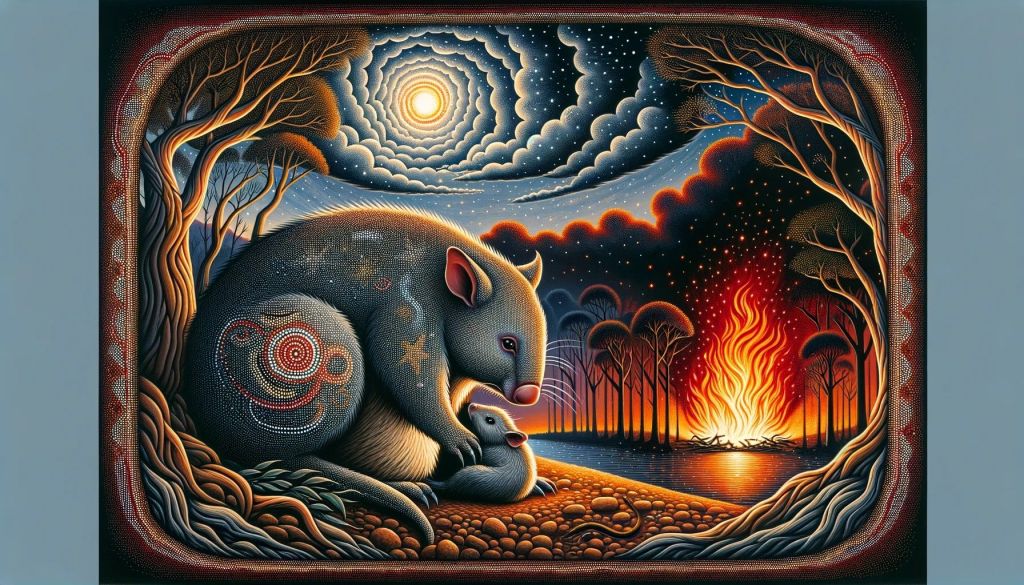
The Earth: The Wombat – Guardians of Groundedness and Perseverance


Wombats, with their sturdy build and burrowing lifestyle, embody the essence of groundedness and perseverance. They teach us the value of stability, hard work, and resilience in facing life’s challenges.

The Earth: The Wombat – Guardians of Groundedness and Perseverance

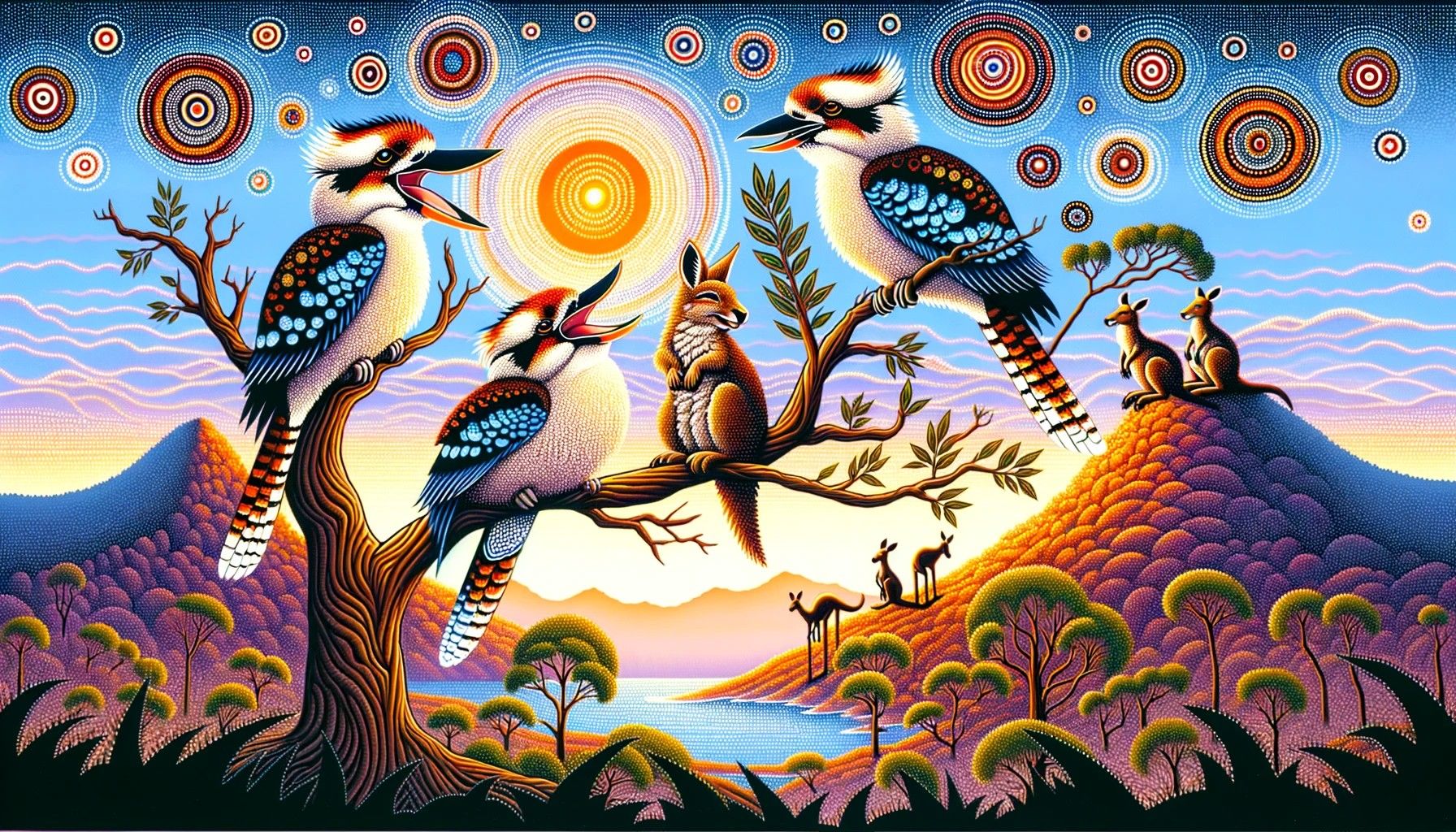
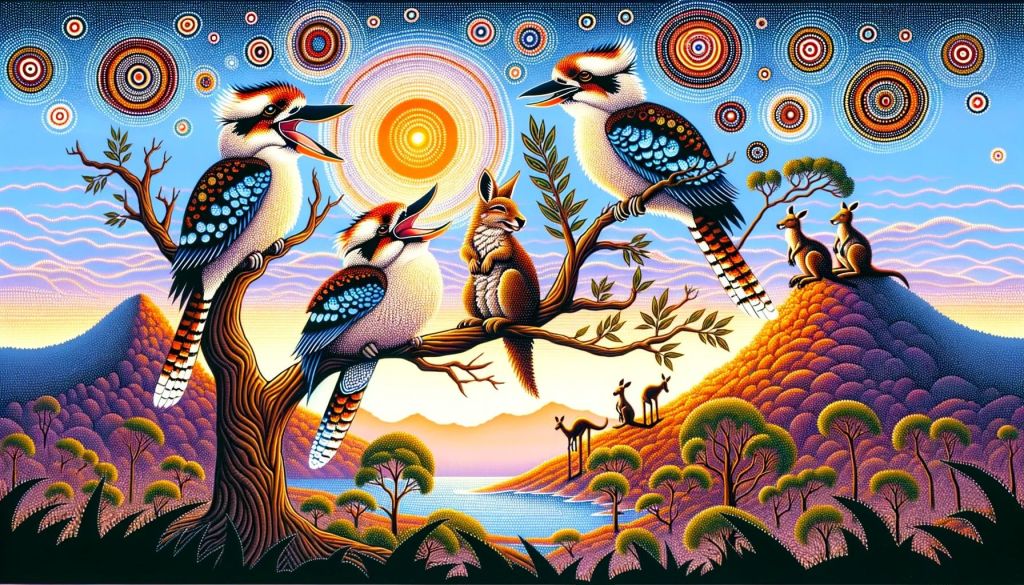
The Air: The Kookaburra – Bearers of Joy and Laughter


Kookaburras, known for their distinctive call, symbolise joy and laughter. They remind us to find happiness in our lives and to approach situations with a light-hearted spirit.

The Air: The Kookaburra – Bearers of Joy and Laughter


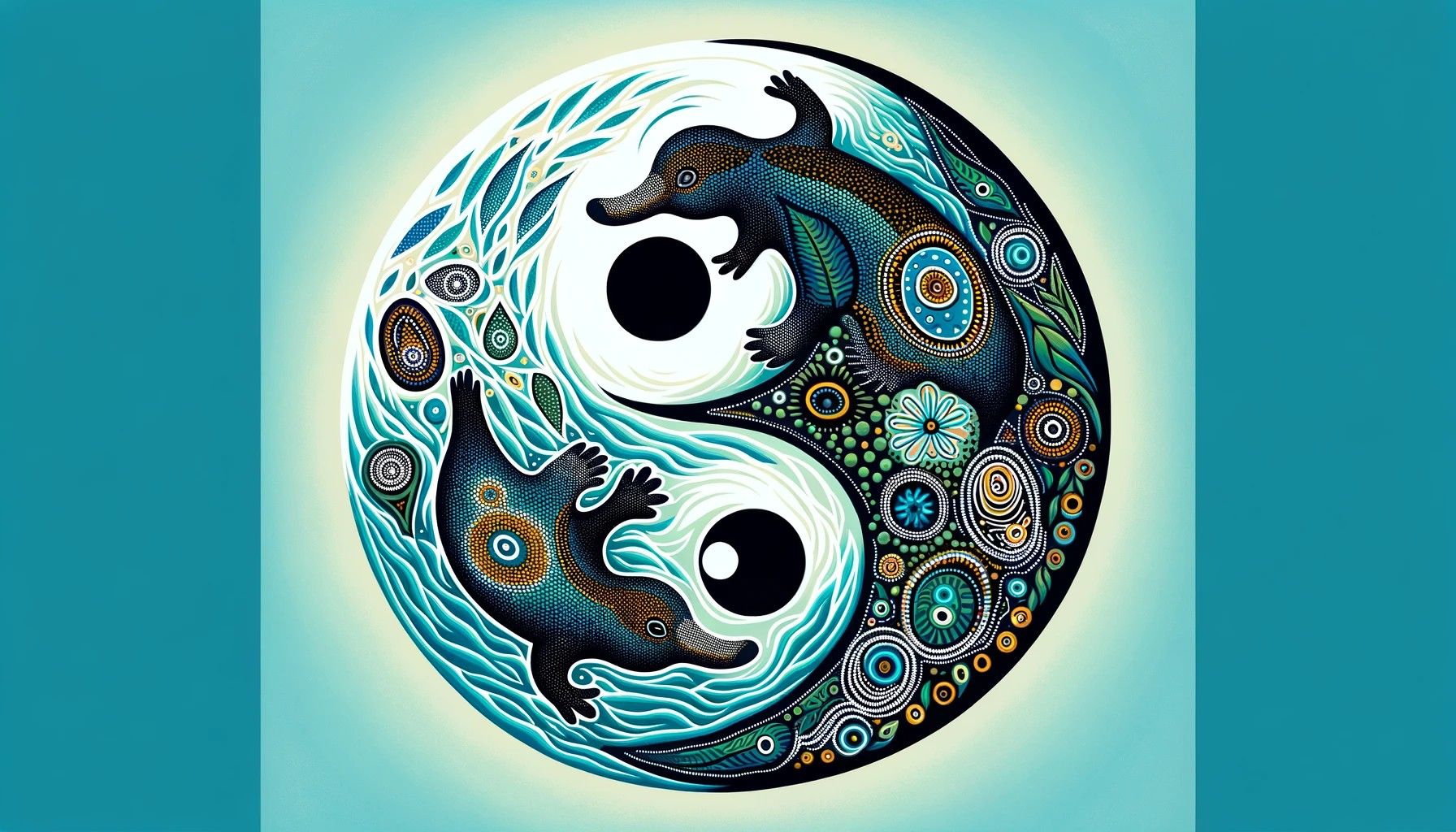
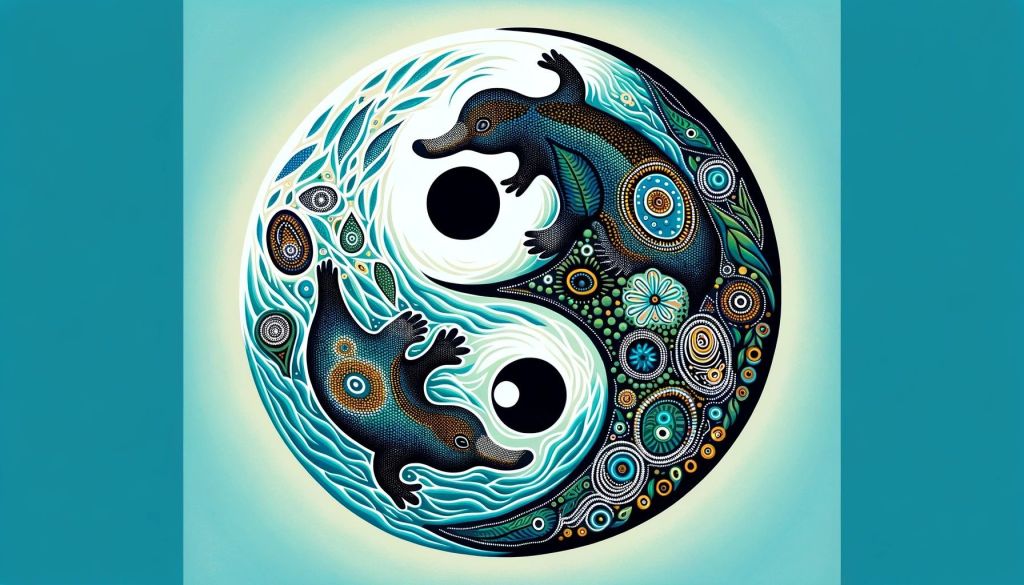
The Water: The Platypus – Symbols of Uniqueness and Adaptability


Platypuses, with their unique appearance and lifestyle, represent the beauty of being different and the power of adaptability. They encourage us to embrace our uniqueness and to fluidly navigate through life’s changes.

The Water: The Platypus – Symbols of Uniqueness and Adaptability

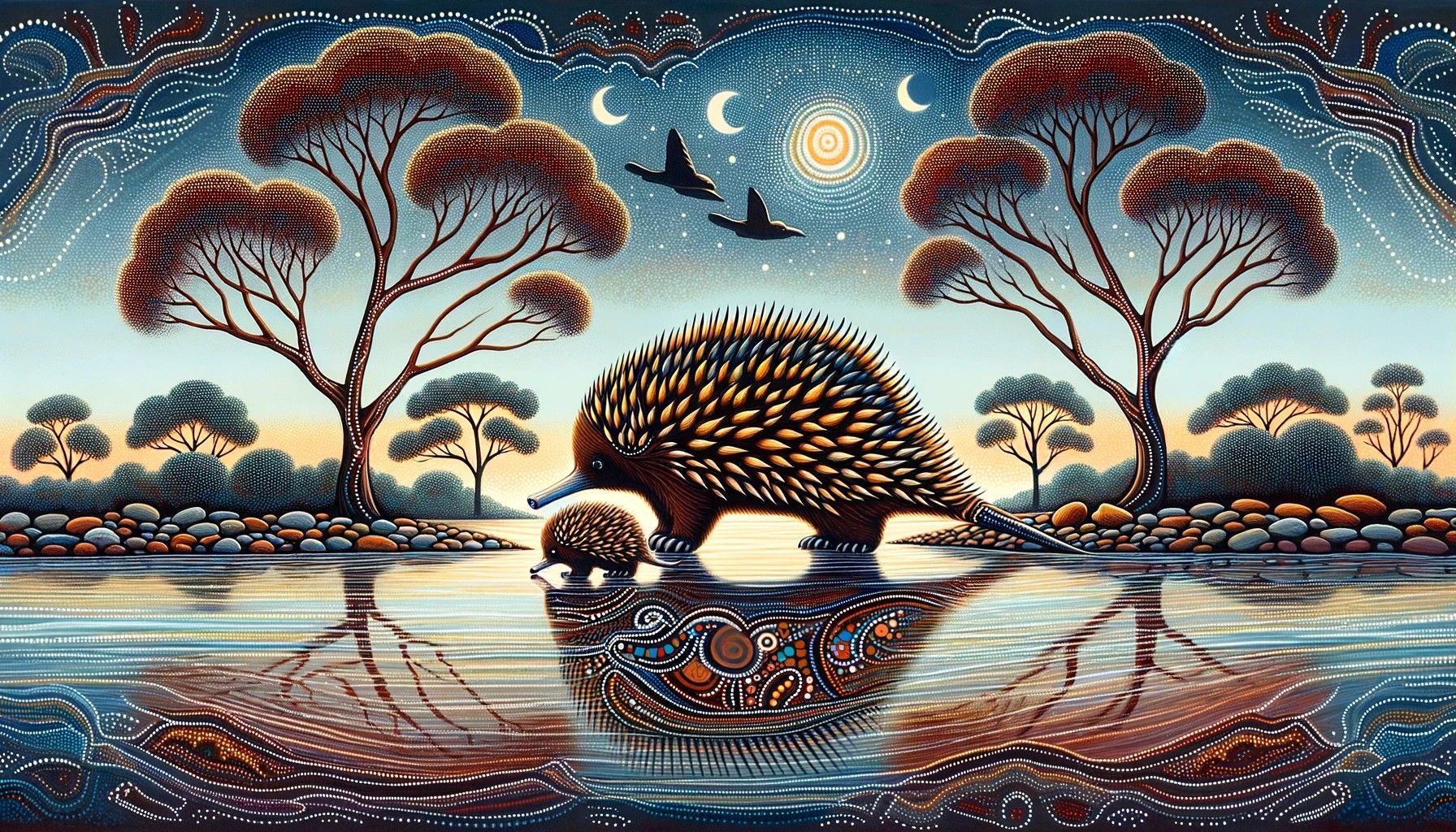
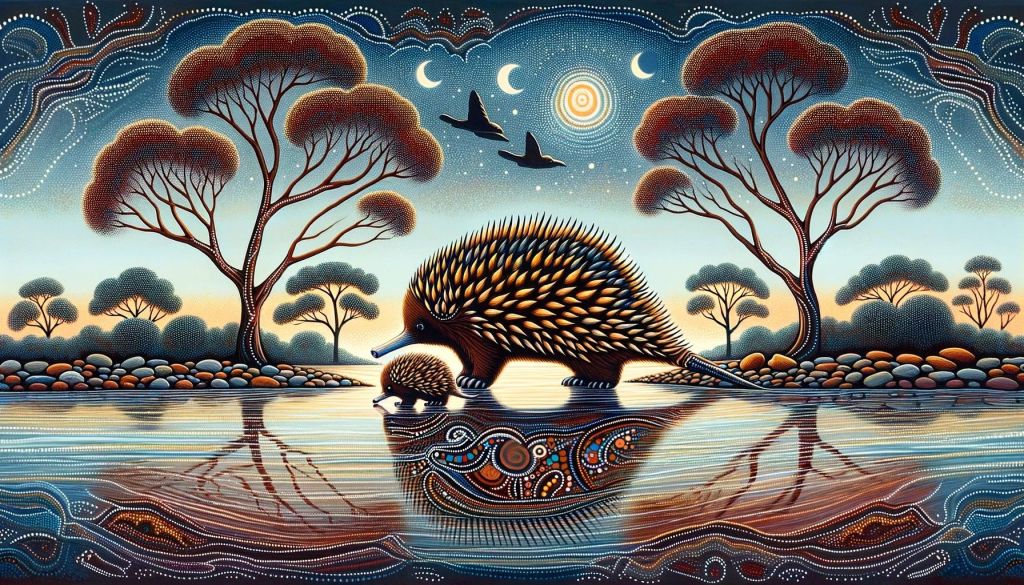
The Earth: The Echidna – Teachers of Solitude and Protection


Echidnas, solitary by nature, illustrate the importance of self-reliance and personal boundaries. They guide us in understanding the value of solitude and the need to protect our personal space and well-being.

The Earth: The Echidna – Teachers of Solitude and Protection

The Air: The Cockatoo – Messengers of Communication and Community


Cockatoos, with their social behaviour and loud calls, are symbols of communication and community. They encourage us to express ourselves clearly and to value the strength found in social connections.

The Air: The Cockatoo – Messengers of Communication and Community

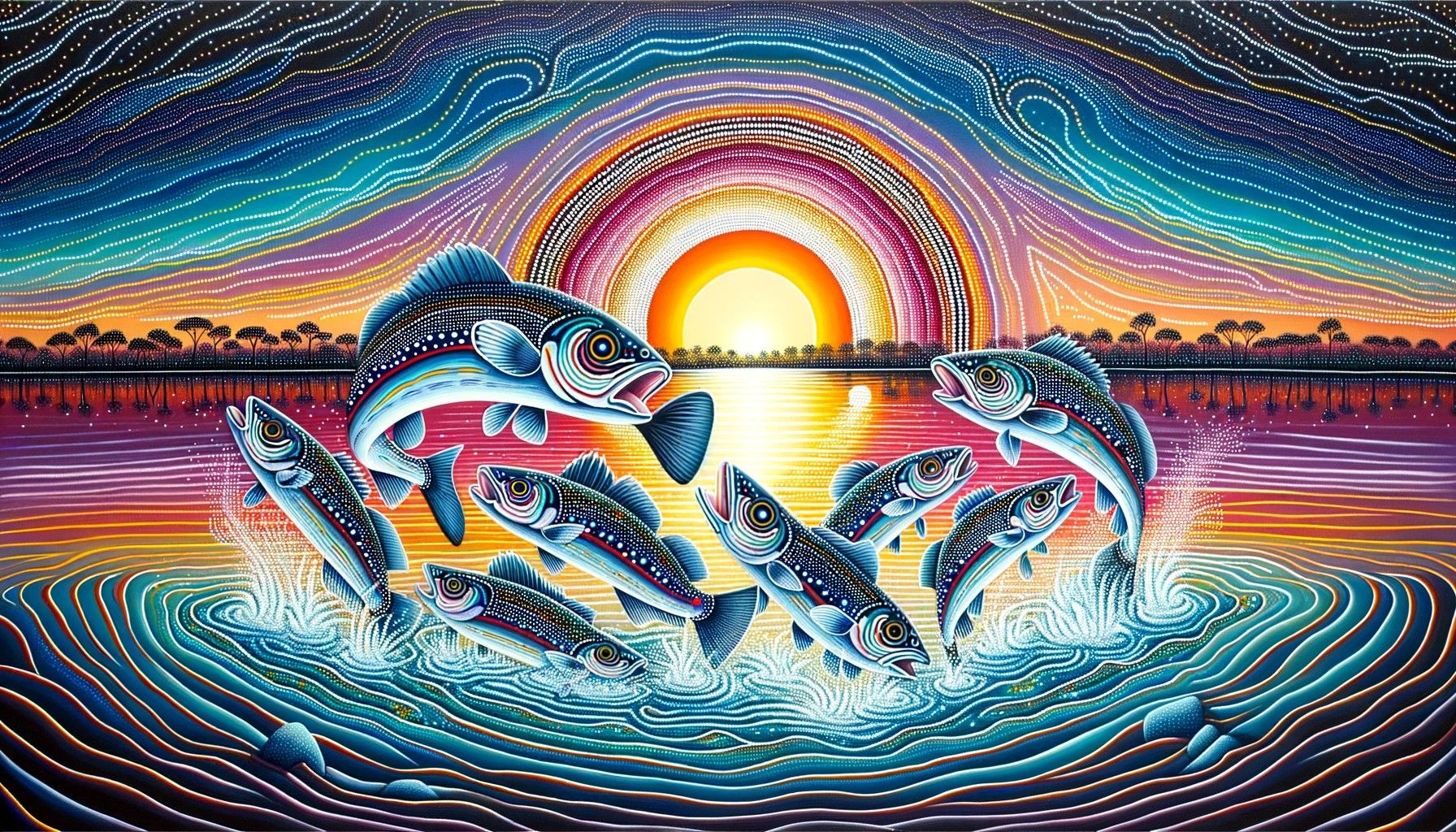
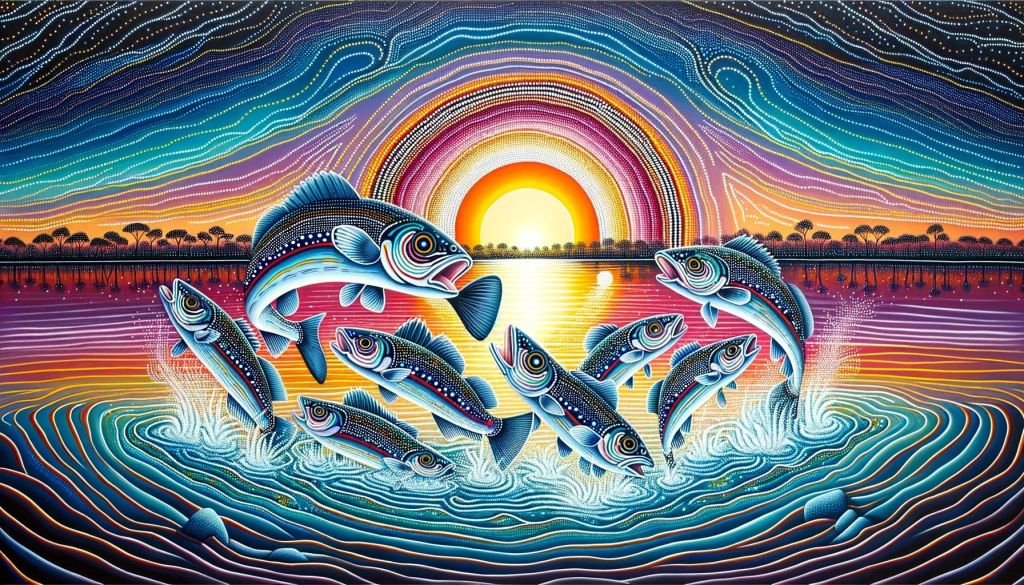
The Water: The Barramundi – Icons of Transformation and Growth


Barramundis, undergoing remarkable growth and changes in their lifecycle, represent transformation and personal growth. They inspire us to embrace our own journeys of change and development.

The Water: The Barramundi – Icons of Transformation and Growth

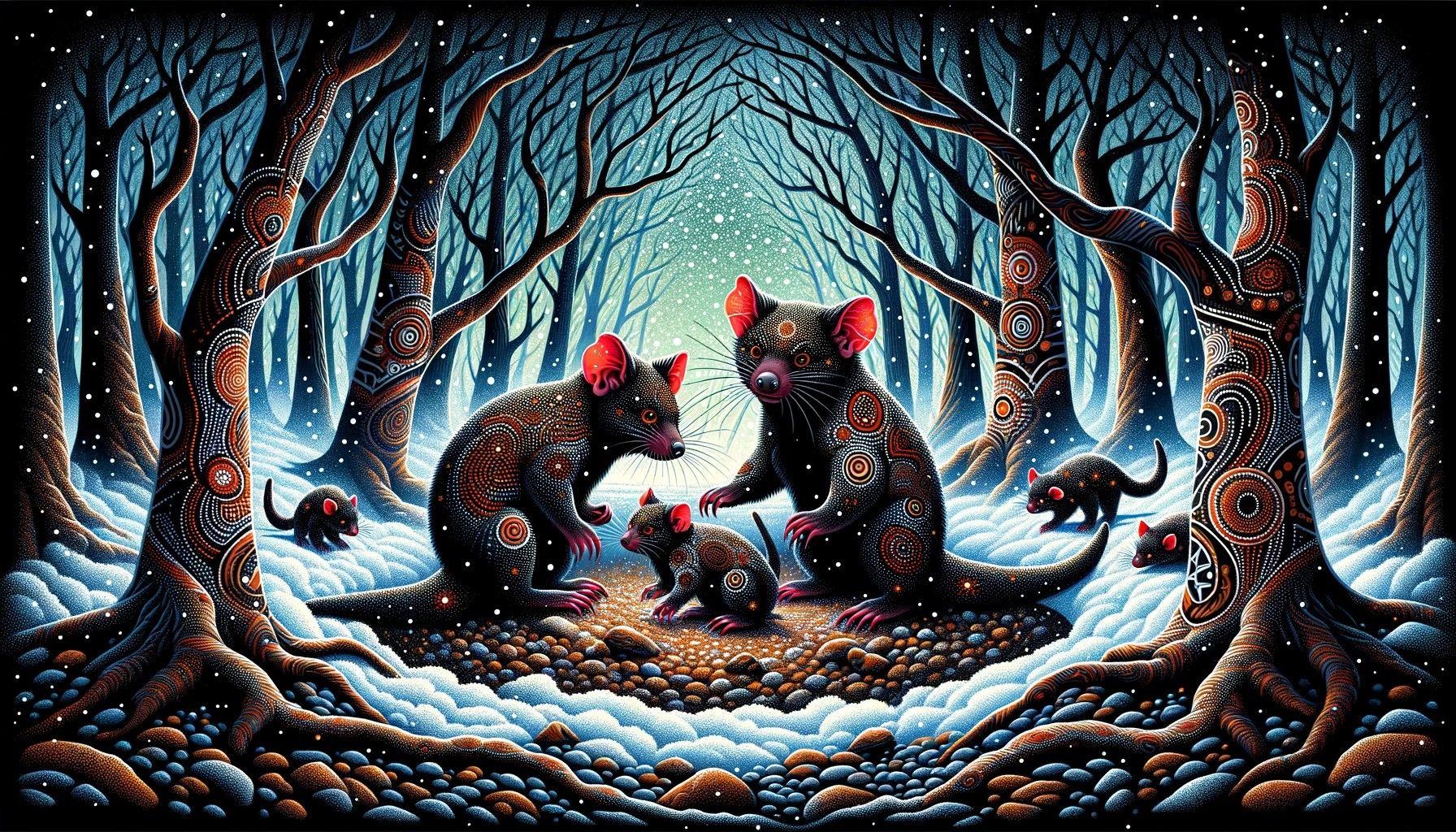
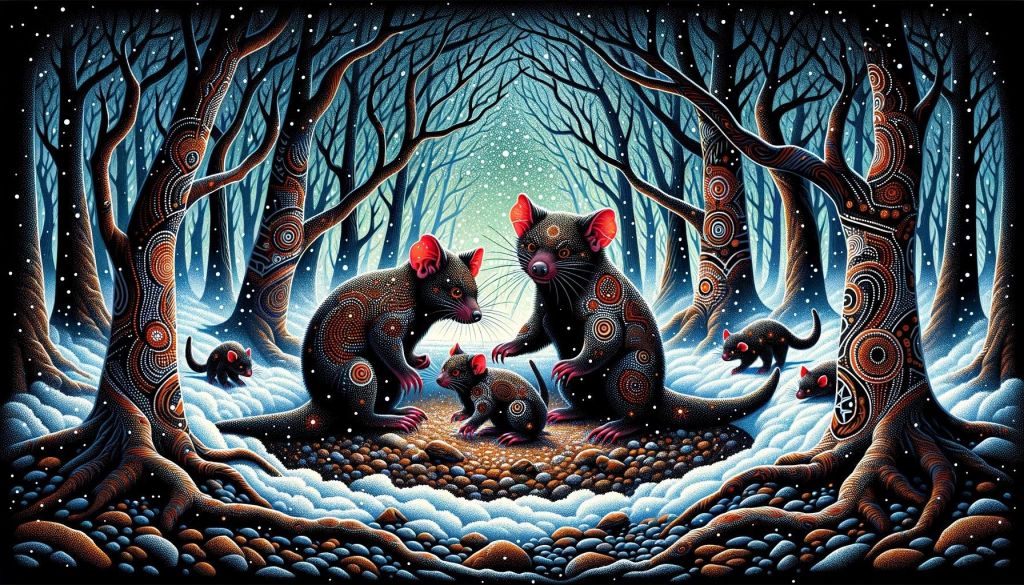
The Earth: The Tasmanian Devil – Emblems of Raw Energy and Survival Instinct


Tasmanian devils, known for their ferocity, symbolise raw energy and strong survival instincts. They teach us about harnessing our inner strength and resilience in the face of adversity.

The Earth: The Tasmanian Devil – Emblems of Raw Energy and Survival Instinct

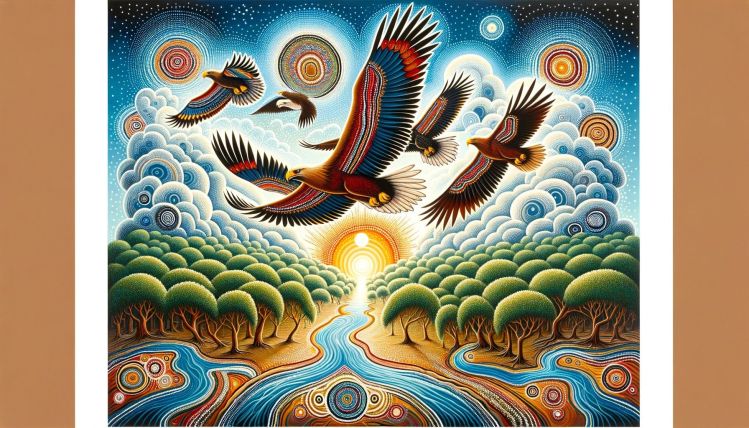
The Air: The Wedge-Tailed Eagle – Visionaries of Freedom and Perspective


Wedge-tailed eagles, soaring high in the skies, embody the freedom of spirit and the importance of perspective. They remind us to rise above our limitations and to see life from a broader viewpoint.

The Air: The Wedge-Tailed Eagle – Visionaries of Freedom and Perspective


Each of these Australian animals, as sentient beings, offers unique shamanic wisdom and spiritual guidance. From the grounding energy of the wombat to the transformative journey of the barramundi, they teach us invaluable lessons about life, resilience, joy, and growth. By connecting with their symbolic meanings, we can draw upon their strengths and insights to enrich our own spiritual and personal journeys.

Do you play in your real life? What does play mean to you?

Do you play in your daily life? What says “playtime” to you?

It means reading 📚 a lot of books.

Dancing around to music.

Trying out cocktails or exotic teas with unusual flavours.

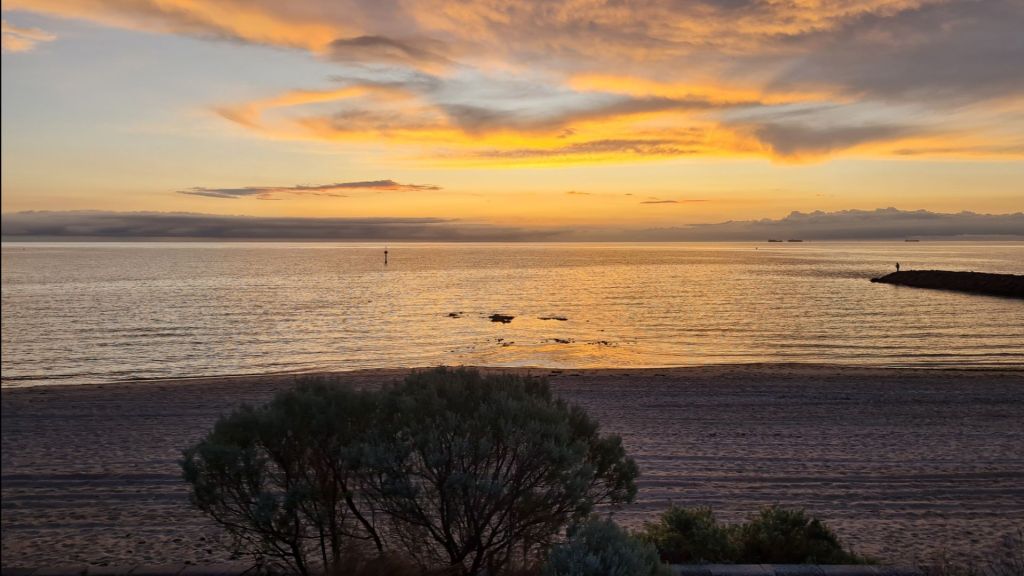
Swimming in the ocean, I am very fortunate to live right next to the beach and I am grateful for this.

Laughing and chatting with PB or other friends.

Going to see live music or a music/ arts festival.

Walking or cycling along the beach.

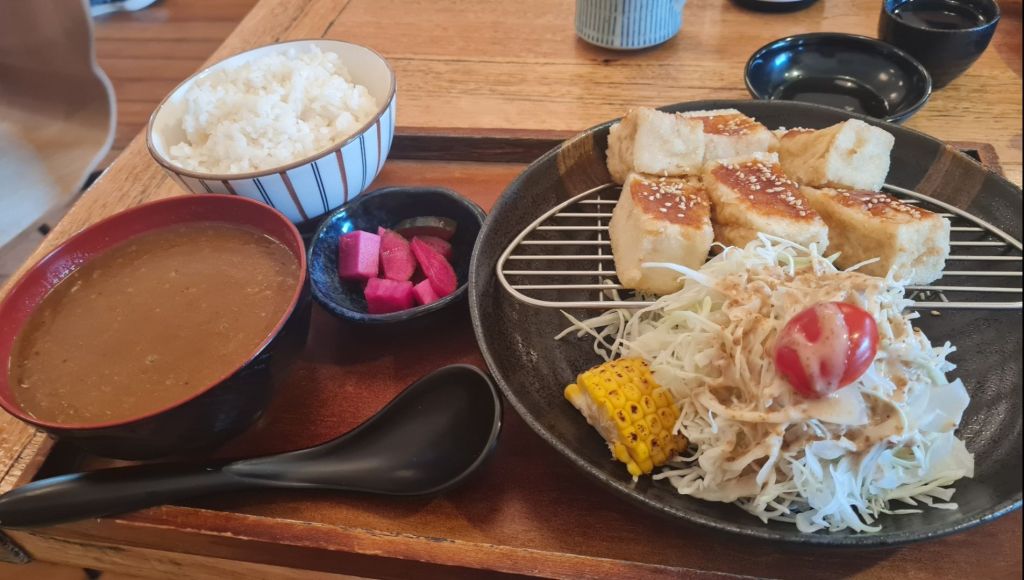
Cooking and eating yummy food.

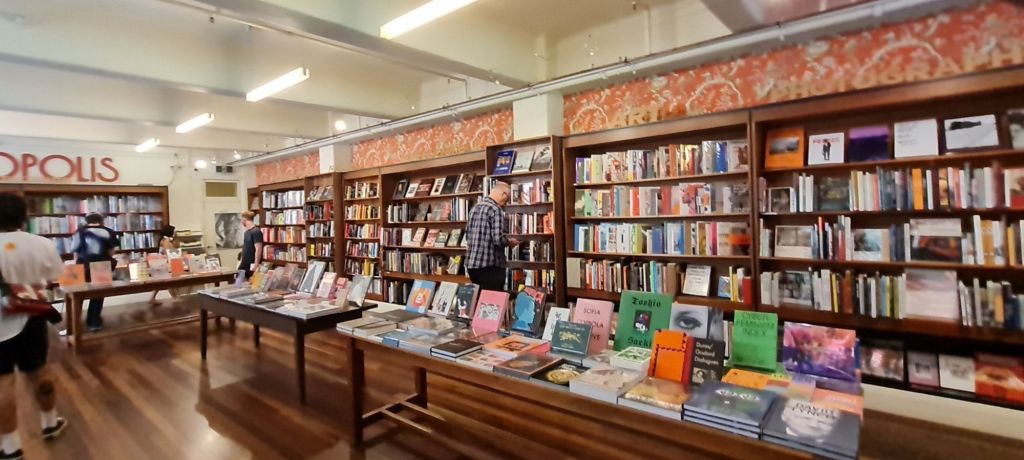
Eploring craft markets, libraries, bookshops, museums and art galleries.

Rearranging my loungeroom which essentially is decorated like the inside of my brain, and also like this blog…with a lot of eclectic, colourful, unusual and wonderful items to gladden the heart.

Taking my neice or nephew on some intense adventure on rollercoasters, snorkelling, cycling or ice-skating.

This has turned into an exercise about all of the things I am deeply grateful for in life. I only wish I was less of a workaholic and did more of these fun things. However, I also consider my work to be a fun activity and the joy of my life.

As the old saying goes. “Find the thing you love doing and you’ll never work a day in your life”. In my case this is true but it did take a long time to find the job I really liked.

What about you? What do you consider play?