Tane Mahuta’s Triumph by Jane Crisp

In the beginning there was no sky, no sea no earth and no Gods. There was only darkness, only Te Kore, the Nothingness. From this nothingness, the primal parents of the Maori came, Papatuanuku, the Earth mother, and Ranginui, the Sky father.

Papatuanuku and Ranginui came together,embracing in the darkness, and had 70 male children. These offspring became the Gods of the Maori. However, the children of Papatuanuku and Ranginui were locked in their parents embrace, in eternal darkness, and yearned to see some light. They eventually decided that their parents should be separated, and had a meeting to decide what should be done.
Finally, Tumatauenga, the God of War, said “Let us kill our parents”. However, Tane Mahuta, the God of man, forests, and all which inhabits the forests, thought that Rangi and Papa should be separated. He thought that Ranginui should go up above,to the sky, and that Papatuanuku should go below, to dwell on earth. All the children, including Tu, the God of War, agreed with Tane.

Tawhiri Matea, the God of winds and storms was the only child who did not wish for his parents to be separated. One by one the children tried to separate their parents. Rongomatane, the God and father of cultivated foods, tried without success. Haumia Tiketike, God of uncultivated food also tried. Then it was the turn of Tangaroa, the God of the sea, and Tumatauenga, the god of war, but neither Tangaroa nor Tumatauenga could separate their parents.

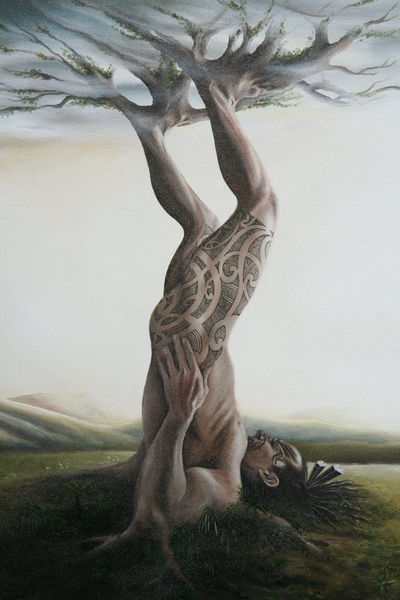
Lastly Tane Mahuta rose. Strong as the kauri tree, he placed his shoulders against his mother Papatuanuku and his feet against his father Ranginui, and he pushed hard,for a very long time, straining and heaving all the while. Rangi and Papa cried in pain, asking their sons” why do you wish to destroy our love?”

After a long time Tane finally managed to separate Rangi and Papa, and for the first time the children saw the light of day (ao Marama) come streaming in. In this painting a handful of Tane’s children fly nearby supporting their God’s success. Graceful Kotuku, representing ‘all things rear and beautiful’ as this sacred moment truly was, the ever welcoming Tui startled
in the excitement as light floods in where darkness once dwelled, and watchful Kaahu who acted as a messenger to the Gods in the heavens, and communicated back with Tohunga here on earth.
Purchase the art of Jane Crisp

Welcome to the rumbling belly of the shaky isles: Orakei Korako


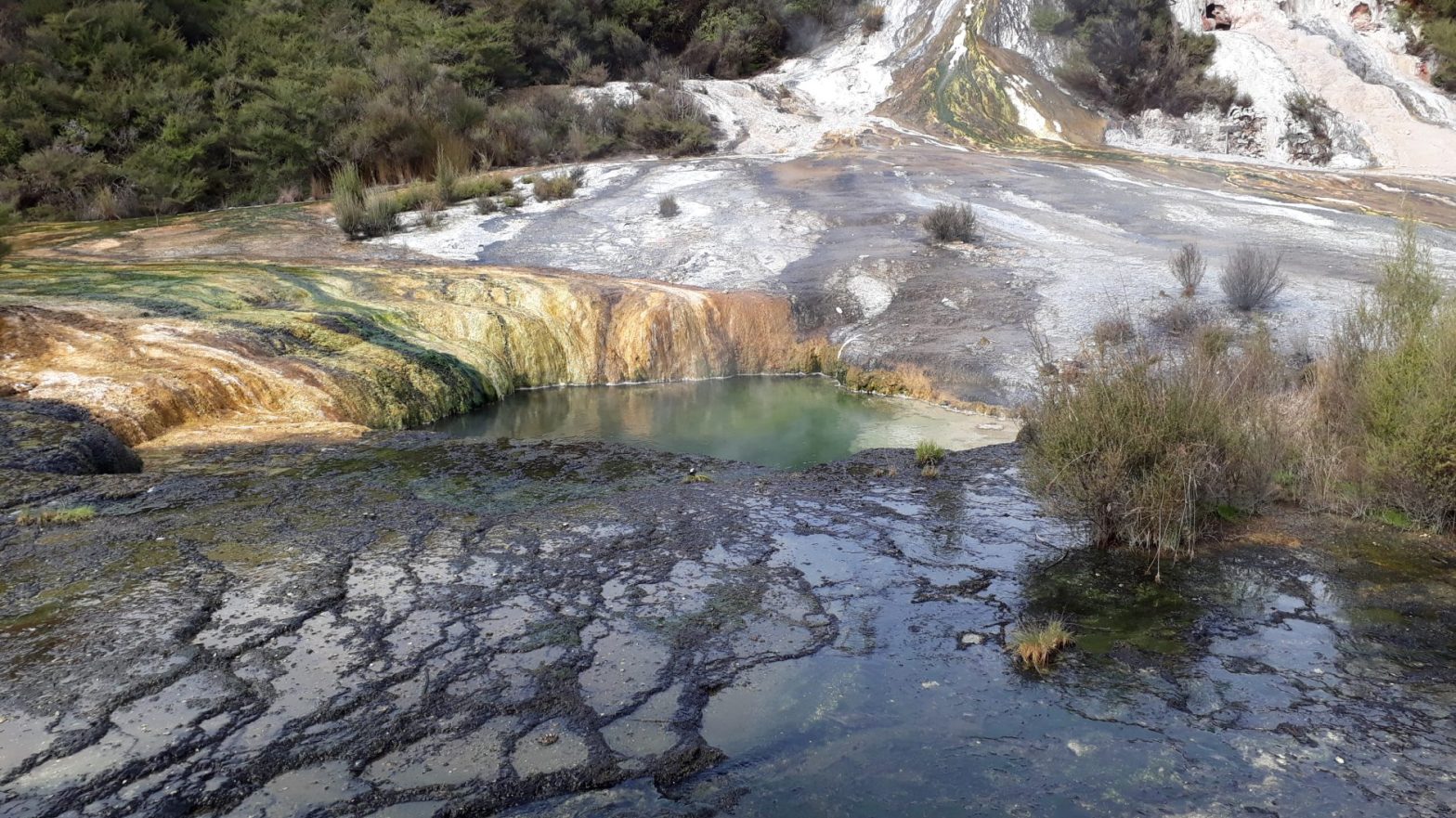
I visited one of Aotearoa’s most unique and unexpected delights, the Orakei Korako volcanic and geothermal park near Taupo on the North Island.

Welcome to the rumbling belly of the shaky isles: Orakei Korako! I visited one of Aotearoa’s most unique and unexpected delights, a #volcanic and #geothermal park near Taupo on the North Island #travel

The earth’s crust is made up of a patchwork of interlocking slabs (techtonic plates) which move independently like enormous ice flows. Today New Zealand straddles the boundary between the Indian, Australian and Pacific plates. Tremendous natural energy is released which results in many spectacular geologicial occurrences including mountain building, earthquakes and volcanic activity.

Over the past 150 years, huge earthquakes have rocked the shaky isles, and include Wellington (1855), Murchison (1929), Napier (1935), Edgecumbe (1987) and Christchurch (2010) have resulted in marked land shifts and dramatic geothermal events.

Life on an unstable landmass: Taupo and Rotorua Part Two
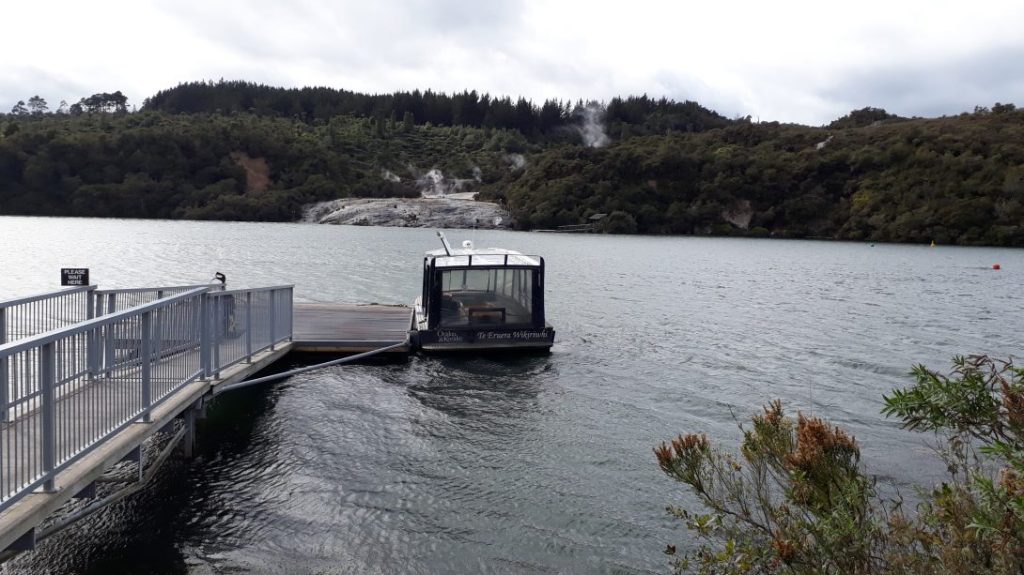
Initially we take a boat over to the Orakei Korako geothermal field, it’s only accessible by boat which makes it feel like even more of an adventure

The Taupo Volcanic Zone

The Taupo Volcanic Zone is generally recognised as one of the most active volcanic areas in the world. About 250 km in length and 30km -80km wide, the zone follows the north easterly direction. It was anchored to the south by the volanoes of Tongariro, Ngauruhoe and Ruapehu.

At the northern end is White Island an active volcano 48 km off the Bay of Plenty coast. Within the zone are 17 major hydrothermal fields, two of which contribute about 5% of New Zealand’s total power supply.

Orakei Korako

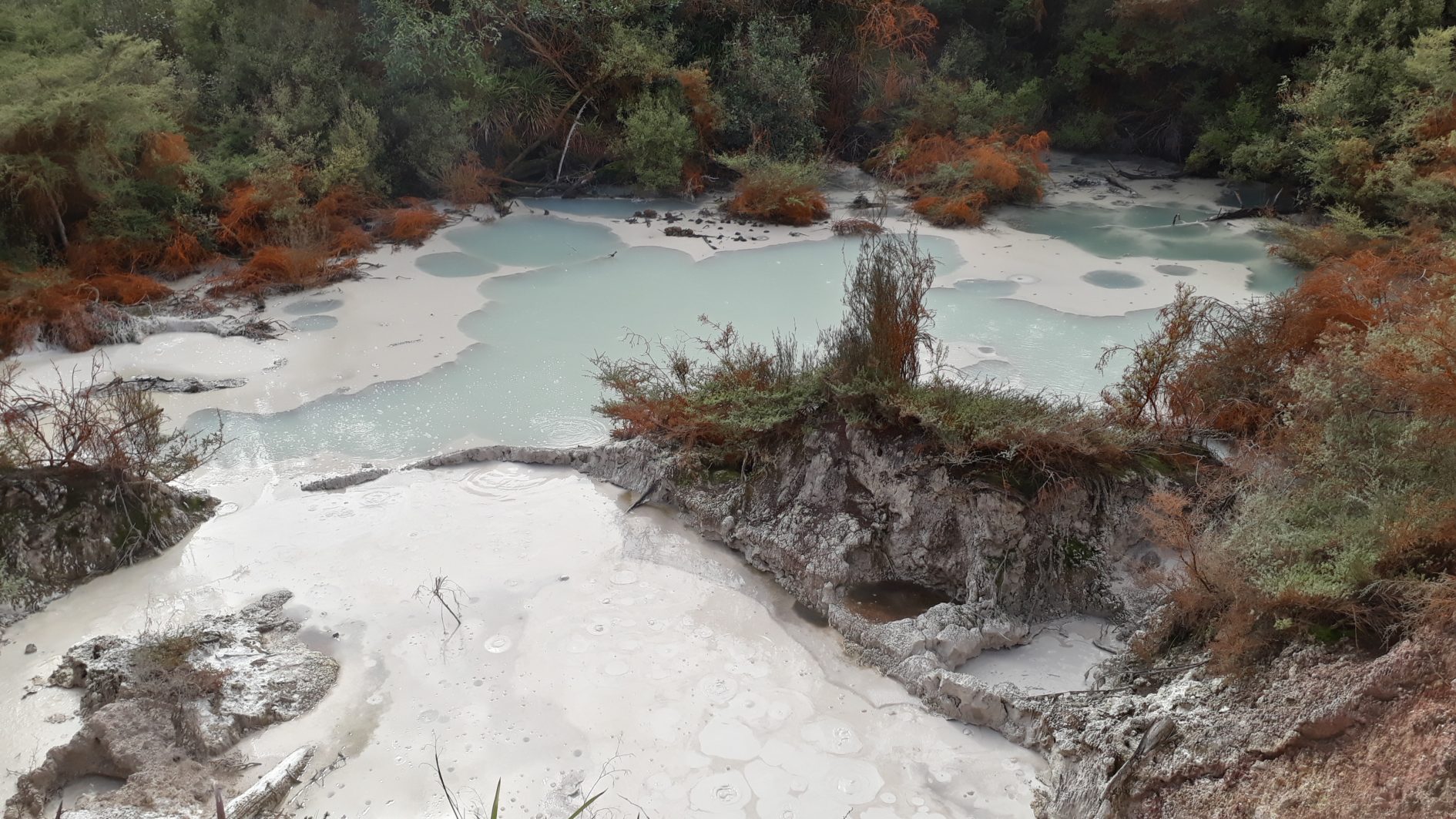
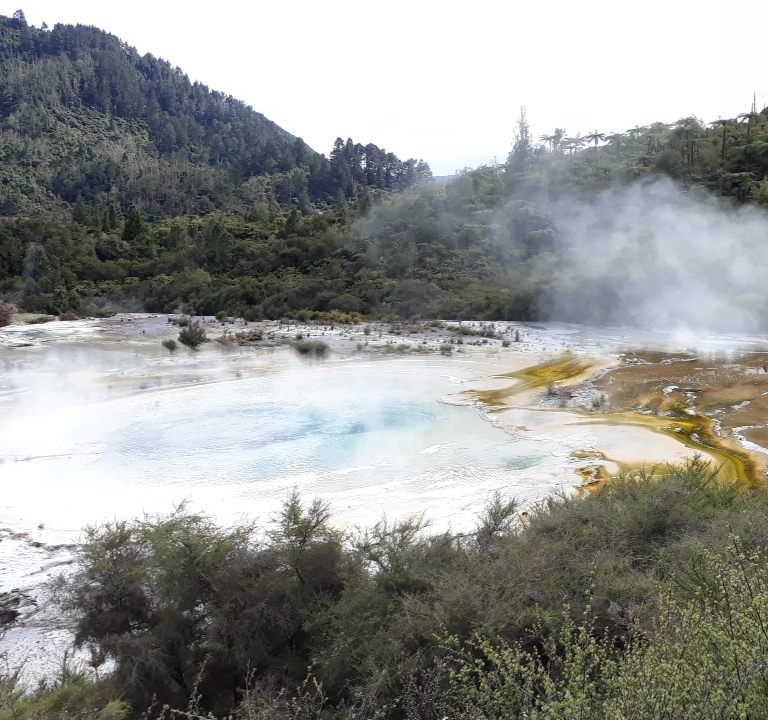
Orakei Korako is also known as the Hidden Valley. It’s an explosive and vividly beautiful geothermal area not far from the town of Taupo. It’s nestled in a magnificent crack in the earth on the Waikato River at Lake Ohakuri, and is part of a hydro-electric power scheme.

This is a must-see place to visit in the North Island and I think it’s arguably better than its rival Waiotapu for the sheer number of colourful silica terraces, with their rainbow colours of natural and toxic-waste toned mineral deposits.

The Orakei Korako features enormous fault-stepped silica terraces that are the largest of their kind since the catalcysmic collapse of the Pink and White Terraces in 1886 on the edge of Lake Rotomahana beneath Mount Tarawera.

The Emerald Terrace is possibly the most spectacular of these, and emits up to 20 million litres of silica enriched water can flow over the terrace into Lake Ohakuri each day.

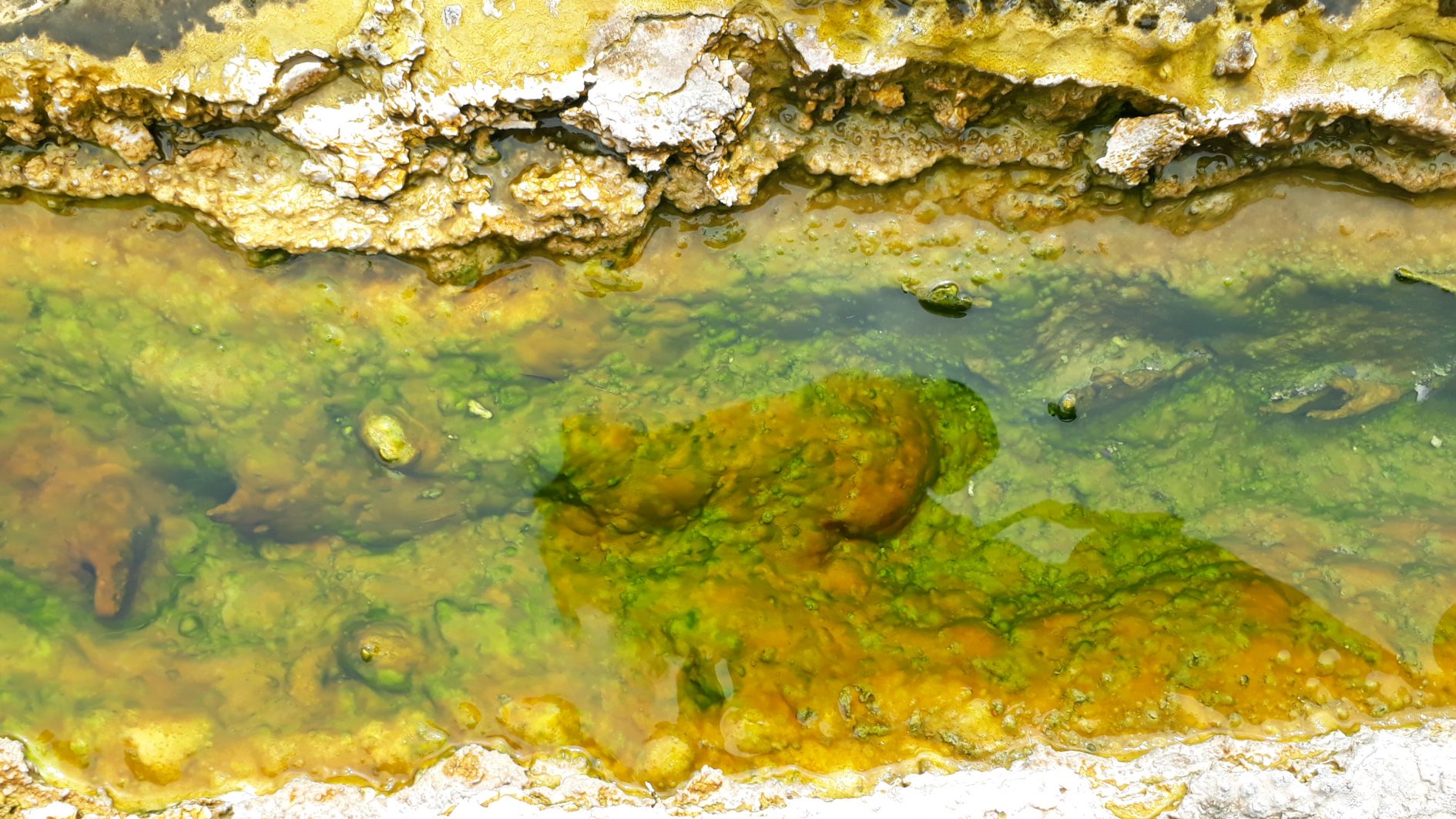
The three terraces above the Emerald were formed by a huge earthquake in 131AD. These fault scarps (steps) are topped with black, green and yellow algae – which grows in temperatures between 35 – 49 degrees Celsius.

Life on an unstable landmass: Taupo and Rotorua Part Two

Although one of the highlights is also the extensive beautiful bushwalks and viewpoints throughout the park where you can see and hear a lot interesting native birds and get impressive views onto all of the terraces from various angles.

I would say that if you only see a handful of things in New Zealand, this should be one of them. Particularly if you’re a history buff, lover of geology or volcanic regions. This place displays the power and might of geothermal regions better than other parks.

The added bonus of the boat trip over to the geothermal field also lends it a sense of intrepid travel, with only a handful of people allowed over in the park at any one time. On the day we went it was overcast, which leant the park a mysterious, otherworldly feeling of being caught in a foggy daydream on an alien planet.

The Case for Zealandia

It was previously thought that New Zealand broke off from the large southern hemisphere landmass known as Gondwana millions of years ago.

However mounting geological evidence has come to the fore in recent years which contradicts this and puts the case forward that New Zealand was actually an independent landmass that arose out of the ocean all by itself, and that New Zealand is an independent eighth continent known as ‘Zealandia.’

A Maori story about geothermal activity

The god Maui used the jawbone of his ancestor baited with blood from his nose as a fish hook to pull up the North island.

Life on an unstable landmass: Taupo and Rotorua Part Two

Travel: Mornington Peninsula’s Antiques Roadshow at the Tyabb Packing House

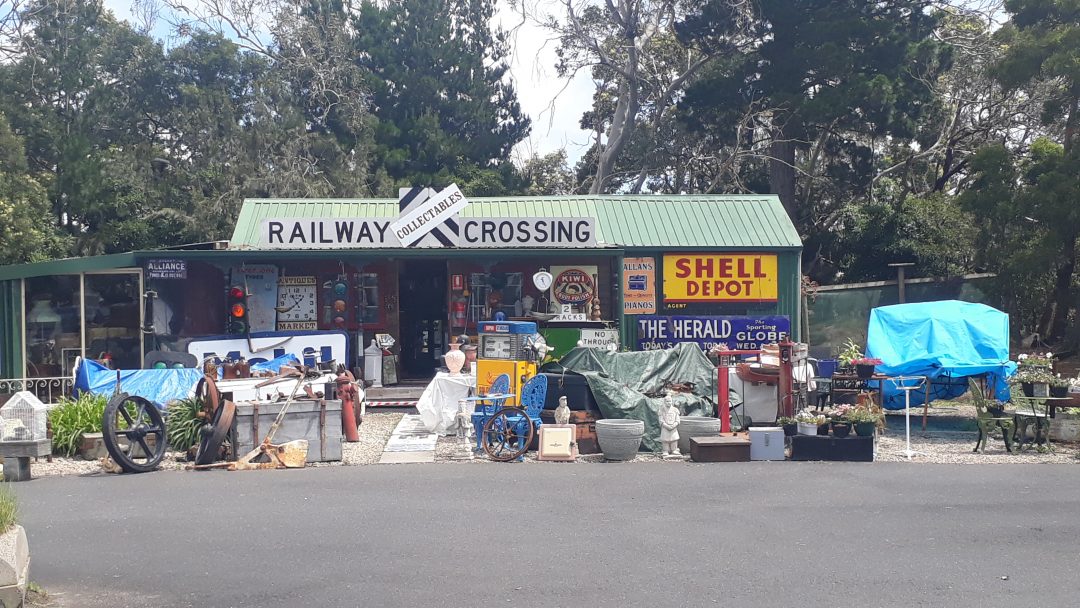
The Mornington Peninsula (where I hail from originally) is located in the S.E tip of Port Phillip Bay, about 1 hour’s drive outside of Melbourne.  It’s a sundrenched and beachy part of Melbourne which features serene and quiet, toddler friendly beaches in sheltered Port Phillip Bay, along with colourful bathing boxes. On the other side of the peninsula there’s another series of beaches – dangerous, wild, surf beaches that are notorious for riptides. The craggy and sharp coastal cliffs look down upon beautiful rock pools where a treasure trove of sea life lurks. Within the Mornington Peninsula you can find a series of amazing wineries, distilleries, breweries, pony breeders, restaurants, cafes, antique dealers, hobby farms and quirky attractions. It’s a great place to live or to visit if you ever head to Melbourne.

Unlike in the city of Melbourne and all of its enormous range of suburbs, the Mornington Peninsula has a unique vibe. The atmosphere here in Spring/Summer is akin to somewhere in southern Italy or Spain in the summer, or in Cornwall/south west Wales; or Byron Bay in NSW. The pace of life here is slower I find people here are a bit more relaxed and friendly compared to in the city.

Living away from this place has made it easier for me to appreciate its unique and unhurried rural beauty when I come back. So here are a couple of untapped treasures of the Mornington Peninsula that I discovered on a recent trip.

Tyabb Packing House

This is a gigantic antiques warehouse. It’s a must-see for fans of the TV show Antiques Roadshow, or general collectors of knick-knacks and lovers of retro nostalgia. Here you will find over 2 acres of little shops selling antiques. The little shops are set up in an appealing way, reminiscent of an colonial town. There’s a dog cafe where you can buy doggy treats, a post office, a vintage red train that has been converted into a cafe. Each shop offers a selection of old and salvage antiques from across the decades. You will find every conceivable style of every concievable item you can imagine here.

Address: 14 Mornington – Tyabb Road, Tyabb, Victoria, Australia
Open Thursday to Sunday
10 am – 5 pm

Some of the highlights for me:

  • Mid century Danish and Swedish furniture with its original leather upholstery. A four piece lounge suite retailing at $4,200.
  • Art Deco clocks and marble side-boards that featured copper hand-sculpted fawns and 1920’s ladies frolicking on top of them.
  • A hand-painted and hand-made pelican, sculpted with salvaged metal and featuring an intricately rendered cheeky grin, swimwear thongs and sunglasses.
  • Retro landline phones from all eras, including the always beautiful and nostalgic circular dial on the telephone. I feel endlessly nostalgic and incredibly old when I see these and remember using them!
  • A toy teddy bear wearing a soldier’s outfit from 1915 – there’s a story there and it’s probably very sad. Just like at the Toy Museum in Kudowa Zdroy in Poland, this place was full to the brim with soulful stories of lives and loves of the past.

Who the hell ever thought they would need any of this crap. If you go to Tyabb Packing House you will be amazed at all of the useless but beautiful miscellany you will need in your life.


The Private Lives of Animals circa 1842

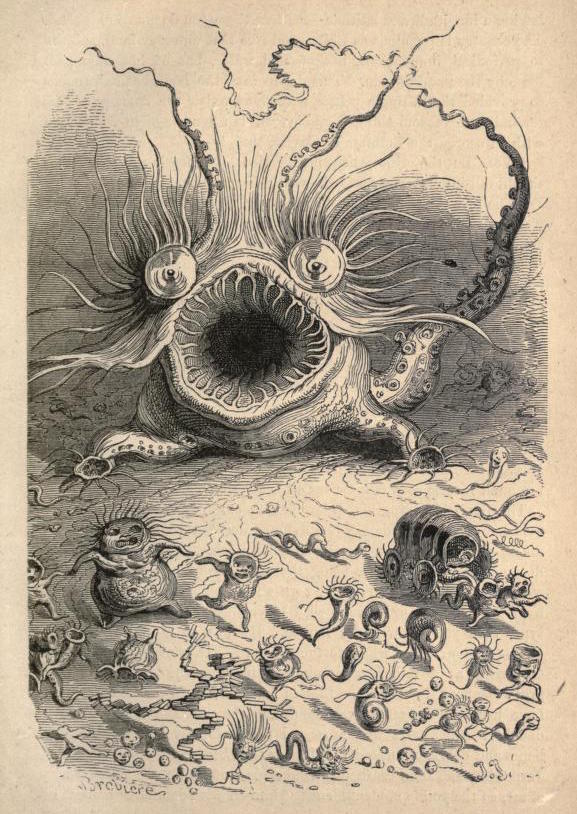
This collection of funny and witty animal fables was originally published in 1842 in French as Scènes de la vie privée et publique des animaux. The authors of these fables are a who’s who of literature in the mid 19th-century including Honoré de Balzac, George Sand. Also The Private Lives of Animals boasts some fine, imaginative and evocative illustrations by caricaturist J. J. Grandville. Each drawing has a humour and satirical inventiveness that brings warmth and enjoyment to the story. Also I have dipped into it and it looks really fascinating and fun to read. The illustrations and the book itself are all now public domain. Find out more here

If you enjoyed these images of animals in a flight of fancy, then you will enjoy these thirty medieval epithets for animals, hipster dogs and other assorted pleasures.

View more illustrations and download the book


Tech: A quaint visual voyage through the internet in 1996

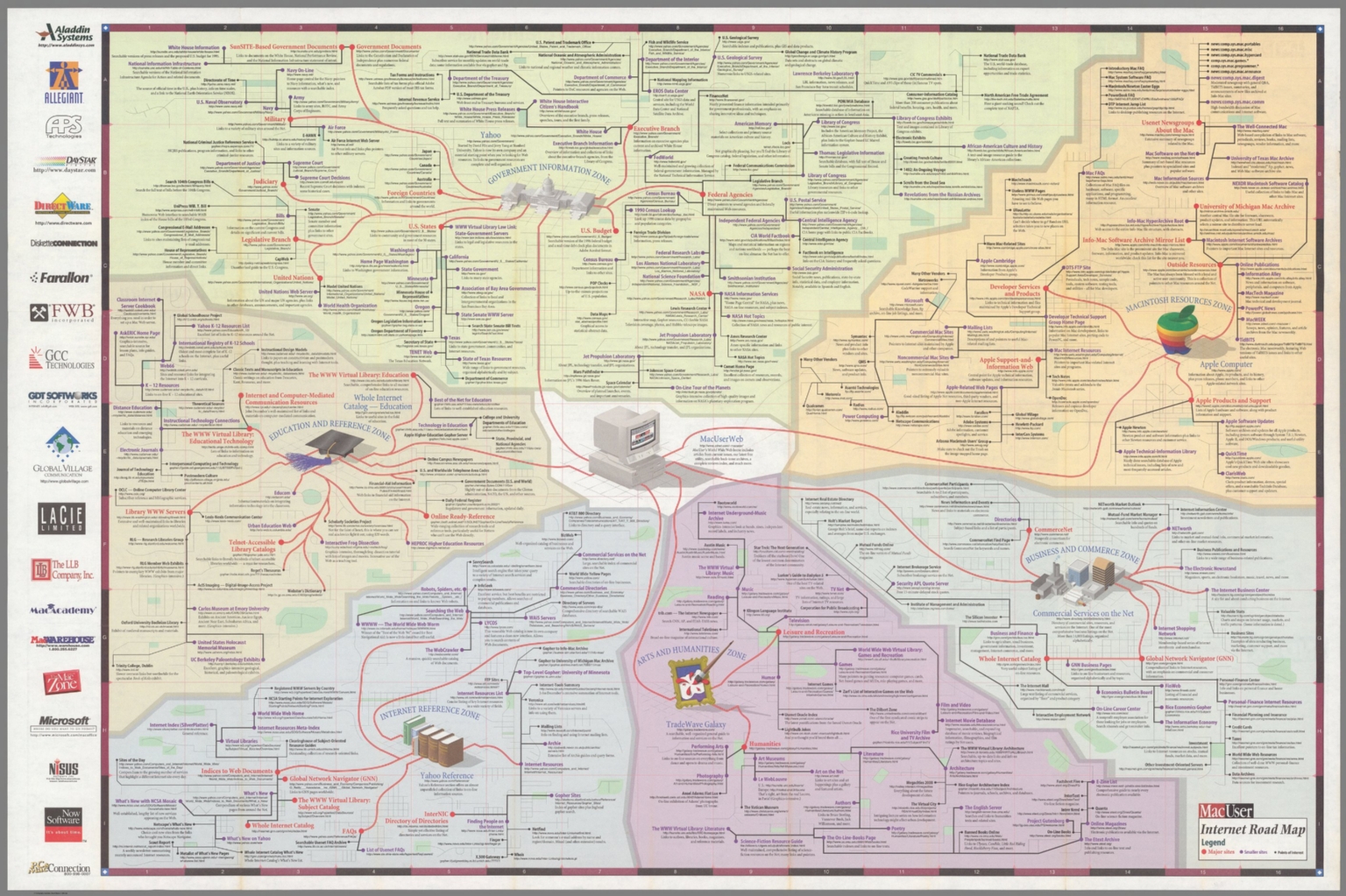
Found in the David Rumsey Map Collection online, this poster entitled Ínternet Road Map from the magazine PC Computing dates from the quaint year of internet history, 1996. Back when I was a teen and when ‘surfing the web’ was something only geeks and introverts did, and therefore which I did with fervour using some monstrous Compaq or HP beast and using a full mechanical keyboard. This poster dates back to the time before Google, when AltaVista, AOL and Netscape Navigator were the internet browsers of choice.

A quaint visual voyage through the internet in 1996
The earliest known screen shot of the Apple website from 1992 when the Waybackmachine initially first began

In this infographic below you can visualise in a really straight-forward way, the component parts of The Internet in 1996, including the vast majority of websites that one could browse to.  See the original here.

A quaint visual voyage through the internet in 1996

Here below is another a nice looking infographic about the enthusiastic players for early internet search engine domination. Many chancers fell to the wayside and into the oblivion when the first tech bubble burst. And then of course there was Google but that didn’t happen for a long time after. In the mean time, analogue kids like me learned how to adapt, thrive, communicate and socialise on this sparkling, menacing, promising and threatening behemoth. We had no inkling then of how critical it would become for everything and how our every waking moment would become dominated by the online world. Back in 1996 it was just a cool way to shoot the shit and avoid awkward teen social interaction.

 

How slow-growing lichen opens up the vast universe

The Lichenologist from Matthew Killip on Vimeo.

Hidden within this remarkable short film The Lichenologist is the slowly-growing story of the unassuming and vividly beautiful botanical wonder of lichen. Kerry Knudsen has the auspicious title of  Curator of Lichens at the University of California. He dispels common misconception between lichens and mosses. The latter being a form of plant, and lichen being a composite of algae or cyanobacteria which grows symbiotically inside of fungus. 

In The Lichenologist Knudsen journeys from the lab to Joshua Tree National Park in the starkly beautiful desert of California. He says that his journey-making was augmented by LSD and the profound discovery that lichen provides an ‘intense feeling of reality, of just being here’. UK director Matthew Killip’s film creates a delicate and delightful sense of discovery and wonder in the small details of landscapes that many of us often overlook. Lichen offer an endless array of alien-like landscapes and strange topographical markings up close. Be prepared for wonder.

How animals would look in Minecraft

One clever coconut named Aditya has taken images from Unsplash and pixabay and created blocky, cube-shaped animals in novel art form known as Anicube. She created the images in Photoshop using the Liquify (Shift+Command+X) keys and then uploaded them to instagram. The comical and surreal results won her a lot of fans.

See more of her work on Behance


Book Review: Cats Galore, prominent cats throughout history

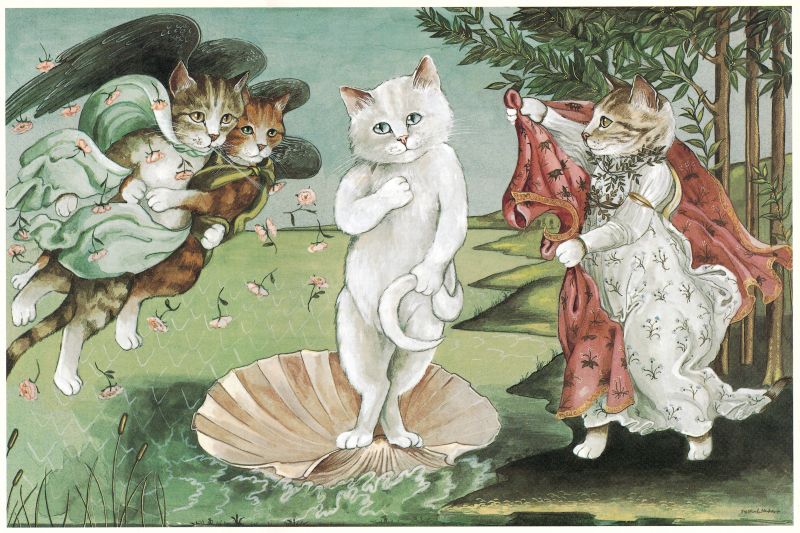
Spurred on by my recent missive about internet culture and the cult of cuteness, I moved very quickly down the rabbit hole into the depths of cat worship on the internet. Cats Galore is an art book with a difference. It’s what happens when internet culture gets mashed up and combined with the prominent art from the history of modern civilisation. What is churned out is a comical, kitschy and somewhat bizarre selection of paintings with felines in the starring roles.

This slideshow requires JavaScript.

Mona Lisa’s knowing look is translated into the expression of a gently enigmatic mog.  Each part of the book is a delight for cat lovers and art lovers alike. Cats Galore brings together affectionately rendered Pre-Raphaelite cats, Shakespearean Cats, Cats from Film and the opera. It’s a feline saga not too different from the nocturnal neighbourhood rumblings of cats in heat. It showcases the noble, indefatiguable and regal qualities of cats and showcases their rebellious streaks as well with a bushy-tailed rendition of James Dean in Rebel Without a Cause. This is one for all of the lovers of internet culture, art and feisty felines, often these people are the same people – and they tend to be my kind of people.

It’s the perfect useless gift