Travel Poetry: The Crackling Thunder of Frozen Lake Menteith

I wrote this poem in 2011 during a particularly bewitching snow-storm on Lake Menteith in Stirlingshire, Scotland. I had borrowed a pair of old, worn out and blunt ice-skates that were a size too small. And together with my friend, we set out to skate on the lake and also record the audio of the majestic sounds of Lake Menteith rumbling and shifting under the weight of itself. With the increasingly fine weather that winter, the ice had begun to break up and become more flimsy. Although that didn’t deter us from embarking on a journey over the lake to record the main crisis point of the sounds, as the water battled with the ice metres below.

The sun had dissapeared and left a warm, fizzy glow although no trace or memory of heat remained. It was a cold landscape although far from being desolate, it was alive with the constant dripping and majesty of the frozen tree branches turned into icicles.

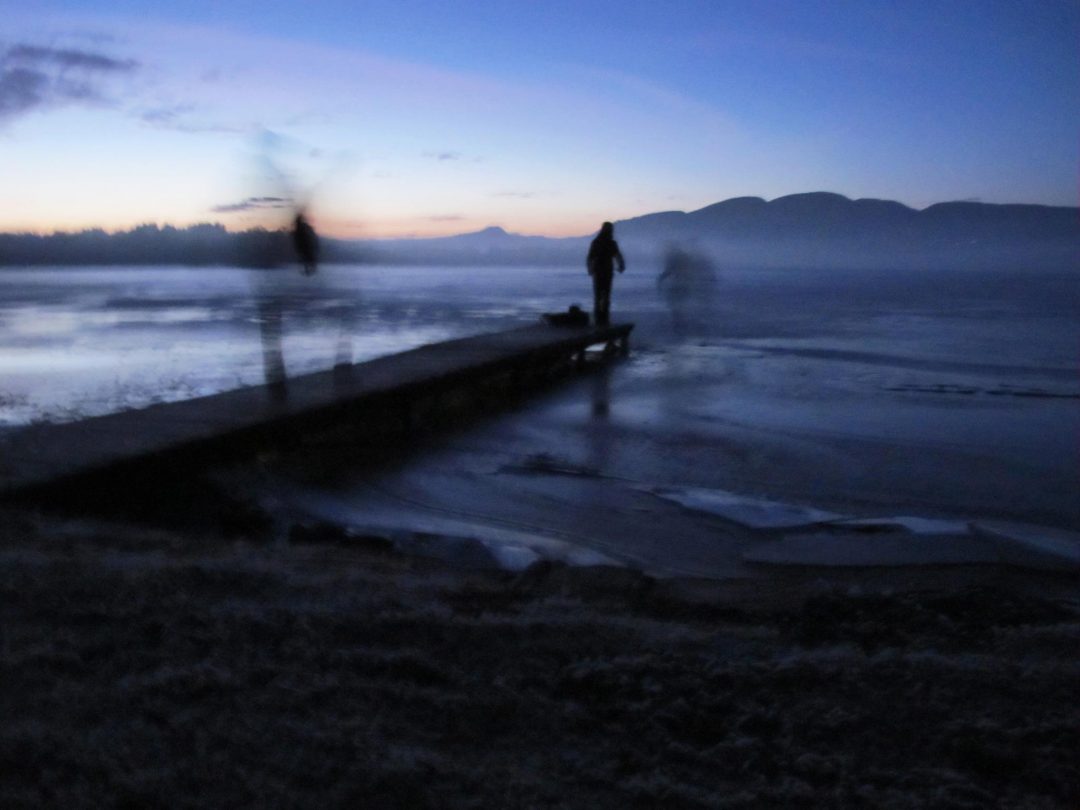
Every Picture Tells a Story: Lake Menteith in the fading light of a winters night
My friends and I out on Lake Menteith recording the ice sounds and ice skating. Copyright Content Catnip 2011

My friend and I recorded the sound. It is akin to a tightly bound metal wire rebounding upon itself, or the sound of a mysterious UFO shooting out a laser. I skated for about 2 hours that night across the frozen lake and visited abandoned monasteries on tiny islets in the lake and heard the otherworldly sound of ice melding with water in a cataclysmic symphony. Although I don’t have the audio she recorded, here’s another audiovisual extravaganza recorded in Sweden which I think you will enjoy.
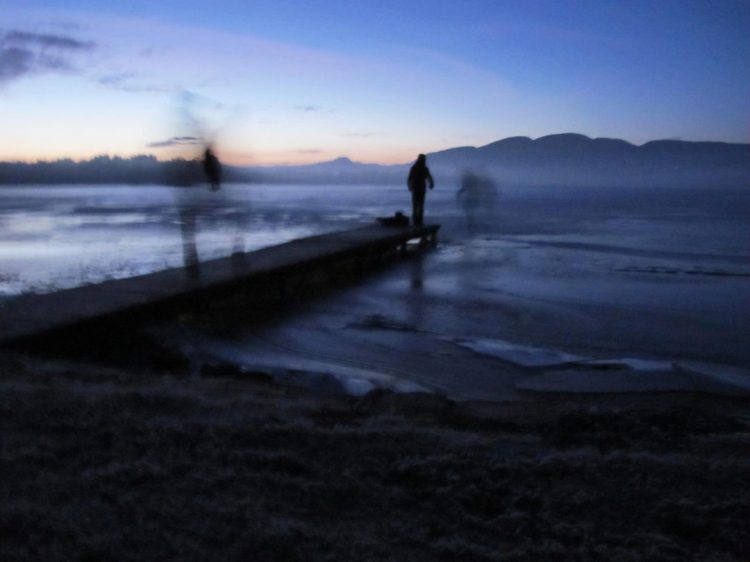
Every Picture Tells a Story: Lake Menteith in the fading light of a winters night
Frozen Lake Menteith in Scotland during mid-winter. Copyright Content Catnip 2011

Rings of Saturn

I walked out onto the ice

The air collapsed and warped

sighed and bellowed

a fairly red-headed sunset

And below

the sound of a whale crying

in the sutures and cracks of The Atlantic

the sound of Saturn’s rings echoing

from across the solar system

my skates creeked and protested

made concentric circles

of a stonemasons drill

a figure eight eternity symbol

shredded and sewn

in striations across lilac velvet ice

I saw the endless horizon of darkness

The dancing history of my imagination

the ice warped like a hammer and anvil

erupted and roared

diametrically opposite to a bushfire

the alien moans of an alien race

deep beneath the loch

The dusk sky kneaded by invisible fingers

into dough yellow shortbreads

sticking to the alpine horizon

and purple mountain peaks

streaked with flirty adolescent stars

hazy highland ghosts

whispering the night in

We recorded the shadows, spectres and echos

planned to drill into the secrets

hear the sounds

see the paintings

feel the words come

next weekend

History: Ancient specs as fascinating historical artefacts

In 2012 while working as a freelance copywriter, I did a series of articles for Direct Sight in the UK about the history of eye glasses. I only just remembered this one, it was incredibly fun to research and write and you can find the original here from 2012. I hope you enjoy it, from Content Catnip.

People in ancient times wore eye glasses for a multitude of reasons, in fact they wore them not as visual aids, as the technology wasn’t there yet.  Instead they wore them to conceal their expressions, protect against harsh environments and for many other reasons. One thing is for sure, the aura of prestige, power and intelligence that glasses bestow upon the wearer is deeply rooted in history.

Inuit People

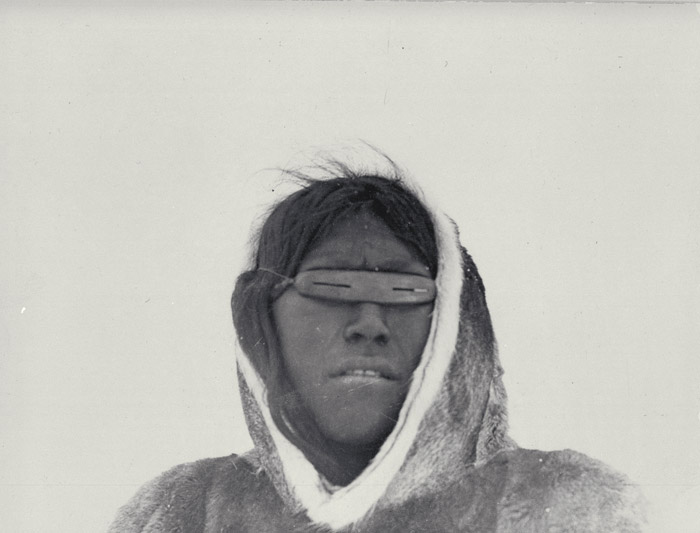
The Inuit or Eskimo people of the Arctic can be credited for the world’s first sunglasses around 2000 years ago. These were very effective snow goggles that were made from bone, leather or wood with tiny slits to see through. These were designed to guard against snow glare, harsh winter conditions in the Arctic and to be able to see potential prey when on a hunt for a whale or seal.  A sublime example of these beautiful goggles was found on the West Coast of Alaska. These glasses then travelled with the Inuit or Thule people to Canada around 1200 to 1600 AD and were later crafted from walrus ivory.  They now reside in the collection at the Canadian Museum of Civilisation.

Ancient Eye Glasses: Fascinating Historical Artefacts
Inuit eye goggles

Ancient Egyptians

There is another contender for the winner of the world’s oldest eye glasses. This goes to the ancient Egyptians who pioneered a great many things in their time.  At around 5000 BC there is a depiction on hieroglyphs that shows a simple glass meniscal lens.

Ancient Romans

The Romans have a written record of magnification in the notes of the prolific philosopher Seneca, who wrote that ‘Letters, however small and indistinct, are seen enlarged and more clearly through a globe or glass filled with water’.  Bloodthirsty Roman emperor Nero was said to have watch gladiatorial matches using an emerald as a corrective lens.

Ancient Chinese

Ancient Chinese dynasties from around the 12th century onwards are recorded to have judges and statesmen who wore smoky-coloured quartz pince-nez style glasses, in order to conceal their eyes from the public gallery during court cases.   These types of glasses were not corrective and were purely about hiding the expression in the eyes.

Other places and times uncover possible origins for eye glasses.

•    A portrait of a bespectacled Cardinal Hugh de Provence by Tommaso da Modena from 1352 that shows him reading a scriptorium

•    In the northern alps of Bad Wildungen, a remote part of Germany, an altarpiece shows eyeglasses painted there dating from 1403.

Spectacles have had a long and illustrious history and for purposes we are only now beginning to understand.


Travel:The Berlin Wall Redux: A punk lady of leisure 

Me when I turned magically into a hot person
Copyright Content Catnip 2010

In 2008 I lived in Berlin. It’s a vast adult playground of earthly delights, diversions and shiny, distracting baubles. Its maddeningly vibrant during the summer. It’s as though life is amplified to full volume and there is no dimmer switch. The sky sits very high up and the sun is beaming down with a warm, all embracing glow.

In the summer, people are tanned, athletic, positive, active and everyone has a smile plastered on their faces.

There are hundreds of kilometers of dedicated bike paths, which are wonderful if you are a cyclist.

Each day you rumble underneath of the canopies of urban tree-lined streets. In the newly gentrified Ost-Berlin suburbs, you can find all sorts of delights and treasures.

Florists overflow with spring blooms. Antique shops flog furniture and tid-bits from the Weimar Republic. Book shops sell books in English and German. Brunch places turn into restaurants that turn into night clubs.

Old underground bunkers from the war turn into techno clubs and BDSM clubs. Charming little parks and strips of green are observed by refurbished and revived terrace houses from before the Second World War.

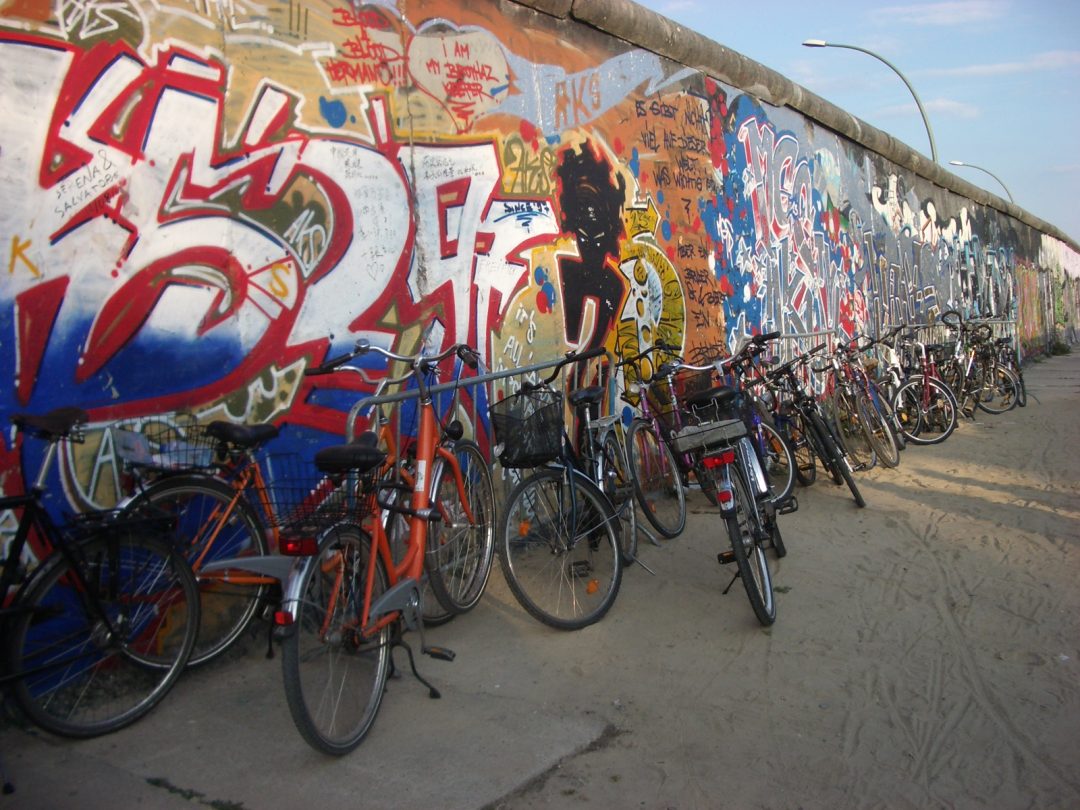
Along the Berlin Wall, people haphazardly park their bikes. On one side there’s a road and on the other side of the wall there are beach bars and beach sand, creating a tropical atmosphere on the banks of the Spree river.

This festive, mock tropical place features a beach shack where you can buy different types of beer, all priced conveniently cheaper than water – which can lead to problems.

Spree-side is a Berliner’s loungeroom and sprawling alongside the river is where its perfect to just shoot the shit, take a rest, talk with friends and generally mooch around, philosophise and contemplate everything- which is what being young is all about isn’t it.

The chaotic, rambunctious, rebellious and radical anti-authoritarian punk side of Berlin appealed to my sense of how the world should be, of how I wanted to be.

It was from this well-spring of punk aesthetic that people got energy, got creativity and found themselves I thought. The underground music and art scene in Berlin gives the city its soul, charisma and charming way of not giving a fuck about anything.

While in Berlin I fell in love with bikes for the first time. A bike then became like supernatural being – a centaur or minotaur that could transform from an inanimate collection of metal into a magical creature ushering me from one place to another, on a magic carpet ride of sensory experiences of sights, smells, sounds, bodily sensations. At the same time the bike would also tone up your legs and arse and turn you magically into the hot person you always longed to be. Wow! bikes are fucking amazing I thought to myself, and that sentiment has always remained.

The Berlin Wall Redux: A punk of leisure on the shores of the Spree river
The Berlin Wall Redux: A punk of leisure on the shores of the Spree river. Photo by A.Dennis 2008

Although there is another side to Berlin, the working side which involves the daily commute on the U-Bahn to one’s workplace, however other than seeing those shadowy figures on the train with grey clothing and solemn expressions I really couldn’t tell you what working in Berlin was like.

I was so intent on living a poor Bohemian life that I really had no idea what was in store for me in the future. The notion of hard work was a remote concept reserved for middle aged people who had no lives, or so I thought.

Me when I turned magically into a hot person in Berlin thanks to my bike

Soundtrack to summer 2009

Bloc Party – A Weekend in the City

A Weekend in the city featured the song Kreuzberg. And it was on high rotation on the radio in Berlin during 2009 when I was there, girl on a bike riding around everywhere.

Travel: A scooter swarm and the dance of life and death in Taiwan

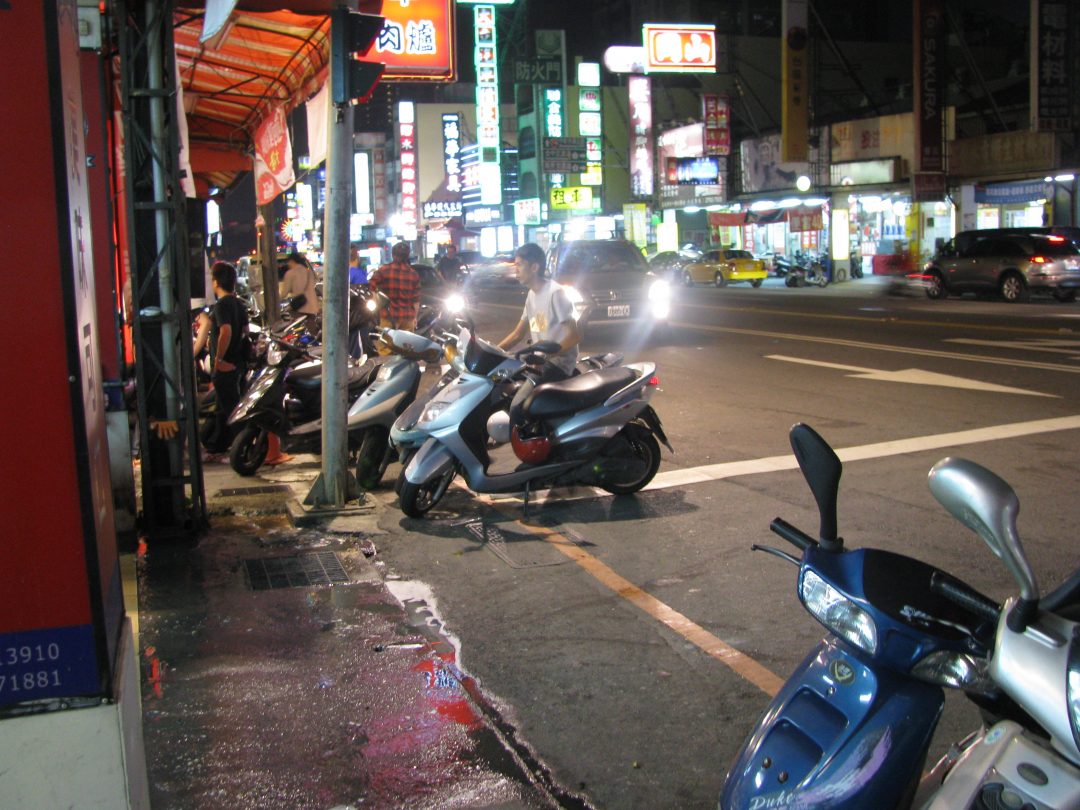
Among the chaos and the streaming lights there are tiny rockets moving between buildings and jostling people out of the way as they walk into the street. In South Korea, Japan, Thailand and China these pocket rockets roam through the night, comandeered by a mixture of salarymen, young punks and mums with kids strapped to their chests.

If you ever jump on board one of these thundering surfboards you will feel the heat and vibration between your legs. No its not like that. No it is like that, really.

Your hair flickering back behind your head like medusa. A bracing wind like a shock of recognition about the coming winter hits the back of your neck and chills you to the bone. Hold on for dear life to the one in front of you, she or he is going to be the one delivering you to your destination or to the gates of hell.

Bubblng up around the scooter riders are sewerage smells from below, and the smokey fishy essence of a fish shop on the corner, combined with the blowing, perfumed and burnt smell of pressed and couiffed hair from the hairdresser. All around them are the puttering and spluttering noises of angry mechanical beasts at the intersection. Each impatiently awaits his or her turn to go once the lights turn from amber to green. The cacophony of scooter sounds are deafening. Each machine comes within a hair width of the others and all are screaming towards a final destination – home, work, karaoke bar, restaurant, night markets.

There’s a real sense of anonymity and bodily lightness to each of the scooter riders, each manoeuvers their machine with daring and aggressive certainty. Each muscles through traffic and turns through a maze of street vendors, pedestrians, shops and parked cars as though cutting through brie cheese with a butter knife.

As light as a feather and as deftly as a Russian gymnast the scooter riders take sharp turns and come to a halt. There is a sense that each one is a small miracle, a small death-defying, fate-tempting swirl of humanity that managed to escape the clutches of some dark eventuality. Each one of the scooter riders is bouyant and indefatiguable and concretely alive once they get off the scooter and arrive at their destination. Whether they realise this each time they ride or they don’t isn’t clear.

Ride or die: Scooter riding in Taiwan
A scooter swarm and the dance between life and death in Taiwan Photo by A.Dennis 2009


Homes of all shapes and sizes since time immemorial

Throughout human existence, homes have varied drastically in scope, size, and design. Cob houses originated in the eleventh century, are made from straw and earth, and Gothic architecture has been around since the middle ages. We’ve come a long way from our cave-dwelling ancestors, and in the past few years we took another leap with the roll out of 3d printed homes manufactured for a tiny fraction of the cost, on average 10K. Are 3D printed homes the way of the future? Only time will tell! In the mean time here’s a glimpse at homes over the history of humanity.


Travel: The lost and hungry felines of Chefchaouen, Morocco

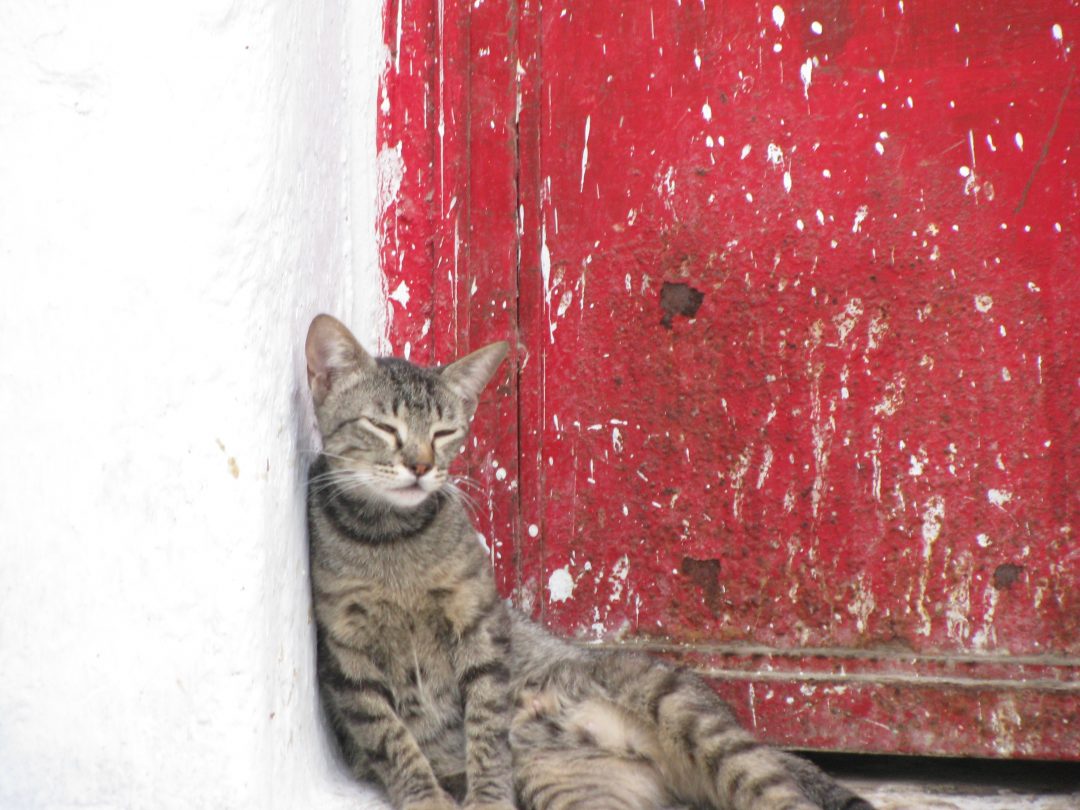
Seeing you sprawled on the ground in a doorway in Chefchaoen, Morocco, something broke inside of my heart. I found myself so immensely concerned for your safety.

From your gaunt and shabby physique and milky, clouded eyes I worked out that you were severely malnourished. I attempted to pick you up gently but my Morocccan guides became immediately alarmed, telling me firmly in Arabic and broken English to leave you alone – you were just a street cat after all. I got the feeling that your kind were the suffering, invisible casualties of the alleyways and kasbahs of Morocco, below the poor beggars, below street orphans, below the livestock.

Your tired and hopeless eyes spoke volumes to me and reached into my soul, so  that when I look on this photo today, I can’t help but feel frustrated and regretful of my inaction. I wonder what was going through your head in this moment? You swayed and swooned in the mid-summer 40 degree heat. The kind of heat that felled goats and donkeys on the jagged cliffs of the high Atlas mountains. You appeared to be transcending yourself in your feline grandeur, striking a sphinx-like triumphal pose, even though your body rose to meet my eyes in extreme pain and hunger.

Although small and fragile, I realise that sometimes it’s the most feeble who are actually the most strong. After nine years, I wonder if you’re still alive. I would if I could, scour every inch of the citadel and scale every bright blue stairwell, market stall and hammam to find you and make your last days on earth comfortable.

I’d light a candle and put it in the window of the minaret for the never loved and never properly fed cats of Chefchaouen. And then as the muezzin chants out a call to prayer each night, perhaps this prayer will be answered too.

Mysterious cat in Chefchauoen
The mysterious cat in Chefchauoen Copyright, Content Catnip 2009

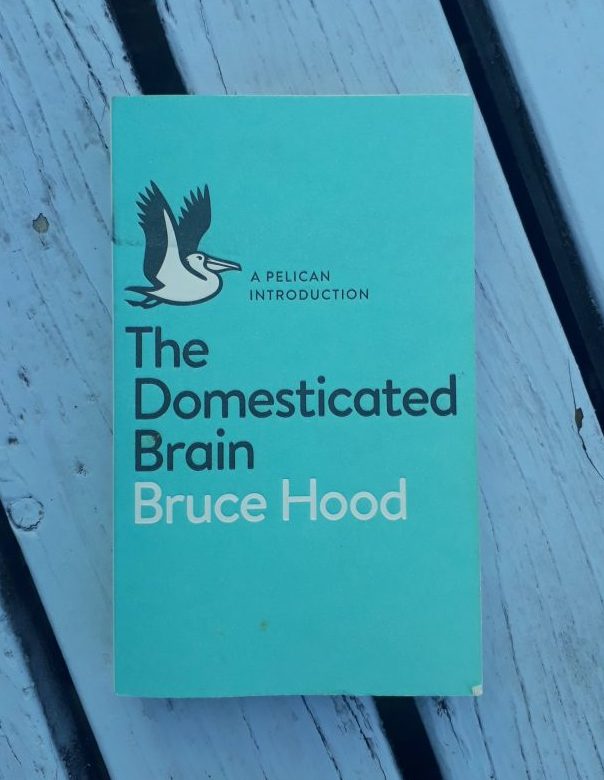
Book Review: The Domesticated Brain by Bruce Hood

This is a riveting read from one of the leading lights of modern psychology, Bruce Hood of the University of Bristol. The book’s main premise is that 20,000 years ago our brains were 10% larger than what they are today. And that the reason for this is primarily the influence of social practices, culture and self-domestication.

“We have been self-domesticating through the invention of culture and practices that ensure that we can live together,” he writes.

This Pelican Introduction book delves into the relatively new discipline of behavioural neuroscience. Along the way Hood reminds us that the research we have currently gathered is only as good as the next discovery and never the final stop. The Domesticated Brain is an ideal primer on how we are wired as a species to behave in a social way and that your behaviour as an individual is not so individual and unique after all.

According to Hood, every species that has been domesticated by humans has lost brain capacity. This is due to the physiological effect of a decrease in testosterone in the body. Less testosterone in the body means smaller body organs including a smaller brain. Wolves (more testosterone) resolve problems through strategic cunning, and often work alone. Whereas dogs (less testosterone) are more adept at reading social and emotional cues are able to get help from their human masters.

Like domesticated dogs, infants and young children have the innate knack for getting their parents to do their bidding, or to keenly read social cues from those around them. Hood highlights significantly that only dogs and humans understand the social meaning of finger pointing at objects.

One primary difference between animals like chimpanzees and humans, is that apes will imitate others in the group to achieve a goal. Getting the ants out of a nest by using a stick for example. Whereas human babies imitate adults for no apparent reason. The evolutionary reason for this is that human babies want to fit in with the group. People in other words, are wired from birth to domesticate themselves, to cooperate and work along with other people and to copy others in order to fit in.

This social adeptness or domestication Hood says, is key to human’s success as a species. We are the only species to be able to produce such vast feats of creative work, technological improvements and scientific innovation. The reason for this isn’t due to one person working alone in a room independently of everyone else, it’s due to human collaboration, coordination of effort and communication. When disparate areas of knowledge come together in new ways – that’s when breakthroughs and advances happen.

The dark side of the domesticated brain Hood argues is that socially wired brains are prone to having strong tribal allegiances, prejudices and in some cases condoning horrific acts of war and genocide. These innate tribal and group allegiances that people have, are what are manipulated by leaders, in order to justify acts of war and mass genocide.

I loved this Pelican Introduction title about evolutionary psychology and behavioural neuroscience/psychology. It touched on a lot of areas that were interesting and the writing was vibrant and interesting.


Travel: The best places to eat in Lake Taupo, New Zealand

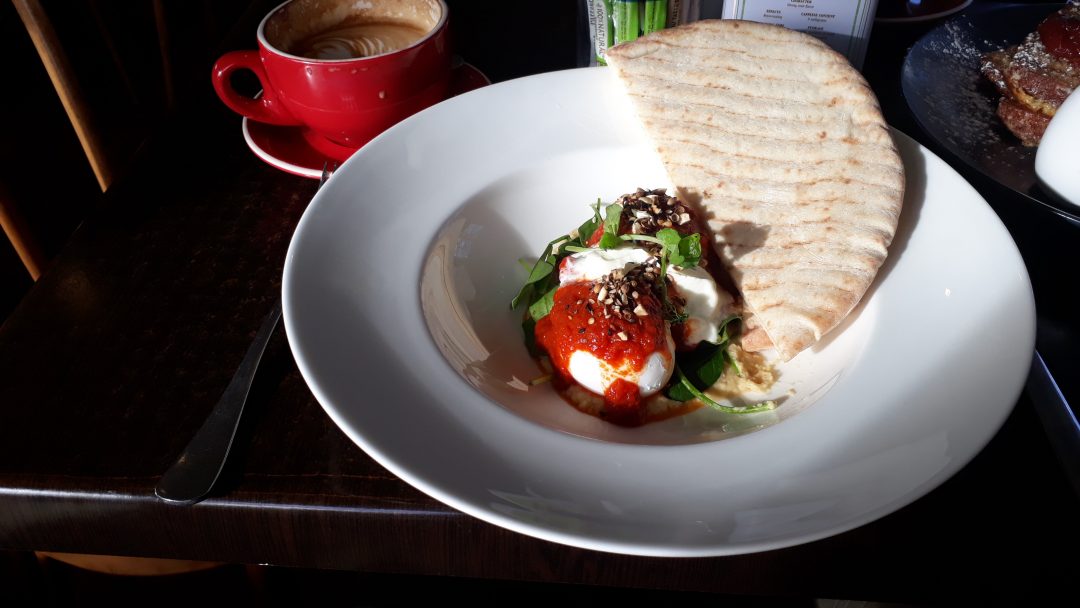
On a recent trip to the beautiful Lake Taupo  with all of its athletic pursuits such as MTB there is nothing better than chowing down on some superb and hearty food. Taupo has some great options which we tried and loved. For a quick and reasonably priced brunch, try Cafe Baku which has a relaxed bistro vibe and plenty of options for charging the batteries for the day. If you are after something a little more leisurely paced, quiet and also impeccably put together then try Spoon and Paddle, which is rated no.1 on Trip Advisor for a reason. Staff were attentive and the food was a bit experimental and yet superb. There are a few staples like Eggs Benie and English breakfast for people who are wanting to stick with the tried and tested.

Turkish style eggs at Spoon and Paddle

For lunch, we didn’t ever have anything as we were normally out on the trails. However for dinner you can’t go past these places: Lotus Thai restaurant. This is rated no.1 on Tripadvisor which we found to be a pretty accurate description of the quality we got. In terms of service, super friendly and attentive and in terms of the food- spot on and highly tasty Thai food that was also reasonably priced. I would definitely go there again. We also had Indian one night at Malabar restaurant, also a highly rated venue on Tripadvisor. This place looks unassuming and almost a bit shabby from the outside but the food is incredible and it isn’t highly priced.

Pad Thai from Lotus Thai


Words and Music: Dave Clarke’s World Service & Shanghai

I wrote this poem because I came across an album I hadn’t heard in years, it reminded me so much of Shanghai where I lived briefly as a teenager that I had this all rush into my head and I needed to get it out. So here is a memory purge of my time in Shanghai which goes hand-in-hand with the B-side Dave Clarke’s CD World Service which I was coincidentally listening to incessantly while in Shanghai on my CD walkman.

Shanghai

Rushing street lights

Streaking towards mayhem

Crowd around and push downwards

Weddings in white lace trails

And blushed rosy faces

Tourists, romantics, ancient memories

Lay waste to the tiny strip of Chinese gardens

A gaggle of grouped species

Shift and morph

Shoals of fish people move through the hard ocean of asphalt

In the carbon fibre glass walled shopping mall

Porcelain women on the big screen

Pursed luscious lips

Pale as ghosts and staring blankly

Into the future

Into the stars

While below their heavenly faces

External to the manicured clean world

Men wearing rags

Fight the pigeons for food

Light as feather, heavy as a door

Our spirits are lifted towards the neon-rimmed sky

And here’s the techno side of that album which is equally as bangin and equally as appropriate for the heaving metropolis that is Shanghai. 

Words and Music: Miss Hollywood & Shanghai

Dave Clarke – World Service full track listing on Discogs

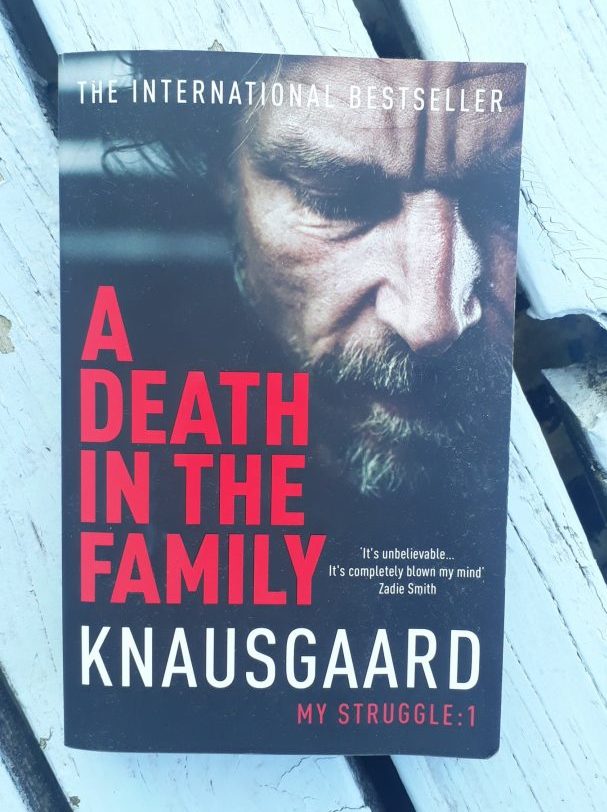
Book Review: A Death in the Family by Karl Ove Knausgaard

* No plot spoilers in this review 

A Death in the Family is Book 1 of the My Struggle six part autobiography of Karl Ove Knausgaard.

This mammoth six part memoir really grabs a hold to the marrow of his family, friends and sexual relationships – the blood and bone.

A Death in the Family is an exercise in shit-slinging that delves into the mire of Karl Ove’s family life and evocatively describes the death of his father, who succumbed in a rancid house of advanced alcoholism.

What’s so shocking and also fiendishly pleasurable, is how Karl Ove has harnessed all of the tragedy and private pain of his extended family, has written about it here. Not without some shit hitting the fan though. Behind the scenes, his uncle attempted to sue him over the depiction of the forementioned dead father.

For me, and millions of other readers, the six part series is as compelling as crack. In his native Norway half of the population have read his books. Prompting employers to have Knausgaard-free days where people don’t discuss his books at work.

The writing is by turns poetic and self-reflexive, and sometimes mundane and overly descriptive of small details. “I unscrewed the lid of the coffee tin, put two spoonfuls in my cup and poured in the water, which rose up the sides, black and steaming, then I got dressed.”

We are privy to the tiny details of Karl Ove’s life like him rolling a ciggie. “I licked the glue, removed any shreds of tobacco, dropped them in the pouch.”

Book Review: Boyhood Island by Karl Ove Knausgaard

What this kind of writing does, is lulls you into the minutiae of his life, it takes you there with him right at the point where he rolls a ciggie, takes a dump, looks at his dick, has awkward teenage sex. The reader then becomes so intimate with Karl Ove that you are practically a benign part of his own body.

I haven’t actually felt that sensation reading a book before. The sense of uncomfortable inhabitation of a person’s corporeal body, warts and all. I get that vividly by reading this book.

Unlike Proust’s work though, Karl Ove delves deeply into the visceral, gothic darkness of our private lives and we are peeping toms looking in on it – completely relishing every second of the experience.

I can’t speak for any other Norwegian literature but Knausgaard does bring to mind another phenomenon that I wrote about a while ago and found fascinating about Norway. Long train trips are broadcast on Norwegian TV there, with a train slowly rolling through the rugged landscape. Hours and hours of endless changing light, water and mountains.  These broadcasts are watched by millions of people in Norway and have also achieved a cultish following. Could this be a Norwegian thing then? A loyalty to the slow invisible rhythms of life that many would say are boring, but others find hypnotic and compelling? I see parallels here.


The Hypnotic, Droll and Funny World of Norwegian Slow TV

Some reviewers wrote excoriating pieces on this book, like (perhaps my favourite writer of all time, Michel Faber) who wrote in the Guardian that we won’t be even talking about this book in 20 years time.

“Gossip is as forgetful as it is virulent. The real question about Knausgaard’s work is not whether, in the coming months, you will find yourself discussing it with friends and workmates – you probably will. The real question is whether anyone will be reading it in 20 years’ time. On the evidence of A Death in the Family, I suspect that Knausgaard’s lifelong yearning to achieve literary immortality may prove biodegradable too.”

Boom! Such a put-down. But I would say that Michel Faber is wrong here. This book is a modern À la recherche du temps perdu. Unlike Proust’s work though, Karl Ove delves deeply into the visceral, gothic darkness of our private lives and we are peeping toms looking in on it – completely relishing every second of the experience. I think these books will be read in 20 years time, because they have a cultish generational following and they speak to so many levels of human experience.