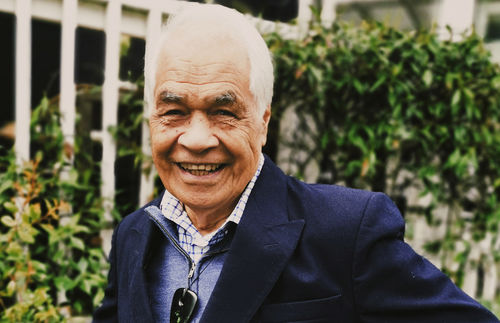
Dr Haare Williams MNZM has been Dean of Māori Education and Māori Advisor to the Chief Executive at Unitec. He was General Manager of Aotearoa Radio. He set up a joint venture with the South Seas Film and Television School to train Te Reo speakers as producers and operators in film and television. He has worked closely with iwi claimant communities and was responsible for waka construction and assembly at Waitangi for the 1990 commemorations. He has published poetry, exhibited painting and written for film and television. He was a cultural advisor for the Mayor of Auckland and is Amorangi at the Auckland War Memorial Museum.
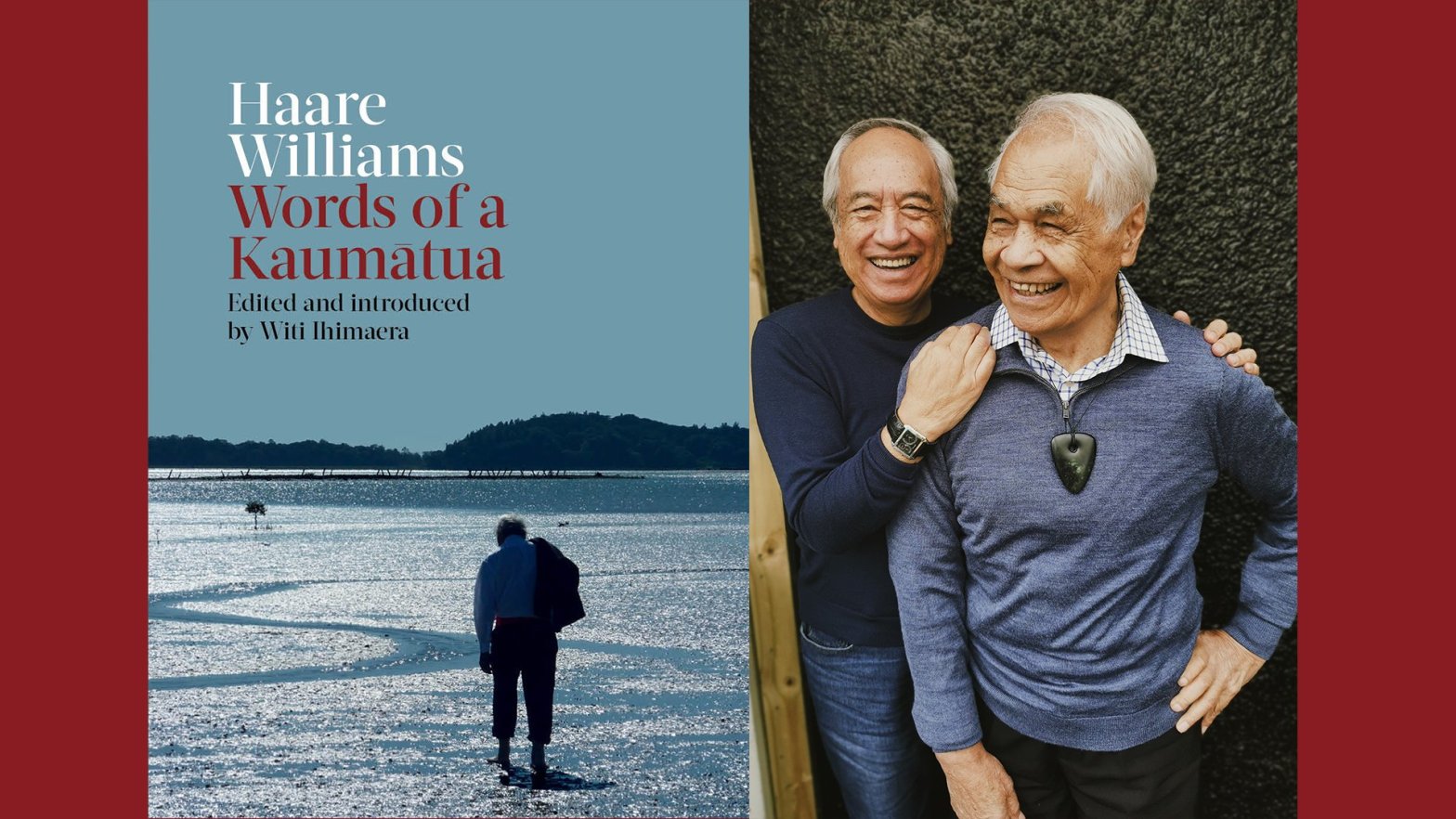
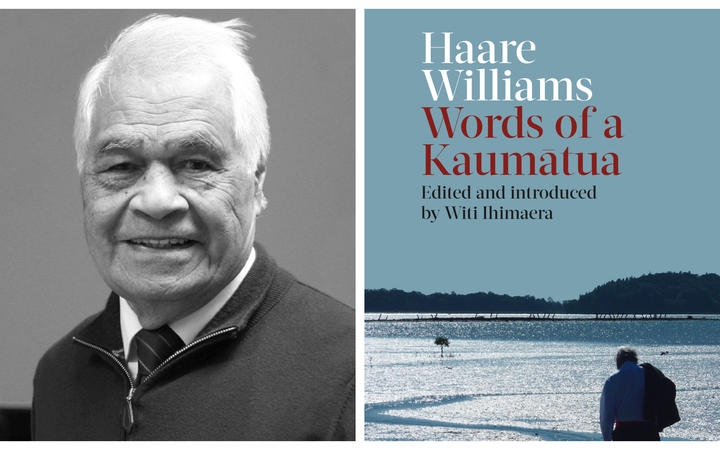
This week is Māori Language Week/ Te wiki o Te Reo Māori. So I will be sharing some beautiful poems, proverbs and words in Māori and English for you to enjoy. Here is a poem by Haare Williams from his incredible book of wisdom: Words of a Kaumātua.
Dr Haare Williams MNZM has been Dean of Māori Education and Māori Advisor to the Chief Executive at Unitec. He was General Manager of Aotearoa Radio. He set up a joint venture with the South Seas Film and Television School to train Te Reo speakers as producers and operators in film and television. He has worked closely with iwi claimant communities and was responsible for waka construction and assembly at Waitangi for the 1990 commemorations. He has published poetry, exhibited painting and written for film and television. He was a cultural advisor for the Mayor of Auckland and is Amorangi at the Auckland War Memorial Museum.
A compelling, rich and lush blend of essay, poetry, reflections and personal stories by one of New Zealand’s most preeminent Māori writers.
I have to admit that I didn’t know much about Haare Williams before picking up this book in Te Papa Museum in Wellington. This is a definitive collection of Māori wisdom that is equally at home on the bedside table of New Zealanders (Pākehā and Māori) as well a companion guide to Māori life an identity for more recent migrants to Aotearoa who are seeking to understand the true nature and soul of what it means to be Māori.
I would say that by extension of reading this book, you will also discover your own spiritual connection to time, place, people and community wherever you are – also known as tūrangawaeware. There is a spiritual weight and heft to this book that is capable of eliciting gasped intakes of breathe at the beauty of the language Williams uses.
His words are richly and delicately woven like harakeke (flax) with the meaning, soul and mauri essence of what it means to be Māori in the world in the 21st Century. The storytelling and prose in ‘Words of a Kaumātua’ are broad-stroke enough to resonate with anyone living anywhere in the world, with a love of amazing and evocative writing. If you enjoy reading about culture, history, family and the ancient ties that bind us all in to place, people and memory, then you will love this book.
Even if you don’t have whānau (family) and tīpuna (ancestry) here in New Zealand, you will treasure this book. Written in both Te Reo Māori and English, sounding out the Te Reo words is a real treat for the senses.
This is a timeless collection of sweeping essays, personal stories, karakia (prayers) and lamentations on everything from earthy, evocative landscapes, the ancient patheon of capricious gods including Tāne and Tangaroa, the Treaty of Waitangi, the Māori Land Wars, modern love, family and everything else in between. Highly recommended.
Whakarongo ki te Au
Our truth is this:
We come from the sea
this is where our bones lie
not on the summits of
mountains
Hawaiki nui Hawaiki roa
Is our ancestral Pacific land
and its location in history
can only be found in legend
yielding only to the sea’s
timelessness
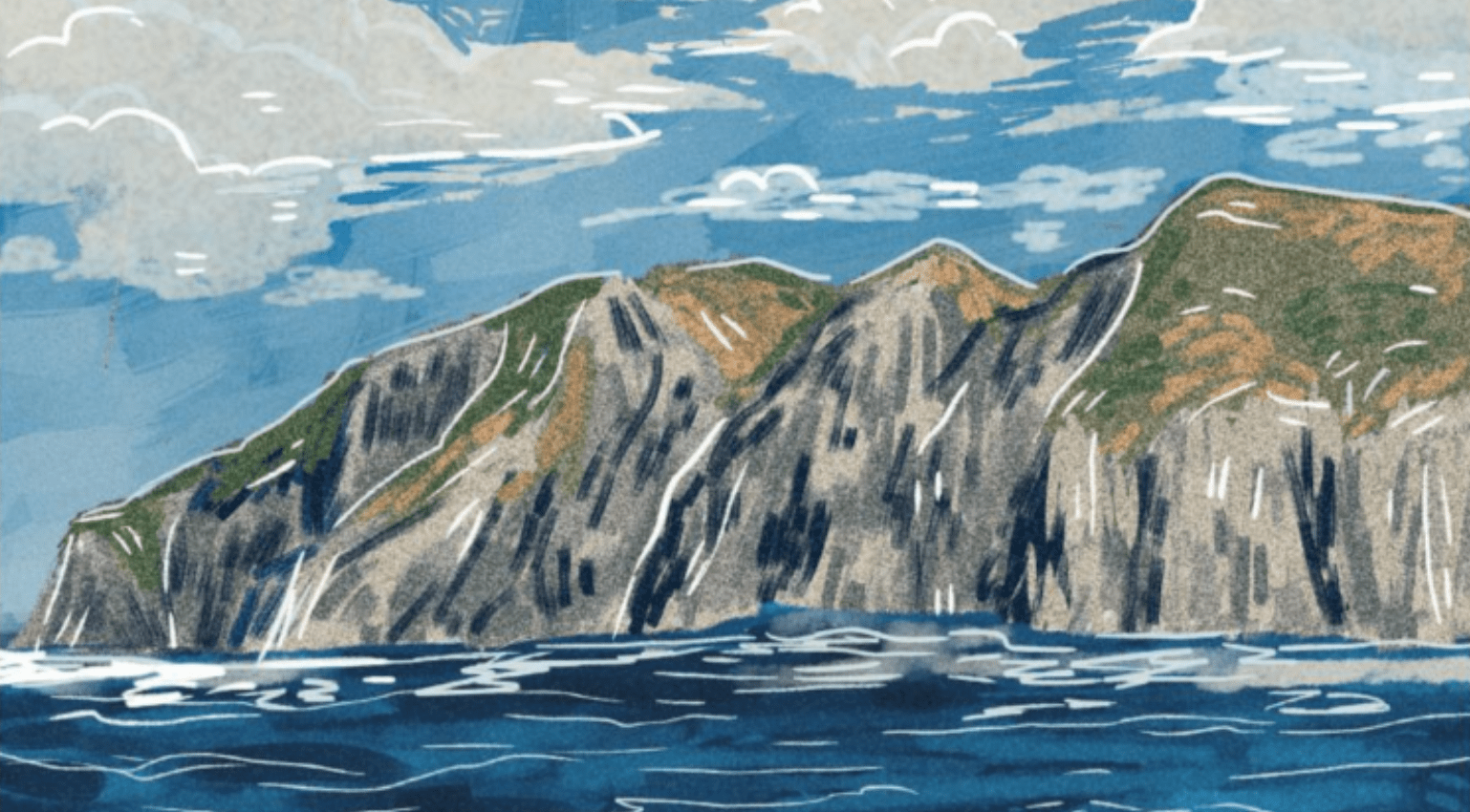
Te Kuri o Pāoa – Young Nick’s Head in Tūranganui-a-Kiwa. Copyright Content Catnip 2014
Listen to an interview with him on RNZ about Words of a Kaumātua
Ep’humin et ouk ep’humin (from Greek) Things that are under our control and things that are not under our control.
Of things that exist, some are in our power and some are not in our power. Those that are in our power are conception, choice, desire, aversion, and in a word, those things that are our own doing. Those that are not under our control are the body, property or possessions, reputation, positions of authority, and in a word, such things that are not our own doing. ~ Epictetus, Discourses.
This is a powerful concept to remember whenever we face any challenges in life. There is reason why this is a timeless philosophical concept. It has practical applications in many areas and versions of this message have helped millions of people in various therapeutic interventions for trauma, addiction, mental health struggles.
In this unprecedented time of covid, where randomness, chaos and fear abounds – it’s clear that the Stoics and particularly this powerful nugget of wisdom is more relevant than ever.
Ep’humin et ouk ep’humin: A lightning rod for recovery
God, grant me the serenity to accept the things I cannot change,
The courage to change the things I can,
and wisdom to know the difference.
~ The Serenity Prayer by Reinhold Niebuhr
When American Theologian Reinhold Niebuhr created one of the most famous prayers, The Serenity Prayer he was tapped into this 2,000 year old stoic expression. It has been used by AA, GA and NA as a beacon of hope and a lightning rod for recovery.
Yet even if you have never had a problem with addiction, this idea is still a very wise and helpful for decision-making, discernment of what is important in your life. Once you let go of mulling over things in life that you cannot change: death, ageing, taxes could be some, uncontrolled pandemics could be another – life becomes a whole lot more peaceful.
it’s a way of determining what to focus your energy on. The things that can be changed you should dedicate valuable attention and brain space towards and come up with creative solutions.
“The chief task in life is simply this: to identify and separate matters so that I can say clearly to myself which are externals not under my control, and which have to do with the choices I actually control. Where then do I look for good and evil? Not to uncontrollable externals, but within myself to the choices that are my own…” – Epictetus
The Stoics knew that it was a time-waster to worry about things that we have no control over or cannot change. They believed it was better to focus on generating creative solutions to problems, rather than giving energy to the issues themselves.
“I judge you unfortunate because you have never lived through misfortune. You have passed through life without an opponent—no one can ever know what you are capable of, not even you.” – Seneca
The problems, challenges and painful moments that we face in life are our most potent teachers and should be embraced instead of being ignored. It’s only through adversity and hardship that we can really test our mettle and fully understand the character and grit that we possess. Otherwise we are simply soft-gelatinous balls of flesh, untested, weak and our full potential isn’t reached.
Yo-Ho-Ho and a mug of Horlicks, I hope you are all going well and are safe. Here is installment 35 of weird stuff from the internet, I hope you enjoy it. Tally Ho chaps and chapettes.
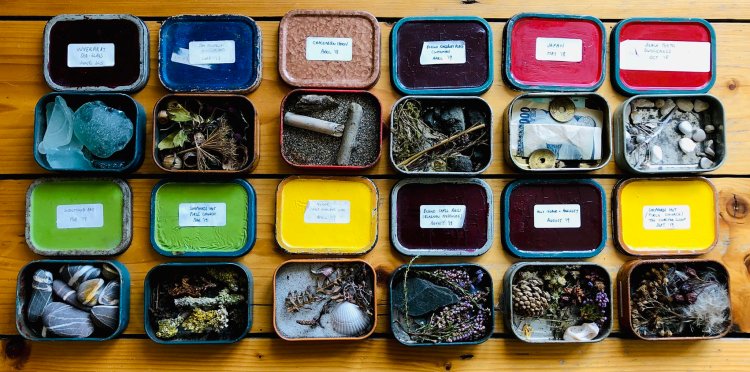
#ConcentratesOfPlace: even before the lockdowns, I rarely had the health to travel often or far. Every trip near or far was precious so that I tried to bottle them, like preserved fruits. Opened all the tins today for a deep inhale of elsewheres. Heather, moss, sand, slate…
This beautiful and toasty looking festive winter clothing from Yakutia, Siberia
A set of traditional festive winter clothing from late 18th-early 20th centuries in Yakutia. Made by Anisiya Fyodorova, video and pictures by Syuzanna Sedalishcheva.
A set of traditional festive winter clothing from late 18th-early 20th centuries in Yakutia. Made by Anisiya Fyodorova, video and pictures by Syuzanna Sedalishcheva pic.twitter.com/aHPSUcmGkv
Prolific and talented history and music blogger Robert Horvat gives us a list of his all time favourite history books. I have added many to my TBR, here are some I am on the hunt for…
The Story of Art (1950) by Ernst Gombrich
A History In Fragments: Europe in the Twentieth Century (2000)
Saving Mona Lisa: The battle to protect the Louvre and its treasures from the Nazis (2014)
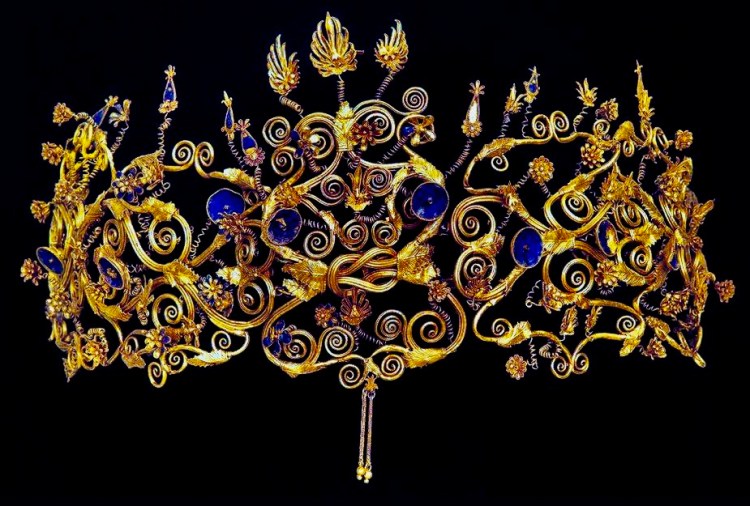
This diadem was owned by one of the wives of Philip II of Macedonia, father to Alexander the Great. 4th c.BC. Found in the royal tombs in Aigai, Macedonia, Greece. Via Twitter
fitThis diadem was owned by one of the wives of Philip II of Macedonia, father to Alexander the Great. 4th c.BC. Found in the royal tombs in Aigai, Macedonia, Greece.
Remembering Inji, The World’s Oldest Orangutan
Inji had a long and happy life living in Oregon Zoo and lived longer than any known orangutan in captivity or in the wild. RIP Inji you will be missed.
Sargeant Stubby was the bravest soldier on four paws
Sergeant Stubby was a courageous WWI soldier dog who warned soldiers of mustard gas and found wounded men. He served for 18 months and participated in 17 battles. He lived through the war and passed away peacefully at home in 1926. Bless you solider dog for your service.
I say four paws not four legs, because there were also plenty of cats, horses and other animals with four legs who were brave for humans and their pointless, stupid wars as well. Via Reddit
Sargeant Stubby was the bravest soldier on four paws
Inner voice by Sampa the Great
Some serene and dreamy spoken word by the charismatic singer Sampa the Great about listening to your inner voice and believing in yourself.
Songs for travelling: I Will Possess Your Heart by Death Cab for Cutie
I love this song, and the video clip. This woman going around foreign countries, alone and confused, but also feeling free -that could be me ten years ago. These were times well spent though. That percussive build of the music and then the breakdown is very satisfying and enjoyable, even after hearing it a thousand times.
Making a Miniature tiny pizza for when small guests come over
Making a tiny pizza from scratch, kneading the dough putting it into the oven and everything…just in case some really tiny people come around. Very hypnotic!
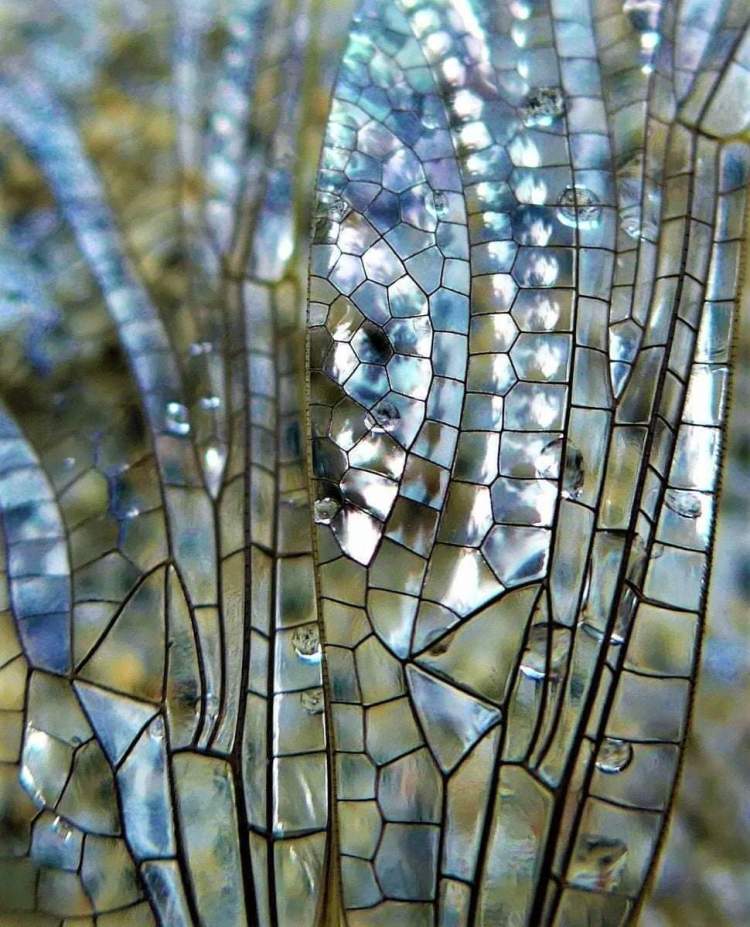
This is not stained glass, not a man-made piece of art at all, but instead gorgeous evidence of nature’s beauty. Via Reddit
A diaphanous dragonfly’s wing via Reddit
Odd things you may do that you don’t realise you do….
I loved this list of weird things by Brian Lageose, I actually thought I was the only person who did these things, but apparently this is universal, and that is somewhat comforting to be a weirdo in company.
Saying “excuse me” when you sneeze, even though no one else is in the room.
Hollering like a banshee while using a wireless phone in a public setting.It’s like that moment when Homer answers the phone and says “You’ll have to speak up, I’m wearing a towel”.
Walking on your tippy-toes when get out of the shower and head toward the bigger bathmat in front of the sink.
You give your cat an “official” name, but then never actually use that name again.
These sculptures and old buildings before the end of the Cold War era look futuristic and strange. Some structures demonstrate the military might of Russia. While others are scintillating, harshly modern, and located in beautiful forested landscapes. These monuments are artistic and architectural wonders. Could these lost and forgotten objects ever be revived and resurrected, albeit for different purposes than they were originally intended? Only time will tell. In the meantime these monoliths are fascinating to behold and I would love to visit them in person some day.
Are you someone who blocks your ears when you hear the
emergency services drive past? Are you someone who gets freaked out in crowds?
Do you seem to intuit and understand other people and all of their problems in
a very sophisticated way, without really trying? Do you easily take on the
energy of other people and find it heavy and tiring? Well you might be a Highly
Sensitive Person (HSP), like I am.
This documentary film Sensitive is all about being a highly sensitive person. This idea of doing a documentary about being sensitive may seem like hippy-dippy mumbo-jumbo, symptomatic of the way every human quirk seems to be pathologised and given a name nowadays.
But before you get all cynical about it, you should give it
a watch. The documentary film presents a lot of evidence-based research about high
sensitivity to external stimuli and how this is really a thing and around 20%
of people in the population. It has a genetic component, but it’s also partly a
learnt coping mechanism as well.
Being highly sensitive is not actually a pathology, disease
or condition. Rather – its simply a personality trait, that can be either be
harnessed to make you mentally healthy, or when it’s misunderstood or mismanaged
by you – it can also make you mentally unwell.
This documentary blew my brain apart. I find it immensely
comforting knowing that there are other people out there who are just like me.
In fact about 20% of all people are highly sensitive. Being a highly sensitive
person and socially anxious and introverted are all uncomfortable bedfellows.
However, as the documentary explains. Highly sensitive
people can frequently excel in many areas including the arts and leadership,
because they are naturally empathetic to others’ emotions, are good listeners
and can read complex relationships and provide well-thought out solutions.
Highly sensitive people are also frequently artists,
musicians and writers because they have an intensive and brilliant insight into
the emotional landscape of people.
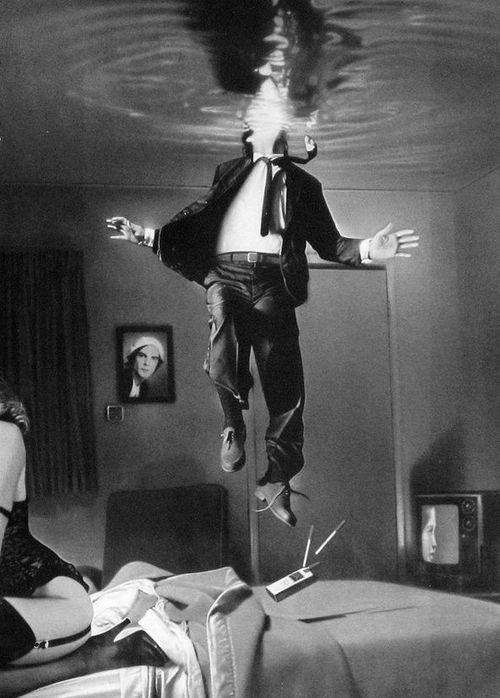
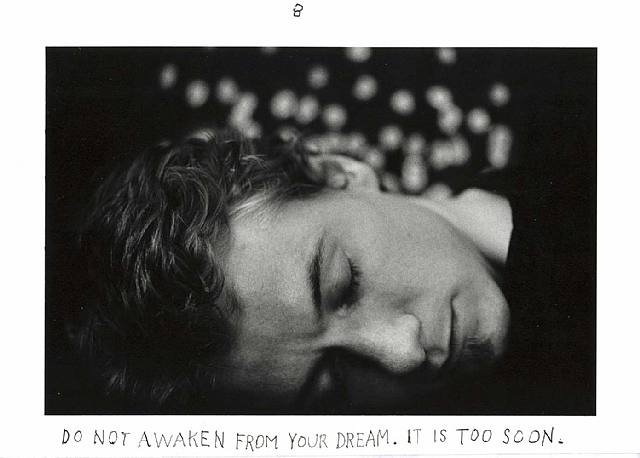
Photographer Duane Michals knows a thing or two about being sensitive
Also, you will get to see Alanis Morrisette talk about being
highly sensitive and how she coped with being mobbed constantly by people in
the 90’s.
This is a fascinating documentary, you can watch it for free
on Kanopy. You may be able to access this free streaming film service using
your library card. Some libraries offer it, some don’t. I hope you manage to
watch it, it’s well worth it!
*contains a few spoilers (sorry I couldn’t resist)
Iceland has always held a unique fascination for me. Driven by a love for SigurRós and Björk, along with the vague romance of going to a remote and icy place. In Names for the Sea by Sarah Moss, you get to actually explore the nuts and bolts of what it’s like to temporarily relocate with your family to Iceland for a year, along with theincredibly evocative and compelling writer Sarah Moss. This is a no-holds-barred look at how it would be to move from the domesticity and predictable English countryside to Iceland. I love that the author Moss has not glossed over the shadow side of the culture there, and Iceland and its people are fully explored with both compassion and also a clear-eyed view and a talented writer’s eye for detail.
If you are (like me) a bit obsessed with going to Iceland, this book will be real eye-opener for you and may actually make you less likely to want to go. My favourite parts were the stirring and slightly creepy descriptions of the landscape in mid-winter.
“The sea is silent. There are are no birds. Most of the sun is below the lava field now, and the eastern sky is darkening…we come down to the shore. There is no movement in the sky or along the beach because the sea is frozen. Instead of waves there are grey slabs, piled up against each other like fallen gravestones, from the black rocks of the beach to the dimming horizon. I hadn’t thought this would happen, hadn’t understood the movement of the water and the light, the rise and fall of the waves, the shifts between lapping and pounding, the coming and going of the tide could simply stop.” ~ Names for the Sea, Sarah Moss.
What you will learn about Iceland
In fashionable kindergartens – Icelanders, prefer to educate their young children in a gender-neutral way. In other words “feminine” traits are encouraged in boys, and “masculine” traits are encouraged in girls. Which is vaguely terrifying.
It is ridiculously cold and bleak for most of the year there and you cannot go outside. Nobody walks, everyone drives.
You cannot buy anything second-hand there.
You can’t get fresh fruit and vegetables for a portion of the year. A lot of things simply run out of stock there.
They eat a lot of whale blubber and meat preserved in fat or salt.
Icelanders drive like maniacs and they have an issue with fatal car accidents there.
You will always be an outsider or foreigner if you come from another country there. But not in a bad or racist way.
You can’t very easily grow flowers or plants there.
There are no trees.
Icelanders are independent and trusting and they let their kids roam around without discipline from the time they can walk – because there are no trees and nowhere to hide and everyone knows everyone there – so what could ever happen?
The landscape and its dangers are enough to make children toe the line. As a result of their freedom, children learn to be responsible from a very young age.
Many Icelanders believe in elves and the ‘hidden people’.
Anyway, suffice to say I’m not interested in going now. Which may sound like a bummer, but at least I just saved myself some Kroner. Back to the book – this is an incredible journey and you the reader will feel as though you are perched on Moss’ shoulder the whole time along for the ride. It’s a fabulously entertaining, evocative and interesting ‘warts and all’ journey into the the heart of a mysterious and isolated country and a fascinating culture. 4*/5
This book is definitely worth a read. If you have read this book or are interested, let me know what you think.
Poland in the summer is filled with enveloping sunlight, as bright and life affirming as a hug. Vibrant life, bees and flies take a circuitous route through fields of barley, poppies and wheat in the countryside.
The air filled with drifting dandelion and pollen. A cacophany of bird song fills the countryside accompanied by a distant flutter of wings in fervent flapping as they enter the boughs of trees.
In the cities where tourists and locals roam, there’s a sense of excitement at the cultural pleasures of city life. In main city squares, buskers engage with passing pedestrians by creating enchanting airborne bubbles from gigantic cannisters of soapy water. These float and carouse up past the bustling traffic and colourful city walls and dissapear into the cornflower blue sky, interrupted only by the cotton bud clouds high up in the atmosphere.
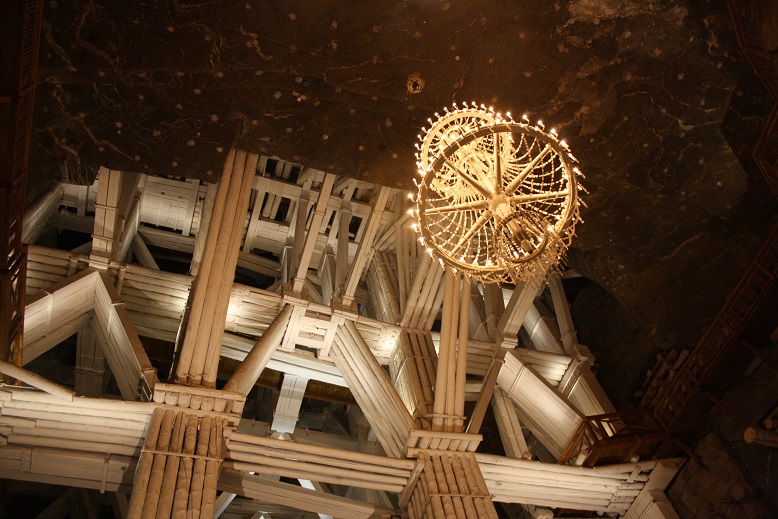
An endless roof of salt and wood in wieliczka salt mine, outside of Krakow
Inside of the Wieliczka Salt mine, a thousand steps seem to guard you from the surface of the world. A thousand false ceilings seem to call out and confuse your senses. So far away are you from the grounding blue of the sky and the sensation of dirt under your feet. Inside of this mine thousands of people toiled away to procure the medieval world’s first supply of salt. An expensive luxury during times of trading, salt was what made Poland rich during the ages. Not only that but it was completely voluntary and (according to the guide) a decent wage for the age and for the toil. Some men lived their entire lives underground and some indeed dedicated their lives to salt, becoming immortalised by it, in the form of voluntarily carving a spectacular underground cathedral, a dedication to Christ but also a homage to their fellow workers who often lived and died in there, in the dark, dank and dangerous conditions. Exquisite chandeliers rendered completely from salt hang from above a dining room that’s fit for royalty and underneath of our feet, geometrically placed and decorated tiles of sheer salt are polished to a marble sheen.
An evocative renaissance-style ceiling in a cathedral in Krakow
Inside of gargantuan and grand cathedrals which dot the landscape, a nascent and calming presence reverbrates through the air – benevolent and passive – the sound of silence. Even aetheists and non-believers find a sense of comfort here in the silence. Up there in the rarified air of the cathedral where light pours through shards of coloured glass. Up in the cavity where doves and pigeons dream of flying, a person’s eyes are drawn to exquisite frescos and paintings of Christ in various stages of his life. And thoughts are driven aloft towards broader, universal concerns and ideas. A feeling of evanescent joy pours through a person and looking at this magnificence every day – who wouldn’t believe in a god.
A pastoral scene during summer on a farm outside of Zamość
In one of the endless paddocks and fields, there was one home and in that home lived people with their own loves, beliefs and philosophies on living good and productive lives. In this home was a family who were three generations in breadth. They were hosts and custodians to a whole range of farm animals. These lively beasts scattered wildly and randomly and caused a good deal of ruckus, mess and smell. Loved by one and all, the late spring and early summer they all had babies. Then more mayhem, noise and muck ensued all around the clock. So much so that all members of the family barely took off their boots. This year the family welcomed their newest member, a young human baby to the flock. This meant another babe to be fed around the clock along with the other animals outside. The lights constantly seemed to be on and the kettle always ready with tea and coffee. This year the noise level, hillarity and laughter that has ensued on the farm was at pandemonium level.
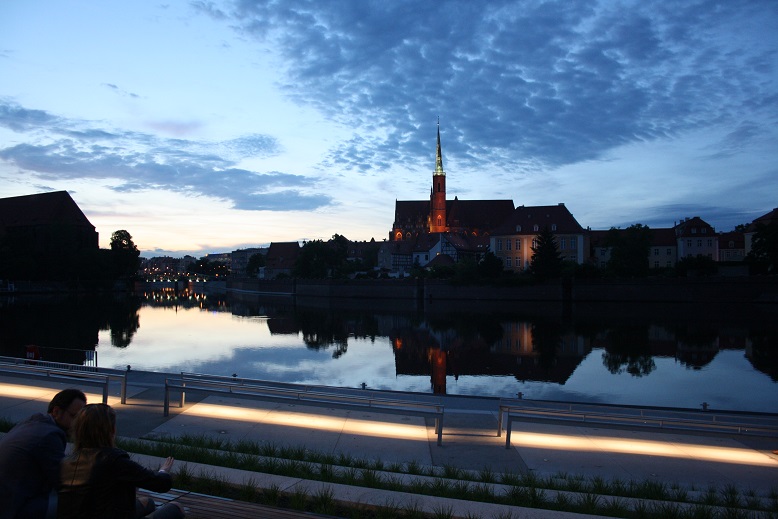
Late night riding in between islands and among the sleeping giants of historical cathedrals in Wrocław
The Odra river in Wrocław on a warm summer’s evening
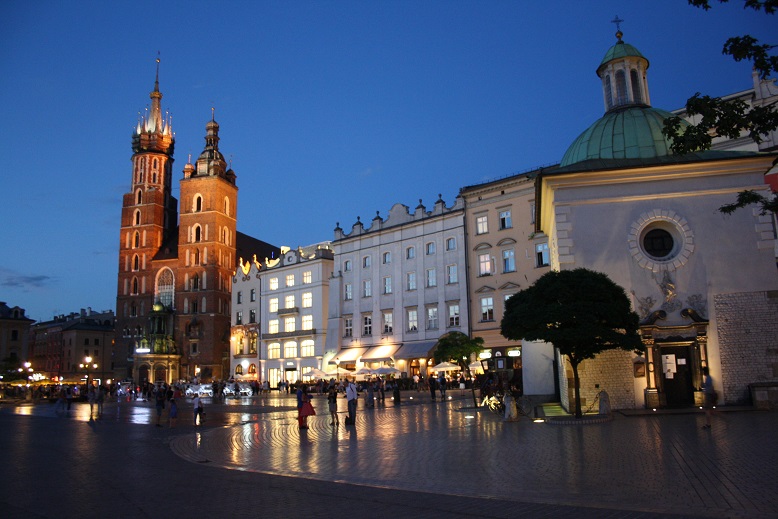
Krakow’s Rynek Główny at dusk
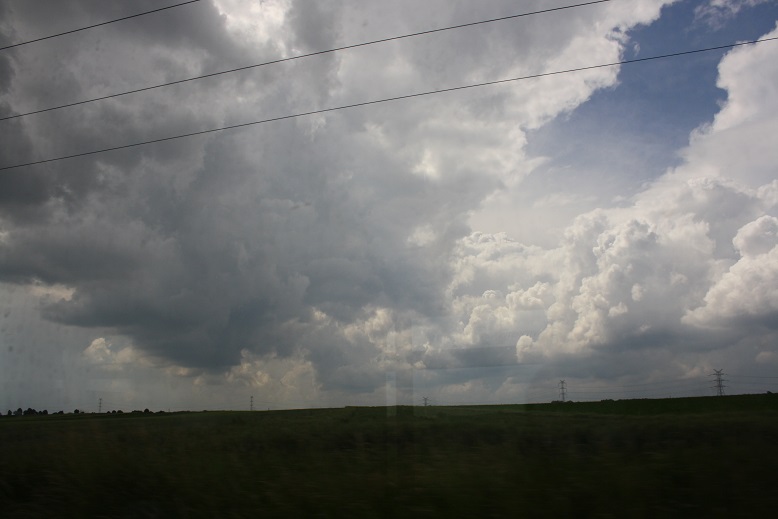
A moody sky on a train between Zamość and Głogow
On a first class train compartment between Zamość and Głogow, the area is enclosed by a glass screen, door and curtains. The chairs are a plush blue velventeen and the leg room, wide and spacious enough to do yoga in between the chairs, to the bemusement of passengers, who passed by to see a strange woman, half concealed by the curtain, in a squatting mudra with eyes closed and a man on a computer doing nothing particularly exciting. A moody sky of inky clouds and rustling windy fields quickly hastened in a sudden summer storm that drummed at the windows outside.
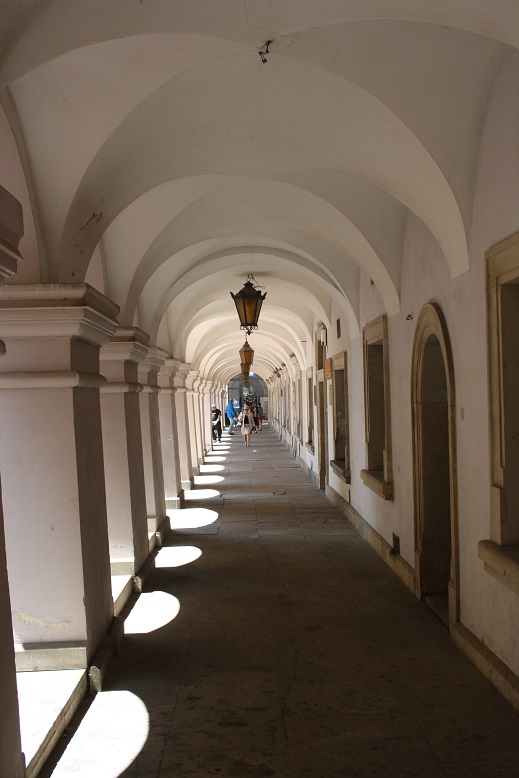
The Italianate walkways of Zamość Rynek Główny
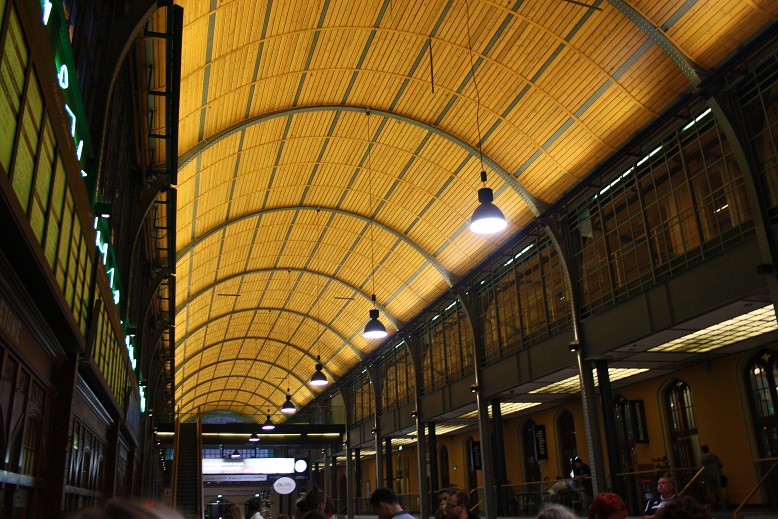
Inside of Wrocław’s newly refurbished Stacja Główny
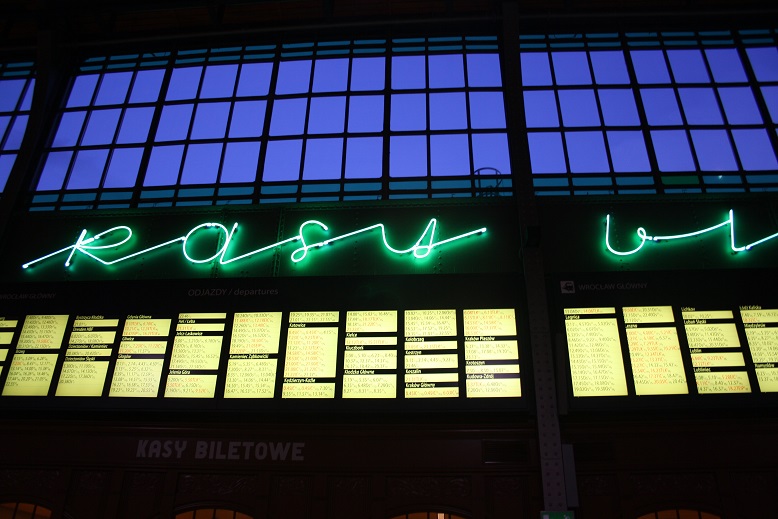
The fanciest train arrivals board I’d ever seen at Wrocław Stacja Główny
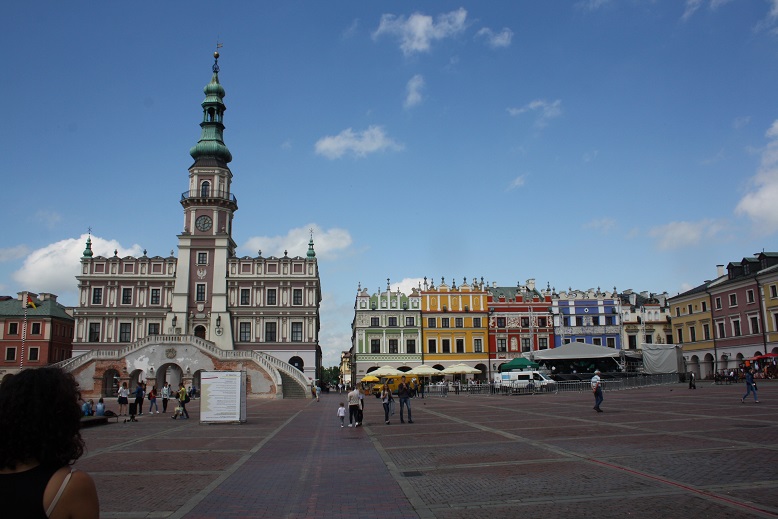
Zamość Rynek Główny
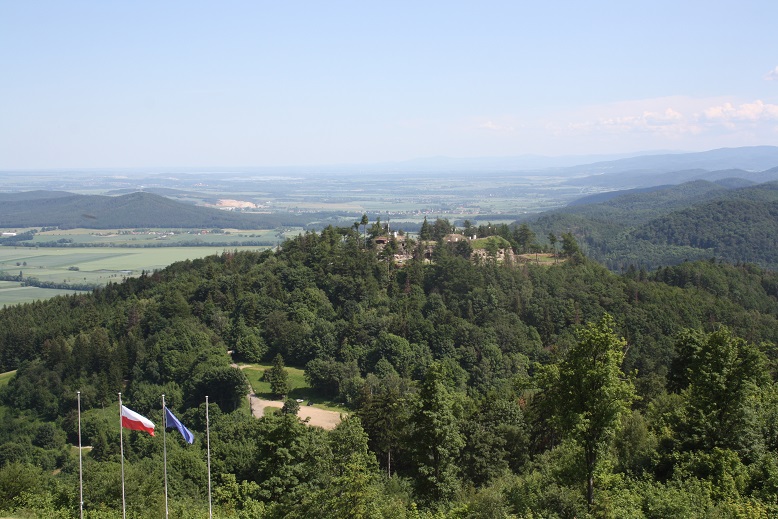
Szczeliniec wielki (Table mountains) in Lower Silesia
A good omen in Wrocław
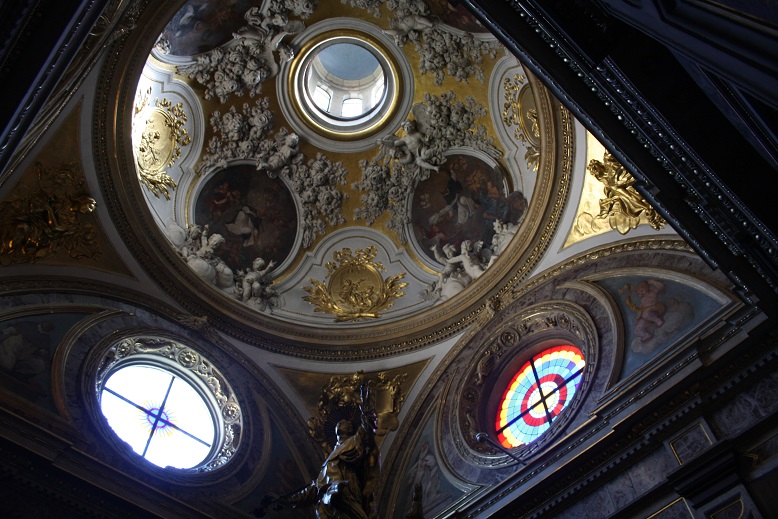
Another cathedral ceiling, this time in Wrocław
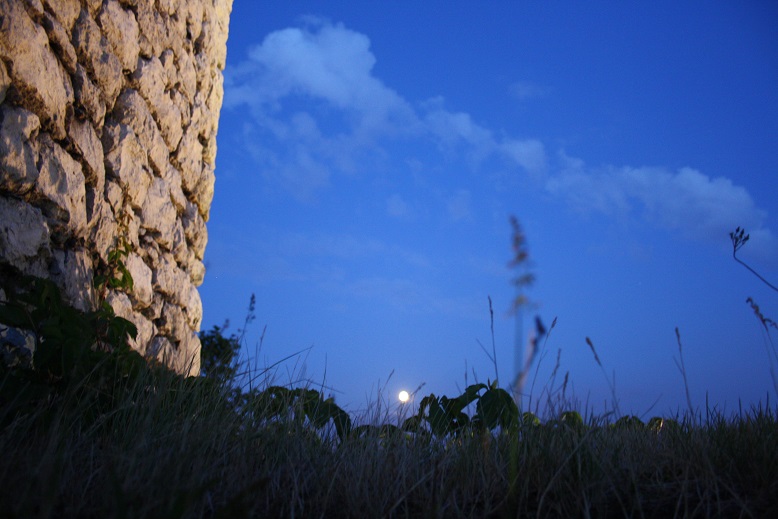
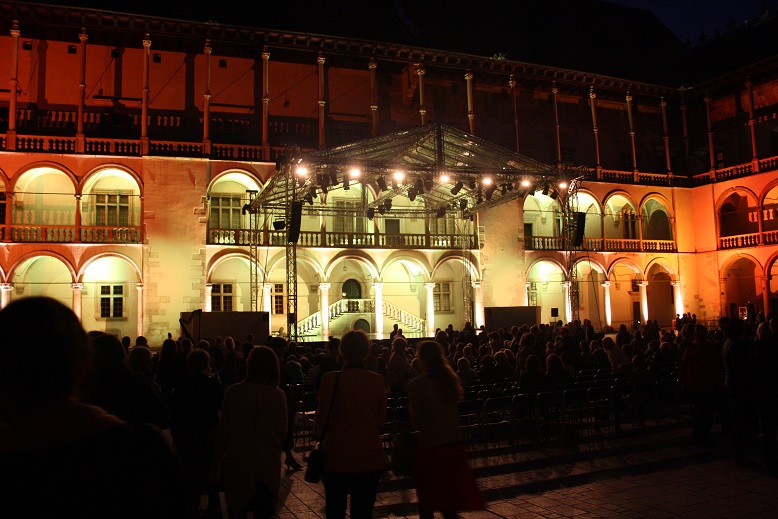
Inside of the walls of Wawel Castle, we watch the gigantic strawberry moon rise on Midsummer’s Eve 2016 and see the ballet in the castle
In the walls of Wawel castle on the night of midsummer, an atmosphere of enchantment abounded. The mauve and violet light of the sky melted into the golden lamps that fell onto the cobble-stone pathways, this skimmed and bounced across gabled iron rooftops of the castle.
The light from the opera ballet performance stage shone in a dramatic cascade of red and green. Women in high-heels stalked past draped in pashminas, they caressed their perfectly twisted french braids before taking their seats, led by men in suits who gentle caressed the curve of the womens’ backs as they sat down, suddenly there was an audible intake of breath as the performance began.
The strawberry moon of midsummer hung low like heavy honeycomb in the sky, as the world turned from golden jute to amber and to indigo and eventually to an enlivened silver grey.
























 Content Catnip
You must be logged in to post a comment.