
Binturongs, also known in English as bearcats, are long, stocky and heavy tree-dwellers with large bushy tails which they use to communicate. Strangely they have an odd but pleasant scent which people who smell them seem to enjoy – like buttered popcorn. Like all animals large and small they are endangered by palm oil expansionContinue reading “Ancient Word of the Day: Maturun / Binturong”
Category Archives: Ancient Word of the Day
Ancient Word of the Day: Komorebi

This Japanese word has no direct translation to English but means ‘the sunlight filtering through the leaves of the trees’. It is made up of three Kanji characters: 木 means tree 漏 means ‘to leak’ or ‘to escape’ 日 means sun Komorebi 木漏日 ~ from Japanese. ‘Sunlight filtering through the leaves of trees The wordContinue reading “Ancient Word of the Day: Komorebi”
Ancient Word of the Day: Snu

The smell sensing organ in animals is often described as a Snout and when someone is annoyed with you, you may get snubbed by them. Humans since prehistoric times have been sniffing, snuffling, snorting and sneezing and when we are blocked up, we have a lot of snot. Philosopher’s lamp, 1936 Rene Magritte These nasalContinue reading “Ancient Word of the Day: Snu”
Ancient Word of the Day: Orangutan

Orangutan: n. Orang ‘forest’ hutan ‘person’ or forest person in Malay Orangutans belong to the great ape family, our closest biological relatives. This familial link is reflected in the word orangutan itself, which Malay speakers today can still recognise as deriving from the phrase orang hutan, which means “forest person”. This term goes back over aContinue reading “Ancient Word of the Day: Orangutan”
Ancient Words of the Day: Week Days

Why are there seven days in a week? A week is a cycle of seven numbered or named days most likely due to the Jewish calendar. However things get complicated as early medieval Europe inherited the idea of the week from imperial Rome, via Christianity. Name days are similar across all European languages: English, German,Continue reading “Ancient Words of the Day: Week Days”
Ancient Word of the Day: Gibbon / Kebong
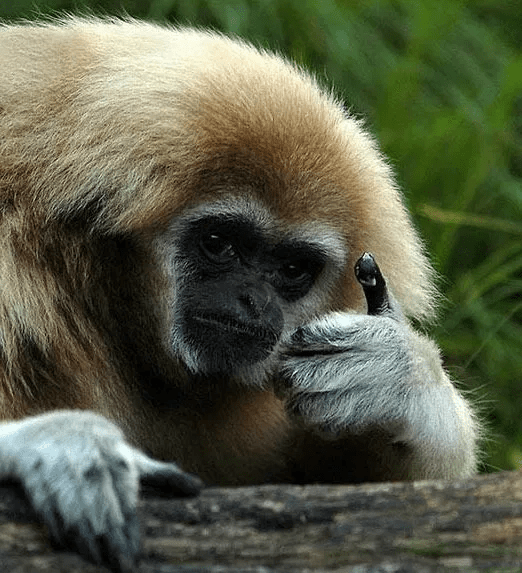
The word gibbon entered European languages through French in the 18th century. The French adopted it from the Malay word, kebon. However etymological research shows this Malay word originally came from a group of languages called Northern Aslian, spoken by indigenous communities in peninsular Malaysia. In Northern Aslian, it was probably pronounced kebong. Gibbons are a type of apeContinue reading “Ancient Word of the Day: Gibbon / Kebong”
Ancient Word of the Day: Nightmarish Nursery Rhymes

The sweet little rhymes and refrains that fills out childhoods are actually full of ghoulish and gruesome revelations. Here are some creepy examples… The rhythmic patterns of nursery rhymes provided an ideal framework for infants and children to develop language. Mary, Mary, quite contrary,How does your garden grow?With silver bells, and cockle shells,And pretty maidsContinue reading “Ancient Word of the Day: Nightmarish Nursery Rhymes”
Ancient Words: Cute words in Polish and how to say them

PB and I were thinking about what we would name our pets. Once we get a place where we can have a backyard so that animals can run around, we will be getting a rescue dog and cat or perhaps a whole menagerie. What we discovered was an astonishing number of cute words in Polish,Continue reading “Ancient Words: Cute words in Polish and how to say them”
Ancient word of the day: Adder

Snakes, serpents, vipers, adders – they all convey ancient power of life over death, of emerging in ones full power to take back what belongs to them, of transformation and return. A potent ancestral spirit and augur from the Land of the Dead. Adder The Adder Vipera berus is the only venomous snake in Britain.Continue reading “Ancient word of the day: Adder”
Eight words in Polish that have no English equivalent

Around ten years ago now I tasked myself with learning Polish. Not for shits and giggles or just to challenge myself but for the very practical reason of being able to communicate with my partner’s family who live in Poland. It was a hard slog and some even consider Polish to be the hardest ofContinue reading “Eight words in Polish that have no English equivalent”
 Content Catnip