

According to the Romans, every sound and motion the bird made had a different meaning according to different circumstances, times of the year and other factors.
Tag Archives: ancient history
The symbolism of The Lady and the Unicorn tapestry cycle

Detail of ‘Smell’ c1500, from The lady and the unicorn series. wool and silk, 368 x 322 cm. Musée de Cluny – Musée national du Moyen Âge, Paris Photo © RMN-GP / M Urtado Mark De Vitis, University of Sydney The arrival of The Lady and the Unicorn tapestry cycle at the Art Gallery ofContinue reading “The symbolism of The Lady and the Unicorn tapestry cycle”
Opening Pandora’s Box: Phrases Borrowed from the Classics and the Stories Behind Them by Ferdie Addis

If you are in love with language, storytelling, folklore or classical history then you will love this book. It’s short at only 162 pages. However Opening Pandora’s Box punches well above its weight in terms of quality with many amusing and shocking stories from classical history to enjoy.
Ancient word of the day: Nymph

In Greek mythology, the nymphs were tiny and minor goddesses that each presided over a type of landscape feature. Normally something glimmering, glittering and bewitching in nature like waterfalls, streams, mountains, lakes or trees. The name nymphe means bride in Greek and so the tiny and bewitching nymphs represented the brides or maidens of theContinue reading “Ancient word of the day: Nymph”
Ancient word of the day: Arachnid

According to ancient Greek myth, the first spider to ever live was a once human girl named Arachne. She lived in the ancient city of Lydia in Turkey and was famous for her ability to weave beautiful clothing. Arachne gained fame for her weaving and became boastful of her ability, telling people that her weavingContinue reading “Ancient word of the day: Arachnid”
Book Review: The Mind in the Cave by David Lewis Williams

I grabbed a copy of this book fully expecting to love it. The Mind in the Cave is packed with information about ancient history, anthropology, archaeology and the Lascaux and Chauvet cave complexes – some of my favourite subjects. Although I have to say that this book was written in a style that was confusing to read, difficult to wade through and some of the information didn’t make sense, even to this non-expert on the topic.
Ancient words of the day: Arcadian Idyll

Arcadian Idyll: an idealised vision about rural life, a country paradise. Arcadia was and still is, a mountainous region in Greece. It was populated mainly by shepherds and the sleepy and fluffy flocks of sheep. In reality, rural life in Arcadia was harsh, poor and beholden to the ravages of unpredictable weather. However thatContinue reading “Ancient words of the day: Arcadian Idyll”
You have sprung from soil in which you are a stranger

A palm tree stands in the middle of Rusafa, Born in the west, far from the land of palms. I said to it: How like me you are, far away and in exile, In long separation from family and friends. You have sprung from soil in which you are a stranger; And I, like you,Continue reading “You have sprung from soil in which you are a stranger”
Unusual augurs of thunder in medieval England

In times of yore ( yore occurring around 1389) the appearance of thunder was a mixed bag. Thunder during January augured bumper crops, along with war when it crackled over the sky. However, thunder in December heralded abundant fruit trees, provisions and harmony among people. Harry the Hayward’s Thunder Prognostication Chart (1389) Sources: The BodlieanContinue reading “Unusual augurs of thunder in medieval England”
Ancient word of the day: Kraken
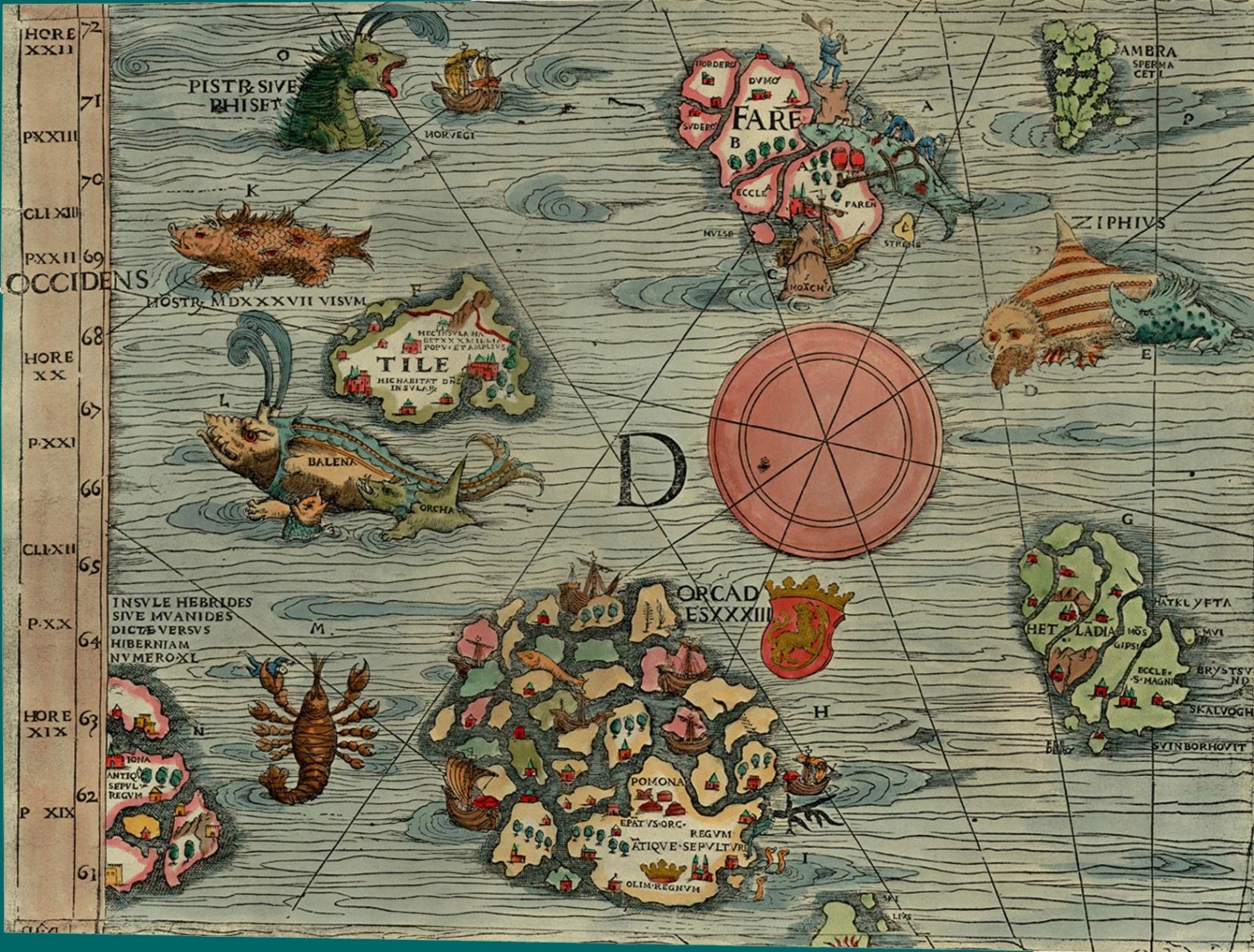
A Kraken is a mythical behemoth. A man-eating and fearsome gigantic cephalopod that drove fear into the hearts of sea-going Scandanavians. The word kraken comes from the Swedish word “krake”, which means twisted. Seen traditionally as a beast to be feared and respected, it also embodied a sense of deep oceanic magic and mystery. KrakenContinue reading “Ancient word of the day: Kraken”

