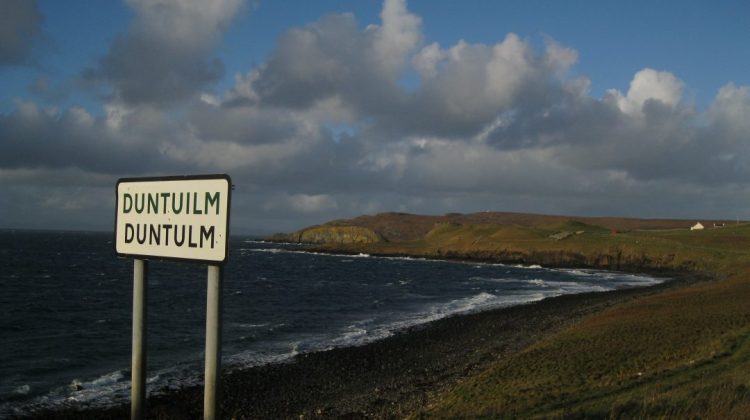
I visited Duntulmon the northerly most point of the Trotternish peninsula on the Isle of Skye back in 2010.
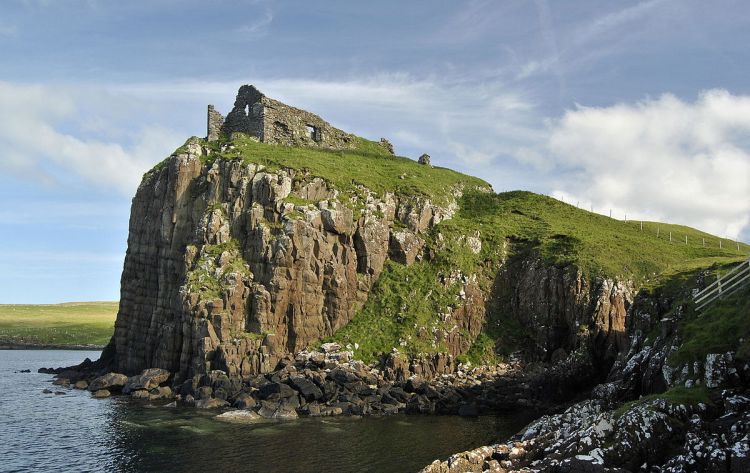
Many many moons ago, perhaps several thousand years ago, the now mostly ravaged and ruined castle was originally a Pictish fortress, forming one of a chain of duns or forts stretching along the north coast of the Isle of Skye on Trotternish.
Copyright Content Catnip 2010
Then the Norsemen came from Scandanavia and took up residence in the castle and gave it the name David’s Fort.
Nowadays Trotternish and Duntulm is home to a lot of grazing highland cows as well as one overpriced hotel and a smattering of accomodation options. At this wind-swept point on Trotternish it’s possible to see as far as Uist.
The ruins of Duntulm castle as it is today
The chequered history of Duntulm castle has it being seized and overthrown by subsequent clans. In the 16th Century Duntulm was seized by Donall Gorm also known as Blue Donald, a chief of Clan MacDonald who did some DIY on the fort. A century or so later the fort was abandoned and has since fallen into ruin.
The changing light of the sky, land and water was truly captivating here.
A placid and beautiful Highland Cow, found roaming on the Isle of Skye. Copyright Content Catnip 2010.
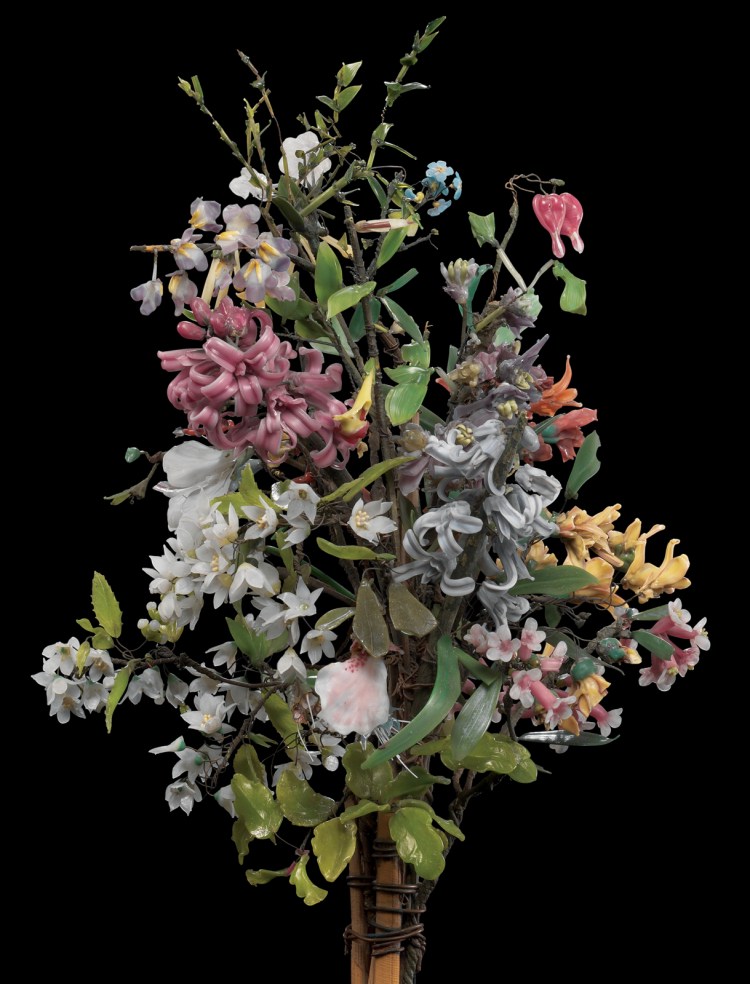
Bohemian glassmaker Leopold Blaschka began making drawings of animals the crew fished out of the sea on a maritime voyage to America in the 19th Century. This was a time of fervent exploration of the sea and land. People of the era were obsessed with accumulating specimens of exotic creatures. For Blaschka, the sea voyage began a lifelong obsession. Upon returning home, he turned away from the family tradition of making glass eyes, table lamps and jewelry. Instead Leopold Blaschka (1822-1895) co-opted his son Rudolph (1857-1939) into the business and together they began crafting ephemeral glass flowers and then later legendary marine invertebrates—jellyfish, squid, sea slugs—all painstakingly and faithfully rendered in glass.
This slideshow requires JavaScript.
In 1863, a curator for the natural history museum in Dresden, Professor Ludwig Reichenbach, saw an exhibition of highly detailed, realistic glass flowers created by a Bohemian lamp-worker named Leopold Blaschka.
Flowers by Blaschka
Reichenbach was an avid enthusiast of marine animals and could see that this ephemeral workmanship could be just as easily applied to delicate sea creatures. He commissioned Leopold to make several glass anemones for his museum’s collection.
Leopold’s reputation quickly spread and he gained fame for his talent at creating invertebrate models for natural history collections world-wide. In 1876, Leopold’s son, Rudolf, joined his father in the family business.
The two master craftsmen and artists created thousands of intricately worked, carefully detailed glass models of invertebrates and botanical specimens. These were used as teaching aids and 3D exhibits in a time where the real specimens were scarce and rare to come across.
The intersection of art, science and craftsmanship
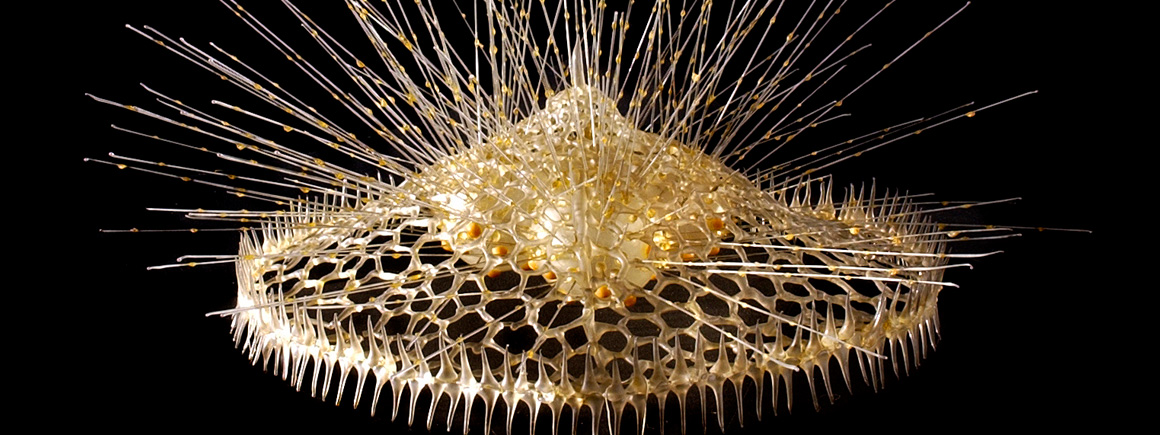
The invertebrate models, made mostly of clear glass, took their patterns and colors from paint, but for the later botanical models, the Blaschkas began making their own colored glass. The glass models were especially important for studying marine invertebrates; when preserved in spirits, the sea creatures swiftly lost their color and form. In building their specimens, the Blaschkas combined their own observations with those of published zoological accounts, and the models, intended as teaching tools, are full of naturalistic detail. Some show the same organism at different life stages, while others render key features larger than life.These models are exquisitely rendered and universally acknowledged as being perfectly true to nature. In a time before video and film, these models were the still-life documentaries of their time.
Harvard’s Glass Blaschka Flowers
Decades before Harvard commissioned them to create its famous Glass Flowers, Leopold and his son, Rudolf, became known for their invertebrate models, which were acquired by museums and universities across the world. Now a new permanent exhibit at the Harvard Museum of Natural History, Sea Creatures in Glass, showcases more than 50 examples of the Blaschkas’ earlier work, drawn from acollection of 430 models owned by the Museum of Comparative Zoology (MCZ).
Harvard’s collection of intricate Blaschka flowers:
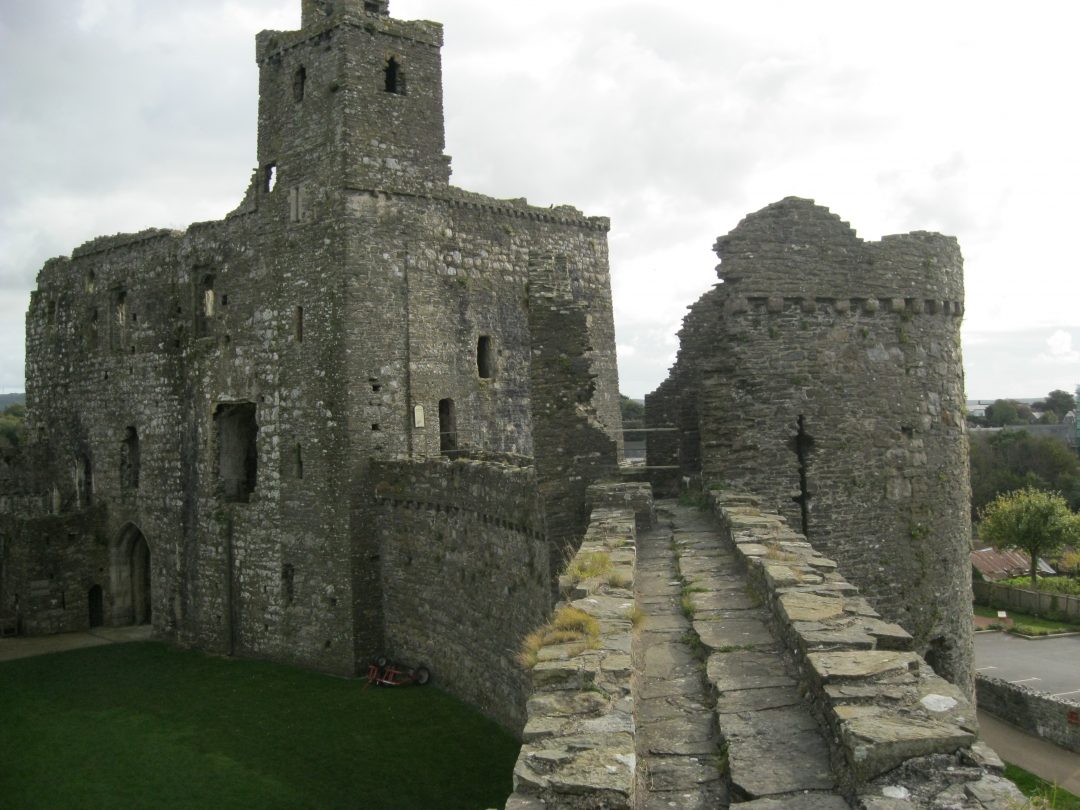
About ten years ago I visited Carmarthenshire, Wales and discovered the ruins of Kidwelly Castle with a friend and fellow couch-surfer. It was a delightful and fascinating day, full of overcast grey weather, souvenirs, bara brith, Welsh rarebit and early medieval history.
Perched close to the wind-swept seaside and encircled by beautiful lapwings, ducks and geese, Kidwelly Castle begun its story in 1106 although the story is older and begins at the time of Norman conquest in England in 1066.
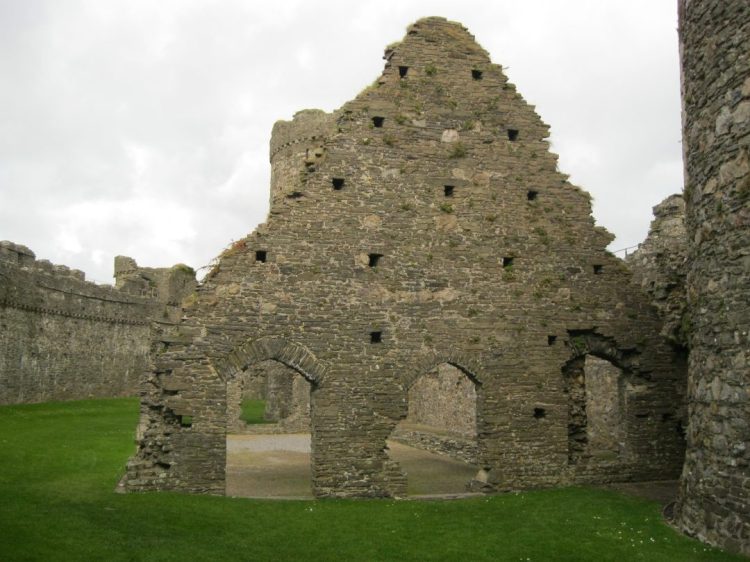
Arrow slits in the walls of an upper bed chamber.Copyright Content Catnip 2010
William the conquerer
When William the Conquerer 1066-87 overran England with the Normans after the battle of Hastings in 1066, Wales was already divided into several distinct kingdoms.
So instead of dividing and conquering these individual kingdoms, William established a buffer zone along the border of Wales (the Marches) where he established many of his own Norman lords in the area, where they built many major strongholds such as Chepstow and Chester.
It wasnt until the death of Rhys ap Tewdwr ruler of South West Wales in 1093 that the Normans could finally penetrate further south. Bases were established in Pembroke and Cardigan and then a royal castle was founded in 1095 in Carmarthen.
I can imagine the guards up here monitoring the horizon. Copyright Content Catnip 2010
Copyright Content Catnip 2010However in 1096 many of these castles were taken back by the Welsh in a series of uprisings against the Normans. The re-establishment of Norman rule only came with the accession of Henry I (1100-35), William’s son.
The birth of a castle
And so in 1106. Kidwelly Castle was born. Bishop Roger of Salisbury was granted the lands by Henry I. There he built a remarkable castle. Although the Welsh weren’t going to give up their land without a fight.
Inside of the chapel. Copyright Content Catnip 2010
Gwenllian the brave
One of the more dramatic medieval events was he valiant battle of Gwenllian, the wife of Deheubarth prince Gruffydd ap Rhys against the Normans near Kidwelly Castle.
In 1136 an opportunity arose for the Welsh to recover lands lost to the Marcher Lords. The revolt against the Normans began in South Wales.
While her husband was in another town seeking an alliance from a neighbouring army, Gwenllian came under attack by the Normans led by Maurice de Londres. Gwenllian was forced to raise an army. The battle was fought near Kidwelly Castle, Gwenllian’s army was defeated, she was captured in battle and beheaded by the Normans.
Although defeated, her revolt led to more rebellions in South Wales against the Norman invaders. Afterwards, her brothers Owain and Cadwaladr hearing of the news of her death invaded and took control of nearby towns Llanfihangel, Aberystwyth, and Llanbadarn.
This slideshow requires JavaScript.
To this day, Gwenllian’s bravery is compared to another female Celtic leader of armies, Boadicea. The field where the battle took place near to Kidwelly Castle is known as Maes Gwenllian or the Field of Gwenllian. Centuries later Welshmen would shout a battlecry of Revenge for Gwenllian when going into battle.
The castle’s remnants today are largely the result of the rebuilding that occurred by the de Chaworth family who occupied the castle in the 13th century.
Peering out from a guard’s sentry position Copyright Content Catnip 2010
prison
In the south gatehouse you can find creepy prison cells, this place looked and felt a lot colder than in other parts of the castle. No natural light permeated here and instead there was a lonely old light bulb illuminating the tiny, meagre room. The atmosphere in here was claustrophobic and reminded me of how a gallows and a dungeon would feel, or how I would imagine these places to feel.
One particularly nasty Norman invention was the ‘bottle dungeon’ or the oubliette, a trap door below ground level, where prisoners could be lowered and never to be seen again. They would be held in truly revolting conditions in a funnel shaped cell. This was truly the point of no return!
An oubliette aka bottle dungeon. An insidious place to end up in Norman Britain
Overall this place filled me with awe and wonder because it was so well-built and sophisticated, despite how old it was. When all of our own timber, plaster and brick houses will collapse and rot, these majestic castles still remain and are a testament to medieval building practices.
Copyright Content Catnip 2010A view onto the verdant green hills of Carmarthenshire from Kidwelly Castle. Copyright Content Catnip 2010
Chapel: hallowed, sacred ground
According to the wall’s signs, which I helpfully photographed ten years ago. (Thanks 27 year old me) The chapel served to defend the castle’s eastern flank and was also an elegant set-piece of worship.
The chapel was above a fortress room and contained an altar on the left hand wall and to its right a basin for washing the sacred vessels. There was also a small sacristy.
Birds circle over the tower ominously Copyright Content Catnip 2010
Arrow-slits in the windows
Here you can see the arrow-slits in the windows of the castle. These provided people inside of the castle with an ample view outside to despatch arrows, but the invading army outside would have very little chance of aiming through the tiny slit in the castle, giving a supreme advantage to those inside. After the invention of gunpowder – these arrow slits included a circular hole for a cannon to be put against the window to shoot out.
Arrow slits in the walls of an upper bed chamber.Copyright Content Catnip 2010
Copyright Content Catnip 2010
Copyright Content Catnip 2010
More arrow slits Copyright Content Catnip 2010
Copyright Content Catnip 2010
Kidwelly Castle, WikipediaLate Medieval Map of Wales. Wikipedia
The Secrets of the Castle by the BBC
I recently became totally transfixed by medieval forms of engineering after watching this riveting BBC series, Secrets of the Castle, where a real life castle is rebuilt using all of the same methods as they did in the olden days of yore.
The technology and techniques they used were obviously completely analogue and quite novel, however they were anything but primitive. To create such a thing of sublimely symmetrical window mouldings, arches and buttresses makes these medieval artisans and engineers actual geniuses. Respect!
This isn’t the only castle I’ve visited. I’ve also been to
Every Picture Tells A Story: William Stanley Moore (1925)
William Stanley Moore according to his official police record was an “opium dealer/ Operates with large quantities of faked opium and cocaine./ A wharf labourer; associates with water front thieves and drug traders.” Mugshot by New South Wales Police Department (1925). He reminds me of one of the brothers in Peaky Blinders, not to be messed with!
In 2010 I stayed for a while by the Welsh seaside in Newport, Pembrokeshire, Wales. I loved the wild waves and sea air, dramatic black cliffs and bright green hillside dotted with sleepy sheep. But most of all I loved the hill walks there, particularly Myndd Carningli, a splendid 347 meter tall mountain that holds a lot of ancient secrets in its earthy bosom.
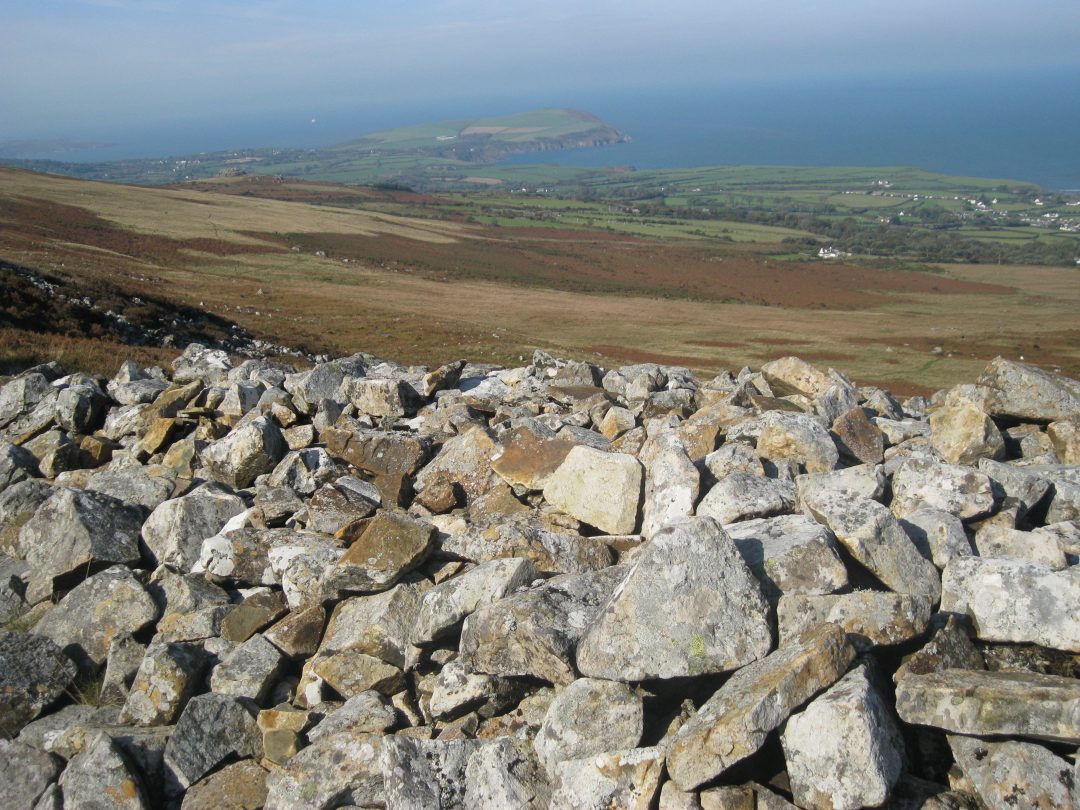
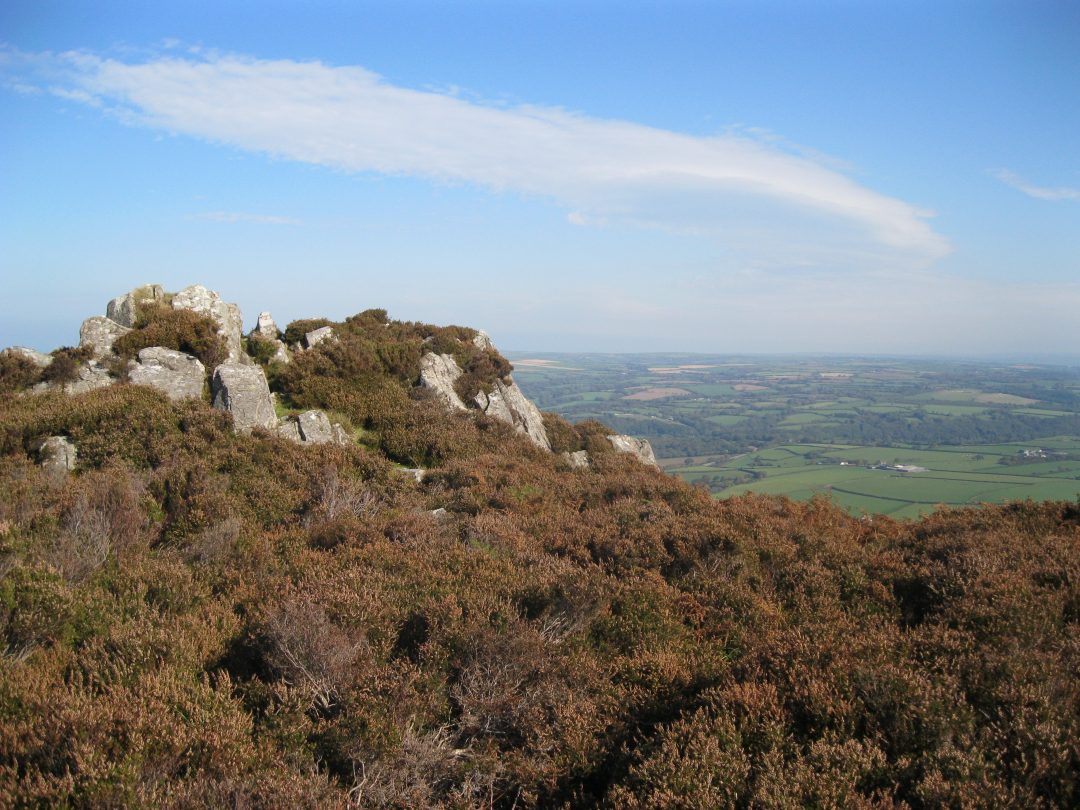
On my ascent up Carningli, which wasn’t at all difficult, it’s a gradual incline with rocks and scree to guide the way, I witnessed some of the most breathtaking and peaceful views in Britain. The blustering and bracing Atlantic wind reaches in through your clothes and stabs you in the heart.
Copyright Content Catnip 2010
From up on Carningli I felt that anything and everything was possible for me. It was very personally liberating, after a very challenging chapter in my personal life. But enough about me, let’s talk about Carningli!
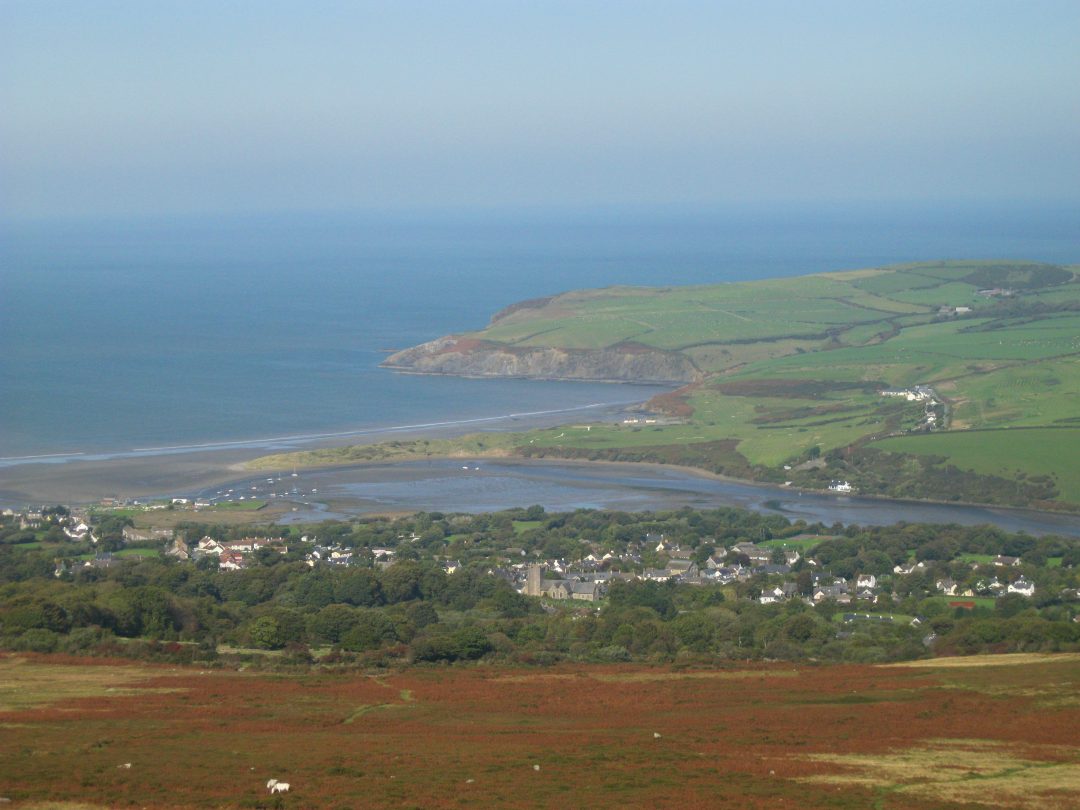
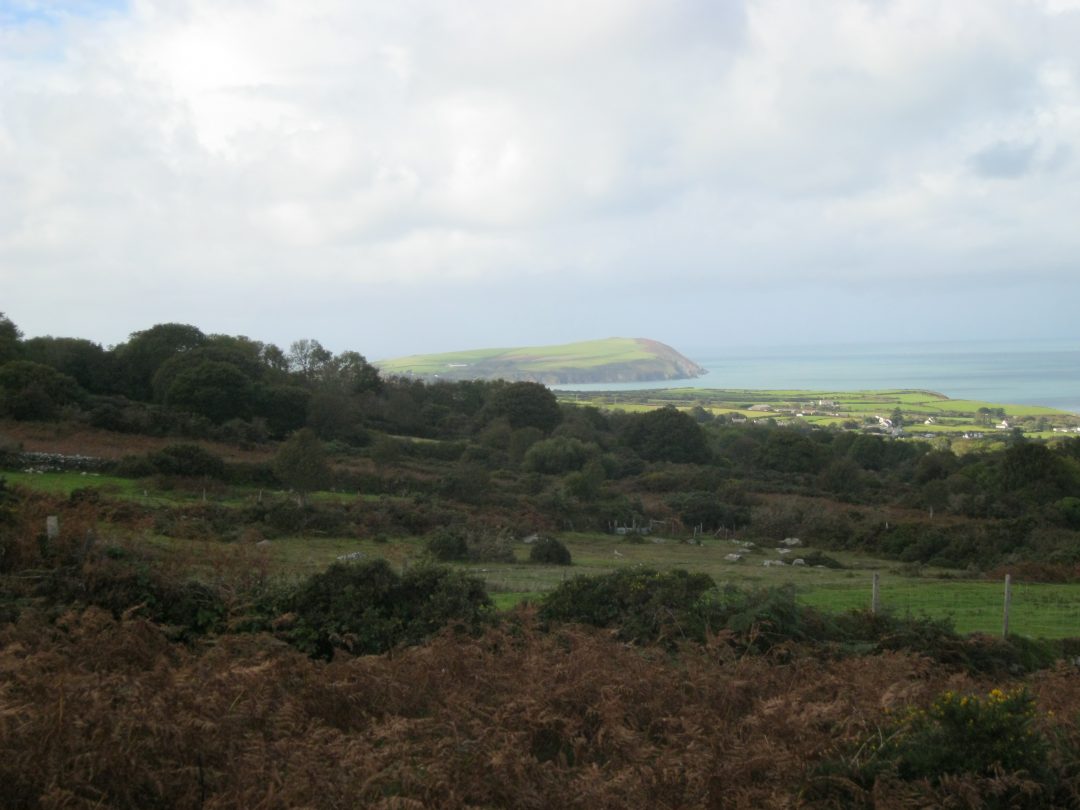
Looking towards Newport in Pembrokeshire from Carningli. Copyright Content Catnip 2010
Mynydd Carningli: Iron Age Hill Fort
Mynydd Carningli is one of the largest hillforts in west Wales. It dates to circa 1,000BC. The lower flatter areas of Carningli were once home to a Bronze Age settlement. Around 25 hut circles and rectangles have been found here in amongst the stone and scree slopes.
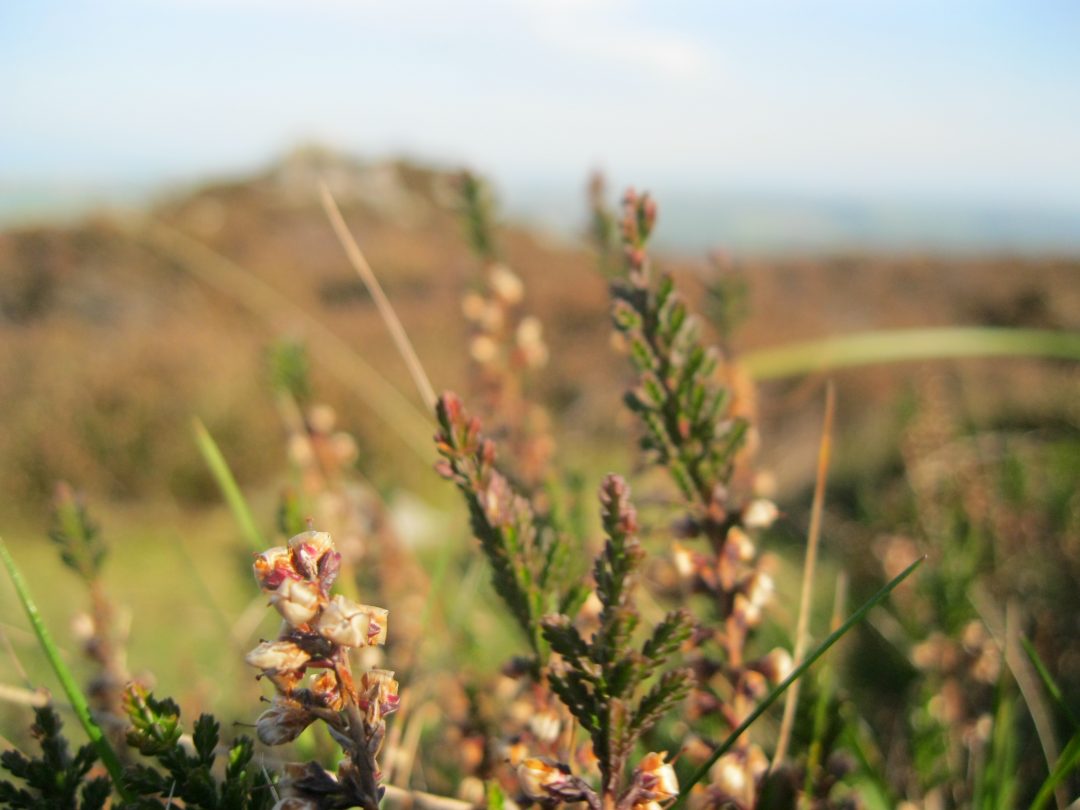
Some amazing wildflowers on top of Carningli. Copyright Content Catnip 2010
The area of the settlement is believed to be about 400 metres x 150 metres. The mountain was harnessed by the original Bronze Age settlers for its natural strengths, and some of the embankments were used for defensive sentries.
Archaeologists think that up to 150 people called this settlement a home at any one time, based on the sheer amount of evidence they have found, The summit was once an active volcano half a billion years ago.
Although there’s also some evidence of the destruction of these embankments later on by Roman invaders, when they conquered Wales.
More recently, 4th century Celtic missionary St Brynach called this place home for a time and came here to chill and meditate. Hence the name Carningli in English, which means the Hill of Angels.
The views from up here are pretty epic and on this clear day I could see as far as Ireland in the distance.
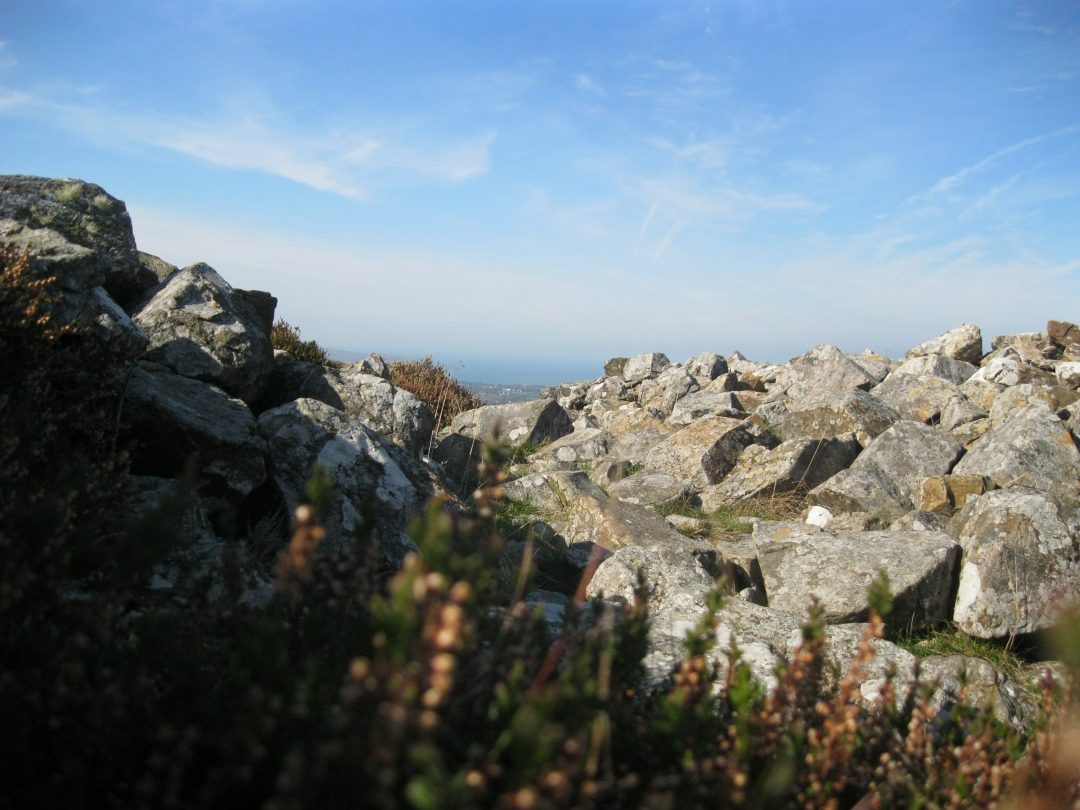
Poking around up there, I didn’t know quite what I was looking at or looking for, but everything felt and seemed to be sacred in an incredibly ancient way. In a quiet contemplative way I observed standing stones, cromlechs, carins and hill forts The benemoth stones seemed to emanate genuinely ancient spirituality and power. There is a beautiful, sacred loneliness up here.
Some wildflowers on Carningli Copyright Content Catnip 2010
Other than St Brynach in the 4th Century, the mountain has entertained few guests, other than the occasional grazing sheep or adventurous pony.
The mystery of exactly what went on at Carningli during the Bronze Age still remains unresolved, because there has been no comprehensive excavation of the Carningli hillfort to date.
Looking towards the coast of Newport from the slope of Carningli Copyright Content Catnip 2010
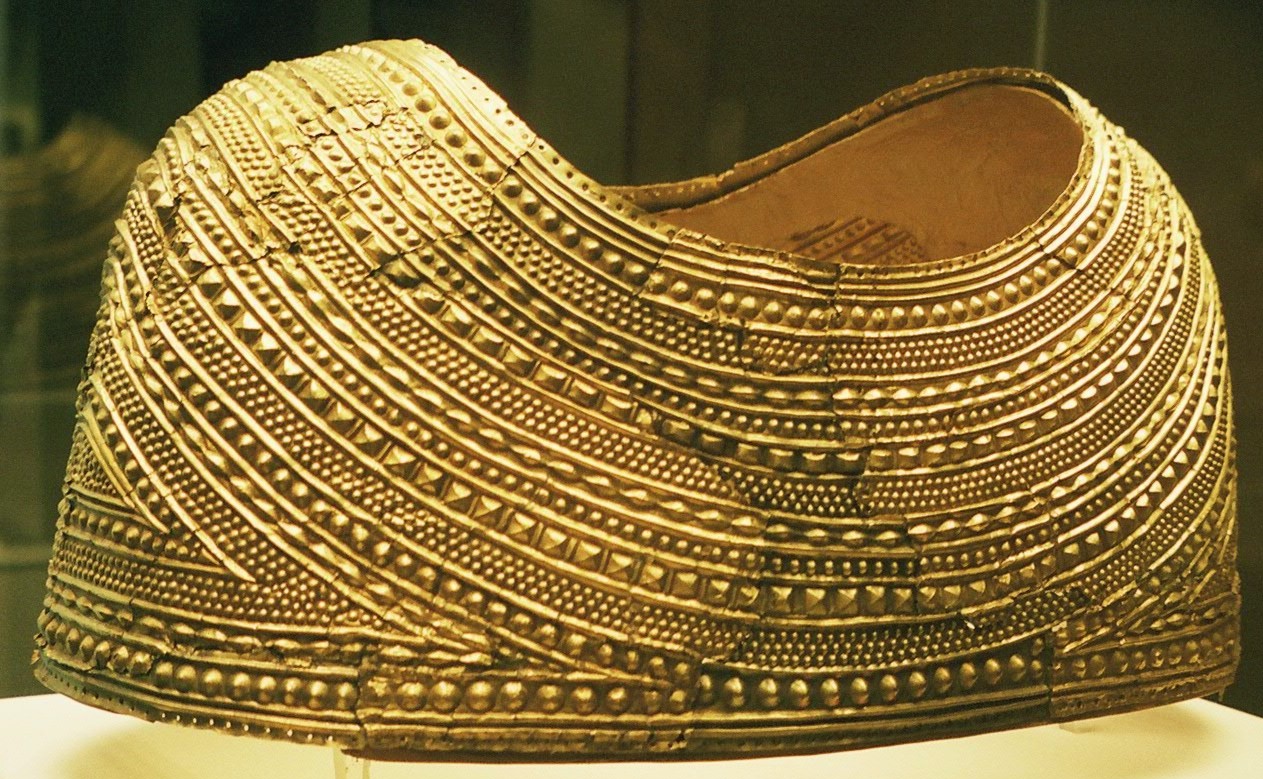
For all anyone knows, Carningli may hold treasures from the Bronze Age or earlier this could include jewelry, armour or weapons. The below gold cape was found in Wales dating from the same period. The mind boggles, how exciting!
An example of an Bronze Age treasure from Wales: the Mold gold cape. circa 1900-1600 BC/ From Mold, Flintshire, North Wales
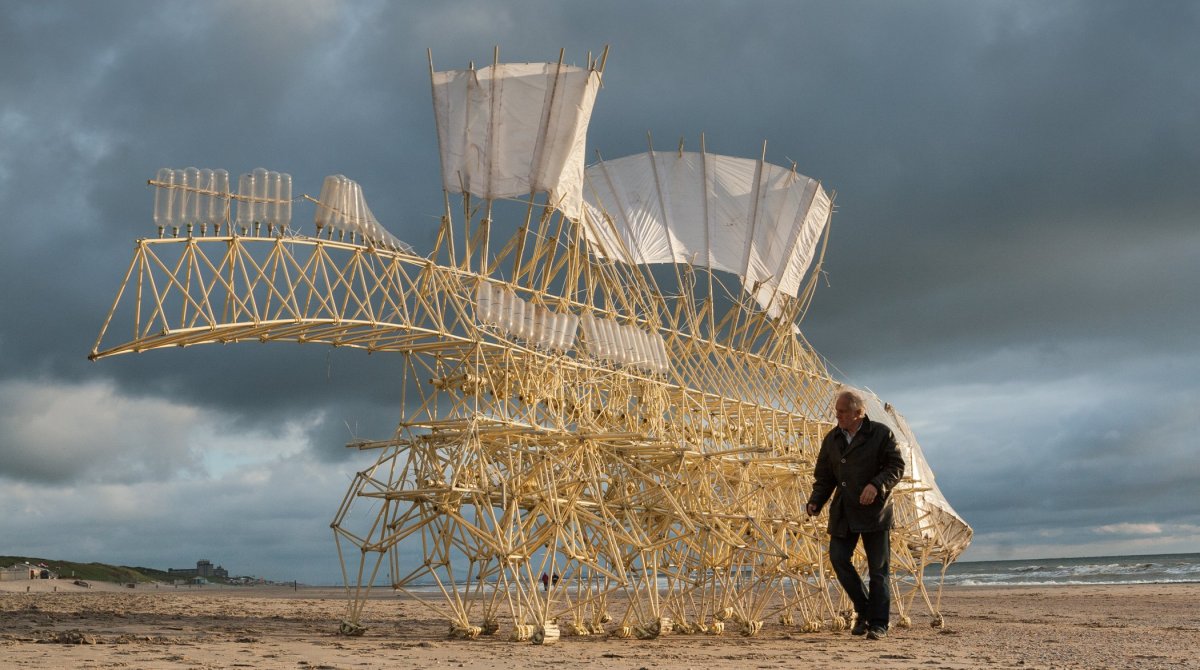
Theo Jansen’s strandbeests are composed of spindly plastic organs that take elephantine strides. They have guts that store energy and are powered by wind. They are sensitive mechanical beasts that can even detect water. Each of Jansen’s ingenious strandbeests are miracles in motion. They may very well be the next stages of natural selection.
Jansen augmented his strandbeests from from the humble every-day materials of PVC tubing, zip ties and string. Tubular muscles and tendons undulate in the wind and create alarmingly perfect spirals of perfection and complexity,
They are a marvel of engineering and wind power. Each of the moving parts of the beest act independently and interdependently. When one leg senses that it’s moved too close to water, it will hesitate and move the entire organism away from the shoreline. When another leg senses high wind it will anchor the entire beest into the sand and ensure that it won’t topple over.
The sheer imaginative lineage of the strandbeests each bear a Latin name that reflect the unique character of the species.
Animaris Currens Vaporis is known in English as a walking steam animal that puffs like a steam engine. Whereas Animarus Vermiculus is a worm-like undulating beast that wriggles like its namesake.
Over 25 years Jansen has perfected his strandbeests and built upon strong and hardy characteristics, letting weaknesses falling to the wayside in each subsequent species.
“Entire townships and villages appear to have been airlifted from their historical and geographical foundations in England, France, Greece, the United States, and Canada and spot-welded to the margins of Chinese cities,” according to Bianca Bosker, author of Original Copies: Architectural Mimicry in Contemporary China.
Tianducheng: A Fake Parisian Wonder
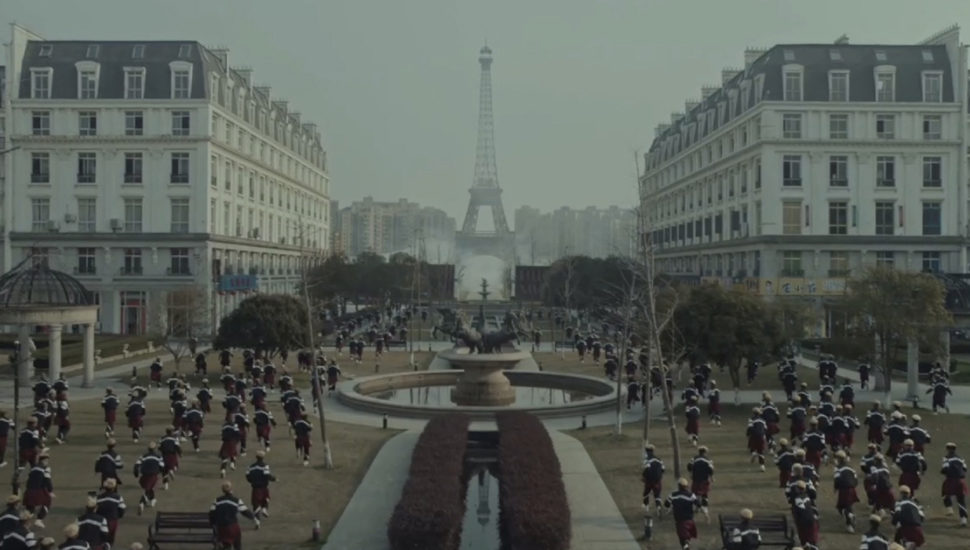
Originally conceived as an homage to Paris and including a 108 metre tall replica of the Eiffel Tower, Tianducheng was intended to be a luxurious paradise for Francophiles. No expense was spared in reproducing landscaping, sculptures and architecture in immensely realistic detail. The entire fake city was designed and developed to house more than 10,000 people. Although like a Gothic Horror, something is really amiss in this place, it’s eerie, abandoned and slightly creepy in a way. That’s because only a fraction of people live here, less than 2,000 people, leaving the vast majority of this splendid architecture in battered ruins and increasing decay. The strange and smoggy, unmistakably Chinese skyline and the sense of hopeless pervades the place. For a very vivid decription of a visit to Tianducheng have a look at Nomadosaurus.
Here is Tianducheng in all of its forgotten glory
Gosh by Jamie XX: Epic video clip in Tianducheng
And here is the majestic, mind-blowing videoclip for Jamie XX’s Gosh, taken from the album In Colour. The clip was shot with 400 real actors and no CGI or special effects involved. Although the result is a eerie, otherworldly and post-apocalyptic story that we can only guess at.
Thames Town: Coronation St in the upsidedown
Thames Town is situated about 30 km from Shanghai and is modelled on aspects of English market towns and their architecture and landscaping.
It’s namesake comes from the River Thames and the 1 km square town features cobbled streets, English style gardens, Victorian terraces, corner shops and English market squares. Direct knock-offs of English heritage buildings can be found here, including the Christ Church of Clifton Down in Bristol, along with a pub and fish and chip shop copied from buildings in Lyme Regis, Dorset. The town is a popular backdrop for wedding photography. On a sunny day hundreds of couples dressed in their wedding garb go and pose by the pretty riverside.
An almost too perfect rendition of an English market town in Shanghai
The developers of this part of Shanghai, known as the Songjiang New City intended Thames Town to be an attractive option for accomodation for staff and students at the nearby Songjiang University Town. Thames Town was part of a wider move to create nine unique and characterful towns with quirky architectural themes: Scandinavian, Italian, Spanish, Canadian, Dutch and German
Costing 5 billion yuan to construct and spanning across 1 square kilometre, the project was completed in 2006.
Although afterward, the properties were bought up as investments and second houses. Soon the real estate prices soared, putting the prices far out of reach of average Chinese students, for whom Thames Town was originally intended. Sadly, because not many people live there, the shops in the town didn’t survive long either. This leads to a profoundly eerie feeling in the town. As shown in this video, a sublime example of abandoned porn and an irresistible piece of click bait.
Here are eleven words that I have collected in much the same way as other people collect smooth stones from a riverbed or iridescent shells from a beach. With so many words and shells floating around, how can you be sure that you have the prettiest ones?
Here are eleven of my favourite ancient words, and an evocative piece of writing that I created to illustrate their meanings.
1. Elflock
Meaning: A tangled lock of hair that appears matted and disheveled as though by elves. Origins: 1590’s Old English. Pronunciation: Elf-Lock
In Use: After a day sprawling on grass, running after squirrels and catching dragon flies, she returned to the house with eyes ablaze, knees bruised and a mad elflock bird’s nest crowning her head.
2. With squirrel
Meaning: A pretty euphemism meaning pregnant. Although the phrase ‘with squirrel’ was used in the early 20th Century when modest manners considered ‘pregnancy’ a word too confronting to be spoken of directly in rural Ozark communities in the US. Origins: Ozark mountains, USA. Early 20th Century.
In Use: Deborah appeared to everyone she crossed paths with in the village, to be rather voluptuous and undeniably with squirrel.
3. Lunting
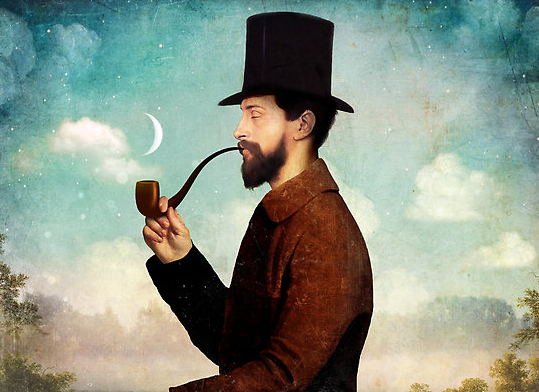
Meaning: A verb meaning walking while smoking a pipe. A lunt is use to describe the smoke or steam emanating from a tobacco pipe. Lunting could also be used to describe kindling a fire or torch. Origins: 1540-1550 Dutch and Low German. Later on a Scots word that is mentioned in John Mactaggart’s Scottish Gallovidian Encyclopedia, 1824. Pronunciation: Lun-ting
In Use: Lunting and puffing out lilac coloured smoke into the gloaming, he tramped across the field deep in thought, a stone cairn in front of him cast long shadows and the wind reached inside him chilling his very marrow.
4. Schadenfreude
Meaning: Taking pleasure or enjoyment in the calamity and pain of others.
Origins: Stems from the German word of ‘shaden’ meaning damage and ‘freude’ meaning joy from the 17th Century.
Pronunciation: Shad-en-froyd-uh
In Use: Did you see that old lady who fell down at the zebra crossing? Instead of helping her I froze in a moment of shadenfreude. I had to cover my mouth and pretend to cough so that I didn’t laugh!
5. Nonce
Meaning: An old slang word for a unit of time such as a moment, second, instant or period. Slightly awkward and silly and for these very reasons, nonce needs to be resurrected.
Origins: Middle English
Pronunciation: Nawns
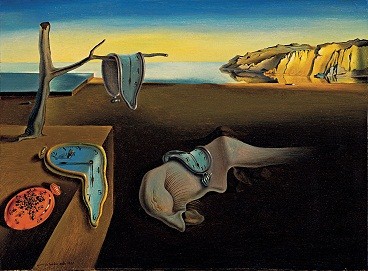
In Use: I was carrying a lot of shopping. I went to the car and for a nonce, forgot about where I had parked the bloody thing!
The Persistence of Memory, Salvador Dali.
6. Apodyopsis
Meaning: A fancy word for the salacious act of mentally undressing someone or imagining them naked. Origins: Greek. Takes in the composite parts of ‘Apo’ meaning off or away. ‘Dy’ derived from apodyterium or dressing room, and Opsis meaning vision or sight. Pronunciation: apo-DI-opsis
In Use: He opened the metal shutters of his lounge room window with his eager fingers. He furtively peeked through and saw his neighbour benignly washing her dishes. Her sheer blouse made it all too easy for apodyopsis.
7. Sonder
Meaning: An elusive and beautiful German word, for which there is no comparable word in English. There is no way to explain the meaning succinctly. A sudden and profound realisation about the human condition. That every person in the world is living their own life, with all of the pleasures and tragedies that this entails. An incredibly humbling epiphany about the millions of stories circulating around you at any given time. Origins: German Pronunciation: sohn-dehrr
In use: She looked out of her window at the rooftop chimneys in their colours of lilac, ochre and slate grey. The countless chimneys tall and short, new and crumbling to ruin. She saw with new eyes of sonder, the narratives of thousands of inhabitants. Each of them blew through her mind at once, and she was powerfully reminded of how fragile and how complex everything is.
Edinburgh old town vista
8. Rebarbative
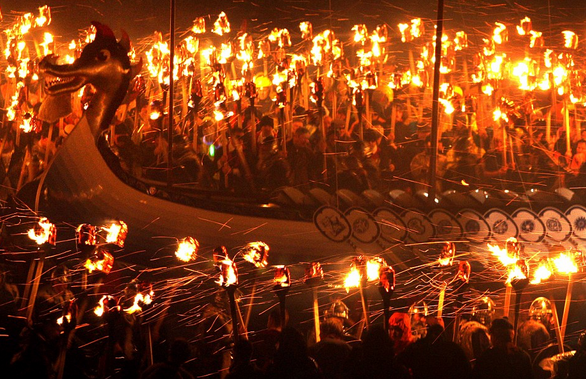
Meaning: A very masculine adjective taken as a whole to mean withstanding or repelling an enemy and confronting him face to face or ‘beard to beard’. Origins: Late 19th Century French. Comes from the Latin word barba, meaning beard in Latin. This word then evolved in French. The French feminine form of rébarbatif is derived from rébarber, meaning to be unattractive. Pronunciation: re-bar-ba-tive
In Use: Banging swords and axes against makeshift shields with ferocious self-possession, the warriors stared down their enemies with rebarbative blood lust.
Up Helly Aa Viking Festival
9. Apricity
Meaning: Describes the universally enjoyable sensation of feeling the sun’s radiant heat onto your body on a cold winter’s day. A clear bright and serenely beautiful corporeal sensation. Origins: Although phonologically it sounds like the word apricot, semantically apricity doesn’t originate from apricot. The stems of the word are Latin. ‘Apricus’ is Latin for sunny day. The verb ‘apricate’ means to stand around, basking and warming up in the sun. Pronunciation: Apri-ci-tee
In Use: The sun escaped from the clouds like a golden wheat husk and lit up my skin with apricity.
Portobello public pools, Edinburgh 1920’s.
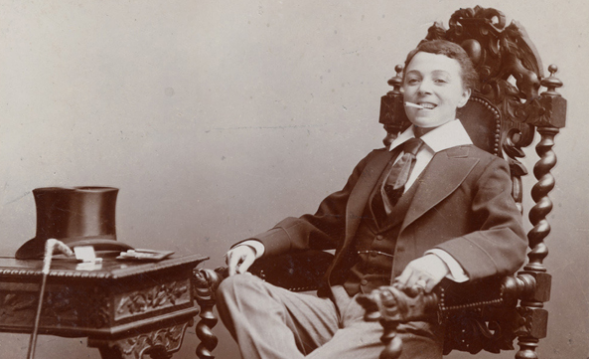
10. Quaintrelle
Definition: A female dandy. A woman who emphasizes a life of passion as expressed through her personal style, chosen pastimes, and cultivated demeanour. Pronunciation: kwayn-TRELL Origin: Middle English and French.
In Use: She mixed eclectic fashions from different eras, wore colourful boots and kept a strange schedule. Each night she’d step out with a gleeful expectant shimmer in her body. As a quaintrelle, the world was her oyster.
Vesta Tilly dressed as a man, 19th Century
11. Nefelibata
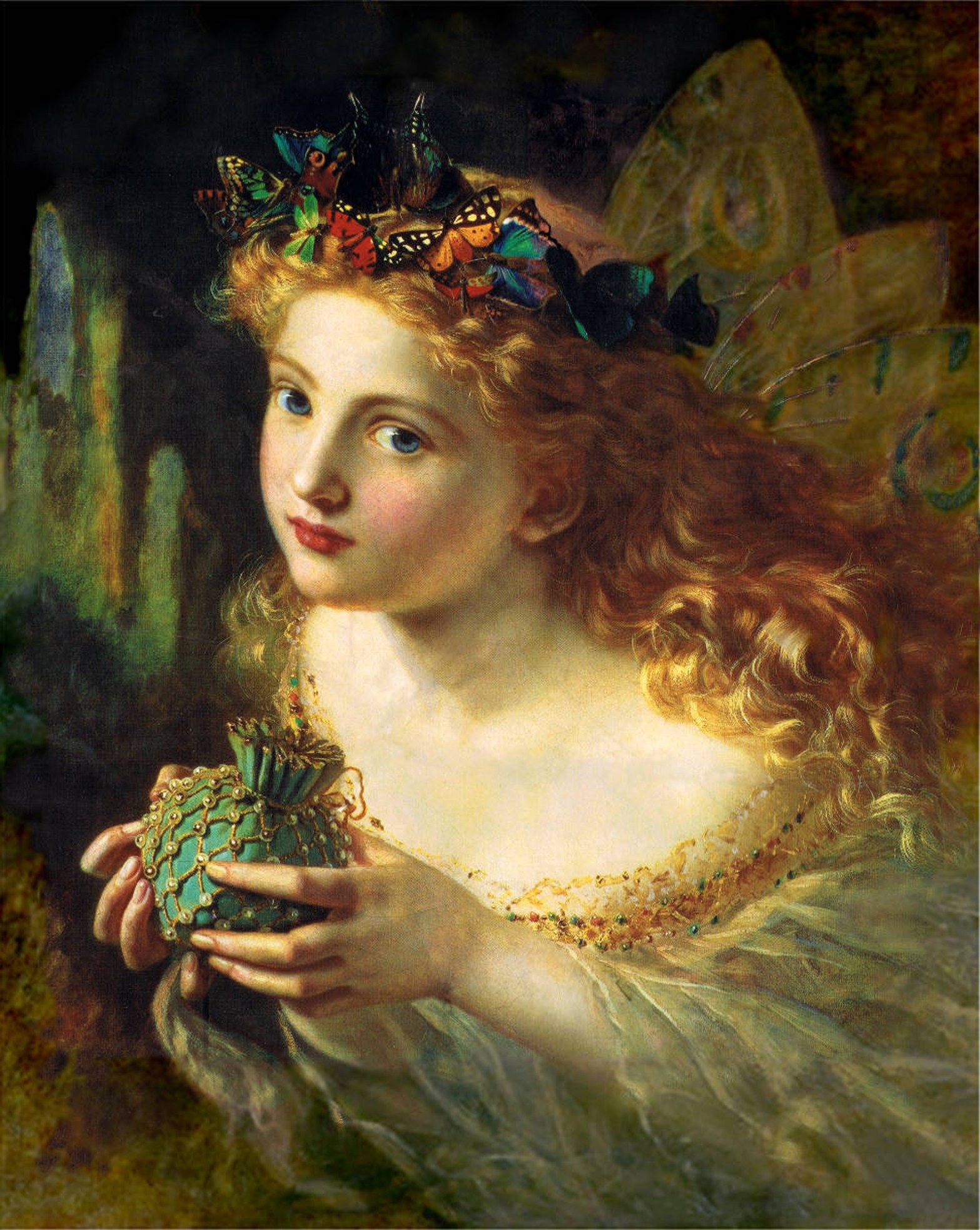
Definition: A cloud walker. An individual who lives in the clouds of her own imagination or dreams. A person who doesn’t abide by the rules of society, literature, or art. Pronunciation: ne-fe-LE-ba-ta Origin: Portuguese. Derived from ‘nephele’ (cloud) and batha (a place where you can walk).
In Use: She flounced and danced as though nobody was watching. She skated through life with the wind of nefelibata in her sails.
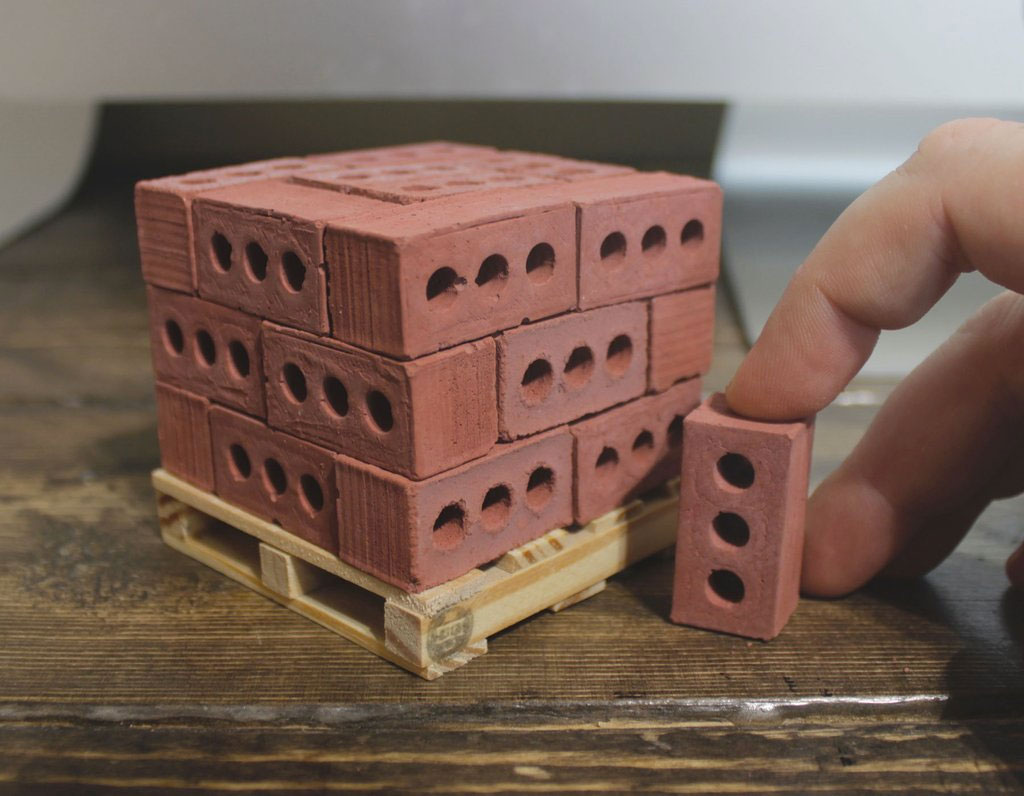
Mini Materials now offers lovers of miniature the unprecedented opportunity to build their own life-like models of buildings using real building materials on a 1:12 scale. Owner of the burgeoning online business Matt tells the story better himself.
One day I saw someone making miniature cinder blocks online, and I had a sudden urge to buy some of my own. The novelty and uniqueness appealed to me right away. However, I couldn’t find them for sale anywhere – so I decided to figure out how to produce them and start selling them myself. I assumed if they appealed to me so much, they must appeal to more people, I couldn’t be the only guy that found these little delightful products so spectacular!
If you or someone you know was one of those kids who loved LEGO and never grew up then this may be the right Christmas present.
You can buy all kinds of Lilliputian sized construction materials including bricks, breeze blocks, timber framing, fencing panels and bins. Everything is shrunken to be exactly 1/12th of the size of the real thing.
Looking at this video here, the process of using mortar on the tiny bricks is rather mesmerising and it looks relaxing even watching it, sort of in a cosy crafty way. I would give it a go, would you?
When chapman billies leave the street,
And drouthy neibors, neibors, meet;
As market days are wearing late,
And folk begin to tak the gate,
While we sit bousing at the nappy,
An’ getting fou and unco happy,
We think na on the lang Scots miles,
The mosses, waters, slaps and stiles,
That lie between us and our hame,
Where sits our sulky, sullen dame,
Gathering her brows like gathering storm,
Nursing her wrath to keep it warm.
Robert Burns. Poet. Scottish. “Tam O’Shanter’. 1790
Tam O’Shanter and ice-skating on Lake Menteith in Stirling. Copyright Content Catnip 2015

















 Content Catnip
You must be logged in to post a comment.