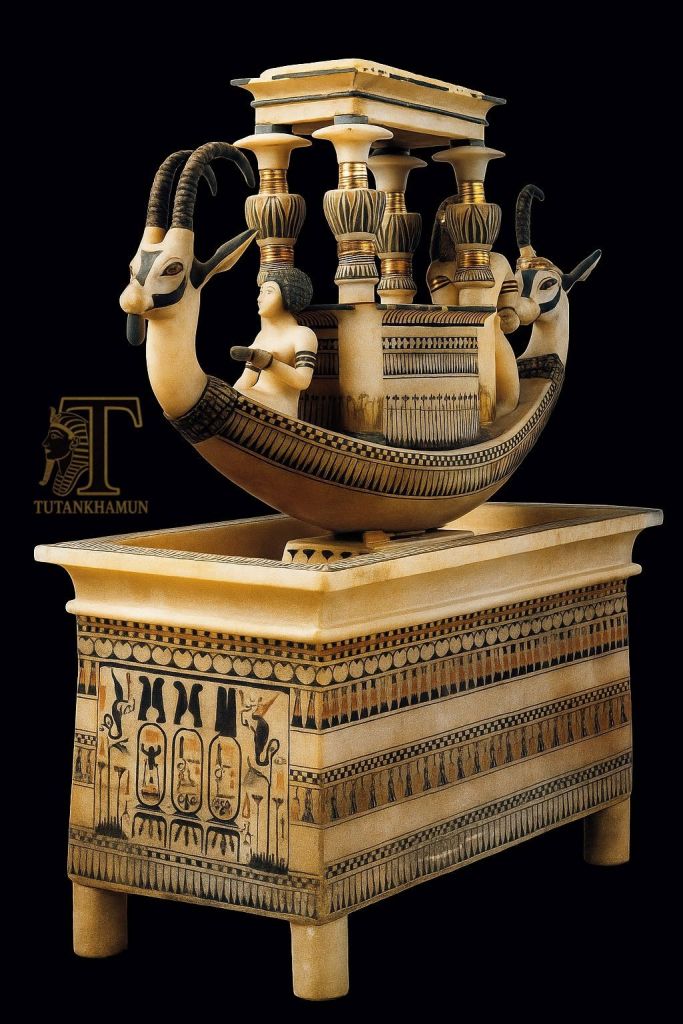
The alabaster boat of Tutankhamun
A wonderful treasure found in the “Annex” of the tomb, estimated to be over 3,300 years old (dated to approximately 1332–1323 BC.)
The towering and proud boat symbolises the Pharaoh’s spiritual journey across the celestial Nile into the afterlife.
Intuition is not irrational
Via Nimue Brown/ Druid’s Cauldron
How do you tell between anxiety and intuition? Or wishful thinking and intuition? Also, rather critically, how do you tell if your intuition is right but you’re being systematically lied to? How do you hang on to your intuition in face of gaslighting? Especially if you’re dealing with someone who is using the woo-woo as part of their tool set? What do you do if you’ve trusted someone, and that one mistake leaves you wide open to having your confidence in yourself entirely sabotaged? These are not easy things to figure out, and I don’t think there’s a one-size-fits-all answer here.
The most important thing is to keep checking in with yourself. Cross reference what you feel with what you know from other sources. Compare and contrast. How anxiety manifests in your body is likely to be different from what it’s like to have a gut feeling that something is wrong. The same goes for wishful thinking. Only if you want to avoid self-delusion will you be able to pick these things apart. There’s no helping the person who is hell bent on asserting that their intuition means things regardless of all evidence to the contrary. I’ve been in those situations too, and if someone is adamant that they know what you’re ‘really’ thinking or feeling, and won’t hear otherwise, there may be nothing you can do. It may be a case of deciding to put up with it, or deciding to quit. I honestly recommend quitting.
Via Nimue Brown/ Druid’s Cauldron
Teriyaki Fried Rice by Pick Up Limes
Years ago when I first got inspired by plant-based dishes I really loved Pick Up Limes on Youtube. Her recipes are really great and easy to make.
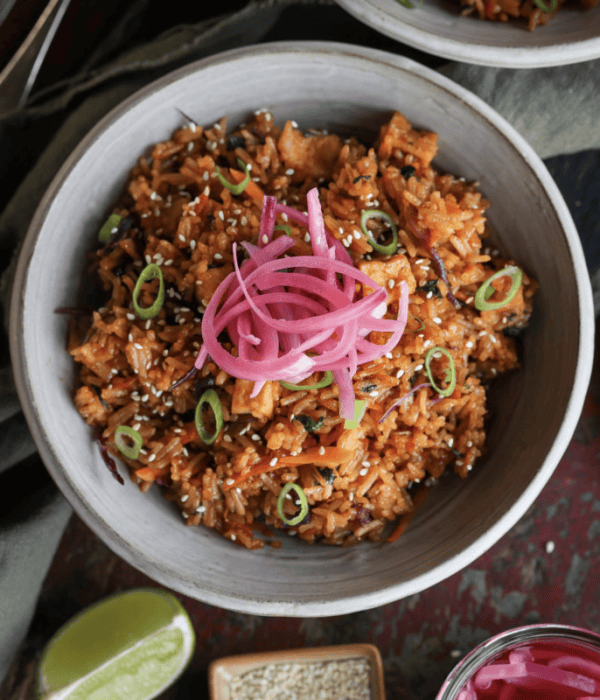
Ingredients
Tofu
- 7.1 oz (200g) firm tofu
- ½ Tbsp (4g) cornstarch
- ¼ tsp salt
- 1 Tbsp (15ml) vegetable oil
Fried rice
- 1 Tbsp (15ml) vegetable oil
- 2 cups (60g) spinach, chopped
- ⅔ cup (75g) grated carrot
- ½ cup (45g) shredded red cabbage
- 3 cups (475g) cooked white rice†
- ⅓ cup (80ml) teriyaki sauce‡
- 1½ Tbsp (23ml) sriracha, or less for less spicy
- ¼ cup (50g) pickled red onions
Optional toppings
- toasted sesame seeds
- sliced green onion
Directions
- Cut the tofu into 1 cm cubes. Transfer to a bowl and toss with the cornstarch and salt.
- Heat the oil in a large pan over medium-high heat. Cook the tofu for about 10 minutes, or until golden on most sides.
- Heat more oil in a large sauté pan over medium-high heat. Add the spinach, carrot, and cabbage, and cook for 2 minutes to soften slightly.
- Add the prepared tofu, rice, teriyaki sauce, and sriracha. Cook for 3 minutes to heat through.
- Plate, top with pickled red onions and any other desired garnishes, and enjoy!
Notes
- † For this recipe, we prefer to use day-old cooked rice. 1 cup of dry white rice equals 3 cups when cooked.
- ‡ Traditionally, teriyaki sauce is made with just soy sauce, sake (or mirin), and sugar. Make sure to check the ingredients of your bottle so it doesn’t have too many other ingredients that may affect the flavour.
Shy One – Lovers Rock Special | RA Greenhouse Sessions
A very cruisey reggae and dub mix by Shy One in a beautiful garden.
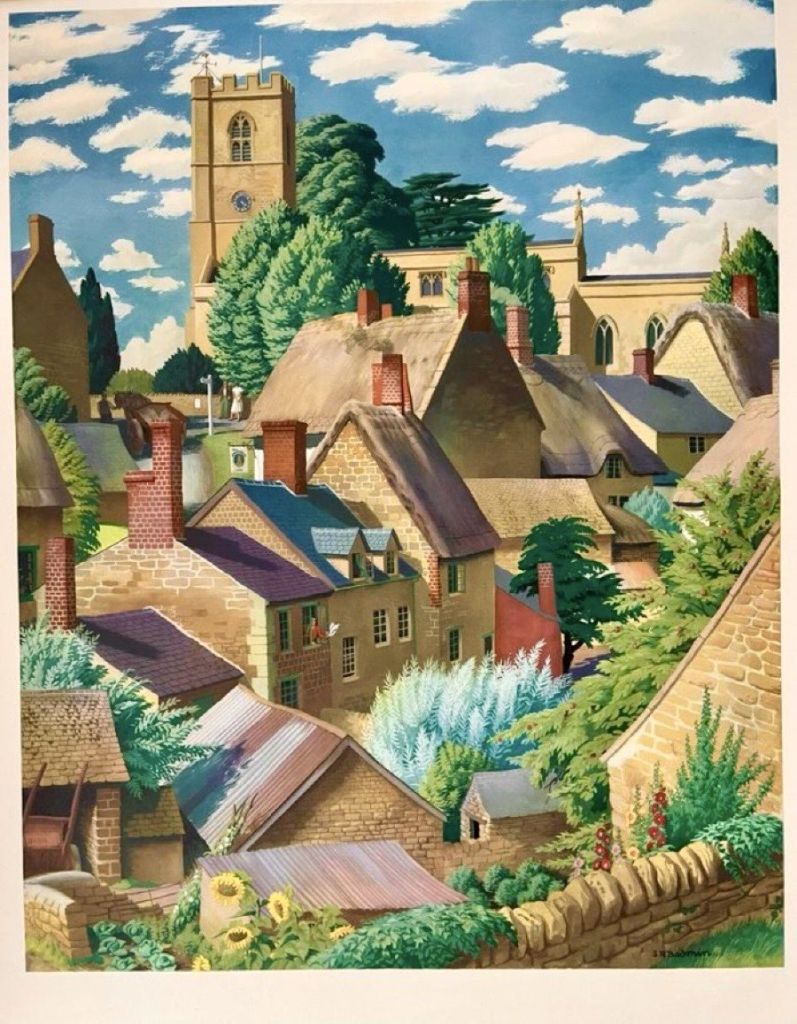
Village in Summer by SR Badmin of Ladybird books fame
For those too young or unfamiliar with Ladybird, these books were an incredibly popular series for children that depicted a nostalgic and sweet vision of British life from the post war period up until the 80’s. These books are a bit of collector’s item. The illustrations are sublime in a delightful mid-century kind of way. I vaguely remember seeing these books around as a young child but this Twitter account is really my first proper introduction to them. I hope you enjoy this art ‘Village in Summer a travel poster by famed Ladybird artist SR Badmin.
Plankton Warrior – Time Lost (2026)
Some spacey-electro-ambient to guide you into the stratosphere of a benevolent other world. Found on the always amazing electronic music channel Ballacid.
Baldzam: Ancient Maya jesters and clowns
In ancient Maya cultures, clowns and jesters—often called baldzam or similar terms in later Yucatec sources—played a highly ritualized, sacred role rather than serving as mere entertainers. Drawing on Karl Taube’s analysis of Classic‑period art and later ethnohistorical accounts, these figures were central to seasonal festivals, especially around the New Year and period endings, where they embodied liminal, chaotic time and performed antics that inverted social norms. Dwarves, obese “fat men,” and animal‑impersonators (notably simian clowns associated with the pa glyph) appear on ceramic vessels and figurines, often dancing with fans, rattles, gourd rasps, and thunder‑staffs, underscoring their identity as ritual performers.
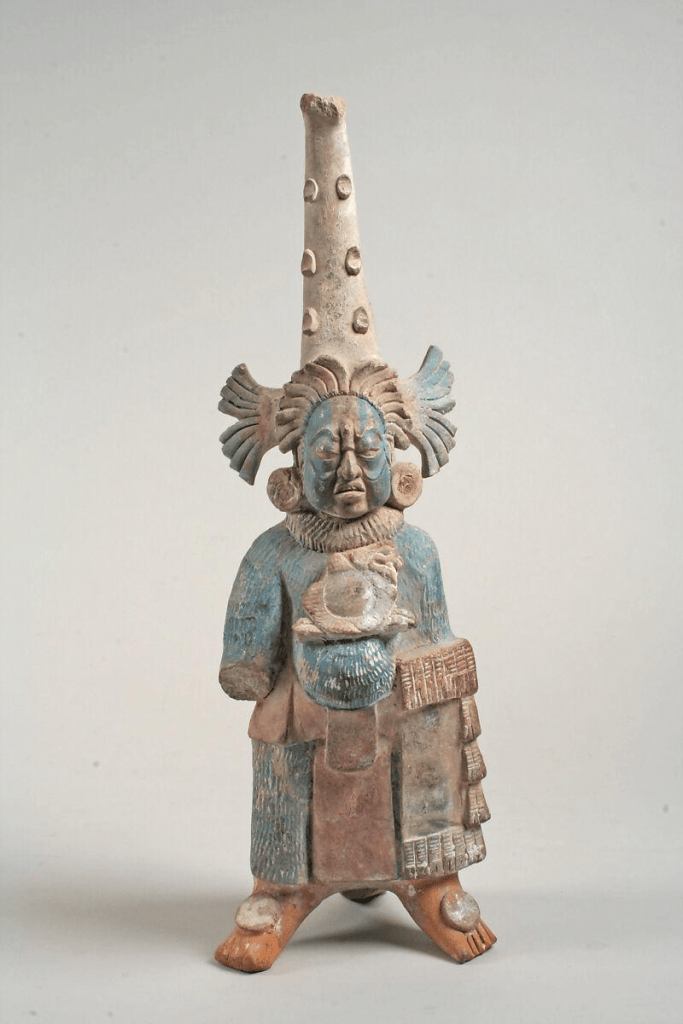
What clowns did ritually
Maya clowns frequently mocked authority, including rulers and local officials, using bawdy humor, drunkenness, and sexualized behavior to parody the very ideals of sober, warrior‑blooded kingship celebrated in monumental sculpture. Their performances coincided with calendar transitions—such as the five‑day Uayeb at year’s end—where chaos and ritual inversion were cosmologically appropriate, and their antics helped redefine what was socially acceptable by vividly enacting what was not. Ethnographic parallels show that such clowns continued into the Colonial and modern Maya worlds, where they were explicitly linked to the “Old Year” Mam figure and thunder‑deity complexes, underscoring their role as mediators between the human and divine realms.
A lump in the throat by Ana Lisa de Jong / Living Tree Poetry
Any way – suffering or joy,
amazement –
you are a lump in the throat.
Sometimes we need pain
to shake us awake,
joy to rouse us.
Wonder to widen us,
to feel the stretch of you inside.
We are too often asleep,
a long-standing couple
dozing in front of the television.
Expectant of the other there,
we can fail to see.
So, you prod us awake.
Test our hearing,
our sight.
You filter us
to find our substance,
to see what remains under pressure.
Would we not want suffering
where we feel you best?
Would we only want joy?
Which gets old,
glad but old,
and common.
Would we need wonder
to stab us in the dark?
Like the moon and stars
that bring us out of ourselves,
and into the cold deep night
seeking largeness.
Would we only want wonder,
which leaves us too breathlessly
unmoored?
Pain, grief, fear,
these things keep us holding fast
and steering,
as though you, God
were our lighthouse.
Either way,
you are a lump in the throat.
And we,
we are like the groom
who forgets to swallow
as his bride enters the chapel.
Or the widow,
who in the midst of loss,
gulps down pain
again and again,
as memories
rising up.
Ana Lisa de Jong
Living Tree Poetry
May 2023
Robert Leiner – Aqua Viva (1992)
Back when trance was a deadly serious thing…
Serene and spiritual Kameiwa Cave in Chiba, Japan

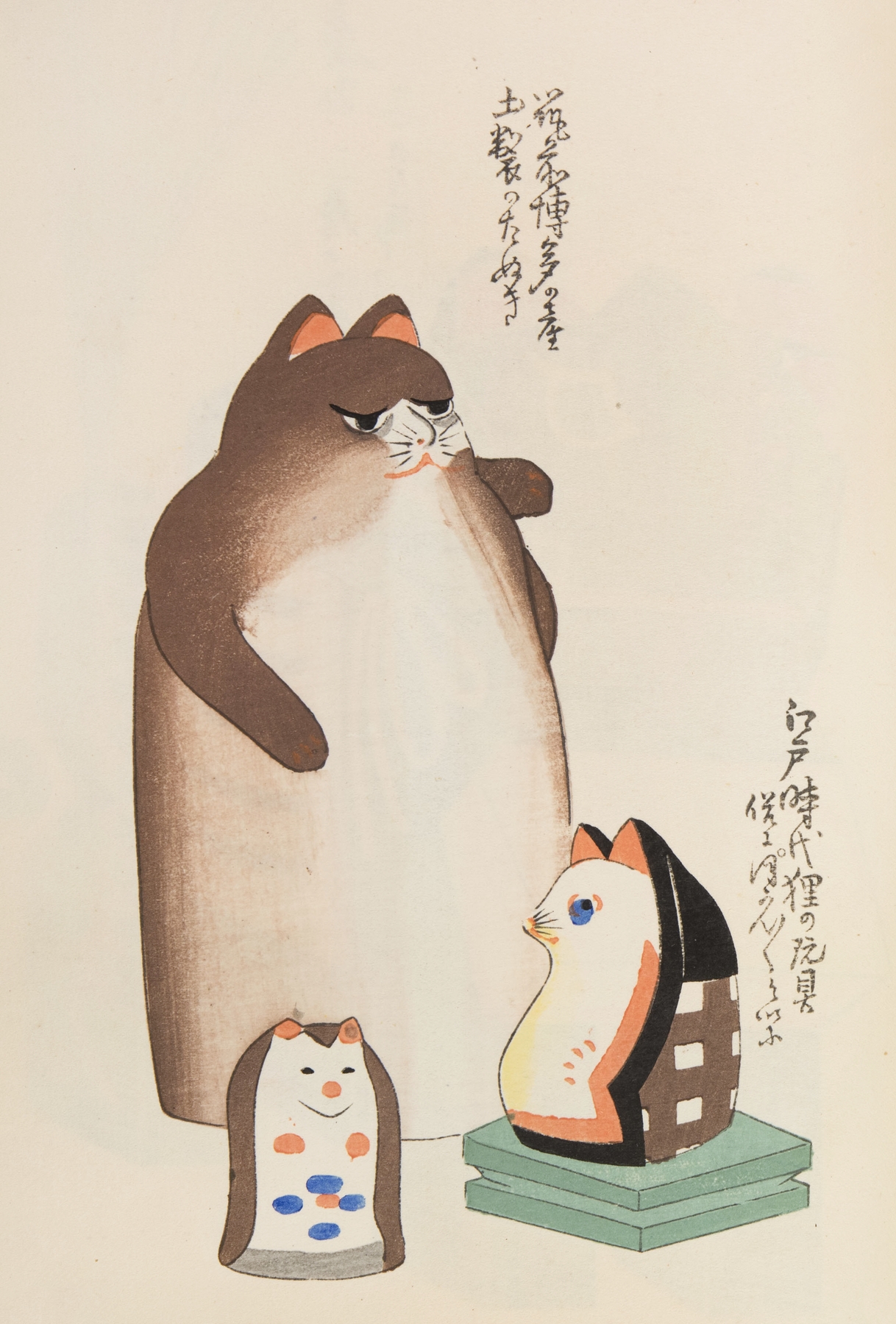
Seifu Shimzu: folklorist, artist and collector of Japanese folk toys
Seifu Shimizu (1851–1913) was a woodblock artist, wealthy trader and a toy scholar often referred to as Professor of Toys. He studied alongside the famed artist Hiroshige and owned a massive collection of Japanese folk toys. From this, he created vividly beautiful woodblock prints in the Ukiyo-e style.
Shimizu documented his vast collection of toys in a ten volume series of books called Unai no tomo (The Child’s Friend) of his woodcut prints.
In 1880 he founded the Hobbyhorse Club, a group dedicated to advancing the enjoyment and study of traditional Japanese toys. In 1906 he curated the first ever exhibition (called Children’s Exhibition) of Japanese folk toys , with many items from his collection.
In 1909, Shimizu founded the Odomokai (Adult’s or Connoisseur’s Club) that was influential in advancing knowledge of folk toys, and was one of the movements that helped inspire the craze for Mingei (ordinary people’s crafts), the genre of hand-made, cheap material everyday objects and toys that evolved during the 1920s.
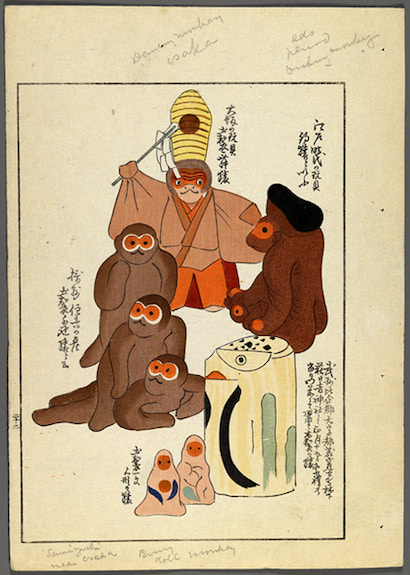
Monkeys are important symbols in Japanese history and literature and their presence can signify many things. Quite early on, monkeys were believed to be clever, and were actually believed to be messengers of the gods. In the Shinto religion, however, monkeys came to be seen as regrettable, vain and gullible, all human traits, and thus symbolic of human beings lack of true understanding of the divine.
In this particular woodblock print the group of monkey toys contains interpretations of the only indigenous monkey in Japan, the red-faced snow macaque. These macaques are both community-oriented and hierarchical – qualities that can also be found in human society. Via ArtVee
Did you enjoy this collection? let me know what you think of it below. Thank you for reading my dear friends!