Sun of earth
and sun of wind:
a rivalry
that brings the end.
Tezcatlipoca,
smoking mirror,
and Quetzalcoatl,
lord of the air.
There was a time when the earth was populated by a race of mighty giants. It was the first age of the world, lit by a sun of luminous darkness that was also the supreme god, no less mighty than the giants: Tezcatlipoca. His color was black. Black his feathers, black his regalia. His emblem was a smoking mirror, a polished disc of obsidian from which curled smoke, mist, haze.
The giants amused themselves by tearing up trees with their hands, as if blades of grass. They also emptied the rivers, sucking up the waters with their mouths. They bit the mountains, leaving caves behind. When they performed their war dance, stamping the ground with their massive feet, the earth shook and the seas trembled.
Tezcatlipoca burned and shone through the long night of his reign over his civilization of giants. But the cosmos needs balance, so this age had to end, its dark sun of chaos had to go out, the world had to die in order to be remade.
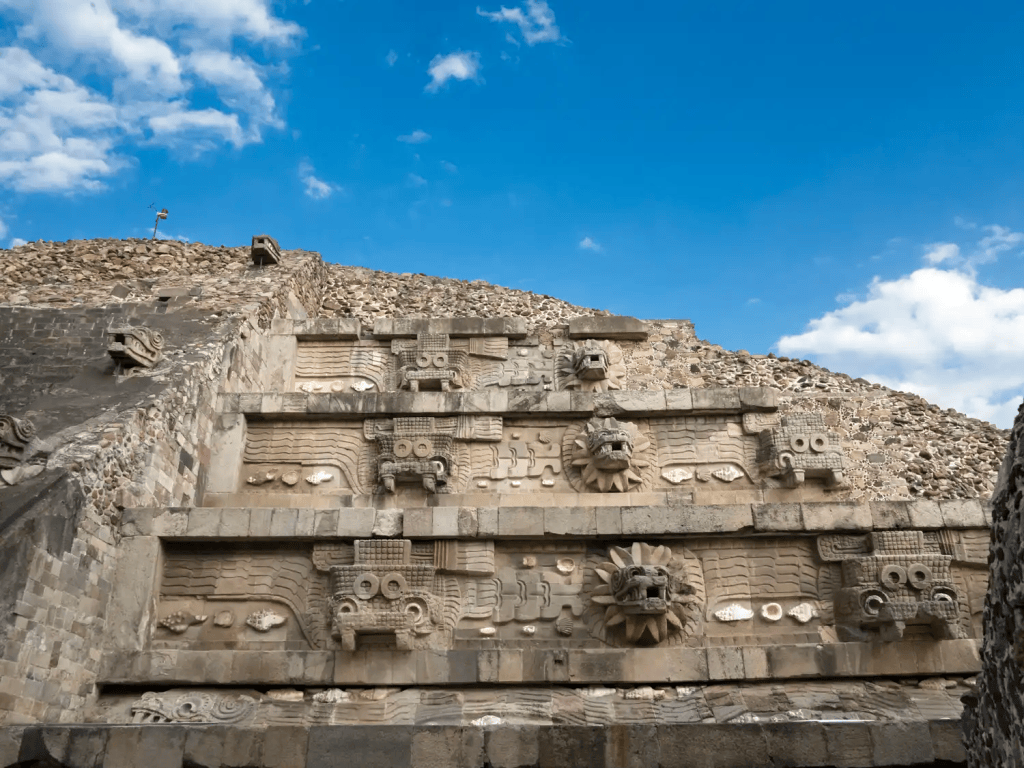
stockcam / iStock / Getty Images
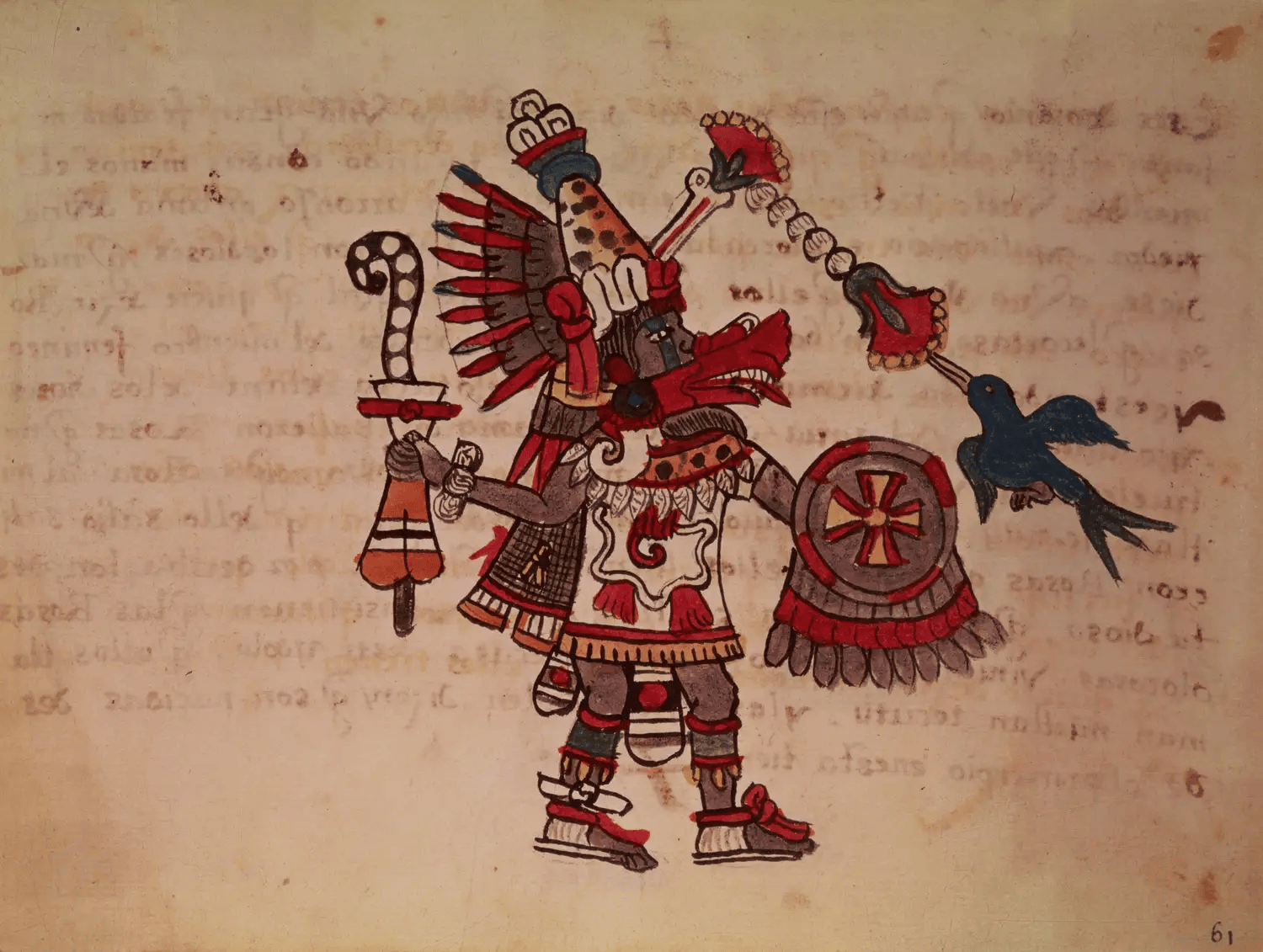
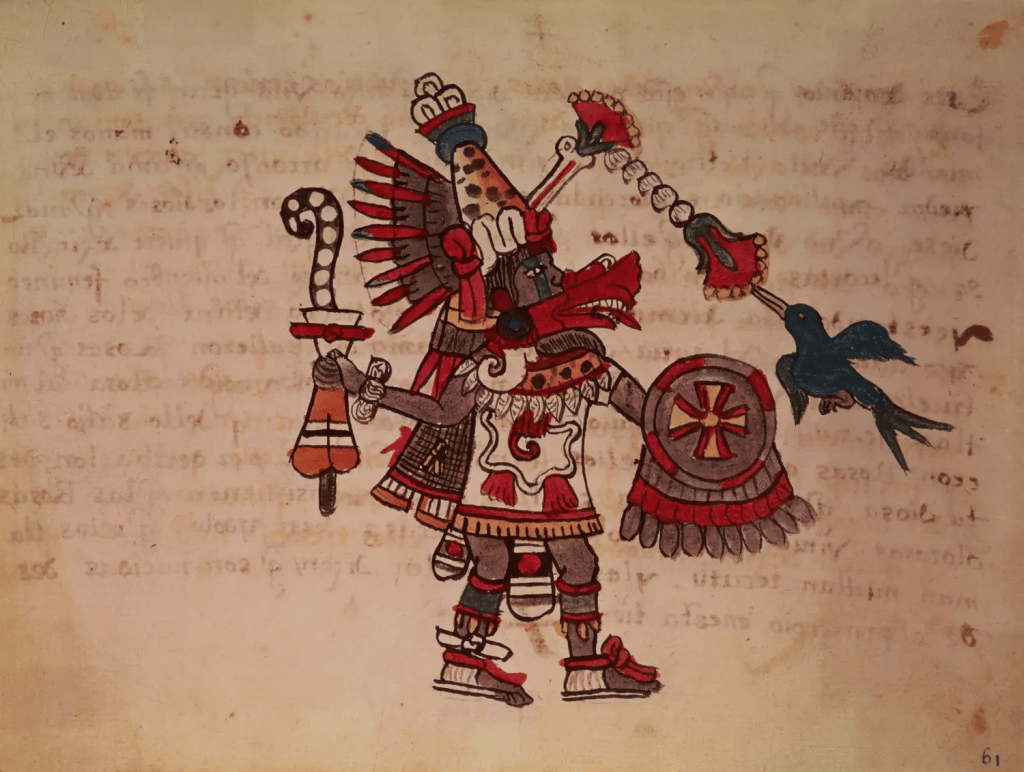
So from the East came Quetzalcoatl. His color was white. White his feathers, white his regalia. In his hand, he carried a curved staff, which he could use to whip up thundering toradoes and dizzying waterspouts.
Quetzalcoatl rushed through the cosmic night and with the power of his staff defeated Tezcatlipoca, knocking him from the sky and dragging him to the depths of the sea. A few minutes, or centuries, or millennia later—time in that age was not measured as it is now—an infinite roar thundered through the universe and from the ocean a huge jaguar emerged.
Oh, Tezcatlipoca! His skin constellated with stars, his leap shocked heaven itself. From mountains and caves, from the underworld, from the very night sky, countless jaguars sprang into being. They crossed the world and devoured the race of giants, because that people’s time had come to an end, as the age of the sun of earth was fulfilled.
The god of the smoking mirror, in the form of a jaguar, took shelter in the most remote of the caves. He became Heart of the Mountain, Tepeyollotl, of spotted fur and rumbling voice. So he lived during all the years and centuries and millennia of the reign of his enemy, Quetzalcoatl, the sun of wind.
When the dual god decreed the end of the sun of wind, the Tezcatlipoca in jaguar form was entrusted to destroy it. With a leap that stunned the very stars the Heart of the Mountain knocked Quetzalcoatl from the sky. A strong wind arose that hurled the god of the curved staff and his people far away, to a place without name or stars, without earth or ocean.
Excerpt from
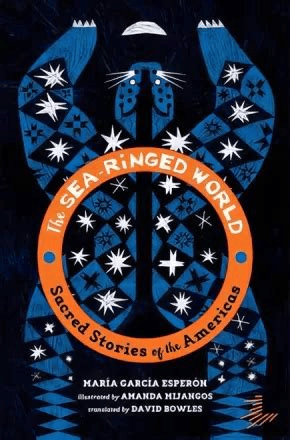
The Sea-Ringed World
María García Esperón
An awesome collection of stories from 18 Indigenous cultures portray how the first peoples of the Americas have seen their world and their place in it, beginning thousands of years before Europeans arrived.
The Indigenous cultures highlighted here range from the Arctic to the southern tip of South America. Creation stories describe the births of Sun and Moon and life-sustaining lakes and rivers. Stars fill the Hopi sky when Spider Grandmother casts her web to the heavens. Great floods cover the Earth and the legendary story of Quetzalcoatl above.