Beauty weaves
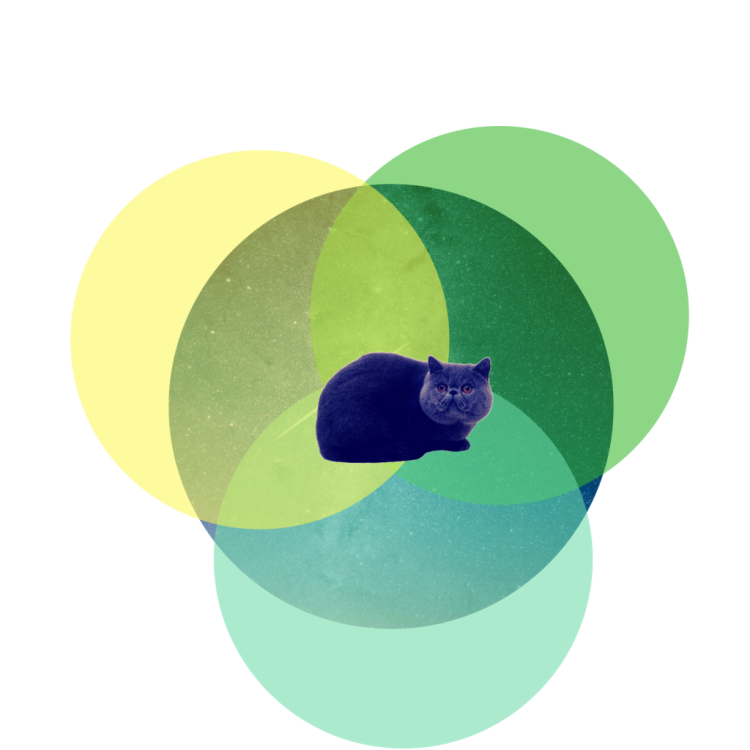
Beauty. What is beauty to you? It comes in many forms; movement, laughter, tears and yes, it even exists in what may seem to be an incoherent mess of tangled emotions. Beauty weaves itself through every strand of your life. If you do not see at least one beautiful thing a day, The Universe invites you to take a closer look at what you may have missed. Via Jennifer Farley
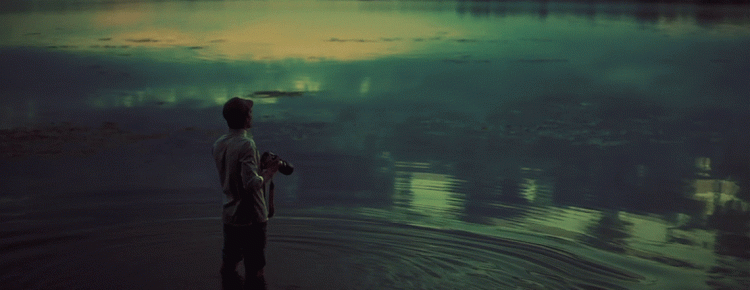
Robert Martinez – A Parliament of Owls watches over of the animals in Angeles National Forest
Osiyo (Hello Again) by Placid Angles
Some unusual and eclectic ambient music with whales, whistling birds, underwater bass and ricocheting high-hats. I don’t know what it means, but I like it!
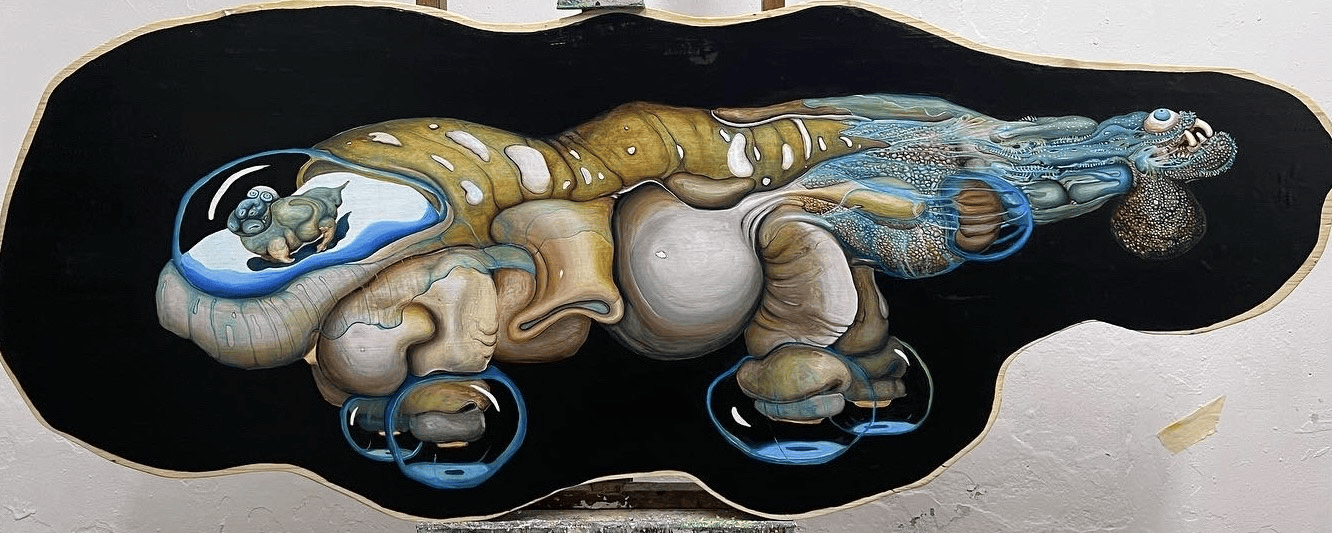
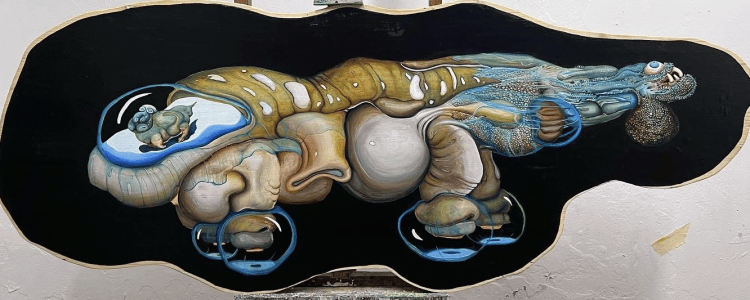
Andromeda Bau Bau by Paolo Chiarloni via Edge of Humanity Magazine
Paolo Chiarloni, (b. 1970 in Turin, Italy) created an anthology of the imagination, part dream and part reality. His lighthearted images leave a strange aftertaste, which is sometimes disturbing. Paolo Chiarloni’s work attracts us by its immediacy and its chromatic variety. Via Edge of Humanity Magazine.
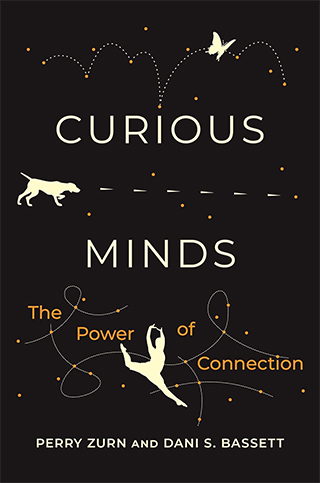
Curiosity Is No Solo Act
It gains its real power when embedded in webs of relationship and shared meaning-making. Via MIT Press Reader
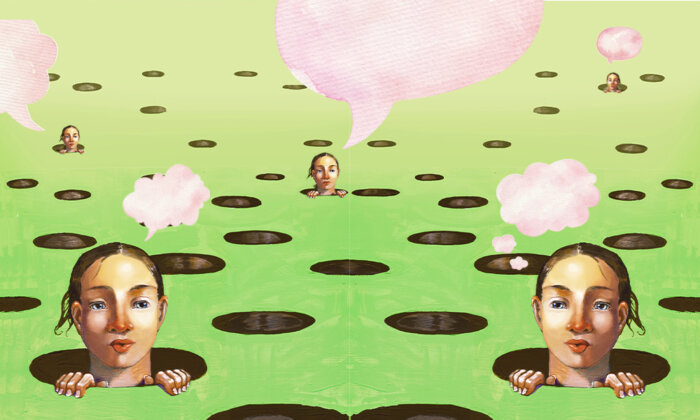
For millennia, curiosity has been characterized predominantly as an individual drive to acquire information. Whether it is Saint Augustine’s “lust to experience,” John Locke’s “appetite after knowledge,” Sigmund Freud’s “scopophilic drive,” or Hans-Georg Voss’s “motivation to explore,” philosophers and psychologists of the Western intellectual tradition have largely understood curiosity at the level of the individual organism, its forces, and its feelings.
But in the ancient and medieval periods, such expressions of individuality were also deeply suspect. Curiosity was seen as a largely vacuous interest in novel or forbidden information. The curious person was thought to reach for what was hidden and secret, beyond their proper purview, and thereby isolate themselves from spiritual and social community.
The accounts of Plutarch, a Roman essayist, and Augustine, a Christian bishop, are representative in this respect. For Plutarch, the curious person — or in his nomenclature, the busybody — was an oddball, a singular fellow, and a bit of an earwig. The busybody’s curiosity manifests as “a desire to learn” and “a passion to find out” what is truly new and novel. They push into the bazaars, marketplaces, and harbors asking, “Is there any news?” The busybody’s quest for maggoty mysteries is pursued without concern for themself or others. Abandoning their own interests and leaving their own soul in seedy squalor, the busybody jeopardizes their friendships and destroys social ties.
As an antidote to this “disease” of curiosity, then, Plutarch recommends a suite of ascetic practices, including not opening a letter upon its receipt, not consummating a marriage, and, upon hearing a theatrical performance in the distance, walking in the other direction. The message is simple: Abandon the singular secret, the devil in the details.
In the Bible, the curious person is in many ways similarly positioned as a sinner. Genesis begins, of course, with a story of creation and curiosity. The first woman, Eve, wants to partake of the one tree forbidden to her, representing the knowledge from which she and Adam are prohibited. Curious to know good and evil, she eats — that is, she reaches for, grasps, tugs, acquires, ingests, and consumes — a single piece of fruit from the forbidden tree, and her eyes are opened. Through her, all of humanity is condemned, metaphorically, to creep on its belly like a serpent, eating things worldly rather than spiritual.
The curious person was thought to reach for what was hidden and secret, beyond their proper purview.
While the hyperindividualized nature of curiosity and its interest in orphaned details is of the utmost concern in the ancient and medieval periods, these same characteristics are curiosity’s strongest commendations in the early modern period, in which scientific and philosophical inquiry set the stage for the Industrial Revolution.
René Descartes defined curiosity as a “desire to understand.” John Locke saw it as “an appetite after knowledge.” David Hume positioned curiosity as “the love of truth.” In the spirit of Francis Bacon, then, modern curiosity, performed by independent knowers, courted surprising information for its own sake, a process that itself ultimately served the cause of social utility. In other words, singularly curious objects inspired the individual practitioner of curiosity to gain knowledge that would be of eventual use to society.
The conceptualization of curiosity as an individual drive to discover something for society’s benefit persists today. But imagine a curiosity that is more social and praxiological than it is individual, intellectual, and acquisitional. Imagine a curiosity that aims less to know and more to make connections, build constellations, find links, and follow threads, functioning within a webbed network of relations between knowers, methods of knowing, and knowledges.
It is an intriguing suggestion at the very least, but is there historical precedent for such a concept? In short, yes.
Michael Foucault is a 20th-century thinker of power, specifically the power to resist established ways of thinking and doing. In a late interview, Foucault discusses this resistance as it relates to the queer community, which inherits a set of practices from the cisheteronormative world that includes settled ways of speaking, thinking, feeling, and relating both sexually and romantically. That is, there are well-worn pathways that typically define the romantic sagas of men and women.
In the face of those established networks, the task of queer people, Foucault suggests, is to “escape . . . [these] readymade formulas” and “invent” something still “improbable” — “way[s] of life” that traverse inherited formulas and institutionalized patterns. That is to say that queer life requires reconfiguring networks, revamping the ways a graph is walked.
To do so, queer people have to think and move in a “slantwise” direction, constantly creating “diagonal lines” in the social network. They must generate fresh forms of signification and sources of significance; they have to tell new stories. Ultimately, given that “what exists is far from filling all possible spaces,” the generation of more channels of information creates more chances for resistance and reconfiguration. With more fabric, there can be more fabrication.
The Foucauldian assumption that networks of information precondition ways of thinking, doing, and being has an ancient, rich, and still robust precedent in Indigenous philosophy. Rooted in the wisdom that everything that exists is connected to everything else, Indigenous philosophy foregrounds the vast and complex system of relational networks. While Western philosophy, especially post-Enlightenment, has typically emphasized the individual nodes of knowers and knowns, Indigenous philosophy has consistently contributed to a thinking on the edge, or edgework. (It is not insignificant that the English language is 70 percent nouns, while Potawatomi is 70 percent verbs. Or that Western settlers conceptualize land as private property and commodity capital, while Indigenous peoples understand it as a connective tissue in a larger gift economy.) The difference in ethos between piecemeal and of a piece with could not be more pronounced.
With more fabric, there can be more fabrication.
In an Indigenous onto-epistemology, one is always coming to know in intimate relationship with other knowers, including not only community members, but also all the components of the earth itself. In “Braiding Sweetgrass,” Potawatomi botanist Robin Wall Kimmerer tells the story of her own Indigenous curiosity. Growing up surrounded by “shoeboxes of seeds and piles of pressed leaves,” she knew the plants had chosen her. Declaring a botany major in college, she soon learned to stockpile taxonomic names and functional facts, all while letting her capacities to attend to energetic relationships fall into disuse. It was not until rekindling her connections with Indigenous communities — and specifically Indigenous scientists — that she remembered how “intimacy gives us a different way of seeing.” Her scholarship and outreach are now focused on honoring this ray of scientific and social wisdom.
What is perhaps most distinctive about Indigenous philosophy is its imbrication of a relational cosmology with a relational epistemology. At the heart of this worldview is “the eternal convergence of the world within any one thing,” writes Carl Mika, such that “one thing is never alone and all things actively construct and compose it.” From this perspective of deep holism, talk of knowing any one thing is “minimally useful.” As such, knowledge is not properly propositional but instead procedural; it is less concerned with knowing what than with knowing how. And its wisdom lies in “sharing” more than “stating.”
It’s helpful, to this end, to consider the contributions of one of the lesser-known figures of early modern history: Olaus Wormius. A 17th-century Danish physician, explorer, and natural historian, Wormius traipsed around the globe and collected — indeed acquired — untold troves of artifacts. A tortoise shell here, an armadillo and elk horn there, shawls from one village and armor from another. From coins and fossils to original artwork and Indigenous artifacts, he brought everything back to Copenhagen. There, he shared his insights widely by establishing his famous Museum Wormianum, a cabinet of curiosities hardly rivaled in the 17th century.
It is easy to think of “Ole Worm” as a solitary curiosus and his collection as a stockpile of curios. But each of these objects was extracted from a network of relations, social systems, and ecologies in which they played a material as much as a symbolic role. Not only were these curios deeply edged, but Ole Worm’s own curiosity was also a cog in the colonial machinery, his interests like so many arms and legs of an imperial natural history. Curiosity and curios are never in fact solitary. Ole Worm himself was no recluse. Often accompanied by his wife, Dorothy (who invented the term tangent) and his pet auk (a penguin look-alike), he was the sort of person who remained in Copenhagen during a plague outbreak in 1654–1657 to care for the sick — even at the cost of his own life.
The work of fiction — or of crafting sense through experience — is a work of threading.
It is a long-standing hunch in English literature, from children’s tales to adult science fiction, that in fact all the world is threaded together. If only we could see it! We might, as Irene does in “The Princess and the Goblin,” position a thread between our finger and thumb, and journey out into the world, following it wherever it may lead, and ultimately find the cipher of being, truth, and belonging. Or like Mark in “The Changeling,” we might pull on the threads of varying lengths and colors that hang about our world and, from them, gain different kinds of power, as if the way in which things belong together were a source point for cosmic energy and insight. Writer Henry James, in “The Art of Fiction,” memorably observes, “Experience is never limited and it is never complete; it is an immense sensibility, a kind of huge spider-web, of the thinnest silken threads.”
Like curiosity, the work of fiction — or of crafting sense through experience — is a work of threading. How does one follow the threads? And by what force does one weave them in and out so as to craft the fabric of a curious life? Edgework invites us to ask these questions in a way that individual knowledge acquisition never could.
Perry Zurn is Associate Professor of Philosophy at American University. Dani S. Bassett is the outgoing J. Peter Skirkanich Professor of Bioengineering at the University of Pennsylvania and incoming Wu Tsai Professor at Yale University. Together, they coauthored the book “Curious Minds,” from which this article is adapted.
Newborn Muskox’s First Day
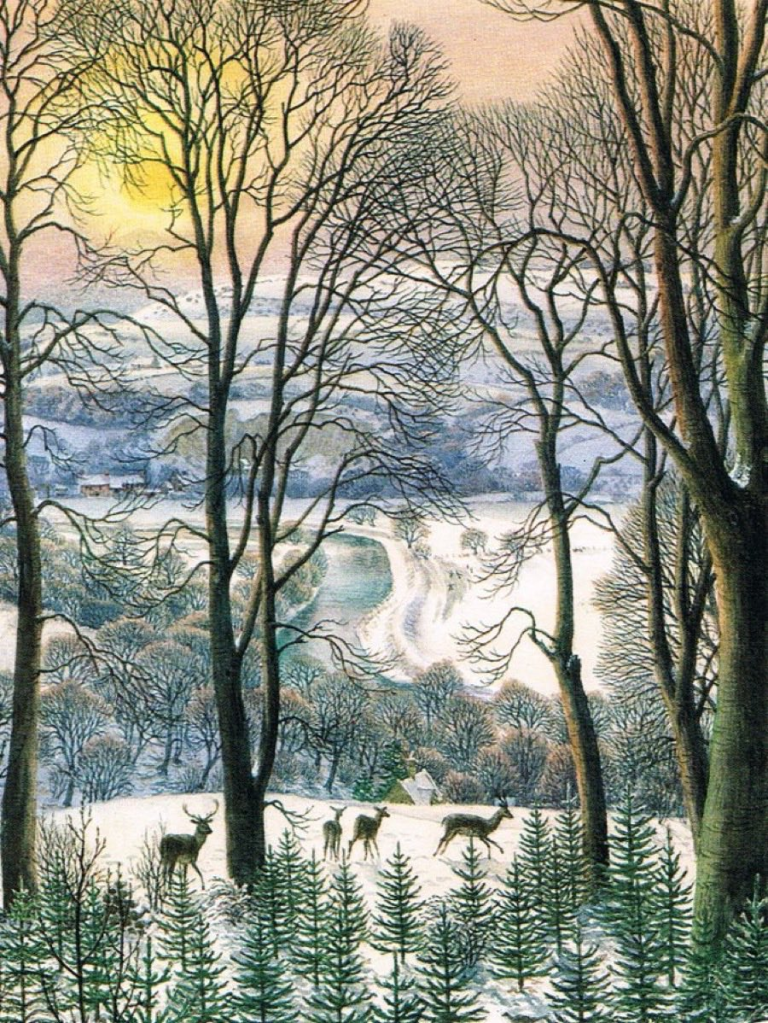
Winter Sunrise by Ladybird artist SR Badmin
For those too young or unfamiliar with Ladybird, these books were an incredibly popular series for children that depicted a nostalgic and sweet vision of British life from the post war period up until the 80’s. These books are a bit of collector’s item. The illustrations are sublime in a delightful mid-century kind of way. I vaguely remember seeing these books around as a young child but this Twitter account is really my first proper introduction to them. I hope you enjoy this art by renowned Ladybird artist SR Badmin showing deer in a winter-hushed woodland…there’s something so cosy about this!
Best Brownies Ever! by Pick Up Limes

Ingredients
Brownies
- ¼ cup (28g) ground flaxseeds
- ¼ cup (60ml) brewed espresso
- ¼ cup (60ml) water
- 1 cup (200g) granulated sugar
- ⅓ cup (75g) light brown sugar (packed)
- 2 tsp (10ml) pure vanilla extract
- 7.1 oz (200g) dairy-free dark chocolate†
- ½ cup (115g) unsalted vegan butter
- 1½ cups (205g) all-purpose flour
- ½ cup (48g) Dutch-process cocoa powder
- 2 tsp (9g) baking powder
- ½ tsp salt
Finishing touches
- 2.1 oz (60g) dairy-free dark chocolate, chopped‡
- 1 pinch flaky sea salt (optional)
Directions
- Add the flaxseeds, espresso, and water to a large bowl. Mix and set aside.
- Line an 8-inch light metal square metal cake pan with parchment paper and preheat the oven to 350°F (180°C)*.
- Returning to the large bowl, add the granulated sugar, brown sugar, and vanilla extract. Mix well, then set aside.
- Fill a saucepan less than halfway with water and bring to a boil. Place a large heat-safe bowl on top of the saucepan.
- Add the chocolate and butter, mixing until it’s all melted. Then add this melted mixture to the large bowl and mix.
- Place a sieve over the bowl and sift in the flour, cocoa powder, baking powder, and salt. Mix until partially combined.
- Stir in the chopped chocolate, reserving a small amount to sprinkle on top, if desired. Mix until just combined, being careful not to overmix.
- Transfer the batter to your prepared baking dish and smooth it out evenly.
- Top the brownie with the reserved chopped chocolate.
- Bake in the oven on the middle rack for 30 to 35 minutes**.
- Let the brownie cool off completely, sprinkle over some flaked sea salt if desired, and cut into squares. Enjoy!
Notes
- † For these brownies, we recommend using dark chocolate with a cocoa content of 50-60%. Anything higher might make the brownies overly bitter, which could overpower their rich and indulgent flavor.
- ‡ We use 50 – 60% cocoa chocolate for a balanced sweetness. Darker varieties (70%+) can make the result too bitter.
- * We used top and bottom heating (not fan-assisted/convection).
- ** Baking for a shorter time will result in a fudgier, more moist texture, while baking longer will yield brownies that are slightly drier and more cake-like.
Storage
- Store in an airtight container in the fridge for up to 3 days.
- Store well-sealed in the freezer for up to 2 months.
Epic James Baldwin is timeless in this and many of his observations about our world
“The energy that was buried with the rise of the Christian nations must come back into the world; nothing can prevent it. Many of us, I think, both long to see this happen and are terrified of it, for though this transformation contains the hope of liberation, it also imposes a necessity for great change. But in order to deal with the untapped and dormant force of the previously subjugated, in order to survive as a human, moving, moral weight in the world, America and all the Western nations will be forced to re-examine themselves and release themselves from many things that are now taken to be sacred, and to discard nearly all the assumptions that have been used to justify their lives and their anguish and their crimes so long.”
James Baldwin, The Fire Next Time

Psy-Kick – Lonely Nights (1996)
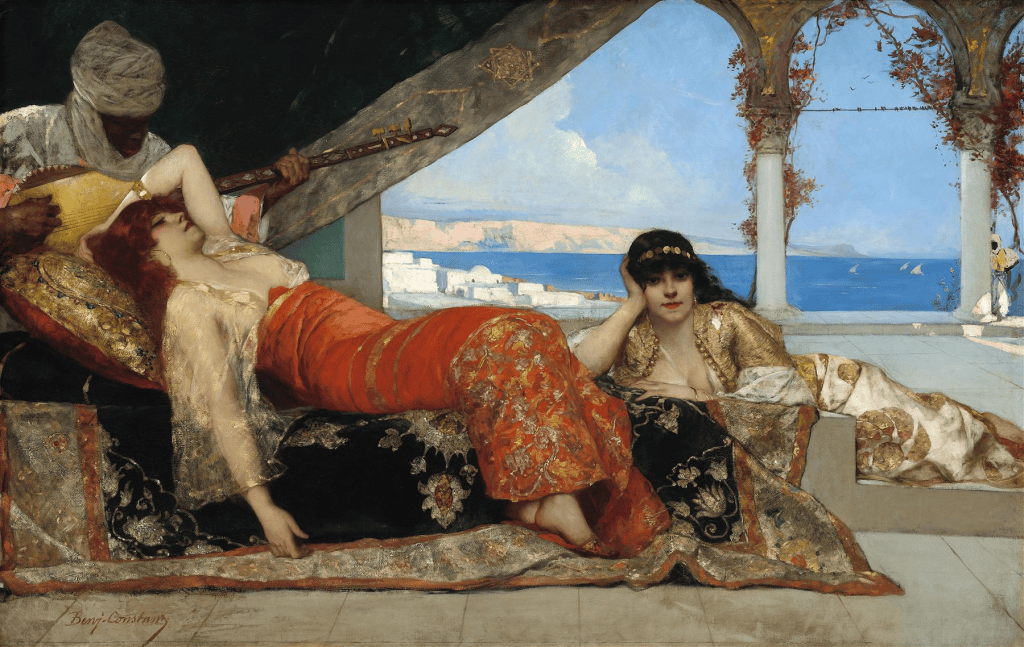
The Favourite of the Emir by Jean-Joseph Benjamin-Constant (c. 1879)
This lush 1879 painting captures two languid beauties sprawled across a sun-drenched terrace in Morocco. Artist Benjamin-Constant, fresh from his Moroccan adventures conjured a mysterious dreamscape. Behind the women and lute player is an impossibly blue Mediterranean dotted with sailboats and vanilla-hued cliffs. via Art History on Reddit.
Did you enjoy this collection? let me know what you think of it below. Thank you for reading my dear friends!