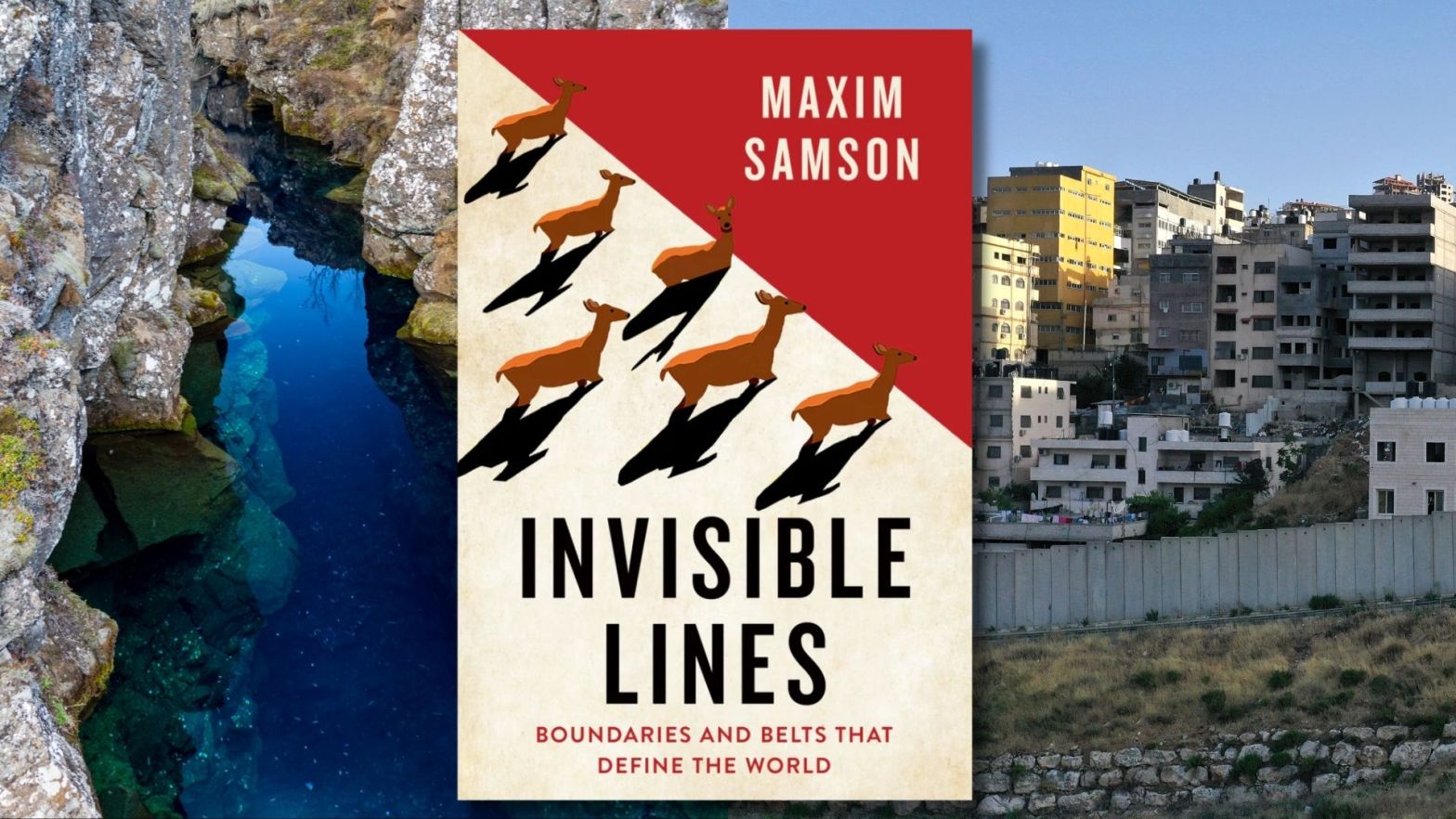
A thoughtful and timely meditation on the borders we inherit and the invisible lines we draw around ourselves—and what happens when we dare to cross them.
Rating: 🌟🌟🌟🌟
Genre: Non-Fiction, History, Geography, Politics
Publisher: Footnote Press
Review in one word: Compelling
In Invisible Lines, geographer Maxim Samson draws readers into the unseen architecture of our world— curious and yet invisible borders, boundaries, and barriers that we humans take for granted. Yet these places shape our identities, countries, politics, languages, customs and histories. This is an absolutely fascinating deep dive into how lines—both literal and metaphorical—divide, define and disorient us.
The book travels across territories and concepts with poetic agility. It explores borderlands where languages blur, the liminal spaces between genders, the historical scars of redlining, and the strange comfort of maps. But more than a study of divisions, it’s a celebration of liminality—the spaces in-between, the ambiguity of human experience. With quiet brilliance, Samson reminds us that many of the borders we accept as natural are anything but.
His writing is precise yet lyrical, offering insights into how geography intersects with power, memory, belonging, and identity. There’s something almost spiritual in the way Samson approaches boundaries—not just as geopolitical tools, but as artefacts of the human condition.
For fans of Robert Macfarlane or Rebecca Solnit, this is a thoughtful and timely meditation on the borders we inherit and the invisible lines we draw around ourselves—and what happens when we dare to cross them.