Sidewalk patterns at Copacabana Beach by Brazilian landscape artist Roberto Burle Marx

Architect Transforms Fish Farm Into a Forest With Hidden Casitas– Welcome to Gary’s Place
Gary’s Place in Silay, Negros Occidental used to be architect Ed Ledesma’s full-blown fish and prawn farm in the early 80s. Not only did prawn farming require him to cut down all of the trees, but it also caused pollution in the nearby river. This was when he vowed to himself that he would take better care of the environment and not only plant more trees but care for the ones that are already grown.
He transformed his farm into a forest and built casitas originally for his family. He hid a casita within a mango grove and another one inside a dike while one cantilevers out over a pond to preserve kamagong trees. If a tree were to grow close to a wall or roof of a built structure, he would never choose to cut the tree down but revise the wall or roof instead. It’s common to see cutouts on the edges of roofs for trees to freely grow in Gary’s Place.
Named after his son that passed away many years ago, Gary’s Place is open to the public as accommodations and a restaurant and offers a glimpse into the creative genius of Ed Ledesma.
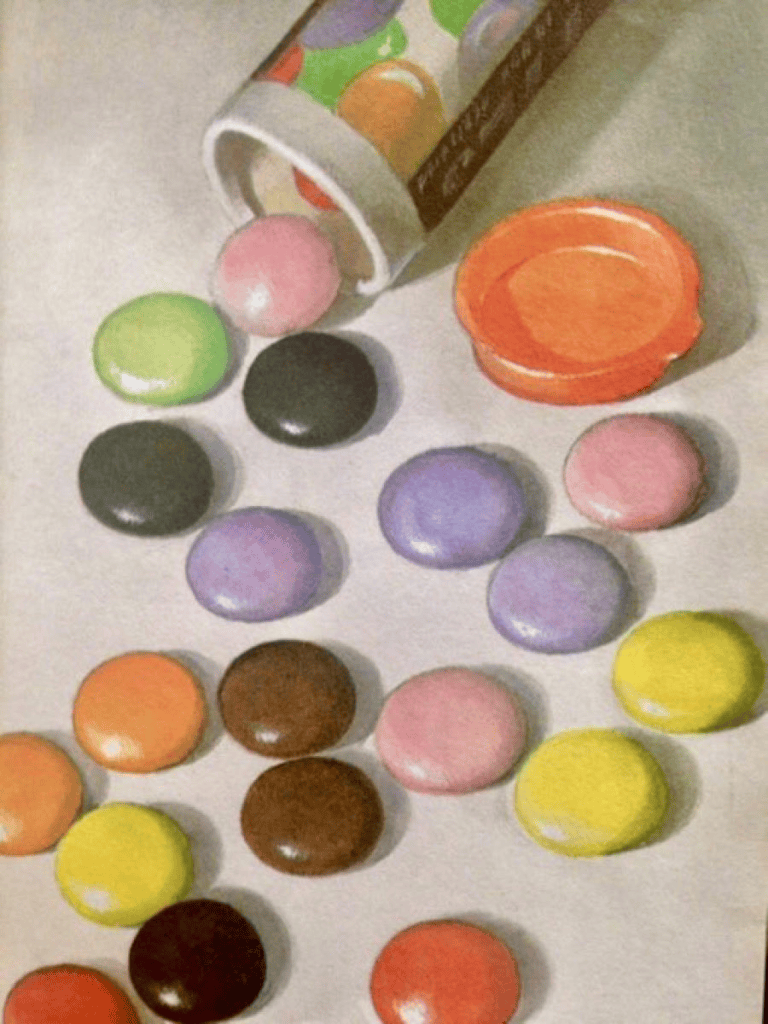
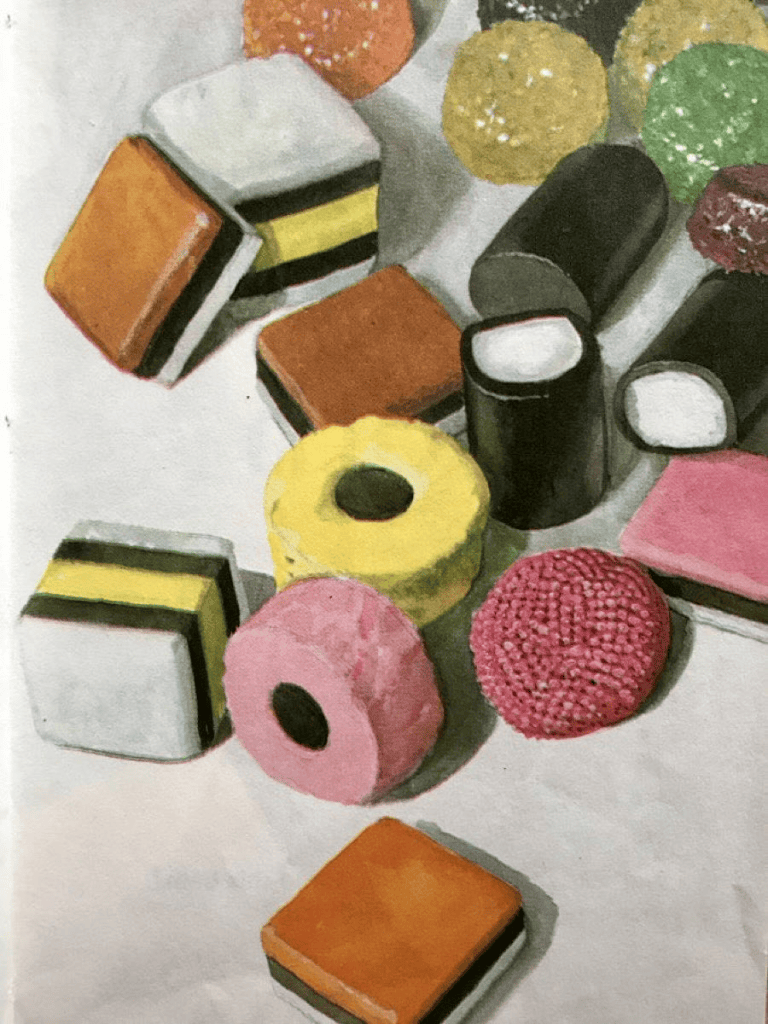
‘Sweets’: Beautiful everyday Ladybird things
For those too young or unfamiliar with Ladybird, these books were an incredibly popular series for children that depicted a nostalgic and childlike vision of British life from the post war period up until the 80’s. These books are a bit of collector’s item. The illustrations are sublime in a delightful mid-century kind of way. I vaguely remember seeing these books around as a young child but this Twitter account is really my first proper introduction to them. I hope you enjoy this hyperrealistic art of old time sweets like licorice allsorts and smarties. By artist Harry Wingfield (First Picture Book 1970).
Gemma Wheeler turns this Swedish apartment into a work of art
An empty and nondescript old apartment in Sweden is transformed into a dramatic loft space with a sense of modern openness. I love her designs she has inspired me so much!
There are no big secrets in paganism
There are no big secrets in Paganism. There are secrets of course – many schools, orders and traditions, even family lines will have secret knowledge only available to members, initiates, blood relatives… When this happens, there tends not to be one keeper of the special knowledge – there tends to be a whole school, or family line, who know the things and only share what they know with people they feel have earned it.
One of the great things about Paganism is that you can figure out a lot of it all by yourself. You may be able to find your own secret special knowledge – it will come from your relationship with the land, or the work you do with the ancestors, or the personal gnosis arising from your work with deities, or something else of that ilk. And that’s wonderful, and yours, and exactly as secret as you want it to be – unless you get some sort of geas from whoever you are working with in which case it will have to be very secret indeed. Via The Druid’s Cauldron
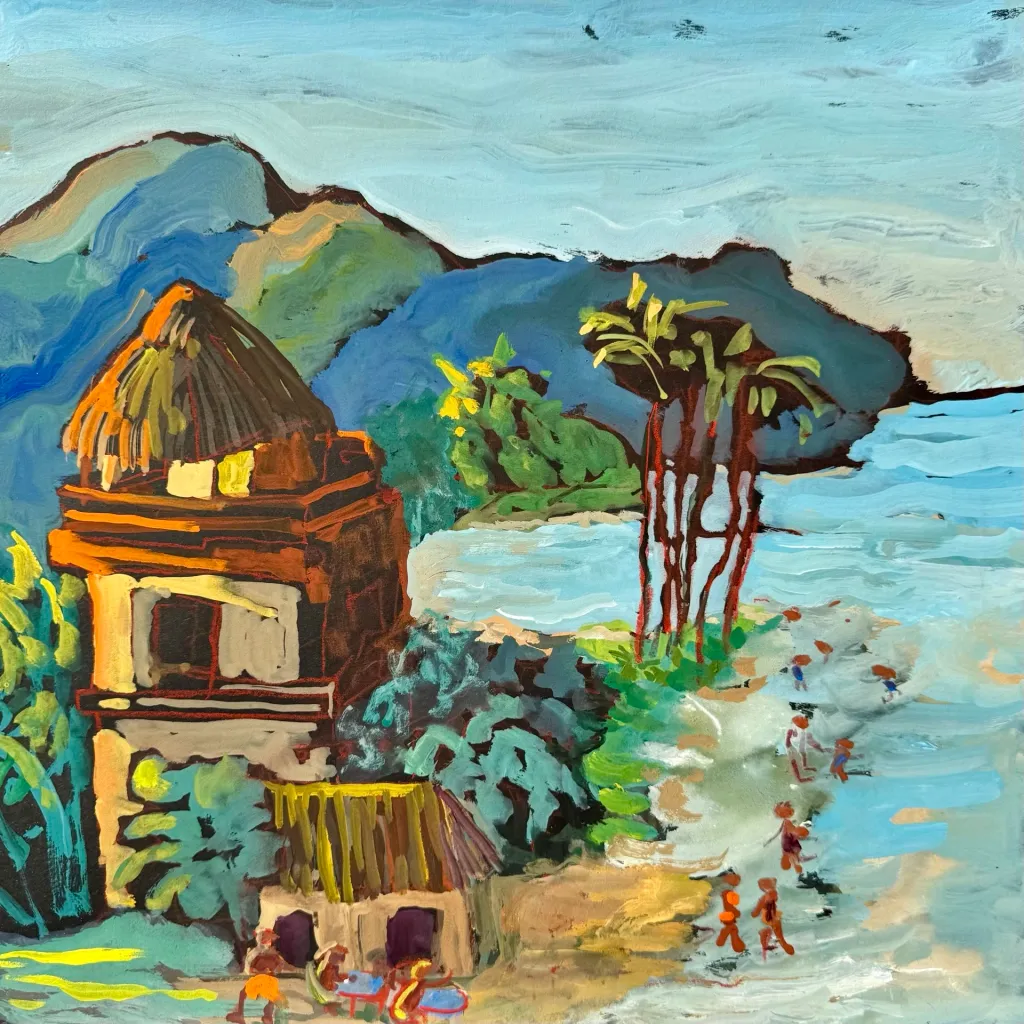
Early one morning in San Pancho by Sarah Sullivan
Rabbit Effigy by Nicholás Ortiz Estrada, Mexico
Rabbit Effigy 🐇, circa late 20th century. Nicholás Ortiz Estrada, from Mata Ortiz, Chihuahua, Mexico. Earthenware with slip paint. Via Betamax

Françoise Hardy – Jamais synchrones
‘Jamais synchrones’ is a French synthpop song by Françoise Hardy, released in 1986 on the album V.I.P. /// Written by Hardy with music by Jean-Noël Chaléat, the song is a melancholic reflection on emotional disconnect and a lack of communication within a relationship. The images in this video are taken from the 1981 film Asphalte, directed by Denis Amar, starring Carole Laure and Jean Yanne.
Liking things for their own sake, not because of their ‘benefits’
What would our culture look like if we were to reverse the instrumentalisation of everything? Of course, we would still do many things as means to ends. We would also be happy to agree that many of the good things in life bring us instrumental benefits too. But we would see these as welcome side-effects, not their purposes. A deinstrumentalised world would be one in which we would attend more to what is of value right here, right now.
Take friendship. The personal benefits we get from others are real, but they should not be the reason for being with them. Relationships are valuable because we value the people in them, not because spending time with them releases endorphins in our brains. David Hume corrected this error more than two centuries ago when he wrote: ‘I feel a pleasure in doing good to my friend, because I love him; but do not love him for the sake of that pleasure.’ To reject instrumentalisation is to understand that feeling good often follows from living well, but it is not what living well consists in.
To appreciate things for their own value instead of what they might bring us is liberating. It frees us from the internal pressure always to make sure that what we are doing serves some further purpose, to justify our days in terms of the future credits that we accrue from them. Living life to the full means fully appreciating what life brings, not trying to extract bankable benefits from it. It leaves us able to recognise that the good life is something we can live every day, in small ways as well as big. Most importantly, it tells us that the things and people we love are enough in and of themselves and don’t need to serve any further function to justify devoting time and care on them. To be in this world realising that life is its own end is the key to attaining its fullness. Via Aeon
A moment of wonder: Orion galaxy rising above the Sahara in one of the darkest skies on Earth

Nagi’s maple roasted sweet potato salad with tahini sauce
Nagi is a legendary cook who managed to single-handedly transform and improve how I cook with her easy, healthy recipes. This one is really great! Via Recipe Tin Eats
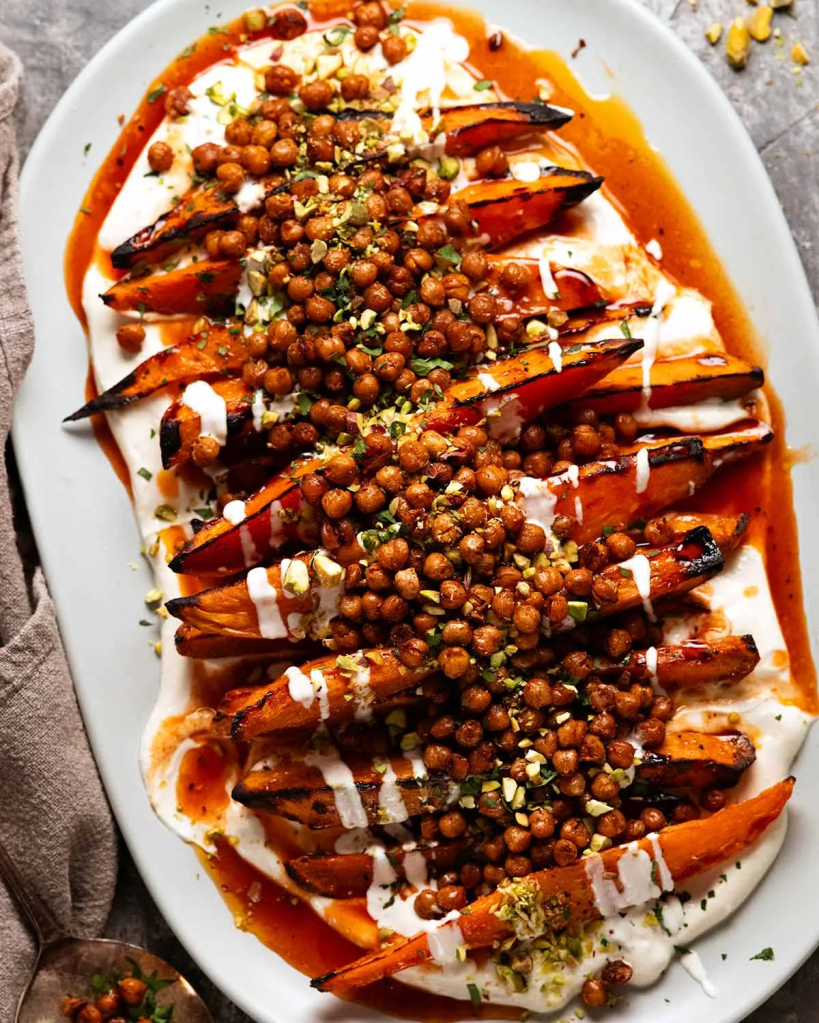
This recipe has a nice flow to it because the sweet potatoes and chickpeas cook at the same time in the oven, and while they’re roasting you just make the sauces. Easy!

- Toss sweet potato with oil, salt, pepper and maple syrup on a paper lined tray. The paper will stop maple syrup caramelised edges from sticking to the tray and ripping off the sweet potato (it’s so sad when that happens!).
- Plain chickpeas – Drain the liquid out of the chickpea can then spread the chickpeas on a tray. No need to pat dry – where going to oven dry them instead. Easier, and more effective – the chickpeas come out crispier.

- Oven together – Put the sweet potato on the top rack and chickpeas on the rack underneath set so it’s 20cm / 8″ apart (to allow the hot air to circulate). They will both take around 30 minutes.The oven temperature is fairly high – 220°C/450°F (200°C fan) – to encourage some colour on the sweet potato. If the oven temperature is lower, I find they just go from raw to soft and soggy.
- Season chickpeas – After 10 minutes, take the chickpeas out. Now they’re nice and dry, which means crispier chickpeas! Push them to one end of the tray, toss with the oil and spices. Then bake for 20 minutes or until they are crispy – you can easily tell because they will clatter on the tray.The chickpeas will stay quite crispy for a good 15 to 20 minutes, so you can just leave them on the tray until you’re ready to use them.

- Optional charring under grill/broiler – Roast the sweet potatoes for 30 minutes in total, turning at the halfway mark, until they are soft. By this time they will have a little colour on them, but if you’d like to char them like pictured for a little extra flavour and maple caramelisation, give them 5 minutes under the oven grill/broiler.
- Spicy maple sauce – Mix this while the potatoes are in the oven. Literally just put everything in a small bowl and mix.

- Whipped tahini yogurt sauce – This is a two step process – whisk the ingredients together in a microwave proof bowl (do this anytime ahead). Then within 5 minutes of serving, warm the mixture in the microwave for just 30 seconds and give it a vigorous whisk again. The sauce will transform from a typical yogurt sauce into a texture almost like softly whipped cream.Optional tahini drizzle sauce – Remove 1/4 cup of the whipped tahini and mix with around 2 tablespoons of water or until it has a drizzle-able consistency. This isn’t essential, it’s mostly for aesthetics.
- Assemble – Bear with me, this step will seem overly instructive but the intention is to ensure you get a bit of everything with every piece of sweet potato scooped up. Nobody wants to be that person who ends up with a plain piece of sweet potato – how sad!So, here’s the order in which I build: spread a large flat plate with the tahini sauce then lay the sweet potato on top, mostly in a single layer. Drizzle with tahini sauce (if using), sprinkle with about 3/4 of the pistachios and coriander. Then pile or scatter the chickpeas on top, and sprinkle with the remaining pistachios and coriander. Then, serve!
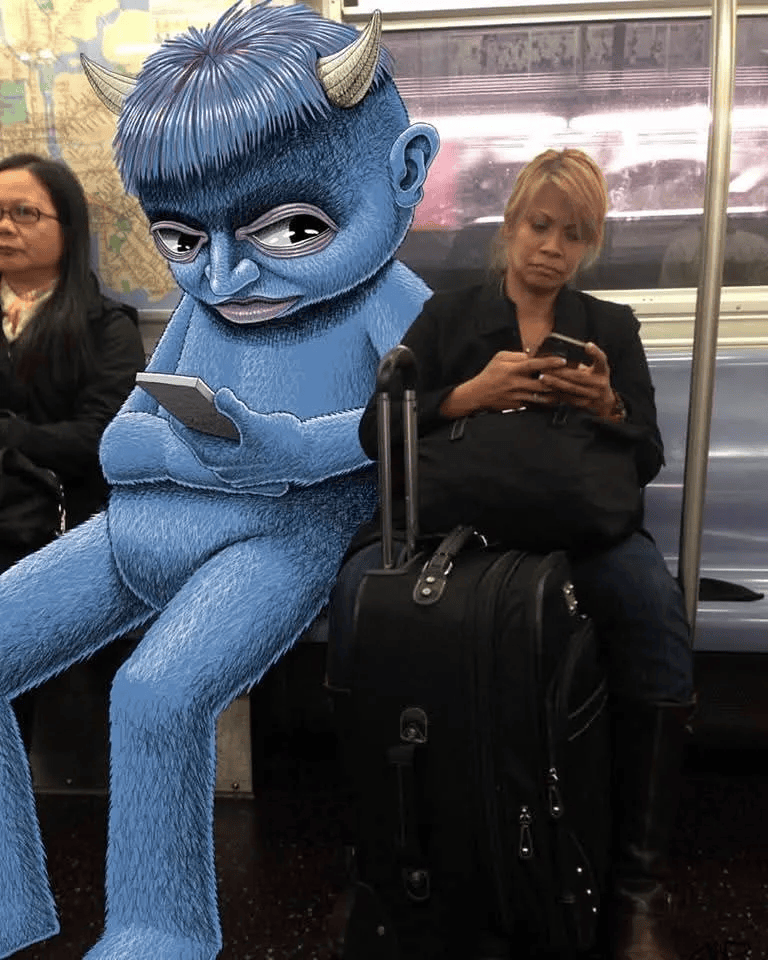
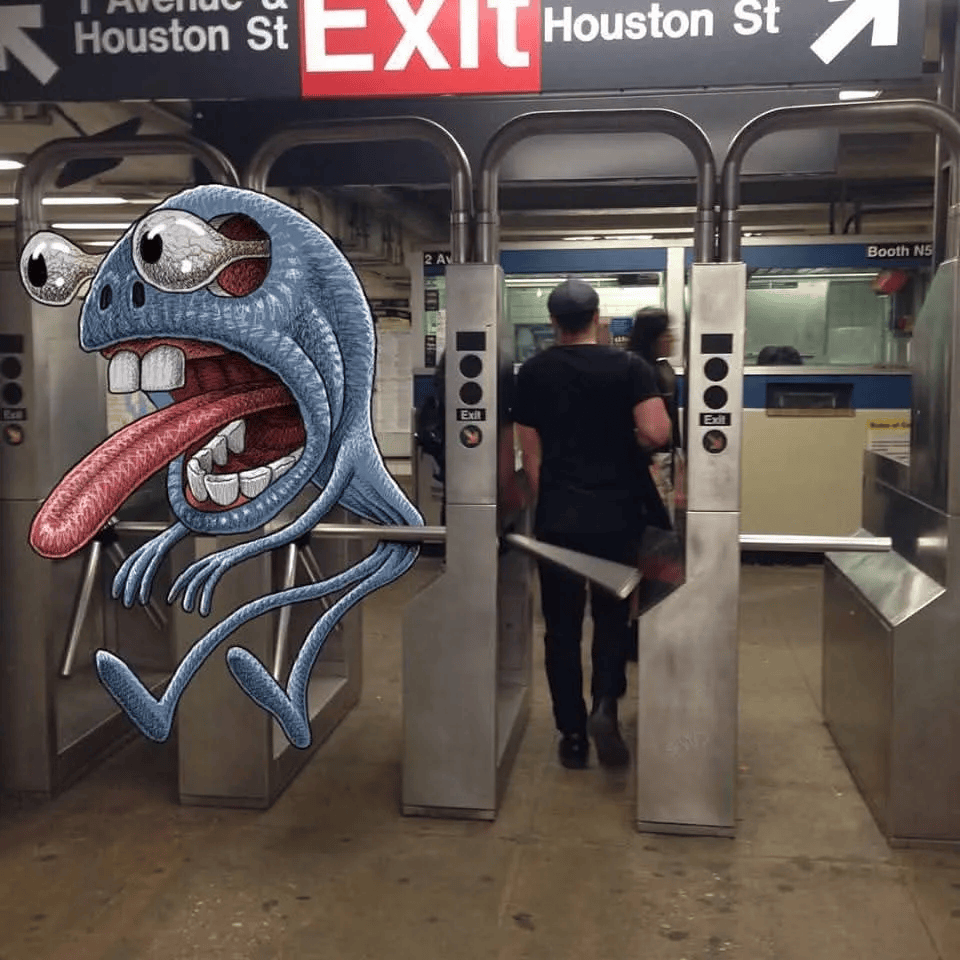
Monsters Doodles in New York Subway
An art project by American artist Ben Rubin, known as “Subway Doodle”, where he digitally adds humorous and surreal monsters to photographs of unsuspecting New York subway commuters. via Bergamax on BlueSky


Did you enjoy this collection? let me know what you think of it below. Thank you for reading my dear friends!