
How the ancient Egyptians made dazzling faience amulets
Archaeologist and sculptor Zahed Taj-Eddin shows how to make this ancient and mysterious form of art, it’s incredible!
Orbital – Halcyon On and on (Faster Horses Edit) [1993]
I shared this one ages and ages ago but I just heard it again and it chilled me to the core with its intensity! Enjoy!
Hillarious Japanese pranks that are OTT and unexpected
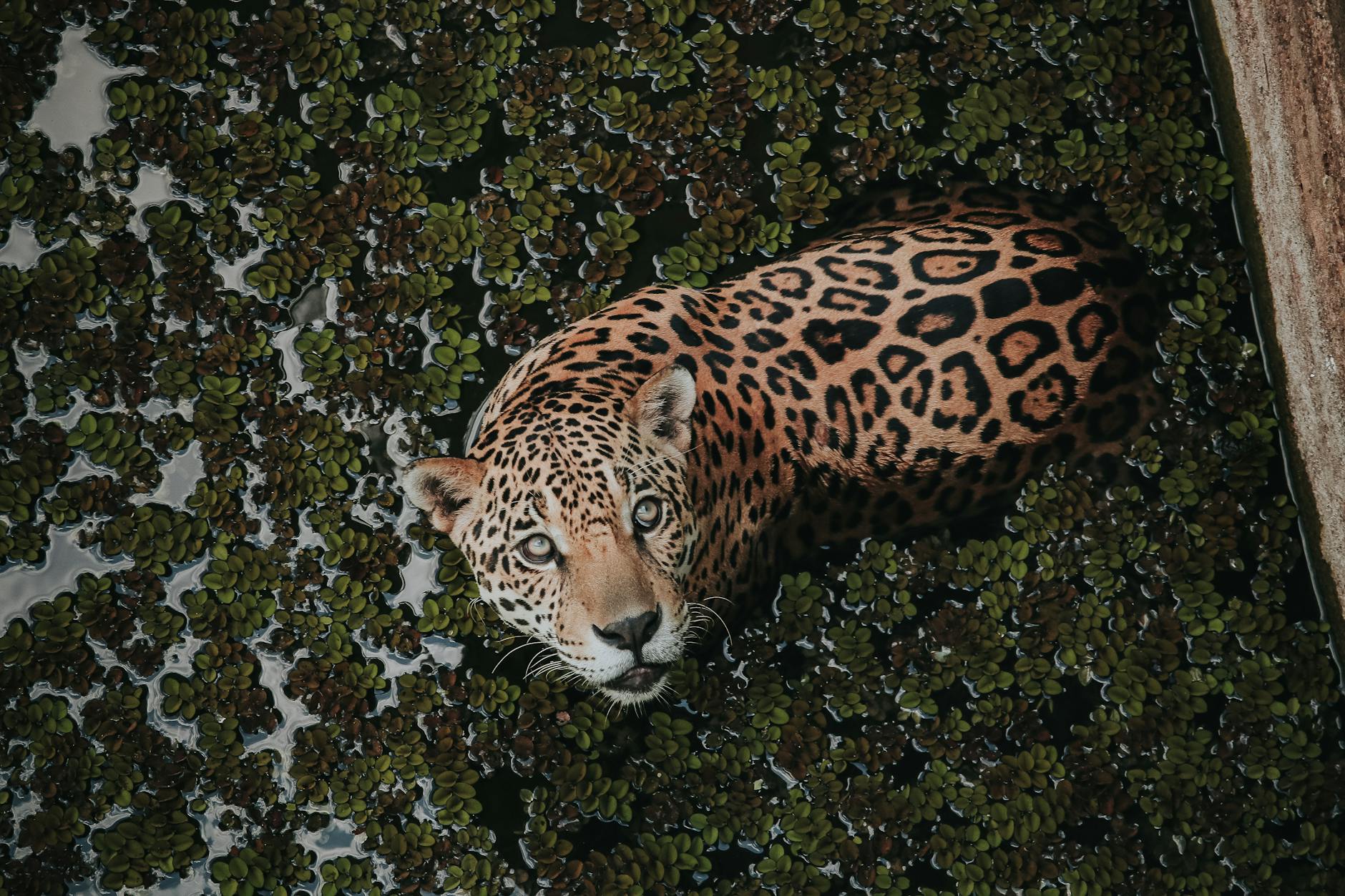
Wild big cats can recognise familiar human voices
Researchers from Oakland University have uncovered a surprising ability in wild felines: recognising and responding differently to familiar human voices. This study challenges previous assumptions about animal cognitive capabilities.
Unveiling feline vocal recognition
A research team led by Professor Jennifer Vonk and graduate student Taylor Crews investigated the vocal recognition abilities of Felidae, the cat family that includes lions, tigers, cheetahs, and exotic cat breeds. The study examined 25 individuals across 10 non-domesticated felid species living under human care.
Key scientific insights
The study yielded three primary findings that challenge existing understanding of animal cognition:
- Beyond domestication: Cats’ ability to distinguish human voices stems from close human contact, not exclusively from domestication. This contradicts previous theories about animal social cognitive development.
- Social cognitive complexity: The research challenges stereotypes about non-social species, demonstrating complex socio-cognitive skills in animals typically considered solitary.
- Human-animal connection: The findings provide evidence of emotional responsiveness in non-domestic cats, challenging perceptions of feline behavior.
Research context
“There has been insufficient examination of vocal recognition in exotic cats, despite their prevalence in human care,” the researchers noted. The study focused on 25 individuals from 10 non-domesticated Felidae species, providing a comprehensive look at inter-species vocal recognition.
Implications for understanding animal cognition
The research carries serious implications for our understanding of animal social intelligence. The authors emphasized that social adaptation and human interaction are not the sole predictors of cognitive abilities. Close human contact may facilitate skill development that is not immediately observable in wild settings.
Looking forward
The researchers suggest further investigation is needed to understand how cats might respond to familiar voices articulating unfamiliar phrases. This opens exciting avenues for future research in animal cognition and communication.
The full study was published in the journal Proceedings of the National Academy of Sciences.
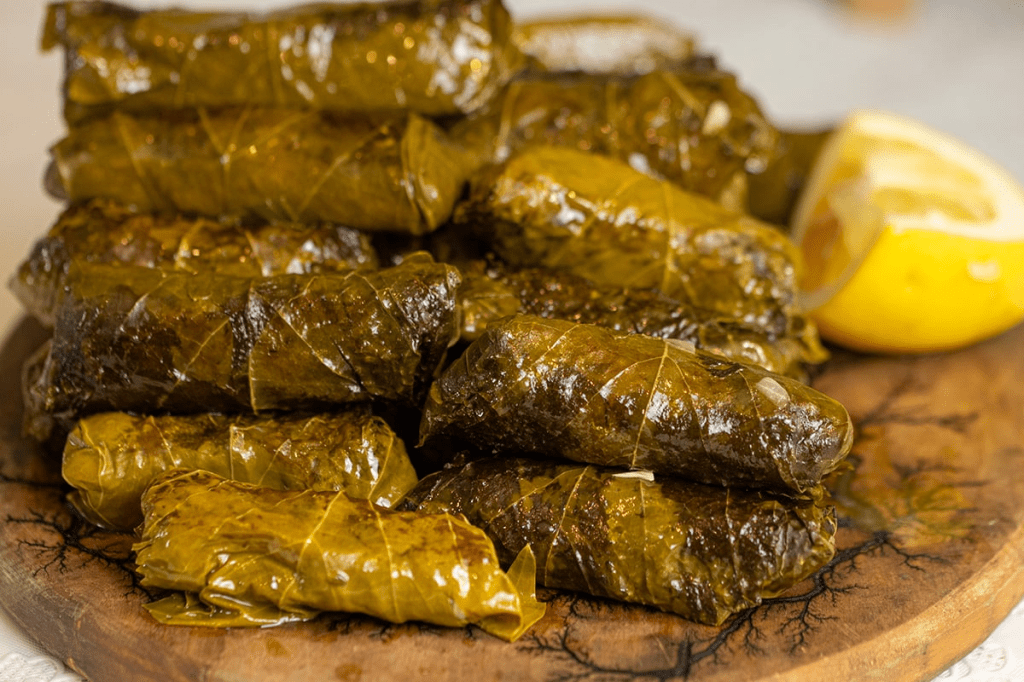
Greek Stuffed Grape Leaves: Dolmadakia by Dimitra
Ingredients
- 8 ounces grape leaves from a jar, rinsed, drained, and stems removed
- 1/2 cup long grain rice
- 3/4 cup olive oil
- 1 onion, finely chopped
- 1 cup water
- 2 lemons, juiced (1/2 cup or more)
- 3-4 tablespoons chopped fresh parsley
- 1 tablespoon chopped fresh mint
- 1 teaspoon dried dill or 1/4 cup fresh dill
- 1/2 teaspoon salt
- 1/4 teaspoon black pepper
Instructions
- Sauté onions with 1/3 of the olive oil over medium low heat about 10 minutes or until very soft and lightly golden. Do not brown the onions.
- Add rice and mix to combine.
- Pour 1 cup water, half of the lemon juice, salt and pepper. Bring to a boil and then simmer for 6-7 minutes or until the rice absorbs all of the liquid. At this point the rice is only par boiled.
- Add all the herbs and mix well. Cool completely.
- Rinse and dry the grape leaves. Cut the hard stem from each leaf. Reserve the smallest and the torn leaves to lay on bottom of pot.
- Lay a grape leaf shiny side down and place a tablespoon of rice filling on the bottom end of the leaf, near the stem.
- Fold the stem end of leaf over the filling. Fold the sides over and roll up snugly but not too tight. The rice will expand a bit more while cooking.
- Repeat with all of the remaining grape leaves until your filling is done.
- Layer half of the small and torn grape leaves to create a bed for the dolmades in a pot.
- Place the dolmades seam side down and very close together over the bed of leaves.
- Pour the remaining olive oil and lemon juice over the dolmades.
- Place the remaining reserved small leaves over the dolmades.
- Pour enough water to just cover the dolmades.
- Place an inverted plate over the dolmades to weigh them down and to prevent them from moving around and opening while cooking.
- Cover with lid and bring to a boil.
- Reduce to simmer and cook (covered) for 35-40 minutes.
- There will still be some liquid in the pot. Allow to cool for at least 30 minutes and the juices will be absorbed.
- Transfer them to a platter and drizzle some olive oil over them. Serve with delicious tzatziki sauce and lemon wedges.
- Enjoy! Kali Orexi!
Notes
When working with store-bought grape leaves in the jar, sometimes the leaves will be small and torn so always start with double the amount than what the recipe calls for. You can always make a quick batch of extra filling to use up extra grape leaves. The torn and small leaves can be used to line the bottom of the pot.
Try not to overstuff the grape leaves. The rice will expand during cooking.
If using fresh grape leaves, blanch them in boiling water and drain.
The cooked dolmadakia will keep fresh in the refrigerator for 5 days.
Irish Folklore: The Sídhe
Some Irish folklore: the Sídhe, the Aos sí, the fair folk, the good people, or the people of the shee from Irish folklore, who live underground. You may know the banshee, or Bean sídhe or woman of the sídhe. In fact the very word Sídhe is the term for earthen mounds like the one in my #linocut and the Aos sí are “the people of mounds.”

The Sidhe evolved from a mythological people known as the Tuatha De Danaan, powerful, magical semi-divine beings, who feature in many early Irish tales. When the ancestors of the Irish, the Gaels arrived they battled over the Emerald Isle. The way the story was told to me was that neither force could conquer the other and they decided to divide Ireland evenly between them. If you look at Ireland it’s quite an irregular shape and the only way to split it evenly was top and bottom with the Gaels occupying the upper world and the Tuatha De Danaan taking the lower world.
They’re known as the daoine sí or daoine sìth in Scots Gaelic and we get the the idea of fairies from the fair folk, but our inherited Victorian ideas and images of fairies are much gentler, sweeter and cuter than these fierce beings who are benevolent if treated with respect but are known to react cruelly if mistreated.
The dinosaurs too big to be dinosaurs
Deep time: a fascinating journey into the deep history of Australia from an indigenous First Nations perspective
A wonder-filled interactive by ABC Australia visit via the website.

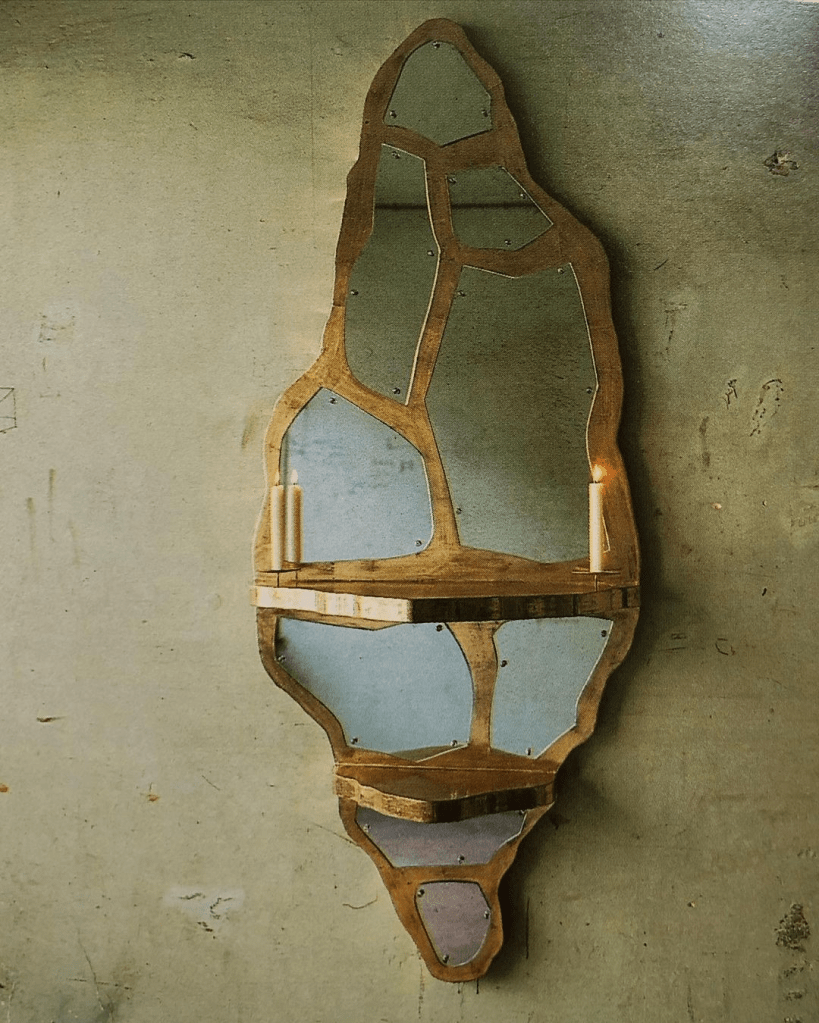
Console murale Bayreuth by Elisabeth Garouste and Mattia Bonetti, c. 1983.
Jungle legend LTJ Bukem’s live set ‘Love of Life’ from 1995
The cover of this cassette rip is so evocative and interesting and the mix is driving and uplifting 90’s jungle.
A 400-year-old boxwood garden maze at the Pazo de San Lorenzo de Trasouto in Santiago de Compostela, Spain.

Did you enjoy this collection? let me know what you think of it below. Thank you for reading my dear friends!


i watched Orbital just recently: https://youtu.be/avO75HITKTE?si=K93LeihUQLPYf73U
LikeLiked by 1 person