

Blinky Bill: A delightful cultural exchange between Poland and Australia
For anyone from outside of Australia, Blinky Bill is a delightful koala character created in the 20th Century who became iconic in this country and much loved by all children. His popularity led to a widespread love of koalas in general and meant that real life koalas were adequately protected from being hunted. Here in this Polish Youtube channel Dział Zagraniczny they discuss in Polish for a Polish audience the evolution of Australia’s love of koalas who went from pests during colonial times to becoming an irreplaceable part of our national identity – in a large part due to Blinky Bill, a character created by a Kiwi author/illustrator! FYI you will need to turn on the auto-translated English subs for this one! This is an excellent channel that discusses obscure topics relating to foreign countries…worth a subscribe for sure. Poland is certainly filled with cosmopolitan people.
Frog funk therapy by Nebula Breeze
In a world of AI slop and shitty rip-off music, look for the musicians actually playing instruments in their videos to confirm that it’s real. This is damn funky!
American guy dressed as a gecko meets locals in Baghdad
Before you switch off from this one…hear me out. It’s actually an eye-opening and wonderful scenario that occurs. With the help of one of his Youtube followers who acts as an Arabic translator, a guy dresses as a gecko and walks around Baghdad talking to locals to understand what life is like there. The results are surprising and full of genuine connection.
24 Hours in the Coldest City on Earth Yakutsk –64°C (−83°F)
I can’t imagine what it would be like having to put on five layers of clothing just to go outside each day. I don’t like the idea of this, it would feel very restrictive and I would feel claustrophobic being in my apartment all the time without being in nature. What about you?
I didn’t know bears float like this
Now that I know….I am well and truly delighted that they are floaters. But this begs the question why do they float? Do they contain a lot of fat or something? …How is this fact not more commonly known or considered when one feels sad or overwhelmed? Just think of all of those floating bears out there floating on icy cold rivers looking for fish…think of them and feel better whatever you’re going through!
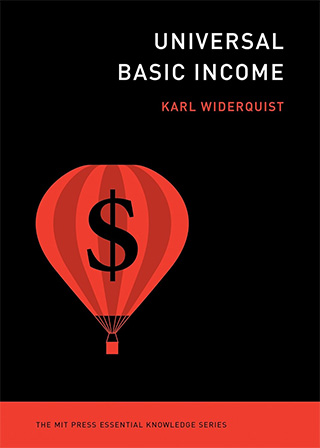
The Fatal Trap UBI Boosters Keep Falling Into
To win the argument for universal basic income, advocates must confront the myth that less work means less worth.

By: Karl Widerquist via MIT Press Reader
The general idea behind universal basic income (UBI) is almost as old as America itself. You can trace it back to 1797, when Thomas Paine argued for guaranteed payments in his political treatise “Agrarian Justice.” Fast forward to 2020, and Andrew Yang revived the idea with a “Freedom Dividend” during his failed presidential campaign. Despite the 200-plus-year chasm that separates these two men, the criticism they faced for backing UBI was strikingly similar: that “no one will work” and that “we can’t afford it.”
Because of this, supporters of the program might be tempted to believe that the purpose of UBI experiments is to allay these concerns with empirical evidence on the effect of UBI on work hours. The problem, however, is that these concerns are not rooted in empiricism but normative belief: namely that 1) lower-class people who refuse employment should receive nothing and 2) UBI costs more than it’s worth. And while not all UBI opponents believe these things, those who are often move the goalposts to portray almost any findings about cost and labor effort as reasons to reject UBI.
We must resist playing this game.
UBI-related experiments consistently find evidence that no participant responds to UBI experiments by dropping out of the labor force. Yes, some people reduce their hours of work, but the decline in work effort (if any) is clearly within a sustainable range. In other words, the evidence decisively contradicts claims that “no one will work” and “we can’t afford it.” But if we take the bait of focusing on such extreme statements, we attract everyone’s attention to opponents’ favorite issue: “Did the people who got the UBI ‘work’ as much as the people who didn’t?” Once the question is framed this way, it tosses a softball to opponents who predictably argue UBI is out of the question because some people didn’t work as much as they otherwise might have.
Any unconditional grant large enough to live on necessarily allows lower-class people to refuse employment. This fact — at least for critics who feel that people who refuse employment should receive nothing — makes UBI undesirable by design. To them, UBI will always be “unaffordable” because it will appear to cost more than they think it’s worth. UBI supporters fall into their trap if they attempt to refute this belief with, say, technical explanations of the difference between a 4 percent decline in labor hours and 4 percent of people leaving the labor force.
Supporters need to focus on all the good that comes of guaranteed income. As Bru Laín argues, UBI has a “positive impact on socioeconomic indicators related to a lack of money,” including the “alleviation of stress and mental illness, improvement in eating habits, settlement of household and personal debts, improvement of happiness, subjective well-being and social and community participation.”
Instead of trying to assuage critics’ fears, the pro-UBI movement needs to challenge the narrative in which any refusal to accept employment is a “bad” experimental observation.
Meanwhile, proponents of UBI that fall headfirst into critics’ trap even when they point to findings that that UBI increases labor effort. Consider these headlines from a UBI experiment in Stockton, California: “Experiment in guaranteed income leads to more work,” “Californians on universal basic income paid off debt and got full-time jobs,” and “The Biggest Payoff From Stockton Basic Income Program: Jobs.” Even the city’s mayor, Michael Tubbs, who was instrumental in establishing the program, employed this kind of rhetoric, saying, “Number one, tell your friends, tell your cousins, the guaranteed income did not make people stop working, in fact, those who received the guaranteed income were working more than before they received the guaranteed income and almost doubled in increase compared to those in the treatment group.”
The results Tubbs points to are largely determined by the design of the study: People who receive small grants when they weren’t working very much to begin with usually work more in UBI studies; people who receive larger grants when they are working full-time to begin with often work less. By portraying the uptick in Stockton’s labor effort as self-evidently good, Tubbs’ comments make it more difficult for future experiments that might involve larger grants to report the likely finding that people work less. Buying into the narrative that it is always “good” for low-income people to spend as much or more time on paid labor than they are now is a game UBI supporters can’t win and shouldn’t play. If the biggest problem in the world today were getting the lower class to work as much as possible, UBI would not be the best policy to achieve it.
Instead of trying to assuage critics’ fears, the pro-UBI movement needs to challenge the narrative in which any refusal to accept employment is a “bad” experimental observation. After all, how could it be a good thing for the global poor to spend more hours in grueling jobs for which they’re likely underpaid and overworked? What do you think will happen to wages and working conditions if the two billion people in deep poverty around the world all decide to work more at the same time? Theory predicts they would work longer hours for lower hourly wages.
One of the many disadvantages of UBI experiments is that they cannot measure how much wages and working conditions might improve in response to a substantial UBI, because that effect depends on the interaction between millions of citizens and employers across the country. The closest thing UBI experiments can measure is the first step in the process, and that step involves giving people a choice beyond working too hard for too little. So, rather than trying to quibble over hours worked, UBI supporters might have better luck broadcasting the good that comes when people with the worst jobs decide to work less — and using experiments as a platform for participants to tell their stories.
Karl Widerquist, a professor of philosophy at Georgetown University-Qatar who specializes in distributive justice, is the author of “Universal Basic Income.”
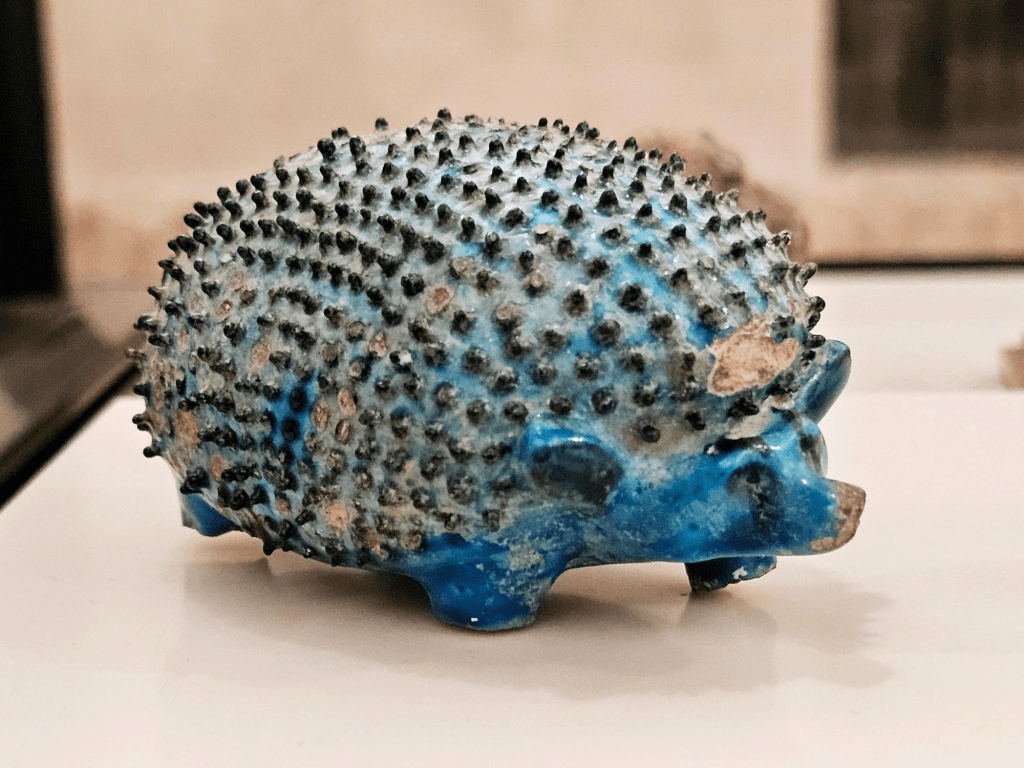
80’s carpet was out of control
I appreciate their commitment to colour and pattern. I have a lot of respect for the 80s aesthetic particularly the unconventional use of neon lighting.
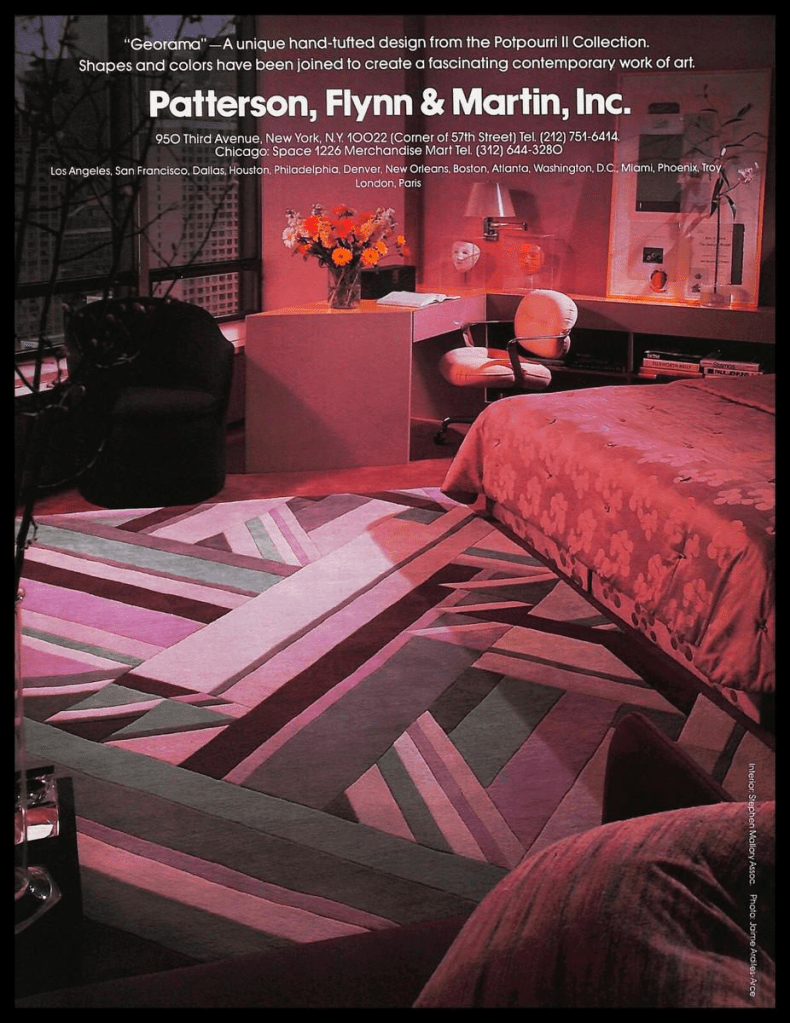
Common mythconceptions: the world’s most contagious falsehoods
View larger infographic on the Information is Beautiful website
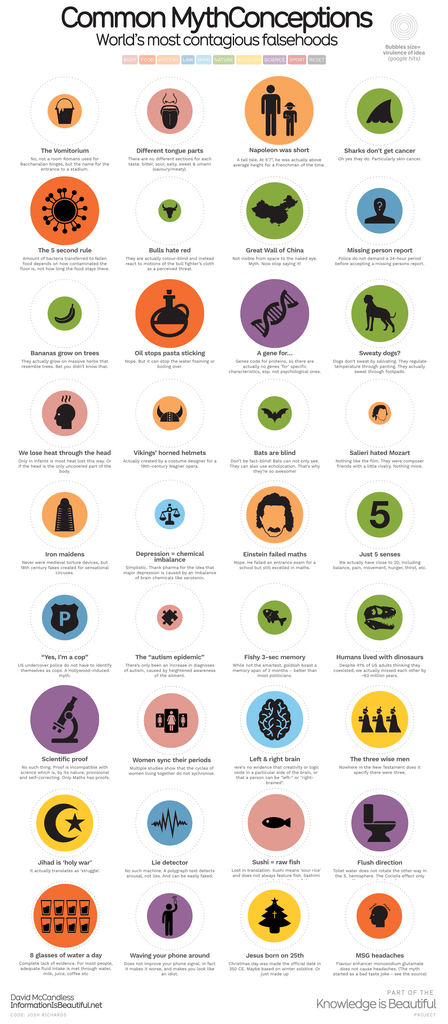
Charming ancient Egyptian hedgehog
A sweet-faced ancient Egyptian figurine of a hedgehog, made of faience, dating ca 1900 BC, from Thebes, Egypt. The Egyptians associated hedgehogs with rebirth. On display at Neues Museum Berlin. Via Nina Willburger.
Vegan/ vegetarian brown rice salad by Nagi
An easy, healthy and quick mid-week meal with culinary master Nagi. Sub out the fried haloumi for a vegan version.

Salad (Note 1):
- ▢3 cups cooked brown rice , cooled but not cold
- ▢2 tomatoes , diced
- ▢2 cucumbers , diced (or 1 long English/continental cucumber)
- ▢1/2 red onion , chopped (sub 2 stems green onion)
- ▢40g/ 4 cups tightly packed baby rocket/arugula , roughly chopped (or baby spinach)
- ▢1/3 cup coriander/cilantro leaves , roughly chopped (Note 2)
- ▢1/3 cup fresh dill leaves , roughly chopped (Note 2)
Lemon Dressing:
- ▢3 tbsp lemon juice
- ▢5 tbsp extra virgin olive oil
- ▢1 garlic cloves , minced using garlic press
- ▢1/2 tsp Dijon mustard (Note 3)
- ▢3/4 tsp salt , kosher/cooking salt (1/2 tsp table salt)
- ▢1/2 tsp black pepper
Optional extras (pictured):
- ▢1/2 cup black olive slices
- ▢200g/7oz halloumi , sliced then pan fried in a little olive oil until golden and crispy
- ▢Other topping options: feta, parmesan, nuts (Note 4)
Instructions
- Place Dressing ingredients in a jar and shake well to combine.
- Place Salad ingredients in a big bowl. Drizzle over Dressing, toss well.
- Transfer to serving bowl. If using Halloumi, pile on top.
- Serve!
Shiny Objects 1 by Kevin Yaun (2024)
Kevin Yaun is visualising his idea of home and exploring the distortion he sees in that relationship. Yaun was born in Georgia, USA and over the last 20 years has moved almost yearly and lived all over the world: Colorado, The Netherlands, England, Thailand, Singapore, and California to name a few. This transient lifestyle brought with it a deep understanding of the many faceted concept of home. ‘Home’ has become an abstract – a place that doesn’t exist, an unknown location to long for, an unattainable dream to strive for, or finding home wherever one finds oneself.
Kevin Yaun bio on Artsy

Did you enjoy this collection? let me know what you think of it below. Thank you for reading my dear friends!


So much good stuff!! Thanks for sharing!
The gecko video is so wholesome. Wow, thanks for sharing!
I feel similarly about wearing layers upon layers of clothing. Where I live, the coldest is typically on winter nights gets is mids-20s/low-30s F, and down to 10 degrees once every few years. The difference between 20 and -83 is 103 degrees… the coldest city is over 100 F colder than what I consider freezing. I can’t even fathom…
I had no idea bears could float like that! Curiosity got the best of me, and the reason for the buoyancy is supposedly a combination of high fat content and air bubbles trapped in their thick, dense fur.
The recipe looks great too, and easy! I may need add this to the menu this week.
LikeLike
You’ve done us proud this week, Athena. The gecko guy is really sweet and how good to see Baghad folks as they truly are. And what’s not to love about floating bears and toasted halloumi.
LikeLike
Gecko man was cool, but ‘bear float’ blew my brain. G
LikeLike