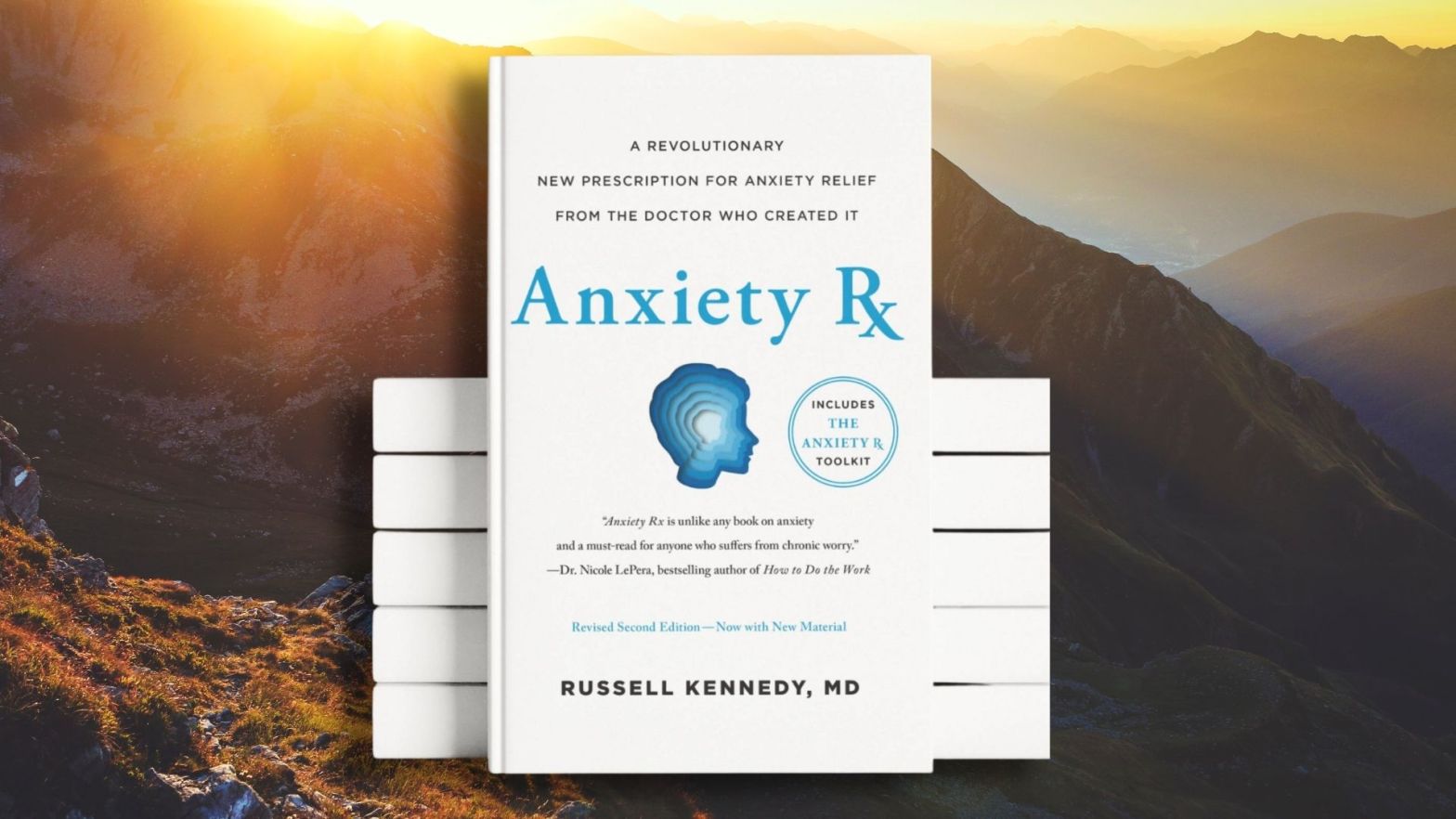
A landmark book by medical doctor Russell Kennedy explores how#alarm in the body impacts the mind. By calming the body and addressing this bodily ‘alarm’, we can heal ourselves.
Rating: 🌟🌟🌟
Genre: Non-Fiction, Self-Help, Anxiety, Psychology, Trauma, PTSD.
Publisher: Kennedy Wellness Institute
Review in one word: Repetitive
Anxiety Rx by Dr. Russell Kennedy starts off with a powerful premise. That anxiety IS NOT mental in origin but is instead a deeply rooted, stored and contained within the body. That emotional trauma and a physiological sense of persistent “alarm” in the body is what initially feeds one’s anxiety turning it into a feedback loop of escalating nervous alarm.
While the core messages and tools are powerful and valuable, the book is unfortunately weighed down by its length and repetition of key concepts. The length of the book could have been at least 60% shorter and more concise with some sharper editing and would have made for a more impactful read. For brevity’s sake and so that I can recall all of these concepts and refer back to them ,I’ve included some of them below in bullet point form. The tools themselves are wonderful, some may consider them a bit woo-woo like the inner-child work, but they are effective (at least in my experience.)
Identify the “Alarm”
- Understand anxiety as a body-based feeling, not just mental worry.
- Recognise where you feel the alarm in your body (chest, gut, throat, etc.).
- Visualise and become aware of your ‘alarm’: how it looks and feels, how it appears and if its hot or cold. But don’t judge it, just sit with it and observe it with curiosity.
Connect with Your Inner Child
- Visualise and comfort the wounded younger version of yourself.
- Offer reassurance and safety through visualisation, kind self-talk, or touch.
Soothing Physical Techniques
- Apply warmth or gentle pressure (like a heated blanket or your hand) to the alarm area.
- Use deep, belly-based breathing to down-regulate the nervous system.
Separation of ‘Anxiety’ vs ‘Alarm’
- Label thoughts as anxiety and sensations as alarm to better manage both.
- Prioritise calming the body before trying to change your thinking.
Body-Based Meditation
- Focus on bodily sensations with compassion, not analysis.
- Gently return attention to the alarm area and practise sitting with it calmly.
Avoid Over-Intellectualising
- • Stop trying to “figure it out.” Healing comes from feeling and comforting—not solving.
- Become aware and curious of how you are feeling but as a curious observer of your emotions.
Dr. Russell Kennedy is a Canadian medical doctor, neuroscientist, and anxiety expert who traverses the worlds of science and lived experience. He is unlike many other scientists, as while he trained in medicine and neuroscience, he also studied advanced mindfulness and somatic therapies and delves deeply into alternative ideas like taking hallucinogenic drugs as an aid for psychological insight and recovering from trauma.
Dr Kennedy bravely tells the story of his personal battle with chronic anxiety, which was rooted in having a chaotic and unpredictable childhood due to having to manage his schizophrenic father, who tragically took his own life when Kennedy was young.
This early trauma shaped Kennedy, so he became a doctor to ‘fix’ people. This is a compelling and personal story but it sort of dominated the book too much in my opinion, instead of making the chapters more about practical and helpful tools for the reader, there was far too many diversions into this personal story. After a while, this became incredibly tiring and repetitive.
The intent and mission of this book – which was very noble, was clouded as well by occasional mention of the paid online course one can do after finishing the book. I found this sales-ish approach to be distasteful and a turn-off. Why not include all of the tools and exercises in the book instead of trying to sell a course?
Nevertheless the concepts and ideas, which stem from eastern spirituality and mindfulness, Jungian psychology and somatic therapy are really important and were helpful to me, so for this reason I would recommend this book. It would be great if the book could be redone in a more condensed form with just the theory and practical exercises to try, which would be far more useful for the reader.
 Content Catnip