
Hey…are you into trees? Generate one online!
This is an excellent, pointless and enjoyable online tree generator that allows you to change up your online tree’s leaves, branches, reach, sunlight direction and so on, change the species too between spruce, oak or pine. Hours, or possibly minutes of fun. If you are a nemophilist then you will like this! By developer Dan Greenheck.

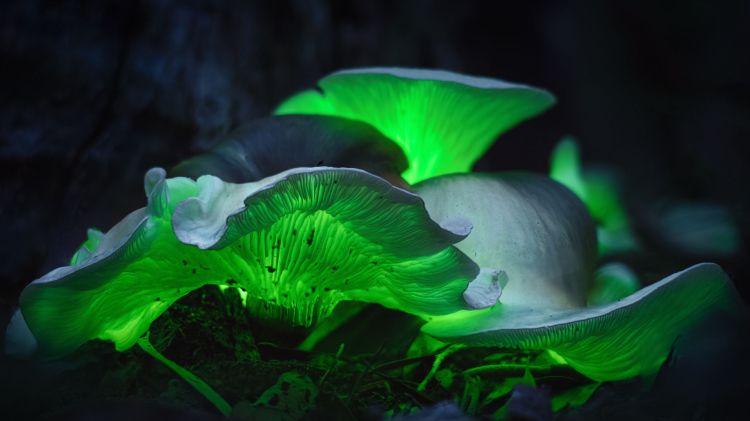
Mesmerising and mysterious glowing ghost fungi
Australia is a land of extremes, of curious organisms with quirky adaptations. Even our ghosts are more perplexing than your regular spook, and you don’t need a Geiger counter or infrared camera to track them down. Ghosts feature fantastically in folklore across the globe, but Australia’s ghost collective has a special fungal addition. Stealing the limelight, or rather the twilight, is the ghost fungus, Omphalotus nidiformis.
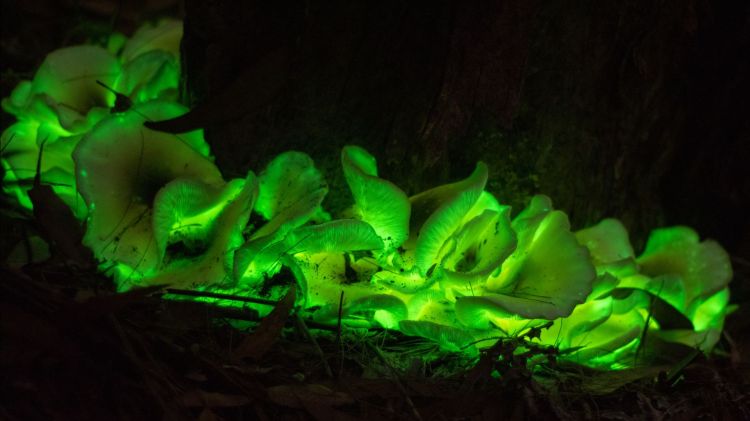
Ghost fungi are large, common and conspicuous, yet they manage to escape the gaze of most. As interest in fungi grows in Australia, the ghost fungi is getting a curious new look-in.
Well before Aristotle’s time, Aboriginal Australians knew about the luminescence of fungi. Early settlers in Australia recorded the reactions of different Aboriginal groups to what we think was the ghost fungus. Some, such as the Kombumerri of southeastern Queensland, associated luminous fungi with evil spirits and supernatural activities of Dreamtime ancestors. West Australian Aboriginal people referred to the ghost fungus as Chinga, meaning spirit.
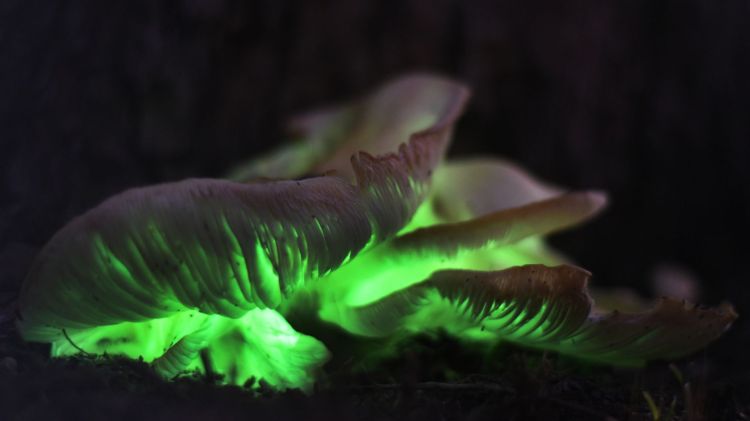
The ghost fungus contains a light-emitting substance called luciferin (lucifer meaning light-bringing). In the presence of oxygen, luciferin is oxidised by an enzyme called luciferase. As a result of this chemical reaction, energy is released as a greenish light. The light from the ghost fungus is often subtle and usually requires quite dark conditions to see. To experience ghost fungi at their most spectacular you need to allow your eyes time to adjust to the darkness, and don’t use a torch.
Ghost fungi have been widely recorded across Australia, especially in the forests of the south-eastern seaboard. They often appear in large overlapping clusters around the bases of a variety of trees, commonly Eucalyptus, but also Acacia, Hakea, Melaleuca, Casuarina and other tree genera as well as understorey species. Via the Conversation
Lentil Soup with Cumin and Lemon

Lentil soup with cumin and lemon is a hearty, flavorful dish perfect for any season. Loaded with protein and spices, it’s both nourishing and satisfying.
Ingredients
- 1 tbsp olive oil (or any neutral oil)
- 1 medium onion, diced
- 2 garlic cloves, minced
- 1 tsp ground cumin (adjust to taste)
- 1 cup dried green lentils, rinsed
- 4 cups vegetable broth
- 1 lemon, juiced (about 2 tbsp)
- Salt to taste
Instructions
- Heat olive oil in a large pot over medium heat until shimmering.
- Add diced onion and cook until translucent, about 5 minutes, stirring occasionally.
- Stir in minced garlic and ground cumin, cooking for 1 minute until fragrant.
- Add rinsed lentils and vegetable broth, bringing to a boil.
- Reduce heat to low, cover, and simmer for 25-30 minutes until lentils are tender.
- Stir in lemon juice and salt to taste, then remove from heat.
- Let the soup sit for 5 minutes to allow flavors to meld before serving.
A velvety texture with a bright, citrusy kick makes this soup a standout. Serve with a drizzle of olive oil and a sprinkle of fresh herbs for an extra layer of flavor.
The vicious cycle chipping away at online privacy
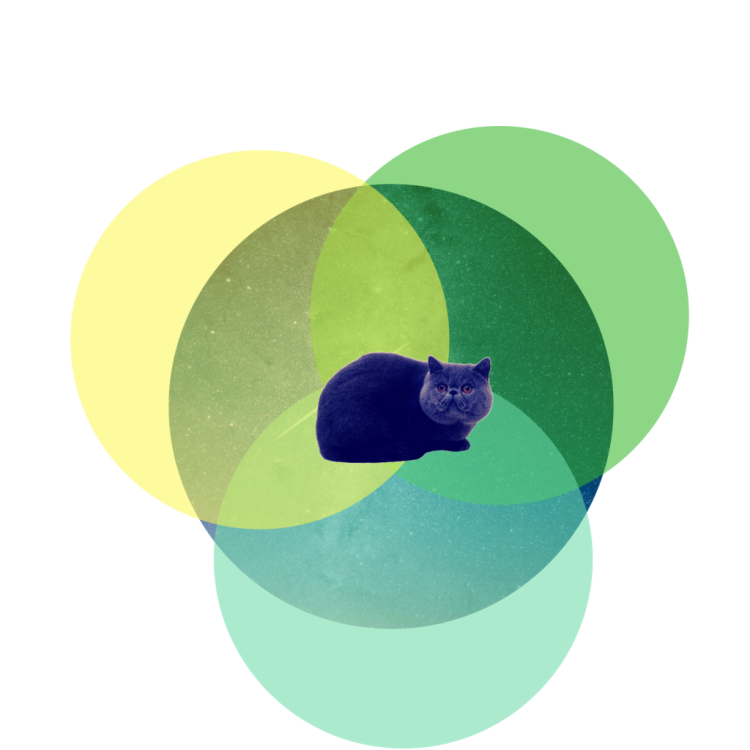
Yes! black business kitty may be onto something with this. Your data privacy is a bit like your virginity – once it’s gone it’s gone and you ain’t getting it back!

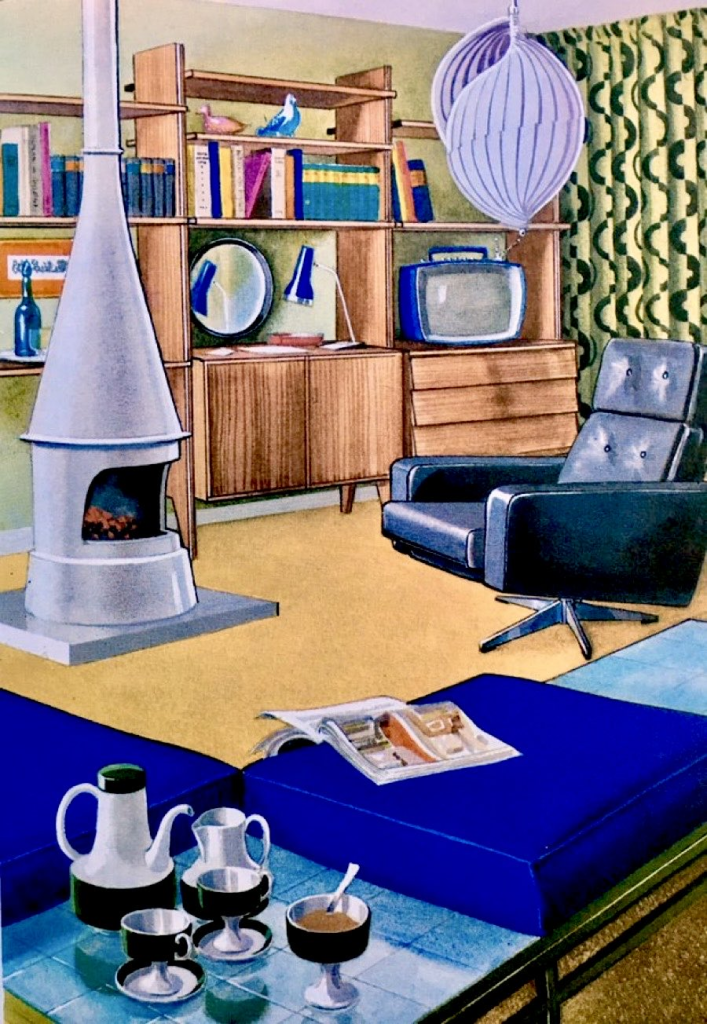
The Furniture of Today (1971) from ‘The Modern World of Old Ladybird’
For those too young or unfamiliar with Ladybird, these books were an incredibly popular series for children that depicted a nostalgic and sweet vision of British life from the post war period up until the 80’s. These books are a bit of collector’s item. The illustrations are sublime in a delightful mid-century kind of way. I vaguely remember seeing these books around as a young child but this Twitter account is really my first proper introduction to them. I hope you enjoy this art by Robert Ayton The Furniture of Today (1971) from ‘The Modern World of Old Ladybird’
Dom Whiting in Madrid
Dom drops some mean Drum and Bass in the glittering and sunny city of Madrid on a beautiful summer’s day… you can sense the energetic vibe here!
Orange: Archetype in Focus by ARAS Archive
Orange is a mixture of red and yellow and in the light spectrum of color stands between the two. Orange extends into the realm of gold, the incorruptible and everlasting, and into the realm of blood, vigorous, active and mutable.

In the Buddha’s time, prisoners wore orange and the Buddha was said to have adopted a robe of saffron as a sign of compassion for the dispossessed and condemned. Bold and visible, orange still signifies detention, warning and protection, from the jumpsuit of the American prisoner to the vivid markings of the monarch butterfly that tell potential predators its body has toxins that make it lethal prey.
Orange colors the ascent, descent and burning of the sun, associating its hues with processes of emergence, heat, growth and perfection, and the coagulating intensity of desire. The Roman bride wore the flammeum or flamelike veil of Aurora, the goddess of the dawn. Divine Jupiter was said to have presented an orange, round and fecund, to Juno on their wedding day. Sendivogius, a 17th century alchemist, intuited in the sun-ripened orange an emblem of psyche’s transmuting heat sufficient to bring forth its vital spirit and produce its seed. Orange is then maturation and harvest, the brilliance of the turning leaf, the russet, autumnal moon, ingathering and completion. But the warmth of orange also becomes emblematic of nature and psyche’s more searing transformations, sudden and drastic – the quality of forest fire, volcanic explosion and nuclear blast.

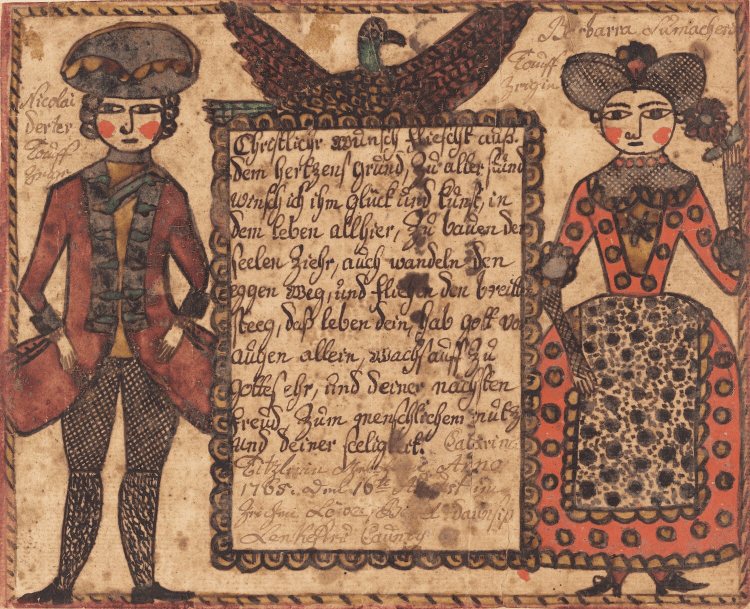
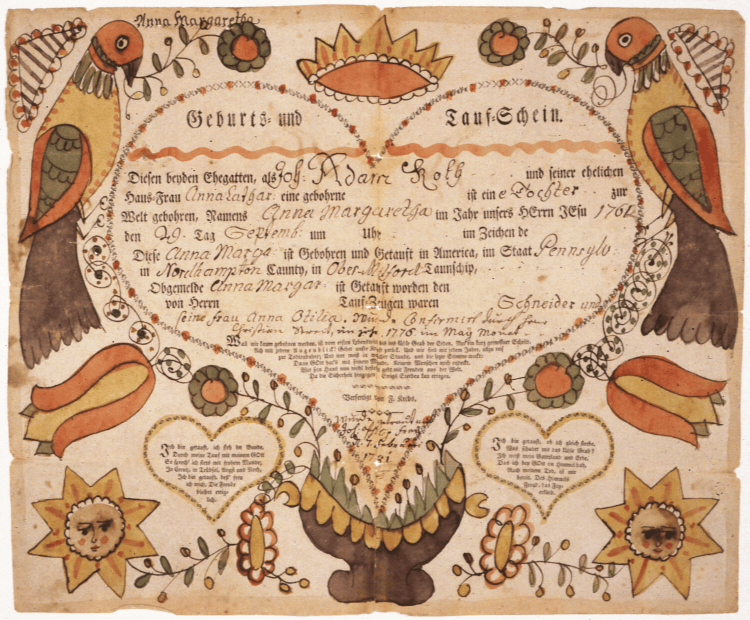
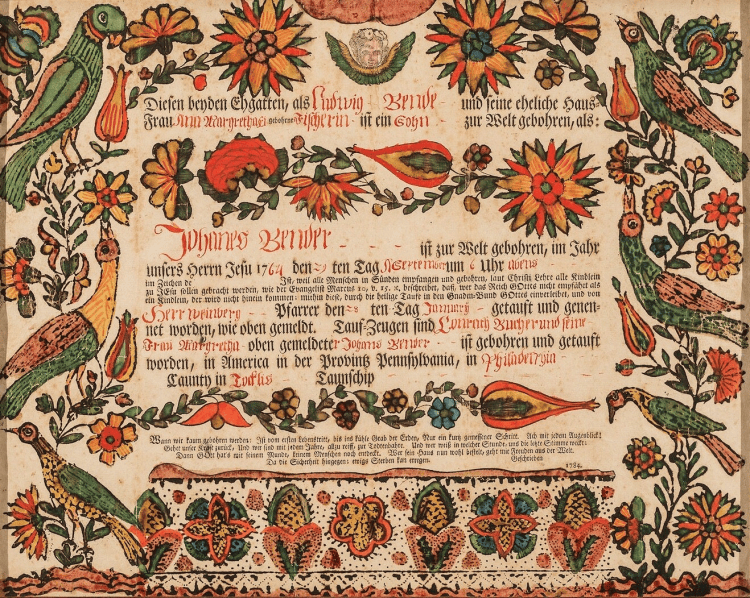
Hearts vines and tulips in old Baptismal documents
In Pennsylvania and beyond (ca. 1790–1830) official documents such as baptismal records, land deeds, and birth registries were lettered in German fraktur script, and decorated with the hearts, vines, and tulips that came to characterise fraktur folk art: https://publicdomainreview.org/collection/fraktur-folk-art #folkart #art #fraktur #Pennsylvania Via Public Domain Review on Mastodon
The Five Mindsets and How to Feel Loved
A new book combines happiness research and relationship science to identify strategies within our control for experiencing more love in our lives. Via Greater Good Magazine.
Can you feel alone in a crowd? Unloved in a decades-long marriage? Indeed, that’s often when loneliness strikes hardest: when you experience social connections and seemingly intimate relationships, but they don’t feel satisfying.How to Feel Loved: The Five Mindsets That Get You More of What Matters Most.
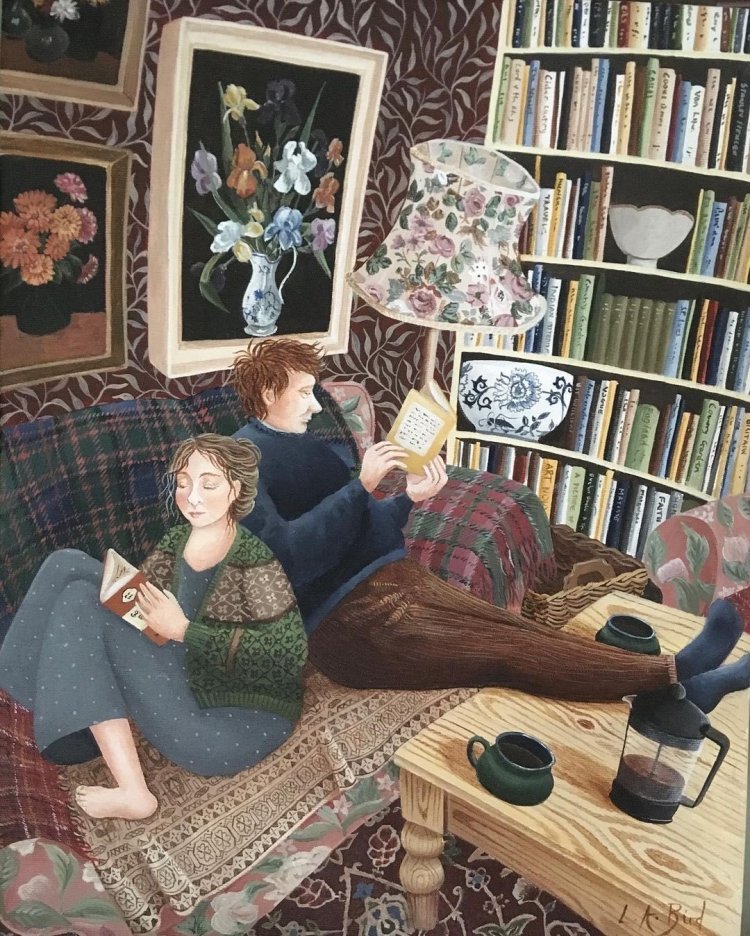
This apparent contradiction is at the heart of How to Feel Loved: The Five Mindsets That Get You More of What Matters Most, a new book by happiness scholar Sonja Lyubomirsky and relationship scientist Harry Reis.
How to Feel Loved vividly expresses the disconnect between people in our lives expressing love and our experience of feeling that love, and puts the power back in our hands. Lyubomirsky and Reis make a powerful case that by approaching our relationships with vulnerability, curiosity, self-acceptance, and optimism, we can get the love we need. They outline specific strategies for shifting our mindsets and interpersonal interactions to achieve more rewarding outcomes.
Sonja Lyubomirsky: A lot of people are loved, but they don’t feel loved. And if you don’t feel loved, it’s as though it’s not there. What I have discovered in my research is that feeling loved and feeling connected is really the key to happiness. Almost all of the interventions shown to make us happier, the reason they work is they make us feel more connected to and loved by others. We know relationships are so important to happiness; the Harvard Adult Development Study is very famous for showing that. Then Harry and I started talking and we realized happiness researchers and love researchers don’t really talk as much as they should.
- Sharing: This mindset encourages you to open up about your experiences and private thoughts, as well as your failings and insecurities, in a way that is thoughtful, selective, incremental, and intentional.
- Listening to Learn: You give another person your undivided attention, fully attune to them, and listen closely to what they have to say. Ask questions that clarify and yield insights about the other person’s story, as if there were a quiz tomorrow.
- Radical Curiosity: This calls on you to show strong, genuine interest and curiosity in the other person. Focus on their deeply held beliefs, eccentricities, their creative outlets, and details that shape their world, as well as their fears and flaws.
- Open-Heart: Expressing genuine care and concern for another person’s well-being, beyond just offering kindness and compassion. It’s about truly believing in the other person and seeing the best that they can become.
- Multiplicity: When sharing and receiving vulnerable disclosures, welcome revelations of your own and another person’s complex self. Rather than rushing to judgement, respond with acceptance, empathy, flexibility, and charitable attributions.
Exactly who you are
If you put your life on hold waiting for that one particular thing to materialize, you may miss opportunities to grow and learn. Continue to live, love, be exactly who you are and what you are seeking cannot help but be drawn to you. ~ Via Jennifer Farley
Resonant robots – perceptions
Evocative and smooth deep house for your listening pleasure…
The Hoolock Gibbons by Aloys zötl (1835)
I love their grossly over-exaggerated bodies and tiny heads, they are somehow rendered even more friendly and cheeky in the artist’s interpretation.

Did you enjoy this collection? let me know what you think of it below. Thank you for reading my dear friends!