Excellent channel Lina’s Thobe explains the importance of Palestinian Tatreez
Palestinian tatreez isn’t “just embroidery.” For centuries, it’s been a visual language — carrying the names of villages, the colors of seasons, and the stories of displacement and survival.
In this video, I share how one humble stitch became a way to map a homeland, how women in exile transformed motifs into a national identity, and the moment a new design — the six-branch pattern — emerged as a unifying symbol for Palestinians everywhere.
You’ll see how these dresses carried memory through war, refugee camps, and even political protest — and why this heritage is still evolving today.
Enormous 68-million-year-old egg dubbed ‘The Thing’ unearthed in Antarctica
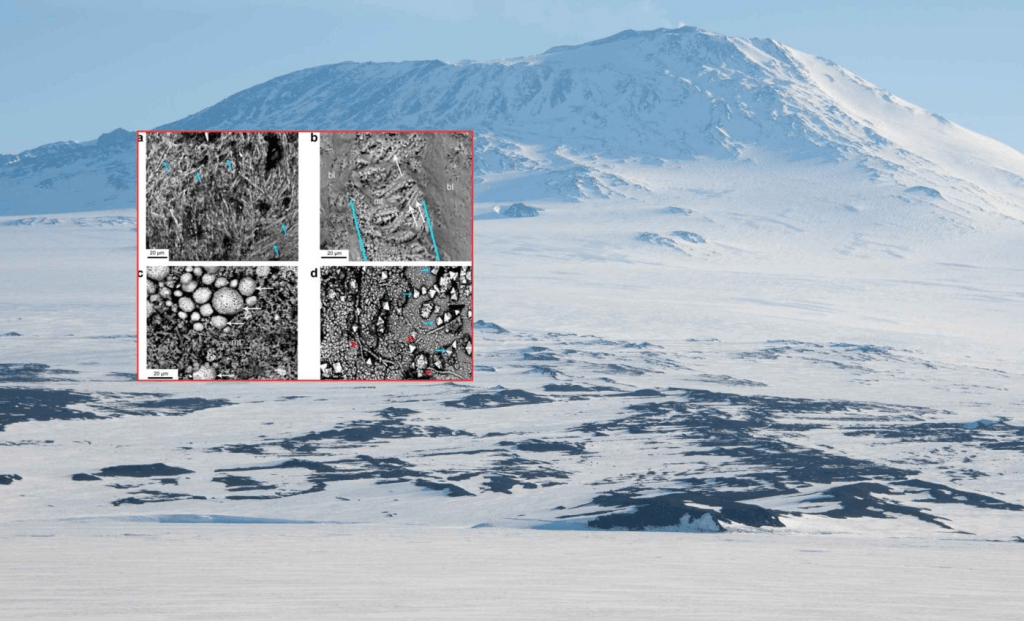
About 68-million-years ago, during the Late Cretaceous, a giant fossil egg was laid in Antarctica. The excavated remains reveal that a huge marine reptile laid eggs instead of giving birth to live offspring, as scientists originally assumed.
Nicknamed “The Thing,” the fossil egg measures about 11-inches long and 8-inches wide and was uncovered on Seymour Island.
Those measurements make it the largest soft-shelled egg ever found and the second largest egg from any animal.
Fossil egg in an unlikely place
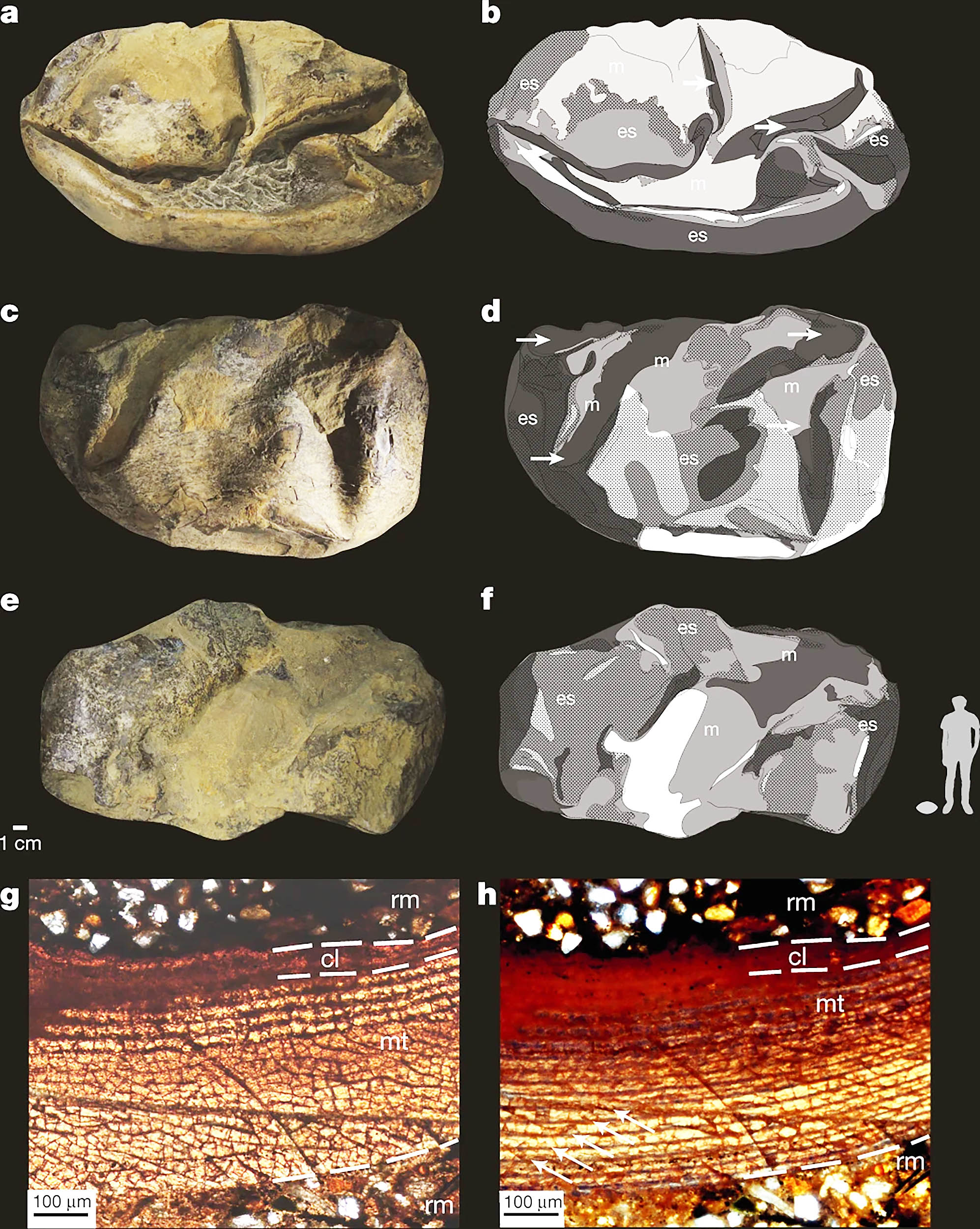
At first the fossil did not look like an egg at all. It was a leathery, folded object buried in Antarctic sediment and it reminded researchers of a deflated bag.
Under a microscope, thin sections of the fossil revealed a delicate wall only a fraction of a millimeter thick.
That wall lacked obvious pores and instead showed stacked layers, giving it the texture of a modern lizard or snake egg rather than the thick, chalky shells many people picture for dinosaur eggs.
The work was led by Lucas Legendre, a paleontologist at the University of Texas at Austin. His research focuses on fossil eggs and how reptile reproduction evolved over deep time.
Eventually the team assigned the formal name Antarcticoolithus bradyi, the official fossil label for this unusual egg, to the specimen.
The slow, careful reconstruction of its shape showed that the shell had collapsed after hatching, which is why the fossil looks like an empty sack instead of a neatly rounded egg.
How giant reptiles reproduced
Before this discovery, large marine reptiles such as mosasaurs, huge lizards that hunted in ancient oceans, were widely thought to give birth to live young.
Earlier work on tiny mosasaur skulls from open ocean rocks suggested that some of these lizards gave birth far from shore instead of coming onto beaches to lay eggs.
The Antarctic egg points to a different strategy. Its thin, flexible shell suggests that at least one marine reptile laid soft-shelled eggs in the water, with the young hatching almost at once rather than sitting in a nest for weeks.
The egg came from an animal comparable in size to a large dinosaur, yet its structure showed none of the typical features seen in dinosaur eggs.
It was also noted for its unusual combination of size and form, which set it apart from any known fossil egg type.
Across reptiles as a whole, live offspring-bearing called viviparity, in which mothers retain embryos until birth, has evolved many times but rarely leaves clear fossils.
This Antarctic egg hints that some marine reptiles may have used a mixed approach, with mothers carrying young almost to term and then releasing an egg that hatched quickly in the water.
Who laid this fossil egg?
Near the egg, researchers found bones from Kaikaifilu hervei, a large species of mosasaur known from the same rock formation on Seymour Island.
A detailed description of this animal shows that it reached about 33 feet in length, making it the biggest known top predator from Antarctic seas of that time.
The egg’s estimated parent length of more than 23 feet, based on comparisons with 259 modern reptile species, fits comfortably within that size range.
That match, along with the closeness of the fossils, makes Kaikaifilu a strong candidate as the egg layer, even if the link cannot yet be proven.
The area also preserves small bones from young mosasaurs and from plesiosaurs, long necked marine reptiles with flippers, suggesting that the region functioned as a nursery.
In such a setting, freshly laid eggs that hatched almost at once would have released mobile babies directly into sheltered coastal waters.
Soft-shells in the deep past
For decades, almost all known fossil eggs from dinosaurs and other ancient reptiles had thick, mineral-rich shells.
That record made scientists think that hard shells were the ancestral pattern, and that softer eggs were rare exceptions.
That view has started to change. An independent analysis that examined eggs from the plant-eating dinosaurs Protoceratops and Mussaurus found that their shells were leathery and flexible, not rigid like a bird-egg.
The research team behind that work concluded that soft-shells were likely present in the earliest dinosaurs and that rigid shells evolved several times in separate lineages.
A museum report for the public explained that these early dinosaur eggs probably resembled turtle eggs, with leathery coverings that could be buried in soil or sand.
The Antarctic egg slots into this emerging picture, extending the reach of soft-shells into giant marine reptiles living near the poles.
Lessons from Antarcticoolithus bradyi
Soft-eggs almost never survive long enough to fossilize because bacteria and scavengers destroy them quickly.
The preservation of this one suggests that the sedimentary environment, layers of mud and sand laid down in a shallow sea, rapidly buried the egg and shielded it from decay.
Antarctica’s climate was warmer at the time, with ice-free coasts and productive seas, even though the region still sat within the polar circle.
Those conditions, combined with steady sediment buildup, turned parts of the seafloor around Seymour Island into natural vaults for delicate remains.
Well-preserved embryos of Protoceratops from Mongolia show how entire nests can sometimes be locked in stone.
In a similar way, the Antarctic egg and nearby juvenile marine reptiles offer a snapshot of how life began for some of the largest predators in southern oceans.
Each new find could tighten the connection between egg type, nesting behavior, and environment, revealing how life cycles adapted to cold, seasonal light near the ancient South Pole.
The study is published in Nature.
Cycles of Time – The Acoustic Hoods
This is an unbelievably immersive trance track from Sasha and Digweed’s iconic Northern Exposure mix. You’re welcome!
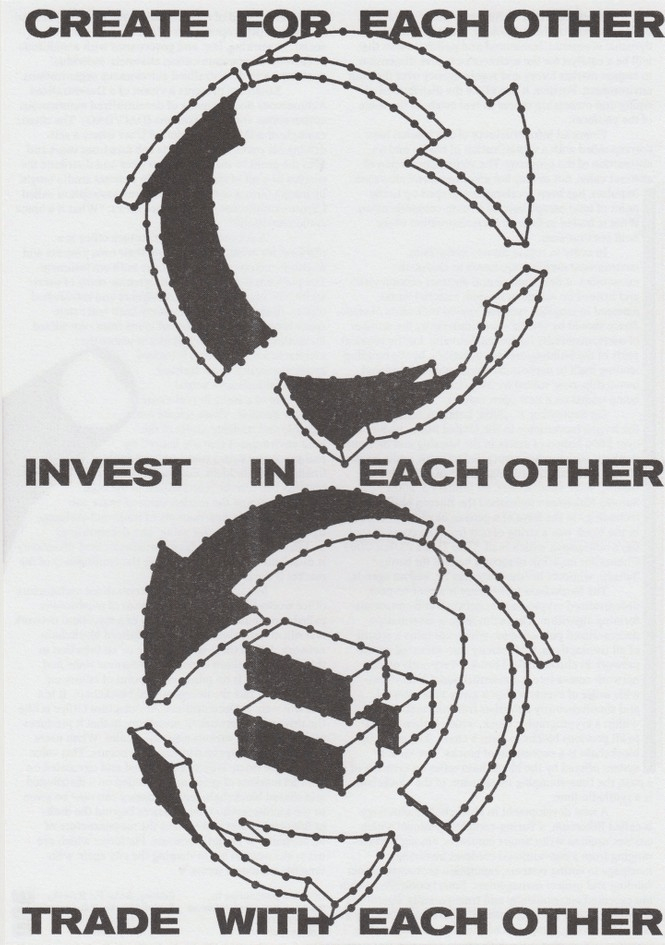
Create for each other. Invest in each other. Trade with each other
Homo Faber – we are humans who build
The urge the build things – either in the physical or the digital world is a very deep one in human nature. We find it very fulfilling and satisfying to build things, not for attention but in the joy of craftsmanship itself. The “building” needn’t be a physical building, it could be a family, or a book, or a piece of music, a piece of software, or a garden, it could be a great life for a child. I can say this is very true for me and my life, what about you? what have you built so far and what do you plan to build?
Another thought-provoking video from Robert Greene.
Are You An Anarchist? The Answer May Surprise You! by David Graeber
Chances are you have already heard something about who anarchists are and what they are supposed to believe. Chances are almost everything you have heard is nonsense. Many people seem to think that anarchists are proponents of violence, chaos, and destruction, that they are against all forms of order and organization, or that they are crazed nihilists who just want to blow everything up. In reality, nothing could be further from the truth. Anarchists are simply people who believe human beings are capable of behaving in a reasonable fashion without having to be forced to. It is really a very simple notion. But it’s one that the rich and powerful have always found extremely dangerous.
At their very simplest, anarchist beliefs turn on to two elementary assumptions. The first is that human beings are, under ordinary circumstances, about as reasonable and decent as they are allowed to be, and can organize themselves and their communities without needing to be told how. The second is that power corrupts. Most of all, anarchism is just a matter of having the courage to take the simple principles of common decency that we all live by, and to follow them through to their logical conclusions. Odd though this may seem, in most important ways you are probably already an anarchist — you just don’t realize it.
Let’s start by taking a few examples from everyday life.
If there’s a line to get on a crowded bus, do you wait your turn and refrain from elbowing your way past others even in the absence of police?
If you answered “yes”, then you are used to acting like an anarchist! The most basic anarchist principle is self-organization: the assumption that human beings do not need to be threatened with prosecution in order to be able to come to reasonable understandings with each other, or to treat each other with dignity and respect.
Everyone believes they are capable of behaving reasonably themselves. If they think laws and police are necessary, it is only because they don’t believe that other people are. But if you think about it, don’t those people all feel exactly the same way about you? Anarchists argue that almost all the anti-social behavior which makes us think it’s necessary to have armies, police, prisons, and governments to control our lives, is actually caused by the systematic inequalities and injustice those armies, police, prisons and governments make possible. It’s all a vicious circle. If people are used to being treated like their opinions do not matter, they are likely to become angry and cynical, even violent — which of course makes it easy for those in power to say that their opinions do not matter. Once they understand that their opinions really do matter just as much as anyone else’s, they tend to become remarkably understanding. To cut a long story short: anarchists believe that for the most part it is power itself, and the effects of power, that make people stupid and irresponsible.
Are you a member of a club or sports team or any other voluntary organization where decisions are not imposed by one leader but made on the basis of general consent?
If you answered “yes”, then you belong to an organization which works on anarchist principles! Another basic anarchist principle is voluntary association. This is simply a matter of applying democratic principles to ordinary life. The only difference is that anarchists believe it should be possible to have a society in which everything could be organized along these lines, all groups based on the free consent of their members, and therefore, that all top-down, military styles of organization like armies or bureaucracies or large corporations, based on chains of command, would no longer be necessary. Perhaps you don’t believe that would be possible. Perhaps you do. But every time you reach an agreement by consensus, rather than threats, every time you make a voluntary arrangement with another person, come to an understanding, or reach a compromise by taking due consideration of the other person’s particular situation or needs, you are being an anarchist — even if you don’t realize it.
Anarchism is just the way people act when they are free to do as they choose, and when they deal with others who are equally free — and therefore aware of the responsibility to others that entails. This leads to another crucial point: that while people can be reasonable and considerate when they are dealing with equals, human nature is such that they cannot be trusted to do so when given power over others. Give someone such power, they will almost invariably abuse it in some way or another.
Do you believe that most politicians are selfish, egotistical swine who don’t really care about the public interest? Do you think we live in an economic system which is stupid and unfair?
If you answered “yes”, then you subscribe to the anarchist critique of today’s society — at least, in its broadest outlines. Anarchists believe that power corrupts and those who spend their entire lives seeking power are the very last people who should have it. Anarchists believe that our present economic system is more likely to reward people for selfish and unscrupulous behavior than for being decent, caring human beings. Most people feel that way. The only difference is that most people don’t think there’s anything that can be done about it, or anyway — and this is what the faithful servants of the powerful are always most likely to insist — anything that won’t end up making things even worse.
But what if that weren’t true?
And is there really any reason to believe this? When you can actually test them, most of the usual predictions about what would happen without states or capitalism turn out to be entirely untrue. For thousands of years people lived without governments. In many parts of the world people live outside of the control of governments today. They do not all kill each other. Mostly they just get on about their lives the same as anyone else would. Of course, in a complex, urban, technological society all this would be more complicated: but technology can also make all these problems a lot easier to solve. In fact, we have not even begun to think about what our lives could be like if technology were really marshaled to fit human needs. How many hours would we really need to work in order to maintain a functional society — that is, if we got rid of all the useless or destructive occupations like telemarketers, lawyers, prison guards, financial analysts, public relations experts, bureaucrats and politicians, and turn our best scientific minds away from working on space weaponry or stock market systems to mechanizing away dangerous or annoying tasks like coal mining or cleaning the bathroom, and distribute the remaining work among everyone equally? Five hours a day? Four? Three? Two? Nobody knows because no one is even asking this kind of question. Anarchists think these are the very questions we should be asking.
Do you really believe those things you tell your children (or that your parents told you)?
“It doesn’t matter who started it.” “Two wrongs don’t make a right.” “Clean up your own mess.” “Do unto others…” “Don’t be mean to people just because they’re different.” Perhaps we should decide whether we’re lying to our children when we tell them about right and wrong, or whether we’re willing to take our own injunctions seriously. Because if you take these moral principles to their logical conclusions, you arrive at anarchism.
Take the principle that two wrongs don’t make a right. If you really took it seriously, that alone would knock away almost the entire basis for war and the criminal justice system. The same goes for sharing: we’re always telling children that they have to learn to share, to be considerate of each other’s needs, to help each other; then we go off into the real world where we assume that everyone is naturally selfish and competitive. But an anarchist would point out: in fact, what we say to our children is right. Pretty much every great worthwhile achievement in human history, every discovery or accomplishment that’s improved our lives, has been based on cooperation and mutual aid; even now, most of us spend more of our money on our friends and families than on ourselves; while likely as not there will always be competitive people in the world, there’s no reason why society has to be based on encouraging such behavior, let alone making people compete over the basic necessities of life. That only serves the interests of people in power, who want us to live in fear of one another. That’s why anarchists call for a society based not only on free association but mutual aid. The fact is that most children grow up believing in anarchist morality, and then gradually have to realize that the adult world doesn’t really work that way. That’s why so many become rebellious, or alienated, even suicidal as adolescents, and finally, resigned and bitter as adults; their only solace, often, being the ability to raise children of their own and pretend to them that the world is fair. But what if we really could start to build a world which really was at least founded on principles of justice? Wouldn’t that be the greatest gift to one’s children one could possibly give?
Do you believe that human beings are fundamentally corrupt and evil, or that certain sorts of people (women, people of color, ordinary folk who are not rich or highly educated) are inferior specimens, destined to be ruled by their betters?
If you answered “yes”, then, well, it looks like you aren’t an anarchist after all. But if you answered “no”, then chances are you already subscribe to 90% of anarchist principles, and, likely as not, are living your life largely in accord with them. Every time you treat another human with consideration and respect, you are being an anarchist. Every time you work out your differences with others by coming to reasonable compromise, listening to what everyone has to say rather than letting one person decide for everyone else, you are being an anarchist. Every time you have the opportunity to force someone to do something, but decide to appeal to their sense of reason or justice instead, you are being an anarchist. The same goes for every time you share something with a friend, or decide who is going to do the dishes, or do anything at all with an eye to fairness.
Now, you might object that all this is well and good as a way for small groups of people to get on with each other, but managing a city, or a country, is an entirely different matter. And of course there is something to this. Even if you decentralize society and put as much power as possible in the hands of small communities, there will still be plenty of things that need to be coordinated, from running railroads to deciding on directions for medical research. But just because something is complicated does not mean there is no way to do it democratically. It would just be complicated. In fact, anarchists have all sorts of different ideas and visions about how a complex society might manage itself. To explain them though would go far beyond the scope of a little introductory text like this. Suffice it to say, first of all, that a lot of people have spent a lot of time coming up with models for how a really democratic, healthy society might work; but second, and just as importantly, no anarchist claims to have a perfect blueprint. The last thing we want is to impose prefab models on society anyway. The truth is we probably can’t even imagine half the problems that will come up when we try to create a democratic society; still, we’re confident that, human ingenuity being what it is, such problems can always be solved, so long as it is in the spirit of our basic principles — which are, in the final analysis, simply the principles of fundamental human decency.
How to make a miniature Japanese-style room in the wall
Quick pearl couscous salad with leafy greens, pomegranate seeds and capsicum by Lina Jebiele

Ingredients
1 Tablespoon olive oil
1 small brown onion, diced
125g pearl couscous
1 cup chicken stock1 teaspoon salt
1/4 teaspoon pepper1/2 teaspoon paprika
1/2 green capsicum, diced
1/2 cup baby spinach leaves
1/2 cup rocket leaves
2 Tablespoon pomegranate seeds
Handful of parsley leaves, finely chopped
10 mint leaves, finely chopped
For the dressing:
3 Tablespoon olive oil
3 Tablespoon lemon juice
1 teaspoon pomegranate molasses
Salt and pepper, to taste
Method
- Pour the dressing over the couscous salad and toss ensuring everything is evenly coated with the dressing. Taste and adjust seasoning with additional salt and pepper, if needed.
- Heat the olive oil in a medium saucepan over medium heat. Add the diced onion and sauté until softened.
- Stir in the couscous and cook for 2 minutes, allowing it to lightly toast. Season with salt, pepper, and paprika.
- Add the chicken stock, bring the mixture to a boil, then reduce the heat to low.
- Place lid on the saucepan pan and let it simmer for about 8 minutes, or until all the liquid is absorbed and the couscous is tender. Remove from heat and allow to cool slightly.
- To prepare the salad, in a large bowl, combine the cooked couscous with the diced capsicum, baby spinach, rocket leaves, pomegranate seeds, parsley and mint.
- In a small bowl, whisk all the dressing ingredients together.
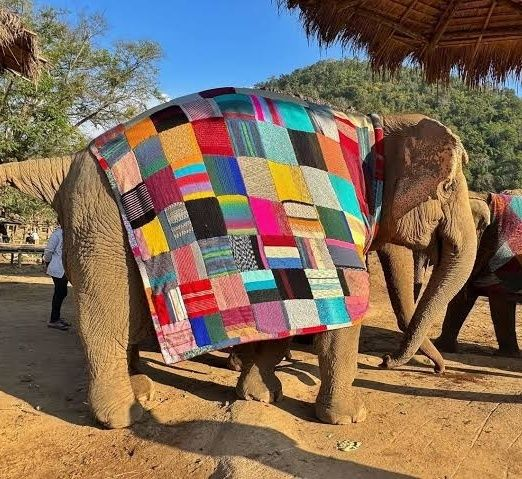
Knitting blankets to keep elephants warm
Volunteers created blankets for elephants during a cold spell in Myanmar, Winga Baw Elephant cam. Via Women’s Art on BlueSky.
Legendary historian Ruth Goodman on the history of Building Societies in the UK
Always compelling, no matter what she’s explaining, it draws you in…
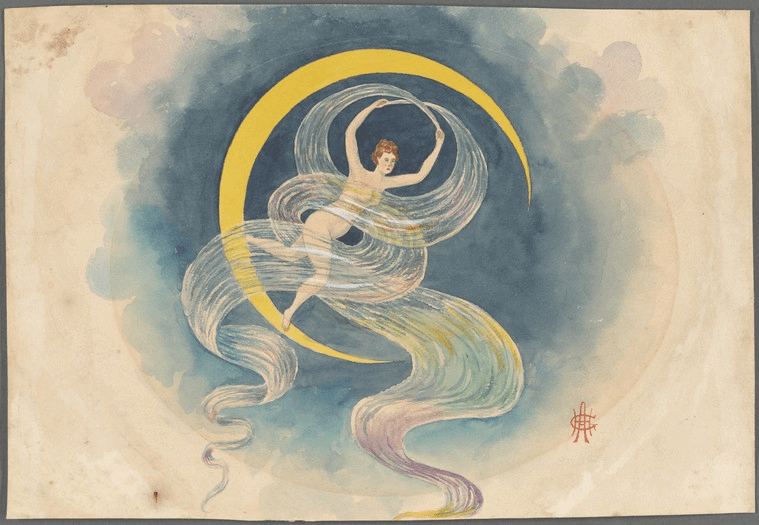
Loie Fuller in the moon
Original watercolors of Loie Fuller, in the original silk album with gold braid and paintings of her as Salome on both covers, presented to her at her 550th performance in Paris by students of the Beaux-Arts. The majority of the watercolors show her dancing.
Did you enjoy this collection? let me know what you think of it below. Thank you for reading my dear friends!


This was all wonderful, but but the blankets for elephants absolutely melted my heart. Just the wholesome story I needed today. Thank you, my friend, for sharing!
LikeLiked by 1 person
Aww I’m so glad you enjoyed these my friend 💗 elephants 🐘 are so beautiful yes. Hope you have a great week and sorry for the belated reply, life got in the way
LikeLiked by 1 person
Cycles of Time 😀
LikeLiked by 1 person
Oh yeah such a classic, thanks for reading my friend 📚 sorry for the belated response, life got in the way. Th
LikeLiked by 1 person