
The birds of Aruba
Incredible nature filmmaker Natalie Clements goes to Aruba to witness stunning birds there in this ultra short doco.
Are Immigrants More Creative?
Studies show that creativity flourishes when people cross borders — and when those borders blur through deep, human connection.

By: Keith Sawyer via MIT Press Reader
Why do so many great ideas seem to come from people far from home?
I’ve long been fascinated by how creativity crosses borders. Immigrants, research shows, are statistically more likely to generate exceptionally creative works. Indeed, there’s a long list of immigrant geniuses: W. H. Auden, Vladimir Nabokov, Nikola Tesla, Marie Curie, Sigmund Freud, Albert Einstein. The list could go on and on. Of course, anecdotes only take us so far. What does the data say?
In 2016, Eric Weiner published some numbers in the Wall Street Journal:
An awful lot of brilliant minds blossomed in alien soil. That is especially true of the U.S., where foreign-born residents account for only 13 percent of the population but hold nearly a third of all patents and a quarter of all Nobel Prizes awarded to Americans.
Those are some pretty convincing numbers — suggesting that immigrants contribute disproportionately to creative and innovative output.
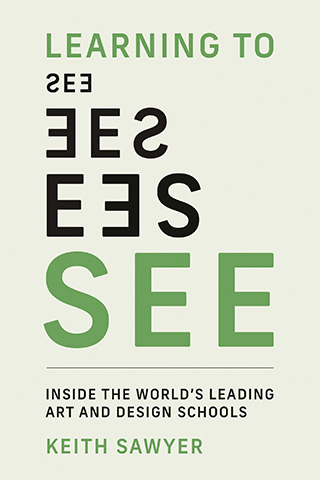
Creativity research offers an explanation: Psychologists have shown that bigger creative insights result from distant associations — connections between ideas drawn from widely different experiences or domains of knowledge. Associations between similar conceptual material also spark creative insights, but those tend to yield the ordinary, incremental kind that improve on what already exists. It’s the distant associations that lead to radical, breakthrough innovation. Weiner makes a similar argument based on recent research, citing studies showing that “schema violations” lead to greater “cognitive flexibility,” which in turn is linked to creativity.
I probably won’t have trouble convincing you that immigration to the U.S. is great for the immigrants. But do immigrants enhance the creativity of the American citizens who already live here? In October 2025, I interviewed creativity researcher and social psychologist Adam Galinsky, who teaches at Columbia Business School. For 20 years, Galinsky has been studying how cross-cultural connections contribute to creativity. In one study, he and Will Maddux, who studies organizational behavior, looked at whether traveling overseas makes you more creative. They asked people whether they’d traveled abroad or not, and then they gave them a creativity test. They found that travel abroad has no effect on creativity. But the people who had lived in another country scored higher on a creativity test. What’s more, the people who’d lived overseas longer scored higher.
When you really get to know someone, you start to see the world through their eyes — and it’s not always the way that you imagined.
In another study, Galinsky and his colleagues examined the careers of fashion directors at the top fashion houses in Milan, Paris, London, and New York. They found a clear pattern: The more time these designers had spent living abroad, the more original their work tended to be.
Galinsky then turned to personal relationships. Were you more creative if you dated someone from another country? A brief romance didn’t seem to matter. However, being in a long-term romantic relationship with someone from another culture did affect creativity. The same was true of friendship — close cross-cultural friendships predicted greater creativity, while superficial acquaintances did not. The lesson is that creativity comes from deeper connections, not superficial contact. When you really get to know someone, you start to see the world through their eyes — and it’s not always the way that you imagined.
Deep cultural engagement benefits creativity everywhere, not only in the United States. In another study, Galinsky looked at non-U.S. citizens who had lived in America on J-1 visas, a program that allows non-U.S. citizens to stay in the U.S. from six months up to five years before returning home. Galinsky wondered whether that experience abroad made them more entrepreneurial when they returned to their home countries. The answer was yes: The longer they had lived in the U.S., the more creative they were when they went back home.
In August 2025, the Trump administration proposed a new rule that would limit the time foreign students, professors, physicians, and other visa holders may remain in the United States without additional screening and vetting. That might sound like a bureaucratic adjustment, but research suggests it comes at a cost. Deep cultural engagement — the kind that fosters creativity — takes time. Immigrants can enhance the creativity of the Americans they live and work with, but only if they form close relationships. If they remain isolated among people from their own country, speaking their own language, the creative benefits never spread. The key is the depth of a relationship, not mere proximity.
If you want to be more creative, seek out difference — and engage with it deeply.
There’s another body of research suggesting that the universities that immigrants work for produce more scientific breakthroughs and spin off more businesses. It’s hard to design rock-solid causal studies, but leaders of the top universities certainly believe in the importance of having immigrants working there. It’s not because they’re woke; it’s because they want to generate the innovations that improve the U.S. economy.
Creativity research strongly suggests that having relationships with people from other countries enhances your creativity. The lesson for everyone is: If you want to be more creative, seek out difference — and engage with it deeply. Get to know people from other cultures, and go beyond surface interactions. This is what drives the cognitive connections that lead to more surprising creative ideas. Meet people very different from you. Travel to a very different place and consider staying a while. Read magazines that you’ve never looked at before. Date someone from another culture. Fill your mind with variety.
Living abroad may be the most direct route to greater creativity, but even if you can’t do that, you can learn from creativity research: Creativity flourishes when your mind is open to worlds beyond your own.
Keith Sawyer is one of the world’s leading creativity researchers. He has published 20 books, including “Group Genius,” “Zig Zag,” and, most recently, “Learning to See.” Sawyer is the Morgan Distinguished Professor in Educational Innovations at the University of North Carolina at Chapel Hill. A version of this article first appeared on Sawyer’s Substack, The Science of Creativity.
Love love love the avante garden fashion, Portishead and Marilyn Manson fusion here
A match made in heaven (or hell you choose!)
Enchanting and educational love notes about nature by Rosemary Mosco

Tulip: an enchanting animation
A delightful and beautiful adaptation of the old Thumbelina tale by creative geniuses Andrea Love and Phoebe Wahl!
People on the subway in New York get creative to take their dogs on-board
Apparently there is a silly rule in NYC that in order to bring your dog on the subway you need to have them in a bag. So…people really did that, with amusing results!
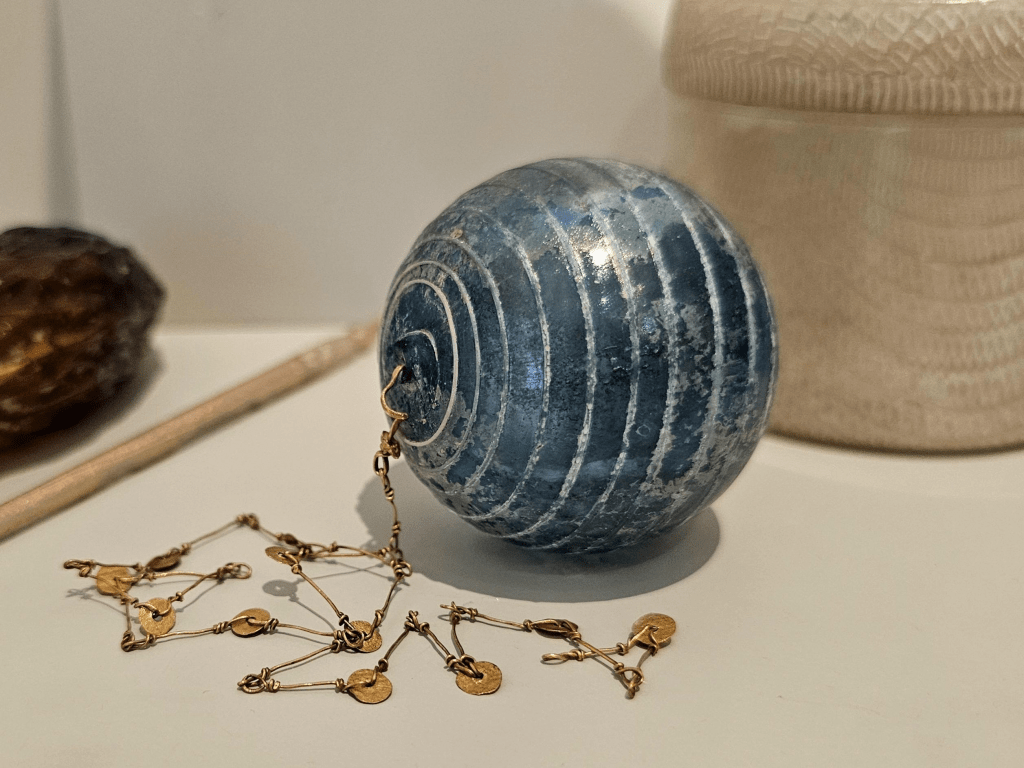
Roman glass bottle from 100-200 AD
This Roman glass spherical bottle would make great Christmas bauble, but it was used to hold perfume and loose powder. The contents were sealed inside the delicate cosmetic container, and a small knob at the top had to be broken off to remove the oil/powder. Dating 1st/2nd century AD.
On display at Altes Museum Berlin. Via Nina Wilberger on Mastodon
5 Ancient Mysteries Archaeologists Are Trying to Solve
A superb channel explaining archaeological finds in the most compelling, accessible and entertaining way!
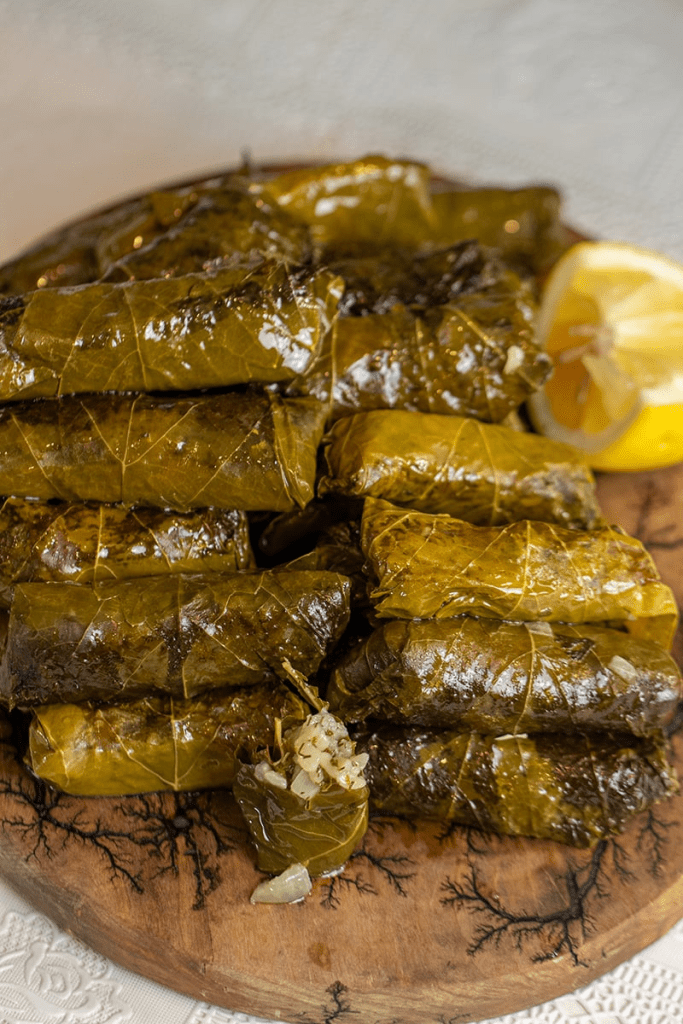
Vegetarian dolmades by Dimitra
Dolmades or Dolmadakia are stuffed grape leaves that can be either made with or without meat. This is a classic Mediterranean or middle-eastern side dish packed with fresh, lemony and piquant flavours making it perfect for warm summer days. They are healthy and also budget-friendly too. Recipe by Dimitra.
Ingredients
- 8 ounces grape leaves from a jar, rinsed, drained, and stems removed
- 1/2 cup long grain rice
- 3/4 cup olive oil
- 1 onion, finely chopped
- 1 cup water
- 2 lemons, juiced (1/2 cup or more)
- 3-4 tablespoons chopped fresh parsley
- 1 tablespoon chopped fresh mint
- 1 teaspoon dried dill or 1/4 cup fresh dill
- 1/2 teaspoon salt
- 1/4 teaspoon black pepper
Instructions
- Sauté onions with 1/3 of the olive oil over medium low heat about 10 minutes or until very soft and lightly golden. Do not brown the onions.
- Add rice and mix to combine.
- Pour 1 cup water, half of the lemon juice, salt and pepper. Bring to a boil and then simmer for 6-7 minutes or until the rice absorbs all of the liquid. At this point the rice is only par boiled.
- Add all the herbs and mix well. Cool completely.
- Rinse and dry the grape leaves. Cut the hard stem from each leaf. Reserve the smallest and the torn leaves to lay on bottom of pot.
- Lay a grape leaf shiny side down and place a tablespoon of rice filling on the bottom end of the leaf, near the stem.
- Fold the stem end of leaf over the filling. Fold the sides over and roll up snugly but not too tight. The rice will expand a bit more while cooking.
- Repeat with all of the remaining grape leaves until your filling is done.
- Layer half of the small and torn grape leaves to create a bed for the dolmades in a pot.
- Place the dolmades seam side down and very close together over the bed of leaves.
- Pour the remaining olive oil and lemon juice over the dolmades.
- Place the remaining reserved small leaves over the dolmades.
- Pour enough water to just cover the dolmades.
- Place an inverted plate over the dolmades to weigh them down and to prevent them from moving around and opening while cooking.
- Cover with lid and bring to a boil.
- Reduce to simmer and cook (covered) for 35-40 minutes.
- There will still be some liquid in the pot. Allow to cool for at least 30 minutes and the juices will be absorbed.
- Transfer them to a platter and drizzle some olive oil over them. Serve with delicious tzatziki sauce and lemon wedges.
- Enjoy! Kali Orexi!
Can’t Sleep: Short reads to take you into the land of nod
An excellent website that features ultra short stories with compelling but calming stories that will take you in the world of dreams. Read one

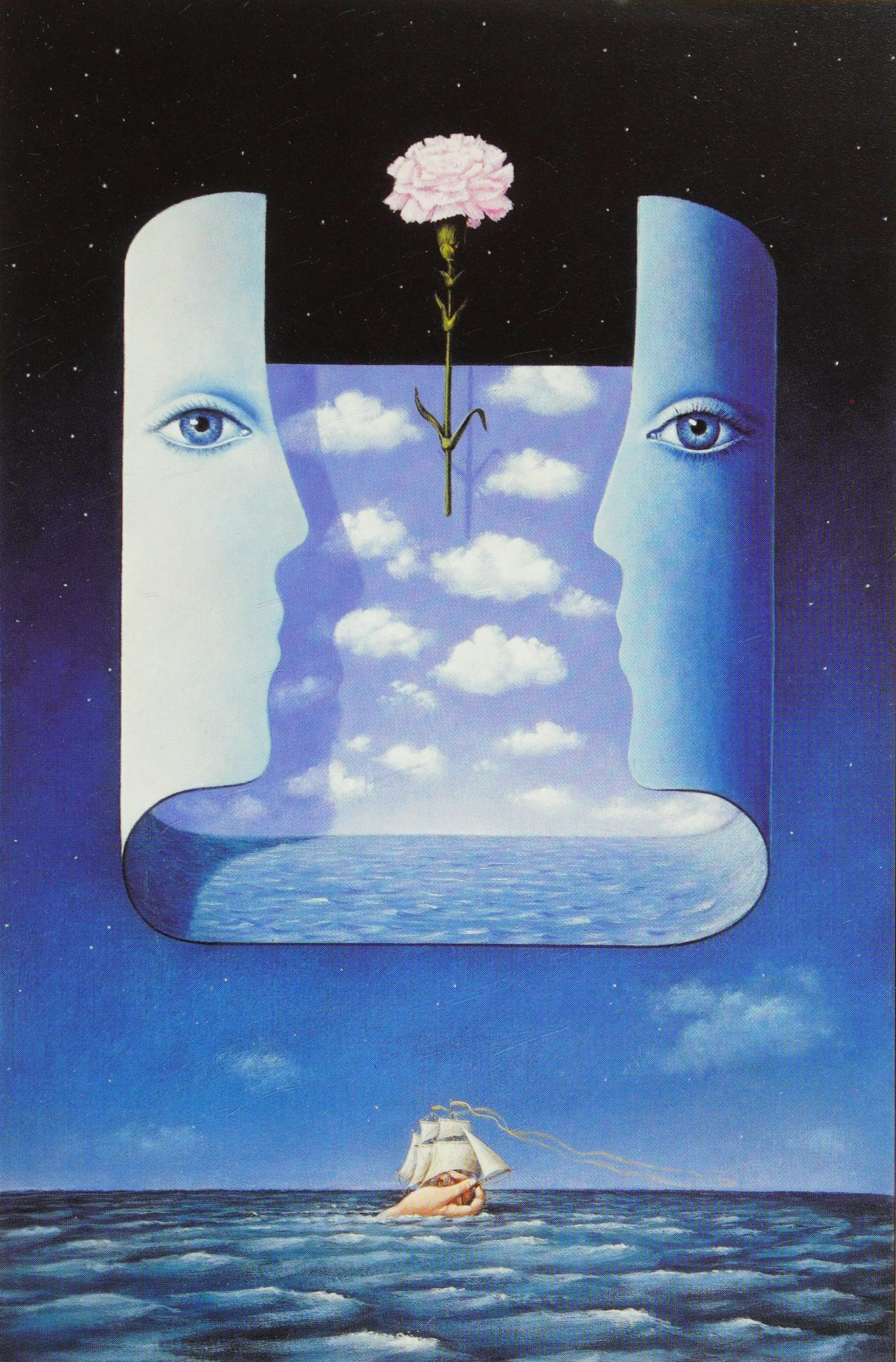
Poetic surrealism by Rafał Olbiński
Rafał Olbiński is a Polish-born painter, illustrator, poster and stage designer associated with the Polish School of Posters, known for merging illustration and painting into a single, recognisable visual language. He trained as an architect in Warsaw, then moved into poster and album design in the late 1960s and 70s, using clear metaphors and surreal, symbolic imagery. In 1981 he left Poland for Paris and then New York, where he created covers and illustrations for major magazines and later taught at American art schools. From the 1990s he increasingly focused on painting, carrying over his poster-like surrealism into bucolic, idealised landscapes and neo-classical female figures. His work blends poster-style metaphor with polished, Magritte-like surrealism aimed at enchantment rather than shock. He has received major international illustration prizes and awards both in Poland and overseas.

Did you enjoy this collection? let me know what you think of it below. Thank you for reading my dear friends!


Very interesting thank you
LikeLike
So much delightful content yet again. Thank you!
LikeLiked by 1 person
You are very welcome dear Erin 😘 thanks for stopping by to read.
LikeLiked by 1 person