Slow living in the countryside
Is New Zealand about to collapse?
It’s no secret that the Polish Bear and I and many, many 100,000’s of others living in Aotearoa migrated and left. Why you ask? It’s for a lot of reasons, the high crime and lack of police, the low salaries and lack of employment opportunities, the eye-wateringly high cost of renting or buying a home, the local council corruption with taxes and so forth, the drug problems and the gang problems, the general grim and poor feeling of Wellington CBD was the main reason. When you leave from a place you don’t know if others feel the same, well this video validates what we were thinking back then and it looks like things have gotten worse since then. This is the unvarnished reality and not how New Zealand is depicted to foreigners in tourism videos.
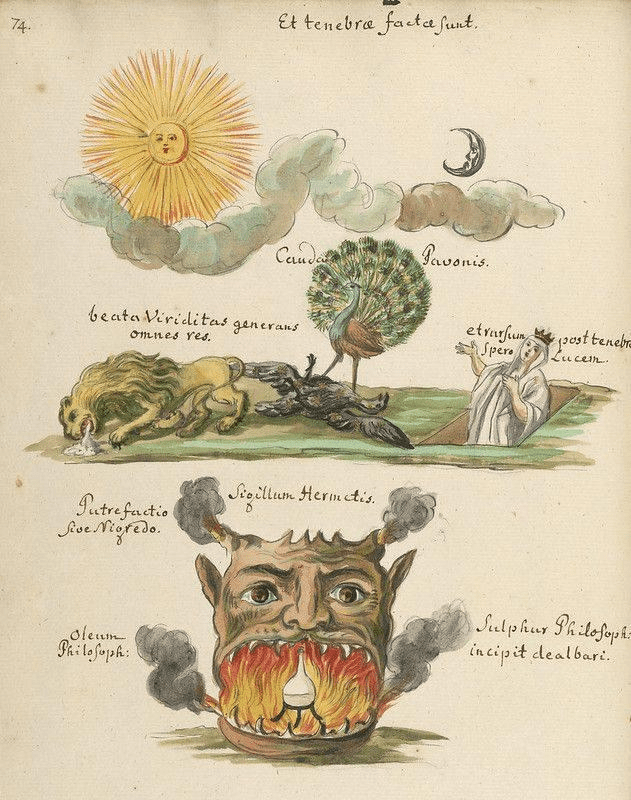
The Thesaurus of Alchemy circa 1725
Page from Thesaurus of Alchemy, ca. 1725 via Public Domain Review
Mountain meditation
What a treasure this channel is. There’s an overabundance of guided meditations on YT but only a small portion and worthy of your time, and are good quality – this is one of them!
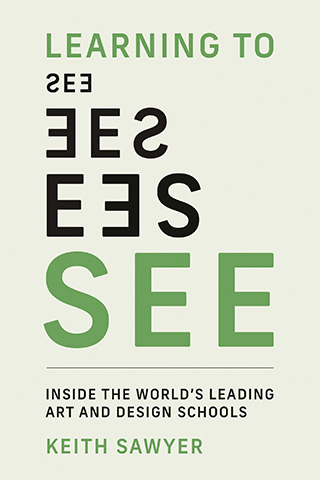
Flow Alone Won’t Make You a Writer
Writing starts with flow, but it’s sustained by discipline, revision, and grit.
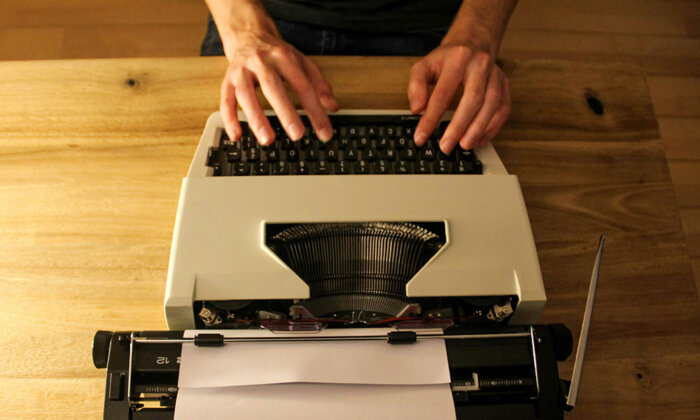
By: Keith Sawyer via MIT Press Reader
My favorite quotation about writing comes from Thomas Mann:
A writer is someone for whom writing is more difficult than it is for other people.
That’s counterintuitive. If you’re a professional writer, then writing should be easier for you, right? But creativity research shows that successful creativity is effortful. Flow is enjoyable but it’s not enough.
You probably write more than you realize. A Microsoft study found that the average worker receives 117 emails a day and 153 chats a day. If you add up all of your typing at the end of the day, you’d be surprised at how many words you’re writing on a regular basis. This writing is goal-driven. You ask someone for information; you apply for a job; you update your LinkedIn profile; you collaborate on a project team. It’s part of your job.
But I want to talk about writing without a purpose, writing that you don’t do for your paycheck. This includes poetry, short stories, or fan fiction. Maybe you keep a daily journal. This writing doesn’t have a goal; you do it for its own sake. Psychologists call this intrinsic motivation, and it often leads to what my doctoral advisor Mike Csikszentmihalyi called the flow state.
In flow, you realize your fullest creative potential. You lose track of time. You’re not distracted by little things around you. Flow is like a drug. Once you’ve experienced it, you want it again. This is why people write without a clear purpose: to experience flow. It’s a stark contrast to writing for a job, where the motivation comes from external rewards — what psychologists call extrinsic motivation.
The flow state is a challenge to behaviorism, because you keep doing a task without any visible reward.
Intrinsic motivation poses a challenge to behaviorist theory. Csikszentmihalyi and other flow theorists were humanists, not behaviorists. In behaviorist theory, human action is an iterative cycle with three steps: take an action, receive either positive or negative feedback to that action, and modify your behavior to increase the likelihood of future rewards. It’s a theory built on extrinsic motivation. The flow state is a challenge to behaviorism, because you keep doing a task without any visible reward. The task is so satisfying that you might do it even when it might not be to your material advantage. This is why people choose to be starving artists rather than relatively successful middle managers. It’s why I left my high-paying job in New York international banking to become a poor doctoral student. I’ve never regretted it, and I’m often in flow when I write.
But in fact, flow often leads to success (however you define it). Paradoxically, when you stop responding to external rewards, you sometimes become more successful. Research shows that acting from intrinsic motivation often leads to greater success, especially if creativity is your goal. The most famous creatives describe being in the flow state as they work. Rigorous scientific studies show that new breakthrough ideas tend to emerge from a flow state. That’s especially true with problem–finding creativity, when you discover a new problem to solve, or you approach an existing problem in a surprising new way.
I’m a creativity researcher and a flow theorist. So you might be surprised to hear me say that flow isn’t enough.
People love the concept of flow because everyone wants to be told, “do what you love and the money will follow.” Mike’s 1990 book sold over a million copies. Flow is a variant of “trust yourself” and “defy the crowd” and “pursue your own dream.” And, yes, it’s true that the flow state often leads to greater success. But flow isn’t enough. The most successful creative people combine flow with hard work.
I’ve published 20 books, each the result of intense dedication and hard work. But I also experienced a lot of flow. I often lost track of time and became completely absorbed, sometimes to my wife’s dismay. But for me, periods of flow are interspersed with equally long periods of revising, editing, and fact-checking. Everybody loves the flow stage of writing but most people don’t like the hard work stage. That’s Thomas Mann’s point: To be a successful writer, you have to work hard. Creativity research has shown that the most successful creatives love the tiny tasks that others find tedious.
I was inspired to write this essay after reading Klara Feenstra’s recent New York Times article, “Writing a Novel.” Feenstra starts her essay by describing the flow state as a form of escapism:
When I first started writing my silly little novel, it was a desperate attempt to escape the demands of “real life.” I wrote and wrote, falling into a delirious state, the I.V. drip of my imagination funneling uninhibited into what I was sure was the next “Middlemarch.”
This is why many people start to write. But she soon realized that flow wasn’t enough:
I had an impulse to set the book in Zalipie, Poland, but I knew nothing about Zalipe. I wanted my protagonist to have a lucrative career and had heard “underwriting” was a solid profession. But what was an underwriter and how do you become one? While we’re at it, what’s the plot of this novel? Suddenly there were all these tasks to be completed, so many that I had to start a spreadsheet to keep track.
A spreadsheet? That doesn’t sound like flow at all. Is updating a spreadsheet “writing”? Or does this hard work prevent her from writing? Feenstra realized that, in fact, this is writing. It’s why Thomas Mann said that writing is harder for writers. I love what Feenstra says next:
I didn’t so much “flex my creative muscles” as slog through an unpaid internship to myself.
Writing a novel isn’t quick. It’s not easy. Feenstra took years to generate the first draft, and then she realized she was only on the first step of a tall ladder:
Several manic years passed like this: I wrote, rewrote, researched, revised, took workshops, added characters, deleted them. And finally, one day, I had a book.
But soon she realized that she still didn’t have a finished novel. That is, it had not reached its full potential; it was not fully realized. It wasn’t ready to be released into the world. There was still plenty of work ahead — surprises, emergence, more spreadsheets. Creativity research shows that this is always the case. A truly successful creative process is wandering, exploratory, and iterative. I call it the zig zag path. The best creative works emerge from the process; they don’t jump out of your subconscious onto the page. Yes, you need to put stuff on the page to get the process started. But, after that, creativity becomes a dialogue between you and the evolving work.
A truly successful creative process is wandering, exploratory, and iterative.
When Feenstra was finally done, she realized:
The novel I ended up with is nothing like the one I started.
But this hard work wasn’t all toil and misery. Feenstra gets in the flow state even while she’s doing the revising, editing, and all of the other “not inspirational / not subconscious” stuff. This happens to me, too. It’s not the same kind of flow as when the words just come out of the I.V. to your soul, but I find it intrinsically motivating. Feenstra discovered that
Being in the flow state of writing had always given me a druglike joy, but reworking a novel over and over, feeling sweaty and frustrated and stuck and then getting unstuck — this kind of grown-up work was thrilling. So I’ve come to honor the procedural graft of it all.
Flow isn’t enough. Creativity can be a form of meditation, and that’s wonderful and affirming. Flow is a great reason to write. But what separates the successful writers is that they know how to enlist flow in a longer, wandering process of creating. As Feenstra writes, “Writing my book delivered me the unglamorous yet oddly comforting realization that work is work; that there is no magic trick out of reality.”
Documenting America’s migrant workers
America’s meat packing industry, much of it focused in the country’s Midwest, employs an unusually large proportion of immigrants, refugees, and non-citizens. It’s an industry known for grueling hours and difficult conditions, and one that was hit particularly hard by the COVID-19 pandemic. The Economic Policy Institute in 2020 claimed that meat and poultry workers were, when it came to COVID-19, the most impacted and least protected group of workers in the United States.
An immigrant to the US himself, photographer and filmmaker Ismail Ferdous started his current project – “The People Who Feed the United States” – in 2020, creating portraits of immigrants employed in the Midwest’s meat industry, making visible a largely unseen and often exploited population that powers America’s food industry.
These pictures are of people who work in the meat processing industry. Finding the protagonists wasn’t easy—these people often work 12 to 14-hour shifts, sometimes seven days a week, and can start very early. I ended up using sources like nonprofits, labor unions, and activists to get in touch with them.
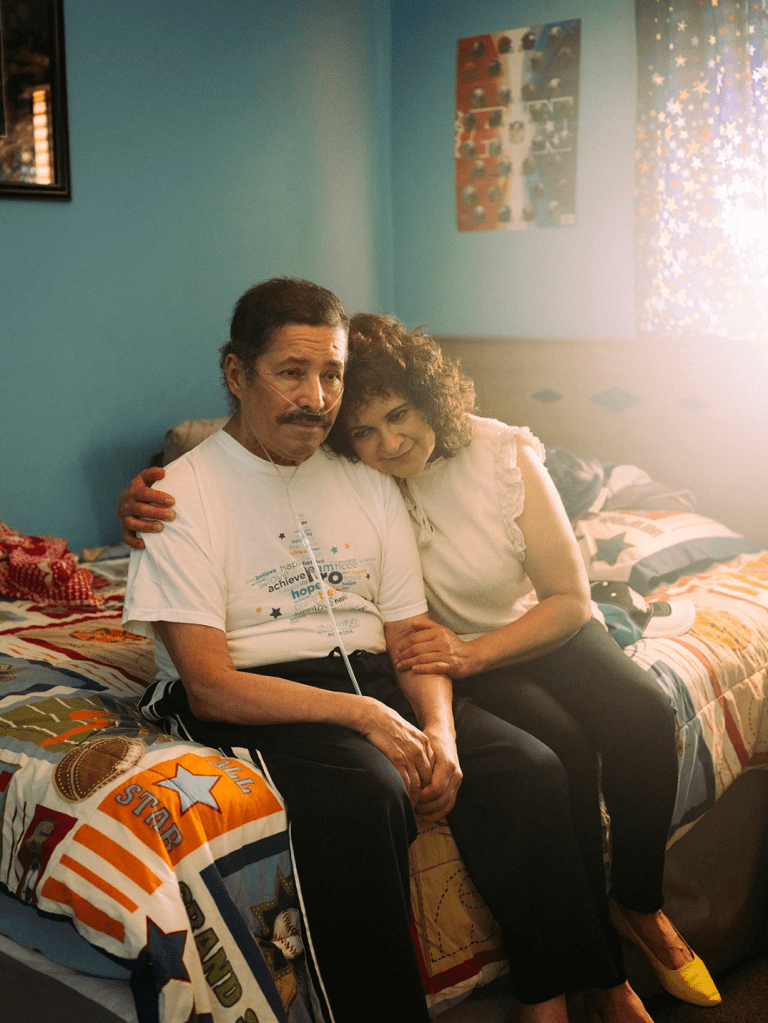
The consumption in the United States is limitless. American supermarkets offer unbelievable options and variety, but all of that comes at the cost of overproduction. How do you keep the prices low? Well, you can’t know the answer until you see behind the scenes of these industries. Specifically, who’s doing the work… A lot of it’s done by immigrants and refugees who fled war or conflicts in their own countries. Many speak no English, so their only option is the manual labor of meat processing. In one factory there might be 60 different languages spoken. Using people who are here ‘pursuing an American Dream’ is a big advantage for the corporations, and for some of these people that dream turns into a nightmare. Via Ismael Ferdus and We Transfer
The Lizard’s Dream: A Funky Meditation by Nebula Breeze
‘How have you been?’ by Polly Nor
Immunity Boosting Green Goddess Soup by Nagi

Ingredients
- ▢2 tbsp olive oil
- ▢1 onion , diced (Note 1)
- ▢1 leek (white part only) or another onion , diced (Note 1)
- ▢1 medium fennel , chopped (Note 2)
- ▢2 celery stems , roughly chopped
- ▢5 garlic cloves , roughly minced
- ▢3/4 tsp all spice powder (sub mixed spice)
- ▢3/4 tsp cumin powder (sub coriander)
- ▢1 medium potato (any type), peeled, 1.5 cm cubes
- ▢1 head broccoli , florets (peel and chop stalk too)
- ▢2 1/2 tsp cooking / kosher salt
- ▢3/4 tsp black pepper
- ▢1.75 litres / quarts water (Note 3)
- ▢1 cup frozen peas (Note 4)
- ▢5 cups (tightly packed) kale leaves , roughly chopped (1 small bunch, Note 5)
- ▢5 cups (tightly packed) baby spinach (Note 6)
- ▢3/4 cup thickened cream (Note 7)
Garnishes
- ▢2 tbsp sunflower seeds, toasted (or croutons or other toasted nuts, Note 8)
- ▢Cream and/or olive oil for drizzling
Instructions
- Sauté aromatics: Heat oil in a very large pot (6L/qt) over medium high heat. Cook onion, leek, celery, garlic and fennel for 5 minutes until softened.
- Cook spices: Add all spice and cumin, and cook for 1 minute.
- Add water, potatoes, broccoli, salt and pepper. Stir, bring to simmer, and simmer for 7 minutes (no lid) until the broccoli is tender.
- Add peas: Add peas, simmer for 1 minute.
- Blitz in kale: Remove pot off the stove. Add kale, push it under the liquid, then blitz with a stick blender until mostly smooth. Add spinach, push under the liquid then blitz again until smooth as possible (approx 3 to 5 mins). This will result in a smooth soup but with little green bits in it – I like this for a little texture.
- Serve: Stir in cream. Ladle into bowls, drizzle with extra cream and/or olive oil and finish with a sprinkle of sunflower seeds. Eat and feel great!
Recipe Notes:
1. Onion / leeks – Use either one of each, as shown in the base recipe and recipe video, or use either 2 leeks or 2 onions. Leek has a slightly sweeter, more rounded flavour which I like to use when they’re on special!
2. Fennel adds a great flavour base to this soup so really try not to skip it. For those who are not a fan of the aniseed flavour of fennel, don’t worry, you can’t taste it!
3. Just water is required for this soup. We don’t need chicken or other stock for a flavour backing, like I use for most soup recipes. We’re essentially making a homemade vegetable stock here!
4. Peas can be substituted with more broccoli, fennel or potato.
5. Kale – Nutrition booster! In case you’re concerned about a strong kale flavour, don’t worry! With everything else going on in the soup, the kale flavour is not really there. Substitute with more baby spinach or English spinach. Or 300 – 400g frozen kale or spinach (thawed, excess water lightly squeezed out).
To remove kale leaves, enclose your hand around the base of the stem then run your enclosed fist up the stem to strip the leaves off. To measure, push the kale leaves really tightly into the measuring cup. Jam pack it in!
6. Baby spinach – Substitute with English spinach, or more kale. To measure, jam pack it really tightly into a measuring cup!
7. Cream alternative – To make this vegan, use a vegan cream (available at some grocery stores these days), coconut cream or coconut milk (it will add a touch of coconut flavour which I think would be nice).
8. Sunflower seeds – To toast, preheat a small pan (no oil) over medium high heat then toast the sunflower seeds, stirring or shaking the pan every now and then, until light golden. Do the same with other nuts/seeds of choice (pine nuts, pepitas, almond flakes would be nice). For croutons, use the directions in the Celeriac soup recipe.
9. Nutrition per serving, about 2 1/2 cups per serving (generous meal!).
A mass wedding amongst the rubble of Gaza shows the immense resilience and beauty of this people who will never be crushed and never be defeated by evil Israel
Ceramic review masterclass: Judy McKenzie
Just witnessing this level of skill is mindblowing and the end result is breathtaking!
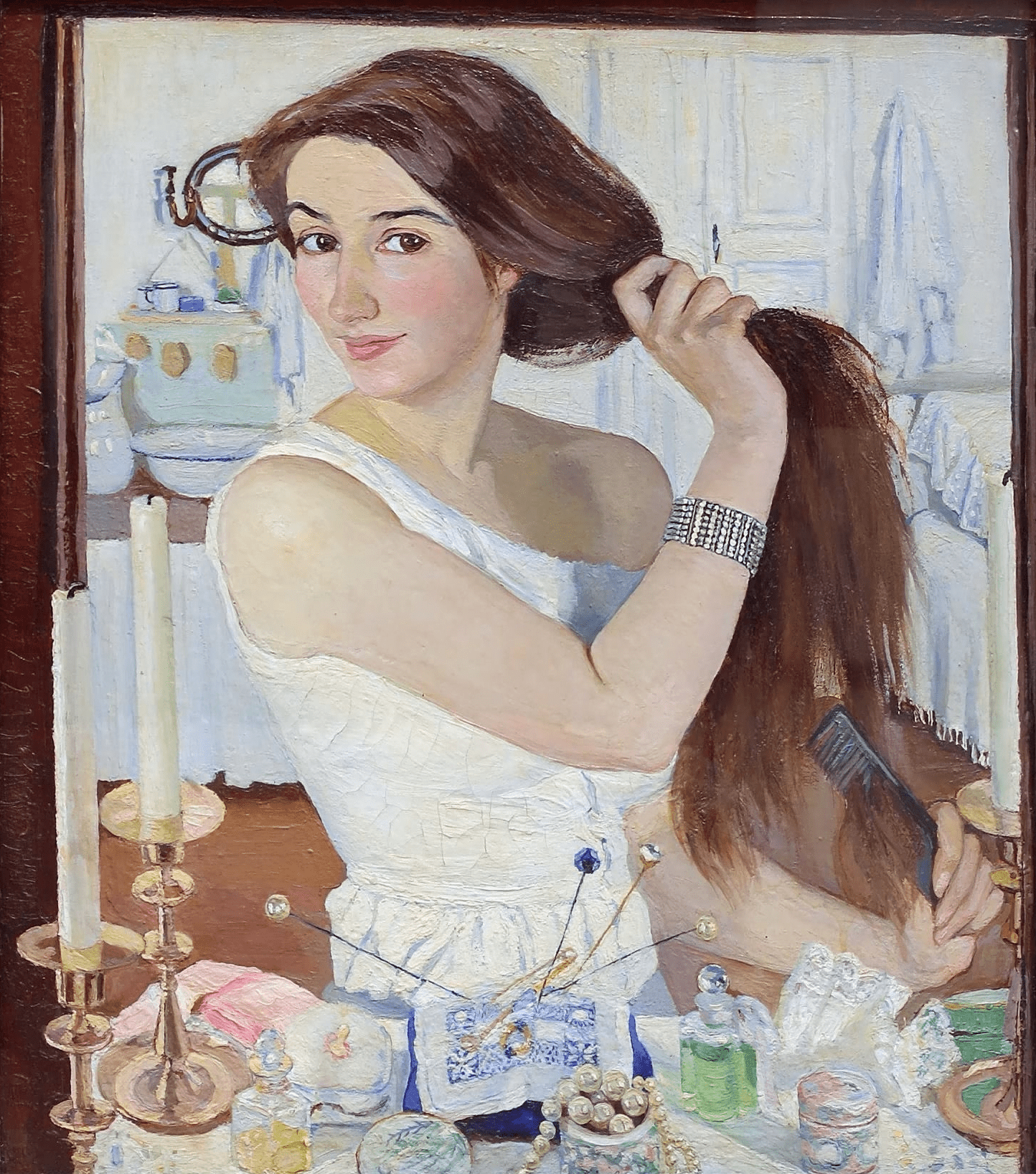
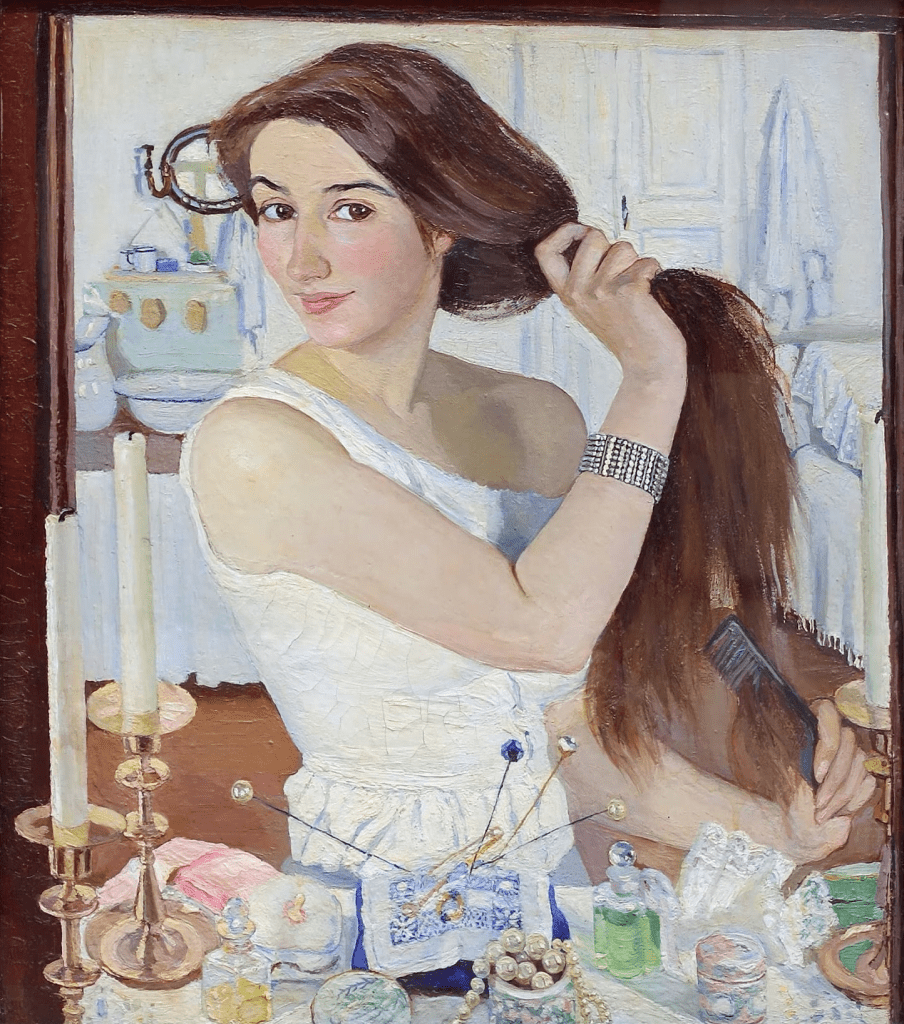
At the Dressing-Table Self-Portrait by Zinaida Serebriakova (1909)
Zinaida Serebriakova’s 1909 self-portrait, At the Dressing-Table, captures a candid and intimate moment in front of the mirror. The work has a lot of spontaneity and is as timeless as a modern selfie pic. The work was first exhibited in 1910 at a show organised by the Union of Russian Artists, where it was met with immediate acclaim.
Did you enjoy this collection? let me know what you think of it below. Thank you for reading my dear friends!
 Content Catnip
I just read at article about the current plight of New Zealand this morning, and my heart aches for those who are affected. It’s really tragic. I mean, it’s happening all over the world, but each locale is the town someone grew up in, forever tarnished and forever changed.
So many gems today. Thank you for sharing!
LikeLiked by 1 person
Really enjoyed the piece on the ‘flow state’. It rang many bells.
And New Zealand – I tell all of my friends that economic collapse is a global phenomenon (they insist that Brexit was the cause here) and this backs it up.
Happy Xmas!
LikeLiked by 2 people