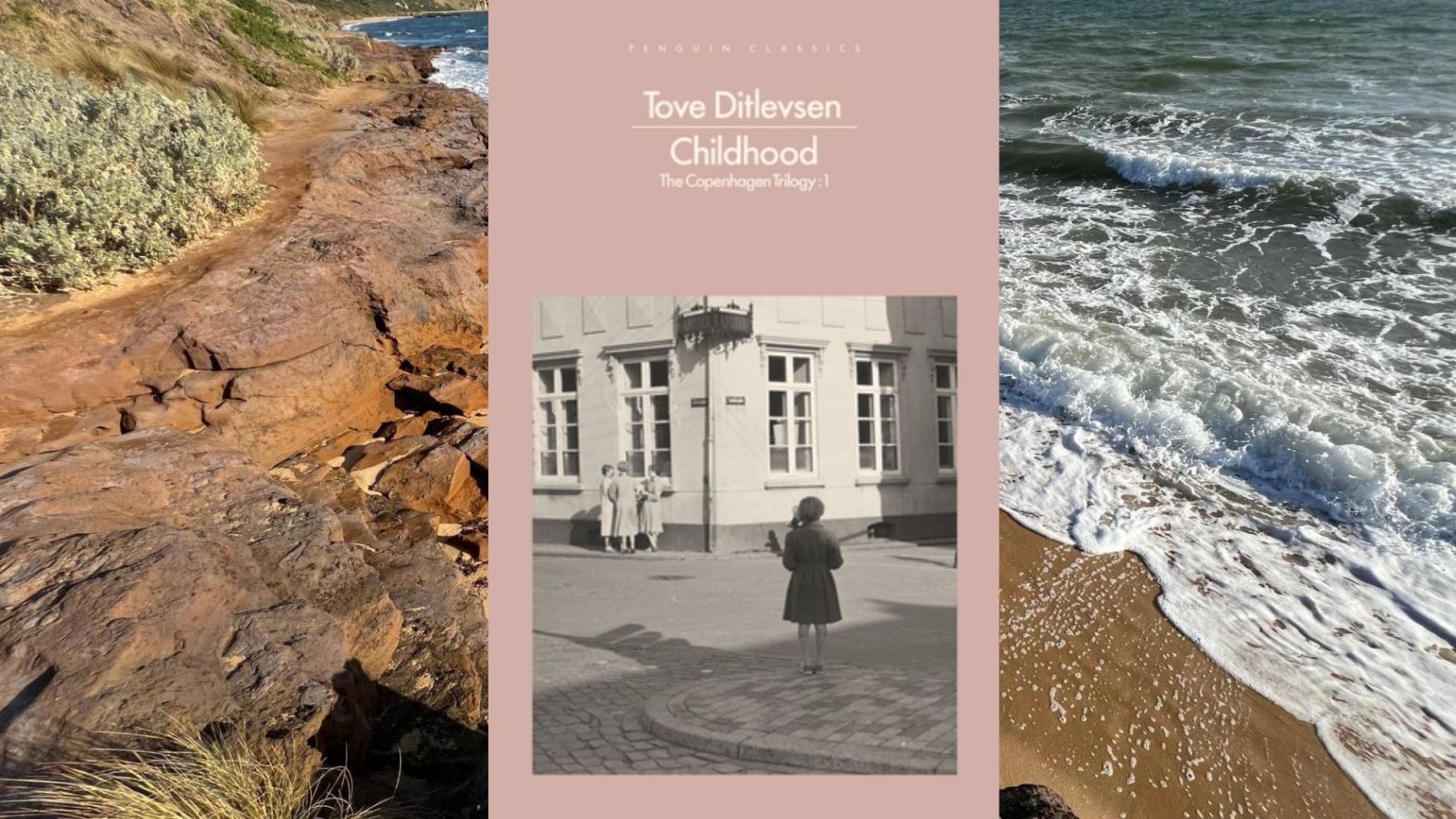
A brutal, vulnerable, intensely personal and yet universal story of a little girl growing up between the world wars in Denmark. Almost a century after it was written, Ditlevsen’s story of her childhood in a poor suburb of Copenhagen is still fresh, timeless and revealing. Her childhood self is a compelling blend of raw honesty, naive tenderness and fragile curiosity.
Rating: 🌟🌟🌟🌟🌟
Genre: Literary autobiography, non-fiction
Publisher: Penguin
Review in one word: Tender
The story of Tove Ditlevsen’s early life in Denmark became a timeless classic in Danish literature and propelled her to great fame in her country. ‘Childhood’ along with her two subsequent autobiographical novels ‘Youth’ and ‘Dependency’ make up the Copenhagen trilogy and trace her early life, teenage years and marriage.
Written in between the two world wars, Childhood is infused with a sense of hopelessness, poverty and the omnipotent and heavy morality and hypocrisy of adults and the looming adult world.
Childhood is sparse, earnest, brutally honest book that carries you into the world of childhood in a way that feels eerily familiar and universal to all of us ‘former children’. It seems possible to me that Ditlevsen’s childhood could resemble anyone’s and everyone’s formative years. For this reason, this is a beautiful, compelling and timeless book.
The people in her family and her chaotic neighbourhood are all shifting, echoing ghosts in this book in comparison to her own powerful narrative voice and strong visceral bodily presence – a nagging sense of self-consciousness and confusion about her own growing body. This gives you the reader the uncanny feeling of inhabiting the body and mind of a 8 to 12 year old girl. As this is something I have personal experience with, the novel felt like a strange fever dream.
In a way, Ditlevsen’s storytelling reminds me of the rambling, first person literary narrative style of Karl Ove Knaussgard, who wrote about his early life many decades later. I’ve reviewed A LOT of his books over the years. In my humble opinion though, Ditlevsen is a way better writer who manages to capture the dreaded, sublime essence of childhood in a way that nobody else ever has, nor likely ever will. Just have a read of this:
“People with such a visible, flagrant childhood both inside and out are called children, and you can treat them any way you like because there’s nothing to fear from them. They have no weapons and no masks unless they are very cunning. I am that kind of cunning child, and my mask is stupidity, which I’m always careful not to let anyone tear away from me. I let my mouth fall open a little and make my eyes completely blank, as if they’re always just staring off into the blue. Whenever it starts singing inside me, I’m especially careful not to let my mask show any holes. None of the grownups can stand the song in my heart or the garlands of words in my soul. But they know about them because bits seep out of me through a secret channel I don’t recognize and therefore can’t stop up.
Childhood is dark and it’s always moaning like a little animal that’s locked in a cellar and forgotten. It comes out of your throat like your breath in the cold, and sometimes it’s too little, other times too big. It never fits exactly. It’s only when it has been cast off that you can look at it calmly and talk about it like an illness you’ve survived.”
Childhood by Tove Ditlevsen
So true! So very true…

“Wherever you turn, you run up against your childhood and hurt yourself because it’s sharp-edged and hard, and stops only when it has torn you completely apart. It seems that everyone has their own and each is totally different. My brother’s childhood is very noisy, for example, while mine is quiet and furtive and watchful. No one likes it and no one has any use for it. Suddenly it’s much too tall and I can look into my mother’s eyes when we both get up. ‘You grow while you’re asleep,’ she says. Then I try to stay awake at night, but sleep overpowers me and in the morning I feel quite dizzy looking down at my feet, the distance has grown so great. ‘You big cow,’ the boys on the street yell after me, and if it keeps on like this, I’ll have to go to Stormogulen where all the giants grow. Now childhood hurts. It’s called growing pains and doesn’t stop until you’re twenty.”
Childhood by Tove Ditlevsen
“One day my childhood smells of blood, and I can’t avoid noticing and knowing it. ‘Now you can have children,’ says my mother. ‘It’s much too soon, you’re not even thirteen yet.’ I know how you have children because I sleep with my parents, and in other ways you can’t help knowing it, either.”
“Everyone loves my brother, and I often think his childhood suits him better than mine suits me. He has a custom-made childhood that expands in tune with his growth, while mine is made for a completely different girl. Whenever I think such thoughts, my mask becomes even more stupid, because you can’t talk to anyone about these kinds of things, and I always dream about meeting some mysterious person who will listen to me and understand me.”
Childhood by Tove Ditlevsen
“Time passed and my childhood grew thin and flat, paperlike. It was tired and threadbare, and in low moments it didn’t look like it would last until I was grown up. Other people could see it too. Every time Aunt Agnete visited us, she said, ‘Goodness gracious, how you’re growing!’ ‘Yes,’ said my mother and looked at me with pity, ‘if only she’d fill out a bit.’ She was right. I was as flat as a paper doll and clothes hung from my shoulders like from a hanger. My childhood was supposed to last until I was fourteen, but what was I going to do if it gave out beforehand?”
Childhood by Tove Ditlevsen
“My childhood’s last spring is cold and windy. It tastes of dust and smells of painful departures and change. In school everyone is involved with preparations for exams and confirmation, but I see no meaning in any of it. You don’t need a middle school diploma to clean house or wash dishes for strangers, and confirmation is the tombstone over a childhood that now seems to me bright, secure, and happy. Everything during this time makes a deep, indelible impression on me, and it’s as if I’ll remember even completely trivial remarks my whole life. When I’m out buying confirmation shoes with my mother, she says, as the sales-clerk listens, ‘Yes, these will be the last shoes we give you.’ It opens a terrifying perspective on the future and I don’t know how I’ll go about supporting myself. ”
Childhood by Tove Ditlevsen
If you would like to be transported to a fever dream of early adolescence on the cusp of knowing and understanding the adult world, then you will love this book. I highly recommend it. Timeless!
 Content Catnip
That last part on meaning is so profound
LikeLiked by 1 person
Yes definitely. Thanks for the comment 👍 it’s a really universal book, beautifully written it really draws you in. Hope you’re having a nice weekend 😊 🌄
LikeLiked by 1 person
It’s been good thanks – I hope yours is too 🙂
LikeLiked by 1 person