
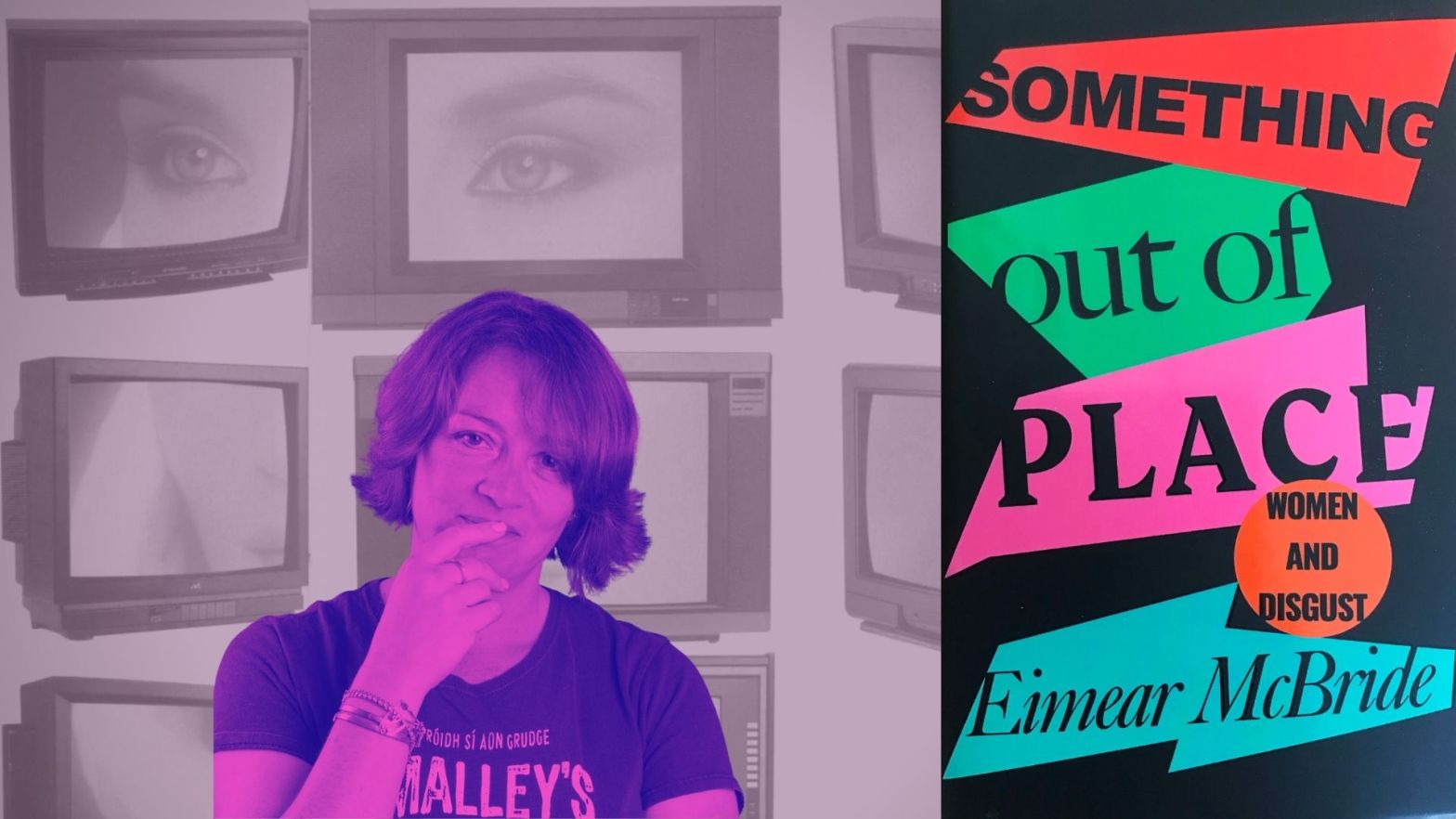
Rating: 🌟🌟🌟🌟
Genre: Non-Fiction, Feminism, Sociology, Philosophy, Sexuality.
Publisher: Picador
Review in one word: Provocative
#BookReview: Something out of Place, Women and Disgust by Eimear McBride. This #nonfiction debut packs a punch, it explores the ways that women are classified as tho we have no consciousness and are mere cuts of meat #feminism #books
Tweet
This is a fascinating, provocative and stirring book. It enrages and stimulates in equal measure and will make you think differently about the world if you are a woman or if you are a man then you will come to understand the disturbing ways that women and their bodies are either revered and salaciously admired, or undermined, ridiculed and ostracised. It’s an essay from eloquent, award-winning Irish novelist Eimear McBride. She previously wrote the novels: ‘A girl is a half-formed thing’ and ‘The lesser bohemians’.
This non-fiction debut is incredible and packs a punch, as Eimear explores the many ways that women are classified and sorted as though we cease to have consciousness and are simply cuts of meat. How through this system we are inevitably pitted against one another in a hyper-masculine, hyper-competitive paradigm, how it is easy to have ‘something out of place’.
This never-ending hamster wheel of social approval is what powers the toxic influencer culture of Instagram and Tiktok. It’s what powered the exploitation of Page three girls of British tabloids. Eimear explores the rise of Samantha Fox, a Page Three girl who became famous for sexualising her body from a young age. Her mother gave permission for her to be bare-breasted in tabloids when she was underage. From there, she had an acting and singing career. Samantha maintains that this was a power move and that she rose above poverty through doing this. It seems to be a double-edged sword though, one can go from being an ‘acceptable’ piece of meat, to having a body that elicits disgust and condemnation in a heartbeat.
In reality, many women actively or passively resist this narrative thrust upon them – through their active care and cooperation with each other, or their rejection of beauty standards and rejection of the masculine ‘meat’ paradigm all together.
Woman as ‘acceptable meat’ and the ‘wrong kind of meat’
“She can expect to be continually marketed by the idea that the rewards of becoming not only meat but precisely the right kind of meat are boundless. Conversely, those women who cannot be tempted onto the butcher’s slab, who are not motivated enough to meet the criteria, or even those who long to stretch out upon it but cannot starve or feminise themselves enough into sufficient stereotype-aligning representations of womanhood to make the grade will not find themselves treated as flesh. They will instead just be stamped as the ‘wrong type of meat’, which on principle can never be rewarded.
“Here be the lesbians in comfortable shoes, the overweight, the old-ish, the busy, the indifferent and the already content. These women – and there are a lot of us, will be persistently reminded of the undesirability of their brand of meatiness and of just how little the pleasure of going through life without bothering to contort oneself into a more readily acceptable version of femininity makes up for that unpleasant fact. It is an effective deterrent particularly among the young, it inculcates many women into obedience from a young age.”
Eimear McBride
Women are not all the same
Women are not all the same. We are all not trying to get to the same place and perhaps there is no one place for all of us to get to together.
Eimear McBride
What we have in common is that, at one time or another we have all been seen, or treated as a matter out of place in the world, we have every right to call our own.
We have seen it. We felt it. Lived it. Died it. Had it open chasms up inside of us. Had it waste our time.
“The disgust I have been writing about has succeeded in surrounding us and even managed to creep inside of us. We can be sure it cannot dissipate by itself and it will not stop being wielded as a weapon until it is no longer effective. The journey to rendering this disgust obsolete begins with women noticing and identifying it for what it is and it will end only once we have taught ourselves and everyone else, to refuse it at every turn. Only then will the taboos placed upon us all fall away and the universe be restored.”
Eimear McBride

Originally tweeted by lookcaitlin (@lookcaitlin) on September 24, 2022.
Eimear goes into dark places that it’s important to go. She explores how, despite the progress made by women’s rights, it may not be safe for many women to be on the streets and how often it’s not safe for them in the home either.
“In the weeks after Sarah Everard’s murder the World Health Organisation published a report saying that 1 in 3 women globally have experienced physical or sexual violence during their lifetime. That’s about 736 million women’s bodies that have been subjected to violence. Violence solely inflicted upon them because they are women. We didn’t start a war, but a war is being waged on us, nonetheless staying indoors is not the answer – most of it happens in there anyway. The outdoor life isn’t for us either it seems, not according to the media, online or everywhere we can be seen and heard.
“The willingness to just accept this as a status quo for women is a stain on contemporary society and an affront to human dignity.”
Eimear McBride
There is a sense that we as women are too complacent and accepting of the rage, violence and disgust inflicted upon us on a daily basis.

Originally tweeted by lookcaitlin (@lookcaitlin) on September 25, 2022.
#1994 http://ow.ly/gJao50KKGZs
A few critical elements were missing
I believe there should have been more of an exploration of bodies of other marginalised groups like trans women, black or brown people, people of other genders in this book. The disgust elicited from bodies is no doubt amplified and intensified for these people. It would have been good to see how this disgust manifests in the form of violence against trans people, people of colour, people of different genders, as it does for white women. It’s a phenomenon with deep institutional roots and seems to manifest in police violence, the locking up of more brown and black people into prisons, shootings in gay night clubs etc. It would have been good to see where those roots come from historically and where they can be traced from in terms of power dynamics.
A thought-provoking song to end this
This song by DJ Boring takes a sample of 90’s era Winona Ryder talking about how casting directors told her she ‘wasn’t pretty enough’. It’s a good example of the idea of women as ‘meat’. If Winona Ryder wasn’t considered pretty enough, it’s a hard slap to us all for being the ‘wrong kind of meat’.
My thoughts
I feel rather sheltered from the scathing, observing gaze now, with my introverted lifestyle and a close circle of loving and trusted people. When I was younger, it probably would have benefited me to know and understand this invisible paradigm that haunts women’s lives, to be able to read this and give words to this moral trickery, this confusing social quicksand that so often engulfs young women. To define this is the first step to defying it and overcoming it. To the younger me I want to say to her: “It’s all a bullshit lie – opt-out, now!”
 Content Catnip