Water voles and me
Nature filmmaker Natalie Clements films sweet and gentle water voles going about their day in this short and captivating documentary that captures the importance of rewilding Britain and witnessing animal lives.
Across Cultures, One Key to Happiness Stands Out
Decades of global surveys point to a single, consistent foundation of well-being: our relationships.

By Tim Lomas via MIT Press Reader
One of the most comprehensive assessments of factors affecting well-being is the World Values Survey. Initiated in 1981, the survey asks nationally representative sample populations in nearly 100 countries about their beliefs and values. Researchers have used the data collected to conduct ongoing time-series analyses of participant feedback. In the process, they’ve learned a lot about what people think is important.
Economist and editor of the World Happiness Report John Helliwell has paid special attention to what survey respondents say about the good life. In 2004, together with Robert Putnam, he reviewed surveys spanning 1980 to 1997, covering over 87,000 people across 46 countries, to find the most prominent determinants of subjective well-being. The top five factors, ranked in order of impact, were romantic and familial relationships, financial situation, work, community and friends, and health. Romance, family, friends, and community are tightly bound up with concepts of relationship, as is work. There is no doubt that relationships constitute the backbone of lives well lived.
Why might this be? We can only speculate here, but many theorists draw on telic (i.e., goal-driven) models of need-satisfaction, in which well-being is dependent on what the environment provides. Ruut Veenhoven, a Dutch sociologist, is influential on this score, arguing that well-being depends on livability (a congenial environment) and life-ability (one’s ability to take advantage of this), each of which is enhanced by relationships. Indeed, the positive psychologist Robert Biswas-Diener suggests that relationships can “to some extent avert the psychological costs of material deprivation.”
Turning to Helliwell and Putnam’s factors affecting well-being, the first is family, in particular the chosen family of a romantic relationship. Alongside the World Values Survey, numerous studies bear out the well-being benefits of such partnerships. For example, a survey of nearly 60,000 people across 42 countries found a consistent positive correlation between marital status and well-being. Conversely, research shows a strong negative correlation between well-being and relationship separation.
Across the great sweep of cultures, stable and loving partner and family relationships are widely regarded as the most significant predictors of well-being.
The importance of romantic and family relationships can be accounted for in terms of the universalistic theories above, which look to the presumed essence of personhood to conceptualize what people usually need in life. More prosaically, partnerships and families can also offer so-called protection effects beneficial to well-being. These include division of labor and the emotional support of someone sharing goals and ideals similar to one’s own.
Of course, many of these benefits are mediated by cultural context. For example, there may be greater social costs to unmarried life in certain cultures, boosting the well-being effects of marriage. And the effect of widowhood on well-being is, to a degree, a consequence of the culturally variable status of widows. Despite these variations, though, across the great sweep of cultures, stable and loving partner and family relationships are widely regarded as the most significant predictors of well-being.
Helliwell and Putnam also emphasize the welfare benefits of broader social-support networks, from one’s circle of friends to the wider community. Many social psychologists would explain the benefits of these networks in terms of what Pierre Bourdieu called social capital. This is “the sum total of the resources, actual or virtual, that accrue to an individual (or a group) by virtue of being enmeshed in a durable network of more or less institutionalized relationships of mutual acquaintance and recognition.”
Social capital is important in part because it is multidimensional. Put differently, much of what matters in life can be articulated in terms of social capital. It may be a resource possessed individually, as in one’s friends and other intimate contacts. Or it can be reflected in the community as a whole: A group that can more effectively pursue common goals is said to have greater social capital. Social capital may manifest in attitudinal beliefs, such as trust in others. It is also obtained through structured connections, such as those of a profession, institution, or organization. And social capital might inhere in bonding and bridging — cohesion within groups and connection across them.
Social capital’s importance to well-being cannot be overstated. A striking example of its power — and thus, the power of relationships — comes from Finland. Researchers noticed that, in one coastal province, the Swedish‐speaking minority lived longer active lives than the Finnish-speaking majority. Although the two communities were similar in most respects — including genetic profile, socioeconomic status, education, and use of health services — there were remarkable disparities in morbidity, disability, and mortality. Swedish-speaking men lived 77.9 years on average, while Finnish-speaking men lived an average of only 69.2. The researchers suggest that these dramatic inequalities cannot be explained by conventional health‐related risk factors. Instead, they point to indications of higher levels of social capital in the Swedish community, including more extensive voluntary associational activity, friendship networks, and religious involvement.
Neglecting Relationships
Unfortunately, although social relationships are good for us, prominent theorists have observed that Western societies are losing sight of their importance. An ethos of individualism is frequently invoked as an explanation for this trend, with Westerners being ever more prone to understand themselves primarily as individuals. That is, as anthropologist Clifford Geertz would have it, the Western subject is generally regarded as a “bounded, unique, more or less integrated motivational and cognitive universe.” Such individualism is partly defined in contrast to collectivism, supposedly the province of Eastern cultures. People in collectivist cultures are more likely to define themselves as aspects of groups and to prioritize in-group goals. Where individualism involves atomization, collectivism is steeped in relation.
That said, much like the troublesome East–West distinction itself, this individualist–collectivist binary homogenizes and obscures on its way to simplicity, disregarding strains of individualism and collectivism in all societies. But it is nevertheless useful as a broad generalization, if only because people self-identify in this way, and not without consequences.
Indeed, the individualist–collectivist distinction in self-identification has been corroborated across hundreds of empirical studies. Moreover, the literature shows that self-identification of this kind may have consistent effects on outcomes like cognition, emotion, and motivation. For instance, Richard Nisbett and colleagues report that East Asians are more likely to have “holistic” modes of cognition (i.e., attending to the entire field), and dialectical modes of reasoning, whereas Westerners are more prone to analytic modes of cognition (i.e., paying attention to a focal object), and use of formal logic.
This individualistic sense of selfhood has also influenced the view of the person in Western academic psychology, which in turn affects how people perceive themselves. Mainstream psychology is mostly predicated on appraising and studying human beings as self-contained monads, and the field’s individualism is reflected in myriad constructs, from self-determination to self-esteem, authenticity to autonomy. The social, to the extent that it is recognized at all, tends to be constructed as an aggregation of individuals.
Individualism permeates positive psychology, leading theorists and practitioners to downplay the social context of well-being.
Individualism permeates positive psychology as well, leading theorists and practitioners to downplay the social context of well-being. Notably, one of the most influential works in the field, Sonia Lyubomirsky and colleagues’ analysis of factors contributing to variance in subjective well-being, holds that social circumstances are almost irrelevant. Drawing on genetic studies of twins, the researchers proposed that only about 10 percent of the variance in subjective well-being is shaped by social circumstances, while 50 percent is determined by genetics, and 40 percent by “intentional activities,” such as cultivating gratitude and practicing meditation. This and related research have directed positive psychology toward individually targeted interventions, such as developing aptitude for intentional activities.
Such ideas are valuable, insofar as they constitute a broadly accurate analysis of factors contributing to well-being across a population. However, the statistics are often misconstrued. Assuming that the 10 percent figure is accurate across a population — a point which has been challenged, one should note — it is not necessarily true of every person within that population. Commentators frequently make this error, known as an ecological fallacy. For people living in more challenging situations, the impact of their social circumstances on their well-being is likely to be far higher than 10 percent. Consider that men in England’s lowest socioeconomic class are almost three times more likely to have a common mental disorder than are those in the highest. More broadly, a vast range of studies in social determinants of health demonstrate that, with respect to physical wellness alone, social conditions are deeply important.
In sum, despite the many individualist currents pressing against Westerners, there really is no getting away from the importance of relationships to our well-being. Fortunately, though, there also is no good reason to essentialize individualist traits; the West is neither inevitably nor intrinsically individualistic. As such, Western cultures may yet develop a greater appreciation of the value of relationships, perhaps simply by recognizing what has mattered all along.
Tim Lomas is a Research Scientist at the Human Flourishing Program at Harvard University and the author of, among other books, “Translating Happiness: A Cross-Cultural Lexicon of Well-Being.” His work has been featured in Time, the New Yorker, Vox, Scientific American, and the Atlantic.
Kindness to dogs is part of the law in Sweden
In Sweden, kindness isn’t just a feeling — it’s a law. One of the most surprising rules is that you cannot leave your dog alone at home for more than 6 hours. Why? Because Swedish science strongly supports the idea that animals experience loneliness, stress, and emotional discomfort just like humans do.
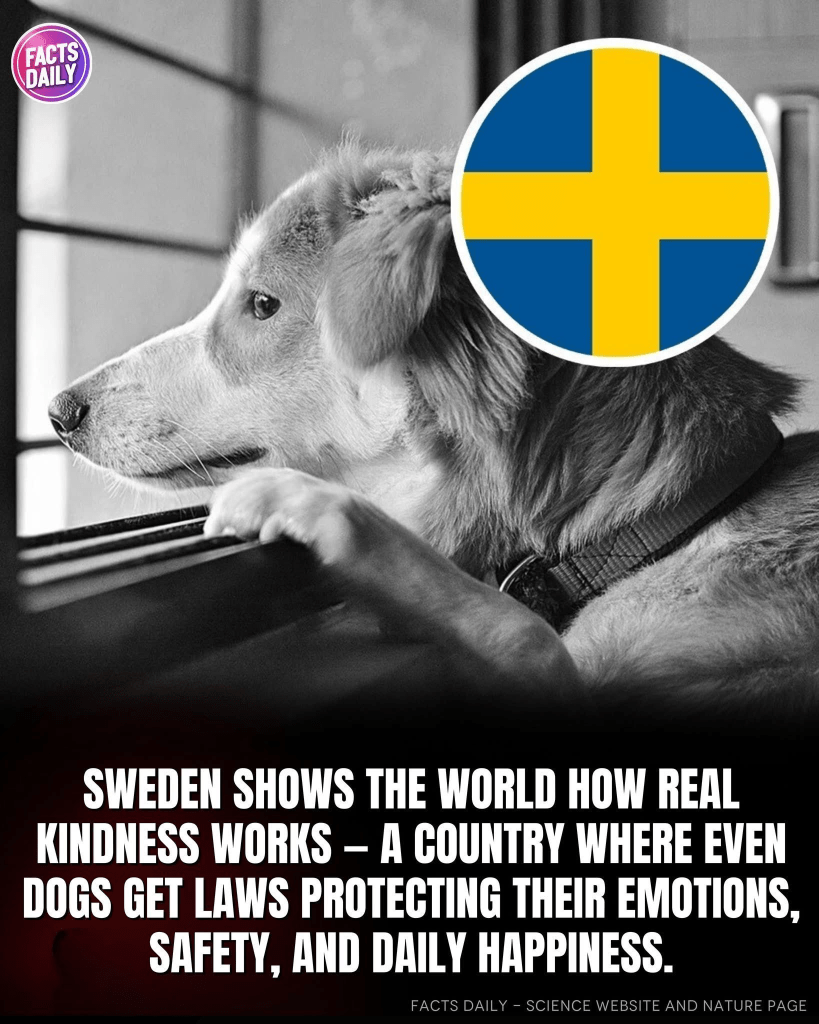
This law was created to protect dogs from silent suffering that most people never notice. It’s a beautiful reminder that kindness begins at home — and even our pets deserve emotional care. Researchers in Sweden found that a dog’s stress levels rise significantly when left alone for too long. Their heartbeat patterns change, anxiety increases, and some dogs may even develop long-term trauma. That’s why Sweden treats pets not as property, but as family members with feelings, needs, and rights.
This rule encourages people to build stronger bonds, spend more time outdoors, and prioritise companionship over convenience. This small but powerful law is now inspiring conversations around the world. It shows that a nation becomes truly advanced not only by technology but also by compassion. Imagine a world where every country cared this deeply about the happiness of animals — where science, empathy, and responsibility worked together. Sweden is proving that progress is not always about inventions… sometimes, it’s about love.
Anti facial recognition makeup
If you’re planning on fighting the fascist assholes in real time, consider some badass concealment makeup to dazzle omniprescent Big Brother surveillance. Look folks… I am sorry to say that we are well and truly inside of the cyberpunk future. Resistance is NEVER futile, no matter how much said resistance is characterised as disruptive or dangerous, rather call it what it is, a means to survive. Via Mastodon

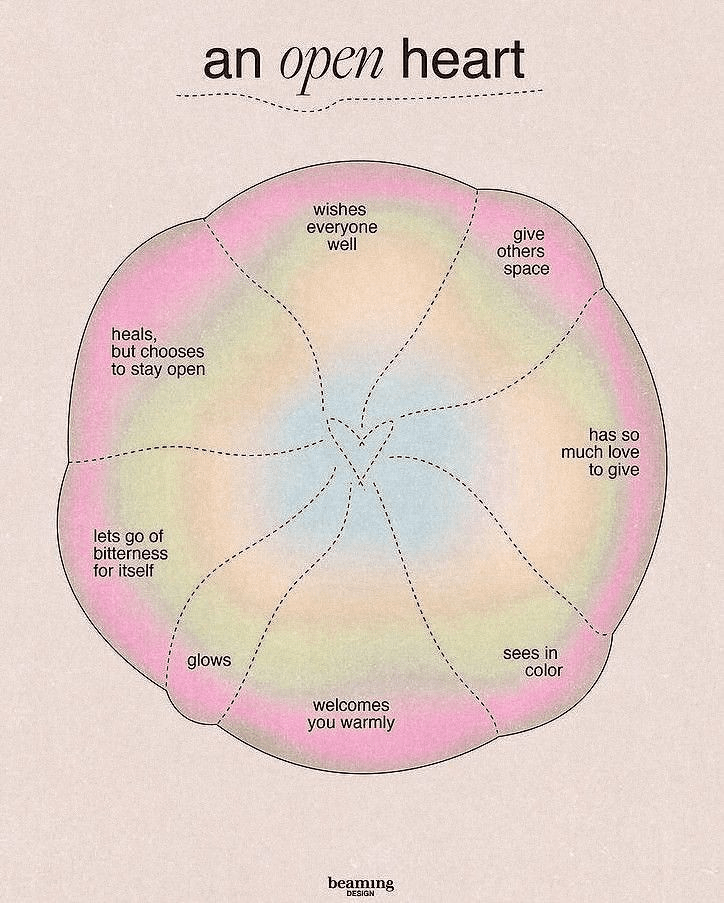
An open heart
Pulsing northern lights and shooting stars
How a beautiful and majestic bird helps to save the rainforest in Borneo
Cport Cistema — Vibration
Crunchy, substantial and filling for sure!
We’re the only ones with chins…and we don’t know why!
Why were other hominids chin-free? what advantage does having a chin entail? who knows but it’s weird as hell!
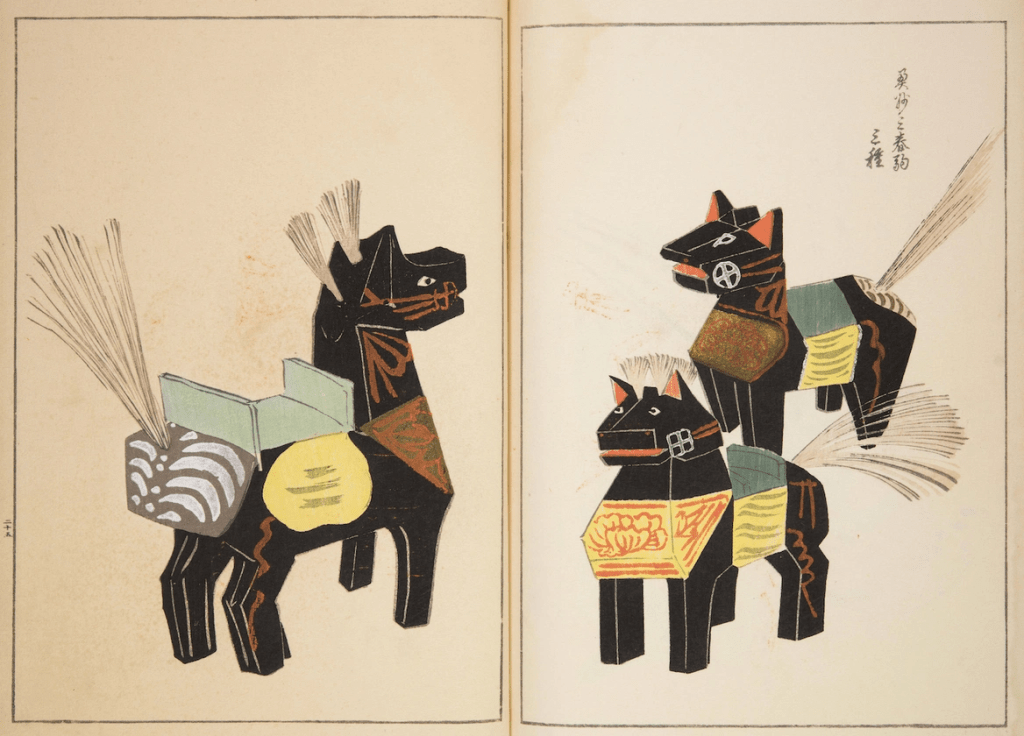
Seifu Shimizu: ancient woodblock artist and toy scholar
Seifu Shimizu was a wealthy Japanese trader, student of Japanese folklore, and artist who was popularly known as the “Professor of toys.” He himself was an expert on traditional Japanese folk toys and had a massive collection. This collection was documented in the ten-volume “Unai no tomo” (“The Child’s Friend”), woodcut prints that Shimizu himself produced for the first six volumes. Here is one of his charming prints the Miharu goma (colt of Miharu), from Oshu, North Japan. Shimizu mentions that it’s a kosodate uma, or “child-raising horse”, suggesting it may have been a charm for protecting children.
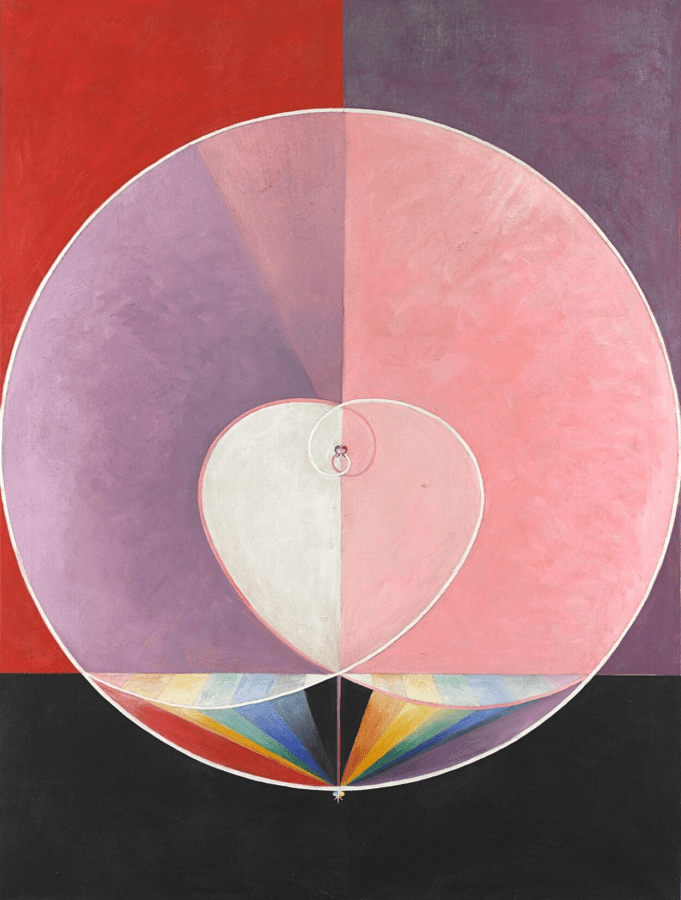
Dove No. 2 (1915) by Hilma Af Klimt
Dove No. 2 is part of “The Dove” series, Hilma af Klint’s monumental Paintings for the Temple project painted between 1912 and 1915. She depicts the creation process through Christian symbolism, with the dove representing spirit, peace, and divine unity.
The painting explores fundamental spiritual dualities—light and darkness, good and evil—through the allegory of Saint George and the dragon. The compositions combine symbolic colours and abstract forms with moments of precise figuration, while some include astrological symbols, planets with rings, and numbers.
Af Klint created these works during a period when she was encouraged to interpret spiritual messages more freely, though still maintaining contact with higher planes of consciousness.

Did you enjoy this collection? let me know what you think of it below. Thank you for reading my dear friends!
 Content Catnip
The dog thing is real. It’s also illegal to have only one guinea pig as they are social and get very stressed alone.
LikeLiked by 1 person
Yeah they are such sensitive beings and they love us a real lot, cant bear to be apart 😊
LikeLiked by 1 person