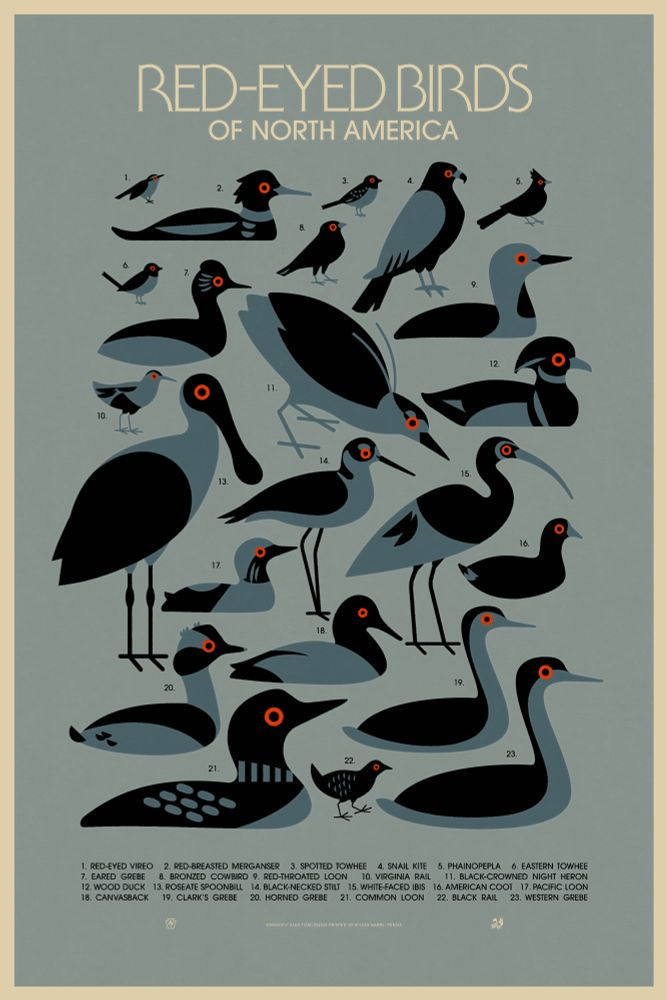
Red-eyed birds of North America
A beautiful vintage style illustrated poster by artist Alex Tomlinson showing Snail Kite, Roseate Spoonbill, Common Loon, and Wood Duck and many more in a delightful mid-century style, via BlueSky
Milkydaddy – ミルキーダディー(1984)
A pleasing retro soundtrack to an uplifting Japanese weather channel…or something.
Dreams and Mycelium: Mapping the Endless Network of Existence
How fungus and Freud converge to illuminate a deep ecology of mind, nature, and human ancestry.
By: Sharon Sliwinski via MIT Press Reader
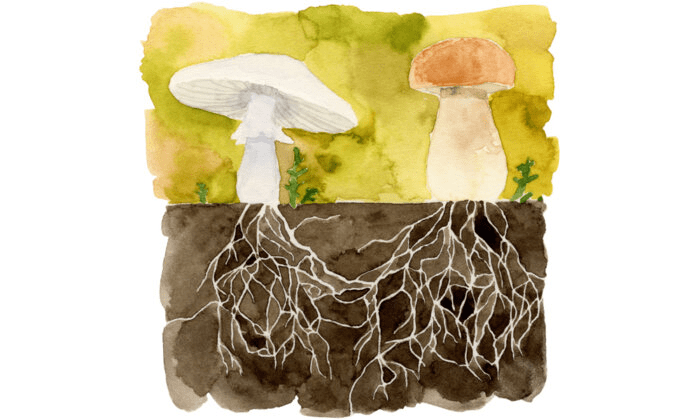
The next time you find yourself on a wooded trail, look for an old log that has been on the ground for a while. The more rot, the better. Underneath, you will likely find fuzzy, white, cobweb-like threads that are called hyphae. They are the tip of a vast fungal network called mycelium that stretches much farther than you can see, binding the soil beneath your feet, weaving into tree roots at a cellular level, channeling nutrients, and redistributing resources throughout the entire ecosystem.
In recent decades, there has been an explosion of interest in these proliferating fungal networks, including mushrooms, which are the “fruit” of these organisms. Mycelia have been described as “the grand recyclers of our planet” because they disassemble larger molecules into simpler forms, creating ever-thickening layers of soil, unlocking nutrients, and sharing them in ways that can regenerate depleted environments. Some researchers believe that mycelium is a key to our evolutionary survival.
These densely interconnected networks have also evoked comparisons to the internet and have been nicknamed the “wood wide web.” In this analogy, mycelium functions akin to fiber optic cables by providing the infrastructure for a vast subterranean communication system. Apart from allowing plants and trees to share resources — sugar, nitrogen, and phosphorus — this network also allows them to communicate in the manner of a social network. While we have known for some time that trees “talk” to each other across significant distances using airborne hormones, we are just beginning to understand what occurs beneath our feet.
The mycelium/mushroom model works effectively as a way to convey the relationship between the singularity of a dream and the vast network of ideas from which it grows.
I prefer Suzanne Simard’s description of this network. Bypassing the technological metaphors, the forest scientist has shown how these fungal networks are patterned in ways that resemble the human brain (or perhaps more accurately, the human brain resembles these much more ancient networks). In the forest, trees actively perceive, communicate, and respond to one another by emitting chemical signals: “Chemicals identical to our own neurotransmitters. Signals created by ions cascading across fungal networks.”
Simard has shown that there is a generational structure to this underground network. Her research shows that older trees can discern which seedlings are their own kin, and they actively nurture them using the fungal network, sending food, water, and information as needed. When these “mother trees” die, they pass on their wisdom to their kin, sharing a lifetime of acquired knowledge about how to survive in an ever-changing environment.
This relatively new body of research on mycelium — a mass noun that puts pressure on the very idea of individuality — raises questions about where species begin and end, how all living things are radically interconnected, what counts as knowledge and communication, and how information is gathered, stored, and shared.
Long before this recent scientific furor, Sigmund Freud also turned to mycelium to describe dream life. In one of the most famous passages in “The Interpretation of Dreams,” Freud compares mycelium to the tangled mass of unconscious thoughts out of which a dream emerges (Freud regularly took his family to the mountains outside Vienna for holidays, where they hiked, picnicked, and hunted for mushrooms):
The dream-thoughts to which we are led by interpretation, cannot, from the nature of things, have any definite endings; they are bound to branch out in every direction into the intricate network of our world of thought. It is at some point where this meshwork is particularly close that the dream-wish grows up, like a mushroom out of its mycelium.
This passage is usually understood to refer to the limitations of dream interpretation. The latent content of any given dream — what Freud calls the “dream-thoughts” — is so infinitely complex and leads in so many directions that aspects inevitably elude us. Freud calls this the “navel” of the dream. Even in the most obvious of dreams, he admits, contrary to his central thesis, there is a place that remains shrouded, a “spot where it reaches down into the unknown.”
The mycelium/mushroom model works effectively as a way to convey the relationship between the singularity of a dream and the vast network of ideas from which it grows — a network that has no definite endings and that reaches down into the unknown. The metaphor also works to highlight the generational quality of the intricate “world of thought” that dream life connects us to. The navel is, of course, a trace of a physical connection to our mothers through the umbilical cord.
When Freud’s model of dream life is brought together with contemporary descriptions of mycelium, we see something that begins to resemble the idea of a collective unconscious, a vast web of communication that does not just connect individual human beings to each other (as Carl Jung imagined) but is something akin to the way Indigenous peoples describe our radical connectedness to the greater world, an understanding that “the life of one is dependent on the life of all.”
When my friend and colleague Lewis Williams formally introduces herself, she usually says, first in the Māori language and then in English: “My ancestors are of the people of Ngāi Te Rangi, Scotland, Wales and Germany. Ngāi Tūkairangi (Tauranga Moana) and Nan Ageantaich (Isle of Arran) are my clans. I grew up in Auckland and eventually returned to the Tauranga Moana, the homelands of my Ngāi Te Rangi ancestors. I am of that land. That is the land I was birthed to.”
Williams’s area of research is human ecology — the study and practice of relationships between the natural and social environment. What she calls “radical human ecology” infuses Western definitions of the discipline with Indigenous methods that regard humanity as “an implicit part of biodiversity, embedded in a vast web of mutual and symbiotic interrelationships.” What drives her work is an effort to deepen our collective sense of relationality. Rather than focusing on whether the environment can absorb and adapt to human activity, Williams asks how we might deepen our understanding of humanity’s relationship with the living world.
This is why, in part, Williams introduces herself by describing her ancestors and the land from which she comes. Her sense of place in the world is derived from her connection to these ancestors — including Mauao, the sacred mountain of the Tauranga Moana tribe. In her case, this sense of connection was hard won. Growing up in Auckland, New Zealand, in the 1970s, she did not understand herself to be Indigenous. In fact, she once resigned from a job with the Department of Social Welfare so a Māori applicant could fill the role. At the time, Lewis was alienated from the Māori part of herself. As she put it, “I was long forgotten to my people, but worst of all, I was long forgotten to myself — to that part of myself.”
Lewis’s ancestral inheritance came to her in fragments, in vague feelings, in snatches of conversation — and in dreams. In January 2000, while she was working on her PhD dissertation, she had a significant dream that she has named “Looking Back.” It featured Jane Faulkner, one of her Māori ancestors whom she had just learned about:
I am walking onto the Marae [a sacred community space] in search of the casket of Jane Faulkner, daughter of Ruawāhine Puhi, high class woman of the Ngāi Te Rangi tribe, and Johnlees Faulkner, Pākehā [European] trader. I expect to see a Māori — looking woman in Pākehā clothing, because to me that’s who Jane was — bilingual, schooled in both Māori and European ways. For me, though, her heart was Māori.
I enter from the back. There is a group of rangatahi (youth) is standing around. I walk by and look to them expectantly; they do not see me. I can see no coffin. I walk into the wharekai (dining house) where there are some wāhine (women). Again they do not see me, do not greet me. I am invisible. I wander outside, feeling bleak. I look about. I had expected to see Jane lain out in her coffin in all her finery. I see no one, I see nothing . . . I am nothing.
I’m now on the wildest part of the Marae, the grass all long and overgrown. And then I see it. A coffin, lying in the long grass, in a state of disrepair, completely closed, one lid folded over the other, dusty, cobwebbed — long forgotten. I am long forgotten . . . to my iwi [people] and myself. I wake. I feel a deep despair.
Williams awoke from this dream deeply disturbed. But as much as it left her with a sense of despair, it also compelled her to begin descending, climbing down what she calls an “inner thread, the thread of my Ngāi Te Rangi tanga.” The dream functioned akin to the mycelium’s hyphae — a thread that led her to a larger, intricately interconnected network of kin.
For many Indigenous knowledge keepers, dreams have long been understood to be portals for accessing the metaphysical dimension and a vital means for communicating with both the natural and spiritual worlds. Williams’s dream of Jane Faulkner led her to begin reconstituting and deepening her sense of relationality through ancestral research, speaking with Ngāi Te Rangi elders, and eventually returning to Mauao, the esteemed mountain that stands guard at the entrance of Tauranga harbor.
Through this work, Lewis discovered that in 1864, during Jane Faulkner’s lifetime, her tribe’s ancestral lands — including the sacred mountain — were confiscated by the colonial government of New Zealand. In the wake of this spatial and spiritual exile, Williams’s great-grandfather moved to Auckland, and not until 2003 did Lewis and her mother reconnect with their ancestral lands and Ngai Te Rangi relatives.
It was a dream that called Lewis back, leading her to restore her connection with the land and her people — a return to the soil from which she came. Dreams, like mycelium, have the power to regenerate lifeworlds and even heal the wounds of history.
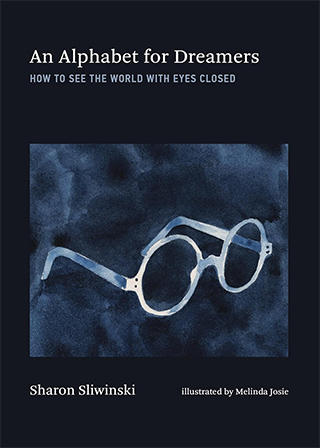
Sharon Sliwinski is Professor of Information and Media Studies at Western University in Canada. She has written four books, including “An Alphabet for Dreamers: How to See the World with Eyes Closed.”
A year in the canyon in Angeles National Forest
Camera trap footage of some of the magnificent animals in Angeles National Forest in California including California Black Bears, cougars, bobcats, foxes, hummingbirds, eagles, deer and more. How animals behave when humans aren’t around is endearing and fascinating.
Pollution levels in Paris before and after they introduced bike lanes and car restrictions
Red = EU limits for Nitrogen Dioxide pollution
Original graphics by Atelier Parisien d’Urbanisme
https://www.apur.org
Via Information is Beautiful on Mastodon
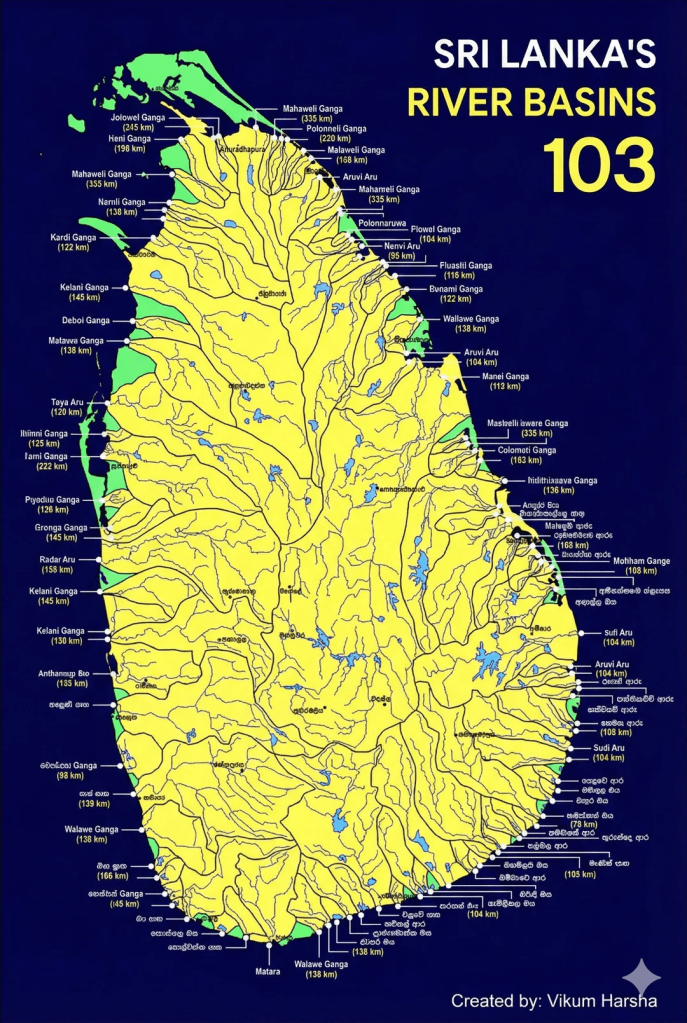
Sri Lanka’s 103 river basins – a beautiful map
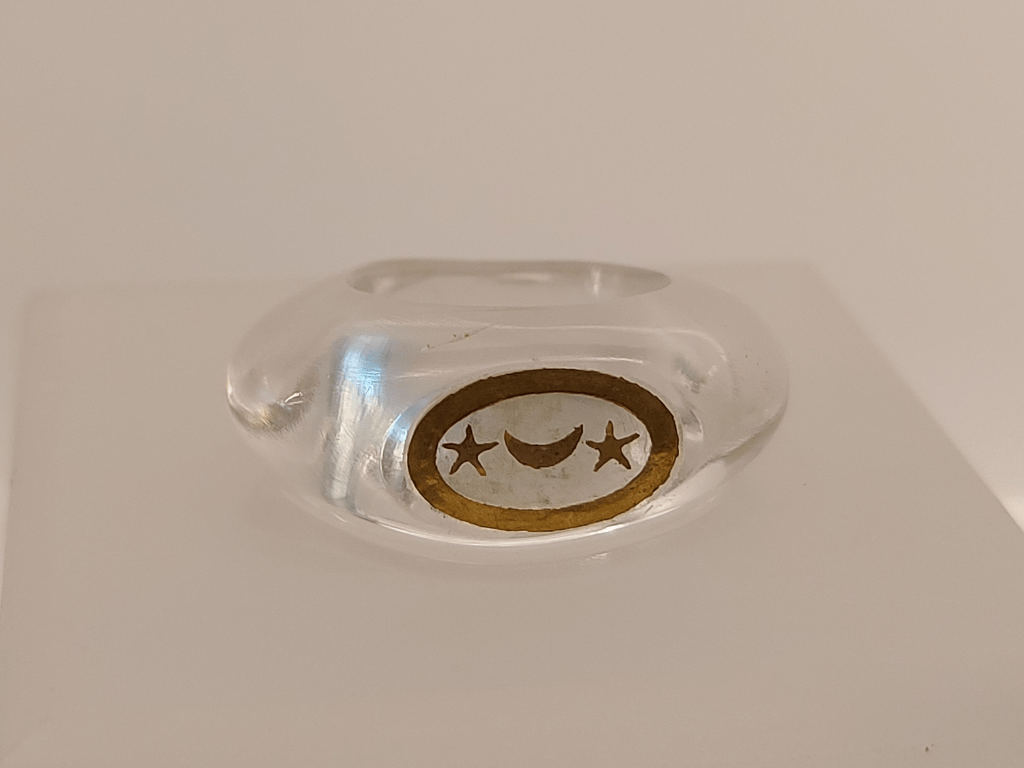
A rock crystal and gold ring that heralds the afterlife from AD 100.
This funky ring looks like something you would pick up from the markets. However look again! This is a rock crystal ring dated from circa 100 AD. The intricate start and moons are inlaid with gold foil. For the Romans this wasn’t just fun decoration. The motif was associated with death: crescent and stars were symbols for eternity and afterlife. Rock crystal was valued for its transparency, it was considered it to be permanently frozen water! It was also believed to possess healing and protective properties. Found in a woman’s burial in Nijmegen, dating 1st c. AD. Via Nina Willburger.
Enter an experiential furniture showroom in the coastal town of Ishinomaki, Japan
The 20 best archaeological discoveries of 2025
This is a high quality and super engaging channel that discusses ancient discoveries. I think it’s worth a sub and I really enjoy it!
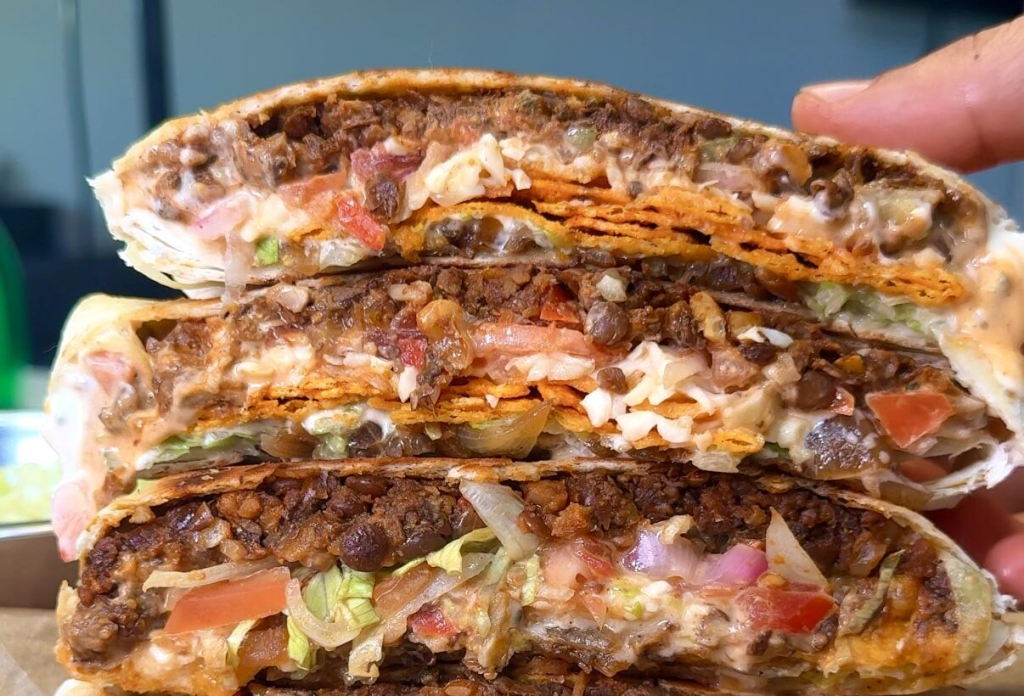
Crunchy vegan taco wraps by Dr Vegan
For the Taco “Meat”:
1 can brown lentils (drained & rinsed)
2.29 cups mushrooms (very finely chopped)
1/2 small-medium yellow onion (roughly chopped (≈ 75 g) – optional)
1/2 cup walnuts (chopped)
3 tbsp soy sauce
1/3 cup tomato sauce
3 tbsp nutritional yeast
1 tsp salt (plus more to taste)
Black pepper, to taste
1 tsp smoked paprika
1 tsp dried oregano
1 tsp onion powder
2 tbsp taco seasoning
For the Spicy Sauce:
1/2 cup vegan mayo (or regular)
2 tbsp sriracha racha
1 tbsp yellow mustard
2 tbsp diced pickles
Black pepper, to taste
1 tsp smoked paprika
1 tsp dried oregano
1/2 tsp onion powder
1 tsp taco seasoning
For the Wrap & Toppings (per wrap):
1 large flour tortilla (12 in / 30 cm)
1 Patch: tortilla triangle cut from an extra tortilla
½ Heaping cup warm taco meat (above)
2 tbsp spicy sauce
1/4 cup diced tomato
2 tbsp diced raw onion
1/4 cup shredded vegan cheese
Small handful tortilla chips
1 tsp vegan mayo/sour cream (or regular)
1/2 cup shredded lettuce
Pickled jalapeños (to taste)
2 tbsp caramelised onions
Neutral oil, for grilling
Instructions
1. Make the Spicy Sauce
– Stir mayo, sriracha, mustard, riced pickles and all seasonings in a bowl until smooth. Chill while you cook.
2. Cook the Taco Meat
– Heat a large skillet over medium-high.
– Add mushrooms; cook 3–4 min until most moisture evaporates.
– Stir in lentils, walnuts and onion; cook 2 min.
– Add soy sauce, tomato sauce, nutritional yeast and all seasonings; simmer 3–4 min, stirring, until thickened. Taste and adjust salt or taco seasoning. Keep warm.
3. Prep the Tortillas
– Cut one extra tortilla into four wedges. Each triangle is a patch for the centre of a wrap. (If you’re making just one crunch-wrap and want a neater look, cut a 5-inch round instead.)
– Microwave the 4 main tortillas for 15 s wrapped in a damp paper towel so they’re flexible.
4. Assemble Each Wrap
– Lay one warm tortilla flat; place a tortilla triangle patch in the centre, point up.
– Stack fillings in a tight 4-inch (10 cm) circle: heaping ½ cup taco meat → 2 Tbsp sauce → tomato → raw onion → cheese → chips → vegan mayo → lettuce → jalapeños → caramelised onions.
– Fold the bottom edge over the filling, then keep folding clockwise to create six overlapping flaps (hexagon). Press to seal. Repeat for remaining wraps.
5. Grill
– Lightly oil a skillet; heat to medium. Place a wrap seam-side down; cook 2–3 min until golden. Flip and brown the other side 2–3 min.
6. Serve
– Rest 1 min, slice, and enjoy the hot, crunchy goodness!
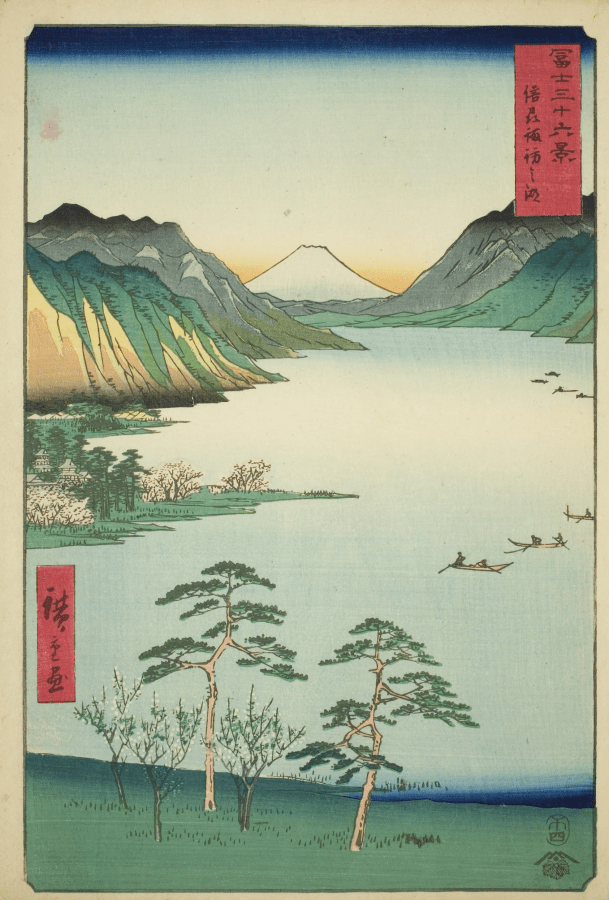
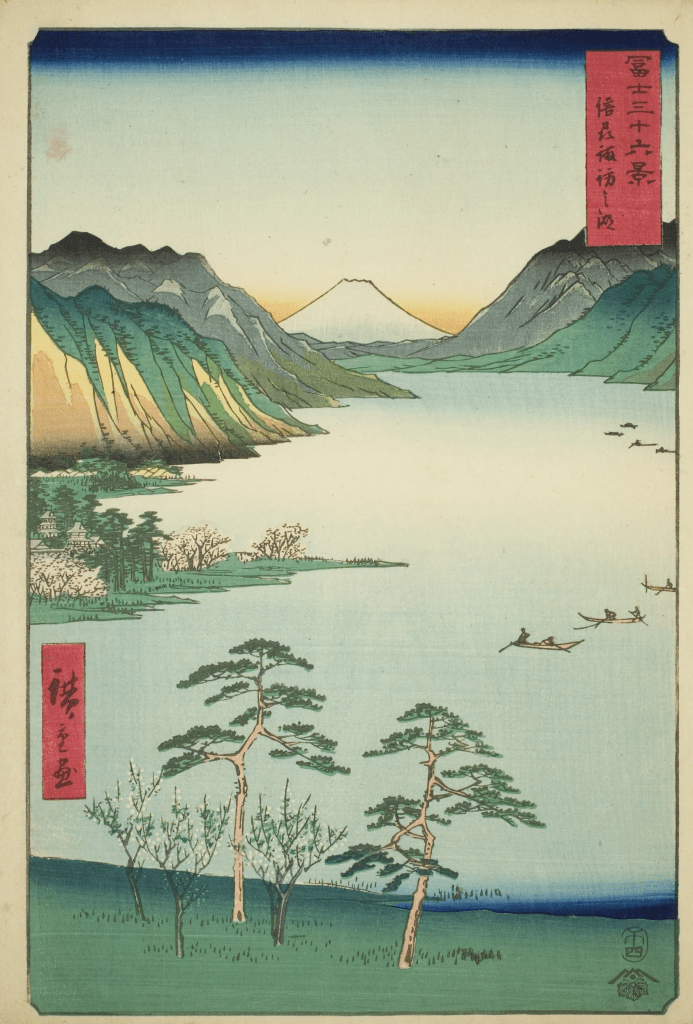
Lake Suwa in Shinano Province Shinshu Suwa no mizuumi by Hiroshige
Utagawa Hiroshige’s “Lake Suwa in Shinano Province” presents a calm, measured view of nature shaped by human presence. The colour woodblock print belongs to the late series “Thirty-six Views of Mount Fuji,” created near the end of the artist’s life in 1858. Hiroshige frames the wide surface of Lake Suwa with low mountains and scattered buildings, sometimes including small boats and figures that emphasize everyday activity rather than drama. Mount Fuji appears in the distance, modest but unmistakable, tying this local landscape into a larger spiritual and national iconography.
Did you enjoy this collection? let me know what you think of it below. Thank you for reading my dear friends!
 Content Catnip
Love those Paris and Sri Lanka maps – I could not believe Sri Lanka had so many rivers and Paris so little pollution!
LikeLiked by 1 person
Thanks Kev, sorry for my slow pace of replying. These maps are cool yeah especially Sri Lanka it made me curious and want to go there….all that water it must be a nice place. Thanks for reading and hope you have a great week 😄 🌞
LikeLiked by 1 person