

#Vegan almond butter date latte #recipe, things you can control, gigantic ancient #sloths, a quote from #Thoreau, walking with #dinosaurs #art by Kristen Eisenbraun and much more #ContentCatnip #InterestingThings
Making electronic music in 1990 with a budget home computer
I love the retro vibes of this it fills me with warm cosy feelings in my heart.
Infographic: Things You Can Control
A common pitfall we all fall into sometimes is to believe we can control the things that are outside of our control. And likewise we can sometimes believe that we have no control of things that we can actually control. This infographic crystallises how you can tell the difference and it’s incredibly powerful and timeless. Via Reddit

Sweet and Spicy Almond Butter Date Latte by Rainbow Plant Life
This looks super cosy and not really that hard to make…can’t wait! via Rainbow Plant Life

Ingredients
- ▢1 1/2 cups (360 mL) unsweetened oat milk*
- ▢2 tablespoons creamy almond butter
- ▢2 soft large(ish) Medjool dates, pitted and torn in half
- ▢1/2 teaspoon ground cinnamon, extra for dusting the top
- ▢A pinch of cayenne pepper
- ▢1 large strip of orange peel
- ▢1 teaspoon vanilla extract
- ▢1/4 – 1/2 cup (60 – 120 mL) strongly brewed hot coffee**
Instructions
- Add the oat milk, almond butter, dates, cinnamon, cayenne, orange peel, and vanilla to a small or medium saucepan. Bring to a rapid simmer and maintain it for 10 minutes, whisking occasionally.
- Remove the milk from the heat and transfer it to a high-powered blender. Remove the center cap of the blender and cover with a dish towel to allow steam to escape. Blend on high until the mixture is very smooth and creamy, and all of the dates and orange peel are pulverized. Taste and adjust flavors as necessary.
- Divide the hot coffee into two coffee mugs and then pour the almond butter date milk into each mug. Sprinkle with cinnamon and enjoy!
A pearl of wisdom from Thoreau
Via Compassion’s Compass on Mastodon Rejecting consumerism is a radical every day act that we can actively participate in (insofar that it is possible because we live in a consumerist world).

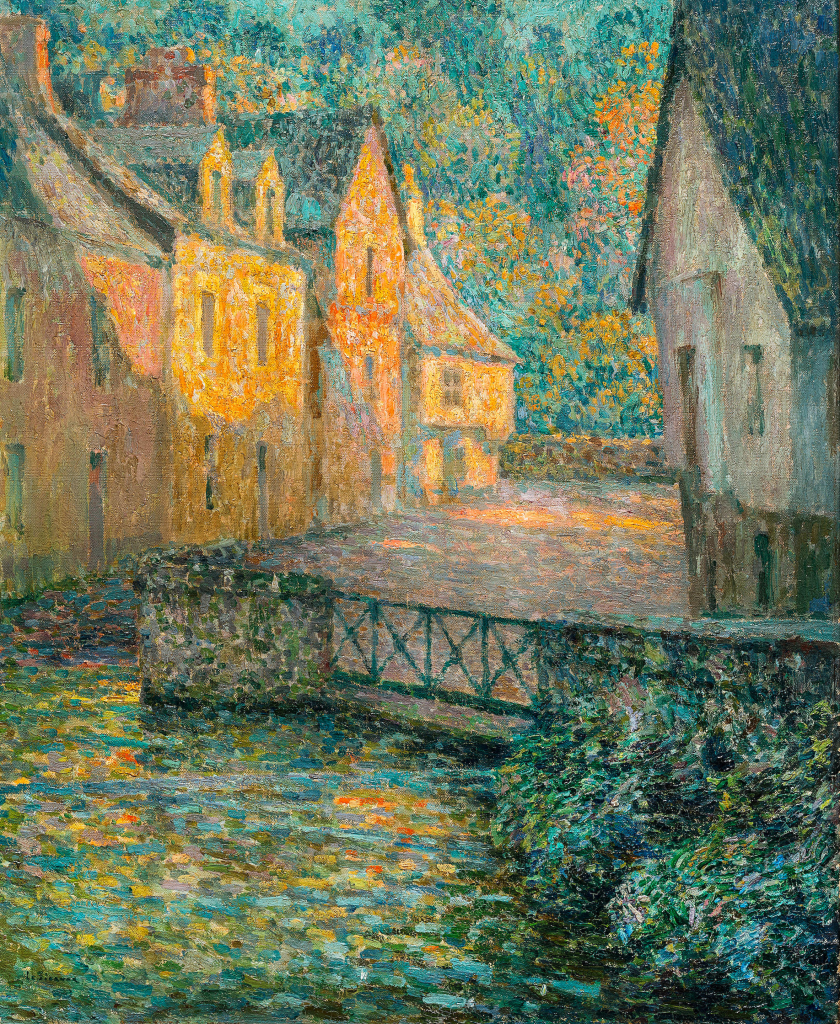
Matin doré by Henri Le Sidaner (1862-1939)
If I had a spare 413,000 euro I would buy…in my dreams!
Are you a good parent to yourself?

Are you a good parent? You may not have offspring of your own, however, each of you has a child within. They may have experienced or been exposed to things no child ever should and may carry the pain of those moments. It is important to remember this and treat them accordingly. When your child becomes upset and wants to be heard, do you douse the adult body with chemicals or food to quiet them? Do you ignore their cries for understanding and love to fit in? Do you pretend they do not exist and tell yourself to get over it?
Treat your inner child the same way you would treat any other child in your life. Their growth and well-being depend on how well you choose to relate to them. Pay attention to them, shower them with the Unconditional Love they may not have received and listen to understand what they are saying. They worked very hard to make sure you survived (and thrived) through your darkest days. Let them come out and play in the sunshine. Just like every other part of you, they are worthy and deserving of being honored! ~ Creator (Jennifer Farley).
Spatial Bodies turns Osaka’s Skyline Inside-out by AUJIK
In Spatial Bodies, the Osaka skyline becomes a surreal jungle of living architecture—buildings ripple, twist, and float like sentient vines. Created by AUJIK, a self-described “nature/tech cult,” this hypnotic short reimagines the city as a self-replicating organism in a constant dance between order and chaos. Think brutalist bonsai meets cyberpunk daydream. With an ambient score by Daisuke Tanabe, this meditative animation invites you to witness a world where concrete breathes and skyscrapers grow like trees. Via This is Collossal


“Hummingbird and Fish” by Suzan Visser
A new artist discovered is always something to celebrate! Found on the blog of extraordinary miscellanea – Bologna

Walking with Dinosaurs review
I have always been obsessed with dinosaurs and this obsession with ancient lifeforms didn’t disappear when I became an adult. Instead I often fantasise about what might have been if I could become a palaeontologist. Anyway, for all of those people who love these mighty ancient beasts here is a terrific review of the newly minted BBC show ‘Walking With Dinosaurs’, reviewed by palaeontologist James Ronan. Really looking forward to seeing this one!

“Over 66 million years ago. Our world was ruled by dinosaurs. The largest animals that have ever walked the Earth. Today, dinosaur experts across the globe are uncovering the bones they left behind. Allowing us to imagine how these extraordinary creatures lived. So that we can tell their stories and they can walk again.”Bertie Carvel
The long-awaited Walking with Dinosaurs 2025 marks a revival, not a direct sequel of the iconic franchise. Available now on BBC iPlayer, the series integrates cutting-edge palaeontological research with immersive storytelling, reconstructing life during the Mesozoic Era. Having watched every episode, I have plenty of thoughts on how it achieves its goal of engaging audiences with the latest science.
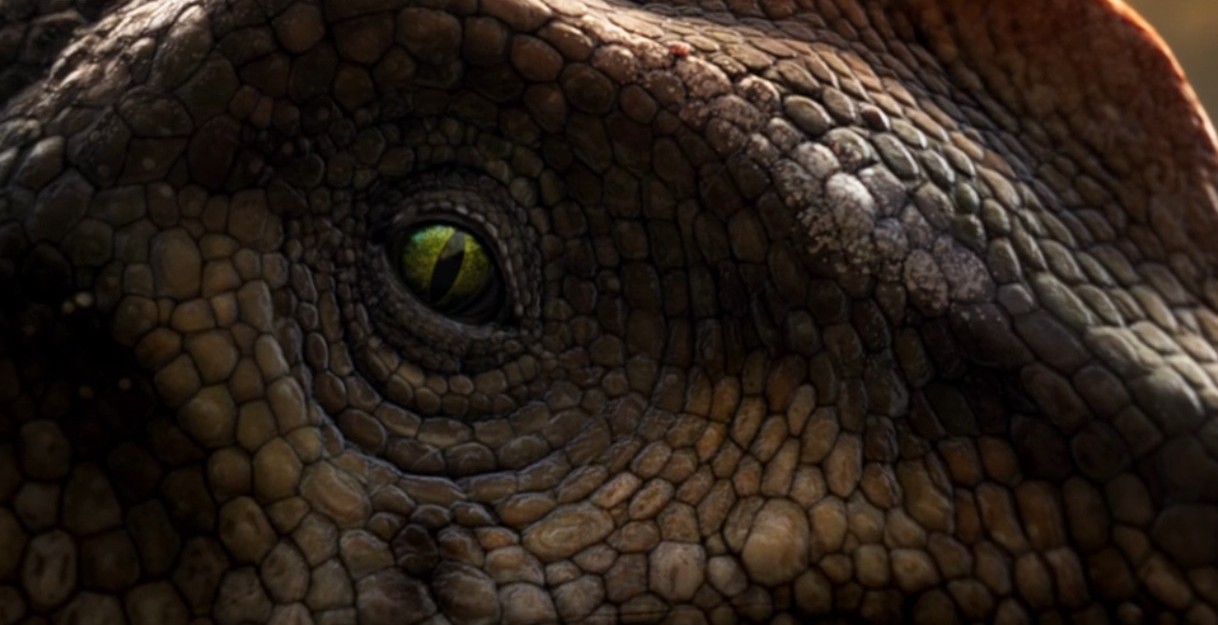
This revival is not just about bringing dinosaurs back to the screen, it has a clear educational mission.
The Show’s Mission: Science Communication
The show’s mission is clear: science communication. It seeks to inspire those unfamiliar with non-avian dinosaurs while offering fresh insights to more knowledgeable audiences. Accurate science communication is essential, and as someone dedicated to increasing global engagement with palaeontology, I appreciate how the series showcases the latest scientific understanding of dinosaurs.
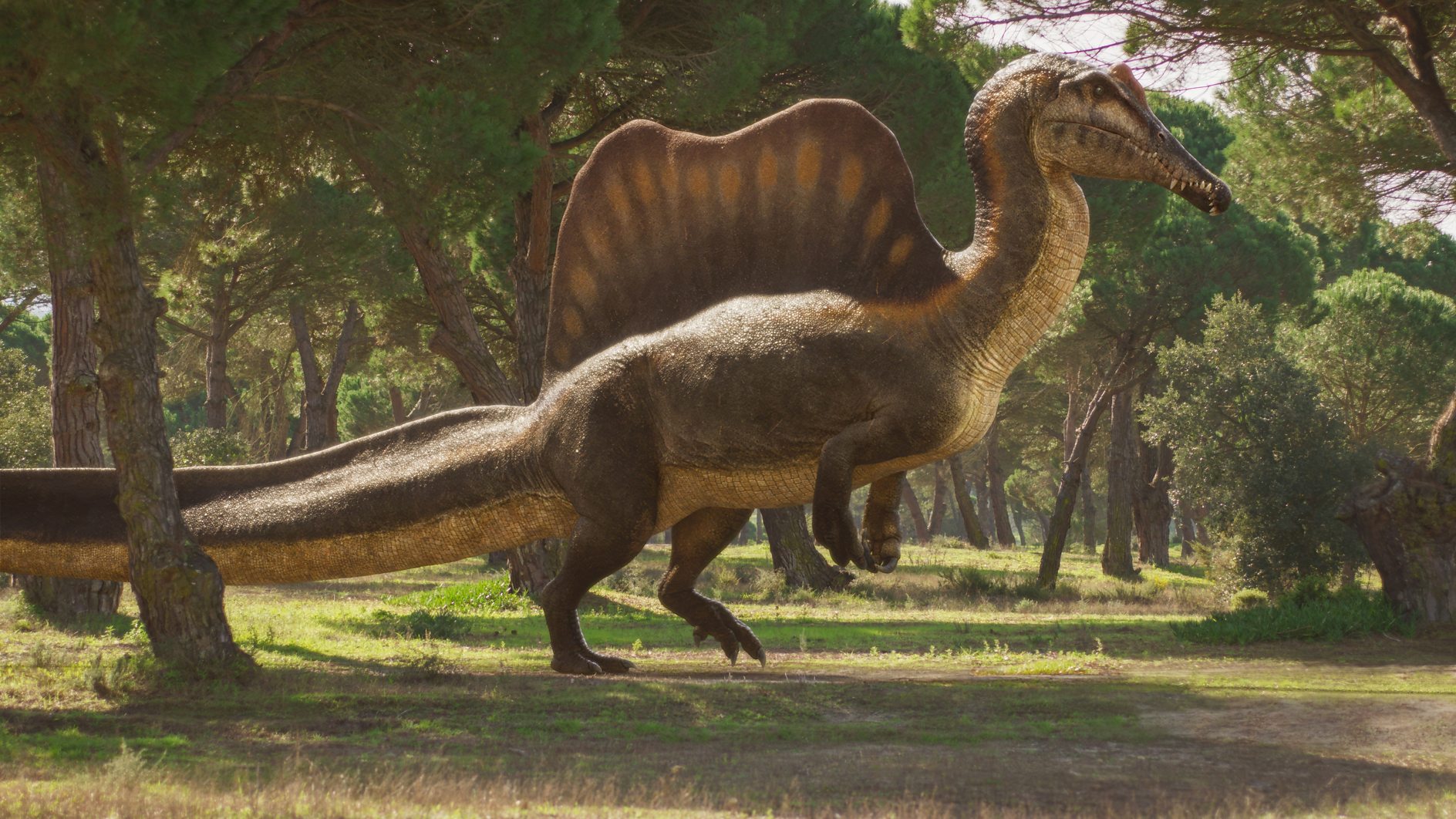
While the science communication in Walking with Dinosaurs 2025 is effective, some information may feel overly simplified for experienced palaeontologists or keen learners already set on pursuing a science career.
Fieldwork: A Window into Palaeontology
The excavation process unearthing fossils embedded in strata millions of years old is central to understanding dinosaur behaviour, long gone environments, and dinosaur final moments. Fossilised coprolites tell us about diet, while Albertosaurus bite marks on other Albertosaurus skulls hint at intraspecies dynamics. The series features fieldwork across all episodes, intertwining fossil discoveries with narratives about individual dinosaurs’ lives.
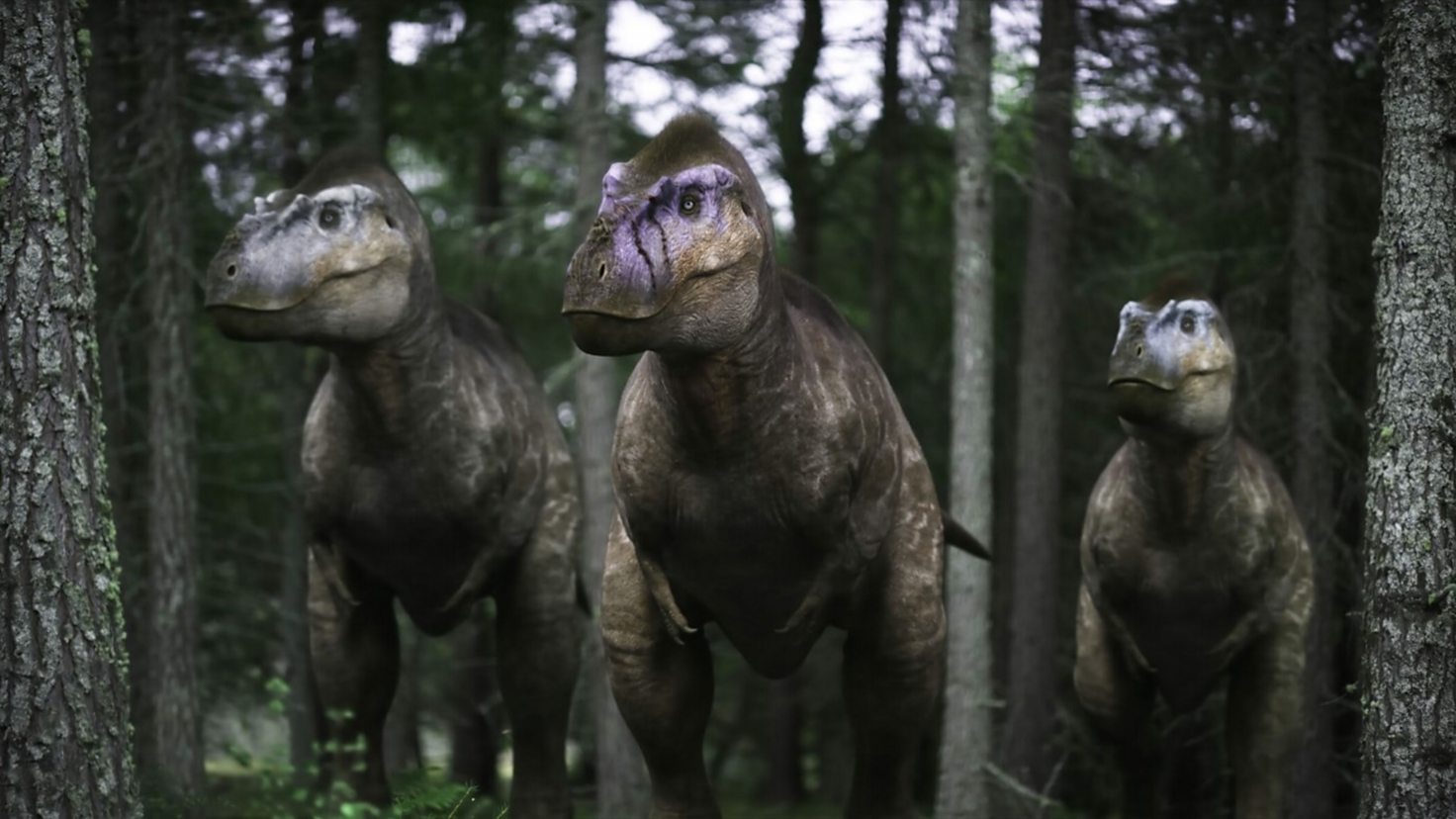
Despite online criticism that these segments might bore younger viewers (something I ardently disagree with), Walking with Dinosaurs maintains a strong focus on how fossil evidence informs our understanding of prehistoric creatures. The show’s intent is clear: it is about reconstructing lost worlds through scientific findings while engaging a new generation, one that was not born when the original 1999 series aired.
Fossil hunting and fieldwork are the heart of palaeontology. Without excavation, most of these dinosaurs, pterosaurs, and other ancient organisms would remain forever buried.

The series showcases experts in the field relaying accurate scientific information through observation. Scientific research is on full display here with not just measurements of fossils being taken but the use of drones tracking fossil locations.
The show also showcases the impacts of the environment, weather and natural disasters, displaying the complex relationship dinosaurs had with the environment they inhabited.
The cinematography in Walking with Dinosaurs is striking, with sweeping camera shots that showcase Earth’s diverse landscapes, from the rugged Badlands of Montana to lush foliage highlighting the Late Cretaceous. These dynamic visuals not only enhance the documentary’s immersive quality but also reinforce the connection between prehistoric creatures and their environments.

While the fieldwork segments provide valuable insight, the series balances scientific accuracy with cinematic techniques to make palaeontology more accessible and visually compelling. The series also takes creative liberties to make palaeontology more accessible. Via James Ronan Palaeontologist
“It has always seemed to me, ever since early childhood, amid all the commonplaces of life, I was very near to a kingdom of ideal beauty.”
~ Lucy Maud Montgomery, A Night in June in the Garden
Art: Raan Chipye
Drawing giant geo-illustrations using Strava
Why would you? I guess people have all kinds of life goals and have a lot of time on their hands hehehe.


How Extinct Giant Ground Sloths Grew So Big!
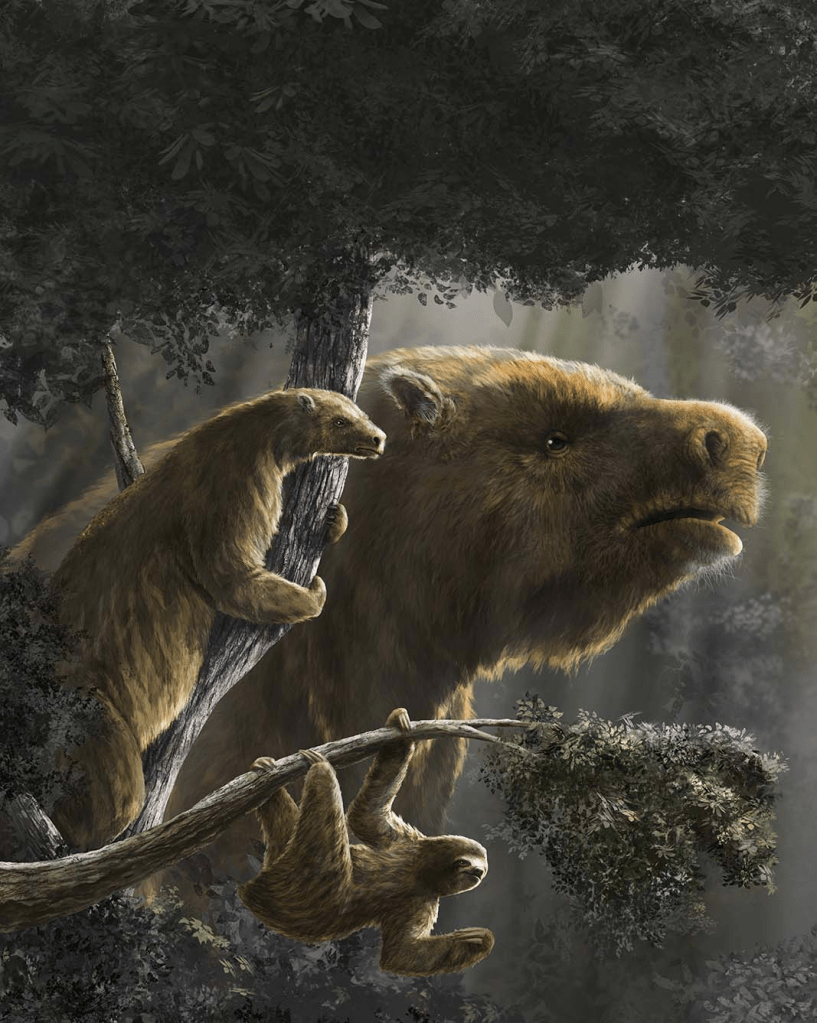
Most of us are familiar with sloths, the bear-like animals that hang from trees, live life in the slow lane, take a month to digest a meal and poop just once a week. Their closest living relatives are anteaters and armadillos, and if that seems like an odd pairing, there’s a reason why. Today, there are only two sloth species, but historically, there were dozens of them, including one with a bottle-nosed snout that ate ants and another that likely resembled the ancestors of modern armadillos.
Most of these extinct sloths also didn’t live in trees, because they were too big. The largest sloths, in the genus Megatherium, were about the size of Asian bull elephants and weighed roughly 8,000 pounds.
“They looked like grizzly bears but five times larger,” said Rachel Narducci, collection manager of vertebrate paleontology at the Florida Museum of Natural History.
Narducci is co-author of a new study published in the journal Science in which scientists analyzed ancient DNA and compared more than 400 fossils from 17 natural history museums to figure out how and why extinct sloths got so big.
Ground sloths varied widely in size, from the truly massive Megatherium — which could rip foliage off the tops of trees with its prehensile tongue and acted as a sort of ecological stand in for giraffes — to the modestly chunky Shasta ground sloth that terrorized cacti in the desert southwest of North America.
The same cannot be said for sloths that developed an affinity for tree climbing. Those that lived entirely in the canopy were and are uniformly small, with an average weight of 14 pounds, while those that spent part of their time on the ground averaged about 174 pounds.
You don’t have to be a scientist to puzzle out why trees enforce a strict weight limit. It’s the same reason why modern tree sloths have a strange elastic quality to them: Branches break when put under too much strain, and sloths are not generally known for their ability to swiftly avert sudden disaster. Tree sloths have reportedly survived falls of up to 100 feet. However, given that falls from even moderate heights can cause severe damage and some trees in the Amazon Rainforest top out at just under 300 feet, it makes evolutionary sense to be as small as possible when going out on a limb.
What’s less clear is why some ground sloths grew to such excessive sizes while others seemed content with being merely large. There may have been several reasons, which is why it’s been so hard for scientists to answer the question with confidence.
Larger sizes might have been advantageous for finding food or avoiding predators, for example. Ground sloths had a special fondness for caves, and their size undoubtedly played a role in their ability to find and make shelters. The moderately sized Shasta ground sloth favorited small, natural caves bored by wind and water into the cliffsides of the Grand Canyon, like the alveoli of a gigantic, geologic lung. These also doubled as convenient latrines; in 1936, paleontologists discovered a mound of fossilized sloth poop, bat guano and packrat middens more than 20 feet thick in Rampart Cave, near Lake Mead.
Larger sloths weren’t restricted to pre-existing caves. Using claws that are among the largest of any known mammal, living or extinct, they could carve their own from bare earth and rock. Many of the caves they left behind are still around with claw-mark décor along the interior walls, evidence of their ancient nesting excavations.
Other factors that may have contributed to their size discrepancy include climate, the degree of relatedness among sloth species and metabolic rates. The ability to accurately discriminate between these several possibilities required a substantial amount and various types of data.
The authors combined information about the shape of fossils with DNA from living and extinct species to create a sloth tree of life that traced the sloth lineage all the way back to their origin more than 35 million years ago. With this scaffold in place, they added results gleaned from decades of research about where sloths lived, what they ate and whether they were climbers or walkers. Because the authors were specifically interested in the evolution of size, they collected data for the final analytical ingredient by measuring hundreds of museum fossils, which they used to estimate sloth weight.
This is where the Florida Museum played a special role. “We have the largest collection of North American and Caribbean-island sloths in the world,” Narducci said. She carefully took several measurements of 117 limb bones and shared the numbers with her colleagues.
The authors mixed all this information together, computationally stirred it and got back a fully baked answer.
The result: Size differences among sloths has been primarily influenced by the types of habitats they lived in and, by extension, climate change.
“Including all of these factors and running them through evolutionary models with multiple different scenarios was a major undertaking that had not been done before,” Narducci said.
The sloth dynasty coincided with significant, life-altering changes in Earth’s climate. The oldest thing that scientists can reasonably consider to be a sloth is called Pseudoglyptodon, which lived 37 million years ago in Argentina. Analyses from the study indicate the earliest sloths would have likely been small ground dwellers, about the size of a great Dane. At various points throughout their evolutionary history, sloths adopted a semi-arboreal lifestyle. Not all of them stayed in the trees, however. The largest sloths, including Megatherium and Mylodon,likely evolved from a tree-adapted sloth that ultimately decided to stay firmly planted on the ground.
Against this background of indecisive climbers and walkers, the size of sloths hardly changed at all for about 20 million years, irrespective of their preferred method of locomotion. Then something earth-shattering occurred.
A giant wound opened up between modern-day Washington state and Idaho down through parts of Oregon and Nevada, and magma boiled out of it. This left a nearly 600,000 cubic mile scab over the Pacific Northwest. It’s still visible in some places along the Columbia River, where millions of years of running water have cut through and polished a colonnade of basalt. These rock pillars have a distinct hexagonal shape caused by the way in which the magma hardened and cracked as it cooled. The volcanic event that made them was a slow burn that lasted roughly 750,000 years and aligned with a period of global warming called the Mid-Miocene Climatic Optimum. The greenhouse gasses emitted by the volcanic eruption are currently considered the likeliest cause of the warming.
Sloths responded by getting smaller. This may be because warmer temperatures brought increased precipitation, which allowed forests to expand, thereby creating more habitat for smaller sloths. Size reduction is also a common way for animals to deal with heat stress and has been documented in the fossil record on several different occasions.
The world remained warm for about a million years after the volcano fell silent. Then, the planet resumed a longstanding pattern of cooling that has continued in fits and starts to the present. Sloths reversed course too. The more temperatures fell, the bulkier they became.
Arboreal and semi-arboreal sloths had the obvious limitation of having to live near trees, but ground sloths lived just about anywhere their feet would take them. They climbed the Andes Mountains, fanned out through open savannahs, migrated into the deserts and deciduous forests of North America and made a home for themselves in the boreal forests of Canada and Alaska. There were even sloths adapted to marine environments. Thalassocnus lived in the arid strip of land between the Andes and the Pacific. They survived in this harsh region by foraging for food in the ocean.
“They developed adaptations similar to those of manatees,” Narducci said. “They had dense ribs to help with buoyancy and longer snouts for eating seagrass.”
These varied environments presented unique challenges that ground sloths met, in part, by beefing up. “This would’ve allowed them to conserve energy and water and travel more efficiently across habitats with limited resources,” Narducci said. “And if you’re in an open grassland, you need protection, and being bigger provides some of that. Some ground sloths also had little pebble-like osteoderms embedded in their skin,” Narducci said, referencing the bony plating that sloths had in common with their armadillo relatives, a trait that was also recently discovered in spiny mice.
Equally as important, larger bodies helped sloths contend with cooling climates. They reached their greatest stature during the Pleistocene ice ages, shortly before they disappeared.
“About 15,000 years ago is when you really start to see the drop-off,” Narducci said.
There’s still debate about what happened to sloths, but given that humans arrived in North America at about the same time sloths went extinct in droves, it’s not hard to speculate. Paradoxically, the large size that kept them safe from most predators and insulated from the cold became a liability. Neither fast nor well-defended, ground and semi-arboreal sloths were easy pickings for early humans.
Arboreal sloths watched the carnage unfold below them from the safety of the treetops, but even there, they didn’t escape without losses. Long after their ground-dwelling relatives had gone extinct everywhere else, two species of tree sloth in the Caribbean held out until 4,500 years ago. Humans arrived in the Caribbean about the same time that Egyptians were building the pyramids. Caribbean tree sloths went extinct not long after.
Florida Museum of Natural History. “Scientists have figured out how extinct giant ground sloths got so big and where it all went wrong.” ScienceDaily. ScienceDaily, 22 May 2025.
Art by Kristen Eisenbraun
Kristen Eisenbraun, an oil painter from North Carolina, intertwines art and nature in her work, exploring the human spirit through portraiture and surreal landscapes. After diverse experiences as a ranch hand and car mechanic, she pursued art full-time, studying at the New York Academy of Art and Grand Central Atelier. Her work, exhibited across the US and Europe, captures nature’s moods with nuanced light and color. Kristen’s subjects, ranging from the young to the elderly, exude unconventional beauty. She is currently creating artwork on discarded musical instruments, repurposing them into unique, inspiring canvases. Via Beautiful Bizarre Magazine

Did you enjoy this collection? let me know what you think of it below. Thank you for reading my dear friends!
 Content Catnip
Wonderful latte 😀
LikeLiked by 1 person
I know right! So cosy and just a bit different that latte
LikeLike
Loved the part about the dinosaurs and the giant sloth! Very interesting indeed!
LikeLiked by 1 person
Thanks Fedora yeah I’m so glad you share my love for ancient animals they are fascinating!
LikeLiked by 1 person
Giant penis and testicles.
LikeLiked by 1 person
It’s true haha…it is.
LikeLiked by 1 person
That expensive painting is really beautiful.
LikeLiked by 1 person
Yeah I love it too…the colours make me feel happy it’s like armchair traveling looking at that
LikeLiked by 1 person