

Rating: 🌟🌟🌟🌟🌟
Genre: Non-Fiction, History, Anthropology, Politics
Publisher:
Review in one word: Immense
The Dawn of Everything: A New History of Humanity” by David Graeber and David Wengrow offers an awe-inspiring, surprising and dizzyingly beautiful rethink of human history. It is an ode to ancient human experimentation, creativity, fun and how before there were rules and hierarchy – people just had a hell of a great time!
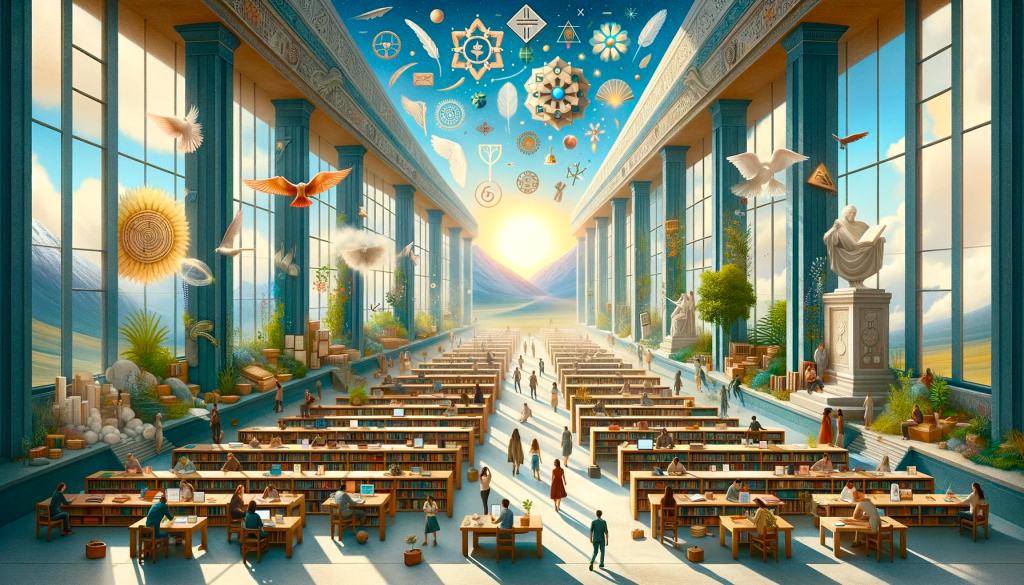
Graeber and Wengrow challenge and overturn the major biases that we all take as a given about history. Biases you probably weren’t even aware were biases!
Such as the idea that there was at some point in history an “agricultural explosion”, which altered and improved human civilisation, meaning we all turned from being hunter gatherers to being farmers.
History, they contend, was far from linear and was more circuitous, random and all over the place than previously imagined.
This expansive, multidisciplinary book presents a series of key themes that are relevant for understanding the political turmoil that western countries now find themselves in. The authors argue that (among other things) this is the result of an erosion to the collectivism and fabric of community dependencies in favour of a focus on neoliberalism, trickle-down economics and rampant individualism (read: selfishness).
The book traverses many periods of human history, Graeber and Wengrow playfully build a compelling and interwoven narrative about indigenous and black histories that have been thus far completely ignored and rendered totally invisible from the knowledge-base of the Western canon.
Reading this as an indigenous Māori woman, the very idea that my own and other indigenous cultures are worthy of being known by everyone was pleasing to hear.
It is rare that you could call a book about human history and anthropology playful and joyful – but this is a deeply joyful and at times cheeky book! Joyful because it is free of the strictures and cultural biases and limitations of other books about ancient people.
Cheeky because it pokes fun at the stuffy, joyless and bleak narrative arc of human history put forth by the philosopher Thomas Hobbes that human life is like a war and is “solitary, poor, nasty, brutish, and short”.
The Dawn of Everything is more than a nod towards indigenous knowledge systems, it is a deep bow.
The authors call out the snobbish and xenophobic nature of the “Western Knowledge Canon”. And likewise, they call out Europe’s complete shunning and belittling of millennia of indigenous and non-European thought, philosophy and knowledge systems. It’s a mistake they think is deplorable and we are all the poorer for not knowing about it.

The insights from this book are applicable to contemporary movements like the #Boycott4Wildlife, indigenous rights movements and the broader climate movement.
Here’s an overview of the key themes from the book including some punchy and powerful quotes.
Key Themes
Challenging Traditional Narratives:
Graeber and Wengrow dismantle traditional narratives of linear human progress, arguing that our hunter-gatherer ancestors weren’t simply savage precursors to civilisation, but complex societies with diverse political and social structures.
“There is no single ‘original form’ of human society and no inevitable march towards inequality and hierarchy.”
pp 81

Debunking the idea that inequality is inevitable
They reject the idea that inequality and hierarchy are inherent to human nature. Instead they propose that these concepts emerged through specific historical processes, not as a predetermined outcome.
They argue that complex, large-scale societies did not necessarily evolve towards hierarchical structures and point to plenty of examples to illustrate this point. They present evidence of societies that maintained egalitarian social relations despite their complexity, which is a significant point for understanding indigenous societies that resisted hierarchical structures.
“The assumption that inequality is natural, or even inevitable, is one of the biggest myths of our time.”
pp. 484
History is ablaze with experimentation and exhilarating creativity
The book emphasizes the inherent human capacity for self-creation and experimentation, highlighting examples of societies with fluid social structures, non-coercive leadership, and diverse modes of governance.
Quote: “Human societies have always been, and continue to be, laboratories of social possibility.” – Page 524

Civilisation isn’t just about progress – it’s about autonomy and equality
Graeber and Wengrow rethink the notion of civilisation. They challenge the simplistic view of civilisation is simply about making things “harder, better, faster, stronger” and the march of progress. They argue it has involved human trade-offs and sacrifices in terms of autonomy and equality.
“The very idea of ‘civilization’ as a singular, linear trajectory may in fact be one of the most pernicious myths of our time.”
pp. 575
Hope for the future and reimagining possibilities for our world
By demonstrating the diversity of human social arrangements throughout history, the book offers a hopeful message about the possibility of creating more just and equitable societies in the future.
The Dawn of Everything invites the reader to reconsider the possibilities for organising societies differently, based on the historical evidence of varied social structures. This encourages a radical rethinking of contemporary social, economic, and political systems from an indigenous perspective.
“Perhaps it is time to stop thinking of ‘civilisation’ as a fixed state and start thinking of it as a process, one that involves a constant negotiation between different forms of freedom and constraint, inequality and egalitarianism.”
pp.576
“If we can start to imagine other possibilities, then who knows what we might achieve?”
pp.580
These are just a few of the powerful themes explored in The Dawn of Everything. Each theme is supported by a wealth of historical evidence and anthropological research, making the book a thought-provoking and challenging read for anyone interested in understanding human history and our potential for the future.
The book’s emphasis on the autonomy of communities and the viability of non-hierarchical social structures aligns with the goals of the #Boycott4Wildlife and other indigenous rights and animal rights movements. These movements often advocate for empowering local and indigenous communities as stewards of the natural world. They use decentralised and anarchist modes for challenging top-down power structures.

The insights from this book are critical for anyone who is a part of a social or environmental movement. Graeber was himself an anarchist and one of the core underlying themes of the book is Anarchism, with its emphasis on autonomy, voluntary association, and mutual aid, without hierarchical structures.
I only became aware of the amazing David Graeber and this book only after learning that he had died. He was not only one-of-a-kind intellectual but a legendary activist and is credited among many other things with launching the Occupy Wall Street movement. It was enormously heartbreaking to me to learn that he will never write anything again but if this is his lasting legacy, what a legacy is it! Here’s a fitting tribute to the man and the legend.

Have you read this book or are you planning on reading it? If so, let me know below!

 Content Catnip
I’m unfortunately not much of a book reader, but I hope someday I will be.
Great description of this book, I might add even though I haven’t read it.
LikeLiked by 2 people
That’s ok my friend we all have our things we like to do to relax or escape….for me it’s books but for others it might be playing video games or doing something else. My partner loves gaming, don’t know why can’t get into it…maybe just haven’t found the right game yet. Thank you for reading the review dear friend much appreciated
LikeLiked by 1 person
You’re welcome, and yeah. It’s a good thing we are different.
LikeLiked by 1 person