Rating: 🌟🌟🌟
Genre: Non-Fiction, Environment, Indigenous Rights, Nature.
Publisher: Penguin Books
Review in one word: Poetic
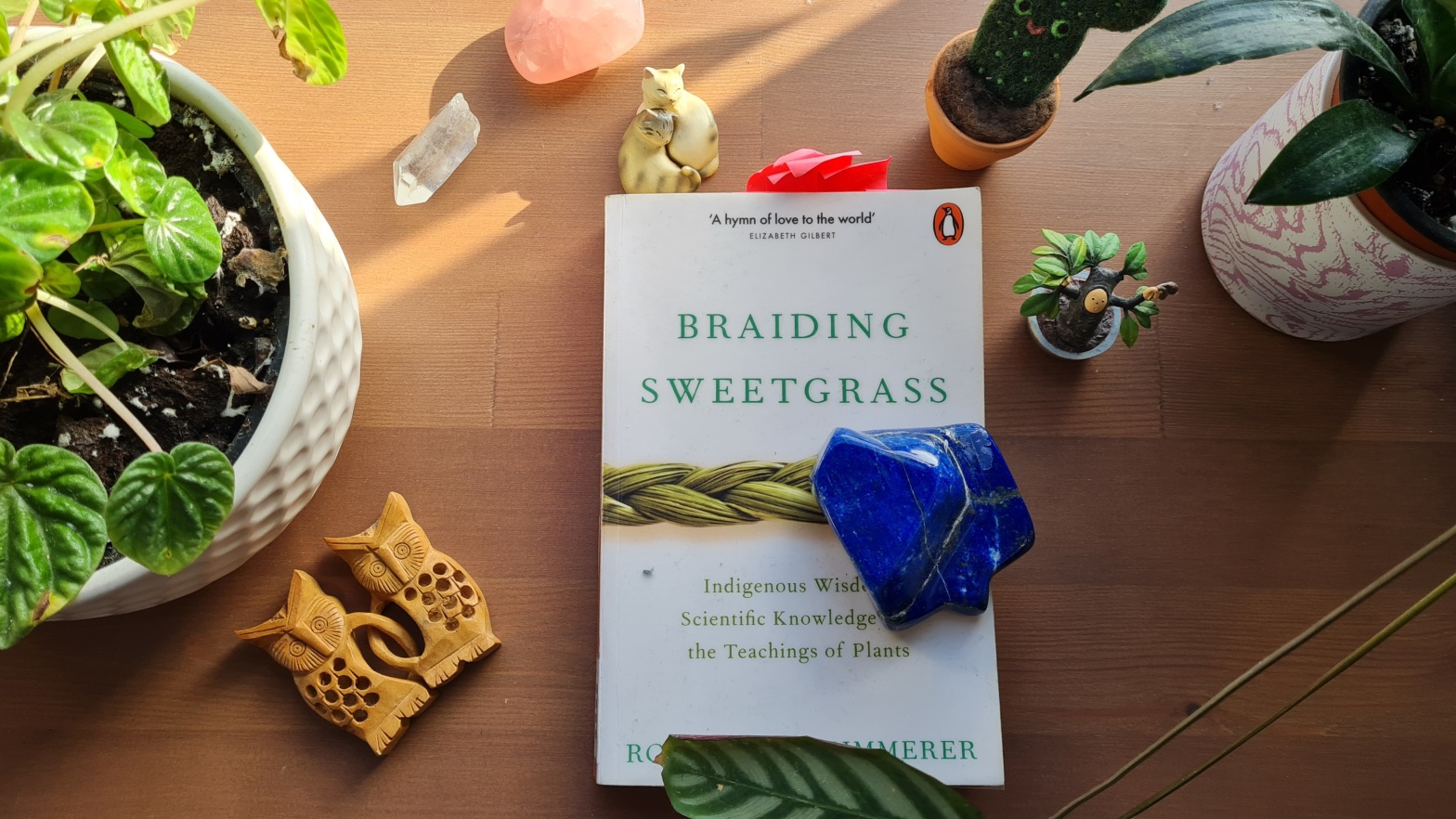
I was absolutely thrilled to start reading this book which has the reputation of being a classic in the canon of environmental writing. This book makes an electrifying start with some powerful and poetic insights and then it falters a few chapters in for me. For this reason I only rate it a three stars.
Robin Wall Kimmerer is a Botanist and an Indigenous Woman of the Potawatomi Nation. In Braiding Sweetgrass, she weaves together the two strands of indigenous wisdom and scientific understanding to create a wonderous union of the two forms of knowledge.
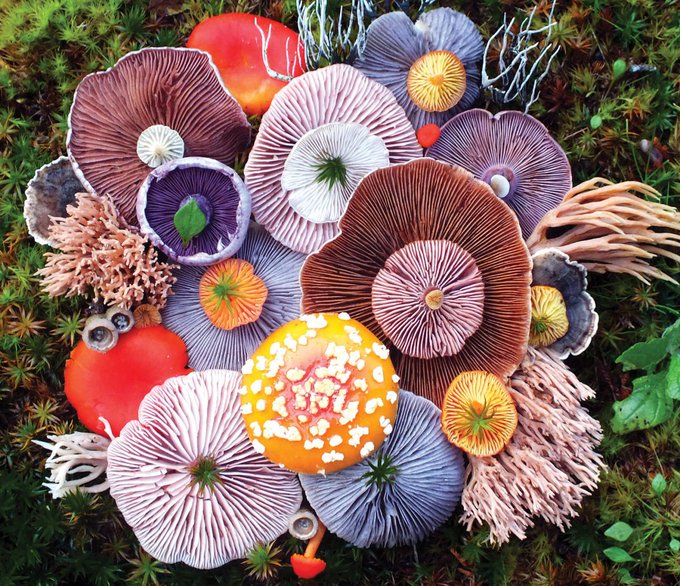
“Puhpowee, she explained, translates as “the force which causes mushrooms to push up from the earth overnight.” As a biologist, I was stunned that such a word existed.
― Robin Wall Kimmerer.
The makers of this word understood a world of being, full of unseen energies that animate everything. I’ve cherished it for many years, as a talisman, and longed for the people who gave a name to the life force of mushrooms. The language that holds Puhpowee is one that I wanted to speak. So when I learned that the word for rising, for emergence, belonged to the language of my ancestors, it became a signpost for me.”
Kimmerer’s poetic, literary and spiritual flourishes are absolutely incredible and something to be savoured. The first few chapters are packed with these.
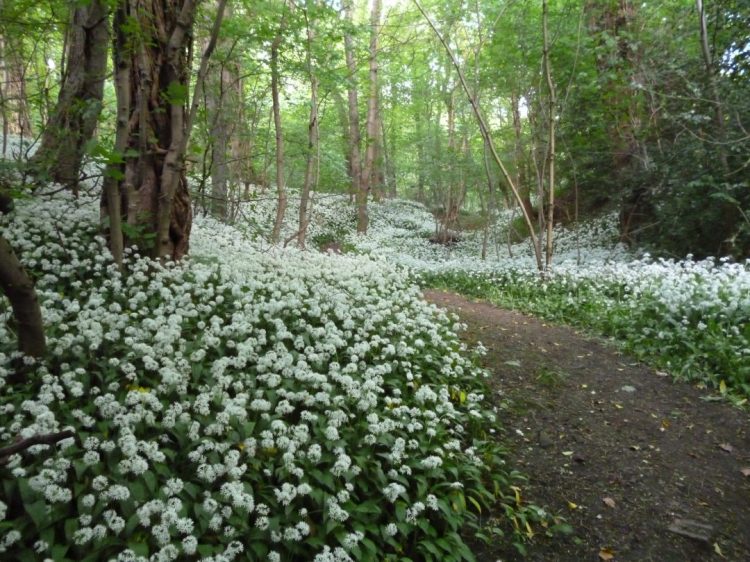
The introductory chapters were riveting and told the story of the Potawatomi tale of the Skywoman and the creation of the earth. The author’s inner struggle between her indigenous learnings and the western orthodoxy of science education were particularly interesting and I can relate to this dichotomy of living in between two worlds. In the beginning chapters, she seeks to tap trees for maple syrup along with her children and to clean up the pond on her property. These stories were all deeply and profoundly moving.
“If grief can be a doorway to love, then let us all weep for the world we are breaking apart so we can love it back to wholeness again.”
― Robin Wall Kimmerer
After this about a quarter of the way through the book, the insights and learnings of these short stories and vignettes seem to repeat over and over, but just in different narrative form. This book should have been edited to be way shorter and should have retained the punchy, compelling pace of the first few chapters, then it could justifiably be called a masterpiece.
I hate to say this but after these first few initial lyrical and poetic chapters I found the pace to slow down a lot and the book started to really lag. I almost feel guilty for saying that, like I am betraying an indigenous sister, but there it is. I got to chapter 4 and I just couldn’t find the motivation to continue.
A few chapters in, Wall Kimmerer begins talking about feminine archetypes like those discussed by Jungian analyst Clarissa Pinkola-Estes in Women Who Run with the Wolves. Although unlike Pinkola-Estes’ masterwork there isn’t a focus on fables and indigenous stories and their fascinating Jungian meanings and takeaways, but rather there’s a personal memoir style narrative that gets a bit tiresome, especially when the nuggets of insight are repetitive. I would have liked more indigenous stories and tighter prose throughout the whole book.
Content Catnip
 Content Catnip
Right with you on this! I started reading it, enjoyed the first couple of chapters, then sort of lost momentum and I moved on to other things. I’ve kept meaning to have another go at it, mostly because ‘it’s kinda famous’, so probably it’s me who is missing something. Nice to find out I’m not the only one….
LikeLiked by 1 person
Yes it’s a weird book isn’t it! I can’t say that I loved it even though I tried soooo hard to love it due to all the hype about it. I have a few more to recommend to you and can give you my copy if you want next time I see you
LikeLike
I may give it another go, but I have so many others ‘on the go’ too! 😀. Thanks for the offer! Still trying to get away…..
LikeLiked by 1 person
What are you reading at the moment? I’m nearly finished Chris Gosden’s The History of Magic…this was incredible 👏
LikeLike
https://www.penguin.co.uk/books/303993/the-history-of-magic-by-gosden-chris/9780241979662
LikeLike
I appreciate your honest review! Braiding Sweetgrass is one of my favourite books and when I first read it, it totally changed how I see and interact with the world, but I can also see your points – I see the repetition of elements as a way of reinforcing some of the main points of the book, as little reminders that tie the whole thing togeher. I’m about to start in on David Suzuki’s “The Sacred Balance” which has a foreword by Robin Wall Kimmerer in the new edition.
LikeLiked by 1 person
Yes it’s a strange but beautiful book, I’m glad to hear that it moved you so deeply that book. Another one you might like (if you haven’t read it already that is) is ‘Women Who Run With the Wolves’ by Clarissa Pinkola-Estes this altered the course of my life when I read it at 20, I read bits of it almost every day! I am too scared to review it because it means so much to me! Hope you have a nice evening 😊
LikeLike